

Mastering Automotive Rendering: How to Drastically Optimize Render Times for Complex Car Scenes
Rendering high-fidelity 3D car models is a cornerstone of modern visualization, game development, and automotive design. From showcasing a new vehicle concept with breathtaking realism to integrating production-ready 3D car models into an immersive game environment, the demand for stunning visual output is constant. However, the complexity inherent in automotive assets—intricate body panels, detailed interiors, multi-layered materials, and sophisticated lighting setups—often leads to excruciatingly long render times. This can bottleneck production workflows, increase costs, and challenge even the most powerful hardware configurations.
This comprehensive guide delves deep into the technical strategies and best practices for optimizing render times without compromising visual quality for your complex car scenes. We’ll explore everything from foundational 3D modeling topology to advanced rendering techniques, material efficiency, and real-time engine considerations. By understanding the underlying principles and implementing these actionable tips, you’ll be equipped to streamline your workflow, achieve faster iterations, and ultimately deliver superior results, whether you’re creating stunning marketing visuals, high-performance game assets, or preparing models for AR/VR experiences.
1. The Foundation: Optimized 3D Car Model Topology
The efficiency of your render starts long before you hit the render button; it begins with the very structure of your 3D car models. Poorly constructed geometry is a primary culprit for slow render times, leading to inefficient calculations, unnecessary memory usage, and potential shading artifacts. A well-optimized mesh is not just about low polygon counts; it’s about intelligent distribution and clean organization.
1.1. Clean Mesh and Edge Flow for Automotive Surfaces
Automotive designs are characterized by their smooth, reflective surfaces and precise curvatures. To capture this accurately, clean topology with proper edge flow is paramount. The goal is to ensure that your polygons (primarily quads) are evenly distributed and follow the natural contours of the car’s body. Avoid N-gons (polygons with more than four sides) and triangles where possible, as they can cause shading issues, especially during subdivision, and complicate UV mapping. Good edge flow ensures that reflections propagate smoothly across the surface and facilitates easier modification and deformation if needed. For instance, creating loops around panel gaps or sharp creases allows for controlled beveling and proper subdivision without affecting surrounding geometry. When sourcing models, platforms like 88cars3d.com emphasize clean topology for this very reason, ensuring a solid foundation for your projects.
1.2. Strategic Polygon Reduction and LODs
While detail is crucial, every polygon adds to the computational load. It’s essential to be strategic with polygon density. Areas that are close to the camera or require intricate detail (like badges, grilles, or headlight internals) should have higher polygon counts. Conversely, parts of the model that are further away, or less critical for visual fidelity (e.g., hidden underside components), can be simplified. A powerful optimization technique for both rendering and real-time applications is the implementation of Levels of Detail (LODs).
LODs are different versions of the same model, each with a progressively lower polygon count. When the object is far from the camera, a lower LOD model is rendered, significantly reducing the GPU’s workload. For a complex car model, you might have LOD0 (full detail, e.g., 500,000+ polygons), LOD1 (medium detail, e.g., 150,000 polygons), and LOD2 (low detail, e.g., 50,000 polygons). Tools in software like 3ds Max, Maya, and Blender allow you to generate these automatically or manually. For Blender users, understanding mesh simplification techniques is key. As detailed in the official Blender 4.4 documentation, available at https://docs.blender.org/manual/en/4.4/, modifiers like “Decimate” can be used for automated polygon reduction while preserving UVs and vertex colors to a certain extent. However, for critical automotive rendering, manual retopology or careful adjustments after decimation often yield superior results, especially for high-quality hero shots.
2. Masterful UV Mapping and Efficient Texturing
Beyond geometry, the way textures are applied can have a massive impact on render performance. Inefficient UV mapping and bloated texture sets contribute significantly to memory consumption and slow down shading calculations.
2.1. Unwrapping Complex Car Surfaces
UV mapping is the process of flattening the 3D surface of your model into a 2D plane, allowing textures to be applied accurately. For complex car surfaces, careful unwrapping is critical to avoid stretching, distortion, and seams. Techniques like “pelting” in 3ds Max or “smart UV project” in Blender can provide a good starting point, but manual refinement is often necessary. Break down the car into logical UV islands (e.g., hood, door, roof, interior components) and ensure sufficient padding between islands to prevent bleeding when mipmaps are generated. Overlapping UVs should be avoided unless explicitly used for mirroring symmetrical textures, as they can complicate unique texture baking and per-channel texture assignment. A clean UV layout minimizes texture memory footprint and ensures that your beautiful PBR materials render without glitches.
2.2. PBR Texture Set Optimization
Physically Based Rendering (PBR) textures deliver incredible realism but come with their own performance considerations. A standard PBR workflow typically involves Albedo (Base Color), Normal, Roughness, Metalness, and often Ambient Occlusion maps. These can quickly add up, especially at high resolutions (e.g., 4K or 8K).
To optimize:
* Resolution Management: Use appropriate texture resolutions. An 8K texture for a small, distant detail is wasteful; 2K or 4K is often sufficient for primary surfaces visible up close. For non-critical assets or distant LODs, even 1K textures can suffice.
* Texture Atlasing: Combine multiple smaller textures (e.g., for interior buttons, emblems, bolts) into a single, larger texture atlas. This reduces the number of draw calls in game engines and can improve render performance by keeping related data together.
* Channel Packing: Pack grayscale maps (Roughness, Metalness, AO, Height) into the RGB channels of a single texture. For example, you could pack Roughness into the Red channel, Metalness into Green, and AO into Blue. This effectively reduces three separate textures to one, saving significant memory.
* Mipmaps: Ensure all your textures have mipmaps generated. Mipmaps are pre-filtered, smaller versions of a texture that the renderer uses for objects further away, reducing aliasing and improving performance. Most software and game engines handle this automatically upon import.
3. Intelligent Material and Shader Network Management
PBR materials and complex shader networks are essential for achieving photorealistic automotive rendering, but they are also computationally intensive. An unoptimized shader can quickly become the bottleneck in your render pipeline.
3.1. Streamlining PBR Shader Graphs
Modern render engines allow for incredibly complex shader graphs, combining multiple textures, procedural nodes, and layering effects. While powerful, every node adds to the computation.
* Minimize Node Count: Review your shader graphs and simplify where possible. Can multiple procedural nodes be baked down into a single texture? Are there redundant operations?
* Avoid Unnecessary Complexity: For instance, if a material is completely opaque, ensure your shader isn’t performing complex transparency calculations. If a surface is always reflective, don’t use a fully rough shader.
* Bake Complex Effects: If you have complex procedural patterns, dirt layers, or wear effects generated in your shader graph, consider baking them into new texture maps (e.g., a custom Albedo or Roughness map). This pre-calculates the complexity, making the final render-time calculation much simpler and faster.
* Optimize for Specific Channels: Ensure that your shader only calculates what it needs. If a material doesn’t have metallic properties, don’t feed a Metalness map into its shader. If it doesn’t scatter light, disable subsurface scattering.
3.2. Instance Materials and Look-Up Tables
For scenarios with many similar materials, such as different paint colors on multiple car models or slight variations in interior plastics, using material instances or look-up tables (LUTs) is highly efficient.
* Material Instancing: In engines like Unreal Engine, Unity, 3ds Max (with V-Ray or Corona), and Blender (with Cycles or Eevee), you can create a “master” material and then create instances of it. These instances inherit the logic of the master material but allow you to change parameters (like color, texture strength, or specific texture maps) without recompiling the entire shader network. This dramatically speeds up rendering and real-time performance, as the GPU only needs to compile the master shader once. For example, all paint variations (red, blue, black) for a car model can share a single paint shader master, with only the base color parameter being instanced.
* Look-Up Tables (LUTs): While more common in post-processing for color grading, LUTs can also be integrated into shader workflows for highly specific color transformations or effects, especially for subtle variations that can be pre-calculated.
4. Lighting, Environment, and Render Engine Settings
Lighting is often the most resource-intensive aspect of a render. Achieving photorealism in automotive rendering requires sophisticated lighting, but optimizing its setup and understanding your render engine’s capabilities are crucial for managing render times.
4.1. Balancing Realism and Performance in Lighting
* HDRI vs. Direct Lights: High Dynamic Range Images (HDRIs) are excellent for providing realistic ambient light, reflections, and subtle shadows with relatively low computational cost compared to a scene full of complex area lights. Combine a high-quality HDRI for environment lighting with a few targeted direct lights (e.g., sun, key lights) for specific highlights and shadows. Minimize the number of direct lights if possible.
* Light Sampling: Most renderers have settings for light sampling. Increasing samples reduces noise but increases render time. Find the sweet spot. For area lights, using adaptive sampling or portals can help focus sampling where it’s most needed.
* Shadow Optimization: Shadows are computationally expensive. Optimize shadow settings by adjusting shadow map resolutions, sample counts, and distance. Use softer shadows only where necessary, as sharp shadows are faster to calculate. Disable shadows for lights that contribute little to the overall scene or are far from the main subject.
* Volumetric Effects: Volumetric lighting (fog, smoke) can add depth but is extremely heavy on render times. Use it sparingly and optimize its resolution and sample count. Bake static volumetric effects into environment maps or textures if the camera doesn’t move through them.
4.2. Render Engine-Specific Optimizations (Corona, V-Ray, Cycles, Arnold)
Each render engine has its unique strengths and optimization strategies. Understanding these specific controls is vital.
* Corona Renderer: Known for its ease of use and physically accurate results. Optimizations include:
* Noise Limit/Pass Limit: Instead of setting an arbitrary time limit, use noise limit. Corona will stop rendering when the image reaches a specified noise level.
* GI Solvers: Prefer Path Tracing + UHD Cache for faster interior scenes or complex GI. For simpler scenes, Path Tracing alone might be sufficient.
* LightMix: Utilize LightMix during or after rendering to adjust light intensities and colors without re-rendering, saving iteration time.
* V-Ray: A powerful and versatile production renderer. Optimizations include:
* Image Sampler (Bucket/Progressive): Progressive is good for quick feedback; Bucket is often faster for final renders.
* Global Illumination: Use Irradiance Map for primary bounces and Light Cache for secondary bounces, as this combination is very efficient. For detailed interiors or highly complex GI, Brute Force might be necessary but is slower.
* Adaptive Lights: Enable V-Ray’s Adaptive Lights for scenes with many lights to speed up lighting calculations.
* Subdivision Surfaces: Optimize your subdivision levels for render time, typically using lower levels in the viewport and higher levels only during render.
* Blender Cycles: Blender’s powerful path tracer. For optimal performance in Cycles, referencing the official Blender 4.4 documentation is highly recommended. You can find detailed explanations of settings and optimization strategies at https://docs.blender.org/manual/en/4.4/render/cycles/optimizations/index.html.
* Sampling: Adjust the “Render Samples” down to the lowest acceptable noise level. Use adaptive sampling (Denoising) to dramatically reduce noise without excessive sample counts.
* Light Paths: Reduce the number of bounces for diffuse, glossy, transmission, and volume where possible. For automotive rendering, glossy bounces are often critical for reflections, so be careful not to reduce them too much.
* Performance Tab: Utilize the “Performance” tab in Cycles render settings to enable features like “Persistent Data” for faster re-renders and “Spatial Splits” for BVH construction.
* GPU Rendering: Always use GPU rendering if you have a compatible graphics card, as it’s significantly faster than CPU rendering for Cycles.
* Arnold Renderer: Known for its physically accurate ray tracing. Optimizations include:
* Ray Depth: Carefully control the ray depth for diffuse, specular, and transmission. Each bounce adds to render time.
* Samples: Adjust camera (AA), diffuse, specular, transmission, and volume samples individually. Avoid overly high values across the board.
* Light Samples: Lights have their own samples. Increase them only if direct lighting is noisy.
* Adaptive Sampling: Leverage Arnold’s adaptive sampling to focus computation on noisy areas.
5. Game Engine Optimization & Real-time Visualization
When your 3D car models are destined for interactive experiences like video games, virtual reality (VR), or augmented reality (AR), a completely different set of optimization rules apply. Here, the goal is not just faster renders but maintaining a high frame rate (e.g., 60 FPS or 90 FPS for VR).
5.1. LODs, Culling, and Draw Call Reduction
* Effective LOD Implementation: As discussed in Section 1, LODs are even more critical for real-time. Ensure your game engine (Unity, Unreal Engine) correctly switches between LOD levels based on screen distance. Unreal Engine’s Static Mesh Editor and Unity’s LOD Group component provide robust tools for this.
* Occlusion Culling: Implement occlusion culling to prevent the rendering of objects that are completely hidden behind other objects from the camera’s perspective. This is a massive performance saver in complex environments.
* Frustum Culling: Automatically performed by game engines, frustum culling prevents objects outside the camera’s view frustum from being rendered. Ensure your camera settings are appropriate.
* Draw Call Reduction: Each “draw call” is an instruction from the CPU to the GPU to draw something. Reducing draw calls is paramount.
* Texture Atlasing: Combining textures (as mentioned in Section 2) reduces the number of materials and thus draw calls.
* Static Batching/Dynamic Batching: Game engines can combine multiple small static or dynamic meshes that share the same material into fewer draw calls. Ensure your models and materials are set up to allow for batching.
* GPU Instancing: For multiple identical objects (e.g., a fleet of cars sharing the same model), GPU instancing renders many copies with a single draw call, allowing for variations through material property blocks.
5.2. Batching and Occlusion for Interactive Experiences
For AR/VR and interactive visualization, performance is incredibly sensitive.
* Pre-computation: Bake as much lighting and global illumination as possible into lightmaps. This trades real-time calculation for pre-calculated texture lookups, significantly reducing runtime load. For highly static environments surrounding your 3D car models, this is essential.
* Optimized Shaders: Simplify your shaders. Avoid complex procedural operations or excessive texture lookups. Use mobile-friendly PBR shaders where appropriate for mobile AR/VR.
* Collision Meshes: Use simplified collision meshes for physics interactions, distinct from your render meshes. This prevents the physics engine from calculating complex interactions on high-polygon geometry.
* Baked Reflections: Instead of costly real-time reflections, use reflection probes (Unity) or capture actors (Unreal Engine) to bake cube maps of the environment, offering plausible reflections at a fraction of the cost. For highly reflective automotive rendering in real-time, this is a critical compromise.
6. Post-Processing and Workflow Best Practices
The final touches and overall workflow structure play a significant role in both perceived render quality and overall efficiency. Smart post-processing can salvage subtle imperfections, while robust workflow practices prevent wasted time.
6.1. Leveraging Render Passes for Compositing
Instead of rendering a single, final image, render your scene into multiple “render passes” or “render elements” (e.g., Diffuse, Reflection, Refraction, Z-Depth, Alpha, Normals, Specular). These passes provide granular control in a compositing software like Adobe Photoshop, After Effects, Nuke, or Fusion.
* Faster Iteration: If you only need to adjust the intensity of reflections or the color of a highlight, you don’t need to re-render the entire scene. Just tweak the relevant pass in compositing.
* Enhanced Control: You can apply specific effects, color corrections, or masks to individual elements of your scene. For example, enhancing rim lighting on the car’s body without affecting the background is straightforward with separate passes.
* Noise Reduction: Render a cleaner (but potentially slower) diffuse pass, then composite noisy reflection or refraction passes at a lower sample count. You can then denoise specific passes without impacting the entire image quality.
6.2. Iterative Testing and Hardware Considerations
* Test Renders: Don’t jump straight to a high-resolution, high-quality final render. Perform frequent, low-resolution, low-sample test renders (e.g., 640×360 with low GI settings) to check lighting, materials, and composition. This iterative approach saves hours in the long run.
* Profile and Optimize: Use the profiling tools available in your 3D software or render engine to identify bottlenecks. Is it geometry, materials, lighting, or GI calculations that are taking the longest? Focus your optimization efforts on the identified culprits.
* Hardware Matters: While software optimization is key, don’t underestimate the power of good hardware. A powerful multi-core CPU, ample RAM, and a high-end GPU (especially for GPU renderers like Cycles, Octane, or Redshift) can dramatically reduce render times for complex automotive rendering scenes.
* Cloud Rendering: For demanding projects or tight deadlines, consider using cloud rendering services. These platforms provide access to massive rendering farms, allowing you to render complex scenes much faster than local hardware could manage.
Conclusion
Optimizing render times for complex 3D car models is a multifaceted challenge that requires a holistic approach, touching upon every stage of the 3D pipeline. From meticulously crafting clean and efficient topology to intelligently managing PBR materials, refining UV mapping, and fine-tuning render engine settings, every decision impacts the final render duration. By embracing techniques like strategic LOD implementation, texture atlasing, shader simplification, and careful lighting setup, artists and developers can achieve stunning visual fidelity without being bogged down by interminable render queues.
The journey to faster, more efficient renders is one of continuous learning and iterative refinement. By applying the detailed strategies outlined in this guide—from ensuring robust file formats to optimizing for demanding AR/VR visualization—you’ll not only save precious time and resources but also elevate the quality of your output. Remember, a high-quality foundation is crucial; sourcing professionally optimized 3D car models from marketplaces like 88cars3d.com can provide an excellent starting point, allowing you to focus your efforts on scene-specific optimizations and creative lighting. Master these techniques, and transform your complex car scenes into breathtaking, rapidly rendered realities.
Featured 3D Car Models
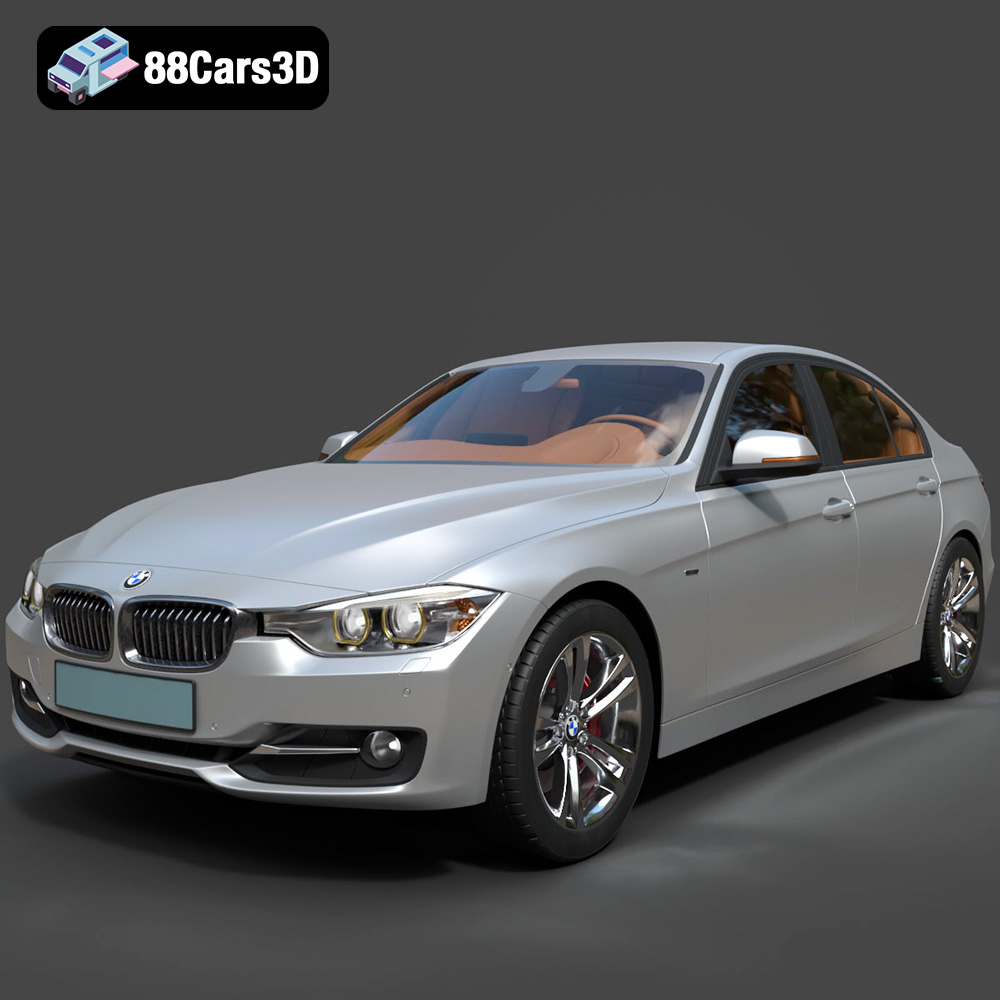
BMW 3 F30 3D Model
Texture: Yes
Material: Yes
Download the BMW 3 F30 3D Model featuring a detailed exterior, realistic interior, and optimized mesh. Includes .blend, .fbx, .obj, .glb, .stl, .ply, .unreal, and .max formats for rendering, simulation, and game development.
Price: $10.79
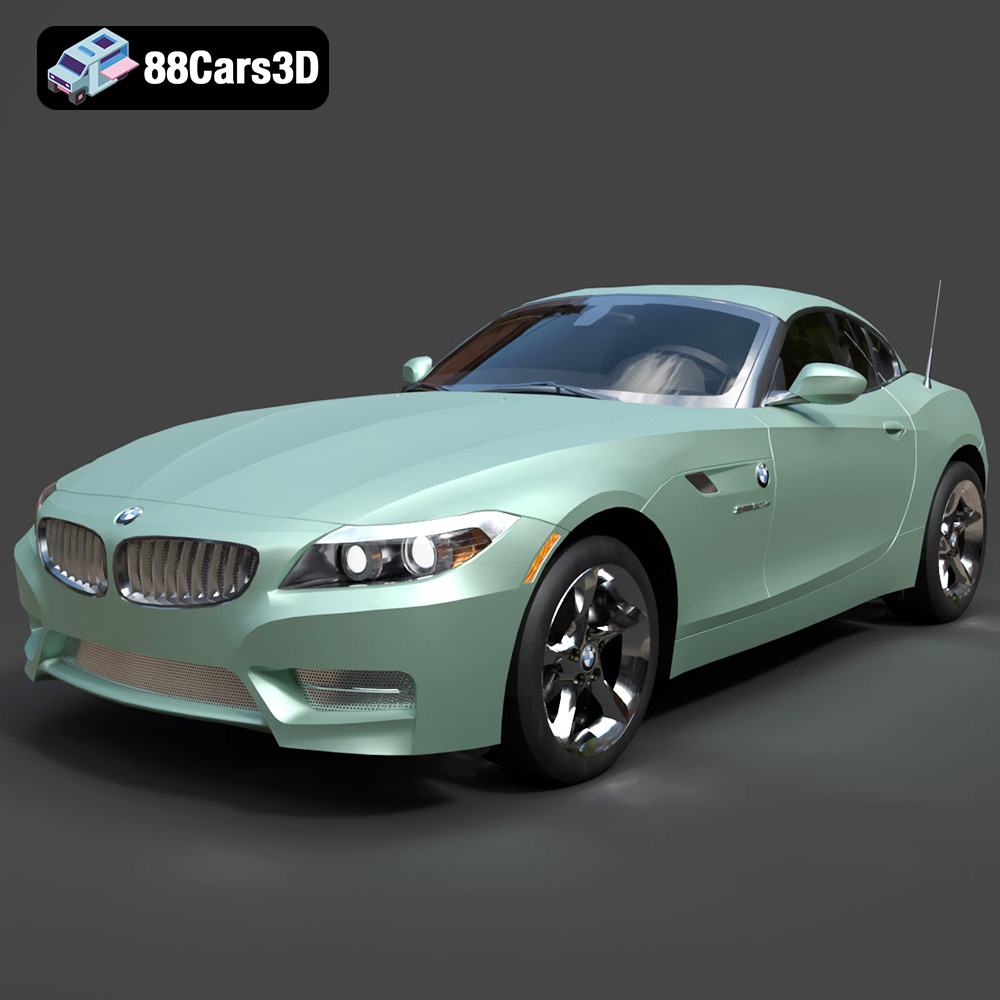
BMW Z4 Roadster E89 2012 3D Model
Texture: Yes
Material: Yes
Download the BMW Z4 Roadster E89 3D Model featuring clean geometry, realistic detailing, and a fully modeled interior. Includes .blend, .fbx, .obj, .glb, .stl, .ply, .unreal, and .max formats for rendering, simulation, and game development.
Price: $13.99

BMW Z4 E85 2005 3D Model
Texture: Yes
Material: Yes
Download the BMW Z4 E85 3D Model featuring clean geometry, realistic detailing, and a fully modeled interior. Includes .blend, .fbx, .obj, .glb, .stl, .ply, .unreal, and .max formats for rendering, simulation, and game development.
Price: $13.99

BMW M3 2024 3D Model
Texture: Yes
Material: Yes
Download the BMW M3 2024 3D Model featuring clean geometry, realistic detailing, and a fully modeled interior. Includes .blend, .fbx, .obj, .glb, .stl, .ply, .unreal, and .max formats for rendering, simulation, and game development.
Price: $13.99
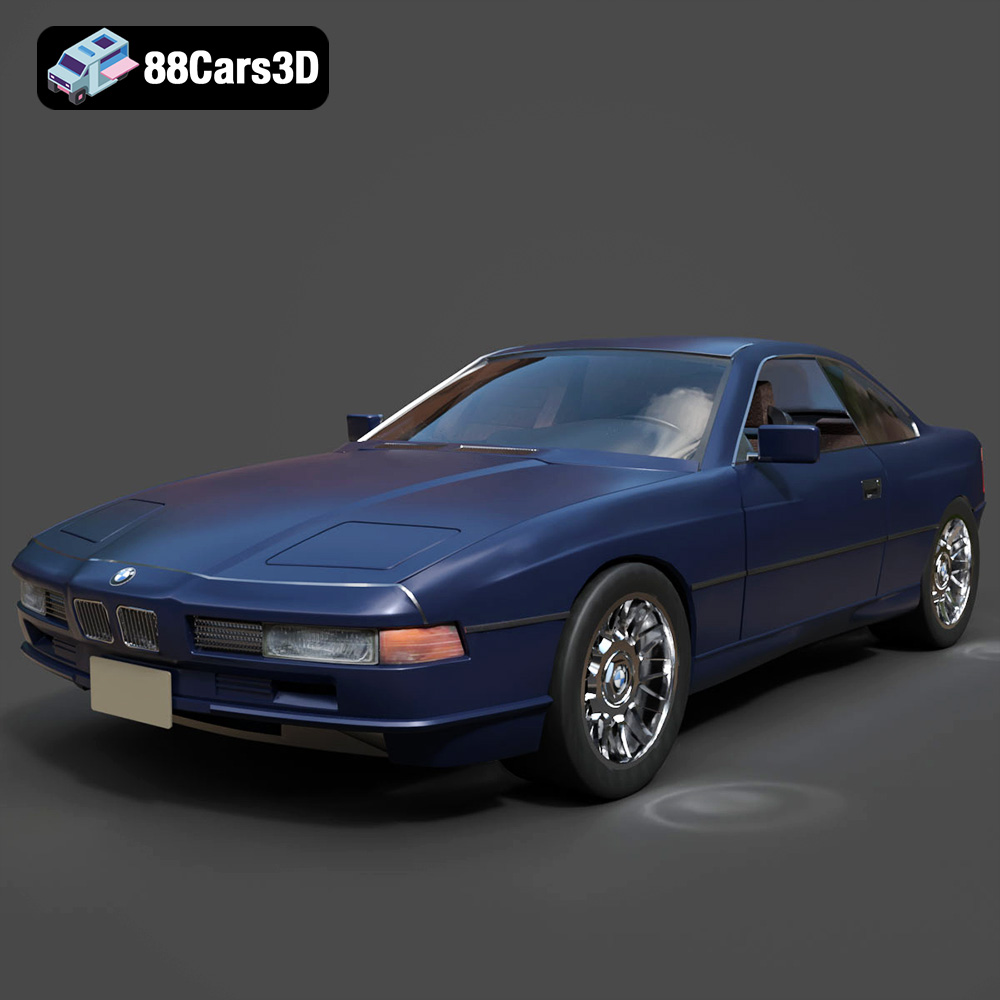
BMW 850i Coupe 1990 3D Model
Texture: Yes
Material: Yes
Download the BMW 850i Coupe 1990 3D Model featuring clean geometry, realistic detailing, and a fully modeled interior. Includes .blend, .fbx, .obj, .glb, .stl, .ply, .unreal, and .max formats for rendering, simulation, and game development.
Price: $13.99
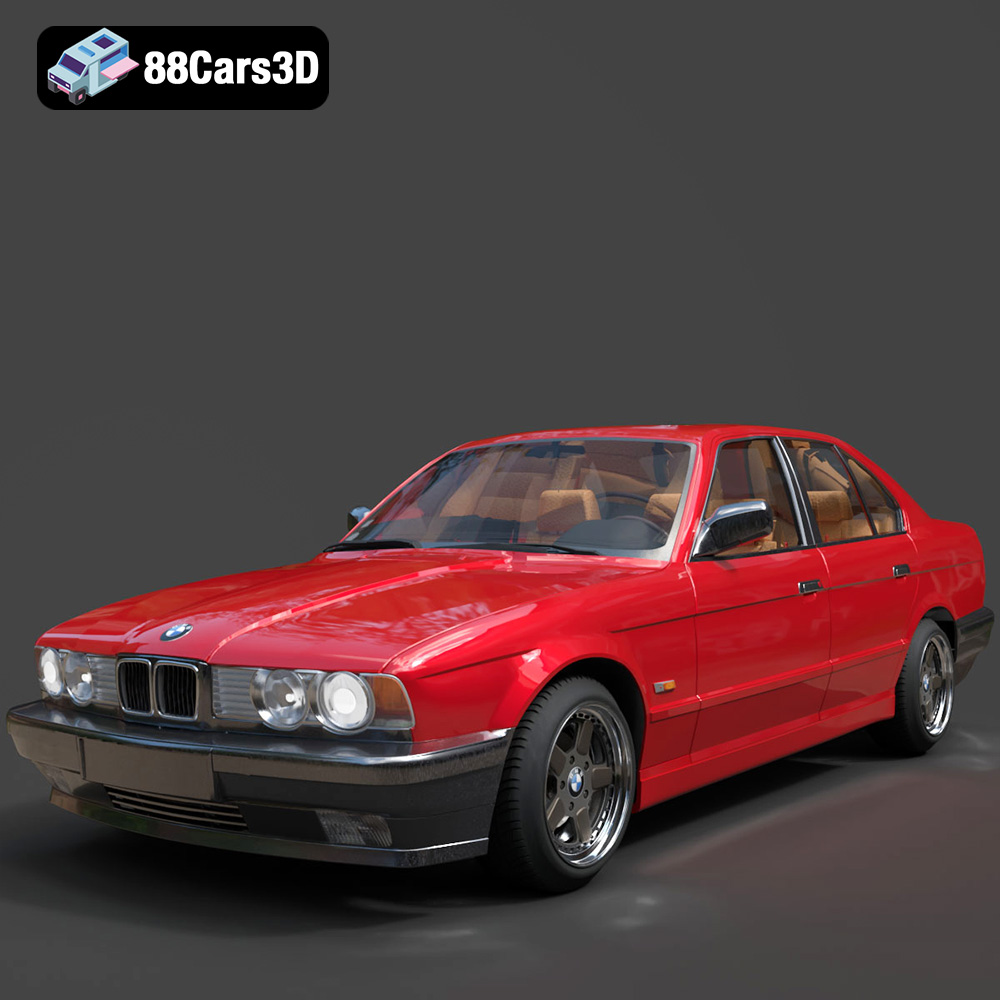
BMW 525i E34 1993 3D Model
Texture: Yes
Material: Yes
Download the BMW 525i E34 1993 3D Model featuring clean geometry, realistic detailing, and a fully modeled interior. Includes .blend, .fbx, .obj, .glb, .stl, .ply, .unreal, and .max formats for rendering, simulation, and game development.
Price: $12.99

BMW 7 Series 2016 3D Model
Texture: Yes
Material: Yes
Download the BMW 7 Series 2016 3D Model featuring luxurious design, detailed interior, and accurate exterior. Includes .blend, .fbx, .obj, .glb, .stl, .ply, .unreal, and .max formats for rendering, simulation, and game development.
Price: $10.79
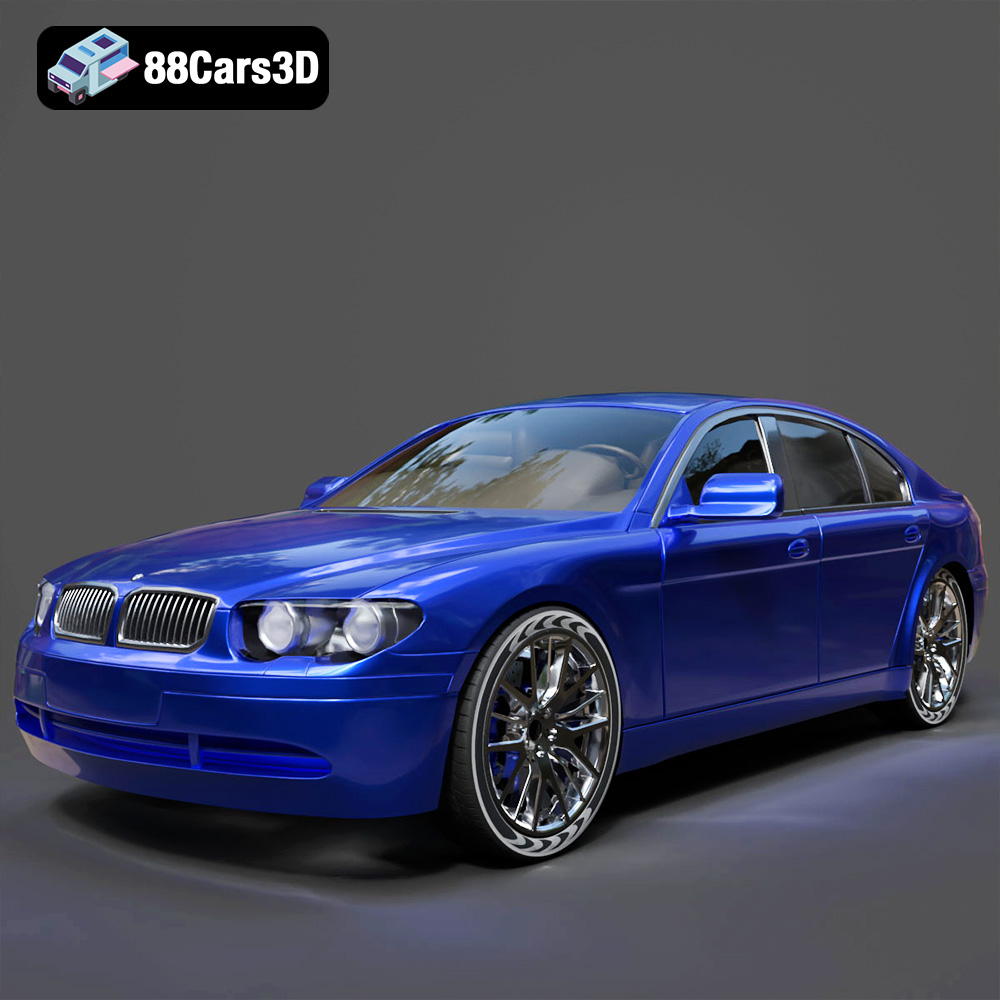
BMW 7 Series 30th Anniversary 3D Model
Texture: Yes
Material: Yes
Download the BMW 7 Series 30th Anniversary 3D Model featuring a meticulously crafted exterior, detailed interior, and realistic wheels. Includes .blend, .fbx, .obj, .glb, .stl, .ply, .unreal, and .max formats for rendering, simulation, and game development.
Price: $35.79

BMW 7-Series F02 3D Model
Texture: Yes
Material: Yes
Download the BMW 7-Series F02 3D Model featuring a detailed exterior and interior, optimized for rendering and animation. Includes .blend, .fbx, .obj, .glb, .stl, .ply, .unreal, and .max formats for rendering, simulation, and game development.
Price: $10.79
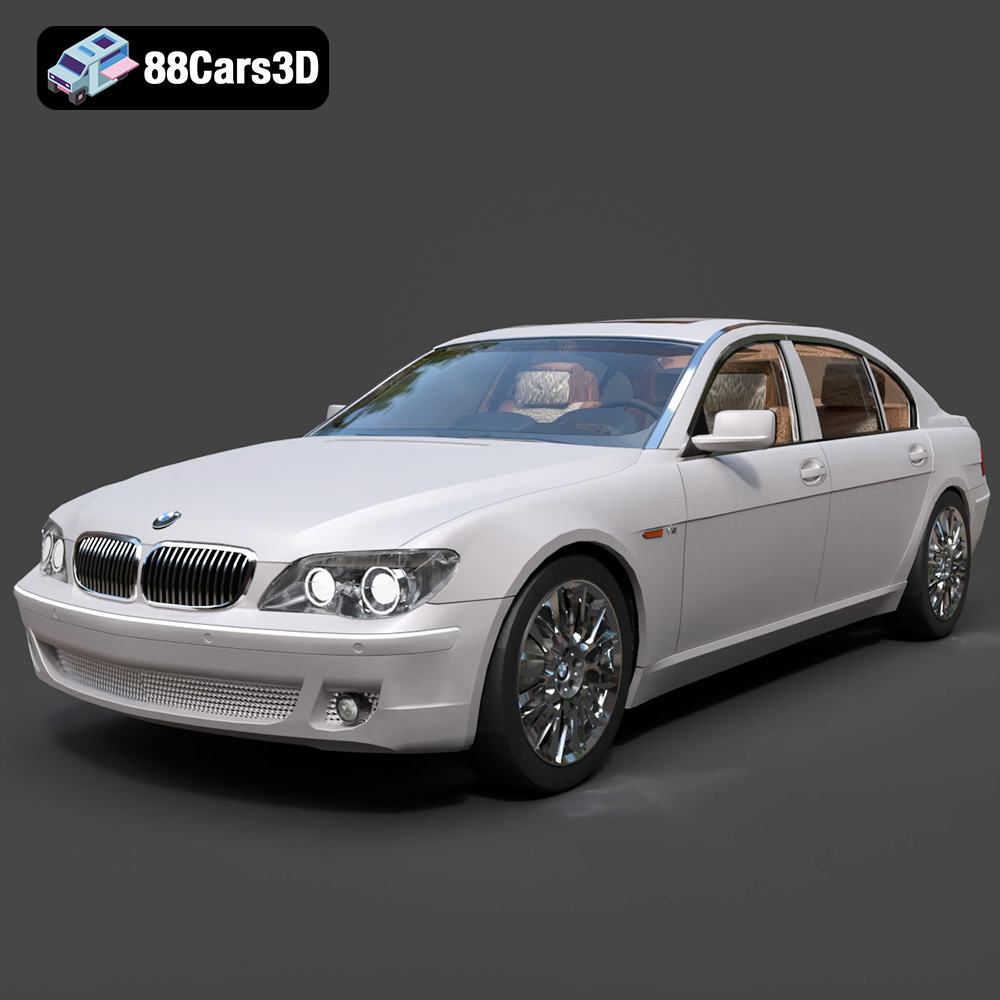
BMW 760Li E66 2005 3D Model
Texture: Yes
Material: Yes
Download the BMW 760Li E66 2005 3D Model featuring a detailed exterior, refined interior, and robust chassis. Includes .blend, .fbx, .obj, .glb, .stl, .ply, .unreal, and .max formats for rendering, simulation, and game development.
Price: $10.79
