

In the world of 3D visualization, few subjects demand as much precision and artistry as automotive rendering. The sleek lines, the luxurious finishes, and the dynamic interplay of light on polished surfaces are what make a car render truly captivating. At the heart of this realism lies the mastery of reflections and refractions. These phenomena are not merely aesthetic details; they are fundamental drivers of visual credibility, conveying material properties, environmental context, and the sheer elegance of design.
For 3D artists, game developers, and visualization professionals relying on high-quality assets from platforms like 88cars3d.com, understanding how to meticulously craft these effects is paramount. A perfectly rendered reflection can make a digital car indistinguishable from its real-world counterpart, while accurate refractions bring glass and transparent elements to life. This comprehensive guide will delve deep into the technical workflows, material science, lighting strategies, and rendering techniques necessary to achieve breathtaking reflections and refractions in your 3D car models, ensuring your automotive renders resonate with unparalleled realism.
The Foundation – Accurate 3D Car Models and Topology for Reflective Surfaces
Before any light can bounce or bend, it needs a surface to interact with. The quality of your 3D car model’s mesh is the bedrock upon which all realistic reflections and refractions are built. Imperfections in geometry will manifest as distorted reflections, jagged highlights, and unrealistic material responses. Sourcing high-quality models from reputable marketplaces, such as 88cars3d.com, is an excellent starting point, but understanding the underlying principles of good topology remains crucial for any customization or optimization.
Clean Topology and Edge Flow for Smooth Reflections
Clean topology refers to the organized and efficient arrangement of polygons (faces, edges, and vertices) in your 3D model. For automotive surfaces, which are predominantly smooth and curved, a quad-based topology (models built primarily with four-sided polygons) is almost always preferred. Quads deform predictably when subdivided, leading to incredibly smooth surfaces without pinching or creasing, which is vital for reflecting light accurately.
Edge flow is the directional path that edges follow across the surface. For car bodies, good edge flow means that the edges follow the natural contours and design lines of the vehicle. This is critical for two reasons: firstly, it allows for smooth deformation during animation (though less common for static car renders, it’s a good practice); secondly, and more importantly for reflections, it ensures that when subdivision surfaces (like OpenSubdiv in 3ds Max or Blender’s Subdivision Surface modifier) are applied, the resulting mesh remains perfectly smooth and free of unwanted ripples or bumps. These subtle surface irregularities, often invisible in diffuse lighting, become glaringly obvious when reflecting a high-contrast environment.
Avoid N-gons (polygons with more than four sides) and isolated triangles in areas intended to be smooth and reflective, as these can cause shading artifacts or unpredictable subdivision behavior. While some triangles might be unavoidable in very complex areas, they should be strategically placed where they won’t interfere with major curvature or reflection paths. Aim for a consistent density of polygons, especially across large, flat, or gently curving panels, to ensure uniform smoothness and accurate light interaction. Polygon counts for high-quality automotive models can range from 150,000 to over a million triangles, depending on the level of detail required for close-up renders versus distant shots or game assets.
UV Mapping for Seamless Material Application
UV mapping is the process of flattening the 3D surface of your model into a 2D space, allowing you to apply 2D textures (like color maps, roughness maps, or normal maps) without distortion. For highly reflective surfaces like car paint, pristine UVs are non-negotiable. Poor UVs can lead to stretched textures, visible seams, or incorrect anisotropy, all of which will degrade the quality of your reflections.
When UV mapping a car, consider the following strategies:
- Seam Placement: Strategically place UV seams along natural breaks in the geometry, such as panel lines, creases, or hidden areas. The goal is to minimize visible seams on large, smooth, reflective surfaces like the hood, roof, or side panels.
- Texel Density: Maintain a consistent texel density (the number of pixels per unit of surface area) across all major parts of the car. Inconsistent texel density means some areas will have blurrier textures than others, impacting the detail of reflections. Tools in most 3D software (e.g., UV Packmaster in Blender, UV tools in 3ds Max/Maya) can help manage this.
- Non-Overlapping UVs: Ensure no UV islands overlap, especially if you plan to bake lighting, ambient occlusion, or use unique texture maps for each part. Overlapping UVs can cause artifacts and unpredictable shading results.
- Multiple UV Sets: For complex automotive models, it’s common to use multiple UV sets. One set might be for primary color/detail textures, another for lightmaps (especially for game engines), and yet another for specific decals or custom effects.
A well-executed UV map ensures that your PBR material properties translate accurately across the entire surface, providing a smooth canvas for those crucial reflections and refractions.
Mastering PBR Materials – The Heart of Realistic Shading
Physically Based Rendering (PBR) materials are the industry standard for achieving photorealistic results. PBR materials simulate how light interacts with surfaces in the real world, based on physical properties rather than arbitrary artistic values. This consistency ensures that your materials look correct under any lighting condition, making them ideal for realistic reflections and refractions.
Understanding the PBR Workflow (Metallic/Roughness vs. Specular/Glossiness)
PBR workflows typically fall into two main categories: Metallic/Roughness and Specular/Glossiness. Both aim to achieve the same physical accuracy but use different texture maps to define material properties:
- Metallic/Roughness: This is the more common workflow today.
- Base Color Map: Defines the diffuse color for non-metals and the reflective color for metals.
- Metallic Map: A grayscale map (0 to 1) indicating if a surface is metallic (1.0) or non-metallic (0.0). Intermediate values are generally avoided as materials are rarely “partially” metallic.
- Roughness Map: A grayscale map (0 to 1) defining the microscopic surface irregularities. A value of 0 is perfectly smooth (mirror-like reflections), while 1 is completely rough (diffuse reflections). This map is crucial for controlling the sharpness and spread of reflections.
- Specular/Glossiness:
- Diffuse Map: Defines the base color for non-metals. Metals typically have a black diffuse map.
- Specular Map: An RGB map defining the color and intensity of specular reflections. For non-metals, this is typically achromatic (grayscale) and low intensity, while for metals, it defines their reflective color.
- Glossiness Map: The inverse of roughness; 1.0 is perfectly smooth, 0.0 is completely rough.
Both workflows adhere to the principle of energy conservation, meaning that light reflected from a surface cannot exceed the light that hit it. This prevents physically impossible (and unrealistic) brightness in reflections. When creating or adjusting materials, always consider how these maps influence not just the color, but critically, the sharpness, intensity, and tint of your reflections.
Crafting Car Paint Shaders: Layers of Realism
Car paint is one of the most complex PBR materials to simulate due to its layered structure. A typical automotive paint shader involves several components:
- Base Coat: This is the underlying color and can have varying degrees of metallic flake. It’s often controlled by a Base Color map and a Metallic map (for the flakes). The roughness of this layer determines how diffused the underlying color appears.
- Clear Coat: This is the glossy, protective outer layer that gives car paint its signature sheen. It acts as a separate reflective layer on top of the base coat, meaning light hits the clear coat first, reflects, or passes through to the base coat, then reflects again.
- IOR (Index of Refraction): For clear coat, an IOR of around 1.4-1.5 is typical. This determines how much light is reflected at grazing angles (Fresnel effect).
- Roughness: Even a “perfectly smooth” clear coat will have some microscopic roughness, so a very low but not zero roughness value is usually appropriate for new paint. Scratches or dirt can be added via roughness maps to increase realism.
- Anisotropy: Some car paints, particularly metallic ones, exhibit anisotropic reflections (reflections appear stretched in one direction). This can be simulated using an anisotropy map or value, often controlled by a tangent map or brush strokes.
- Flakes: Microscopic metallic flakes embedded in the base coat are responsible for the sparkling effect of many car paints. These are challenging to simulate accurately but can be faked with specialized procedural textures or detailed normal maps. For highly detailed renders, some renderers offer dedicated flake shaders.
When working with Blender, you can achieve complex car paint using the Principled BSDF shader, layering clear coat properties. For more advanced control, nodes like “Mix Shader” and “Layer Weight” (for Fresnel) can be combined. More details on Blender’s shading system can be found in the official Blender 4.4 documentation at https://docs.blender.org/manual/en/4.4/, particularly in the Shading and Materials sections.
Glass and Transparent Materials: Beyond Simple Transparency
Car glass is not just a transparent plane; it’s a complex material that interacts with light through refraction, reflection, and absorption. To achieve convincing glass, consider these factors:
- IOR (Index of Refraction): This is the most critical parameter for refraction. For standard glass, an IOR of approximately 1.5-1.52 is common. Different types of glass or acrylics will have slightly different IORs. Incorrect IOR will lead to unrealistic distortion of objects viewed through the glass.
- Tint/Color: Real-world automotive glass often has a subtle tint, especially for privacy glass or windshields with UV protection. This can be added as a subtle absorption color within the material.
- Roughness: While windshields are generally smooth, very subtle roughness can add realism, especially if simulating dirt or smudges. Side windows might have slightly higher roughness.
- Thickness: For accurate refraction, your glass geometry must have actual thickness (a solid mesh, not just a single plane). Without thickness, renderers cannot calculate proper light bending.
- Dispersion: The phenomenon where white light splits into its constituent colors (like a prism). While computationally expensive, some advanced renderers offer dispersion controls for very high-end glass renders.
- Volumetric Effects: For extremely thick glass or atmospheric effects, subtle volumetric scattering within the glass can enhance realism, though this is rarely necessary for standard car windows.
Remember that reflections also play a significant role in glass. The Fresnel effect dictates that glass reflects more light at grazing angles (when viewed almost parallel to the surface) and transmits more light when viewed head-on. PBR shaders inherently handle this, but it’s important to understand its visual impact.
Lighting the Scene – Shaping Reflections and Refractions
Even with perfect models and PBR materials, a poor lighting setup will result in flat, uninspired renders. Lighting is paramount for defining the shape, intensity, and character of your reflections and refractions, turning a static model into a dynamic scene.
HDRIs – The King of Environment Lighting
High Dynamic Range Images (HDRIs) are indispensable for realistic automotive rendering. An HDRI captures the full spectrum of light information from a real-world environment, including direct light, diffuse light, and reflections. When used as an environment map in your renderer, an HDRI provides:
- Realistic Global Illumination: It bathes your scene in naturally colored and bounced light.
- Accurate Reflections: The HDRI itself becomes the environment reflected in your car’s glossy surfaces, providing intricate details, realistic color, and physically accurate light sources (like the sun or studio lights).
Choosing the right HDRI is crucial.
- Studio HDRIs: Ideal for showcasing the car’s form and details with controlled, soft reflections. Look for those with large softboxes or light panels.
- Outdoor HDRIs: Provide natural environments like cityscapes, deserts, or forests. These inject life and context into your reflections, showing the car interacting with its surroundings. Consider the time of day (morning, noon, sunset) for different moods and light temperatures.
- Industrial HDRIs: Offer interesting reflections with hard edges, machinery, and metallic details, suitable for more aggressive or technical aesthetics.
Rotate your HDRI to find the most appealing reflections and highlights on the car’s surfaces. Adjusting its intensity can also significantly impact the overall brightness and contrast of the reflections without necessarily adding more direct lights.
Strategic Area Lights and Spotlights
While HDRIs provide global illumination and environment reflections, additional lights are often necessary to emphasize specific design features, create dramatic highlights, or sculpt the form of the car more precisely:
- Area Lights: Large, soft area lights are excellent for creating broad, smooth reflections on car panels, mimicking softbox studio lighting. Position them to sweep across curves, enhancing the car’s contours. The size of the area light directly affects the softness of its reflection.
- Spotlights: Use spotlights to create sharper, more focused highlights, particularly useful for chrome trim, badges, or wheels. They can also serve as rim lights to separate the car from the background or key lights to draw attention to specific details. Adjust their cone angle and falloff to control the spread and intensity of light.
- Fill Lights: Often used to subtly brighten shadow areas, preventing them from becoming too dark and obscuring details. These are typically soft, low-intensity area lights.
- Light Shapers/Blockers: In professional studio setups, light blockers are used to precisely define the shape of reflections. You can simulate this in 3D by placing geometry with emission materials or using light-blocking objects in front of your area lights to cut sharp, clean reflections onto the car body.
Think of your lights not just as sources of illumination, but as tools for painting reflections onto your car’s surfaces. Each light contributes to the overall reflection map, and their strategic placement is key to a compelling image.
Caustics and Light Interaction
Caustics are patterns of light formed by the focusing of light rays after passing through a transparent object (refractive caustics) or reflecting off a curved reflective surface (reflective caustics). While computationally intensive, realistic caustics can significantly enhance the realism of glass elements like headlights or windshields. Most modern path-tracing renderers (like Corona, V-Ray, Cycles, Arnold) have the capability to render caustics, though they often require higher sample counts or specific settings to resolve cleanly without noise. For many automotive renders, especially those focused on the car body itself, subtle caustics might not be the highest priority, but for detailed close-ups of headlights or intricate glass elements, they can add an extra layer of visual fidelity.
Rendering Techniques for Impeccable Realism (Corona, V-Ray, Cycles, Arnold)
The choice of rendering engine plays a significant role in how reflections and refractions are calculated and ultimately appear. Modern renderers excel at physically accurate light transport, but understanding their nuances can optimize your workflow and improve results.
Ray Tracing vs. Path Tracing – The Underlying Mechanics
Most modern renderers utilize either ray tracing or path tracing algorithms. While closely related, there are subtle differences:
- Ray Tracing: Historically, ray tracing involved casting rays from the camera into the scene and tracing their paths as they reflect or refract off surfaces. While accurate for direct light, simulating global illumination (bounced light) required more complex techniques.
- Path Tracing: An evolution of ray tracing, path tracing stochastically traces multiple light paths from the camera or light sources, accounting for bounces, reflections, refractions, and absorption throughout the scene. This method naturally simulates global illumination, caustics, and complex light interactions, making it ideal for photorealistic results. Renderers like Corona, V-Ray (in its CPU modes), Cycles (Blender), and Arnold are all powerful path tracers.
For reflections and refractions, path tracers are generally superior as they inherently calculate multiple bounces of light, leading to more realistic and physically accurate inter-reflections and light bending through complex glass objects. The number of reflection/refraction bounces set in your render engine directly impacts how deep these effects are calculated – more bounces mean more realism but also longer render times.
Sampling and Denoising for Clean Renders
Path tracing is a stochastic process, meaning it relies on random samples to simulate light paths. This can lead to “noise” or graininess in your renders, especially in complex areas with strong reflections, refractions, or indirect lighting. To combat this:
- Sampling Settings: Increase the number of samples (rays per pixel, passes, or rendering quality settings) in your renderer. More samples lead to a cleaner image but increase render time. It’s a balance between quality and speed.
- Denoising: Modern renderers feature powerful denoisers (e.g., NVIDIA OptiX, Intel Open Image Denoise (OIDN), Corona Denoiser, V-Ray Denoiser). These AI-powered tools analyze the noisy render output and intelligently remove noise while preserving details. Denoising can drastically reduce render times by allowing you to render at lower sample counts and clean up the image in post. Always test different denoiser settings to find the optimal balance for your scene, as aggressive denoising can sometimes soften fine details.
For Blender users, Cycles offers both OptiX and OIDN denoisers, which are highly effective for cleaning up reflections and glass. Refer to the Blender 4.4 documentation for detailed instructions on configuring these denoisers for optimal performance.
Render Passes and AOV’s (Arbitrary Output Variables)
For maximum control in post-production, rendering out separate passes (also known as AOV’s or render elements) is standard practice. These passes allow you to isolate and adjust specific aspects of your render without re-rendering the entire image. Key passes for reflections and refractions include:
- Reflection Pass: Isolates only the reflected light from surfaces. This allows you to adjust the intensity, color, and contrast of reflections independently in compositing.
- Refraction Pass: Isolates the light that has passed through and been bent by transparent objects. Useful for fine-tuning glass transparency and distortion.
- Specular Pass: Captures the direct, shiny highlights from light sources on surfaces.
- Diffuse Pass: Shows the base color of surfaces without reflections or highlights.
- Alpha/Mask Passes: Essential for isolating the car or specific parts (like glass, chrome) for targeted adjustments.
By compositing these passes in software like Photoshop, Affinity Photo, or Nuke, you gain incredible flexibility to enhance realism, correct errors, and add artistic flourishes to your reflections and refractions, often saving significant re-render time.
Optimizing for Performance: Game Engines, AR/VR, and Real-Time Visualization
Achieving realistic reflections and refractions in real-time environments like game engines (Unity, Unreal Engine) or AR/VR applications presents unique challenges. Unlike offline renderers that can spend minutes or hours per frame, real-time applications demand millisecond performance. This necessitates clever approximations and optimization strategies.
LODs (Levels of Detail) for Scalable Performance
Levels of Detail (LODs) are crucial for managing performance in real-time. An LOD system generates multiple versions of a 3D model, each with progressively fewer polygons. As the camera moves further away from the object, lower-detail versions are swapped in, reducing the computational load. For highly reflective car models sourced from platforms like 88cars3d.com, implementing LODs is vital:
- LOD0 (Highest Detail): Used for close-up shots, often with 100,000+ triangles, ensuring perfectly smooth reflections.
- LOD1, LOD2, etc.: Progressively lower polygon counts. While reflections might lose some subtle detail, the overall shape and major reflections should still be convincing.
The key is to create LOD transitions that are visually imperceptible, ensuring reflections don’t suddenly pop or disappear as the camera moves.
Reflection Probes and Screen Space Reflections (SSR)
Real-time engines cannot afford full path tracing for reflections. Instead, they use approximations:
- Reflection Probes: These are “cameras” placed in the scene that capture a 360-degree cubemap of the environment from their position. This cubemap is then used to generate reflections on nearby objects.
- Static Probes: Best for static environments (e.g., a car parked in a garage). They capture the environment once and are very performant.
- Dynamic Probes: Can update in real-time but are very performance-intensive. Often used sparingly or for critical moving reflective surfaces.
For a car model, you’d place reflection probes strategically around the vehicle to capture accurate environmental reflections from various angles. The quality and resolution of these probes directly impact the fidelity of your reflections.
- Screen Space Reflections (SSR): This technique uses the pixels already rendered on the screen to calculate reflections. SSR is excellent for dynamic, local reflections (e.g., a car reflecting a nearby wall or the ground plane) and is relatively cheap to compute. However, its major limitation is that it can only reflect what is currently visible on screen. Objects outside the camera’s view or behind other objects will not be reflected, leading to noticeable “pop-in” or missing reflections. Combining SSR with reflection probes often yields the best balance of realism and performance.
Optimizing Transparent Materials
Transparent materials like car glass are notoriously expensive in real-time due to draw order issues and alpha blending.
- Alpha Blending vs. Alpha Clip: Alpha blending (where transparency values range from 0 to 1) requires objects to be sorted from back to front, which is complex and can lead to visual artifacts. Alpha clipping (where pixels are either fully opaque or fully transparent) is much cheaper but unsuitable for realistic glass.
- Optimized Shaders: Use shaders specifically designed for automotive glass in your game engine. These often employ techniques like “fake” refraction (e.g., distorting the background based on IOR without actually ray tracing) or combining multiple passes to simulate thickness and reflections.
- Reduce Overdraw: Minimize the number of transparent layers overlapping each other. For car windows, ensure your glass geometry is clean and doesn’t unnecessarily overlap with interior geometry if not visible.
For AR/VR, where performance is even more critical, these optimizations are paramount. Models from 88cars3d.com can be a solid base, but custom material setup and LOD generation are often required for optimal real-time performance.
Post-Processing and Compositing – The Final Polish
The render straight out of your 3D software is rarely the final product. Post-processing and compositing in tools like Adobe Photoshop, Affinity Photo, or DaVinci Resolve are essential steps to refine reflections, enhance refractions, and inject the final touches of realism and artistic intent.
Enhancing Reflections and Refractions in Post
Using the render passes discussed earlier, you can precisely target and enhance specific elements:
- Adjusting Reflection Intensity: Isolate the reflection pass and subtly increase or decrease its brightness and contrast to make reflections pop or recede. Be careful not to overdo it, as overly bright reflections can look artificial.
- Color Adjustments: Tweak the hue and saturation of reflections to better match the environment or achieve a specific mood. For instance, you might subtly cool down reflections from a cloudy sky.
- Sharpness and Clarity: Apply subtle sharpening to reflection passes to enhance details, or conversely, add a touch of Gaussian blur to simulate atmospheric haze or subtle imperfections in the paint.
- Chromatic Aberration: A subtle amount of chromatic aberration (color fringing, often found at the edges of glass or highly reflective objects in real cameras) can add a touch of photographic realism, especially to glass refractions.
- Lens Distortion/Vignetting: Mimic real-world camera lenses by adding subtle barrel distortion or vignetting to the overall image.
The key is subtlety. These adjustments should enhance, not overpower, the physically accurate render.
Compositing Render Passes
The real power of post-processing comes from compositing individual render passes. By blending the reflection, diffuse, specular, and other passes using appropriate blend modes (e.g., Screen for specular, Overlay for reflections), you gain granular control over every aspect of the image. This non-destructive workflow allows for endless experimentation without needing to re-render, saving valuable time. For example, if the reflections on the car paint are too strong, you can simply reduce the opacity of the reflection pass without affecting the diffuse color or shadows.
Color Grading and Tonal Adjustments
The final stage involves unifying the image through color grading. This is where you establish the overall mood and aesthetic.
- Exposure and Contrast: Fine-tune the global exposure and contrast to ensure reflections are neither blown out nor lost in shadows.
- Color Balance and Temperature: Adjust the white balance to ensure colors look natural, or intentionally shift the color temperature for creative effect (e.g., warmer tones for a sunset scene, cooler for an overcast day).
- Curves and Levels: Use these powerful tools to precisely control the tonal range and contrast, ensuring highlights are crisp and shadows retain detail, which is crucial for defining the clarity of reflections.
- Atmospheric Effects: Add subtle atmospheric haze or mist in post to enhance depth and integrate the car into its environment more convincingly. This can also soften reflections naturally.
By meticulously working through these post-processing steps, you can elevate your car renders from technically accurate to visually stunning, ensuring that every reflection and refraction contributes to an immersive and believable final image.
Conclusion
Creating realistic reflections and refractions in 3D car renders is a multifaceted discipline that marries technical precision with artistic vision. It demands a deep understanding of 3D modeling fundamentals, the science behind PBR materials, the art of lighting, the capabilities of your chosen rendering engine, and the finesse of post-production.
From ensuring clean topology and precise UV mapping for distortion-free surfaces to crafting layered PBR shaders for authentic car paint and glass, every detail contributes to the final illusion. Strategic lighting with HDRIs and targeted light sources sculpts the visual narrative, while intelligent rendering settings and denoising techniques ensure clarity and efficiency. Finally, leveraging render passes and robust post-processing workflows provides the ultimate control to refine and elevate your automotive visualization.
Whether you’re working on high-fidelity visualizations, immersive game assets, or cutting-edge AR/VR experiences, the principles outlined here are your roadmap to achieving unparalleled realism. Remember that practice and experimentation are key to mastering these techniques. Start with a solid foundation by utilizing high-quality 3D car models available on platforms like 88cars3d.com, and then apply these advanced workflows to bring your automotive visions to life with breathtaking reflections and refractions.
Featured 3D Car Models
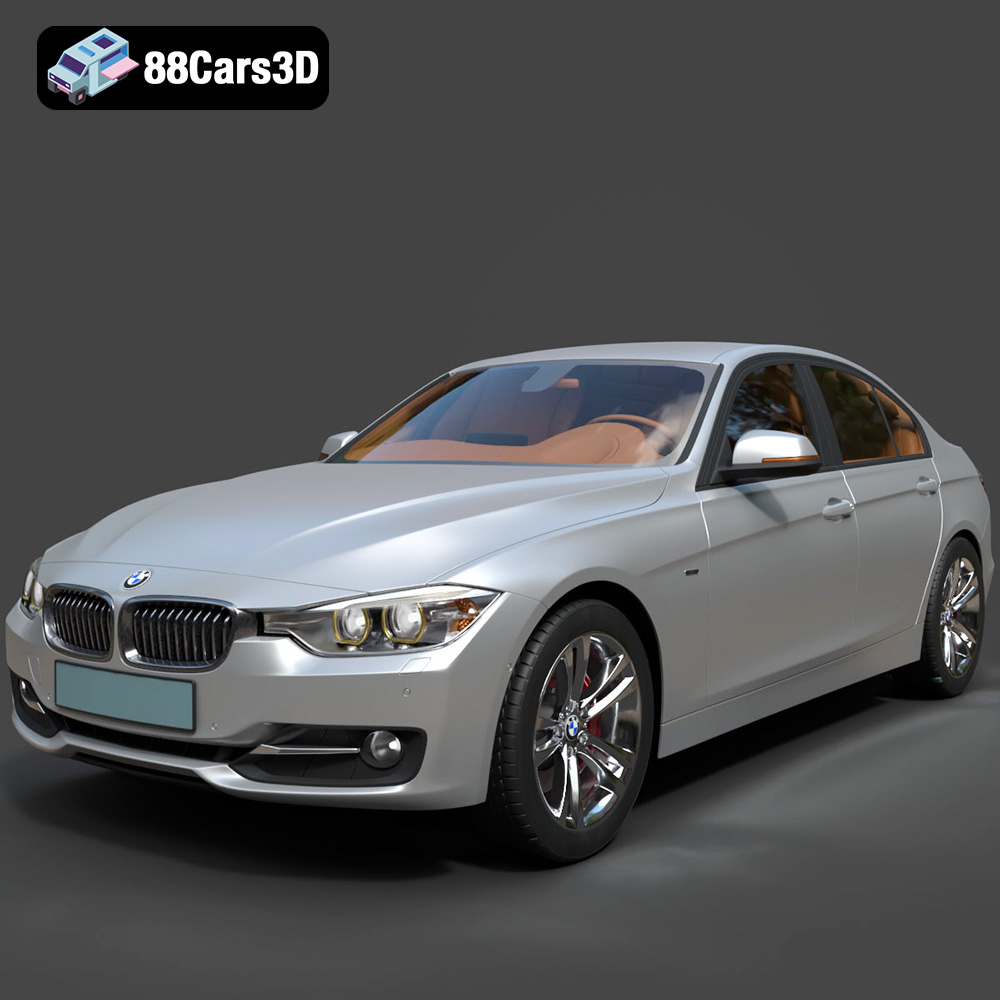
BMW 3 F30 3D Model
Texture: Yes
Material: Yes
Download the BMW 3 F30 3D Model featuring a detailed exterior, realistic interior, and optimized mesh. Includes .blend, .fbx, .obj, .glb, .stl, .ply, .unreal, and .max formats for rendering, simulation, and game development.
Price: $10.79
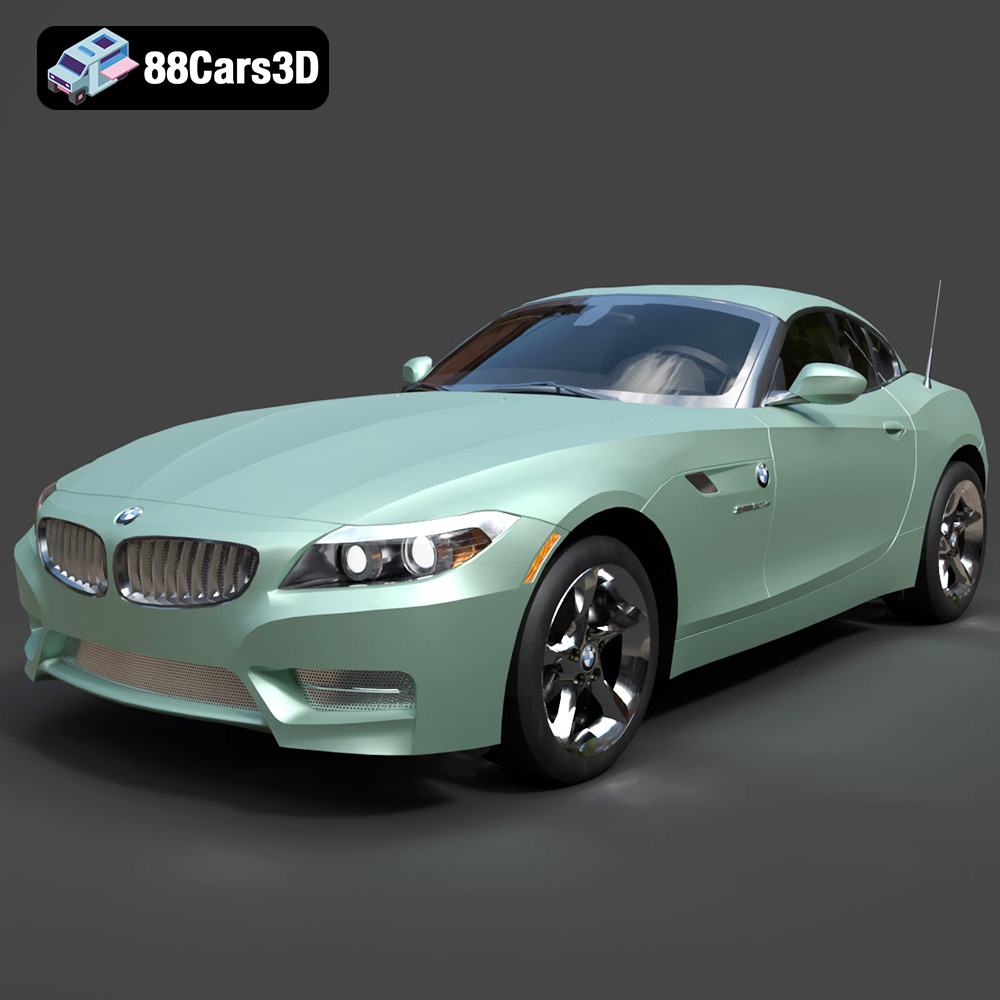
BMW Z4 Roadster E89 2012 3D Model
Texture: Yes
Material: Yes
Download the BMW Z4 Roadster E89 3D Model featuring clean geometry, realistic detailing, and a fully modeled interior. Includes .blend, .fbx, .obj, .glb, .stl, .ply, .unreal, and .max formats for rendering, simulation, and game development.
Price: $13.99

BMW Z4 E85 2005 3D Model
Texture: Yes
Material: Yes
Download the BMW Z4 E85 3D Model featuring clean geometry, realistic detailing, and a fully modeled interior. Includes .blend, .fbx, .obj, .glb, .stl, .ply, .unreal, and .max formats for rendering, simulation, and game development.
Price: $13.99

BMW M3 2024 3D Model
Texture: Yes
Material: Yes
Download the BMW M3 2024 3D Model featuring clean geometry, realistic detailing, and a fully modeled interior. Includes .blend, .fbx, .obj, .glb, .stl, .ply, .unreal, and .max formats for rendering, simulation, and game development.
Price: $13.99
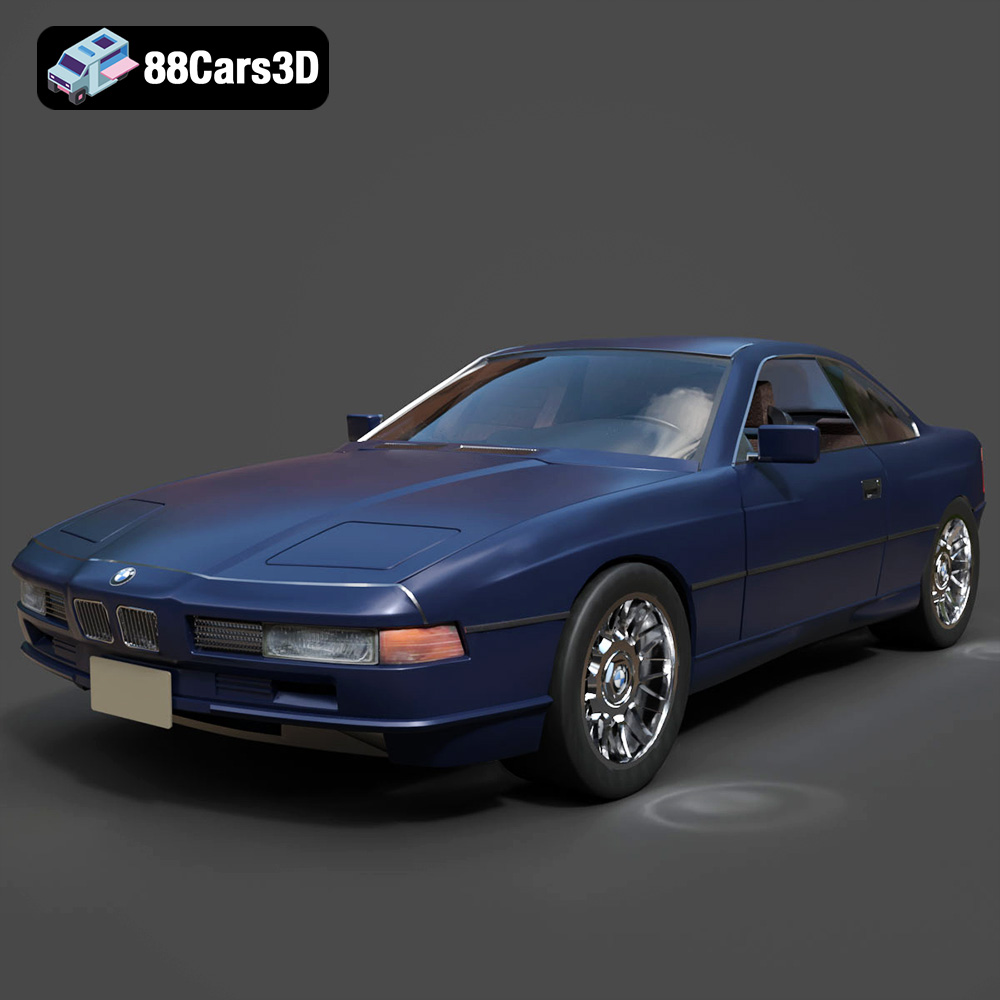
BMW 850i Coupe 1990 3D Model
Texture: Yes
Material: Yes
Download the BMW 850i Coupe 1990 3D Model featuring clean geometry, realistic detailing, and a fully modeled interior. Includes .blend, .fbx, .obj, .glb, .stl, .ply, .unreal, and .max formats for rendering, simulation, and game development.
Price: $13.99
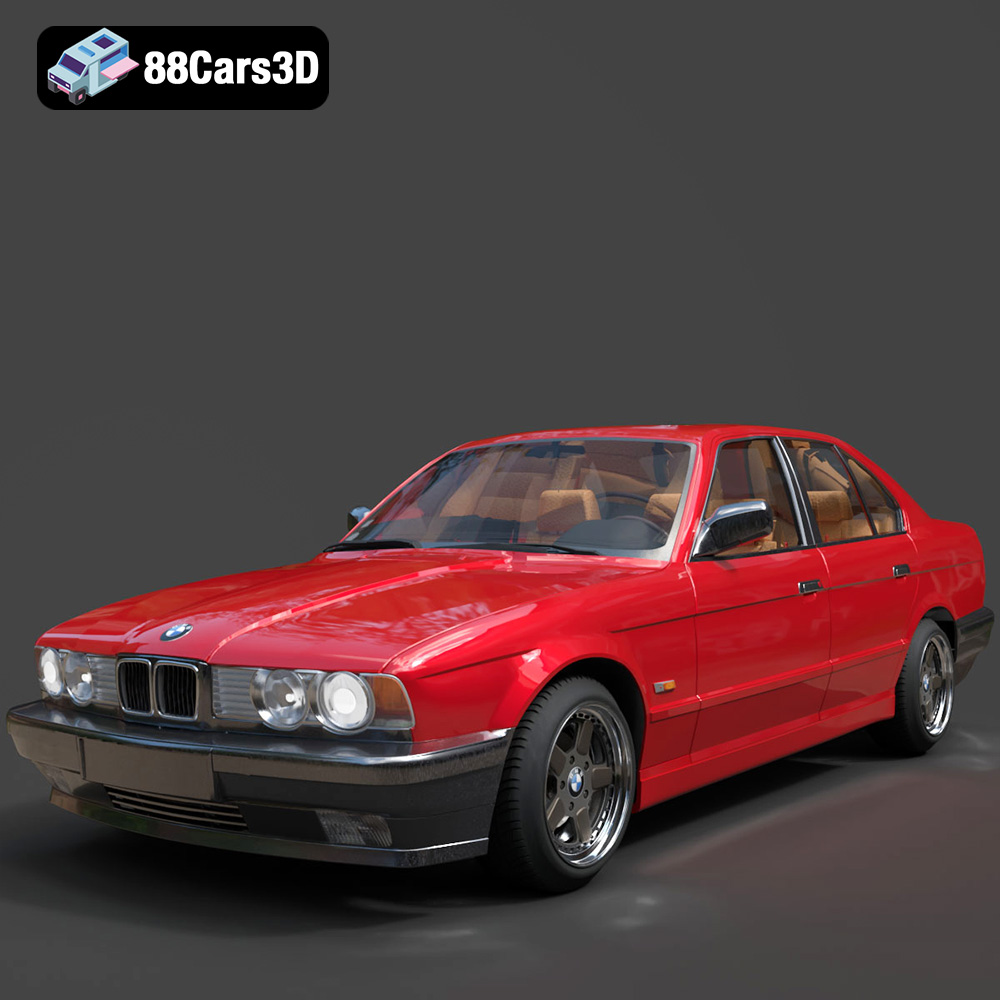
BMW 525i E34 1993 3D Model
Texture: Yes
Material: Yes
Download the BMW 525i E34 1993 3D Model featuring clean geometry, realistic detailing, and a fully modeled interior. Includes .blend, .fbx, .obj, .glb, .stl, .ply, .unreal, and .max formats for rendering, simulation, and game development.
Price: $12.99

BMW 7 Series 2016 3D Model
Texture: Yes
Material: Yes
Download the BMW 7 Series 2016 3D Model featuring luxurious design, detailed interior, and accurate exterior. Includes .blend, .fbx, .obj, .glb, .stl, .ply, .unreal, and .max formats for rendering, simulation, and game development.
Price: $10.79
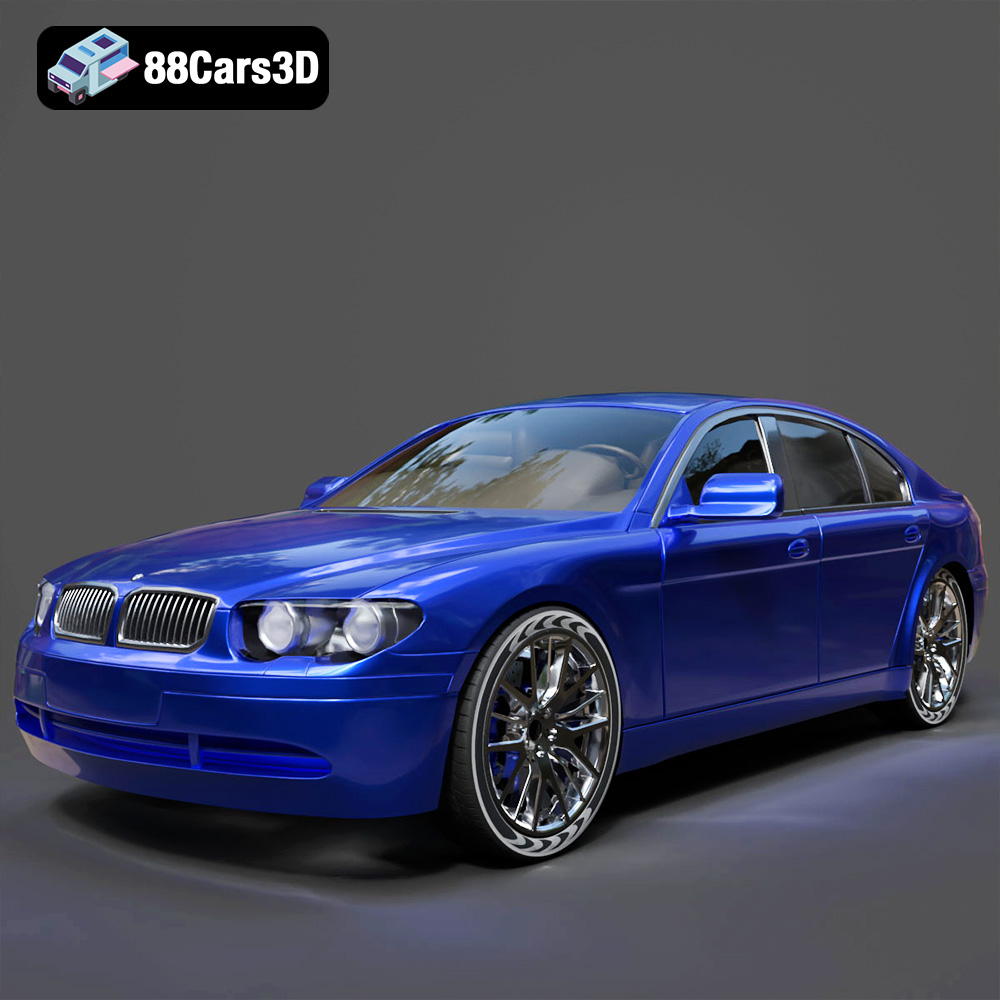
BMW 7 Series 30th Anniversary 3D Model
Texture: Yes
Material: Yes
Download the BMW 7 Series 30th Anniversary 3D Model featuring a meticulously crafted exterior, detailed interior, and realistic wheels. Includes .blend, .fbx, .obj, .glb, .stl, .ply, .unreal, and .max formats for rendering, simulation, and game development.
Price: $35.79

BMW 7-Series F02 3D Model
Texture: Yes
Material: Yes
Download the BMW 7-Series F02 3D Model featuring a detailed exterior and interior, optimized for rendering and animation. Includes .blend, .fbx, .obj, .glb, .stl, .ply, .unreal, and .max formats for rendering, simulation, and game development.
Price: $10.79
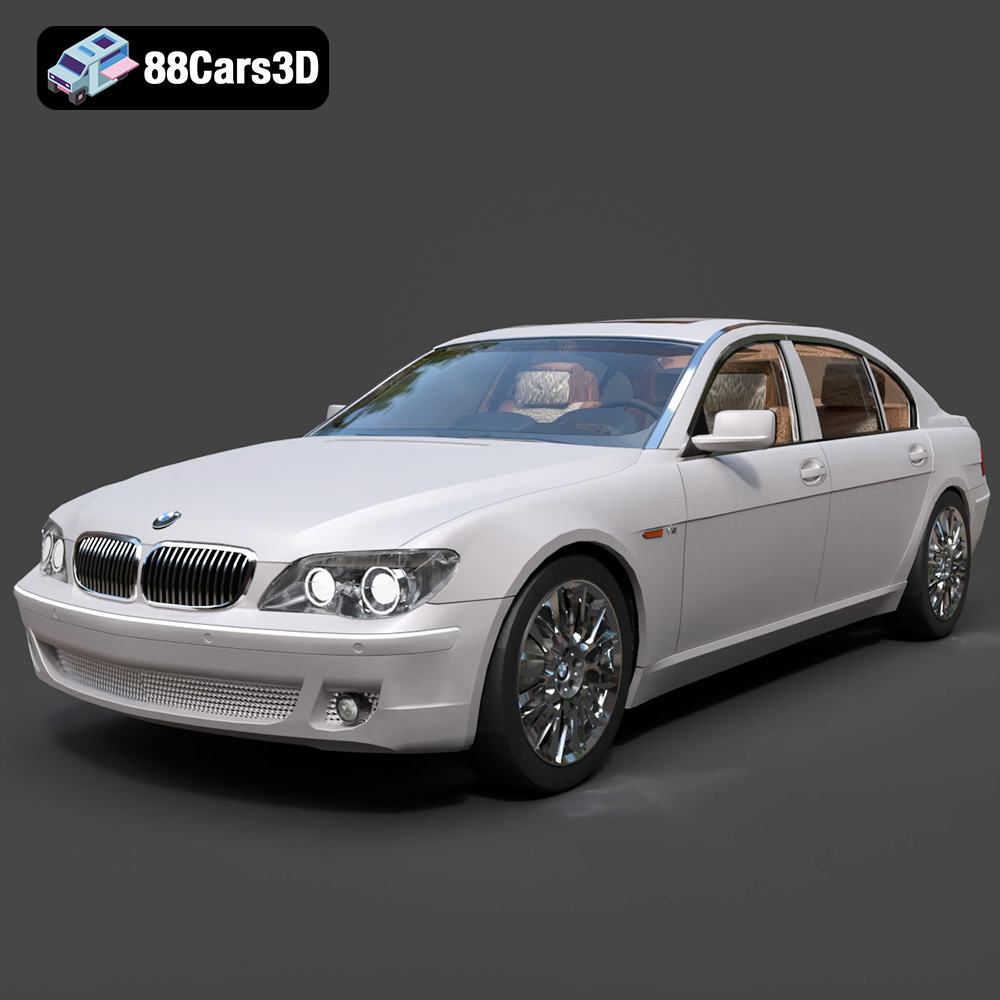
BMW 760Li E66 2005 3D Model
Texture: Yes
Material: Yes
Download the BMW 760Li E66 2005 3D Model featuring a detailed exterior, refined interior, and robust chassis. Includes .blend, .fbx, .obj, .glb, .stl, .ply, .unreal, and .max formats for rendering, simulation, and game development.
Price: $10.79
