

The roar of a finely tuned engine, the screech of tires as you power through a corner, the precise feedback of suspension absorbing every bump – these are the hallmarks of a truly immersive driving experience. For game developers, automotive visualization professionals, and simulation engineers, achieving this level of realism in real-time is both an art and a science. Unreal Engine, with its robust physics systems, stunning rendering capabilities, and flexible Blueprint scripting, provides an unparalleled platform for bringing these dynamic experiences to life.
From high-fidelity car configurators used by major manufacturers to adrenaline-pumping racing games, realistic vehicle physics are the backbone of authenticity. This comprehensive guide will take you on a deep dive into the technical intricacies of building and fine-tuning vehicle physics within Unreal Engine 5 (and later versions). We’ll explore everything from preparing your high-quality 3D car models (like those found on 88cars3d.com) to leveraging advanced Unreal Engine features like Chaos Physics, Blueprint scripting, and performance optimization techniques. By the end, you’ll have a solid understanding of how to craft compelling and believable vehicle dynamics that will captivate your audience and elevate your projects.
Unreal Engine’s Physics Foundation: Embracing Chaos Vehicle
Unreal Engine 5 brought with it a significant evolution in its physics capabilities: the Chaos Physics Engine. Replacing the long-standing PhysX as the default physics solver, Chaos offers a modern, highly scalable, and performant solution for a vast array of physics simulations, including rigid body dynamics, destruction, and, crucially for us, vehicles. While PhysX was a capable engine, Chaos was designed from the ground up for next-generation interactive experiences, providing enhanced stability, determinism, and the ability to handle massive numbers of simulated objects, making it ideal for detailed automotive simulations.
The core of realistic vehicle physics in Unreal Engine 5 lies within the Chaos Vehicle Component. This specialized component, built upon the Chaos physics system, provides a comprehensive framework for simulating wheeled vehicles. It manages the complex interplay of engine torque, transmission, differential, suspension, and tire-road friction, allowing developers to create highly customizable and realistic driving behaviors. Unlike basic rigid body physics, the Chaos Vehicle Component abstracts much of the underlying complexity, providing exposed parameters that can be intuitively tuned to achieve desired handling characteristics, from heavy trucks to agile sports cars. Its modular design allows for extensive customization through both its exposed properties in the Details panel and through Blueprint scripting for dynamic control.
From PhysX to Chaos: A Paradigm Shift
For those familiar with older versions of Unreal Engine, the transition from PhysX to Chaos represents a shift in how vehicle physics are approached. While the fundamental principles of vehicle dynamics remain the same, Chaos introduces new ways of defining collisions, handling constraints, and iterating on physical properties. Chaos operates on a substepping model, allowing for more stable and accurate simulations, especially at high speeds or with complex interactions. It also offers improved multi-threading capabilities, leveraging modern CPU architectures to deliver better performance. Understanding this transition is key to effectively utilizing the latest tools and optimizing your vehicle simulations for the best possible results.
The Power of the Chaos Vehicle Movement Component
The Chaos Vehicle Movement Component is the central hub for all vehicle-related physics and input processing. When added to an actor, it provides access to a myriad of parameters that define the vehicle’s physical properties. These include the layout of wheels, their suspension characteristics, tire friction models, engine torque curves, gear ratios, and differential types. It also handles the mapping of player input (throttle, brake, steering) to the vehicle’s control surfaces. The component exposes a robust API, allowing developers to query vehicle state (speed, RPM, wheel slip) and apply forces or modify parameters dynamically via Blueprint or C++. This deep level of control is essential for creating nuanced driving mechanics, enabling features like driver aids, custom damage models, and interactive environmental responses.
Preparing Your 3D Car Model for Unreal Engine Physics
Before you can dive into configuring physics, you need a high-quality 3D car model that is correctly prepared for Unreal Engine. The foundation of any great automotive visualization or game is a meticulously crafted asset. Platforms like 88cars3d.com offer a curated selection of 3D car models specifically designed for Unreal Engine, featuring clean topology, realistic PBR materials, and proper UV mapping, which are crucial starting points.
When importing your model, ensure it’s in a compatible format such as FBX or USD. Unreal Engine’s import pipeline is robust, but a few best practices will prevent headaches. Always verify scale: models should be authored at real-world scale (centimeters in Unreal Engine) to ensure accurate physics calculations. Check pivot points and orientation; the vehicle’s forward axis should generally be +X, and its up axis +Z. These seemingly minor details have a significant impact on how the Chaos Vehicle Component interprets your model and applies forces.
Skeletal Mesh and Collision Setup Essentials
For vehicles, a skeletal mesh is almost always preferred over a static mesh, especially when dealing with moving parts like wheels and suspension. Your 3D car model should have a root bone (e.g., “root”) and distinct bones for each wheel (e.g., “wheel_FL”, “wheel_FR”, “wheel_RL”, “wheel_RR”). These wheel bones are critical; the Chaos Vehicle Component uses their positions and orientations to attach wheels and apply suspension forces. Ensure the wheel bones are centered within their respective wheel meshes for accurate rotation and collision. If your model doesn’t come with a proper skeletal hierarchy, you’ll need to create one within your 3D modeling software (e.g., Blender, Maya, 3ds Max) before importing.
Collision setup is equally vital for accurate physics. Unreal Engine provides several options, from automatically generated primitive shapes to custom per-poly collisions. For the vehicle body, a combination of simple convex hull collisions (e.g., multiple boxes or capsules) is often best for performance and accuracy. For wheels, a simple sphere or capsule collision is usually sufficient, as the Chaos Vehicle Component handles tire-road interaction separately. Avoid complex per-poly collisions for the entire vehicle body if possible, as they can be computationally expensive and lead to performance bottlenecks, especially with multiple vehicles or in open-world environments. However, for specific areas requiring detailed interaction (e.g., an intricate bumper that needs to deform correctly), you might consider using custom per-poly collision meshes where performance impact is acceptable.
Deep Dive into the Chaos Vehicle Component Configuration
With your model imported and correctly set up as a skeletal mesh, the real work begins: configuring the Chaos Vehicle Component. This is where you’ll define the vehicle’s physical properties, transforming a static model into a dynamic, drivable machine. Each parameter plays a crucial role in how the vehicle handles, accelerates, and reacts to the environment. Careful tuning and extensive testing are key to achieving believable and engaging vehicle dynamics.
Chassis and Mass Properties: The Foundation of Handling
The chassis properties define the fundamental characteristics of your vehicle. The most critical aspect here is the Center of Mass (CoM). A low CoM generally leads to more stable handling, while a higher CoM can induce more body roll and make the vehicle feel less planted. You can visualize and adjust the CoM directly within the Unreal Engine editor. Equally important is the Inertia Tensor, which describes how mass is distributed around the CoM and affects rotational resistance. Incorrectly set inertia can make a vehicle feel too “floaty” or too “stiff.” Experimentation with these values, coupled with real-time physics debugging, is essential. For instance, moving the CoM slightly forward will give a vehicle more understeer, while moving it backward can induce oversteer, reflecting real-world vehicle design principles.
Suspension System Tuning: Grip and Comfort
The suspension system is paramount for both realistic handling and visual appeal. Key parameters include Spring Stiffness (how stiff or soft the springs are), Damper Compression and Rebound (how quickly the suspension compresses and extends), and Suspension Travel (the maximum distance the wheels can move vertically). Anti-roll bars, also known as sway bars, are crucial for controlling body roll during cornering; a stiffer anti-roll bar reduces body roll but can transfer weight more quickly, potentially reducing grip on uneven surfaces. Adjusting ride height, spring pre-load, and the damping rates will dramatically change how your vehicle feels over bumps and through corners. Unreal Engine provides visual debug tools to see the suspension’s compression and extension in real-time, which is invaluable for accurate tuning.
Engine, Transmission, and Differential: Power and Control
The powertrain defines how your vehicle accelerates and delivers power. The Engine Torque Curve is a vital input, specifying the engine’s torque output at various RPMs. A realistic curve, often found from real-world vehicle specifications, will make acceleration feel authentic. You’ll configure the engine’s maximum RPM, idle RPM, and brake torque (engine braking). The Transmission defines gear ratios and the final drive ratio, impacting acceleration and top speed for each gear. You can choose between automatic or manual shifting behaviors. Finally, the Differential determines how power is distributed to the wheels. An Open Differential allows wheels to spin independently (common in front-wheel drive cars), while a Locked Differential forces both wheels to spin at the same speed (great for off-roading, poor for turning). A Limited-Slip Differential (LSD) offers a balance, allowing some difference in wheel speed but transferring power to the wheel with more grip, crucial for performance vehicles. Each of these components requires careful balancing to achieve the desired power delivery and handling characteristics.
Tire Frictions and Wheel Setup: The Interface with the Road
Tires are the only contact point between your vehicle and the road, making their simulation critical. The Chaos Vehicle Component uses a Tire Type Data Asset, which allows you to define different friction properties for various tire compounds or surface types. Key parameters include Lateral Friction (grip when turning) and Longitudinal Friction (grip when accelerating or braking). Adjusting these values will directly impact how easily the tires slip, spin, or lock up. For each wheel, you’ll specify its Radius, Width, and Mass, all of which contribute to the wheel’s inertia and interaction with the ground. Incorrectly sized wheels can lead to visual discrepancies and inaccurate physics. Understanding the relationship between tire friction, suspension, and vehicle mass is crucial for creating a truly realistic driving experience where the vehicle feels connected to the road surface, providing nuanced feedback to the player.
Crafting Intelligent Driving Dynamics with Blueprints
While the Chaos Vehicle Component provides a robust physics foundation, Blueprints are where you truly bring your vehicle to life, crafting intelligent driving dynamics and interactive experiences. Blueprint visual scripting allows you to extend the core physics behavior, implement custom input logic, develop sophisticated driver aids, and manage the overall user experience without writing a single line of C++ code. This flexibility empowers designers and developers to iterate rapidly and create nuanced interactions that define the character of your vehicle.
From simple input mapping to complex stability control systems, Blueprints offer the tools to refine the driving experience. You can monitor vehicle state variables (speed, RPM, wheel slip, suspension compression) and respond dynamically. For instance, using Blueprint, you can create a progressive steering system where steering input is scaled based on vehicle speed, making low-speed maneuvers easier and high-speed driving more stable. You can also implement visual cues, like changing dashboard lights, based on vehicle conditions, further enhancing immersion.
Player Input and Control Mapping with Enhanced Input
Unreal Engine 5 introduced the Enhanced Input System, a more flexible and powerful way to handle player input. Instead of relying on traditional input actions, you’ll create Input Actions (IAs) for specific behaviors (e.g., ‘IA_Throttle’, ‘IA_Steer’) and then map them to various physical inputs (keyboard, gamepad, steering wheel) using an Input Mapping Context (IMC). Within your vehicle’s Blueprint, you’ll then bind these Input Actions to functions that control the Chaos Vehicle Movement Component. For steering, you might use an ‘Interp To’ node to smoothly blend the raw input value to the vehicle’s steering input, preventing jerky movements. For throttle and brake, a simple ‘Set Throttle Input’ or ‘Set Brake Input’ node will suffice, often clamped between 0 and 1. The Enhanced Input System also makes it easier to handle multiple input devices and provide customizable control schemes for users.
Implementing Driver Aids (ABS, TC, ESC)
Modern vehicles rely heavily on electronic driver aids to enhance safety and performance. You can simulate these using Blueprint. For Anti-lock Braking System (ABS), you’d continuously monitor the wheel speed of individual wheels. If a wheel’s speed drops significantly faster than the vehicle’s overall speed during braking, it indicates lock-up. In response, you can temporarily reduce the brake input to that wheel via `Set Wheel Brake Input` nodes until the wheel regains traction, mimicking the pulsing action of real ABS. Similarly, Traction Control (TC) prevents wheel spin during acceleration. By detecting excessive wheel slip (wheel speed much higher than vehicle speed), TC can reduce engine torque (by adjusting the throttle input) or apply slight brake pressure to the slipping wheel. Electronic Stability Control (ESC) is more complex, requiring monitoring of yaw rate and lateral acceleration. If the vehicle begins to oversteer or understeer beyond a safe threshold, ESC can selectively apply brakes to individual wheels and reduce engine power to help the driver maintain control. Implementing these systems often involves PID controllers (Proportional-Integral-Derivative) for precise and stable feedback loops, which can be constructed using mathematical nodes in Blueprint.
Enhancing Realism: Visuals, Audio, and Environments
Realistic vehicle physics are only part of the equation; equally important are the visual and auditory cues that sell the illusion. Unreal Engine’s advanced rendering pipeline, combined with its powerful audio and particle systems, allows you to create truly immersive automotive experiences. The visual fidelity of your 3D car models, often sourced from marketplaces like 88cars3d.com with their high-quality PBR materials, forms the foundation, which can then be elevated with dynamic lighting, effects, and sounds.
Consider the interplay between these elements: the way light reflects off a pristine car paint shader, the dust kicked up by spinning tires, or the distinct whine of a high-performance engine. Each element contributes to the overall believability. A well-tuned vehicle simulation, when paired with stunning visuals and an evocative soundscape, transcends mere technical accuracy and becomes an engaging experience. This synergy is particularly vital in automotive visualization, where the goal is to present vehicles in the most compelling and true-to-life manner possible, often for marketing or design review purposes.
PBR Materials and Dynamic Environments
The visual realism of your vehicle starts with its materials. Physically Based Rendering (PBR) materials are essential for achieving photorealistic surfaces. This means correctly configuring base color, roughness, metallic, normal, and ambient occlusion maps. Car paint, for instance, requires complex shaders that simulate metallic flake, clear coat layers, and subtle reflections. Glass needs accurate transmission and refraction. Rubber tires benefit from detailed normal maps and varying roughness. Beyond the vehicle itself, the environment plays a huge role. Dynamic weather systems, with changing road wetness and grip, can directly influence physics. Lumen Global Illumination and Reflections provide incredibly realistic indirect lighting and reflections, making the vehicle feel grounded and responsive to its surroundings. Furthermore, using Nanite virtualized geometry, especially for highly detailed car models and surrounding environment assets, allows for millions of polygons to be rendered efficiently, ensuring crisp details even up close without significant performance impact.
Particle Effects (Niagara) and Sounds
Dynamic visual effects, often created with Niagara, significantly enhance the driving experience. Tire smoke, dust trails on dirt roads, water spray in the rain, and sparks from collisions all contribute to realism. These effects can be spawned and controlled via Blueprint, reacting dynamically to wheel spin, acceleration, or impacts. For instance, a Niagara system for tire smoke could be activated when wheel slip exceeds a certain threshold. Similarly, a robust soundscape is crucial. Engine sounds should dynamically adjust pitch and volume based on RPM and load. Tire squeals need to react to lateral forces and slip angles. Gear shifts, suspension creaks, and collision sounds (using Unreal’s MetaSounds) all add layers of auditory feedback, drawing the player deeper into the simulation. Properly set up sound attenuation and concurrency rules prevent audio clutter and ensure that critical sounds are prioritized and heard clearly.
Cinematics with Sequencer and Virtual Production
For presenting vehicles in a compelling way, Sequencer is Unreal Engine’s powerful multi-track editor for creating cinematic sequences. You can animate camera paths, control vehicle movement (using recorded physics simulations or keyframed transforms), and orchestrate dynamic events. This is invaluable for creating stunning marketing trailers, interactive configurator showcases, or even full animated films featuring your vehicles. In the realm of virtual production, particularly with large LED wall setups, accurate vehicle physics and high-fidelity rendering are paramount. Vehicles controlled by physical inputs can be driven live on set, with their movements accurately reflected in the virtual environment displayed on the LED wall, blending virtual and physical worlds seamlessly for filmmakers and advertising agencies.
Optimization and Performance for Real-Time Vehicle Simulations
Realistic vehicle physics, high-fidelity models, and dynamic effects can be computationally demanding. Ensuring optimal performance, especially for real-time applications like games, AR/VR experiences, or large-scale automotive configurators, is crucial. Unreal Engine provides a suite of tools and best practices for profiling, debugging, and optimizing your vehicle simulations. The goal is to achieve a stable frame rate without sacrificing visual quality or physics accuracy where it matters most. A well-optimized project allows for more vehicles on screen, richer environments, and smoother interactions, directly impacting user engagement and satisfaction.
Optimization is an ongoing process, not a one-time fix. It involves identifying bottlenecks, making targeted improvements, and continuously testing performance. Understanding the trade-offs between visual fidelity, physics complexity, and computational cost is key. For instance, while per-poly collisions offer ultimate accuracy, they might be overkill for distant vehicles, where simpler collision proxies suffice. Similarly, ultra-high-resolution textures are fantastic for close-ups, but lower-resolution versions for vehicles far from the camera can save significant memory and rendering time. This holistic approach ensures that your project runs efficiently across various target platforms, from high-end PCs to mobile AR/VR devices.
LODs and Collision Complexity
Level of Detail (LODs) are fundamental for performance optimization. For your 3D car models, generate multiple LODs (e.g., LOD0 for close-up, LOD1, LOD2, etc., for increasing distance) with progressively lower polygon counts and simplified meshes. Unreal Engine can automatically generate LODs, or you can create them manually for finer control. The same principle applies to collision meshes: use complex collisions (multiple convex hulls or simplified per-poly for critical areas) for vehicles close to the player, but switch to simpler primitive collisions (e.g., a single box or capsule) for vehicles further away. This significantly reduces the overhead of physics calculations for objects that don’t require high-fidelity interaction. Using Unreal Engine’s Static Mesh Editor or Mesh Editor tools, you can easily create and assign these different LODs and collision meshes.
Profiling and Debugging Physics
Unreal Engine offers powerful profiling tools to diagnose performance issues. Commands like `stat physics` and `stat chaos` in the console provide real-time statistics on physics performance, including the number of rigid bodies, constraints, and solver iterations. Unreal Insight is a more comprehensive profiling tool that allows you to capture detailed performance data, including CPU and GPU timings, and analyze specific threads, such as the physics thread. This helps identify bottlenecks in your vehicle’s simulation, whether it’s excessive collision calculations, too many active constraints, or an inefficient Blueprint script. Remember to enable physics debugging tools within the Chaos Vehicle Component to visualize forces, suspension travel, and tire contact points, which can help in identifying incorrect configurations or unexpected behaviors.
Cull Distance Volumes and Occlusion
For environments with many vehicles, leveraging culling techniques is essential. Cull Distance Volumes allow you to define distances at which objects (like static meshes or even entire vehicles) should no longer be rendered, saving GPU resources. Additionally, Unreal Engine’s built-in occlusion culling system automatically prevents objects that are hidden behind other geometry from being rendered. Ensure your environment meshes have proper collision and occluder meshes to maximize the effectiveness of this system. For complex scene geometry, consider creating simplified collision proxies that act as occluders to ensure that objects behind them are correctly culled, further reducing render load. This is especially important in open-world scenarios where many objects might be technically visible but obscured.
AR/VR and Multiplayer Considerations
Developing for AR/VR platforms demands even stricter performance budgets. For automotive AR/VR applications, focus on significantly reducing polygon counts, texture resolutions, and draw calls. Simplify materials where possible, using fewer complex shader instructions. For multiplayer vehicle simulations, network replication becomes a critical challenge. Vehicle physics are inherently complex to replicate accurately and efficiently across a network. Unreal Engine provides built-in tools for replicating transforms and basic movement, but for realistic vehicle physics, you’ll often need to implement custom replication logic. This might involve sending less frequent updates for non-critical physics states, using interpolation and extrapolation on the client side to smooth movement, and carefully managing network bandwidth to prevent lag and desynchronization, ensuring a consistent experience for all players.
Conclusion: Mastering the Art of Vehicle Dynamics in Unreal Engine
Creating realistic vehicle physics in Unreal Engine is a multifaceted journey that combines artistic vision with deep technical understanding. From meticulously preparing your 3D car models (sourced from trusted marketplaces like 88cars3d.com) to mastering the intricacies of the Chaos Vehicle Component, every step contributes to the authenticity and immersion of your project. We’ve explored how Unreal Engine’s powerful tools, including the Chaos Physics Engine, Blueprint visual scripting, Lumen, Nanite, and Niagara, empower developers to simulate everything from sophisticated suspension systems to dynamic driver aids and captivating visual effects.
The journey doesn’t end with initial setup; continuous optimization, profiling, and iterative refinement are key to achieving a polished, performant, and truly engaging experience. Whether you’re developing a high-octane racing game, a photorealistic automotive configurator, or an innovative AR/VR simulation, the principles and techniques discussed here provide a robust framework. Embrace the power of Unreal Engine, experiment with its vast array of parameters, and leverage your creativity to build compelling vehicle dynamics that truly resonate with your audience. The road ahead is open – start driving your projects towards unparalleled realism today!
Featured 3D Car Models
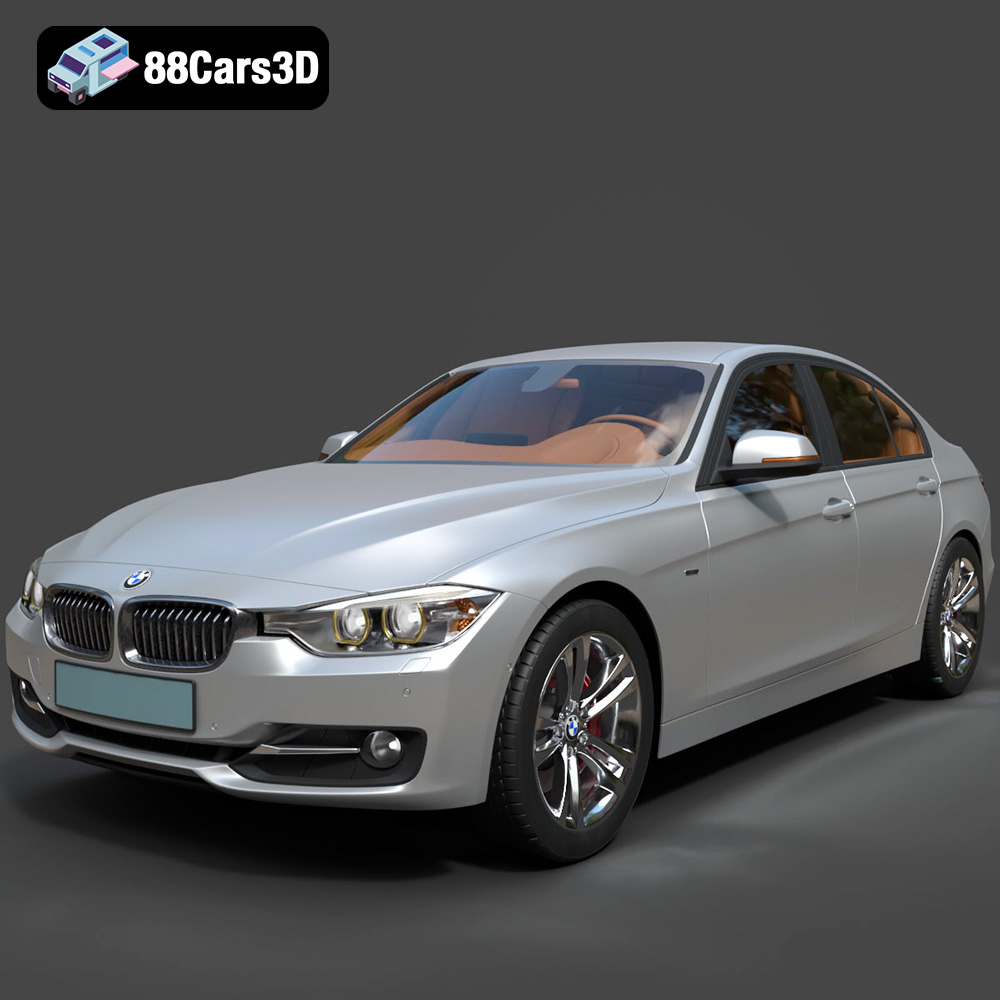
BMW 3 F30 3D Model
Texture: Yes
Material: Yes
Download the BMW 3 F30 3D Model featuring a detailed exterior, realistic interior, and optimized mesh. Includes .blend, .fbx, .obj, .glb, .stl, .ply, .unreal, and .max formats for rendering, simulation, and game development.
Price: $10.79
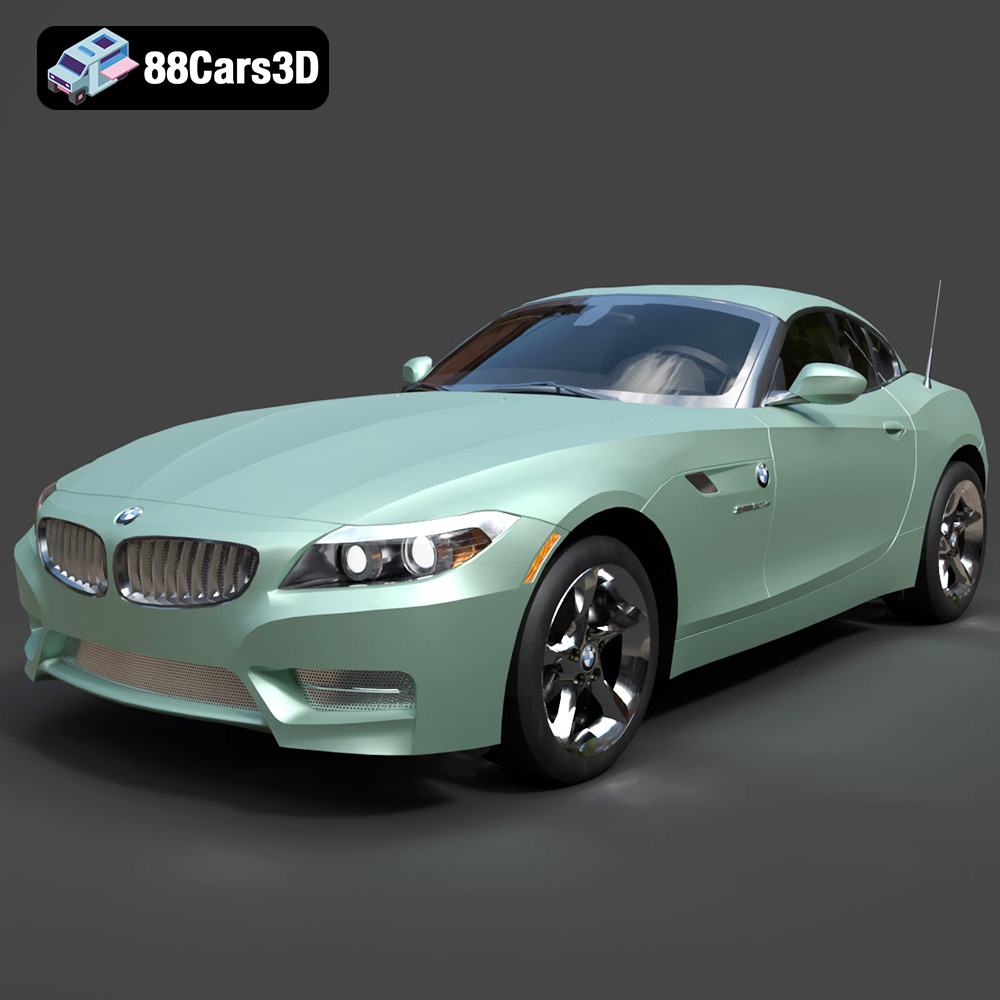
BMW Z4 Roadster E89 2012 3D Model
Texture: Yes
Material: Yes
Download the BMW Z4 Roadster E89 3D Model featuring clean geometry, realistic detailing, and a fully modeled interior. Includes .blend, .fbx, .obj, .glb, .stl, .ply, .unreal, and .max formats for rendering, simulation, and game development.
Price: $13.99

BMW Z4 E85 2005 3D Model
Texture: Yes
Material: Yes
Download the BMW Z4 E85 3D Model featuring clean geometry, realistic detailing, and a fully modeled interior. Includes .blend, .fbx, .obj, .glb, .stl, .ply, .unreal, and .max formats for rendering, simulation, and game development.
Price: $13.99

BMW M3 2024 3D Model
Texture: Yes
Material: Yes
Download the BMW M3 2024 3D Model featuring clean geometry, realistic detailing, and a fully modeled interior. Includes .blend, .fbx, .obj, .glb, .stl, .ply, .unreal, and .max formats for rendering, simulation, and game development.
Price: $13.99
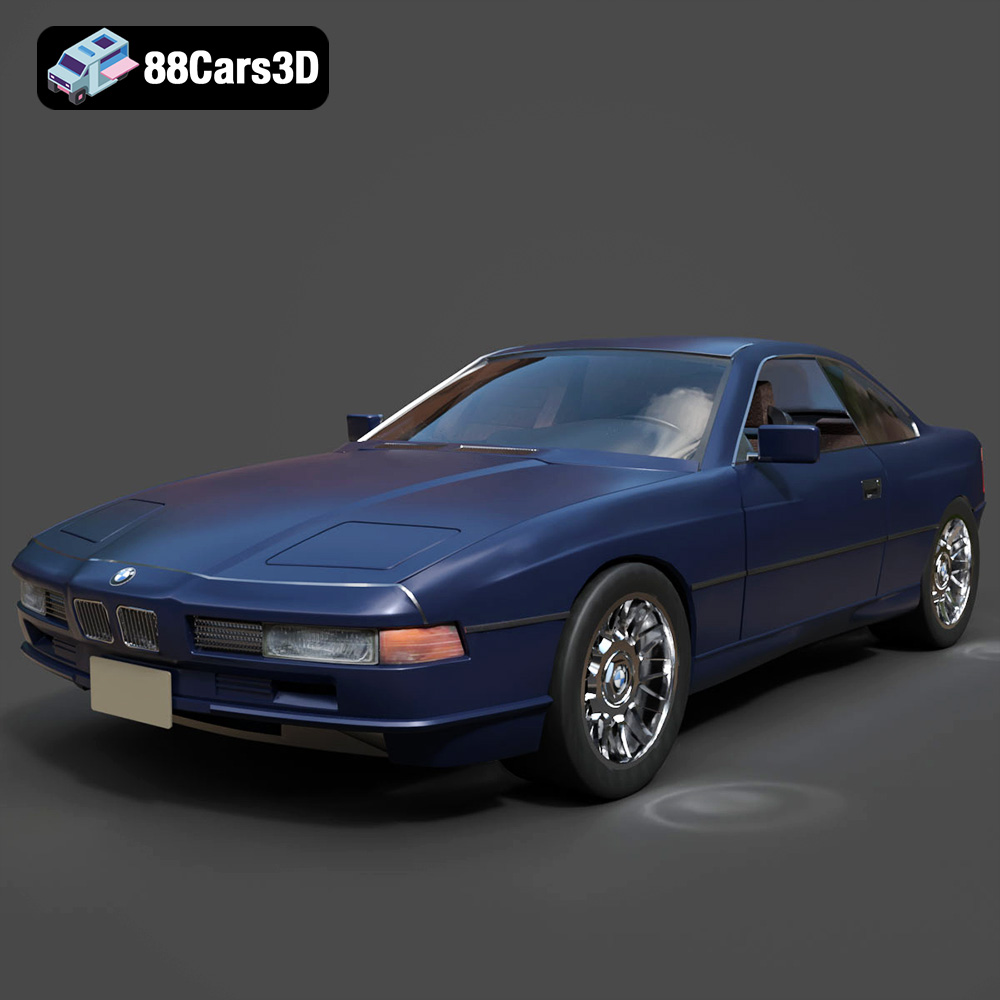
BMW 850i Coupe 1990 3D Model
Texture: Yes
Material: Yes
Download the BMW 850i Coupe 1990 3D Model featuring clean geometry, realistic detailing, and a fully modeled interior. Includes .blend, .fbx, .obj, .glb, .stl, .ply, .unreal, and .max formats for rendering, simulation, and game development.
Price: $13.99
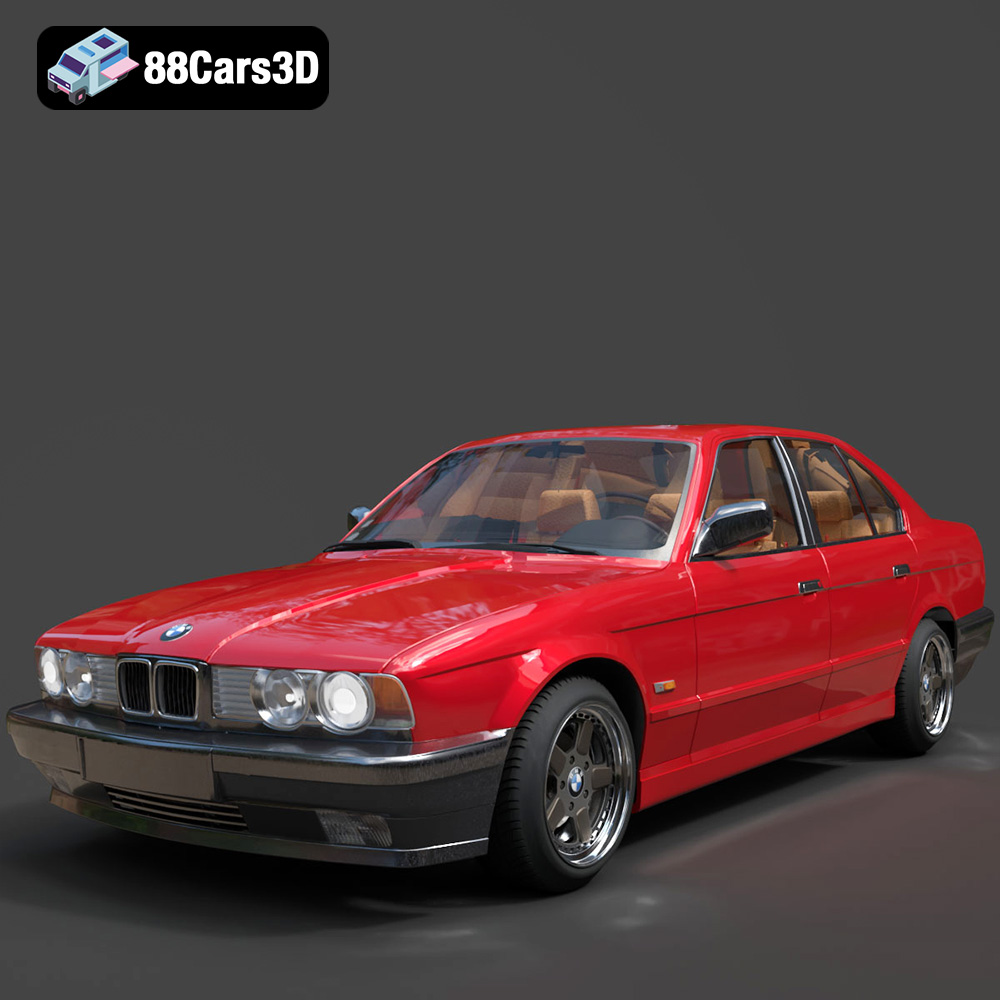
BMW 525i E34 1993 3D Model
Texture: Yes
Material: Yes
Download the BMW 525i E34 1993 3D Model featuring clean geometry, realistic detailing, and a fully modeled interior. Includes .blend, .fbx, .obj, .glb, .stl, .ply, .unreal, and .max formats for rendering, simulation, and game development.
Price: $12.99

BMW 7 Series 2016 3D Model
Texture: Yes
Material: Yes
Download the BMW 7 Series 2016 3D Model featuring luxurious design, detailed interior, and accurate exterior. Includes .blend, .fbx, .obj, .glb, .stl, .ply, .unreal, and .max formats for rendering, simulation, and game development.
Price: $10.79
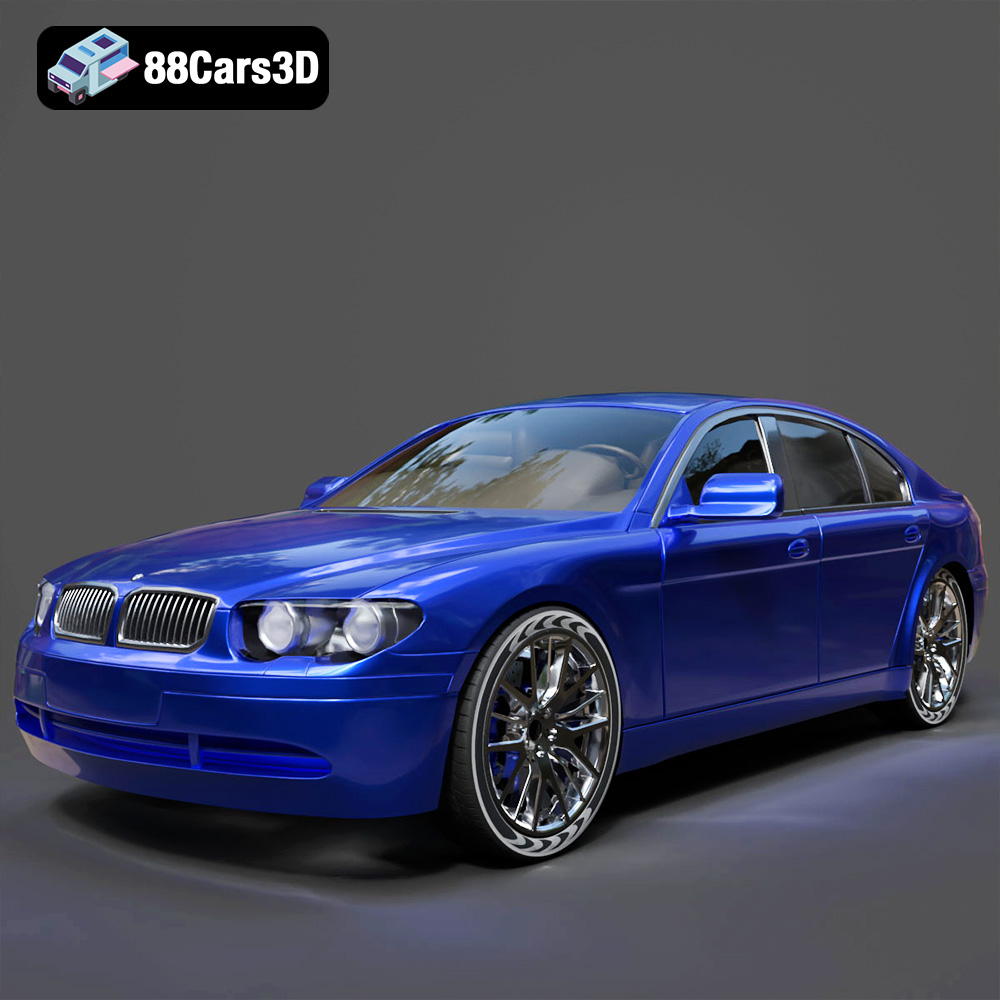
BMW 7 Series 30th Anniversary 3D Model
Texture: Yes
Material: Yes
Download the BMW 7 Series 30th Anniversary 3D Model featuring a meticulously crafted exterior, detailed interior, and realistic wheels. Includes .blend, .fbx, .obj, .glb, .stl, .ply, .unreal, and .max formats for rendering, simulation, and game development.
Price: $35.79

BMW 7-Series F02 3D Model
Texture: Yes
Material: Yes
Download the BMW 7-Series F02 3D Model featuring a detailed exterior and interior, optimized for rendering and animation. Includes .blend, .fbx, .obj, .glb, .stl, .ply, .unreal, and .max formats for rendering, simulation, and game development.
Price: $10.79
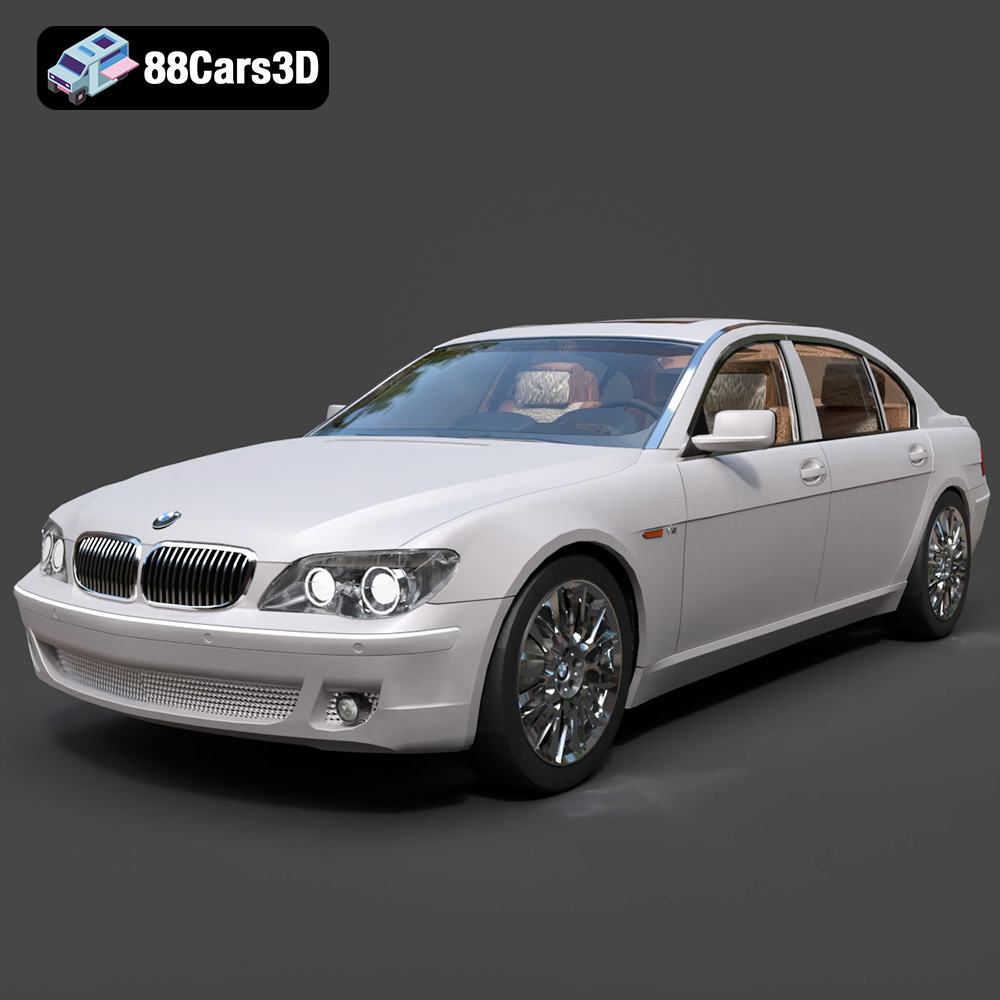
BMW 760Li E66 2005 3D Model
Texture: Yes
Material: Yes
Download the BMW 760Li E66 2005 3D Model featuring a detailed exterior, refined interior, and robust chassis. Includes .blend, .fbx, .obj, .glb, .stl, .ply, .unreal, and .max formats for rendering, simulation, and game development.
Price: $10.79
