

“`html
Mastering 3D Model Preparation for Flawless Prints: A Comprehensive Guide
Welcome, fellow creators and automotive enthusiasts! The allure of bringing meticulously detailed 3D printable car models to life is undeniable. Whether you’re a seasoned maker aiming for professional-grade finishes or a newcomer eager to explore the world of additive manufacturing, the journey from a digital 3D model to a tangible object is both rewarding and, at times, challenging. At the heart of every successful print lies meticulous preparation. The difference between a perfectly rendered replica and a failed print often hinges on the steps taken *before* you hit the ‘print’ button.
This comprehensive guide is designed to equip you with the knowledge and techniques necessary to prepare any 3D model, especially intricate automotive designs, for a flawless printing experience. We’ll delve deep into the critical stages, from understanding the nuances of STL files and mesh topology to optimizing slicing parameters, mastering support generation, and refining your printer’s settings. By the end of this article, you’ll possess the confidence to tackle even the most complex models, ensuring your 3D printed cars are a testament to your skill and the quality of the digital assets you use. We’ll cover everything from basic file repair to advanced slicing strategies, helping you achieve stunning results whether you’re using FDM or resin printers. Get ready to elevate your 3D printing game!
Understanding Your Digital Blueprint: The STL File and Mesh Topology
The foundation of 3D printing is the 3D model itself, most commonly delivered in the STL (StereoLithography) file format. While seemingly simple, understanding the underlying structure of an STL file is crucial for troubleshooting and achieving optimal print results. An STL file represents the surface geometry of a 3D object using a collection of interconnected triangles. These triangles form a polygonal mesh, and their arrangement dictates the shape and details of your model.
The quality of this mesh directly impacts printability. A “clean” mesh is characterized by several key attributes: it must be manifold (watertight, meaning it has no holes or gaps), have correctly oriented surface normals (all triangles pointing outwards from the object’s interior), and avoid self-intersections or non-manifold edges. Models from reputable sources, such as those found on platforms like 88cars3d.com, are typically designed with these principles in mind, offering print-ready STL files. However, even the best models can sometimes encounter issues, especially after modifications or during complex slicing operations.
Mesh Integrity: Manifoldness and Watertight Models
A manifold mesh is absolutely essential for 3D printing. Imagine trying to fill a leaky bucket with water – it’s impossible! Similarly, a 3D printer’s slicing software needs a watertight model to accurately calculate volume and toolpaths. Holes, gaps, or disconnected surfaces within the mesh will confuse the slicer, leading to printing errors, missing sections, or even complete print failures. Tools like Meshmixer, Blender, or specialized software like Netfabb are invaluable for identifying and repairing non-manifold geometry. Common issues include:
- Holes: Gaps in the surface where triangles are missing.
- Internal Faces: Triangles that face inwards, creating impossible geometry.
- Duplicate Faces: Overlapping surfaces that confuse the slicer.
- Edges Shared by More Than Two Faces: These are not allowed in a manifold mesh.
During repair, software often attempts to automatically stitch holes or remove problematic geometry. However, manual intervention might be necessary for complex issues, requiring careful selection and manipulation of vertices and faces.
Surface Normals and Model Orientation
Each triangle in an STL file has a normal vector, which indicates the direction the surface is facing. For a manifold model, all normals should consistently point outwards from the object’s interior. Incorrectly oriented normals can cause the slicing software to interpret the inside of your model as the outside, or vice versa, leading to hollow prints, inverted features, or slicing errors. Most 3D modeling and repair software provides tools to visualize and flip surface normals. Ensuring all normals are consistently oriented is a fundamental step in preparing your model.
STL File Variations: Binary vs. ASCII
STL files can be saved in two formats: ASCII and binary. ASCII STLs are human-readable text files, making them easier to inspect for minor issues but significantly larger in file size. Binary STLs are more compact and efficient, making them the preferred format for most 3D printing applications. While the format itself doesn’t directly impact printability once sliced, understanding the difference can be helpful when dealing with very large or complex models. Most modern slicing software handles both formats seamlessly.
Slicing Strategies: Translating Models into Printer Instructions
The slicing software is your bridge between the 3D model (STL) and your 3D printer. It takes your digital model and mathematically cuts it into hundreds or thousands of thin horizontal layers, generating the G-code instructions that tell your printer exactly where to move, how fast to extrude material, and at what temperature. Choosing the right slicing parameters is critical for achieving desired print quality, strength, and minimizing print time. Popular slicers include Cura, PrusaSlicer, and Simplify3D.
When working with detailed models, like those found on 88cars3d.com, careful consideration of layer height, print speed, and infill is paramount. A balance must be struck between capturing fine details and maintaining reasonable print times. For intricate automotive parts, a lower layer height is often preferred to reproduce subtle curves and sharp edges. However, this comes at the cost of increased print time.
Layer Height: The Tradeoff Between Detail and Speed
Layer height is arguably one of the most impactful settings. It determines the thickness of each individual layer deposited by the printer. For standard FDM printers, common layer heights range from 0.1mm to 0.3mm. Lower layer heights (e.g., 0.1mm or 0.12mm) produce smoother surfaces with less visible layer lines, ideal for capturing the fine details of car bodies, wheels, and interior elements. However, printing at these resolutions significantly increases print time, as the printer must lay down many more layers to complete the object.
Higher layer heights (e.g., 0.2mm or 0.3mm) result in faster prints but more pronounced layer lines. For less critical parts or prototypes, this might be acceptable. For collectors’ models, investing the time for lower layer heights is usually worthwhile. Resin printers, on the other hand, typically achieve much finer detail with layer heights often between 0.025mm and 0.05mm, offering superior surface finish for intricate models straight off the build plate.
Infill: Strength, Weight, and Material Usage
Infill refers to the internal structure printed within the outer walls (shells) of your model. It affects the object’s strength, weight, and the amount of material used. For display models, high infill density is often unnecessary. An infill density of 10-20% is usually sufficient to provide internal support for the outer walls while minimizing print time and material consumption. Common infill patterns include grid, cubic, gyroid, and honeycomb.
The gyroid pattern is particularly popular for its strength-to-weight ratio and minimal support needs internally. For parts that might experience stress or require greater rigidity, increasing infill density (e.g., to 30-50%) can significantly improve durability. However, for most car models intended for display, focusing on robust outer shells (walls) is more important than high infill density.
Print Speed and Temperature Optimization
Print speed directly impacts print time and quality. Faster speeds can lead to ringing artifacts, poor layer adhesion, and reduced detail. For detailed automotive models, it’s often recommended to print outer walls and delicate features at slower speeds (e.g., 30-50 mm/s) to ensure precision. Inner walls and infill can sometimes be printed slightly faster. Similarly, nozzle temperature and bed temperature must be calibrated for the specific filament being used. Consult the filament manufacturer’s recommendations as a starting point, and then fine-tune based on test prints.
Support Structures: The Unsung Heroes of Complex Geometries
Many 3D printable car models feature overhangs, bridges, and complex geometries that cannot be printed successfully without support structures. These temporary structures are printed alongside the model and are designed to be removed after printing, providing a base for materials to be deposited on. Proper generation and removal of supports are crucial for preserving the detail and integrity of your printed model, especially for delicate automotive parts.
Modern slicers offer sophisticated support generation tools. You can typically choose between ‘touching buildplate’ supports (which only print where the model overhangs the build plate) and ‘everywhere’ supports (which print under any overhang, even if it’s supported by another part of the model). For car models, ‘touching buildplate’ is often preferred initially, as ‘everywhere’ supports can sometimes be difficult to remove from intricate bodywork or undercarriage details.
Support Types and Placement Strategies
Slicers offer various support types, including standard, zigzag, and tree/organic supports. Tree supports (available in Cura and other slicers) are particularly useful for complex models as they branch out like a tree, consuming less material and often being easier to remove than traditional supports. They can be configured to be denser where needed and lighter in less critical areas. When placing supports, consider the following:
- Overhang Angle Threshold: Set this to a value that triggers support only for significant overhangs (e.g., 45-60 degrees).
- Support Density: A lower density (e.g., 10-15%) is often sufficient for display models, making removal easier.
- Support Interface Layers: These are solid layers printed at the top and bottom of the support structure, creating a smoother surface on the model where the support touched it. This is vital for achieving a clean finish on visible parts of the car model.
For very delicate parts, manually adding custom supports in your slicing software or in a 3D modeling program before slicing can provide the most control.
Support Removal Techniques: Patience is Key
Removing support structures requires patience and the right tools. For FDM prints, needle-nose pliers, hobby knives (like an X-Acto knife), and small files are essential. Start by gently breaking away the larger sections of the support. For areas where supports attach directly to the model’s surface, use a hobby knife to carefully score and then pry away the support material. Be cautious not to gouge or damage the model itself.
For resin prints, supports are typically removed after the print is cured. Use flush cutters for a clean cut close to the model surface. If supports leave small nubs, they can often be carefully sanded away. In both FDM and resin printing, consider strategically orienting the model to minimize the need for supports on delicate or highly visible areas.
Minimizing Support Interaction with Model Details
The goal is to support overhangs without damaging or obscuring fine details like door handles, spoilers, or grilles. Before printing, preview the sliced model with supports enabled. Look for areas where supports might interfere with these details. If possible, adjust the model’s orientation on the build plate. Sometimes, rotating the model by 15-45 degrees can eliminate the need for supports on critical features.
Using a smaller nozzle size for FDM printing can also help in producing finer details and making support removal cleaner. For resin printing, the high resolution naturally helps, but careful support placement is still key to avoiding pockmarks on delicate surfaces.
Print Orientation and Bed Adhesion: Setting the Stage for Success
The way you orient your 3D model on the print bed and ensure proper bed adhesion are foundational to a successful print. Incorrect orientation can lead to increased print time, the need for excessive supports, or weak layer adhesion in critical areas. Poor bed adhesion, on the other hand, is one of the most common causes of print failure, leading to the print detaching from the build plate mid-print and resulting in a tangled mess of filament.
For car models, think about how the object will best sit on the build plate. Should the wheels be down? Or perhaps the model is best printed on its side or even upside down to minimize supports on the main body? Evaluating different orientations in your slicer is a crucial step.
Optimizing Orientation for Strength and Detail
When orienting a car model, consider the direction of the primary forces it might experience (if any) and where visual detail is most important. For example, printing a car with the wheels down means the chassis and suspension components will be built layer by layer from the ground up. This orientation often minimizes supports needed for the undercarriage but might require more supports for the wheel wells and body.
Printing a car body on its side or even upside down might reduce the number of supports needed on the roof and hood, which are often highly visible areas. However, this can introduce supports on the sides of the body or the underside of the roof. Experimentation and previewing the sliced model with supports are key. Also, consider the Z-axis strength: layer adhesion is weakest along the Z-axis, so orienting the model so that critical stress points are not aligned purely vertically can improve durability.
Achieving Reliable Bed Adhesion
Several factors contribute to good bed adhesion:
- Clean Build Surface: Oils from fingerprints, dust, or leftover residue can prevent filament from sticking. Always clean your build plate with isopropyl alcohol (IPA) before each print.
- Level Build Plate: An uneven bed means the nozzle is too close in some areas and too far in others. Proper bed leveling (manual or auto-leveling) is critical.
- First Layer Settings: The first layer is the most important. Print it slower (e.g., 20-30 mm/s) and slightly hotter than subsequent layers. Ensure the nozzle is the correct distance from the build plate (often referred to as “Z-offset”).
- Bed Temperature: Different materials require specific bed temperatures (e.g., PLA: 50-60°C, PETG: 70-85°C, ABS: 90-110°C).
- Adhesion Aids: For difficult materials or geometries, consider using adhesion aids like a glue stick, hairspray, or specialized build surfaces (PEI, glass with coatings).
- Brim or Raft: A brim adds a single layer of extruded material around the base of your print, increasing surface area contact with the bed. A raft prints a thick base layer underneath your model, which can help with very uneven beds or materials prone to warping. For car models, a brim is often sufficient to prevent corners from lifting.
For resin printers, ensuring the build plate is clean and properly leveled, and that the initial layers are cured for an adequate duration (often called “exposure time” for the first few layers), is vital for adhesion.
Handling Warping and Curling
Warping occurs when the cooling plastic shrinks and pulls away from the build plate, often at the corners of the print. This is most common with materials like ABS due to their higher printing temperatures and significant thermal contraction. Strategies to combat warping include:
- Using an enclosure to maintain a stable, warm environment around the print.
- Lowering the bed temperature gradually during the print (not too quickly, or you risk losing adhesion).
- Using a brim or raft.
- Ensuring good ambient room temperature and avoiding drafts.
For resin printers, warping is less common but can occur if supports are insufficient or if the model is too large for the build plate without adequate adhesion.
Material Selection and Printer Calibration: The Building Blocks of Quality
The choice of printing material and the calibration of your 3D printer are fundamental to achieving the desired quality, durability, and aesthetic for your car models. Different filament types and resin formulations offer unique properties, and a well-calibrated printer ensures that your settings are translated accurately into a physical object.
For FDM printing, common materials include PLA, PETG, and ABS. PLA is easy to print, has low warping, and is suitable for detailed display models. PETG offers increased strength and temperature resistance but can be stringier. ABS is strong and durable but requires higher temperatures and often an enclosure to manage warping. For resin printing, standard resins are excellent for detail, while tougher or flexible resins can be used for specific functional parts.
Choosing the Right Filament or Resin
- PLA (Polylactic Acid): The most common FDM filament. It’s biodegradable, easy to print, and produces excellent detail. Ideal for static display models. Typically printed at 190-220°C with a bed temperature of 50-60°C.
- PETG (Polyethylene Terephthalate Glycol): Stronger and more temperature-resistant than PLA. Less prone to warping but can be stringy. Good for parts that might need some flexibility or durability. Typically printed at 230-250°C with a bed temperature of 70-85°C.
- ABS (Acrylonitrile Butadiene Styrene): Very strong, durable, and temperature-resistant. Prone to warping, requiring an enclosure and higher temperatures (240-260°C nozzle, 90-110°C bed).
- Resin (SLA/DLP/MSLA): Available in various formulations (standard, tough, flexible, castable). Offers superior detail and surface finish. Requires post-curing with UV light. Standard resin is often printed with layer heights of 0.025-0.05mm and exposure times varying by resin and printer.
When downloading models from marketplaces such as 88cars3d.com, the designer often provides recommendations for material types suitable for the model. Always check these recommendations.
Printer Calibration: Ensuring Accuracy and Reliability
A well-calibrated printer is essential for accurate dimensions and smooth surfaces. Key calibration steps include:
- E-steps Calibration: Ensures that the extruder pushes the correct amount of filament.
- PID Tuning: Stabilizes nozzle and bed temperatures, preventing fluctuations that can affect print quality.
- Flow Rate (Extrusion Multiplier): Fine-tunes the amount of filament extruded to compensate for material variations and prevent over- or under-extrusion.
- Temperature Tower Calibration: Prints a test tower with different temperature settings to find the optimal temperature for a specific filament, maximizing layer adhesion and minimizing defects.
- Retraction Settings: Optimizes filament retraction during non-printing moves to minimize stringing and oozing.
Regular printer maintenance, such as cleaning the nozzle, lubricating the Z-axis lead screws, and checking belt tension, also plays a significant role in print quality and reliability.
Understanding and Adjusting Retraction Settings
Retraction is the process where the filament is pulled back slightly into the nozzle when the print head moves between different parts of the model. This prevents molten plastic from oozing out and creating unsightly strings or blobs on the print surface. Key retraction settings include:
- Retraction Distance: How far the filament is pulled back (e.g., 5-7mm for Bowden extruders, 0.5-2mm for direct drive extruders).
- Retraction Speed: How quickly the filament is pulled back (e.g., 25-60 mm/s).
Tuning these settings, often using retraction test models, is crucial for achieving clean surfaces, especially on detailed car models where even small strings can be noticeable. For resin printers, retraction is not a concept in the same way, but controlling the lift speed and distance during layer separation is critical to avoid print failures.
Post-Processing: Bringing Your 3D Printed Car Model to Perfection
Once your 3D print is complete and the supports have been carefully removed, the journey isn’t over. Post-processing is where you transform a raw 3D print into a polished, professional-looking model. This can involve a range of techniques, from simple sanding and painting to more advanced assembly and finishing.
For intricate car models, post-processing is where you can truly bring the details to life. Sanding smooths out layer lines, filler primers can hide imperfections, and painting allows for accurate representation of colors and finishes. If your model is designed to be printed in multiple parts, careful assembly and gluing are also part of this stage.
Sanding and Surface Smoothing Techniques
For FDM prints, sanding is the primary method for removing layer lines and creating a smooth surface. Start with a coarser grit sandpaper (e.g., 120-220 grit) to remove major imperfections and layer lines, then gradually move to finer grits (e.g., 400, 800, 1200, and even higher for a mirror finish). Wet sanding (using water or a lubricant) can help reduce dust and achieve a smoother finish, especially with finer grits.
For stubborn layer lines or small gaps, filler primers or modeling putty can be applied. Apply a layer of primer, sand it smooth, and repeat until the desired surface finish is achieved. For resin prints, sanding is also effective, but often less material needs to be removed due to the inherent detail and smoothness. Be cautious with aggressive sanding on resin, as it can degrade fine details.
Painting and Finishing Your Model
Painting transforms a monochrome print into a vibrant replica. For both FDM and resin prints, proper surface preparation is key. Ensure the model is clean and free of dust and oils before applying paint.
- Priming: A good primer coat (e.g., grey automotive primer) provides a uniform base, helps paint adhere better, and reveals any remaining surface imperfections that need attention.
- Base Coats: Apply thin, even coats of your chosen paint. Acrylic paints are popular for model painting, whether applied by brush or airbrush.
- Detailing: Use smaller brushes to paint intricate details like trim, headlights, taillights, and interior elements. Masking tape is invaluable for achieving sharp lines between different colors.
- Washes and Weathering: For a more realistic look, consider using ‘washes’ (thinned paint that settles into crevices) to highlight panel lines and details, or weathering techniques to simulate dirt, rust, or wear.
- Clear Coats: Apply a clear coat (gloss, satin, or matte) to protect the paint job and achieve the desired final finish.
For resin prints, a light sanding might be needed to remove any blemishes left by supports, followed by priming and painting as usual.
Assembly of Multi-Part Models
Many detailed car models are designed to be printed in multiple parts for easier printing and greater detail. This often includes separate bodies, chassis, wheels, interiors, and even engine components. Careful assembly is crucial.
- Test Fit: Before applying any adhesive, dry-fit all parts to ensure they align correctly.
- Adhesives: For FDM prints (especially PLA), super glue (cyanoacrylate) or specialized plastic cements work well. For resin prints, super glue or epoxy are suitable. Ensure you use adhesives appropriate for the material.
- Alignment Pins and Gaps: Many designers include alignment pins to help position parts accurately. If there are slight gaps, modeling putty or a small amount of filler can be used.
- Reinforcement: For structurally critical joints, consider reinforcing with small pins or inserts if needed.
Take your time during assembly; rushing this stage can compromise the final appearance and integrity of your meticulously printed car model.
Conclusion: Your Path to Flawless 3D Printed Cars
Mastering the preparation of 3D models for printing is a journey that involves understanding the digital file, optimizing the slicing process, employing effective support strategies, ensuring solid bed adhesion, selecting the right materials, and dedicating time to post-processing. By paying close attention to each of these stages, you can significantly elevate the quality and success rate of your 3D prints, especially when working with intricate automotive designs.
From ensuring your STL files are manifold and have correctly oriented normals to meticulously tuning layer height, infill, and print speeds in your slicer, every decision matters. Effective support generation and removal are critical for preserving detail, while proper print orientation and bed adhesion lay the groundwork for a successful print. Choosing the right material and keeping your printer calibrated ensures accuracy and durability. Finally, post-processing techniques like sanding, painting, and assembly transform your raw print into a stunning display piece.
The world of 3D printable car models offers endless possibilities for hobbyists and collectors. By applying the principles outlined in this guide, you’ll be well-equipped to tackle even the most complex designs available on platforms like 88cars3d.com. Remember that practice and experimentation are key. Don’t be discouraged by early challenges; view them as learning opportunities. Happy printing, and may your garages be filled with perfectly replicated miniature vehicles!
“`
Featured 3D Car Models

BMW 3 F30 3D Model
Texture: Yes
Material: Yes
Download the BMW 3 F30 3D Model featuring a detailed exterior, realistic interior, and optimized mesh. Includes .blend, .fbx, .obj, .glb, .stl, .ply, .unreal, and .max formats for rendering, simulation, and game development.
Price: $10.79
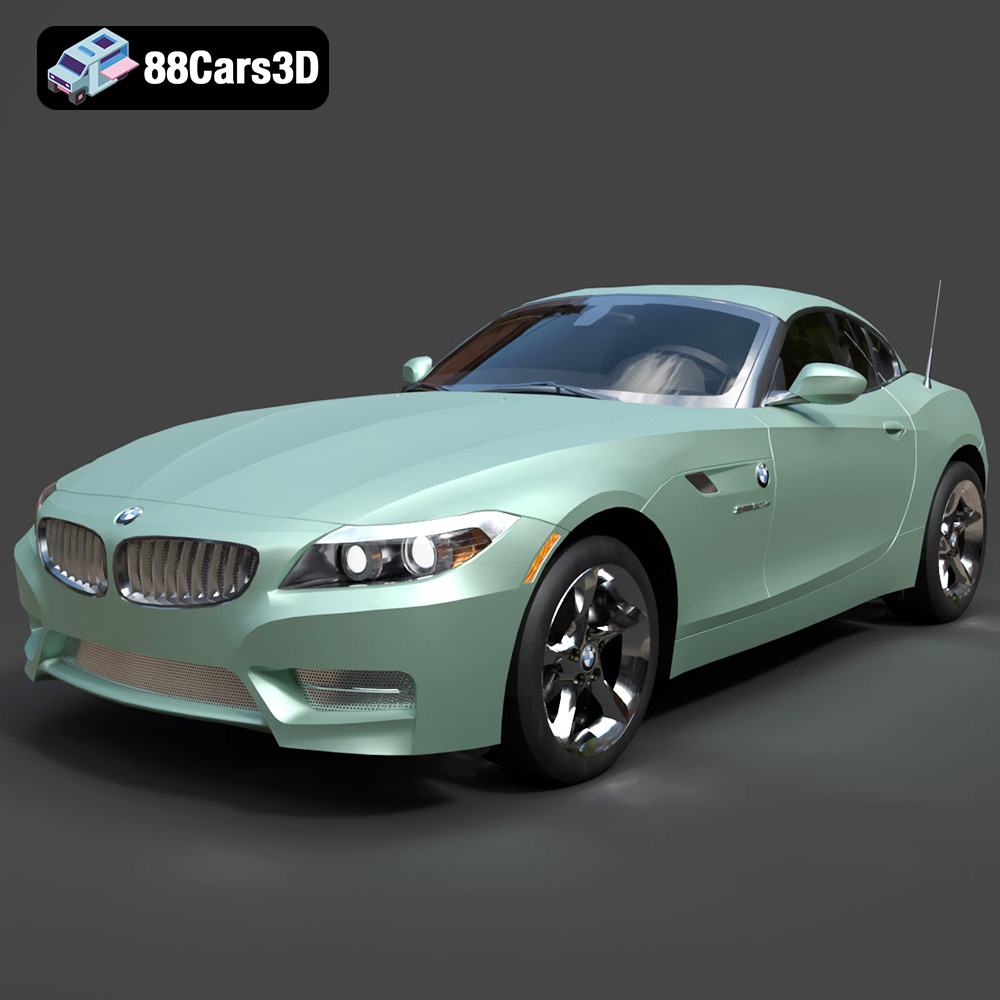
BMW Z4 Roadster E89 2012 3D Model
Texture: Yes
Material: Yes
Download the BMW Z4 Roadster E89 3D Model featuring clean geometry, realistic detailing, and a fully modeled interior. Includes .blend, .fbx, .obj, .glb, .stl, .ply, .unreal, and .max formats for rendering, simulation, and game development.
Price: $13.99

BMW Z4 E85 2005 3D Model
Texture: Yes
Material: Yes
Download the BMW Z4 E85 3D Model featuring clean geometry, realistic detailing, and a fully modeled interior. Includes .blend, .fbx, .obj, .glb, .stl, .ply, .unreal, and .max formats for rendering, simulation, and game development.
Price: $13.99

BMW M3 2024 3D Model
Texture: Yes
Material: Yes
Download the BMW M3 2024 3D Model featuring clean geometry, realistic detailing, and a fully modeled interior. Includes .blend, .fbx, .obj, .glb, .stl, .ply, .unreal, and .max formats for rendering, simulation, and game development.
Price: $13.99
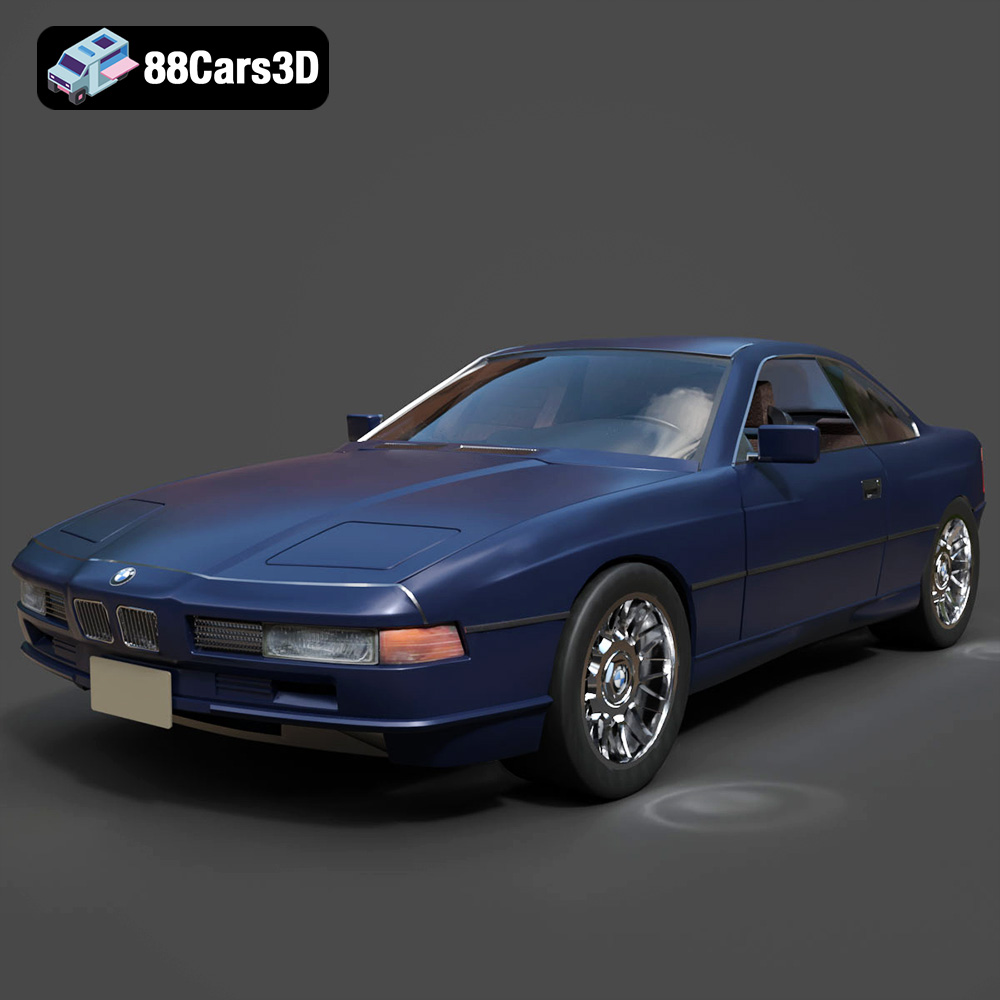
BMW 850i Coupe 1990 3D Model
Texture: Yes
Material: Yes
Download the BMW 850i Coupe 1990 3D Model featuring clean geometry, realistic detailing, and a fully modeled interior. Includes .blend, .fbx, .obj, .glb, .stl, .ply, .unreal, and .max formats for rendering, simulation, and game development.
Price: $13.99
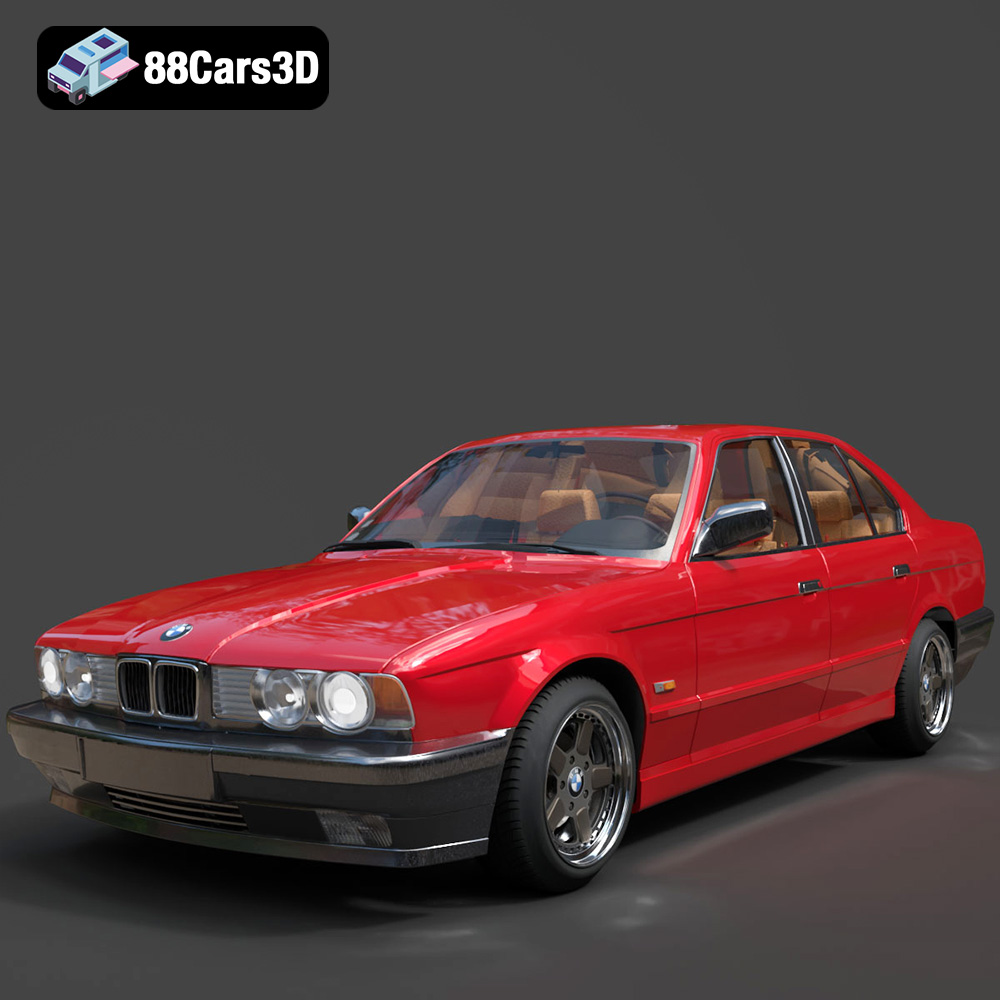
BMW 525i E34 1993 3D Model
Texture: Yes
Material: Yes
Download the BMW 525i E34 1993 3D Model featuring clean geometry, realistic detailing, and a fully modeled interior. Includes .blend, .fbx, .obj, .glb, .stl, .ply, .unreal, and .max formats for rendering, simulation, and game development.
Price: $12.99

BMW 7 Series 2016 3D Model
Texture: Yes
Material: Yes
Download the BMW 7 Series 2016 3D Model featuring luxurious design, detailed interior, and accurate exterior. Includes .blend, .fbx, .obj, .glb, .stl, .ply, .unreal, and .max formats for rendering, simulation, and game development.
Price: $10.79
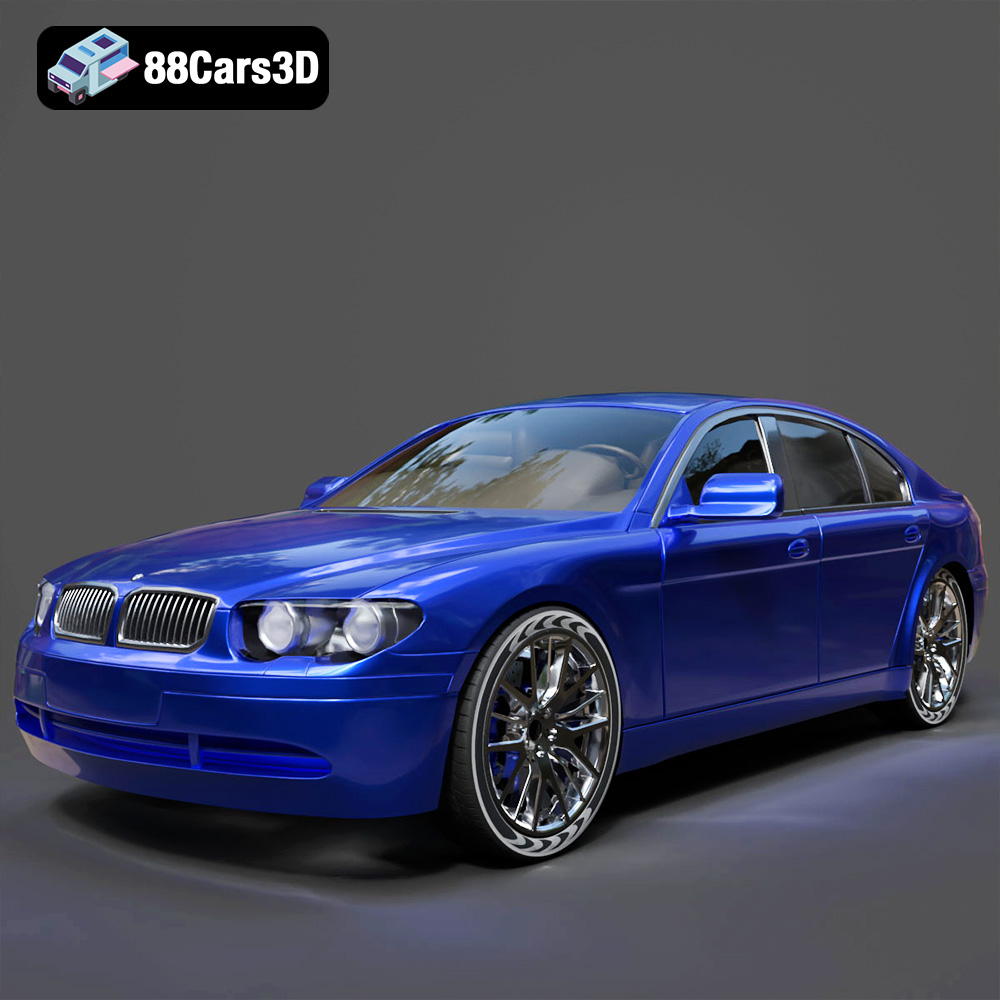
BMW 7 Series 30th Anniversary 3D Model
Texture: Yes
Material: Yes
Download the BMW 7 Series 30th Anniversary 3D Model featuring a meticulously crafted exterior, detailed interior, and realistic wheels. Includes .blend, .fbx, .obj, .glb, .stl, .ply, .unreal, and .max formats for rendering, simulation, and game development.
Price: $35.79

BMW 7-Series F02 3D Model
Texture: Yes
Material: Yes
Download the BMW 7-Series F02 3D Model featuring a detailed exterior and interior, optimized for rendering and animation. Includes .blend, .fbx, .obj, .glb, .stl, .ply, .unreal, and .max formats for rendering, simulation, and game development.
Price: $10.79
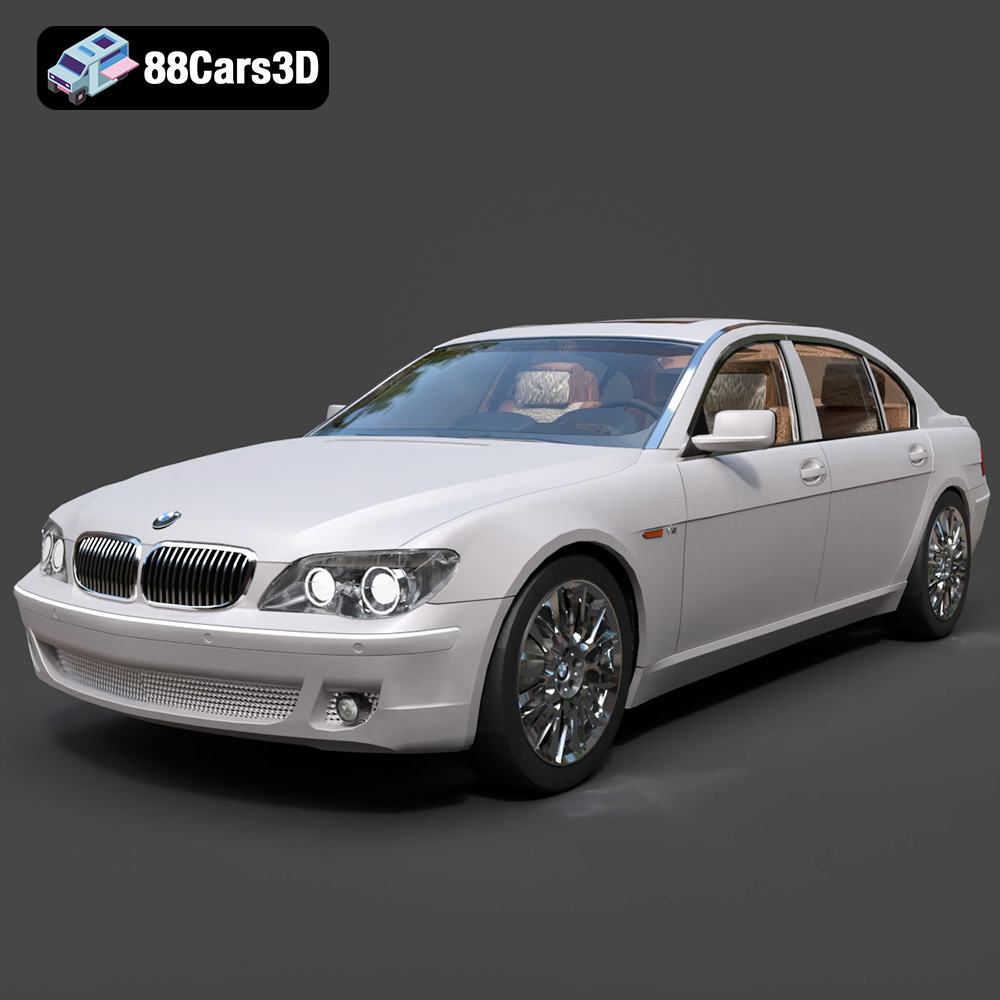
BMW 760Li E66 2005 3D Model
Texture: Yes
Material: Yes
Download the BMW 760Li E66 2005 3D Model featuring a detailed exterior, refined interior, and robust chassis. Includes .blend, .fbx, .obj, .glb, .stl, .ply, .unreal, and .max formats for rendering, simulation, and game development.
Price: $10.79
