

“`html
Mastering the Miniature: A Technical Guide to 3D Printing Realistic Car Models from STL Files
The allure of the automobile, from its sleek lines to its intricate engineering, has captivated enthusiasts for generations. For 3D printing hobbyists and automotive fans alike, the ability to bring these iconic machines to life in miniature form is incredibly rewarding. However, transforming a digital STL file into a tangible, realistic 3D printed car model involves more than just hitting “print.” It’s a meticulous process that requires understanding file preparation, slicer settings, printer capabilities, and post-processing techniques. This comprehensive guide will equip you with the technical knowledge to achieve stunning results, whether you’re printing a classic muscle car or a cutting-edge supercar. We’ll delve into the nuances of 3D printing, from optimizing your STL files to selecting the right materials and troubleshooting common printing challenges. By the end, you’ll be ready to tackle any printable car model with confidence and precision.
Understanding Your Blueprint: The Technical Anatomy of an STL File
At the heart of every 3D printable car model lies the STL file (StereoLithography). This ubiquitous file format represents a 3D object’s surface geometry as a collection of triangular facets. While simple in concept, the quality and structure of this mesh are paramount to successful printing. A well-formed STL file is crucial for accurate slicing and reduces the likelihood of printing errors. Understanding its underlying principles will empower you to select and prepare models effectively, ensuring your printed creations are as close to the digital design as possible.
Mesh Topology and Watertight Models
For a 3D model to be printable, its mesh must be “watertight” or “manifold.” This means the surface must be a closed volume with no holes, gaps, or overlapping faces. Imagine trying to fill a bucket with water that has holes in it – the water (or filament) would escape. In 3D printing terms, holes in the mesh can confuse the slicer, leading to missing sections, internal support structures where there shouldn’t be any, or complete print failures. Tools like Microsoft 3D Builder, Meshmixer, or Netfabb are invaluable for inspecting and repairing STL files to ensure they are manifold. These software packages can automatically detect and often fix common issues such as non-manifold edges, flipped normals (where triangle faces point inwards instead of outwards), and intersecting geometry. Regularly performing a mesh repair check on downloaded models, especially those from less curated sources, is a critical step in your workflow.
File Resolution and Detail Fidelity
The resolution of an STL file refers to the density of triangles used to approximate the object’s surface. A higher resolution mesh contains more triangles, allowing for a more accurate representation of curves and fine details. For intricate car models, especially those with sharp body lines, delicate spoilers, or small components like mirrors, a high-resolution STL is essential. However, extremely high-resolution files can become very large and computationally intensive for slicers to process, potentially leading to longer slicing times and performance issues. Conversely, a low-resolution STL might result in visible facets or a “blocky” appearance on curved surfaces, diminishing the realism of your printed car. Striking a balance is key. For most FDM printing, resolutions that yield file sizes between 10MB and 100MB are generally manageable. For resin printers, which excel at capturing fine details, you might opt for higher resolution files, but always consider the limits of your printer’s capabilities.
Working with Different File Formats
While STL is the de facto standard for 3D printing, you might encounter car models in other formats like OBJ or FBX. These formats can store additional information, such as color and texture data, which are not directly usable by most slicers but can be helpful for visualization in 3D modeling software. Often, you can export models from these formats into STL using programs like Blender or Autodesk Maya. When downloading models from platforms like 88cars3d.com, you’ll typically find print-ready STL files, saving you the conversion step. It’s also worth noting that some advanced slicers are beginning to support formats like 3MF, which can embed crucial information like unit types and material profiles directly within the file, streamlining the printing process.
The Digital to Physical Bridge: Mastering Slicer Settings for Car Models
The slicer software is your crucial intermediary, translating your 3D model into the layer-by-layer instructions (G-code) that your 3D printer understands. For complex car models with varying geometries, from smooth body panels to sharp edges and intricate undercarriages, optimizing slicer settings is paramount. This is where you fine-tune parameters to balance print quality, speed, and structural integrity. Experimentation and a systematic approach are key to unlocking the best possible prints from your chosen models and printer.
Layer Height: The Sweet Spot Between Detail and Time
Layer height dictates the vertical resolution of your print. A smaller layer height (e.g., 0.1mm or 0.12mm) results in finer detail and smoother curves, crucial for realistic car models with smooth bodywork. However, it significantly increases print time as the printer must lay down many more layers. A larger layer height (e.g., 0.2mm or 0.28mm) prints much faster but can lead to visible layer lines, especially on curved surfaces. For display models, a balance might be found around 0.15mm. For prototypes or functional parts where speed is prioritized, 0.2mm might suffice. Always consider the intended use of your printed car model when selecting this critical parameter.
Infill: The Internal Structure of Your Model
Infill refers to the internal support structure printed within the solid parts of your model. For aesthetic car models, high infill densities (e.g., 20-30%) are often unnecessary and waste material and print time. An infill density of 5-10% is usually sufficient to provide adequate support for the outer walls and top surfaces, particularly for models downloaded from marketplaces like 88cars3d.com which are designed for printability. Different infill patterns offer varying strengths and print speeds. Patterns like ‘Gyroid’ or ‘Cubic’ provide good all-around strength and support, while ‘Lines’ or ‘Grid’ can be faster but may offer less support on angled surfaces. For parts that might need to withstand handling or assembly, slightly increasing infill density or opting for a stronger pattern can be beneficial.
Print Speed: Balancing Velocity and Viscosity
Printing too fast can lead to poor layer adhesion, ringing artifacts (ghosting), and decreased detail. Printing too slow can extend print times unnecessarily. For detailed car models, reducing print speed for outer walls is often recommended. A common starting point for outer walls is around 30-40 mm/s, while inner walls and infill can be printed faster (e.g., 50-60 mm/s). Travel speed (the speed at which the print head moves when not extruding) can be set higher (100-150 mm/s) to reduce overall print time and minimize stringing. Always consult the material manufacturer’s recommendations for optimal print speeds, as these vary significantly between different filament types like PLA, PETG, and ABS.
Retraction Settings: Combating the Spaghetti Monster
Stringing, or the appearance of fine wisps of filament between separate parts of the model, is a common issue, especially with materials like PETG. Proper retraction settings are key to minimizing this. Retraction tells the extruder to pull the filament back slightly when the print head moves across an open space. Key parameters include retraction distance (how much filament is pulled back, typically 4-7mm for Bowden extruders and 0.5-2mm for direct drive extruders) and retraction speed (how fast the filament is pulled back, often 25-50 mm/s). Performing retraction calibration tests (like retraction towers) is highly recommended to find the optimal settings for your specific filament and extruder setup.
The Foundation of Success: Print Orientation and Bed Adhesion
How you position your car model on the print bed and ensuring it sticks firmly are foundational elements for a successful print. Incorrect orientation can lead to excessive support material, weak layer adhesion, or unsightly surfaces where they matter most. Proper bed adhesion prevents the print from detaching mid-print, saving you time, material, and frustration. These seemingly simple decisions have a profound impact on the final quality of your 3D printed car.
Strategic Orientation for Optimal Quality
The orientation of your car model on the build plate significantly impacts print quality and the amount of support required. Generally, it’s best to orient the model to minimize overhangs and ensure critical visual surfaces are printed without support contact. For many car models, placing them upright on their wheels is intuitive, but this often creates large overhangs for the wheel arches, bumpers, and undercarriage. Frequently, orienting the car model upside down (roof down) or on its side can reduce the need for supports on the main body panels, allowing these detailed surfaces to be printed cleanly. You might then print components like the wheels or undercarriage separately and assemble them later. Experiment with different orientations in your slicer; most allow you to easily rotate and tilt the model. Always preview the support structures generated by the slicer for each orientation to make an informed decision.
Achieving Rock-Solid Bed Adhesion
A print that lifts or warps during printing is a common failure point. Ensuring excellent bed adhesion starts with a clean build surface. For FDM printers, this often means wiping down the print bed with isopropyl alcohol before each print. Different build surfaces and adhesion methods exist: PEI sheets offer excellent adhesion for PLA and PETG; glass beds may require a glue stick or hairspray for enhanced grip; BuildTak or similar surfaces provide a textured grip. Heated beds are also crucial, with temperatures varying by material (e.g., 50-60°C for PLA, 70-80°C for PETG, 90-110°C for ABS). For models with small contact points on the bed, using a brim or raft can significantly increase the surface area in contact with the build plate, providing greater stability. A brim adds a single layer of material around the base of the model, while a raft prints a thicker base layer beneath the entire model.
First Layer Quality: The Bedrock of Your Print
The first layer is arguably the most critical. If it’s not printed correctly, subsequent layers will suffer, potentially leading to print failure. This starts with proper bed leveling – ensuring the nozzle is at a consistent distance from the build plate across its entire surface. When printing the first layer, slightly slower speeds (e.g., 15-25 mm/s) and a slightly higher extrusion multiplier can help ensure good “squish” and adhesion. Many slicers also offer a “Z-offset” setting, which allows fine-tuning the nozzle’s initial height. Visually inspecting the first layer as it prints is vital; you’re looking for a smooth, consistent extrusion with no gaps between lines and no nozzle dragging.
The Art of Support: Generation and Removal for Intricate Models
Car models often feature complex geometries with overhangs and bridges that cannot be printed in mid-air. Support structures are essential for bridging these gaps, but they can also mar the surface finish if not managed correctly. The goal is to generate supports that are effective, easy to remove, and leave minimal scarring on the final model. This is where a deep understanding of support settings in your slicer, combined with careful post-processing, truly shines.
Support Types and Placement Strategies
Most slicers offer different types of supports, primarily “Normal” (tree-like structures) and “Tree” (organic, branch-like structures that often use less material and are easier to remove). Tree supports are particularly beneficial for complex car models, as they can reach intricate areas without excessive contact points. You can often choose to generate supports “touching build plate only” or “everywhere.” For car models, “touching build plate only” is often preferred to avoid supports interfering with delicate details like spoilers or mirrors. Critical overhangs, such as wheel wells, bumpers, and rooflines, will likely require supports. Advanced users can utilize “support blockers” in their slicer to prevent supports from being generated in specific areas where they would be detrimental to the surface finish or hard to remove.
Support Settings: Fine-Tuning for Easier Removal
Beyond the type, specific support settings dramatically impact removal. Support density (often set between 10-20%) controls how solid the support structure is. Lower density supports are easier to break away. Support interface layers create a denser, more uniform surface at the top of the support, providing a better interface for the model to print on, while making the interface easier to remove from the model itself. Support Z distance (the gap between the support and the model) is crucial; increasing this value (e.g., from 0.2mm to 0.3mm or higher) makes removal easier but can lead to less precise overhangs. Experimentation is key here, as the ideal Z distance depends on your printer’s accuracy and the material used.
The Art of Support Removal
Removing supports requires patience and the right tools. Start by gently wiggling the support structures to break them free. Tools like needle-nose pliers, flush cutters, hobby knives (e.g., X-Acto blades), and dental picks are invaluable. For stubborn supports, heating the area slightly with a heat gun (used with extreme caution) can sometimes soften the plastic, making it easier to break away. Always cut or break supports *away* from the model’s surface to minimize damage. If supports leave small marks or “nubs,” these can often be cleaned up with sanding or careful use of a hobby knife. For very intricate models, consider printing them in multiple parts and assembling them, which can eliminate the need for complex internal supports altogether.
Material Matters: Choosing the Right Filament for Your Automotive Masterpiece
The choice of printing material directly influences the visual appeal, durability, and post-processing potential of your 3D printed car model. Different filaments offer unique properties, each with its own advantages and challenges. Understanding these properties will help you select the best material for your project, whether it’s a display piece, a functional model, or something in between.
PLA: The Beginner-Friendly Choice
Polylactic Acid (PLA) is the most popular filament for FDM printing, and for good reason. It’s easy to print, forgiving of minor errors, and available in a vast array of colors and finishes (including metallic and wood-fill). PLA has a low melting point, requires no heated bed (though one is recommended for stability), and produces minimal warping. It’s ideal for highly detailed car models where intricate lines and sharp edges are desired. Its main drawback is its relatively low heat resistance; PLA prints can deform in direct sunlight or warm environments. For display models that won’t be exposed to heat, PLA is an excellent choice.
PETG: Durability and Chemical Resistance
Polyethylene Terephthalate Glycol (PETG) offers a compelling blend of PLA’s ease of printing with the durability and temperature resistance closer to ABS. It’s stronger and more flexible than PLA, making it suitable for models that might be handled frequently or require some impact resistance. PETG also exhibits good chemical resistance. However, it can be prone to stringing, requiring careful tuning of retraction settings. It also adheres very strongly to certain build surfaces, so taking precautions to avoid over-adhesion is important. PETG prints typically have a slightly glossy finish.
ABS: The Professional Standard (with caveats)
Acrylonitrile Butadiene Styrene (ABS) is known for its strength, temperature resistance, and ability to be smoothed with acetone vapor. It’s a popular choice for functional parts and demanding applications. However, ABS is significantly more challenging to print than PLA or PETG. It requires high bed temperatures (90-110°C) and an enclosure to prevent warping and layer separation due to its high printing temperature and tendency to shrink as it cools. Without an enclosure, large prints are highly susceptible to cracking. For hobbyists, the printing challenges often outweigh the benefits unless specific properties like acetone smoothing are required.
Resin (SLA/DLP): Unparalleled Detail
For the absolute highest level of detail, particularly for scale models with incredibly fine features like grills, emblems, and panel lines, resin printers (SLA/DLP) are unmatched. Resin prints offer incredibly smooth surfaces and sharp edges, often surpassing the capabilities of FDM printing. Materials like standard photopolymer resins are brittle but capture detail exquisitely. Engineering resins offer improved toughness. The post-processing for resin prints involves washing the uncured resin off with isopropyl alcohol and then curing the part under UV light. While the printers and materials can be more expensive, and ventilation is crucial due to resin fumes, the detail achievable for miniature car models is truly exceptional.
Beyond the Print: Post-Processing for a Showroom Finish
Once your 3D printer has successfully laid down the final layer, the journey to a realistic car model is far from over. Post-processing is where you transform a raw 3D print into a polished, display-worthy piece. This phase involves cleaning, refining, and often assembling the printed parts to achieve a professional look that truly captures the essence of the vehicle.
Cleaning and Support Removal Refinement
As discussed in the support section, the initial removal of supports is just the first step. After breaking away the bulk of the supports, you’ll likely have small nubs or rough areas where the supports connected to the model. Carefully use a hobby knife to shave these down flush with the surface. For areas difficult to reach with a knife, fine-grit sandpaper (starting around 220 grit and working up to 1000+ grit) can be used to smooth these imperfections. Be cautious not to sand away fine details like badges or panel lines.
Sanding and Smoothing Techniques
Achieving a smooth, paintable surface on FDM prints often requires extensive sanding. Start with a coarser grit sandpaper (e.g., 150-220 grit) to remove major layer lines and support marks. Progress gradually through finer grits (400, 600, 800, 1000, and even higher) until the surface is smooth to the touch. Wet sanding (using sandpaper with water) can help prevent clogging and produce a smoother finish. For ABS prints, acetone vapor smoothing can melt and smooth the layer lines, creating a surface almost indistinguishable from injection-molded plastic. This process requires significant safety precautions and is best performed in a well-ventilated area with appropriate personal protective equipment.
Priming, Painting, and Finishing Touches
Before painting, applying a primer is essential. Primer helps to fill in microscopic imperfections, seal the plastic, and provide a uniform base for your paint. Use a spray primer designed for plastics. After priming, inspect the model again and perform any necessary touch-ups with filler putty or additional sanding. For automotive models, spray paints designed for models or automotive applications offer the best finish. Using an airbrush allows for smooth, even coats and gradients. Multiple thin coats are always better than one thick coat. Once the base color is applied, you can add details like trim, headlights, and taillights using finer brushes. For a realistic finish, consider applying a clear coat (gloss or matte, depending on the vehicle’s finish) to protect the paint and enhance the look. Decals and waterslide transfers can add authentic badging and livery.
Assembly of Multi-Part Models
Many complex car models, especially those designed for easier printing or greater detail, are supplied as multiple parts. Careful assembly is crucial. Ensure all parts fit snugly before applying adhesive. Cyanoacrylate (super glue) is a common choice for FDM prints, but plastic cement designed for the specific material (like ABS cement) can create stronger bonds. For resin prints, UV-curable adhesives or epoxy resins are often used. Test fitting all components is vital to ensure proper alignment before the glue sets. Patience during assembly will result in a cleaner, more professional final product.
Conclusion: Driving Towards Printing Perfection
Bringing a detailed, realistic 3D printed car model to life is a journey that blends digital artistry with mechanical precision. From the fundamental structure of an STL file to the intricate dance of slicer settings, print orientation, and post-processing, each step plays a vital role. By understanding mesh topology, optimizing layer height and infill, mastering bed adhesion, strategically employing supports, selecting the appropriate material, and dedicating time to meticulous post-processing, you can elevate your prints from simple plastic objects to impressive scale replicas. Whether you’re downloading models from curated marketplaces like 88cars3d.com, which often provide optimized, print-ready files, or preparing your own designs, applying these technical principles will consistently lead to superior results. Embrace the learning process, experiment with settings, and don’t be afraid of a little trial and error. With practice and attention to detail, your 3D printed automotive creations will undoubtedly impress, showcasing the incredible possibilities of modern additive manufacturing.
“`
Featured 3D Car Models

BMW 3 F30 3D Model
Texture: Yes
Material: Yes
Download the BMW 3 F30 3D Model featuring a detailed exterior, realistic interior, and optimized mesh. Includes .blend, .fbx, .obj, .glb, .stl, .ply, .unreal, and .max formats for rendering, simulation, and game development.
Price: $10.79
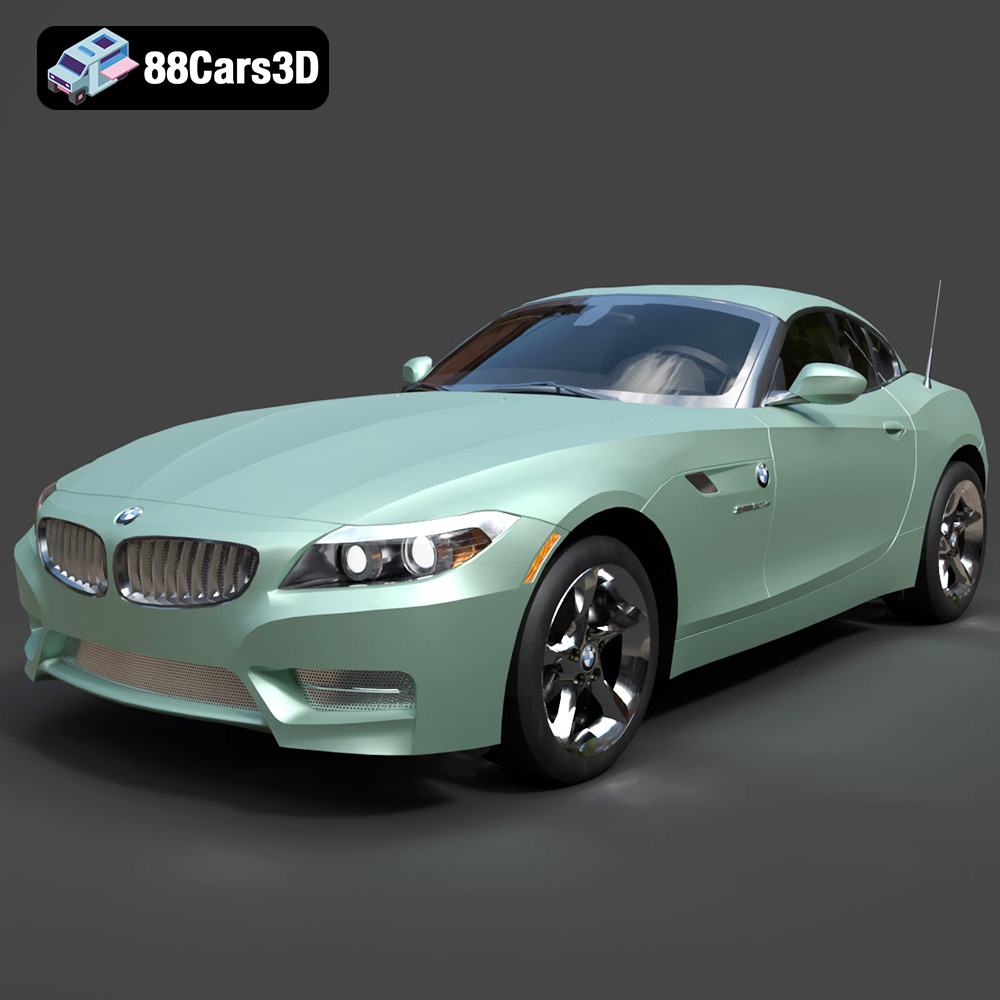
BMW Z4 Roadster E89 2012 3D Model
Texture: Yes
Material: Yes
Download the BMW Z4 Roadster E89 3D Model featuring clean geometry, realistic detailing, and a fully modeled interior. Includes .blend, .fbx, .obj, .glb, .stl, .ply, .unreal, and .max formats for rendering, simulation, and game development.
Price: $13.99

BMW Z4 E85 2005 3D Model
Texture: Yes
Material: Yes
Download the BMW Z4 E85 3D Model featuring clean geometry, realistic detailing, and a fully modeled interior. Includes .blend, .fbx, .obj, .glb, .stl, .ply, .unreal, and .max formats for rendering, simulation, and game development.
Price: $13.99

BMW M3 2024 3D Model
Texture: Yes
Material: Yes
Download the BMW M3 2024 3D Model featuring clean geometry, realistic detailing, and a fully modeled interior. Includes .blend, .fbx, .obj, .glb, .stl, .ply, .unreal, and .max formats for rendering, simulation, and game development.
Price: $13.99
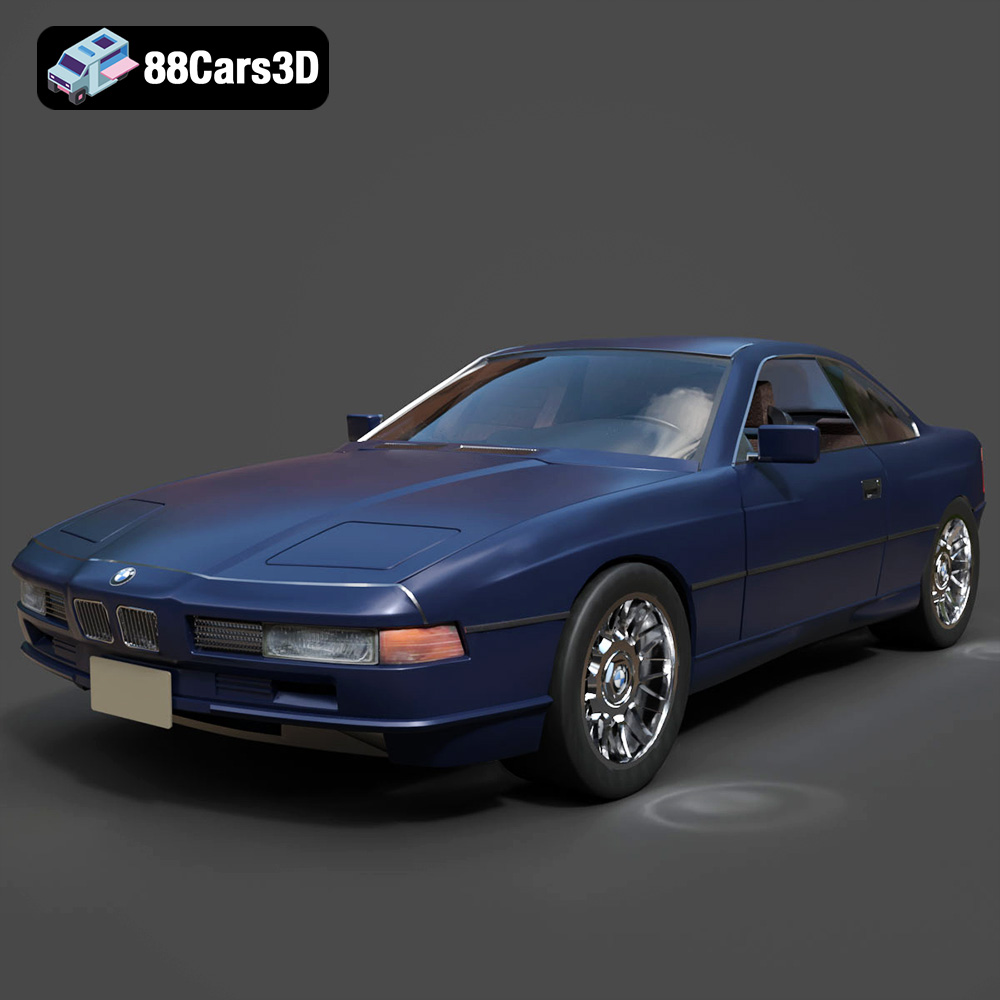
BMW 850i Coupe 1990 3D Model
Texture: Yes
Material: Yes
Download the BMW 850i Coupe 1990 3D Model featuring clean geometry, realistic detailing, and a fully modeled interior. Includes .blend, .fbx, .obj, .glb, .stl, .ply, .unreal, and .max formats for rendering, simulation, and game development.
Price: $13.99
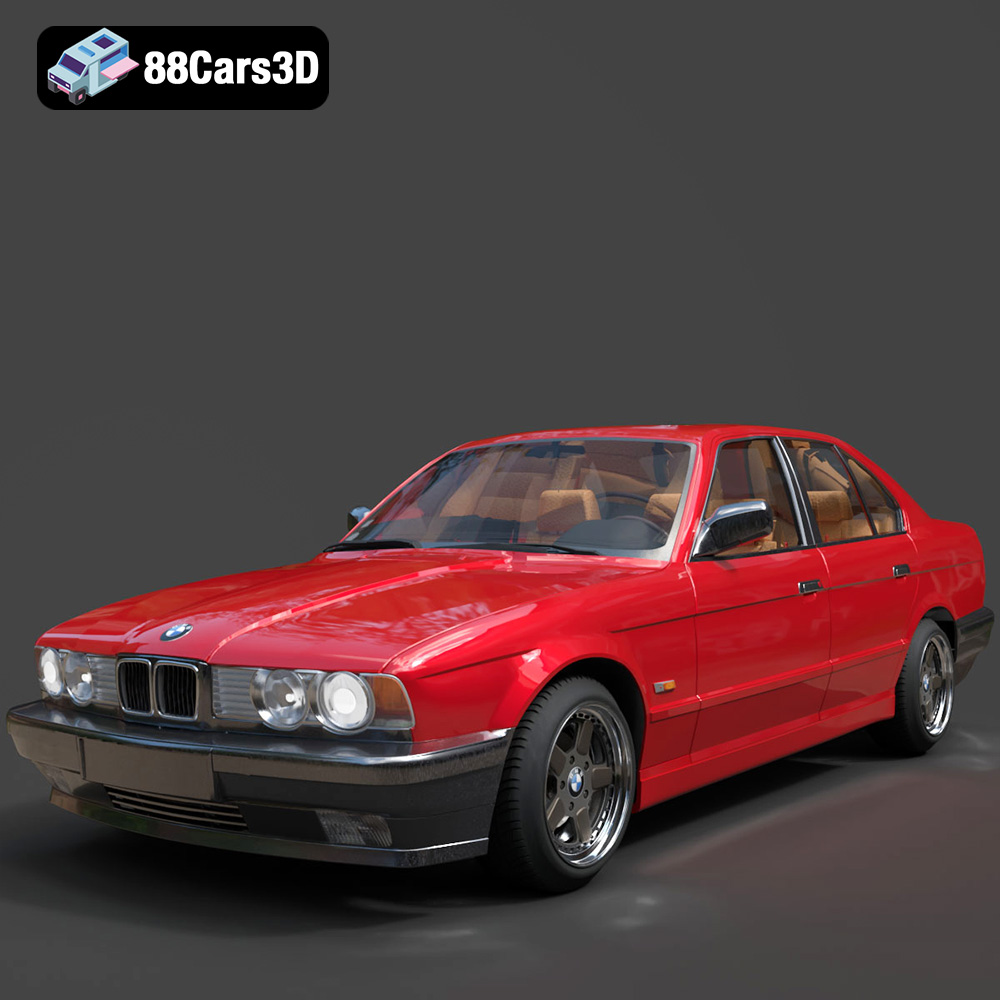
BMW 525i E34 1993 3D Model
Texture: Yes
Material: Yes
Download the BMW 525i E34 1993 3D Model featuring clean geometry, realistic detailing, and a fully modeled interior. Includes .blend, .fbx, .obj, .glb, .stl, .ply, .unreal, and .max formats for rendering, simulation, and game development.
Price: $12.99

BMW 7 Series 2016 3D Model
Texture: Yes
Material: Yes
Download the BMW 7 Series 2016 3D Model featuring luxurious design, detailed interior, and accurate exterior. Includes .blend, .fbx, .obj, .glb, .stl, .ply, .unreal, and .max formats for rendering, simulation, and game development.
Price: $10.79
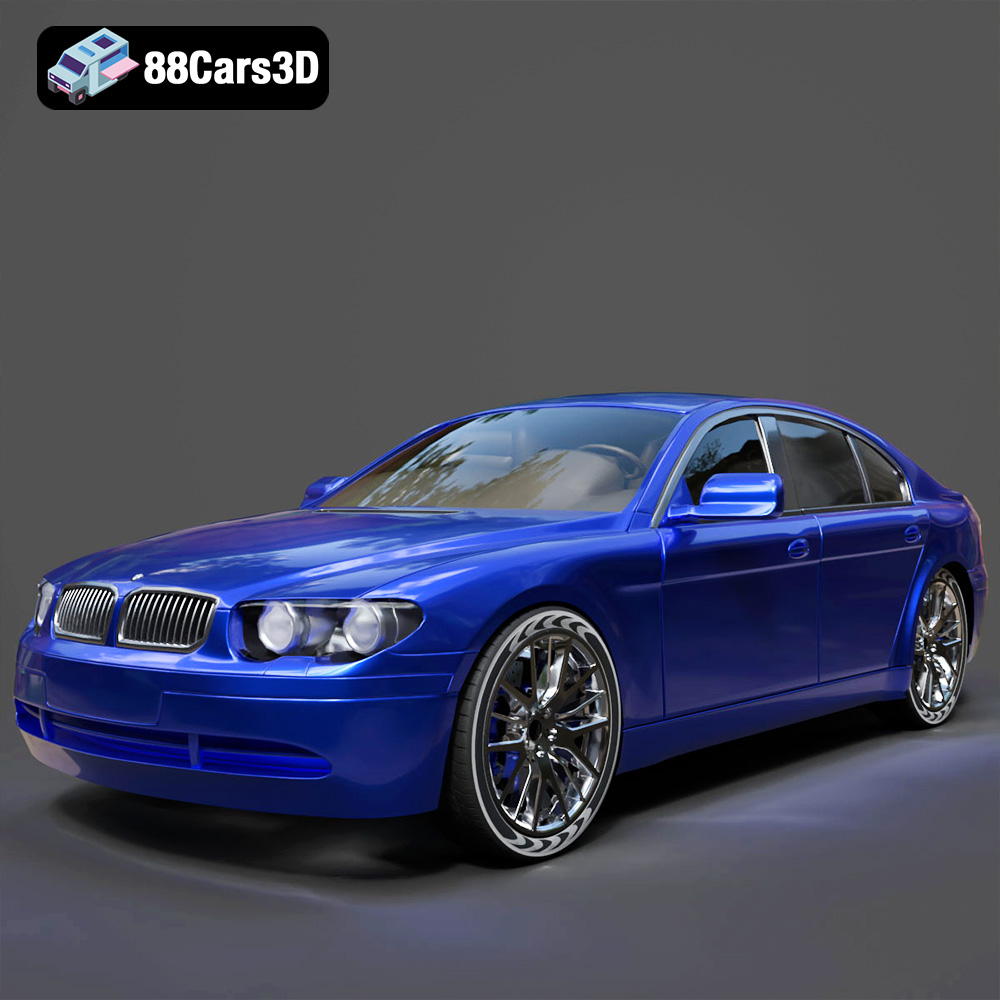
BMW 7 Series 30th Anniversary 3D Model
Texture: Yes
Material: Yes
Download the BMW 7 Series 30th Anniversary 3D Model featuring a meticulously crafted exterior, detailed interior, and realistic wheels. Includes .blend, .fbx, .obj, .glb, .stl, .ply, .unreal, and .max formats for rendering, simulation, and game development.
Price: $35.79

BMW 7-Series F02 3D Model
Texture: Yes
Material: Yes
Download the BMW 7-Series F02 3D Model featuring a detailed exterior and interior, optimized for rendering and animation. Includes .blend, .fbx, .obj, .glb, .stl, .ply, .unreal, and .max formats for rendering, simulation, and game development.
Price: $10.79
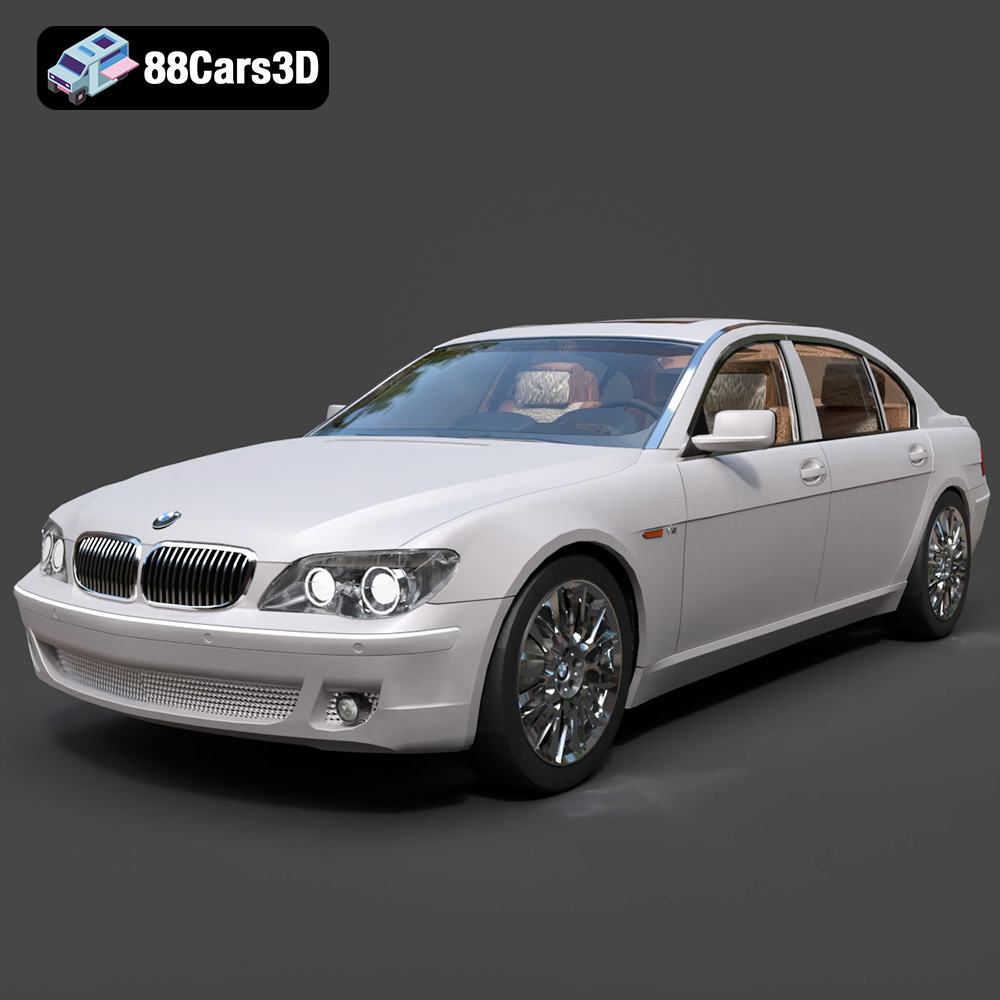
BMW 760Li E66 2005 3D Model
Texture: Yes
Material: Yes
Download the BMW 760Li E66 2005 3D Model featuring a detailed exterior, refined interior, and robust chassis. Includes .blend, .fbx, .obj, .glb, .stl, .ply, .unreal, and .max formats for rendering, simulation, and game development.
Price: $10.79
