

Building immersive virtual worlds in Unreal Engine requires attention to every detail, from the gleaming finish of a high-performance vehicle to the bustling atmosphere of a city street. While high-quality 3D car models provide the visual centerpiece, the surrounding environment often needs to feel alive. This is where large-scale simulations, particularly crowd simulation, become crucial. Historically, populating vast scenes with thousands of interactive characters has been an immense performance challenge in real-time applications. Enter Unreal Engine’s revolutionary Mass Entity System.
The Mass Entity System, often referred to simply as “Mass,” is Epic Games’ answer to managing hundreds of thousands of individual entities efficiently, whether they are AI agents, visual effects, or, most pertinently for our discussion, dynamic crowds. It’s a data-oriented, cache-friendly framework built on the principles of Entity-Component-System (ECS) architecture, designed from the ground up for unparalleled performance and scalability. For game developers creating expansive open-world titles, architectural visualizers rendering lively urban scenes, or virtual production teams populating a digital backlot around a hero vehicle, Mass isn’t just an option—it’s a game-changer. This comprehensive guide will delve deep into the Mass Entity System, demonstrating how it empowers you to create vibrant, believable crowd simulations that breathe life into your Unreal Engine projects, all while maintaining optimal real-time performance, allowing your premium automotive visualization assets to truly shine in dynamic environments.
Unveiling the Mass Entity System: A Paradigm Shift for Large-Scale Simulation
At its core, the Mass Entity System represents a fundamental shift in how we approach object management and simulation within Unreal Engine. Moving away from the traditional Actor-based model, which can become performance-heavy with thousands of instances due to its object-oriented overhead, Mass embraces an Entity-Component-System (ECS) architecture. This data-oriented design (DOD) paradigm prioritizes data layout and processing efficiency, leading to dramatic performance improvements for large numbers of similar entities.
In the ECS model, an “Entity” is merely a unique ID, representing an object in your world without holding any data itself. All functionality and data are stored in “Components,” which are simple data structs associated with one or more entities. These components contain only the necessary data (e.g., position, velocity, animation state, health). “Systems” then operate on specific sets of components across many entities in parallel, performing computations and updating component data. This separation of data from behavior, and the compact, contiguous memory layout of components, allows CPUs to process vast amounts of data much faster due by minimizing cache misses and enabling highly optimized, parallelized operations.
For crowd simulation, this means instead of thousands of individual Actors each carrying their own overhead, you have thousands of lightweight entities sharing component data that is processed efficiently by dedicated systems. Imagine a city scene featuring a stunning 3D car model. To make that scene feel alive, you might need hundreds or even thousands of pedestrians. Mass allows these pedestrians to exist, move, and even interact without crippling your frame rate, creating a far more immersive experience for your automotive visualization or game world. The system is designed to scale horizontally, meaning adding more entities primarily increases data to be processed, rather than introducing significant per-entity overhead.
The Pillars of Mass: Entities, Components, and Systems
- Entities: Think of an entity as a tag or a handle. It’s a lightweight identifier that points to a collection of components. An entity doesn’t have a specific type like a ‘Pedestrian Actor’; instead, it’s defined by the components it possesses. This flexibility allows for highly dynamic entity definitions.
- Components: These are plain data structures. They hold the raw information an entity needs, such as
FMassMovementComponentfor position/velocity orFMassAnimationStateComponentfor animation data. Components are typically small and designed for fast access. - Systems: Systems are the logic units. They query for entities that have a specific set of components and then perform operations on those components. For example, a
MassMovementSystemmight iterate through all entities withFMassMovementComponentandFMassVelocityComponentto update their positions based on their velocity. Systems run in parallel, contributing to Mass’s impressive performance.
Understanding this architecture is key to leveraging Mass effectively. It encourages a data-first approach, where you design your data structures (components) around the operations (systems) you need to perform, leading to highly optimized code that aligns with modern CPU architectures.
Project Setup and Integrating Mass into Your Unreal Engine Workflow
Before you can populate your automotive visualization scenes with bustling crowds, you first need to enable and configure the Mass Entity System within your Unreal Engine project. This involves activating several plugins and understanding how to structure your C++ and Blueprint assets to interface with this powerful framework.
To begin, navigate to Edit > Plugins in your Unreal Engine project. Search for “Mass” and enable the following core plugins:
- MassGameplay: This is the foundational plugin for the Mass Entity System.
- MassCrowd: Provides specific functionalities and components tailored for crowd simulation, including navigation and animation support.
- MassAITasks: Offers a framework for creating AI behaviors for Mass entities.
- MassNavigation: Essential for entities to navigate environments, integrate with Unreal’s Navigation Mesh.
- MassRepresentation: Handles the visual representation of Mass entities, connecting data-driven entities to renderable meshes.
- MassLOD: Provides tools for managing Level of Detail for Mass entities, crucial for performance with large crowds.
- MassSpawner: Facilitates the spawning of Mass entities, often through Blueprint or code.
Restart the editor after enabling these plugins. Once restarted, Mass will be integrated into your project, ready for use. While Mass is heavily C++ oriented for defining components and systems, much of the orchestration and configuration can be handled through Blueprint, especially for spawning and setting up initial data.
Core C++ Structures for Mass Components and Systems
The heart of Mass development lies in C++. You’ll typically create custom UStructs inheriting from FMassSharedFragment, FMassFragment, or FMassTag for components, and UClasses inheriting from UMassProcessor for systems. For instance, a simple pedestrian might have:
FMassLocationFragment(inherits fromFMassFragment): StoresFVectorfor current position.FMassVelocityFragment(inherits fromFMassFragment): StoresFVectorfor current velocity.FMassMovementTargetFragment(inherits fromFMassFragment): Stores the target destination for navigation.FMassPedestrianTag(inherits fromFMassTag): A simple tag to identify pedestrian entities.
Systems like UMassMovementProcessor would then read FMassVelocityFragment and FMassLocationFragment to update positions. For more complex behaviors, you might use FMassSharedFragment for data that is shared across many entities, like animation assets or material instances, further reducing memory footprint.
Spawning Mass Entities with Blueprints and Mass Spawners
While component and system logic are C++, you can leverage Blueprints for high-level control and world integration. The MassSpawner plugin provides tools to spawn entities. You can create a Blueprint Actor that inherits from AMassSpawner or a similar class, which allows you to define:
- Entity Types: A collection of components that define a specific type of Mass entity (e.g., ‘Basic Pedestrian’ would have movement, navigation, and representation components).
- Spawn Zones: Areas within your level where entities will be spawned.
- Density and Behavior: Parameters to control the number of entities and their initial states.
This allows level designers and artists to easily populate scenes without diving into C++ code. The MassSpawner takes care of creating the entities in the Mass simulation world and assigning their initial components. For highly detailed setups or debugging, the “Mass Visualizer” tool (accessible via ` console command) can be invaluable for seeing what Mass entities are active and where.
For more detailed information on specific Mass classes and their usage, always refer to the official Unreal Engine documentation at https://dev.epicgames.com/community/unreal-engine/learning, specifically the sections pertaining to the Mass Entity System and its various modules.
Crafting Intelligent Crowds: Movement, Navigation, and Behavior
With Mass Entity System configured and entities ready to be spawned, the next crucial step is imbuing your crowd agents with believable movement, navigation capabilities, and interactive behaviors. This is where the true power of Mass as a simulation framework comes into play, leveraging specialized systems to handle complex logic for thousands of entities simultaneously.
For realistic crowd movement, you’ll typically combine several Mass systems. The MassNavigation plugin provides the foundation for pathfinding. Instead of each entity calculating its own complex path, Mass often uses a shared navigation grid or pre-calculated path segments, allowing many entities to reference the same data efficiently. Entities can then follow these paths using a series of waypoints, dynamically adjusting their velocity and orientation. This is significantly more performant than traditional AI navigation for high entity counts, where each Actor might run a separate pathfinding query.
Beyond simple path following, intelligent crowds need to avoid obstacles, react to other agents, and perhaps even interact with the environment, such as stopping at crosswalks or gathering in public squares. This behavior is implemented through custom Mass Processors (systems). For example, a UMassAvoidanceProcessor might query nearby entities or static obstacles and apply steering forces to an entity’s velocity component to prevent collisions. These systems operate on data fragments, making them highly efficient. For example, a pedestrian entity might have an FMassMovementTargetFragment defining its current destination, an FMassSteeringForceFragment storing calculated avoidance forces, and an FMassVelocityFragment which is then updated by various processors.
Implementing Dynamic Navigation with MassNavigation
- Navigation Mesh Integration: MassNavigation hooks directly into Unreal Engine’s existing Navigation Mesh system. You define a NavMesh in your level, and Mass entities can query it for valid paths.
- Path Following: Entities are assigned navigation targets. MassNavigation systems then calculate a series of path segments or waypoints for the entity to follow. This data is stored in entity components (e.g.,
FMassTargetLocationFragment,FMassNavigationPathFragment). - Steering Behaviors: Custom Mass Processors can implement common steering behaviors like seek, flee, arrival, and most importantly, separation (to avoid other crowd members) and alignment (to move in the general direction of neighbors). These behaviors modify the entity’s
FMassVelocityFragmentor apply forces that accumulate to it.
To ensure high performance, these systems often use spatial partitioning structures, like grids or octrees, to efficiently find nearby entities or obstacles without performing costly N-squared checks. This enables thousands of entities to make informed decisions about their movement and interactions in real-time.
Bringing Crowds to Life: Animation and Representation
Movement isn’t enough; crowds need to look alive. Mass separates the simulation logic from the visual representation. The MassRepresentation plugin handles how Mass entities are visually rendered. Instead of individual skeletal meshes for every pedestrian, Mass often leverages:
- Instanced Static Meshes: For simpler agents or distant crowds, a single static mesh can be instanced many times with different transforms, providing excellent performance.
- Skeletal Meshes with LODs: For closer agents, skeletal meshes are used. The
MassRepresentationFragmenton an entity defines which skeletal mesh asset to use. - Animation Blueprints & State Machines: A
MassAnimationFragmentor similar component can store the current animation state (e.g., “Idle,” “Walking,” “Running”). AUMassAnimationProcessorthen drives a shared Animation Blueprint or a series of animation instances for the visible entities. By using shared animation graphs and lightweight animation controllers, performance remains high.
The visual representation is typically managed by a UMassAgentRepresentationProcessor, which takes the simulation data (position, velocity, animation state) and translates it into renderable instances. This separation allows you to scale visual fidelity based on distance and importance, a technique further enhanced by MassLOD, which we’ll discuss next. For instance, a vehicle featured from 88cars3d.com might be meticulously detailed with Nanite and Lumen, while the background crowds are efficiently rendered with aggressive LODs and instancing, ensuring both the star asset and its environment look superb.
Optimizing Mass Entity Simulations for Peak Performance
The very design of the Mass Entity System is centered around performance, but achieving peak efficiency for thousands of entities requires understanding and implementing specific optimization strategies. This is especially critical when combining large crowds with highly detailed environments, complex lighting (Lumen), and high-fidelity assets (Nanite), often found in demanding automotive visualization or next-gen game development projects.
At the architectural level, Mass leverages Data-Oriented Design (DOD) principles. This means structuring your data (components) to be processed efficiently by your logic (systems). For instance, grouping all position components together in memory and then iterating over them allows the CPU to load data into its cache more effectively, leading to faster processing. Avoid adding unnecessary data to fragments, and favor simple data types. Where possible, use FMassSharedFragment for data that is common across many entities (e.g., the base skeletal mesh or material for a pedestrian type), as this data only needs to be stored once and referenced by multiple entities, significantly reducing memory footprint.
Beyond its core architecture, effective use of Level of Detail (LOD) is paramount for crowd simulations. The MassLOD plugin provides a robust framework for managing the visual and simulation complexity of entities based on their distance from the camera. This isn’t just about mesh LODs; it extends to varying the complexity of the simulation itself.
Advanced LOD Management with MassLOD
- Visual LODs: As entities get further from the camera, they can seamlessly transition to simpler skeletal meshes, then to instanced static meshes, and eventually to impostors or even simple billboard sprites. MassLOD systems handle the switching and rendering behind the scenes.
- Simulation LODs: Even the simulation logic can be simplified. Distant crowd agents might update their navigation and behavior logic less frequently, or their collision detection might be simplified. This reduces the computational load on the CPU for entities that are not the primary focus of the player or camera.
- Culling: Entities entirely outside the camera frustum or beyond a certain distance can be culled from rendering and even paused in simulation, freeing up resources. MassLOD provides mechanisms for frustum culling and distance culling.
Configuring MassLOD involves setting up distance thresholds and defining the component sets associated with each LOD level. For example, at LOD0 (closest), an entity might have full animation and navigation components. At LOD3 (farthest), it might only have a position component and be rendered as a single sprite, with its movement interpolated rather than fully simulated.
Integrating with Unreal Engine’s Modern Rendering Features
While Mass entities themselves typically use traditional mesh rendering (skeletal or instanced static meshes), they coexist within environments powered by Unreal Engine’s cutting-edge features. For example:
- Nanite: The static environment (buildings, roads, props) can leverage Nanite’s virtualized geometry for incredibly high detail. Mass entities move within this Nanite-powered world. While Mass entities don’t directly use Nanite (they are typically dynamic, moving meshes), the fact that the environment can be so complex with minimal performance cost means more budget is available for rendering the thousands of crowd agents.
- Lumen: Unreal Engine’s global illumination and reflections system, Lumen, dynamically lights the entire scene. Mass entities, even instanced ones, receive Lumen lighting and contribute to reflections, making them appear seamlessly integrated into the environment. Careful optimization of materials for crowd agents (e.g., using simpler PBR materials for distant LODs) helps maintain Lumen’s performance.
By carefully balancing the visual and simulation complexity through MassLOD, and ensuring your Mass entities are optimized to fit within a Nanite/Lumen powered world, you can achieve breathtakingly realistic and performant scenes, perfect for showcasing the intricate details of your chosen 3D car models.
Interactive Crowds and Real-World Applications
The utility of the Mass Entity System extends far beyond merely populating background scenery. Its scalable, high-performance nature makes it ideal for a multitude of real-world applications where interactive, dynamic crowds or large numbers of entities are critical, from immersive game environments to cutting-edge virtual production and detailed architectural or automotive visualization projects.
In game development, Mass enables richer, more believable open-world environments. Imagine a racing game where spectators dynamically react to a passing car, or a narrative game where city streets are genuinely bustling with unique, pathfinding pedestrians. Mass allows developers to craft these experiences without sacrificing frame rate, pushing the boundaries of what’s possible in terms of environmental realism and player immersion. Beyond simple movement, Mass can drive complex AI behaviors for non-player characters (NPCs) or even create dynamic combat scenarios involving hundreds of agents.
For automotive visualization, Mass can transform static car renders into vibrant, living scenes. Instead of placing a few static 3D people around a vehicle, imagine a car showroom bustling with potential customers, or a test drive in a city with dynamic pedestrian and vehicle traffic (other Mass entities). This level of dynamic realism significantly enhances the presentation of a vehicle, allowing viewers to see it in a believable, interactive context. This can be used in:
- Interactive Car Configurators: Allow customers to “drive” their configured vehicle through a lively virtual city, complete with animated crowds and traffic.
- Marketing and Advertising: Create cinematic trailers or virtual experiences for new car models where the vehicle is showcased within a believable, populated world.
Virtual Production and Large-Scale Environments
The film and television industry is increasingly embracing virtual production, using Unreal Engine to render real-time environments on LED walls or for virtual camera work. Mass is invaluable here for creating:
- Background Extras: Populate vast digital sets with thousands of background extras that move and behave naturally, adding scale and realism to scenes, especially those involving vehicles. This means fewer human extras on set, reducing costs and logistical challenges.
- Pre-visualization and Scouting: Quickly prototype and visualize complex scenes with large populations, allowing directors to block shots and refine compositions before committing to physical production.
Mass’s performance enables these complex scenes to run in real-time, which is essential for virtual production workflows where immediate feedback and interactivity are paramount. Directors and cinematographers can make creative decisions on the fly, adjusting crowd density, movement patterns, and even specific agent behaviors to perfectly frame a shot featuring a hero vehicle.
Future Potentials and Blueprint Integration
While Mass is heavily C++ centric for its core logic, Blueprints play a crucial role in tying it all together. You can use Blueprints to:
- Trigger Mass Spawners: Control when and where crowds appear in your level.
- Modify Mass Entity Properties: Blueprint callable functions can expose certain parameters of Mass entities, allowing artists and designers to tweak behaviors or appearances without C++ knowledge.
- Orchestrate Complex Scenarios: Combine Mass crowd agents with other Unreal Engine systems (e.g., Niagara for environmental effects, Sequencer for cinematic events) to create rich, multi-layered simulations.
The extensibility of Mass means its application will only grow. Developers are exploring its use for complex physics simulations involving many small objects, large-scale destruction, and even highly performant custom game logic. By mastering Mass, you gain a powerful tool for crafting truly next-generation real-time experiences, making environments where your meticulously crafted 3D car models can truly shine in dynamic, living worlds.
Conclusion: Empowering Your Unreal Engine Projects with Mass
The Mass Entity System represents a monumental leap forward for managing and simulating large numbers of entities within Unreal Engine. By embracing the principles of Entity-Component-System and data-oriented design, Mass shatters previous performance barriers, allowing developers, artists, and visualization professionals to populate their virtual worlds with unprecedented scale and detail. From bustling city streets in open-world games to vibrant crowds surrounding a hero car in an automotive visualization project, Mass makes these previously impossible scenarios a real-time reality.
We’ve explored how to set up Mass in your project, how its core components, entities, and systems work in harmony, and the technical intricacies of building intelligent, navigating crowds. We delved into critical optimization strategies, highlighting the importance of MassLOD and its seamless integration with modern rendering features like Nanite and Lumen. Ultimately, Mass empowers you to create environments that feel truly alive, enhancing immersion and bringing a new dimension of realism to any project. Whether you’re a game developer striving for a rich, dynamic world, an architect visualizing a lively urban landscape, or an automotive professional showcasing your vehicle designs in context, Mass provides the performance backbone you need.
The journey with Mass is one of embracing a data-first mindset, but the rewards are immense: unparalleled scalability, superior performance, and the ability to craft truly immersive and believable scenes. As you embark on leveraging this powerful system, remember that the quality of your core assets still forms the bedrock of a compelling experience. Platforms like 88cars3d.com offer high-quality, optimized 3D car models that are ready to be dropped into your Mass-powered worlds, ensuring your primary subjects are as meticulously detailed as the dynamic environments you create around them. Dive into Mass, experiment with its capabilities, and unlock the true potential of large-scale, real-time simulation in your next Unreal Engine masterpiece. Your worlds will never be the same.
Featured 3D Car Models

BMW 7 Series E38 3D Model
Texture: Yes
Material: Yes
Download the BMW 7 Series E38 3D Model featuring its iconic luxury sedan design and classic aesthetics. Includes .blend, .fbx, .obj, .glb, .stl, .ply, .unreal, and .max formats for rendering, simulation, and game development.
Price: $10.79

BMW 6 Series 640i F12 3D Model
Texture: Yes
Material: Yes
Download the BMW 6 Series 640i F12 3D Model featuring a sleek design and detailed interior. Includes .blend, .fbx, .obj, .glb, .stl, .ply, .unreal, and .max formats for rendering, simulation, and game development.
Price: $10.79

BMW 3 F30 3D Model
Texture: Yes
Material: Yes
Download the BMW 3 F30 3D Model featuring a detailed exterior, realistic interior, and optimized mesh. Includes .blend, .fbx, .obj, .glb, .stl, .ply, .unreal, and .max formats for rendering, simulation, and game development.
Price: $10.79
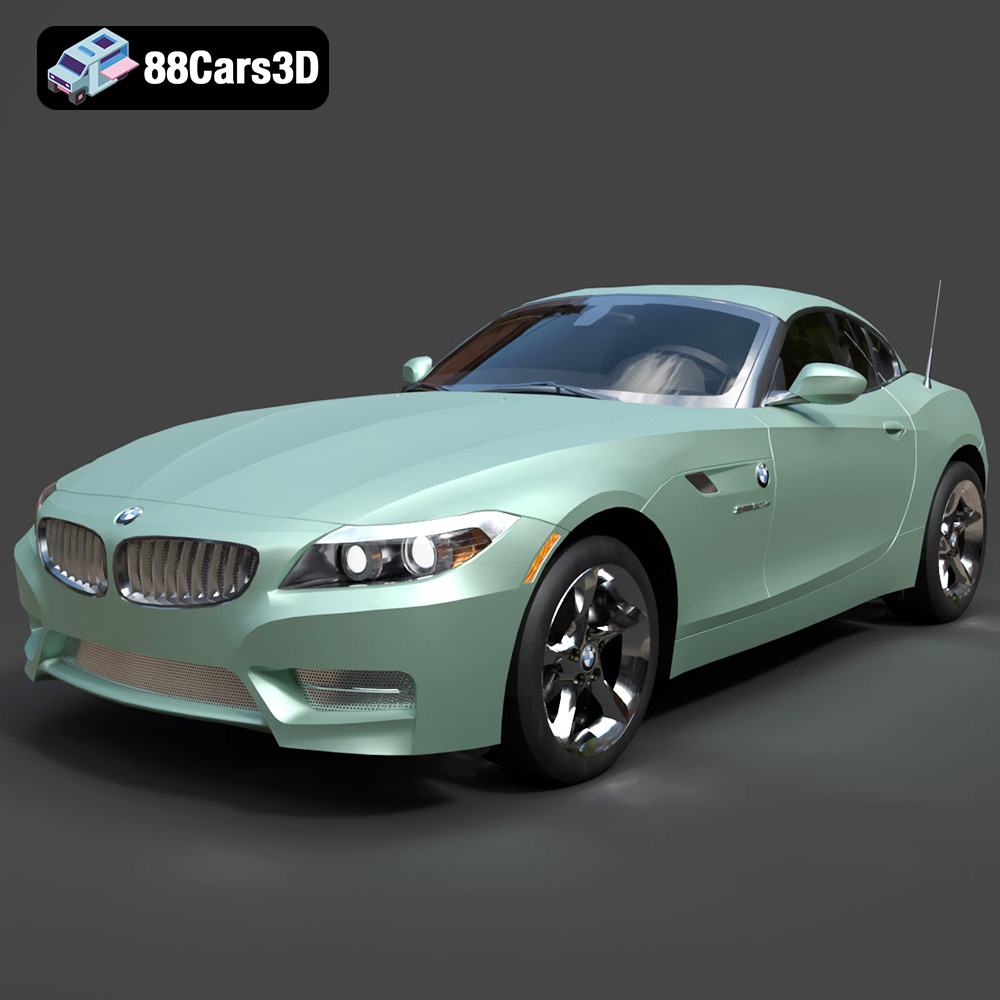
BMW Z4 Roadster E89 2012 3D Model
Texture: Yes
Material: Yes
Download the BMW Z4 Roadster E89 3D Model featuring clean geometry, realistic detailing, and a fully modeled interior. Includes .blend, .fbx, .obj, .glb, .stl, .ply, .unreal, and .max formats for rendering, simulation, and game development.
Price: $13.99

BMW Z4 E85 2005 3D Model
Texture: Yes
Material: Yes
Download the BMW Z4 E85 3D Model featuring clean geometry, realistic detailing, and a fully modeled interior. Includes .blend, .fbx, .obj, .glb, .stl, .ply, .unreal, and .max formats for rendering, simulation, and game development.
Price: $13.99

BMW M3 2024 3D Model
Texture: Yes
Material: Yes
Download the BMW M3 2024 3D Model featuring clean geometry, realistic detailing, and a fully modeled interior. Includes .blend, .fbx, .obj, .glb, .stl, .ply, .unreal, and .max formats for rendering, simulation, and game development.
Price: $13.99
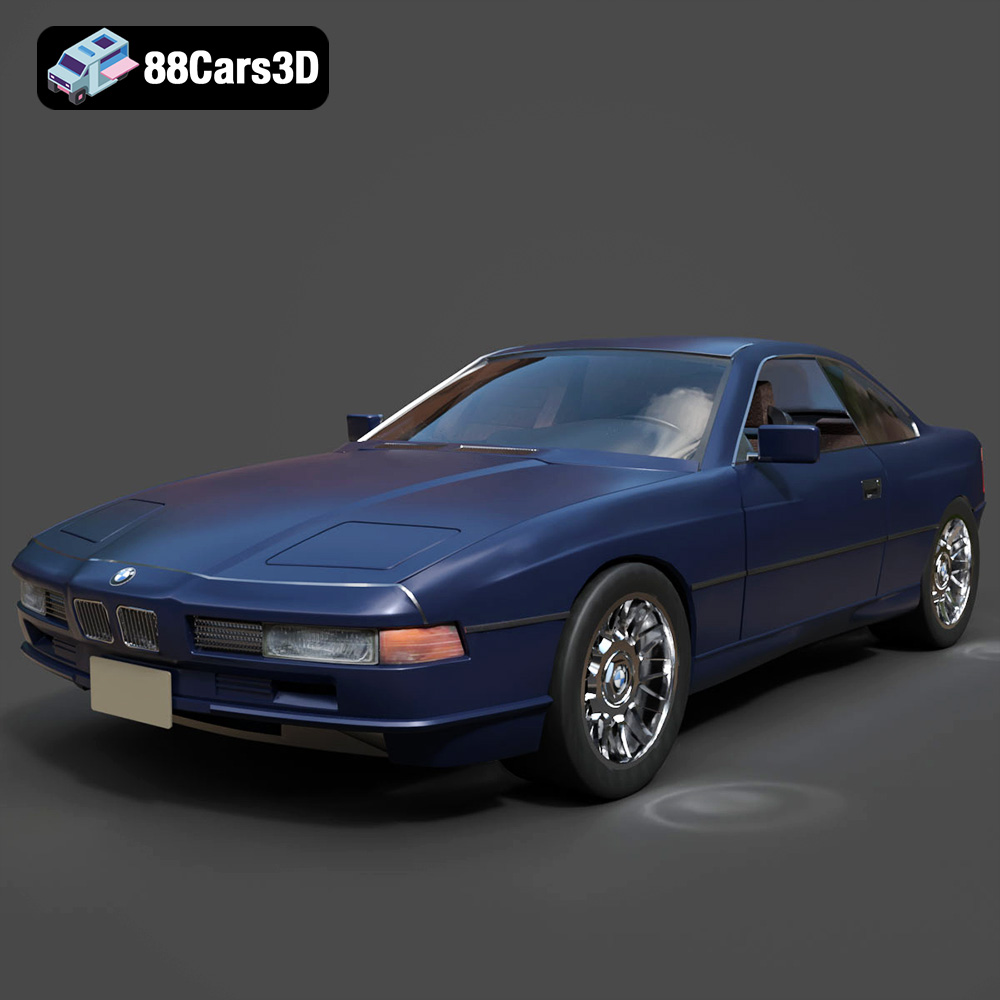
BMW 850i Coupe 1990 3D Model
Texture: Yes
Material: Yes
Download the BMW 850i Coupe 1990 3D Model featuring clean geometry, realistic detailing, and a fully modeled interior. Includes .blend, .fbx, .obj, .glb, .stl, .ply, .unreal, and .max formats for rendering, simulation, and game development.
Price: $13.99
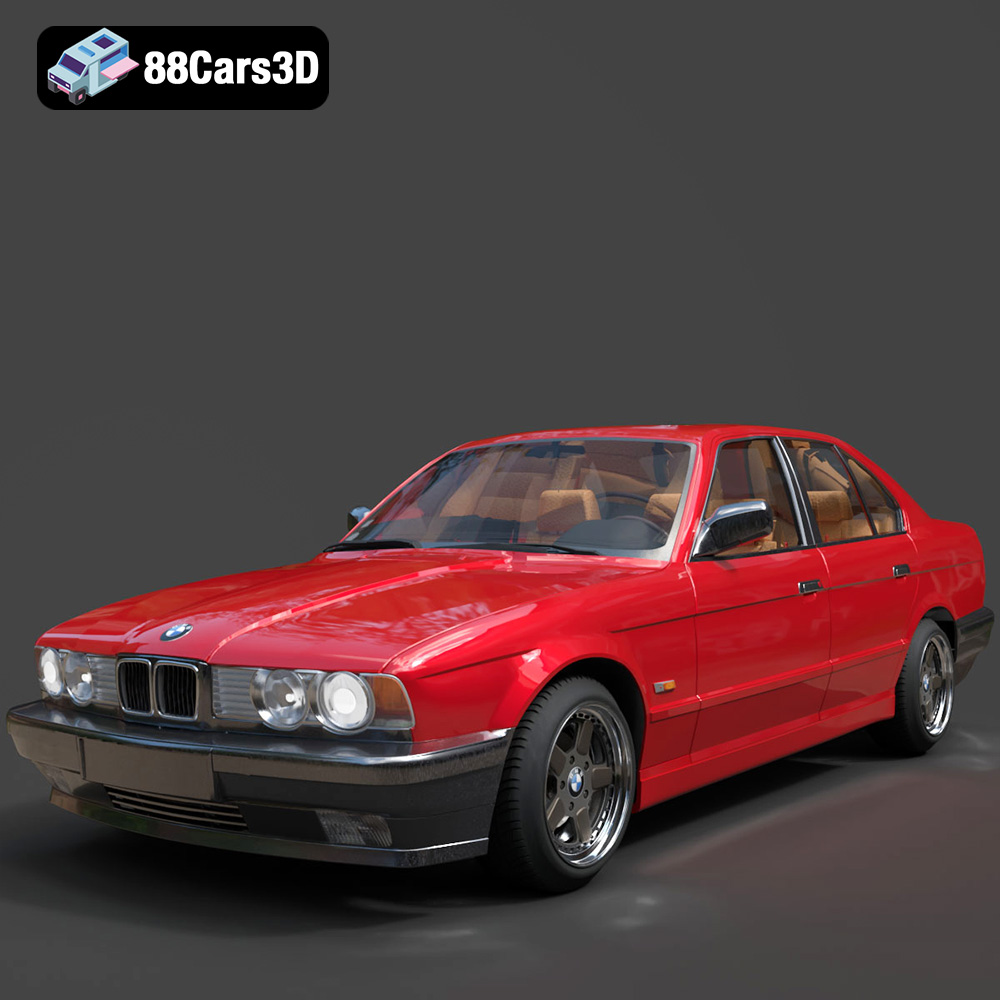
BMW 525i E34 1993 3D Model
Texture: Yes
Material: Yes
Download the BMW 525i E34 1993 3D Model featuring clean geometry, realistic detailing, and a fully modeled interior. Includes .blend, .fbx, .obj, .glb, .stl, .ply, .unreal, and .max formats for rendering, simulation, and game development.
Price: $12.99

BMW 7 Series 2016 3D Model
Texture: Yes
Material: Yes
Download the BMW 7 Series 2016 3D Model featuring luxurious design, detailed interior, and accurate exterior. Includes .blend, .fbx, .obj, .glb, .stl, .ply, .unreal, and .max formats for rendering, simulation, and game development.
Price: $10.79
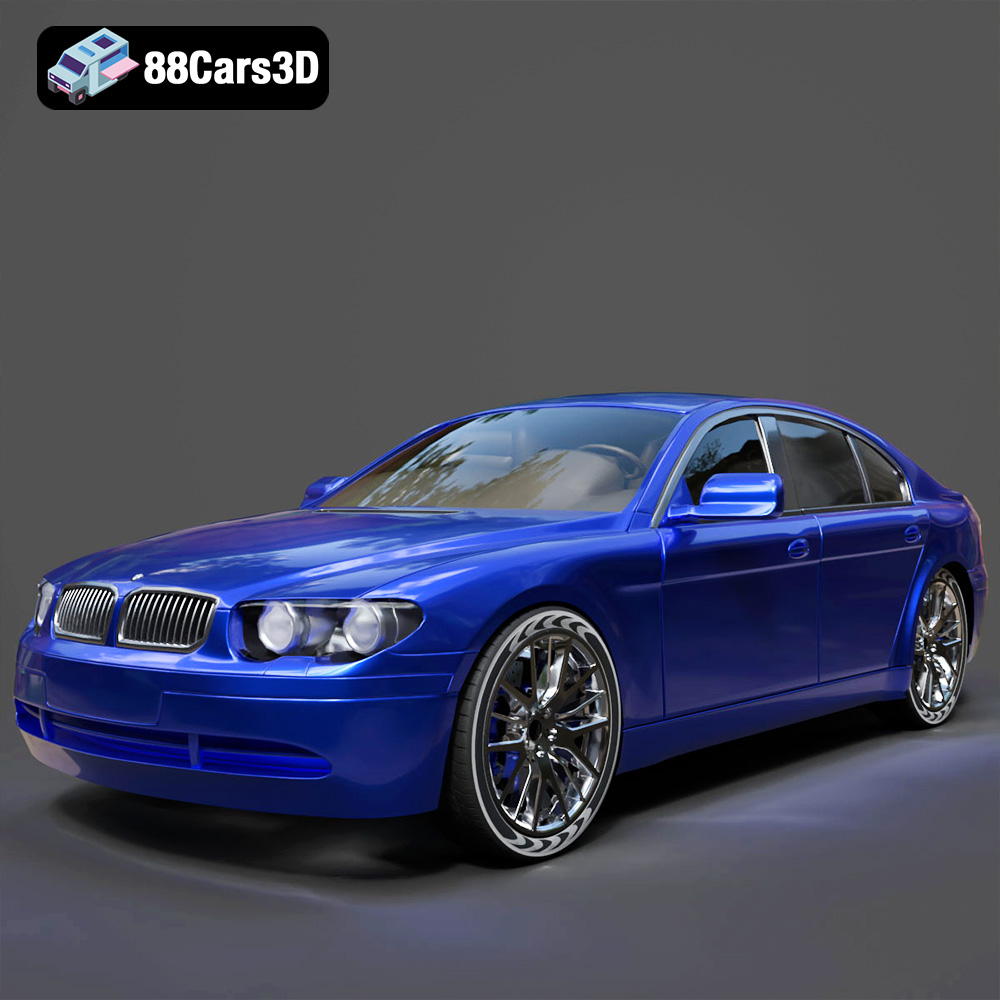
BMW 7 Series 30th Anniversary 3D Model
Texture: Yes
Material: Yes
Download the BMW 7 Series 30th Anniversary 3D Model featuring a meticulously crafted exterior, detailed interior, and realistic wheels. Includes .blend, .fbx, .obj, .glb, .stl, .ply, .unreal, and .max formats for rendering, simulation, and game development.
Price: $35.79
