

Building expansive, richly detailed open worlds has long been the holy grail for game developers and real-time visualization artists. From sprawling cityscapes for cinematic car chases to vast automotive proving grounds for virtual simulations, the demand for immersive environments that push visual fidelity boundaries continues to grow. However, managing the sheer scale of assets, lighting, and interactive elements in such worlds traditionally presented monumental challenges, often leading to prohibitive performance costs and complex development workflows.
Enter Unreal Engine’s World Partition system – a revolutionary approach designed to fundamentally change how large open worlds are created, managed, and rendered. No longer confined by the limitations of static level streaming, World Partition offers a robust framework that automatically handles the loading and unloading of world content based on player proximity, enabling truly massive environments without compromising performance or development efficiency. For professionals in automotive visualization, game development, and AR/VR who rely on high-quality 3D car models and intricate scenes, mastering World Partition is not just an advantage; it’s a necessity for future-proofing their projects.
This comprehensive guide will dive deep into Unreal Engine’s World Partition, exploring its core mechanics, setup, optimization strategies, and advanced workflows. We’ll specifically examine how this powerful system empowers artists and developers to integrate high-fidelity automotive assets, like those found on platforms such as 88cars3d.com, into colossal environments while maintaining pristine real-time performance. Prepare to unlock the full potential of Unreal Engine for your next generation of open-world experiences.
The Evolution of Large World Management in Unreal Engine
Before World Partition, Unreal Engine relied primarily on a system called Level Streaming. While effective for segmenting smaller, distinct areas, Level Streaming required manual division of levels, explicit management of streaming volumes, and careful orchestration of their loading and unloading. This approach became increasingly cumbersome and inefficient as world sizes grew, often leading to memory bottlenecks, complex dependency management, and a fragmented development experience. Artists and designers would spend considerable time manually splitting up their vast landscapes and placing streaming triggers, diverting focus from creative work.
The limitations of Level Streaming became particularly apparent when dealing with truly expansive open-world games or demanding automotive visualization projects where entire virtual cities or massive test tracks needed to be rendered seamlessly. The memory footprint of keeping many streamed levels loaded, even if not directly visible, could quickly overwhelm system resources. Furthermore, collaborative development was a nightmare, as multiple artists couldn’t easily work on the same large landscape without intricate source control merging challenges.
Unreal Engine 5 introduced World Partition as a direct response to these challenges, fundamentally rethinking how large worlds are structured and streamed. Instead of pre-defined, manually managed levels, World Partition treats the entire world as a single, contiguous entity. It then automatically divides this world into a hierarchical grid of cells. These cells are loaded and unloaded dynamically at runtime based on the camera’s position and customizable streaming distances. This paradigm shift dramatically simplifies development, improves performance, and facilitates collaborative workflows, allowing teams to build truly epic landscapes without the previous technical overhead. The goal was to make building large worlds as intuitive as building small ones, abstracting away the complexities of data management and streaming.
From Level Streaming to World Partition: A Paradigm Shift
The core difference lies in automation and granularity. Level Streaming was a manual, coarse-grained approach. World Partition is an automated, fine-grained system. With World Partition, your entire world is saved into a single map file, but its content is intelligently managed in the background. Instead of one monolithic landscape file or many small ones, World Partition stores all world data in a series of grid-based cells. This means that only the relevant cells near the player or camera are active in memory and rendered, significantly reducing the memory footprint and CPU load. For automotive visualization, where high-resolution environments often complement detailed 3D car models, this change is transformative, allowing for unparalleled environmental scale and fidelity.
Addressing Performance and Scalability Needs
The primary drivers behind World Partition were performance and scalability. Modern hardware, combined with rendering technologies like Nanite and Lumen, can handle incredible geometric and lighting detail. However, this detail needs to be streamed efficiently. World Partition provides the necessary infrastructure to feed these systems with data only when needed. This approach is vital for applications like virtual production stages where vast digital environments are displayed on LED walls, or for AR/VR experiences where every millisecond of rendering time is critical. By only loading what’s necessary, World Partition ensures that resources are focused on the immediate environment, providing smoother frame rates and a more immersive experience, even with high-poly 3D car models and complex scene elements.
Setting Up Your World with World Partition
Implementing World Partition in your Unreal Engine project is a straightforward process, though it requires careful consideration, especially if converting an existing project. For new projects, it’s often enabled by default in recent Unreal Engine versions, particularly those designed for open-world templates. Understanding the initial setup and configuration is crucial for laying a robust foundation for your large-scale automotive environments or game worlds.
When starting a new project, you can select an Open World template, which automatically initializes World Partition. If you’re working with an existing project or a different template, you’ll need to enable it manually. This can be done by navigating to World Settings and checking the ‘Enable World Partition’ box. Once enabled, Unreal Engine will prompt you to convert your existing map. This conversion process analyzes your current level’s content and divides it into World Partition cells, saving the data into a new directory structure within your project. It’s a one-way street, so always back up your project before converting!
After conversion, you’ll notice a significant change in your Content Browser and World Outliner. Instead of individual streamed levels, you’ll see a unified world. The World Partition Editor (accessible via Window > World Partition > World Partition Editor) becomes your central hub for managing this expansive world. Here, you can visualize the grid of cells, inspect loaded actors, and even manually load/unload specific cells for editing purposes, providing granular control over your development environment. This allows artists to focus on specific regions of a massive automotive test track or a bustling virtual city without being overwhelmed by the entire scene.
Converting Existing Worlds vs. New Projects
For new projects, starting with World Partition enabled is the recommended and simplest path. You build your world directly within the World Partition system from day one. For existing projects, the conversion tool is your best friend. It analyzes your current level’s actors and automatically assigns them to World Partition cells based on their spatial location. While the conversion is generally robust, it’s essential to review the converted world for any unexpected changes or misconfigurations, especially concerning complex Blueprints or Level Sequences that reference actors across previously separate streamed levels. Always back up your project before initiating the conversion to avoid irreversible data loss, as the operation modifies your level data significantly. For detailed guidance on the conversion process, refer to the official Unreal Engine documentation on World Partition Conversion.
Grid System and Runtime Streaming
The core of World Partition’s efficiency lies in its grid system. The world is spatially divided into a grid of uniform cells. Each cell contains a subset of your world’s actors and data. At runtime, Unreal Engine dynamically streams these cells in and out of memory based on the player’s proximity and predefined streaming distances. You can configure the size of these cells and the streaming distance in the World Settings. Smaller cells offer more granular streaming but can increase the overhead of managing more cells. Larger cells reduce management overhead but stream larger chunks of data, potentially impacting memory or bandwidth. For automotive visualization, where the camera might move at high speeds, carefully tuning these parameters is crucial to ensure seamless transitions and avoid visual pop-in. This system effectively turns your vast environment into a continuously evolving, performance-optimized space, ideal for showcasing the high-quality 3D car models available on platforms like 88cars3d.com.
Optimizing High-Fidelity Automotive Assets within World Partition
One of the most compelling advantages of World Partition, especially for automotive visualization and games featuring detailed vehicles, is its ability to efficiently manage high-fidelity assets. Modern 3D car models, like those offered by 88cars3d.com, often boast millions of polygons, intricate PBR materials, and high-resolution textures. Integrating such assets into a massive open world while maintaining real-time performance would be nearly impossible without a robust streaming solution. World Partition, combined with technologies like Nanite and intelligent LOD management, makes this a reality.
When you place a high-detail 3D car model or an intricate environmental prop within a World Partitioned level, the system ensures that its data is only loaded when the camera is within the specified streaming distance of the cell containing that asset. This significantly reduces the memory footprint and rendering workload compared to traditional methods where assets might be loaded even when far out of view. For instance, imagine a virtual car dealership spanning multiple city blocks. With World Partition, only the cars and surrounding environment within the immediate vicinity of the player are loaded, while distant cars remain unloaded until the player approaches them.
To truly leverage this, it’s crucial to prepare your automotive assets correctly. This involves utilizing Unreal Engine’s cutting-edge features and adhering to best practices. While World Partition handles the streaming, the individual asset’s efficiency (its poly count, texture resolution, material complexity) still matters. Combining World Partition with optimized assets ensures that when a cell *is* loaded, the content within it is as performant as possible. This balance is key to achieving stunning visual quality without sacrificing interactivity or frame rate, a critical consideration for showcasing premium 3D car models.
Leveraging Nanite and LODs for Streamed Assets
Nanite virtualized geometry is a game-changer for high-fidelity assets in World Partitioned worlds. Nanite allows artists to import cinematic-quality models with millions, or even billions, of polygons directly into Unreal Engine without manual LOD creation or performance concerns. When Nanite-enabled meshes are placed in a World Partitioned level, the system automatically handles their streaming and rendering at optimal detail levels based on screen space. This means you can have incredibly detailed 3D car models, complete with intricate interior details and complex bodywork, scattered across a vast environment, and Nanite will render them efficiently, only processing the necessary detail for each instance.
- Nanite Workflow: Enable Nanite on your static meshes in the Static Mesh Editor. For complex automotive assets, Nanite will intelligently manage geometric detail, reducing draw calls and vertex processing.
- Traditional LODs: For non-Nanite meshes (e.g., animated characters, older assets, translucent geometry), traditional Level of Detail (LOD) settings are still vital. Ensure your automotive props and environmental elements have appropriate LODs (typically 3-5 levels, with poly counts dropping by 50-70% at each stage). World Partition works seamlessly with LODs, automatically choosing the correct LOD for assets within loaded cells based on distance.
Managing PBR Materials and Texture Streaming
Physically Based Rendering (PBR) materials are essential for achieving photorealistic automotive visuals. However, high-resolution PBR textures (e.g., 4K or 8K for car paint, tires, interiors) can consume significant VRAM. Unreal Engine’s texture streaming system, which works in conjunction with World Partition, ensures that only the mip maps (smaller versions of textures) necessary for the current view distance are loaded into memory. This dynamic loading prevents unnecessary memory consumption and contributes to smoother performance across your large world.
- Texture Resolution: Use appropriate texture resolutions for your assets. While 4K/8K might be desired for hero cars, consider 2K or 1K for environmental props that will be viewed from a distance.
- Texture Streaming Pool: Monitor your texture streaming pool via the console command
r.Streaming.PoolSize. If textures appear blurry, it might indicate the pool is too small, or your textures are not configured for optimal streaming. Ensure your texture assets have ‘Mip Gen Settings’ configured correctly, typically to ‘From TextureGroup’ or ‘Auto from Size’. - Material Complexity: Keep your PBR materials optimized. Complex materials with many instructions can still impact performance, even when streamed. Utilize material functions for reusability and optimize node networks.
Lighting and Interactivity in Partitioned Worlds
Lighting is paramount in automotive visualization, dictating mood, realism, and the perceived quality of materials. In a World Partitioned environment, managing dynamic and static lighting across vast distances while maintaining performance requires a thoughtful approach. Similarly, creating interactive experiences, such as automotive configurators or driveable demos, needs careful planning to ensure Blueprint logic and data persist and function correctly as world cells stream in and out.
Unreal Engine 5’s Lumen global illumination and reflections system, combined with Nanite, offers an unprecedented level of realism for large, dynamic environments. Lumen works exceptionally well with World Partition because it can dynamically adapt to geometry changes as cells stream in and out. This means that lighting and reflections update seamlessly across the entire environment, providing consistent visual fidelity whether you’re viewing a detailed car model up close or seeing it from a distance within a vast landscape. Traditional lighting methods, like static lightmaps, can also be employed for stationary elements, but dynamic solutions are often preferred for flexibility in open worlds.
For interactivity, Blueprint visual scripting remains the backbone of Unreal Engine development. In a World Partitioned world, you need to ensure that your Blueprint logic is robust enough to handle actors potentially being unloaded and reloaded. This often involves careful event handling, saving/loading player states, and using Data Layers to manage actor visibility and behavior. For example, a complex car configurator might have different versions of car components (wheels, paint jobs) controlled by Blueprint. Ensuring these elements activate and deactivate smoothly as the player moves around a showroom built across multiple World Partition cells is crucial for a fluid user experience.
Dynamic Global Illumination with Lumen and World Partition
Lumen provides real-time global illumination and reflections that dynamically react to changes in lighting and geometry. In a World Partitioned world, Lumen automatically updates its scene representation as cells stream in, providing continuous, high-quality lighting. This is incredibly powerful for automotive scenes, where realistic reflections on car paint and accurate environmental lighting are critical.
- Lumen Setup: Ensure Lumen is enabled in your Project Settings (Engine > Rendering > Global Illumination and Reflections).
- Performance Considerations: While Lumen is highly optimized, it still has a performance cost. For large worlds, consider adjusting Lumen’s quality settings based on your target platform and visual requirements. Using distance fields where appropriate can also optimize Lumen’s performance.
- Consistent Lighting: Since Lumen is dynamic, you generally don’t bake lighting for large open worlds with World Partition. This offers immense flexibility for time-of-day systems and dynamic weather, which can dramatically change the look of your automotive visualizations.
Blueprint Logic and Data Layers for Automotive Scenarios
Blueprint scripting allows for rapid prototyping and complex game logic. In a World Partitioned world, you need to be mindful of actor lifecycle events (loading, unloading). Avoid relying on actors always being present and consider ways to re-initialize or retrieve references when they stream back in. Data Layers, a feature tightly integrated with World Partition, are invaluable for managing different configurations or states of your world.
- Actor Lifecycle: Use events like
OnActorLoadedandOnActorUnloadedif you need specific logic to fire when an actor streams in or out. However, for most interactive elements, ensuring they are properly initialized when loaded is sufficient. - Data Layers for Configurators: Imagine an automotive configurator where you can swap out car parts (different rims, spoilers) or switch between interior trims. You can use Data Layers to manage these variations. Create a Data Layer for “Sport Rims” and another for “Luxury Rims.” By activating one Data Layer and deactivating the other via Blueprint, you can instantly swap out assets and their associated logic, even across different World Partition cells, ensuring only the relevant assets are loaded. This greatly simplifies managing complex product variations in a large virtual showroom.
- Persistent Data: For player progress or choices in a game or configurator, use Save Game objects to store and retrieve data independent of actor streaming. When an interactive car model streams back in, its Blueprint can load the saved state and apply the correct configuration.
Advanced Workflows and Collaborative Development
Beyond its core streaming capabilities, World Partition offers significant advantages for advanced production workflows and collaborative team environments. In large-scale projects, especially those involving multiple artists, designers, and engineers, managing simultaneous changes across a single, massive map can be a logistical nightmare. World Partition directly addresses this by facilitating concurrent development and providing tools for managing complex scene variations, making it ideal for professional studios creating immersive automotive experiences or expansive game worlds.
One of the most powerful features integrated with World Partition is Data Layers. While we touched upon them for interactivity, their true strength lies in project organization and collaborative editing. Data Layers allow you to logically group actors together and control their visibility, editability, and even streaming behavior. Imagine creating different “layers” for specific types of content: a layer for terrain, another for roads, one for buildings, and separate layers for various versions of 3D car models or their specific components (e.g., ‘Day Time Props’ vs. ‘Night Time Props’). This granular control empowers teams to work on distinct aspects of the world without interfering with each other’s progress.
Furthermore, World Partition significantly streamlines virtual production workflows. When constructing a massive digital backlot or a sprawling urban environment for LED volume stages, the ability to stream vast amounts of high-fidelity data efficiently is paramount. World Partition ensures that the portion of the environment rendered on the LED wall, and for the camera frustum, is always optimized, allowing for high frame rates crucial for realistic in-camera visual effects. Coupled with Sequencer for cinematic storytelling and Niagara for dynamic particle effects, World Partition creates a robust pipeline for film, broadcast, and high-end visualization.
Data Layers for Variant Management and Collaborative Editing
Data Layers provide a flexible system for organizing and controlling the visibility and streaming of actors in your World Partitioned world. This is invaluable for collaborative work and managing variations of a scene.
- Team Collaboration: With Data Layers, multiple team members can work concurrently on different aspects of the same map. An environment artist can work on the “Vegetation” Data Layer, while a designer works on the “Gameplay Triggers” Data Layer, and a lighting artist fine-tunes the “Lighting Scenarios” Data Layer. Each can commit their changes independently, significantly reducing merge conflicts common in monolithic levels.
- Scene Variants: Create different Data Layers for various scenarios within your automotive visualization. For example, a “Summer Day” layer for sunny conditions, a “Winter Night” layer for snowy environments, or specific layers for different architectural styles in a virtual city. You can activate/deactivate these layers at runtime or during design time to quickly switch between different world states, making it easy to showcase a vehicle in multiple contexts without creating separate maps.
- Performance Grouping: Use Data Layers to logically group assets that might be streamed differently or have different performance profiles. For instance, high-detail interiors of buildings could be on one Data Layer, while simpler exteriors are on another, allowing for more precise streaming control.
Virtual Production and Sequencer in Open Worlds
For cinematic content and virtual production, World Partition offers unparalleled freedom. The ability to build colossal, detailed worlds that stream efficiently unlocks new creative possibilities for filmmakers and advertisers using Unreal Engine.
- Sequencer for Cinematics: Unreal Engine’s Sequencer is a powerful non-linear cinematic editor. In a World Partitioned world, you can create elaborate camera moves and character animations across vast distances. Sequencer works seamlessly with the streaming system, ensuring that all necessary actors and their associated animations, particle effects (Niagara), and physics simulations are loaded precisely when needed for your shot. This means you can choreograph epic car chases or sweeping environmental flythroughs without worrying about manual level loading. For a deep dive into Sequencer, refer to the official documentation.
- LED Wall Workflows: In virtual production, LED walls display digital environments that blend with physical sets. World Partition is crucial here because it ensures only the relevant portion of the vast digital world, as seen by the camera and on the LED wall, is rendered at ultra-high frame rates. This minimizes latency and visual artifacts, leading to more convincing in-camera visual effects. Accurate vehicle physics (e.g., Chaos Physics) can also be simulated on 3D car models within these streamed environments, further enhancing realism.
- AR/VR Optimization: For AR/VR automotive configurators or experiences in large environments, World Partition’s efficient streaming is critical. By reducing the number of loaded polygons and textures, it helps achieve the high frame rates (e.g., 90 FPS) necessary to prevent motion sickness and deliver a comfortable, immersive experience, even with high-detail car models.
Performance Considerations and Troubleshooting
While World Partition dramatically simplifies the management of large open worlds and inherently improves performance by intelligent streaming, it’s not a magic bullet. Achieving optimal frame rates and a smooth user experience in a massive environment still requires diligent optimization and a thorough understanding of potential bottlenecks. Especially when dealing with high-fidelity assets like the detailed 3D car models from 88cars3d.com, every optimization strategy contributes to a more polished final product.
Understanding the impact of your assets and configuration choices on World Partition’s streaming behavior is key. Overly dense areas, inefficient materials, and misconfigured streaming settings can still lead to hitches, pop-in, or memory overflows. The goal is to ensure that when a new cell streams in, the transition is seamless and doesn’t cause a noticeable dip in performance. This involves a holistic approach, considering everything from individual asset optimization to global engine settings and thoughtful level design.
Troubleshooting in a World Partitioned world also requires specific tools and techniques. Issues related to assets not appearing, performance drops, or visual glitches can sometimes be traced back to streaming problems or data layer misconfigurations. Fortunately, Unreal Engine provides several built-in debugging tools that can help identify and resolve these issues efficiently, ensuring your vast automotive landscapes and interactive experiences run flawlessly across various target platforms.
Draw Calls, Memory Footprint, and Cull Distance Optimization
Even with World Partition, the number of draw calls and the memory consumed by loaded cells remain critical performance metrics.
- Draw Calls: Minimize draw calls within each loaded cell. Use tools like the Stat Unit and Stat RHI commands in the console to monitor draw calls. Efficient instancing (e.g., using foliage tools for trees/bushes, or instanced static meshes for repetitive props) can significantly reduce draw calls. Combine meshes where appropriate and utilize Nanite aggressively for static geometry.
- Memory Footprint: Monitor your memory usage (Stat Memory) to ensure you’re not exceeding your target platform’s limits. High-resolution textures, complex PBR materials, and excessive unique meshes can quickly fill memory. Leverage texture streaming, use appropriate LODs, and optimize material complexity. World Partition automatically manages loading/unloading, but the size of the loaded chunk still matters.
- Cull Distance Volumes: These volumes (
CullDistanceVolume) allow you to specify maximum render distances for different types of actors. Use them strategically to ensure small, intricate details (like bolts on a car engine or tiny pebbles on a road) are only rendered when sufficiently close. This helps reduce draw calls and vertex processing for distant objects within an active World Partition cell. - World Partition Streaming Settings: In World Settings, you can adjust parameters like ‘Streaming Distance’ and ‘Cell Size.’ Experiment with these settings. A smaller streaming distance will load less, improving memory, but might increase pop-in. Larger cells mean fewer streaming operations but larger data chunks. Finding the right balance is crucial for your specific project and target hardware.
Common Streaming Issues and Debugging
Debugging streaming issues in World Partition can be challenging, but Unreal Engine offers powerful tools.
- Visualizing World Partition: Use the World Partition Editor (
Window > World Partition > World Partition Editor) to visually inspect loaded cells. You can manually load/unload cells for debugging. The viewport also shows a colored grid indicating loaded cells. - Streaming View Mode: Activate the ‘World Partition Streaming’ view mode (
Show > World Partition > Show Streaming Cells) in the viewport. This visualizes which cells are currently loaded, unloaded, or in the process of streaming. It’s an invaluable tool for identifying areas where assets might be failing to stream correctly or streaming too slowly. - Streaming Log: Keep an eye on the Output Log for warnings or errors related to World Partition streaming. These can often pinpoint problematic assets or configurations.
- Data Layer Conflicts: If actors aren’t appearing or behaving as expected, check their assigned Data Layers in the World Outliner and ensure the relevant Data Layers are activated in your Data Layers panel. Conflicts can arise if an actor is on multiple Data Layers that are activated/deactivated at different times.
- Performance Profiling: Utilize Unreal Engine’s profiling tools like the ‘Stat GPU’, ‘Stat Engine’, ‘Stat Streaming’ commands, and the Unreal Insights profiler. These tools can help pinpoint specific bottlenecks related to rendering, CPU processing, or texture/asset streaming that might be exacerbated by World Partition’s operations. For example, ‘Stat Streaming’ can show you the current texture streaming pool size and how many textures are currently loaded, which is useful when optimizing for 3D car models with high-resolution textures. For more details on these powerful tools, consult the comprehensive Unreal Engine profiling documentation.
Conclusion
Unreal Engine’s World Partition system marks a monumental leap forward in the development of vast, high-fidelity open worlds. By automating the complexities of asset streaming and memory management, it empowers developers and artists to realize their most ambitious visions, whether building expansive virtual automotive test tracks, bustling urban environments for games, or stunning digital backlots for virtual production. This paradigm shift not only enhances performance but also streamlines collaborative workflows, allowing teams to build faster and more efficiently than ever before.
For professionals in automotive visualization, game development, and real-time rendering, mastering World Partition is no longer optional. It’s an essential skill for leveraging the full power of Unreal Engine 5’s cutting-edge features like Nanite and Lumen. By intelligently combining World Partition with optimized high-quality 3D car models from resources like 88cars3d.com, meticulous PBR material creation, smart LOD management, and robust Blueprint scripting, you can create immersive experiences that truly captivate your audience and push the boundaries of real-time graphics.
The journey into building truly massive worlds can seem daunting, but with World Partition as your foundation, the path is clearer and more manageable. Embrace its features, diligently optimize your assets, and leverage the powerful debugging tools at your disposal. The future of interactive, cinematic, and immersive automotive experiences lies in these expansive, dynamically streamed environments. Start exploring World Partition today and transform the scale and quality of your Unreal Engine projects.
Featured 3D Car Models

BMW 7 Series E38 3D Model
Texture: Yes
Material: Yes
Download the BMW 7 Series E38 3D Model featuring its iconic luxury sedan design and classic aesthetics. Includes .blend, .fbx, .obj, .glb, .stl, .ply, .unreal, and .max formats for rendering, simulation, and game development.
Price: $10.79

BMW 6 Series 640i F12 3D Model
Texture: Yes
Material: Yes
Download the BMW 6 Series 640i F12 3D Model featuring a sleek design and detailed interior. Includes .blend, .fbx, .obj, .glb, .stl, .ply, .unreal, and .max formats for rendering, simulation, and game development.
Price: $10.79

BMW 3 F30 3D Model
Texture: Yes
Material: Yes
Download the BMW 3 F30 3D Model featuring a detailed exterior, realistic interior, and optimized mesh. Includes .blend, .fbx, .obj, .glb, .stl, .ply, .unreal, and .max formats for rendering, simulation, and game development.
Price: $10.79
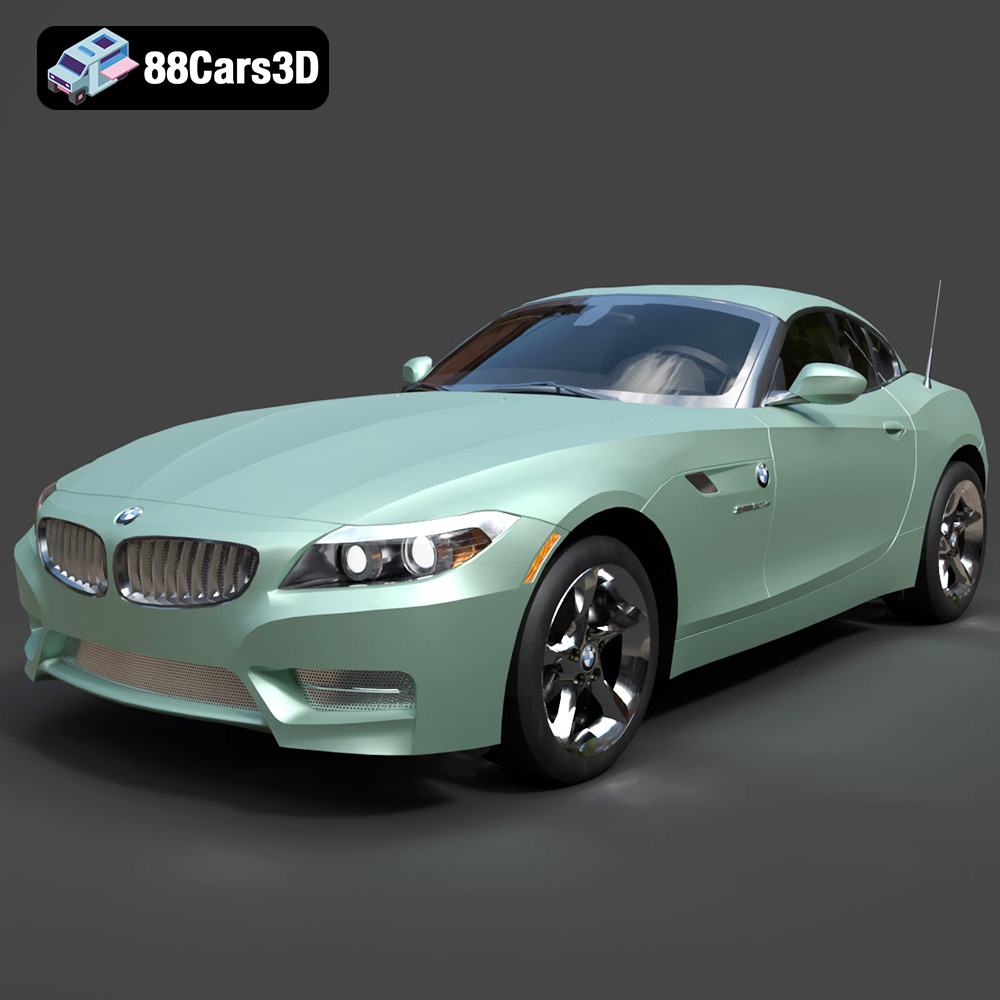
BMW Z4 Roadster E89 2012 3D Model
Texture: Yes
Material: Yes
Download the BMW Z4 Roadster E89 3D Model featuring clean geometry, realistic detailing, and a fully modeled interior. Includes .blend, .fbx, .obj, .glb, .stl, .ply, .unreal, and .max formats for rendering, simulation, and game development.
Price: $13.99

BMW Z4 E85 2005 3D Model
Texture: Yes
Material: Yes
Download the BMW Z4 E85 3D Model featuring clean geometry, realistic detailing, and a fully modeled interior. Includes .blend, .fbx, .obj, .glb, .stl, .ply, .unreal, and .max formats for rendering, simulation, and game development.
Price: $13.99

BMW M3 2024 3D Model
Texture: Yes
Material: Yes
Download the BMW M3 2024 3D Model featuring clean geometry, realistic detailing, and a fully modeled interior. Includes .blend, .fbx, .obj, .glb, .stl, .ply, .unreal, and .max formats for rendering, simulation, and game development.
Price: $13.99
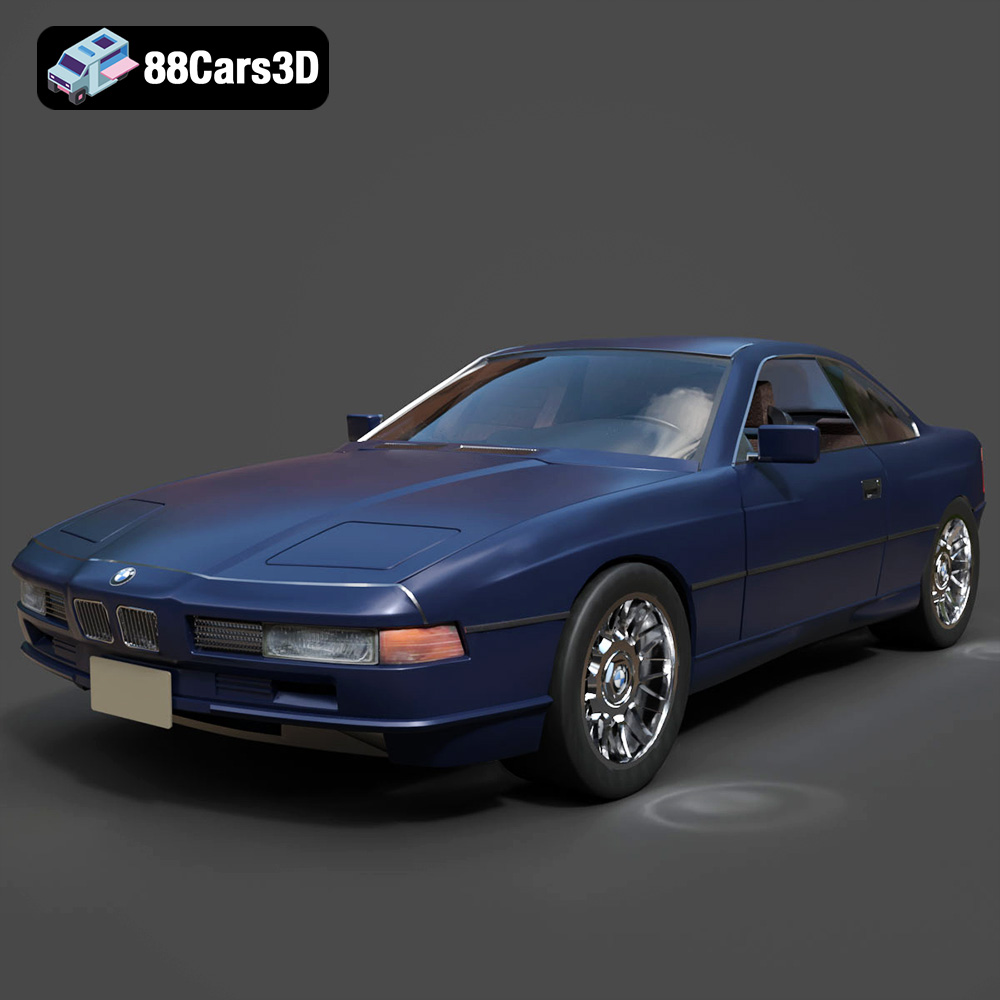
BMW 850i Coupe 1990 3D Model
Texture: Yes
Material: Yes
Download the BMW 850i Coupe 1990 3D Model featuring clean geometry, realistic detailing, and a fully modeled interior. Includes .blend, .fbx, .obj, .glb, .stl, .ply, .unreal, and .max formats for rendering, simulation, and game development.
Price: $13.99
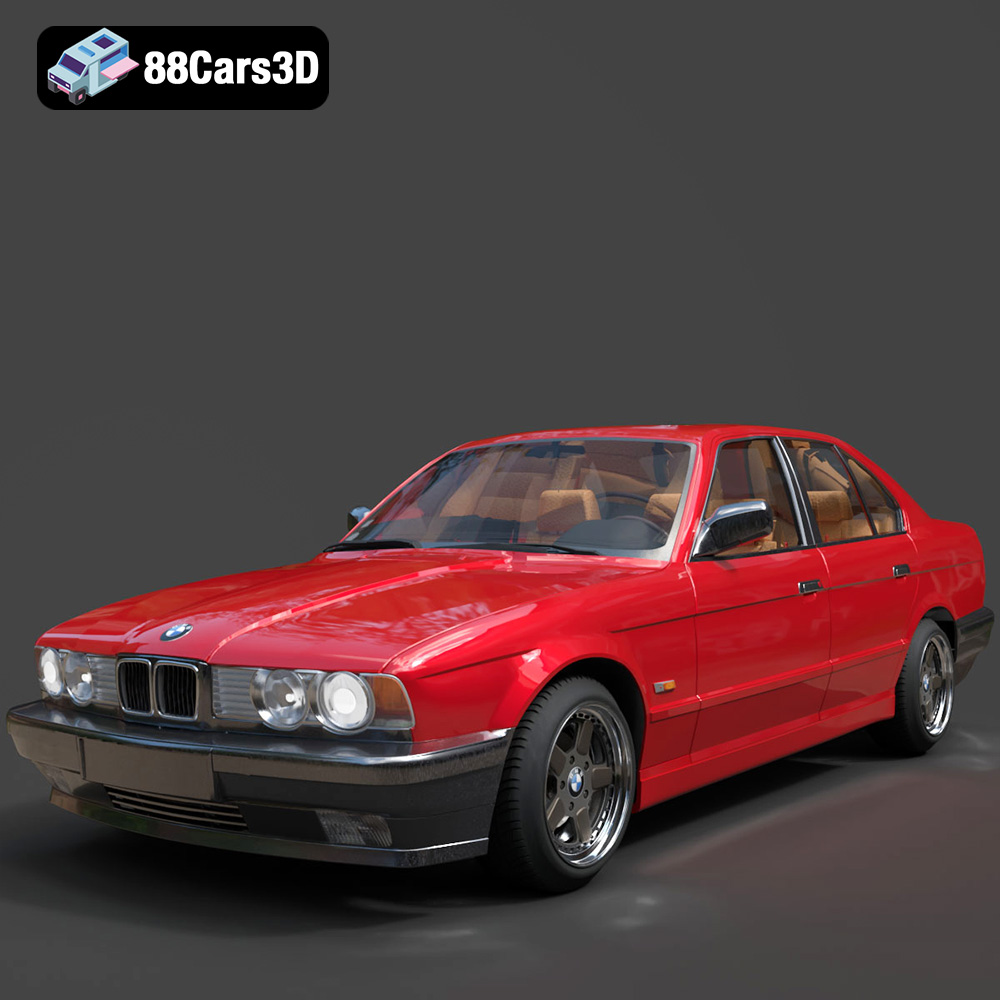
BMW 525i E34 1993 3D Model
Texture: Yes
Material: Yes
Download the BMW 525i E34 1993 3D Model featuring clean geometry, realistic detailing, and a fully modeled interior. Includes .blend, .fbx, .obj, .glb, .stl, .ply, .unreal, and .max formats for rendering, simulation, and game development.
Price: $12.99

BMW 7 Series 2016 3D Model
Texture: Yes
Material: Yes
Download the BMW 7 Series 2016 3D Model featuring luxurious design, detailed interior, and accurate exterior. Includes .blend, .fbx, .obj, .glb, .stl, .ply, .unreal, and .max formats for rendering, simulation, and game development.
Price: $10.79
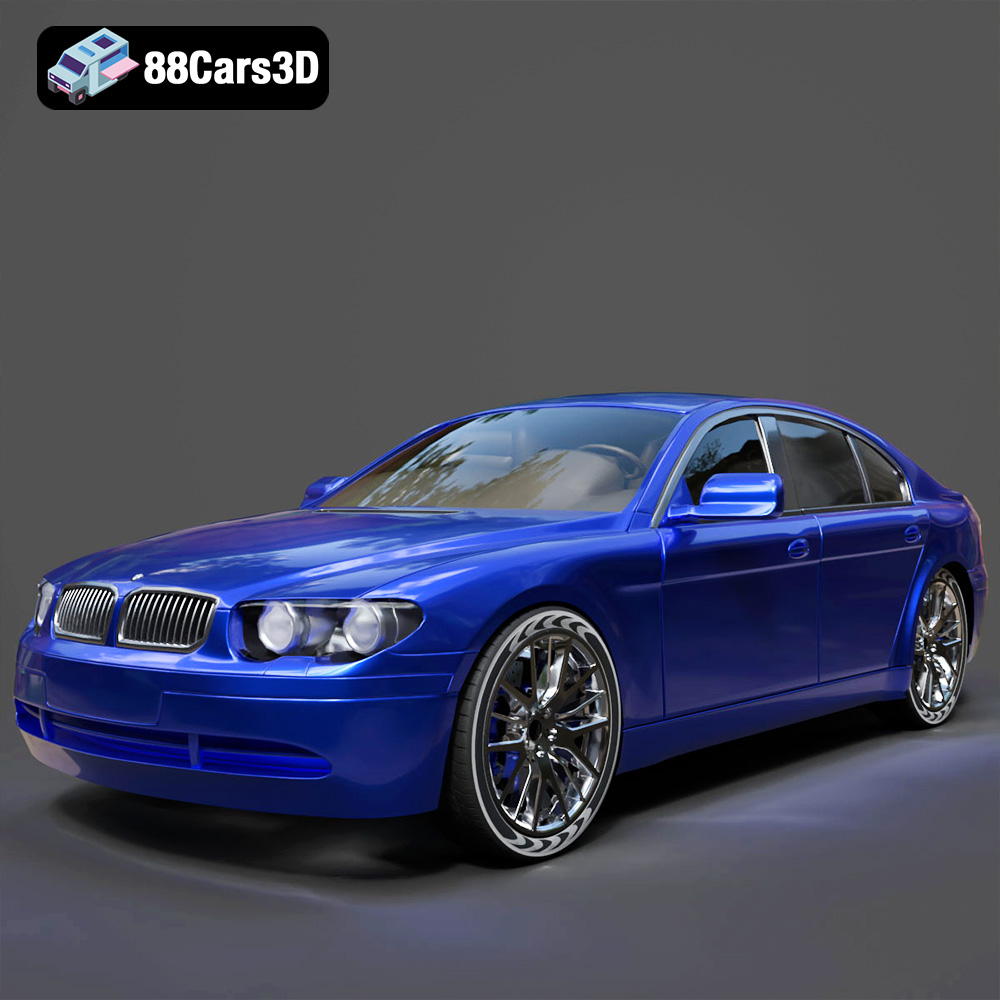
BMW 7 Series 30th Anniversary 3D Model
Texture: Yes
Material: Yes
Download the BMW 7 Series 30th Anniversary 3D Model featuring a meticulously crafted exterior, detailed interior, and realistic wheels. Includes .blend, .fbx, .obj, .glb, .stl, .ply, .unreal, and .max formats for rendering, simulation, and game development.
Price: $35.79
