

“`html
Mastering Surface Smoothness: A Deep Dive into 3D Printing Car Models from STL Files
The allure of 3D printing miniature automotive masterpieces is undeniable. From iconic classics to futuristic concepts, the ability to hold a tangible, intricately detailed car model in your hands is a rewarding experience for any enthusiast. However, achieving that showroom-perfect finish, free from visible layer lines and imperfections, can be a significant hurdle. This article delves deep into the technical intricacies of 3D printing car models from STL files, focusing specifically on methods to attain remarkably smooth surfaces. We’ll explore everything from file preparation and slicing strategies to advanced printer settings and post-processing techniques, equipping you with the knowledge to transform your digital designs into stunningly smooth physical objects. Whether you’re using FDM or resin printing, this comprehensive guide will empower you to elevate your hobbyist collections, model-making projects, and even prototyping endeavors.
The Foundation: Understanding STL Files and Initial Preparation
Before your 3D printer even hums to life, the quality of your STL file is paramount. STL (STereoLithography) files represent a 3D model as a collection of triangular facets. The density and arrangement of these triangles directly impact the surface smoothness achievable in the final print. A low-polygon mesh will inherently appear faceted, regardless of your printer settings. For automotive models, which often feature sweeping curves and subtle aerodynamic details, clean geometry is critical.
Mesh Topology and Resolution
When sourcing models, especially from marketplaces like 88cars3d.com, look for descriptions that emphasize clean geometry and high-polygon counts. Models designed for 3D printing are often optimized to balance detail with file size. Too few triangles lead to a “blocky” appearance on curves, while excessively high polygon counts can overwhelm slicing software and increase print times unnecessarily. For most detailed car models, a resolution that results in smooth curves when viewed at a standard screen magnification is usually sufficient. Software like Blender or Meshmixer can be used to analyze and, if necessary, refine the mesh. You can use subdivision surface modifiers in modeling software to smooth out a low-resolution mesh before exporting to STL, or employ decimation tools to reduce polygon count without sacrificing significant detail.
File Repair and Manifold Integrity
A critical step in preparation is ensuring your STL file is “watertight” or manifold. This means the mesh has no holes, flipped normals, or intersecting faces, which can cause significant issues during slicing and printing. Common problems include gaps in the surface or internal geometry that confuses the slicer. Most slicers have basic repair functions, but dedicated tools like Netfabb or the repair features in Meshmixer offer more robust solutions. A manifold mesh ensures that the slicer can accurately determine the internal volume and surface boundaries, which is essential for consistent layer extrusion and support generation.
Slicing Strategies for Surface Perfection
The slicer is your bridge between the digital STL model and the physical print. Its settings dictate how the 3D model is translated into machine instructions (G-code) for your printer. Optimizing these settings is crucial for achieving smooth surfaces, especially on complex automotive shapes. This involves carefully balancing detail, print speed, and material flow.
Layer Height: The Most Direct Factor
The layer height setting is perhaps the most impactful parameter for surface smoothness. It defines the thickness of each extruded layer. For FDM printing, common layer heights range from 0.05mm to 0.3mm. To achieve a smooth finish, you’ll want to use a smaller layer height. Printing at 0.1mm or even 0.08mm will significantly reduce the visibility of layer lines compared to 0.2mm or 0.3mm. However, this comes at a cost: print time. Halving the layer height generally doubles the print duration. For highly detailed car models, consider printing at a lower layer height for the main body and potentially a slightly higher one for less critical components if time is a constraint.
Print Speed and Cooling Optimization
High print speeds can lead to poor extrusion quality, ringing artifacts, and reduced detail, all of which degrade surface smoothness. For smooth finishes, it’s advisable to slow down your print speeds, particularly for outer walls. A common recommendation for outer walls is around 20-40 mm/s. Faster infill speeds (e.g., 60-80 mm/s) are generally acceptable as they won’t be visible on the surface. Proper cooling is also essential. Adequate airflow helps solidify the extruded plastic quickly, allowing for sharper details and minimizing drooping or warping, which can mar smooth surfaces. Ensure your printer’s cooling fan is running at or near 100% for outer walls, especially when printing materials like PLA.
Infill Patterns and Density
While infill primarily affects the structural integrity and weight of your print, its pattern and density can indirectly influence surface quality. A sparse infill (e.g., 10-15%) with a pattern like Gyroid or Cubic can provide good support for outer walls without adding excessive print time or material. Very high infill densities can sometimes lead to issues with heat retention and dimensional accuracy, which might manifest as surface imperfections. For display models, 10-20% infill is typically more than sufficient.
Support Structures: The Necessary Evil for Smoothness
Complex automotive geometries, with overhangs, bridges, and intricate details like spoilers or undercarriages, often require support structures. The quality of the support and its interface with the model directly impacts the surface finish where it was attached. The goal is to generate supports that are strong enough to hold the model but easy to remove cleanly, leaving minimal scarring.
Support Type and Placement
Slicers offer various support types: normal, tree (or organic), and custom. Tree supports, available in slicers like Cura and PrusaSlicer, are often preferred for complex models as they tend to use less material and are easier to remove from intricate areas. They branch out like trees, contacting the model only where absolutely necessary. When generating supports, pay close attention to the ‘Support Overhang Angle’ setting. A common starting point is 45-60 degrees, meaning any part of the model exceeding this angle from the vertical will receive support. Ensure supports are not generated unnecessarily on surfaces that can bridge or bridge themselves.
Support Interface Settings
The “Support Interface” is a dense pattern of support lines printed just below the actual model surface. This creates a more solid foundation for the model to print on, leading to a smoother surface where the supports attach. Fine-tuning the ‘Support Interface Density,’ ‘Support Interface Line Distance,’ and ‘Support Interface Z Distance’ is crucial. A smaller Z distance (e.g., 0.1-0.2mm for a 0.2mm layer height) brings the interface closer to the model, improving surface quality but making removal harder. Experimenting with slightly denser interfaces and minimal Z distance is key. Some slicers also offer ‘Support Roof’ and ‘Support Floor’ options that can be adjusted for better surface contact.
Support Removal Techniques
Patience and the right tools are essential for clean support removal. For FDM prints, gently wiggling the support structures can help break the initial adhesion. Tools like flush cutters, hobby knives, pliers, and even dental picks are invaluable. For resin prints, supports are often thinner and more brittle, requiring careful breaking and sanding. If supports are proving too difficult to remove cleanly, consider adjusting the interface settings in your slicer for the next print, perhaps increasing the Z distance slightly or using a different support pattern.
Printer Calibration and Material Considerations
Even with perfect file preparation and slicing, an uncalibrated printer or the wrong material can sabotage your efforts. Ensuring your printer is mechanically sound and using materials suited for smooth finishes are foundational steps.
Printer Calibration: Bed Leveling and E-Steps
A perfectly level print bed is non-negotiable for consistent first-layer adhesion, which is the bedrock of a smooth print. Auto bed leveling systems help, but manual checks and adjustments are often still necessary. Ensure your Z-offset is dialed in correctly; too high and the first layer won’t adhere well, too low and it can cause nozzle clogs or rough surfaces. Crucially, calibrate your extruder’s ‘E-steps.’ This ensures that the printer extrudes precisely the amount of filament commanded by the slicer. Under-extrusion leads to gaps and weak layers, while over-extrusion can cause blobs and rough surfaces. Performing an E-step calibration is a straightforward process outlined in most printer manuals.
Material Selection for Smoothness
Different filament types have varying properties that affect surface finish. PLA (Polylactic Acid) is generally the easiest material to print with and often yields good results with minimal fuss, making it a popular choice for hobbyists. It has a relatively low printing temperature and good bridging capabilities. PETG (Polyethylene Terephthalate Glycol) is more durable and temperature-resistant than PLA but can be stringier, requiring more careful tuning of retraction and travel speed settings to maintain smooth surfaces. ABS (Acrylonitrile Butadiene Styrene) offers excellent strength and temperature resistance but is prone to warping and requires a heated enclosure and good ventilation. Achieving smooth ABS prints often involves more advanced techniques and post-processing. For resin printing (SLA/DLP/MSLA), materials like standard resins offer very high detail and smooth finishes straight off the printer, making them excellent for intricate car models. However, resin prints require more involved post-processing, including washing and curing.
FDM vs. Resin Printing for Smoothness
When prioritizing surface smoothness, resin printing generally has an inherent advantage. The light-curing process builds the model layer by layer from a vat of liquid resin, resulting in incredibly fine detail and minimal visible layer lines, often requiring only light sanding. FDM printers, extruding melted plastic filament, are limited by the nozzle diameter and the layered nature of the process. However, FDM is often more cost-effective for larger prints, faster for certain geometries, and offers a wider range of material choices. Achieving smooth FDM prints requires meticulous tuning of layer height, speed, cooling, and other parameters discussed earlier. For the absolute smoothest finish on small, highly detailed models, resin is often the go-to, but excellent results are achievable with FDM through careful optimization.
Advanced Techniques and Post-Processing
Even after optimizing print settings, further steps can elevate the surface finish of your 3D printed car models from good to exceptional. These techniques range from minor tweaks during printing to more involved finishing processes.
Print Orientation: Strategic Placement
The orientation of your model on the print bed can significantly impact the required support and the resulting surface quality on critical areas. For car bodies, orienting the model so that the largest, flattest surfaces (like the roof or hood) are parallel to the print bed can minimize the need for supports on those areas, leading to a smoother finish. However, this might increase the need for supports underneath the chassis or wheel wells. Experiment with different orientations in your slicer to find the best balance between minimal supports on visible surfaces and overall print stability.
Tuning Retraction and Travel Settings
Stringing and oozing are common culprits of rough surfaces, especially with FDM printers. Properly tuning retraction distance and speed is crucial. Retraction pulls filament back into the nozzle during travel moves, preventing it from oozing onto the print. For materials like PETG, very precise retraction settings are needed. Travel speed also plays a role; faster travel moves give oozing less time to occur. Consider enabling ‘Combing’ within your slicer, which instructs the nozzle to travel only over already printed areas, further minimizing travel across open spaces and reducing the chance of stringing.
Post-Processing for a Showroom Shine
For many, the print is just the beginning. Post-processing unlocks the true potential of a 3D printed car model. For FDM prints, sanding is the primary method for smoothing layer lines. Start with coarse grit sandpaper (e.g., 100-200 grit) to remove major imperfections and gradually move to finer grits (e.g., 400, 800, 1200, and even higher). Wet sanding can often produce smoother results. Filler primers and automotive putty can be used to fill in any remaining gaps or imperfections before painting. For resin prints, supports are removed, and the print is typically sanded with fine-grit sandpaper. Once clean and smooth, both FDM and resin prints are ready for painting. Applying a primer coat helps reveal any remaining imperfections and provides a uniform surface for your paint. Automotive spray paints, airbrushing, and hand-painting techniques can all be employed to achieve a professional, smooth finish. Clear coats add protection and enhance the final gloss or satin appearance.
Achieving exceptionally smooth surfaces on your 3D printed car models is a multi-faceted process that combines careful file preparation, intelligent slicing, precise printer calibration, appropriate material selection, and dedicated post-processing. By understanding the technical details behind each step, from the geometry of an STL file to the nuances of support interface settings, you can overcome common printing challenges. Platforms like 88cars3d.com provide a fantastic starting point with high-quality, print-ready models, but the final magic truly happens at your printer and workbench. Don’t be discouraged by initial imperfections; each print is a learning opportunity. Experiment with the settings discussed, be patient with post-processing, and you’ll soon be creating automotive models with finishes that rival those from any factory.
“`
Featured 3D Car Models

BMW 7 Series E38 3D Model
Texture: Yes
Material: Yes
Download the BMW 7 Series E38 3D Model featuring its iconic luxury sedan design and classic aesthetics. Includes .blend, .fbx, .obj, .glb, .stl, .ply, .unreal, and .max formats for rendering, simulation, and game development.
Price: $10.79

BMW 6 Series 640i F12 3D Model
Texture: Yes
Material: Yes
Download the BMW 6 Series 640i F12 3D Model featuring a sleek design and detailed interior. Includes .blend, .fbx, .obj, .glb, .stl, .ply, .unreal, and .max formats for rendering, simulation, and game development.
Price: $10.79

BMW 3 F30 3D Model
Texture: Yes
Material: Yes
Download the BMW 3 F30 3D Model featuring a detailed exterior, realistic interior, and optimized mesh. Includes .blend, .fbx, .obj, .glb, .stl, .ply, .unreal, and .max formats for rendering, simulation, and game development.
Price: $10.79
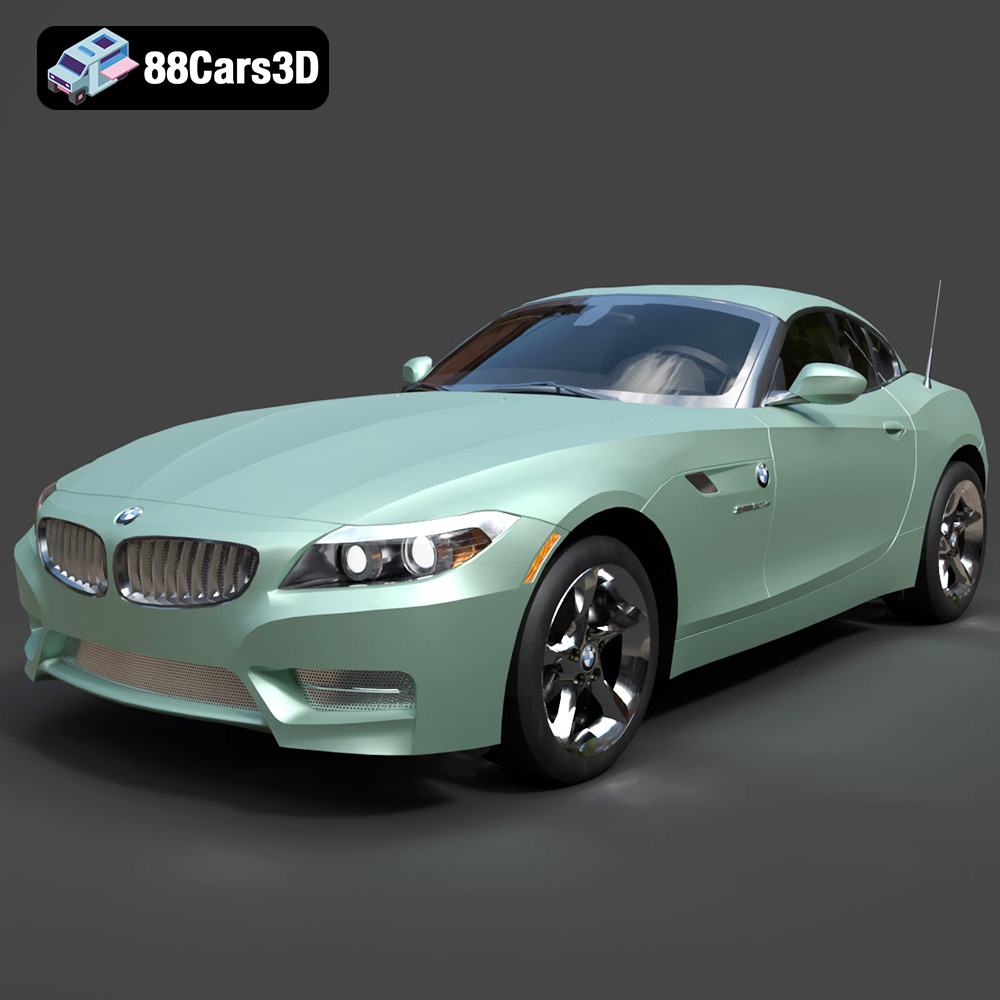
BMW Z4 Roadster E89 2012 3D Model
Texture: Yes
Material: Yes
Download the BMW Z4 Roadster E89 3D Model featuring clean geometry, realistic detailing, and a fully modeled interior. Includes .blend, .fbx, .obj, .glb, .stl, .ply, .unreal, and .max formats for rendering, simulation, and game development.
Price: $13.99

BMW Z4 E85 2005 3D Model
Texture: Yes
Material: Yes
Download the BMW Z4 E85 3D Model featuring clean geometry, realistic detailing, and a fully modeled interior. Includes .blend, .fbx, .obj, .glb, .stl, .ply, .unreal, and .max formats for rendering, simulation, and game development.
Price: $13.99

BMW M3 2024 3D Model
Texture: Yes
Material: Yes
Download the BMW M3 2024 3D Model featuring clean geometry, realistic detailing, and a fully modeled interior. Includes .blend, .fbx, .obj, .glb, .stl, .ply, .unreal, and .max formats for rendering, simulation, and game development.
Price: $13.99
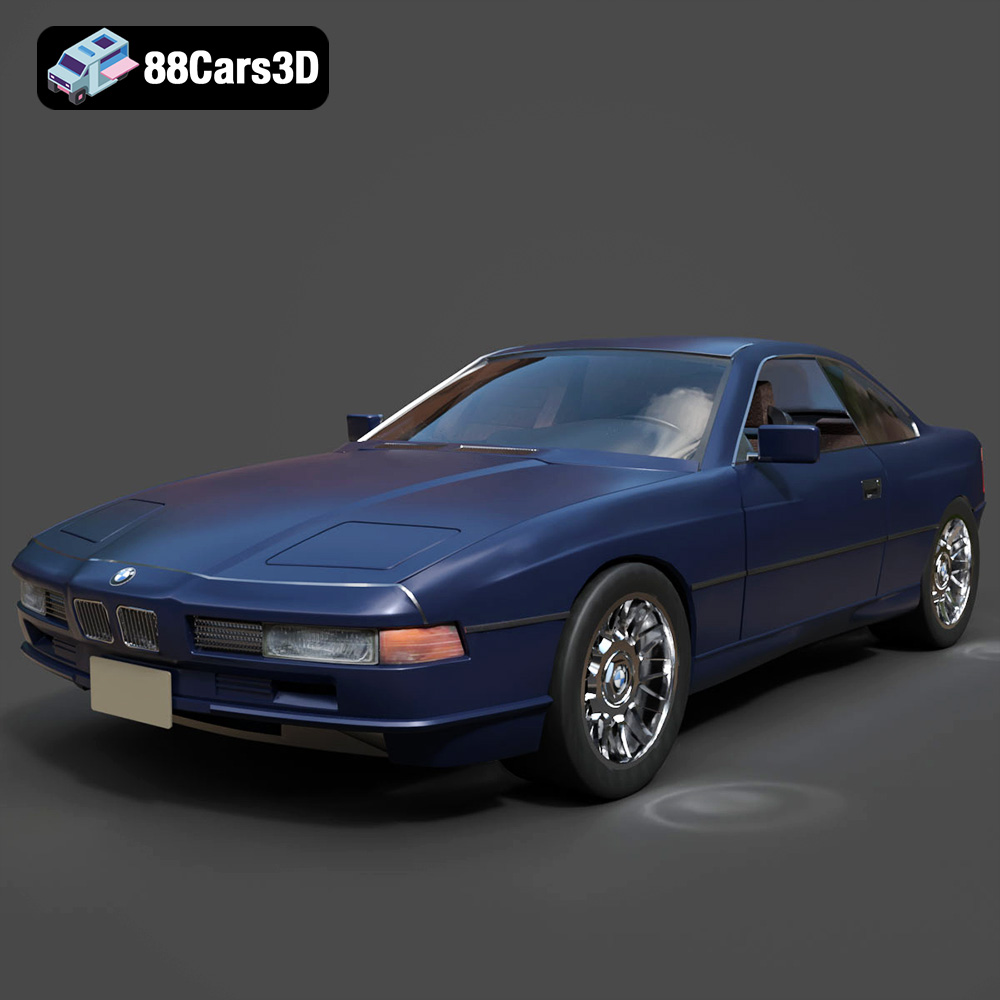
BMW 850i Coupe 1990 3D Model
Texture: Yes
Material: Yes
Download the BMW 850i Coupe 1990 3D Model featuring clean geometry, realistic detailing, and a fully modeled interior. Includes .blend, .fbx, .obj, .glb, .stl, .ply, .unreal, and .max formats for rendering, simulation, and game development.
Price: $13.99
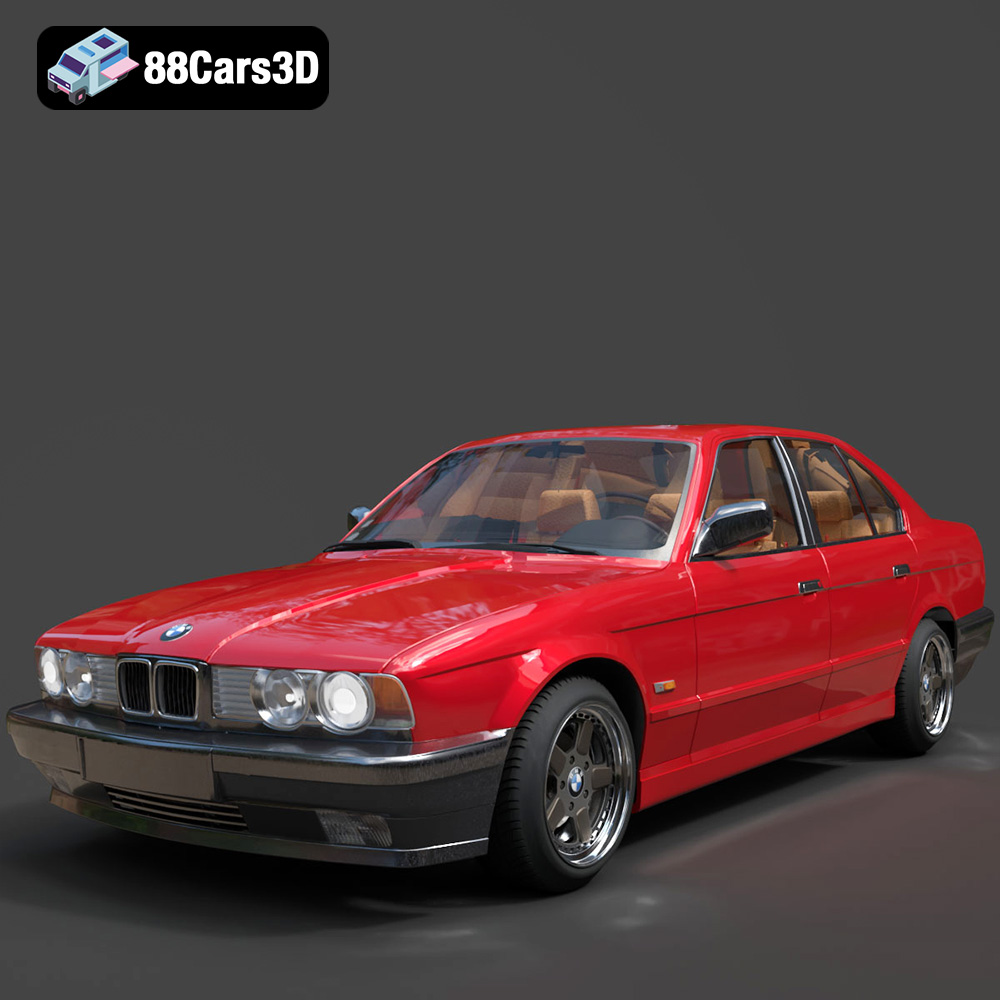
BMW 525i E34 1993 3D Model
Texture: Yes
Material: Yes
Download the BMW 525i E34 1993 3D Model featuring clean geometry, realistic detailing, and a fully modeled interior. Includes .blend, .fbx, .obj, .glb, .stl, .ply, .unreal, and .max formats for rendering, simulation, and game development.
Price: $12.99

BMW 7 Series 2016 3D Model
Texture: Yes
Material: Yes
Download the BMW 7 Series 2016 3D Model featuring luxurious design, detailed interior, and accurate exterior. Includes .blend, .fbx, .obj, .glb, .stl, .ply, .unreal, and .max formats for rendering, simulation, and game development.
Price: $10.79
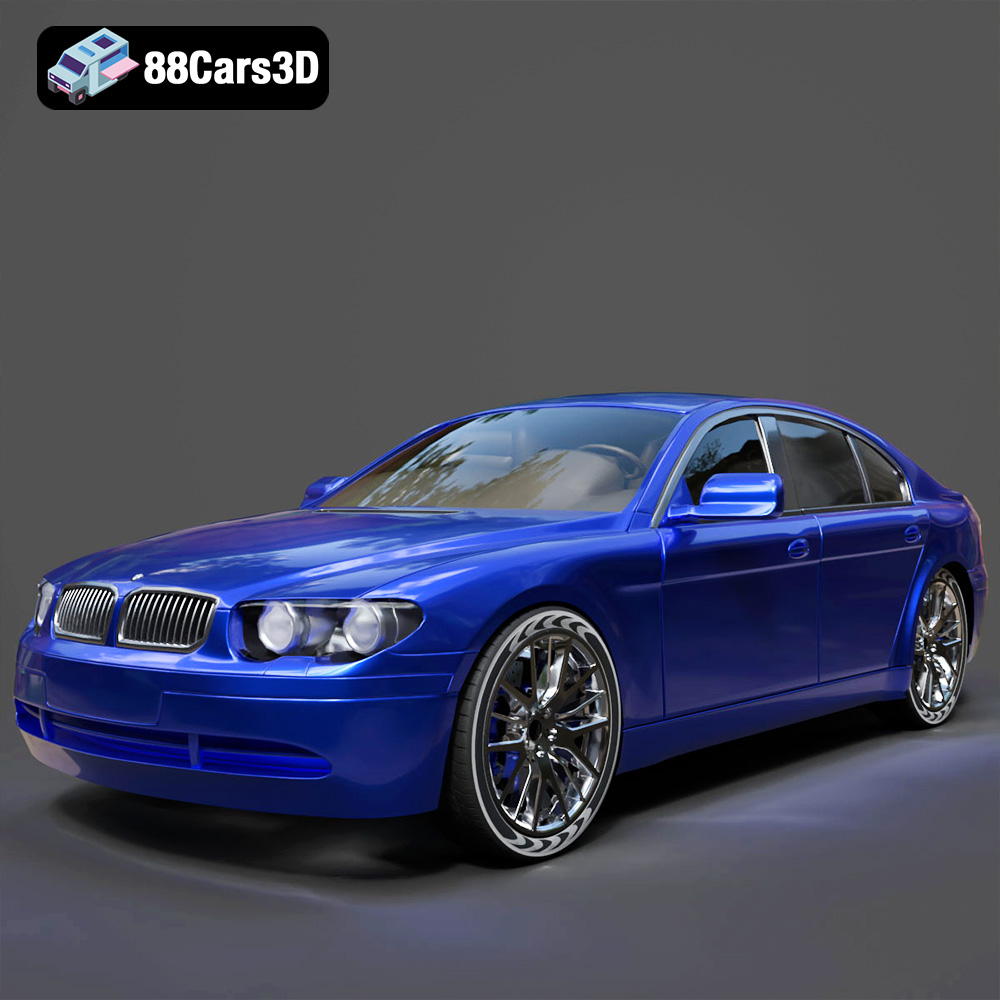
BMW 7 Series 30th Anniversary 3D Model
Texture: Yes
Material: Yes
Download the BMW 7 Series 30th Anniversary 3D Model featuring a meticulously crafted exterior, detailed interior, and realistic wheels. Includes .blend, .fbx, .obj, .glb, .stl, .ply, .unreal, and .max formats for rendering, simulation, and game development.
Price: $35.79
