

The quest for photorealism in digital environments has long been a driving force in computer graphics. For industries like automotive visualization, where stunning visual fidelity directly translates to compelling marketing, streamlined design reviews, and immersive customer experiences, achieving this realism in real-time has been the ultimate goal. Enter Real-Time Ray Tracing within Unreal Engine – a revolutionary technology that is fundamentally changing how we perceive and interact with virtual worlds. Gone are the days of approximating light behavior; ray tracing simulates light exactly as it behaves in the physical world, bringing unparalleled accuracy to reflections, refractions, shadows, and global illumination.
Unreal Engine’s robust implementation of real-time ray tracing empowers artists and developers to render vehicles with breathtaking accuracy, capturing the subtle nuances of metallic paints, the crispness of glass reflections, and the soft bounce of ambient light that were once the exclusive domain of offline renderers. This means faster iterations, more impactful presentations, and the ability to create truly interactive experiences with cinematic quality. In this comprehensive guide, we will delve deep into the world of real-time ray tracing in Unreal Engine, covering everything from initial project setup and optimizing your 3D car models to advanced lighting techniques, performance best practices, and innovative automotive workflows. By the end, you’ll have a clear roadmap to leverage this powerful technology and elevate your automotive visualizations to an unprecedented level of realism.
The Dawn of Realism: Understanding Real-Time Ray Tracing in Unreal Engine
Real-time ray tracing represents a paradigm shift from traditional rasterization, the long-standing rendering technique that projects 3D objects onto a 2D screen. While rasterization is incredibly efficient, it relies on approximations and screen-space techniques to simulate complex lighting phenomena like reflections and global illumination. These approximations, though increasingly sophisticated, often fall short of true physical accuracy, especially on highly reflective and metallic surfaces, which are characteristic of automotive design. Real-time ray tracing, conversely, simulates the actual paths of light rays as they interact with objects in a scene, delivering a level of visual fidelity that was once reserved for hours-long offline renders.
For the automotive industry, where every curve, every reflection, and every material finish tells a story, the precision offered by ray tracing is invaluable. It enables designers, marketers, and configurator developers to showcase vehicles with an authenticity that mirrors their physical counterparts. This translates to more compelling marketing assets, more accurate design validation, and significantly more immersive interactive experiences. Unreal Engine, with its continuous advancements in rendering technology, has placed this powerful tool directly into the hands of creators, making photorealistic real-time automotive visualization an achievable and practical reality.
What is Ray Tracing and Why it Matters?
At its core, ray tracing works by casting virtual “rays” from the camera into the scene. When a ray hits an object, it can then spawn secondary rays to simulate various light interactions: reflection rays bounce off shiny surfaces, refraction rays pass through transparent objects like glass, and shadow rays are cast towards light sources to determine if a point is illuminated or in shadow. Global Illumination (GI) rays are scattered into the scene to pick up bounced light, adding environmental realism. This process, while computationally intensive, results in physically accurate lighting that responds realistically to every surface, material, and light source.
The impact of this fidelity on automotive visualization is profound. Imagine a car’s metallic paint finish, where light subtly glints off contours, reflecting the surrounding environment with perfect clarity. Think of the intricate light patterns inside the car’s interior, illuminated by bounced light from the dashboard and seats. Ray tracing delivers these details with stunning accuracy, creating a believable presence for the vehicle. It eliminates common visual compromises of rasterization, such as inaccurate screen-space reflections, shadow artifacts, and flat-looking ambient lighting. The result is an immediate and tangible leap towards photographic realism, crucial for presenting high-value automotive products.
Ray Tracing vs. Traditional Rasterization: A Visual Leap
To truly appreciate ray tracing, it’s helpful to understand its distinction from rasterization. Rasterization renders geometry by projecting triangles onto the screen and then shading them. While fast, features like reflections and global illumination require clever, but often imperfect, workarounds. Screen-Space Reflections (SSR), for example, only reflect what’s visible on screen, leading to obvious popping and missing reflections. Baked Global Illumination can be realistic but lacks dynamic response, while Lumen in Unreal Engine 5 offers dynamic GI with a hybrid approach.
Ray tracing, by contrast, simulates the actual physics of light. For a highly reflective car body, ray tracing accurately captures off-screen reflections, showing the entire environment, not just what’s visible to the camera. Shadows gain true contact hardening and soft edges, adapting naturally to light source size and distance. Global Illumination creates realistic light bounce and color bleed, illuminating complex interiors with subtle ambient light. This physical correctness is paramount when showcasing premium vehicles, as it translates directly to a perception of quality and authenticity that approximation-based methods simply cannot match. For more in-depth technical details on ray tracing principles, the official Unreal Engine documentation provides excellent resources at dev.epicgames.com/community/unreal-engine/learning.
Setting Up Your Unreal Engine Project for Real-Time Ray Tracing
Before you can bask in the glory of real-time ray-traced visuals, your Unreal Engine project needs to be properly configured. This involves ensuring your hardware meets the necessary specifications and activating the ray tracing features within the engine’s settings. A proper setup lays the groundwork for stable performance and high-quality rendering, allowing you to maximize the visual potential of your 3D car models.
The evolution of ray tracing hardware and software has made it more accessible than ever, but it still demands a certain level of computing power. Understanding these requirements and systematically enabling the features in your project is the first critical step. Without these foundational configurations, the advanced lighting and reflection capabilities simply won’t function, or they’ll produce undesirable visual artifacts. Let’s walk through the essential checks and settings to get your project ready for stunning ray-traced automotive visualizations.
Hardware and Software Prerequisites
To run Real-Time Ray Tracing in Unreal Engine, you’ll need a compatible GPU. This generally means an NVIDIA RTX series graphics card (e.g., RTX 2060, 3070, 4080 and above) or an AMD Radeon RX 6000 series (RDNA 2) and newer (e.g., RX 6700 XT, 7900 XT). These cards feature dedicated hardware cores designed to accelerate ray intersection calculations, making real-time performance possible. Beyond the GPU, ensure you are running a recent version of Windows 10 (version 1809 or newer) or Windows 11, and that your graphics drivers are up to date. DirectX 12 (DX12) is also a mandatory requirement, as Unreal Engine’s ray tracing implementation relies on its API. For optimal performance, a fast CPU and ample RAM are also highly recommended to prevent bottlenecks, especially when working with complex automotive scenes.
Enabling Ray Tracing in Project Settings
Once your system meets the prerequisites, enabling ray tracing in Unreal Engine is straightforward:
- Open your Unreal Engine project.
- Navigate to Edit > Project Settings.
- In the left-hand menu, under Engine, select Rendering.
- Scroll down to the Ray Tracing section.
- Enable the main Ray Tracing checkbox.
- Below this, you’ll see individual checkboxes for specific ray-traced features:
- Ray Tracing Global Illumination: For realistic bounced light.
- Ray Tracing Reflections: For accurate reflections on all surfaces.
- Ray Tracing Shadows: For physically correct soft shadows.
- Ray Tracing Ambient Occlusion: For per-pixel contact shadows.
- It’s recommended to enable all of these for a full ray tracing experience.
- You may also need to set the Default RHI (Rendering Hardware Interface) to DirectX 12 under Project Settings > Platforms > Windows.
- After making these changes, restart the Unreal Engine editor for them to take full effect.
Additionally, you will typically need to add a Post Process Volume to your scene. Within its details panel, under the “Ray Tracing” sections for Global Illumination, Reflections, Shadows, and Ambient Occlusion, ensure the “Method” is set to “Ray Tracing” and adjust parameters like “Samples Per Pixel” and “Max Bounces” to fine-tune quality and performance. A good starting point for reflections might be 1 sample per pixel with 1 bounce for real-time applications, and higher for cinematics.
Optimizing 3D Car Models and PBR Materials for Ray Tracing
While ray tracing can dramatically enhance visual quality, it doesn’t absolve the need for well-optimized 3D assets. In fact, high-quality models and accurately calibrated Physically Based Rendering (PBR) materials become even more critical, as ray tracing will mercilessly expose any imperfections. Sourcing high-quality 3D car models is paramount, and platforms like 88cars3d.com offer assets specifically designed with clean topology and PBR materials, ready for Unreal Engine integration. The better your foundational assets, the more impressive your ray-traced results will be, leading to truly convincing automotive visualizations.
This section focuses on preparing your 3D car models for the rigors of ray tracing, ensuring they perform efficiently and look their absolute best. From ensuring clean geometry that correctly interacts with light rays to crafting PBR materials that accurately simulate real-world surfaces, every step contributes to the final realism. We’ll also touch upon how cutting-edge technologies like Nanite and traditional LODs can play a role in managing complexity and optimizing performance in a ray-traced environment.
Model Preparation: Topology, UVs, and Mesh Optimization
The foundation of any realistic 3D asset lies in its mesh. For ray tracing, clean topology is crucial. Models should ideally consist of quads with minimal N-gons, ensuring smooth surfaces that reflect light without artifacts. Triangulated meshes can be problematic if not handled carefully, often leading to visual discontinuities or “pinching” when rendered with ray tracing. When importing 3D car models, formats like FBX, USD, and USDZ are commonly used. USD (Universal Scene Description) is particularly powerful for collaborative workflows and handling complex scenes, as detailed in the Unreal Engine documentation.
Proper UV mapping is equally vital, especially for PBR materials. Overlapping UVs or low-resolution texture spaces can lead to distorted or blurry reflections and material inconsistencies. For complex car models, multiple UV channels are often employed: one for primary texture maps (Base Color, Normal, Roughness), another for lightmaps (though less critical with dynamic lighting like Lumen/RTGI), and potentially others for decals or custom effects. When sourcing automotive assets from marketplaces such as 88cars3d.com, look for models explicitly stating clean topology, optimized UVs, and PBR-ready materials.
Nanite and LOD Management: Unreal Engine 5’s Nanite virtualized geometry system is a game-changer for high-fidelity assets, allowing billions of polygons to be rendered efficiently. While hardware ray tracing currently requires Nanite meshes to be ‘converted’ at runtime for ray tracing (which can incur a performance cost), or requires a specific Nanite setting for ray tracing to be enabled, it still offers immense benefits for the primary view rendering. For areas where Nanite is not used or for distant objects, traditional Levels of Detail (LODs) remain critical. Carefully crafted LODs reduce geometric complexity at a distance, minimizing the number of ray intersections and thus improving performance. A car model might have 4-5 LOD levels, progressively reducing polygon counts by 50-70% at each step.
- Tip: Always inspect imported models in Unreal Engine’s Static Mesh Editor to verify topology and UVs. Use the “Wireframe” and “UV” visualization modes.
- Optimization: For non-Nanite meshes, target polygon counts should be reasonable. A highly detailed car model might be 200k-500k polygons for LOD0, but ensure lower LODs significantly reduce this.
Crafting Realistic PBR Materials for Ray Tracing
PBR materials are the backbone of photorealism. For ray tracing, their accuracy is paramount. Every property – Base Color, Metallic, Specular, Roughness, Normal, and Emissive – contributes directly to how light rays interact with the surface. Incorrect PBR values will result in an unrealistic look, even with perfect ray tracing.
- Car Paint: Automotive paint often involves complex multi-layered materials. Unreal Engine’s Material Editor allows for intricate shader graphs to simulate clear coats, metallic flakes, and subsurface scattering effects. The ‘Clear Coat’ material function is excellent for simulating the reflective top layer of car paint, allowing for accurate reflection and refraction properties distinct from the base paint layer.
- Roughness: This is arguably the most critical PBR parameter for ray tracing. A perfectly smooth surface (Roughness 0.0) will produce mirror-like reflections, while a rougher surface (Roughness 1.0) will scatter light, resulting in blurred or diffused reflections. Accurately texturing roughness maps for tires, plastics, leather, and different paint finishes is essential.
- Metallic: A value of 1.0 for metallic surfaces (chrome, polished aluminum) and 0.0 for dielectrics (plastic, glass, paint) is a good starting point. Hybrid values are rare in nature but can be used for specific artistic effects.
- Glass and Refraction: Ray-traced refraction accurately bends light passing through transparent objects. For car windows, headlights, and tail lights, ensure your material has a low roughness value, appropriate opacity, and a correct Index of Refraction (IOR) – typically around 1.5-1.55 for standard glass.
Ray Tracing Quality Switch: For advanced optimization, Unreal Engine materials can utilize a “Ray Tracing Quality Switch” node. This allows you to provide a simpler material network for ray tracing calculations, or even turn off specific ray tracing features for certain materials, potentially saving performance without a noticeable visual difference in less critical areas.
Mastering Lighting and Reflections with Ray Tracing in Unreal Engine
Lighting is the soul of any visualization, and with real-time ray tracing, Unreal Engine empowers artists with unprecedented control and realism. The way light interacts with your 3D car models—how it bounces, reflects, and casts shadows—is physically simulated, leading to incredibly convincing results. This section dives into the core ray tracing features that define the visual quality of your automotive scenes, offering insights into achieving cinematic lighting and truly immersive reflections that elevate your vehicle presentations.
From the subtle ambient glow provided by Global Illumination to the crisp, accurate reflections on metallic surfaces and the deep, contact shadows, each ray-traced feature contributes to an overall sense of presence and depth. We’ll explore how these components work together, how they can be controlled, and how they compare to and complement other Unreal Engine lighting systems like Lumen, providing a holistic approach to achieving world-class real-time rendering for your automotive projects.
Ray-Traced Global Illumination (RTGI) and Reflections
Ray-Traced Global Illumination (RTGI): RTGI dramatically enhances scene realism by simulating indirect light bounce. Instead of relying on baked lightmaps or screen-space approximations, RTGI calculates how light from direct sources bounces off surfaces and illuminates other parts of the scene. This creates soft, natural ambient lighting, fills shadowed areas with subtle color bleed, and provides a sense of environmental integration for your car models. In a car interior, RTGI ensures that light entering through a window bounces around, illuminating the dashboard and seats realistically. Unreal Engine offers options like ‘Hit Lighting’ (more accurate but costly) and ‘Final Gather’ (smoother, often good for performance) for RTGI methods within the Post Process Volume.
Ray-Traced Reflections (RTR): RTR is perhaps the most visually striking application of ray tracing for automotive visualization. Unlike Screen Space Reflections (SSR) which can only reflect what’s currently visible on screen, RTR accurately captures off-screen reflections, providing a complete and physically correct representation of the environment on reflective surfaces. This is critical for car paint, chrome accents, and glass, where the surrounding environment is often the primary source of visual interest in reflections. You can control the number of samples and bounces in the Post Process Volume to balance quality and performance. A single bounce is often sufficient for most real-time reflections, while increasing samples reduces noise. When working with Unreal Engine 5, consider how Lumen Reflections (which also uses ray tracing but is part of the Lumen system) can complement or sometimes replace dedicated RTR for a more integrated, dynamic lighting solution.
- Tip: For RTGI, starting with a lower ‘Max Bounces’ (e.g., 1 or 2) and ‘Samples Per Pixel’ (e.g., 8-16) in your Post Process Volume can provide a good balance for real-time.
Achieving Cinematic Shadows and Ambient Occlusion
Ray-Traced Shadows: Traditional shadow maps suffer from resolution limitations and aliasing. Ray-Traced Shadows eliminate these issues, providing highly accurate, pixel-perfect shadows with physically correct soft edges (penumbras). The softness of a shadow naturally increases with distance from the caster and the size of the light source, just like in the real world. This adds incredible depth and realism to car models, especially around wheels, undercarriage, and intricate bodywork. You can adjust parameters like ‘Ray Traced Shadow Bias’ and ‘Samples Per Pixel’ on individual light sources and in the Post Process Volume to fine-tune shadow quality and avoid artifacts like shadow acne or gaps.
Ray-Traced Ambient Occlusion (RTAO): RTAO adds subtle contact shadows where objects are close together or surfaces meet. This per-pixel occlusion method offers a significant visual upgrade over screen-space ambient occlusion (SSAO), providing more accurate and detailed darkening in crevices and corners. For a car, this means deeper, more realistic shading where the tires meet the ground, where body panels meet, or in the intricate details of an engine bay. It gives objects a greater sense of weight and presence within the scene.
- Tip: Ensure your scene scale is correct; ray tracing calculations are sensitive to real-world units. Use real-world light intensities for better results.
Leveraging HDRI Backdrops and IES Profiles
HDRI Backdrops: High Dynamic Range Image (HDRI) cubemaps are essential for realistic lighting and reflections, especially in automotive visualization. A Sky Light, coupled with a high-quality HDRI, provides both ambient lighting and incredibly detailed environmental reflections. The colors and intensities captured in the HDRI directly influence the lighting and reflections on your car model, making it appear seamlessly integrated into its virtual environment. High-resolution HDRIs (e.g., 8K or 16K) are crucial for crisp, detailed reflections on highly polished car surfaces. You can rotate the Sky Light to change the lighting direction and reflection patterns dynamically.
IES Profiles: For accurate simulation of artificial light sources like headlights, tail lights, and interior lighting, IES (Illuminating Engineering Society) light profiles are indispensable. These profiles describe the intensity and distribution pattern of a real-world light fixture. Applying an IES profile to a Spot Light or Point Light in Unreal Engine allows you to recreate the exact photometric behavior of a car’s headlamp, adding another layer of realism to your automotive scenes. This is particularly effective for close-up shots or night scenes where the car’s lighting signature is a key visual element.
Performance Optimization and Best Practices for Real-Time Ray Tracing
While real-time ray tracing delivers unparalleled visual fidelity, it comes with a significant computational cost. Achieving high frame rates (FPS) for interactive experiences, especially for demanding applications like automotive configurators or VR, requires careful optimization. This section provides strategies and best practices to balance visual quality with performance, ensuring your ray-traced automotive projects run smoothly without sacrificing the stunning realism you’ve worked to achieve. Mastering these techniques is crucial for any Unreal Engine developer aiming for professional-grade real-time rendering.
From understanding the impact of various ray tracing settings to strategically choosing which features to prioritize, optimization is an ongoing process. We’ll look at how to scale your settings, leverage profiling tools, and manage asset efficiency to maintain optimal performance. The goal is to make informed decisions that deliver the maximum visual impact for the available hardware, creating efficient and visually spectacular automotive visualizations.
Balancing Quality and Frame Rate
The key to successful real-time ray tracing is finding the sweet spot between visual quality and performance. Every ray-traced feature adds to the computational load. The main culprits are:
- Ray Tracing Samples Per Pixel: More samples reduce noise but increase render time. For interactive experiences, start with lower values (e.g., 1 for reflections, 8 for GI) and only increase if noise is unacceptable.
- Max Bounces: Higher bounce counts result in more physically accurate indirect lighting and reflections but dramatically increase calculations. Often, 1-2 bounces are sufficient for reflections and 2-3 for GI in real-time.
- Scene Complexity: The number of meshes, material complexity, and number of light sources directly impacts ray tracing performance. Simplify where possible.
Unreal Engine provides a wealth of console variables (CVars) for fine-tuning ray tracing settings. For example, `r.RayTracing.GlobalIllumination.SamplesPerPixel` or `r.RayTracing.Reflections.MaxBounces`. You can experiment with these commands in the console (accessible by pressing `~`) to see their immediate impact. For detailed performance analysis, utilize Unreal Engine’s built-in profilers (`stat gpu`, `stat rhi`, `stat d3d12raytracing`) or external tools like NVIDIA Nsight Graphics to identify bottlenecks and areas for improvement. The official Unreal Engine documentation offers extensive guides on performance profiling.
- Actionable Tip: Implement dynamic scalability settings. Use Blueprint to allow users to switch between “Performance,” “Balanced,” and “Quality” modes, adjusting ray tracing samples and bounces on the fly.
Strategic Use of Ray Tracing Features
Not every element in your scene needs full ray tracing. Strategic deployment of features can yield significant performance gains without a noticeable drop in overall quality.
- Prioritize Impactful Features: Ray-traced reflections and shadows on the car itself are usually the most visually important. Prioritize these, and consider reducing quality or even disabling ray tracing for less critical elements in the environment.
- Hybrid Approaches: Mix traditional rasterization techniques with ray tracing. For instance, you might use baked lighting for static background elements, Lumen for dynamic indirect lighting, and then overlay ray-traced reflections specifically on the car’s paintwork. This selective application can maintain realism where it matters most while saving performance.
- Material Optimization: Utilize the “Ray Tracing Quality Switch” node in the Material Editor to simplify complex materials for ray tracing calculations, or even turn off ray-traced features for specific materials that don’t require them.
- LODs and Nanite: As discussed earlier, well-managed LODs reduce geometric complexity for non-Nanite meshes. While Nanite handles geometric detail masterfully, be mindful of its current interactions with hardware ray tracing, especially regarding performance when ray-tracing dense Nanite meshes.
Data Management and Asset Efficiency
Efficient asset management is key to preventing performance bottlenecks.
- Optimized 3D Car Models: Start with high-quality, optimized 3D car models. Platforms like 88cars3d.com specialize in providing clean, PBR-ready automotive assets that minimize unnecessary polygon counts and have proper UVs, reducing the burden on ray tracing calculations.
- Texture Resolution: Use appropriate texture resolutions. While 4K or 8K textures might be ideal for close-up details on the car body, 2K or 1K might suffice for less prominent parts or environmental textures. Ensure textures are efficiently packed and use appropriate compression settings.
- Scene Culling: Implement effective culling (frustum culling, occlusion culling) to prevent rendering objects that are not visible to the camera. While ray tracing has its own visibility checks, reducing the overall scene complexity helps.
- Static Mesh vs. Blueprint Actors: For repeatable elements, use Static Meshes or Instanced Static Meshes rather than unique Blueprint Actors where possible, to reduce draw calls and memory overhead.
Regular profiling and iterative optimization are essential. Start with basic ray tracing, establish a performance baseline, and then gradually enable and fine-tune features while monitoring your frame rate. This methodical approach will ensure you achieve the highest visual quality within your performance targets.
Advanced Automotive Workflows with Ray Tracing in Unreal Engine
Real-time ray tracing in Unreal Engine transcends mere pretty pictures; it unlocks a new era of interactive and dynamic automotive experiences. The ability to render physically accurate light interactions in real-time opens doors to innovative workflows that were previously impossible or prohibitively expensive. This section explores how ray tracing integrates into cutting-edge automotive applications, from interactive configurators and cinematic productions to immersive AR/VR experiences and realistic physics simulations. For developers, this means the power to create truly captivating and functional tools that push the boundaries of automotive visualization.
By combining ray tracing with other powerful Unreal Engine features like Blueprint scripting, Sequencer, and Chaos Vehicles, professionals can develop solutions that not only look stunning but also offer deep interactivity and realism. These advanced workflows are transforming how cars are designed, marketed, and experienced, placing Unreal Engine and its ray tracing capabilities at the forefront of the automotive industry’s digital future.
Interactive Automotive Configurators and Virtual Showrooms
Ray-traced visuals are a game-changer for interactive automotive configurators and virtual showrooms. Customers can explore a vehicle in stunning photorealism, seeing how different paint colors, wheel options, and interior trims react to light exactly as they would in a physical showroom.
- Blueprint for Dynamic Interactivity: Unreal Engine’s Blueprint visual scripting system is invaluable here. You can use Blueprint to:
- Dynamically swap materials (e.g., changing paint color, leather type) on your 3D car models.
- Switch out mesh components (e.g., different wheel designs, spoilers).
- Toggle visibility of optional features (e.g., sunroof open/closed).
- Change environment backdrops and lighting scenarios (e.g., studio, outdoor, night).
- Real-time Feedback: The immediate visual feedback provided by ray tracing allows users to make informed decisions about customization, as they see the true impact of their choices on the vehicle’s appearance.
- Cinematic Transitions with Sequencer: Integrate Unreal Engine’s Sequencer for smooth, cinematic transitions between different configuration options or camera angles, creating a highly polished and engaging user experience.
Cinematic Production and Virtual Photography
For marketing, advertising, and design reviews, Unreal Engine’s ray tracing capabilities coupled with Sequencer enable virtual photography and cinematic production of unparalleled quality.
- Sequencer for Control: Use Sequencer to choreograph camera movements, animate vehicle parts (doors opening, headlights turning on), control lighting changes, and apply post-process effects. The real-time nature allows for quick iteration and precise art direction.
- High-Resolution Renders: Output high-resolution still images (virtual photographs) or 4K/8K video sequences with full ray tracing, suitable for print ads, brochures, and broadcast commercials, all rendered in a fraction of the time compared to traditional offline renderers.
- Virtual Production and LED Walls: Ray-traced car models are perfect for virtual production environments, especially when composited against LED volumes. The accurate reflections generated by ray tracing ensure the car seamlessly integrates with the dynamic background displayed on the LED wall, making it an ideal solution for live-action shoots with virtual backgrounds.
AR/VR Experiences with Ray-Traced Vehicles
Bringing ray-traced automotive models into Augmented Reality (AR) and Virtual Reality (VR) environments presents both incredible opportunities and unique challenges.
- Immersive Exploration: In VR, users can physically walk around and sit inside a ray-traced car, experiencing its scale and detail firsthand. In AR, a photorealistic car can be placed in a real-world environment, allowing for interactive product showcases.
- Performance Optimization for HMDs: VR demands extremely high frame rates (e.g., 90 FPS per eye) to prevent motion sickness. This requires aggressive optimization. While full ray tracing might be too heavy for some standalone VR headsets, powerful PC-VR setups can handle it. Techniques like Foveated Rendering (rendering the center of the user’s gaze at higher quality) and upscaling technologies (NVIDIA DLSS, AMD FSR) are crucial for maintaining visual fidelity and performance.
- UE5’s OpenXR Support: With Unreal Engine 5’s robust OpenXR support, developing for a wide range of VR/AR devices becomes more streamlined, allowing ray-traced experiences to reach a broader audience.
Physics Simulation and Vehicle Dynamics
Integrating realistic physics simulation with ray-traced visuals creates truly dynamic and believable automotive experiences.
- Chaos Vehicles: Unreal Engine’s Chaos Vehicle system allows for the creation of sophisticated car physics, including suspensions, tire friction, and collision dynamics. When combined with ray-traced reflections and shadows, a driving simulation or interactive demo becomes incredibly immersive.
- Interactive Environments: A car dynamically interacting with a ray-traced environment – kicking up dust (Niagara particle system), splashing through puddles, or scraping against a barrier – showcases the full power of real-time rendering. The ray-traced lighting ensures that these dynamic elements are illuminated and reflected accurately within the scene.
Troubleshooting Common Ray Tracing Issues
Even with careful setup and optimization, encountering issues when working with real-time ray tracing in Unreal Engine is not uncommon. Visual artifacts, unexpected performance drops, or features simply not working can be frustrating. This section aims to equip you with the knowledge to diagnose and resolve some of the most common problems you might face, ensuring a smoother development process for your ray-traced automotive projects. Understanding the typical pitfalls allows for quicker identification and resolution, keeping your workflow efficient and your visuals pristine.
From understanding noise patterns and how to combat them to effectively utilizing Unreal Engine’s debugging tools, these troubleshooting tips are designed to get you back on track. By methodically addressing problems, you can ensure that your stunning 3D car models are showcased with the clarity and performance they deserve, maximizing the impact of your real-time renderings.
Visual Artifacts and Noise Reduction
Noise is one of the most prevalent issues in ray-traced scenes, manifesting as graininess or “fireflies” (bright, flickering pixels).
- Increasing Samples: The most direct way to reduce noise is to increase the “Samples Per Pixel” for Ray Tracing Global Illumination, Reflections, and Shadows in your Post Process Volume. Be mindful that this has a significant performance cost.
- Denoising: Unreal Engine includes built-in denoisers, which are crucial for real-time ray tracing. Ensure denoising is enabled for relevant features in your Post Process Volume. Console variables like `r.RayTracing.GlobalIllumination.Denoiser` can be used to fine-tune or disable specific denoisers.
- Max Bounces: Sometimes, excessive bounces can introduce noise. Experiment with reducing “Max Bounces” if noise persists, especially for GI and reflections.
- Material Roughness: Highly reflective materials with very low roughness values (e.g., 0.0-0.1) can sometimes generate more noise due to sharp reflections. Ensure your roughness maps are accurate and not artificially too low.
- Light Intensity: Extremely bright light sources or emissive materials can exacerbate noise. Adjust light intensities to realistic values.
- Temporal Anti-Aliasing (TAA): TAA (or its successor TSR in UE5) is essential for smoothing out temporal noise and jaggies. Ensure it’s enabled and correctly configured in your project settings.
Performance Drops and Debugging
Sudden or consistent performance drops indicate a bottleneck that needs addressing.
- GPU Profiling: Use the `stat gpu` command in the console to get a breakdown of GPU frame times. Look for high values under “Ray Tracing” sections (e.g., “RayTracingReflections,” “RayTracingGlobalIllumination”). This will tell you which ray tracing feature is consuming the most resources.
- Ray Tracing Debugging Views: Unreal Engine provides specific debug visualizations for ray tracing. Use the “View Modes > Ray Tracing Debug” options in the viewport to visualize ray-traced reflections, GI, or shadows, helping you understand how rays are being traced and if any areas are particularly expensive.
- Geometry Complexity: As mentioned, overly complex geometry, especially for non-Nanite meshes, can heavily impact ray tracing performance. Ensure LODs are working correctly and reduce polygon counts where possible.
- Material Complexity: Complex material networks, especially those involving many texture lookups or intricate calculations, can add to the ray tracing cost. Simplify materials using the “Ray Tracing Quality Switch” node for ray-traced paths.
- Light Source Count: While ray tracing handles multiple lights well, an excessive number of dynamic light sources (especially with high shadow samples) can still be a performance drain. Cull unnecessary lights or bake static lights where feasible.
- Driver Issues: Always ensure your GPU drivers are up-to-date. Outdated drivers are a common cause of performance issues and crashes with new rendering features.
A systematic approach to debugging – isolating variables, profiling, and incrementally adjusting settings – will help you pinpoint and resolve performance issues efficiently. Remember to consult the official Unreal Engine documentation at dev.epicgames.com/community/unreal-engine/learning for the latest troubleshooting guides and technical specifications.
Real-Time Ray Tracing in Unreal Engine represents a monumental leap forward for automotive visualization. It has moved the industry beyond approximations, delivering a level of physical accuracy and visual fidelity that was once the exclusive domain of offline renderers. From the subtle nuances of car paint reflections to the intricate bounce of light within an interior, ray tracing transforms how we experience and interact with 3D car models, bringing them to life with unparalleled realism. We’ve journeyed through the essential steps of setting up your Unreal Engine project, optimizing your 3D car models and PBR materials, mastering advanced lighting techniques, and strategically balancing quality with performance. Furthermore, we’ve explored the innovative applications of ray tracing in automotive configurators, cinematic production, and immersive AR/VR experiences, demonstrating its power to redefine design, marketing, and sales workflows.
The continuous advancements in Unreal Engine, coupled with ever-evolving GPU hardware, mean that real-time ray tracing will only become more accessible and powerful. As you embark on your own ray-traced projects, remember that attention to detail in asset preparation, a methodical approach to lighting, and vigilant performance optimization are your keys to success. Don’t be afraid to experiment, push boundaries, and leverage the full potential of this incredible technology. To kickstart your projects with high-quality, optimized 3D car models ready for Unreal Engine, be sure to explore the extensive collection available at 88cars3d.com. The future of automotive visualization is real-time, it’s interactive, and it’s stunningly ray-traced. Start building your next masterpiece today.
Featured 3D Car Models

BMW 7 Series E38 3D Model
Texture: Yes
Material: Yes
Download the BMW 7 Series E38 3D Model featuring its iconic luxury sedan design and classic aesthetics. Includes .blend, .fbx, .obj, .glb, .stl, .ply, .unreal, and .max formats for rendering, simulation, and game development.
Price: $10.79

BMW 6 Series 640i F12 3D Model
Texture: Yes
Material: Yes
Download the BMW 6 Series 640i F12 3D Model featuring a sleek design and detailed interior. Includes .blend, .fbx, .obj, .glb, .stl, .ply, .unreal, and .max formats for rendering, simulation, and game development.
Price: $10.79
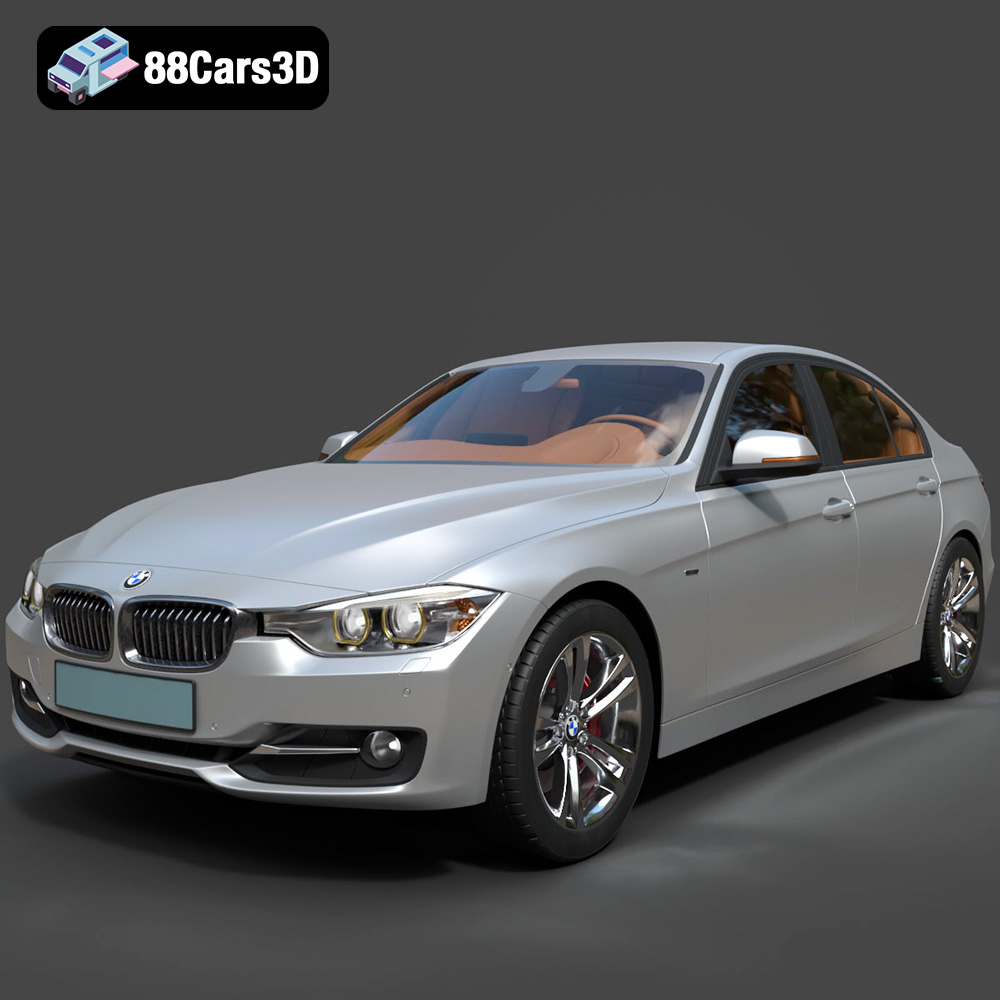
BMW 3 F30 3D Model
Texture: Yes
Material: Yes
Download the BMW 3 F30 3D Model featuring a detailed exterior, realistic interior, and optimized mesh. Includes .blend, .fbx, .obj, .glb, .stl, .ply, .unreal, and .max formats for rendering, simulation, and game development.
Price: $10.79
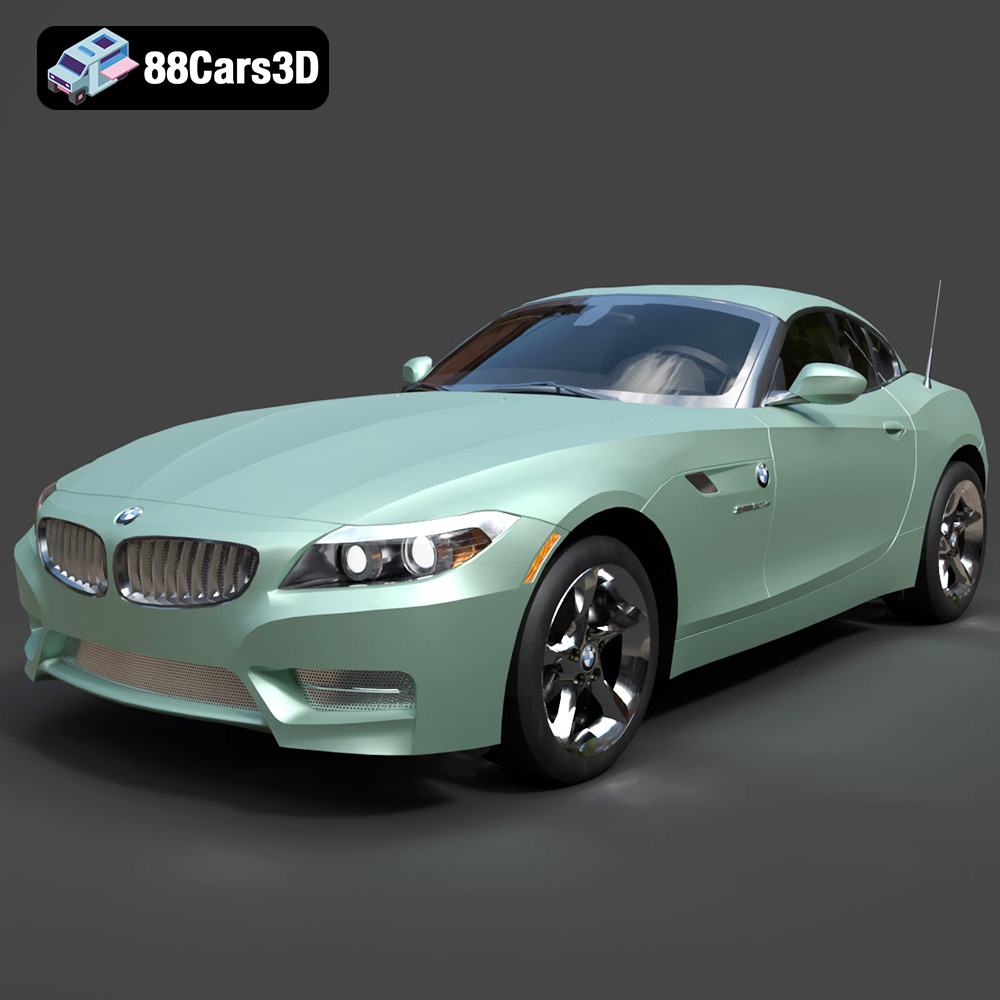
BMW Z4 Roadster E89 2012 3D Model
Texture: Yes
Material: Yes
Download the BMW Z4 Roadster E89 3D Model featuring clean geometry, realistic detailing, and a fully modeled interior. Includes .blend, .fbx, .obj, .glb, .stl, .ply, .unreal, and .max formats for rendering, simulation, and game development.
Price: $13.99

BMW Z4 E85 2005 3D Model
Texture: Yes
Material: Yes
Download the BMW Z4 E85 3D Model featuring clean geometry, realistic detailing, and a fully modeled interior. Includes .blend, .fbx, .obj, .glb, .stl, .ply, .unreal, and .max formats for rendering, simulation, and game development.
Price: $13.99

BMW M3 2024 3D Model
Texture: Yes
Material: Yes
Download the BMW M3 2024 3D Model featuring clean geometry, realistic detailing, and a fully modeled interior. Includes .blend, .fbx, .obj, .glb, .stl, .ply, .unreal, and .max formats for rendering, simulation, and game development.
Price: $13.99
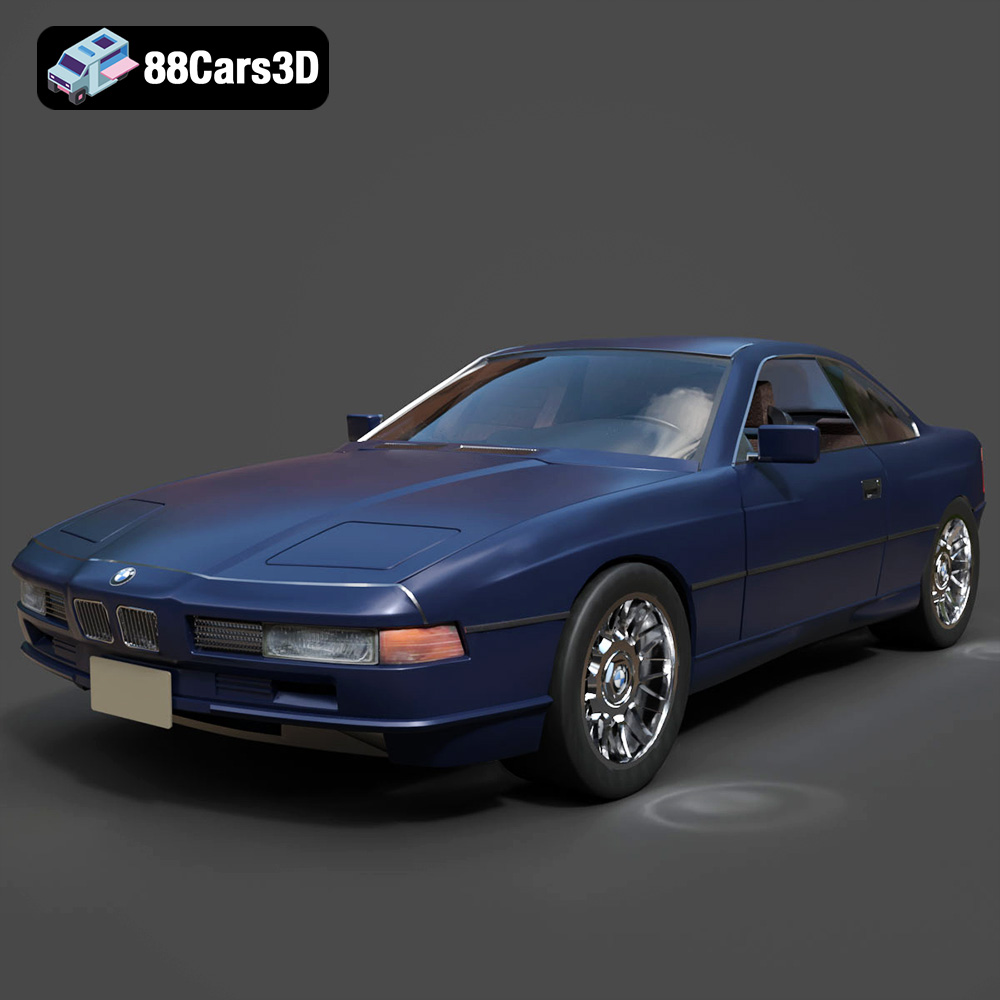
BMW 850i Coupe 1990 3D Model
Texture: Yes
Material: Yes
Download the BMW 850i Coupe 1990 3D Model featuring clean geometry, realistic detailing, and a fully modeled interior. Includes .blend, .fbx, .obj, .glb, .stl, .ply, .unreal, and .max formats for rendering, simulation, and game development.
Price: $13.99
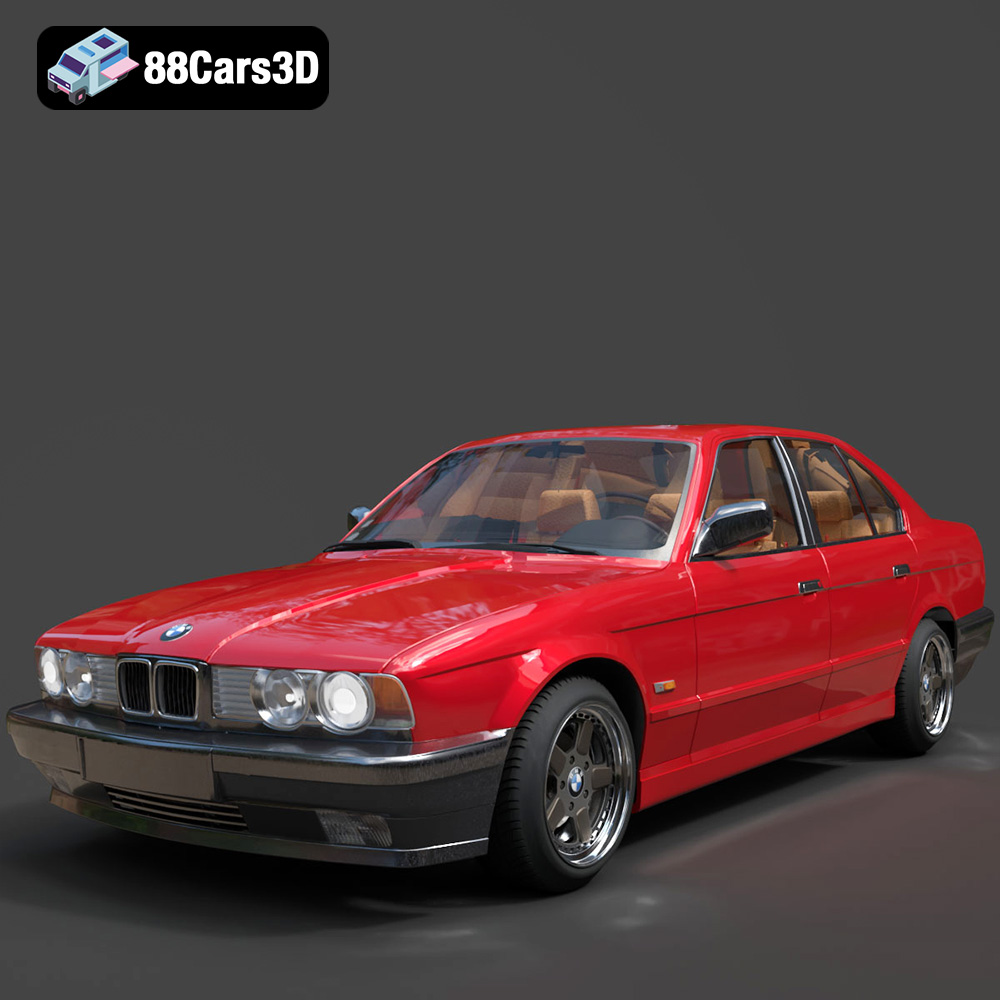
BMW 525i E34 1993 3D Model
Texture: Yes
Material: Yes
Download the BMW 525i E34 1993 3D Model featuring clean geometry, realistic detailing, and a fully modeled interior. Includes .blend, .fbx, .obj, .glb, .stl, .ply, .unreal, and .max formats for rendering, simulation, and game development.
Price: $12.99

BMW 7 Series 2016 3D Model
Texture: Yes
Material: Yes
Download the BMW 7 Series 2016 3D Model featuring luxurious design, detailed interior, and accurate exterior. Includes .blend, .fbx, .obj, .glb, .stl, .ply, .unreal, and .max formats for rendering, simulation, and game development.
Price: $10.79
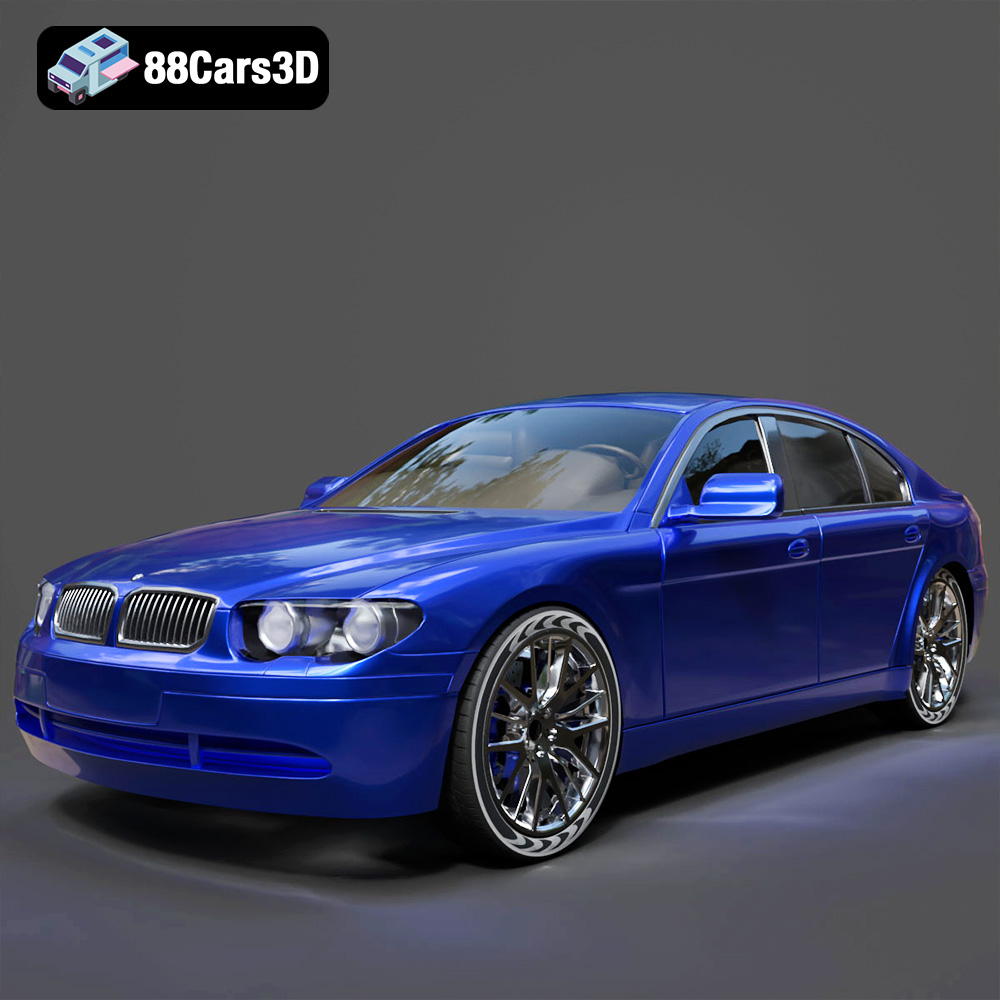
BMW 7 Series 30th Anniversary 3D Model
Texture: Yes
Material: Yes
Download the BMW 7 Series 30th Anniversary 3D Model featuring a meticulously crafted exterior, detailed interior, and realistic wheels. Includes .blend, .fbx, .obj, .glb, .stl, .ply, .unreal, and .max formats for rendering, simulation, and game development.
Price: $35.79
