

The Ultimate Guide to Powering Virtual Showrooms with High-Fidelity 3D Car Models
The automotive industry is in a perpetual state of evolution, and the digital realm is now as critical as the physical showroom floor. Virtual showrooms are transforming how car manufacturers, dealerships, and even custom builders connect with potential buyers, offering immersive, interactive experiences from anywhere in the world. At the heart of these captivating digital environments are high-fidelity 3D car models. These aren’t just simple renders; they are intricate digital assets, meticulously crafted to represent every curve, material, and detail with breathtaking accuracy. From showcasing a vehicle’s sleek exterior under various lighting conditions to allowing prospective customers to explore interior features in 360 degrees, the quality of these 3D models directly dictates the success and realism of a virtual showroom. This comprehensive guide will delve deep into the technical intricacies, best practices, and innovative strategies for leveraging cutting-edge 3D car models to create truly unforgettable virtual automotive experiences. We’ll explore everything from foundational modeling principles and advanced material creation to real-time rendering, optimization for AR/VR, and the crucial role of file formats, ensuring your virtual showroom isn’t just a digital space, but a powerful sales tool.
1. The Foundation: Crafting Impeccable 3D Car Models for Digital Realism
The journey to a compelling virtual showroom begins with the 3D car model itself. Far from a mere visual representation, a high-quality 3D automotive model is a complex data structure built with precision and foresight. For virtual showrooms, where interactive exploration is key, the underlying mesh topology, polygon count, and overall structural integrity are paramount. A model that looks great in a static render might fall apart under scrutiny in an interactive 3D environment if its foundation is weak. This section dissects the critical elements of creating robust 3D car models suitable for demanding virtual applications, ensuring every surface, every panel gap, and every design line is flawless and performs optimally.
1.1 Optimal Topology and Edge Flow for Automotive Precision
Topology refers to the arrangement of polygons (usually quads) that make up the surface of a 3D model. For automotive models, especially those destined for virtual showrooms, optimal topology is non-negotiable. It dictates how the model deforms, how subdivision surfaces react, and ultimately, how realistic the reflections and highlights appear. Clean edge flow, where polygons follow the natural contours and design lines of the car, is essential. This means avoiding stretched polygons, n-gons (polygons with more than four sides), and excessive triangulation. A good topology will allow for smooth, continuous surfaces, even when viewed up close, and prevent shading artifacts like pinching or ripples. Professional 3D artists often employ a “blueprint” approach, starting with basic shapes and gradually adding detail, ensuring consistent polygon density across the model. This meticulous approach is what separates a decent model from one that truly shines in a virtual showroom, providing the necessary fidelity for close-up inspections and dynamic lighting interactions.
1.2 Balancing Detail and Performance: Strategic Polygon Budgets
While detail is crucial, it must be balanced with performance, particularly for real-time applications like virtual showrooms running in web browsers or game engines. This balance is managed through the polygon budget. A high-polygon model (e.g., millions of polygons) offers incredible detail but can cripple performance, leading to slow load times and choppy frame rates. Conversely, a low-polygon model might run smoothly but lack visual fidelity. The key is strategic poly-budgeting and the use of techniques like Subdivision Surface modeling for “hero” assets and Level of Detail (LOD) optimization. For hero vehicles in a virtual showroom, a base mesh might have around 100,000-300,000 polygons, with subdivision modifiers applied at render time or for closer views. LODs involve creating multiple versions of the same model with varying polygon counts. For example, a car might have LOD0 (high poly) for close-ups, LOD1 (medium poly) for mid-range views, and LOD2 (low poly) for distant views. This intelligent management ensures that the viewer always sees an appropriate level of detail without overtaxing the system. When sourcing models from marketplaces such as 88cars3d.com, always check the polygon count and topology details to ensure they meet the specific performance requirements of your virtual showroom platform.
2. Bringing Cars to Life: PBR Materials and Advanced Texturing
Once the foundational 3D model is solid, the next critical step is to imbue it with realistic surface properties. This is where Physically Based Rendering (PBR) materials come into play, offering an unparalleled level of visual realism that is essential for virtual showrooms. PBR ensures that materials react accurately to light, mimicking how surfaces behave in the real world. This section dives into the science and artistry behind creating compelling PBR materials and the intricate process of UV mapping, which lays the groundwork for perfect texture application.
2.1 Understanding PBR Workflows: Metallic/Roughness vs. Specular/Glossiness
PBR materials are the cornerstone of modern rendering, providing a consistent and physically accurate way to define how light interacts with a surface. The two primary PBR workflows are Metallic/Roughness and Specular/Glossiness. The Metallic/Roughness workflow is often preferred for its intuitive nature and fewer texture maps. It uses a base color map (albedo), a metallic map (0 for dielectric, 1 for metallic), and a roughness map (0 for smooth/shiny, 1 for rough/matte). For example, a polished car paint would have a high metallic value and a low roughness value, while a rubber tire would be dielectric (0 metallic) with a high roughness. The Specular/Glossiness workflow, while also widely used, involves more maps: diffuse, specular, and glossiness. Both workflows aim for the same result: materials that look correct under any lighting condition, making them ideal for the dynamic environments of virtual showrooms. The consistency provided by PBR is vital for presenting a car model that looks believable whether it’s bathed in studio light or parked under a virtual sunset.
2.2 UV Mapping Strategies for Flawless Surfaces
UV mapping is the process of flattening the 3D surface of a model into a 2D space, allowing 2D textures to be applied accurately. For complex automotive models with intricate curves and panel lines, effective UV mapping is a meticulous art form. Poor UVs can lead to stretched textures, visible seams, or inefficient texture usage. Key strategies for automotive UVs include creating clean, logical UV islands for distinct parts (e.g., hood, door, roof, interior components). Overlapping UVs can be used for non-unique details like bolts or repetitive patterns, but unique areas like the main body panels require dedicated space to avoid texture bleeding. Techniques like “unwrapping” in software like Blender, 3ds Max, or Maya allow artists to manually adjust and optimize UV layouts. For instance, in Blender 4.4, the UV Editor provides a comprehensive suite of tools for unwrapping, packing, and adjusting UVs, including advanced features like Live Unwrap and various projection methods (e.g., Cube, Cylinder, Sphere, Smart UV Project). You can find detailed instructions and best practices for these tools in the official Blender 4.4 documentation on UV Mapping. Efficient UV packing, where UV islands are arranged to maximize the use of texture space, is crucial for optimizing texture resolution and reducing memory footprint, contributing significantly to a performant and visually stunning virtual showroom experience.
3. Immersive Visualization: Lighting, Rendering, and Real-time Engines
Even the most perfectly modeled and textured car will look flat without proper lighting and rendering. In virtual showrooms, the goal is not just to display a car, but to create an atmosphere that evokes emotion and showcases the vehicle’s design intent. This section explores advanced lighting techniques, high-quality rendering workflows for both static and real-time outputs, and the integration of these sophisticated models into interactive game engines that power many virtual showroom experiences.
3.1 Studio Lighting Setups and HDRI Environments
Effective lighting is transformative. For virtual showrooms, a blend of traditional studio lighting principles and modern HDRI (High Dynamic Range Image) environments is often employed. Studio lighting setups involve carefully placed virtual lights (e.g., area lights, spot lights) to highlight specific contours, create dramatic shadows, and emphasize material properties. A classic three-point lighting setup (key light, fill light, back light) provides a solid foundation, which can then be expanded with additional lights to accentuate details like chrome trim or interior elements. HDRI environments offer a highly realistic and efficient way to light a scene. An HDRI captures the full range of light from a real-world location, providing both realistic illumination and reflections. By wrapping an HDRI of a garage, a cityscape, or a scenic landscape around the virtual showroom, the car model will naturally reflect its environment, grounding it in a believable space. Combining crisp studio lighting for emphasis with a subtle HDRI for ambient realism creates a dynamic and visually rich presentation that mimics professional automotive photography.
3.2 Real-time Rendering in Game Engines (Unity, Unreal Engine)
The interactive nature of virtual showrooms demands real-time rendering, a domain where game engines like Unity and Unreal Engine excel. These engines are optimized to display complex 3D scenes at interactive frame rates. Integrating high-fidelity 3D car models into these environments involves careful asset preparation. This includes importing models (often via FBX), setting up PBR materials, configuring light probes, and implementing reflection captures to ensure realistic reflections on car surfaces. Unity’s High Definition Render Pipeline (HDRP) and Unreal Engine’s Lumen Global Illumination and Nanite Virtualized Geometry are powerful tools for achieving cinematic quality in real-time. Lumen provides dynamic global illumination and reflections, ensuring that light bounces realistically around the showroom, while Nanite in Unreal Engine 5 allows for the direct import of extremely high-polygon models, managing their complexity dynamically without the need for traditional LODs, though careful optimization is still prudent for broad compatibility. Mastering these engine-specific workflows is crucial for delivering a smooth, high-quality, and interactive virtual showroom experience that truly engages the user.
4. Beyond Static: Interactivity, Customization, and AR/VR Integration
A virtual showroom transcends static imagery by offering dynamic interaction. Customers expect to do more than just view a car; they want to customize it, open doors, change colors, and even place it in their own driveways. This level of engagement is achieved through sophisticated programming and optimization techniques, extending the utility of 3D car models into highly personalized and immersive experiences, including augmented and virtual reality.
4.1 Enabling User Customization and Configurators
The ability to customize a vehicle in real-time is a significant draw of virtual showrooms. This functionality relies on a modular approach to 3D model construction and a robust underlying data structure. Car models are often split into distinct components: body, wheels, interior trim, paint layers, etc. Each component can have multiple variations (e.g., different wheel designs, various interior upholstery options, a palette of paint colors). Implementing a car configurator involves dynamically swapping these 3D parts or changing material parameters (like color or roughness values for paint) based on user selections. This requires efficient asset loading and a well-organized asset library. For paint customization, shader networks are crucial, allowing users to select from a predefined range of colors, and sometimes even adjust metallic flake intensity or clear coat thickness. Platforms like 88cars3d.com offer models that are often prepared for this modularity, providing clean meshes and separate material IDs that streamline the customization process, offering immediate visual feedback to the potential buyer and greatly enhancing their decision-making process.
4.2 Optimizing for AR/VR Experiences
Augmented Reality (AR) and Virtual Reality (VR) represent the pinnacle of immersive virtual showroom experiences. However, they impose unique and stringent technical requirements on 3D car models. For AR applications (e.g., placing a virtual car in a real-world driveway via a smartphone), models must be extremely lightweight while retaining visual fidelity. This often means aggressive LOD strategies, texture atlasing (combining multiple textures into one sheet to reduce draw calls), and simplified shader networks. File formats like USDZ (for Apple AR Quick Look) and GLB (for web-based AR and general 3D viewing) are optimized for AR/VR and web delivery, combining model, materials, and textures into a single, efficient package. For VR, where sustained high frame rates (e.g., 90 FPS) are critical to prevent motion sickness, optimization is even more demanding. This includes careful polygon budget management, baking complex lighting into textures (lightmaps) where possible, and minimizing expensive real-time effects. Ensuring that 3D car models are meticulously optimized for these cutting-edge platforms unlocks truly revolutionary ways for customers to interact with vehicles, offering an unprecedented sense of scale and presence.
5. The Workflow: From Concept to Polished Virtual Showroom
Developing a virtual showroom is a multi-faceted project, demanding a systematic workflow that spans from initial 3D modeling to final deployment. This section outlines the typical stages, highlights common challenges, and provides best practices for ensuring a smooth and efficient transition of your high-quality 3D car models into an interactive, performant, and visually stunning virtual environment.
5.1 Asset Preparation and Optimization for Web Delivery
Once a 3D car model is complete in a traditional modeling package, a crucial “preparation” phase is required before it can be deployed to a web-based virtual showroom. This involves several key steps:
- Polygon Reduction: Using tools like ProOptimizer in 3ds Max or the Decimate modifier in Blender to create optimized versions suitable for web or mobile.
- Texture Baking: Baking high-resolution details, ambient occlusion, and even complex lighting into lower-resolution texture maps to improve real-time performance.
- Material Conversion: Ensuring all materials are converted to a standard PBR workflow (Metallic/Roughness is common) that is compatible with target engines or web viewers.
- UV Optimization: Re-packing UVs for efficiency, potentially creating texture atlases to reduce draw calls.
- Mesh Cleanup: Removing redundant edges, vertices, or faces, and ensuring all normals are correctly oriented.
- Scene Organization: Grouping objects logically, naming conventions, and setting up pivot points correctly for interaction.
Each of these steps contributes to a lightweight yet visually rich asset that loads quickly and performs smoothly in a web browser, which is critical for retaining user engagement in a virtual showroom setting.
5.2 File Format Compatibility and Conversion (FBX, OBJ, GLB, USDZ)
Choosing the right file format is paramount for seamless integration into various virtual showroom platforms. Each format has its strengths and intended use cases:
- FBX (Filmbox): A proprietary format by Autodesk, widely considered the industry standard for exchanging 3D data between different software (e.g., Maya, 3ds Max, Blender, Unity, Unreal Engine). It supports geometry, materials, animations, and cameras, making it versatile for complex asset transfers.
- OBJ (Object): A simpler, open standard for geometry. It’s highly compatible but often requires separate material files (MTL) and texture maps. It’s a good fallback but lacks comprehensive scene data.
- GLB (Binary glTF): The binary version of glTF (GL Transmission Format), designed for efficient transmission and loading of 3D scenes and models by web applications. It packages geometry, materials, textures, and animations into a single file, making it ideal for web-based virtual showrooms due to its small file size and quick loading times.
- USDZ (Universal Scene Description Zip): Developed by Apple and Pixar, USDZ is an augmented reality-centric format specifically for Apple’s AR Quick Look and other USD-compatible applications. It’s optimized for AR experiences, combining all necessary assets into a single archive.
Often, a model initially created in FBX or OBJ will be converted to GLB for web deployment or USDZ for AR, depending on the target platform. Understanding the capabilities and limitations of each format is key to ensuring that your high-quality 3D car models are accurately represented and perform optimally across all intended virtual showroom environments.
Conclusion
The transformation of automotive retail and visualization through virtual showrooms is undeniable, and at its core lies the exquisite detail and technical prowess of high-fidelity 3D car models. From the meticulous crafting of clean topology and intelligent UV mapping to the sophisticated application of PBR materials, every technical decision contributes to creating a virtual experience that rivals the physical. We’ve explored how advanced automotive rendering techniques, strategic game asset optimization, and careful consideration of file formats like GLB and USDZ are essential for delivering compelling, interactive, and performant virtual showrooms. The ability to customize vehicles in real-time and offer immersive AR/VR experiences further cements the indispensable role of these digital assets. For 3D artists, game developers, and automotive professionals, mastering these intricate workflows is not just about creating pretty pictures; it’s about building powerful, engaging tools that drive sales and redefine customer engagement. By focusing on quality, optimization, and technical precision, the potential of virtual showrooms powered by exceptional 3D car models is limitless, offering an exciting glimpse into the future of automotive marketing and visualization. As the industry continues to innovate, platforms like 88cars3d.com will remain a vital resource for acquiring the meticulously crafted 3D assets that bring these ambitious virtual visions to life.
Featured 3D Car Models

BMW 7 Series E38 3D Model
Texture: Yes
Material: Yes
Download the BMW 7 Series E38 3D Model featuring its iconic luxury sedan design and classic aesthetics. Includes .blend, .fbx, .obj, .glb, .stl, .ply, .unreal, and .max formats for rendering, simulation, and game development.
Price: $10.79

BMW 6 Series 640i F12 3D Model
Texture: Yes
Material: Yes
Download the BMW 6 Series 640i F12 3D Model featuring a sleek design and detailed interior. Includes .blend, .fbx, .obj, .glb, .stl, .ply, .unreal, and .max formats for rendering, simulation, and game development.
Price: $10.79
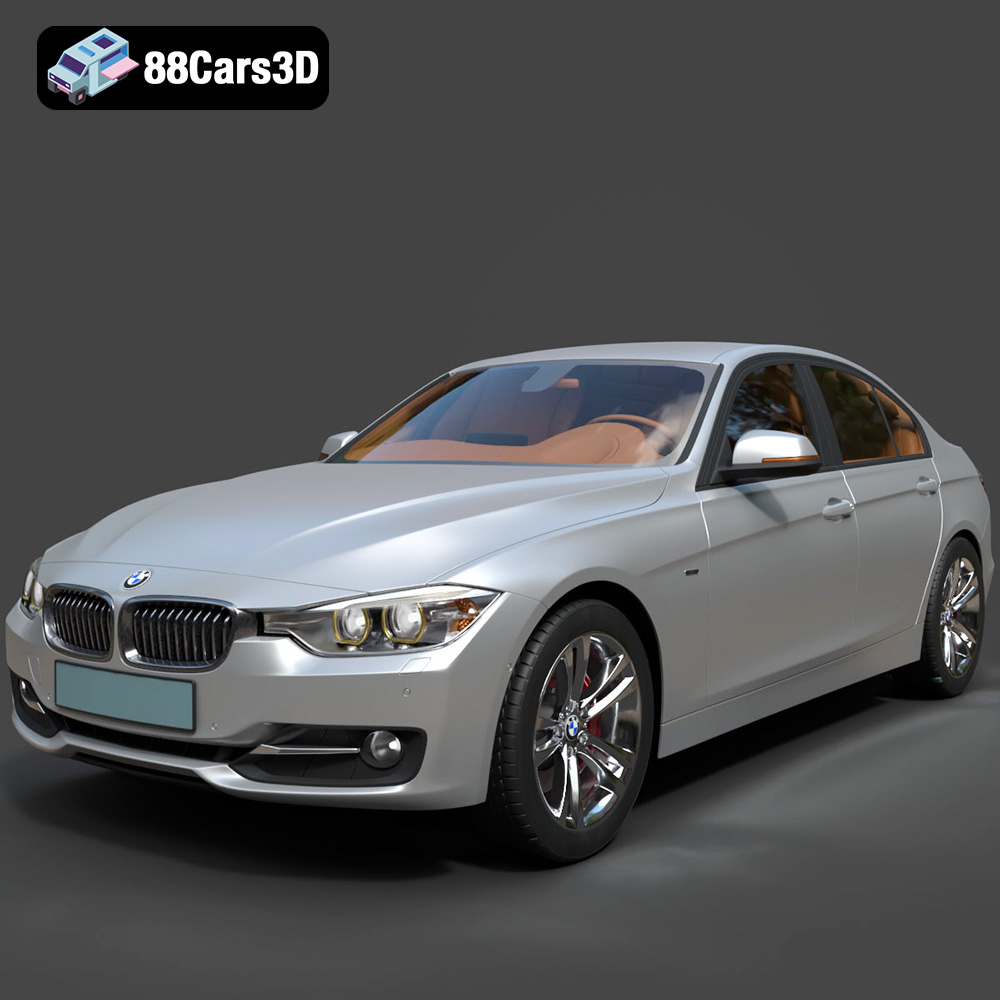
BMW 3 F30 3D Model
Texture: Yes
Material: Yes
Download the BMW 3 F30 3D Model featuring a detailed exterior, realistic interior, and optimized mesh. Includes .blend, .fbx, .obj, .glb, .stl, .ply, .unreal, and .max formats for rendering, simulation, and game development.
Price: $10.79
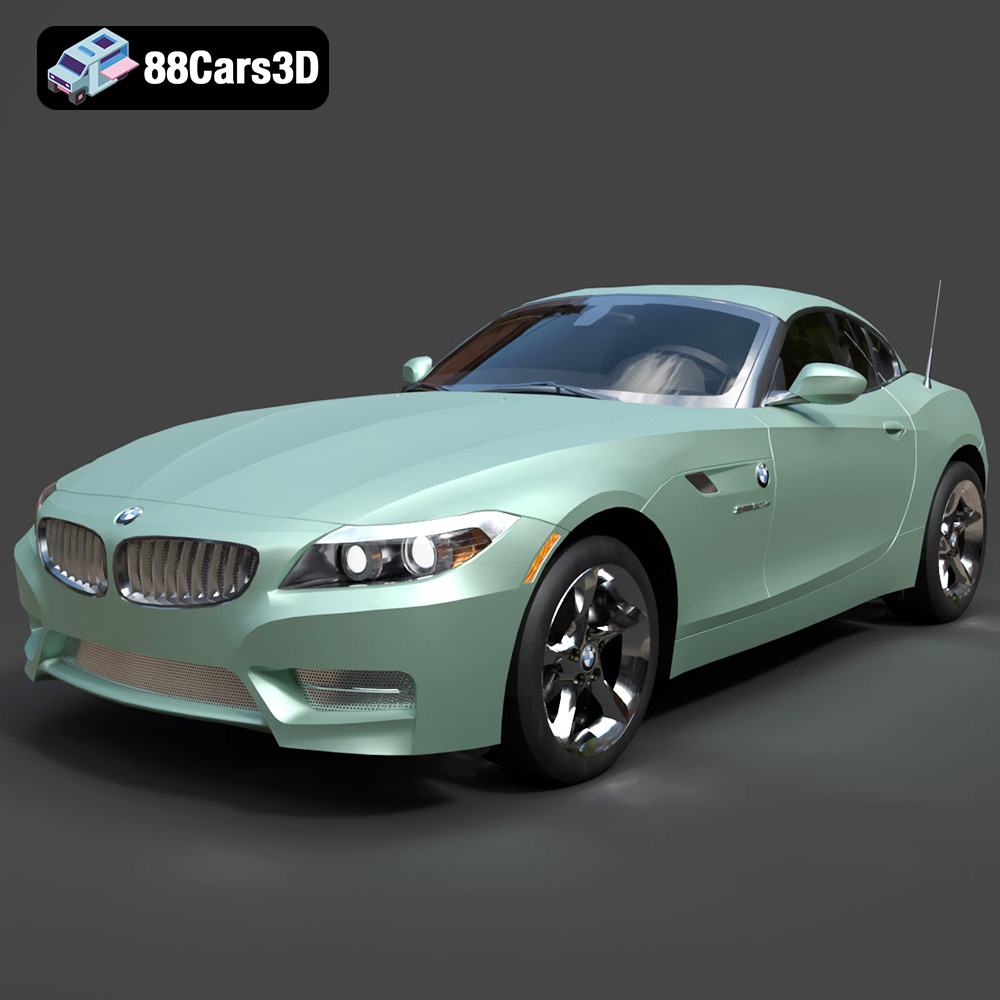
BMW Z4 Roadster E89 2012 3D Model
Texture: Yes
Material: Yes
Download the BMW Z4 Roadster E89 3D Model featuring clean geometry, realistic detailing, and a fully modeled interior. Includes .blend, .fbx, .obj, .glb, .stl, .ply, .unreal, and .max formats for rendering, simulation, and game development.
Price: $13.99

BMW Z4 E85 2005 3D Model
Texture: Yes
Material: Yes
Download the BMW Z4 E85 3D Model featuring clean geometry, realistic detailing, and a fully modeled interior. Includes .blend, .fbx, .obj, .glb, .stl, .ply, .unreal, and .max formats for rendering, simulation, and game development.
Price: $13.99

BMW M3 2024 3D Model
Texture: Yes
Material: Yes
Download the BMW M3 2024 3D Model featuring clean geometry, realistic detailing, and a fully modeled interior. Includes .blend, .fbx, .obj, .glb, .stl, .ply, .unreal, and .max formats for rendering, simulation, and game development.
Price: $13.99
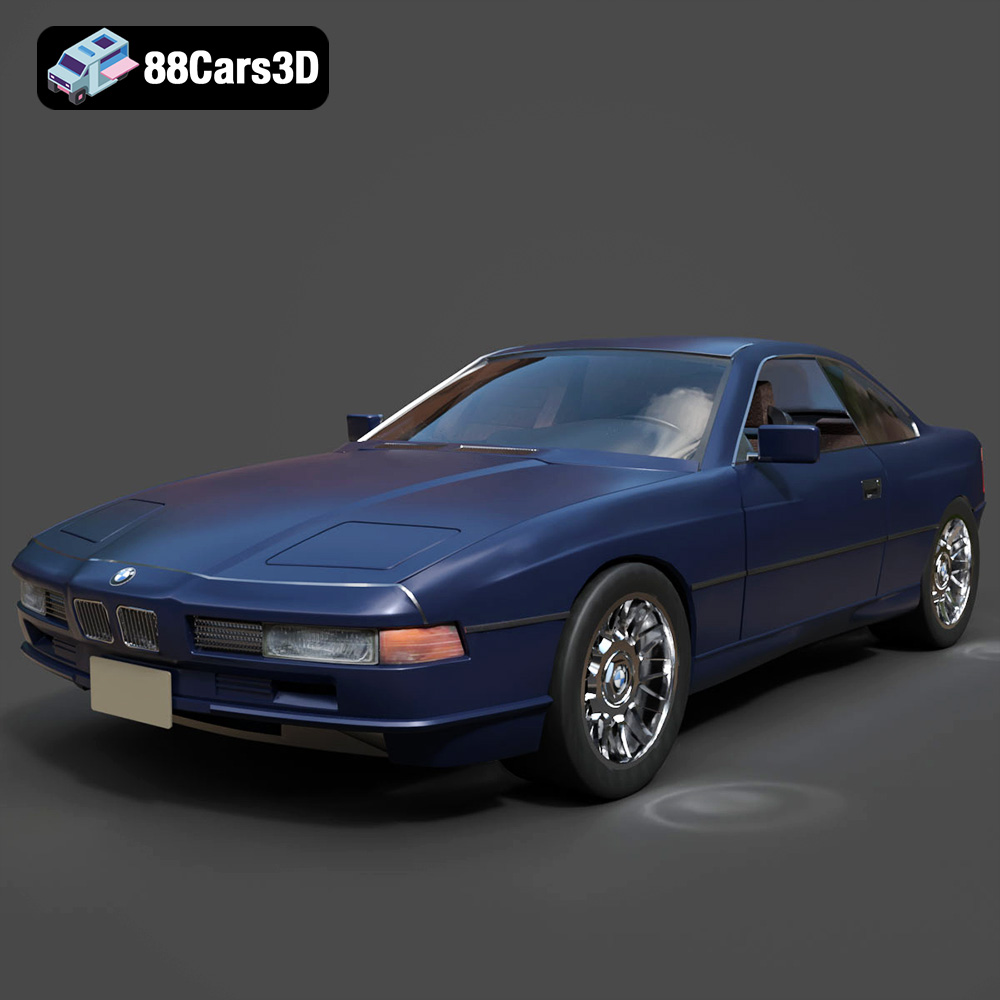
BMW 850i Coupe 1990 3D Model
Texture: Yes
Material: Yes
Download the BMW 850i Coupe 1990 3D Model featuring clean geometry, realistic detailing, and a fully modeled interior. Includes .blend, .fbx, .obj, .glb, .stl, .ply, .unreal, and .max formats for rendering, simulation, and game development.
Price: $13.99
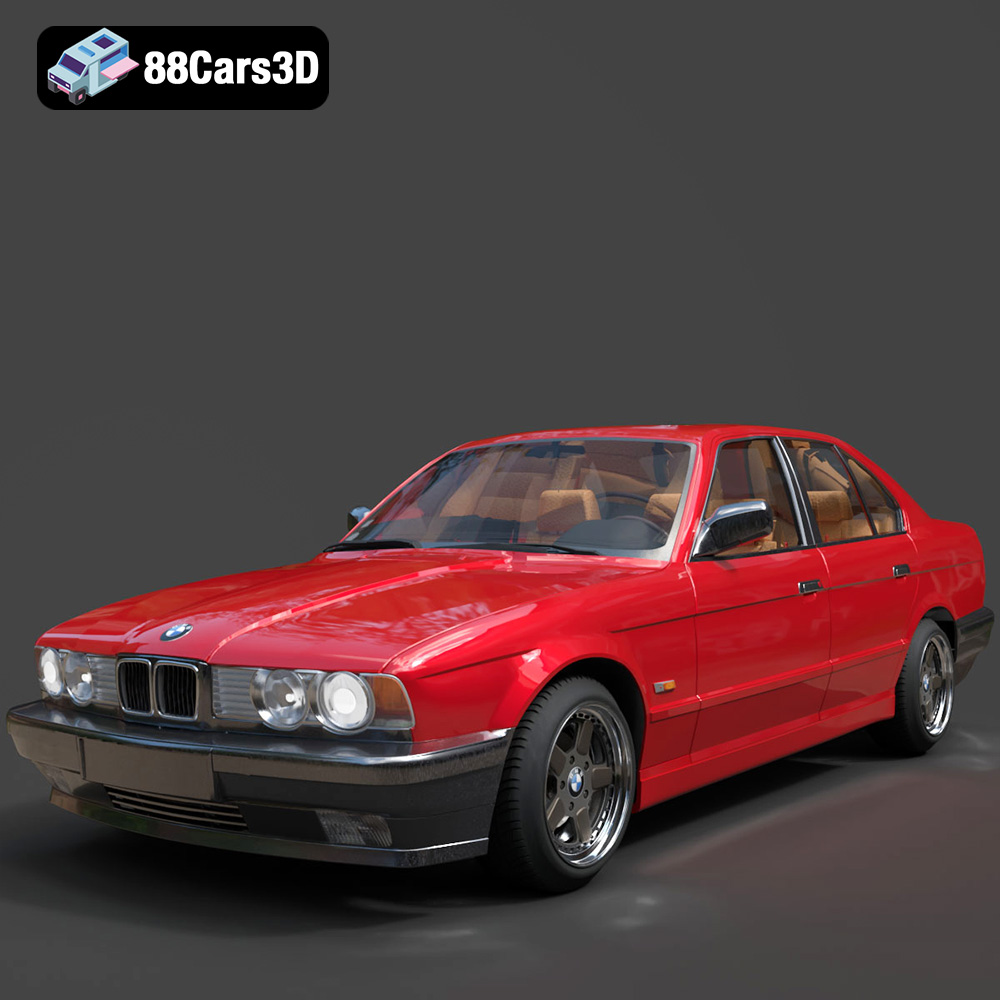
BMW 525i E34 1993 3D Model
Texture: Yes
Material: Yes
Download the BMW 525i E34 1993 3D Model featuring clean geometry, realistic detailing, and a fully modeled interior. Includes .blend, .fbx, .obj, .glb, .stl, .ply, .unreal, and .max formats for rendering, simulation, and game development.
Price: $12.99

BMW 7 Series 2016 3D Model
Texture: Yes
Material: Yes
Download the BMW 7 Series 2016 3D Model featuring luxurious design, detailed interior, and accurate exterior. Includes .blend, .fbx, .obj, .glb, .stl, .ply, .unreal, and .max formats for rendering, simulation, and game development.
Price: $10.79
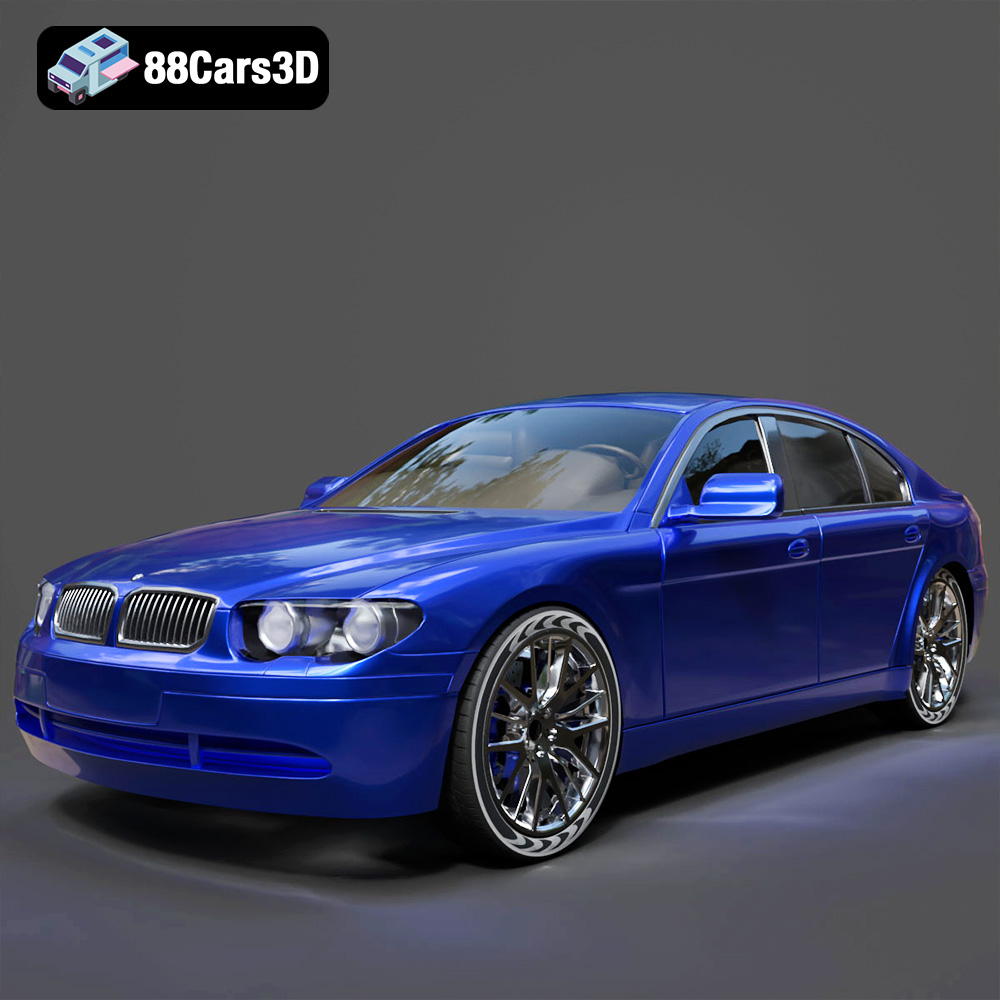
BMW 7 Series 30th Anniversary 3D Model
Texture: Yes
Material: Yes
Download the BMW 7 Series 30th Anniversary 3D Model featuring a meticulously crafted exterior, detailed interior, and realistic wheels. Includes .blend, .fbx, .obj, .glb, .stl, .ply, .unreal, and .max formats for rendering, simulation, and game development.
Price: $35.79
