

Crafting Aerodynamic Masterpieces: A Technical Deep Dive into 3D Car Body Panel Modeling
The allure of a high-performance vehicle often begins with its sculpted exterior – a testament to both aesthetic brilliance and engineering prowess. Aerodynamics, the science of how air moves around objects, plays a pivotal role in a car’s speed, efficiency, and stability. For 3D artists, game developers, and automotive designers, translating these complex aerodynamic principles into stunning, functional 3D car models is a highly specialized skill. This comprehensive guide will take you on a journey through the intricate world of modeling aerodynamic car body panels, from foundational topology to advanced rendering and real-time optimization. We’ll explore the technical workflows, software-specific techniques, and industry best practices required to create models that not only look incredible but also perform flawlessly across various applications, whether for high-fidelity visualization, immersive game environments, or even 3D printing. By the end, you’ll have a robust understanding of how to craft digital automotive masterpieces that cut through the virtual air with precision and style, ready for platforms like 88cars3d.com.
The Foundation: Understanding Automotive Aerodynamics and Reference Data
Before a single vertex is placed, a deep understanding of automotive aerodynamics is paramount. It’s not just about making a car look fast; it’s about understanding how air interacts with every curve and plane. Key concepts like drag, lift, and downforce dictate the subtle shaping of a car’s body. Drag, the resistance caused by air, is primarily reduced through a streamlined form, minimizing turbulent airflow. Lift, which can reduce tire grip at high speeds, is mitigated by thoughtful design elements that create downforce, pushing the car onto the road. Designers employ various elements such as diffusers, spoilers, wings, and intricate underbody aerodynamics to manage airflow effectively. For instance, a well-designed front splitter can manage airflow under the car, directing it to a rear diffuser which then expands the air volume, creating a low-pressure zone that sucks the car towards the ground. Every vent, crease, and panel gap needs to be considered for its aerodynamic impact, even if visually subtle.
To achieve accuracy in 3D modeling, utilizing precise reference data is non-negotiable. This often comes in the form of engineering blueprints, CAD data, or high-resolution photogrammetry scans. Blueprints provide essential orthographic views (front, back, side, top) and key measurements, acting as the foundational framework for your model. CAD data, often provided in formats like STEP or IGES, offers mathematically precise surface information. While direct conversion of CAD data into polygon meshes for real-time or subdivision surface modeling can be challenging due to its NURBS-based nature, it serves as an invaluable guide for recreating exact contours and proportions. When working with blueprints, ensuring they are perfectly aligned and scaled in your 3D software is the first critical step. For complex or exotic vehicles, photogrammetry scans can capture real-world details with astonishing accuracy, though these often require significant cleanup and retopology to create a usable mesh for production. Regardless of the source, meticulously studying the reference material—understanding the car’s aesthetic language, its panel breaks, and its aerodynamic features—is crucial before any modeling begins.
Principles of Airflow and Drag Reduction
Airflow principles dictate every curve and surface on an aerodynamic car. When air flows over a surface, it can be laminar (smooth, uninterrupted flow) or turbulent (chaotic, eddying flow). The goal of aerodynamic design is to maintain laminar flow for as long as possible over the car’s body, especially over the roof, hood, and side panels. Disruptions in flow lead to increased drag. Features like sharp creases can intentionally create vortices to manage airflow in specific areas, such as around the wheel wells to reduce turbulence. Understanding the concept of a boundary layer – the thin layer of air directly adjacent to the car’s surface – is also key. Minimizing pressure differentials across the vehicle by smoothly transitioning surfaces helps reduce drag. This is why many high-performance cars feature teardrop shapes or elongated rear sections. The shape of a car’s windshield and pillars, for instance, significantly influences how air separates from the cabin and moves towards the rear, impacting both drag and wind noise. Therefore, every design decision, from the rake of the windshield to the radius of a fender flare, is a calculated aerodynamic choice.
Utilizing Blueprint and CAD Data for Accuracy
Accuracy is paramount when modeling real-world vehicles, especially those designed for aerodynamic efficiency. When starting a project, gathering a comprehensive set of references, including official blueprints, technical drawings, and high-resolution photographs, is crucial. For blueprints, ensure you have multiple orthographic views (front, side, top, rear) and that they are all perfectly aligned and scaled within your 3D modeling environment. In software like 3ds Max or Blender, you can set these as background images on different axes to guide your initial blocking. For example, in Blender 4.4, you would typically use ‘Empty’ objects with image display enabled and carefully position them to match the 3D grid. The official Blender 4.4 documentation at https://docs.blender.org/manual/en/4.4/ provides excellent resources on setting up reference images and working with viewports. When CAD data (like STEP or IGES files) is available, it provides an unparalleled level of precision. While direct tessellation of CAD into an editable polygonal mesh often results in suboptimal topology, these files serve as an impeccable guide. You can import them, perhaps decimate them slightly if they are too dense, and then use them as a “shrinkwrap” target for your manually created low-poly mesh, or simply trace their contours meticulously to ensure every curve and panel gap aligns perfectly with the original design intent. This methodical approach to reference utilization guarantees that your 3D model accurately reflects the aerodynamic design principles of the real vehicle.
Mastering Topology and Edge Flow for Aerodynamic Forms
Topology and edge flow are the bedrock of creating high-quality, production-ready 3D car models, especially when dealing with the nuanced curves and reflections of aerodynamic body panels. Clean topology, primarily composed of quadrilaterals (quads), is essential for several reasons: it facilitates smooth subdivision, allows for easy deformation if animation is required, and ensures a clean, predictable surface for texturing and rendering. When modeling aerodynamic panels, the goal is to define the car’s silhouette and primary surface forms with the fewest possible polygons while maintaining accurate curvature. This involves creating “control loops” or “holding edges” that follow the contours of the body, defining sharp creases, and smoothly transitioning between different surface planes. For instance, the transition from a fender to a door panel or the subtle curve of a roofline demands careful edge placement to avoid pinching or undesirable artifacts when subdivided. The initial blocking phase uses simple primitives and basic extrusions to establish the overall form, progressively adding detail through edge loops and careful adjustments of vertices. Maintaining an even distribution of polygons across the surface helps prevent stretching of textures and ensures consistent subdivision results.
Strategic edge flow is critical for capturing the subtle nuances of a car’s design, particularly how light reflects off its surfaces. Automotive surfaces are designed to reflect light in specific ways, emphasizing their curves and lines. A poor edge flow will result in “wobbly” reflections or faceted appearances, even after subdivision. Good edge flow ensures that the polygons follow the natural direction of the curvature and the flow of light. This means placing edges to define highlights, sharp transitions, and the paths of light across the body. For example, around a wheel arch, edge loops should gracefully follow the arc of the opening, gradually increasing in density where the curvature is tightest. Similarly, around panel gaps, a pair of tight edge loops will define the sharpness of the break, while the surrounding geometry should spread out to allow for smooth surfaces. Subdivision surface modeling (often using a Catmull-Clark algorithm) is the industry standard for automotive panels, as it allows for low-polygon base meshes to be smoothed into high-resolution, curvature-continuous surfaces at render time. This approach significantly reduces manual workload and produces meshes that are highly adaptable for various levels of detail.
Sub-D Modeling Workflows for Smooth Surfaces
Subdivision surface (Sub-D) modeling is the go-to technique for automotive body panels due to its ability to generate incredibly smooth, production-quality surfaces from a relatively low-polygon base mesh. The workflow typically begins with box modeling or poly-by-poly construction to establish the primary forms of the car’s panels. Starting with simple planes or cubes, artists incrementally extrude edges, refine loops, and position vertices to match the reference blueprints. The key is to keep the initial mesh as light as possible, focusing on major curvature changes and defining critical edge loops. As the model progresses, “holding edges” are added near hard creases or sharp details (e.g., around window frames, panel gaps, or character lines) to prevent over-smoothing when the subdivision modifier is applied. These holding edges are usually two or three loops placed very close together. For a software like Blender, the Subdivision Surface modifier is applied non-destructively, allowing real-time preview of the smoothed mesh while editing the low-poly cage. Iteration is crucial here; constantly checking the model with a MatCap shader or a highly reflective material helps reveal any imperfections in the surface or wobbles in the reflections that need to be corrected by adjusting vertex positions or edge flow.
Strategic Edge Flow for Curvature and Reflections
Achieving perfect reflections and accurate curvature on automotive surfaces is a hallmark of professional 3D car models. This is directly tied to strategic edge flow. When modeling, think of the edge loops as guiding the flow of light across the surface. On large, sweeping panels like the hood or roof, the edges should run parallel to the direction of the dominant curvature, maintaining an even quad distribution. Where there are subtle changes in curvature, such as the gentle rise of a fender, the edge loops should fan out or converge gradually, avoiding abrupt changes in density which can lead to pinching. For sharp, defined lines, like those found on a car’s character lines or around door handles, creating “support loops” or “crease edges” is essential. These are typically two or three closely spaced edge loops that run parallel to the sharp feature. When subdivided, these tight loops maintain the sharpness of the edge while allowing the surrounding geometry to remain smooth. A common pitfall is to have “star poles” (vertices with more than 5 or fewer than 3 connecting edges) in highly visible, flat areas, which can introduce pinching or unsightly shading artifacts. Careful attention to these details ensures that when rendered, the model exhibits flawless, believable reflections that highlight its aerodynamic design.
Polygon Budgets and Clean Mesh Practices
Understanding polygon budgets is crucial, as the required detail level varies significantly between applications. For high-end cinematic renders or visualization, polygon counts can be very generous, often exceeding several million triangles for a complete vehicle. Here, the emphasis is on achieving absolute photorealism, and a highly dense mesh allows for minute surface variations and perfect curvature. Conversely, for game engines or AR/VR experiences, strict polygon budgets are necessary for optimal performance. A typical high-detail game asset might target 80,000 to 150,000 triangles for the exterior of a hero vehicle, excluding interior and wheels, while a mid-detail asset could be 30,000-50,000. Clean mesh practices ensure that your model is efficient and robust. This means avoiding N-gons (polygons with more than four sides), minimizing triangles (using them only where necessary, e.g., in very flat, non-deforming areas), and removing unnecessary edges or vertices. Every vertex should contribute to the silhouette or curvature. Regularly checking for flipped normals, non-manifold geometry, and isolated vertices using your software’s built-in cleanup tools (e.g., “Clean Up” in Blender) is a vital part of the workflow.
Crafting Realistic Materials and UV Maps for Car Panels
Once the aerodynamic forms are perfectly sculpted, the next critical step is to bring them to life with realistic materials. This process begins with precise UV mapping, which dictates how 2D textures are applied to the 3D surface. For complex car panels with sweeping curves and intricate details, UV mapping requires careful planning to avoid stretching, seams in prominent areas, and wasted texture space. The goal is to create UV islands that are as undistorted as possible, making texture painting and application straightforward. Automated UV unwrappers can provide a starting point, but manual refinement is almost always necessary for automotive models. Breaking the car down into logical UV islands—separate islands for the hood, roof, doors, fenders, and bumpers—allows for efficient texture packing. Critical surfaces that will be seen up close, like the main body panels, should be allocated more UV space and therefore higher texture resolution. Overlapping UVs can be used for mirrored parts (e.g., left and right side panels if they share identical materials and details) to save texture memory, provided that the overlapping areas do not require unique baked details or paint schemes.
The creation of physically based rendering (PBR) materials is fundamental to achieving photorealistic automotive surfaces. PBR materials accurately simulate how light interacts with real-world surfaces, using properties like albedo (base color), roughness (microsurface detail), metallic (reflectivity), and normal maps (fine surface detail). For car paint, this involves a complex layered shader. The base layer often consists of a metallic flake normal map and a metallic PBR material, followed by a clear coat layer that simulates the glossy, protective finish. This clear coat requires its own set of PBR parameters, primarily a very low roughness value for high reflectivity and potentially a slight “sheen” for subtle light scattering. Carbon fiber materials, another common element in performance aerodynamics, demand detailed normal and roughness maps to convey their woven texture and characteristic sheen. Glass materials for windows and headlights need to accurately refract and reflect light, often requiring specific IOR (Index of Refraction) values (e.g., 1.5-1.55 for typical glass) and careful attention to light absorption/tint. All these material parameters work in concert within the shader network to create a believable appearance under any lighting condition.
Advanced UV Mapping for Complex Automotive Surfaces
Advanced UV mapping techniques are indispensable for automotive models, especially for preventing visible seams and distortion on large, reflective surfaces. For body panels, a common strategy is to project UVs from a planar or cylindrical mapping, then painstakingly relax and adjust vertices to minimize stretching. Using tools like “Unwrap” or “Smart UV Project” in Blender can provide an initial unwrap, but manual tweaking in the UV Editor is almost always required. Seams should be strategically placed along natural breaks in the geometry, such as panel gaps, edges that face away from the camera, or hidden areas under trim. For example, a car door’s UV island might have seams along its top, bottom, and inner edges, making the main outer surface a single, continuous, and undistorted island. Packing the UV islands efficiently within the 0-1 UV space is also crucial to maximize texture resolution. Techniques like “UV stacking” (placing identical islands on top of each other) can be used for mirrored parts like wheels or identical lights to share texture space, reducing memory footprint.
PBR Workflows for Paint, Carbon Fiber, and Glass
PBR (Physically Based Rendering) is the standard for realistic materials. For automotive paint, a common approach involves a multi-layered shader. The base layer simulates the metallic or non-metallic paint, using an albedo map for color, a metallic map (0 or 1 for non-metallic or metallic), and a roughness map to define its sheen. On top of this, a clear coat layer is added. This clear coat is essentially a dielectric material with very low roughness, simulating the glossy protective finish. Many advanced shaders also incorporate a “flake” layer, using a subtle normal map or procedural texture to mimic the metallic flakes suspended in the paint, especially in metallic finishes. Carbon fiber, on the other hand, requires a detailed normal map to define its woven pattern, coupled with roughness and metallic maps that simulate its specific reflectivity. The sheen and gloss of carbon fiber vary greatly depending on the weave and the clear coat applied. Glass materials for windows, headlights, and mirrors need accurate IOR (Index of Refraction) values (e.g., 1.52 for crown glass, 1.48 for automotive glass) and often an absorption color to simulate tint, especially on windshields and side windows. Using realistic values from reference charts ensures physical accuracy.
Layered Shaders and Realistic Wear/Detailing
Achieving truly realistic automotive materials often involves employing layered shaders. This approach allows for the creation of complex surfaces like paint with clear coat, subtle dust, dirt, or even light scratches. For instance, a base car paint material (metallic, roughness, normal) can be layered with a clear coat material that has its own reflectivity and slight bump/normal map for subtle imperfections. On top of this, a procedural or textured layer can be blended in using masks to simulate accumulated dust in crevices, road grime along the lower body, or even fine swirl marks visible under certain lighting. Masking techniques, often driven by ambient occlusion or curvature maps, are essential for blending these layers realistically. For example, an ambient occlusion map can be used to drive a dust layer, making dust accumulate naturally in recessed areas. Wear and tear, like chipped paint or scratches, are often created by blending in a more rough, less metallic material where the paint has been removed, revealing a primer or bare metal underneath, controlled by a hand-painted or procedural mask. This intricate layering builds up a convincing narrative of the car’s life.
Rendering Aerodynamic Designs: Bringing Models to Life
The final presentation of an aerodynamic car model hinges on the rendering workflow. This is where all the hard work in modeling and texturing culminates in a photorealistic image or animation. Effective lighting is paramount; it’s what defines the car’s form, highlights its aerodynamic curves, and reveals the quality of its materials. High Dynamic Range Images (HDRIs) are a standard for creating realistic, environmentally lit scenes. An outdoor HDRI can instantly place the car in a believable context, providing natural light, reflections, and ambient color. For studio-style renders, an HDRI combined with targeted area lights, softboxes, and reflectors allows for precise control over highlights and shadows. Rim lights can emphasize the silhouette, while soft fill lights prevent overly harsh shadows. The placement and intensity of these lights are carefully adjusted to flatter the car’s design, emphasizing its strong lines and aerodynamic features.
Modern rendering engines like Corona Renderer, V-Ray, Cycles (Blender), and Arnold offer advanced features to achieve stunning realism. These engines utilize physically accurate light transport algorithms (path tracing, photon mapping) to simulate how light bounces around a scene. Key settings to optimize include global illumination (which simulates indirect lighting), depth of field (for cinematic focus), and motion blur (for dynamic shots). For instance, in Corona Renderer, experimenting with the LightMix feature allows artists to adjust individual lights post-render, dramatically speeding up the iteration process for lighting setups. In Blender’s Cycles, understanding the sampling settings, denoiser options, and light path limits is crucial for balancing render quality and speed. V-Ray and Arnold similarly offer extensive controls over sampling, materials, and scene optimization. Each engine has its nuances, but the core principle remains: a deep understanding of light and material interaction, coupled with careful scene setup, is essential for producing compelling automotive renders.
Lighting Setups for Automotive Visualization (HDRI, Studio Lighting)
Effective lighting is the soul of a compelling automotive render. For photorealistic exterior shots, High Dynamic Range Images (HDRIs) are indispensable. An HDRI acts as both a light source and a reflection map, providing realistic environmental lighting and reflections instantly. The choice of HDRI—be it a sunny outdoor scene, an overcast sky, or a detailed studio setup—dramatically impacts the mood and appearance of the car. Beyond HDRIs, supplementary studio lighting is often employed to sculpt the car’s form and highlight specific features. This typically involves using large area lights or softboxes positioned to create flattering highlights along the body panels, defining the curvature and edge flow. Rim lights, placed behind and to the sides of the car, can emphasize its silhouette and create a sense of depth. Bounce cards or fill lights with subtle emission can be used to soften shadows and introduce ambient light into recessed areas. The goal is to create a dynamic interplay of light and shadow that accentuates the car’s design and material properties. For example, a “three-point lighting” setup with a key light, fill light, and rim light is a common starting point, often augmented with additional lights for specific reflections.
Advanced Rendering with Corona, V-Ray, Cycles, and Arnold
Each major renderer brings its own strengths to automotive visualization. Corona Renderer is renowned for its ease of use and physically accurate results, making it a favorite for architectural and product visualization, including cars. Its intuitive material system and interactive rendering provide quick feedback. V-Ray, a veteran in the industry, offers unparalleled control and flexibility, with powerful features for complex scenes, massive polycounts, and production pipelines. Blender’s Cycles engine, integrated directly into Blender, is a powerful physically based path tracer. For those working in Blender 4.4, leveraging Cycles’ adaptive sampling, GPU rendering capabilities, and node-based material editor allows for highly customized and efficient rendering workflows. Arnold, often used in film VFX, excels at handling complex geometries and intricate shading networks, making it ideal for extremely high-fidelity automotive renders. Regardless of the chosen renderer, key techniques include optimizing render settings for noise reduction (denoisers), managing sampling rates, and ensuring proper light path terminations. Experimenting with camera settings like aperture (for depth of field) and shutter speed (for motion blur in animations) further enhances realism.
Post-Processing and Compositing for Impact
Rendering is only part of the equation; post-processing and compositing are vital for adding that final layer of polish and impact to automotive renders. This stage involves taking the raw render output and enhancing it using image editing software like Photoshop or compositing software like Nuke or After Effects. Common post-processing steps include color correction to achieve the desired mood and tone, adjusting contrast and brightness to make the image pop, and applying subtle stylistic effects. Adding bloom or glares to bright light sources (like headlights or reflections) can enhance realism. Chromatic aberration can be sparingly used to simulate lens imperfections, adding a cinematic feel. Vignetting can draw the viewer’s eye to the car, while sharpening can bring out fine details. For compositing, render passes (e.g., diffuse, specular, reflection, ambient occlusion, depth) are invaluable. They allow for non-destructive adjustments to individual components of the image. For instance, you might adjust the intensity of reflections without affecting the base color, or selectively blur the background using a depth pass. These subtle refinements in post-production can transform a good render into an exceptional one, making the car truly stand out.
Optimizing Aerodynamic Car Models for Real-time Applications
The demands of real-time environments like game engines and AR/VR applications are vastly different from those of offline rendering. Performance is king, and every polygon, texture, and draw call must be meticulously optimized. For game engines like Unity and Unreal Engine, a high-fidelity 3D car model needs to be prepared with a strict polygon budget in mind. One of the most critical optimization techniques is the implementation of Levels of Detail (LODs). This involves creating multiple versions of the same model, each with a progressively lower polygon count. The highest LOD (LOD0) is used when the car is close to the camera, showcasing full detail. As the camera moves further away, the engine switches to lower LODs (LOD1, LOD2, etc.), which have simplified geometry and potentially lower resolution textures. This significantly reduces the processing load, as less detail is rendered when it’s imperceptible to the player. A common strategy for LODs on a detailed car model might involve a LOD0 at 80,000-150,000 triangles, LOD1 at 30,000-50,000, LOD2 at 10,000-20,000, and LOD3 at 2,000-5,000.
Beyond LODs, draw calls are another major performance consideration. Each unique material and mesh rendered contributes to draw calls. To minimize these, artists employ texture atlasing, where multiple smaller textures (e.g., textures for headlights, taillights, badges) are packed into a single, larger texture atlas. This allows the game engine to render many different parts using a single material and draw call. Baking details from high-polygon models onto lower-polygon versions using normal maps, ambient occlusion maps, and curvature maps is also fundamental. This technique allows a low-poly mesh to appear highly detailed without the computational cost of the original high-poly geometry. For example, panel gaps and subtle surface details can be baked into normal maps, giving the illusion of depth and complexity. Material instancing is another technique where a base material is created, and then instances of it are used with different parameters (e.g., color variations), reducing the need for unique materials.
Game Engine Optimization: LODs, Draw Calls, and Texture Atlasing
Optimizing 3D car models for game engines is a meticulous process focused on performance. Levels of Detail (LODs) are fundamental: typically, 3-5 LODs are created. LOD0 is the highest detail, used when the vehicle is close, potentially 100,000-150,000 triangles for the exterior. LOD1 might reduce this to 30,000-50,000, simplifying geometry and removing fine details. LOD2 could drop to 10,000-20,000, using normal maps to retain details like panel lines. The lowest LODs (LOD3+) can be as low as 1,000-5,000 triangles, perhaps even a simple silhouette, for cars viewed from a great distance. Reducing draw calls is equally vital. This is achieved through texture atlasing, where multiple smaller textures (e.g., dashboard buttons, small badges, tire sidewall details) are consolidated into one large texture. This allows the engine to render more parts with fewer material switches. Combining meshes where possible also reduces draw calls. For example, all interior meshes might be combined into a single mesh, using a single material with an atlas texture. Baking normal maps from a high-poly sculpt onto the game-ready low-poly mesh is a standard practice to retain intricate surface details without increasing polygon count.
Preparing Models for AR/VR Experiences
AR/VR applications present unique optimization challenges due to their strict performance requirements and the need for a high frame rate (typically 90fps or higher per eye) to prevent motion sickness. Models for AR/VR must be extremely lightweight. This means even more aggressive LOD strategies, careful polygon reduction, and highly optimized textures. The polygon budget for a hero vehicle in AR/VR might be significantly lower than for a traditional game, potentially aiming for 30,000-80,000 triangles for the entire interactive model, including interior and wheels. Often, components like the engine bay or intricate suspension elements that won’t be visible in an AR/VR experience are simplified or removed entirely. Occlusion culling is a crucial technique here, where objects not currently visible to the camera are not rendered, further saving performance. Textures should be optimized for memory usage, often using smaller resolutions (e.g., 2K or even 1K for less critical parts) and efficient compression formats. It’s common to bake all lighting information into vertex colors or lightmaps for static models, eliminating the need for real-time lighting calculations and significantly reducing GPU load.
File Formats and Compatibility for Game and Interactive Media
Choosing the right file format is crucial for compatibility and efficient workflow across different software and platforms. For game engines and general 3D asset exchange, FBX (Filmbox) is the industry standard. It supports meshes, materials (though PBR material definitions can sometimes vary between software), animations, and scene hierarchy. OBJ (Wavefront Object) is another widely supported format, excellent for geometry and UVs, but it doesn’t carry material definitions as comprehensively as FBX. GLB (GL Transmission Format Binary) and USDZ (Universal Scene Description Zip) are emerging as highly important formats for AR/VR and web-based 3D experiences. GLB is the binary version of glTF, specifically designed for efficient loading and rendering of 3D scenes by applications. USDZ, developed by Apple, is optimized for AR on iOS devices, capable of packaging 3D models, textures, and animations into a single file. When sourcing models from marketplaces such as 88cars3d.com, you’ll often find models provided in a variety of these formats, ensuring maximum compatibility for your specific project needs. Each format has its strengths, and understanding when to use which ensures a smooth pipeline from creation to deployment.
Beyond Visualization: 3D Printing and Advanced Applications
The utility of a high-quality 3D car model extends far beyond rendering and real-time visualization. 3D printing, for instance, offers a tangible output, allowing designers to create physical prototypes, scale models, or even functional parts. However, preparing a 3D model for printing requires a different set of considerations than for rendering. The mesh must be “manifold,” meaning it needs to be a completely watertight solid with no holes, inverted normals, or internal geometry. Any gaps or non-manifold edges will lead to printing errors. Triangles are generally preferred over quads for 3D printing as they are the fundamental unit for most slicing software, so converting your quad-based subdivision surface model to an all-triangle mesh is often a necessary step. Wall thickness is also critical; thin areas that look fine on screen might be too fragile to print. Design elements need to be reinforced or thickened to ensure structural integrity. Checking for minimum wall thickness requirements (which vary by printer and material) is essential.
Beyond physical output, advanced applications like digital twins and simulation leverage these detailed 3D models. A digital twin is a virtual replica of a physical object, system, or process. In the automotive industry, this means creating highly accurate 3D models of cars that can be used for virtual testing, performance monitoring, and predictive maintenance. These models need to be exceptionally accurate, often incorporating real-world sensor data and physics-based simulations. Similarly, detailed aerodynamic 3D models can be imported into Computational Fluid Dynamics (CFD) software for virtual wind tunnel testing, allowing engineers to analyze airflow patterns, drag coefficients, and downforce generation without the need for expensive physical prototypes. This iterative process of virtual design and simulation dramatically speeds up development cycles and reduces costs. The demand for highly accurate, production-ready 3D car models for these advanced applications underscores the importance of the meticulous modeling techniques discussed throughout this guide.
Preparing Meshes for 3D Printing and Prototyping
Preparing a 3D car model for 3D printing requires a fundamental shift in mindset from visual fidelity to physical integrity. The most critical requirement is that the mesh must be “manifold.” This means every edge must be shared by exactly two faces, forming a continuous, watertight surface. There can be no holes, disconnected vertices, or internal faces that would confuse the 3D printer’s slicer software. Common issues include non-manifold edges, inverted normals (where faces point inwards instead of outwards), and overlapping geometry. Most 3D software (like Blender’s 3D Print Toolbox add-on) includes tools to check for and often fix these issues automatically. Converting all quads to triangles is often necessary as slicers typically work with triangulated meshes. Ensuring adequate wall thickness is also crucial; features that look robust on screen may be too thin to print and will break. A minimum thickness of 1mm-2mm is a good starting point, but it depends on the printer, material, and desired scale. Hollowing out the model can save material and print time for larger prints, but it requires careful planning to ensure structural support within the hollowed cavity.
Troubleshooting Mesh Issues and Repair Techniques
Even with the most careful modeling, mesh issues can arise, especially when preparing models for 3D printing or complex simulations. Common problems include:
* **Non-manifold geometry:** Edges shared by more or fewer than two faces. This is a critical error for 3D printing.
* **Flipped normals:** Faces pointing in the wrong direction, causing rendering artifacts or printing errors.
* **Intersections/Overlapping geometry:** Faces or volumes occupying the same space.
* **Loose parts/Disconnected vertices:** Parts of the mesh that are not physically connected.
* **Open edges/Holes:** Gaps in the mesh surface.
Repair techniques involve a combination of automated tools and manual intervention. Most 3D software has “cleanup” or “diagnostics” tools (e.g., in Blender, the ‘Mesh > Cleanup’ menu and the ‘3D Print Toolbox’ add-on are invaluable). These can often automatically merge close vertices, delete loose geometry, and fix some non-manifold issues. For more stubborn problems, manual selection and deletion of problematic faces, followed by filling holes (e.g., using ‘F’ to fill a face in Blender or ‘Bridge Edge Loops’), or retopologizing specific areas are necessary. For flipped normals, simply recalculating normals outside (‘Shift+N’ in Blender) often resolves the issue. Regularly checking your mesh throughout the modeling process, rather than waiting until the end, can prevent minor issues from snowballing into complex problems.
Emerging Applications: Digital Twins and Simulation
The meticulously crafted 3D car models discussed here are increasingly forming the backbone of advanced technological applications. Digital Twins, virtual replicas of physical vehicles, are gaining significant traction in the automotive industry. These models, often connected to real-time sensor data from their physical counterparts, allow manufacturers to monitor a car’s performance, predict maintenance needs, and simulate its behavior in various conditions. For instance, a digital twin can be used to simulate how a new software update affects a car’s handling or how wear and tear develop over time, all without building a physical prototype. Furthermore, these high-fidelity 3D models are indispensable for Computational Fluid Dynamics (CFD) simulations. Engineers can import precise aerodynamic car designs into CFD software to conduct virtual wind tunnel tests, analyzing airflow patterns, identifying areas of high drag or lift, and optimizing performance long before a physical prototype is ever built. This allows for rapid iteration of designs, significant cost savings, and the development of truly cutting-edge automotive technology, solidifying the importance of accurate 3D modeling skills in the modern engineering landscape.
Conclusion
Modeling aerodynamic car body panels is an intricate blend of artistic vision, technical precision, and a deep understanding of automotive design principles. From the initial meticulous study of blueprints and CAD data to the final touches of post-processing, every stage demands careful attention to detail. We’ve journeyed through the critical aspects of achieving clean topology and strategic edge flow that not only look visually stunning but also honor the car’s aerodynamic intent. We delved into advanced UV mapping techniques and the art of crafting physically accurate PBR materials, bringing surfaces like metallic paint, carbon fiber, and glass to life. The complexities of rendering for photorealism and the stringent demands of optimizing models for real-time game engines and AR/VR experiences were also explored. Finally, we touched upon the transformative power of 3D printing and the cutting-edge applications of digital twins and simulation, highlighting the evolving role of 3D artists in the automotive ecosystem.
The journey to mastering aerodynamic car modeling is continuous, requiring practice, patience, and a keen eye for detail. By applying the workflows, techniques, and best practices outlined in this guide, you are well-equipped to create 3D car models that not only meet professional standards but truly stand out. Remember that continuous learning, leveraging resources like the official Blender 4.4 documentation, and refining your craft are key. Whether you’re aiming for a portfolio piece, a game asset, or a visualization project, the principles of clean modeling, accurate materials, and optimized performance will serve as your guiding stars. Embrace the challenge, enjoy the creative process, and watch your aerodynamic masterpieces come to life, ready to impress on platforms like 88cars3d.com and beyond.
Featured 3D Car Models

BMW 7 Series E38 3D Model
Texture: Yes
Material: Yes
Download the BMW 7 Series E38 3D Model featuring its iconic luxury sedan design and classic aesthetics. Includes .blend, .fbx, .obj, .glb, .stl, .ply, .unreal, and .max formats for rendering, simulation, and game development.
Price: $10.79

BMW 6 Series 640i F12 3D Model
Texture: Yes
Material: Yes
Download the BMW 6 Series 640i F12 3D Model featuring a sleek design and detailed interior. Includes .blend, .fbx, .obj, .glb, .stl, .ply, .unreal, and .max formats for rendering, simulation, and game development.
Price: $10.79
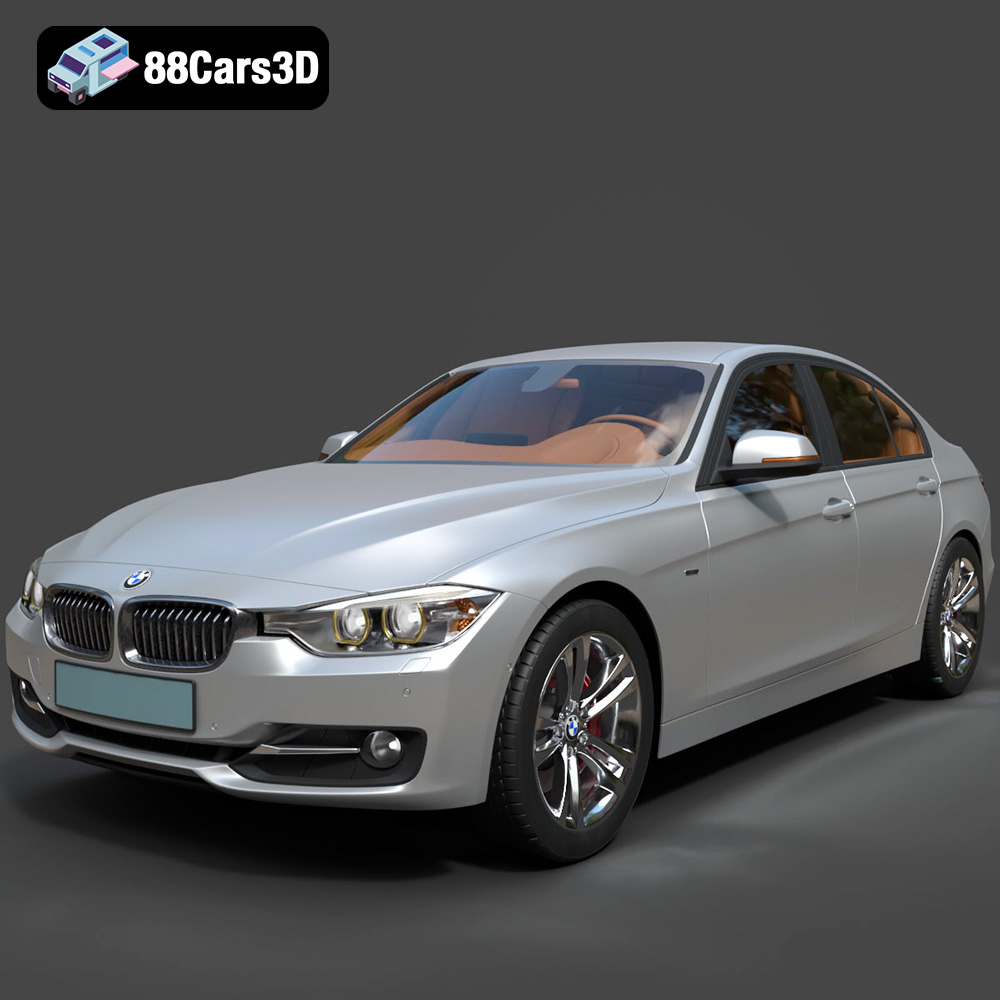
BMW 3 F30 3D Model
Texture: Yes
Material: Yes
Download the BMW 3 F30 3D Model featuring a detailed exterior, realistic interior, and optimized mesh. Includes .blend, .fbx, .obj, .glb, .stl, .ply, .unreal, and .max formats for rendering, simulation, and game development.
Price: $10.79
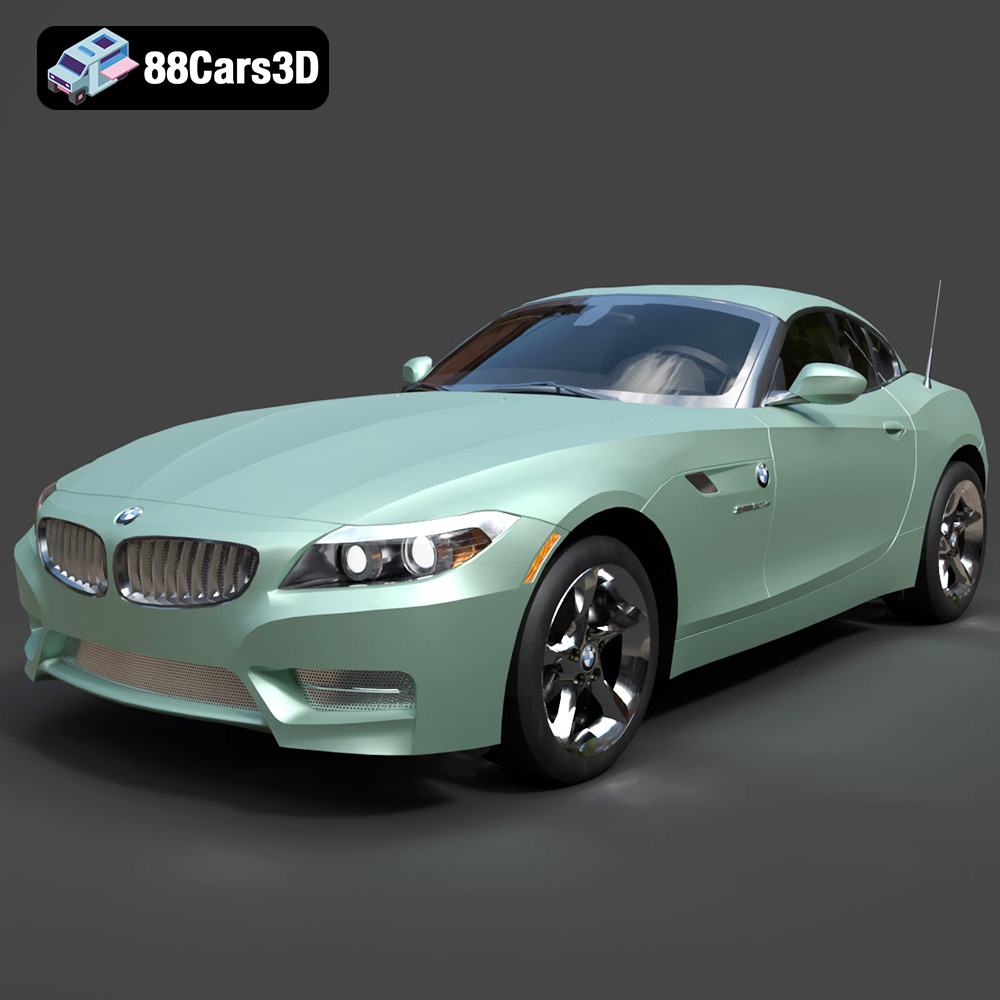
BMW Z4 Roadster E89 2012 3D Model
Texture: Yes
Material: Yes
Download the BMW Z4 Roadster E89 3D Model featuring clean geometry, realistic detailing, and a fully modeled interior. Includes .blend, .fbx, .obj, .glb, .stl, .ply, .unreal, and .max formats for rendering, simulation, and game development.
Price: $13.99

BMW Z4 E85 2005 3D Model
Texture: Yes
Material: Yes
Download the BMW Z4 E85 3D Model featuring clean geometry, realistic detailing, and a fully modeled interior. Includes .blend, .fbx, .obj, .glb, .stl, .ply, .unreal, and .max formats for rendering, simulation, and game development.
Price: $13.99

BMW M3 2024 3D Model
Texture: Yes
Material: Yes
Download the BMW M3 2024 3D Model featuring clean geometry, realistic detailing, and a fully modeled interior. Includes .blend, .fbx, .obj, .glb, .stl, .ply, .unreal, and .max formats for rendering, simulation, and game development.
Price: $13.99
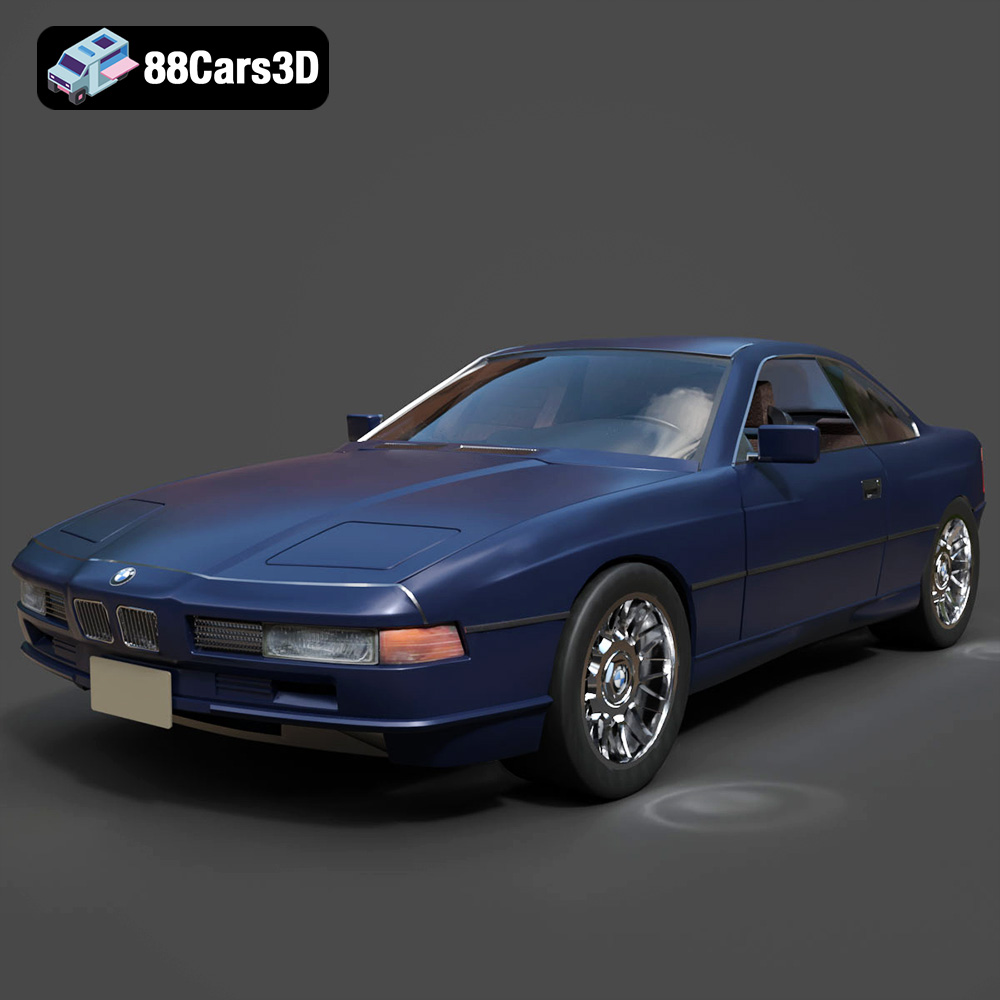
BMW 850i Coupe 1990 3D Model
Texture: Yes
Material: Yes
Download the BMW 850i Coupe 1990 3D Model featuring clean geometry, realistic detailing, and a fully modeled interior. Includes .blend, .fbx, .obj, .glb, .stl, .ply, .unreal, and .max formats for rendering, simulation, and game development.
Price: $13.99
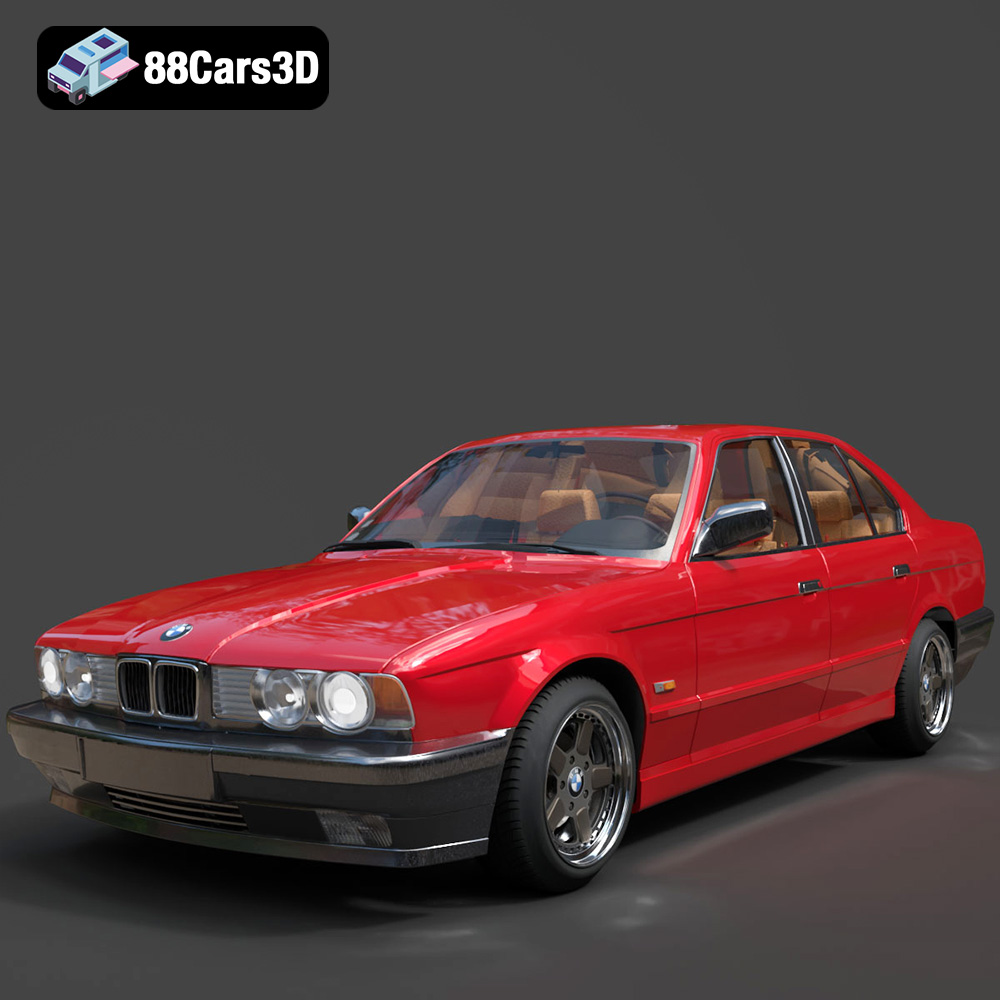
BMW 525i E34 1993 3D Model
Texture: Yes
Material: Yes
Download the BMW 525i E34 1993 3D Model featuring clean geometry, realistic detailing, and a fully modeled interior. Includes .blend, .fbx, .obj, .glb, .stl, .ply, .unreal, and .max formats for rendering, simulation, and game development.
Price: $12.99

BMW 7 Series 2016 3D Model
Texture: Yes
Material: Yes
Download the BMW 7 Series 2016 3D Model featuring luxurious design, detailed interior, and accurate exterior. Includes .blend, .fbx, .obj, .glb, .stl, .ply, .unreal, and .max formats for rendering, simulation, and game development.
Price: $10.79
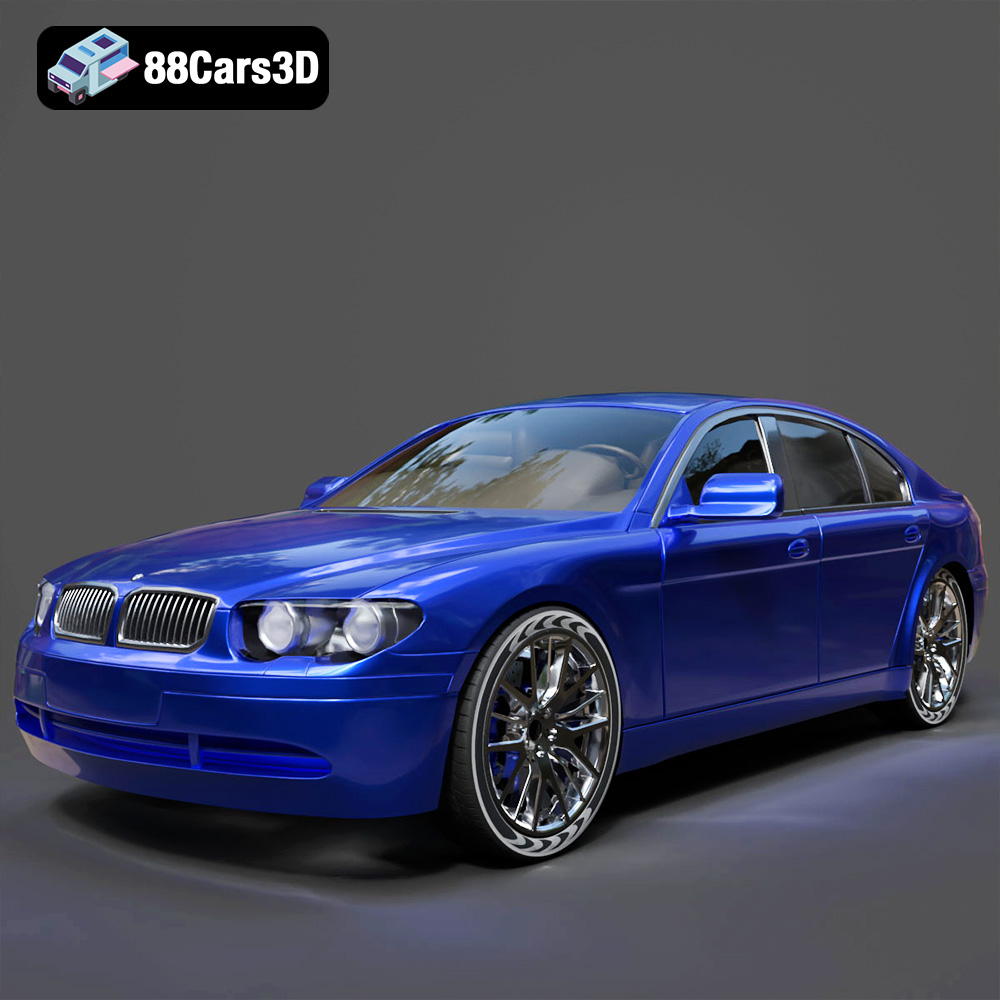
BMW 7 Series 30th Anniversary 3D Model
Texture: Yes
Material: Yes
Download the BMW 7 Series 30th Anniversary 3D Model featuring a meticulously crafted exterior, detailed interior, and realistic wheels. Includes .blend, .fbx, .obj, .glb, .stl, .ply, .unreal, and .max formats for rendering, simulation, and game development.
Price: $35.79
