

The Complete Guide to Normal Maps for Car Models: Enhancing Detail and Realism
In the demanding world of 3D automotive design, game asset development, and high-fidelity visualization, achieving breathtaking realism often comes down to mastering the subtle yet powerful techniques that define modern rendering. Among these,
normal mapping stands as a cornerstone, allowing artists to imbue low-polygon models with an astonishing level of surface detail without incurring the performance costs of excessive geometry. For car models, where every curve, panel gap, and subtle surface imperfection contributes to the overall authenticity, normal maps are not just an advantage—they are an absolute necessity.
This comprehensive guide delves into the intricate world of normal maps, dissecting their fundamental principles, exploring advanced baking workflows, and revealing optimization strategies crucial for real-time applications and cinematic rendering alike. Whether you’re a seasoned 3D artist aiming to push the boundaries of realism, a game developer seeking to create stunning, performant vehicle assets, or an automotive designer visualizing your next concept, understanding normal maps is paramount. We’ll cover everything from preparing your high-polygon source models to integrating normal maps seamlessly into PBR material pipelines, ensuring your 3D car models—whether sourced from platforms like 88cars3d.com or created from scratch—possess unparalleled visual fidelity and efficiency. Prepare to unlock the secrets to truly captivating digital automotive art.
Understanding Normal Maps: The Foundation of Faux Detail
At its core, a normal map is a special type of texture map that stores directional information about the surface normals of a 3D model. Unlike a traditional bump map, which only fakes height by influencing light intensity, a normal map provides true directional lighting information. This means that instead of simply making an area appear raised or lowered, a normal map tells the renderer exactly how light should bounce off a specific point, creating a much more convincing illusion of depth and intricate surface detail. This technique is invaluable for car models, allowing artists to represent subtle panel lines, intricate vents, embossed logos, and even microscopic surface imperfections without adding a single extra polygon to the mesh.
The Science Behind Normal Mapping
Normal maps typically utilize the RGB color channels to encode the X, Y, and Z coordinates of the surface normal vectors. In most common setups (tangent space normal maps), the red channel corresponds to the X-axis (left-right), the green channel to the Y-axis (up-down), and the blue channel to the Z-axis (outward direction, perpendicular to the surface). A neutral blue-purple color, specifically RGB (128, 128, 255), represents a surface normal pointing straight out, indicating no deviation from the base surface. Brighter red values indicate normals pointing right, darker red values indicate normals pointing left; brighter green values point up, darker green values point down. This clever encoding allows the normal map to redirect how light interacts with the surface at a per-pixel level, making a flat surface appear highly detailed and geometrically complex. The result is a visually rich model that performs efficiently in real-time engines and renders beautifully in high-quality offline renderers.
Tangent Space vs. Object Space Normal Maps
While both tangent space and object space normal maps convey surface normal information, they do so in different reference frames, making them suitable for distinct use cases. Tangent space normal maps are by far the most prevalent for car models and general game development. They store normal directions relative to the local tangent space of each vertex on the mesh. This makes them ideal for models that can deform or move, such as car chassis flexing, suspension components, or even character animations. The normal map “bends” with the mesh, maintaining consistent lighting regardless of deformation. They are also highly reusable for multiple instances of an object with different orientations.
Object space normal maps, on the other hand, store normal directions relative to the object’s absolute coordinate system (its local origin). This means they are static and do not deform with the mesh. While less common for deformable objects, they can offer slightly higher precision for completely static, non-deforming objects, and can sometimes be easier to bake without tangent space inconsistencies. For a rigid car body that won’t deform, an object space normal map could theoretically work, but the industry standard and best practice for flexibility and compatibility across different engines and rendering scenarios remains tangent space normal maps due to their adaptability and consistent lighting under deformation. Modern rendering pipelines are optimized for tangent space, making it the default choice for automotive assets.
Mastering High-Poly to Low-Poly Baking Workflows
The magic of normal maps largely stems from the baking process—transferring intricate surface detail from a high-polygon source model to a low-polygon target mesh. This workflow is central to creating optimized 3D car models that maintain stunning visual fidelity. Executing a clean bake requires careful preparation of both the high-poly and low-poly assets, along with a solid understanding of the baking software’s capabilities. A poorly executed bake can introduce artifacts, seams, and inaccurate details, undermining the very purpose of normal mapping.
Preparing Your High-Poly Source Model
The quality of your baked normal map directly correlates with the quality of your high-polygon source model. For car models, this means ensuring every panel gap, vent, bolt head, and sculpted edge is meticulously clean and accurately represented. The high-poly mesh should have a uniform smoothing group or smooth shading applied, with no hard edges where continuous detail is expected. Avoid non-manifold geometry, self-intersecting faces, or flipped normals, as these will lead to baking errors. A critical technique for complex car assemblies with overlapping parts—such as doors, bumpers, fenders, and trim pieces—is the “exploding mesh” method. By slightly separating these overlapping components in the high-poly model, you prevent normal map data from one part incorrectly bleeding onto another, ensuring a clean bake for each individual element. Once baked, the models can be collapsed back into their original assembled positions. Precision in your high-poly sculpting and modeling translates directly into the fidelity of your final normal map.
Optimizing Your Low-Poly Target Mesh for Baking
The low-polygon target mesh serves as the canvas for your baked normal map and requires equally diligent preparation. Its topology should be clean, with quads preferred where possible, and triangles only used efficiently. Edge flow should broadly follow the contours of the car’s design to facilitate UV mapping and minimize distortion. The mesh density should be sufficient to represent the silhouette of the vehicle accurately, but not so dense that it negates the performance benefits of normal mapping. Crucially, the low-poly model’s UV map must be pristine. Each unique part of the car that requires specific normal map detail (e.g., the main body, interior components, specific decals) should have its own dedicated UV island, minimizing stretching and overlap (unless intentional for repeated elements). Proper UV unwrapping is paramount for avoiding normal map artifacts and ensuring consistent texel density across the model. Software like Blender offers robust UV editing tools, and its official documentation at https://docs.blender.org/manual/en/4.4/modeling/meshes/uv/index.html provides detailed guidance on unwrapping techniques. Finally, setting up a proper “cage” or “projection mesh” during baking is essential. This cage is an inflated version of your low-poly mesh that encompasses the high-poly, ensuring that all details are correctly projected without clipping or gaps. Adjusting the cage precisely can resolve many common baking issues, especially in tight areas or where high-poly details are very close to the low-poly surface. Baking can be performed in various tools, including Substance Painter, Marmoset Toolbag, 3ds Max, Maya, and Blender, each offering specific controls for cage adjustment and output settings. For Blender, the Cycles rendering engine offers powerful baking capabilities, with extensive information available in the official documentation at https://docs.blender.org/manual/en/4.4/render/cycles/baking.html, detailing how to bake various texture types, including normals, from high-poly to low-poly models.
UV Mapping Strategies for Flawless Normal Maps
UV mapping is often described as the unsung hero of texture application, and for normal maps, its importance is amplified tenfold. A well-executed UV layout is not merely about preventing visible seams; it’s about ensuring accurate projection of surface normal information, uniform detail density, and optimal utilization of texture space. For the complex, often organic, and highly reflective surfaces of a car model, strategic UV unwrapping is paramount to achieving a flawless normal map.
Principles of Effective UV Layout for Automotive Assets
The primary goal of UV mapping for normal maps is to minimize stretching and distortion. Any deformation in the UV space will directly translate into distorted normal information, leading to incorrect lighting and an unrealistic appearance. Maintaining a consistent texel density across all UV islands is equally crucial. Texel density refers to the number of pixels per unit of 3D space. If one part of your car (e.g., the hood) has a much lower texel density than another (e.g., a headlight), the normal map detail will appear blurry on the hood and overly sharp on the headlight. Tools like Blender’s UV editor allow you to visualize and normalize texel density across your mesh. Strategic seam placement is another vital principle. For car models, natural hard edges, panel lines, or areas that would naturally be less visible are ideal locations for seams. Avoid placing seams across large, smooth, reflective surfaces like the main body panels, as even a perfectly baked normal map can reveal a subtle seam if the underlying UV cut is poorly positioned. For unique car components that will not be repeated, such as the main body shell, fenders, doors, and unique logos, dedicated unique UV space is required to capture their specific normal map details. However, for repetitive elements like tire treads or certain interior buttons, overlapping UVs can be used to save texture space and improve performance, provided their normal maps are identical.
Advanced UV Techniques for Complex Car Surfaces
For highly detailed or extremely large car models, advanced UV techniques can significantly enhance workflow and final quality. One such technique involves utilizing multiple UV sets. You might have a primary UV set for the main body and general details, and a secondary UV set for decals, grunge, or specific micro-details that need to be layered on top. This offers immense flexibility in material creation and allows for finer control over different types of normal map detail. Another powerful, albeit more complex, technique is the use of UDIMs (U-Dimension). UDIMs allow you to spread a single mesh’s UVs across multiple texture tiles (e.g., 1001, 1002, 1003…), effectively bypassing the traditional 0-1 UV space limitation. This is particularly beneficial for ultra-high-resolution cinematic car models where a single 8K or 16K texture might still not be enough to capture all the desired detail without pixelation. With UDIMs, you could allocate multiple 4K or 8K texture tiles to different parts of the car (e.g., one tile for the hood, another for a door, etc.), achieving staggering detail. While UDIMs require specific software support (like Substance Painter, Mari, Blender, and most major DCC applications), they represent the pinnacle of UV management for high-end assets. For more information on Blender’s robust UV editing capabilities, artists can refer to the official Blender 4.4 documentation at https://docs.blender.org/manual/en/4.4/modeling/meshes/uv/index.html, which covers everything from basic unwrapping to advanced tools for managing complex UV layouts.
Integrating Normal Maps with PBR Materials and Shaders
Normal maps are an indispensable component of any modern Physically Based Rendering (PBR) pipeline. Their ability to simulate geometric detail perfectly complements the realistic lighting and material responses that PBR aims to achieve. Properly integrating normal maps into your PBR shaders is critical to ensuring your car models react authentically to light, showcasing the intricate details baked into their surfaces.
PBR Workflow and Normal Map Compatibility
In a PBR workflow, normal maps primarily influence the direction of surface normals, which in turn dictates how light is reflected and absorbed by the material. They work in conjunction with other PBR textures like Albedo (Base Color), Roughness, and Metallic (or Specular and Glossiness) to define the complete material appearance. When using normal maps in a PBR setup, it’s crucial to understand that they typically represent tangent space normals. This means the normal map data needs to be interpreted correctly by the shader to accurately modify the surface normals in relation to the incoming light and camera. A common pitfall is the incorrect color space assignment for normal maps. Unlike Albedo textures which are typically sRGB, normal maps contain non-color directional data and must be set to a linear color space (often labeled “Non-Color Data” or “Raw” in DCC tools and game engines). Failure to do so will result in an incorrect interpretation of the normal vectors, leading to distorted lighting. A correctly integrated normal map significantly enhances the perceived detail, allowing for smoother reflections and more accurate highlights on the car’s surface, particularly in areas like car paint, chrome trim, and interior leathers.
Crafting Realistic Car Paint and Interior Shaders
Crafting realistic car paint and intricate interior materials involves a nuanced application of normal maps. For car paint, a base normal map might capture the subtle undulations of the body panels and sharp creases. This can then be layered with finer detail normal maps that introduce micro-scratches, dust, or even a subtle orange-peel effect common in automotive finishes. Procedural normal maps, generated within shader networks using noise patterns or fractals, are excellent for adding these subtle, non-baked surface imperfections that enhance realism without adding to texture memory. For interior components like leather seats, dashboard textures, or carbon fiber trims, normal maps are vital for conveying the tactile feel and intricate patterns of these materials. They can simulate stitching, grain patterns, and woven textures with incredible accuracy. When troubleshooting, common issues include normal map seams, which can be caused by poor UV layout or incorrect tangent space generation during baking; inverted normals, which often manifest as dark, shadowed areas where light should be; and incorrect normal map strength, which can make details appear too exaggerated or too subtle. Many software packages, including Blender, 3ds Max, Maya, and dedicated material editors like Substance Designer and Painter, offer advanced shader graph capabilities to blend and layer multiple normal maps effectively. In Blender, for example, the Principled BSDF shader node, combined with a Normal Map node (set to Non-Color Data), is the standard for integrating baked normal maps, allowing for control over strength and seamless blending with other material properties.
Normal Map Optimization for Game Engines and Real-time Applications
While normal maps are fantastic for adding detail, their effective use in game engines and real-time applications requires careful optimization to maintain high performance. Balancing visual fidelity with strict frame rate targets and memory budgets is crucial, especially for detailed assets like 3D car models.
Performance Considerations in Unity and Unreal Engine
When importing normal maps into game engines like Unity and Unreal Engine, several critical optimizations come into play. Firstly, texture compression is essential. Normal maps are typically compressed using formats specifically designed for normal data, such as DXT5 (BC3) for DirectX-based engines or ETC2 for OpenGL/Vulkan. These formats preserve the directional data better than general-purpose compression, minimizing artifacts while significantly reducing file size and GPU memory footprint. Secondly, enabling mipmaps for normal maps is crucial. Mipmaps are progressively smaller versions of a texture that the engine uses when an object is further away from the camera. This reduces aliasing (jagged edges) and improves rendering performance by sampling smaller textures at a distance. Without mipmaps, the engine would constantly sample the full-resolution normal map, wasting processing power and potentially introducing visual noise. Lastly, managing draw calls and texture memory is vital. Consolidating multiple smaller normal maps into a single texture atlas where possible can reduce draw calls, improving rendering efficiency. However, care must be taken to ensure that the individual normal maps within the atlas still maintain adequate texel density without excessive stretching.
Normal Maps in AR/VR: Ensuring Visual Fidelity and Performance
AR/VR applications present an even stricter set of performance constraints than traditional games, making normal map optimization paramount. Maintaining high, consistent frame rates (e.g., 90 FPS for VR) is critical to prevent motion sickness and ensure an immersive experience. Normal maps play a pivotal role in achieving perceived detail on lower-polygon models, which are often a necessity in AR/VR due to the immense rendering demands. The challenge lies in balancing this perceived detail with the performance budget. Using appropriately sized normal maps for each component of the car model, implementing aggressive texture compression, and careful management of LODs (Levels of Detail) are all more critical than ever. As the user gets closer to an object in AR/VR, higher-resolution normal maps can be swapped in, but these transitions must be smooth to avoid jarring “normal map popping.” File formats like GLB (GL Transmission Format) and USDZ (Universal Scene Description Zip) are increasingly popular for AR/VR as they efficiently package 3D models, PBR materials, and textures, including normal maps, into a single, optimized file for seamless delivery across various platforms. When developing AR/VR car models, artists often prioritize minimal polygon counts and rely heavily on normal maps to carry the bulk of the visual intricacy, ensuring both stunning visuals and uncompromised performance.
Advanced Techniques and Troubleshooting
Moving beyond the basics, advanced normal mapping techniques can elevate the realism of your car models, while effective troubleshooting strategies are indispensable for resolving the inevitable challenges that arise during production.
Sculpting Detail for Normal Maps
While traditional poly-modeling can create hard surface details, for organic imperfections, subtle surface erosion, or highly stylized elements, sculpting is an invaluable tool. Software like ZBrush or Mudbox allows artists to sculpt intricate details onto a high-polygon mesh, which can then be baked down to a normal map for a low-poly counterpart. This workflow is particularly powerful for creating complex vents, subtle dents, micro-scratches, or even unique surface patterns that would be difficult and time-consuming to model geometrically. For example, a car’s engine block or exhaust system might benefit from sculpted heat distortion or subtle welding seam details. The sculpting process allows for artistic freedom and organic realism that greatly enhances the visual fidelity of the final normal map. After sculpting, the high-res mesh is then used as the source for the baking process, projecting all that intricate detail onto the optimized low-poly mesh, maintaining a visually rich asset without the performance overhead.
Common Normal Map Problems and Solutions
Even with careful preparation, normal map issues can surface. One of the most common problems is a tangent space mismatch, where the software used for baking generates tangent space in a different way than the software or game engine used for rendering. This can lead to incorrect lighting, visible seams, or odd shading artifacts. The solution often involves ensuring consistent tangent basis generation across your pipeline (e.g., matching settings for MikkTSpace in Blender to your game engine) or, as a quick fix, flipping the green (Y) channel of the normal map, which is a frequent source of incompatibility between different software conventions. Normal map artifacts, such as stretched pixels, incorrect directions, or visible seams, usually point back to issues with the low-poly’s UVs, the high-poly’s topology (e.g., overlapping faces, inverted normals), or an improperly configured baking cage. Carefully inspecting your UV layout for stretching, ensuring the high-poly mesh is clean, and precisely adjusting the projection cage can resolve most of these issues. Many DCC tools and game engines also offer debugging tools that allow you to visualize surface normals, tangent space, and even the normal map itself in isolation, which can be invaluable for diagnosing problems. Understanding the underlying principles of how normal maps work is key to effectively troubleshooting these complex visual discrepancies.
Normal Maps for 3D Printing and Beyond
While normal maps are purely a visual trick, representing surface detail without altering geometry, their role extends beyond real-time rendering and offline visualization. For 3D printing, normal maps are not directly used to create physical geometry. Any features you want to be physically present on a 3D print (like embossed logos or panel lines) must be modeled geometrically on your high-poly mesh. However, normal maps are crucial for accurately rendering previews and marketing images of your 3D printable models. They ensure that the visual representation of your model, which often includes complex textures and finishes, is faithful to the intended design, even if the actual print will lack those specific “normal mapped” details. In other advanced applications, such as photogrammetry or laser scanning, normal map-like data can be extracted from high-resolution scans to provide fine surface details that complement the broader geometric reconstruction. This allows for incredibly accurate digital representations of real-world objects, where subtle imperfections and material nuances are faithfully captured. Essentially, normal maps continue to be a foundational element in any pipeline seeking to represent intricate surface characteristics efficiently and convincingly.
Conclusion
Normal maps are far more than just another texture—they are a testament to the ingenuity of 3D graphics, offering an unparalleled method for achieving incredible surface detail and realism on optimized polygon counts. For automotive designers, game developers, and visualization specialists, mastering normal maps is not merely a skill but a necessity for creating truly captivating 3D car models. From the subtle panel lines and sharp creases of a vehicle’s exterior to the intricate stitching and textures of its interior, normal maps infuse life and authenticity into every digital curve.
We’ve journeyed from understanding the fundamental science behind normal mapping to navigating the meticulous high-poly to low-poly baking workflows, emphasizing the critical role of pristine UV mapping. We’ve explored the seamless integration of normal maps within PBR material systems, ensuring your car models react realistically to light, and delved into the essential optimization strategies required for both demanding game engines and cutting-edge AR/VR experiences. Finally, we touched upon advanced techniques like sculpting for normal map generation and armed you with practical solutions for common troubleshooting scenarios.
The journey to creating truly hyper-realistic 3D car models is iterative, demanding patience, precision, and an eye for detail. By diligently applying the principles and techniques discussed, you’ll not only enhance the visual fidelity of your assets but also optimize their performance across diverse platforms. Remember that high-quality assets often begin with high-quality source materials, and platforms like 88cars3d.com are excellent resources for acquiring expertly crafted 3D car models that already leverage these advanced techniques. Continue to experiment, refine your workflows, and push the boundaries of what’s possible. The power of normal maps lies in their ability to transform the ordinary into the extraordinary, turning simple meshes into breathtaking digital automotive masterpieces.
Featured 3D Car Models

BMW 7 Series E38 3D Model
Texture: Yes
Material: Yes
Download the BMW 7 Series E38 3D Model featuring its iconic luxury sedan design and classic aesthetics. Includes .blend, .fbx, .obj, .glb, .stl, .ply, .unreal, and .max formats for rendering, simulation, and game development.
Price: $10.79

BMW 6 Series 640i F12 3D Model
Texture: Yes
Material: Yes
Download the BMW 6 Series 640i F12 3D Model featuring a sleek design and detailed interior. Includes .blend, .fbx, .obj, .glb, .stl, .ply, .unreal, and .max formats for rendering, simulation, and game development.
Price: $10.79
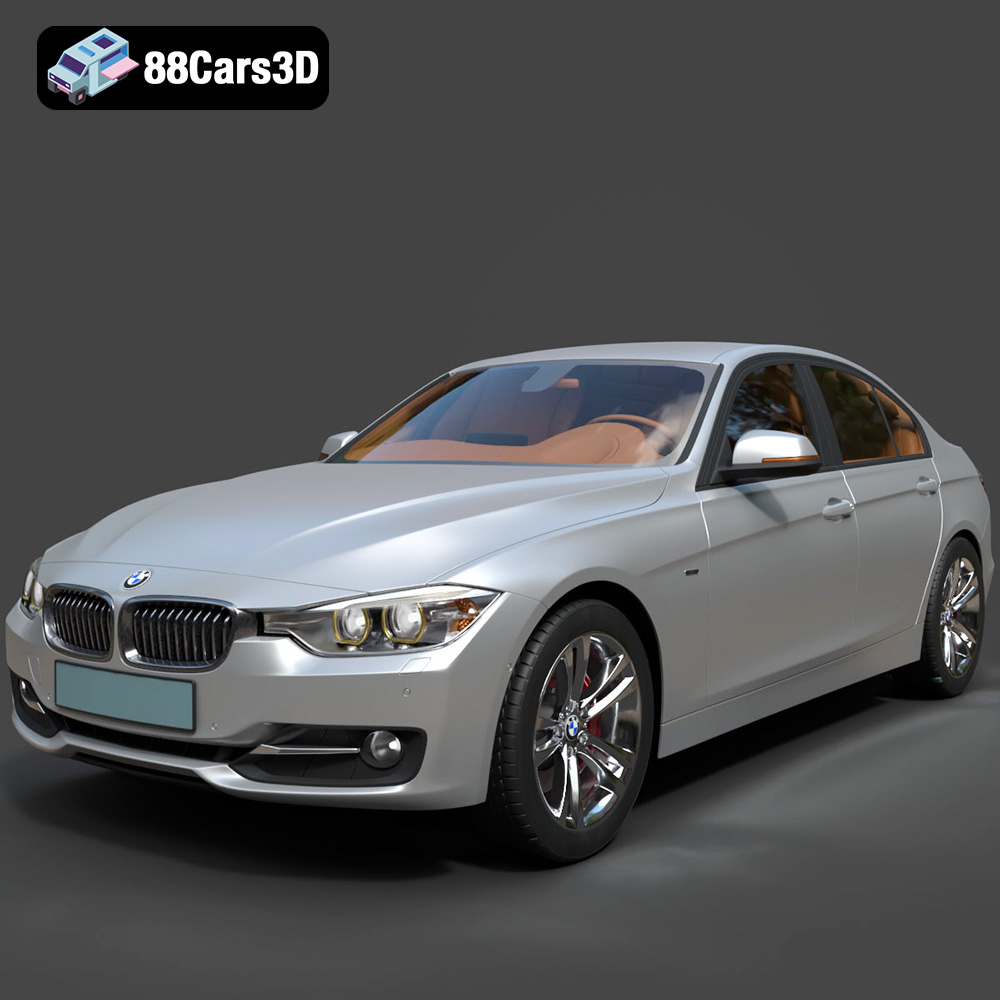
BMW 3 F30 3D Model
Texture: Yes
Material: Yes
Download the BMW 3 F30 3D Model featuring a detailed exterior, realistic interior, and optimized mesh. Includes .blend, .fbx, .obj, .glb, .stl, .ply, .unreal, and .max formats for rendering, simulation, and game development.
Price: $10.79
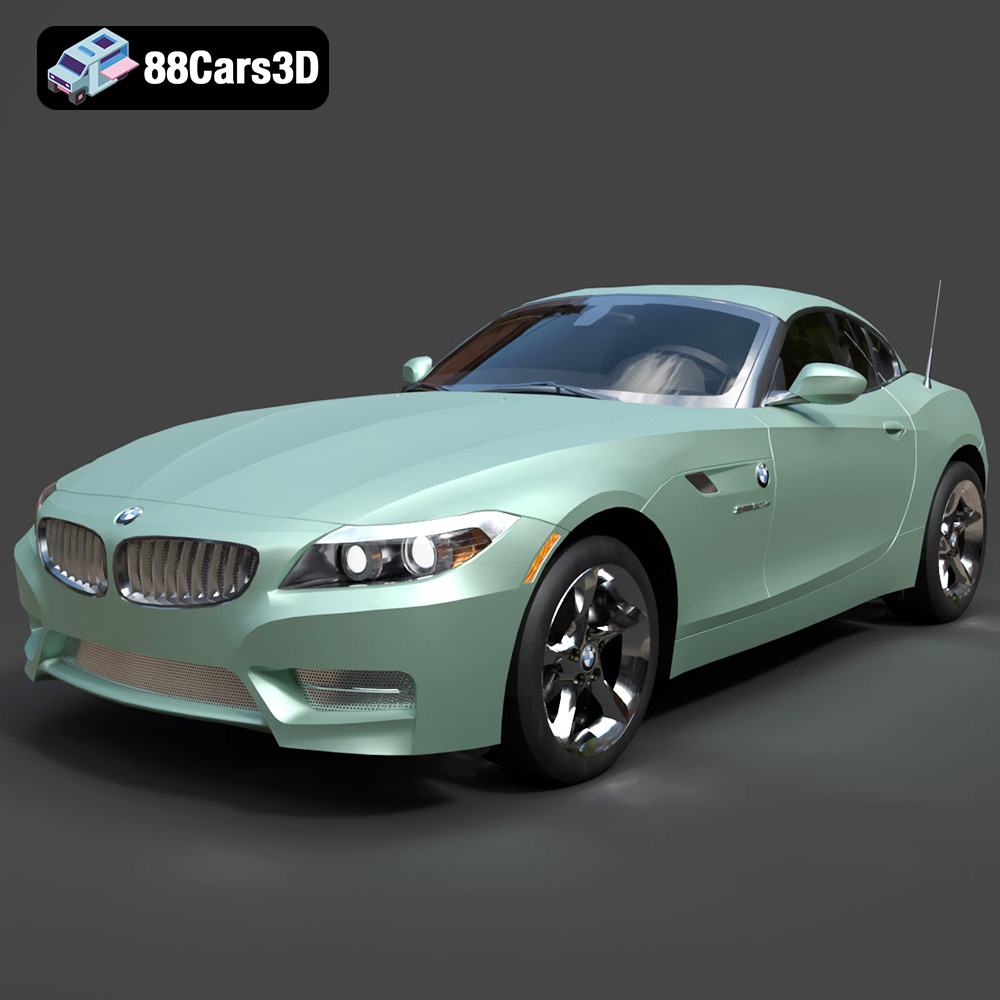
BMW Z4 Roadster E89 2012 3D Model
Texture: Yes
Material: Yes
Download the BMW Z4 Roadster E89 3D Model featuring clean geometry, realistic detailing, and a fully modeled interior. Includes .blend, .fbx, .obj, .glb, .stl, .ply, .unreal, and .max formats for rendering, simulation, and game development.
Price: $13.99

BMW Z4 E85 2005 3D Model
Texture: Yes
Material: Yes
Download the BMW Z4 E85 3D Model featuring clean geometry, realistic detailing, and a fully modeled interior. Includes .blend, .fbx, .obj, .glb, .stl, .ply, .unreal, and .max formats for rendering, simulation, and game development.
Price: $13.99

BMW M3 2024 3D Model
Texture: Yes
Material: Yes
Download the BMW M3 2024 3D Model featuring clean geometry, realistic detailing, and a fully modeled interior. Includes .blend, .fbx, .obj, .glb, .stl, .ply, .unreal, and .max formats for rendering, simulation, and game development.
Price: $13.99
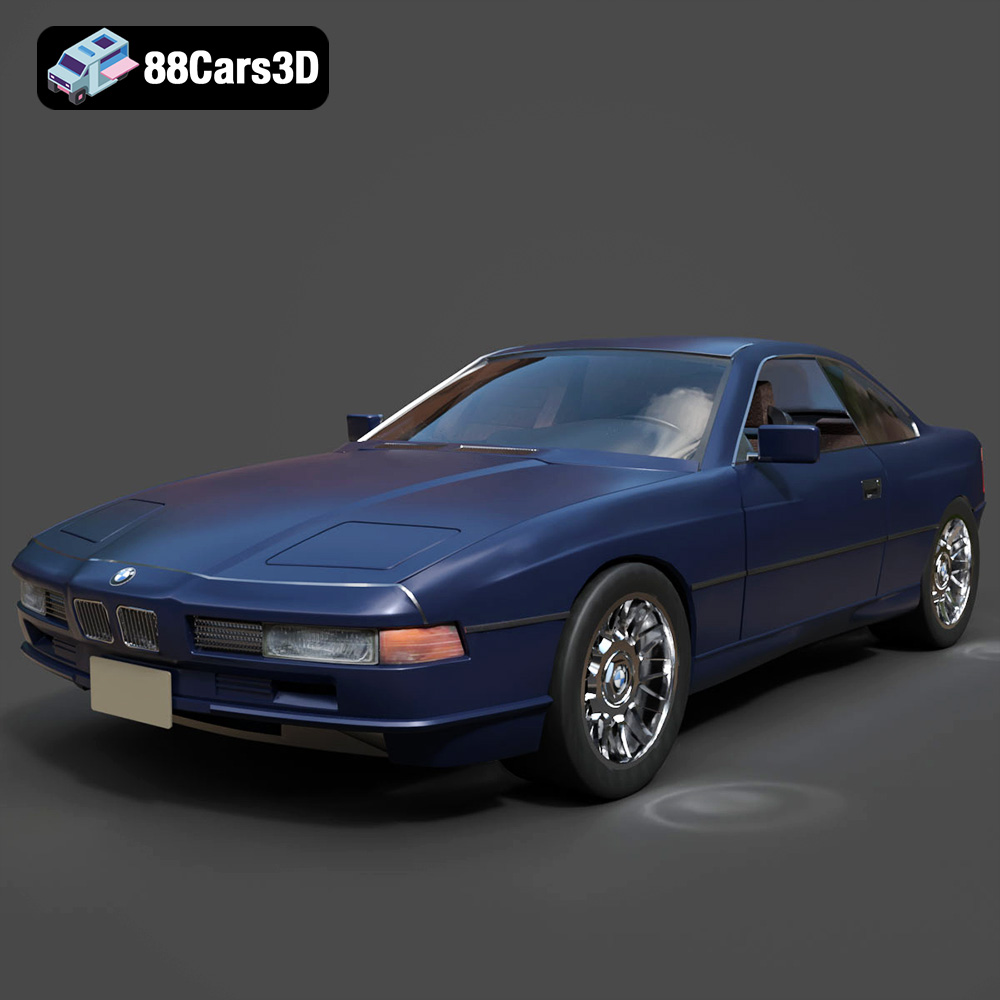
BMW 850i Coupe 1990 3D Model
Texture: Yes
Material: Yes
Download the BMW 850i Coupe 1990 3D Model featuring clean geometry, realistic detailing, and a fully modeled interior. Includes .blend, .fbx, .obj, .glb, .stl, .ply, .unreal, and .max formats for rendering, simulation, and game development.
Price: $13.99
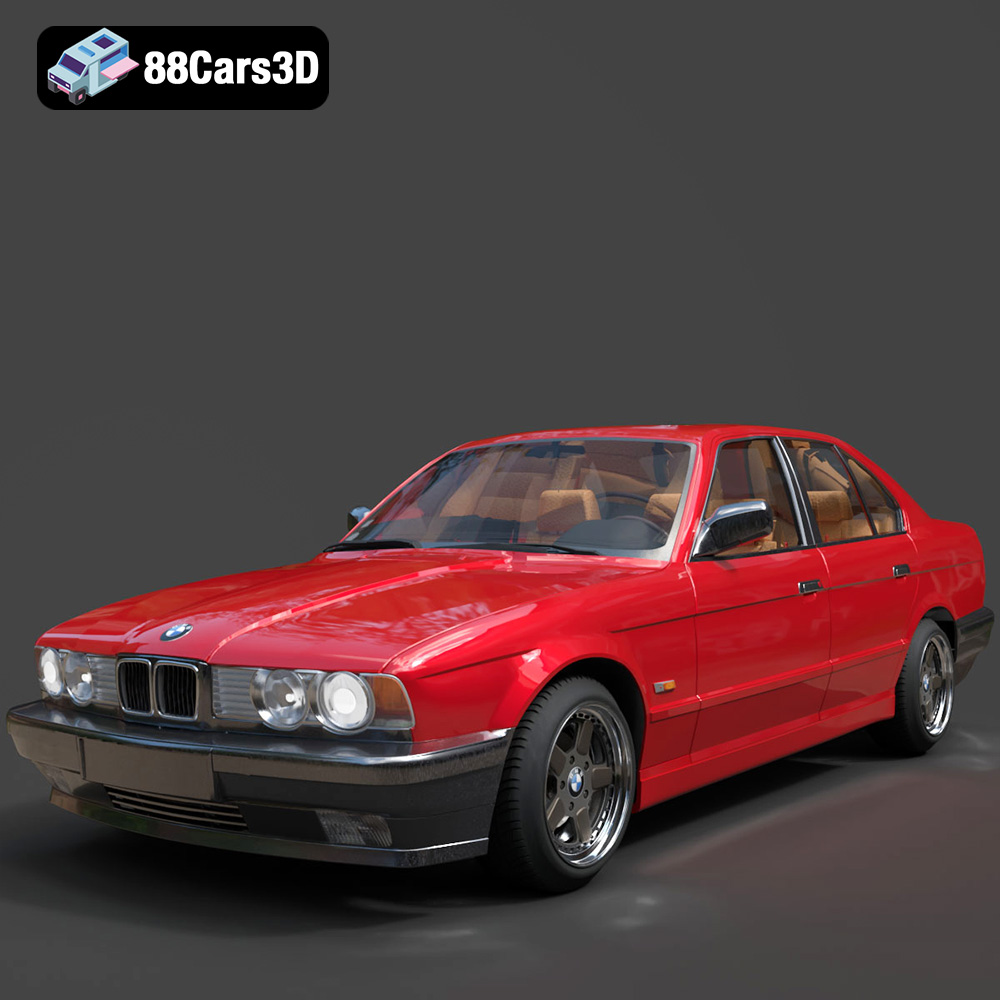
BMW 525i E34 1993 3D Model
Texture: Yes
Material: Yes
Download the BMW 525i E34 1993 3D Model featuring clean geometry, realistic detailing, and a fully modeled interior. Includes .blend, .fbx, .obj, .glb, .stl, .ply, .unreal, and .max formats for rendering, simulation, and game development.
Price: $12.99

BMW 7 Series 2016 3D Model
Texture: Yes
Material: Yes
Download the BMW 7 Series 2016 3D Model featuring luxurious design, detailed interior, and accurate exterior. Includes .blend, .fbx, .obj, .glb, .stl, .ply, .unreal, and .max formats for rendering, simulation, and game development.
Price: $10.79
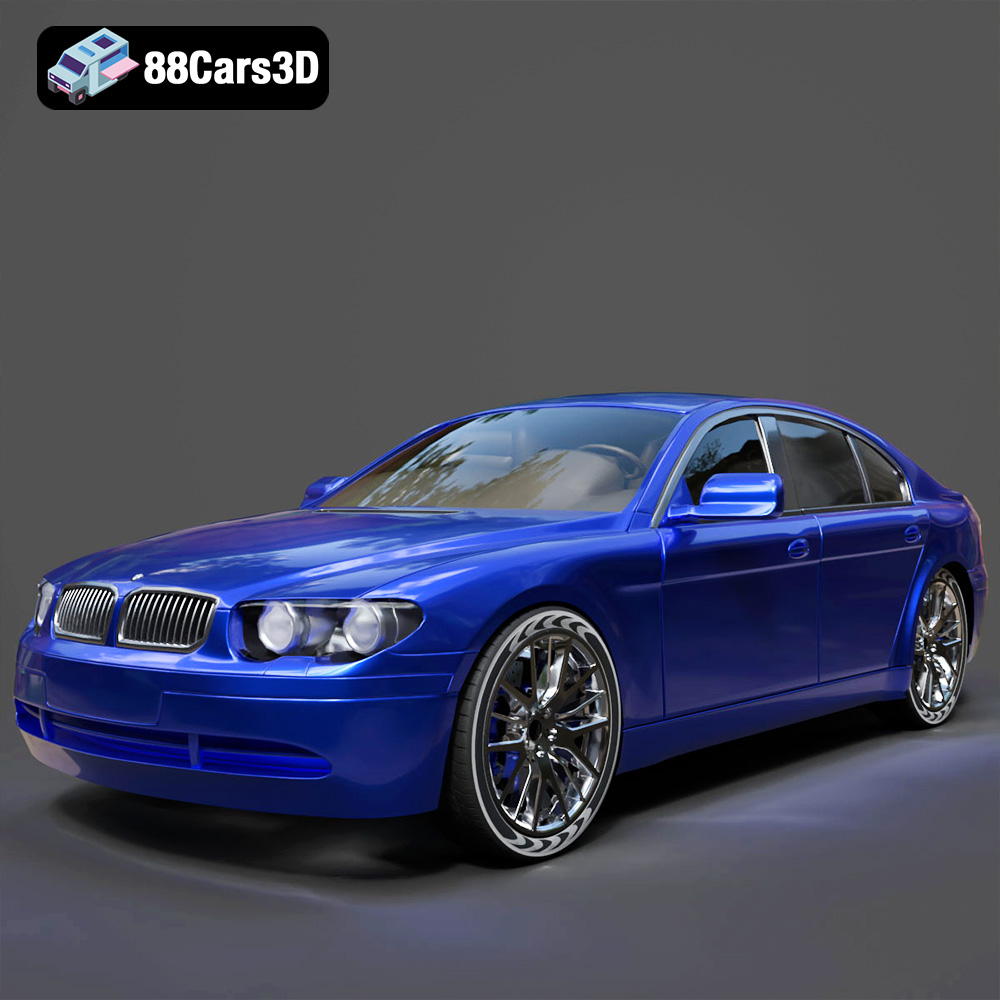
BMW 7 Series 30th Anniversary 3D Model
Texture: Yes
Material: Yes
Download the BMW 7 Series 30th Anniversary 3D Model featuring a meticulously crafted exterior, detailed interior, and realistic wheels. Includes .blend, .fbx, .obj, .glb, .stl, .ply, .unreal, and .max formats for rendering, simulation, and game development.
Price: $35.79
