

Mastering Aerodynamic Car Body Panels in 3D: A Comprehensive Guide for Automotive Artists
The sleek, sculpted lines of a high-performance vehicle are more than just aesthetic marvels; they are a testament to the intricate dance between design and aerodynamics. Every curve, vent, and spoiler plays a crucial role in how a car interacts with the air around it, influencing everything from speed and stability to fuel efficiency. For 3D artists, translating these complex, aerodynamically optimized forms into digital models is a challenge that demands precision, technical understanding, and artistic finesse. Whether you’re crafting assets for photorealistic renders, immersive game environments, or cutting-edge AR/VR experiences, the quality of your car body panels—especially their aerodynamic fidelity—can make or break the realism of your project.
This comprehensive guide delves deep into the technical workflows and best practices for modeling aerodynamic car body panels. We’ll explore the foundational principles of automotive aerodynamics, advanced modeling techniques that ensure surface continuity and realism, efficient UV mapping strategies, and the intricacies of PBR material creation for that perfect automotive finish. Furthermore, we’ll tackle critical aspects like rendering optimization, game engine integration, and considerations for emerging applications such as AR/VR and 3D printing. By the end of this article, you’ll be equipped with the knowledge to sculpt digital vehicles that not only look stunning but also convey the true engineering prowess of their real-world counterparts.
Understanding Automotive Aerodynamics & Design Principles in 3D
Before a single polygon is placed, a thorough understanding of automotive aerodynamics is paramount. It’s not enough to simply copy a reference; a true master understands why a curve is shaped a certain way. Aerodynamic design is a discipline focused on minimizing drag—the resistance a vehicle experiences moving through air—while often generating downforce, which helps keep the car stable and provides grip at high speeds. Features like smooth, continuous surfaces reduce airflow separation, minimizing turbulence and drag. Elements such as diffusers, spoilers, and vents are strategically placed to manage airflow, cool components, or generate controlled downforce.
Key Aerodynamic Concepts for 3D Artists
- Drag: The force resisting forward motion. In 3D, this translates to the need for seamless, unbroken surfaces, especially on the front and top of the vehicle. Sharp corners or abrupt changes in geometry can create significant drag.
- Lift vs. Downforce: Lift pulls the car upwards, reducing tire grip. Downforce pushes it into the road, enhancing grip and stability. Spoilers, wings, and underbody diffusers are designed to generate downforce, and their precise angles and forms must be replicated faithfully in 3D to convey their function.
- Airflow Separation: When air detaches from a smooth surface, it creates turbulent eddies, increasing drag. A primary goal of aerodynamic design is to maintain laminar (smooth, attached) flow over as much of the car’s surface as possible. For 3D artists, this means obsessing over surface continuity and avoiding kinks or wobbles in your mesh.
- Vents and Ducts: These aren’t just aesthetic; they channel air for cooling brakes, engines, or to reduce pressure buildup, which can cause lift. Modeling these with accurate internal structures, even if simplified, adds significant realism.
Translating Real-World Design to Digital Models
The journey from a physical car to a digital masterpiece begins with meticulous data gathering. High-resolution reference images from multiple angles, blueprints, and even available CAD data are invaluable. The challenge then lies in translating these 2D references into a 3D form that respects the original design’s intent and aerodynamic properties. This demands a focus on surface continuity—how smoothly one surface transitions into another. Designers often refer to G0, G1, G2, and G3 continuity, representing different levels of smoothness:
- G0 (Positional): Surfaces meet at a common edge.
- G1 (Tangential): Surfaces meet and share the same tangent direction, meaning no sharp corners.
- G2 (Curvature): Surfaces meet, share tangents, and have the same rate of curvature change. This is critical for automotive surfaces, as it ensures reflections flow seamlessly.
- G3 (Torsion/Acceleration): Surfaces meet, share tangents, have the same curvature, and the same rate of curvature change. This is the highest level of continuity, resulting in flawless reflections.
Achieving G2/G3 continuity in your 3D models means paying obsessive attention to the flow of your polygons and the subtle variations in curves. Even minor deviations can result in “pinching” or “wobbling” in reflections, immediately breaking the illusion of realism.
Foundation: Topology and Edge Flow for Aerodynamic Surfaces
Clean topology is the backbone of any high-quality 3D model, but it’s especially critical for automotive body panels. Aerodynamic surfaces demand impeccable mesh flow to maintain their intended curvature, deform smoothly if animated, and support subdivision surfacing without artifacts. The goal is always a quad-dominant mesh, as quadrilaterals (four-sided polygons) behave predictably under subdivision and are easier to control.
Clean Topology for Smoothness and Deformation
When modeling car body panels, prioritize a consistent and logical edge flow. This means:
- Quad Dominance: Strive for 100% quads on large, curved surfaces. Triangles (3-sided polygons) and N-gons (polygons with more than four sides) can cause undesirable pinching, distortion, or render artifacts, especially when using subdivision surface modifiers.
- Edge Loops: These are continuous rings of edges that flow around the contours of your model. For automotive panels, edge loops are essential for defining the overall shape, controlling hard edges, and providing supporting geometry for subdivision. For instance, around a wheel arch or a door seam, a series of parallel edge loops will help maintain a crisp, yet smooth, transition.
- Supporting Loops: When using subdivision surface modifiers (e.g., Catmull-Clark), additional “supporting loops” placed close to a hard edge will tighten that edge, while loops further away will result in a softer curve. This allows precise control over the sharpness and smoothness of panel edges, which is crucial for defining the distinctive lines of a car.
Consider a car’s hood or fender: the topology should flow smoothly along the length of the panel, with edges running predominantly in the direction of the airflow. This not only looks clean but also makes UV mapping and texturing significantly easier. Avoid abrupt changes in edge direction or dense concentrations of polygons in areas that don’t require high detail, as this can lead to inefficient meshes and rendering issues.
Maintaining Curvature and Surface Continuity
Achieving G2/G3 continuity digitally requires meticulous polygon placement and careful management of poles (vertices where more or less than four edges meet). While 3-edge and 5-edge poles are sometimes unavoidable, their placement should be strategic, ideally in flatter areas or along natural creases, to minimize their visual impact on surface reflections.
- Pole Management: A 3-edge pole can sometimes create a slight depression, while a 5-edge pole can create a slight bulge. Understanding these tendencies allows you to strategically place them where they won’t interfere with critical reflections. Aim to keep poles away from prominent, large reflective surfaces.
- Transitions Between Panels: Where one panel meets another (e.g., fender to door, hood to windshield), maintaining continuity is paramount. This often involves careful alignment of vertices and edges across the gap, ensuring that the curves leading into and out of the gap are consistent.
- Using Modeling Tools for Precision: Software features like Blender’s Shrinkwrap modifier are incredibly useful for projecting new geometry onto an existing high-fidelity surface, helping to maintain curvature. For instance, you could model a basic form and then use Shrinkwrap to conform additional details precisely to its surface. In 3ds Max, the Graphite Modeling Tools offer powerful features like Freeform and Conform to help sculpt and align surfaces with high precision. For Blender users, the official Blender 4.4 documentation provides detailed insights into tools like the Shrinkwrap Modifier, explaining its parameters and use cases for projecting meshes onto target surfaces while maintaining form. You can explore its capabilities at Blender 4.4 Shrinkwrap Modifier Documentation.
Advanced Modeling Techniques for Complex Body Panels
Once the foundational topology is established, advanced techniques come into play to refine the intricate details and ensure the highest fidelity for aerodynamic car body panels. These methods bridge the gap between simple forms and the complex, nuanced shapes that define a vehicle’s character.
Subdivision Surface Modeling for High-Fidelity
Subdivision surface modeling (often referred to as ‘SubD’ or ‘SDS’) is a widely adopted technique for creating smooth, high-resolution organic and hard-surface models from a relatively low-polygon base mesh. It’s particularly effective for automotive surfaces due to its ability to generate seamless curvature and control surface continuity. Applications like 3ds Max, Blender, and Maya all implement various forms of subdivision surfaces, with Catmull-Clark being the most common algorithm for polygonal meshes.
- Pros:
- Smoothness: Generates incredibly smooth, flowing surfaces from a blocky base mesh, naturally achieving G1 and often G2 continuity.
- Control: Allows for fine-tuning of sharpness and softness using control loops (also known as “crease edges” or “holding edges”). By adding edge loops close to an existing edge, you can tighten the subdivision, creating a crisp line or panel gap.
- Efficiency: You can model complex shapes with fewer polygons in the base mesh, which is easier to manipulate and keep clean. The high polygon count is only generated at render time or when the modifier is applied.
- Cons:
- Topology Dependence: Highly reliant on clean, all-quad topology. N-gons or poorly flowing edge loops will lead to artifacts like pinching or bulging upon subdivision.
- Predictability: Requires experience to predict how the base mesh will subdivide.
Achieving G2/G3 continuity, especially visible in reflections, often involves a combination of very precise control loop placement and careful attention to the distance and weighting of vertices to ensure the curvature transitions are perfectly smooth. While NURBS (Non-Uniform Rational B-Splines) are a mathematically precise way to achieve extremely high levels of continuity, polygonal subdivision modeling has evolved to a point where it can rival NURBS for visual fidelity in many production pipelines, especially for real-time applications.
Sculpting and Detailing for Aerodynamic Features
While poly modeling is excellent for primary forms, sculpting can be invaluable for adding subtle, high-frequency details that enhance aerodynamic realism without excessively bloating the base mesh. This often involves a workflow where details are sculpted on a high-resolution mesh and then “baked” as normal maps onto a lower-polygon game-ready or render-optimized mesh.
- When to Sculpt:
- Subtle Vents: Intricate vent patterns or meshes that are difficult to model geometrically.
- Custom Aero Elements: Unique, organically shaped aerodynamic features that are not perfectly geometric, such as a sculpted diffuser fin or a complex intake scoop.
- Surface Imperfections: For extreme realism, subtle dents, scratches, or manufacturing imperfections can be sculpted and baked.
- Normal Map Baking: This technique captures the surface detail (the direction of each point on the surface) from a high-polygon sculpted mesh and transfers it to a low-polygon mesh as a texture map. When applied to the low-poly model, the normal map simulates the high-poly detail, making flat surfaces appear complex and volumetric without adding actual geometry. This is a cornerstone technique for game assets and real-time visualization.
- Creating Realistic Panel Gaps and Creases: Rather than relying solely on geometry for every panel gap, which can be poly-intensive, normal maps can effectively simulate the depth of a panel gap. For critical, prominent gaps, geometric accuracy is preferred. However, for subtle creases or minor panel separations, baking from a high-poly sculpt can offer significant performance benefits. Tools like ZBrush, Mudbox, and Blender’s sculpting mode are excellent for these tasks.
UV Mapping and PBR Materials for Realistic Aerodynamic Finishes
Once the geometry of your aerodynamic car body panels is perfected, the next crucial step is to prepare them for realistic texturing and shading. This involves efficient UV mapping and the creation of physically based rendering (PBR) materials that accurately simulate the complex properties of automotive paint, glass, and metals.
Efficient UV Mapping for Car Body Panels
UV mapping is the process of flattening the 3D surface of your model into a 2D space, allowing a 2D texture to be applied. For complex car surfaces, good UVs are critical to prevent distortion, optimize texture usage, and simplify the texturing process.
- Minimizing Seams and Distortion: The goal is to create as few seams as possible while ensuring that the flattened UV islands have minimal stretching or compression. Tools like Blender’s “Smart UV Project” or 3ds Max’s “Unwrap UVW” modifier offer various projection methods. For large, curved panels like hoods or roofs, planar projection followed by careful relaxation can work well. The challenge is often to hide seams in less visible areas or along natural panel breaks.
- Maximizing Texel Density: Texel density refers to the number of texture pixels per unit of 3D space. Consistently high texel density across all visible parts of your car ensures uniform detail. Larger, more prominent panels should generally have more UV space allocated to them. If certain areas like grilles or emblems require finer detail, they might need their own UV islands with increased scale.
- Multiple UV Sets: For advanced workflows, multiple UV sets can be used. For example, one UV set for primary PBR textures (color, roughness, metallic), and another for unique decals, grime, or lightmap baking. This provides greater flexibility and allows for layering different types of surface information without conflict.
- Shared Textures: For components that are identical or mirrored (e.g., left and right side mirrors, or repeating patterns on grilles), overlapping UVs can save texture memory. This means both instances use the same texture space, effectively sharing the texture data. This is a common optimization technique for game assets.
Crafting PBR Shaders for Automotive Paint
Physically Based Rendering (PBR) materials are essential for achieving photorealistic results. They simulate how light interacts with surfaces in a physically accurate way, leading to consistent and believable results across different lighting environments. Automotive paint, with its complex layered appearance, is an excellent candidate for PBR.
- Understanding PBR Maps:
- Albedo/Base Color: The fundamental color of the surface, excluding reflections or shadows.
- Metallic: A grayscale map (0 to 1) indicating how metallic a surface is. Car paint typically isn’t metallic in the PBR sense, but the clear coat behaves like a dielectric. Chrome and other metal accents will be highly metallic.
- Roughness: A grayscale map (0 to 1) indicating the microscopic surface imperfections that scatter light. A value of 0 is perfectly smooth (like highly polished chrome), while 1 is completely rough (like matte paint). Automotive clear coats will have very low roughness values.
- Normal Map: Stores directional information about surface bumps and details, allowing a low-poly surface to appear highly detailed.
- Ambient Occlusion (AO): Simulates soft shadows where surfaces are close together, enhancing perceived depth.
- Layering for Automotive Paint: Realistic car paint is often a layered shader. It typically consists of a base coat (the primary color, often with metallic flakes) underneath a clear coat (a highly reflective, very smooth dielectric layer). Modern shader networks in tools like Blender’s Shader Editor, 3ds Max’s Slate Material Editor, or Maya’s Hypershade allow for this layering, using techniques like ‘mix’ or ‘blend’ nodes to combine properties.
- Achieving Reflections and Refractions: The clear coat layer needs very low roughness for sharp, mirror-like reflections. Glass requires accurate Index of Refraction (IOR) values (around 1.5 for common glass) and proper transparency/translucency. Fresnel reflections are crucial—the phenomenon where surfaces reflect more light at glancing angles and absorb more when viewed head-on. PBR shaders inherently handle Fresnel, but understanding its effect helps in judging realism.
- Metallic Flakes: For metallic car paints, simulating the tiny flakes within the base coat often involves using a subtle normal map or procedural noise combined with careful roughness variations.
Rendering and Game Engine Optimization
Bringing your meticulously modeled and textured aerodynamic car to life requires specialized rendering techniques for stunning visuals and robust optimization strategies for seamless integration into real-time environments. The demands for a static render differ significantly from those for an interactive game or AR/VR experience.
Lighting and Environment for Showcase Renders
Photorealistic automotive rendering is an art form that hinges on superior lighting and environment setup. The way light interacts with the car’s surfaces, especially its highly reflective aerodynamic panels, dictates its visual appeal.
- HDRI Lighting: High Dynamic Range Image (HDRI) maps are the cornerstone of modern automotive rendering. They provide both realistic illumination and intricate reflections, capturing the nuanced lighting of a real-world environment (e.g., a studio, a sunny street, a cloudy sky). Using a high-quality 32-bit HDRI map (4K, 8K, or even 16K resolution) ensures rich, detailed reflections that bring out the G2/G3 continuity of your panels.
- Studio Lighting vs. Outdoor Environments:
- Studio Setup: Often involves a seamless backdrop and a combination of softbox lights (area lights), rim lights, and fill lights to highlight specific curves and create dramatic reflections. The key is controlling reflections to sculpt the car’s form.
- Outdoor Environment: Combines an HDRI with carefully placed supplementary lights (e.g., a dominant sun lamp, subtle fill lights) to enhance shadows or bounce light. Crucially, the car’s shadow needs to integrate realistically with the ground plane.
- Global Illumination (GI): All modern renderers (Corona Renderer, V-Ray, Cycles in Blender, Arnold) rely heavily on GI to simulate how light bounces around a scene, creating soft, natural illumination and subtle color bleeding. Proper GI settings are vital for making your car feel “grounded” in its environment.
- Avoiding Artifacts: Pay attention to noise in reflections or shadows, which can be caused by insufficient sampling or low-quality light sources. Adjusting render settings, light samples, and material roughness can mitigate these issues. For Cycles in Blender, understanding its sampling methods (Path Tracing, Branched Path Tracing) is key to balancing quality and render time.
Game Engine Performance for Automotive Assets
For interactive applications like games or AR/VR, optimization is paramount. High-fidelity models must be adapted to run smoothly in real-time without sacrificing too much visual quality. Platforms like Unity and Unreal Engine offer powerful tools for this.
- Level of Detail (LODs): This is a critical optimization technique. Instead of using a single high-resolution model, multiple versions (LODs) are created—each with a progressively lower polygon count. The game engine automatically switches between these LODs based on the camera’s distance from the object. A common setup might be LOD0 (full detail), LOD1 (50-70% poly reduction), LOD2 (20-30% poly reduction), and LOD3 (10% or billboard). This significantly reduces the computational load, especially in scenes with many vehicles.
- Draw Call Reduction: A draw call occurs every time the GPU is instructed to draw something. Each material, mesh, or texture can contribute to draw calls. To optimize:
- Texture Atlasing: Combine multiple smaller textures into one larger texture atlas. This reduces the number of materials and, consequently, draw calls.
- Mesh Combining: Merge multiple small meshes into larger ones where appropriate (e.g., combining all interior parts into one mesh) to reduce draw calls.
- Collision Meshes: For physics simulations in games, simplified collision meshes are used instead of the high-poly visual mesh. These are typically much lower poly and do not need to be visually accurate, only volumetrically representative.
- Mobile AR/VR Considerations: For mobile platforms (e.g., Oculus Quest, smartphones running ARKit/ARCore), poly count limits are much stricter (often tens of thousands for an entire vehicle). Texture resolutions might be lower (e.g., 2K instead of 4K or 8K), and simpler shaders (single-pass, mobile-friendly PBR) are often required. Baking static lighting can also significantly reduce runtime computation. When sourcing models from marketplaces such as 88cars3d.com, it’s always advisable to check if game-ready versions with pre-made LODs and optimized textures are available, as this saves immense development time.
File Formats, AR/VR, and 3D Printing Considerations
The versatility of your 3D car models extends beyond traditional rendering and game engines to emerging technologies like Augmented Reality (AR), Virtual Reality (VR), and 3D printing. Each application has specific requirements regarding file formats, mesh preparation, and optimization, necessitating careful planning during the modeling process.
Choosing the Right File Format
The choice of file format dictates compatibility, feature preservation, and ease of use across different software and platforms. Understanding their strengths and weaknesses is crucial for a smooth workflow.
- FBX (Filmbox):
- Strengths: Industry-standard for interchange between 3D software (3ds Max, Maya, Blender) and game engines (Unity, Unreal Engine). Supports meshes, materials, textures, animations, and skeletal rigs.
- Considerations: Can sometimes have issues with material interpretation between different software versions, requiring manual re-setup. Best for animated or interactive assets.
- OBJ (Wavefront Object):
- Strengths: Highly universal and widely supported. Excellent for transferring static mesh data and UVs. Stores vertex, normal, UV, and face data.
- Considerations: Does not support animations, rigs, or advanced material properties directly (only basic diffuse color and texture references via an accompanying .MTL file). Good for sharing base geometry.
- GLB/glTF (GL Transmission Format):
- Strengths: An open, royalty-free specification designed for efficient transmission and loading of 3D scenes and models by engines and applications. Excellent for web-based AR/VR, interactive 3D viewers, and modern game development. Supports PBR materials, animations, and scene hierarchy. GLB is a binary version that bundles everything into a single file.
- Considerations: Becoming a standard, but older software might require plugins for full support. Ideal for lightweight, web-optimized delivery.
- USDZ (Universal Scene Description Zip):
- Strengths: Apple’s proprietary format for AR experiences on iOS devices. Optimized for mobile performance and integrates seamlessly with ARKit. Supports PBR materials and animations.
- Considerations: Primarily for Apple’s ecosystem. Conversion from other formats often requires specific tools or workflows.
- Maintaining PBR Materials and Rigging: When converting between formats, always verify that your PBR material properties (metallic, roughness, normal maps) and any rigging/skinning information are correctly transferred. Sometimes, you may need to re-link textures or re-apply shaders in the destination software.
Preparing Models for AR/VR and 3D Printing
Each of these cutting-edge applications places unique demands on your 3D models. Meticulous preparation is the key to a successful deployment.
- AR/VR Optimization:
- Poly Count Reduction: Critical for performance. For mobile AR/VR, aim for target poly counts often ranging from 30,000 to 100,000 triangles for a detailed car, depending on the platform and other scene elements. Use LODs extensively.
- Texture Compression: Use efficient image formats (e.g., JPG, PNG, WebP) and appropriate compression settings to minimize texture memory footprint without sacrificing too much visual quality. Consider texture atlasing to reduce draw calls.
- Single-Pass Shaders: Simplify complex material setups. Mobile AR/VR often prefers simpler shaders that are optimized for performance, sometimes requiring baking complex lighting into textures rather than calculating it in real-time.
- Baking Static Lighting: For environments where lighting is fixed, baking ambient occlusion and indirect lighting into vertex colors or lightmap textures can significantly boost performance.
- Scale and Orientation: Ensure your model is at the correct real-world scale (e.g., 1 unit = 1 meter) and oriented correctly (e.g., Z-up or Y-up) for the target AR/VR platform to avoid scaling issues upon import.
- 3D Printing Preparation and Mesh Repair:
- Watertight Meshes: For 3D printing, your model must be a “manifold” or “watertight” mesh, meaning it has no holes, non-manifold edges, or inverted normals. Every edge must be shared by exactly two faces, forming a completely enclosed volume.
- Wall Thickness: Ensure all parts of your model have sufficient wall thickness to be physically printable. Thin walls can break easily or be too fine for the printer to resolve. Consult printer specifications for minimum wall thickness requirements.
- Mesh Repair Tools: Software like Blender (3D Print Toolbox add-on), Meshmixer, or Netfabb offers robust tools for analyzing and repairing mesh issues, such as filling holes, removing non-manifold geometry, and ensuring correct normal orientation.
- Scale: Convert your model to the desired physical print size.
- Detail Resolution: Understand that extremely fine details in your 3D model may not be reproducible by a 3D printer due to its physical resolution limits.
When looking for high-quality, pre-optimized 3D car models for diverse applications, platforms like 88cars3d.com are an invaluable resource. They often provide models in multiple formats with varying levels of detail, catering to rendering, game development, and even AR/VR, saving artists significant time and effort in the preparation stages.
Conclusion
The journey of modeling aerodynamic car body panels in 3D is a testament to the blend of art, science, and technical skill required in modern visualization. From understanding the fundamental principles of automotive aerodynamics to meticulously crafting clean topology, applying advanced modeling techniques, and creating photorealistic PBR materials, every step contributes to the ultimate realism of your digital vehicle. We’ve explored how meticulous attention to surface continuity and edge flow translates into believable reflections, how efficient UV mapping paves the way for intricate textures, and how the right lighting and environment can elevate a render into a stunning showcase.
Furthermore, we delved into the critical aspects of optimization for real-time environments, leveraging techniques like LODs and texture atlasing for seamless integration into game engines and AR/VR experiences. The discussion on file formats highlighted the importance of choosing the correct vessel for your model, ensuring compatibility and feature preservation across diverse platforms. Finally, we touched upon the unique challenges and preparations required for transforming your digital creation into a tangible object through 3D printing.
Mastering these techniques requires practice, patience, and a keen eye for detail. The demand for high-quality 3D car models continues to grow across industries, from automotive design visualization to cutting-edge game development. By applying the insights and workflows detailed in this guide, you can significantly enhance the quality and realism of your automotive assets. Remember, the pursuit of perfection in 3D is an ongoing journey, and platforms like 88cars3d.com exist to provide a wealth of high-quality resources to aid you on your path. Continue to experiment, learn, and push the boundaries of what’s possible in the exciting world of 3D automotive design.
Featured 3D Car Models

BMW 7 Series E38 3D Model
Texture: Yes
Material: Yes
Download the BMW 7 Series E38 3D Model featuring its iconic luxury sedan design and classic aesthetics. Includes .blend, .fbx, .obj, .glb, .stl, .ply, .unreal, and .max formats for rendering, simulation, and game development.
Price: $10.79

BMW 6 Series 640i F12 3D Model
Texture: Yes
Material: Yes
Download the BMW 6 Series 640i F12 3D Model featuring a sleek design and detailed interior. Includes .blend, .fbx, .obj, .glb, .stl, .ply, .unreal, and .max formats for rendering, simulation, and game development.
Price: $10.79
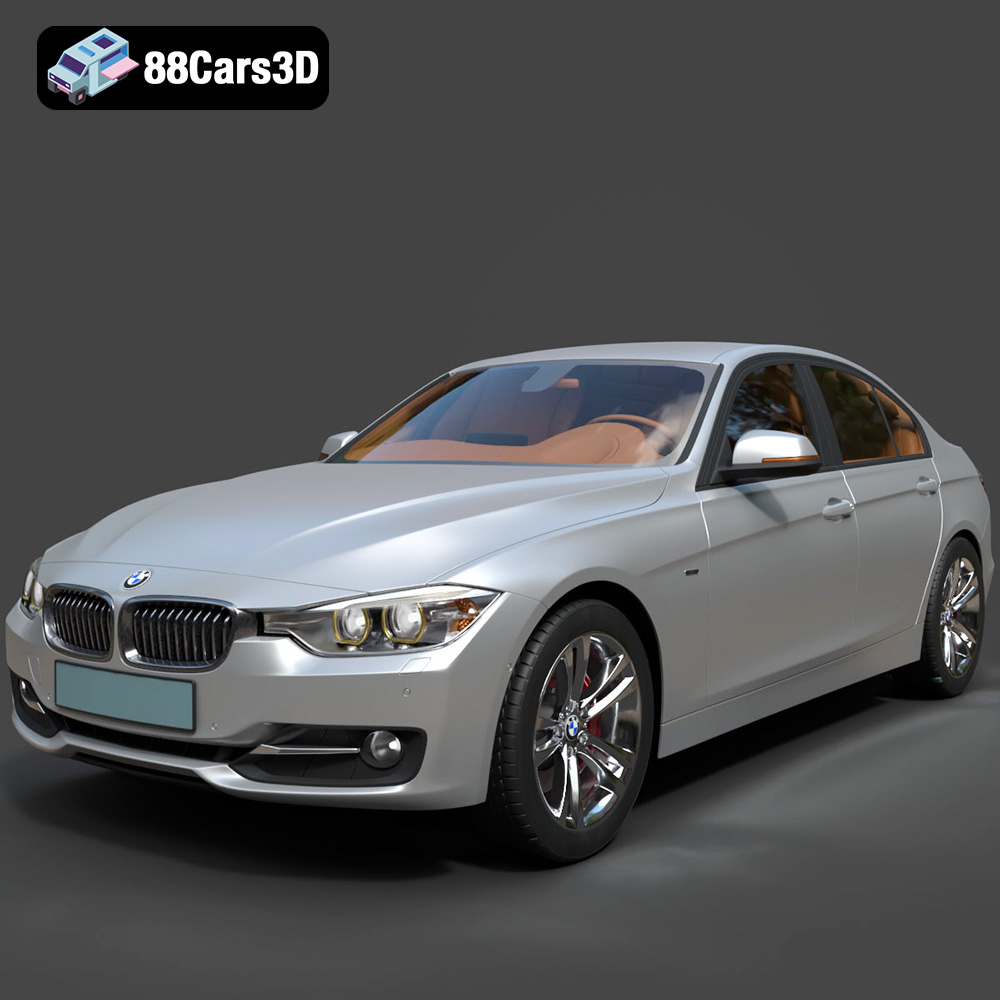
BMW 3 F30 3D Model
Texture: Yes
Material: Yes
Download the BMW 3 F30 3D Model featuring a detailed exterior, realistic interior, and optimized mesh. Includes .blend, .fbx, .obj, .glb, .stl, .ply, .unreal, and .max formats for rendering, simulation, and game development.
Price: $10.79
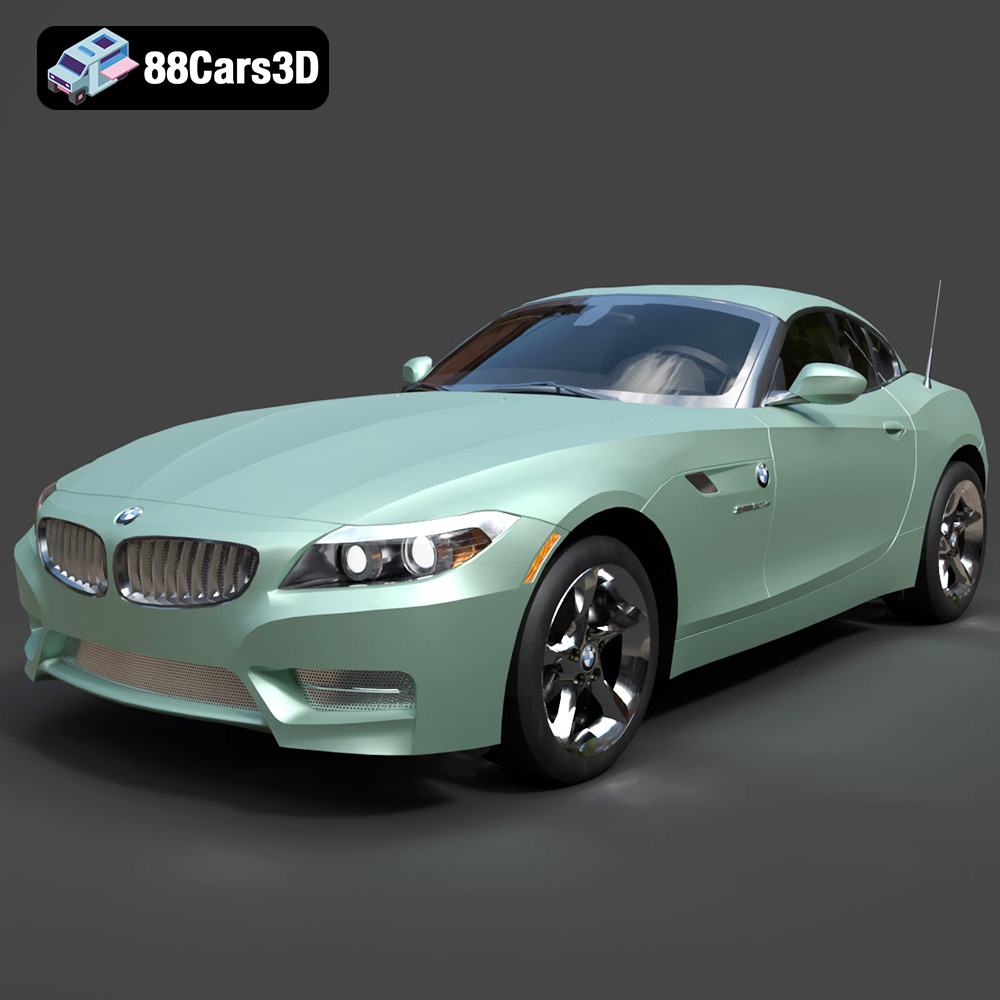
BMW Z4 Roadster E89 2012 3D Model
Texture: Yes
Material: Yes
Download the BMW Z4 Roadster E89 3D Model featuring clean geometry, realistic detailing, and a fully modeled interior. Includes .blend, .fbx, .obj, .glb, .stl, .ply, .unreal, and .max formats for rendering, simulation, and game development.
Price: $13.99

BMW Z4 E85 2005 3D Model
Texture: Yes
Material: Yes
Download the BMW Z4 E85 3D Model featuring clean geometry, realistic detailing, and a fully modeled interior. Includes .blend, .fbx, .obj, .glb, .stl, .ply, .unreal, and .max formats for rendering, simulation, and game development.
Price: $13.99

BMW M3 2024 3D Model
Texture: Yes
Material: Yes
Download the BMW M3 2024 3D Model featuring clean geometry, realistic detailing, and a fully modeled interior. Includes .blend, .fbx, .obj, .glb, .stl, .ply, .unreal, and .max formats for rendering, simulation, and game development.
Price: $13.99
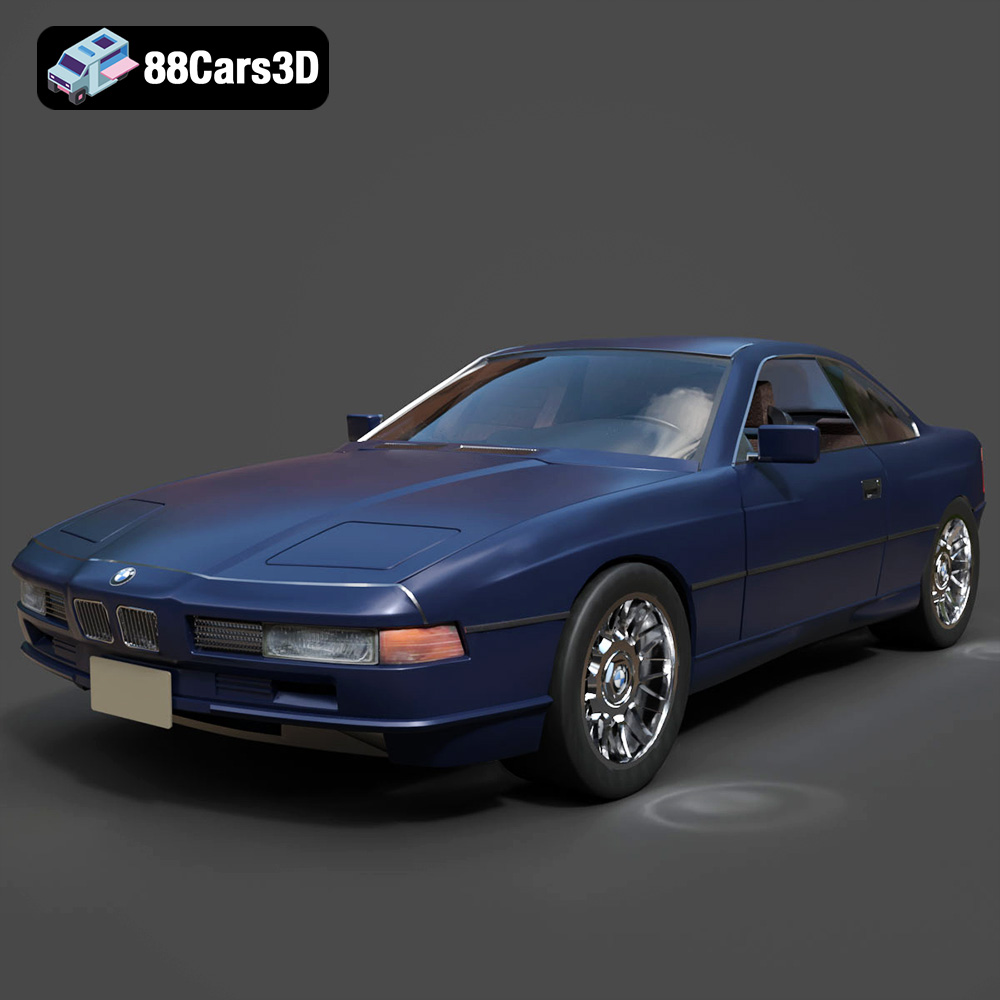
BMW 850i Coupe 1990 3D Model
Texture: Yes
Material: Yes
Download the BMW 850i Coupe 1990 3D Model featuring clean geometry, realistic detailing, and a fully modeled interior. Includes .blend, .fbx, .obj, .glb, .stl, .ply, .unreal, and .max formats for rendering, simulation, and game development.
Price: $13.99
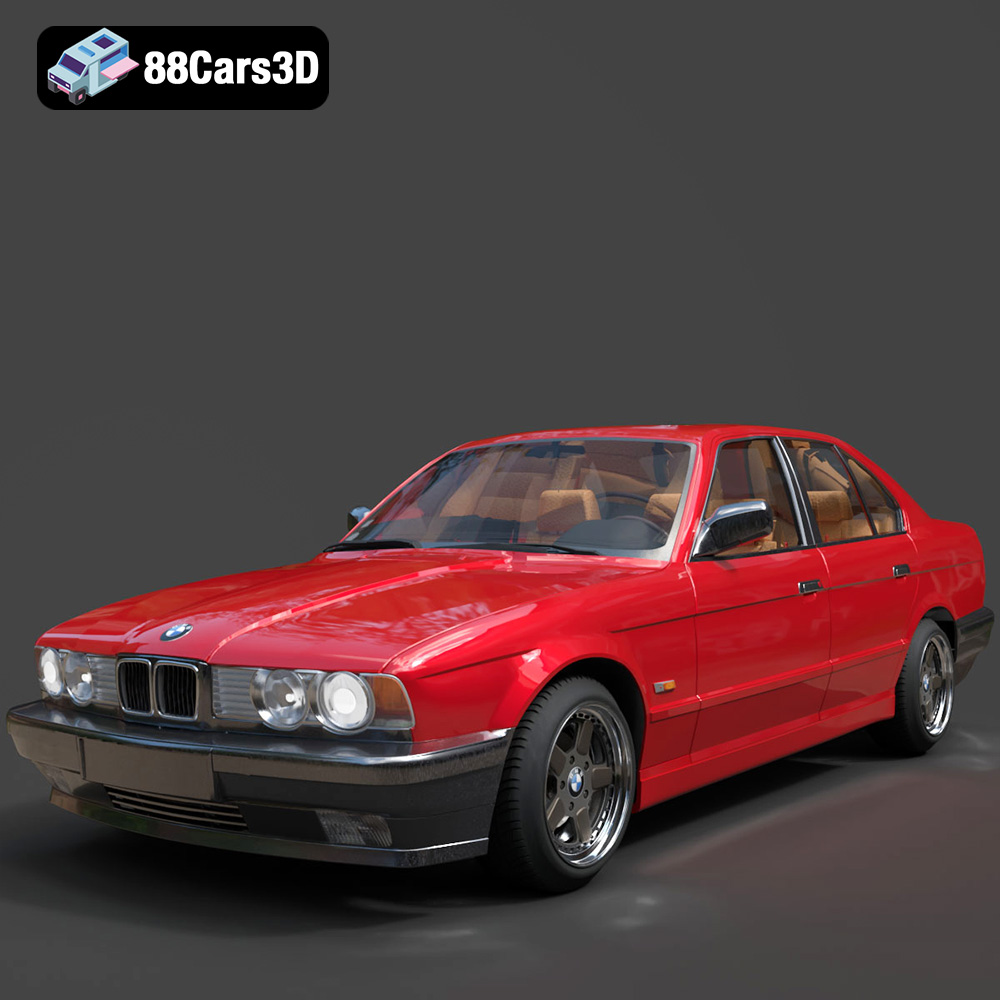
BMW 525i E34 1993 3D Model
Texture: Yes
Material: Yes
Download the BMW 525i E34 1993 3D Model featuring clean geometry, realistic detailing, and a fully modeled interior. Includes .blend, .fbx, .obj, .glb, .stl, .ply, .unreal, and .max formats for rendering, simulation, and game development.
Price: $12.99

BMW 7 Series 2016 3D Model
Texture: Yes
Material: Yes
Download the BMW 7 Series 2016 3D Model featuring luxurious design, detailed interior, and accurate exterior. Includes .blend, .fbx, .obj, .glb, .stl, .ply, .unreal, and .max formats for rendering, simulation, and game development.
Price: $10.79
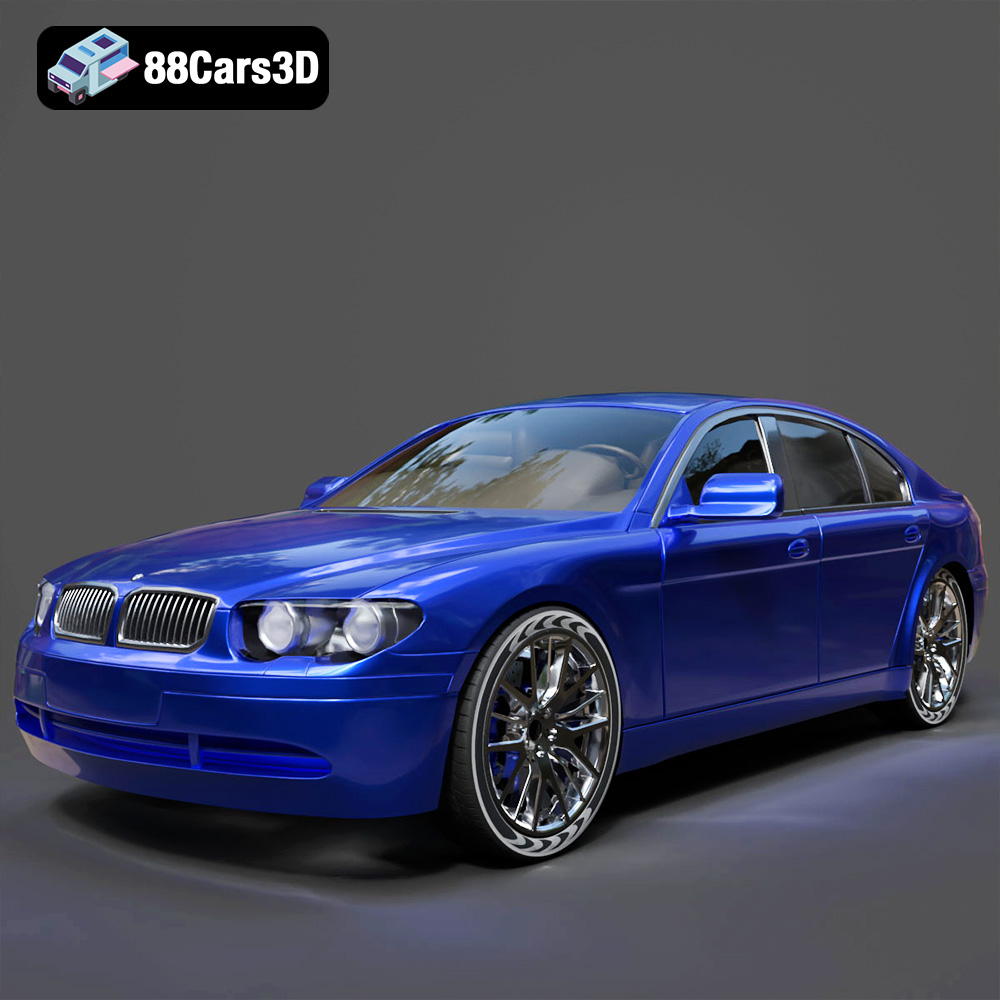
BMW 7 Series 30th Anniversary 3D Model
Texture: Yes
Material: Yes
Download the BMW 7 Series 30th Anniversary 3D Model featuring a meticulously crafted exterior, detailed interior, and realistic wheels. Includes .blend, .fbx, .obj, .glb, .stl, .ply, .unreal, and .max formats for rendering, simulation, and game development.
Price: $35.79
