

The Art of Authenticity: Crafting Realistic Carbon Fiber Materials for 3D Automotive Models
Few materials evoke a sense of high-performance luxury and cutting-edge engineering quite like carbon fiber. Its distinctive woven pattern, deep luster, and incredible strength-to-weight ratio make it a favorite in automotive design, from supercars to racing machines. However, replicating the intricate visual nuances of carbon fiber in 3D is one of the most challenging tasks for any artist. It’s not just about applying a texture; it’s about understanding light interaction, surface anisotropy, and the delicate balance between the woven fibers and the protective clear coat.
This comprehensive guide dives deep into the technical methodologies and artistic principles required to create breathtakingly realistic carbon fiber materials for your 3D automotive models. Whether you’re a seasoned 3D artist, a game developer, or an automotive designer striving for unparalleled visualization, mastering carbon fiber will significantly elevate the quality of your renders. We’ll explore everything from the fundamental properties of carbon fiber and meticulous UV mapping strategies to advanced PBR material creation, software-specific workflows for rendering and real-time engines, and critical optimization techniques. Prepare to unlock the secrets behind that unmistakable carbon fiber sheen and bring an authentic touch to your digital creations, be it for high-end automotive rendering, interactive game assets, or stunning visualization projects.
Understanding Carbon Fiber – The Science Behind the Sheen
To accurately reproduce carbon fiber in 3D, we must first understand its physical properties and how it interacts with light. Carbon fiber isn’t a monolithic material; it’s a composite of woven carbon filaments embedded in a polymer resin, typically topped with a clear protective coating. This layered structure is what gives it its unique visual characteristics, which are often mistakenly simplified in 3D.
The Anatomy of a Weave: Twill, Plain, and Forged
The visual signature of carbon fiber primarily comes from its weave pattern. The most common patterns you’ll encounter in 3D car models and real-world applications are:
- 2×2 Twill Weave: This is arguably the most recognized pattern, characterized by its diagonal ribs, where two warp yarns pass over two weft yarns. It creates a dynamic, light-catching pattern that shifts dramatically with the viewing angle. This weave offers excellent drapability, making it popular for complex curved surfaces found on vehicle body panels, spoilers, and interior trims. When light hits a twill weave, the individual fibers within the diagonal bundles reflect light in a consistent direction, leading to pronounced anisotropic reflections.
- 1×1 Plain Weave: A simpler, more uniform checkerboard pattern where each warp yarn alternately passes over and under a weft yarn. This weave is visually less complex than twill but offers superior stability. It tends to reflect light in a more subdued, less directional manner, though individual fiber anisotropy is still present. It’s often found in structural components or areas where a less flashy appearance is desired.
- Forged Carbon Fiber: A newer, more avant-garde style popularized by high-performance brands. Instead of woven fibers, forged carbon uses small, chopped carbon fiber pieces mixed with resin and compressed under heat and pressure. The result is a mottled, marble-like appearance with no discernible weave pattern. Replicating this requires a completely different approach, focusing on randomized flake normal maps and subtle variations in gloss and color. Its unique visual texture offers a distinct aesthetic for advanced automotive rendering projects.
Understanding these patterns is crucial as they dictate the base texture, normal map, and ultimately, how light will interact with your 3D carbon fiber material.
Optical Properties: Anisotropy and Reflections
The magic of realistic carbon fiber lies in its anisotropic reflections. Anisotropy means that the material’s reflective properties vary depending on the direction of incident light and the viewing angle, often appearing as stretched or directionally oriented highlights. In carbon fiber, this effect is caused by the individual carbon filaments, which are long and thin. Light reflecting off these parallel fibers will stretch along their length, creating those characteristic elongated reflections.
The clear coat layer, which encases the carbon fiber weave, plays an equally significant role. This transparent resin layer provides depth, protection, and its own set of reflections. It effectively acts as a second, often isotropic (uniform) reflective surface on top of the anisotropic base. Therefore, a truly convincing carbon fiber material in 3D needs to simulate two distinct reflective layers: the anisotropic reflections from the carbon weave beneath and the typically more uniform, sometimes slightly bumpy, reflections from the clear coat on top.
Modern Physically Based Rendering (PBR) workflows are perfectly suited for this, allowing us to define separate parameters for the base material (carbon weave) and a clear coat layer, accurately simulating how light interacts with each component and delivering that coveted deep, lustrous finish essential for high-quality 3D car models.
Foundation of Realism: UV Mapping for Carbon Fiber
Achieving a convincing carbon fiber material in 3D is impossible without pristine UV mapping. Carbon fiber textures are inherently directional and often tiled, meaning any stretching, distortion, or misalignment in your UVs will immediately break the illusion of realism. Meticulous unwrapping is not just a suggestion; it’s a non-negotiable step.
Unwrapping Strategies for Complex Automotive Surfaces
Automotive surfaces are notoriously complex, featuring compound curves, sharp angles, and intricate panel lines. Unwrapping these effectively for a material like carbon fiber requires a strategic approach to maintain consistent texture density and prevent distortion:
- Planar and Cylindrical Projections: Start with broad, clean projections. For relatively flat panels, a planar projection is ideal. For curved sections like a fender or a spoiler, a cylindrical or spherical projection can provide a good initial base.
- Strategic Seam Placement: Minimize visible seams. Place them in less conspicuous areas, along sharp edges, or where different material panels meet. For example, on a car hood, seams might run along the underside edges or where the hood meets the body. Smart seam placement is crucial for maintaining the continuity of the weave pattern.
- Relaxation and Unfold Tools: After initial projection and seam cutting, use relaxation tools (e.g., “Relax” in 3ds Max, “UV Relax” in Maya, or “Minimize Stretch” in Blender’s UV editor) to evenly distribute UV faces and minimize texture stretching. Blender 4.4’s UV editor, accessible via the UV Editing workspace, offers robust tools for this, including various unwrapping methods like “Smart UV Project” for quick initial maps and dedicated “Relax” operations. Always aim for square or rectangular UV islands that represent the true surface area of the mesh, allowing the tiled carbon fiber texture to map seamlessly.
- Manual Refinement: Don’t rely solely on automatic tools. Often, manual adjustments, like scaling and rotating individual UV islands, are necessary to align the carbon fiber weave with the contours of the car model. For instance, ensuring the weave flows correctly over a wing or a diffuser can require careful rotation of UV shells.
The goal is to create UV islands that are as flat and distortion-free as possible, making the application of a tileable carbon fiber texture straightforward and convincing.
Texture Density and Consistent Scale
One of the most common mistakes in carbon fiber application is inconsistent texel density (pixels per unit of surface area) across different parts of a model. A large weave on a mirror cap and a tiny weave on a hood immediately scream “fake.”
- Global Texel Density: Establish a target texel density early in your workflow. Tools in most 3D software can calculate and visualize texel density, allowing you to scale your UV islands to achieve uniformity. This ensures that the weave pattern appears consistent in size regardless of the mesh’s physical dimensions.
- Addressing Scale Variations: While consistency is key, some real-world carbon fiber components do have different weave scales. For instance, a small interior trim piece might have a finer weave than a large exterior panel. To handle this in 3D, you have a few options:
- Multiple UV Sets: Create separate UV sets for different components and apply different texture scales via material nodes. This is robust but adds complexity.
- Masking and Blending: Use texture masks to blend between different scales of carbon fiber textures within a single material, giving you granular control.
- Material Instances (Game Engines): In game engines like Unity or Unreal Engine, you can create multiple material instances from a master carbon fiber material, each with different tiling parameters for the texture, allowing for efficient variation across assets.
By carefully planning your UVs and managing texel density, you ensure that the intricate details of the carbon fiber weave are presented with uniform realism across your entire 3D automotive model.
PBR Material Creation: Weave, Clear Coat, and Beyond
Physically Based Rendering (PBR) is the cornerstone for achieving realistic carbon fiber materials. It allows us to simulate the complex interplay of light with the material’s various layers – the carbon weave itself and the protective clear coat – in a way that remains consistent across different lighting environments.
Base Color and Anisotropic Normal Maps
The core of your carbon fiber material starts with a high-quality base texture, typically a set of PBR maps. For carbon fiber, this usually includes:
- Base Color Map (Albedo): A dark, almost black map with subtle variations in lightness to hint at the underlying fiber structure. The true visual information comes from reflections and normal maps.
- Roughness Map: This map defines the microscopic surface irregularities. For the base carbon weave, the roughness should generally be quite low, indicating a smooth, reflective surface, but with subtle variations to break up perfect uniformity.
- Metallic Map: Carbon fiber itself is not a metal, so this map should generally be black (0.0). Any “metallic” sheen comes from the reflectivity and specularity, not true metallic properties.
- Anisotropic Normal Maps: This is arguably the most critical map for carbon fiber. Standard normal maps provide bump detail, but anisotropic normal maps go a step further. They encode information about the directionality of the surface, telling the renderer how to stretch reflections along the fiber axis. These maps are often generated from specialized texture authoring tools like Substance Designer or can be derived from high-resolution photographs of carbon fiber. For a 2×2 twill, the normal map will show the distinct diagonal pattern, ensuring reflections stretch correctly along the fiber bundles. When creating these, ensure they are high-resolution (e.g., 4096×4096 pixels) to prevent pixelation on close-ups.
The combination of these maps, especially a well-crafted anisotropic normal map, is what truly brings the woven structure to life, making light highlights stretch and move convincingly as the camera or light source changes position.
Clear Coat Layers, Roughness, and Metallic Properties
The clear coat is the final, crucial layer that gives carbon fiber its characteristic depth and wet look. Modern PBR shaders are built to handle this:
- Clear Coat Layer: Most advanced PBR shaders (e.g., Principled BSDF in Blender, Corona Physical Material, V-Ray Material) include a dedicated “Clearcoat” parameter. This is a separate reflective layer applied on top of the base material.
- Clearcoat Weight/Amount: Controls the intensity of the clear coat. A value of 1.0 indicates a full, thick clear coat.
- Clearcoat Roughness: Defines the smoothness of the clear coat itself. A very low roughness (e.g., 0.05-0.15) creates a highly glossy, mirror-like finish, while higher values will make it appear hazy or matte. Subtle variations in this map can simulate minor imperfections, dust, or wear.
- Clearcoat Normal: You can even apply a separate normal map to the clear coat to simulate very fine scratches or orange peel texture that might appear on a painted surface, adding another layer of realism to your 3D car models.
- Index of Refraction (IOR): While often set globally, the IOR of the clear coat (typically around 1.5 for automotive clear coats) influences how much light is reflected versus refracted. This is important for physically accurate reflections.
- Blending Layers: In some shaders, you might explicitly blend two separate PBR layers – one for the base carbon weave (with anisotropy) and another for the clear coat (often isotropic and highly reflective). The underlying carbon weave often needs to have its own subtle roughness and perhaps even a slight “metallic” value (if simulating a truly embedded, almost polished fiber look, though technically not metal) to contribute to the overall sheen before the clear coat is applied.
By meticulously defining both the base weave and the clear coat’s properties, you achieve the deep, multi-layered reflections and realistic depth that are the hallmarks of authentic carbon fiber.
Software-Specific Workflows and Node Networks
Different 3D software and renderers offer distinct approaches to material creation. While the PBR principles remain consistent, the implementation details vary. Let’s look at common workflows for popular platforms.
Blender’s Shader Editor for Carbon Fiber
Blender, with its powerful Cycles and Eevee renderers and the flexible Shader Editor, provides excellent tools for crafting realistic carbon fiber. The Principled BSDF shader is your go-to for PBR materials.
- Base Setup: Start with a Principled BSDF node. Connect your Base Color, Roughness, and Metallic maps (Metallic to 0) to their respective inputs.
- Anisotropy: The Principled BSDF has a built-in “Anisotropic” input (controls the strength of anisotropy) and an “Anisotropic Rotation” input (controls the direction of anisotropy).
- Connect your anisotropic normal map (often a grayscale or color map specifically designed for anisotropy direction) to the “Anisotropic Rotation” input. You may need to use a “Vector Rotate” node to align the direction with your UVs and desired weave flow.
- Adjust the “Anisotropic” value to control the intensity of the stretched highlights. Values between 0.5 and 0.8 often work well.
- Clear Coat: Utilize the dedicated “Clearcoat” and “Clearcoat Roughness” inputs of the Principled BSDF.
- Set “Clearcoat” to 1.0 for a full clear coat.
- Adjust “Clearcoat Roughness” to a very low value (e.g., 0.05-0.15) for a glossy finish. You can connect a subtle texture map here for minor imperfections.
- Optionally, use the “Clearcoat Normal” input if you have a separate normal map for surface imperfections on the clear coat layer.
- Refinement: Experiment with the “IOR” (Index of Refraction) and “Transmission Roughness” for added depth, although for opaque carbon fiber, these are less critical than for transparent materials. Ensure your texture maps are correctly connected, and consider using a “Mapping” node to control the scale and rotation of your textures, especially the anisotropic normal map, to match your UVs and the weave direction.
For more detailed information on specific nodes and their functionalities, consult the official Blender 4.4 documentation on shader nodes and material creation.
3ds Max, Corona, and V-Ray Approaches
In 3ds Max, renderers like Corona Renderer and V-Ray offer sophisticated PBR materials tailored for automotive rendering:
- Corona Physical Material: This is Corona’s modern PBR shader.
- Base Layer: Map your Base Color, Roughness, and Metalness maps.
- Anisotropy: Under the “Advanced” section, enable anisotropy. You’ll typically connect your anisotropic normal map to the “Anisotropy Rotation” input. Adjust the “Anisotropy” value to control strength.
- Clearcoat Layer: Enable “Coating” (Clearcoat). Set its “Weight” to 1.0. Connect a low-roughness map or a constant value (e.g., 0.05) to the “Coating Roughness.” You can also add a “Coating Normal” map for minor surface imperfections. The “Coating IOR” can be set to 1.5.
- V-Ray Material: V-Ray’s standard material also supports a robust PBR workflow.
- Diffuse & Reflection Layers: Map your base color to “Diffuse Color.” For reflections, connect your roughness map to the “Reflection Glossiness” slot (remember roughness is 1-glossiness).
- Anisotropy: In the “Reflection” rollout, enable “Anisotropy.” Connect your anisotropic normal map to the “Anisotropy Rotation” slot. Adjust the “Anisotropy” value.
- Coat Layer: V-Ray 6 introduced a dedicated “Coat” layer. Enable it, set “Weight” to 1.0, and adjust “Glossiness” (high values for smooth, low for rough). You can also add a “Bump/Normal” map specific to the coat.
In both renderers, the key is to ensure your texture maps are correctly gamma-corrected and that your normal maps are interpreted correctly (e.g., tangent space normal maps). Always use high-quality HDRIs for lighting to properly showcase the anisotropic reflections of the carbon fiber.
Optimizing Carbon Fiber for Game Engines and Real-time
While offline renderers can handle immense detail, game engines demand extreme optimization. High-resolution carbon fiber can be a performance killer if not managed correctly. Striking a balance between visual fidelity and real-time performance is crucial for game assets and AR/VR applications.
LODs and Texture Atlasing for Performance
Optimizing carbon fiber for real-time environments involves several key strategies:
- Level of Detail (LODs): This is paramount for complex automotive models with intricate carbon fiber parts. Create multiple versions of your mesh, each with progressively lower polygon counts.
- LOD0 (High-Poly): Used for close-up shots, this is where your full-detail carbon fiber material with all its texture maps shines.
- LOD1, LOD2, etc.: As the camera moves further away, switch to lower-poly models. For these, the carbon fiber detail (weave pattern, anisotropy) can be baked into simpler normal maps, and roughness maps might be less detailed or even a solid color. The visual fidelity of the weave becomes less critical at a distance, and the performance savings from reduced geometry and simpler textures are significant.
- Occlusion Culling: Implement effective occlusion culling to ensure that carbon fiber components not visible to the camera are not rendered, further saving performance.
- Texture Atlasing: Consolidate multiple smaller textures (like those for individual carbon fiber components) into a single, larger texture atlas. This reduces the number of draw calls (requests for the GPU to render an object), which is a major bottleneck in game engines. For example, instead of having a separate carbon fiber texture for a spoiler, diffuser, and mirror caps, combine their UVs into a single texture atlas. While this might slightly complicate UV mapping, the performance gain is often well worth it for game assets.
- Baking Details: For lower LODs or distant objects, bake the high-resolution normal map details of your carbon fiber into a simplified mesh’s normal map. This allows the engine to simulate the weave without needing the actual high-poly geometry or detailed anisotropic maps, replacing geometric detail with texture detail.
By implementing LODs and intelligent texture atlasing, you can maintain impressive visual quality for your 3D car models without sacrificing critical frame rates in interactive experiences.
Shader Complexity and Material Instances
The complexity of your carbon fiber shader also directly impacts real-time performance:
- Simplifying Shader Networks: While offline renderers can handle many nodes, game engines prefer simpler shaders. Remove any unnecessary calculations, complex blending modes, or unused texture lookups from your carbon fiber shader graph. Focus on the core PBR maps: Base Color, Normal, Roughness, and potentially a simplified Anisotropy mask. Some engines may not fully support advanced anisotropic shaders, requiring a more faked approach using custom normal maps or clever material functions.
- Master Materials and Material Instances: In engines like Unreal Engine, create a robust “Master Material” for carbon fiber. This master material contains all the core logic and texture slots. Then, create “Material Instances” from this master for each specific carbon fiber part. Material instances allow you to adjust parameters (like texture scale, roughness values, or even swap textures) without recompiling the entire shader. This significantly reduces memory footprint and iteration times, making it incredibly efficient for managing multiple carbon fiber components on complex 3D car models.
- Texture Resolution Management: Use appropriate texture resolutions. A 4K texture might be essential for a close-up dashboard, but a 1K or even 512-pixel texture might be sufficient for a distant body panel. Implement texture streaming to only load higher resolution textures when needed, further optimizing memory usage in real-time applications like AR/VR experiences.
Careful consideration of shader complexity and leveraging material instances are vital for delivering high-performance, visually stunning carbon fiber in real-time game assets.
Advanced Techniques and Common Pitfalls
Beyond the fundamental setup, several advanced techniques can push your carbon fiber realism further, while understanding common pitfalls can save you hours of troubleshooting.
Dirt, Scratches, and Imperfections
Perfectly clean carbon fiber looks great in a showroom, but real-world objects accumulate wear. Adding subtle imperfections is key to breaking the “CGI look” and achieving photorealism:
- Grunge Maps and Masks: Use grunge textures (grayscale maps with dirt, dust, and smudges) to selectively reduce the clear coat’s glossiness or even slightly desaturate the base color in certain areas. Blend these maps using mask textures based on ambient occlusion or curvature to simulate dirt accumulating in crevices or wear on edges. For instance, a subtle layer of dust on horizontal surfaces or fingerprints on frequently touched areas can enhance believability.
- Scratches and Swirl Marks: These are especially crucial on the clear coat. Create or acquire seamless scratch and swirl normal maps. Blend these with your existing clear coat normal map, using masks to control their intensity and placement. A common technique is to use a slightly higher roughness value in the scratched areas to diffuse reflections.
- Curvature Maps: Generate a curvature map (often called “cavity” or “edge” map) from your mesh. This map highlights convex and concave areas. You can use it to drive slight color variations (e.g., subtle darkening in crevices for trapped dirt) or to apply wear effects specifically to exposed edges.
- Micro-Scratches on Clear Coat: Even a “clean” clear coat isn’t perfectly smooth. A very subtle noise texture or a very fine scratch map connected to the clear coat roughness and normal inputs can introduce microscopic imperfections, diffusing highlights just enough to look natural without being overtly scratched.
Remember, subtlety is key. These imperfections should be barely noticeable but cumulatively contribute to a more authentic, lived-in appearance of your 3D car models.
Troubleshooting Common Carbon Fiber Issues
Working with carbon fiber often presents specific challenges. Here’s how to address some common problems:
- Tiling Issues: If your carbon fiber texture shows obvious repetition, ensure your texture is truly seamless. If it is, check your UVs for consistent texel density across all islands. Adjust the scaling of UV islands or the tiling parameters in your material editor to break up noticeable patterns. For very large surfaces, consider using tri-planar mapping if UV seams are unavoidable, though this can sometimes be less efficient in real-time.
- Stretching and Distortion: This is almost always a UV mapping issue. Revisit your UV unwrapping process. Ensure seams are strategically placed and use relaxation tools extensively. Visualize your UVs with a checker pattern to spot stretched areas before applying the carbon fiber texture.
- Incorrect Anisotropy: If reflections aren’t stretching correctly or are stretching in the wrong direction, re-check your anisotropic normal map and its connection to the “Anisotropic Rotation” input. Ensure the orientation of the map aligns with the weave direction on your UVs. You might need to rotate the texture using a “Mapping” node or a dedicated anisotropy rotation parameter in your shader. Also, verify that your normal map is correctly interpreted (e.g., tangent space vs. object space).
- Flat or Dull Appearance: This often indicates an issue with your clear coat setup or insufficient reflective properties.
- Ensure “Clearcoat” weight is high and “Clearcoat Roughness” is low.
- Check your lighting environment – an HDRI with strong, defined light sources is essential to showcase reflections.
- Verify the IOR of your clear coat; a value too low will reduce reflectivity.
- Make sure your base carbon weave roughness is appropriately low where necessary.
- Z-Fighting/Overlapping Geometry: If you’ve modeled the clear coat as separate geometry, ensure it’s slightly offset from the base carbon fiber to prevent rendering artifacts known as z-fighting. A slight push modifier or manual scaling can resolve this.
Patience and systematic debugging are your best allies when tackling these issues, ensuring your automotive rendering achieves the highest possible fidelity.
Conclusion
Creating realistic carbon fiber materials in 3D is a nuanced art form that demands both technical precision and artistic sensibility. It’s a journey that takes you beyond simple texture application, into the intricate physics of light interaction, the meticulous craft of UV mapping, and the sophisticated capabilities of PBR shading. By understanding the distinct weave patterns, mastering anisotropic reflections, and carefully constructing a multi-layered material with a pristine clear coat, you can transform your 3D car models from good to truly exceptional.
We’ve covered the crucial steps: from dissecting the anatomy of different carbon fiber weaves and employing advanced UV mapping strategies to maintain consistent texel density, to building robust PBR materials with critical anisotropic normal maps and a convincing clear coat layer. Furthermore, we explored software-specific workflows for Blender, 3ds Max, Corona, and V-Ray, alongside vital optimization techniques for game engines and real-time visualization using LODs, texture atlasing, and efficient shader management. Finally, we delved into advanced realism by incorporating subtle imperfections and provided solutions for common troubleshooting challenges.
The pursuit of hyper-realism in automotive rendering is an ongoing process, and mastering carbon fiber is a significant milestone. The effort invested in these details pays dividends in the final visual impact, elevating your projects for high-end visualization, interactive game assets, or stunning AR/VR experiences. Continue to experiment, refine your techniques, and observe real-world carbon fiber closely to capture its subtle magic. For artists looking to jumpstart their projects with expertly crafted foundational models, platforms like 88cars3d.com offer a wide range of high-quality 3D car models that provide an excellent base for applying these advanced material techniques. Your journey to creating the most authentic carbon fiber is well underway – keep pushing the boundaries of realism!
Featured 3D Car Models

BMW 7 Series E38 3D Model
Texture: Yes
Material: Yes
Download the BMW 7 Series E38 3D Model featuring its iconic luxury sedan design and classic aesthetics. Includes .blend, .fbx, .obj, .glb, .stl, .ply, .unreal, and .max formats for rendering, simulation, and game development.
Price: $10.79

BMW 6 Series 640i F12 3D Model
Texture: Yes
Material: Yes
Download the BMW 6 Series 640i F12 3D Model featuring a sleek design and detailed interior. Includes .blend, .fbx, .obj, .glb, .stl, .ply, .unreal, and .max formats for rendering, simulation, and game development.
Price: $10.79

BMW 6 Coupe E63 3D Model
Texture: Yes
Material: Yes
Download the BMW 6 Coupe E63 3D Model featuring a sleek design, detailed interior, and realistic exterior. Includes .blend, .fbx, .obj, .glb, .stl, .ply, .unreal, and .max formats for rendering, simulation, and game development.
Price: $10.79
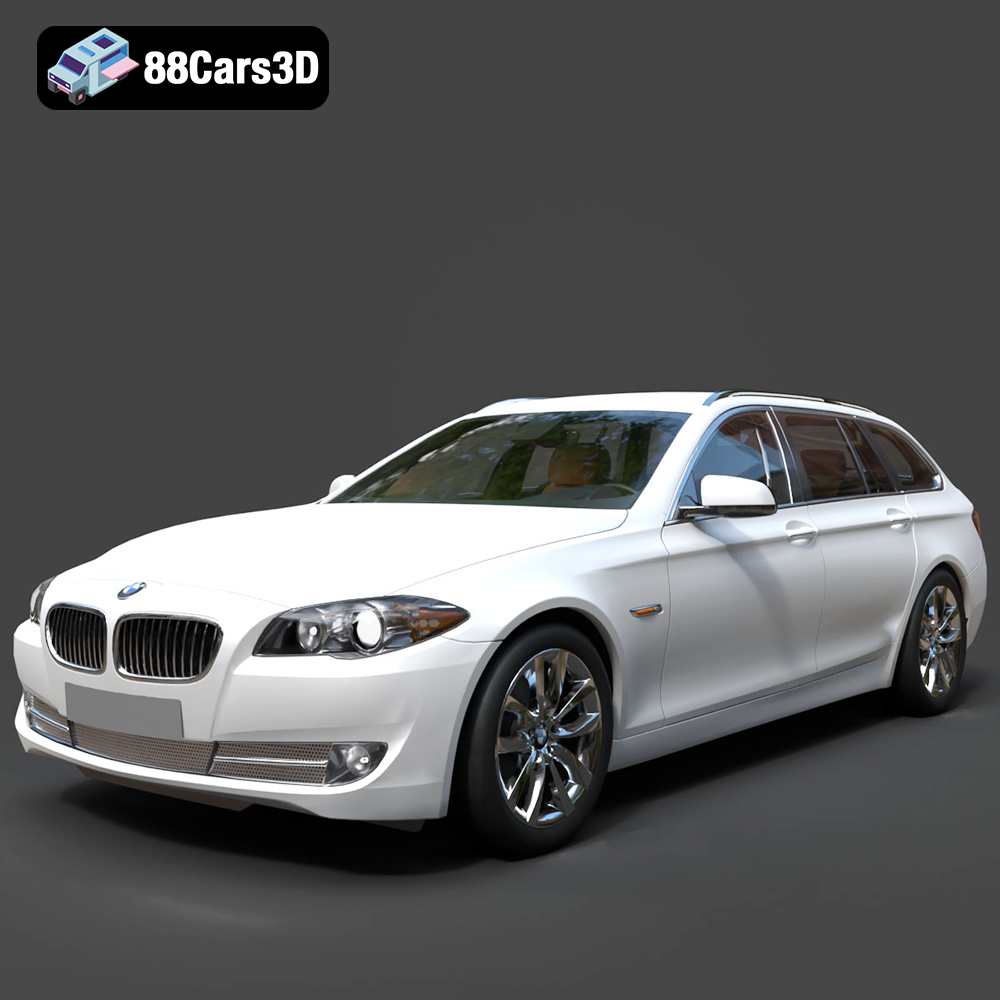
BMW 5 Series Touring F11-007 3D Model
Texture: Yes
Material: Yes
Download the BMW 5 Series Touring F11-007 3D Model featuring a detailed exterior and interior. Includes .blend, .fbx, .obj, .glb, .stl, .ply, .unreal, and .max formats for rendering, simulation, and game development.
Price: $10.79

BMW 3 F30 3D Model
Texture: Yes
Material: Yes
Download the BMW 3 F30 3D Model featuring a detailed exterior, realistic interior, and optimized mesh. Includes .blend, .fbx, .obj, .glb, .stl, .ply, .unreal, and .max formats for rendering, simulation, and game development.
Price: $10.79
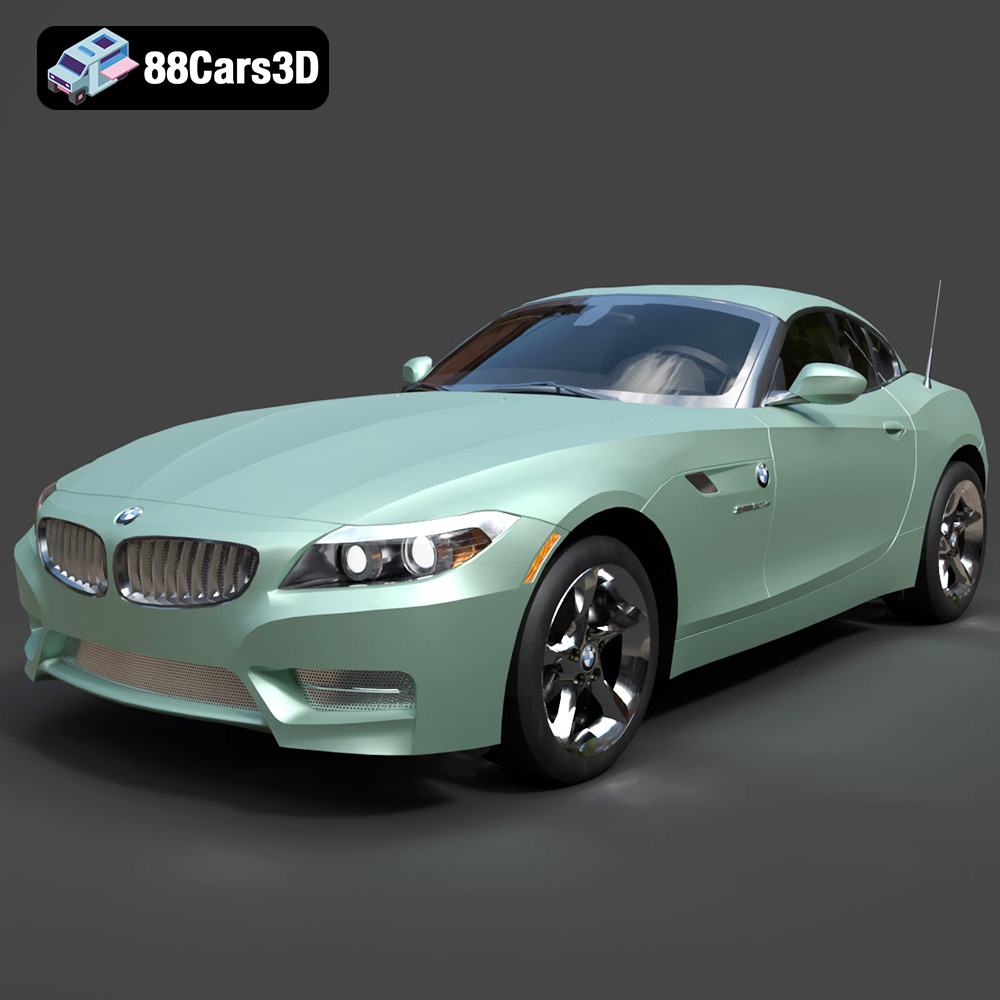
BMW Z4 Roadster E89 2012 3D Model
Texture: Yes
Material: Yes
Download the BMW Z4 Roadster E89 3D Model featuring clean geometry, realistic detailing, and a fully modeled interior. Includes .blend, .fbx, .obj, .glb, .stl, .ply, .unreal, and .max formats for rendering, simulation, and game development.
Price: $13.99

BMW Z4 E85 2005 3D Model
Texture: Yes
Material: Yes
Download the BMW Z4 E85 3D Model featuring clean geometry, realistic detailing, and a fully modeled interior. Includes .blend, .fbx, .obj, .glb, .stl, .ply, .unreal, and .max formats for rendering, simulation, and game development.
Price: $13.99

BMW M3 2024 3D Model
Texture: Yes
Material: Yes
Download the BMW M3 2024 3D Model featuring clean geometry, realistic detailing, and a fully modeled interior. Includes .blend, .fbx, .obj, .glb, .stl, .ply, .unreal, and .max formats for rendering, simulation, and game development.
Price: $13.99
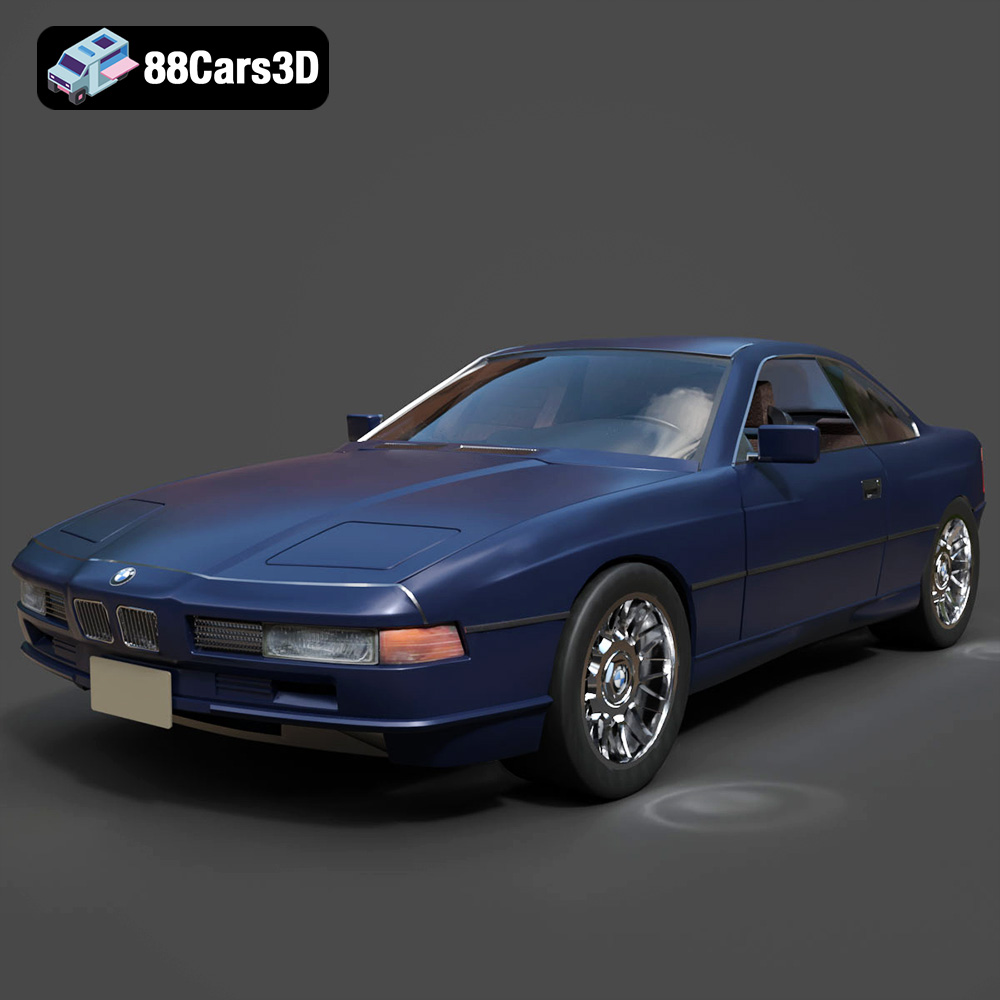
BMW 850i Coupe 1990 3D Model
Texture: Yes
Material: Yes
Download the BMW 850i Coupe 1990 3D Model featuring clean geometry, realistic detailing, and a fully modeled interior. Includes .blend, .fbx, .obj, .glb, .stl, .ply, .unreal, and .max formats for rendering, simulation, and game development.
Price: $13.99
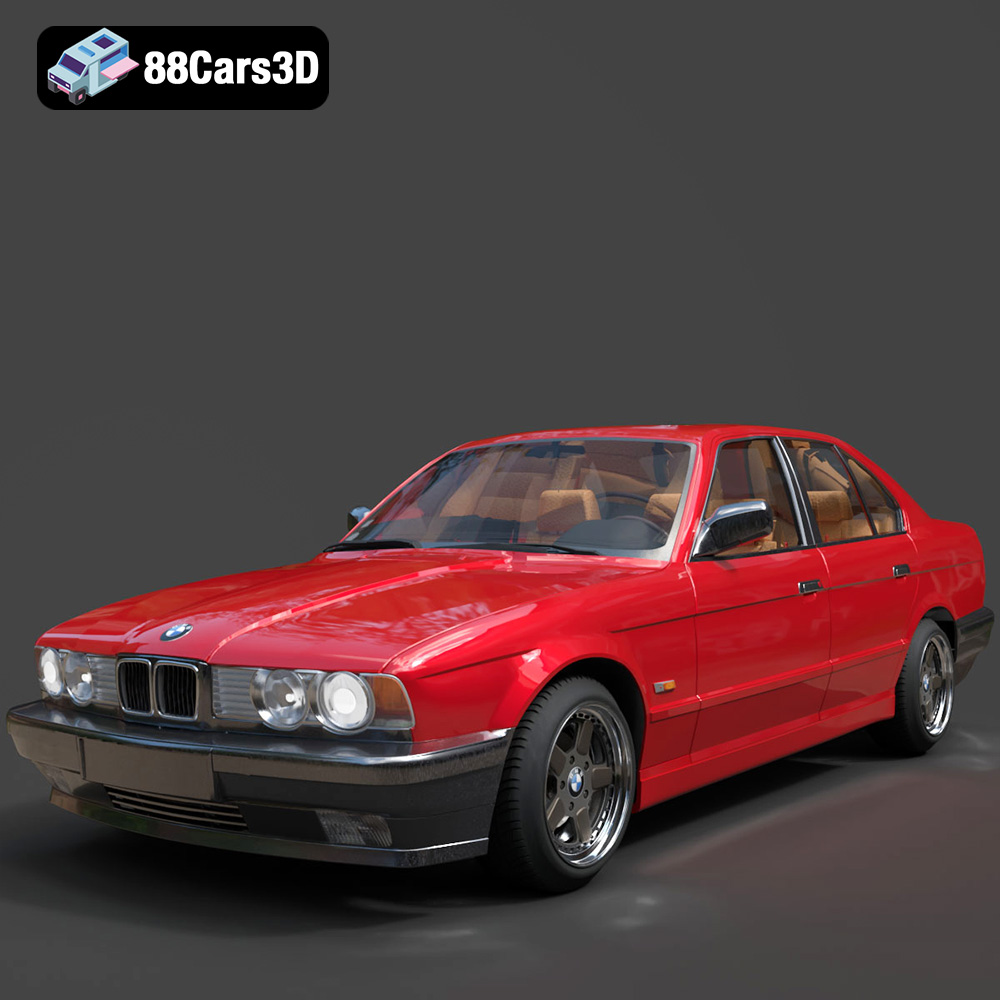
BMW 525i E34 1993 3D Model
Texture: Yes
Material: Yes
Download the BMW 525i E34 1993 3D Model featuring clean geometry, realistic detailing, and a fully modeled interior. Includes .blend, .fbx, .obj, .glb, .stl, .ply, .unreal, and .max formats for rendering, simulation, and game development.
Price: $12.99
