

Mastering Your Ride: The Ultimate Guide to Resins and Filaments for Automotive 3D Prints
The rumble of an engine, the sleek lines of a classic chassis, the intricate details of a custom wheel – for automotive enthusiasts and 3D printing hobbyists alike, bringing these iconic machines to life in miniature is a deeply rewarding pursuit. Whether you’re crafting a detailed display model, a functional prototype for a custom part, or an educational piece to understand automotive engineering, the quality of your 3D print hinges critically on your choice of materials. At 88cars3d.com, we provide meticulously prepared STL files designed for exceptional print results, but the final outcome also depends on selecting the right filament or resin. This comprehensive guide will delve deep into the world of 3D printing materials, exploring the nuances of both FDM filaments and SLA/DLP resins, and helping you choose the perfect medium to transform your digital automotive dreams into tangible reality. We’ll cover material properties, printer compatibility, specific applications, and common challenges, empowering you to achieve unparalleled detail and durability in your next automotive 3D printing project.
Understanding the Core Technologies: FDM vs. Resin Printing for Automotive Models
Before diving into material specifics, it’s crucial to grasp the fundamental differences between the two primary 3D printing technologies used for detailed models: Fused Deposition Modeling (FDM) and Stereolithography (SLA) or Digital Light Processing (DLP) printing (often collectively referred to as resin printing). Each technology has distinct strengths and weaknesses that directly influence the suitability of different materials and the level of detail achievable. Understanding these foundational aspects will guide your material selection process and help you avoid common pitfalls. For instance, the intricate grilles and badges common on many car models can be significantly easier to capture with one technology over the other, depending on the material used.
Fused Deposition Modeling (FDM): The Workhorse of Prototyping and Larger Models
FDM printing, also known as fused filament fabrication (FFF), is the most common and accessible 3D printing technology. It works by extruding melted thermoplastic filament layer by layer onto a build platform. FDM printers are generally more affordable, have larger build volumes, and can print with a wide array of durable materials. For larger automotive components, functional prototypes, or even entire car models where extreme fine detail isn’t the absolute priority, FDM is an excellent choice. The layer lines, however, can be more pronounced than with resin printing, requiring more post-processing for a perfectly smooth finish. When printing complex parts like chassis or suspension components, the strength and ease of printing with FDM materials like PETG or ABS can be highly advantageous. Furthermore, FDM allows for the creation of multi-material prints, which can be useful for adding contrasting details like windows or tires.
Resin Printing (SLA/DLP): The Pinnacle of Detail and Smoothness
Resin printing technologies, such as SLA and DLP, utilize a light source to selectively cure liquid photopolymer resin layer by layer. This process allows for incredibly fine detail, smooth surface finishes, and the reproduction of intricate features that are often challenging for FDM printers. For highly detailed automotive models, such as collector-grade display pieces, intricate engine components, or parts requiring sharp edges and subtle curves (think vintage car emblems or modern supercar aerodynamic elements), resin printing is often the preferred method. The trade-offs include smaller build volumes, generally higher material costs, and a more involved post-processing workflow (washing and curing). The high resolution of resin printers makes them ideal for capturing the subtle curves and precise panel gaps present in highly detailed car models, especially those found on platforms like 88cars3d.com.
Filaments for FDM: Balancing Strength, Detail, and Printability
The world of FDM filaments is vast, offering a spectrum of materials with diverse properties. For automotive 3D printing, the key is to select a filament that balances mechanical strength, dimensional accuracy, ease of printing, and the required aesthetic quality. While PLA is popular for its ease of use, it may not always be the best choice for parts requiring durability or resistance to heat. We’ll explore the most suitable filaments, their characteristics, and recommended settings for achieving excellent automotive prints.
PLA (Polylactic Acid): The Accessible Starting Point
PLA is the go-to filament for many beginners due to its ease of printing, minimal warping, and wide availability. It’s biodegradable and comes in a huge range of colors. For display models where mechanical stress is minimal and heat exposure is low, PLA can produce excellent results. Its low melting temperature and minimal shrinkage make it forgiving on most FDM printers. However, PLA has a relatively low glass transition temperature (around 60°C), meaning it can deform under direct sunlight or in a hot car interior. For basic car models or parts that won’t be subjected to significant loads or heat, PLA is a solid and cost-effective choice. For instance, a detailed interior dashboard printed in PLA could look fantastic, provided it’s not placed in a location prone to high temperatures.
- Recommended Settings: Nozzle Temp: 190-220°C, Bed Temp: 0-60°C (often not required), Print Speed: 40-60 mm/s, Layer Height: 0.1-0.2 mm.
- Pros: Easy to print, low warping, wide color selection, good detail for its class.
- Cons: Brittle, low heat resistance, not ideal for functional parts.
PETG (Polyethylene Terephthalate Glycol): The Versatile All-Rounder
PETG offers a compelling blend of PLA’s ease of printing with the mechanical strength and temperature resistance closer to ABS. It’s more durable, less brittle, and can withstand higher temperatures than PLA (glass transition around 80°C). This makes it an excellent choice for more robust automotive parts, such as chassis components, suspension parts, or even functional prototypes that might experience some stress. PETG adheres well to the print bed and exhibits less warping than ABS, though it can be stringier. Proper retraction settings are crucial. Its slightly translucent nature can also be beneficial for simulating certain materials or creating interesting lighting effects in models.
- Recommended Settings: Nozzle Temp: 230-250°C, Bed Temp: 70-85°C, Print Speed: 40-60 mm/s, Layer Height: 0.1-0.2 mm.
- Pros: Strong, durable, good heat resistance, moderate flexibility, good layer adhesion.
- Cons: Can be stringy, requires careful retraction tuning, slightly more difficult to print than PLA.
ABS (Acrylonitrile Butadiene Styrene): Strength and Durability for Demanding Applications
ABS is renowned for its strength, impact resistance, and excellent heat resistance (glass transition around 105°C). This makes it ideal for automotive parts that might be exposed to higher temperatures or require significant durability, such as exterior body panels, functional components for RC car chassis, or parts intended for harsher environments. However, ABS is more challenging to print. It requires a heated bed (often enclosed) to prevent severe warping and requires good ventilation due to fumes. The layer adhesion is generally excellent, contributing to strong parts. For printing models of race cars or parts subjected to significant stress, ABS is a top contender.
- Recommended Settings: Nozzle Temp: 230-260°C, Bed Temp: 90-110°C (enclosure recommended), Print Speed: 40-60 mm/s, Layer Height: 0.1-0.2 mm.
- Pros: High strength, excellent impact resistance, high heat resistance, good layer adhesion.
- Cons: Prone to warping, requires a heated bed and enclosure, emits fumes, can be difficult to print.
Resins for SLA/DLP: Achieving Unrivaled Detail and Finish
Resin printing excels at capturing the finest details, making it perfect for highly intricate automotive models. The material choice in resin printing is less about filament diameter and more about the specific photopolymer resin formulation, each offering distinct properties like hardness, flexibility, and detail resolution. The level of detail needed for vintage car emblems or the sharp edges of a modern spoiler often necessitates the use of resin.
Standard Resins: The Foundation for Detailed Models
Standard photopolymer resins are the most common type used for SLA/DLP printing. They offer a good balance of detail, printability, and cost. These resins are ideal for creating highly detailed replicas of cars, where smooth surfaces and sharp edges are paramount. They typically cure quickly and produce parts with good surface finish. For creating display models of classic cars or intricate engine bays downloaded from marketplaces like 88cars3d.com, standard resins are an excellent starting point. They capture subtle curves and panel lines with remarkable fidelity.
- Typical Properties: High detail resolution, smooth surface finish, can be brittle, moderate UV resistance.
- Applications: Display models, collector’s items, architectural models, intricate components.
- Print Settings: Vary by printer and resin brand, but generally involve layer heights of 0.025-0.05 mm, exposure times of 1-10 seconds per layer.
Tough/ABS-Like Resins: Durability Meets Detail
For automotive parts that require more than just aesthetic appeal, such as functional prototypes, RC car parts, or components that might experience some mechanical stress, ABS-like or tough resins are a superior choice. These resins are formulated to mimic the properties of ABS plastic, offering significantly improved impact resistance and durability compared to standard resins, while still maintaining excellent detail. This is crucial for parts like suspension components or bumpers on custom RC builds. They strike a good balance for applications where both visual fidelity and some degree of robustness are required.
- Typical Properties: High impact resistance, good tensile strength, good durability, can be less detailed than standard resins in some formulations.
- Applications: Functional prototypes, durable model parts, RC car components, jigs and fixtures.
- Print Settings: Similar to standard resins, but may require slightly longer exposure times for optimal curing and strength.
Flexible Resins: For Specific Automotive Applications
While less common for full car models, flexible resins have niche applications in automotive 3D printing. They can be used to create flexible tires for RC cars, rubber seals, or other components where pliability is desired. These resins offer varying degrees of elasticity and can be blended with other resins to achieve custom properties. Their use is typically reserved for specific functional parts rather than general model creation.
- Typical Properties: Elasticity, rubber-like feel, can be difficult to print in pure form, often blended.
- Applications: Tires for RC cars, flexible seals, damping components.
- Print Settings: Often require careful tuning and potentially longer exposure times to achieve full flexibility and strength.
Optimizing Your Print: Slicing Strategies for Automotive Models
Once you’ve chosen your material, the next critical step is preparing your STL file for printing using slicing software. The slicer translates your 3D model into layer-by-layer instructions for your 3D printer. For automotive models, achieving a balance between print time, surface quality, and structural integrity is key. This involves carefully selecting layer heights, infill patterns, and support structures.
Layer Height and Its Impact on Detail and Time
Layer height is one of the most significant settings affecting print quality and time. A smaller layer height (e.g., 0.1 mm for FDM, 0.025 mm for resin) results in finer detail and smoother curves, ideal for capturing the subtle contours of car bodies. However, it also dramatically increases print time as the printer has many more layers to lay down. Conversely, a larger layer height (e.g., 0.2-0.3 mm for FDM) significantly reduces print time but results in more visible layer lines and less detail. For display models, a balance might be found at 0.12-0.16 mm for FDM, or by accepting longer print times for finer resolution with resin. For functional parts where speed is more critical, a coarser layer height might be acceptable.
Infill Patterns and Density: Balancing Strength and Material Usage
Infill refers to the internal structure printed within the solid outer shell of your model. For most automotive display models, high infill density isn’t necessary. A low infill percentage (10-20%) is often sufficient to provide internal support for the outer walls and top layers. For functional parts, a higher infill percentage (30-50% or more) and stronger infill patterns like gyroid, cubic, or rectilinear will be needed to provide adequate strength and rigidity. The gyroid pattern is particularly popular for its isotropic strength (equal strength in all directions) and efficient material usage.
- Common Infill Patterns: Grid, Lines, 3D Honeycomb, Gyroid, Cubic.
- For Display Models: 10-20% density, Gyroid or Cubic pattern.
- For Functional Parts: 30-50%+ density, Gyroid or Cubic pattern.
Support Structures: Essential for Complex Geometries
Automotive models often feature complex overhangs, undercuts, and intricate details (like wheel arches, spoilers, or engine components) that require support structures to print successfully. For FDM, options include standard supports, tree supports, or custom supports. Tree supports can be easier to remove and leave fewer marks. For resin printers, supports are crucial for preventing models from detaching from the build plate and supporting overhangs. Support placement and density are critical; too few, and your print fails; too many, and removing them can damage delicate details. Experimentation with support angle and contact distance in your slicer (like Cura, PrusaSlicer, or ChiTuBox) is vital.
- Support Overhang Angle: Typically 45-60 degrees for FDM.
- Support Interface Layers: Adding these can create a denser surface where supports touch the model, making them easier to remove cleanly.
- Support Density: Adjust based on the complexity of the overhang.
Post-Processing: Bringing Your Automotive Print to Perfection
The journey doesn’t end when the print is complete. Post-processing is a crucial stage, especially for automotive models where visual appeal is paramount. Whether you used FDM or resin printing, various techniques can elevate your model from a raw print to a show-quality piece.
Sanding and Smoothing: Achieving a Flawless Surface
For FDM prints, sanding is essential to remove layer lines and achieve a smooth finish. Start with coarser grit sandpaper (e.g., 150-220 grit) to remove prominent lines and imperfections, then progressively move to finer grits (e.g., 400, 800, 1000, and even higher). Wet sanding can produce even smoother results. For resin prints, sanding is often less intensive due to the inherent smoothness but can still be necessary to remove support marks or smooth out minor blemishes. Some hobbyists also use vapor smoothing techniques (e.g., with acetone for ABS or specific chemicals for resins), but this requires extreme caution and proper ventilation.
Priming and Painting: The Art of Realism
A good primer is fundamental for any painted model. It helps to reveal any remaining imperfections and provides a uniform surface for paint to adhere to. Automotive models benefit greatly from careful painting. Use hobby-grade acrylics or spray paints designed for plastic models. Employ techniques like base coating, clear coats for protection and shine, and weathering effects to add realism. Multi-part models often require painting individual components before assembly for easier access and cleaner results. For precise details like badges or trim, fine brushes or airbrushing are recommended.
Assembly and Finishing Touches
Many detailed car models are printed in multiple parts to facilitate printing complex geometries and to allow for different material colors or finishes (e.g., printing the body in one color and windows in clear or transparent material). Careful assembly using cyanoacrylate (super glue), epoxy, or specialized plastic adhesives is required. Pay attention to alignment and fit. Small details like windshield wipers, mirrors, or exhaust pipes can be added as separate printed parts or even from aftermarket model-making supplies to enhance realism. Consider adding custom decals for logos, racing stripes, or license plates to complete the authentic look.
Conclusion: Driving Towards Your Best Automotive 3D Prints
The pursuit of the perfect 3D printed automotive model is a journey that combines technological understanding with artistic execution. By carefully selecting the right materials – whether it’s the versatile PETG or robust ABS for FDM, or the detailed-capturing standard or tough resins for SLA/DLP – you lay the foundation for success. Optimizing your slicing parameters, understanding the trade-offs between layer height, infill, and print time, and mastering the art of support generation are critical steps in translating digital designs into tangible creations. Furthermore, dedicating time to post-processing techniques like sanding, priming, painting, and meticulous assembly will ultimately determine the final quality and realism of your printed masterpiece. At 88cars3d.com, we are passionate about providing you with high-quality, print-ready STL files that showcase the beauty and complexity of automotive design. By applying the knowledge gained from this guide, you’ll be well-equipped to leverage these digital assets and your 3D printer to create stunning automotive replicas, functional parts, and intricate models that you can be proud of. Happy printing, and may your next build be your best one yet!
Featured 3D Car Models

BMW 7 Series E38 3D Model
Texture: Yes
Material: Yes
Download the BMW 7 Series E38 3D Model featuring its iconic luxury sedan design and classic aesthetics. Includes .blend, .fbx, .obj, .glb, .stl, .ply, .unreal, and .max formats for rendering, simulation, and game development.
Price: $10.79

BMW 6 Series 640i F12 3D Model
Texture: Yes
Material: Yes
Download the BMW 6 Series 640i F12 3D Model featuring a sleek design and detailed interior. Includes .blend, .fbx, .obj, .glb, .stl, .ply, .unreal, and .max formats for rendering, simulation, and game development.
Price: $10.79

BMW 6 Coupe E63 3D Model
Texture: Yes
Material: Yes
Download the BMW 6 Coupe E63 3D Model featuring a sleek design, detailed interior, and realistic exterior. Includes .blend, .fbx, .obj, .glb, .stl, .ply, .unreal, and .max formats for rendering, simulation, and game development.
Price: $10.79
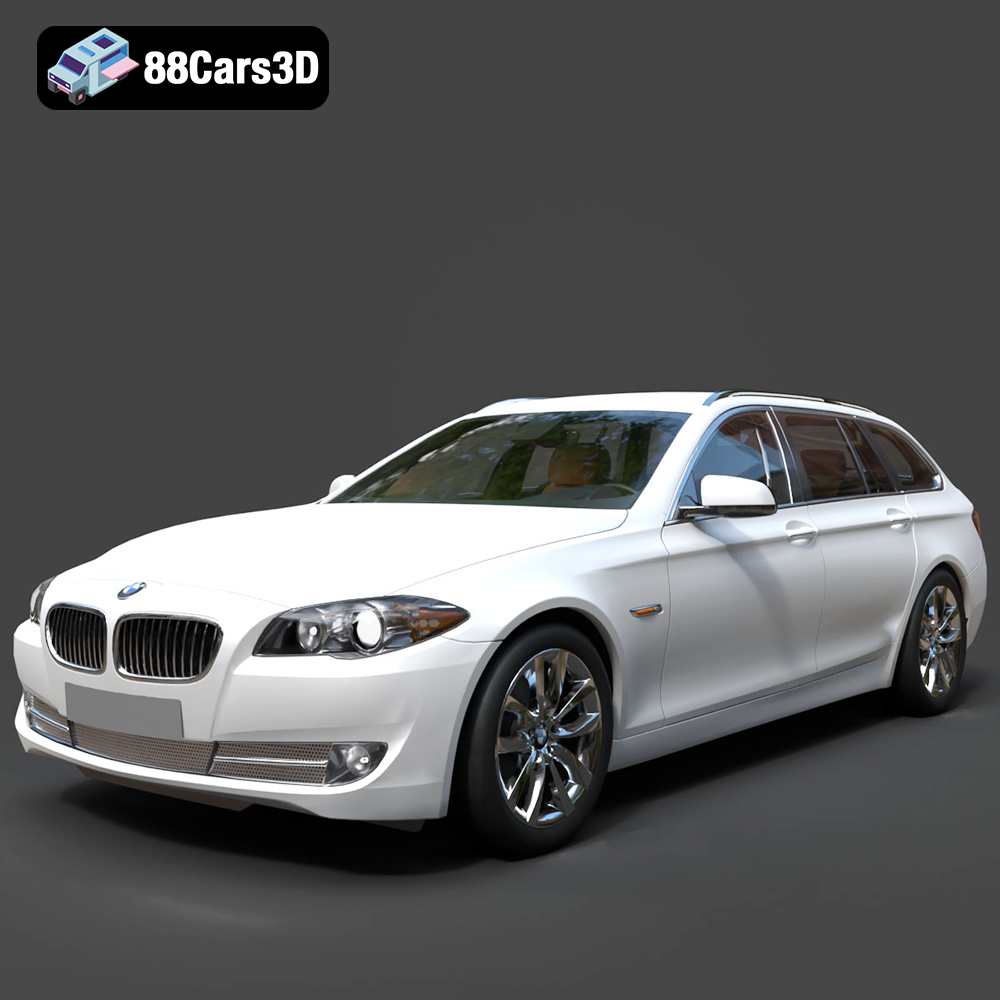
BMW 5 Series Touring F11-007 3D Model
Texture: Yes
Material: Yes
Download the BMW 5 Series Touring F11-007 3D Model featuring a detailed exterior and interior. Includes .blend, .fbx, .obj, .glb, .stl, .ply, .unreal, and .max formats for rendering, simulation, and game development.
Price: $10.79

BMW 3 F30 3D Model
Texture: Yes
Material: Yes
Download the BMW 3 F30 3D Model featuring a detailed exterior, realistic interior, and optimized mesh. Includes .blend, .fbx, .obj, .glb, .stl, .ply, .unreal, and .max formats for rendering, simulation, and game development.
Price: $10.79
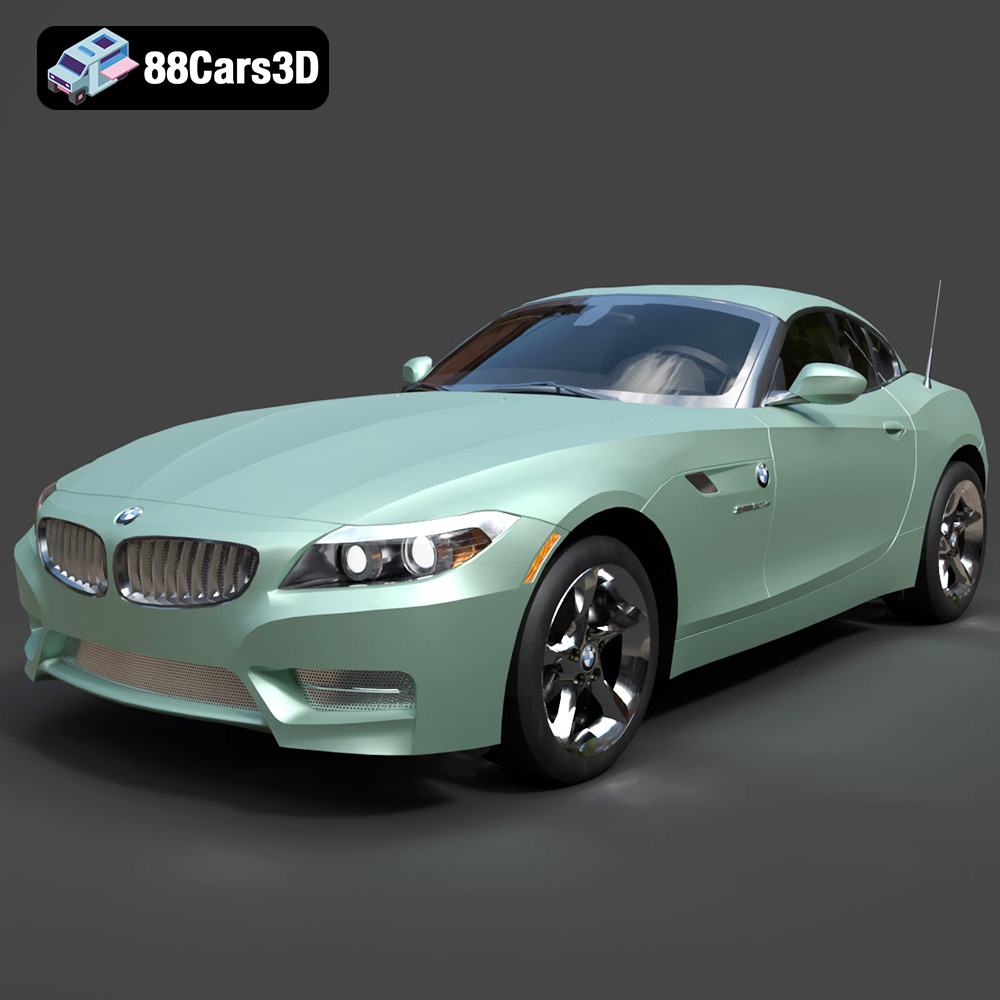
BMW Z4 Roadster E89 2012 3D Model
Texture: Yes
Material: Yes
Download the BMW Z4 Roadster E89 3D Model featuring clean geometry, realistic detailing, and a fully modeled interior. Includes .blend, .fbx, .obj, .glb, .stl, .ply, .unreal, and .max formats for rendering, simulation, and game development.
Price: $13.99

BMW Z4 E85 2005 3D Model
Texture: Yes
Material: Yes
Download the BMW Z4 E85 3D Model featuring clean geometry, realistic detailing, and a fully modeled interior. Includes .blend, .fbx, .obj, .glb, .stl, .ply, .unreal, and .max formats for rendering, simulation, and game development.
Price: $13.99

BMW M3 2024 3D Model
Texture: Yes
Material: Yes
Download the BMW M3 2024 3D Model featuring clean geometry, realistic detailing, and a fully modeled interior. Includes .blend, .fbx, .obj, .glb, .stl, .ply, .unreal, and .max formats for rendering, simulation, and game development.
Price: $13.99
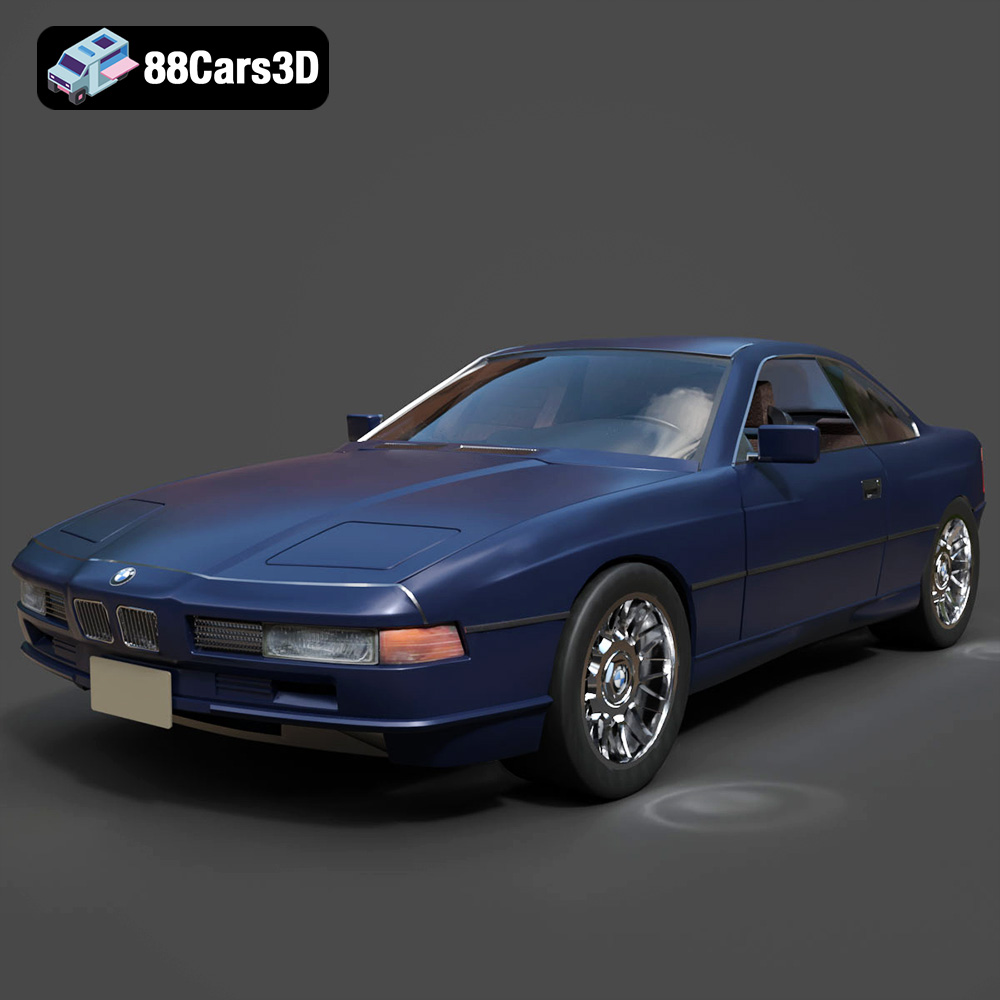
BMW 850i Coupe 1990 3D Model
Texture: Yes
Material: Yes
Download the BMW 850i Coupe 1990 3D Model featuring clean geometry, realistic detailing, and a fully modeled interior. Includes .blend, .fbx, .obj, .glb, .stl, .ply, .unreal, and .max formats for rendering, simulation, and game development.
Price: $13.99
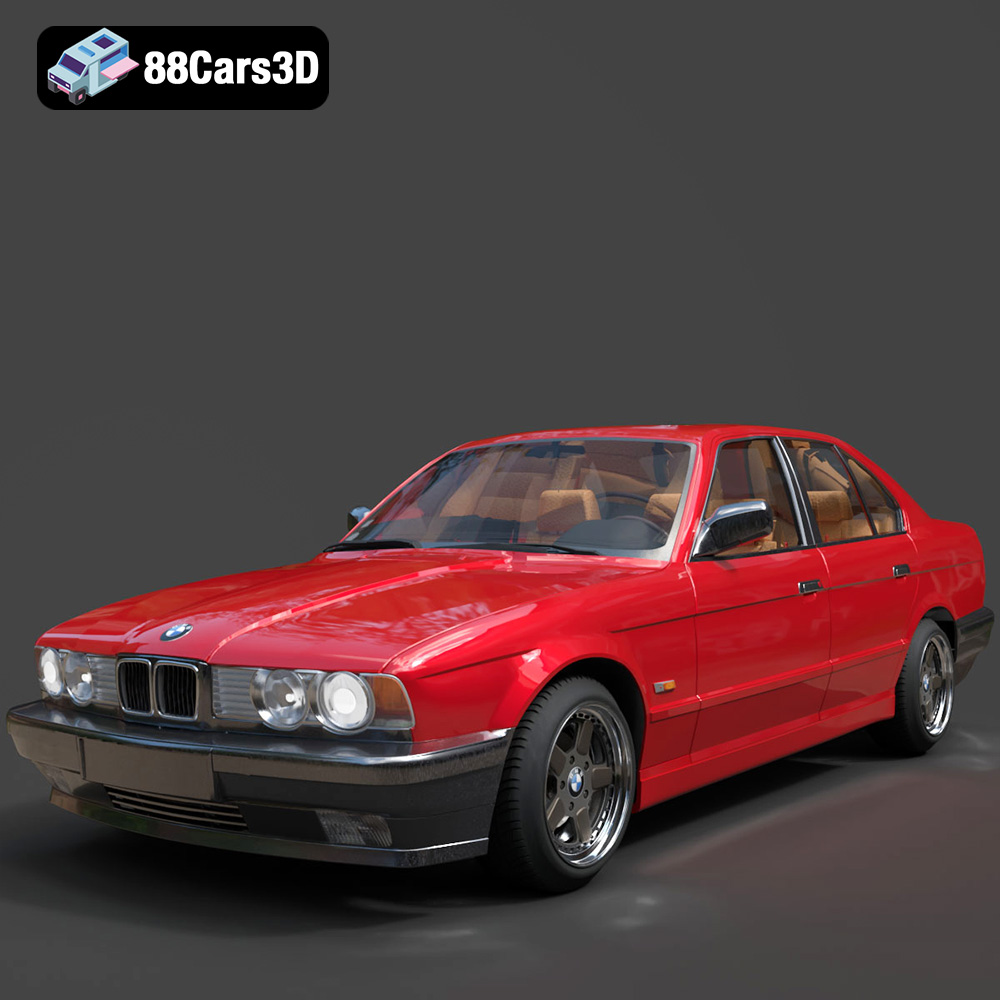
BMW 525i E34 1993 3D Model
Texture: Yes
Material: Yes
Download the BMW 525i E34 1993 3D Model featuring clean geometry, realistic detailing, and a fully modeled interior. Includes .blend, .fbx, .obj, .glb, .stl, .ply, .unreal, and .max formats for rendering, simulation, and game development.
Price: $12.99
