

The pursuit of photorealism in real-time applications has never been more intense, especially within the automotive industry. From stunning marketing visuals and interactive configurators to immersive AR/VR experiences and cutting-edge game development, Unreal Engine stands as a powerhouse, enabling artists and developers to push the boundaries of visual fidelity. However, achieving breathtaking visuals without compromising performance is a delicate balance, a challenge that many Unreal Engine developers frequently encounter. High-fidelity 3D car models, with their intricate details and complex material setups, can quickly bring even powerful hardware to its knees if not properly optimized.
This comprehensive guide is tailored for Unreal Engine developers, 3D artists, game creators, and automotive visualization professionals who aim to master performance optimization. We will delve into advanced techniques, leveraging Unreal Engine’s most powerful features to ensure your automotive projects run smoothly, look spectacular, and deliver an unparalleled user experience. From project setup and intelligent asset management to sophisticated material creation, dynamic lighting, interactive scripting, and cinematic production, we’ll explore the critical steps to achieve optimal performance. By the end of this article, you’ll possess the knowledge and practical strategies to build efficient, visually stunning automotive projects within Unreal Engine, making your creations not just beautiful, but also performant.
Laying the Foundation: Unreal Engine Project Setup and Asset Preparation
Before importing a single polygon, establishing a solid foundation for your Unreal Engine project is paramount for long-term performance and stability. Proper project setup and diligent asset preparation can mitigate countless headaches down the line. It begins with selecting the right engine version and configuring project settings specifically for high-fidelity automotive visualization, which often involves different priorities than a typical game project. Understanding the implications of various rendering paths, such as the Forward Shading Renderer for specific use cases like VR, or ensuring Ray Tracing is correctly configured from the outset, will significantly impact your project’s visual quality and performance budget.
Additionally, establishing robust asset pipelines and understanding the critical role of clean topology and efficient UV mapping in your 3D car models are non-negotiable. The quality of your source assets directly correlates with the ease of optimization and the final rendered output. Investing time in these initial stages sets the stage for a smooth development process and a highly optimized final product.
Configuring for High-Fidelity Automotive Rendering
For automotive projects, specific Unreal Engine project settings can make a profound difference. Start by considering the rendering method. While the Deferred Shading Renderer is the default and most versatile, some scenarios, particularly in AR/VR, might benefit from the Forward Shading Renderer due to its lower GPU cost for certain features. When aiming for the highest fidelity, ensure your project supports and is configured for Ray Tracing, enabling incredibly accurate reflections, shadows, and global illumination. Navigate to Project Settings > Rendering and enable “Ray Tracing” and related features like “Hardware Ray Tracing” and “Support Global Clip Plane for Ray Tracing”. Beyond these, meticulously set up your Post Process Volume to control exposure, color grading, ambient occlusion, and global illumination effects. Remember to manage your scalability settings (Engine Scalability Settings) to ensure a good balance between quality and performance across different hardware configurations.
A often-overlooked aspect is Distributed Derived Data Cache (DDC) and shader caching. For teams, setting up a shared DDC can significantly reduce shader compilation times, improving iteration speed. You can configure this in Project Settings > General Settings > Derived Data Cache. Regular cleanup and optimization of the DDC also help keep project sizes manageable and reduce potential corruption issues.
Sourcing and Preparing 3D Car Models
The quality of your 3D car models is fundamental. When sourcing assets, whether from internal teams or marketplaces, prioritize models with clean, quad-based topology. Poorly optimized or triangulated meshes can lead to shading artifacts, increased memory usage, and make subsequent optimization steps, like LOD generation, much more challenging. Verify that models have proper UV mapping for textures and lightmaps, avoiding overlapping UVs unless absolutely necessary, as this will lead to incorrect lighting and texturing.
Platforms like 88cars3d.com offer high-quality, pre-optimized 3D car models specifically designed for Unreal Engine, featuring clean topology, realistic materials, and proper UVs, which significantly streamlines the import and optimization process. Ensure the models are scaled correctly in your 3D software (e.g., Blender, Maya, 3ds Max) before export, typically in centimeters, to match Unreal Engine’s default units. Recommended file formats include FBX for general mesh and animation data, and USD (Universal Scene Description) or USDZ for more complex scene descriptions, material definitions, and collaborative workflows. USD is increasingly becoming the industry standard for its robustness in handling complex scene graphs and material layering.
Mastering Asset Import and Optimization in Unreal Engine
Once your project foundation is solid and your 3D car models are prepared, the next crucial step is their efficient import and optimization within Unreal Engine. This process goes beyond merely dragging and dropping files; it involves making informed decisions during import and actively leveraging Unreal Engine’s cutting-edge technologies like Nanite to handle high-polygon data. The default import settings might be sufficient for basic assets, but for complex automotive models, understanding and adjusting these settings is vital for performance.
The introduction of Nanite has revolutionized how high-fidelity geometry is handled, making it possible to use film-quality assets in real-time. However, Nanite isn’t a silver bullet for every mesh, and a balanced approach, including traditional Level of Detail (LOD) management, remains crucial for various aspects of an Unreal Engine project. Effective mesh management ensures that your scene remains performant while delivering stunning visual fidelity.
Leveraging Nanite for Geometric Fidelity
Nanite, Unreal Engine 5’s virtualized geometry system, is a game-changer for automotive visualization. It allows you to import incredibly dense meshes – think millions, even billions, of triangles – with little to no performance overhead. Nanite intelligently streams and processes only the necessary detail in real-time, based on the camera’s distance and view, dramatically reducing draw calls and memory footprint compared to traditional methods. To enable Nanite for a mesh, simply select it in the Content Browser, right-click, choose Asset Actions > Bulk Edit via Property Matrix, or open the Static Mesh Editor, and check the “Enable Nanite” box under the “Nanite Settings” section. You can also specify a “Fallback Relative Error” which controls the fidelity of the non-Nanite mesh used when Nanite is disabled, useful for specific platforms or debugging. Remember that Nanite works best for static, opaque meshes. Skeletal meshes, meshes with complex WPO (World Position Offset) materials, and very small, numerous props are generally not good candidates for Nanite, as the overhead might outweigh the benefits. Strategic application of Nanite ensures that high-detail components of your car, like the bodywork, wheels, and intricate interior elements, maintain their fidelity without crippling performance.
Efficient Mesh Management and Level of Detail (LODs)
While Nanite excels for dense geometry, traditional Level of Detail (LODs) still play a vital role, especially for non-Nanite meshes, transparent objects, and optimizing for platforms that don’t fully support Nanite, such as mobile VR. LODs are simplified versions of your mesh that are swapped in at varying distances from the camera, reducing polygon count and draw calls when objects are further away. Unreal Engine offers both automatic LOD generation and manual control. For critical assets like car models, manual or carefully tuned automatic LODs are preferred. In the Static Mesh Editor, you can generate LODs by clicking “LOD Settings” and choosing “Add LOD” from the “LOD Import” dropdown. You can specify the number of LODs, their screen size thresholds (when they switch), and the triangle reduction percentage. Aim for 3-5 LODs for main car bodies, with the lowest LOD having a significantly reduced poly count. Properly configured LODs can drastically cut down on GPU rendering time by ensuring unnecessary detail isn’t rendered off-screen or at a distance where it wouldn’t be perceptible. Another useful optimization is using Mesh Merge Actors to combine multiple static meshes into a single mesh and material, further reducing draw calls for groups of static objects, which is excellent for consolidating smaller car components or environment props.
PBR Materials and Realistic Lighting for Automotive Scenes
The visual impact of an automotive scene in Unreal Engine hinges on two critical elements: physically based rendering (PBR) materials and realistic lighting. Achieving a convincing car paint, reflective glass, and metallic trim requires a deep understanding of PBR principles and how to translate them into Unreal Engine’s Material Editor. Beyond materials, the lighting in your scene dictates mood, realism, and perceived quality. Leveraging Unreal Engine’s advanced global illumination system, Lumen, alongside traditional lighting techniques, is essential for creating stunning and performant automotive visualizations. Careful consideration of texture resolutions, material complexity, and light source types can dramatically affect both visual fidelity and real-time performance.
A well-optimized material setup not only looks good but also contributes positively to performance by reducing shader complexity. Similarly, an intelligent lighting strategy minimizes render time while enhancing the scene’s aesthetic appeal. This section explores how to craft exquisite materials and implement dynamic lighting solutions tailored for automotive realism.
Crafting PBR Car Paint and Interior Materials
Creating realistic car paint is one of the most challenging aspects of automotive visualization. Car paint is complex, often featuring multiple layers: a base color, a metallic flake layer, and a clear coat. In Unreal Engine’s Material Editor, you can achieve this by combining textures for Base Color, Metallic, Roughness, and Normal maps. For car paint, utilize the “Clear Coat” input in your material for the top glossy layer. This provides accurate specular reflections and fresnel effects without needing complex custom shaders. You can further enhance this with a “Clear Coat Roughness” map and a “Clear Coat Normal” map to simulate micro-scratches or orange peel effects on the paint surface. For the metallic flake, a fine-grained normal map or a custom function that perturbs the normals can simulate the tiny reflective particles within the paint. Remember to use Material Instances for variations (e.g., different paint colors, interior trim options), as they compile once and then only modify parameters, saving significant shader compilation time and memory. Texture resolutions should be balanced; 2K or 4K for primary surfaces like body panels, and 512×512 or 1K for less prominent interior elements or small details, ensuring efficient memory usage and faster loading times without sacrificing discernible detail.
Dynamic Global Illumination with Lumen and Traditional Lighting
Lumen, Unreal Engine 5’s fully dynamic global illumination and reflections system, is a cornerstone for achieving photorealistic automotive scenes. Lumen calculates indirect lighting and reflections in real-time, allowing for incredibly dynamic scenarios like changing time of day, moving lights, or interactive environments. To enable Lumen, go to Project Settings > Rendering > Global Illumination and set it to “Lumen.” Then, in your Post Process Volume, set Global Illumination and Reflections to “Lumen.” Experiment with Lumen’s settings in the Post Process Volume (e.g., “Lumen Scene Lighting Quality”, “Lumen Reflection Quality”, “Lumen Max Traces”) to find the optimal balance between visual quality and performance for your target platform. For interiors or complex enclosed spaces, ensure your scene geometry is adequately sealed to prevent light leaks and ensure accurate GI. While Lumen is powerful, traditional lighting methods still have their place. Directional Lights simulate the sun, Sky Lights capture ambient lighting from an HDRI sky texture (crucial for realistic reflections on car bodies), and Spot/Point Lights are used for artificial sources like headlights or studio lights. For very specific, static shots or environments that require the utmost performance predictability, baked lighting with Lightmass can still be an option, but Lumen generally provides superior dynamism and realism for automotive visualization. Optimize your light sources by limiting their range, avoiding excessively high intensity values, and utilizing IES profiles for accurate light distribution from artificial fixtures.
Interactive Experiences with Blueprint and Cinematic Production with Sequencer
Beyond static renders, Unreal Engine excels at creating highly interactive and immersive experiences. For automotive projects, this often translates into interactive configurators where users can customize vehicles in real-time, or cinematic presentations that showcase a car’s design and features with stunning fidelity. Unreal Engine’s Blueprint visual scripting system empowers developers to build complex interactivity without writing a single line of C++ code, opening up possibilities for dynamic demonstrations and user-driven experiences. When the goal is to tell a story or produce marketing materials, Sequencer provides a powerful, non-linear editor for creating breathtaking cinematics and managing virtual production workflows, integrating seamlessly with other Unreal Engine features.
Combining the power of Blueprint for user interaction and Sequencer for polished presentations allows for a comprehensive approach to automotive visualization, from direct user engagement to broadcast-quality output. Optimizing these systems ensures that the interactivity is responsive and the cinematics play back smoothly, critical for a professional presentation.
Building Automotive Configurators with Blueprint
Blueprint is the heart of interactive automotive experiences in Unreal Engine. You can use it to create complex configurators allowing users to change car colors, open doors, switch wheel designs, or even toggle interior features with a click. Start by creating an Actor Blueprint for your car and expose customizable parameters as variables (e.g., “Paint Color” of type Linear Color, “Wheel Type” of type Static Mesh Reference). Utilize Blueprint interfaces or event dispatchers to communicate between your UI (often built with UMG – Unreal Motion Graphics) and the car’s Blueprint. For instance, a UI button click can trigger an event that modifies the car’s material parameters or swaps out static meshes. To ensure performance, avoid using “Event Tick” for continuous updates unless absolutely necessary. Instead, use event-driven logic where updates only occur when a user input changes a parameter. When sourcing automotive assets from marketplaces such as 88cars3d.com, you’ll often find models that are cleanly separated into components, making them ideal for integration with Blueprint-driven configurators. Utilize Data Assets to store configuration options (e.g., a list of available paint colors or wheel models), making your configurator easily expandable and manageable without modifying the core Blueprint logic. Validated references are also important to prevent crashes if an asset isn’t loaded or referenced correctly.
Cinematic Storytelling and Virtual Production Workflows
For high-end marketing, virtual presentations, or broadcast content, Sequencer is Unreal Engine’s tool of choice. It’s a non-linear editor for creating cinematic sequences, allowing you to animate cameras, character movements, material parameters, and even particle effects. To begin, create a new Level Sequence asset (right-click in Content Browser > Animation > Level Sequence). Drag your car model and cameras into the Sequencer timeline, and keyframe their positions, rotations, and other properties. Adjust camera settings like focal length and aperture for cinematic depth of field. Integrate particle effects created with Niagara (e.g., exhaust smoke, rain on the windshield) by adding Niagara system components to your sequence. For cutting-edge virtual production, Unreal Engine’s nDisplay system combined with Sequencer allows you to render content across multiple screens, including massive LED volumes, enabling real-time background plates for live-action shoots. This workflow significantly reduces post-production time and offers unprecedented creative flexibility. For rendering out high-quality cinematics, use the Movie Render Queue, which offers advanced features like temporal anti-aliasing, warm-up frames, and custom render passes, ensuring pristine output suitable for any professional application. For a deeper dive into Unreal Engine’s cinematic tools, refer to the official documentation: https://dev.epicgames.com/community/unreal-engine/learning.
Advanced Optimization Techniques and Real-World Applications
Even with the most meticulous project setup, asset management, and material/lighting strategies, performance bottlenecks can arise. Understanding how to profile your Unreal Engine project, identify resource-intensive elements, and apply advanced optimization techniques is crucial for achieving truly seamless real-time experiences. Performance optimization is an ongoing process, demanding continuous monitoring and iterative refinement. Unreal Engine provides a robust suite of profiling tools that offer deep insights into CPU, GPU, and memory usage, allowing developers to precisely target areas for improvement. Beyond general optimization, tailoring your project for specific real-world applications like Augmented Reality (AR), Virtual Reality (VR), or interactive game development introduces unique performance considerations.
This final section delves into the art of profiling and troubleshooting, offering strategies to overcome common performance hurdles. We’ll also explore specialized optimization techniques for AR/VR and game development, ensuring your automotive creations are not only beautiful but also run flawlessly across diverse platforms and use cases, pushing the boundaries of what’s possible in real-time visualization.
Profiling, Budgeting, and Performance Troubleshooting
Effective optimization begins with accurate profiling. Unreal Engine offers several powerful console commands and tools to diagnose performance issues. Use stat unit in the console to display overall frame time, game thread, draw thread, and GPU times. stat rhi provides detailed information on draw calls, primitives, and memory. The GPU Visualizer (accessible via stat gpu then GPUVISUALIZER) is invaluable for breaking down GPU render passes, identifying expensive shaders or render targets. For CPU-side profiling, use the Session Frontend’s Unreal Insights tool, which provides a comprehensive overview of CPU threads, function calls, and memory allocations. When troubleshooting, establish clear performance budgets: target frame rates (e.g., 60 FPS for desktop, 90 FPS for VR), polygon counts per frame, draw calls, and texture memory. Common bottlenecks include excessive draw calls (too many individual objects being rendered), high overdraw (pixels being rendered multiple times by overlapping transparent geometry), and complex shaders (expensive material instructions). To address these, combine static meshes where possible, optimize transparency, reduce texture resolutions where visual fidelity isn’t impacted, and simplify complex material graphs. Regularly profile your project as you add new assets or features to catch performance regressions early. For a deeper dive into Unreal Engine’s profiling tools, refer to the official documentation on performance and profiling: https://dev.epicgames.com/community/unreal-engine/learning.
Optimizing for AR/VR and Game Development
Developing for AR/VR platforms presents unique performance challenges due to the strict frame rate requirements (e.g., 90 FPS for comfortable VR) and stereo rendering, which effectively renders the scene twice. For AR/VR automotive applications, aggressive LODs, baked lighting (if dynamic light is not strictly necessary), and careful culling are paramount. Minimize expensive post-process effects, and use forward shading where possible to reduce rendering complexity. Mobile VR further restricts resources, necessitating even lower polygon counts, smaller texture resolutions, and simpler materials. Techniques like fixed foveated rendering (if supported by the target hardware) can improve performance by rendering the periphery of the view at a lower resolution. For game development, physics simulation and vehicle dynamics become critical. Unreal Engine’s Chaos physics system allows for realistic car handling, but complex physics calculations can be CPU-intensive. Optimize your collision meshes, simplifying them for non-visible components, and use tuned physics assets. Network optimization is also crucial for multiplayer games; ensure your vehicle’s state (position, rotation, speed) is replicated efficiently without excessive bandwidth usage. Ultimately, successful optimization for AR/VR and games means being constantly aware of your target hardware’s limitations and making intelligent trade-offs between visual fidelity and raw performance.
Achieving optimal performance in Unreal Engine automotive projects is a continuous journey that requires a blend of artistic vision and technical expertise. We’ve explored a comprehensive array of strategies, from the foundational steps of project setup and intelligent asset preparation to advanced techniques leveraging Unreal Engine’s most powerful features. Mastering Nanite for high-fidelity geometry, crafting stunning PBR materials, harnessing Lumen for dynamic global illumination, and building interactive experiences with Blueprint while producing cinematics with Sequencer are all vital components of a performant and visually captivating project.
The key takeaway is the critical balance between visual fidelity and performance. Every decision, from how you import a 3D car model to the complexity of your material shaders and the number of lights in your scene, has a direct impact. By diligently profiling your project, setting performance budgets, and applying the advanced optimization techniques discussed, you can overcome common bottlenecks and deliver truly exceptional automotive visualizations. We encourage you to start implementing these strategies in your own projects, experiment with different settings, and continually push the boundaries of real-time rendering. Remember that sourcing high-quality, pre-optimized assets from platforms like 88cars3d.com can give you a significant head start, allowing you to focus more on creative development and less on foundational optimization challenges. The automotive landscape is rapidly evolving, and with these skills, you are well-equipped to drive its future in Unreal Engine.
Featured 3D Car Models

BMW 7 Series E38 3D Model
Texture: Yes
Material: Yes
Download the BMW 7 Series E38 3D Model featuring its iconic luxury sedan design and classic aesthetics. Includes .blend, .fbx, .obj, .glb, .stl, .ply, .unreal, and .max formats for rendering, simulation, and game development.
Price: $10.79

BMW 6 Series 640i F12 3D Model
Texture: Yes
Material: Yes
Download the BMW 6 Series 640i F12 3D Model featuring a sleek design and detailed interior. Includes .blend, .fbx, .obj, .glb, .stl, .ply, .unreal, and .max formats for rendering, simulation, and game development.
Price: $10.79

BMW 6 Coupe E63 3D Model
Texture: Yes
Material: Yes
Download the BMW 6 Coupe E63 3D Model featuring a sleek design, detailed interior, and realistic exterior. Includes .blend, .fbx, .obj, .glb, .stl, .ply, .unreal, and .max formats for rendering, simulation, and game development.
Price: $10.79
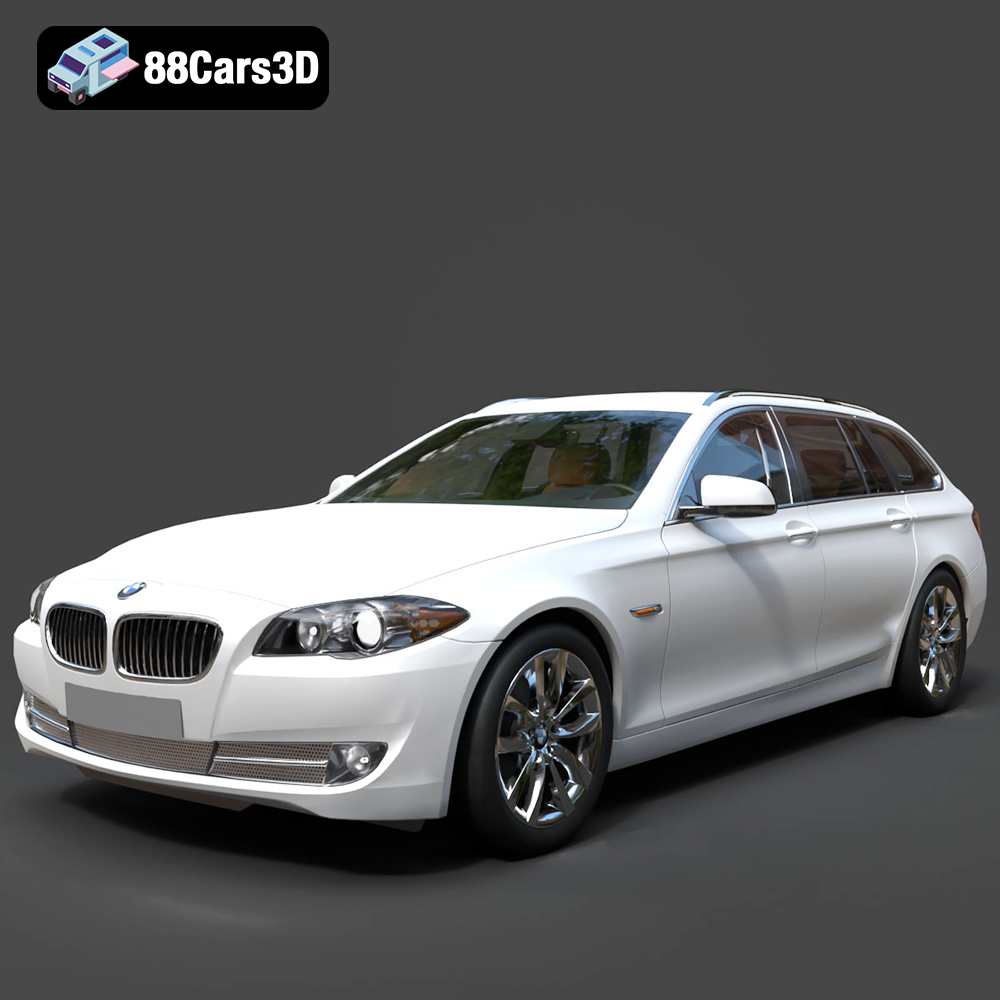
BMW 5 Series Touring F11-007 3D Model
Texture: Yes
Material: Yes
Download the BMW 5 Series Touring F11-007 3D Model featuring a detailed exterior and interior. Includes .blend, .fbx, .obj, .glb, .stl, .ply, .unreal, and .max formats for rendering, simulation, and game development.
Price: $10.79
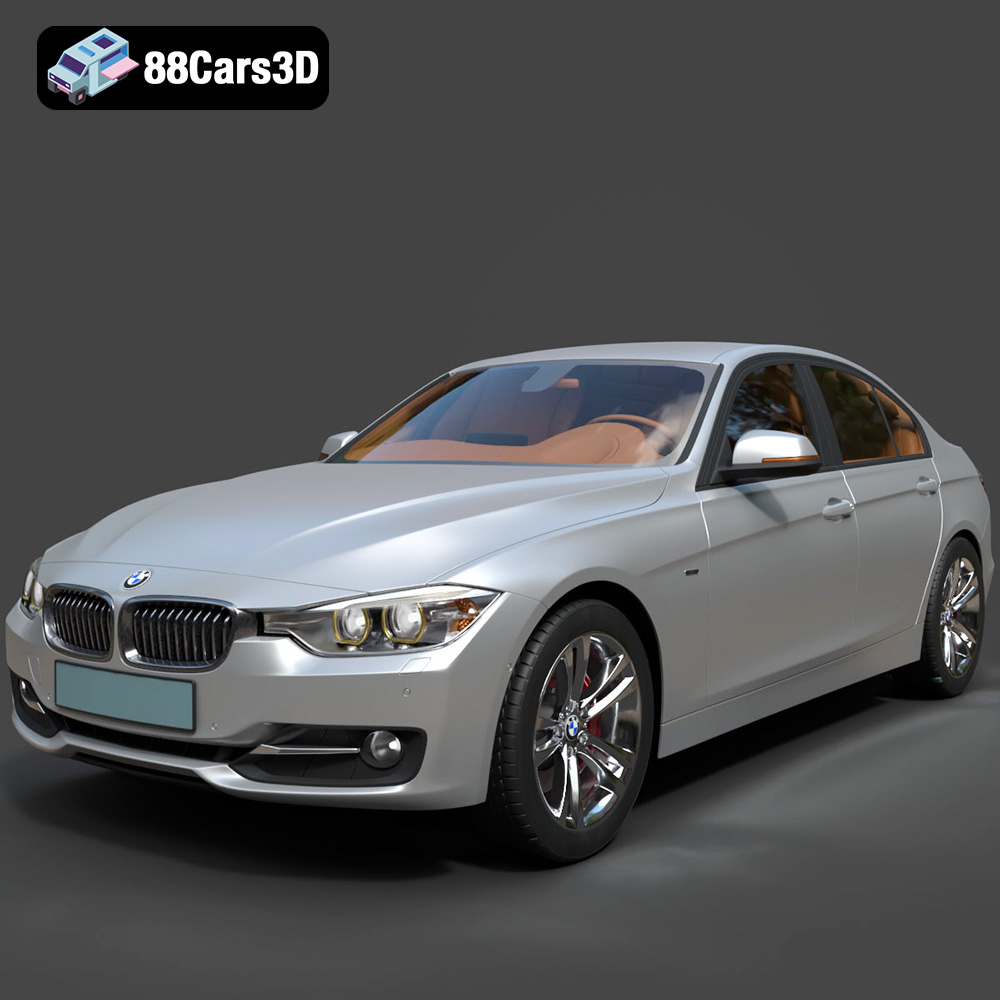
BMW 3 F30 3D Model
Texture: Yes
Material: Yes
Download the BMW 3 F30 3D Model featuring a detailed exterior, realistic interior, and optimized mesh. Includes .blend, .fbx, .obj, .glb, .stl, .ply, .unreal, and .max formats for rendering, simulation, and game development.
Price: $10.79
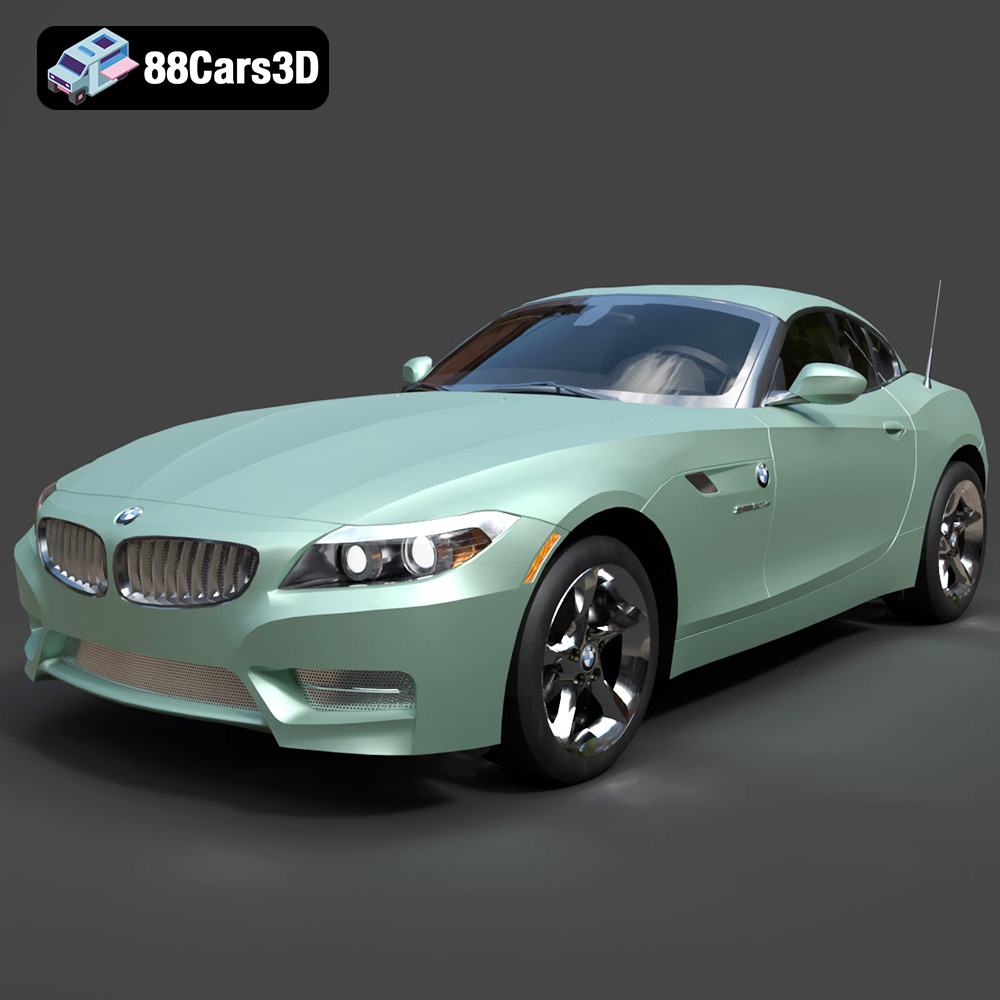
BMW Z4 Roadster E89 2012 3D Model
Texture: Yes
Material: Yes
Download the BMW Z4 Roadster E89 3D Model featuring clean geometry, realistic detailing, and a fully modeled interior. Includes .blend, .fbx, .obj, .glb, .stl, .ply, .unreal, and .max formats for rendering, simulation, and game development.
Price: $13.99

BMW Z4 E85 2005 3D Model
Texture: Yes
Material: Yes
Download the BMW Z4 E85 3D Model featuring clean geometry, realistic detailing, and a fully modeled interior. Includes .blend, .fbx, .obj, .glb, .stl, .ply, .unreal, and .max formats for rendering, simulation, and game development.
Price: $13.99

BMW M3 2024 3D Model
Texture: Yes
Material: Yes
Download the BMW M3 2024 3D Model featuring clean geometry, realistic detailing, and a fully modeled interior. Includes .blend, .fbx, .obj, .glb, .stl, .ply, .unreal, and .max formats for rendering, simulation, and game development.
Price: $13.99
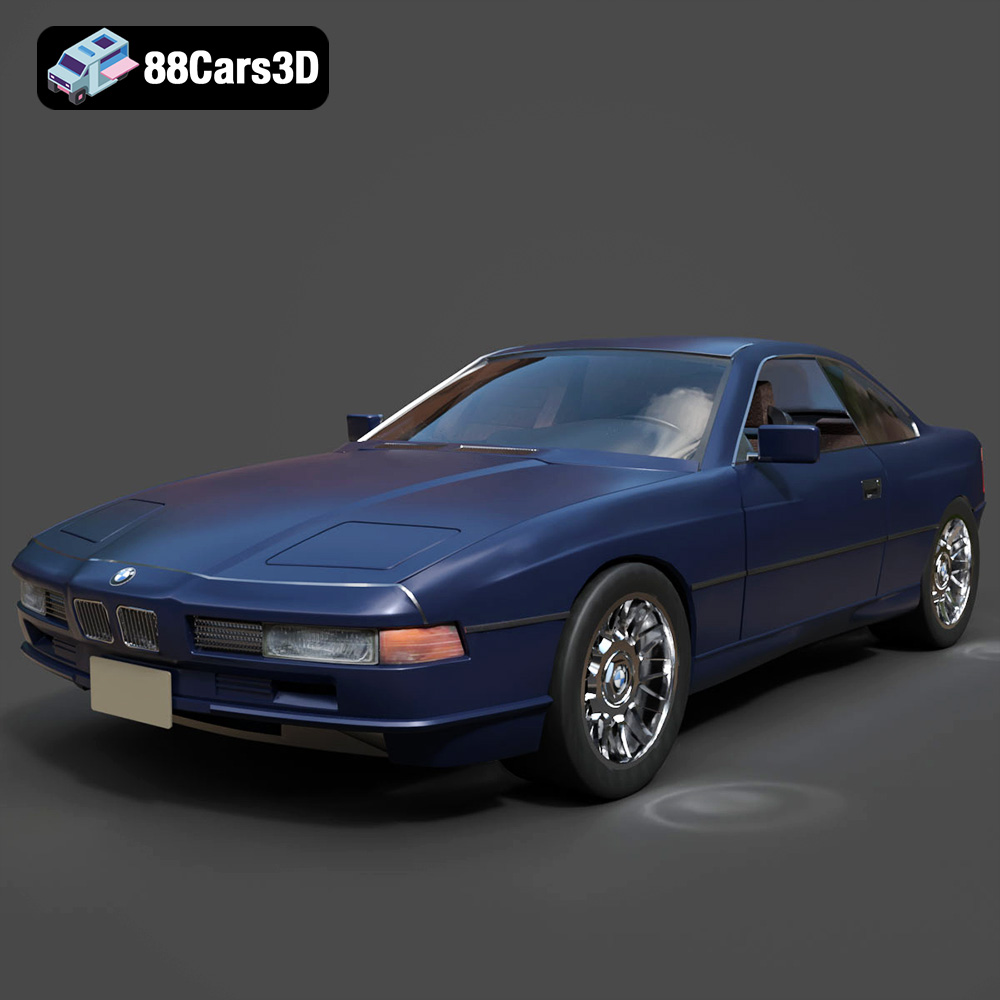
BMW 850i Coupe 1990 3D Model
Texture: Yes
Material: Yes
Download the BMW 850i Coupe 1990 3D Model featuring clean geometry, realistic detailing, and a fully modeled interior. Includes .blend, .fbx, .obj, .glb, .stl, .ply, .unreal, and .max formats for rendering, simulation, and game development.
Price: $13.99
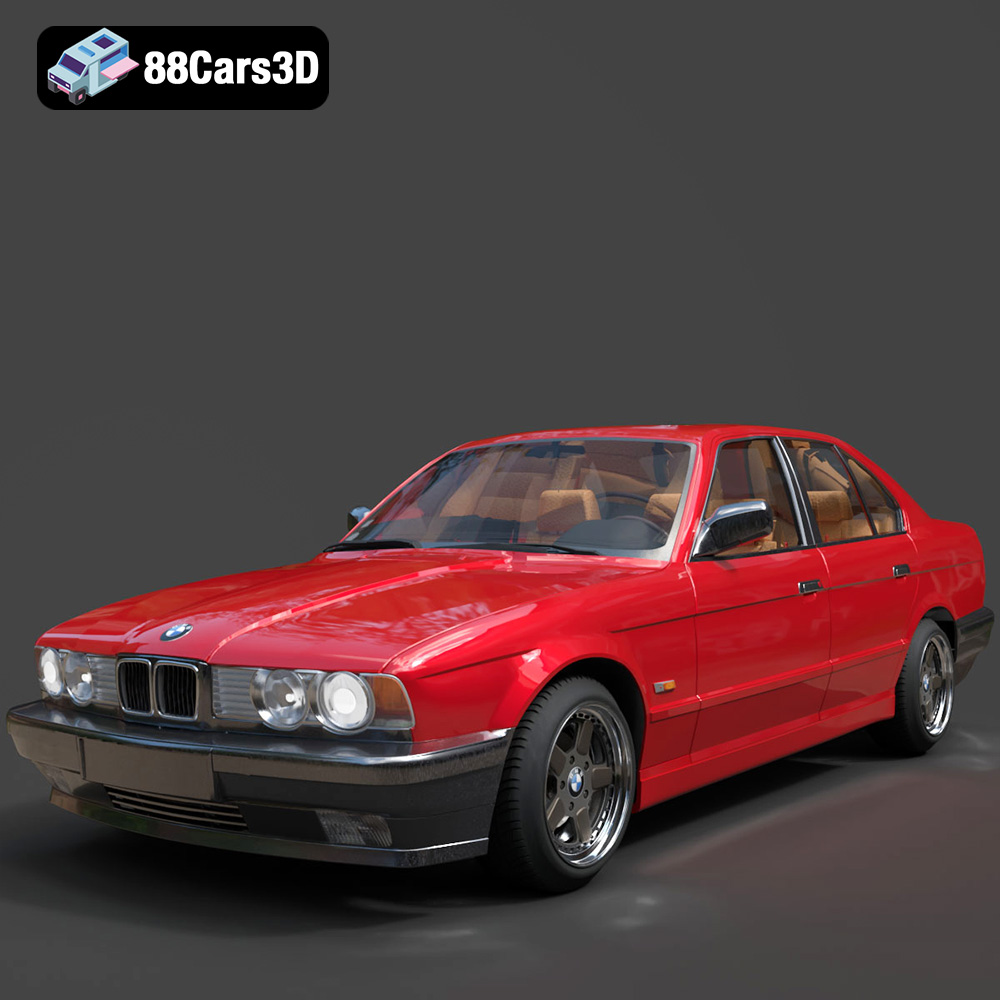
BMW 525i E34 1993 3D Model
Texture: Yes
Material: Yes
Download the BMW 525i E34 1993 3D Model featuring clean geometry, realistic detailing, and a fully modeled interior. Includes .blend, .fbx, .obj, .glb, .stl, .ply, .unreal, and .max formats for rendering, simulation, and game development.
Price: $12.99
