

Mastering Studio Lighting for Photorealistic Car Renders in 3ds Max
In the realm of 3D visualization, few subjects demand as much precision and artistic finesse as automotive rendering. The sleek lines, reflective surfaces, and intricate details of a car model require a lighting setup that can truly bring it to life. A poorly lit car render can make even the most exquisitely modeled vehicle look dull and unconvincing, while a masterfully lit scene can elevate it to photorealistic perfection, blurring the line between virtual and real. This comprehensive guide will take you through the essential techniques and advanced strategies for setting up breathtaking studio lighting for your 3D car models in 3ds Max, focusing on industry-standard renderers like Corona and V-Ray.
Whether you’re a seasoned 3D artist, an automotive designer, or a student aspiring to create stunning vehicle visualizations, understanding the nuances of studio lighting is paramount. We’ll explore everything from foundational principles like reflections and shadows to advanced material interactions, render settings optimization, and crucial post-processing steps. By the end of this guide, you’ll possess the knowledge to transform your 3D car models into captivating visual assets, ready for portfolios, marketing campaigns, or even integration into game environments. Let’s illuminate the path to stunning automotive renders and make your high-quality 3D car models, perhaps sourced from platforms like 88cars3d.com, truly shine.
Understanding Light’s Role in Automotive Aesthetics
Lighting is not merely about illumination; it’s about storytelling, mood, and revealing form. For automotive rendering, light serves a critical function: to accentuate the vehicle’s design language, highlight its curves, and showcase the intricate details of its materials. Unlike product shots of less reflective objects, cars present a unique challenge due to their highly reflective paint, chrome accents, and glass surfaces. These materials act like mirrors, reflecting their environment and the light sources within it. Therefore, every light in your scene becomes part of the visual narrative, its position and intensity directly influencing the perceived shape and texture of your 3D car model.
A successful studio lighting setup for a car render must meticulously control these reflections and shadows. The goal is to create a sense of depth, volume, and realism that convinces the viewer the car exists in a tangible space. This requires a deep understanding of how light behaves, how it interacts with different materials, and how to sculpt it to achieve your desired aesthetic. We’ll delve into the foundational principles that govern these interactions and explore common studio setups that form the backbone of professional automotive visualization.
Key Principles: Reflections, Shadows, and Highlights
The trinity of reflections, shadows, and highlights forms the core of realistic lighting. For a car, specular highlights are crucial for defining the curvature of the bodywork. A sharp, well-defined highlight streak across a fender instantly communicates its smooth, polished surface and the underlying form. Conversely, soft, diffused reflections indicate a broader, more even light source and a less direct angle of incidence. Shadows, on the other hand, provide depth and grounding. They separate the car from its environment, indicating its contact with the ground and creating a sense of volume. The softness or sharpness of a shadow is determined by the size and distance of the light source, a critical parameter to control for realism. Ambient occlusion, while not a direct light source, also plays a vital role by simulating subtle contact shadows and crevices, adding a layer of nuanced realism. Understanding the interplay between these elements is the first step towards mastering automotive lighting.
Common Studio Lighting Setups (Softbox, Three-Point, Infinity Cove)
Professional automotive studios often rely on tried-and-tested lighting arrangements, translated effectively into 3D. The softbox setup, for instance, mimics large, diffused light sources that produce soft shadows and broad, even reflections. This is ideal for showcasing the overall form of a car without harsh contrasts. The three-point lighting system, a staple in many visual arts, involves a key light (main illumination), a fill light (softens shadows), and a back/rim light (separates the subject from the background, adding contour). For cars, this often means larger, more diffused lights to avoid overly dramatic, sharp shadows. Finally, the infinity cove, a curved backdrop that seamlessly transitions from floor to wall, creates the illusion of an endless, shadowless background, making the car appear to float in space. This setup is perfect for isolating the vehicle and focusing purely on its design, often combined with large area lights overhead and to the sides.
Preparing Your 3ds Max Scene for Optimal Rendering
Before you even begin placing lights, a well-prepared 3ds Max scene is fundamental to achieving high-quality automotive renders. This involves ensuring your 3D car model is correctly scaled, establishing an appropriate studio environment, and carefully positioning your camera for compelling compositions. Skipping these preparatory steps can lead to frustrating issues down the line, from incorrect light falloff to distorted perspectives, ultimately compromising the realism and impact of your final image.
A clean and organized scene allows for efficient iteration and precise control over every aspect of your render. We’ll cover the practical steps needed to set up a robust foundation, ensuring your 3D car model is ready to interact realistically with the simulated lights and environment you’re about to create. This meticulous approach is a hallmark of professional workflows and will significantly streamline your rendering process, saving you time and effort in the long run.
Importing and Scaling 3D Car Models
The first critical step after acquiring your 3D car model – perhaps a meticulously crafted asset from 88cars3d.com – is to ensure it’s at the correct scale within 3ds Max. Incorrect scaling can lead to physically inaccurate light behavior, problematic material reflections, and issues with render engine calculations like depth of field. Always check your 3ds Max System Units Setup (Customize > Units Setup > System Unit Setup) to ensure it matches the scale your model was created in, or adjust it accordingly. Common units like centimeters or meters are typical for automotive models. If your model appears too large or small, use the ‘Scale’ tool in 3ds Max to adjust its dimensions globally. A standard car is roughly 4-5 meters long, 1.8-2 meters wide, and 1.4-1.6 meters high. Verifying these real-world dimensions against your model will provide a realistic foundation for your lighting.
Creating a Seamless Studio Environment (Infinity Backdrop)
A classic studio setup for automotive renders often features an infinity backdrop. This seamless curved surface eliminates hard horizon lines, making the car appear isolated and floating, drawing all attention to its form. You can model a simple infinity cove in 3ds Max by creating a large plane for the floor, another for the back wall, and then using a ‘Chamfer’ or ‘Fillet’ modifier on the edge where they meet, or by creating a single curved surface using spline modeling and an ‘Extrude’ modifier. Ensure the curve is smooth and extends far enough to encompass all camera angles without revealing its edges. Alternatively, for more advanced setups, you can use a large, slightly curved cylinder or dome-shaped geometry for the background, applying a diffused material to it. The goal is to create a visually neutral and expansive environment that doesn’t distract from the car itself, but rather provides a clean canvas for reflections.
Initial Camera Placement and Composition
The camera is your viewer’s eye, and its placement is crucial for creating an engaging automotive render. Start by establishing a few compelling camera angles that highlight the car’s best features. Consider the ‘rule of thirds’ for balanced compositions, placing key elements along intersecting lines. Experiment with different focal lengths – a longer focal length (e.g., 85mm-120mm) can compress perspective, making the car appear more powerful and sleek, while a wider angle (e.g., 35mm-50mm) can add a sense of drama or environment. Ensure your camera’s target is focused on a key area of the car, such as the front grille, a headlight, or a specific wheel. Avoid placing the camera too low or too high unless it’s for a specific dramatic effect. A slightly elevated eye-level perspective often works well, mimicking how a person would naturally view a car. Use 3ds Max’s ‘Safe Frames’ to visualize your final render output and refine your composition.
Harnessing the Power of Lights: Corona and V-Ray Workflows
With your scene prepped and camera composed, it’s time to introduce the stars of the show: the lights. Both Corona Renderer and V-Ray offer powerful and intuitive lighting tools, designed to help artists achieve photorealistic results. While their interfaces might differ slightly, the underlying principles of light behavior and how they interact with surfaces remain consistent. The key is to understand how to leverage each renderer’s specific light types to sculpt reflections, define contours, and create the perfect ambiance for your automotive masterpiece.
We’ll delve into the practical application of various light sources, from the workhorse area lights that mimic studio softboxes to the versatile HDRI environments that provide global illumination and realistic reflections. Mastering these tools will allow you to precisely control every aspect of your scene’s illumination, from the overall brightness to the subtle nuances of color temperature and shadow diffusion, ultimately pushing your renders towards unparalleled realism.
Area Lights and Planar Lights for Soft Illumination
Area lights (Corona Light) and Planar lights (V-Ray Plane Light) are indispensable for studio automotive renders. They simulate large studio softboxes, producing soft, diffused lighting and elegant, elongated reflections on the car’s paintwork and chrome. In 3ds Max, create these lights and position them strategically around your car model. Common placements include:
- Overhead: A large, rectangular area light directly above the car provides overall illumination and creates a strong reflection along the roof and hood.
- Sides: Two large area lights on either side of the car, slightly angled towards it, help define the car’s contours and create beautiful highlights along the body panels.
- Front/Back: Smaller, more focused area lights can be used to accentuate the grille, headlights, or rear diffuser.
When using Corona Light, set its type to ‘Rectangle’ and adjust its size. For V-Ray Plane Light, simply adjust its dimensions. The size of these lights directly influences the softness of shadows and reflections – larger lights create softer effects. Experiment with their intensity and ‘Color’ or ‘Kelvin’ temperature. Cooler temperatures (higher Kelvin values, e.g., 6500K) suggest daylight, while warmer temperatures (lower Kelvin values, e.g., 3000K) create a cozy, incandescent feel. Aim for natural-looking reflections that complement the car’s design, avoiding overly bright or distracting hotspots.
HDRI Lighting for Realistic Environments and Reflections
High Dynamic Range Images (HDRIs) are a game-changer for realistic automotive rendering. An HDRI acts as both an environment map for reflections and a global illumination source, providing incredibly realistic and nuanced lighting that mimics real-world conditions. While often used for exterior shots, HDRIs can be invaluable for studio setups too, especially those designed to simulate a real-world studio or a blend of studio and environment.
In Corona Renderer, you typically use a ‘Corona Bitmap’ node loaded with your HDRI and connect it to the ‘Environment’ slot in the ‘Scene Environment’ settings, or use a ‘Corona Sky’ with an HDRI override. For V-Ray, you’d use a ‘V-Ray Dome Light’ with an HDRI loaded into its texture slot.
- Placement & Rotation: Experiment with rotating the HDRI (often done via a ‘UVW Mapping’ modifier on the HDRI bitmap or within the Dome Light settings) to find the angle that produces the most flattering reflections and lighting on your car. Subtle changes can dramatically impact the look.
- Intensity: Adjust the HDRI’s multiplier or intensity to control overall brightness.
- Combining with Area Lights: Often, an HDRI provides a realistic base, and then area lights are added to sculpt specific highlights or add punch to the illumination, acting as a “fill” or “rim” light source.
Using studio-specific HDRIs (e.g., an empty warehouse or a professional photography studio) can provide realistic ambient light and subtle reflections that enhance your primary area lights.
Targeted Lighting with Spotlights and Mesh Lights
While area lights and HDRIs handle broad illumination, spotlights (Corona/V-Ray Light with directional focus) and mesh lights (Corona/V-Ray Mesh Light) allow for precise control and emphasis. Spotlights are excellent for:
- Accentuating Details: Pointing a narrow spotlight at specific features like wheels, brake calipers, emblems, or interior details can draw the viewer’s eye and highlight craftsmanship.
- Rim Lighting: Positioning a spotlight behind the car, aimed slightly at its edges, creates a “rim” or “kick” light that separates the car from the background and defines its silhouette, adding depth.
Mesh lights are particularly versatile. You can convert any 3D geometry into a light source, enabling you to create custom light shapes that perfectly match your desired reflections. For example:
- Model a custom light strip or ring and convert it to a mesh light to create unique, artistic reflections on the car’s body.
- Use a thin, long rectangular mesh light to mimic fluorescent tube lighting, creating sleek, parallel highlights.
When using spotlights, control their ‘Hotspot’ and ‘Falloff’ parameters to achieve a smooth transition from light to shadow. With mesh lights, ensure the geometry is clean and simple to avoid rendering artifacts, and control its intensity and temperature just like any other light.
Sculpting Light: Advanced Strategies for Automotive Realism
Moving beyond basic illumination, advanced lighting techniques involve a nuanced understanding of how light interacts with the complex materials of a car and how to manipulate light to achieve specific artistic effects. This is where the magic truly happens, transforming a well-lit scene into a breathtaking, photorealistic render. It requires a keen eye for detail and an iterative approach, constantly refining light positions and properties to sculpt the perfect interplay of reflections, shadows, and highlights.
We’ll delve into the intricacies of material interaction, especially for highly reflective surfaces like car paint and chrome, and explore how to use subtle lighting tricks to enhance realism and overcome common rendering challenges. These advanced strategies will empower you to fine-tune your automotive renders, bringing them closer to the visual fidelity seen in professional automotive photography and marketing campaigns.
Reflective Surfaces: Car Paint, Chrome, and Glass
The realism of a car render heavily relies on the accurate representation of its materials, particularly how they interact with light.
- Car Paint: Modern car paint is a complex PBR (Physically Based Rendering) material, typically comprising multiple layers: a base color layer (diffuse), a metallic flake layer (specular with anisotropy), and a clear coat layer (another specular layer with Fresnel reflections).
- In Corona Renderer, the ‘Corona Physical Material’ is excellent. Use a base color, adjust ‘Metalness’ and ‘Roughness’. Add a ‘Clearcoat’ layer with its own ‘IOR’ (Index of Refraction, typically around 1.5-1.6 for clear coat) and ‘Roughness’.
- In V-Ray, the ‘V-Ray PBR Material’ or ‘V-Ray Car Paint Material’ allows for similar layering. The ‘Coating’ layer controls the clear coat, while the ‘Base’ layer handles the diffuse color and metallic flakes.
- The Fresnel effect is vital: reflections are stronger at glancing angles. Ensure your materials correctly implement this.
- Chrome & Metals: These are highly reflective and often anisotropic.
- Anisotropy: This property causes reflections to stretch in a particular direction, common on brushed metals or rims. Both Corona and V-Ray materials offer anisotropy controls (e.g., ‘Anisotropy’ and ‘Rotation’ in Corona Physical Material).
- Ensure metals have low roughness for sharp, clear reflections.
- Glass: Car glass requires transparency, refraction (light bending), and reflections.
- Set the material to be transparent, with a high IOR (around 1.5-1.6 for standard glass).
- Ensure the glass casts appropriate shadows and that its reflections are accurate without being overly distracting.
The key is to create materials that accurately respond to your lighting, making the surfaces feel tangible and real. Often, a small amount of roughness on car paint clear coat (e.g., 0.05-0.1) can add a touch of realism, preventing it from looking too perfect or sterile.
Negative Lights and Light Blockers
Sometimes, the goal isn’t just to add light, but to *subtract* it or block unwanted light from reaching certain areas. This is where negative lights and light blockers come into play.
- Negative Lights: Both Corona and V-Ray lights allow you to set a negative intensity value. While less commonly used, a subtle negative light can be employed to subtly darken an area or reduce unwanted light spill in a highly reflective scene.
- Light Blockers (or Light Portals/Modifiers): More frequently, you’ll use geometry to block light.
- In Corona Renderer, you can create a ‘Corona Light Material’ and set its ‘Mode’ to ‘Portal’ or ‘Light Blocker’ on a piece of geometry. This geometry will then either guide light (Portal) or completely block it without showing up in the render (Light Blocker).
- For V-Ray, simply creating a piece of black geometry and placing it between your light source and the car can block light. Ensure it’s not visible to the camera if you want it to be an invisible blocker. Alternatively, you can use the ‘Exclude’ option in V-Ray Light properties to prevent a light from affecting specific objects.
These techniques are invaluable for controlling specular highlights, preventing unwanted reflections, and precisely shaping the light within your studio environment. They allow you to “paint with shadow” as much as you “paint with light.”
Simulating Ambient Occlusion and Contact Shadows
While direct lighting and global illumination provide the primary light, ambient occlusion (AO) adds a subtle but crucial layer of realism by simulating soft, diffuse shadows in crevices and where surfaces meet. It’s not a direct light source but rather a shading technique that enhances depth.
- Render Elements/Passes: Both Corona and V-Ray allow you to render out an Ambient Occlusion pass as a separate render element. This gives you control to blend it in during post-processing.
- In Corona Renderer, add a ‘CGeometry_AO’ render element.
- In V-Ray, add a ‘VRayExtraTex’ render element and assign a ‘VRayDirt’ texture to it. Configure the ‘Radius’ and ‘Falloff’ of the VRayDirt map to control the spread and intensity of the AO.
The advantage of rendering AO separately is that you can control its strength and color in compositing software. A subtle AO pass can greatly enhance the realism of panel gaps, the interface between tires and rims, and other tight areas, grounding the car model more firmly in its environment and preventing it from looking too “floaty” or synthetic. This is especially useful for high-quality 3D car models where clean topology and detailed meshes provide excellent surfaces for AO to define.
Optimizing Render Settings and Enhancing Imagery
Achieving a photorealistic car render isn’t solely about brilliant lighting; it’s also about configuring your renderer for optimal quality and efficiency, and then refining the final image through post-processing. Even the most meticulously lit scene can fall flat without the right render settings or if it lacks that final polish in a compositing tool. This section delves into the practical aspects of getting the best out of Corona and V-Ray, and how to elevate your raw renders into captivating visuals.
We’ll cover essential settings for both render engines, focusing on striking a balance between render time and visual fidelity. Furthermore, we’ll explore the crucial post-processing steps that add the final layer of realism and artistic flair, transforming a good render into an exceptional one. Mastering these stages is the final frontier in producing professional-grade automotive visualizations, ensuring your 3D car models leave a lasting impression.
Corona Renderer Settings for Photorealism
Corona Renderer is renowned for its ease of use and ability to produce stunningly realistic results with minimal tweaking. However, understanding a few key settings can significantly optimize your workflow and output:
- Progressive Rendering: Corona is a progressive renderer, meaning it continuously refines the image. Set a ‘Pass Limit’ or ‘Noise Level Limit’ (e.g., 3% noise) to automatically stop rendering when sufficient quality is achieved.
- LightMix: This is Corona’s killer feature. Under the ‘Scene’ tab in the render settings, enable ‘LightMix’ to separate all your lights into individual layers. This allows you to adjust their intensity, color, and even enable/disable them *after* the render is complete, directly within the Corona VFB (Virtual Frame Buffer) or in post-production. It’s incredibly powerful for fine-tuning lighting without re-rendering.
- Denoising: Enable ‘Corona Denoise’ (typically ‘NVIDIA AI Denoiser’ or ‘Intel Open Image Denoise’ for GPU or CPU respectively) under the ‘Denoising’ tab. This dramatically reduces render times by cleaning up noise, especially at lower pass limits.
- Render Elements: Always render out essential passes like ‘CShading_Beauty’, ‘CGeometry_Normals’, ‘CGeometry_ZDepth’, ‘CGeometry_AO’, ‘CGeometry_Wirecolor’, and individual ‘CLightMix’ passes. These give you immense flexibility in compositing software.
For high-quality automotive renders, aim for a low noise level (1-3%) and utilize LightMix for maximum post-production control over your illumination.
V-Ray Renderer Settings for Speed and Quality
V-Ray offers a vast array of settings, providing granular control over every aspect of rendering. For automotive studio shots, focus on these:
- Global Illumination (GI):
- Primary Engine: Brute Force – Offers the most accurate and unbiased GI.
- Secondary Engine: Light Cache – A faster, approximation method that works well for glossy reflections and detailed GI. Set its ‘Subdivs’ to 1000-2000 for clean results.
- Image Sampler: Set ‘Type’ to ‘Adaptive’. Adjust ‘Min/Max Subdivs’ (e.g., 1/16 or 1/24 for high quality) and the ‘Noise Threshold’ (e.g., 0.01 or 0.005 for clean images). Lowering the noise threshold increases render time but reduces grain.
- Denoising: Enable the ‘V-Ray Denoiser’ (or NVIDIA AI Denoiser) under the ‘Render Elements’ tab. This cleans up noise efficiently.
- V-Ray Frame Buffer (VFB): The VFB is a powerful tool for real-time post-processing. Use its built-in ‘Lens Effects’ (Bloom, Glare), ‘Exposure’, ‘Color Balance’, ‘Curves’, and ‘LUT’ (Look Up Table) options to refine your image without external software.
- Render Elements: Crucial for compositing. Include ‘V-Ray Raw Lighting’, ‘V-Ray Reflections’, ‘V-Ray Refractions’, ‘V-Ray Specular’, ‘V-Ray ZDepth’, ‘V-Ray Normals’, and ‘VRayExtraTex’ with a ‘VRayDirt’ map for AO. Also, ‘V-Ray Light Select’ allows you to output individual lights, similar to Corona’s LightMix.
Balancing these settings will ensure a high-quality render without excessively long render times. Experimentation is key to finding the sweet spot for your specific scene and hardware.
Post-Processing Essentials (Exposure, Color Grading, Vignette)
Post-processing is where you add the final polish and artistic flair to your renders, transforming them from raw output to professional-grade imagery. Even subtle adjustments can make a profound difference:
- Exposure & Contrast: Adjust overall brightness and the difference between light and dark areas. This can be done in the VFB or in external software like Photoshop or Affinity Photo. Aim for a balanced image where details are visible in both highlights and shadows.
- Color Grading: Fine-tune the color temperature and saturation. Enhance the car’s paint color, ensure whites are pure, and blacks are rich. Use ‘Curves’ or ‘Color Balance’ to adjust individual color channels.
- Vignette: A subtle darkening around the edges of the image can draw the viewer’s eye towards the center, focusing attention on the car. Use this sparingly to avoid an artificial look.
- Bloom & Glare: These effects simulate light scattering around bright areas, often seen in photography. Apply them subtly to headlights, reflections, or chrome elements to add a touch of realism.
- Depth of Field (DoF): A shallow DoF (blurry foreground/background) can make the car stand out and add a cinematic quality. Control this either in your 3ds Max camera settings (adjusting F-Stop) or by using a ‘ZDepth’ pass in post-processing.
- Sharpening: A slight amount of sharpening can enhance fine details, but be careful not to overdo it, which can introduce artifacts.
By leveraging these post-processing techniques, you can add mood, enhance realism, and ensure your rendered 3D car models achieve maximum visual impact.
Conclusion
Mastering studio lighting for car renders in 3ds Max is a journey of continuous learning and artistic refinement. It’s an intricate dance between understanding physical light behavior, manipulating digital tools, and possessing a keen eye for automotive aesthetics. From the foundational principles of reflections and shadows to advanced techniques like HDRI integration and negative lights, every step plays a crucial role in transforming a raw 3D model into a captivating, photorealistic image.
We’ve covered the importance of meticulous scene preparation, the nuances of leveraging Corona and V-Ray light sources, and the critical role of material interaction for surfaces like car paint and chrome. Finally, optimizing render settings and employing strategic post-processing are the crucial finishing touches that elevate a good render to an exceptional one. The key takeaways are clear: precision in placement, understanding of material properties, iterative testing, and a willingness to refine every detail.
The journey to photorealistic automotive visualization is rewarding. Take the knowledge you’ve gained, experiment with different setups, and don’t be afraid to break the rules once you understand them. Platforms like 88cars3d.com offer an extensive selection of high-quality 3D car models, providing the perfect canvas for you to practice and perfect these lighting techniques. So, ignite your passion, fire up 3ds Max, and start illuminating your 3D car models in ways that truly bring them to life. Your next stunning automotive render is just a few well-placed lights away.
Featured 3D Car Models

BMW 7 Series E38 3D Model
Texture: Yes
Material: Yes
Download the BMW 7 Series E38 3D Model featuring its iconic luxury sedan design and classic aesthetics. Includes .blend, .fbx, .obj, .glb, .stl, .ply, .unreal, and .max formats for rendering, simulation, and game development.
Price: $10.79

BMW 6 Series 640i F12 3D Model
Texture: Yes
Material: Yes
Download the BMW 6 Series 640i F12 3D Model featuring a sleek design and detailed interior. Includes .blend, .fbx, .obj, .glb, .stl, .ply, .unreal, and .max formats for rendering, simulation, and game development.
Price: $10.79

BMW 6 Coupe E63 3D Model
Texture: Yes
Material: Yes
Download the BMW 6 Coupe E63 3D Model featuring a sleek design, detailed interior, and realistic exterior. Includes .blend, .fbx, .obj, .glb, .stl, .ply, .unreal, and .max formats for rendering, simulation, and game development.
Price: $10.79
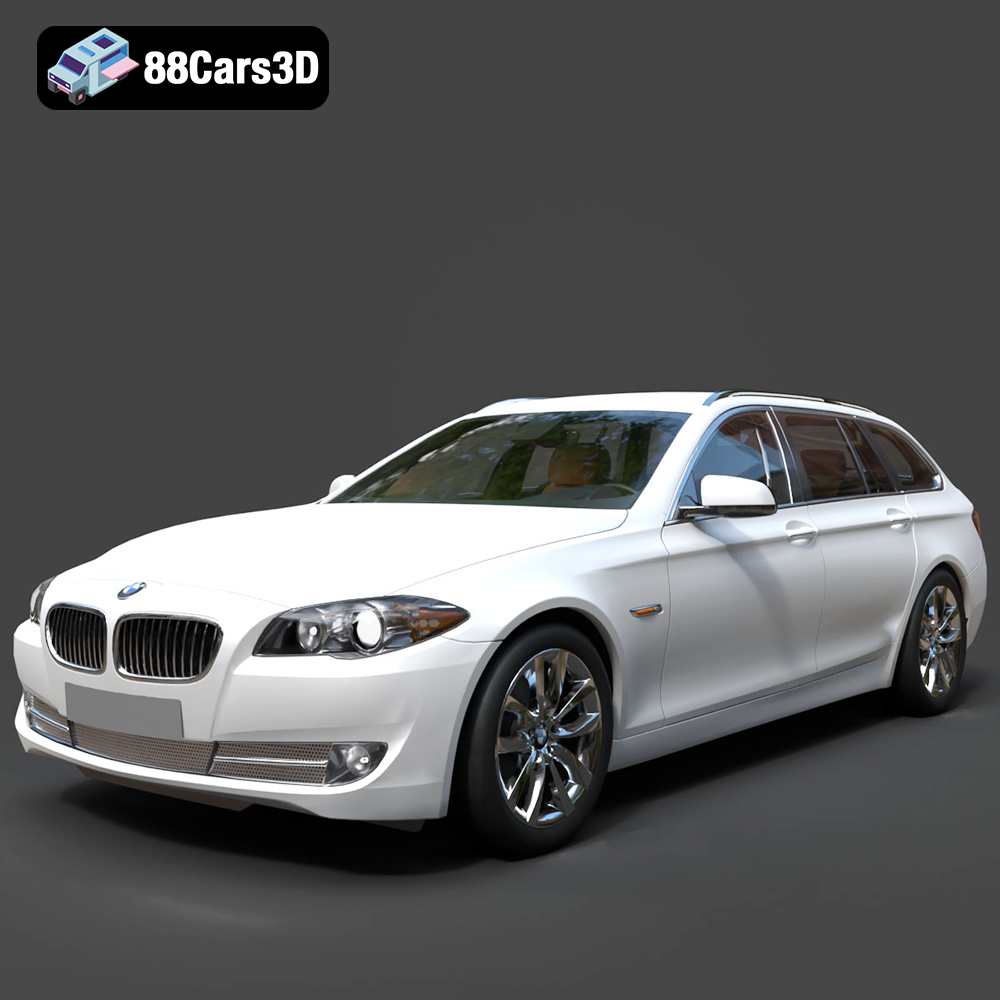
BMW 5 Series Touring F11-007 3D Model
Texture: Yes
Material: Yes
Download the BMW 5 Series Touring F11-007 3D Model featuring a detailed exterior and interior. Includes .blend, .fbx, .obj, .glb, .stl, .ply, .unreal, and .max formats for rendering, simulation, and game development.
Price: $10.79
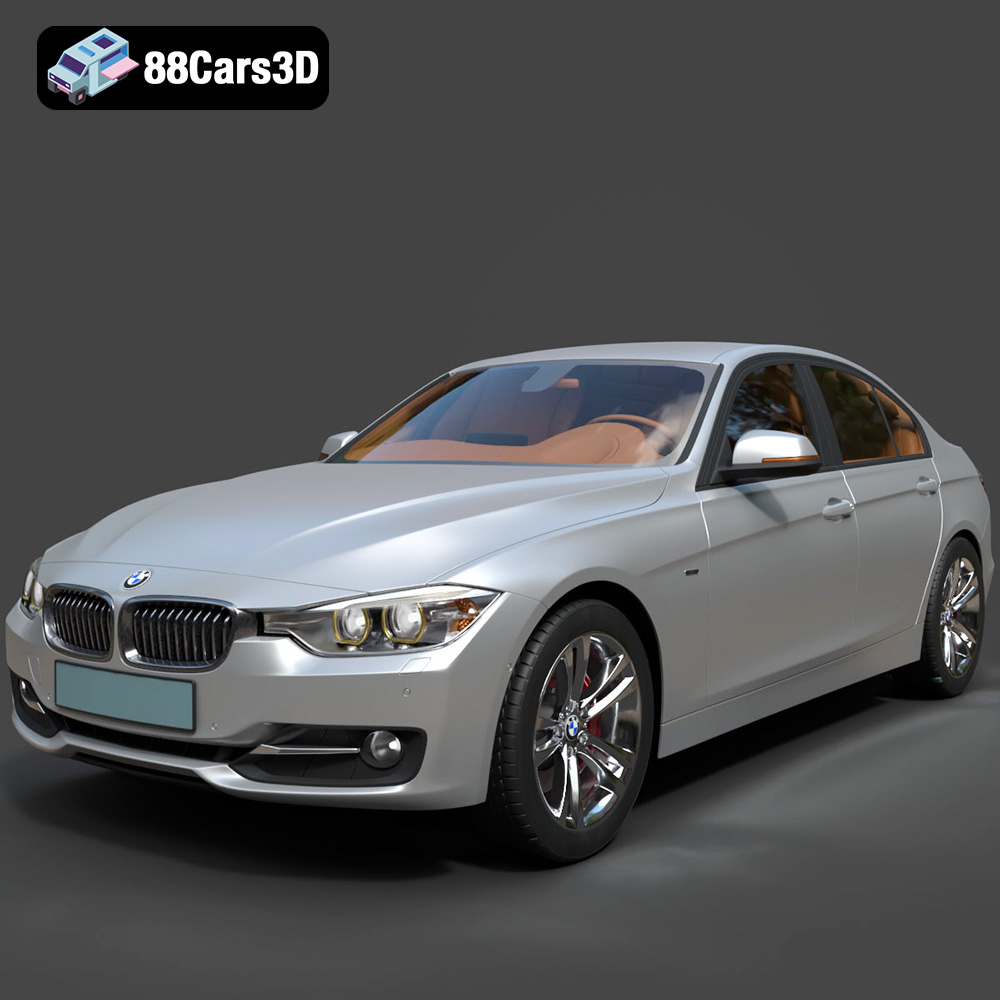
BMW 3 F30 3D Model
Texture: Yes
Material: Yes
Download the BMW 3 F30 3D Model featuring a detailed exterior, realistic interior, and optimized mesh. Includes .blend, .fbx, .obj, .glb, .stl, .ply, .unreal, and .max formats for rendering, simulation, and game development.
Price: $10.79
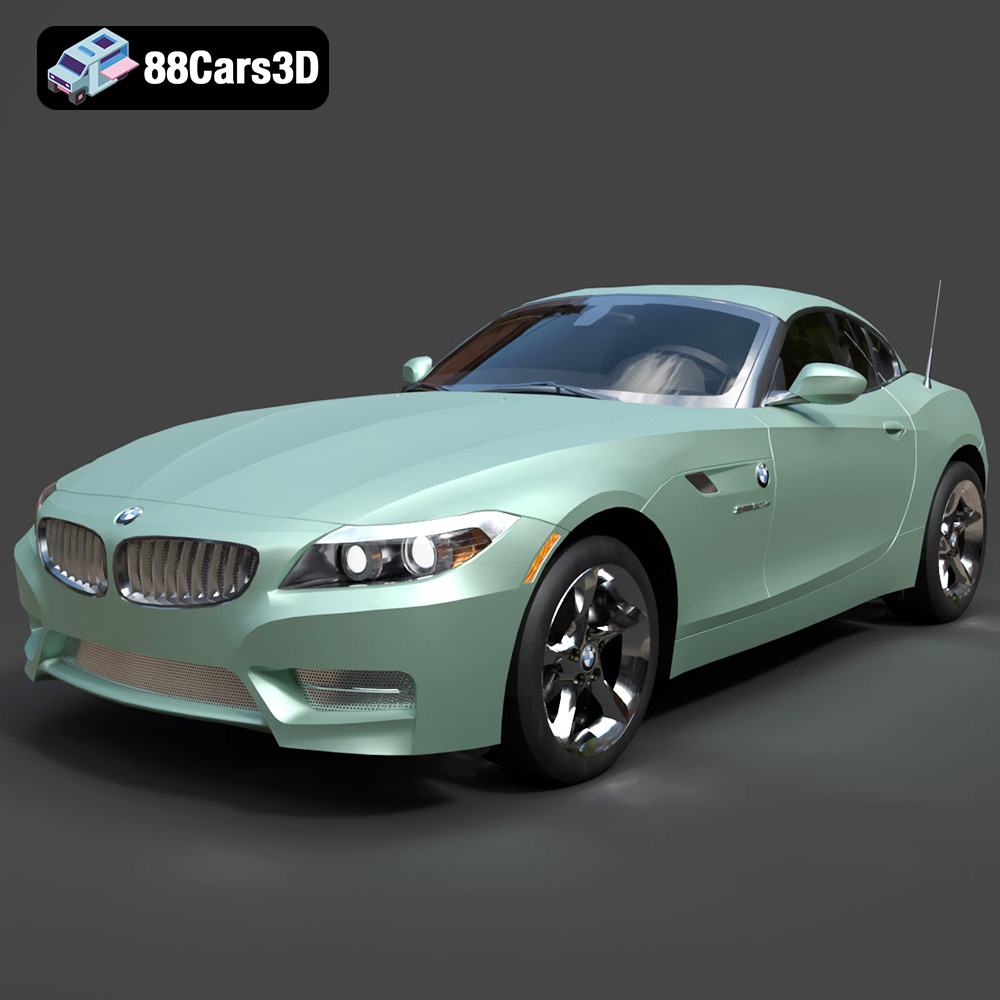
BMW Z4 Roadster E89 2012 3D Model
Texture: Yes
Material: Yes
Download the BMW Z4 Roadster E89 3D Model featuring clean geometry, realistic detailing, and a fully modeled interior. Includes .blend, .fbx, .obj, .glb, .stl, .ply, .unreal, and .max formats for rendering, simulation, and game development.
Price: $13.99

BMW Z4 E85 2005 3D Model
Texture: Yes
Material: Yes
Download the BMW Z4 E85 3D Model featuring clean geometry, realistic detailing, and a fully modeled interior. Includes .blend, .fbx, .obj, .glb, .stl, .ply, .unreal, and .max formats for rendering, simulation, and game development.
Price: $13.99

BMW M3 2024 3D Model
Texture: Yes
Material: Yes
Download the BMW M3 2024 3D Model featuring clean geometry, realistic detailing, and a fully modeled interior. Includes .blend, .fbx, .obj, .glb, .stl, .ply, .unreal, and .max formats for rendering, simulation, and game development.
Price: $13.99
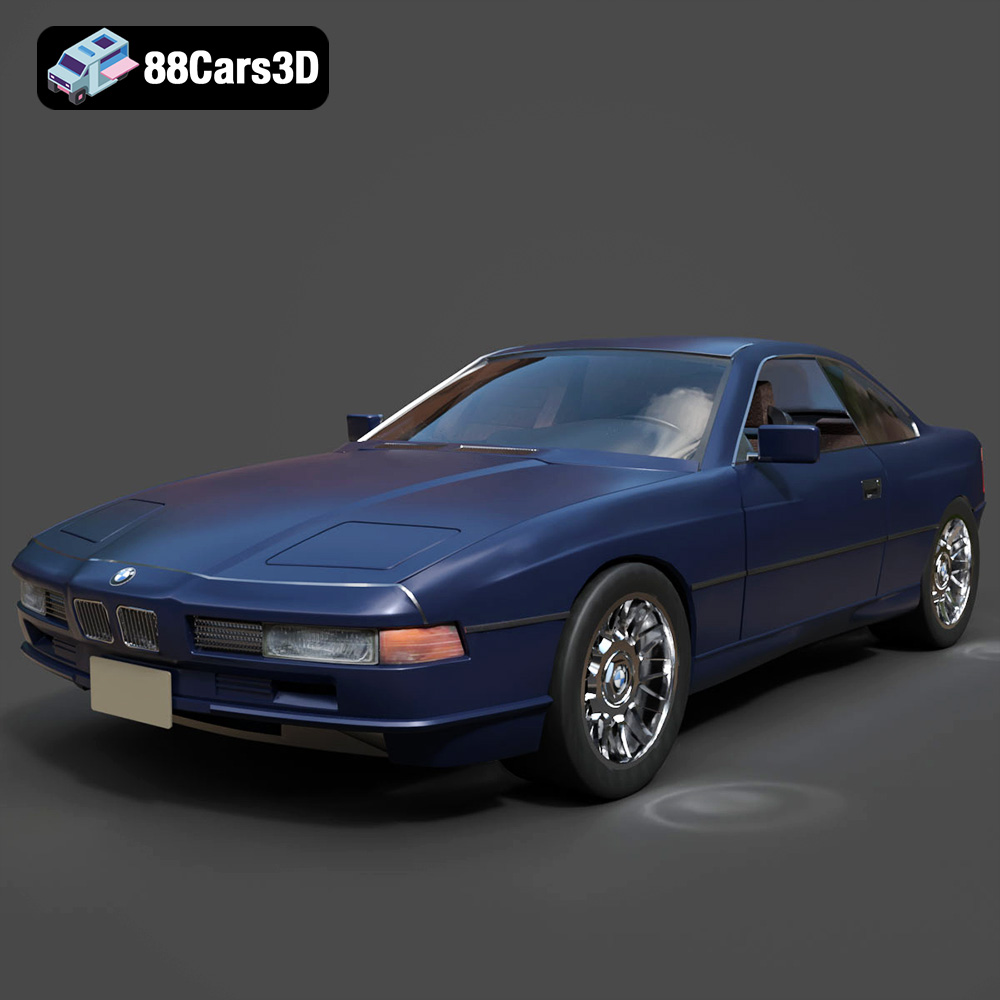
BMW 850i Coupe 1990 3D Model
Texture: Yes
Material: Yes
Download the BMW 850i Coupe 1990 3D Model featuring clean geometry, realistic detailing, and a fully modeled interior. Includes .blend, .fbx, .obj, .glb, .stl, .ply, .unreal, and .max formats for rendering, simulation, and game development.
Price: $13.99
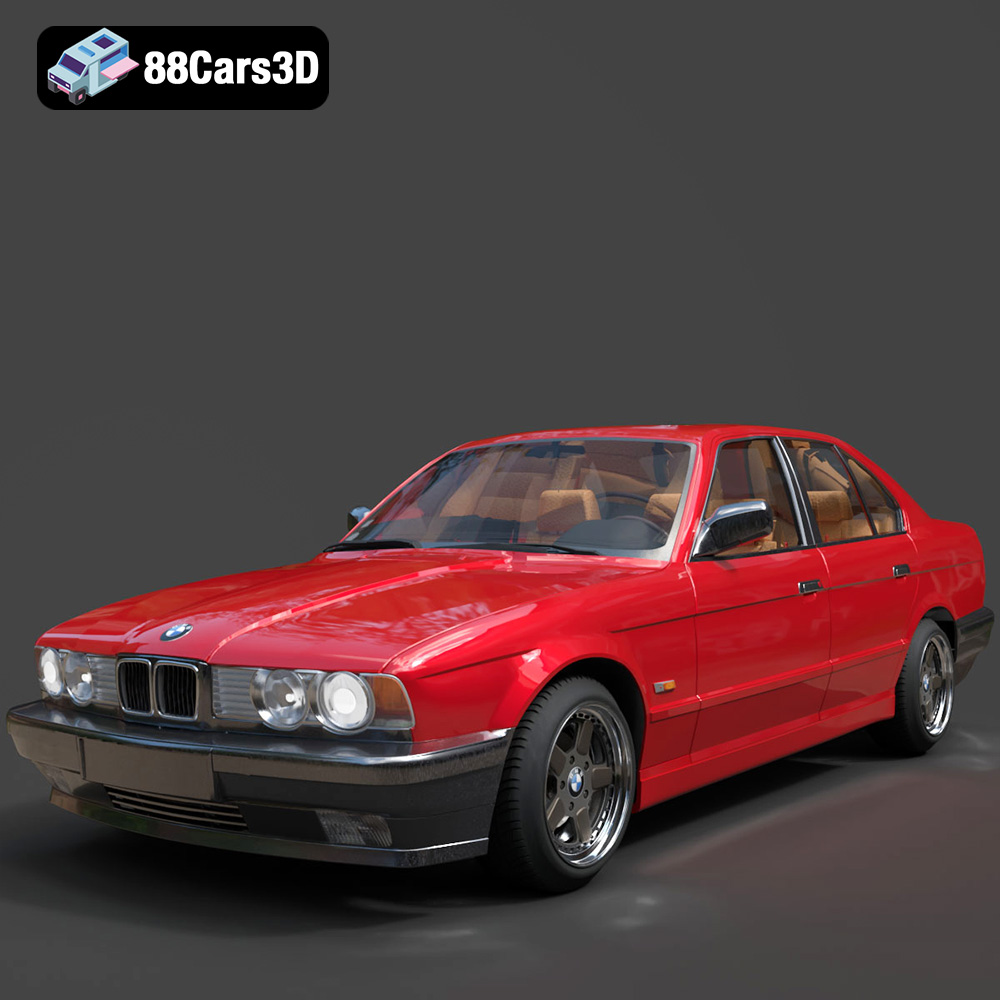
BMW 525i E34 1993 3D Model
Texture: Yes
Material: Yes
Download the BMW 525i E34 1993 3D Model featuring clean geometry, realistic detailing, and a fully modeled interior. Includes .blend, .fbx, .obj, .glb, .stl, .ply, .unreal, and .max formats for rendering, simulation, and game development.
Price: $12.99
