

Mastering Photorealism: An Advanced Guide to Automotive Rendering with Corona Renderer
The pursuit of photorealism in automotive visualization is a demanding yet incredibly rewarding art form. From breathtaking advertising campaigns and compelling game cinematics to intricate product design reviews and immersive AR/VR experiences, the ability to render vehicles with absolute fidelity to reality is paramount. Achieving this level of visual excellence requires a deep understanding of 3D modeling, texturing, lighting, and rendering techniques.
This comprehensive guide will take you on an advanced journey through the world of automotive rendering, with a specific focus on harnessing the power of Corona Renderer. We’ll delve into the intricate details that transform a 3D model into a visually indistinguishable replica of a real car. You’ll learn critical workflows, technical specifications, and industry best practices—from preparing a flawless 3D model with impeccable topology and UV mapping to crafting PBR materials, setting up dramatic lighting, optimizing your renders, and polishing the final image through expert post-processing. Whether you’re a seasoned 3D artist, an aspiring game developer, or an automotive designer, this article will equip you with the knowledge to elevate your automotive renders to cinematic quality. To kickstart your projects, platforms like 88cars3d.com offer a wide array of high-quality 3D car models, providing an excellent foundation for your rendering endeavors.
1. The Foundation: High-Quality 3D Car Models and Topology
The bedrock of any photorealistic render is an impeccably crafted 3D model. No amount of advanced rendering wizardry can fully compensate for a poorly constructed mesh. Automotive models, with their sleek curves, precise panel gaps, and intricate details, demand particular attention to topology and mesh integrity. Understanding these fundamentals is crucial, whether you are modeling from scratch or working with existing assets.
Understanding Automotive Topology and Edge Flow
Automotive surfaces are defined by smooth, continuous curves and sharp, crisp creases. Achieving this in a polygonal model requires meticulous attention to topology—the arrangement of vertices, edges, and faces. The gold standard for automotive meshes is a quad-dominant topology, meaning the vast majority of your faces should be quads (four-sided polygons). Quads subdivide predictably, allowing for smooth surfaces without pinching or artifacts when subdivision modifiers (like OpenSubdiv) are applied. While a few triangles are sometimes unavoidable in complex areas, N-gons (polygons with more than four sides) should be strictly avoided as they lead to unpredictable subdivision and shading issues.
**Edge flow** is equally critical. It refers to how the edges on your mesh follow the natural contours and details of the object. For a car, this means edge loops should gracefully define the curvature of fenders, flow around headlights and taillights, and precisely delineate panel gaps, character lines, and sharp edges. These edge loops provide the necessary geometric support for crisp details, preventing them from softening or disappearing under subdivision. For example, a sharp crease like a body line typically requires three closely spaced edge loops—one on the actual crease and two supporting loops on either side—to hold its definition when subdivided. Aim for even distribution of polygons where possible to avoid stretched or compressed faces that can cause texture distortion or shading artifacts. When sourcing models from marketplaces such as 88cars3d.com, always inspect the wireframe to ensure clean, quad-based topology.
Preparing Your Model for Rendering
Once the modeling phase is complete, or if you’re starting with a purchased model, a thorough preparation stage is essential before diving into texturing and rendering. This involves a series of checks and clean-up operations to ensure the model behaves predictably in the renderer.
First, **check for flipped normals**. Normals dictate which direction a polygon is facing, and incorrect normals will result in black areas or shading errors. Most 3D software has a “face normal” display mode to identify and fix these. Second, meticulously **scan for overlapping geometry** or internal faces that are not visible. These can cause rendering artifacts, increase render times, and consume unnecessary memory. Tools like “merge by distance” or “weld vertices” can help clean up duplicate vertices. Third, ensure **consistent smoothing groups** or apply appropriate **subdivision surface modifiers**. For most automotive surfaces, OpenSubdiv is the industry standard for smooth, high-quality subdivision. This typically involves setting sharp edges and smoothing groups appropriately to guide the subdivision process.
Finally, **verify the model’s scale**. Rendering engines rely on real-world scale for accurate lighting calculations, material properties, and depth of field effects. Ensure your car model is built to its real-world dimensions (e.g., in meters or centimeters). A common polygon count for a high-quality, render-ready automotive model can range from 200,000 to 1,000,000 polygons (unsubdivided), depending on the level of detail. When subdivided, this can easily jump into the millions. Keeping an eye on your polygon count is important for performance, especially when building complex scenes with multiple vehicles or detailed environments.
2. Mastering UV Mapping for Flawless Surfaces
UV mapping is the bridge between your 3D model’s geometry and its 2D textures. Without properly laid out UVs, even the most exquisite PBR textures will appear distorted, stretched, or mismatched. For the complex, compound curves of an automobile, strategic UV mapping is a critical skill for achieving photorealistic results.
Strategic UV Layout for Automotive Surfaces
The primary goal of UV mapping is to create a flattened 2D representation of your 3D model’s surface, minimizing seams, avoiding stretching, and ensuring uniform texel density. For automotive models, this often means treating different parts of the car with different UV strategies.
For the main body panels, a method like **pelting** or **unfolding** can be effective to create large, continuous UV islands. The challenge is to place seams in inconspicuous areas, such as along natural panel gaps or hidden edges. These seams should be strategically placed to minimize their visual impact, especially when dealing with reflective surfaces like car paint. For large surfaces, especially those requiring extremely high-resolution textures (e.g., for decals, intricate paint jobs, or detailed dirt maps), the **UDIM workflow** is indispensable. UDIMs allow you to spread the UV space for a single mesh or object across multiple 0-1 UV tiles, enabling you to use many smaller, high-resolution textures instead of one massive, unwieldy one. This is common for the main body of a car or a highly detailed interior.
Consistency in **texel density** (pixels per unit of surface area) across all UV islands is paramount. A uniform texel density ensures that all textures appear at a consistent resolution on the model, preventing some areas from looking blurry while others are crisp. For components like tires, you might use a cylindrical projection for the sidewall and planar mapping for the treads. Glass elements can often use simple planar or box mapping, as their materials are primarily driven by refraction rather than complex texture maps.
Overcoming UV Challenges and Optimizations
Complex curved surfaces, such as those found on car bodies, often present significant UV challenges. Avoiding stretching on these surfaces requires careful placement of UV seams and often involves several iterations of unwrapping and checking with a UV checker pattern. This visual aid immediately highlights areas of distortion or inconsistent texel density.
For repetitive elements, such as tire treads or grilles, you might strategically **overlap UVs** to save texture space. For example, if a tire tread pattern is symmetrical, you could UV map one segment and then overlap the UVs of the other segments onto the same area, thus reducing the texture memory footprint. However, be cautious with overlapping UVs if you plan to bake unique details like wear and tear or dirt maps onto those surfaces, as the baked details would be identical.
Efficiently **packing UVs** after unwrapping is crucial to maximize the use of your texture resolution. Most 3D software offers robust UV packing algorithms that arrange UV islands tightly within the 0-1 UV space, minimizing wasted space. For general modeling, rigging, animation, and UV mapping tasks in Blender, the official Blender 4.4 documentation offers extensive resources and step-by-step guides to master these techniques. You can explore it further at https://docs.blender.org/manual/en/4.4/. Regularly checking your UVs with a checker map and understanding your software’s unwrapping tools are key to producing flawless surfaces ready for advanced texturing.
3. PBR Materials and Shading Networks in Corona Renderer
Physically Based Rendering (PBR) has revolutionized material creation, enabling artists to achieve unprecedented levels of realism by accurately simulating how light interacts with surfaces. Corona Renderer is built from the ground up to handle PBR workflows, making it an ideal choice for crafting photorealistic automotive shaders.
Crafting Realistic Automotive Shaders
The cornerstone of PBR in Corona is the **Corona Physical Material**. This versatile material allows you to define a surface’s properties using a set of intuitive parameters:
* **Base Color (Albedo):** Defines the inherent color of the surface, free from lighting information. This is typically a texture map.
* **Roughness:** Controls how rough or smooth a surface is, directly impacting the sharpness of reflections. A low roughness (closer to 0) indicates a very smooth, reflective surface (like polished metal), while a high roughness (closer to 1) indicates a diffuse, matte surface (like rubber).
* **Metallic:** A binary value (0 or 1, or a grayscale map for blended materials) that dictates whether a material behaves like a dielectric (non-metal) or a conductor (metal). Pure metals have a Metallic value of 1 and their Base Color defines their reflective color. Dielectrics have a Metallic value of 0.
* **IOR (Index of Refraction):** Crucial for transparent and translucent materials like glass, water, and some plastics. It defines how much light bends when passing through the material. Glass typically has an IOR of around 1.5-1.6.
* **Anisotropy:** Simulates the effect where reflections stretch in one direction, common on brushed metals, satin finishes, and certain car paints.
**Car Paint** is one of the most complex materials to get right. It typically involves multiple layers: a base metallic coat, a clear coat, and often metallic flakes. The Corona Physical Material can simulate this effectively by using multiple layers or by carefully crafting the Base Color, Metallic, and Roughness maps, along with subtle Anisotropy for the clear coat. For flakes, a procedural noise map or a dedicated flake texture mapped to a bump or normal slot can be used to break up reflections and add sparkle.
**Glass shaders** (windshields, windows, headlights) require precise IOR values and usually some absorption and dispersion (if physically accurate lenses are needed). Use the Corona Physical Material with transparency and refraction enabled, setting the IOR to about 1.5-1.6 for standard glass. For headlights and taillights, consider using transparent materials for the lens covers and reflective materials for the internal reflectors.
**Tire rubber** needs varying levels of roughness—smoother on the sidewall, rougher and perhaps with subtle displacement/normal maps for the tread. **Chrome and other polished metallics** are achieved with a high Metallic value, very low Roughness, and a Base Color that might be a subtle shade of gray or blue, depending on the type of chrome.
Advanced Material Techniques and Layering
Beyond the basic parameters, advanced techniques allow for even greater realism. **Layered materials** are indispensable for creating intricate wear and tear, dirt, dust, and grime effects. In Corona, you can blend multiple Corona Physical Materials using masks (e.g., curvature maps, ambient occlusion maps, or hand-painted masks) to reveal underlying layers. Imagine a chipped paint effect revealing primer or bare metal underneath, or dust accumulating in crevices.
**Procedural textures** (like various noise patterns) can be invaluable for adding subtle imperfections and variations that break up perfectly clean surfaces, making them feel more organic and real. Use them to drive subtle variations in roughness, color, or even very fine displacement.
**Bump mapping** and **Normal mapping** are excellent for adding fine surface detail without increasing polygon count, while **Displacement mapping** provides actual geometric detail, pushing and pulling vertices. Displacement is more resource-intensive but can be crucial for highly detailed elements like carbon fiber weaves or deep tire treads that need to catch light and shadow accurately.
Always use **accurate IOR values** for different materials. For example, plastic typically ranges from 1.45-1.55, while water is 1.33. For translucent plastics or leathers, consider using **Subsurface Scattering (SSS)** in your Corona Physical Material to simulate light penetrating the surface, scattering internally, and exiting at a different point, which adds a soft, organic quality.
4. Lighting for Dramatic Automotive Renders
Lighting is arguably the most crucial element in transforming a good render into a truly spectacular one. It defines the mood, highlights form, and brings out the intricate details of your automotive model. Corona Renderer’s physically accurate lighting system offers immense flexibility and power to achieve stunning results.
Studio Lighting Setups with Corona Lights
For showcasing a car’s design in a controlled environment, studio lighting is paramount. The classic **three-point lighting setup** (key, fill, and rim light) serves as an excellent starting point, but automotive studio lighting often expands beyond this to multiple light sources for nuanced reflections.
* **Key Light:** The primary light source, defining the main shape and contours. Often a large softbox or a rectangular Corona Light plane, mimicking studio strobes. Its position and intensity are critical for establishing the overall mood.
* **Fill Light:** Softer, less intense than the key, used to reduce harsh shadows and reveal details in darker areas. Often a larger, more diffused Corona Light or a bounce card.
* **Rim Light:** Placed behind and to the side of the car, highlighting edges and separating the vehicle from the background, adding definition and drama. Often a long, narrow strip light.
**Corona Light** objects (Plane, Sphere, Disc, Mesh) are your primary tools. **Plane lights** are excellent for creating softbox and strip light effects, providing elongated reflections that accentuate the car’s lines. Using real-world **IES profiles** with Corona Lights can simulate the precise light distribution patterns of actual light fixtures, adding another layer of realism, especially for headlights and interior lights.
Beyond direct lighting, **HDRI environments** are indispensable. A high-dynamic-range image used in a Corona environment slot provides physically accurate global illumination and, crucially, realistic reflections that define the surfaces of the car. Even in a studio setup, a subtle HDRI of a studio environment can dramatically improve reflections. Experiment with the rotation of your HDRI to find the most appealing reflections and highlights on the car’s body. Pay close attention to **light temperature** (Kelvin) to evoke specific moods—cooler temperatures for a sterile, modern look, warmer for a luxurious or vintage feel—and **intensity** to control the overall brightness and contrast.
Environmental and Scene Lighting Techniques
For outdoor or integrated scene renders, the lighting strategy shifts to simulate natural or artificial environments.
**Corona Sky and Sun** offer a physically accurate simulation of natural daylight. You can adjust time of day, turbidity (haze), and ozone levels to create various atmospheric conditions, from crisp morning light to a dramatic sunset. The beauty of the Corona Sun lies in its physically accurate shadows and interaction with your scene.
For more control over reflections and overall atmosphere, especially for specific times of day or unique outdoor locations, **custom HDRIs** are essential. A high-quality HDRI of a cityscape, a forest, or a specific road environment provides both the lighting and the reflection data, creating a cohesive and believable scene. When integrating your car render onto a **photographic backplate**, it’s crucial to match the lighting and perspective of the backplate precisely. This involves aligning the camera, matching the sun’s position and intensity, and ensuring the ambient light color and intensity are consistent.
Beyond direct light sources, consider how light interacts with the surrounding environment. **Global Illumination (GI)** is automatically handled by Corona, but understanding how bounce light affects your scene is important. Using **gobos** (patterns projected through lights) or **blockers** (objects to block or shape light) can add artistic flair or simulate specific light conditions, such as dappled sunlight filtering through trees. Finally, always think about **realistic reflection maps**. Even in areas without direct light, reflections from the environment contribute significantly to the perceived realism of materials, especially on highly reflective automotive surfaces.
5. Corona Renderer Settings and Optimization for Speed and Quality
Achieving photorealistic renders often involves a trade-off between render quality and render time. Corona Renderer’s intuitive settings and powerful optimization features allow artists to efficiently balance these factors, producing high-quality images without excessive waits.
Core Corona Renderer Settings
Corona Renderer is known for its ease of use, often producing excellent results with minimal tweaking due to its physically-based core. However, understanding key settings can further refine your output and optimize render times.
* **Render Passes:** Corona calculates various “passes” during rendering that can be saved as separate images. The main **Beauty Pass** is your final image, but other passes like **Denoising Pass**, **Reflection Pass**, **Refraction Pass**, **Z-Depth Pass**, **Alpha Pass**, and **Cryptomatte** are invaluable for post-processing and compositing.
* **Adaptive Image Sampling:** Corona’s intelligent sampling focuses rendering power on areas that need it most (e.g., noisy reflections or complex shadows), making it very efficient.
* **Denoising:** This is a game-changer. Corona offers powerful denoisers, notably **NVIDIA OptiX** (requiring an NVIDIA GPU) and **Intel Open Image Denoise** (CPU-based). These tools significantly reduce noise in lower-pass renders, allowing you to achieve clean images much faster than waiting for perfect sampling. You can set the denoising amount (e.g., 0.65 for a balance between denoising and detail preservation).
* **Light Mix:** This incredible feature allows you to adjust the color and intensity of individual lights or groups of lights *after* the render is complete, without re-rendering. It’s a lifesaver for fine-tuning lighting and experimenting with different moods.
* **Render Elements:** These are additional layers of information generated during the render that provide granular control during compositing. Examples include `CESSENTIAL_ALBEDO`, `CESSENTIAL_DIRECT`, `CESSENTIAL_INDIRECT`, `CESSENTIAL_REFLECT`, etc., allowing you to rebuild the final image with precise control in post-production.
* **Render Limits:** Corona renders until a specified limit is reached. You can set limits based on **Passes** (number of render passes), **Noise Level** (render until a certain noise threshold is met), or **Time**. For production renders, aiming for a noise level of 2-3% or letting it run for a specific duration (e.g., 1-2 hours for a still image) is common.
Advanced Optimization Strategies
Even with Corona’s efficiency, complex automotive scenes can be heavy. Employing smart optimization strategies is key to maintaining manageable render times.
* **Proxy Objects:** For highly detailed background elements or repeated complex objects (e.g., a forest of trees, a crowd of people, or even other cars in the distance), convert them to Corona Proxies. Proxies load only when needed at render time, significantly reducing viewport lag and memory consumption.
* **Instancing:** Whenever you have multiple identical objects, ensure they are instances rather than unique copies. Instancing tells the renderer to treat them as the same geometry, dramatically reducing memory usage. This is perfect for tire treads (if modeled as separate objects), nuts, bolts, or small environmental details.
* **Render Region:** For quick tests and iterative adjustments, use the render region tool to render only a specific part of your image. This saves a lot of time compared to re-rendering the entire frame.
* **Material Optimization:** Not all materials require the same level of sampling. Materials in the background or those with less intricate details can sometimes have slightly lower sample overrides if your 3D software supports it, although Corona’s adaptive sampling often handles this automatically. Avoid unnecessarily complex material networks when a simpler one will suffice for distant objects.
* **Memory Management:** Keep an eye on your scene’s memory usage. High-resolution textures, excessive polygon counts, and too many unique objects can quickly exhaust RAM. Use efficient UV packing, consider reducing texture resolutions for distant objects, and remove any hidden or unused geometry.
* **Ray Tracing Optimization:** Corona is a biased renderer, meaning it balances speed and accuracy. While you generally want to keep most settings default for physical accuracy, understanding how reflection and refraction depths work (e.g., the maximum number of times a ray can bounce) can slightly impact render times for very complex glass/liquid setups, though generally, default values are sufficient for automotive renders.
6. Post-Processing and Compositing for the Final Polish
The raw render straight out of Corona is rarely the final product. Post-processing and compositing are crucial stages where you can elevate your image, refine details, correct colors, and add artistic flourishes that truly make your automotive render shine. This is where you transform a technically excellent image into a visually captivating masterpiece.
Enhancing Renders in Image Editing Software
Once your render passes are complete, typically saved as multi-layered EXR or PSD files, it’s time to bring them into an image editing software like Photoshop, Affinity Photo, or GIMP.
* **Exposure, Contrast, and Color Correction:** These are your fundamental adjustments. Global exposure tweaks can brighten or darken the image, while contrast adjustments add punch. Color correction involves balancing white points, adjusting color temperature, and subtly shifting hues to achieve the desired mood or to match a reference image. Use curves and levels for precise control.
* **Adding Bloom and Glare (Lens Effects):** These effects simulate the way light scatters within a camera lens, adding a subtle halo around bright lights (bloom) or starburst patterns (glare). Corona Renderer has built-in VFB (Virtual Frame Buffer) post-processing options for these, but you can also add them in post for more control. Apply them subtly to headlights, reflections, or chrome elements for added realism.
* **Vignette and Chromatic Aberration:** A subtle vignette (darkening the edges of the frame) can draw the viewer’s eye towards the subject. Chromatic aberration, a slight color fringing, simulates a real-world lens imperfection, adding a touch of organic realism, but use it very sparingly to avoid an amateurish look.
* **Sharpening and Noise Reduction:** While Corona’s denoiser handles most noise, a final pass of sharpening can bring out fine details. Be careful not to over-sharpen, which can introduce artifacts. Conversely, if any subtle noise remains, a very light noise reduction filter can smooth it out.
* **Using Render Elements:** This is where the power of your multi-pass render truly comes to life.
* **Z-Depth Pass:** Allows you to create realistic **depth of field** effects in post, blurring parts of the image based on their distance from the camera. This is much faster and more flexible than rendering DoF directly in 3D.
* **Cryptomatte:** An incredibly powerful pass that generates anti-aliased ID masks for objects, materials, and asset names. This enables you to precisely select and adjust specific elements of your render (e.g., changing the color of the car paint, enhancing reflections on the glass, or adjusting specific chrome parts) without tedious manual masking.
Advanced Compositing Techniques
For ultimate control and to integrate your car into complex scenes, advanced compositing techniques are essential.
* **Combining Multiple Render Passes:** This involves layering and blending various render elements (e.g., direct light, indirect light, reflections, refractions, shadows, ambient occlusion) to rebuild the final image. This gives you unparalleled control over every aspect of the lighting and shading, allowing you to fine-tune each component independently.
* **Integrating Car Renders into Photographic Backplates:** This is a common and challenging task. Beyond matching lighting and perspective (as discussed in the lighting section), it involves careful color grading to ensure the car’s colors and lighting seamlessly match the backplate. Adding subtle atmospheric effects like haze or dust, and ensuring realistic shadows that interact with the ground of the backplate, are critical. Use shadow passes and reflection passes to help ground the car in the scene.
* **Adding Motion Blur (if animation):** For animated car renders, realistic motion blur is crucial. While some 3D software can calculate motion blur, it’s often more efficient and artistically flexible to add it in a compositing package, using velocity passes from your render.
* **Color Grading to Set the Mood:** This goes beyond simple color correction. Color grading is an artistic process of manipulating the overall color palette to evoke a specific emotion or atmosphere. Think cinematic color grades used in films.
* **Importance of a Linear Workflow:** Ensure your entire workflow, from rendering to compositing, adheres to a linear color space. This prevents color shifts and ensures accurate light calculations. Most modern software and renderers handle this automatically, but it’s important to be aware of. Working with 32-bit floating-point EXR files throughout the compositing process preserves the maximum amount of color and light information.
Conclusion
Achieving photorealistic automotive renders with Corona Renderer is a journey that intertwines technical precision with artistic vision. As we’ve explored, it begins long before you hit the render button, rooted in the foundational quality of your 3D model’s topology and the meticulous craftsmanship of its UV maps. These critical steps ensure that your surfaces are primed to accept the rich detail of PBR materials.
From there, we delved into the intricacies of crafting physically accurate car paint, glass, and metallic shaders within Corona, understanding how parameters like roughness, metallic, and IOR breathe life into your virtual vehicle. We then illuminated the importance of thoughtful lighting—whether simulating a controlled studio environment with precisely placed Corona Lights or capturing the natural drama of an outdoor scene with HDRIs and Corona Sky & Sun. Finally, we covered the essential optimization strategies to balance quality and render time, culminating in the post-processing and compositing techniques that add that final, indispensable layer of polish and artistry.
The path to photorealism is iterative and demands practice and experimentation. Embrace the challenges, continually refine your eye, and leverage the powerful tools at your disposal. Remember that starting with a high-quality asset significantly streamlines this process, and platforms like 88cars3d.com are an excellent resource for production-ready 3D car models that provide a solid foundation for your advanced rendering projects. Keep learning, keep pushing the boundaries, and watch your automotive visualizations transform from impressive to truly indistinguishable from reality.
Featured 3D Car Models

BMW 7 Series E38 3D Model
Texture: Yes
Material: Yes
Download the BMW 7 Series E38 3D Model featuring its iconic luxury sedan design and classic aesthetics. Includes .blend, .fbx, .obj, .glb, .stl, .ply, .unreal, and .max formats for rendering, simulation, and game development.
Price: $10.79

BMW 6 Series 640i F12 3D Model
Texture: Yes
Material: Yes
Download the BMW 6 Series 640i F12 3D Model featuring a sleek design and detailed interior. Includes .blend, .fbx, .obj, .glb, .stl, .ply, .unreal, and .max formats for rendering, simulation, and game development.
Price: $10.79

BMW 6 Coupe E63 3D Model
Texture: Yes
Material: Yes
Download the BMW 6 Coupe E63 3D Model featuring a sleek design, detailed interior, and realistic exterior. Includes .blend, .fbx, .obj, .glb, .stl, .ply, .unreal, and .max formats for rendering, simulation, and game development.
Price: $10.79
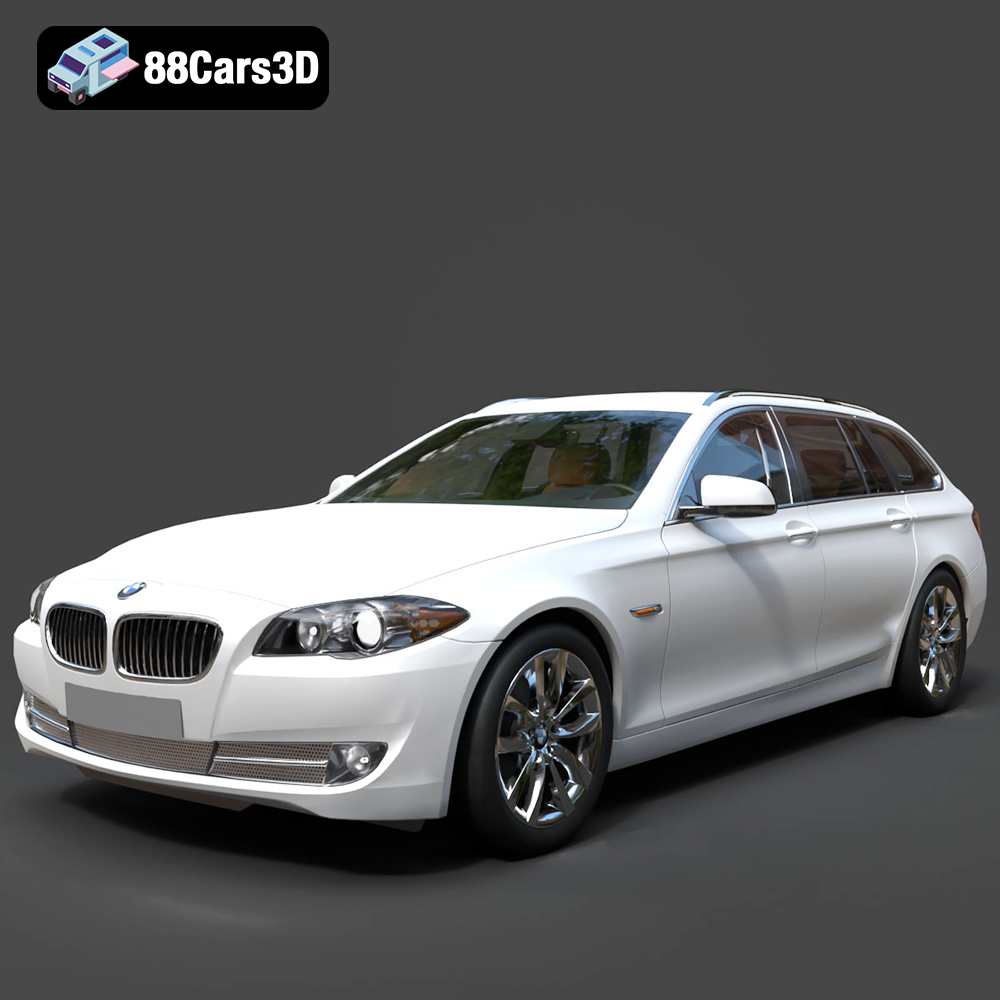
BMW 5 Series Touring F11-007 3D Model
Texture: Yes
Material: Yes
Download the BMW 5 Series Touring F11-007 3D Model featuring a detailed exterior and interior. Includes .blend, .fbx, .obj, .glb, .stl, .ply, .unreal, and .max formats for rendering, simulation, and game development.
Price: $10.79
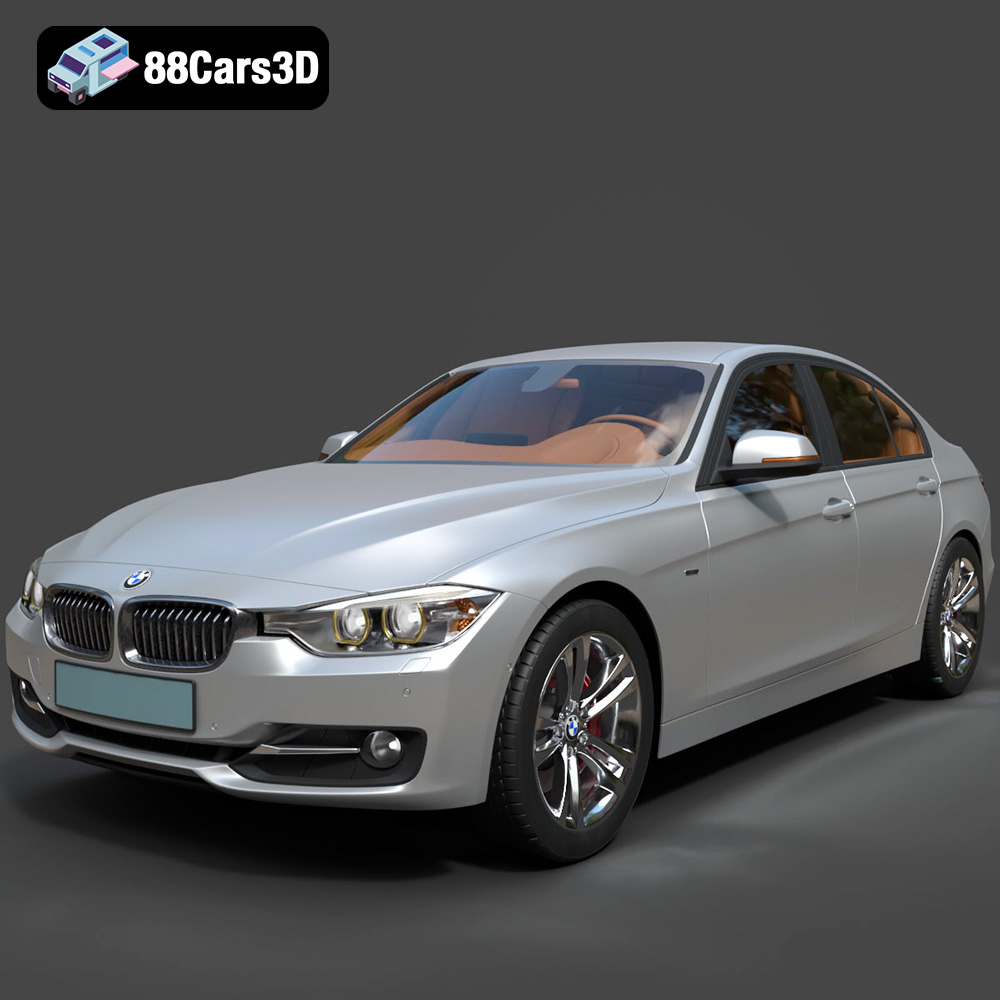
BMW 3 F30 3D Model
Texture: Yes
Material: Yes
Download the BMW 3 F30 3D Model featuring a detailed exterior, realistic interior, and optimized mesh. Includes .blend, .fbx, .obj, .glb, .stl, .ply, .unreal, and .max formats for rendering, simulation, and game development.
Price: $10.79
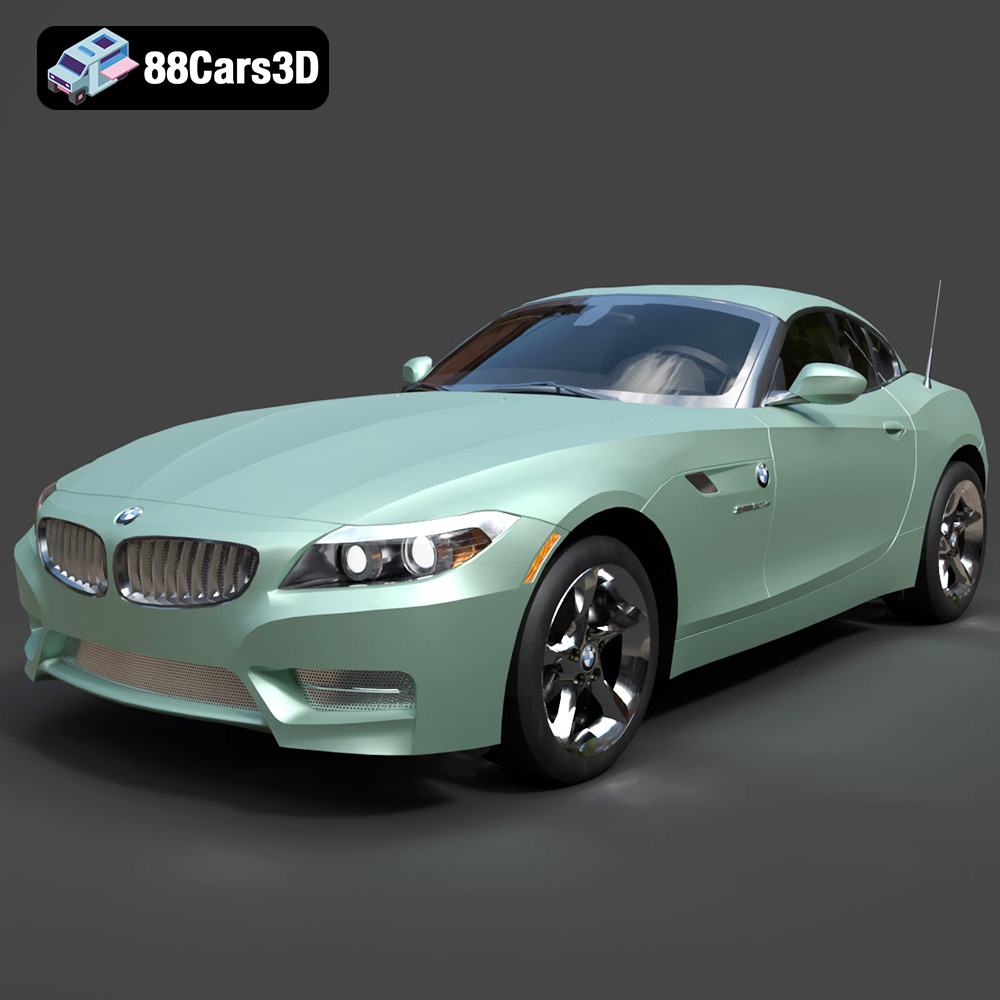
BMW Z4 Roadster E89 2012 3D Model
Texture: Yes
Material: Yes
Download the BMW Z4 Roadster E89 3D Model featuring clean geometry, realistic detailing, and a fully modeled interior. Includes .blend, .fbx, .obj, .glb, .stl, .ply, .unreal, and .max formats for rendering, simulation, and game development.
Price: $13.99

BMW Z4 E85 2005 3D Model
Texture: Yes
Material: Yes
Download the BMW Z4 E85 3D Model featuring clean geometry, realistic detailing, and a fully modeled interior. Includes .blend, .fbx, .obj, .glb, .stl, .ply, .unreal, and .max formats for rendering, simulation, and game development.
Price: $13.99

BMW M3 2024 3D Model
Texture: Yes
Material: Yes
Download the BMW M3 2024 3D Model featuring clean geometry, realistic detailing, and a fully modeled interior. Includes .blend, .fbx, .obj, .glb, .stl, .ply, .unreal, and .max formats for rendering, simulation, and game development.
Price: $13.99
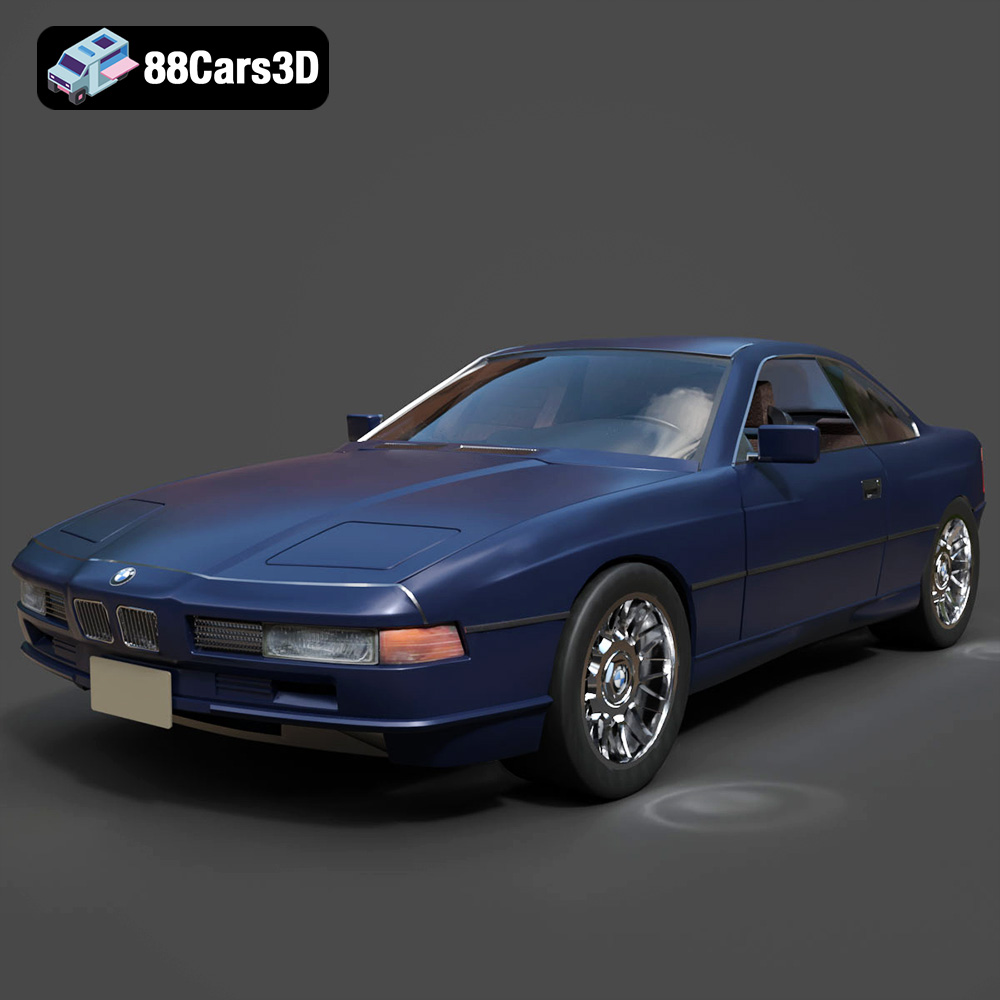
BMW 850i Coupe 1990 3D Model
Texture: Yes
Material: Yes
Download the BMW 850i Coupe 1990 3D Model featuring clean geometry, realistic detailing, and a fully modeled interior. Includes .blend, .fbx, .obj, .glb, .stl, .ply, .unreal, and .max formats for rendering, simulation, and game development.
Price: $13.99
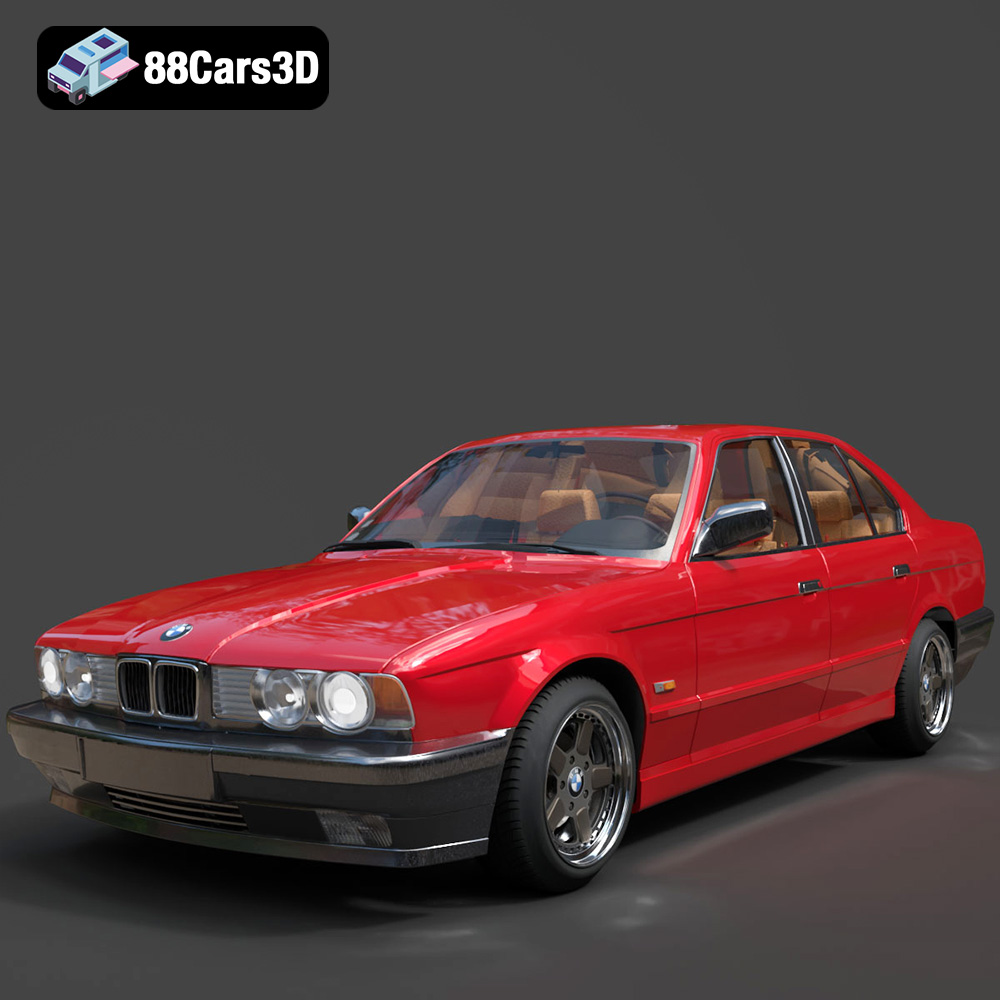
BMW 525i E34 1993 3D Model
Texture: Yes
Material: Yes
Download the BMW 525i E34 1993 3D Model featuring clean geometry, realistic detailing, and a fully modeled interior. Includes .blend, .fbx, .obj, .glb, .stl, .ply, .unreal, and .max formats for rendering, simulation, and game development.
Price: $12.99
