

“`html
Mastering Manual Supports: Precision Printing for Your 3D Car Models
The world of 3D printing, especially when dealing with intricate models like those found on 88cars3d.com, often presents a unique set of challenges. While automatic support generation has become a staple in slicing software, it’s not always the optimal solution for achieving the pristine finishes and structural integrity our automotive creations deserve. Many users find themselves wrestling with over-supported prints, difficult-to-remove structures, or, worse, print failures due to inadequate support. This is where the power of manual support placement truly shines. By understanding the principles of force, gravity, and overhangs, and by leveraging the tools within your slicing software, you can take control of the support process, ensuring a smoother print, cleaner removal, and a superior final model. In this comprehensive guide, we’ll delve deep into the art and science of manually adding supports, transforming your 3D printing experience from frustrating trial-and-error to a precise, controlled craft. We’ll cover everything from identifying critical overhangs to selecting the right support types and refining settings for effortless post-processing, empowering you to print complex car models with confidence.
Understanding the “Why”: The Physics of Support Structures
Before we dive into the “how,” it’s crucial to grasp the fundamental principles behind why supports are necessary. 3D printing, at its core, builds objects layer by layer, fusing material atop previously solidified layers. This process works beautifully when each new layer has a solid foundation beneath it. However, when a layer extends too far beyond the layer below, it loses this crucial support, and gravity takes over. This is particularly relevant for detailed automotive models, which often feature delicate spoilers, mirrors, undercarriages, and other protruding elements.
The Angle of Attack: Identifying Critical Overhangs
The most common trigger for needing supports is an overhang – a portion of the model that extends horizontally without sufficient underlying material. Most slicing software has a default overhang angle setting, typically around 45 degrees. This means any angle steeper than 45 degrees will, by default, receive supports. However, this is a generalization. The optimal overhang angle can vary significantly based on your printer, material, nozzle size, and even the specific geometry of the overhang itself.
- Material Properties: Some materials, like PLA, have excellent bridging capabilities and can handle steeper overhangs than more flexible materials like TPU.
- Nozzle Size: Smaller nozzles (e.g., 0.2mm) can often print finer details and might support steeper overhangs than larger nozzles (e.g., 0.6mm).
- Cooling: Effective part cooling is paramount. Well-cooled plastic solidifies faster, allowing it to support itself better, even on steeper angles.
- Print Speed: Printing overhangs slowly allows the extruded plastic more time to cool and adhere properly.
For delicate car parts, such as wing mirrors or spoilers, even a 45-degree overhang might require support to maintain crispness and prevent drooping. Manually assessing each overhang allows you to make informed decisions, supporting only what is truly necessary.
Bridging vs. Overhangs: A Crucial Distinction
It’s important to distinguish between bridging and overhangs. Bridging occurs when a print moves horizontally between two existing points without any material below it, essentially “bridging” a gap. Good bridging performance is key for features like car grilles or the gaps between wheel spokes. Overhangs, on the other hand, are typically angled sections that extend outwards. While slicers can often handle short bridges automatically (especially with good cooling and settings), significant overhangs almost always necessitate supports. Understanding this difference helps you identify precisely where your model needs reinforcement.
The Power of Control: Manual Support Placement Tools
Most modern slicing software, including popular options like Cura, PrusaSlicer, and Simplify3D, offer robust manual support placement features. These tools move away from the “all-or-nothing” approach of automatic supports and allow for precise intervention. The ability to add, remove, or modify individual support structures is invaluable for complex models, especially detailed automotive replicas. Platforms like 88cars3d.com provide STL files optimized for printing, but manual support control ensures these optimizations translate into successful prints.
“Touching Buildplate” vs. “Everywhere”: Strategic Support Placement
Slicers typically offer two primary modes for support generation: “Touching Buildplate” and “Everywhere.”
- Touching Buildplate: This mode generates supports only for parts of the model that are directly above the build plate. It’s excellent for models with a relatively flat base and avoids adding supports to internal structures or parts that are already supported by the model itself.
- Everywhere: This mode generates supports for any overhang, regardless of whether it’s touching the build plate or another part of the model. This is generally the more aggressive option and often leads to more supports, potentially making removal more challenging.
When manually placing supports, you often start with one of these general modes and then refine it. For instance, you might enable “Touching Buildplate” and then manually add supports to specific internal overhangs that “Everywhere” would have caught, but which you can now place more strategically.
Support Painting and Blockers: Fine-Tuning Your Supports
Advanced slicers offer “support painting” or “support blockers” (or similar concepts). These are powerful tools:
- Support Painting: This feature allows you to “paint” areas where you want supports to be generated and “erase” areas where you don’t. This is incredibly intuitive for complex geometries. You can paint directly onto your model in the slicer’s preview window. For a car model, you might paint supports under a spoiler lip but erase them from the smooth curves of the roof.
- Support Blockers: These are objects you place in the slicer that prevent supports from being generated in that specific volume. They are useful for blocking off entire sections, like the interior of a hollow model, or for preventing supports from interfering with delicate features that you can support manually later.
Mastering these tools is key to achieving clean, detailed prints without excessive material waste or post-processing headaches.
Crafting the Perfect Support: Types and Settings
The effectiveness of manual supports isn’t just about placement; it’s also about the type of support structure used and its associated settings. Different models and overhangs benefit from different support styles. Choosing the right type and tuning the parameters can dramatically impact print quality, ease of removal, and the surface finish of your final car model.
Tree Supports vs. Standard Supports: Choosing the Right Style
Most slicers offer at least two main types of supports:
- Standard/Normal Supports: These are typically generated as vertical columns or lattices originating from the build plate or the model itself, fanning out to support overhangs. They are robust and reliable but can sometimes be dense and leave significant artifacts.
- Tree/Branching Supports: These supports branch out like a tree, connecting to the model at multiple points. They often use less material, are easier to remove (as they touch the model at fewer points), and can be more effective for complex, organic shapes. For intricate car models with delicate details like side mirrors or intricate grilles, tree supports can be a game-changer, minimizing contact points and potential surface damage.
Experimenting with both types is recommended. For a sleek, aerodynamic car body, tree supports might be ideal. For a more robust chassis component with significant overhangs, standard supports might be necessary.
Key Support Settings for Precision Printing
Once you’ve chosen your support type, several critical settings in your slicer software allow you to fine-tune their behavior:
- Support Density/Pattern: Controls how dense the internal structure of the support is. Lower densities (e.g., 10-15% for standard) save material and time, while higher densities offer more rigidity. Patterns like “Grid” or “Lines” are common for standard supports.
- Support Line Thickness: The width of the support walls.
- Support Top/Bottom Thickness: The thickness of the horizontal layers at the top and bottom of the support structure. Increasing this can improve the surface quality of the model it supports.
- Z Distance (Support Interface): This is arguably the most crucial setting for clean removal. It defines the gap between the top of the support and the bottom of the model it’s supporting. A larger Z distance (e.g., 0.2mm – 0.4mm, depending on your layer height) makes removal easier but can lead to a rougher surface finish on the model. A smaller Z distance yields a smoother surface but makes supports harder to remove. This is where manual adjustment is key – finding the sweet spot.
- X/Y Distance (Support Interface): Similar to Z distance, this controls the horizontal gap between the support and the model.
- Support Interface Layers: Many slicers allow you to add solid layers at the top and bottom of the support structure where it interfaces with the model. This improves the surface finish of the model but increases adhesion and removal difficulty. You might use fewer interface layers or even disable them for parts that don’t require a perfectly smooth bottom surface.
- Support Placement: “Touching Buildplate” vs. “Everywhere” (as discussed earlier).
- Support Angle: The threshold angle above which supports are generated. Manually adjusting this can prevent unnecessary supports.
For high-quality car models from sources like 88cars3d.com, dialing in these settings is paramount. Start with conservative values and iterate. For example, try a Z distance of 0.2mm with standard supports for a test print, and if it’s too difficult to remove, increase it to 0.3mm. If the surface finish is poor, try decreasing it slightly or adding support interface layers.
Workflow: Integrating Manual Supports into Your Print Process
Successfully implementing manual supports requires a structured workflow. It’s not just about clicking a button; it’s an integral part of the preparation process, from downloading the file to the final post-processing. Thinking ahead about support removal during the design or download phase (as provided by 88cars3d.com) significantly simplifies this process.
Step-by-Step Manual Support Integration
Here’s a general workflow:
- Download and Inspect the Model: Obtain your desired car model (e.g., from 88cars3d.com) and load it into your preferred slicing software (Cura, PrusaSlicer, etc.).
- Initial Orientation: Rotate the model on the virtual build plate to find the orientation that minimizes overhangs and maximizes surface quality for critical areas (like the car body).
- Enable Manual Supports: Turn off automatic support generation.
- Identify Critical Areas: Visually inspect the model, paying close attention to overhangs, bridges, and protruding parts like spoilers, mirrors, and wheel arches. Use the slicer’s layer preview or overhang analysis tools if available.
- Place Initial Supports: If necessary, use the “Touching Buildplate” or “Everywhere” option as a starting point, or begin placing individual supports manually. Use the “Support Painter” or “Add Support” tool to place supports precisely where needed. For example, place a single support under the tip of a spoiler.
- Refine Support Settings: Adjust settings like Z distance, X/Y distance, density, and support type (tree vs. standard) for the specific supports you’ve placed or for the entire model if using global manual settings. Remember, a larger Z distance is easier to remove but may result in a rougher surface.
- Use Support Blockers (Optional): If certain areas should absolutely not have supports (e.g., the inside of a hollow model you don’t intend to fill), use support blockers to prevent them.
- Preview and Iterate: Thoroughly preview the sliced model layer by layer. Check that all critical overhangs are adequately supported and that supports aren’t interfering with essential details. If you see issues, go back to steps 4-6 and adjust.
- Slice and Print: Once satisfied, slice the model and begin the print.
Pre-computation and Model Repair
Before even thinking about supports, ensure your STL file is “watertight” and manifold. Complex models sometimes have errors like non-manifold edges, holes, or inverted normals. Software like Meshmixer, Netfabb, or even Blender can be used to repair these issues. Running an automatic repair function within these programs (or your slicer’s built-in repair) is often a good first step. A clean, manifold mesh prevents slicing errors and ensures supports can be generated reliably. Many premium STL marketplaces, including 88cars3d.com, strive to provide clean, pre-repaired files, but it’s always good practice to verify.
Understanding Layer Height and Support Interaction
The choice of layer height significantly impacts support generation and removal. Higher layer heights (e.g., 0.2mm or 0.3mm) print faster but result in more visible layer lines and can make support removal trickier due to larger “steps” between layers. Lower layer heights (e.g., 0.1mm or 0.15mm) produce smoother surfaces and finer details, making support removal cleaner, but significantly increase print time. When using manual supports, particularly with a small Z distance, a lower layer height often yields better results as the interface between the support and the model is smoother and easier to detach cleanly.
Troubleshooting Common Support Issues
Even with careful manual placement, challenges can arise. Understanding these common issues and their solutions will save you time and filament. The goal with manual supports is to anticipate and mitigate these problems before they occur.
Supports Not Sticking or Collapsing
This is often an issue with the first layer of the support structure. If the support base doesn’t adhere well to the build plate or the previous layer, the entire structure can fail.
- Bed Adhesion: Ensure your build plate is clean and level. Use adhesion aids like glue stick, hairspray, or a brim for supports if necessary.
- First Layer Settings: Increase the first layer extrusion multiplier and potentially slow down the print speed for the first few layers of supports. Ensure the nozzle isn’t too far from the build plate (Z-offset).
- Support Density: For critical areas, slightly increasing support density can provide more structural integrity.
- Material Temperature: Ensure your hotend and bed temperatures are calibrated correctly for your filament.
Supports Fused to the Model
This is the classic “supports are too hard to remove” problem, often caused by insufficient Z distance or excessive bridging settings within the support structure itself.
- Increase Z Distance: This is the primary fix. Gradually increase the Z distance (e.g., from 0.2mm to 0.25mm, then 0.3mm) until supports detach cleanly.
- Reduce Support Interface Layers: If you’re using solid interface layers, try reducing their number or disabling them entirely for less critical areas.
- Adjust Support Pattern: Some support patterns might adhere more strongly than others. Experiment if increasing Z distance isn’t enough.
- Cooling: Ensure adequate part cooling. Overly hot, soft plastic can deform and fuse.
Poor Surface Finish on Supported Areas
The underside of overhangs supported by structures can sometimes be rough or exhibit stringing.
- Decrease Z Distance (Carefully): A smaller Z distance brings the support closer, potentially improving the surface finish, but remember this increases removal difficulty.
- Enable Support Interface Layers: Adding a few solid support interface layers directly beneath the model can create a smoother surface.
- Tune Bridging Settings: If the slicer uses bridging logic for your supports, ensure bridging speed and retraction are optimized.
- Tree Supports: Consider switching to tree supports, which often have fewer contact points and can result in cleaner surfaces.
Manual support placement is an iterative process. Don’t be afraid to experiment with settings on test pieces or smaller sections of a complex model before committing to a full print.
Beyond Supports: Post-Processing for a Showroom Finish
Even with perfectly placed and printed supports, the journey to a stunning 3D printed car model isn’t complete. Post-processing is where you transform a raw print into a display-worthy piece. Manual support placement greatly simplifies this stage, but proper techniques are still essential.
Support Removal Techniques
The key is patience and the right tools. Rushing support removal is a fast track to damaging your model.
- Tools: Have a toolkit ready. This typically includes flush cutters (for snipping away larger sections), hobby knives (X-Acto style) for careful trimming and scraping, needle-nose pliers for gripping and pulling, and possibly small files or sandpaper for smoothing.
- Technique: Start by gently wiggling the support structure to loosen it. Use flush cutters to snip away the main body of the support, getting as close to the model as possible without cutting into it. For stubborn connections, use a hobby knife to carefully score around the contact point or gently pry it away. For tree supports, often you can simply snap off the main trunk and then carefully remove the smaller branches.
- Heat: In some cases, a quick burst of hot air from a heat gun (used cautiously!) can slightly soften the support material, making it easier to break away. Be very careful not to overheat and deform your model.
Sanding and Smoothing
After support removal, you’ll likely have small marks or rough patches where the supports touched the model. Sanding is the most common method to address this.
- Sanding Progression: Start with a coarser grit sandpaper (e.g., 150-220 grit) to remove the majority of the support marks. Gradually move to finer grits (e.g., 400, 600, 800, and even up to 1200-2000 grit) to achieve a smooth finish. Wet sanding (using water or a lubricant) can help prevent clogging and achieve a smoother result with finer grits.
- Filling Voids: For larger gaps or imperfections, use modeling putty or a filler primer spray. Apply thinly, let it cure, and then sand smooth again.
Painting and Finishing
A well-painted model brings your 3D print to life. Manual supports ensure that the surfaces you need to paint are as clean as possible.
- Priming: Always start with a primer. This creates a uniform surface, helps reveal any remaining imperfections, and provides a good base for your paint.
- Painting Techniques: Acrylic paints are popular for 3D prints. You can use spray paints for base coats or airbrushing for smoother finishes. Hand-brushing requires a steady hand and multiple thin coats.
- Detailing: Use fine brushes for details like headlights, grilles, and trim. Masking tape is essential for clean lines between different colors.
- Clear Coat: Finish with a clear coat (gloss, satin, or matte, depending on the desired look) to protect the paint job and enhance the overall appearance.
By carefully managing your supports during printing, you significantly reduce the time and effort required for these crucial post-processing steps, leading to a professional-quality finished product.
Conclusion: Taking Command of Your Prints
Manual support placement is not just a feature; it’s a philosophy. It represents a shift from passively accepting what the software dictates to actively controlling the printing process for optimal results. For enthusiasts printing detailed automotive models from sources like 88cars3d.com, mastering this skill is the difference between a mediocre print and a masterpiece. By understanding the physics of overhangs, leveraging the advanced tools in your slicer, carefully selecting support types and settings, and integrating this into a methodical workflow, you gain unprecedented control over print quality, ease of removal, and the final aesthetic of your creations.
Remember, the journey involves learning, experimentation, and iteration. Start by identifying critical overhangs on your next car model. Utilize support painting or blockers to precisely target areas needing reinforcement. Fine-tune your Z distance and explore the benefits of tree supports. Troubleshoot common issues like poor adhesion or fused supports by adjusting settings and reviewing your techniques. Ultimately, the reward for this focused effort is immense: cleaner prints, significantly easier post-processing, and the satisfaction of bringing intricate 3D models to life with a level of detail and precision previously unattainable. Embrace the power of manual supports, and elevate your 3D printing game to the next level.
“`
Featured 3D Car Models

BMW 7 Series E38 3D Model
Texture: Yes
Material: Yes
Download the BMW 7 Series E38 3D Model featuring its iconic luxury sedan design and classic aesthetics. Includes .blend, .fbx, .obj, .glb, .stl, .ply, .unreal, and .max formats for rendering, simulation, and game development.
Price: $10.79

BMW 6 Series 640i F12 3D Model
Texture: Yes
Material: Yes
Download the BMW 6 Series 640i F12 3D Model featuring a sleek design and detailed interior. Includes .blend, .fbx, .obj, .glb, .stl, .ply, .unreal, and .max formats for rendering, simulation, and game development.
Price: $10.79

BMW 6 Coupe E63 3D Model
Texture: Yes
Material: Yes
Download the BMW 6 Coupe E63 3D Model featuring a sleek design, detailed interior, and realistic exterior. Includes .blend, .fbx, .obj, .glb, .stl, .ply, .unreal, and .max formats for rendering, simulation, and game development.
Price: $10.79

BMW 5 Series Touring F11-007 3D Model
Texture: Yes
Material: Yes
Download the BMW 5 Series Touring F11-007 3D Model featuring a detailed exterior and interior. Includes .blend, .fbx, .obj, .glb, .stl, .ply, .unreal, and .max formats for rendering, simulation, and game development.
Price: $10.79
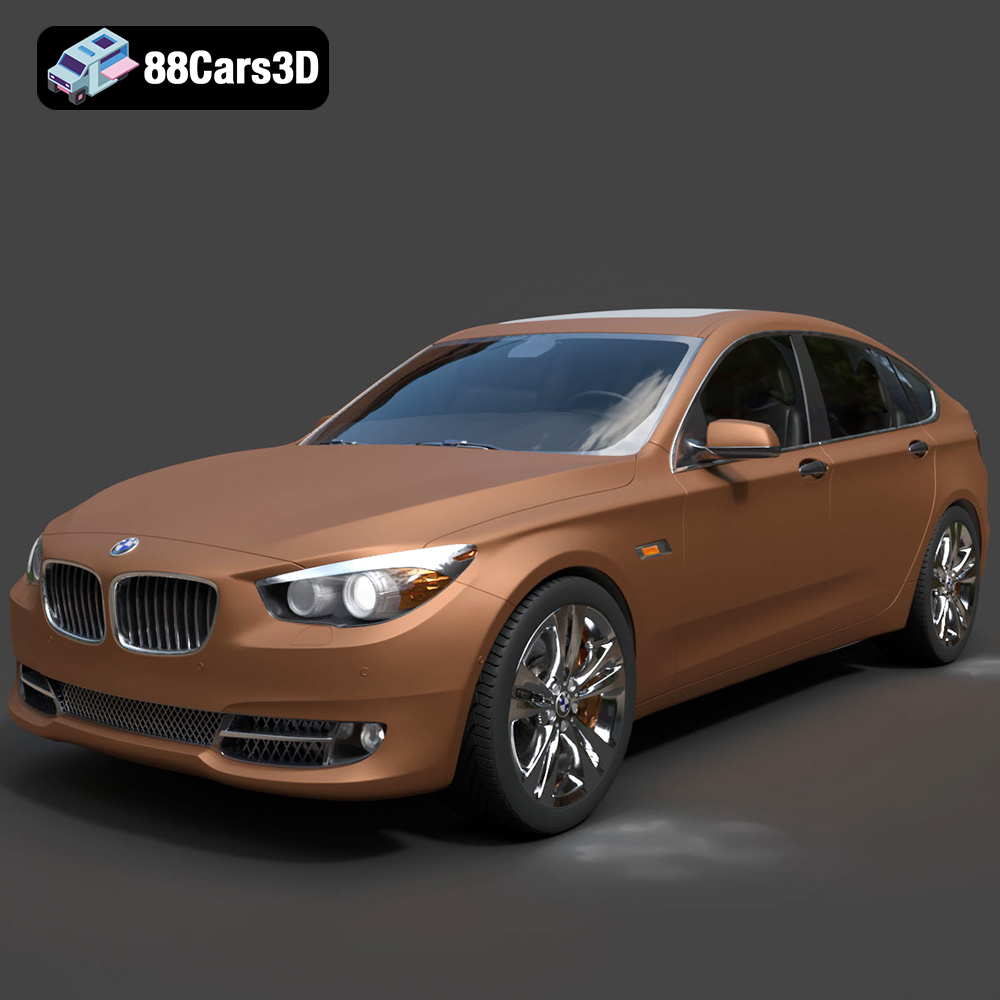
BMW 5 Series Gran Turismo F07-003 3D Model
Texture: Yes
Material: Yes
Download the BMW 5 Series Gran Turismo F07-003 3D Model featuring a detailed exterior and interior. Includes .blend, .fbx, .obj, .glb, .stl, .ply, .unreal, and .max formats for rendering, simulation, and game development.
Price: $10.79
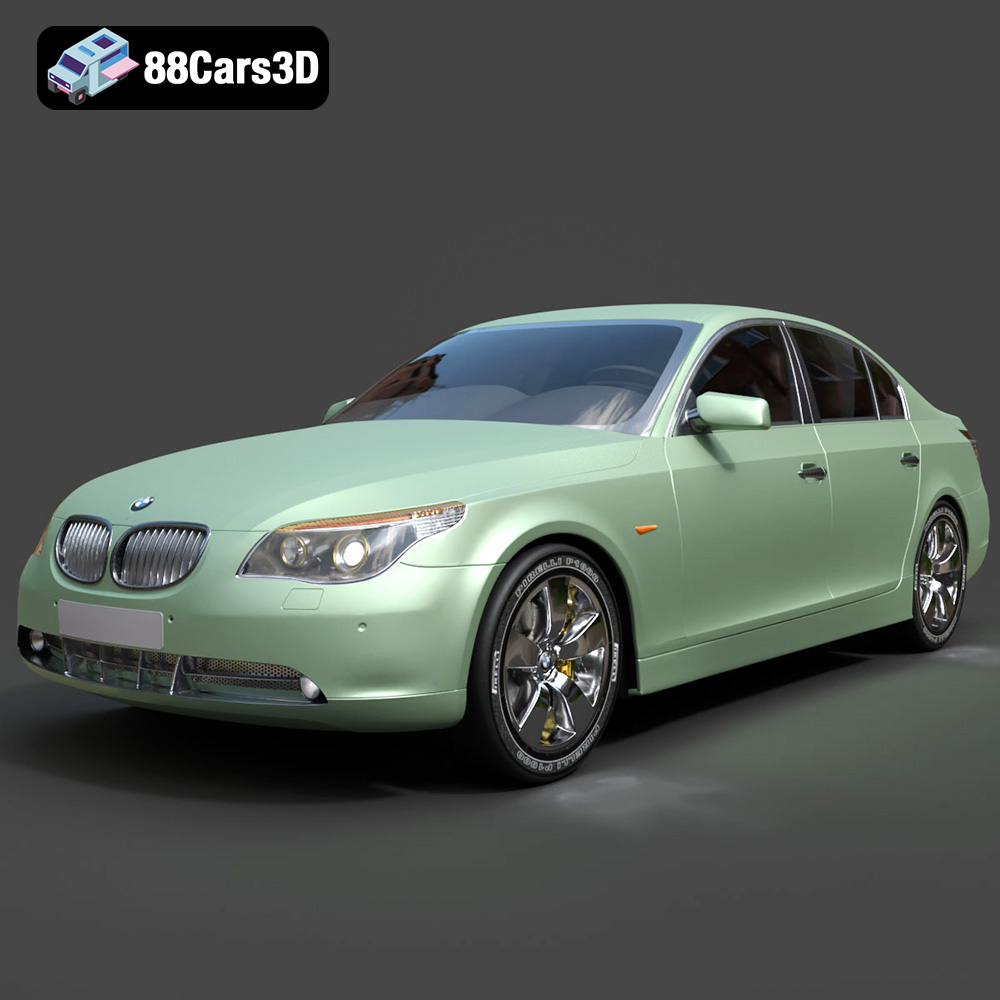
BMW 5 Series E60 3D Model
Texture: Yes
Material: Yes
Download the BMW 5 Series E60 3D Model featuring its iconic sedan design, detailed exterior, and interior. Includes .blend, .fbx, .obj, .glb, .stl, .ply, .unreal, and .max formats for rendering, simulation, and game development.
Price: $10.79

BMW 5 E34-535i 3D Model
Texture: Yes
Material: Yes
Download the BMW 5 E34-535i 3D Model featuring an iconic design, detailed exterior and interior, and accurate representation. Includes .blend, .fbx, .obj, .glb, .stl, .ply, .unreal, and .max formats for rendering, simulation, and game development.
Price: $10.79
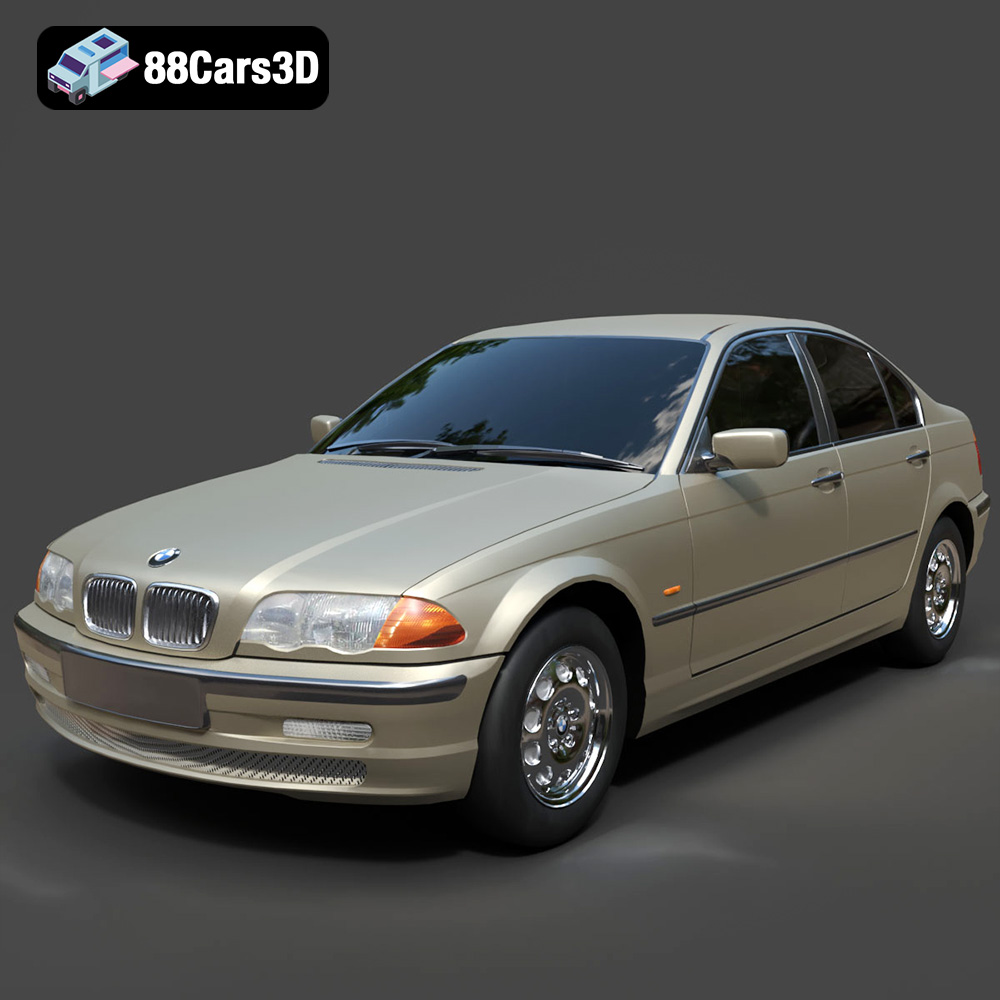
BMW 3 Series E46 3D Model
Texture: Yes
Material: Yes
Download the BMW 3 Series E46 3D Model featuring authentic exterior lines, a detailed interior, and separated components for animation. Includes .blend, .fbx, .obj, .glb, .stl, .ply, .unreal, and .max formats for rendering, simulation, and game development.
Price: $10.79

BMW 3 F30 3D Model
Texture: Yes
Material: Yes
Download the BMW 3 F30 3D Model featuring a detailed exterior, realistic interior, and optimized mesh. Includes .blend, .fbx, .obj, .glb, .stl, .ply, .unreal, and .max formats for rendering, simulation, and game development.
Price: $10.79
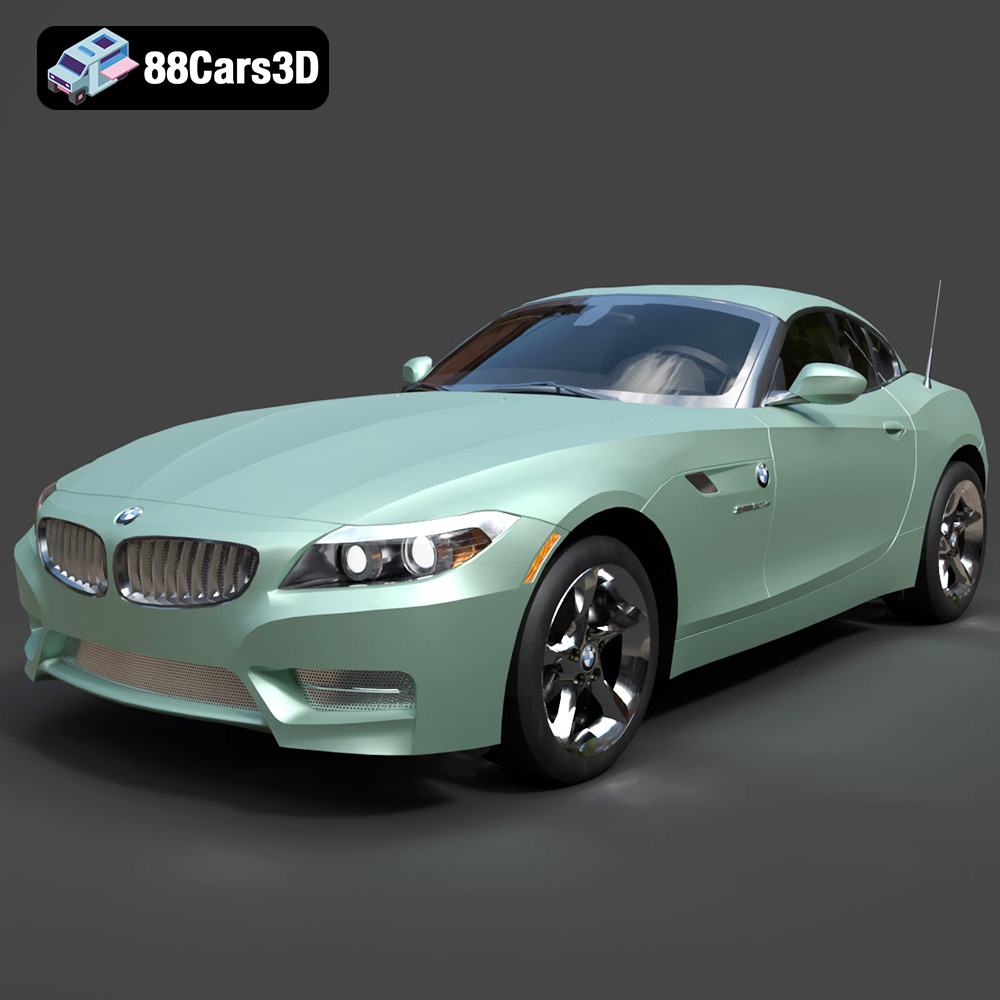
BMW Z4 Roadster E89 2012 3D Model
Texture: Yes
Material: Yes
Download the BMW Z4 Roadster E89 3D Model featuring clean geometry, realistic detailing, and a fully modeled interior. Includes .blend, .fbx, .obj, .glb, .stl, .ply, .unreal, and .max formats for rendering, simulation, and game development.
Price: $13.99
