

In the rapidly evolving landscape of real-time 3D, Unreal Engine stands as an undisputed powerhouse, transforming industries from gaming to film, and perhaps most strikingly, automotive visualization. The ability to render photorealistic vehicles in dynamic, interactive environments has revolutionized how designers present concepts, marketers launch products, and enthusiasts experience their dream cars. At the heart of creating compelling, high-fidelity presentations within Unreal Engine lies Sequencer, Unreal’s non-linear cinematic editor. This powerful tool empowers artists and developers to choreograph intricate scenes, animate cameras, characters, and objects, and tell rich visual stories with unparalleled control.
For automotive professionals and 3D artists, mastering Sequencer isn’t just about making pretty videos; it’s about crafting immersive experiences that showcase the intricate design, engineering, and performance of a vehicle in its best light. From interactive car configurators to marketing trailers, and even virtual production pipelines utilizing cutting-edge LED walls, Sequencer is the orchestrator. This comprehensive guide will delve deep into leveraging Unreal Engine, particularly Sequencer, to create breathtaking cinematic content for automotive visualization. We’ll cover everything from project setup and asset optimization to advanced lighting, animation, and rendering techniques, ensuring you can bring your 3D car models to life with stunning realism and professional polish.
The Foundation: Setting Up Your Unreal Engine Project for Automotive Cinematics
Before diving into the creative process, a robust foundation is essential. Proper project setup and configuration within Unreal Engine ensure optimal performance, visual fidelity, and a smooth workflow for automotive visualization. This initial phase involves selecting the right template, configuring essential settings, and efficiently importing your high-quality 3D car models.
Project Template & Initial Configuration
When starting a new project in Unreal Engine, selecting the appropriate template is crucial. For cinematic automotive visualization, the ‘Blank’ or ‘Games’ template often provides the most flexibility, allowing you to build your environment from scratch without unnecessary game-specific assets. Alternatively, the ‘Film, Television & Live Events’ template provides a great starting point with some cinematic tools pre-configured. Once your project is created, navigate to Edit > Project Settings. Here, you’ll want to adjust several key areas:
- Engine > Rendering: Enable Lumen Global Illumination and Nanite Virtualized Geometry. These technologies are transformative for automotive visualization, allowing for incredibly detailed models and realistic indirect lighting without prohibitive performance costs. Also, consider enabling Hardware Ray Tracing if your hardware supports it, for pristine reflections and shadows.
- Engine > Input: Configure any custom input bindings you might need for interactive camera controls or vehicle interactions, though for pure cinematics, this is less critical.
- Platforms > Windows (or your target platform): Set appropriate default RHI (Render Hardware Interface) to DirectX 12 for optimal performance with Lumen and Nanite.
Understanding these initial settings ensures that your project is ready to leverage Unreal Engine’s cutting-edge rendering capabilities from the outset, laying the groundwork for visually stunning results.
Importing High-Quality 3D Car Models
The quality of your source assets directly dictates the final visual fidelity of your cinematics. When sourcing automotive assets from marketplaces such as 88cars3d.com, you’re acquiring models specifically optimized for real-time rendering. These models typically come with clean topology, proper UV mapping, and PBR (Physically Based Rendering) texture sets, which are critical for achieving photorealism in Unreal Engine.
To import your 3D car models, use the File > Import Into Level or the Content Browser’s Import button. The preferred format is FBX, but USD (Universal Scene Description) and USDZ are gaining traction, especially for complex scene assembly. During import, ensure you enable ‘Generate Missing Collision’ if the model will interact with physics, and ‘Combine Meshes’ if your model is exported as separate parts but should be treated as a single entity. Pay close attention to the scale; 3D car models should be imported at real-world scale (centimeters being Unreal’s default unit). Verify the pivot point is correctly centered at the bottom of the vehicle for easier manipulation and animation. For high-polygon models, consider enabling Nanite during import or by converting the Static Mesh later, especially if the model boasts millions of polygons, as this will significantly improve rendering performance.
Essential Project Settings for Performance and Visual Fidelity
Beyond the initial setup, fine-tuning project settings is an ongoing process that balances visual quality with real-time performance, particularly crucial when creating long cinematics or interactive experiences. Within Project Settings, navigate to Engine > Rendering once more. Here are some critical considerations:
- Lumen Settings: Adjust ‘Lumen Global Illumination’ and ‘Lumen Reflections’ quality to balance visual accuracy and performance. Higher settings will yield more realistic bounce light and reflections but require more GPU resources. Experiment with ‘Max Trace Distance’ and ‘Max Bounces’ to refine the global illumination look.
- Anti-Aliasing: For cinematic output, Temporal Anti-Aliasing (TAA) or the newer Temporal Super Resolution (TSR) are generally excellent choices, providing smooth edges without excessive performance impact. However, for pixel-perfect stills or very specific motion, you might consider disabling anti-aliasing during rendering and applying it in post-production.
- Virtual Shadow Maps: Enable Virtual Shadow Maps (VSM) for incredibly detailed and accurate shadows, especially when paired with Lumen. This is particularly beneficial for automotive models where sharp, realistic shadows define the contours and presence of the vehicle.
- Texture Streaming: Ensure texture streaming is enabled and configured correctly to manage memory usage efficiently. High-resolution PBR textures for automotive models can quickly consume VRAM, and streaming helps load only necessary mip levels.
These settings are not ‘set it and forget it.’ As your scene grows in complexity, you’ll often revisit and adjust these parameters to maintain a healthy balance between breathtaking visuals and smooth real-time performance, which is paramount for iterative cinematic development.
Mastering Photorealism: Materials, Lighting, and Environment Setup
The journey to photorealistic automotive cinematics hinges on two fundamental pillars: meticulously crafted PBR materials and sophisticated lighting. These elements, when combined with an immersive environment, breathe life into your 3D car models, making them indistinguishable from their real-world counterparts. Understanding how to manipulate these aspects within Unreal Engine is an art form in itself.
Crafting Realistic PBR Materials for Automotive Surfaces
Physically Based Rendering (PBR) is the cornerstone of realism in modern real-time engines. For automotive visualization, achieving realistic car paint, glass, rubber, and metal requires a deep understanding of PBR principles. Unreal Engine’s Material Editor is a node-based system that allows for incredible flexibility.
Car Paint: Car paint is notoriously complex, often involving multiple layers. A typical PBR car paint material uses a base color (albedo), metallic, roughness, and normal map. Beyond these, you’ll need to simulate clear coat reflections and specular highlights. A common technique involves layering two PBR materials: a base metallic paint layer and a transparent clear coat layer on top. You can use a ‘Fresnel’ node to control the clear coat’s reflectivity based on viewing angle, mimicking how real car paint behaves. For metallic flake, a subtle normal map or a custom function that adds small, anisotropic reflections based on a randomized pattern can enhance realism. Remember to keep the base color relatively desaturated and let the reflections and lighting define the final color perception.
Glass and Chrome: Glass materials require transparency, refraction, and reflection. Use the ‘Refraction’ input, adjust ‘Opacity,’ and ensure ‘Two Sided’ is enabled for correct rendering. Chrome and other polished metals are highly metallic with very low roughness values, often paired with a subtle normal map for surface imperfections. Accuracy in these materials, especially reflections, is critical for showing off the car’s curves and form.
Always source or create high-resolution PBR textures (e.g., 4K or 8K) for critical surfaces. Using instances of your master materials allows for quick iteration of colors and properties without recompiling the entire shader.
Dynamic Global Illumination with Lumen and Ray Tracing
Lighting is arguably the most impactful element in conveying realism and mood. Unreal Engine’s Lumen Global Illumination system, combined with Hardware Ray Tracing, offers unparalleled real-time lighting fidelity for automotive scenes. Lumen dynamically calculates diffuse interreflections, ensuring that light bounces realistically around your environment, illuminating hidden crevices and subtly coloring surfaces with indirect light from neighboring objects.
- Directional Light: Represents the sun. Use a high-intensity, slightly colored light (warm for daytime, cool for evening) with a lightmass importance volume to define the area for global illumination calculations.
- Sky Light: Captures the distant environment and contributes to global illumination, providing ambient light and reflections. Using an HDRI (High Dynamic Range Image) in conjunction with a Sky Light is crucial for realistic ambient lighting and reflections, especially on the car’s reflective surfaces.
- Rect Lights/Spot Lights: For studio setups, use these to highlight specific features or create dramatic rim lighting. Lumen will ensure their light contributes to the global illumination.
When using Lumen, ensure your materials are correctly authored for PBR, as Lumen relies on accurate albedo and roughness values for correct light interaction. Hardware Ray Tracing, when enabled, provides highly accurate reflections, refractions, and shadows, elevating the visual quality even further. Experiment with different light intensities, colors, and positions to evoke specific moods – a bright, sunny day vs. a dramatic, moody sunset shot.
Building Immersive Environments with Megascans and Custom Assets
A stunning car deserves an equally stunning environment. Unreal Engine’s integration with Quixel Megascans provides access to a vast library of high-quality, PBR-ready 3D assets and surfaces, ideal for quickly populating realistic scenes. From detailed road surfaces to lush foliage and urban decay, Megascans assets are optimized for real-time rendering and often come with Nanite meshes, further enhancing performance with high geometric detail.
When constructing your environment, consider the narrative you want to tell. A sleek sports car might be best showcased on a winding mountain road or in a modern architectural setting, while a rugged off-roader belongs in a dusty, natural landscape. Combine Megascans with custom-modeled assets to create unique scenes. Use a combination of large-scale props (buildings, terrain) and small details (puddles, leaves, debris) to add realism and scale. Utilize Unreal Engine’s Landscape system for expansive natural environments, and the Volumetric Cloud system for dynamic, realistic skies. Remember, the environment should complement the car, not overshadow it. Pay attention to composition, using leading lines, framing, and depth of field to guide the viewer’s eye towards the vehicle, creating a cohesive and visually rich backdrop for your cinematic.
Unleashing Sequencer: Your Digital Director’s Toolkit
With your highly detailed 3D car model and a beautifully lit environment, it’s time to bring the scene to life. Unreal Engine’s Sequencer is the ultimate tool for choreographing every element of your cinematic, allowing you to tell a compelling story frame by frame. Think of it as your non-linear editor (NLE) within Unreal, but with the added power of real-time rendering and dynamic scene control.
Understanding the Sequencer Interface and Core Concepts
To access Sequencer, go to Window > Cinematics > Sequencer or click the ‘Cinematics’ button on the toolbar and select ‘Add Level Sequence’. This will create a new Level Sequence asset in your Content Browser. The Sequencer interface is divided into several key areas:
- Toolbar: Contains controls for playback, recording, adding tracks, and rendering.
- Tracks View: This is the heart of Sequencer, where you add actors (your car, cameras, lights, etc.) and create tracks for their properties. Each track represents an animatable property or event.
- Timeline: Shows the sequence of frames and where keyframes are placed. You can scrub through the timeline to preview your animation.
- Details Panel: Displays properties for selected tracks or keyframes, allowing for precise numerical adjustments.
Core concepts include: Tracks (e.g., Transform Track for position/rotation/scale, Material Parameter Track for changing material properties), Keyframes (specific values at a specific time), and Sections (segments of animation that can be trimmed, looped, or blended). For automotive cinematics, you’ll primarily be working with Camera Tracks, Transform Tracks for the vehicle, and potentially Material Parameter Tracks to change paint colors or emissive lights over time. Understanding this hierarchical structure is key to efficient animation.
Animating Cameras and Objects with Keyframes and Tracks
The essence of cinematic creation in Sequencer is animation through keyframes. The most crucial track for any cinematic is the Camera Track. To add a camera, click the + Camera button in Sequencer. This will create a new Cine Camera Actor in your scene and automatically attach it to a Camera Cut Track in Sequencer. You can then select the camera in the World Outliner and move it into position. With the camera selected, click the + Track button next to the camera in Sequencer and add a ‘Transform’ track. Now, move the camera in the viewport to your desired starting position, right-click on the Transform track at frame 0, and select ‘Key > Key All’ to set initial keyframes for position, rotation, and scale.
Move forward in the timeline, reposition the camera, and keyframe again. Sequencer will automatically interpolate the movement between keyframes, creating a smooth camera path. You can refine this interpolation by right-clicking keyframes and adjusting their ‘Tangent Types’ (e.g., Auto, Linear, Constant, Cubic). Beyond position, animate camera properties like ‘Focal Length’ for zoom effects, ‘Aperture’ for depth of field, and ‘Focus Distance’ to pull focus, guiding the viewer’s attention. Apply the same keyframing principles to your 3D car model: animate its movement, rotation (e.g., for a turntable shot), or even subtle suspension compression if you’ve set up vehicle physics. The goal is to make every movement deliberate and cinematic.
Integrating Visual Effects and Blueprints into Sequences
Sequencer isn’t limited to simple object animation; it’s also a powerful hub for integrating complex visual effects and interactive logic. Unreal Engine’s Niagara particle system can be added to Sequencer to create realistic smoke, dust, or water spray effects, enhancing the dynamism of your automotive scenes. Simply drag a Niagara System asset from the Content Browser into Sequencer, and it will create a new track. You can then keyframe its spawn rates, parameters, or even its visibility.
Blueprint visual scripting offers an even deeper level of control. You can create custom Blueprint events that are triggered at specific points in your sequence. For instance, imagine a Blueprint that toggles specific car lights, changes the car’s paint color, or opens and closes doors. You can then add an ‘Event Track’ to Sequencer, call a specific event dispatcher or custom event from your Blueprint, and keyframe when it fires. This allows for highly interactive and dynamic cinematics. For example, a common application in automotive configurators built with Blueprint can be controlled via Sequencer to smoothly transition between different car models, accessory options, or paint finishes. This synergy between Sequencer, Niagara, and Blueprint empowers you to create truly rich and interactive visual stories, pushing the boundaries of what’s possible in real-time automotive visualization.
Advanced Sequencer Techniques for Automotive Storytelling
Moving beyond basic animation, advanced Sequencer techniques unlock the full potential for cinematic automotive storytelling. This involves integrating cutting-edge virtual production workflows, orchestrating multi-camera setups, and seamlessly blending dynamic vehicle simulations for unparalleled realism and engagement. These methods are crucial for professionals seeking to create broadcast-quality content or highly interactive demonstrations.
Virtual Production Workflows: LED Walls and ICVFX Integration
Virtual Production (VP) is revolutionizing filmmaking, and Unreal Engine is at its core. For automotive visualization, VP, particularly using LED walls and In-Camera VFX (ICVFX), offers immense creative freedom. Instead of traditional green screens, a physical car can be placed on a stage surrounded by high-resolution LED screens displaying a real-time Unreal Engine environment. This allows for realistic interactive lighting, reflections, and parallax on the physical vehicle, all captured in-camera without extensive post-production compositing.
Within Sequencer, this workflow integrates seamlessly. You’ll set up a Level Sequence that drives the environment displayed on the LED wall(s). This sequence controls camera movements within the virtual environment, ensuring they match the physical camera tracking on set. Specific features like Cine Cameras, Composure (Unreal’s compositing framework), and nDisplay (for distributing the Unreal render across multiple LED panels) are orchestrated through Sequencer. By adding the nDisplay root actor and Composure layers to your sequence, you can precisely control when background elements appear, virtual assets are introduced, and even dynamically change the virtual environment to match the desired shot. This real-time interaction between physical and virtual worlds offers unprecedented control over the final image, allowing for immediate feedback and creative iteration, a huge advantage for automotive marketing campaigns and design reviews.
Multi-Camera Setups and Seamless Shot Transitions
Professional cinematics rarely rely on a single, static camera. Instead, they employ a variety of camera angles and movements to convey emotion, highlight details, and maintain visual interest. Sequencer makes managing complex multi-camera setups intuitive. In your Level Sequence, you can add multiple Cine Camera Actors, each with its own unique animation path, focal length, and depth of field settings.
The ‘Camera Cuts Track’ in Sequencer is where the magic happens. Drag and drop your different camera actors onto this track. By adjusting the start and end points of each camera section on the Camera Cuts track, you can define exactly when each camera view is active. Sequencer will automatically transition between these camera cuts, allowing you to seamlessly jump from a wide shot to a close-up, or from a tracking shot to a static hero angle. You can overlap camera sections to create smooth dissolves or hard cuts for dramatic effect. Furthermore, you can use the ‘Blend’ property on camera cuts to create custom transition effects. This allows you to construct sophisticated visual narratives, akin to editing a professional film, all within the real-time environment of Unreal Engine. Proper timing and composition for each camera cut are crucial for engaging automotive storytelling.
Dynamic Vehicle Simulations and Physics Integration
For truly convincing automotive cinematics, the vehicle shouldn’t just move; it should feel like it’s interacting realistically with its environment. Unreal Engine offers robust physics simulation capabilities that can be integrated directly into Sequencer. The Chaos Vehicle physics system, for instance, allows for highly realistic vehicle dynamics, including tire friction, suspension articulation, and engine power. Instead of animating every suspension bounce or tire rotation manually, you can simulate these behaviors.
To integrate physics, set up your car model with the Chaos Vehicle component, configure its wheel settings, and define appropriate physics assets. Once the vehicle is simulated in a level, you can then ‘Record’ its physics-driven motion directly into Sequencer. In Sequencer, click the ‘Record’ button, start simulating, and drive your car around using input controls. Sequencer will capture the vehicle’s transform, wheel rotations, and suspension compression onto dedicated tracks. This allows you to create incredibly realistic driving sequences, drifts, or obstacle traversals, which can then be played back and further refined within Sequencer. You can even combine recorded physics with manual keyframe animation for specific moments, such as a controlled camera pan during a drift. This blend of real-time physics and cinematic orchestration elevates the realism and excitement of your automotive presentations, making the vehicles feel alive and responsive.
Optimization and Rendering for High-Quality Output
Creating visually stunning automotive cinematics in Unreal Engine is only half the battle; ensuring they run smoothly in real-time and export flawlessly at the highest quality is equally critical. This involves strategic optimization techniques and a meticulous rendering workflow to achieve professional-grade results.
Performance Optimization: Nanite, LODs, and Texture Streaming
High-fidelity 3D car models, especially those from platforms like 88cars3d.com, often boast millions of polygons and high-resolution textures. Managing these assets for real-time performance is paramount. Unreal Engine provides several powerful tools:
- Nanite Virtualized Geometry: For static meshes (like the car body, wheels, interior elements, and detailed environment props), Nanite is a game-changer. It allows you to import and render incredibly high-polygon models (millions to billions of triangles) without the traditional performance bottlenecks. Enable Nanite on your meshes by right-clicking a Static Mesh in the Content Browser, selecting ‘Nanite,’ and clicking ‘Enable Nanite.’ Nanite automatically handles mesh simplification and streaming, making complex automotive models performant even in dense scenes.
- LODs (Level of Detail): While Nanite handles geometric complexity for static meshes, dynamic meshes or those not compatible with Nanite still benefit from LODs. Create multiple versions of your mesh with progressively lower polygon counts. Unreal Engine automatically switches between these LODs based on the object’s distance from the camera, saving performance. This is crucial for small, distant objects or for ensuring your cinematic runs smoothly even on less powerful hardware.
- Texture Streaming: High-resolution PBR textures can quickly consume VRAM. Texture streaming ensures that only the necessary mipmap levels (lower resolution versions) of a texture are loaded into memory based on the camera’s distance and screen space. Configure texture streaming settings in Project Settings > Engine > Rendering to manage memory efficiently, especially for 4K and 8K automotive textures.
- Draw Call Reduction: Minimize the number of unique materials and draw calls. Combine meshes where appropriate (e.g., small accessory parts on the car) and use material instancing to share a single master material across many objects with different parameters (like paint color variations).
Regularly profile your scene using Unreal Engine’s built-in tools (e.g., Stat Unit, Stat FPS, GPU Visualizer) to identify performance bottlenecks and guide your optimization efforts. A well-optimized scene not only runs smoother but also renders faster.
Rendering Cinematics: Movie Render Queue and Export Settings
Once your cinematic sequence is complete, the next step is to render it out as a high-quality video or image sequence. Unreal Engine’s Movie Render Queue (MRQ) is the professional-grade solution for this, offering vastly superior quality and control compared to the legacy render options.
To use MRQ, go to Window > Cinematics > Movie Render Queue. Add your Level Sequence to the queue. Within MRQ, you can configure numerous output settings:
- Output Settings: Specify resolution (e.g., 1080p, 4K, 8K), frame rate (24, 30, 60 FPS), and output directory.
- Output Format: Choose between image sequences (EXR, PNG, JPG) or video formats (ProRes, H.264, AVI). EXR is highly recommended for professional workflows as it captures high dynamic range data, crucial for post-production color grading.
- Render Passes: MRQ allows you to render out various data passes (e.g., Base Color, World Normal, Depth, Ambient Occlusion, Reflections, Motion Vector). These passes are invaluable for compositing in external software (like Nuke or After Effects), giving you granular control over the final look.
- Anti-Aliasing: Crucially, MRQ offers ‘Anti-Aliasing (Spatial)’ and ‘Anti-Aliasing (Temporal)’ options, allowing for super-sampled renders (e.g., 2x or 4x primary spatial sample count) that result in incredibly clean, flicker-free images, far superior to real-time TAA.
- Console Variables: You can add custom console variables to override engine settings specifically for the render, such as increasing Lumen samples, boosting shadow quality, or disabling specific effects that might cause issues during offline rendering.
Render your sequence in batches, especially for long cinematics, and always perform test renders of short sections to fine-tune your settings before committing to a full render. The quality gains from MRQ, particularly the advanced anti-aliasing and multi-pass rendering, are indispensable for broadcast-quality automotive visualization.
Post-Processing and Color Grading for Polished Results
The final touch for any cinematic is post-processing and color grading. While much can be done directly within Unreal Engine, a professional workflow often involves some external refinement.
In-Engine Post-Processing: Unreal Engine’s Post Process Volume provides a wealth of parameters to adjust the look of your scene. Key settings include:
- Exposure: Controls overall brightness. Use ‘Auto Exposure’ with caution in cinematics; manual exposure often yields more consistent results.
- Color Grading: Adjust white balance, contrast, saturation, and use color wheels for shadows, midtones, and highlights to establish a mood or achieve a specific aesthetic.
- Bloom: Creates glowing effects for emissive materials or bright light sources, enhancing realism for headlights or reflections.
- Vignette & Grain: Subtle additions can add a filmic quality.
- Lens Flare & Dirt Mask: Simulate real-world camera lens artifacts, making the render feel more authentic.
- Depth of Field: Crucial for cinematic focus pulls and drawing attention to your 3D car model. Animate its focus distance and aperture within Sequencer for dynamic effects.
External Color Grading: For the highest level of control, render out EXR image sequences and import them into professional color grading software like DaVinci Resolve or Nuke. Here, you can apply industry-standard LUTs (Look Up Tables), perform precise color correction, and blend your render passes for ultimate control over highlights, shadows, and reflections. This external step allows you to achieve a truly polished, broadcast-ready look, ensuring your automotive cinematics stand out.
Conclusion
Unreal Engine, with its powerful Sequencer, has fundamentally reshaped the landscape of automotive visualization, offering an unprecedented blend of real-time performance and cinematic fidelity. From importing highly detailed 3D car models sourced from platforms like 88cars3d.com to crafting photorealistic PBR materials, dynamic Lumen lighting, and immersive environments, every step contributes to a stunning final product. Sequencer then acts as your digital director, enabling you to orchestrate complex camera movements, animate vehicles with precision, integrate dazzling visual effects, and even tap into cutting-edge virtual production workflows with LED walls and real-time physics simulation.
Mastering these tools and techniques empowers you to create not just images, but compelling stories that resonate with your audience, whether for design reviews, marketing campaigns, or interactive configurators. The journey requires a blend of technical acumen and artistic vision, but the rewards are truly transformative. Remember to prioritize optimization using Nanite and LODs, and leverage the Movie Render Queue for professional-grade output. As you continue to experiment and refine your skills, the possibilities for creating breathtaking automotive cinematics in Unreal Engine are limitless. Dive in, explore the depth of Sequencer, and start bringing your automotive visions to life with unparalleled realism and cinematic flair.
Featured 3D Car Models

BMW 7 Series E38 3D Model
Texture: Yes
Material: Yes
Download the BMW 7 Series E38 3D Model featuring its iconic luxury sedan design and classic aesthetics. Includes .blend, .fbx, .obj, .glb, .stl, .ply, .unreal, and .max formats for rendering, simulation, and game development.
Price: $10.79

BMW 6 Series 640i F12 3D Model
Texture: Yes
Material: Yes
Download the BMW 6 Series 640i F12 3D Model featuring a sleek design and detailed interior. Includes .blend, .fbx, .obj, .glb, .stl, .ply, .unreal, and .max formats for rendering, simulation, and game development.
Price: $10.79

BMW 6 Coupe E63 3D Model
Texture: Yes
Material: Yes
Download the BMW 6 Coupe E63 3D Model featuring a sleek design, detailed interior, and realistic exterior. Includes .blend, .fbx, .obj, .glb, .stl, .ply, .unreal, and .max formats for rendering, simulation, and game development.
Price: $10.79
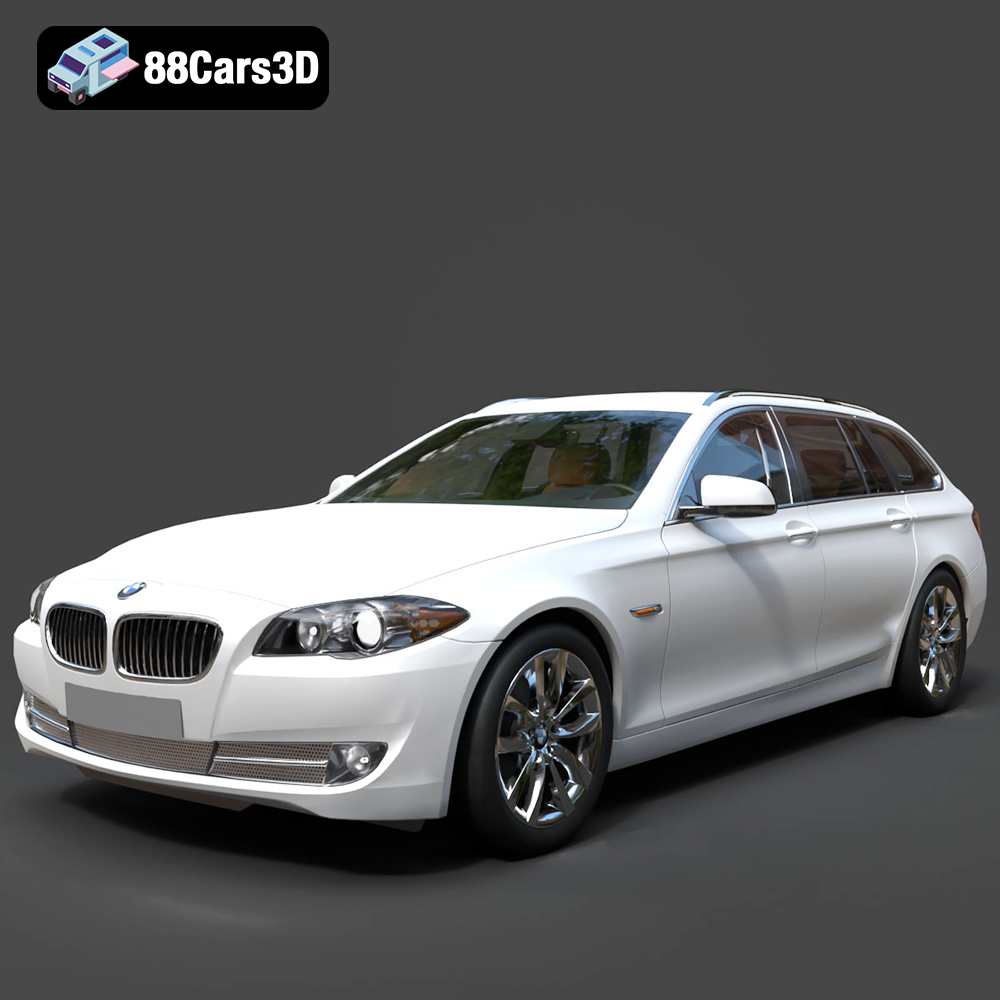
BMW 5 Series Touring F11-007 3D Model
Texture: Yes
Material: Yes
Download the BMW 5 Series Touring F11-007 3D Model featuring a detailed exterior and interior. Includes .blend, .fbx, .obj, .glb, .stl, .ply, .unreal, and .max formats for rendering, simulation, and game development.
Price: $10.79
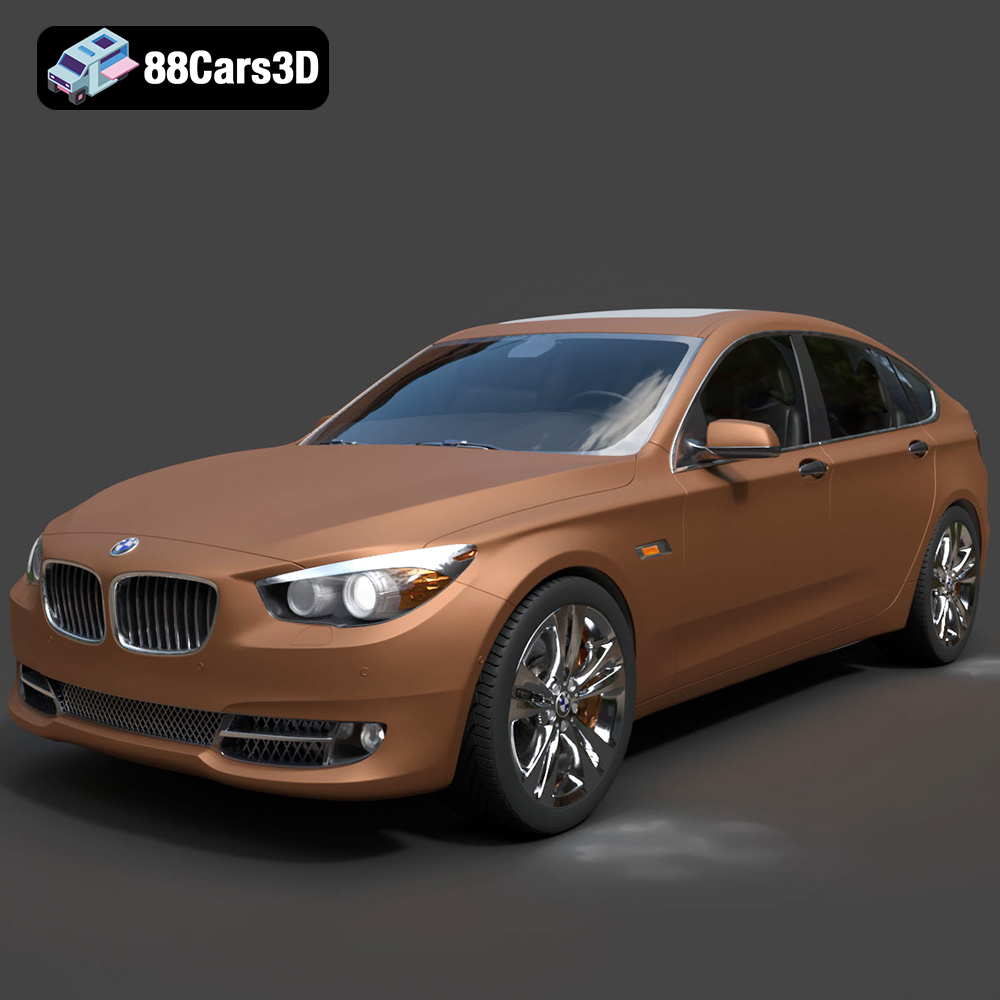
BMW 5 Series Gran Turismo F07-003 3D Model
Texture: Yes
Material: Yes
Download the BMW 5 Series Gran Turismo F07-003 3D Model featuring a detailed exterior and interior. Includes .blend, .fbx, .obj, .glb, .stl, .ply, .unreal, and .max formats for rendering, simulation, and game development.
Price: $10.79
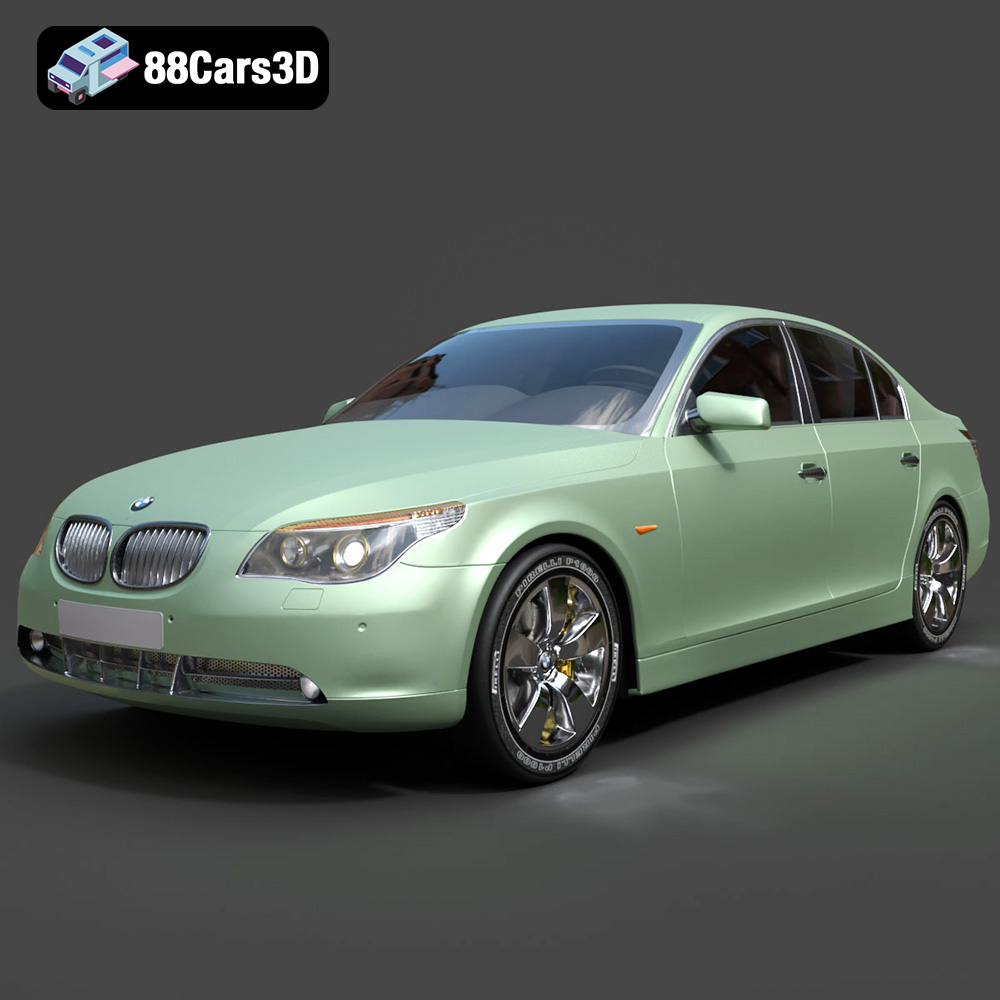
BMW 5 Series E60 3D Model
Texture: Yes
Material: Yes
Download the BMW 5 Series E60 3D Model featuring its iconic sedan design, detailed exterior, and interior. Includes .blend, .fbx, .obj, .glb, .stl, .ply, .unreal, and .max formats for rendering, simulation, and game development.
Price: $10.79

BMW 5 E34-535i 3D Model
Texture: Yes
Material: Yes
Download the BMW 5 E34-535i 3D Model featuring an iconic design, detailed exterior and interior, and accurate representation. Includes .blend, .fbx, .obj, .glb, .stl, .ply, .unreal, and .max formats for rendering, simulation, and game development.
Price: $10.79
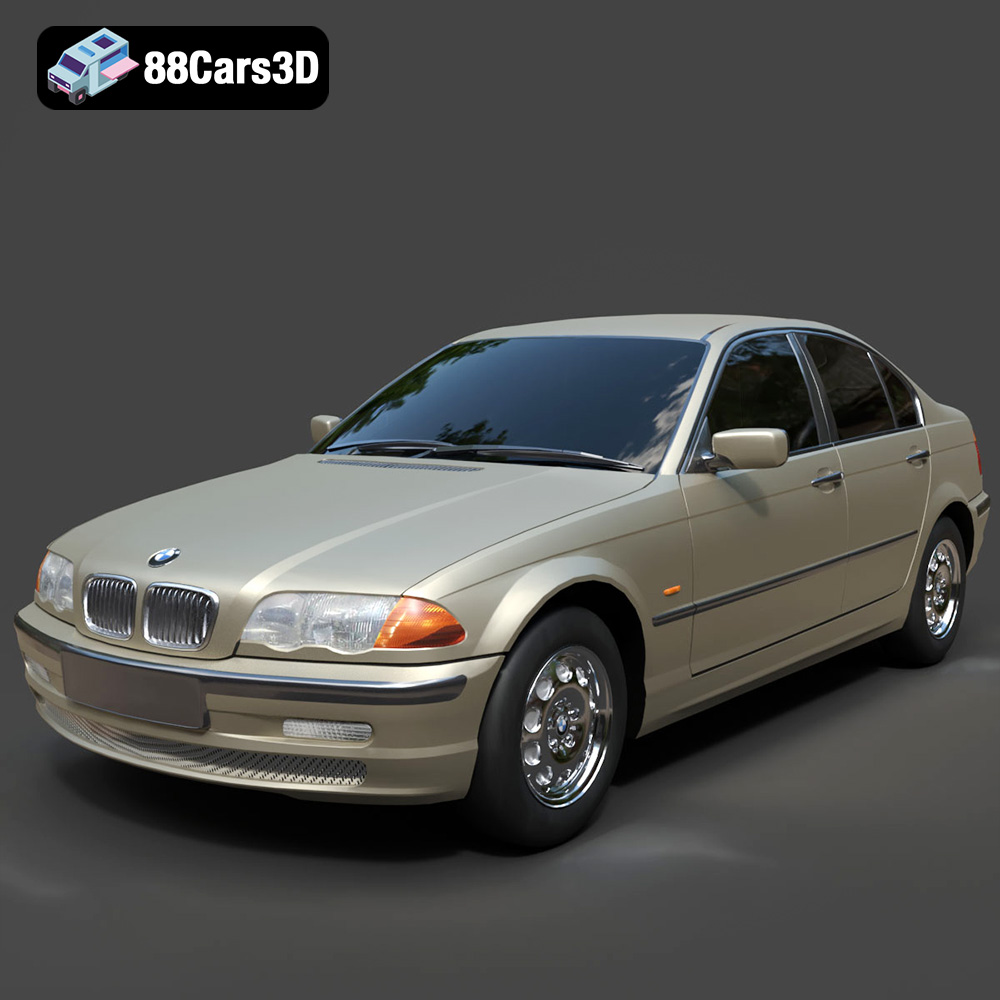
BMW 3 Series E46 3D Model
Texture: Yes
Material: Yes
Download the BMW 3 Series E46 3D Model featuring authentic exterior lines, a detailed interior, and separated components for animation. Includes .blend, .fbx, .obj, .glb, .stl, .ply, .unreal, and .max formats for rendering, simulation, and game development.
Price: $10.79
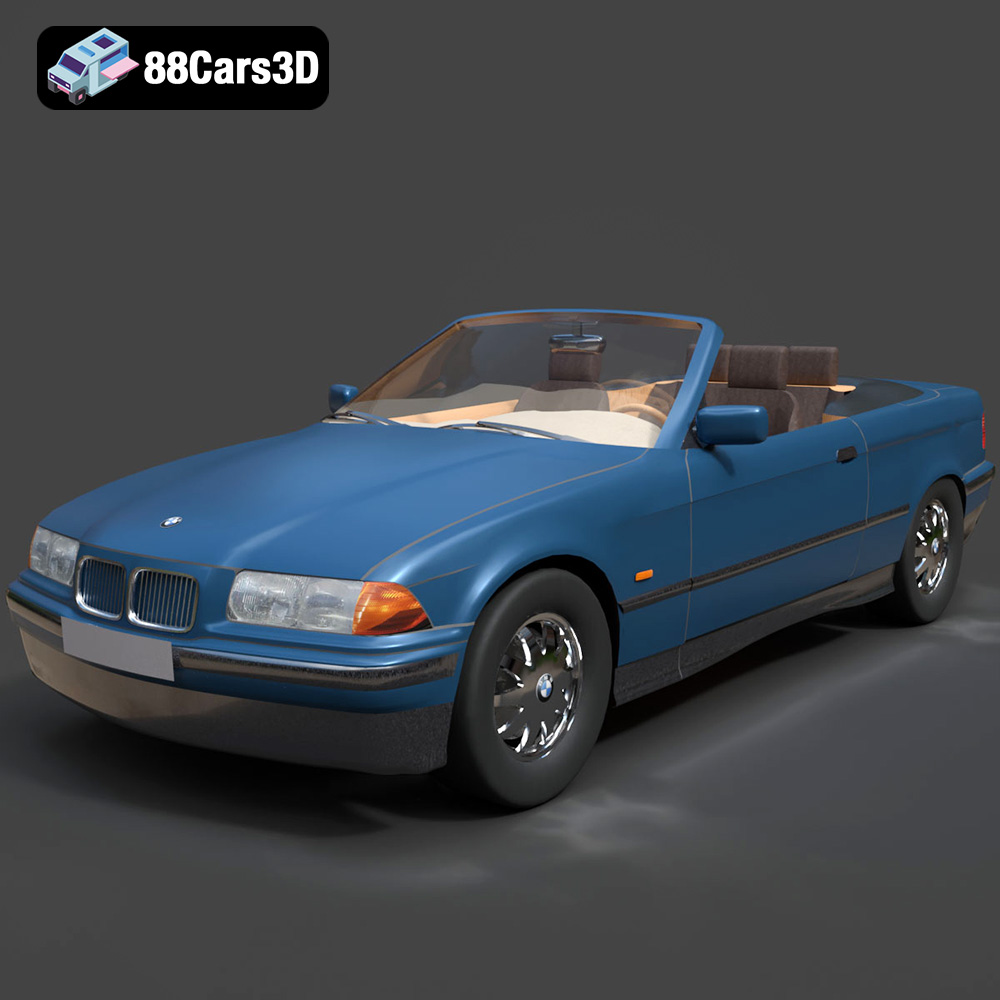
BMW 3 Series E36 Cabrio 325i 1998 3D Model
Texture: Yes
Material: Yes
Download the BMW 3 Series E36 Cabrio 325i 1998 3D Model featuring a classic convertible design and detailed interior. Includes .blend, .fbx, .obj, .glb, .stl, .ply, .unreal, and .max formats for rendering, simulation, and game development.
Price: $10.79
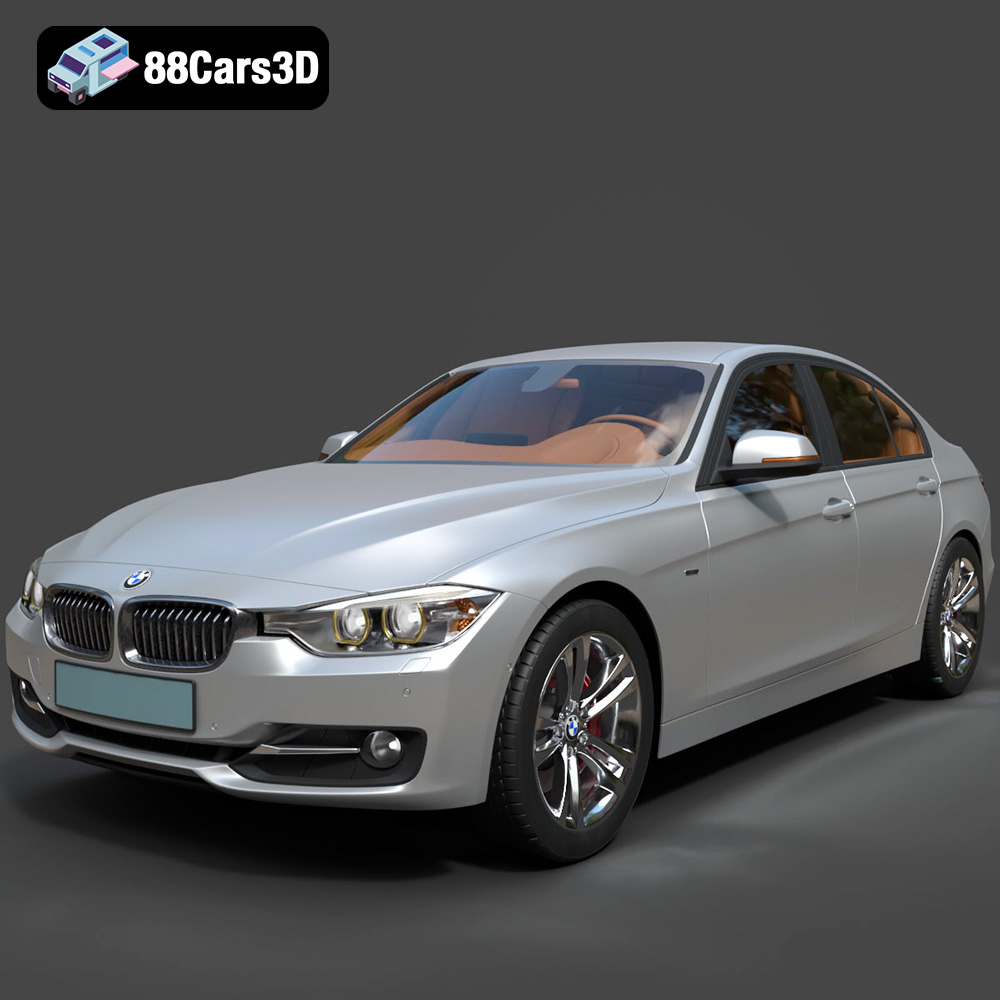
BMW 3 F30 3D Model
Texture: Yes
Material: Yes
Download the BMW 3 F30 3D Model featuring a detailed exterior, realistic interior, and optimized mesh. Includes .blend, .fbx, .obj, .glb, .stl, .ply, .unreal, and .max formats for rendering, simulation, and game development.
Price: $10.79
