

The automotive industry has always been at the forefront of technological innovation, and its visualization processes are no exception. From concept design and engineering reviews to marketing campaigns and immersive virtual showrooms, the demand for photorealistic and interactive experiences is higher than ever. Enter Unreal Engine – a powerhouse real-time rendering platform that has revolutionized how vehicles are designed, presented, and experienced.
Unreal Engine provides an unparalleled toolkit for automotive visualization, blending cinematic quality with real-time interactivity. Artists and developers can create stunning vehicle renders, dynamic configurators, immersive AR/VR experiences, and even virtual production sets, all operating at blistering speeds. The foundation of any exceptional automotive project in Unreal Engine lies in high-quality 3D car models, meticulously crafted for performance and visual fidelity. Platforms like 88cars3d.com offer such optimized models, providing a crucial head start for professionals aiming for excellence.
This comprehensive guide will walk you through the essential workflows and advanced techniques for leveraging Unreal Engine in automotive visualization. We’ll cover everything from initial project setup and asset import to mastering physically based materials, advanced lighting, performance optimization with Nanite and LODs, creating interactive experiences with Blueprint, and producing stunning cinematics with Sequencer. By the end of this post, you’ll have a robust understanding of how to elevate your automotive projects to industry-leading standards.
Laying the Foundation: Project Setup and Importing 3D Car Models
A successful Unreal Engine project begins with a well-configured foundation. Proper project setup and efficient import of your 3D car models are critical steps that influence every subsequent stage of development, impacting both visual quality and performance.
Project Creation and Core Settings
When starting a new project in Unreal Engine, you have several template options. For automotive visualization, a Blank or Automotive template often provides the cleanest slate. The Automotive template includes some useful starter content like basic studio environments and lighting setups, which can be a good starting point. Regardless of the template, you should immediately check and configure key project settings:
- Plugins: Ensure essential plugins are enabled. Datasmith CAD Importer is crucial for importing complex CAD data or FBX files with intricate hierarchies. HDRIBackdrop is excellent for quick, realistic environment lighting. For advanced rendering, you’ll want to ensure Niagara (for visual effects) and any relevant ray tracing plugins are active.
- Engine Scalability Settings: For high-end visualization, set these to ‘Cinematic’ or ‘Epic’ initially under the “Settings” menu in the editor. While you’ll optimize later, this ensures you’re seeing the maximum visual fidelity during development.
- Target Hardware and Renderer: Under Project Settings > Platforms > Windows (or your target platform), set the default RHI to DirectX 12 if you plan to use advanced features like Hardware Ray Tracing, which is highly recommended for automotive realism.
Take the time to understand these initial configurations, as they dictate the capabilities and performance baseline of your project.
Importing Optimized 3D Car Models
The quality of your source 3D car models is paramount. When sourcing automotive assets from marketplaces such as 88cars3d.com, you typically find models already optimized for real-time engines, featuring clean topology, proper UV mapping, and a logical hierarchy. The preferred file formats for import are FBX and USD/USDZ.
- Datasmith Workflow: For CAD data or complex DCC exports, Datasmith is your best friend. It preserves scene hierarchy, metadata, layers, and often converts materials to basic Unreal Engine materials automatically. To import, simply go to ‘File > Import into Level’ and select your Datasmith file (.udatasmith, .fbx, .max, .step, etc.).
- FBX Import: For individual meshes or simpler assets, drag and drop the FBX file directly into the Content Browser. The FBX Import Options dialog allows you to control mesh, material, and texture import settings. Pay close attention to:
- Scale: Ensure the import scale matches your DCC application (e.g., 0.01 for meters in Maya/Blender to centimeters in Unreal).
- Pivot: Confirm the pivot point is at a sensible location (e.g., origin for a full car model, wheel hub for a wheel).
- Normals: Choose ‘Import Normals’ if your FBX has custom normals, or ‘Compute Normals’ if you want Unreal Engine to generate them.
- Combinations: Avoid combining meshes on import if you need individual control over car parts (doors, wheels, interior components).
Once imported, inspect your meshes. For hero vehicle shots, polygon counts can range from 200,000 to 1,000,000 triangles or more, especially when leveraging Nanite. For game-ready assets or AR/VR, target lower poly counts and rely on well-crafted normal maps for detail. Utilize the Static Mesh Editor to check UVs, collision, and apply basic optimizations if needed.
Crafting Realism: PBR Materials and Textures
Photorealism in Unreal Engine heavily relies on a robust Physically Based Rendering (PBR) material system. Creating believable car paint, glass, and interior finishes is an art form that requires a deep understanding of PBR principles and Unreal Engine’s Material Editor.
Understanding Physically Based Rendering (PBR) in Unreal Engine
PBR is an approach to rendering that aims to simulate how light interacts with surfaces in the real world, producing more consistent and realistic results across different lighting conditions. In Unreal Engine, PBR materials primarily consist of the following maps:
- Base Color (Albedo): Defines the diffuse color of the surface without any lighting information. It should typically be desaturated for metallic surfaces.
- Normal Map: Adds surface detail and bumps without increasing polygon count, faking the direction of surface normals.
- Roughness Map: Controls the microscopic surface irregularities, influencing how light scatters. Lower values mean smoother, shinier surfaces (like polished metal); higher values mean rougher, duller surfaces (like matte plastic).
- Metallic Map: A binary map (0 or 1) that determines if a surface is a dielectric (non-metal) or a conductor (metal). Pure black (0) is non-metal, pure white (1) is metal.
- Ambient Occlusion (AO) Map: Fakes soft shadows in crevices and corners, enhancing depth.
- Emissive Map: Defines areas that emit light, such as headlights or dashboard displays.
The Material Editor is where you connect these texture maps and parameters using a node-based visual scripting system. Learning to create Material Instances from your master materials is crucial. Material Instances allow you to create variations (e.g., different car paint colors, interior trim options) from a single master material without recompiling shaders, saving significant development time and improving iteration speed. When it comes to texture resolutions, a balance must be struck: 4K (4096×4096) or 8K textures are common for hero car body panels, while 2K (2048×2048) or 1K (1024×1024) suffice for less prominent parts or interior elements. Always optimize texture compression settings in Unreal Engine to balance quality and memory footprint.
Advanced Automotive Materials
Achieving automotive realism demands specialized material setups:
- Car Paint: This is arguably the most complex and critical material. It often requires a multi-layered approach to simulate the clear coat, metallic flakes, and base color accurately. Unreal Engine’s Material Editor can be used to blend multiple layers of reflections, control clear coat thickness, and even simulate iridescent effects using Fresnel nodes and custom normal maps for metallic flakes. Nodes like ‘Clear Coat’, ‘Clear Coat Roughness’, and ‘Clear Coat Normal’ are essential for this.
- Glass: Realistic glass requires proper refraction, reflection, and absorption. Use a translucent material with a suitable ‘Refraction’ value (e.g., 1.5 for automotive glass) and control its color through ‘Transmittance Color’. Ensure ‘Screen Space Reflections’ or ‘Ray Tracing Reflections’ are enabled for accurate reflections on glass. Tinting can be applied via the base color or a parameter.
- Tire Rubber: This material benefits from highly detailed normal maps to capture tread patterns and subtle surface imperfections. Roughness variations are key to simulating worn patches or shiny sidewalls. A slight ‘Metallic’ value (close to 0 but not precisely 0) can sometimes add a subtle, realistic sheen.
- Interior Materials: Leather, fabric, and plastics all have unique PBR characteristics. Leather needs subtle normal maps for grain and varying roughness. Fabric requires intricate normal maps for weaves and often a ‘Subsurface Color’ for a soft, fuzzy appearance. Plastics benefit from fine-tuned roughness and metallic values. Attention to micro-details in textures can significantly enhance realism.
Integrating textures created in external applications like Substance Painter, which are purpose-built for PBR workflows, can dramatically accelerate this process. For more detailed material creation guides, refer to the official Unreal Engine documentation at https://dev.epicgames.com/community/unreal-engine/learning.
Illuminating the Scene: Real-time Lighting and Reflections
Lighting is the soul of any visualization, and in automotive projects, it’s crucial for showcasing form, material fidelity, and environmental context. Unreal Engine’s advanced lighting systems, particularly Lumen, provide the tools to achieve stunning real-time illumination.
Lumen for Global Illumination and Reflections
Lumen is Unreal Engine’s fully dynamic global illumination and reflections system, providing an incredibly realistic and artist-friendly lighting solution. It eliminates the need for baking lightmaps (though traditional methods still have their place for specific performance needs) and allows for real-time changes to lighting, objects, and environments.
- How Lumen Works: Lumen uses a software ray tracing approach (which can be accelerated by hardware ray tracing on compatible GPUs) to calculate diffuse global illumination and reflections. It bounces light around the scene, simulating how light behaves in the real world, creating realistic bounce light, ambient occlusion, and intricate reflections.
- Enabling and Configuring Lumen: To enable Lumen, navigate to Project Settings > Engine > Rendering, and set ‘Global Illumination’ and ‘Reflections’ to ‘Lumen’. You’ll also need to ensure ‘Generate Mesh Distance Fields’ is enabled under ‘Rendering > Optimization’ for Lumen’s software ray tracing. If you have an RTX card, enable ‘Hardware Ray Tracing’ in the same section for improved performance and quality.
- Benefits for Automotive Visualization: Lumen shines in automotive scenarios. It accurately reflects the environment on car bodies, handles complex bounce light within interiors, and allows for dynamic studio lighting setups without re-baking. Changing a car’s color or moving it to a new environment instantly updates the lighting and reflections, which is invaluable for configurators and interactive demos.
- Optimizing Lumen Performance: While powerful, Lumen is resource-intensive. Optimize by adjusting settings under Project Settings > Engine > Rendering > Lumen. Reducing ‘Lumen Scene Capture Resolution’ or ‘Lumen Scene Detail’ can improve performance. Ensure your scene geometry is reasonable; very complex meshes might impact Lumen’s performance without Nanite enabled.
Strategic Lighting for Automotive Showcase
Beyond Lumen, a strategic approach to light placement is vital for a compelling automotive showcase:
- HDRI Backdrops: An HDRI (High Dynamic Range Image) Backdrop is one of the quickest ways to achieve realistic environmental lighting and reflections. Simply import an HDRI texture, create an HDRI Backdrop actor, and assign the texture. This provides convincing ambient light, accurate reflections on metallic surfaces, and a visually appealing environment.
- Directional Lights: Mimic sunlight or strong key lights. Use them in conjunction with a Sky Light (set to ‘Source Type: SLST Specified Cubemap’ or ‘SLST Captured Scene’ for Lumen) to create a natural outdoor look, controlling shadows and overall scene brightness.
- Rect Lights (Area Lights): Essential for studio setups. These planar lights produce soft, even illumination and realistic specular highlights on car paint. Position them strategically to highlight the car’s contours and reflections.
- Volumetric Lighting: Elements like Exponential Height Fog can add depth and atmosphere, especially when combined with a ‘Volumetric Lightmap’ and ‘Volumetric Fog’ enabled in your Directional Light. This creates light shafts and god rays, enhancing mood and realism.
- Post-Processing Volumes: These are crucial for the final visual polish. Place a Post Process Volume in your scene and adjust settings like Exposure, Color Grading, Bloom (for light sources), Ambient Occlusion, and particularly, Screen Space Reflections (SSR) as a fallback or enhancement for Lumen. Control vignetting, chromatic aberration, and film grain for a cinematic finish.
Mastering these lighting techniques, combined with Lumen’s dynamic capabilities, allows you to craft automotive visualizations that are both technically accurate and artistically captivating.
Performance and Fidelity: Nanite, LODs, and Optimization
Achieving photorealistic visuals in real-time often comes with performance challenges. Unreal Engine provides powerful tools like Nanite and traditional Level of Detail (LOD) systems, alongside various optimization strategies, to maintain high fidelity while ensuring smooth frame rates.
Unleashing Detail with Nanite Virtualized Geometry
Nanite is Unreal Engine 5’s groundbreaking virtualized geometry system, designed to handle incredibly dense meshes with millions or even billions of polygons. It fundamentally changes how high-fidelity assets are integrated into real-time applications.
- What Nanite Is: Nanite intelligently streams and processes only the necessary detail of a mesh based on its screen size and proximity to the camera. This means you can import source assets with extreme polygon counts (e.g., millions of triangles for a high-detail car model) without performance degradation, as the engine dynamically scales detail. It effectively eliminates the need for manual LODs for static meshes.
- Enabling Nanite for High-Poly Car Models: To enable Nanite for a static mesh, simply open the Static Mesh Editor, locate the ‘Nanite Settings’ section, and check ‘Enable Nanite’. You might also adjust the ‘Fallback Relative Error’ to control the detail level of the non-Nanite fallback mesh, though for hero assets, this often remains low.
- Benefits for Automotive Visualization:
- Unprecedented Detail: Import CAD data or highly sculpted meshes directly, preserving every intricate curve and detail of a vehicle.
- Performance: Despite the high polygon counts, Nanite maintains excellent performance, allowing for multiple detailed vehicles in a scene without heavy optimization overhead.
- Efficient Memory Usage: Only visible geometry is processed and loaded, optimizing memory bandwidth.
- Simplified Workflow: Artists can focus on creating high-fidelity assets rather than spending extensive time on manual retopology and LOD generation for static meshes.
- Considerations: While powerful, Nanite has some limitations. It primarily works with static meshes; skeletal meshes (for animated characters or complex vehicle dynamics with suspension articulation) still require traditional LODs. Certain material features, like World Position Offset and custom depth/stencil, may also behave differently or not be fully supported with Nanite meshes without workarounds.
Manual LODs and General Optimization Strategies
Even with Nanite, understanding traditional optimization techniques and LODs is crucial for scenarios where Nanite isn’t applicable (e.g., skeletal meshes, mobile platforms) or for parts of your scene that benefit from simpler rendering methods.
- Manual LOD Generation: For skeletal meshes or specific static meshes not using Nanite, Level of Detail (LOD) is essential. Unreal Engine offers automated LOD generation within the Static Mesh Editor, which can simplify geometry at increasing distances from the camera. For more control, external tools like Simplygon or manual mesh reduction in DCC software (e.g., Maya, Blender) allow for precise control over polygon counts for each LOD (e.g., LOD0: 500k polys, LOD1: 200k polys, LOD2: 50k polys, LOD3: 5k polys).
- Performance Monitoring: Use Unreal Engine’s built-in profilers to identify bottlenecks. Commands like
stat unit,stat GPU, andstat rhiprovide invaluable real-time information on CPU, GPU, and rendering hardware interface performance. - Draw Call Reduction: Each object rendered represents a draw call, which can be a CPU bottleneck. Minimize draw calls by:
- Merging Actors: For static elements, select multiple meshes and use ‘Merge Actors’ to combine them into a single mesh, reducing draw calls.
- Instancing: Use Instanced Static Mesh Components (ISMC) for repeated objects (e.g., foliage, repeating patterns) to render many instances with a single draw call.
- Texture Optimization: Ensure textures are appropriately sized (e.g., 2K for distant objects, 4K for hero objects) and use Unreal Engine’s texture compression settings (e.g., DXT1 for diffuse, DXT5 for alpha, BC4 for single-channel masks). Enable ‘Texture Streaming’ in Project Settings.
- Culling Distances: Set appropriate ‘Cull Distance Volumes’ or individual mesh ‘Min/Max Draw Distances’ to prevent objects from rendering when they are too far from the camera to be noticeable.
- Lightmap Resolutions: For static lighting (using Lightmass, beneficial for performance in static scenes without Lumen), optimize lightmap resolutions. Smaller, less critical objects can have lower lightmap resolutions to save memory and build time.
For in-depth guides on optimizing your Unreal Engine projects, always consult the official documentation at https://dev.epicgames.com/community/unreal-engine/learning, which offers detailed insights into various optimization techniques.
Interactive Experiences and Cinematic Storytelling
Unreal Engine isn’t just for static renders; it excels at creating dynamic, interactive experiences and breathtaking cinematics. These capabilities are invaluable for automotive marketing, design reviews, and virtual production.
Blueprint for Automotive Configurators and Interactivity
Blueprint Visual Scripting is Unreal Engine’s powerful node-based scripting system, allowing artists and designers to create complex gameplay and interactive logic without writing a single line of code. For automotive visualization, Blueprint is the backbone of interactive configurators and demos.
- Blueprint Basics: At its core, Blueprint involves event graphs, variables, functions, and macros. You connect nodes that represent actions, conditions, and data flow to define behavior.
- Creating Material Swap Systems: One of the most common uses is changing car paint colors or interior materials. This is typically done by:
- Creating a Master Material with parameters for color, roughness, etc.
- Making Material Instances for each color or finish variation.
- In Blueprint, using a UI button or input event to call a ‘Set Material’ node on the car mesh, applying the desired Material Instance.
You can expand this to swap entire mesh components (e.g., different wheel designs) by hiding/showing or replacing static mesh components.
- Animating Parts: Blueprint can control skeletal meshes or static meshes via their transform properties. You can script actions like opening and closing doors, lifting a hood, or adjusting seat positions using timelines for smooth interpolation. For example, an ‘OnComponentHit’ event or a simple key press can trigger a timeline that animates a door’s rotation.
- UI Integration with UMG: To make configurators user-friendly, you’ll integrate them with UMG (Unreal Motion Graphics) UI Designer. UMG allows you to create interactive menus, buttons, sliders, and text displays. You can then bind UMG widgets to Blueprint events that trigger material swaps, animations, or camera movements.
The flexibility of Blueprint allows you to build sophisticated interactive experiences, enabling potential customers to explore vehicle options in real-time, greatly enhancing engagement.
Cinematic Renderings with Sequencer
For stunning marketing videos, virtual showrooms, or concept presentations, Sequencer is Unreal Engine’s non-linear cinematic editor. It offers unmatched control over cameras, actors, animations, and effects.
- Sequencer Workflow:
- Create a new Level Sequence in the Content Browser.
- Drag and drop your car model, cameras (Cine Camera Actor is recommended), and other scene elements into the Sequencer timeline.
- Add tracks for transform, materials, visibility, and even Blueprint events.
- Keyframe camera movements, focal length, aperture, and focus distance to achieve cinematic depth of field.
- Synchronize vehicle animations, environmental effects (like Niagara particle systems for smoke or dust), and lighting changes with your camera moves.
- Camera Settings: The Cine Camera Actor provides real-world camera controls:
- Focal Length: Adjusts perspective (e.g., 24mm for wide, 85mm for telephoto portraits).
- Aperture (f-stop): Controls depth of field and exposure. Lower f-stops (e.g., f/2.8) create shallower depth of field.
- Focus Distance: Manually set the focus point, or use ‘Look At Tracking’ for automatic focusing on an actor.
- Rendering Output with Movie Render Queue: For final, high-quality output, use the Movie Render Queue. It offers advanced features like:
- Deferred Rendering: Renders multiple frames per sample, improving temporal anti-aliasing and motion blur quality.
- Console Variables: Override engine settings for render quality (e.g., higher screen percentage, increased Lumen quality).
- Output Formats: Render to EXR for maximum dynamic range and flexibility in post-production, or high-quality video formats like ProRes.
- Virtual Production and LED Wall Workflows: Unreal Engine is at the forefront of virtual production. For automotive shoots, this means using LED walls to display real-time environments generated in Unreal Engine, allowing the physical car to be filmed against a dynamic, photorealistic backdrop. Sequencer is critical here for playing back the virtual environment synchronously with the physical camera’s movements, creating seamless in-camera visual effects.
Advanced Applications and Future Trends
Unreal Engine’s capabilities extend far beyond static renders, pushing the boundaries of what’s possible in automotive design, simulation, and immersive experiences. Exploring advanced features like physics simulation and AR/VR integration unlocks new avenues for innovation.
Physics Simulation and Vehicle Dynamics
For realistic driving experiences, detailed simulations, or even dynamic crash testing, Unreal Engine’s physics system provides robust tools.
- Chaos Vehicle Plugin: Unreal Engine 5 leverages the Chaos Vehicle Plugin for advanced vehicle physics. This system offers a more physically accurate and scalable solution compared to its predecessors. It allows for detailed configuration of:
- Tire Properties: Friction, slip angles, and grip can be finely tuned to mimic different tire compounds and road conditions.
- Suspension: Configure spring rates, damping, and travel for each wheel to simulate realistic vehicle bounce and weight transfer.
- Engine and Transmission: Define torque curves, gear ratios, and differential lock parameters for accurate powertrain behavior.
- Setting up Vehicle Blueprints: You typically create a Blueprint class based on ‘Wheeled Vehicle Pawn’ and attach your car’s skeletal mesh. Then, in the Blueprint’s ‘Components’ tab, you’ll add ‘Chaos Vehicle Movement Component’ and configure all the physics parameters, linking them to your vehicle’s bone structure (for wheels, suspension, etc.).
- Basic Driving Controls: Using Blueprint, you can implement player input for acceleration, braking, and steering. Event nodes like ‘InputAxis MoveForward’ and ‘InputAxis Turn’ can be connected to the Chaos Vehicle Movement Component’s ‘Set Throttle Input’ and ‘Set Steering Input’ functions, creating an interactive driving experience. This is invaluable for driver training simulations, marketing demos, or even full-fledged automotive games.
While mastering vehicle physics can be complex, Unreal Engine provides a solid framework to achieve highly realistic and controllable vehicle dynamics.
AR/VR for Immersive Automotive Experiences
Augmented Reality (AR) and Virtual Reality (VR) are transforming how we interact with vehicles, offering immersive experiences for configurators, virtual showrooms, and design reviews.
- Optimizing Models and Scenes for AR/VR: Performance is paramount in AR/VR to maintain comfortable framerates (e.g., 90 FPS for VR). This requires meticulous optimization:
- Reduced Draw Calls: Even with Nanite for hero objects, other scene elements should be heavily optimized. Merge meshes, use instancing, and employ aggressive culling distances.
- Texture Size and Count: Use the lowest acceptable texture resolutions. Pack multiple grayscale textures into a single RGBA texture.
- LODs for All Assets: Ensure all non-Nanite assets have appropriate LODs.
- Light Baking: For static elements, bake lighting with Lightmass instead of relying solely on Lumen to save GPU resources, although Lumen is beneficial for dynamic elements like the car itself.
- Forward Rendering: Consider using the ‘Forward Shading’ renderer in Project Settings for VR, as it can be more performant than the default Deferred Shading, albeit with some feature limitations.
- Fixed Foveated Rendering: For VR, this technique renders the center of the viewport at full resolution and the periphery at lower resolution, leveraging the human eye’s natural focus to save performance.
- Passthrough AR and OpenXR Setup: Unreal Engine supports various AR/VR platforms through plugins. For AR, enabling the ‘OpenXR’ plugin and specific platform plugins (e.g., ‘ARCore’, ‘ARKit’) allows for experiences like visualizing a virtual car in your real-world garage via a mobile device. For VR, ‘OpenXR’ is the standard for cross-platform development, simplifying deployment to devices like Meta Quest, Valve Index, and Pico headsets.
- Use Cases:
- Virtual Showrooms: Clients can explore car models in a virtual environment, changing colors and features in real-time, offering a truly immersive sales experience.
- Design Reviews: Engineers and designers can ‘step inside’ a virtual prototype, identifying ergonomic issues or aesthetic discrepancies much earlier in the development cycle.
- Training Simulations: VR can be used for driver training, maintenance procedures, or even assembly line training, providing hands-on experience without physical prototypes.
The convergence of high-quality 3D car models from resources like 88cars3d.com with Unreal Engine’s AR/VR capabilities opens up an expansive realm of possibilities for the automotive sector.
Conclusion
Unreal Engine has firmly established itself as an indispensable tool for automotive visualization professionals. Its ability to combine cinematic quality with real-time interactivity empowers artists, designers, and marketers to create compelling experiences that were once unimaginable. From meticulously detailed 3D car models, like those available on 88cars3d.com, to the intricate material shaders, dynamic Lumen lighting, and performance-enhancing Nanite technology, Unreal Engine offers a comprehensive pipeline for automotive projects.
We’ve explored the journey from project setup and efficient asset import to crafting physically accurate materials, illuminating scenes with advanced lighting, optimizing performance, and building interactive configurators and stunning cinematics. The power of Blueprint scripting for interactivity, combined with Sequencer for storytelling, unlocks endless creative potential. Furthermore, the integration of Chaos Vehicle physics and the burgeoning possibilities of AR/VR solidify Unreal Engine’s position at the cutting edge of immersive automotive experiences.
The key to success in this rapidly evolving field lies in continuous learning and experimentation. Embrace the tools and workflows discussed here, always striving for optimization and visual fidelity. As real-time rendering continues to advance, Unreal Engine will undoubtedly remain a driving force, pushing the boundaries of what’s possible in automotive visualization. Start experimenting today and elevate your automotive projects to new heights of realism and engagement.
Featured 3D Car Models

BMW 7 Series E38 3D Model
Texture: Yes
Material: Yes
Download the BMW 7 Series E38 3D Model featuring its iconic luxury sedan design and classic aesthetics. Includes .blend, .fbx, .obj, .glb, .stl, .ply, .unreal, and .max formats for rendering, simulation, and game development.
Price: $10.79

BMW 6 Series 640i F12 3D Model
Texture: Yes
Material: Yes
Download the BMW 6 Series 640i F12 3D Model featuring a sleek design and detailed interior. Includes .blend, .fbx, .obj, .glb, .stl, .ply, .unreal, and .max formats for rendering, simulation, and game development.
Price: $10.79

BMW 6 Coupe E63 3D Model
Texture: Yes
Material: Yes
Download the BMW 6 Coupe E63 3D Model featuring a sleek design, detailed interior, and realistic exterior. Includes .blend, .fbx, .obj, .glb, .stl, .ply, .unreal, and .max formats for rendering, simulation, and game development.
Price: $10.79
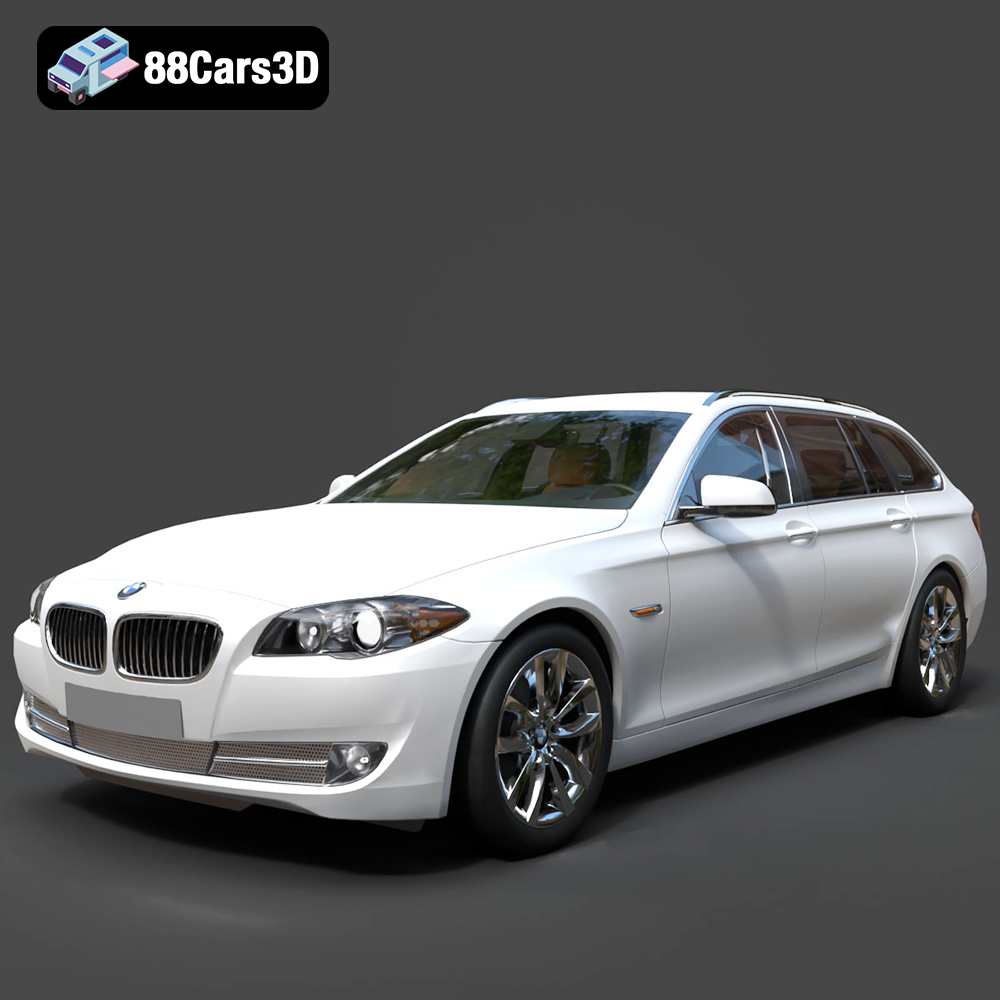
BMW 5 Series Touring F11-007 3D Model
Texture: Yes
Material: Yes
Download the BMW 5 Series Touring F11-007 3D Model featuring a detailed exterior and interior. Includes .blend, .fbx, .obj, .glb, .stl, .ply, .unreal, and .max formats for rendering, simulation, and game development.
Price: $10.79
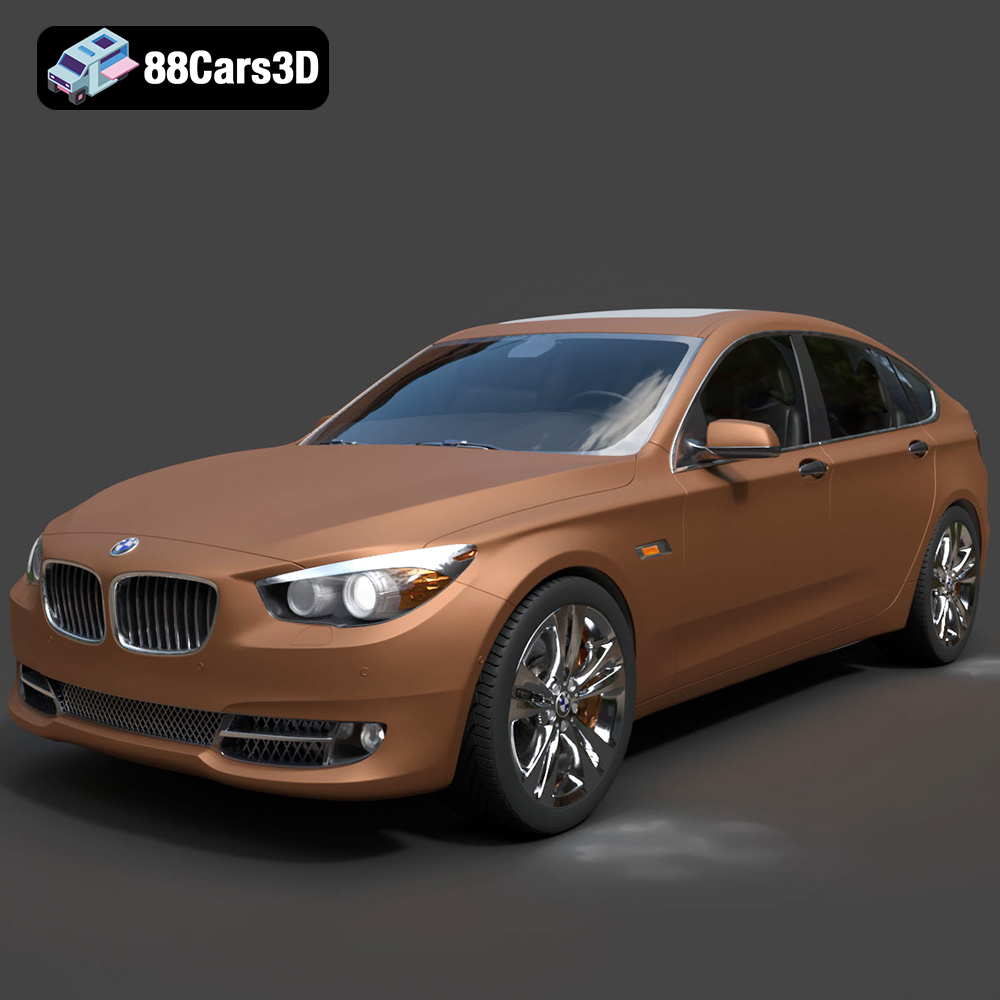
BMW 5 Series Gran Turismo F07-003 3D Model
Texture: Yes
Material: Yes
Download the BMW 5 Series Gran Turismo F07-003 3D Model featuring a detailed exterior and interior. Includes .blend, .fbx, .obj, .glb, .stl, .ply, .unreal, and .max formats for rendering, simulation, and game development.
Price: $10.79
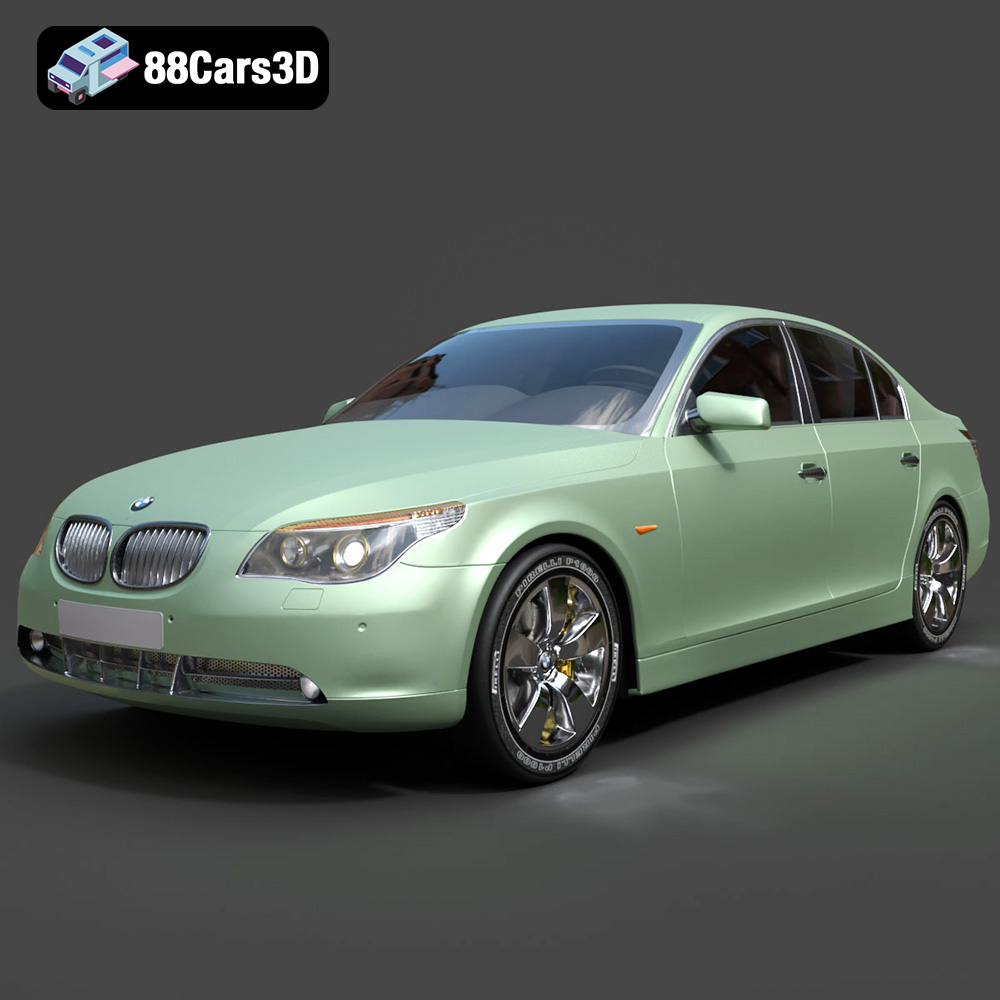
BMW 5 Series E60 3D Model
Texture: Yes
Material: Yes
Download the BMW 5 Series E60 3D Model featuring its iconic sedan design, detailed exterior, and interior. Includes .blend, .fbx, .obj, .glb, .stl, .ply, .unreal, and .max formats for rendering, simulation, and game development.
Price: $10.79

BMW 5 E34-535i 3D Model
Texture: Yes
Material: Yes
Download the BMW 5 E34-535i 3D Model featuring an iconic design, detailed exterior and interior, and accurate representation. Includes .blend, .fbx, .obj, .glb, .stl, .ply, .unreal, and .max formats for rendering, simulation, and game development.
Price: $10.79
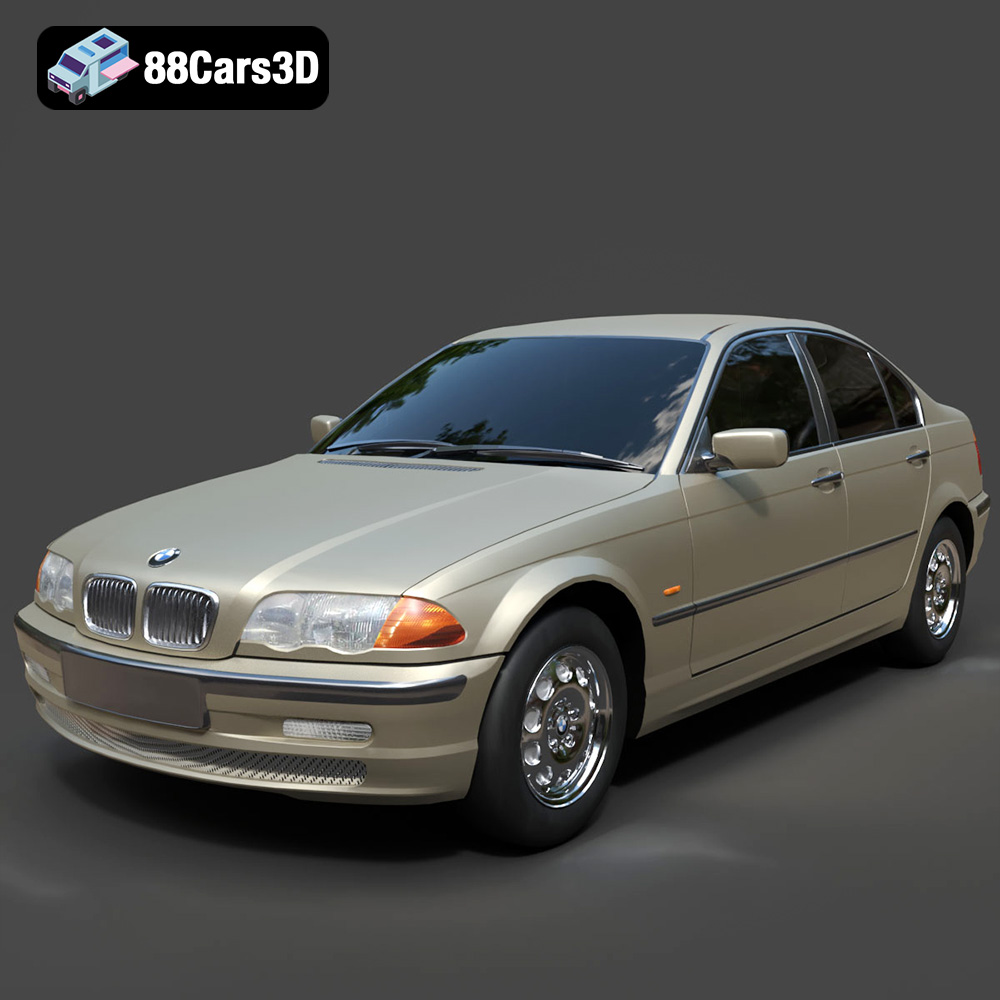
BMW 3 Series E46 3D Model
Texture: Yes
Material: Yes
Download the BMW 3 Series E46 3D Model featuring authentic exterior lines, a detailed interior, and separated components for animation. Includes .blend, .fbx, .obj, .glb, .stl, .ply, .unreal, and .max formats for rendering, simulation, and game development.
Price: $10.79
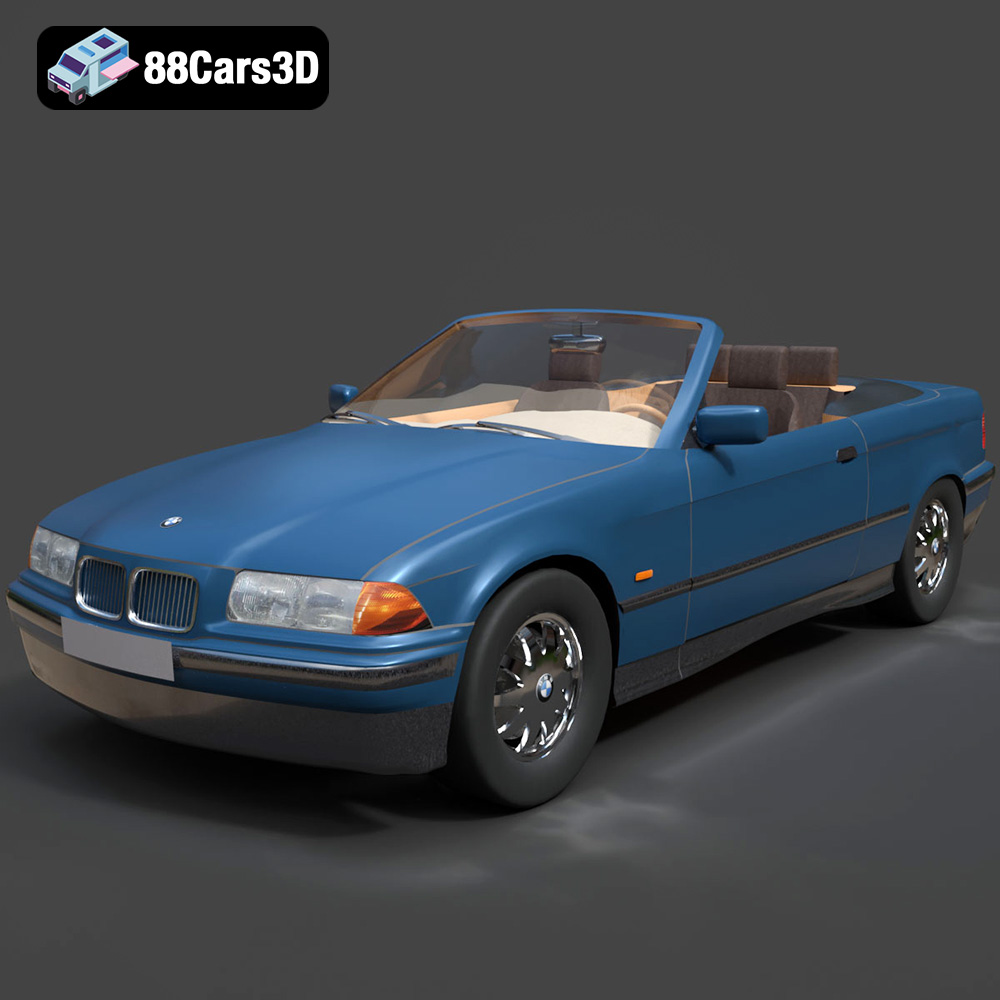
BMW 3 Series E36 Cabrio 325i 1998 3D Model
Texture: Yes
Material: Yes
Download the BMW 3 Series E36 Cabrio 325i 1998 3D Model featuring a classic convertible design and detailed interior. Includes .blend, .fbx, .obj, .glb, .stl, .ply, .unreal, and .max formats for rendering, simulation, and game development.
Price: $10.79
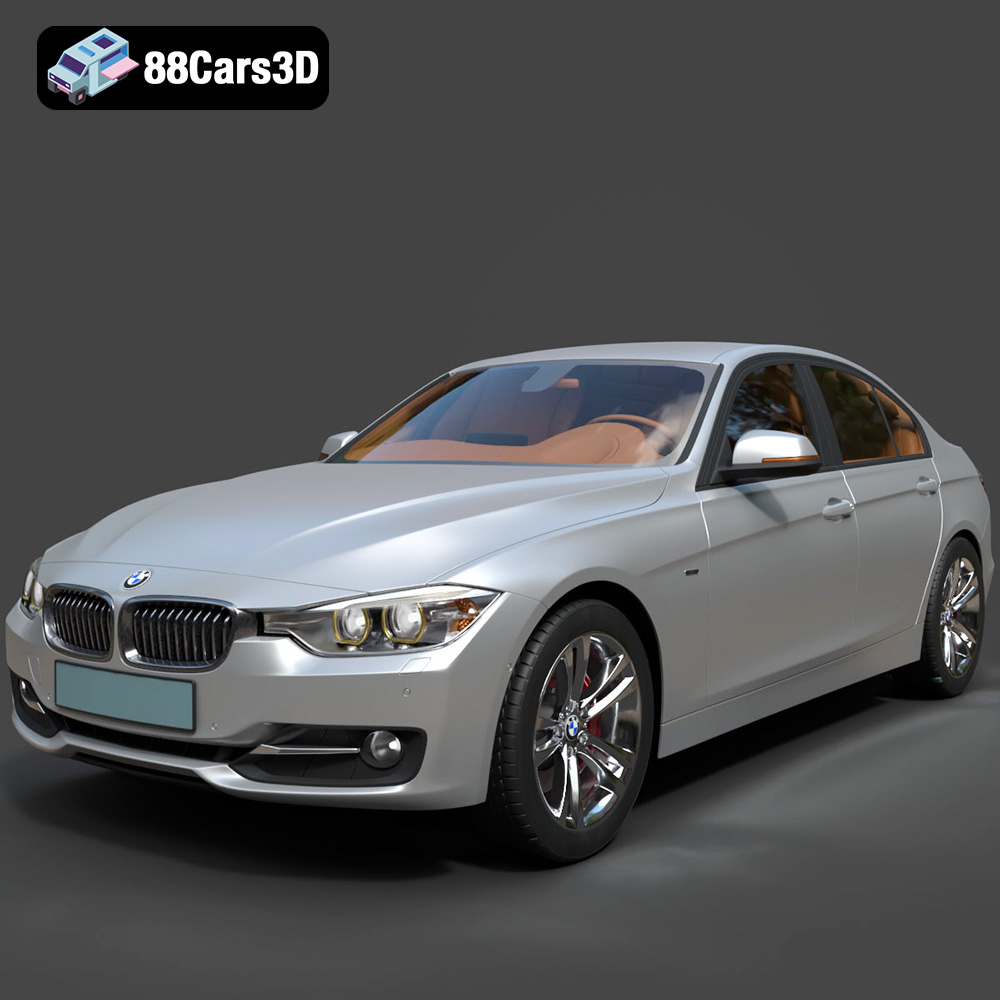
BMW 3 F30 3D Model
Texture: Yes
Material: Yes
Download the BMW 3 F30 3D Model featuring a detailed exterior, realistic interior, and optimized mesh. Includes .blend, .fbx, .obj, .glb, .stl, .ply, .unreal, and .max formats for rendering, simulation, and game development.
Price: $10.79
