

“`html
Mastering Your STL Files: A Pro’s Guide to Fixing Errors for Flawless 3D Prints
The thrill of holding a perfectly rendered 3D printed car model, painstakingly assembled from a digital file, is unmatched. Whether you’re a seasoned maker downloading highly detailed printable car models from 88cars3d.com or just starting your 3D printing journey, the foundation of a successful print lies in the quality of your STL file. However, the path from digital design to physical object can often be paved with unexpected errors within the STL itself. These “non-manifold” geometries, inverted normals, or missing faces can lead to slicing nightmares, failed prints, and immense frustration. This comprehensive guide will demystify the STL file format, illuminate common errors, and equip you with the technical expertise and software workflows to repair these issues, ensuring your 3D printer translates your digital vision into a tangible masterpiece, every single time.
We’ll delve deep into the anatomy of an STL file, explore the best practices for preparing models before slicing, and provide step-by-step instructions for using powerful tools like Meshmixer, Blender, and even integrated slicer features. From understanding basic mesh topology to advanced repair techniques, this post is your ultimate resource for achieving print-perfect results, saving you time, material, and countless headaches. Get ready to transform potentially problematic files into flawless prints!
Understanding the STL File: The Language of 3D Printing
The Stereolithography (STL) file format, despite its age, remains the ubiquitous standard for communicating 3D model geometry to 3D printers. At its core, an STL file represents a 3D object’s surface as a collection of triangular facets. Each triangle is defined by three vertices (points in 3D space) and a normal vector, which indicates the outward-facing direction of the triangle’s surface. This seemingly simple representation is incredibly powerful, allowing for the approximation of complex curved surfaces with a sufficient number of small triangles. However, this simplicity also means that STL files lack information about color, texture, or internal structure; they are purely geometric representations.
The way these triangles are organized is crucial. For a 3D model to be “watertight” or “manifold,” its surface must form a closed volume with no holes, self-intersections, or disconnected components. Think of it like a solid container – it should hold water without leaking. When slicing software attempts to process an STL file that violates these principles, it struggles to determine what is “inside” and what is “outside,” often leading to errors like “hollow parts” being printed or the entire print being ignored.
ASCII vs. Binary STL: File Size and Readability
STL files come in two flavors: ASCII and Binary. ASCII STL files are human-readable text files where each triangle’s vertices and normal are listed as coordinates. While easy to inspect, they are significantly larger and slower to parse. Binary STL files, on the other hand, store the same information in a more compact, machine-readable format. For most practical purposes, binary STLs are preferred due to their smaller file sizes, especially when dealing with highly detailed models common on platforms like 88cars3d.com. Understanding this distinction is less about repair and more about efficient file management and faster loading times in your slicer.
Mesh Topology: The Foundation of Watertightness
A “manifold” mesh is the holy grail for 3D printing. It means the surface is continuous and forms a closed volume. Key characteristics of a manifold mesh include:
- No holes: The surface must be completely sealed.
- No intersecting faces: Triangles should not pass through each other.
- Consistent edge sharing: Each edge should be shared by exactly two triangles. If an edge is shared by three or more, it indicates a “T-junction” or internal face, which is problematic.
- No isolated vertices or edges: Every vertex and edge must be part of at least one triangle.
When you download a printable car model, particularly one with intricate details like undercarriage components or interior elements, the risk of topology errors increases. These models are often sculpted or generated from complex CAD data, and conversion processes can introduce imperfections.
Common STL File Errors and Their Impact on Prints
Identifying and understanding the types of errors that plague STL files is the first step toward effective repair. These flaws, if left unaddressed, can manifest in various print failures, from minor surface blemishes to complete print abandonment by the slicer. Knowing what to look for will save you significant troubleshooting time down the line. For instance, a model with inverted normals might appear “inside-out” in your slicer, or a slicer might generate unsupported structures where there should be solid walls.
Many slicers, like Cura or PrusaSlicer, have built-in tools to detect some of these errors, often flagging them with warnings. However, these tools are not always foolproof and may not catch all issues, especially complex self-intersections or subtle non-manifold conditions. Dedicated mesh editing software offers more robust solutions for diagnosing and repairing these problems.
Holes and Gaps: The Most Frequent Culprits
These are gaps or missing triangles in the mesh, creating openings in what should be a solid surface. In slicing software, this can lead to the software trying to infill the entire model or create strange, unprintable geometry. For automotive models, a hole in the chassis or a missing section of a body panel can ruin the aesthetic and structural integrity.
Inverted Normals: The Inside-Out Problem
Each triangle has a normal vector that defines its outward-facing direction. If some triangles have their normals pointing inwards, the slicer can become confused about the model’s orientation and surface definition. This often results in thin-walled or hollow prints, or parts of the model being “cut off” by the slicer because it interprets them as being inside the model.
Self-Intersecting Geometry: Tangled Meshes
This occurs when parts of the model’s surface intersect themselves, creating impossible geometry. Imagine a ribbon tying itself into a knot – in 3D, this creates overlapping triangles that confuse slicing algorithms. This can lead to corrupted layers, unexpected artifacts, and failed prints.
Non-Manifold Edges: Where Geometry Fails
A manifold edge is an edge that is shared by exactly two triangles. Non-manifold edges arise when an edge is shared by three or more triangles (creating a “T-junction” or an internal face) or when an edge is only part of a single triangle (an open edge). These indicate topological errors that break the watertight nature of the mesh.
Essential Tools for STL File Repair
Fortunately, a variety of software tools exist to help you diagnose and repair STL file errors. The choice of tool often depends on the complexity of the error, your budget, and your familiarity with 3D modeling software. For basic repairs, your slicer might suffice. For more intricate issues, dedicated mesh repair software or even full-featured 3D modeling packages are necessary. Many platforms, including 88cars3d.com, aim to provide pre-repaired files, but understanding the repair process is still invaluable for custom modifications or when encountering unexpected issues.
When downloading files, especially highly detailed ones like complex car models, it’s always a good idea to perform a quick check in your preferred repair software before sending them to the slicer. This proactive approach can prevent hours of frustration and wasted filament.
Slicer-Based Repair Tools: The First Line of Defense
Most modern slicers, such as Ultimaker Cura, PrusaSlicer, and Simplify3D, include basic STL repair functionalities. These tools typically work by attempting to automatically fix common issues like holes and inverted normals. When you load an STL file, the slicer may prompt you with a warning about potential errors and offer to repair it. While convenient for minor issues, these automatic repairs are not always perfect and can sometimes introduce new problems or fail to resolve more complex self-intersections.
Dedicated Mesh Repair Software: Meshmixer and Netfabb
For more robust repair capabilities, dedicated mesh editing software is recommended. Autodesk Meshmixer (which, though no longer actively developed, is still widely available and incredibly powerful) offers a comprehensive suite of tools for analyzing, repairing, and manipulating 3D meshes. Its “Inspector” tool is excellent for automatically identifying and fixing holes, non-manifold edges, and other common errors. It also provides manual sculpting and editing tools for more precise control.
Autodesk Netfabb (both the free Basic and the paid Premium/Ultimate versions) is a professional-grade solution specifically designed for additive manufacturing preparation. It offers advanced analysis and repair capabilities, including automated hole filling, mesh simplification, and complex error correction. Netfabb is particularly adept at handling very large and complex meshes commonly found in industrial applications but is also excellent for high-detail hobbyist models.
3D Modeling Software: Blender for Advanced Control
Blender, a free and open-source 3D creation suite, offers unparalleled power and flexibility for mesh repair, albeit with a steeper learning curve. Its “3D-Print Toolbox” add-on is specifically designed for print preparation and includes functions to check for non-manifold geometry, intersecting faces, and other issues. Blender’s sculpting and editing tools allow for fine-grained manual correction of mesh errors that automated tools might miss.
Step-by-Step STL File Repair Workflow
A systematic approach to repairing STL files will ensure you don’t miss any critical issues. This workflow combines automated tools with manual checks for the most reliable results. Remember, the goal is to create a single, continuous, watertight surface that your slicer can interpret correctly. For highly detailed models like those found on 88cars3d.com, this process becomes even more critical.
Start by importing your STL file into your chosen repair software. Perform an initial automated analysis. If the software identifies errors, address them using its automated or manual tools. Once the automated checks pass, perform a visual inspection. Zoom in on areas where errors were reported or on features that are known to be problematic (e.g., thin parts, complex curves, sharp edges).
Automated Mesh Analysis and Repair
Load your STL file into Meshmixer or Netfabb. Use their respective “Inspector” or “Analysis” tools. These tools will automatically scan the mesh for common errors and usually provide a report or visual highlighting of the problematic areas. In Meshmixer, select ‘Analysis’ > ‘Inspector’. In Netfabb Basic, use ‘Analysis’ > ‘Mesh Errors’.
- Holes: The inspector will typically highlight holes. Meshmixer offers an ‘Auto-Repair All’ option or manual hole filling. Netfabb provides similar automated repair functions.
- Non-Manifold Edges: These are often identified and can be repaired automatically or manually by merging vertices or cleaning up edge loops.
- Degenerate Triangles: Very small or flat triangles that can cause issues.
After running the automated repairs, re-run the analysis to confirm that the identified errors have been resolved. Don’t blindly trust the automatic fixes; always verify.
Manual Mesh Correction and Cleanup
Sometimes, automated tools fall short. This is where manual intervention is key:
- Fixing Inverted Normals: In Blender, you can select faces and use ‘Mesh’ > ‘Normals’ > ‘Recalculate Outside’ or ‘Flip’. In Meshmixer, you can use ‘Edit’ > ‘Hollow’ and ensure the orientation is correct, or manually select and flip faces if needed. Ensure your normals are consistently pointing outwards.
- Resolving Self-Intersections: This can be tricky. In Blender, the ‘3D-Print Toolbox’ has a ‘Check All’ function that highlights self-intersections. You might need to use sculpting tools or manually move vertices to untangle the mesh. Meshmixer’s ‘Sculpt’ tools can help smooth out or correct intersecting areas.
- Bridging Gaps: For small gaps that automated tools struggle with, you can use tools like Blender’s ‘Bridge Edge Loops’ or Meshmixer’s ‘Create Face’ to manually patch holes.
Pay close attention to areas like thin exhaust pipes, wing mirrors, or intricate grille details on car models, as these are prone to topology errors during conversion or export.
Verifying Watertightness and Exporting
Once you believe the mesh is repaired, perform a final check. In Meshmixer, the ‘Inspector’ should report zero errors. In Blender’s ‘3D-Print Toolbox’, the ‘Non-Manifold Edges’ and ‘Intersections’ checks should pass. If you are using Netfabb, the ‘Mesh Errors’ report should be clear.
Finally, export the corrected model as a Binary STL file. Save it with a new filename to preserve the original file in case you need to revert. Re-import this newly exported STL into your slicer to ensure it loads correctly and appears as expected before proceeding to slicing.
Slicing Strategies for Optimized Print Quality
Even with a perfectly repaired STL file, the slicing process is where the magic truly happens – or where it can go wrong. Slicer settings dictate how your printer interprets the 3D geometry and translates it into physical layers. Optimizing these settings is crucial for achieving the desired quality, strength, and detail, especially for complex printable car models.
Think of slicing as creating a blueprint for your printer. The layer height determines the vertical resolution, the infill provides internal structure, and support structures prevent overhangs from collapsing. For models with fine details, like those available from 88cars3d.com, selecting the right balance between detail and print time is a key challenge.
Layer Height and Print Speed: The Detail vs. Time Tradeoff
Layer Height: This is arguably the most significant setting affecting print quality and time. Smaller layer heights (e.g., 0.1mm) produce smoother surfaces with less visible “stair-stepping” on curved areas, ideal for car bodies. However, they dramatically increase print time. Larger layer heights (e.g., 0.2mm or 0.3mm) print much faster but result in a more noticeable layer texture. For detailed car models, a layer height of 0.1mm to 0.15mm is often a good compromise for FDM printing.
Print Speed: Faster speeds reduce print time but can compromise quality, especially on complex geometries or when printing small features. For detailed car models, printing outer walls and detailed sections at a slower speed (e.g., 30-50 mm/s) while allowing infill or larger solid areas to print faster (e.g., 60-80 mm/s) can yield excellent results. Always experiment with your specific printer and material.
Support Structures: The Unsung Heroes of Overhangs
Complex car models often feature significant overhangs, such as spoilers, wheel wells, and undercarriage details. Support structures are essential to prevent these from collapsing during printing. However, poorly generated or difficult-to-remove supports can leave unsightly marks or damage the model during removal.
- Support Type: Tree supports (available in Cura and PrusaSlicer) are often excellent for organic shapes and can be easier to remove than traditional linear supports, minimizing contact points on the model surface.
- Support Density: A lower density (e.g., 5-10%) is usually sufficient for most FDM prints and makes removal easier.
- Support Z Distance: This setting controls the gap between the support and the model. A slightly larger gap (e.g., 0.2mm to 0.3mm) can make supports easier to break away cleanly, but too large a gap can lead to poor surface quality on the underside of the overhang.
- Support Interface: Enabling a support roof and floor can improve the surface quality of the areas directly supported, but can make removal harder.
When dealing with models from 88cars3d.com, check if they provide recommended support strategies or pre-supported versions. For manual support placement, focus on critical overhangs and areas where gravity would cause sagging.
Infill Patterns and Density: Strength vs. Material Usage
The infill percentage determines the internal density of the print. For display models, a low infill (5-15%) is often sufficient, saving material and print time. If the model needs to be functional or structurally robust (e.g., for a remote-controlled car chassis), higher infill densities (20-50% or more) and stronger infill patterns like gyroid or cubic are recommended.
Infill Patterns: Gyroid is a popular choice as it offers good strength in all directions and is relatively efficient. Cubic and its variants provide excellent strength. For display models where strength is not a primary concern, simple patterns like grid or lines at low density suffice.
Material Selection and Printer Calibration for Optimal Results
The material you choose and the calibration of your 3D printer play a pivotal role in the success and quality of your prints. Different materials have unique properties that affect printability, strength, and finish, while a well-calibrated printer ensures dimensional accuracy and reliability.
For detailed car models, materials like PLA are often preferred due to their ease of printing, low warping, and excellent detail reproduction. However, for applications requiring higher temperature resistance or durability, PETG or ABS might be considered, though they present greater printing challenges. Resin printing (SLA/DLP) excels at capturing incredibly fine details unattainable with FDM, making it ideal for miniature car models where every emblem and panel line matters. Regardless of the technology, a properly tuned printer is non-negotiable.
FDM vs. Resin Printing: Choosing the Right Technology
FDM (Fused Deposition Modeling): This is the most common type of 3D printing, using filament extruded through a heated nozzle. It’s generally more affordable and versatile in terms of materials. FDM is excellent for larger models and functional parts. However, achieving extremely fine details can be challenging due to nozzle size limitations and layer lines.
Resin Printing (SLA/DLP/MSLA): These technologies use UV light to cure liquid resin layer by layer. They offer significantly higher resolution and smoother surface finishes, making them perfect for highly detailed collectibles like intricate car models. However, resin prints often require more post-processing (washing, curing) and the materials can be more expensive and messy. Support structures are also critical and often more delicate.
Printer Calibration: The Foundation of Accuracy
Before printing any detailed model, ensure your printer is properly calibrated:
- Bed Leveling: A perfectly level bed is crucial for first-layer adhesion and overall print success.
- E-Steps Calibration: Ensures your extruder pushes the correct amount of filament.
- Temperature Towers and Retraction Tests: Dial in the optimal printing temperature and retraction settings for your chosen filament to prevent stringing and improve surface quality.
- Dimensional Accuracy Tests: Print calibration cubes to verify that your printer is accurately producing dimensions.
Regular maintenance, such as cleaning the nozzle, checking belt tension, and lubricating moving parts, will also contribute to consistent, high-quality prints.
Post-Processing: Bringing Your 3D Printed Car Model to Life
The journey doesn’t end when the print is finished. Post-processing is essential for transforming a raw 3D print into a polished, professional-looking model. The techniques you employ will depend on the printing technology used, the material, and your desired final aesthetic. For intricate car models, these steps are crucial for highlighting the design details and achieving a museum-quality finish.
Removing supports cleanly, sanding away layer lines, filling imperfections, and painting are all integral parts of the process. Patience and attention to detail during post-processing can elevate a good print to an exceptional one. Whether you’re printing a classic muscle car or a futuristic concept, the final touches make all the difference.
Support Removal and Initial Cleanup
This is often the most delicate stage. Carefully remove support structures using appropriate tools like pliers, flush cutters, or a hobby knife. For resin prints, remove supports after washing but before final curing, as the resin is softer then. Work slowly to avoid damaging the model’s surface. If supports leave marks, gentle sanding or scraping can help.
Sanding, Filling, and Priming
For FDM prints, sanding is essential to smooth out layer lines. Start with a coarse grit sandpaper (e.g., 120-220 grit) and progressively move to finer grits (e.g., 400, 800, 1000+). Use wet sanding techniques for a smoother finish and to minimize dust.
For significant gaps or imperfections, use filler products like automotive putty, Bondo, or even 3D pen filament. Apply filler, let it cure, and then sand it smooth. Once the surface is smooth, apply a few thin coats of primer. Primer helps reveal any remaining imperfections and provides a uniform base for painting.
Painting and Finishing Techniques
Painting your 3D printed car model can bring it to life. Use acrylic paints, spray paints, or airbrushing for smooth finishes. Masking tape is your best friend for achieving clean lines between different colored sections (e.g., body, trim, windows).
- Base Coat: Apply your primary color(s) in thin, even coats.
- Detailing: Use fine brushes to paint smaller details like headlights, grilles, and emblems.
- Weathering (Optional): Techniques like dry brushing, washes, or applying pigments can add realism for battle-worn or aged vehicles.
- Clear Coat: Apply a final clear coat (gloss, satin, or matte, depending on the desired finish) to protect the paintwork and provide a consistent sheen.
For resin prints, meticulous sanding and priming are still necessary, but the absence of prominent layer lines can significantly speed up the process. Careful painting can bring out the incredible detail captured by resin printing.
Mastering STL file repair and understanding the intricacies of 3D printing settings are fundamental skills for any serious maker or hobbyist. By approaching your printable car models with a methodical workflow, from initial file inspection and repair using tools like Meshmixer or Blender, through careful slicing with optimized settings, and culminating in skilled post-processing, you can consistently achieve stunning results. Platforms like 88cars3d.com provide excellent starting points with high-quality models, but armed with this knowledge, you are empowered to overcome any digital hurdle and bring your passion for automotive design into the physical realm with confidence and precision. Happy printing!
“`
Featured 3D Car Models

BMW 7 Series E38 3D Model
Texture: Yes
Material: Yes
Download the BMW 7 Series E38 3D Model featuring its iconic luxury sedan design and classic aesthetics. Includes .blend, .fbx, .obj, .glb, .stl, .ply, .unreal, and .max formats for rendering, simulation, and game development.
Price: $10.79

BMW 6 Series 640i F12 3D Model
Texture: Yes
Material: Yes
Download the BMW 6 Series 640i F12 3D Model featuring a sleek design and detailed interior. Includes .blend, .fbx, .obj, .glb, .stl, .ply, .unreal, and .max formats for rendering, simulation, and game development.
Price: $10.79

BMW 6 Coupe E63 3D Model
Texture: Yes
Material: Yes
Download the BMW 6 Coupe E63 3D Model featuring a sleek design, detailed interior, and realistic exterior. Includes .blend, .fbx, .obj, .glb, .stl, .ply, .unreal, and .max formats for rendering, simulation, and game development.
Price: $10.79

BMW 5 Series Touring F11-007 3D Model
Texture: Yes
Material: Yes
Download the BMW 5 Series Touring F11-007 3D Model featuring a detailed exterior and interior. Includes .blend, .fbx, .obj, .glb, .stl, .ply, .unreal, and .max formats for rendering, simulation, and game development.
Price: $10.79

BMW 5 Series Gran Turismo F07-003 3D Model
Texture: Yes
Material: Yes
Download the BMW 5 Series Gran Turismo F07-003 3D Model featuring a detailed exterior and interior. Includes .blend, .fbx, .obj, .glb, .stl, .ply, .unreal, and .max formats for rendering, simulation, and game development.
Price: $10.79

BMW 5 Series E60 3D Model
Texture: Yes
Material: Yes
Download the BMW 5 Series E60 3D Model featuring its iconic sedan design, detailed exterior, and interior. Includes .blend, .fbx, .obj, .glb, .stl, .ply, .unreal, and .max formats for rendering, simulation, and game development.
Price: $10.79

BMW 5 E34-535i 3D Model
Texture: Yes
Material: Yes
Download the BMW 5 E34-535i 3D Model featuring an iconic design, detailed exterior and interior, and accurate representation. Includes .blend, .fbx, .obj, .glb, .stl, .ply, .unreal, and .max formats for rendering, simulation, and game development.
Price: $10.79
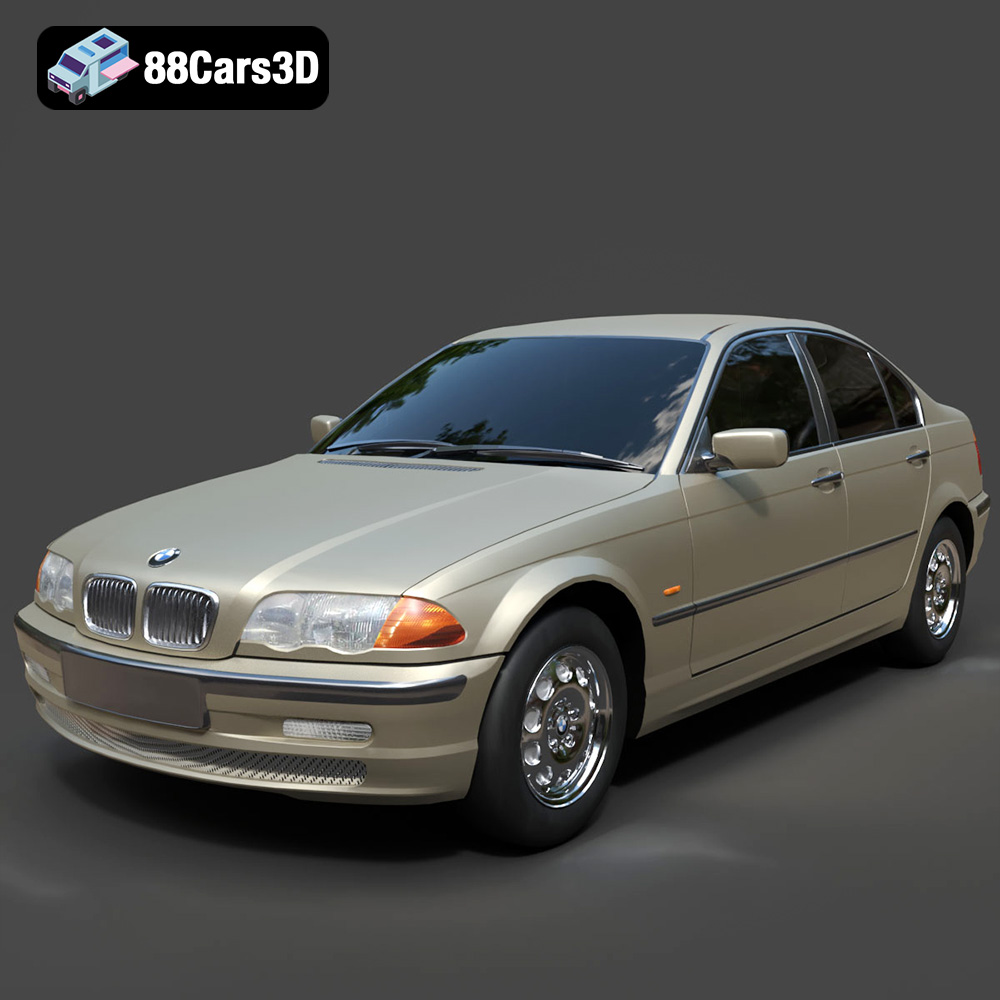
BMW 3 Series E46 3D Model
Texture: Yes
Material: Yes
Download the BMW 3 Series E46 3D Model featuring authentic exterior lines, a detailed interior, and separated components for animation. Includes .blend, .fbx, .obj, .glb, .stl, .ply, .unreal, and .max formats for rendering, simulation, and game development.
Price: $10.79
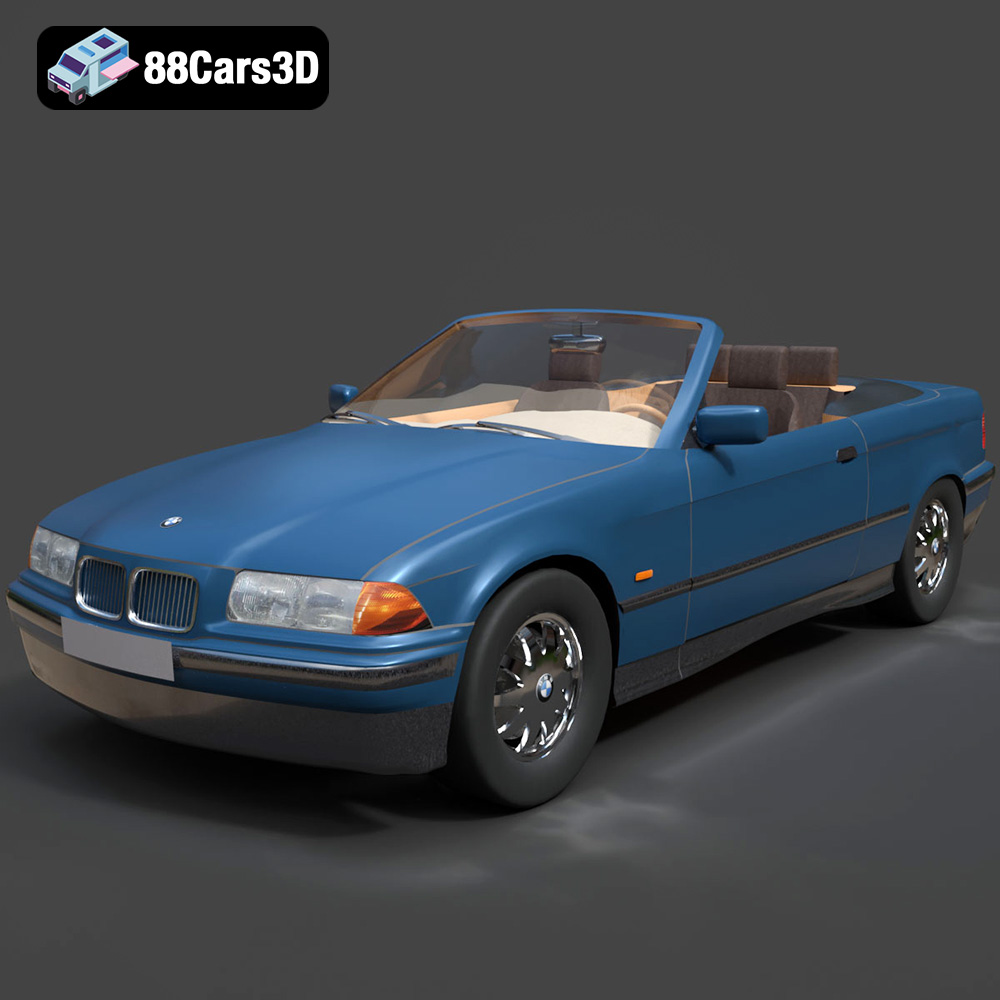
BMW 3 Series E36 Cabrio 325i 1998 3D Model
Texture: Yes
Material: Yes
Download the BMW 3 Series E36 Cabrio 325i 1998 3D Model featuring a classic convertible design and detailed interior. Includes .blend, .fbx, .obj, .glb, .stl, .ply, .unreal, and .max formats for rendering, simulation, and game development.
Price: $10.79

BMW 3 F30 3D Model
Texture: Yes
Material: Yes
Download the BMW 3 F30 3D Model featuring a detailed exterior, realistic interior, and optimized mesh. Includes .blend, .fbx, .obj, .glb, .stl, .ply, .unreal, and .max formats for rendering, simulation, and game development.
Price: $10.79
