

The Ultimate Guide to Crafting Realistic Headlight and Taillight Models for Automotive Visualization
In the highly competitive world of 3D automotive design, game development, and photorealistic rendering, every detail matters. While the sleek lines of a car’s body or the intricate design of its wheels often capture initial attention, it’s the subtle yet crucial elements like headlights and taillights that truly elevate a model from good to exceptional. These complex assemblies are not merely sources of light; they are integral design statements, housing an array of intricate components that reflect brand identity, advanced engineering, and aesthetic prowess. Crafting them with absolute realism is a paramount skill for any 3D artist aiming for top-tier results.
This comprehensive guide dives deep into the technical intricacies of creating stunningly realistic headlight and taillight 3D car models. We’ll explore everything from mastering complex topology and precise UV mapping to developing sophisticated PBR materials and optimizing your assets for high-fidelity automotive rendering and seamless integration into game engines. Whether you’re a seasoned professional seeking to refine your workflow or an aspiring artist looking to push the boundaries of your creations, prepare to uncover the secrets behind bringing these luminous masterpieces to life. By the end of this article, you’ll possess the knowledge and actionable strategies to create headlight and taillight models that truly shine, capturing the essence of real-world automotive design and performance.
The Art and Science of Headlight & Taillight Topology
The foundation of any realistic 3D model lies in its topology. For headlights and taillights, this becomes exceptionally critical due to their often organic shapes, clear plastic lenses, and intricate internal structures. Poor topology can lead to artifacts, pinching, and an inability to deform smoothly under subdivision, jeopardizing the photorealistic quality essential for high-end visualization and automotive rendering. The goal is always to achieve a clean, all-quad mesh with excellent edge flow that supports smooth curves and crisp edges, mimicking the precision of real-world manufacturing.
Replicating Complex Forms and Internal Structures
Modern automotive lighting systems are miniature marvels of engineering. Headlights, for instance, often incorporate multiple projectors, reflectors, daytime running lights (DRLs), and intricate LED arrays, all housed within a single clear lens. Taillights, too, can feature complex light guides, diffused LED strips, and multi-faceted reflectors. Replicating these internal components with accuracy is paramount. Start by gathering extensive reference material—blueprints, CAD drawings, and high-resolution photographs from various angles are indispensable. For the main housing and lens, precise poly modeling techniques are generally preferred over excessive sculpting, ensuring dimensional accuracy. Techniques like meticulous edge extrusion, bridging, and careful Boolean operations (followed by rigorous cleanup) are crucial for carving out the complex forms and openings required for the internal elements. When using Booleans, always ensure that the resulting geometry is clean, without N-gons or excessive triangles, as these will cause issues during subdivision and texturing. For highly detailed components like LED circuit boards or intricate reflector dishes, consider instances or arrays for efficiency, maintaining a careful balance between visual fidelity and polygon count, especially if the model is intended as a game asset. For ultra-high-resolution renders, these internal structures can easily push a single headlight’s polygon count into the hundreds of thousands, while a game-ready asset might require baking these details down to normal maps.
Achieving Smooth Surfaces and Crisp Edges
The polished, high-gloss surfaces of automotive lights demand flawless smoothness and precisely defined edges. Subdivision surface modeling is the industry standard for achieving this, but it requires careful attention to edge flow. To ensure that the lens and housing components subdivide cleanly without undesirable pinching or distortions, create supporting edge loops around all hard edges. These “holding” or “control” loops provide the necessary geometric tension to maintain sharp details even after multiple subdivision iterations. Avoid poles with more than five or fewer than three edges converging, as these are common culprits for surface imperfections. Maintaining consistent quad distribution and ensuring that edge loops flow naturally along the curvature of the object are key to achieving perfect, uninterrupted reflections—a cornerstone of compelling automotive rendering. For parts with very slight bevels that need to appear sharp, consider using weighted normals or custom split normals in your 3D software to achieve crispness without excessive geometry, further optimizing your 3D car models.
Precision UV Mapping for Seamless Textures
Once your headlight and taillight models boast impeccable topology, the next critical step is creating a robust UV map. UV mapping is the process of flattening the 3D surface of your model into a 2D plane, allowing you to apply textures and materials without distortion. For the highly reflective and often transparent surfaces of automotive lighting, a well-executed UV layout is non-negotiable for achieving photorealistic results and efficient texturing workflows.
Unwrapping Complex Lenses and Bezels
Headlight and taillight lenses are often characterized by their complex curvature, internal optics, and sometimes even textured surfaces (e.g., fluted glass). Unwrapping these elements requires strategic thinking to minimize stretching and optimize texture resolution. For the main lens, a combination of planar, cylindrical, or spherical projections can be employed, often followed by meticulous manual adjustments in the UV editor. The key is intelligent seam placement: try to hide seams in areas that are less visible or where changes in material naturally occur, such as along the edge where the lens meets the bezel or housing. Visualize how the texture will wrap around the object and place seams accordingly to prevent noticeable breaks or distortions in patterns like clear coat flakes or dirt maps. Using a checkerboard texture during the UV unwrapping process is crucial for visually identifying and correcting areas of stretching or compression. Aim for a uniform texel density across all parts of the model to ensure consistent texture detail, preventing some areas from appearing blurry while others are sharp. This consistency is vital for maintaining realism, especially when dealing with the high-resolution textures required for automotive rendering and close-up shots.
Optimizing UV Layouts for PBR Workflow
The Physically Based Rendering (PBR) workflow relies heavily on high-quality, uniform texture maps for base color, metallic, roughness, normal, and other channels. An optimized UV layout directly contributes to the efficiency and visual quality of these PBR materials. After unwrapping, the islands (individual flattened pieces of your model) need to be efficiently packed into the UV space (typically 0-1). Maximizing the usage of this space without overlaps is essential to prevent wasting texture resolution and to ensure that each pixel contributes meaningfully to the final look. Tools for packing UV islands automatically can be very helpful, but always review and manually adjust for better density where needed. For extremely detailed models, particularly those intended for cinematics or high-end visualization, consider utilizing UDIMs (U-Dimension) workflow. UDIMs allow you to spread your UVs across multiple texture tiles, breaking the 0-1 barrier and providing immense resolution for even the largest and most complex parts. This is particularly useful for separating different material zones like clear glass, chrome reflectors, and plastic housings onto their own dedicated texture sets while maintaining a coherent UV structure. Proper UV mapping is a cornerstone of creating compelling PBR materials and ensures that your textures are rendered accurately and efficiently, whether your model is destined for a static render or as a dynamic game asset.
Illuminating Realism: PBR Materials and Shader Networks
With precise modeling and UV mapping complete, the next frontier in achieving true realism for headlights and taillights is the creation of their Physically Based Rendering (PBR) materials. This stage is where your model truly comes to life, mimicking the way light interacts with various surfaces in the real world. From the crystalline clarity of lenses to the metallic gleam of reflectors and the soft glow of LEDs, each material requires meticulous attention to its PBR properties and a well-structured shader network.
Glass, Chrome, and Reflector Shaders
The lens of a headlight or taillight is arguably its most defining feature. To replicate its transparent, reflective, and refractive qualities, a sophisticated glass shader is essential. Using a PBR workflow, this involves setting the material’s ‘Metallic’ value to 0 and adjusting its ‘Roughness’ for clear vs. frosted glass. Crucially, the ‘Transmission’ value should be set to 1 for full transparency, and the ‘Index of Refraction’ (IOR) needs to be accurately defined. For common plastics like acrylic or polycarbonate, which are often used in automotive lenses, an IOR of around 1.5 to 1.6 is generally appropriate. Introducing subtle texture maps for imperfections like dust, fingerprints, or micro-scratches on the glass surface can significantly enhance realism, breaking up perfectly smooth reflections and adding a touch of wear that grounds the model in reality. For the metallic reflectors and chrome bezels, the ‘Metallic’ value should be set to 1, with ‘Roughness’ adjusted to achieve anything from a mirror-like polish (very low roughness) to a satin or brushed finish (higher roughness, possibly with an anisotropic texture map). Many automotive paints and clear coats also benefit from a “clear coat” layer within the PBR shader, simulating the layered finish of real car paint on parts like painted housings. When sourcing high-quality textures or models, platforms like 88cars3d.com often provide PBR-ready materials that adhere to these principles, making integration seamless.
Emissive Materials and Light Sources
Beyond the reflective and refractive elements, the core function of headlights and taillights is to emit light. This involves two primary components in 3D: emissive materials and actual light sources. For internal LED arrays, light guides, or incandescent bulbs, an ‘Emissive’ material property is used. This can be driven by an ‘Emissive Map’ that dictates which parts of the surface glow and with what intensity and color. For instance, a texture map showing individual LEDs can be used to make only those specific points emit light. However, emissive materials primarily affect the appearance of the object itself in a render; they typically don’t cast light or shadows onto other objects in the scene unless the renderer is specifically configured for it (e.g., through global illumination). For true illumination, you must place actual 3D light sources within the housing of your headlight and taillight models. Point lights or small area lights, strategically positioned where the real light sources would be, will simulate the light output, cast realistic shadows, and generate physically accurate reflections. For headlights, using IES (Illuminating Engineering Society) profiles can dramatically increase realism. These files contain photometric data that accurately describes the distribution of light from real-world fixtures, allowing your 3D lights to mimic the exact beam patterns of automotive headlights. Combining emissive materials for the visual “glow” and actual light sources for physically accurate illumination is the most effective way to achieve stunningly realistic lighting effects for your 3D car models.
Bringing Lights to Life: Rendering Workflows
After meticulously modeling and texturing your headlight and taillight assemblies, the final stage is to render them in a way that truly showcases their realism. This involves a carefully planned rendering workflow, encompassing scene setup, lighting, camera settings, and crucial post-processing steps. The goal is to create images that are indistinguishable from photographs, captivate the viewer, and highlight the intricate details you’ve painstakingly crafted.
Lighting and Environment Setup
The quality of your render is profoundly influenced by your lighting and environment setup. For automotive renders, High Dynamic Range Images (HDRIs) are indispensable. An HDRI provides both accurate environmental lighting and high-fidelity reflections, which are critical for the glossy, metallic, and glass surfaces of headlights and taillights. Choose an HDRI that matches your desired mood and scene—whether it’s an overcast studio, a sunny outdoor scene, or an urban night environment. Beyond the HDRI, consider adding targeted 3D lights:
- Key Light: The primary light source, establishing the main direction of illumination.
- Fill Light: Softens shadows created by the key light, reducing contrast.
- Rim Light: Positioned behind the object, creating a bright outline that separates the car from the background and highlights its contours.
For headlights, integrating IES (Illuminating Engineering Society) profiles with your volumetric light sources can accurately simulate real-world beam patterns, adding an unparalleled layer of realism to your automotive rendering. For instance, if you’re using 3ds Max with Corona Renderer or V-Ray, or Blender with Cycles, these renderers support IES lights. Adjusting camera settings like Depth of Field (DoF) can draw focus to specific details, such as the intricate internal components of a headlight. Subtle motion blur, if rendering an animated scene, can further enhance realism and dynamic feel. The correct environment setup ensures that your car reflects its surroundings authentically, immersing it in a believable context.
Post-Processing and Compositing
Even the most perfect raw render can be significantly enhanced through post-processing and compositing. This stage allows for artistic refinement and the addition of subtle effects that are difficult or impossible to achieve purely in 3D.
Common post-processing techniques include:
- Glow/Bloom: Essential for emissive elements like LEDs and light bulbs. A subtle bloom around light sources makes them feel more integrated into the scene and creates a realistic photographic effect.
- Lens Flares & Chromatic Aberration: Used sparingly, these can add a cinematic quality, simulating real-world camera optics. Ensure they enhance rather than detract from the realism.
- Color Grading: Adjusting the overall color balance, saturation, and contrast to achieve a specific mood or to match reference imagery.
- Vignette & Film Grain: Subtle additions that can give a render a more photographic or artistic feel.
For maximum flexibility, consider rendering in multiple passes (e.g., beauty, reflections, refractions, shadows, object IDs). This allows you to individually manipulate different aspects of the image in compositing software like Adobe Photoshop, Affinity Photo, Nuke, or Fusion. For example, you can adjust the intensity of the light glow in post without re-rendering the entire scene. Compositing also allows for seamless integration of your rendered vehicle onto a photographic backplate, making your 3D car models appear as if they were captured in a real environment. This final polish is crucial for producing professional-grade automotive rendering that stands out in portfolios and marketing materials.
Game-Ready Lights: Optimization for Real-Time Performance
While photorealistic renders prioritize visual fidelity above all else, preparing headlight and taillight models for real-time applications like video games, AR/VR experiences, or interactive configurators demands a rigorous approach to optimization. The challenge lies in striking a delicate balance between visual quality and performance, ensuring smooth frame rates and efficient resource utilization without compromising the essential realism of the lights. This is where strategic decisions regarding polygon counts, texture usage, and engine-specific features become paramount.
LODs, Draw Calls, and Texture Atlasing
For game engines such as Unity or Unreal Engine, the visual complexity of headlight and taillight models must be scaled based on their distance from the camera. This is achieved through Level of Detail (LOD) systems. Creating multiple versions of your headlight (e.g., High, Medium, Low, Billboard) with progressively reduced polygon counts is essential. A high-detail LOD might have 10,000-20,000 triangles for a hero car’s headlight, while a low-detail LOD might be just a few hundred, and a distant billboard a simple plane. The engine automatically swaps these models based on viewing distance, saving computational resources.
Another critical optimization is minimizing draw calls. Each time the game engine has to tell the GPU to draw a separate object or material, it incurs a draw call overhead. To reduce this, combine meshes and consolidate materials wherever possible. For instance, instead of having separate meshes and materials for the lens, bezel, and internal reflector, consider merging them into a single mesh with a single material that uses a texture atlas.
Texture atlasing involves combining multiple smaller textures (e.g., diffuse, normal, roughness maps for different components) into one larger texture sheet. This allows the engine to make fewer texture swaps, significantly improving rendering performance. When creating game assets, aim to have all headlight and taillight components share as few materials and textures as possible, even if it means sacrificing some individual UV space. Bake complex high-poly details like intricate reflector patterns onto normal maps for the lower-poly game models, preserving visual fidelity without the geometric overhead. This meticulous optimization ensures your 3D car models run smoothly in real-time environments.
AR/VR Specific Optimizations
Augmented Reality (AR) and Virtual Reality (VR) applications, especially on mobile devices, impose even stricter performance budgets than traditional PC or console games. This necessitates more aggressive optimization strategies for headlight and taillight models.
- Ultra-Low Poly Counts: AR/VR models often require significantly lower polygon counts. A hero car’s headlight in mobile AR might be limited to 2,000-5,000 triangles, meaning internal components often need to be heavily simplified or entirely baked into textures.
- Aggressive LODs: The LOD transitions must be more pronounced and occur at closer distances to maintain performance.
- Simplified Shaders: Complex shader networks with multiple passes, refractions, and real-time reflections can be too expensive. Opt for simpler PBR shaders that prioritize performance. Real-time reflections for glass lenses might be replaced with cubemap reflections or baked reflection probes.
- Texture Size Limitations: Mobile AR/VR often has tight memory constraints, so texture resolutions might be limited to 1K or 2K, requiring efficient UV packing.
- File Formats: When deploying for AR/VR, understanding appropriate file formats is crucial. Formats like GLB (for Web AR/VR) and USDZ (for Apple ARKit) are highly optimized for these platforms. These formats often embed textures and materials directly, ensuring easy deployment and consistent rendering across devices.
By focusing on these specific optimizations, you can ensure that your realistic headlight and taillight models not only look great but also perform flawlessly in demanding AR/VR environments, providing an immersive experience without performance bottlenecks. This tailored approach is vital for creating effective visualization tools and immersive game assets for these emerging technologies.
Blender’s Toolkit: Crafting Headlights and Taillights
Blender has emerged as a powerhouse for 3D artists, offering a robust and versatile set of tools ideal for creating intricate automotive components like headlights and taillights. Its comprehensive features, from advanced modeling and sculpting to powerful PBR shading and rendering with Cycles and Eevee, make it a top choice for both independent artists and professional studios. Mastering Blender’s specific workflows can significantly streamline the creation of high-quality 3D car models.
Modeling and Sculpting in Blender
Creating the complex forms of automotive lighting in Blender leverages its strong hard-surface modeling capabilities. For the primary housing and lens shapes, precise poly modeling is key. Tools like the Knife (K) tool for precise cuts, Loop Cut (Ctrl+R) for adding resolution, and Bevel (Ctrl+B) for creating rounded edges are fundamental. The Extrude (E) and Inset (I) tools are invaluable for creating depth and defining internal structures. When dealing with complex cutouts for projectors or LED arrays, Blender’s Boolean modifier can be a powerful ally. After applying a Boolean, a crucial step is to clean up the resulting geometry manually, ensuring all faces are quads and the edge flow is optimized for subdivision. For a flawless appearance, especially on curved surfaces, enable ‘Auto Smooth’ in the object data properties and consider using the ‘Weighted Normals’ modifier to achieve sharp edges without adding excessive geometry. For those requiring a refresher on these foundational techniques, the official Blender 4.4 documentation on modeling tools provides extensive details and examples. Utilizing reference images and blueprints set up as background images or Empty objects in your scene will guide your modeling, ensuring accurate proportions and replication of intricate details found in real-world automotive designs.
Shading and UV Workflow in Blender Cycles/Eevee
Blender’s Node Editor is where the magic happens for creating sophisticated PBR materials for headlights and taillights. The Principled BSDF shader is your primary workhorse, allowing you to control base color, metallic, roughness, and transmission. For the clear lens, you’ll want to adjust the ‘Transmission’ to 1 and set an appropriate ‘IOR’ (Index of Refraction), typically around 1.5 to 1.6 for acrylic or polycarbonate. To add imperfections, texture maps for roughness, normal, and even subtle dirt can be mixed into the shader network. For emissive components like LEDs, simply increase the ‘Emission Strength’ and assign an ‘Emission Color’ or connect an ‘Emission Map’. When it comes to UV mapping, Blender offers a suite of tools in the UV Editor. ‘Smart UV Project’ can provide a good starting point for complex shapes, but manual control is often necessary for optimal results. Use ‘Seams (U -> Mark Seam)’ to define where your model will be cut for unwrapping. After unwrapping, tools like ‘Average Island Scale’ and ‘Pack Islands’ help to normalize texel density and efficiently utilize UV space. For a deeper dive into Blender’s UV editing capabilities and shader node setups, consult the official Blender 4.4 documentation on UV mapping and shader nodes. Whether you’re rendering with the physically accurate Cycles engine or the real-time Eevee engine, a well-structured shader network and optimized UVs are crucial for achieving the stunning visual quality that elevates your automotive rendering to a professional standard, making your 3D car models truly stand out.
Conclusion
Creating realistic headlight and taillight models is an art form that demands a meticulous blend of technical skill, artistic vision, and an unwavering attention to detail. From the initial stages of crafting flawless topology and achieving pristine surfaces to the complexities of precise UV mapping and the development of sophisticated PBR materials, every step contributes to the ultimate realism of your 3D car models. We’ve explored the nuances of replicating intricate internal structures, optimizing assets for diverse applications—from high-end automotive rendering to performance-critical game assets and AR/VR visualization—and harnessed the power of Blender’s robust toolkit to bring these luminous components to life.
The journey to photorealism is iterative, requiring practice and a continuous pursuit of knowledge. Remember that the impact of a vehicle’s lighting goes beyond mere illumination; it’s a critical design element that conveys character, quality, and technological sophistication. By mastering the techniques outlined in this guide, you equip yourself with the ability to create 3D car models that truly shine, capturing the essence of real-world automotive design and performance. Don’t hesitate to explore resources like 88cars3d.com for high-quality base models or inspiration, allowing you to focus on honing these advanced detailing skills. Keep experimenting with different render settings, material properties, and post-processing techniques. The commitment to perfecting these intricate components will undoubtedly elevate the overall quality and realism of all your future 3D automotive projects, ensuring your work stands out in any professional context.
Featured 3D Car Models

BMW 7 Series E38 3D Model
Texture: Yes
Material: Yes
Download the BMW 7 Series E38 3D Model featuring its iconic luxury sedan design and classic aesthetics. Includes .blend, .fbx, .obj, .glb, .stl, .ply, .unreal, and .max formats for rendering, simulation, and game development.
Price: $10.79

BMW 6 Series 640i F12 3D Model
Texture: Yes
Material: Yes
Download the BMW 6 Series 640i F12 3D Model featuring a sleek design and detailed interior. Includes .blend, .fbx, .obj, .glb, .stl, .ply, .unreal, and .max formats for rendering, simulation, and game development.
Price: $10.79

BMW 6 Coupe E63 3D Model
Texture: Yes
Material: Yes
Download the BMW 6 Coupe E63 3D Model featuring a sleek design, detailed interior, and realistic exterior. Includes .blend, .fbx, .obj, .glb, .stl, .ply, .unreal, and .max formats for rendering, simulation, and game development.
Price: $10.79
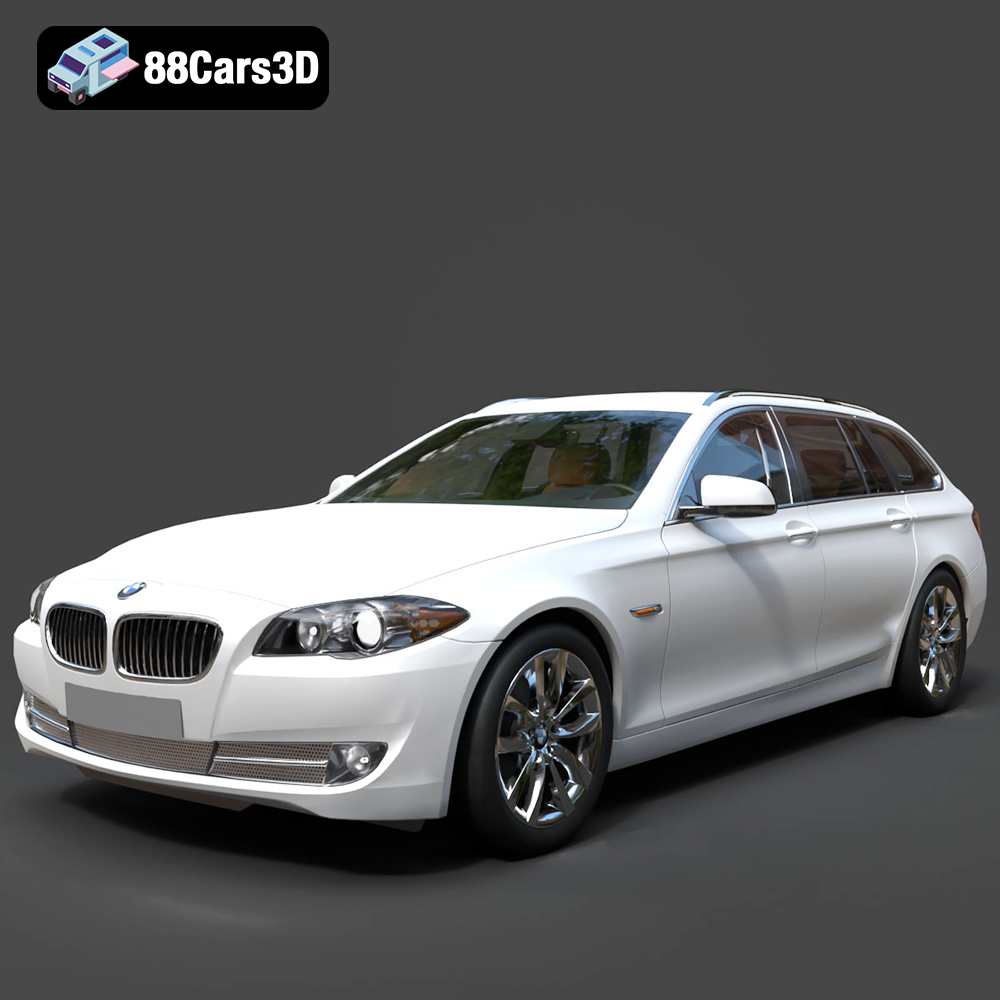
BMW 5 Series Touring F11-007 3D Model
Texture: Yes
Material: Yes
Download the BMW 5 Series Touring F11-007 3D Model featuring a detailed exterior and interior. Includes .blend, .fbx, .obj, .glb, .stl, .ply, .unreal, and .max formats for rendering, simulation, and game development.
Price: $10.79
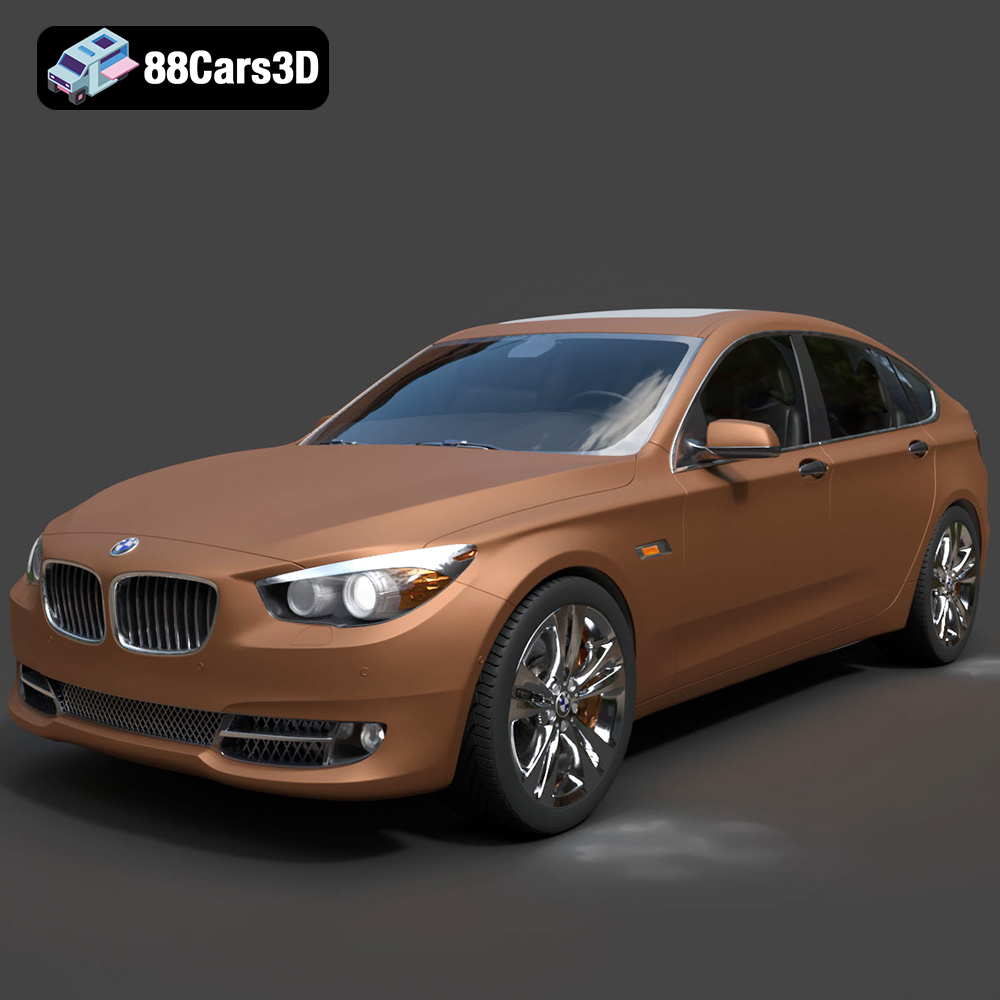
BMW 5 Series Gran Turismo F07-003 3D Model
Texture: Yes
Material: Yes
Download the BMW 5 Series Gran Turismo F07-003 3D Model featuring a detailed exterior and interior. Includes .blend, .fbx, .obj, .glb, .stl, .ply, .unreal, and .max formats for rendering, simulation, and game development.
Price: $10.79
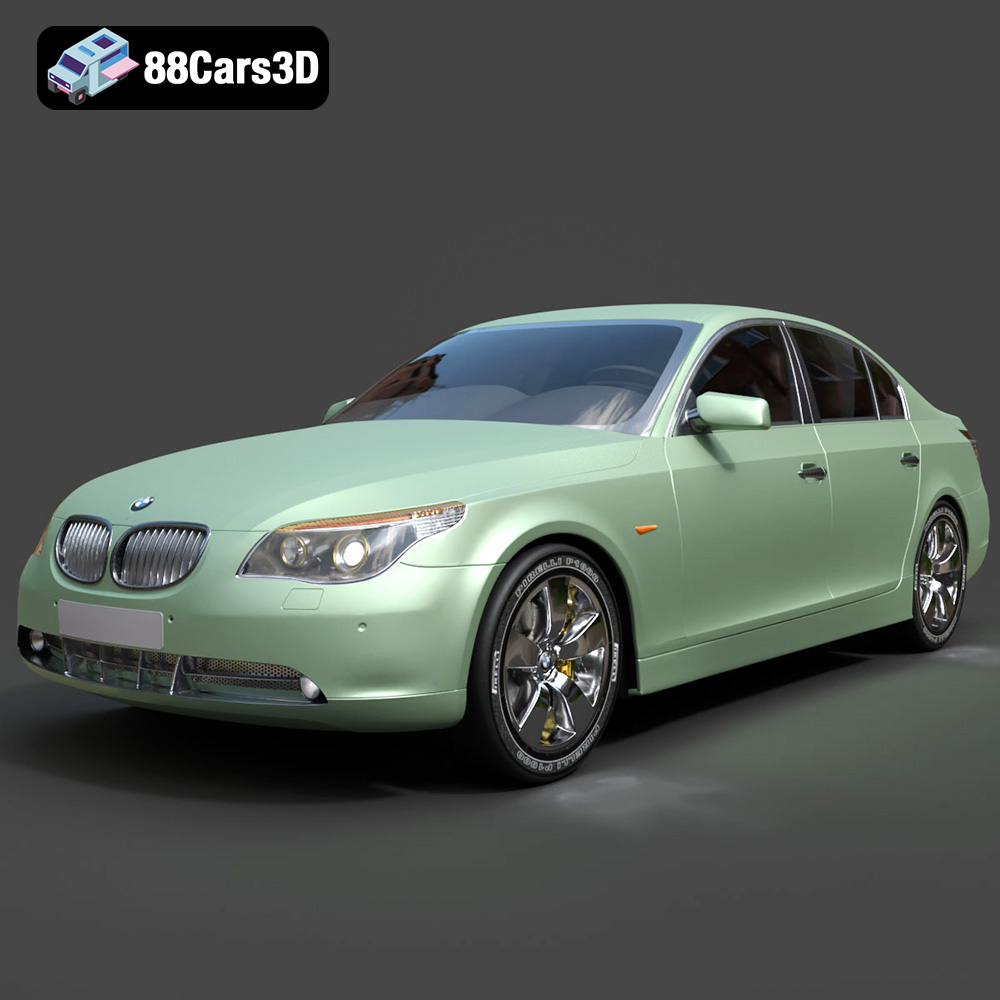
BMW 5 Series E60 3D Model
Texture: Yes
Material: Yes
Download the BMW 5 Series E60 3D Model featuring its iconic sedan design, detailed exterior, and interior. Includes .blend, .fbx, .obj, .glb, .stl, .ply, .unreal, and .max formats for rendering, simulation, and game development.
Price: $10.79

BMW 5 E34-535i 3D Model
Texture: Yes
Material: Yes
Download the BMW 5 E34-535i 3D Model featuring an iconic design, detailed exterior and interior, and accurate representation. Includes .blend, .fbx, .obj, .glb, .stl, .ply, .unreal, and .max formats for rendering, simulation, and game development.
Price: $10.79
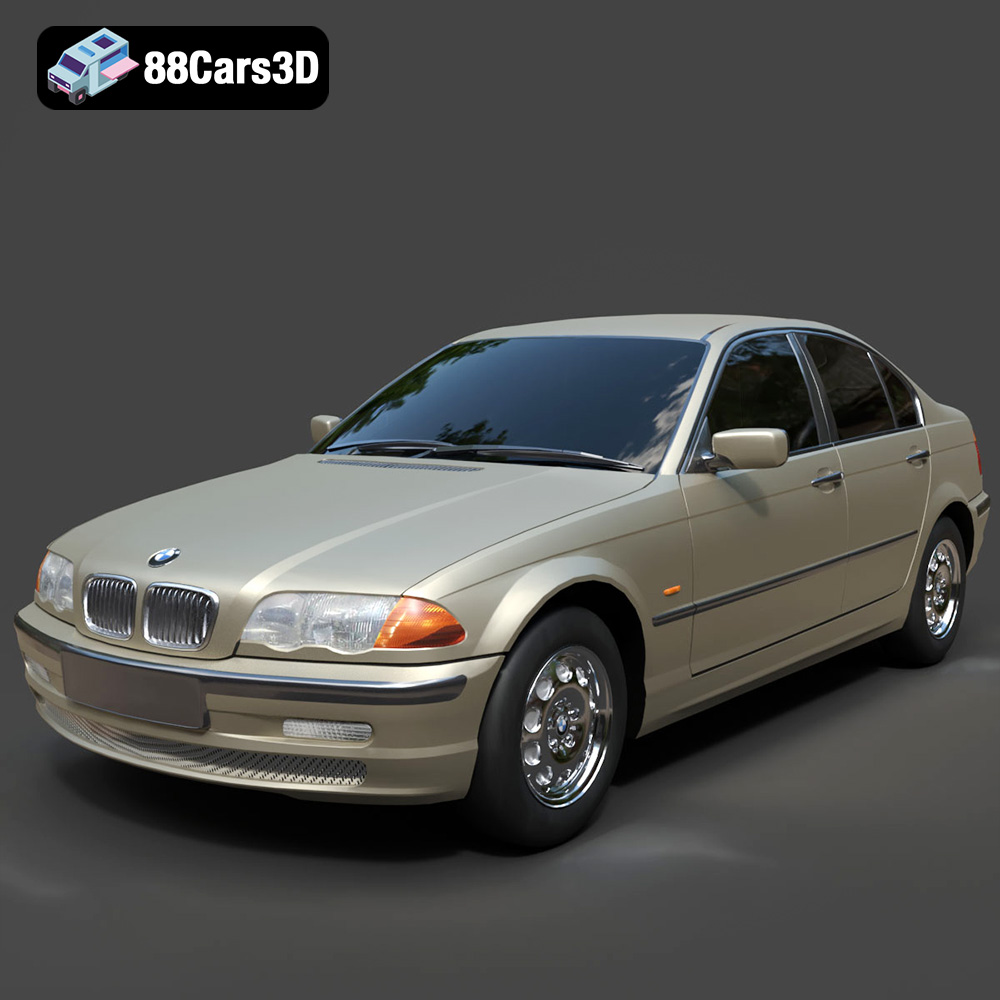
BMW 3 Series E46 3D Model
Texture: Yes
Material: Yes
Download the BMW 3 Series E46 3D Model featuring authentic exterior lines, a detailed interior, and separated components for animation. Includes .blend, .fbx, .obj, .glb, .stl, .ply, .unreal, and .max formats for rendering, simulation, and game development.
Price: $10.79
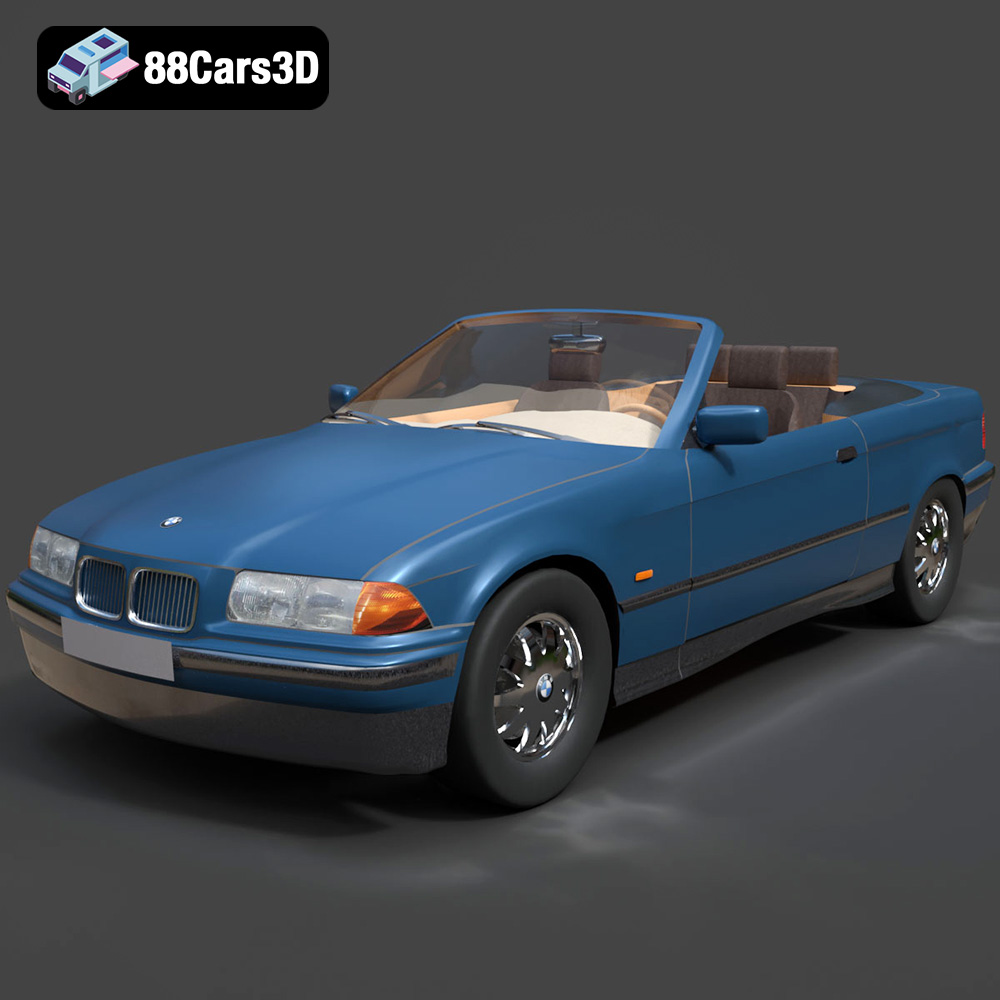
BMW 3 Series E36 Cabrio 325i 1998 3D Model
Texture: Yes
Material: Yes
Download the BMW 3 Series E36 Cabrio 325i 1998 3D Model featuring a classic convertible design and detailed interior. Includes .blend, .fbx, .obj, .glb, .stl, .ply, .unreal, and .max formats for rendering, simulation, and game development.
Price: $10.79
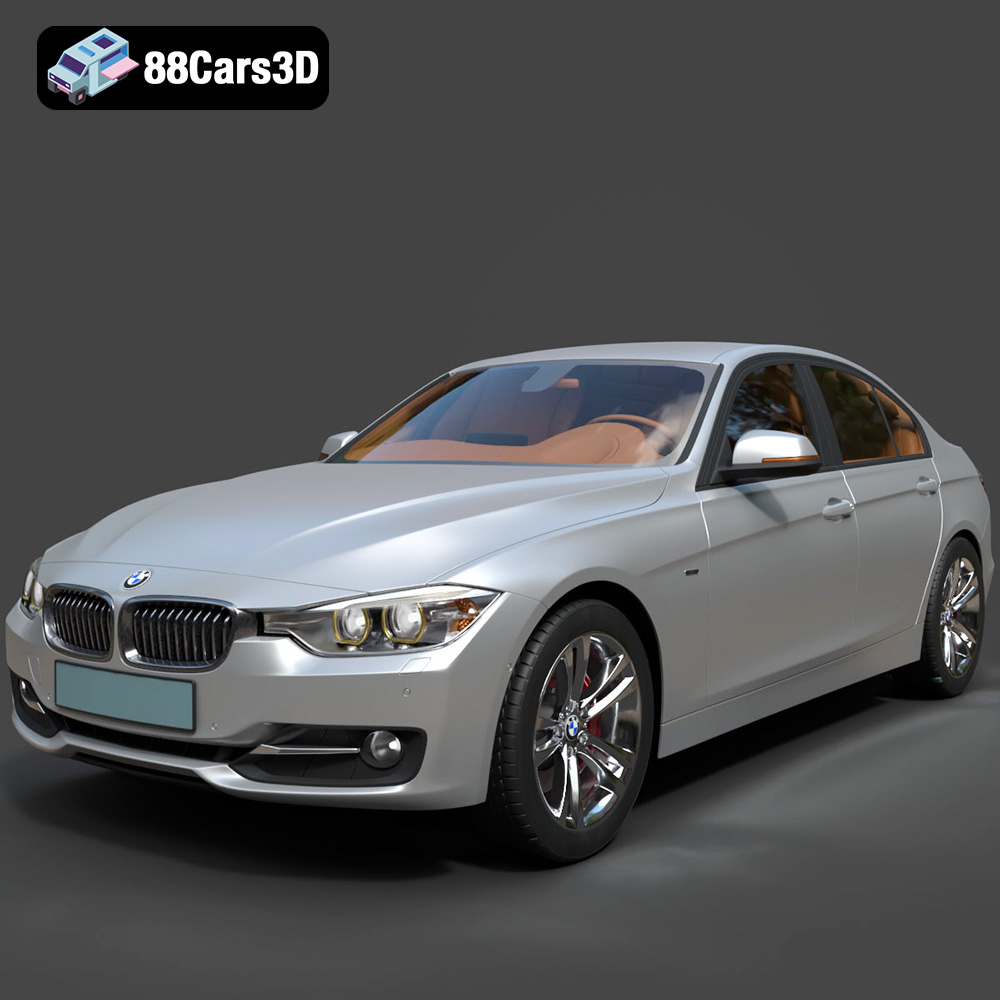
BMW 3 F30 3D Model
Texture: Yes
Material: Yes
Download the BMW 3 F30 3D Model featuring a detailed exterior, realistic interior, and optimized mesh. Includes .blend, .fbx, .obj, .glb, .stl, .ply, .unreal, and .max formats for rendering, simulation, and game development.
Price: $10.79
