

The Ultimate Guide to 3D Car Modeling for Beginners: From Concept to Car Showroom
The sleek lines, the powerful stance, the intricate details – 3D car models captivate audiences across industries, from blockbuster video games to cutting-edge automotive design studios. For aspiring 3D artists, game developers, and visualization professionals, mastering the art of creating realistic 3D car models is a gateway to a world of creative opportunities. This comprehensive guide is designed to equip beginners with the foundational knowledge and advanced techniques needed to transform a conceptual vision into a photorealistic digital vehicle. We’ll navigate the complex landscape of 3D modeling, covering everything from immaculate topology and sophisticated PBR materials to rendering workflows and game optimization strategies. Prepare to unlock the secrets behind crafting high-quality automotive assets that stand out in any virtual garage or digital scene.
Foundations of Automotive 3D Modeling: Topology and Edge Flow
At the heart of every great 3D car model lies impeccable topology and intelligent edge flow. These aren’t just technical terms; they are the bedrock upon which realism, animation quality, and rendering performance are built. Clean topology, characterized by well-distributed, predominantly quad-based polygons, ensures that your model deforms smoothly, renders without artifacts, and is easy to manipulate. Proper edge flow, on the other hand, guides the polygonal mesh along the natural contours and creases of the car, mimicking its real-world construction and allowing for precise detail articulation. Understanding these principles from the outset will save countless hours in later stages of your project.
Blueprint Analysis and Reference Setup
Before touching any modeling tools, the journey begins with meticulous research. Gathering high-resolution blueprints, often including orthographic views (front, back, top, side), is paramount. Supplement these with an extensive collection of photographic references, capturing various angles, lighting conditions, and close-up details of your chosen vehicle. In your 3D software of choice – be it 3ds Max, Blender, or Maya – these references are imported as image planes, meticulously aligned to provide a precise guide. Careful setup of these reference images in orthographic views is critical for maintaining accurate proportions and dimensions throughout the modeling process. Ensure your image planes are scaled correctly and positioned at the world origin for consistent alignment, laying a solid visual foundation for your model.
Essential Modeling Techniques for Car Bodies
The actual construction of the car body typically employs a combination of techniques. Box modeling, starting from a simple primitive and gradually refining its shape, is excellent for establishing the overall silhouette. Alternatively, spline modeling (NURBS or Subdivision Surface modeling) offers precise control over curves, allowing artists to trace blueprints with splines and then generate surfaces. Regardless of the initial approach, maintaining a predominantly quad-based mesh is a non-negotiable best practice. Tools like Extrude, Bevel, Loop Cut, and Slide Edge are your primary allies for adding detail, defining panel gaps, and refining the surface. Pay close attention to areas where surfaces meet, ensuring seamless transitions and avoiding common pitfalls like N-gons (polygons with more than four sides), T-junctions, and pinching, which can cause undesirable rendering artifacts. For game assets, target polygon counts are crucial, often ranging from 50,000 to 150,000 triangles for a detailed car, while high-polygon render models can comfortably exceed 1,000,000 triangles, leveraging subdivision surfaces for extreme smoothness. For instance, in Blender 4.4, you’d frequently use the “Loop Cut and Slide” tool (Blender 4.4 documentation) to add resolution where needed along existing edge loops, ensuring even polygon distribution.
Mastering UV Mapping for Realistic Car Surfaces
Once your 3D car model’s geometry is sculpted to perfection, the next critical step is UV mapping. UV mapping is the process of flattening the 3D surface of your model into a 2D space, allowing you to apply 2D textures (like paint, dirt, or decals) accurately. Without proper UVs, your textures will appear stretched, distorted, or incorrectly aligned, completely undermining the realism of your model. Given the complex, curved surfaces and intricate paneling of a car, mastering UV unwrapping is crucial for achieving photorealistic results, especially when dealing with specific patterns like carbon fiber or subtle paint imperfections.
UV Unwrapping Workflows and Tools
The key to successful UV unwrapping lies in strategic seam placement. Imagine unwrapping a gift – you cut along certain edges to flatten the paper. Similarly, in 3D, you mark “seams” on your model to define where the 3D mesh will be cut and flattened. For cars, these seams should ideally be placed along natural breaks in the geometry, such as panel lines, under trim pieces, or in less visible areas, to minimize their impact on texture continuity. Software like Blender’s UV Editor, 3ds Max’s Unwrap UVW modifier, and Maya’s UV Editor provide robust tools for this process. After defining seams, the unwrapping algorithm projects the 3D surface onto the 2D UV space. The next crucial step is packing UV islands. This involves arranging the flattened pieces (UV islands) within the 0-1 UV coordinate space as efficiently as possible, minimizing wasted space. Effective packing maximizes the texture resolution allocated to your model, leading to sharper, more detailed materials.
Addressing Common UV Challenges
Even with careful planning, challenges can arise during UV mapping. Overlapping UVs, where different parts of the model share the same UV space, prevent unique texture application and cause issues with baked maps. Stretching occurs when the 3D surface is distorted during unwrapping, leading to squashed or elongated textures. Visible seams can break immersion, especially on large, smooth surfaces like the hood or roof. To mitigate these, meticulous seam placement and careful checking of the UV layout are essential. For exceptionally high-resolution texturing requirements, particularly for custom liveries or detailed panel lines on high-end models, artists often employ UDIMs (U-Dimension). This system allows for multiple UV tiles (each with its own 0-1 UV space) to be used across a single model, enabling vastly higher texel densities and intricate details without compromising quality. Ensuring consistent texel density across all parts of the car is also vital; this means that every square inch of your model should receive a similar amount of texture pixel information, preventing some areas from looking blurry while others are sharp.
PBR Materials and Shading Networks for Automotive Realism
Achieving photorealistic surfaces is where your 3D car model truly comes alive. Physically Based Rendering (PBR) materials are fundamental to this process, mimicking how light interacts with real-world surfaces. PBR materials rely on a set of standardized texture maps that define properties like color, reflectivity, roughness, and surface detail, ensuring consistent and believable results across different lighting environments and rendering engines. Understanding the core PBR textures – Albedo/Base Color, Roughness, Metalness, Normal, and Ambient Occlusion – is the first step towards creating stunning automotive finishes.
Crafting Realistic Car Paint Shaders
Car paint is one of the most complex materials to replicate due to its multi-layered nature. A typical car paint shader involves several components: a base color (often with metallic flakes), a clear coat layer for reflections, and often a subtle dirt or dust overlay. To create a convincing metallic flake effect, you might use a noise texture or a dedicated flake map, blended with your base color and influenced by an anisotropic reflection component to simulate the directional shine of metallic particles. The clear coat layer is essentially a reflective dielectric material, characterized by its Fresnel reflections and roughness. Using procedural textures, generated mathematically within the shader, can offer limitless variation and resolution for scratches, wear, or subtle imperfections, while image textures provide specific details like decals or rust. Software-specific shader setups are crucial here; for example, Blender utilizes the Principled BSDF shader, which conveniently incorporates many PBR parameters, while 3ds Max users often leverage V-Ray or Corona materials, meticulously layering components for optimal realism. For precise control over the various layers of a car paint, understanding how to stack and blend different material nodes is key to creating that depth and luster.
Material Creation for Tires, Glass, and Interiors
Beyond the primary car paint, every other material contributes to the overall realism. For tires, a combination of texture maps is essential: an Albedo for the rubber color, a Roughness map to define the matte finish, and crucially, a Normal map or Displacement map for the intricate tread patterns. These maps simulate depth without requiring excessive geometry. Realistic glass requires careful attention to its Index of Refraction (IOR), tint, and subtle reflections/refractions. For automotive glass, an IOR of around 1.5-1.6 is typical, with subtle green or blue tints for authenticity. Interior materials demand a diverse array of shaders: leather with intricate normal maps and varying roughness for grain, fabrics with subtle weave patterns, plastics with varying degrees of reflectivity, and gleaming chrome. Building complex shader networks for these intricate details involves combining multiple textures, procedural noises, and utility nodes to achieve the desired look. For example, a leather shader might combine a diffuse texture with a normal map for creases, an anisotropy map for subtle sheen variations, and a grunge map for wear and tear, all orchestrated within the shader editor.
Bringing Your Car to Life: Rendering and Visualization
Modeling and texturing lay the groundwork, but rendering is where your 3D car model transitions from a mere asset to a captivating visual. The rendering process involves calculating how light interacts with your materials and geometry to produce a final 2D image. Choosing the right rendering engine and mastering lighting and camera techniques are paramount to achieving professional-grade automotive visualizations. Whether aiming for photorealism for advertising or stylistic renders for game concepts, the rendering stage is where the magic truly happens.
Lighting and Environment Setup for Studio Renders
Effective lighting is the single most important factor in a stunning render. For automotive studio shots, HDRi (High Dynamic Range Image) environments are indispensable. These panoramic images capture real-world lighting and reflections, providing immediate global illumination and realistic reflections on your car’s surfaces. Supplementing HDRi with artificial studio lighting setups, such as large softbox lights, strip lights, and rim lights, allows for precise control over highlights, shadows, and mood. A classic three-point lighting setup (key light, fill light, back/rim light) provides a solid foundation, which can then be enhanced with additional accent lights to emphasize specific contours or details of the car. Camera settings, much like in real-world photography, play a vital role. Experiment with different focal lengths (often between 80mm-120mm for a flattering perspective), controlled depth of field to draw attention to specific areas, and appropriate exposure settings to achieve the desired brightness and contrast. Specific tips for various rendering engines include leveraging V-Ray’s IPR (Interactive Production Renderer) for real-time feedback, Corona Renderer’s intuitive light mix feature, Blender’s Cycles’ physically accurate ray tracing, or Arnold’s robust sampling controls for noise reduction. Each renderer offers unique strengths that can be harnessed for superior automotive renders.
Post-Processing and Compositing for Professional Results
A raw render straight out of the engine is rarely a finished product. Post-processing and compositing in image editing software like Adobe Photoshop or Affinity Photo are crucial steps to elevate your render to a professional standard. This stage allows for fine-tuning that is difficult or impossible to achieve directly in the 3D software. Key post-processing techniques include color grading to establish mood and consistency, adjusting contrast and sharpening to make details pop, and adding subtle atmospheric effects. Effects like glare (lens flares from bright light sources), bloom (light spilling from bright areas), and even slight chromatic aberration can enhance realism and visual interest. To gain maximum control, render your scenes with multiple render passes (also known as AOV’s – Arbitrary Output Variables), such as diffuse, reflection, refraction, z-depth, and normal passes. These passes can be individually adjusted and composited in layers in your image editor, allowing you to fine-tune reflections without affecting the diffuse color, or adjust the depth of field non-destructively. A common goal is to achieve the “car commercial” look, which typically involves dramatic lighting, strong reflections, a sense of speed or elegance, and meticulous color work, all heavily reliant on a powerful post-processing workflow.
Optimizing 3D Car Models for Games, AR/VR, and 3D Printing
A beautifully rendered 3D car model for a static image is one thing, but preparing it for interactive environments like video games, immersive AR/VR experiences, or even physical fabrication through 3D printing introduces a whole new set of technical considerations. Each application has specific requirements regarding polygon count, material complexity, and file format, demanding a strategic approach to optimization. The versatility of a well-optimized model means it can be deployed across a wide range of platforms and uses, expanding its value significantly. For those seeking ready-made, high-quality assets suitable for these diverse applications, platforms like 88cars3d.com offer an extensive selection of professionally crafted 3D car models.
Game Engine Optimization Strategies
For deployment in game engines like Unity or Unreal Engine, performance is paramount. High-poly models, while visually stunning, can cripple frame rates. The primary optimization technique is creating Levels of Detail (LODs). This involves generating several versions of your car model, each with a progressively lower polygon count. The game engine then automatically switches between these LODs based on the camera’s distance to the car, rendering high-detail versions up close and simplified versions further away. Another critical strategy is draw call reduction. Each object or material the engine has to render contributes to a draw call. By combining multiple small textures into larger texture atlases and consolidating materials where possible, you can significantly reduce the number of draw calls and improve performance. Additionally, consider creating simplified collision meshes for physics interactions, rather than using the full visual mesh. For interiors and under-the-hood details, prioritize what will be seen and simplify heavily occluded areas. Baked lighting, where complex lighting information is pre-calculated into textures, can also offer significant performance gains for static environments.
AR/VR and 3D Printing Preparation
Augmented Reality (AR) and Virtual Reality (VR) environments share many optimization needs with games but often have even stricter polygon and material budgets due to the real-time immersive nature and varying device capabilities. For AR/VR, highly efficient materials with minimal draw calls, reduced polygon counts, and optimized texture resolutions are key. GLB and USDZ are common file formats for AR/VR due to their ability to encapsulate geometry, materials, and animations in a single, optimized file, making them ideal for web-based viewers and mobile applications. When sourcing models from marketplaces such as 88cars3d.com, always check for models optimized specifically for these formats.
For 3D printing, the requirements shift entirely from visual fidelity to physical integrity. The mesh must be watertight (no holes or gaps) and manifold (every edge connected to exactly two faces). Common issues include flipped normals, intersecting geometry, and thin walls. Wall thickness is a critical factor – ensure all parts of your model are thick enough to be structurally sound when printed, typically a minimum of 0.8mm to 2mm depending on the material and scale. Software like Netfabb, Meshmixer, or even Blender’s 3D Print Toolbox (Blender 4.4 documentation) can be used for mesh repair, checking for errors, and preparing the model for slicing. Finally, ensure the model is at the correct real-world scale and oriented appropriately for the printing bed.
File Formats and Interoperability
In the interconnected world of 3D production, knowing your file formats is as crucial as mastering your modeling tools. Different formats serve different purposes, optimized for various workflows, software applications, and platforms. Understanding their strengths and limitations ensures seamless transfer of your 3D car models between different stages of your pipeline, from initial design to final deployment. The ability to export and import correctly without losing data integrity is a cornerstone of efficient 3D production.
Understanding Key File Formats
The landscape of 3D file formats can seem daunting, but a few stand out as industry workhorses. FBX (Filmbox) is arguably the most prevalent interchange format, developed by Autodesk. It supports geometry, materials, textures, animations, and camera data, making it ideal for transferring complex assets between software like 3ds Max, Maya, Blender, Unity, and Unreal Engine. OBJ (Wavefront Object) is a simpler, widely compatible format primarily for geometry and basic UV data. While it lacks support for animations or advanced materials, its universality makes it a reliable choice for static mesh transfer. For real-time applications and web-based viewing, GLB (Binary glTF) and its JSON-based counterpart glTF (Graphics Language Transmission Format) are rapidly gaining traction. These formats are optimized for efficient transmission and loading of 3D scenes and models, making them perfect for AR/VR and web experiences. Apple’s proprietary USDZ is another format geared specifically for AR applications within its ecosystem. Finally, STL (Stereolithography) is the undisputed standard for 3D printing, representing geometry as a series of connected triangles to define the surface of a solid object.
Best Practices for File Conversion and Compatibility
Navigating file format conversions requires careful attention to detail to avoid data loss or corruption. When exporting, always double-check your export settings for each format. For FBX, ensure that embedded media (textures), animation, and relevant scene elements are included or excluded as needed. Pay close attention to material and UV data transfer – some formats may not fully support complex shader networks, requiring you to simplify or re-create materials in the target application. Managing scale and pivot points is another common headache during conversion; ensure your model is exported at the correct real-world scale and that its pivot point (origin) is set appropriately, especially important for game engines and rigging. Always perform a quick import test into your target software immediately after export to identify any issues early. Common troubleshooting steps for conversion include checking for non-manifold geometry, ensuring all transformations are frozen or applied, and simplifying materials to standard PBR setups before export. By following these best practices, you can ensure your high-quality 3D car models are universally compatible and perform optimally across all intended platforms and workflows.
Conclusion
The journey of creating a high-quality 3D car model is an intricate blend of artistic vision and technical prowess. From the foundational principles of clean topology and precise UV mapping to the advanced nuances of PBR materials and optimized rendering, each step is critical in bringing your automotive creations to life. We’ve explored how meticulous blueprint analysis, strategic modeling techniques, and intelligent shader networks contribute to photorealism, while also diving into the specific demands of preparing models for diverse applications like games, AR/VR, and 3D printing. The industry constantly evolves, but the core principles of quality, efficiency, and artistic integrity remain timeless.
As a beginner, remember that practice is paramount. Experiment with different software, analyze existing high-quality models (perhaps from platforms like 88cars3d.com), and continually refine your techniques. Embrace challenges as opportunities for learning, and don’t be afraid to deconstruct complex models to understand their construction. The path to becoming a master 3D artist is continuous, but with the comprehensive knowledge gained here, you are well-equipped to embark on your exciting journey in 3D car modeling. Your virtual garage awaits, ready to be filled with stunning creations.
Featured 3D Car Models

BMW 4 Series F32 3D Model
Texture: Yes
Material: Yes
Download the BMW 4 Series F32 3D Model featuring clean geometry, realistic detailing, and a fully modeled interior. Includes .blend, .fbx, .obj, .glb, .stl, .ply, .unreal, and .max formats for rendering, simulation, and game development.
Price: $12.99
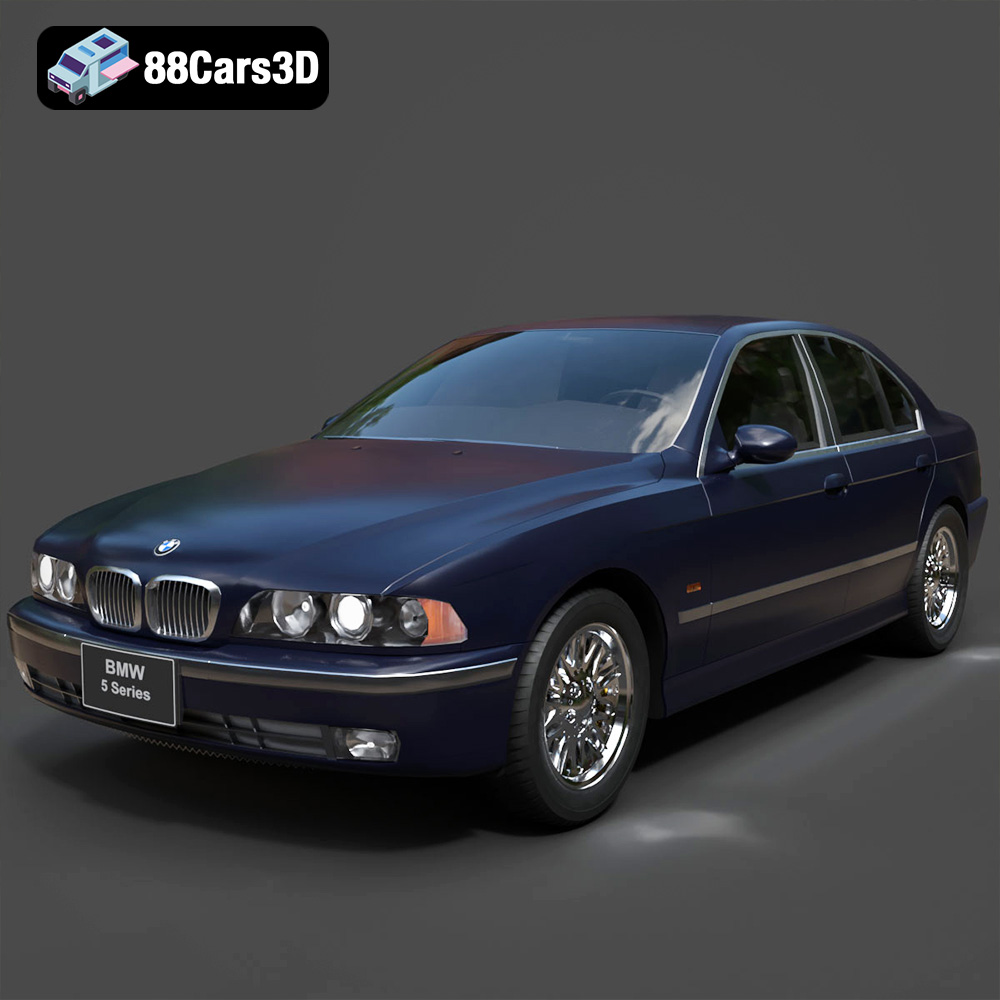
BMW E39 M5-540i 3D Model
Texture: Yes
Material: Yes
Download the BMW E39 M5-540i 3D Model featuring its iconic sedan design, detailed exterior, and realistic interior. Includes .blend, .fbx, .obj, .glb, .stl, .ply, .unreal, and .max formats for rendering, simulation, and game development.
Price: $10.79

BMW 7 Series E38 3D Model
Texture: Yes
Material: Yes
Download the BMW 7 Series E38 3D Model featuring its iconic luxury sedan design and classic aesthetics. Includes .blend, .fbx, .obj, .glb, .stl, .ply, .unreal, and .max formats for rendering, simulation, and game development.
Price: $10.79

BMW 6 Series 640i F12 3D Model
Texture: Yes
Material: Yes
Download the BMW 6 Series 640i F12 3D Model featuring a sleek design and detailed interior. Includes .blend, .fbx, .obj, .glb, .stl, .ply, .unreal, and .max formats for rendering, simulation, and game development.
Price: $10.79

BMW 6 Coupe E63 3D Model
Texture: Yes
Material: Yes
Download the BMW 6 Coupe E63 3D Model featuring a sleek design, detailed interior, and realistic exterior. Includes .blend, .fbx, .obj, .glb, .stl, .ply, .unreal, and .max formats for rendering, simulation, and game development.
Price: $10.79
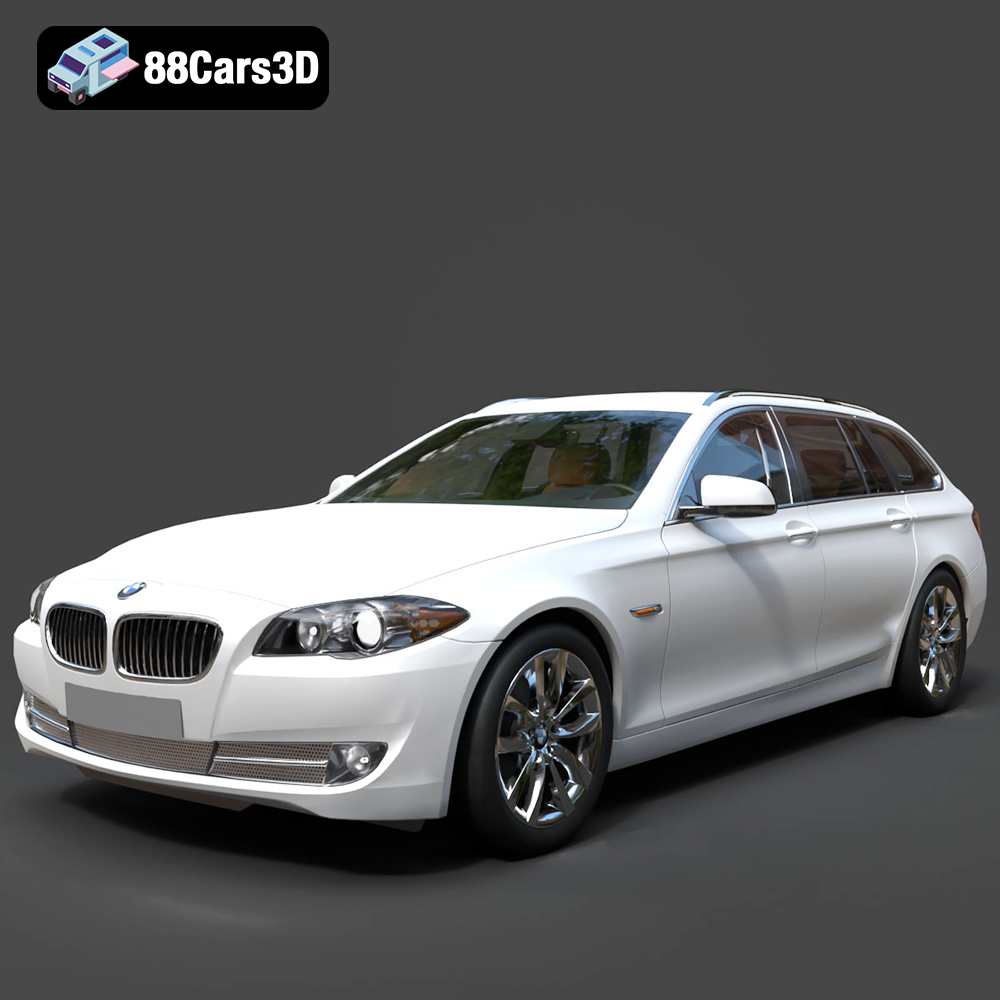
BMW 5 Series Touring F11-007 3D Model
Texture: Yes
Material: Yes
Download the BMW 5 Series Touring F11-007 3D Model featuring a detailed exterior and interior. Includes .blend, .fbx, .obj, .glb, .stl, .ply, .unreal, and .max formats for rendering, simulation, and game development.
Price: $10.79
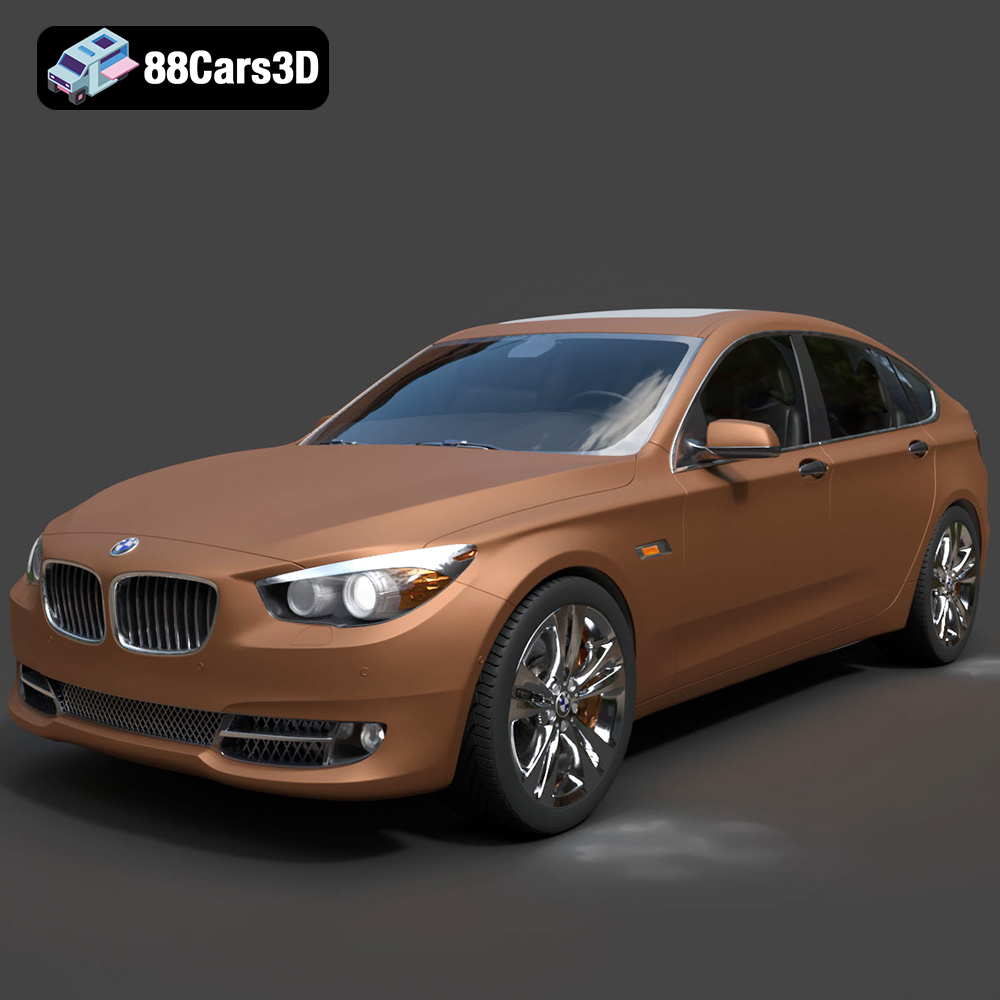
BMW 5 Series Gran Turismo F07-003 3D Model
Texture: Yes
Material: Yes
Download the BMW 5 Series Gran Turismo F07-003 3D Model featuring a detailed exterior and interior. Includes .blend, .fbx, .obj, .glb, .stl, .ply, .unreal, and .max formats for rendering, simulation, and game development.
Price: $10.79
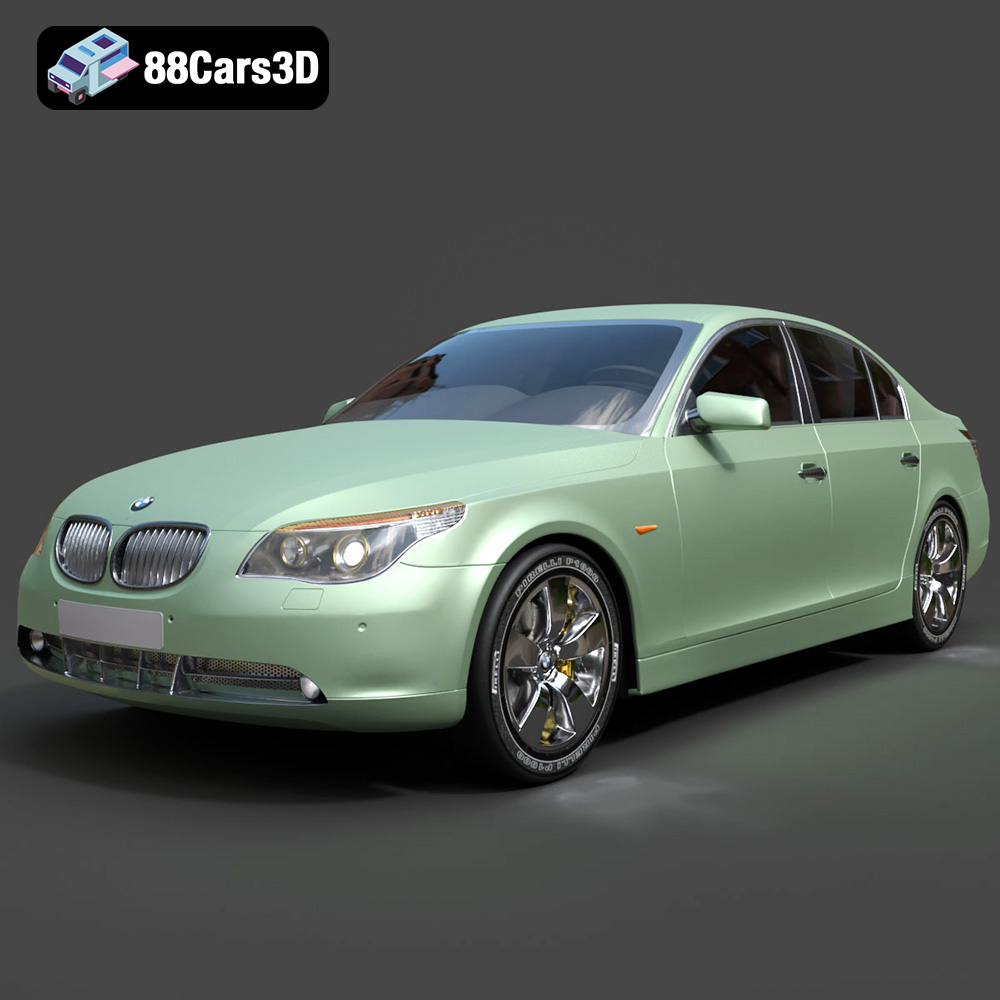
BMW 5 Series E60 3D Model
Texture: Yes
Material: Yes
Download the BMW 5 Series E60 3D Model featuring its iconic sedan design, detailed exterior, and interior. Includes .blend, .fbx, .obj, .glb, .stl, .ply, .unreal, and .max formats for rendering, simulation, and game development.
Price: $10.79

BMW 5 E34-535i 3D Model
Texture: Yes
Material: Yes
Download the BMW 5 E34-535i 3D Model featuring an iconic design, detailed exterior and interior, and accurate representation. Includes .blend, .fbx, .obj, .glb, .stl, .ply, .unreal, and .max formats for rendering, simulation, and game development.
Price: $10.79
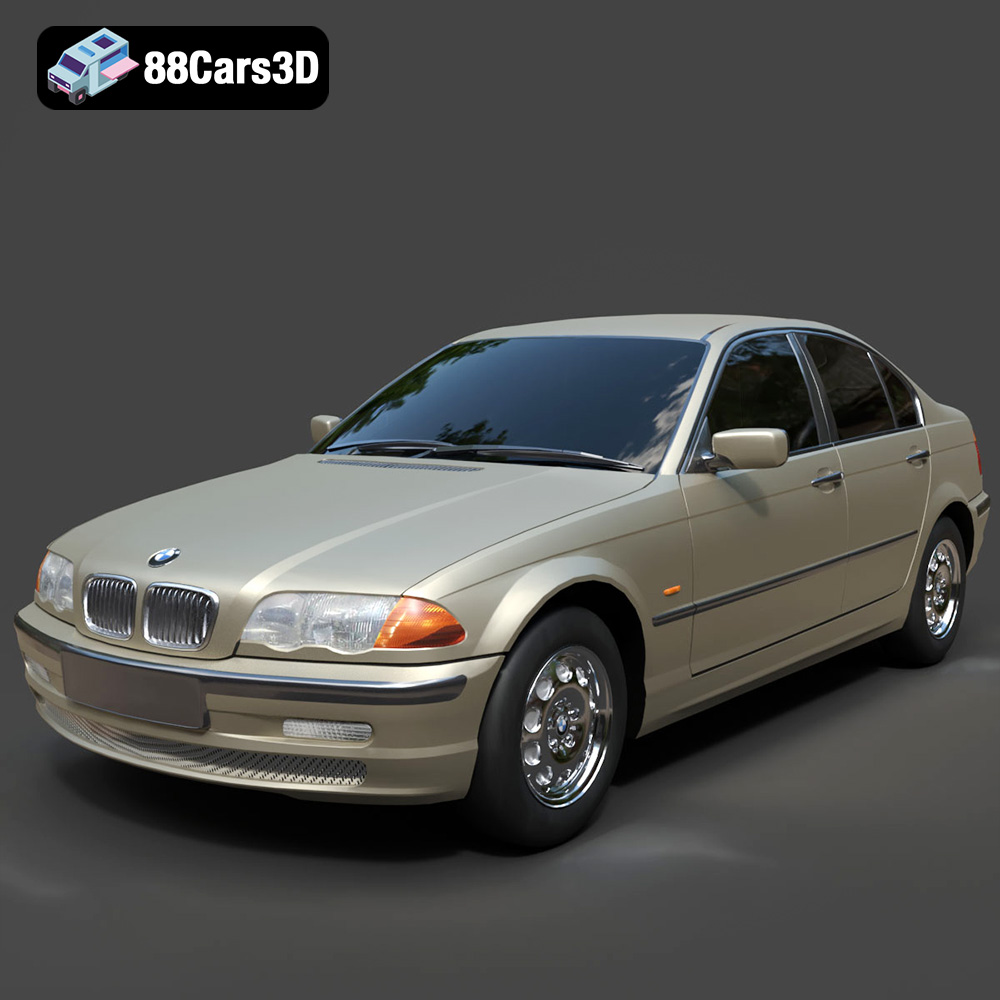
BMW 3 Series E46 3D Model
Texture: Yes
Material: Yes
Download the BMW 3 Series E46 3D Model featuring authentic exterior lines, a detailed interior, and separated components for animation. Includes .blend, .fbx, .obj, .glb, .stl, .ply, .unreal, and .max formats for rendering, simulation, and game development.
Price: $10.79
