

Mastering Your 3D Printer: Avoiding the Top 10 Pitfalls When Printing STL Car Models
The world of 3D printing offers an exhilarating gateway into creating tangible replicas of your favorite automobiles. Whether you’re a seasoned maker or just embarking on your 3D printing journey, transforming a digital STL file into a detailed, high-quality model car can be incredibly rewarding. At 88cars3d.com, we’re passionate about providing you with exceptional printable car models designed for success. However, even the best STL files can present challenges if not handled with the correct knowledge and approach. Many beginners encounter similar hurdles, leading to frustrating print failures, wasted filament, and disappointment. This comprehensive guide dives deep into the top 10 mistakes beginners commonly make when printing STL files, offering expert insights and actionable solutions to ensure your automotive creations come to life flawlessly. We’ll cover everything from fundamental file preparation and slicing techniques to printer calibration and post-processing, empowering you to elevate your 3D printing game.
1. Neglecting STL File Preparation and Mesh Integrity
The foundation of any successful 3D print lies in the quality of the STL file itself. Many beginners overlook the critical steps of checking and preparing the mesh before sending it to the slicer. An STL file is essentially a collection of interconnected triangles that define the surface geometry of a 3D object. If these triangles are not properly oriented, if there are holes, self-intersections, or non-manifold edges, the slicer can misinterpret the data, leading to printing errors.
Understanding STL Mesh Topology
An STL file describes a 3D model as a surface composed of triangles. Each triangle is defined by three vertices and a normal vector indicating which side of the triangle is “outside” the model. Problems arise when these normals are inconsistent, creating internal faces or inverted surfaces. For example, a manifold mesh is one where every edge is shared by exactly two faces, ensuring a closed, watertight model. Non-manifold geometry, such as edges shared by more than two faces or isolated vertices, can cause significant issues for slicers.
Essential Mesh Repair Techniques
Before slicing, it’s vital to inspect your STL files for errors. Software like Meshmixer, Blender, or Netfabb offers powerful tools for mesh repair. Common issues include:
- Holes: Small gaps in the mesh that can be automatically or manually patched.
- Non-Manifold Edges: Edges connected to more than two faces, often appearing as internal geometry.
- Intersecting Faces: Triangles that pass through each other, creating impossible geometry.
- Flipped Normals: Triangles facing the wrong direction, making parts of the model appear “inside out.”
Running an automatic repair function in these programs can often fix most minor issues. For more complex problems, manual editing might be necessary, but for most users, a good repair tool will suffice. Platforms like 88cars3d.com strive to provide clean, error-free printable car models, but it’s always a good practice to perform a quick check.
2. Incorrect Slicer Settings: The Root of Many Print Failures
The slicer software (e.g., Cura, PrusaSlicer, Simplify3D) is the bridge between your STL file and your 3D printer. It translates the 3D model into a series of layer-by-layer instructions (G-code) that the printer follows. Incorrect slicing parameters are a frequent source of beginner frustration, leading to poor surface finish, weak structures, or outright print failures.
Layer Height vs. Print Quality Trade-off
Layer height is one of the most impactful settings. A smaller layer height (e.g., 0.1mm) results in finer detail and smoother curves, ideal for intricate car models, but significantly increases print time. A larger layer height (e.g., 0.3mm) prints much faster but produces visible layer lines and less detail. For high-quality automotive replicas, a layer height between 0.1mm and 0.2mm is often recommended. Beginners often opt for the fastest setting without considering the loss of detail, or conversely, choose an extremely low layer height for a simple part, leading to unnecessarily long prints.
Infill Density and Patterns: More Than Just Empty Space
The infill provides internal support for the outer walls and top layers. While a solid model (100% infill) is rarely necessary and consumes excessive material and time, too little infill can lead to collapsing top layers and weak structures. For most car models, an infill density of 10-20% is sufficient. Beginners often overlook infill, using default settings that might not be optimal. Different infill patterns (e.g., grid, gyroid, cubic) offer varying strengths and print speeds. Gyroid is often favored for its balance of strength and speed.
Print Speed and Temperature Tuning
Printing too fast can lead to under-extrusion, poor layer adhesion, and ringing artifacts. Conversely, printing too slow wastes time. Each filament type and printer combination has an optimal speed range. Similarly, filament extrusion temperature needs to be precise. Too low, and the filament won’t melt properly; too high, and it can ooze and cause stringing. Beginners often stick to generic profiles without fine-tuning these crucial parameters for their specific materials and 3D printer.
3. Inadequate Support Structures: The Unsung Heroes of Complex Prints
Many car models feature overhangs, bridges, and complex geometries that gravity would otherwise pull down during printing, creating a messy blob. Support structures are temporary scaffolding printed alongside the model to support these features. Incorrectly generated or insufficient supports are a leading cause of failed prints for beginners.
Understanding Overhangs and Bridges
An overhang is a horizontal feature that extends beyond the layer below it. A bridge is a horizontal section printed across an open gap. Most FDM printers can handle slight overhangs (around 45 degrees) without support. Anything steeper, or any bridge, will likely require support. Detailed car models, with their aerodynamic shapes, spoilers, and undercarriages, are particularly prone to needing careful support generation.
Generating and Configuring Supports Effectively
Slicers offer various support options. “Touching buildplate” supports are only generated where the model meets the print bed. “Everywhere” supports generate them under any overhang, even those suspended in mid-air. For car models, a combination might be best, often using “touching buildplate” and then manually adding supports for critical internal or suspended features. Key settings include:
- Support Density: Controls how solid the support material is. Lower density (10-15%) makes removal easier.
- Support Interface: A denser layer at the top and bottom of the support, improving the surface finish of the model where it touches the support.
- Support Z Distance: The gap between the model and the support structure. A small gap (e.g., 0.1-0.2mm) provides good contact for stability but can make removal difficult. A larger gap facilitates easier removal but might result in a rougher surface finish.
Experimentation is key to finding the right balance for easy removal and a clean surface.
Support Removal Techniques
Aggressively tearing off supports can damage the model. Patience is essential. Use tools like pliers, flush cutters, hobby knives, and dental picks to carefully break away the support material. For resin prints, supports are often removed after washing and curing, and care must be taken not to damage delicate features. Sometimes, a light sanding or filing is needed to clean up residual marks.
4. Poor Bed Adhesion: The First Layer is Everything
The first layer is the most crucial layer in any 3D print. If it doesn’t adhere properly to the print bed, the entire print is likely to fail. This can manifest as warping, the print detaching mid-print, or elephant’s foot (the first few layers spreading outwards).
Leveling the Print Bed
An uneven print bed means the nozzle is either too close to the bed in some areas (causing scraping and poor adhesion) or too far away in others (resulting in a weak, stringy first layer). Most printers have manual or automatic bed leveling routines. Performing this diligently before every print, especially for larger models, is paramount. For manual leveling, use a piece of standard paper; the nozzle should lightly grip the paper as you move it between the nozzle and the bed at various points.
Optimizing First Layer Settings
Several slicer settings influence first-layer adhesion:
- First Layer Speed: Print the first layer much slower (e.g., 15-20mm/s) to allow filament to bond properly.
- First Layer Temperature: Slightly increasing the nozzle and bed temperature for the first layer can improve adhesion.
- First Layer Height: Using a slightly thicker first layer (e.g., 0.2-0.3mm) can help compensate for minor bed imperfections.
- Brim or Skirt: A skirt is a few outlines around the model to prime the nozzle. A brim adds several outlines attached to the model’s base, increasing surface area for adhesion. For car models, especially those with small contact points, a brim is highly recommended.
Bed surface preparation is also critical. Ensure the print bed is clean, free from grease and dust. Using adhesion aids like glue stick, hairspray, or specialized PEI sheets can make a significant difference.
5. Ignoring Material Properties and Printer Calibration
Different filament materials (PLA, PETG, ABS, TPU) have distinct properties and require different printing parameters. Furthermore, an uncalibrated printer can lead to a host of issues, regardless of the STL file quality or slicer settings.
Choosing the Right Filament for Your Model
PLA is the most beginner-friendly material, easy to print, and offers good detail for car models. PETG is more durable and temperature-resistant but can be stringier. ABS is strong and heat-resistant but requires a heated enclosure and emits fumes. For display models, PLA is often ideal. For functional parts or models that might experience higher temperatures, PETG or ABS might be better choices. Understanding these differences is key to selecting the right material for your project. Using generic settings for specialized filaments will lead to poor results.
Essential Printer Calibration Steps
Regular calibration ensures your printer is performing optimally:
- E-step Calibration: Ensures the extruder pushes the correct amount of filament.
- PID Tuning: Stabilizes nozzle and bed temperatures, preventing fluctuations.
- Flow Rate Calibration: Fine-tunes the amount of filament extruded, crucial for dimensional accuracy and avoiding over/under-extrusion.
- Dimensional Accuracy Test: Printing calibration cubes and measuring them helps verify that printed dimensions match the intended ones.
Neglecting calibration means your slicer settings are based on an inaccurate machine, rendering them less effective.
6. Suboptimal Print Orientation and Layer Line Visibility
How you orient your printable car model on the print bed significantly impacts print quality, strength, and the visibility of layer lines. Beginners often accept the default orientation without considering its implications.
Strategic Placement for Detail and Strength
For car models, orienting the vehicle upright (like it’s driving) often exposes the most detailed parts (like wheels, body panels) to the nozzle’s path, potentially leading to finer surface finishes. However, this orientation can also create many overhangs, requiring extensive supports. Sometimes, orienting the model on its side or even upside down can reduce the number of necessary supports and minimize issues like layer lines on critical surfaces. Consider which surfaces are most important for visual appeal and orient the model to best capture that detail while managing support needs.
Managing Layer Line Appearance
Layer lines are inherent to FDM 3D printing. However, their visibility can be minimized. Placing critical aesthetic surfaces on the sides or bottom of the print, where layer lines are less noticeable or easier to sand, is a common strategy. For example, printing a car body with the roof facing upwards means layer lines will be parallel to the car’s length, often less conspicuous than lines running across the width of the car. Understanding the Z-axis direction relative to the model’s design is crucial.
7. Over-reliance on Default Slicer Profiles
Slicer software comes with pre-configured profiles for various printers and materials. While these are excellent starting points, they are rarely optimized for every specific model and material combination. Beginners often use these defaults without understanding what each setting does or why it’s set that way.
Understanding Key Slicer Profiles
Profiles often include settings for layer height, print speed, temperatures, retraction, cooling, and supports. For example, a “Draft” profile prioritizes speed with a larger layer height and faster speeds, suitable for prototypes but not detailed car models. A “Fine” or “HQ” profile uses smaller layer heights and slower speeds for better quality. Beginners might choose “Draft” for a display model, or “Fine” for a part that doesn’t require such detail, leading to inefficient printing.
Tailoring Profiles for Specific Models
When printing intricate models from marketplaces like 88cars3d.com, it’s often beneficial to create or modify profiles. For instance, if a car model has very thin antennas or mirrors, you might need to slightly increase retraction settings to prevent stringing or reduce travel speed to avoid knocking them off. For parts with complex curves, lowering print speed and increasing cooling can improve surface quality. Learning to tweak these settings based on the model’s geometry and your desired outcome is a sign of a progressing maker.
8. Inadequate Post-Processing: The Finishing Touches Matter
Many beginners believe the 3D print is complete once it comes off the build plate. However, post-processing is often essential for achieving a professional, display-ready finish, especially for detailed automotive models.
Support Removal and Cleanup
As mentioned earlier, careful support removal is the first step. After removal, small blemishes, seams, or layer lines may remain. A hobby knife, files, or sandpaper (starting with coarse grits and moving to finer ones) can smooth these areas. For resin prints, removing supports often involves similar techniques, but the material is more brittle before curing.
Sanding, Filling, and Painting
For a truly high-quality finish, sanding is crucial. Start with rough grit sandpaper (e.g., 120-220) to remove major imperfections and then progressively move to finer grits (400, 800, 1000+). For FDM prints, filling layer lines can be done with modeling putty, filler primer spray, or even Bondo for larger models. After filling and sanding smooth, the model is ready for painting. Using an airbrush or spray cans with primer, base coats, and clear coats can transform a plastic print into a stunning replica. Beginners often skip this, resulting in a print that looks obviously “3D printed” rather than a finished model.
9. Ignoring Scale and Dimensional Accuracy Issues
When downloading STL files, especially from various sources, the intended scale might not always be clear, or the model might have scaling inaccuracies that affect its fit or appearance.
Understanding Model Scale
STL files don’t inherently contain unit information (millimeters, inches, etc.). Slicers usually assume millimeters. If a model was designed in a different unit system or scaled incorrectly during export, the resulting print might be too large or too small. Always check the model’s description or preview in your slicer to ensure it’s at the intended scale. You can scale models up or down in your slicer, but be mindful that scaling up low-polygon models can result in blocky, pixelated surfaces.
Troubleshooting Dimensional Inaccuracies
Even with a correctly scaled STL file, dimensional inaccuracies can occur due to printer calibration issues (flow rate, axis steps/mm) or material shrinkage (especially with ABS). If specific parts of a car model, like wheels needing to fit axles, are not the right size, you’ll need to adjust your printer’s flow rate or dimensional accuracy settings. Small, precise adjustments in the slicer’s scaling factor can often correct minor discrepancies. For multi-part models, ensuring all components print to the correct dimensions for assembly is vital.
10. Incorrect Filament Storage and Handling
Filament, particularly common materials like PLA and PETG, is hygroscopic, meaning it absorbs moisture from the air. Improperly stored filament can lead to a host of printing problems, often misattributed to other causes.
The Impact of Moisture on Filament
Wet filament, when extruded, boils internally, causing popping sounds during printing, steam emissions, and severely degraded print quality. This results in stringing, poor layer adhesion, brittle prints, and a rough, bubbly surface finish. For intricate car models where surface finish is critical, printing with damp filament is disastrous.
Best Practices for Filament Storage
To prevent moisture absorption:
- Store filament in airtight containers or vacuum-sealed bags.
- Include desiccant packs (like silica gel) within the storage containers to absorb any residual moisture.
- Keep filament spools in a cool, dry place away from direct sunlight.
If you suspect your filament is damp, it can often be dried using a filament dryer, a food dehydrator, or even a low-temperature oven (follow specific guidelines for your filament type). Pre-drying filament before printing can save countless hours and prevent print failures.
Mastering 3D printing, especially for detailed projects like automotive models from 88cars3d.com, involves continuous learning and attention to detail. By understanding and actively avoiding these top 10 common beginner mistakes, you’ll significantly improve the quality and success rate of your prints. From meticulous STL file preparation and precise slicing to careful support management, proper calibration, and thoughtful post-processing, each step plays a crucial role. Embrace the iterative nature of 3D printing, experiment with settings, learn from each print, and you’ll soon be creating stunning, high-fidelity car models that you can be proud of. Happy printing!
Featured 3D Car Models

BMW 4 Series F32 3D Model
Texture: Yes
Material: Yes
Download the BMW 4 Series F32 3D Model featuring clean geometry, realistic detailing, and a fully modeled interior. Includes .blend, .fbx, .obj, .glb, .stl, .ply, .unreal, and .max formats for rendering, simulation, and game development.
Price: $12.99
BMW E39 M5-540i 3D Model
Texture: Yes
Material: Yes
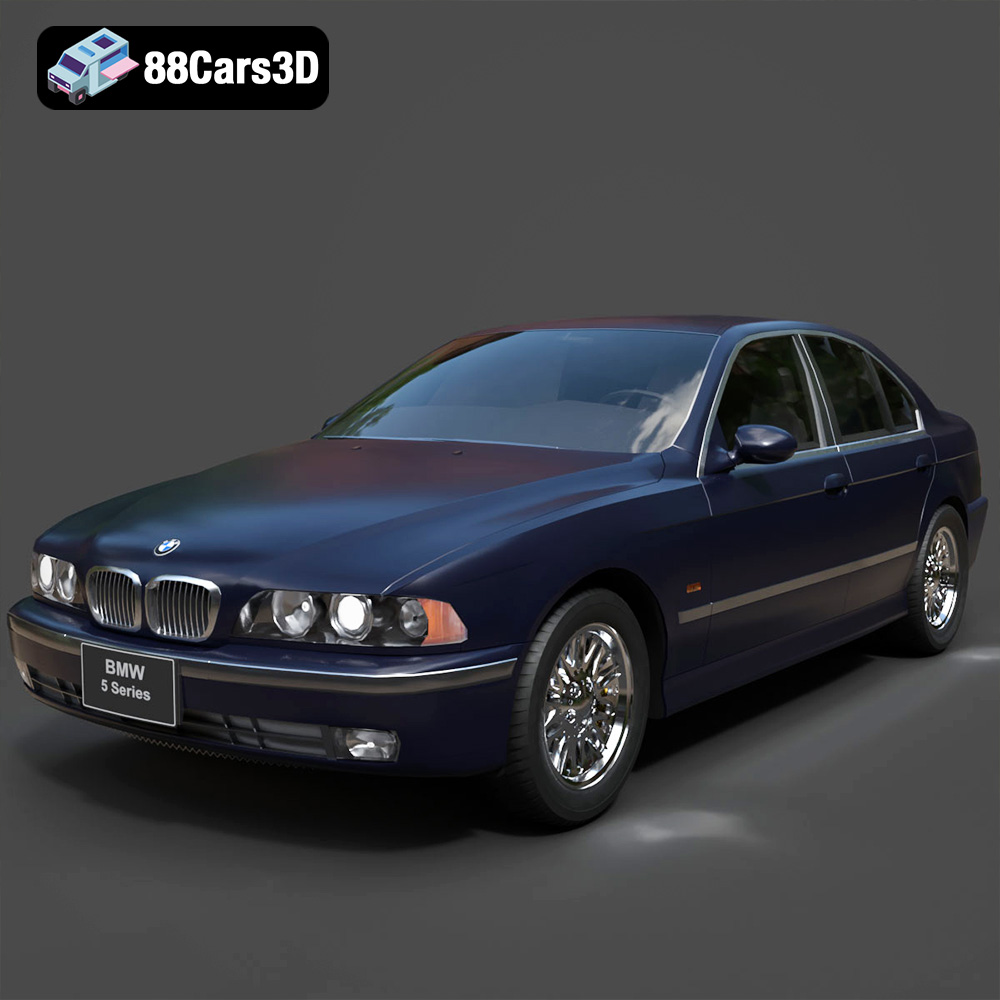
Download the BMW E39 M5-540i 3D Model featuring its iconic sedan design, detailed exterior, and realistic interior. Includes .blend, .fbx, .obj, .glb, .stl, .ply, .unreal, and .max formats for rendering, simulation, and game development.
Price: $10.79

BMW 7 Series E38 3D Model
Texture: Yes
Material: Yes
Download the BMW 7 Series E38 3D Model featuring its iconic luxury sedan design and classic aesthetics. Includes .blend, .fbx, .obj, .glb, .stl, .ply, .unreal, and .max formats for rendering, simulation, and game development.
Price: $10.79

BMW 6 Series 640i F12 3D Model
Texture: Yes
Material: Yes
Download the BMW 6 Series 640i F12 3D Model featuring a sleek design and detailed interior. Includes .blend, .fbx, .obj, .glb, .stl, .ply, .unreal, and .max formats for rendering, simulation, and game development.
Price: $10.79

BMW 6 Coupe E63 3D Model
Texture: Yes
Material: Yes
Download the BMW 6 Coupe E63 3D Model featuring a sleek design, detailed interior, and realistic exterior. Includes .blend, .fbx, .obj, .glb, .stl, .ply, .unreal, and .max formats for rendering, simulation, and game development.
Price: $10.79

BMW 5 Series Touring F11-007 3D Model
Texture: Yes
Material: Yes
Download the BMW 5 Series Touring F11-007 3D Model featuring a detailed exterior and interior. Includes .blend, .fbx, .obj, .glb, .stl, .ply, .unreal, and .max formats for rendering, simulation, and game development.
Price: $10.79

BMW 5 Series Gran Turismo F07-003 3D Model
Texture: Yes
Material: Yes
Download the BMW 5 Series Gran Turismo F07-003 3D Model featuring a detailed exterior and interior. Includes .blend, .fbx, .obj, .glb, .stl, .ply, .unreal, and .max formats for rendering, simulation, and game development.
Price: $10.79

BMW 5 Series E60 3D Model
Texture: Yes
Material: Yes
Download the BMW 5 Series E60 3D Model featuring its iconic sedan design, detailed exterior, and interior. Includes .blend, .fbx, .obj, .glb, .stl, .ply, .unreal, and .max formats for rendering, simulation, and game development.
Price: $10.79

BMW 5 E34-535i 3D Model
Texture: Yes
Material: Yes
Download the BMW 5 E34-535i 3D Model featuring an iconic design, detailed exterior and interior, and accurate representation. Includes .blend, .fbx, .obj, .glb, .stl, .ply, .unreal, and .max formats for rendering, simulation, and game development.
Price: $10.79
BMW 3 Series E46 3D Model
Texture: Yes
Material: Yes
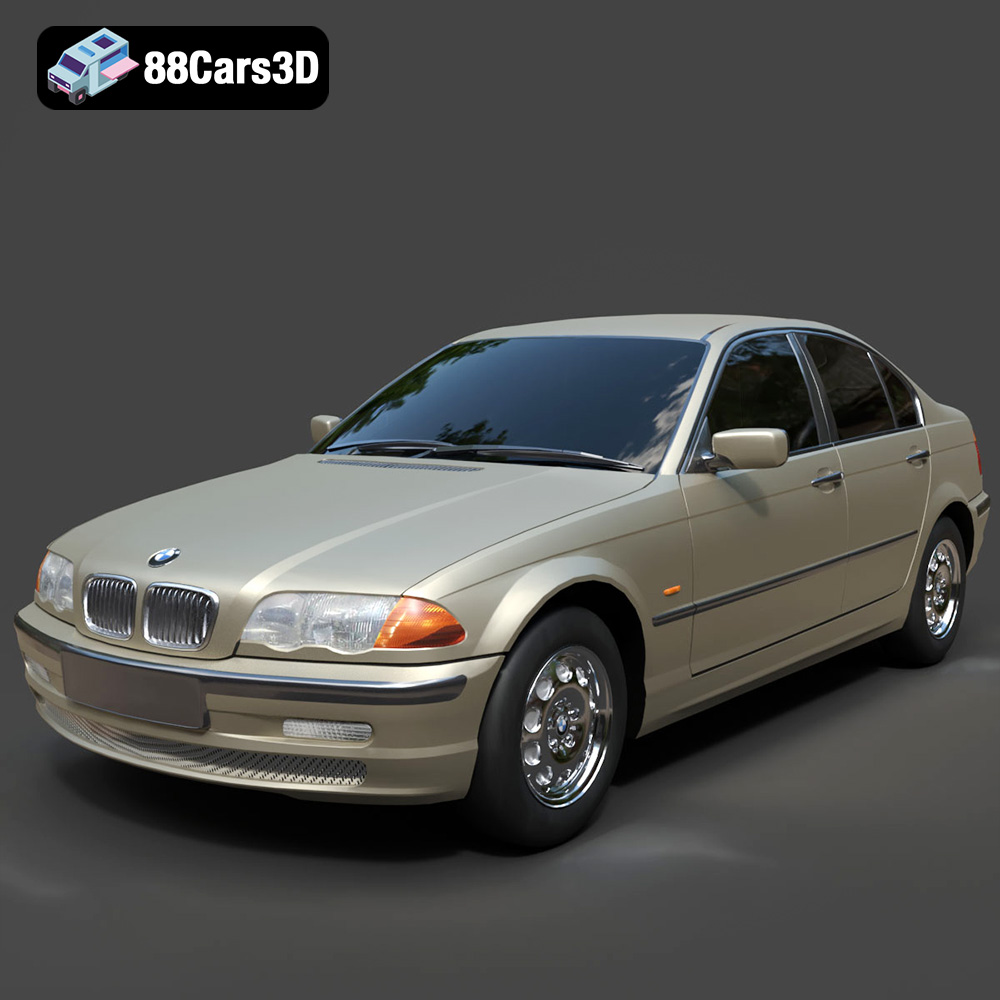
Download the BMW 3 Series E46 3D Model featuring authentic exterior lines, a detailed interior, and separated components for animation. Includes .blend, .fbx, .obj, .glb, .stl, .ply, .unreal, and .max formats for rendering, simulation, and game development.
Price: $10.79
