

Crafting the Heart of Realism: A Deep Dive into 3D Engine Bay Modeling
The engine bay, often hidden beneath a closed hood, is the true heart of any vehicle. For 3D artists, automotive designers, and game developers striving for unparalleled realism, meticulously crafting a detailed engine bay model is a testament to dedication and skill. It’s a complex symphony of wires, hoses, metal, and plastic, each element contributing to the overall authenticity of a 3D car model. Ignoring this intricate space can diminish the credibility of even the most stunning exterior renders or game assets.
This comprehensive guide will take you on an in-depth journey through the technical challenges and artistic triumphs of creating realistic 3D engine bay models. We’ll explore critical aspects from foundational topology and advanced UV mapping to physically based rendering (PBR) materials, cutting-edge rendering techniques, and crucial optimization strategies for game engines, AR/VR, and even 3D printing. Whether you’re a seasoned professional or an aspiring artist, prepare to uncover the secrets to bringing the mechanical marvels of an engine bay to life in breathtaking detail. By the end, you’ll possess the knowledge and practical insights to elevate your automotive visualization projects to new heights, understanding why attention to every nut and bolt can make all the difference.
The Art of Automotive Topology: Crafting a Clean Engine Bay Mesh
The foundation of any high-quality 3D model, especially for complex automotive components like an engine bay, lies in its topology. Good topology ensures smooth deformations, efficient UV mapping, and realistic rendering, particularly crucial for subdivision surface modeling. An engine bay is a dense collection of diverse shapes—from blocky engine manifolds and cylindrical hoses to thin wires and sharp-edged brackets. Managing the polygon count while maintaining crisp details and a clean edge flow is paramount. The goal is to create a mesh that is both visually accurate and technically sound, capable of performing well across various applications, from high-fidelity renders to real-time game engines. Achieving this requires a strategic approach to polygon placement and an understanding of how geometry affects shading and performance.
Essential Principles of Subdivision-Ready Topology
For automotive models, especially those intended for close-up renders or cinematic sequences, subdivision surface modeling is often employed to achieve smooth, curvature-continuous surfaces. This necessitates an all-quad topology (faces with four edges) as triangles and N-gons (faces with more than four edges) can lead to pinching, unwanted artifacts, and unpredictable smoothing. Edge loops must flow logically around features, defining the contours of components like engine blocks, valve covers, and air intake systems. For instance, when modeling a sharp crease on an engine manifold, strategically placed support loops close to the edge will maintain sharpness after subdivision, while wider loops will allow for smoother transitions on rounded elements. Maintaining a consistent polygon density across the model, where possible, also aids in cleaner subdivisions and UV layouts. Avoid overly stretched or compressed polygons, as these can introduce rendering artifacts.
Managing High-Detail Components: Wires, Hoses, and Bolts
Engine bays are defined by their intricate networks of wires, hoses, and fasteners. Modeling these elements efficiently without skyrocketing the polygon count is a common challenge. For hoses and wires, a common technique involves creating a spline (curve) along their path and then extruding a circular or pipe profile along it. This allows for quick adjustments and ensures a clean, predictable topology. For bolts, nuts, and other small fasteners, it’s often more efficient to model them separately with appropriate detail for their size, and then instance or duplicate them around the engine bay. If they are very small and will only be seen from a distance, normal maps can be used to simulate detail on a lower-polygon base mesh, saving significant performance. However, for extreme close-ups, full 3D geometry is irreplaceable. Grouping these components logically in your scene hierarchy also aids in organization and makes it easier to manage their visibility and apply materials.
Mastering UV Mapping for Intricate Engine Components
UV mapping is the critical bridge between your 3D geometry and 2D textures. For a complex subject like an engine bay, effective UV mapping is essential for applying realistic PBR materials, grime, and intricate decals without distortion. The sheer variety of materials—from polished metals and textured plastics to rubber hoses and painted surfaces—demands a robust UV strategy. Poor UVs can lead to stretched textures, visible seams, and an overall loss of realism, regardless of how well your model is built or how high-resolution your textures are. Therefore, understanding how to strategically unwrap each component to maximize texel density and minimize distortion is a skill that directly impacts the visual fidelity of your final asset.
Smart Seaming and Unwrapping Strategies
The key to successful UV mapping for engine bays lies in smart seam placement. Seams should be hidden wherever possible, along natural breaks in the geometry or areas less likely to be seen. For cylindrical objects like hoses or exhaust pipes, a single seam along the underside is often sufficient. For more complex, organic shapes like engine blocks, planar projections or ‘box mapping’ followed by careful manual unwrapping of specific faces might be necessary. It’s often beneficial to separate components into distinct UV islands based on their material or logical grouping. For example, all metal components might share one set of UVs, while rubber parts share another. When unwrapping, aim for minimal distortion, ensuring that the checker pattern applied to your UVs appears uniform across the 3D model. Tools available in software like Blender (referencing Blender 4.4 documentation: https://docs.blender.org/manual/en/4.4/modeling/meshes/uv/unwrapping.html) offer various unwrapping methods such as ‘Smart UV Project’, ‘Lightmap Pack’, and ‘Follow Active Quads’ which can be powerful starting points before manual refinement.
Leveraging UDIMs for High-Resolution Textures
Given the extreme detail often required for engine bays, a single UV map for the entire model might not provide sufficient texel density, especially for high-resolution renders. This is where UDIMs (U-Dimension) come into play. UDIMs allow you to spread the UV islands of your model across multiple 2D texture tiles, effectively enabling a much higher resolution for the overall model without creating excessively large individual texture files. Each tile can have its own high-resolution texture set (Albedo, Roughness, Metalness, Normal, etc.). For an engine bay, this means you can dedicate a separate UDIM tile to the main engine block, another to intricate wiring, and yet another to the auxiliary components, each receiving the pixel density it deserves. This approach is particularly powerful for automotive rendering, where close-ups demand impeccable detail, and is widely supported by professional rendering engines and texturing software. It provides immense flexibility for artists to texture different parts of the engine bay independently while maintaining a cohesive, high-resolution final look.
PBR Materials & Shading Networks: Bringing Realism to Metal, Rubber, and Plastic
Physically Based Rendering (PBR) has revolutionized the way we create realistic materials in 3D. For an engine bay, where a multitude of materials – from various metals and plastics to rubber, paint, and fluids – coexist, PBR is indispensable. It provides a standardized framework for material properties that accurately simulate how light interacts with surfaces in the real world, resulting in more convincing renders that hold up under different lighting conditions. Understanding the core principles of PBR and how to translate real-world material properties into digital textures is crucial for achieving photographic realism in your engine bay models. The interplay of maps like Albedo, Roughness, and Metalness dictates how light is absorbed, reflected, and scattered, giving each component its unique visual character.
Physically Based Rendering Fundamentals for Engine Bays
At the heart of PBR are a few key texture maps:
* **Albedo (Base Color):** This map defines the diffuse color of a surface without any lighting information. For engine bay components, this would range from the deep gray of cast iron to the specific color of painted components or the black of rubber. It should be flatly lit and neutral.
* **Metalness:** A grayscale map where white (1.0) represents a metallic surface (e.g., polished aluminum, steel engine block) and black (0.0) represents a dielectric (non-metal) surface (e.g., plastic, rubber, painted surfaces). Metals have distinct reflective properties that PBR accurately simulates.
* **Roughness:** Another grayscale map defining the microscopic surface irregularities. A value of 0.0 (black) means a perfectly smooth, mirror-like surface (e.g., polished chrome), while 1.0 (white) means a completely rough, diffuse surface (e.g., matte plastic, worn rubber). This map is vital for depicting varying levels of wear and tear, oil stains, or dirt accumulation.
* **Normal Map:** This map fakes high-resolution surface detail (like screw threads or fine casting marks) using normals, allowing a low-polygon mesh to appear highly detailed without adding actual geometry. It’s perfect for adding subtle textures to plastics or intricate patterns on metal parts without increasing polygon count.
* **Ambient Occlusion (AO):** While not strictly a PBR input, an AO map simulates soft shadows where surfaces are close together, adding depth and contact shadows, especially in the tight crevices of an engine bay.
Crafting Realistic Material Presets (Anodized Aluminum, Worn Rubber, Cast Iron)
Creating realistic materials involves more than just applying a single texture. It’s about building a shader network that accurately represents the surface properties.
* **Anodized Aluminum:** This typically involves a low metalness value (as the anodized layer is a dielectric) with a vibrant albedo color and a relatively low roughness for a slight sheen. Adding subtle normal map details for brushed textures or imperfections further enhances realism.
* **Worn Rubber:** A black or very dark gray albedo, a metalness of 0.0, and a roughness map that varies significantly. Areas of wear might be smoother (lower roughness), while untouched areas or the tread of a belt might be rougher (higher roughness). A subtle normal map for texture and minor surface irregularities is crucial.
* **Cast Iron:** A metalness value of 1.0, a dark, slightly desaturated albedo, and a moderate to high roughness value to simulate its typically rough, porous texture. A strong normal map with fine, irregular bumps can effectively portray the granular surface of cast iron.
Beyond these core maps, artists often utilize additional maps like displacement, height, or subsurface scattering for specific effects (e.g., subtle translucency in certain plastics). The key is to observe real-world materials and translate their unique light-interaction properties into your PBR texture sets. Platforms like 88cars3d.com often feature models with meticulously crafted PBR materials, serving as excellent examples of industry best practices.
Rendering the Heartbeat: Achieving Photorealistic Engine Bay Visuals
Once your engine bay model is meticulously built and textured, the next crucial step is to render it in a way that truly brings it to life. Photorealistic rendering involves a delicate balance of lighting, camera work, and render settings to capture the intricate details and material nuances. An engine bay, being a complex, enclosed space with many reflective and intricate surfaces, presents unique rendering challenges. The goal is not just to illuminate the scene but to tell a story through light and shadow, highlighting the mechanical beauty and the functionality of each component. Achieving this level of realism requires a deep understanding of light physics and the capabilities of your chosen rendering engine.
Lighting Strategies for Complex Interior Spaces
Lighting an engine bay is akin to lighting a miniature architectural interior. Direct, harsh lighting can flatten details, while overly soft lighting can obscure the intricate forms. A common and highly effective strategy involves using High Dynamic Range Image (HDRI) maps for global illumination, often combined with targeted area lights or spotlights. An HDRI provides realistic ambient light, reflections, and subtle color bounces from a real-world environment. For an engine bay, a studio HDRI with a mix of softboxes and hard lights can work wonders.
* **Key Light:** Position a dominant light source to highlight the main engine block or a focal component. This defines the primary direction of light and shadow.
* **Fill Lights:** Use softer, less intense lights to open up shadows and reveal details in darker areas. These could be subtle area lights or even bounced light from virtual “reflectors.”
* **Rim Lights:** Strategic rim lighting, often from behind or the side, can help separate components from the background and emphasize their contours, making wires and hoses pop.
* **Volumetric Lighting:** In some cases, adding subtle volumetric fog can enhance the sense of depth and atmosphere, especially if you want to depict dust or heat haze.
For renderers like V-Ray, Corona, Cycles (Blender), or Arnold, understanding how to control light intensity, color temperature, and falloff is vital. Experiment with different HDRI environments to see how they affect reflections and overall mood.
Advanced Render Settings and Post-Processing Techniques
Beyond basic lighting, several advanced render settings and post-processing steps contribute significantly to photorealism.
* **Global Illumination (GI):** Ensure your rendering engine’s GI settings are robust enough to accurately simulate light bouncing within the enclosed engine bay, illuminating otherwise shadowed areas realistically. Higher GI samples typically mean cleaner renders but longer render times.
* **Depth of Field (DOF):** A subtle DOF can dramatically enhance realism, drawing the viewer’s eye to a specific focal point (e.g., a carburetor or a specific engine part) and blurring the foreground and background realistically, mimicking real-world camera optics.
* **Motion Blur:** If rendering an animation or a car in motion, accurate motion blur is essential for believability.
* **Antialiasing:** Sufficient antialiasing samples are crucial to ensure smooth edges and prevent jagged lines, especially on thin wires and sharp metallic edges.
* **Post-Processing:** This is where the final polish is applied. Using software like Photoshop or Affinity Photo, you can apply:
* **Color Grading:** Adjusting overall color balance, contrast, and saturation to achieve a specific mood or match reference imagery.
* **Vignetting:** A subtle darkening of the image edges to focus attention on the center.
* **Lens Distortion/Chromatic Aberration:** Minor imperfections that can make a render look more like a photograph.
* **Bloom/Glow:** To simulate light sources or highly reflective surfaces appearing to glow.
* **Sharpening:** A final touch to enhance perceived detail.
Always render in multiple passes (e.g., beauty, reflections, refractions, Z-depth, object IDs) to give maximum flexibility during the post-processing phase. This non-destructive workflow allows for fine-tuning without re-rendering the entire scene.
Optimizing Engine Bay Models for Game Engines and Real-Time Applications
While high-fidelity renders demand maximum detail, game engines and real-time applications like architectural walkthroughs or interactive configurators impose strict performance budgets. An engine bay model that looks stunning in a cinematic render might bring a game engine to its knees due to excessive polygon counts, unoptimized textures, and inefficient material setups. The challenge is to maintain visual quality while drastically reducing the computational overhead. This involves a strategic approach to polygon reduction, texture management, and understanding how game engines process and render assets. The goal is to create “game-ready assets” that perform smoothly without sacrificing too much visual fidelity, a balance that requires technical prowess and a keen eye for detail.
LODs and Decimation Strategies
**Level of Detail (LOD)** is a crucial optimization technique. Instead of using a single high-polygon mesh for all viewing distances, LODs involve creating multiple versions of the same model, each with progressively fewer polygons.
* **LOD0 (High Poly):** Used when the engine bay is viewed up close.
* **LOD1, LOD2, etc. (Medium to Low Poly):** Used as the viewer moves further away.
Game engines automatically switch between these LODs based on the camera’s distance, ensuring high detail up close and saving performance from afar.
**Decimation** (polygon reduction) is the process of intelligently removing polygons from a mesh while preserving its overall shape and detail as much as possible. Tools in 3D software (Blender’s Decimate Modifier, for example) can help automate this, but manual cleanup and refinement are often necessary to prevent visual artifacts, especially around critical edges or areas with complex curvature. When decimating an engine bay, prioritize reducing polygons on flat surfaces or areas that will be heavily covered by other components, while preserving detail on key focal points like the engine block’s main features.
Texture Atlasing and Draw Call Reduction
**Texture Atlasing:** Instead of having many small textures for individual components, texture atlasing combines multiple smaller textures (e.g., for different bolts, wires, or small brackets) into one larger texture map. This reduces the number of texture lookups the GPU needs to perform, improving performance. All the UV islands for these smaller components are then packed into this single atlas.
**Draw Call Reduction:** Each time a game engine needs to draw an object with a unique material, shader, or texture, it generates a “draw call.” Too many draw calls can severely impact performance. By combining meshes that share the same material and texture atlas, you can significantly reduce draw calls. For an engine bay, this often means merging smaller, non-interactive components (like multiple bolts, washers, or small plastic clips) into a single mesh group with a shared material and texture atlas. Platforms like 88cars3d.com often provide optimized 3D car models specifically designed as game assets, featuring pre-built LODs and atlased textures to ensure smooth integration into engines like Unity or Unreal Engine. This approach dramatically enhances rendering efficiency, allowing game environments to maintain higher frame rates.
Beyond Visualization: Engine Bays for AR/VR and 3D Printing
The application of 3D engine bay models extends far beyond traditional rendering and game development. With the rise of Augmented Reality (AR), Virtual Reality (VR), and advanced 3D printing, these detailed models are finding new and exciting uses in training, interactive product showcases, and even custom fabrication. Each of these emerging technologies, however, presents its own unique set of technical requirements and optimization challenges. Adapting an engine bay model for AR/VR demands extreme polygon efficiency and carefully considered interactions, while preparing it for 3D printing requires an entirely different focus on mesh integrity and structural soundness.
AR/VR Specific Optimizations and Interactive Elements
For AR/VR experiences, performance is paramount, as maintaining a high and stable frame rate (typically 90fps or higher per eye) is essential to prevent motion sickness. This means an even more aggressive approach to polygon reduction than for standard game assets.
* **Ultra-Low Poly LODs:** Develop LODs that go down to extremely low polygon counts for components that are not the immediate focus or are seen from a distance.
* **Aggressive Texture Atlasing:** Consolidate as many textures as possible into a few large atlases to minimize draw calls.
* **Baked Lighting:** For static elements, bake ambient occlusion and basic lighting directly into vertex colors or texture maps instead of relying solely on real-time lighting calculations.
* **Collision Meshes:** For interactive AR/VR experiences, simple collision meshes should be created for parts users might interact with, avoiding complex high-poly collision detection.
* **Interactive Elements:** For training or diagnostic applications, design interactive components that can be highlighted, disassembled, or provide information upon selection. This might involve creating separate meshes for “selectable” parts and scripting their behavior within the AR/VR platform. File formats like GLB (glTF) and USDZ are highly favored for AR/VR due to their efficiency and comprehensive scene description capabilities, including materials, animations, and PBR support.
Preparing Engine Bays for FDM and SLA 3D Printing
3D printing demands a completely different set of considerations for engine bay models. The focus shifts from visual fidelity on a screen to physical integrity and printability.
* **Watertight Meshes:** The most critical requirement is that the model must be “watertight,” meaning it has no holes, non-manifold geometry, or intersecting faces. Every edge must connect exactly two faces. Printing software needs a completely enclosed volume to generate solid layers.
* **Wall Thickness:** Ensure that all parts of the engine bay model have sufficient wall thickness for the chosen printing technology. Thin wires, hoses, or small brackets that look fine on screen might be too fragile or simply not print at all with FDM (Fused Deposition Modeling) or even SLA (Stereolithography) printers. Often, these delicate parts need to be thickened or simplified.
* **Mesh Repair:** Tools in 3D software or dedicated 3D printing preparation software can help identify and repair non-manifold edges, open boundaries, and other mesh errors.
* **Scale and Orientation:** Consider the final print size and orient the model to minimize support structures and maximize print quality.
* **Part Separation:** For highly complex engine bays, it’s often more practical to separate the model into several printable components that can be assembled post-print. This helps manage overhangs and reduces the risk of print failure.
While high-resolution models from platforms such as 88cars3d.com might serve as excellent starting points, they will almost certainly require significant modification and preparation to be suitable for successful 3D printing. The emphasis is on structural soundness and manufacturability over purely visual aesthetics.
Conclusion
Creating realistic 3D engine bay models is a journey that demands a blend of artistic vision, technical precision, and unwavering patience. From meticulously sculpting clean, subdivision-ready topology to crafting physically accurate PBR materials and optimizing for diverse platforms, every step contributes to the final masterpiece. We’ve explored the nuances of strategic UV mapping, the art of lighting complex mechanical interiors, and the critical importance of optimization for game engines, AR/VR, and 3D printing.
The attention to detail, the careful balance of realism and performance, and the dedication to simulating the intricate dance of light on various materials are what truly set exceptional automotive 3D models apart. Whether your goal is a hyper-realistic render for an advertising campaign, a high-performance game asset, or an interactive AR experience, the principles outlined in this guide will serve as your bedrock. Embrace the complexity, hone your skills, and remember that the heart of realism often lies in the details—even those hidden beneath the hood. When sourcing high-quality base models or seeking inspiration, platforms like 88cars3d.com offer a vast collection of expertly crafted 3D car models that exemplify these very principles, providing excellent starting points for your own projects. Continue to observe the real world, experiment with new techniques, and never stop pushing the boundaries of what’s possible in 3D automotive visualization.
Featured 3D Car Models

BMW 4 Series F32 3D Model
Texture: Yes
Material: Yes
Download the BMW 4 Series F32 3D Model featuring clean geometry, realistic detailing, and a fully modeled interior. Includes .blend, .fbx, .obj, .glb, .stl, .ply, .unreal, and .max formats for rendering, simulation, and game development.
Price: $12.99
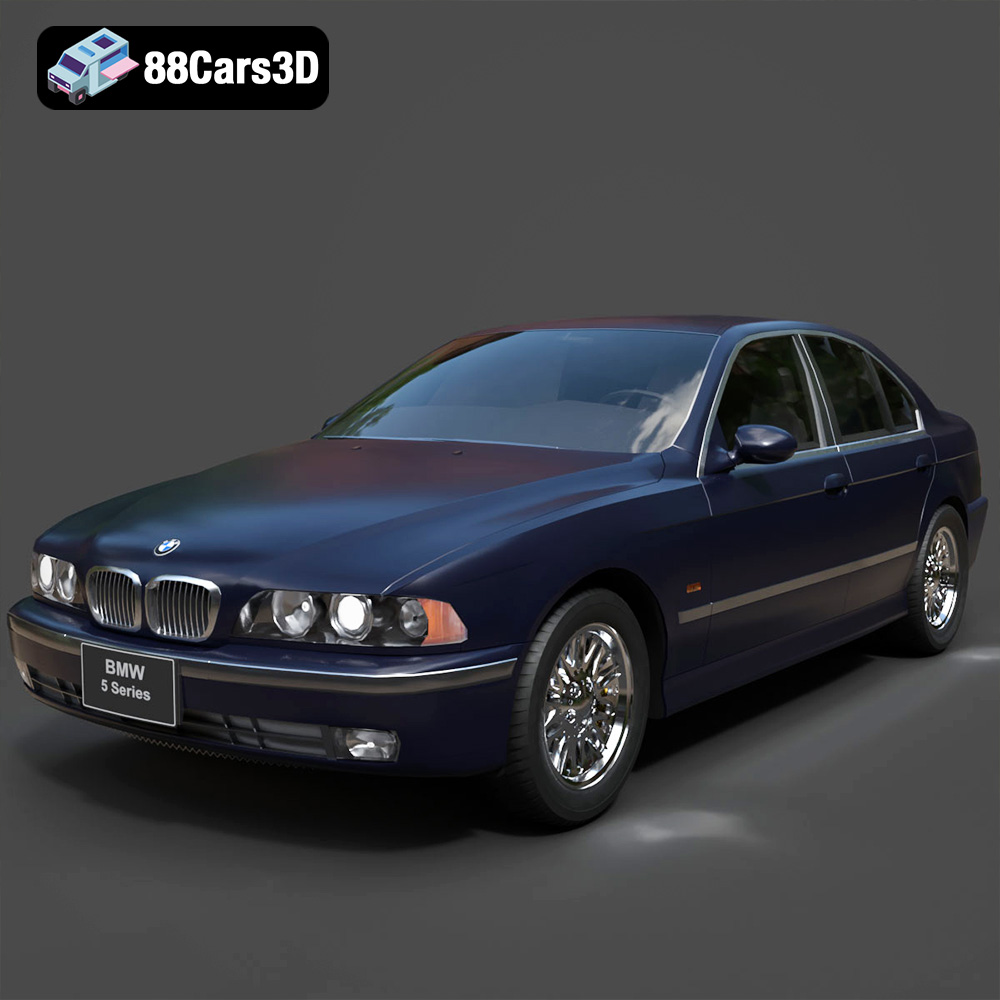
BMW E39 M5-540i 3D Model
Texture: Yes
Material: Yes
Download the BMW E39 M5-540i 3D Model featuring its iconic sedan design, detailed exterior, and realistic interior. Includes .blend, .fbx, .obj, .glb, .stl, .ply, .unreal, and .max formats for rendering, simulation, and game development.
Price: $10.79

BMW 7 Series E38 3D Model
Texture: Yes
Material: Yes
Download the BMW 7 Series E38 3D Model featuring its iconic luxury sedan design and classic aesthetics. Includes .blend, .fbx, .obj, .glb, .stl, .ply, .unreal, and .max formats for rendering, simulation, and game development.
Price: $10.79

BMW 6 Series 640i F12 3D Model
Texture: Yes
Material: Yes
Download the BMW 6 Series 640i F12 3D Model featuring a sleek design and detailed interior. Includes .blend, .fbx, .obj, .glb, .stl, .ply, .unreal, and .max formats for rendering, simulation, and game development.
Price: $10.79

BMW 6 Coupe E63 3D Model
Texture: Yes
Material: Yes
Download the BMW 6 Coupe E63 3D Model featuring a sleek design, detailed interior, and realistic exterior. Includes .blend, .fbx, .obj, .glb, .stl, .ply, .unreal, and .max formats for rendering, simulation, and game development.
Price: $10.79
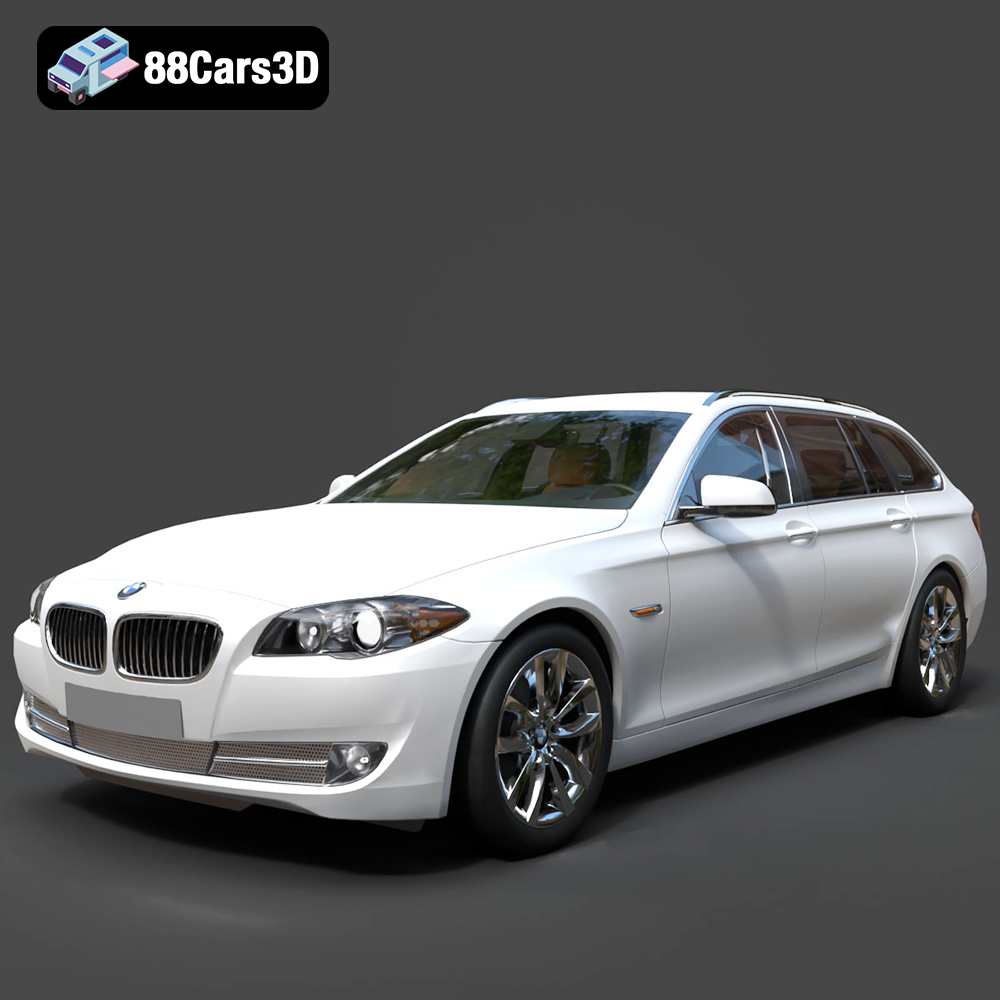
BMW 5 Series Touring F11-007 3D Model
Texture: Yes
Material: Yes
Download the BMW 5 Series Touring F11-007 3D Model featuring a detailed exterior and interior. Includes .blend, .fbx, .obj, .glb, .stl, .ply, .unreal, and .max formats for rendering, simulation, and game development.
Price: $10.79
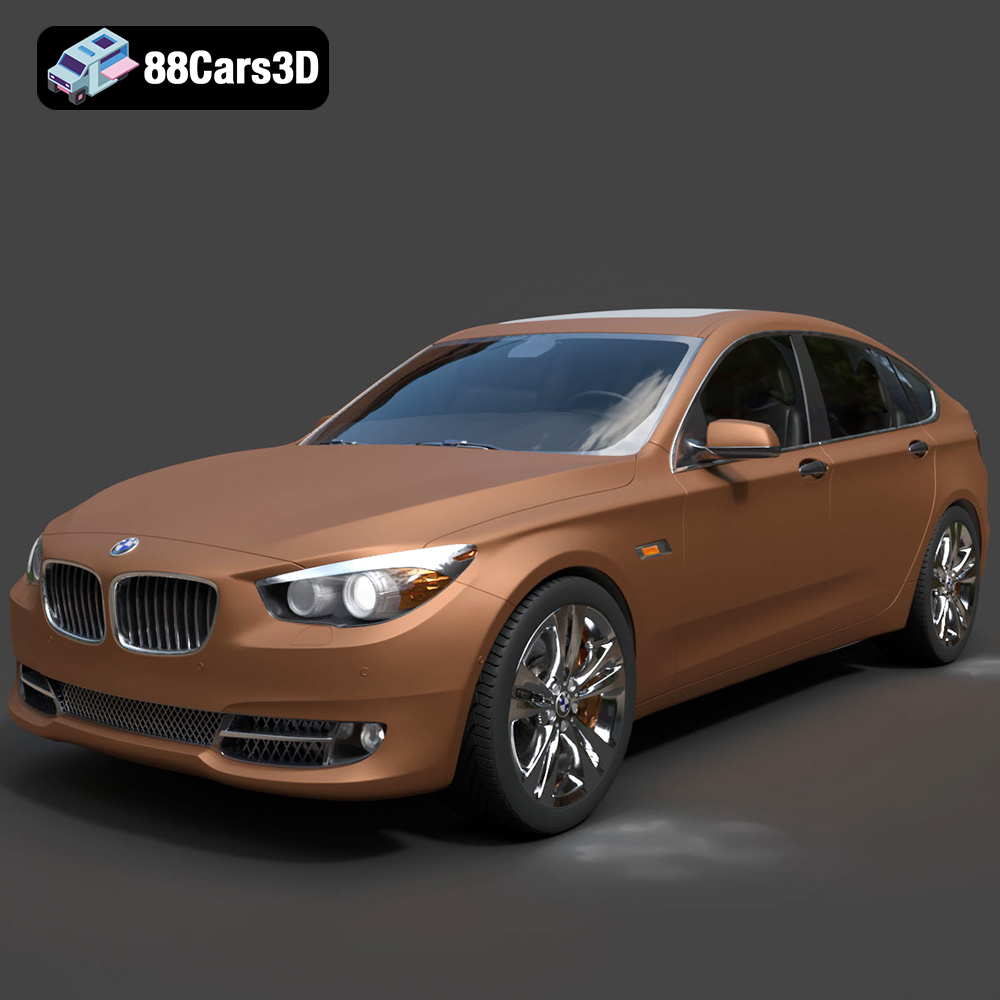
BMW 5 Series Gran Turismo F07-003 3D Model
Texture: Yes
Material: Yes
Download the BMW 5 Series Gran Turismo F07-003 3D Model featuring a detailed exterior and interior. Includes .blend, .fbx, .obj, .glb, .stl, .ply, .unreal, and .max formats for rendering, simulation, and game development.
Price: $10.79
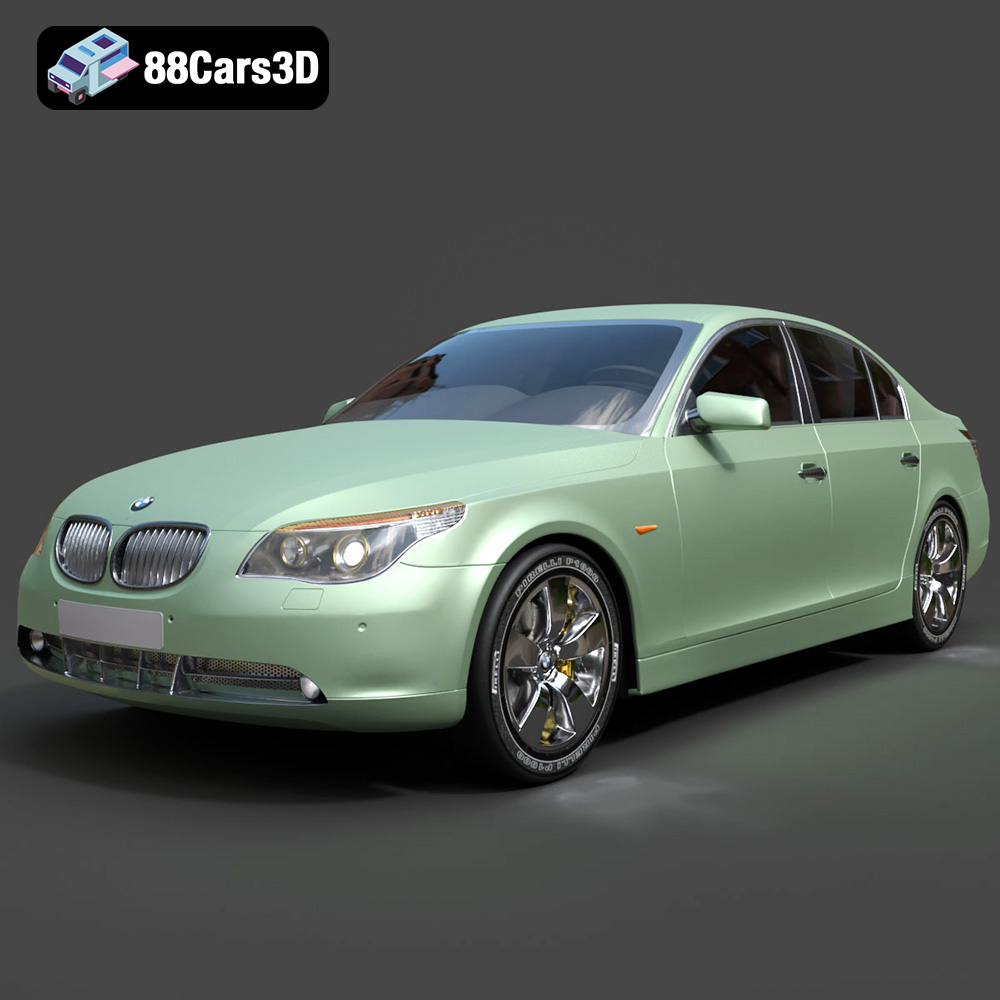
BMW 5 Series E60 3D Model
Texture: Yes
Material: Yes
Download the BMW 5 Series E60 3D Model featuring its iconic sedan design, detailed exterior, and interior. Includes .blend, .fbx, .obj, .glb, .stl, .ply, .unreal, and .max formats for rendering, simulation, and game development.
Price: $10.79

BMW 5 E34-535i 3D Model
Texture: Yes
Material: Yes
Download the BMW 5 E34-535i 3D Model featuring an iconic design, detailed exterior and interior, and accurate representation. Includes .blend, .fbx, .obj, .glb, .stl, .ply, .unreal, and .max formats for rendering, simulation, and game development.
Price: $10.79
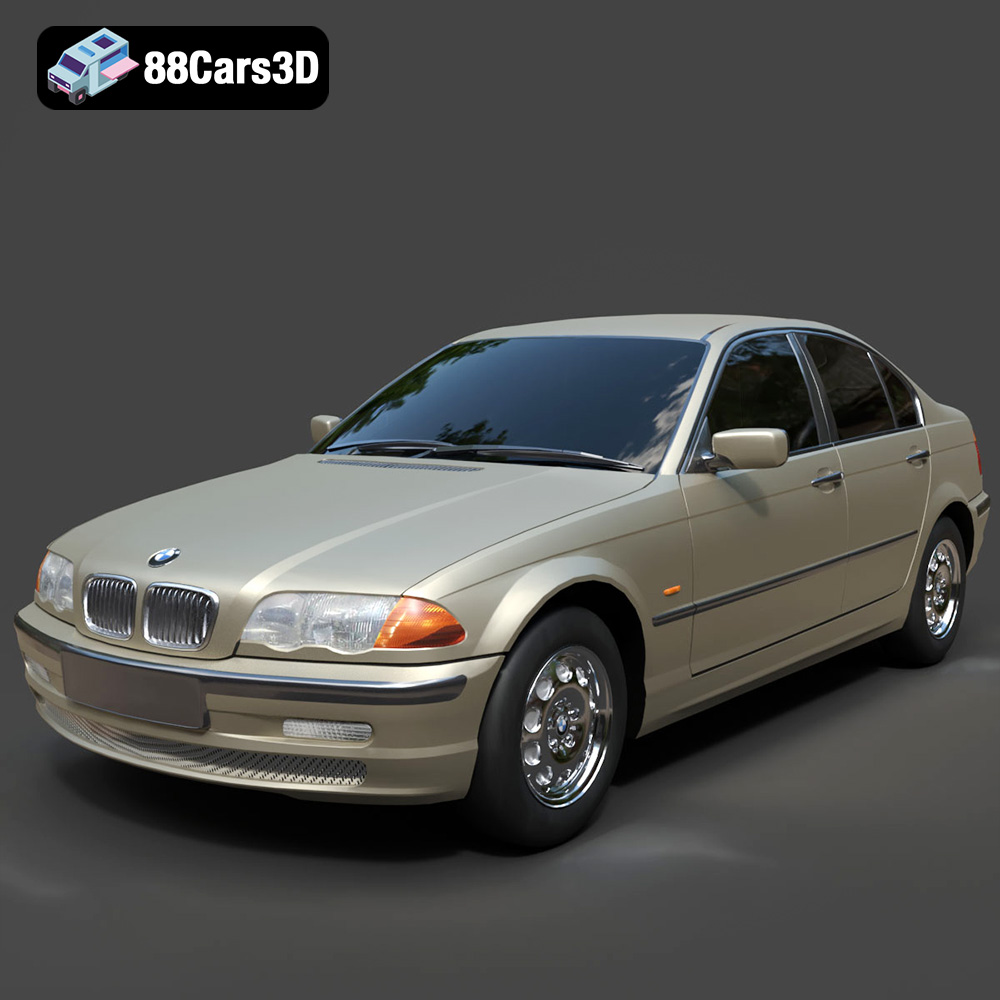
BMW 3 Series E46 3D Model
Texture: Yes
Material: Yes
Download the BMW 3 Series E46 3D Model featuring authentic exterior lines, a detailed interior, and separated components for animation. Includes .blend, .fbx, .obj, .glb, .stl, .ply, .unreal, and .max formats for rendering, simulation, and game development.
Price: $10.79
