

“`html
Mastering STL Models: Scaling, Hollowing, and Optimizing for Print Speed in 3D Printing
The world of 3D printing is a playground for enthusiasts, hobbyists, and professionals alike, offering the power to bring digital creations into the physical realm. For automotive aficionados, the allure of possessing a meticulously crafted 3D printable car model is immense. Platforms like 88cars3d.com provide access to a vast library of high-quality STL files, ready to be transformed into tangible masterpieces. However, simply downloading and printing isn’t always the most efficient or effective approach. To truly unlock the potential of these digital assets and achieve optimal results on your 3D printer, understanding how to scale, hollow, and optimize STL models for print speed is paramount. This comprehensive guide will delve deep into the technical intricacies of preparing your STL files, ensuring faster prints without sacrificing quality, and empowering you to achieve stunning results every time.
We’ll explore the fundamental aspects of STL file structures, the crucial role of scaling in achieving the desired model size, the benefits and techniques of hollowing models to save material and time, and advanced slicing strategies to fine-tune your print speed. Whether you’re using FDM or resin technology, this guide will equip you with the knowledge to overcome common printing challenges, optimize your workflow, and make the most of your 3D printable car models.
Understanding the Anatomy of an STL File: Mesh Topology and Manifold Integrity
Before we dive into scaling and optimizing, it’s essential to understand the foundational structure of an STL file. STL, or Stereolithography, is the de facto standard file format for 3D printing. Unlike traditional vector-based CAD files, STL represents a 3D object as a mesh of interconnected triangles. Each triangle is defined by three vertices and a normal vector, indicating its outward-facing direction. This seemingly simple structure can, however, harbor complexities that directly impact printability.
The quality of the mesh topology is critical. A well-formed mesh consists of uniformly sized and oriented triangles, without excessive detail that could lead to unmanageable file sizes or rendering issues. Conversely, poorly constructed meshes can exhibit artifacts such as overlapping triangles, non-manifold edges (where more than two triangles share an edge), or holes. These “non-manifold” conditions are anathema to 3D printing because they create ambiguity for the slicer software, leading to errors, failed prints, or physically impossible geometry. Ensuring your STL file is “watertight” or “manifold” is the first crucial step in successful printing.
Mesh Repair: The Foundation of a Flawless Print
Fortunately, tools exist to diagnose and repair these mesh imperfections. Software like Meshmixer, Blender, or even Netfabb (often integrated into slicers) can analyze your STL file for errors. Common repair operations include:
- Hole Filling: Automatically detecting and closing gaps in the mesh.
- Face Orientation Correction: Ensuring all normal vectors point outwards.
- Removing Duplicate or Unused Vertices: Cleaning up redundant data.
- Thickening Thin Walls: Ensuring minimum printable wall thickness, especially crucial for small details on car models. A common minimum for FDM printing is around 0.8mm to 1.2mm, depending on the nozzle size. For resin, this can be as low as 0.1mm to 0.3mm, but still requires careful consideration.
When downloading models from marketplaces such as 88cars3d.com, the files are generally prepared with excellent mesh integrity. However, if you intend to modify them or work with models from other sources, performing a mesh repair check is always a good practice. This step is fundamental, as any scaling or hollowing operations on a flawed mesh will only exacerbate the underlying problems.
Understanding Triangle Count and File Size
The number of triangles in an STL file directly influences its size and the computational load on your slicer. While more triangles can represent finer detail, an excessive number can lead to slow slicing times and performance issues, especially on less powerful computers. For highly detailed models, such as intricate engine bays or chassis details on car models, a balance must be struck. Optimization techniques often involve reducing the triangle count without a perceptible loss of visual fidelity. This can be achieved through mesh decimation tools within modeling software, carefully removing redundant triangles in flat or low-curvature areas.
Scaling Your STL Models: Achieving the Perfect Dimensions
One of the most basic yet essential modifications you can perform on an STL file is scaling. Whether you need a miniature replica for a display shelf, a larger model for a detailed diorama, or a prototype to test fitment, scaling allows you to adjust the dimensions of your 3D printable car model to your exact specifications. Most slicer software provides intuitive scaling tools, but understanding the implications of scaling is vital.
Scaling is typically performed uniformly across all axes (X, Y, and Z) to maintain the aspect ratio and proportions of the original model. However, you can also perform non-uniform scaling if you need to adjust specific dimensions – for instance, to make a car model slightly wider to accommodate custom wheels. It’s important to be cautious with non-uniform scaling, as it can distort the model and lead to unrealistic proportions if not done carefully.
Scaling Workflows in Slicers and Modeling Software
In slicers like Cura or PrusaSlicer, scaling is usually a straightforward process. You can often input a percentage or specific dimensions. For example, to double the size of a model, you would enter 200% or input dimensions twice that of the original. When scaling up, be mindful of potential issues:
- Minimum Wall Thickness: Thin features on the original model might become too thin to print at larger scales.
- Support Requirements: Larger models often require more extensive support structures.
- Print Time: Scaling up significantly increases print time.
For more precise control or if you need to scale specific parts of a model, using 3D modeling software like Blender or Meshmixer before importing into the slicer is recommended. These tools offer finer control over scaling operations and allow you to preview the results more accurately. Platforms like 88cars3d.com often provide models in a standard unit (e.g., millimeters), so understanding the intended scale is key when resizing.
The Impact of Scaling on Print Settings and Material Usage
Scaling is not just about physical dimensions; it has direct implications for your print settings and material consumption. Doubling the linear dimensions of a model (e.g., from 100mm to 200mm) will increase its volume by a factor of eight (2^3). This means:
- Material Usage: You’ll need significantly more filament or resin.
- Print Time: The print time will increase dramatically, often by more than double due to the increased volume and potentially adjusted layer heights.
- Layer Height Considerations: If you scale a model up and decide to maintain the original layer height (e.g., 0.1mm), the print will be exceptionally detailed but take a very long time. Conversely, you might increase the layer height proportionally to reduce print time, accepting a slight loss in vertical resolution. For example, scaling a model by 2x and increasing the layer height from 0.1mm to 0.2mm might offer a good balance.
Always recalculate your estimated print time and material usage after scaling. This foresight helps in planning your print jobs and ensuring you have adequate supplies.
Hollowing Your Models: Saving Material and Reducing Print Time
Many 3D printable car models, especially those designed for display, are often solid. Printing a solid object, particularly larger ones, can be incredibly time-consuming and consume a substantial amount of filament or resin. Hollowing is a technique that involves removing the internal volume of a model, leaving only a thin shell. This dramatically reduces material usage and print time, making larger or more complex prints feasible.
The concept is simple: instead of filling the entire volume with plastic, you only print the outer walls and a few internal support structures (if necessary). This is akin to how many commercial plastic products are manufactured. Most modern slicer software includes features to automatically hollow models, but understanding how to control this process is key to achieving good results.
Automatic Hollowing in Slicers: Settings and Best Practices
Slicers like Cura and PrusaSlicer offer “Hollow” or “Wall Generator” settings. When enabled, the slicer automatically calculates an internal void and creates a shell of a specified thickness. Key parameters to consider include:
- Wall Thickness (or Shell Thickness): This determines the thickness of the outer walls. A common starting point is 1.2mm to 2.0mm for FDM prints, depending on the nozzle size and desired strength. For resin, you might aim for 0.5mm to 1.5mm.
- Hollow: Usually a checkbox to enable the feature.
- Infill: When hollowing, you typically set infill density to 0%.
- Drain Holes: Crucial for resin printing! For hollowed resin models, it’s imperative to add drain holes to allow uncured resin to escape during printing and facilitate post-processing (washing and curing). These holes should be placed in inconspicuous areas and be large enough for resin to flow out easily (e.g., 3-5mm diameter).
When hollowing, ensure the wall thickness you select is compatible with your printer’s capabilities and nozzle size. A wall thickness smaller than your nozzle diameter (e.g., trying to print 0.4mm walls with a 0.8mm nozzle) will result in poor adhesion and weak structures.
Manual Hollowing and Internal Supports: Advanced Techniques
For greater control or when automatic hollowing produces undesirable results (e.g., internal overhangs that are difficult to print), manual hollowing in a 3D modeling software might be necessary. This involves:
- Creating an Internal Offset: Using tools like “Shell” or “Solidify” in Blender to create an inner surface parallel to the outer surface.
- Removing Internal Geometry: Deleting the internal faces to create the hollow space.
- Adding Drain Holes: As mentioned, essential for resin prints.
- Adding Internal Support Structures (Optional): Sometimes, large hollow models may require internal bracing to prevent the walls from collapsing during printing, especially if there are significant unsupported spans between the outer shell and the build plate. This can be achieved by adding simple geometric shapes (cubes, cylinders) inside the model.
Hollowing is a powerful technique that can transform your printing experience. It significantly reduces the amount of material used, leading to cost savings, and drastically cuts down on print times, allowing you to iterate faster or complete more projects. For large, detailed car models, hollowing is often not just an optimization but a necessity for successful printing.
Optimizing for Print Speed: Slicing Strategies for Faster Prints
Print speed is a constant pursuit in 3D printing. While slower speeds often correlate with higher quality, there’s a delicate balance to be struck. By intelligently adjusting slicing parameters, you can significantly reduce print times without rendering your models unusable or aesthetically compromised. This involves a deep understanding of how each setting affects the printing process.
The goal is to increase speed where possible without introducing print failures like layer adhesion issues, ringing (ghosting), or dimensional inaccuracies. This often means optimizing speed settings for different features of the print – for instance, printing outer walls slower for a better surface finish while printing infill much faster.
Layer Height and Infill: The Primary Drivers of Print Time
The two most impactful settings for print time are layer height and infill density/pattern.
- Layer Height: This determines the vertical resolution of your print. A smaller layer height (e.g., 0.1mm) results in finer detail but significantly increases print time as the printer has to lay down many more layers. A larger layer height (e.g., 0.2mm or 0.3mm for FDM) drastically reduces print time but results in more visible layer lines. For car models where smooth curves are important, finding the sweet spot is key. Often, 0.15mm to 0.2mm provides a good balance for FDM. Resin printers typically use much smaller layer heights (e.g., 0.025mm to 0.05mm) for incredible detail, making hollowing and reduced infill even more critical for speed.
- Infill Density and Pattern: For hollowed models, infill density is set to 0%, making this factor less relevant for the main body. However, if you choose to print a non-hollow model or if internal supports are generated, infill becomes critical. Lowering infill density (e.g., from 20% to 10%) will reduce material and time. The infill pattern also plays a role; patterns like ‘lines’ or ‘grid’ are generally faster than ‘gyroid’ or ‘cubic’, though they may offer less strength. For car models, especially if they are solid, you might only need 10-15% infill.
When trying to speed up prints, start by increasing layer height moderately (e.g., from 0.1mm to 0.15mm) and ensuring your infill settings are already optimized (low density, fast pattern).
Print Speed Settings and Travel Moves: Fine-Tuning for Efficiency
Beyond layer height and infill, the actual print speed settings and how the printer moves when not extruding (travel moves) are crucial for optimization.
- Outer Wall Speed: Typically set slowest (e.g., 30-50 mm/s) for best surface finish.
- Inner Wall Speed: Can be faster than outer walls (e.g., 50-70 mm/s).
- Infill Speed: Often the fastest (e.g., 70-100 mm/s), as minor imperfections are less visible.
- Top/Bottom Speed: Usually slower for good surface finish on top layers.
- Travel Speed: The speed at which the print head moves between print segments when not extruding. Increasing this can save significant time. Values of 150 mm/s or higher are common, but depend heavily on your printer’s mechanics.
- Retraction Settings: Crucial for minimizing stringing during travel moves. Optimize retraction distance and speed.
- Combing: Many slicers have a “Combing” feature that keeps travel moves within the model’s boundaries, reducing visible travel marks on the surface. This can sometimes increase print time slightly but improves surface quality.
- Avoid Printed Parts When Traveling: Another setting to minimize imperfections on the outer surface.
Experimentation is key here. Start with conservative speed increases and observe the results. A 20-30% overall increase in print speed can often be achieved by tuning these settings effectively.
Support Structures: Essential for Overhangs, Speed, and Removal
Overhangs and bridges are inherent challenges in 3D printing, and car models often feature numerous elements that require support – from fender flares and spoilers to undercarriage details and complex rooflines. Proper support generation and thoughtful removal are critical for achieving a successful print, but they also impact print time and post-processing effort.
The primary function of support structures is to provide a temporary scaffold for extruded material that would otherwise print in mid-air. However, the type, density, and placement of these supports can also influence how quickly a model prints and how easy it is to clean up afterward. Finding the right balance between robust support and minimal contact points is an art.
Support Types and Placement Strategies
Slicers offer various support types, each with its advantages:
- Normal/Grid Supports: Standard supports with a grid pattern. Can be dense and difficult to remove.
- Tree/Branching Supports: More organic, branching structures that often use less material and have fewer contact points with the model, making them easier to remove. These are particularly well-suited for complex organic shapes and detailed models like cars.
- Support Roof/Floor: Options to add solid layers above and below the support structure, creating a smoother surface interface with the model. This can improve surface quality but increases removal difficulty.
When orienting your car model on the build plate, consider which overhangs will be created. Ideally, you want to orient the model to minimize the need for supports in areas critical for appearance, such as the exterior body panels. Sometimes, rotating the model 45 degrees can drastically reduce the required support volume.
Optimizing Support Settings for Faster Removal and Less Damage
The settings within your slicer’s support menu can significantly impact print time and post-processing:
- Support Density: Lower density (e.g., 5-10%) means less material and faster printing, but potentially weaker support.
- Support Interface Layers: Adding a few solid layers at the top and bottom of the support structure can create a smoother surface where the support meets the model, but makes removal harder. Consider disabling or reducing these if ease of removal is a priority.
- Support Z Distance: The gap between the model and the support structure. A larger gap (e.g., 0.2mm – 0.3mm for FDM) makes removal much easier, but can lead to poorer surface quality on the supported area. Fine-tuning this is crucial.
- Support XY Distance: The horizontal gap between the model and the support.
- Support Placement: “Touching Buildplate” vs. “Everywhere”. “Touching Buildplate” is preferred if possible to minimize contact points.
For resin prints, supports are even more critical due to the nature of curing. Using tree supports with fine tips and ensuring adequate but not excessive density is vital. Always ensure drain holes are strategically placed to avoid trapping uncured resin where supports meet the model.
Material Selection and Printer Calibration: The Unsung Heroes of Print Quality
While scaling, hollowing, and speed optimization are critical, they build upon a foundation of correct material selection and a well-calibrated printer. Without these fundamentals, even the most optimized STL file will yield suboptimal results.
Choosing the right material is not just about aesthetics; it impacts printability, strength, and post-processing capabilities. Similarly, a printer that isn’t properly calibrated will struggle to achieve dimensional accuracy, surface quality, and reliable adhesion, rendering optimization efforts moot.
Choosing the Right Material for Your Car Models
The choice of material depends on the intended use of your 3D printable car model:
- PLA: The most common and easiest material to print. It’s rigid, comes in many colors, and is ideal for display models. It has lower temperature resistance and can be brittle.
- PETG: More durable and temperature-resistant than PLA, with better layer adhesion. Slightly more challenging to print but offers a good balance for functional parts or models that might experience some stress.
- ABS: Strong, durable, and high-temperature resistant. However, it’s prone to warping and requires an enclosed printer and good ventilation due to fumes.
- Resin (SLA/DLP): For incredible detail and smooth surfaces, resin is unmatched. Standard resins are good for display, while tougher or flexible resins can be used for parts that need more resilience. However, resin printing involves more complex post-processing (washing, curing) and safety precautions.
For most hobbyist car models from platforms like 88cars3d.com, PLA on an FDM printer or standard resin on a resin printer will provide excellent results. Consider the required finish and durability when making your choice.
Printer Calibration and Maintenance for Consistent Results
A well-calibrated printer is essential for translating optimized STL files into reality:
- Bed Leveling: The first layer is the foundation. Ensure your build plate is perfectly level for consistent adhesion across the entire print area.
- E-step Calibration: Ensures your extruder is pushing out the correct amount of filament.
- Flow Rate (Extrusion Multiplier): Fine-tunes extrusion to prevent over- or under-extrusion, impacting dimensional accuracy and surface finish.
- Temperature Towers and Retraction Tests: Print these calibration models to find the optimal temperature and retraction settings for your specific filament and printer.
- Nozzle Cleaning and Maintenance: A clogged or worn nozzle will ruin prints. Regularly clean or replace your nozzle.
- Belt Tension: Loose belts can cause ringing and loss of detail.
Regularly performing these calibration steps will ensure your printer performs optimally, allowing your optimized STL files to print successfully and efficiently, maximizing the value you get from your 3D printable car models.
Conclusion: Bringing Your 3D Printable Car Models to Life with Confidence
The journey from a digital STL file to a tangible, high-quality 3D printed car model is a rewarding one. By mastering the techniques of scaling, hollowing, and optimizing for print speed, you can elevate your 3D printing projects from mere reproductions to impressive feats of craftsmanship. Understanding the underlying structure of STL files and ensuring mesh integrity through repair is the bedrock upon which all other optimizations are built. Scaling allows you to achieve precise dimensions, while hollowing dramatically reduces material waste and print time, making larger or more ambitious projects feasible.
Furthermore, intelligent slicing strategies – adjusting layer height, infill, print speeds, and support structures – are crucial for balancing print time with quality. Finally, never underestimate the importance of selecting the right material and maintaining a well-calibrated printer. These fundamental aspects ensure that your optimized files translate into successful prints time after time.
As you explore the vast collection of models available on platforms like 88cars3d.com, remember that the real magic happens in the preparation phase. By applying the detailed technical insights shared in this guide, you are empowered to print faster, more efficiently, and with stunning results. Experiment with these techniques, learn your printer’s capabilities, and enjoy the process of bringing your favorite vehicles to life in three dimensions. Happy printing!
“`
Featured 3D Car Models
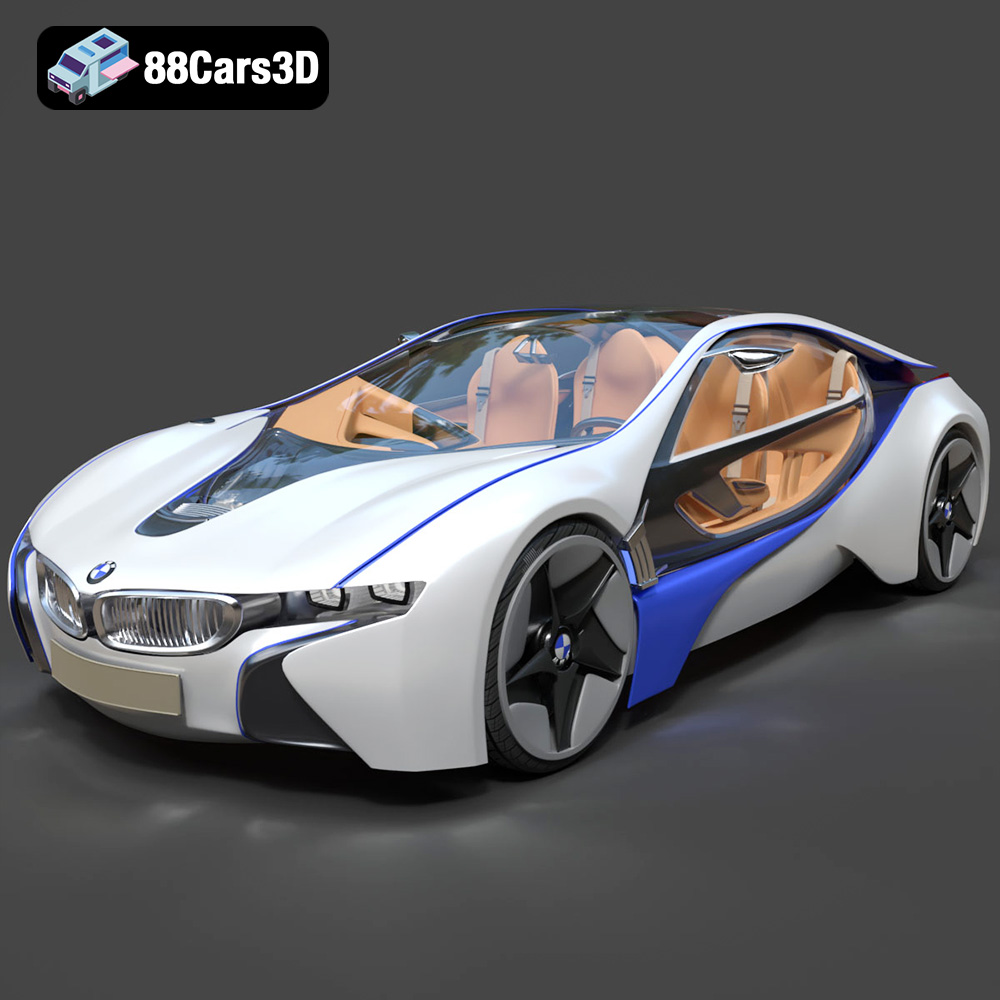
BMW Vision Effecient Dynamics-007 3D Model
Texture: Yes
Material: Yes
Download the BMW Vision Effecient Dynamics-007 3D Model featuring a sleek, futuristic design and hybrid concept aesthetics. Includes .blend, .fbx, .obj, .glb, .stl, .ply, .unreal, and .max formats for rendering, simulation, and game development.
Price: $14.99
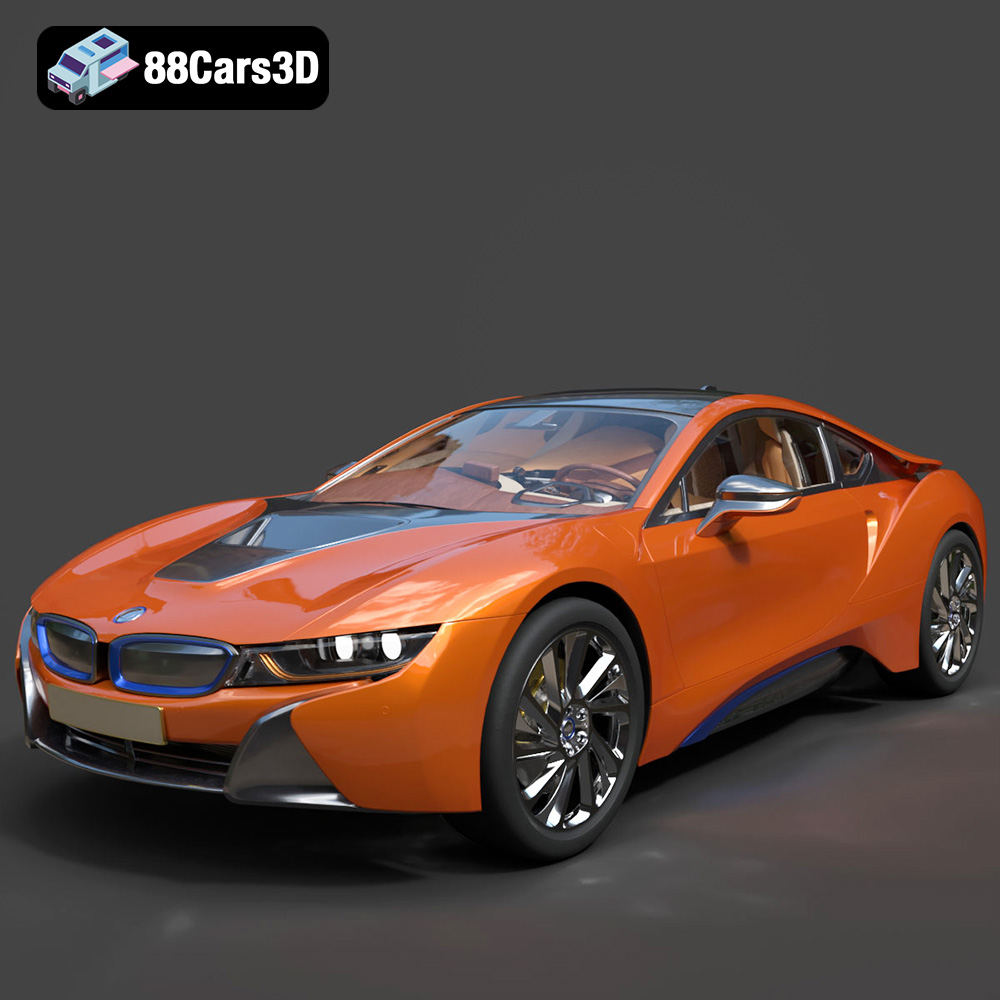
BMW i8 2015 3D Model
Texture: Yes
Material: Yes
Download the BMW i8 2015 3D Model featuring clean geometry, realistic detailing, and a fully modeled interior. Includes .blend, .fbx, .obj, .glb, .stl, .ply, .unreal, and .max formats for rendering, simulation, and game development.
Price: $12.99

BMW 4 Series F32 3D Model
Texture: Yes
Material: Yes
Download the BMW 4 Series F32 3D Model featuring clean geometry, realistic detailing, and a fully modeled interior. Includes .blend, .fbx, .obj, .glb, .stl, .ply, .unreal, and .max formats for rendering, simulation, and game development.
Price: $12.99
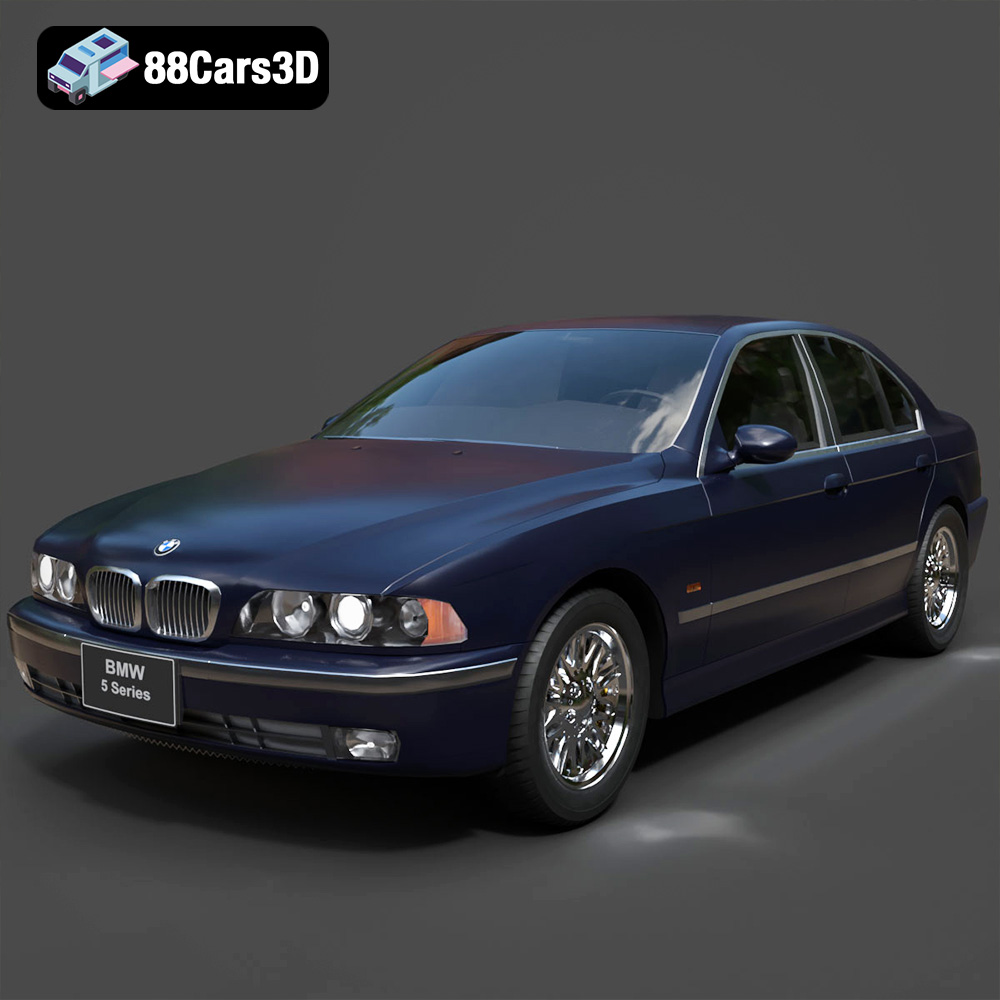
BMW E39 M5-540i 3D Model
Texture: Yes
Material: Yes
Download the BMW E39 M5-540i 3D Model featuring its iconic sedan design, detailed exterior, and realistic interior. Includes .blend, .fbx, .obj, .glb, .stl, .ply, .unreal, and .max formats for rendering, simulation, and game development.
Price: $10.79

BMW 7 Series E38 3D Model
Texture: Yes
Material: Yes
Download the BMW 7 Series E38 3D Model featuring its iconic luxury sedan design and classic aesthetics. Includes .blend, .fbx, .obj, .glb, .stl, .ply, .unreal, and .max formats for rendering, simulation, and game development.
Price: $10.79

BMW 6 Series 640i F12 3D Model
Texture: Yes
Material: Yes
Download the BMW 6 Series 640i F12 3D Model featuring a sleek design and detailed interior. Includes .blend, .fbx, .obj, .glb, .stl, .ply, .unreal, and .max formats for rendering, simulation, and game development.
Price: $10.79

BMW 6 Coupe E63 3D Model
Texture: Yes
Material: Yes
Download the BMW 6 Coupe E63 3D Model featuring a sleek design, detailed interior, and realistic exterior. Includes .blend, .fbx, .obj, .glb, .stl, .ply, .unreal, and .max formats for rendering, simulation, and game development.
Price: $10.79

BMW 5 Series Touring F11-007 3D Model
Texture: Yes
Material: Yes
Download the BMW 5 Series Touring F11-007 3D Model featuring a detailed exterior and interior. Includes .blend, .fbx, .obj, .glb, .stl, .ply, .unreal, and .max formats for rendering, simulation, and game development.
Price: $10.79

BMW 5 Series Gran Turismo F07-003 3D Model
Texture: Yes
Material: Yes
Download the BMW 5 Series Gran Turismo F07-003 3D Model featuring a detailed exterior and interior. Includes .blend, .fbx, .obj, .glb, .stl, .ply, .unreal, and .max formats for rendering, simulation, and game development.
Price: $10.79

BMW 5 Series E60 3D Model
Texture: Yes
Material: Yes
Download the BMW 5 Series E60 3D Model featuring its iconic sedan design, detailed exterior, and interior. Includes .blend, .fbx, .obj, .glb, .stl, .ply, .unreal, and .max formats for rendering, simulation, and game development.
Price: $10.79
