

Unleashing Unprecedented Detail: Revolutionizing 3D Workflows for Automotive Visualization with Unreal Engine 5’s Nanite
The quest for photorealism in real-time rendering has long been a demanding journey, especially in the automotive industry where precision and fidelity are paramount. Traditionally, 3D artists and developers faced a perpetual struggle: how to render incredibly detailed 3D car models—complete with millions of polygons, intricate interiors, and finely modeled chassis—without crippling performance. The answer often involved painstaking manual optimization, a tedious process of creating multiple Levels of Detail (LODs) and sacrificing visual integrity. This constant trade-off between visual quality and performance has been a significant bottleneck, limiting creative freedom and increasing development cycles for everything from virtual showrooms to cinematic sequences.
Enter Unreal Engine 5, a groundbreaking platform that fundamentally redefines what’s possible in real-time. At the heart of this revolution is **Nanite Virtualized Geometry**, a technology that allows artists to import and render film-quality source assets with millions or even billions of polygons directly into Unreal Engine. For automotive visualization, game development, and interactive experiences, Nanite is a paradigm shift. It liberates creators from the constraints of poly counts, empowering them to deliver unprecedented detail without manual optimization. This deep dive will explore how Nanite, combined with other powerful UE5 features, is transforming 3D workflows, offering practical insights and best practices for leveraging this technology with high-quality 3D car models, such as those found on platforms like 88cars3d.com.
The Evolution of High-Fidelity Assets and the Nanite Solution
For decades, the standard approach to managing complex 3D assets in real-time engines involved a rigorous optimization pipeline. Artists would meticulously sculpt high-polygon models, often reaching millions or even hundreds of millions of triangles, suitable for offline rendering. However, integrating these assets into a real-time environment like Unreal Engine required a drastic reduction in complexity. This process typically involved creating multiple simplified versions, or Levels of Detail (LODs), for each asset. The engine would then swap between these LODs based on the object’s distance from the camera, aiming to maintain visual quality up close while improving performance further away.
This traditional LOD workflow, while functional, was inherently inefficient and prone to visual compromises. It was a manual, time-consuming process that often led to “popping” artifacts as LODs swapped, and still struggled with scenes containing many detailed objects. Each unique LOD also added to asset management overhead and memory footprint, making large-scale, high-fidelity environments a constant battle against performance budgets. Automotive models, with their complex curves, detailed dashboards, and intricate mechanical components, were particularly challenging, often requiring dozens of meticulously crafted LODs just for a single vehicle.
The Bottleneck of Traditional LOD Systems
Before Nanite, managing high-fidelity 3D car models, which inherently boast millions of polygons to capture every nuanced curve and panel gap, was a significant challenge. Artists would typically model a pristine, high-resolution version (often tens of millions of polygons) and then use tools to automatically or manually generate several lower-resolution LODs. For example, a car might have LOD0 (full detail, 5M polys), LOD1 (medium detail, 1M polys), LOD2 (low detail, 200k polys), and LOD3 (simplified, 50k polys).
The engine would then render the appropriate LOD based on screen size. While this approach helped manage performance, it presented several drawbacks:
- Increased Development Time: Creating and managing multiple LODs for every asset was a tedious and time-consuming process.
- Visual Discrepancies: LOD transitions could be noticeable, leading to “popping” artifacts that broke immersion.
- Draw Call Overload: Even with LODs, a scene with many complex objects could still generate an overwhelming number of draw calls, bogging down the CPU.
- Memory Footprint: Storing all those LODs for every unique asset significantly increased project size and memory usage.
This meant that achieving truly cinematic quality in real-time was often out of reach for projects that couldn’t afford the immense time and resources required for manual optimization.
How Nanite Revolutionizes Geometry Management
Nanite fundamentally rethinks how geometry is processed and rendered. Instead of traditional LODs, Nanite virtualizes geometry, allowing Unreal Engine 5 to render incredibly complex meshes (millions or even billions of triangles) in real-time with virtually no loss in fidelity. It achieves this through a highly efficient, cluster-based rendering system that streams and processes only the necessary detail for each pixel on screen.
Here’s a simplified breakdown of how Nanite works:
- Mesh Simplification and Clustering: When an asset is imported and Nanite is enabled, the engine automatically converts the mesh into a hierarchical structure of tiny triangle clusters.
- On-Demand Streaming: At runtime, Nanite intelligently determines which clusters are visible and what level of detail is required for each pixel. Only the necessary clusters are streamed from disk and processed by the GPU.
- Detail Preservation: Unlike traditional LODs, Nanite maintains the full resolution of the original asset. The simplification happens at render-time, on a per-pixel basis, ensuring that every detail is preserved when viewed up close, but efficiently culled when distant.
- Reduced Draw Calls: Nanite significantly reduces CPU overhead by batching geometry efficiently, resulting in a dramatic reduction in draw calls compared to traditional methods.
This revolutionary approach means that artists can now focus on creating the highest quality 3D car models without worrying about poly count limitations, enabling unparalleled visual fidelity for automotive visualization and real-time experiences. For more in-depth technical details on Nanite, refer to the official Unreal Engine documentation at https://dev.epicgames.com/community/unreal-engine/learning.
Integrating High-Quality 3D Car Models with Nanite in Unreal Engine
Bringing your meticulously crafted 3D car models into Unreal Engine 5 with Nanite is a straightforward process, but understanding the nuances can greatly enhance your workflow. The goal is to leverage Nanite’s power to maintain every curve and surface detail of your high-fidelity assets while ensuring optimal performance. Marketplaces like 88cars3d.com specialize in providing highly detailed 3D car models that are often already optimized for game engine compatibility while retaining exceptional geometric quality, making them ideal candidates for Nanite integration.
Once imported, the real magic begins in configuring the materials to truly bring the vehicle to life. Photorealistic rendering relies heavily on Physically Based Rendering (PBR) principles, where materials accurately simulate how light interacts with real-world surfaces. For car models, this means carefully crafting textures and material graphs for everything from glossy paint finishes and reflective chrome to textured tires and intricate interior fabrics. Nanite handles the geometry, but PBR materials provide the crucial visual authenticity, ensuring your automotive visualizations are indistinguishable from reality.
Importing and Enabling Nanite for Automotive Assets
The process begins with importing your high-quality 3D car model into Unreal Engine 5. Most professional 3D car models, including those from 88cars3d.com, are typically provided in `.FBX` or `.USD` (Universal Scene Description) formats. USD is increasingly becoming the preferred format due to its ability to handle complex scene hierarchies, variants, and material assignments robustly, making it excellent for collaborative pipelines and asset management.
When importing your mesh, ensure you select the **”Build Nanite”** option in the import dialog. If you forget this during import, you can easily enable Nanite later within the Static Mesh Editor:
- Open the Static Mesh Editor for your imported car model (double-click the mesh in the Content Browser).
- In the Details panel, under the “Nanite Settings” section, check the “Enable Nanite” box.
- Adjust the “Preserve Area” setting if necessary. This controls how aggressively Nanite simplifies geometry at distance; a lower value will allow for more aggressive simplification. For automotive models, you generally want to preserve high detail, so keeping this around the default or slightly higher is often best.
- Compile shaders if prompted.
It’s important to note that Nanite works best with **Static Meshes**. Dynamic objects that move or deform significantly, skinned meshes (like characters), or meshes with masked/translucent materials currently have limitations with direct Nanite support, although workarounds and future updates are continually improving these aspects. For the static body and interior components of a car, Nanite is perfect.
Crafting Realistic PBR Materials for Nanite-enabled Vehicles
While Nanite handles the geometry, realistic PBR materials are crucial for achieving visual fidelity. Car paint, in particular, requires a sophisticated setup to capture its unique metallic flakes, clear coat reflections, and subsurface scattering characteristics.
Here’s a breakdown of essential PBR material components for an automotive asset in Unreal Engine:
- Base Color: This texture defines the diffuse color of the surface. For car paint, this might be a solid color or a subtle gradient.
- Normal Map: Essential for adding fine surface details like panel lines, scratches, or fabric weaves without adding extra geometry.
- Roughness Map: Controls the specularity and blurriness of reflections. A low roughness value results in sharp, mirror-like reflections (e.g., polished chrome), while a high value leads to diffuse, matte surfaces (e.g., rubber tires).
- Metallic Map: Defines whether a material is a metal (white) or a dielectric (black). Car paint often uses a subtle metallic value to simulate metallic flakes, while chrome is fully metallic.
- Specular Map: While PBR often derives specular from Base Color and Metallic, a dedicated Specular map can provide finer control for certain materials.
- Clear Coat (Unreal Engine Specific): This is vital for realistic car paint. Unreal Engine’s Material Editor has a dedicated Clear Coat input that simulates an additional transparent layer over the base material. You can control its roughness, normal, and tint. This is where you get that deep, glossy, reflective finish typical of car bodies.
Texture resolutions are key. For close-up automotive visualization, 4K (4096×4096) or even 8K textures for critical components like the car body or dashboard are often necessary to prevent pixelation. Ensure your UV mapping is clean and non-overlapping for optimal texture projection, a standard feature of high-quality models found on 88cars3d.com.
Optimizing Automotive Visualization with Nanite and Lumen
With Nanite taking care of your complex geometry, the next frontier in achieving stunning automotive visualization in Unreal Engine 5 is mastering its dynamic global illumination and reflection systems: Lumen and Ray Tracing. These technologies work in concert with Nanite to create environments where light behaves realistically, bouncing off surfaces, illuminating interiors, and producing breathtaking reflections on glossy car bodies. The combination of Nanite’s detail and Lumen’s lighting fidelity means your 3D car models will look their absolute best, reacting dynamically to every change in the environment, which is crucial for interactive experiences and product showcasing.
However, realizing this level of realism requires thoughtful configuration. Balancing performance with visual quality for Lumen and Ray Tracing can be intricate, particularly when dealing with the highly reflective and metallic surfaces common in automotive design. Understanding how these systems interact with your scene, how to optimize their settings, and when to augment them with traditional lighting techniques will be essential for producing truly captivating and performant real-time automotive visualizations.
Harnessing Lumen for Dynamic Global Illumination
Lumen is Unreal Engine 5’s fully dynamic global illumination and reflections system, providing incredibly realistic lighting that reacts in real-time to changes in light sources, geometry, and materials. For automotive visualization, Lumen is a game-changer:
- Realistic Light Bounce: Lumen accurately simulates indirect lighting, meaning light bounces off the road surface, hits the underside of the car, and illuminates shaded areas of the interior. This adds a level of realism impossible with static lightmaps or simpler GI solutions.
- Dynamic Environments: As you move the car, change the time of day, or open car doors, Lumen immediately updates the global illumination, creating a highly interactive and believable experience. This is invaluable for virtual showrooms and configurators.
- Interior Illumination: Car interiors, often complex and occluded, benefit immensely from Lumen. Light entering through windows will accurately bounce around the cabin, illuminating materials and details that would otherwise appear flat.
To enable Lumen, ensure it’s selected as your Global Illumination and Reflections method in your Project Settings under “Engine > Rendering.” You’ll typically want to use Hardware Ray Tracing for Lumen if your target platform supports it, as it offers the highest quality. However, Lumen also has software ray tracing fallback for broader compatibility. Properly configured Lumen ensures that the detailed geometry brought in by Nanite is lit in the most convincing way possible.
Advanced Lighting and Reflection Techniques for Automotive Realism
While Lumen provides excellent dynamic global illumination, achieving peak automotive realism often involves augmenting it with specific reflection and lighting techniques:
- Ray Tracing Reflections: For the sharp, mirror-like reflections on car paint, chrome, and glass, enabling Hardware Ray Tracing for reflections is paramount. This ensures accurate reflections of objects outside the screen space, crucial for depicting the environment around the vehicle realistically. Configure this in Project Settings and ensure Ray Tracing is enabled in your Post Process Volume.
- HDRI Backdrops: Using High Dynamic Range Image (HDRI) panoramas as environment cubemaps provides both realistic sky lighting and detailed background reflections. Import a high-resolution HDRI and apply it to a Sky Sphere or an HDRI Backdrop actor. Lumen will integrate this lighting beautifully.
- Area Lights and Light Functions: Beyond directional lights (for sun) and skylights (for ambient sky), use Rect Lights or Spot Lights to simulate studio lighting setups. For example, large area lights can mimic softbox lighting for product shots. Light functions can add projected textures or patterns to your lights, simulating specific light sources or shadows.
- Environment Captures: While Lumen handles global reflections, strategically placed Reflection Capture Actors can still be useful for fine-tuning reflections on specific surfaces or in areas where Lumen’s performance might be optimized for broader GI. For instance, a Box Reflection Capture might be beneficial for a highly localized, enclosed space within a scene.
Remember that performance can be a concern with high-quality Ray Tracing. Use the “r.RayTracing.Reflections.MaxRoughness” console variable to limit ray-traced reflections to very smooth surfaces, letting Lumen handle rougher ones, thereby optimizing performance without significant visual loss for most materials.
Nanite in Interactive Experiences: Configurators and Virtual Production
The synergy between Nanite’s geometric fidelity and Unreal Engine’s interactivity features unlocks powerful possibilities for automotive applications beyond linear cinematics. Imagine a virtual car configurator where customers can explore every detail of a vehicle, customize options, and see real-time photorealistic updates, all driven by high-poly models. Or consider virtual production workflows where real-time rendered cars are integrated seamlessly onto LED stages, providing immediate visual feedback for filmmakers. Nanite is a cornerstone for these experiences, ensuring that the visual quality remains uncompromised regardless of how close the camera gets or how many options are being swapped.
This section delves into how Nanite enables these advanced interactive and cinematic workflows. We’ll explore using Unreal Engine’s Blueprint visual scripting to create dynamic configurators, allowing users to switch colors, materials, and even components on a detailed 3D car model without performance hiccups. Furthermore, we’ll examine how Nanite integrates into virtual production pipelines, enhancing the quality of real-time visualizations for film, advertising, and broadcast, and how Sequencer can be used to choreograph stunning automotive cinematics with unparalleled detail.
Building Interactive Automotive Configurators with Blueprint
Automotive configurators are a prime application for Nanite-enabled assets. Customers expect to see every detail of their potential purchase, from the stitching on the seats to the intricate design of the alloy wheels. Blueprint visual scripting makes it possible to create highly interactive experiences without writing a single line of code.
Here’s how Blueprint can leverage Nanite-enabled car models:
- Material Swaps: Create an array of material instances for different car paint colors, interior trims, or wheel finishes. Use Blueprint to allow users to select an option from a UI widget, then dynamically set the material on the relevant Nanite mesh component. Since Nanite handles the geometry, the high detail of the car remains consistent.
- Part Swaps: For changing elements like wheels, spoilers, or even entire body kits, you can have multiple Nanite-enabled Static Mesh assets. Blueprint can toggle the visibility of different components based on user selection. For example, clicking a “Sport Wheels” button would hide the default wheels and show the sport wheel Nanite mesh.
- Camera Controls: Implement camera logic in Blueprint to allow users to orbit, zoom, and pan around the vehicle, or even jump to predefined “beauty shots” of specific features. Ensure smooth transitions and intuitive controls.
- UI Integration: Design intuitive UI elements (buttons, sliders, dropdowns) using Unreal Motion Graphics (UMG) and connect them to your Blueprint logic to drive material and mesh changes.
- Real-time Feedback: Thanks to Nanite and Lumen, all these changes occur instantly and with photorealistic lighting, providing immediate, high-fidelity feedback to the user, enhancing engagement and immersion.
With Nanite, you no longer need to worry about the poly count of each individual car part when creating variations; you can simply swap between high-fidelity versions, focusing on the visual design rather than aggressive optimization.
Leveraging Nanite for Virtual Production & Cinematic Content with Sequencer
Virtual production workflows, especially those involving LED walls for real-time environments, are seeing immense benefits from Nanite. High-detail 3D car models can be integrated seamlessly into virtual sets, allowing filmmakers and advertisers to see their products in context, on set, with accurate lighting and reflections.
Key applications and techniques include:
- On-Set Visualization: Displaying Nanite-enabled car models on large LED screens provides directors, cinematographers, and clients with real-time, photorealistic feedback on compositions, lighting, and camera moves. The sheer detail Nanite provides makes these virtual cars indistinguishable from real ones under the right conditions.
- Cinematic Content with Sequencer: Unreal Engine’s Sequencer is a powerful non-linear editor for creating cinematic sequences, animations, and high-quality renders.
- Camera Animation: Use Sequencer to choreograph intricate camera movements around your Nanite car models, showcasing their design details.
- Object Animation: Animate doors opening, wheels turning, or custom parts deploying, all while maintaining the full geometric fidelity.
- Lighting & VFX: Keyframe changes in lighting (e.g., simulating day-night cycles with Lumen) or trigger Niagara particle effects (e.g., dust, smoke) alongside your vehicle animations.
- High-Resolution Renders: Output stunning 4K or even 8K image sequences for marketing materials, commercials, or film pre-visualization, leveraging Nanite’s detail and Lumen/Ray Tracing’s realism.
- Live Compositing: For live broadcasts or virtual events, Nanite’s performance and detail enable real-time compositing of highly detailed car models into live camera feeds, providing unmatched realism for virtual showrooms or product launches.
The combination of Nanite’s virtually limitless poly count and Sequencer’s robust animation tools means creative professionals can craft automotive content with unprecedented visual quality and flexibility, revolutionizing traditional production pipelines. Further information on Sequencer and virtual production workflows can be found in the Unreal Engine learning resources at https://dev.epicgames.com/community/unreal-engine/learning.
Performance Considerations and Best Practices for Nanite-driven Projects
While Nanite dramatically simplifies the process of rendering high-polygon meshes, it’s not a magic bullet that negates all performance considerations. Understanding how Nanite operates under the hood and implementing best practices is crucial for ensuring your automotive visualization projects run smoothly, especially when integrating multiple high-fidelity 3D car models and complex environments. Performance optimization shifts from managing poly counts and draw calls to managing Nanite’s unique resource consumption and rendering characteristics.
Effective utilization of Nanite requires a mindful approach to asset creation, scene construction, and engine configuration. Even with Nanite handling billions of triangles, factors like texture resolution, material complexity, Lumen settings, and the number of non-Nanite objects in your scene can still impact your frame rate and memory footprint. This section will delve into the nuances of Nanite’s performance, providing actionable strategies to keep your automotive projects both stunning and performant.
Understanding Nanite’s Performance Footprint
Nanite’s strength lies in its ability to vastly reduce CPU overhead by minimizing draw calls and handling geometry streaming efficiently. However, this doesn’t mean it’s free. It shifts the computational burden primarily to the **GPU**.
Key performance aspects to consider:
- GPU Bound: Nanite is highly GPU-bound. Its pixel-level detail selection means that filling pixels on screen is the dominant cost. If your scene has many Nanite meshes visible at high detail, your GPU will be working hard.
- Memory Usage: While Nanite streams geometry on demand, the initial data still needs to be stored. Billions of triangles still consume disk space and can impact streaming budgets. Furthermore, high-resolution textures (4K, 8K) for PBR materials will contribute significantly to GPU memory usage.
- Non-Nanite Limitations: Nanite currently has limitations with certain types of geometry:
- Masked/Translucent Materials: Meshes with masked or translucent materials (e.g., car windows, headlights, grills with transparent elements) do not currently render as Nanite. They revert to traditional rasterization, which means their poly count *does* matter. For highly detailed car grills, you might need to manually create LODs or simplify the mesh that uses masked materials.
- Skinned Meshes: Character animations or meshes that deform are not directly supported by Nanite.
- Dynamic/Moving Objects: While Nanite meshes *can* move, the cost of updating their virtualized geometry representation can be higher for rapidly moving or deforming objects compared to static ones.
- Overdraw: Like any rasterizer, Nanite can suffer from overdraw if many layers of geometry are stacked directly behind each other, causing the GPU to render pixels multiple times.
Profiling your project with tools like the Unreal Engine Profiler and GPU Visualizer is essential to identify bottlenecks and understand where your resources are being spent.
Strategic Optimization for Large-Scale Automotive Scenes
Even with Nanite, strategic optimization is vital for complex automotive projects involving multiple high-detail vehicles and rich environments.
Here are some best practices:
- Limit Nanite Usage Strategically: While you can Nanite-enable almost anything, consider if every single mesh truly benefits. For very simple objects with low polygon counts, the overhead of Nanite might not be worth it.
- Manage Non-Nanite Assets: Pay close attention to assets that cannot be Nanite-enabled (masked materials, small props) and optimize them aggressively with traditional LODs. For car windows and headlights, use simpler geometry and rely on excellent material work.
- Texture Optimization: While you can use high-resolution textures, ensure they are streamed efficiently. Use texture atlases where appropriate, and configure texture streaming settings in the Project Settings to balance quality and memory. Use appropriate compression settings for your textures.
- Cull Distance: Utilize Nanite’s custom cull distance feature for meshes that are not critical at extreme distances. In the Static Mesh Editor, under Nanite Settings, you can set a “Max Distance” at which the Nanite mesh will be completely culled.
- Material Complexity: Keep your Material Editor graphs as efficient as possible. Complex material calculations (especially those involving many texture lookups or intricate math) can still be a performance bottleneck, regardless of Nanite.
- Lumen & Ray Tracing Settings: Fine-tune Lumen’s quality settings and the number of ray tracing bounces in your Project Settings and Post Process Volume. Lowering these can significantly improve performance with minimal visual degradation if done carefully.
- Occlusion Culling: Ensure your scene geometry provides good occlusion. Objects completely hidden behind others will be culled by the engine, regardless of Nanite, saving rendering resources.
- Profile and Iterate: Regularly profile your project. Use console commands like `stat unit`, `stat gpu`, `stat rhi` to quickly check performance. The `r.Nanite.Visualize` commands (e.g., `r.Nanite.Visualize 1` for clusters, `r.Nanite.Visualize 2` for overdraw) are invaluable for understanding Nanite’s behavior and identifying areas for optimization.
By combining Nanite’s power with smart optimization practices, you can create breathtakingly detailed automotive experiences that run smoothly on your target hardware.
Beyond Nanite: A Holistic Approach to Ultimate Automotive Realism
While Nanite provides the foundational geometric fidelity, achieving truly ultimate automotive realism in Unreal Engine 5 requires a holistic approach, integrating Nanite with a suite of other advanced features. The visual spectacle of a photorealistic car is not just about its perfectly rendered body; it’s about how it interacts with its environment, how dynamic elements behave, and how it’s presented in a final, polished form. From simulating realistic physics and environmental effects to generating pristine offline renders and optimizing for emerging platforms like AR/VR, every component plays a role in creating a believable and immersive experience.
This final section explores how to combine Nanite’s power with other cutting-edge Unreal Engine 5 technologies. We’ll look at how Chaos Physics can add realistic vehicle dynamics and destruction, how Niagara can generate stunning visual effects, and how the Path Tracer can produce offline-quality renders. Furthermore, we’ll discuss the critical considerations for adapting these high-fidelity automotive assets for performance-sensitive platforms like AR/VR, emphasizing the importance of well-optimized source models from marketplaces like 88cars3d.com for building these diverse experiences.
Integrating Physics, VFX, and Advanced Rendering
A truly immersive automotive experience extends beyond static beauty. It requires dynamic interaction and stunning visual embellishments.
- Chaos Physics for Vehicle Dynamics and Destruction: Unreal Engine’s Chaos physics engine allows for robust vehicle simulations, including suspension, tire friction, and even advanced destruction. While Nanite itself doesn’t directly interact with dynamic physics for runtime deformation, you can use Chaos to drive the movement and interaction of your Nanite-enabled vehicles with the environment. For destructible assets, you would typically use non-Nanite meshes or pre-fractured models, but their surroundings can still be Nanite.
- Niagara for Visual Effects: Niagara is Unreal Engine’s powerful next-generation particle system. Use it to add dynamic visual effects to your automotive scenes:
- Dust and Smoke: Simulate realistic tire smoke, exhaust fumes, or kicked-up dust with Niagara, reacting to vehicle movement and environmental conditions.
- Rain and Water Splashes: Create dynamic rain effects on the car body and splashes as it drives through puddles.
- Sparks and Debris: If simulating collisions, Niagara can generate sparks, flying debris, and other impactful visual feedback.
- The Path Tracer for Pristine Renders: For truly uncompromising, offline-quality renders of your Nanite-enabled vehicles, Unreal Engine’s built-in Path Tracer is invaluable. It provides unbiased, physically accurate renders with global illumination, reflections, and refractions that are comparable to traditional offline renderers like V-Ray or Octane. While not real-time, it’s perfect for generating marketing stills, high-resolution product shots, and cinematic frames with ultimate fidelity directly within the engine.
These features, when combined, create a rich and believable automotive environment that enhances the visual impact of your Nanite-driven car models.
Future-Proofing for AR/VR and Emerging Platforms
The automotive industry is rapidly adopting Augmented Reality (AR) and Virtual Reality (VR) for design reviews, interactive showrooms, and training. While Nanite is a massive leap for fidelity, AR/VR platforms often have stringent performance requirements that necessitate further optimization.
Key considerations for AR/VR:
- Performance Budgets: Even with Nanite, AR/VR experiences demand high, stable frame rates (typically 90 FPS or higher) to prevent motion sickness. This often means carefully balancing Lumen quality, shadow complexity, and overall scene density.
- Texture Optimization: Focus on efficient texture streaming and appropriate resolutions. While 8K textures look great on a monitor, they might be overkill and memory-intensive for mobile VR headsets.
- Non-Nanite Optimization: As discussed, transparent materials (windows, headlights) and masked materials (grills) don’t get Nanite’s full benefits. For AR/VR, these elements must be heavily optimized with traditional LODs and efficient shaders.
- Material Complexity: Simplify material graphs where possible, especially for mobile AR/VR, to reduce shader complexity.
- Occlusion and Culling: Maximize occlusion culling and manual distance culling for distant objects to minimize rendering costs.
- USD/USDZ for Interoperability: The Universal Scene Description (USD) format, and its mobile-friendly variant USDZ, is becoming a standard for AR/VR content. Using USD for your automotive assets ensures maximum interoperability across different platforms and tools. High-quality automotive assets, such as those found on 88cars3d.com, often come with clean USD structures, making them ideal for these workflows.
By understanding these nuances and leveraging the robust features of Unreal Engine 5 alongside a strategic optimization mindset, developers can future-proof their automotive visualizations, making them ready for the immersive experiences of tomorrow.
Conclusion: The Dawn of Unrestricted Automotive Realism
Unreal Engine 5, powered by Nanite Virtualized Geometry, marks a pivotal moment for automotive visualization and real-time rendering. The traditional shackles of poly count limitations and the tedious process of manual LOD creation have largely been lifted, ushering in an era where creative vision can be translated directly into high-fidelity real-time experiences. Artists and developers are now empowered to integrate film-quality 3D car models, brimming with intricate details, directly into their projects without the performance compromises that once plagued the industry.
From crafting breathtaking marketing cinematics with Sequencer to building highly interactive automotive configurators with Blueprint, Nanite ensures that every curve, every reflection, and every interior stitch on your vehicle models is rendered with unprecedented precision. When combined with dynamic global illumination from Lumen, physically accurate reflections from Ray Tracing, and advanced visual effects from Niagara, the result is an immersive and photorealistic experience that was once the exclusive domain of offline renderers.
This revolution simplifies workflows, accelerates development, and ultimately pushes the boundaries of what’s possible in automotive design, marketing, and interactive engagement. By sourcing high-quality, cleanly optimized 3D car models from platforms like 88cars3d.com and strategically integrating them with Nanite and other UE5 features, you’re not just creating visualizations; you’re building next-generation interactive realities. Embrace Nanite, and unlock a new dimension of unrestricted automotive realism in your Unreal Engine projects.
Featured 3D Car Models
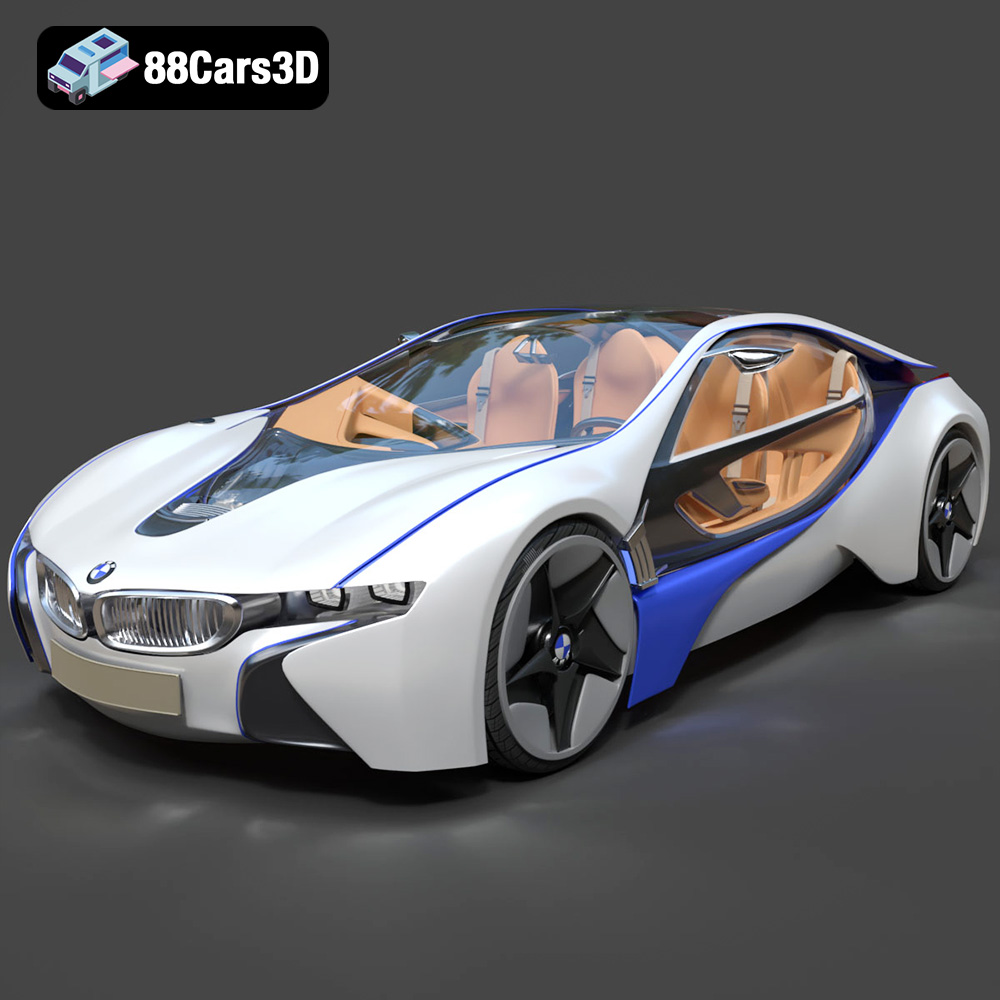
BMW Vision Effecient Dynamics-007 3D Model
Texture: Yes
Material: Yes
Download the BMW Vision Effecient Dynamics-007 3D Model featuring a sleek, futuristic design and hybrid concept aesthetics. Includes .blend, .fbx, .obj, .glb, .stl, .ply, .unreal, and .max formats for rendering, simulation, and game development.
Price: $14.99
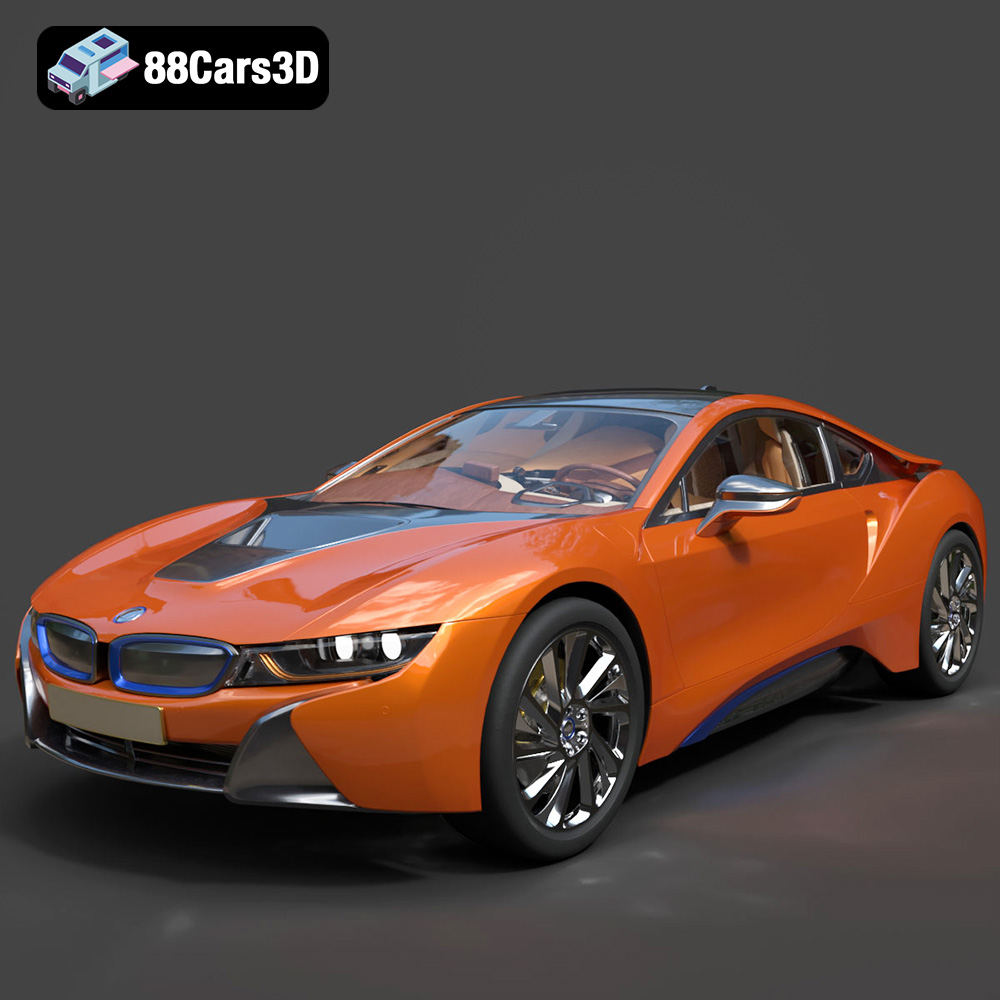
BMW i8 2015 3D Model
Texture: Yes
Material: Yes
Download the BMW i8 2015 3D Model featuring clean geometry, realistic detailing, and a fully modeled interior. Includes .blend, .fbx, .obj, .glb, .stl, .ply, .unreal, and .max formats for rendering, simulation, and game development.
Price: $12.99

BMW 4 Series F32 3D Model
Texture: Yes
Material: Yes
Download the BMW 4 Series F32 3D Model featuring clean geometry, realistic detailing, and a fully modeled interior. Includes .blend, .fbx, .obj, .glb, .stl, .ply, .unreal, and .max formats for rendering, simulation, and game development.
Price: $12.99
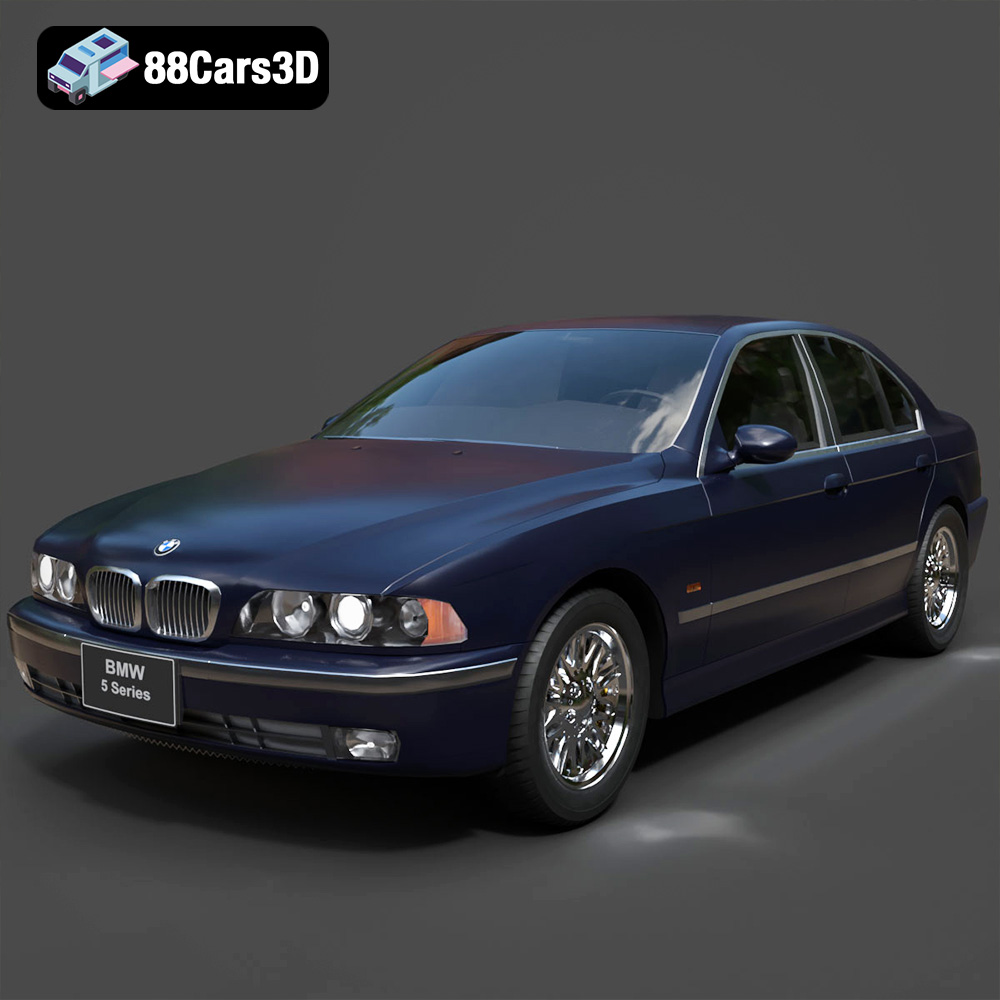
BMW E39 M5-540i 3D Model
Texture: Yes
Material: Yes
Download the BMW E39 M5-540i 3D Model featuring its iconic sedan design, detailed exterior, and realistic interior. Includes .blend, .fbx, .obj, .glb, .stl, .ply, .unreal, and .max formats for rendering, simulation, and game development.
Price: $10.79

BMW 7 Series E38 3D Model
Texture: Yes
Material: Yes
Download the BMW 7 Series E38 3D Model featuring its iconic luxury sedan design and classic aesthetics. Includes .blend, .fbx, .obj, .glb, .stl, .ply, .unreal, and .max formats for rendering, simulation, and game development.
Price: $10.79

BMW 6 Series 640i F12 3D Model
Texture: Yes
Material: Yes
Download the BMW 6 Series 640i F12 3D Model featuring a sleek design and detailed interior. Includes .blend, .fbx, .obj, .glb, .stl, .ply, .unreal, and .max formats for rendering, simulation, and game development.
Price: $10.79

BMW 6 Coupe E63 3D Model
Texture: Yes
Material: Yes
Download the BMW 6 Coupe E63 3D Model featuring a sleek design, detailed interior, and realistic exterior. Includes .blend, .fbx, .obj, .glb, .stl, .ply, .unreal, and .max formats for rendering, simulation, and game development.
Price: $10.79
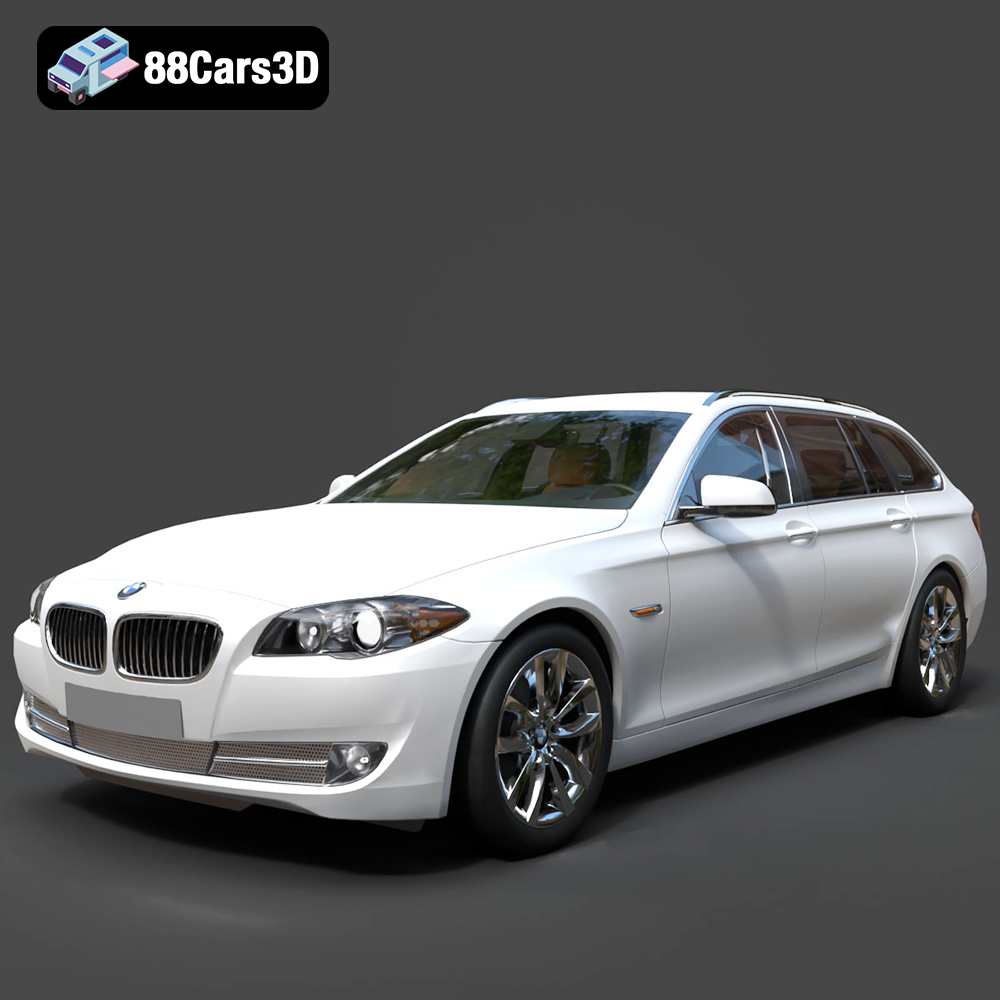
BMW 5 Series Touring F11-007 3D Model
Texture: Yes
Material: Yes
Download the BMW 5 Series Touring F11-007 3D Model featuring a detailed exterior and interior. Includes .blend, .fbx, .obj, .glb, .stl, .ply, .unreal, and .max formats for rendering, simulation, and game development.
Price: $10.79
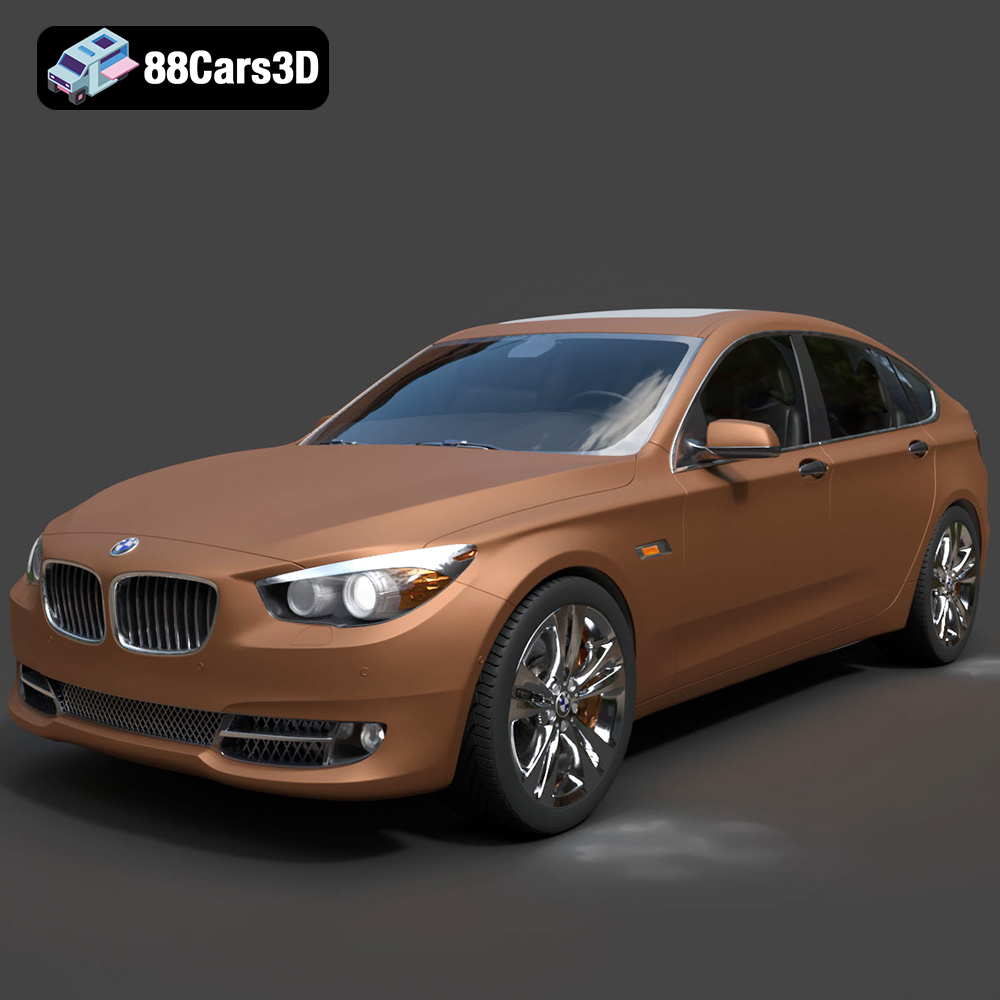
BMW 5 Series Gran Turismo F07-003 3D Model
Texture: Yes
Material: Yes
Download the BMW 5 Series Gran Turismo F07-003 3D Model featuring a detailed exterior and interior. Includes .blend, .fbx, .obj, .glb, .stl, .ply, .unreal, and .max formats for rendering, simulation, and game development.
Price: $10.79
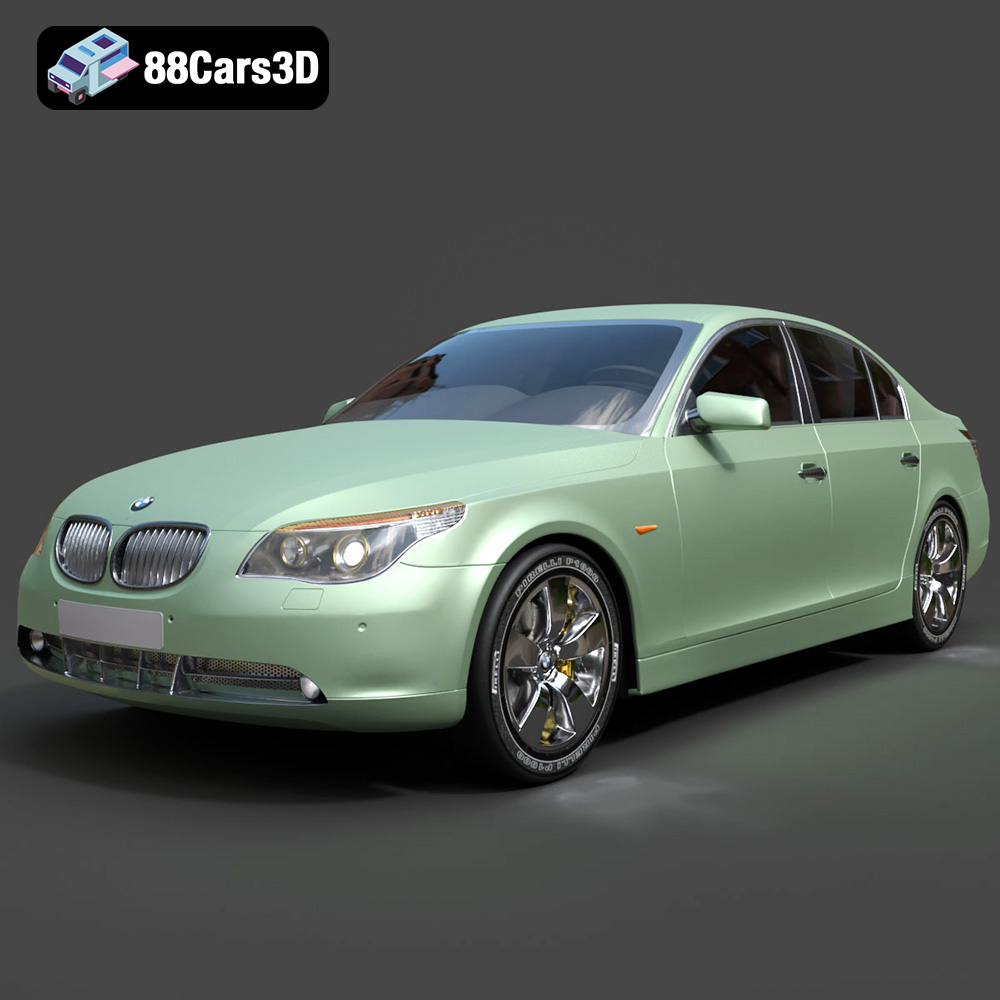
BMW 5 Series E60 3D Model
Texture: Yes
Material: Yes
Download the BMW 5 Series E60 3D Model featuring its iconic sedan design, detailed exterior, and interior. Includes .blend, .fbx, .obj, .glb, .stl, .ply, .unreal, and .max formats for rendering, simulation, and game development.
Price: $10.79
