

Mastering the Print: A Deep Dive into Polygon 3D Models and STL Conversion for High-Quality 3D Prints
The world of 3D printing is a fascinating blend of digital design and physical creation. At its heart, the journey from a virtual object to a tangible print relies heavily on file formats. While many 3D modeling software packages can export in a plethora of formats, the undisputed king for 3D printing is the STL (Stereolithography) file. If you’ve ever marveled at the intricate details of a 3D printed car model, or if you’re looking to bring your own automotive designs to life, understanding how to work with and prepare polygon-based 3D models for STL conversion is a crucial skill. This article will guide you through the technical intricacies of polygon meshes, the STL format, and the essential steps involved in converting your digital creations into print-ready STL files, ensuring flawless results every time. We’ll cover everything from mesh integrity and manifoldness to slicing parameters and printer settings, empowering you to achieve professional-grade prints.
Understanding the Foundation: Polygon Meshes and the STL Format
Before we dive into the conversion process, it’s vital to grasp the fundamental building blocks: polygon meshes and the STL file format. Most 3D modeling software, whether for sculpting, CAD, or animation, utilizes polygon meshes to define the shape of a 3D object. These meshes are essentially a collection of vertices (points in 3D space), edges (lines connecting vertices), and faces (typically triangles or quadrilaterals) that form the surface of the model. Think of it like building a sculpture out of tiny, flat geometric shapes – the more shapes you use, and the smaller they are, the smoother and more detailed your sculpture will appear.
The STL file format, originally developed for stereolithography 3D printers, is a deceptively simple yet powerful representation of these polygon meshes. An STL file describes the surface geometry of a 3D object without any color, texture, or material information. It’s essentially a list of triangular facets, each defined by a normal vector (indicating which way the triangle’s surface faces) and the coordinates of its three vertices. This simplicity is its strength for 3D printing, as most slicer software can easily interpret this data to generate toolpaths for the printer. However, this simplicity also means that not all 3D models can be directly converted to a valid STL file without issues.
The Anatomy of a Polygon Mesh
At the core of any polygon model are its vertices, edges, and faces. Vertices are the fundamental data points defining locations in 3D space. Edges connect these vertices, forming the boundaries of the faces. Faces, most commonly triangles in STL, are the planes that define the surface of the model. The arrangement and connectivity of these elements are critical. A well-constructed mesh will have consistent face orientations (all normals pointing outwards, for instance) and connected edges, forming a continuous surface.
STL: A Triangle’s Tale
The STL format is exclusively composed of triangles. Even if your original model was built with quads or other polygons, the conversion process typically tessellates these into triangles. Each triangle in an STL file has three vertices, and the order in which these vertices are listed is important as it defines the direction of the triangle’s normal vector. This normal vector is crucial for slicers to determine the ‘outside’ of the model and ensure proper shell formation during printing. In binary STL files, this information is stored compactly, while ASCII STL files are human-readable but much larger.
Ensuring Mesh Integrity: The Path to a Print-Ready Model
The success of your 3D print often hinges on the quality of your STL file. A “dirty” or improperly formed mesh can lead to a cascade of printing problems, from failed layers and gaps to completely unprintable models. This is why thoroughly checking and repairing your mesh before conversion is a non-negotiable step. For hobbyists and professionals alike, especially when working with complex models from diverse sources, understanding mesh integrity is paramount. For instance, when downloading highly detailed printable car models from platforms like 88cars3d.com, you’re often getting files that have already undergone significant optimization, but understanding these principles will help you work with any 3D model effectively.
The most common issues that plague polygon meshes destined for 3D printing include holes, non-manifold geometry, inverted normals, and intersecting faces. Holes are literally gaps in the surface, preventing the printer from forming a solid shell. Non-manifold geometry refers to edges or vertices that are shared by more than two faces, or faces that meet at an edge but don’t form a continuous surface. This is problematic because slicers struggle to determine which side of the surface is ‘inside’ and which is ‘outside’. Inverted normals, where a face’s normal vector points inward instead of outward, can also confuse slicers and lead to hollow or improperly formed sections. Intersecting faces can create internal geometry that shouldn’t exist, leading to unpredictable slicing results.
Identifying and Fixing Holes
Holes are arguably the most frequent issue. They can occur from errors in modeling, export/import processes, or even during Boolean operations. Most 3D modeling software and dedicated mesh repair tools have functions to detect and fill holes. In software like Blender, you can enter Edit Mode, select all vertices, and then use the “Mesh” -> “Clean Up” -> “Fill Holes” option. For more complex holes, manual vertex and edge manipulation might be required to bridge the gaps cleanly. When dealing with detailed models, ensuring that small holes that might be intentional design elements (like exhaust pipes) are handled correctly is also important.
Dealing with Non-Manifold Geometry
Non-manifold geometry is a trickier beast. In Blender, you can select non-manifold geometry via “Select” -> “Select All by Trait” -> “Non Manifold”. Common issues include internal faces, zero-area faces, and edges shared by more than two faces. Repairing these often involves deleting problematic faces, merging vertices, and re-establishing correct face connectivity. Tools like Meshmixer or Netfabb are exceptionally powerful for automatically detecting and repairing non-manifold errors, often with just a few clicks. For example, Meshmixer’s “Inspector” tool can identify and offer automatic fixes for many common mesh defects.
Normal Vector Correction
Ensuring all faces have outward-pointing normal vectors is critical. In Blender, you can visualize normals (enable “Face Orientation” overlay in the viewport). Blue indicates outward-facing normals, while red indicates inward-facing ones. You can select problematic faces and use “Mesh” -> “Normals” -> “Flip” to correct them. Again, automated tools like Meshmixer’s “Inspector” or Netfabb’s “Make Manifold” can often resolve normal issues automatically as part of a broader mesh repair process.
The Conversion Workflow: From Polygon Model to STL
Once your polygon model is clean and watertight, the conversion to STL is usually straightforward. The process involves exporting the model from your 3D modeling software in the STL format. However, even during this export process, there are settings that can significantly impact the quality and printability of the resulting STL file. The key is to strike a balance between file size, mesh detail, and printability. For complex models, such as those found on marketplaces like 88cars3d.com, optimizing the tessellation is crucial to maintain detail without creating excessively large files that are cumbersome to process and slice.
The core of the conversion process lies in how the modeling software tessellates its internal representation of the model into triangles for the STL format. Many software packages offer options to control the level of detail during export. For instance, you might have sliders or numerical inputs for deviation, angle tolerance, or polygon count. A lower deviation or tolerance means more triangles will be generated, resulting in a smoother surface but a larger file size. Conversely, a higher deviation will result in fewer triangles, a smaller file, but potentially a faceted or stepped appearance, especially on curved surfaces.
Tessellation Settings for Optimal Detail
When exporting to STL, pay close attention to the tessellation settings. In Blender, for example, when exporting as STL, there’s often a “Scale” option and potentially advanced settings related to export resolution. For software like Maya or 3ds Max, you’ll find similar options under the “Export” dialog for STL. The goal is to generate enough triangles to capture the fine details of your model – think about the curves of a car body or the spokes of a wheel – without creating an overwhelming number of triangles that can bog down your slicer or lead to excessive file sizes. A common approach is to start with default settings and then iteratively adjust them, checking the resulting mesh in a slicer or viewer. For very high-detail models, you might aim for a file size that’s manageable for your slicer, perhaps in the tens or hundreds of megabytes, rather than gigabytes.
Choosing Between ASCII and Binary STL
STL files come in two primary flavors: ASCII and Binary. ASCII STL files are text-based, meaning you can open them in a simple text editor and see the coordinates and normal vectors of each triangle. They are human-readable and easier to debug for specific issues but tend to be significantly larger in file size. Binary STL files are more compact, storing the same information in a compressed format. This results in much smaller file sizes, making them faster to load, transfer, and process by slicer software. For 3D printing, especially with complex models, **binary STL is almost always the preferred choice**. Most modern 3D modeling software will default to binary export. Ensure your export settings are set to binary unless you have a specific reason for using ASCII.
Verifying the Exported STL
After exporting your STL file, it’s crucial to perform a final verification. Open the newly created STL file in your preferred slicer software (such as Cura, PrusaSlicer, or Simplify3D) or a dedicated mesh viewing tool like MeshLab. Perform a quick visual inspection. Look for any obvious artifacts, gaps, or strange geometry that may have appeared during the export. Most slicers also have built-in mesh analysis tools that can highlight potential issues. If you encounter problems, return to your modeling software, adjust tessellation settings, re-repair the mesh if necessary, and re-export. This iterative checking process is key to ensuring a successful print.
Slicing Strategies for STL Files: Translating Geometry to Toolpaths
The STL file is the blueprint, but the slicer is the architect and construction manager that translates this blueprint into instructions your 3D printer can follow. Slicer software takes the geometric data from the STL file and “slices” it into thin horizontal layers. For each layer, it generates the precise movements the printer’s nozzle (for FDM) or laser/UV light (for resin) needs to follow to build the object. The settings you choose in your slicer have a profound impact on print quality, strength, speed, and the amount of support material required. This is where technical expertise truly shines, turning a basic STL into a masterpiece.
Consider a highly detailed printable car model. Different parts of the car – the smooth curves of the body, the fine details of the grille, the thin walls of the spoiler – all require different slicing approaches. A single set of generic settings will likely compromise the quality of some features. Therefore, understanding key slicing parameters and how they interact with your STL file’s geometry is essential for achieving optimal results. This includes layer height, print speed, infill, retraction settings, and, crucially, support structure generation.
Layer Height: The Resolution Trade-off
Layer height is one of the most critical settings affecting print quality and time. It defines the thickness of each individual layer deposited by the printer. A smaller layer height (e.g., 0.1mm) results in finer detail, smoother curves, and less visible layer lines, but significantly increases print time. A larger layer height (e.g., 0.2mm or 0.3mm) prints much faster but produces a more visibly layered surface. For automotive models where smooth surfaces and intricate details are paramount, a layer height of 0.1mm to 0.15mm is often ideal for FDM printing. Resin printers, with their inherently higher resolution, can achieve much finer details, often with layer heights of 0.05mm or even lower.
Infill: Internal Structure and Material Efficiency
Infill refers to the internal support structure printed within the outer shells of your model. It affects the model’s strength, weight, and print time. For display models, a low infill percentage (e.g., 10-20%) is often sufficient, using patterns like grid or gyroid for a good balance of strength and speed. For functional parts or models requiring higher durability, you might increase infill density (30-50%) and choose stronger patterns like cubic or honeycomb. The choice of infill also impacts the amount of material used, making it an important consideration for cost-effective printing.
Print Speed and Acceleration
Print speed determines how fast the print head moves. Printing too fast can lead to poor layer adhesion, ringing artifacts, and reduced detail. Printing too slow can unnecessarily prolong print times. It’s a balancing act. For highly detailed models, reducing print speed, especially for outer walls and small features, can significantly improve surface quality. Acceleration and jerk settings also play a role, controlling how quickly the printer changes direction and speed. Lowering these values can help reduce vibrations and ringing artifacts, leading to cleaner prints. Experimentation is key here, starting with manufacturer-recommended speeds and gradually adjusting based on test prints.
Support Structures: Bridging the Gaps for Success
One of the most significant challenges in 3D printing, especially with complex geometries like those found in automotive models, is printing overhangs and bridges. These are sections of the model that extend outwards without any underlying support. Without adequate support, gravity will cause these features to sag, droop, or fail entirely. Slicer software offers sophisticated tools to generate temporary support structures that can be removed after printing, ensuring that even the most challenging overhangs are printed successfully.
The effectiveness of support structures depends heavily on their type, density, placement, and interface settings. Poorly designed or difficult-to-remove supports can damage the model’s surface, leaving behind unsightly marks or even breaking delicate features. For intricate printable car models, where aesthetics are paramount, mastering support generation and removal is a critical skill. Choosing the right support type (e.g., standard, tree, or organic) and fine-tuning the interface layers (the layers directly touching the model) can make a world of difference in the quality of the final print and the ease of post-processing.
Support Types and Generation Strategies
Most slicers offer different support types. Standard supports are typically a grid-like structure. Tree supports (or organic supports) branch out from a single point, often using less material and being easier to remove from curved surfaces. For automotive models, tree supports are often preferable for the main body, as they can better conform to the car’s curves. The “Support Overhang Angle” setting is crucial; it determines at what angle overhangs will require support. A common starting point is 45 degrees, but this may need adjustment based on your printer and material. It’s also important to consider the density of the supports; denser supports are stronger but harder to remove.
Interface Settings for Easier Removal
The interface between the support structure and the model is critical for both print quality and ease of removal. Settings like “Support Z Distance” (the gap between the support and the model in the Z-axis) and “Support XY Distance” (the gap in the horizontal plane) control how tightly the support attaches. Increasing these values creates a larger gap, making supports easier to break away but potentially leading to a rougher surface finish on the supported area. Conversely, decreasing them results in a cleaner surface but makes removal more difficult and increases the risk of damaging the model. Many slicers offer “Support Interface” options, which print a denser, more solid layer directly against the model for better surface quality, but requires careful tuning for clean separation.
Manual Support Placement and Removal Techniques
While automatic support generation is convenient, manual placement often yields superior results, especially for critical areas. Slicers like Cura and PrusaSlicer allow you to paint supports onto specific areas or mark areas where supports should not be generated. This is invaluable for protecting delicate details or ensuring a smooth finish on visible surfaces. After printing, careful removal is key. Use flush cutters, pliers, hobby knives, and sometimes even a small file to gently break away supports. For resin prints, supports are typically removed before final curing and can often be detached with less risk of damage.
Post-Processing: The Finishing Touches for a Professional Look
The printing process is only the first half of creating a stunning 3D model. Post-processing is where you transform a raw print into a polished piece, ready for display or further assembly. This stage involves removing support structures, cleaning up layer lines, filling imperfections, and applying finishes like paint or coatings. The level of post-processing required can vary greatly depending on the printing technology used (FDM vs. resin), the quality of the print itself, and the desired final appearance. For collectible printable car models, meticulous post-processing is often what separates a good print from a truly exceptional one.
Even with perfect slicing and support generation, some level of post-processing is usually necessary. For FDM prints, sanding is a common technique to smooth out layer lines and imperfections. For resin prints, washing to remove uncured resin and supports, followed by a UV cure, is standard. Beyond basic cleanup, techniques like priming, filling small gaps with putty or specialized fillers, and painting can dramatically enhance the realism and aesthetic appeal of your models. Understanding the best materials and methods for your specific print and desired outcome is crucial.
Sanding and Surface Smoothing
For FDM prints, sanding is an essential step for achieving a smooth finish. Start with coarser grit sandpaper (e.g., 100-220 grit) to remove major layer lines and support marks, then progressively move to finer grits (e.g., 400, 800, 1200, or even higher) to achieve a glass-like surface. Wet sanding (using water or a lubricant) can help prevent dust buildup and create an even smoother finish. For very stubborn layer lines, filler primers can be applied before sanding. For resin prints, sanding is also possible, but the surfaces are typically smoother out of the printer, requiring less aggressive sanding.
Filling and Priming
Small gaps, blemishes, or imperfections can be filled using various materials. Hobby putty, Bondo (for larger areas), or even specialized 3D printing fillers can be applied and then sanded smooth once cured. Priming is a critical step before painting. A good quality primer fills in microscopic pores, provides a uniform surface color, and helps paint adhere better. Multiple thin coats of primer are generally better than one thick coat. Many modelers use automotive primers for their excellent adhesion and smooth finish, which is fitting when working with car models.
Painting and Finishing Techniques
The painting stage is where your 3D printed car model truly comes to life. Acrylic paints are popular for their versatility and ease of use. Airbrushing can provide a very smooth, even coat, ideal for car bodies. Hand-brushing can be used for smaller details, such as trim, lights, and interiors. After painting, a clear coat (gloss, satin, or matte, depending on the desired finish) can be applied to protect the paint and enhance the overall look. For realistic automotive finishes, multiple layers of color coats, clear coats, and polishing are often employed, mimicking real-world automotive paint processes.
Conclusion: Elevating Your 3D Prints from STL to Reality
Successfully converting polygon 3D models to print-ready STL files and then achieving high-quality prints is a journey that involves understanding the fundamental geometry, meticulous file preparation, intelligent slicing, and careful post-processing. From ensuring your mesh is watertight and manifold to selecting the optimal layer height and support strategies in your slicer, each step plays a critical role. By mastering these technical aspects, you can unlock the full potential of your 3D printer and transform digital designs into stunning physical objects, whether you’re building a personal collection of classic cars or prototyping new automotive components.
Remember that practice and experimentation are your greatest allies. Don’t be afraid to try different settings, test new materials, and learn from every print. Resources like 88cars3d.com provide a fantastic starting point with their collection of optimized and print-ready STL files, allowing you to focus on perfecting your printing and finishing techniques. By applying the principles discussed in this article – understanding mesh integrity, leveraging slicer capabilities, and investing time in post-processing – you’ll be well on your way to producing professional-grade 3D prints that truly showcase the power of additive manufacturing.
Featured 3D Car Models
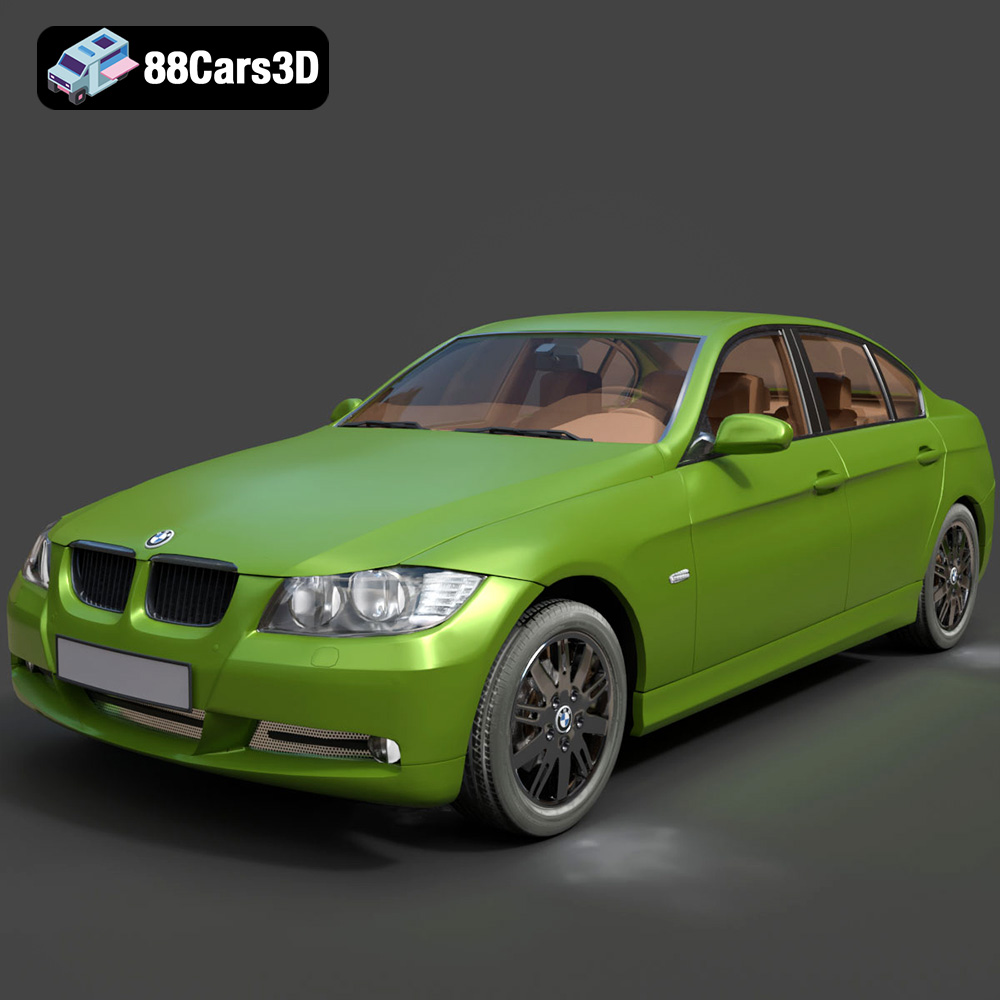
BMW 3-005 3D Model
Texture: Yes
Material: Yes
Download the BMW 3-005 3D Model featuring a sleek design, detailed exterior and interior. Includes .blend, .fbx, .obj, .glb, .stl, .ply, .unreal, and .max formats for rendering, simulation, and game development.
Price: $14.99

BMW Vision Effecient Dynamics-007 3D Model
Texture: Yes
Material: Yes
Download the BMW Vision Effecient Dynamics-007 3D Model featuring a sleek, futuristic design and hybrid concept aesthetics. Includes .blend, .fbx, .obj, .glb, .stl, .ply, .unreal, and .max formats for rendering, simulation, and game development.
Price: $14.99

BMW i8 2015 3D Model
Texture: Yes
Material: Yes
Download the BMW i8 2015 3D Model featuring clean geometry, realistic detailing, and a fully modeled interior. Includes .blend, .fbx, .obj, .glb, .stl, .ply, .unreal, and .max formats for rendering, simulation, and game development.
Price: $12.99

BMW 4 Series F32 3D Model
Texture: Yes
Material: Yes
Download the BMW 4 Series F32 3D Model featuring clean geometry, realistic detailing, and a fully modeled interior. Includes .blend, .fbx, .obj, .glb, .stl, .ply, .unreal, and .max formats for rendering, simulation, and game development.
Price: $12.99

BMW E39 M5-540i 3D Model
Texture: Yes
Material: Yes
Download the BMW E39 M5-540i 3D Model featuring its iconic sedan design, detailed exterior, and realistic interior. Includes .blend, .fbx, .obj, .glb, .stl, .ply, .unreal, and .max formats for rendering, simulation, and game development.
Price: $10.79

BMW 7 Series E38 3D Model
Texture: Yes
Material: Yes
Download the BMW 7 Series E38 3D Model featuring its iconic luxury sedan design and classic aesthetics. Includes .blend, .fbx, .obj, .glb, .stl, .ply, .unreal, and .max formats for rendering, simulation, and game development.
Price: $10.79

BMW 6 Series 640i F12 3D Model
Texture: Yes
Material: Yes
Download the BMW 6 Series 640i F12 3D Model featuring a sleek design and detailed interior. Includes .blend, .fbx, .obj, .glb, .stl, .ply, .unreal, and .max formats for rendering, simulation, and game development.
Price: $10.79

BMW 6 Coupe E63 3D Model
Texture: Yes
Material: Yes
Download the BMW 6 Coupe E63 3D Model featuring a sleek design, detailed interior, and realistic exterior. Includes .blend, .fbx, .obj, .glb, .stl, .ply, .unreal, and .max formats for rendering, simulation, and game development.
Price: $10.79

BMW 5 Series Touring F11-007 3D Model
Texture: Yes
Material: Yes
Download the BMW 5 Series Touring F11-007 3D Model featuring a detailed exterior and interior. Includes .blend, .fbx, .obj, .glb, .stl, .ply, .unreal, and .max formats for rendering, simulation, and game development.
Price: $10.79

BMW 5 Series Gran Turismo F07-003 3D Model
Texture: Yes
Material: Yes
Download the BMW 5 Series Gran Turismo F07-003 3D Model featuring a detailed exterior and interior. Includes .blend, .fbx, .obj, .glb, .stl, .ply, .unreal, and .max formats for rendering, simulation, and game development.
Price: $10.79
