

In the high-octane world of real-time rendering, particularly within automotive visualization and game development, efficiency and clarity are paramount. Unreal Engine has become the undisputed powerhouse for creating stunning, interactive experiences with 3D car models. However, the true mastery of Unreal Engine lies not just in its dazzling graphical capabilities, but in the meticulous art of asset management and project organization. Without a robust system in place, even the most ambitious projects can quickly descend into chaos, impacting performance, collaboration, and ultimately, delivery timelines.
This comprehensive guide is designed for Unreal Engine developers, 3D artists, and visualization professionals who aim to elevate their automotive projects. We’ll delve deep into the strategic workflows and best practices essential for maintaining clean, performant, and scalable Unreal Engine projects. From setting up your project structure to optimizing high-polygon 3D car models, managing complex PBR materials, and orchestrating interactive Blueprint systems, you’ll learn how to lay a foundation that supports stunning visual fidelity, seamless collaboration, and blazing-fast real-time rendering. Prepare to transform your approach to Unreal Engine development, ensuring your automotive visions are not just realized, but meticulously organized and optimized for success.
The Foundation: Strategic Project Setup and Folder Organization
A well-organized Unreal Engine project begins long before the first 3D car model is imported. It starts with a strategic folder structure and consistent naming conventions. This foundational step is critical for several reasons: it improves navigability, accelerates asset location, streamlines collaboration among team members, and simplifies debugging and performance optimization. Without a logical hierarchy, even small projects can quickly become unwieldy, turning simple tasks into frustrating scavenger hunts.
For automotive visualization, where projects often involve numerous car variants, detailed environments, and complex interactive elements, a thoughtful project setup is non-negotiable. Consider the scalability of your project from the outset. Will you be adding more car models, expanding environments, or introducing new interactive features? A well-planned structure can easily accommodate these additions without requiring a complete overhaul. This proactive approach saves countless hours in the long run and helps maintain project integrity.
Establishing a Robust Folder Hierarchy
The core principle of a good folder structure is categorization. Assets should be grouped logically based on their type, function, or the specific car model they belong to. A commonly adopted hierarchy starts with broad categories and then subdivides them. Here’s a recommended structure tailored for automotive projects:
Content/_Developers/(For individual testing/WIP before migrating to main folders)Blueprints/(All Blueprint classes, interfaces, enums)Cars/(Main folder for all 3D car models)Car_MakeModel_Year/(e.g.,Car_AudiR8_2024/)Meshes/(SM_Body, SM_Wheel, SM_Interior)Materials/(M_Paint_Red, MI_Paint_Blue, MF_CarPaint)Textures/(T_Body_D, T_Interior_N, T_Rim_M)Blueprints/(BP_AudiR8_Configurator, BP_Wheel_AudiR8)Physics/(PC_AudiR8_Body)Animations/(e.g., door opening sequence)Sequences/(Cinematic sequences for this car)
Car_GenericParts/(Common parts like calipers, brake discs that can be reused)
Environments/(Levels, landscapes, foliage, props)Levels/(LVL_Showroom, LVL_TrackDay, LVL_CityStreet)Props/(SM_ShowroomChair, T_ShowroomFloor)
Materials/(Generic materials, Material Functions not specific to a single car)Particles/(Niagara systems, cascade particles)PostProcess/(PP_Volumes, LUTs)Sound/(SFX_EngineRoar, BGM_Showroom)UI/(Widgets, textures for UI elements)VFX/(Visual effects beyond particles, e.g., lens flares)
This structure ensures that all assets related to a specific car model are encapsulated within its own folder, making it easy to find, manage, and even migrate entire car setups between projects. For shared assets, dedicated generic folders prevent duplication and promote reusability. For further guidance on maintaining a clean project, Epic Games provides detailed best practices in their official documentation at dev.epicgames.com/community/unreal-engine/learning.
Naming Conventions for Sanity and Scalability
Consistent naming is the silent hero of project organization. It allows you to quickly identify an asset’s type and purpose without opening it. Unreal Engine’s Content Browser benefits immensely from good naming, as you can filter assets effectively. The general rule is to use a prefix indicating the asset type, followed by a descriptive name.
- Static Meshes:
SM_(e.g.,SM_AudiR8_Body,SM_Wheel_FrontLeft) - Skeletal Meshes:
SK_(e.g.,SK_DriverCharacter) - Materials:
M_(e.g.,M_CarPaint_Base) - Material Instances:
MI_(e.g.,MI_CarPaint_Red) - Material Functions:
MF_(e.g.,MF_PBR_MetalRoughness) - Textures:
T_, followed by the map type (e.g.,T_Body_Dfor Diffuse,T_Body_Nfor Normal,T_Body_ORMfor Occlusion/Roughness/Metallic) - Blueprints:
BP_(e.g.,BP_AudiR8_Configurator,BP_InteractiveDoor) - Widget Blueprints:
WBP_(e.g.,WBP_CarSelectionMenu) - Levels:
LVL_(e.g.,LVL_Showroom_Day) - Particle Systems (Niagara):
NS_(e.g.,NS_ExhaustSmoke) - Physics Assets:
PA_(e.g.,PA_AudiR8_Chassis)
Combine these prefixes with clear, descriptive names. Avoid generic names like “Material_1” or “Mesh_Final.” Instead, use names that immediately convey what the asset is and what it does. For example, MI_CarPaint_Glossy_Red is far more informative than MI_Paint. This diligence in naming, while initially seeming tedious, pays dividends in project clarity and maintainability.
Ingesting Automotive Assets: Smart Importing and Initial Optimization
Importing high-fidelity 3D car models into Unreal Engine is a critical process that demands careful attention to detail. The quality of your imported assets directly impacts visual fidelity, performance, and the ease of subsequent setup. Whether you’re bringing in a model from a marketplace like 88cars3d.com or one created internally, understanding the correct import settings and initial optimization steps is key to a smooth workflow and a high-performing project.
Unreal Engine supports various file formats, with FBX being the most common for static and skeletal meshes due to its widespread compatibility and support for hierarchical data, materials, and animations. USD (Universal Scene Description) is also gaining traction, particularly for its ability to manage complex scene compositions and collaborative workflows, offering a more robust pipeline for advanced automotive visualization projects.
Mastering the FBX/USD Import Process
When importing your 3D car models, the default Unreal Engine import settings often need adjustment to suit automotive assets. For FBX, pay close attention to the following:
- Mesh Import Options:
- Skeletal Mesh / Static Mesh: Ensure you select the correct type. Most car models will be Static Meshes, but some interactive elements or characters might be Skeletal Meshes.
- Combine Meshes: Generally, you want to uncheck this for car models. Keeping components separate (body, doors, wheels, interior) allows for individual material assignment, animation, and easier interaction (e.g., opening doors).
- Generate Missing Collision: Enable this for simple meshes that need collision, but for complex car shapes, it’s often better to create custom collision meshes in your DCC application or use Unreal’s simplified collision options (e.g., auto convex) after import to ensure accuracy and performance.
- Import Uniform Scale: Set this if your model was exported at a different scale than Unreal Engine’s default (1 unit = 1cm). A common scale issue is models appearing too large or too small.
- Import Normals / Tangents: Always import these. Recalculating them in Unreal Engine can sometimes lead to undesirable shading artifacts, especially on complex automotive surfaces.
- Material Import Options:
- Import Materials / Textures: Often, it’s best to disable “Import Materials” and “Import Textures.” This gives you full control to create high-quality PBR materials directly in Unreal Engine’s Material Editor, ensuring consistency and optimization. Assets from 88cars3d.com are often provided with clean PBR textures, making the manual material creation process straightforward and efficient.
For USD imports, the workflow is often more streamlined, as USD is designed for comprehensive scene descriptions. Ensure your USD stage is properly composed with layers for different components, and leverage Unreal Engine’s USD importer to bring in the entire scene hierarchy, materials, and animations. USD facilitates iterative updates and collaboration, making it ideal for complex automotive pipelines where multiple artists contribute.
Pre-Optimization Essentials: Scale, Pivots, and Normals
Before even considering advanced Unreal Engine features like Nanite, a few fundamental pre-optimization steps are crucial immediately after import:
- Verify Scale and Pivot Points:
- Scale: Ensure your car model is at the correct real-world scale (Unreal’s default is 1 unit = 1cm). Incorrect scaling affects physics, lighting, and interaction. If a model appears incorrectly scaled, use the ‘Import Uniform Scale’ option during import or adjust its scale within Unreal Engine after import (though adjusting during import is often cleaner).
- Pivot Points: For interactive elements like doors, wheels, or hoods, ensure their pivot points are correctly placed in your DCC application (e.g., at the hinge for a door, at the center for a wheel). This allows for correct rotation and animation within Unreal Engine. If pivots are off, you can adjust them in Unreal Engine’s modeling tools or by creating a new Blueprint with the mesh offset.
- Check Mesh Normals: Incorrect or flipped normals can lead to severe shading artifacts, especially noticeable on the smooth, reflective surfaces of a car. Use Unreal Engine’s mesh viewer to inspect normals. If issues are present, it’s best to fix them in your 3D modeling software (e.g., Maya, Blender, 3ds Max) and re-import.
- Review Vertex Count and Topology: While Nanite handles high-poly models exceptionally well, it’s still good practice to understand your mesh density. Models from platforms like 88cars3d.com are typically optimized with clean topology, but for custom assets, ensure that topology is clean, without overlapping faces or excessive triangles where they aren’t needed. Aim for quads where possible, even if Unreal Engine triangulates everything on import.
- Collision Meshes: For vehicles, accurate collision is vital for physics and interaction. Instead of relying solely on auto-generated simple collision, consider creating custom collision meshes (often simplified versions of the visual mesh) in your DCC app, named with a
UCX_prefix, and import them alongside your car mesh. This provides more accurate and performant collision detection.
Taking these steps ensures that your 3D car models are not only visually stunning but also technically sound, ready for the advanced material and lighting setups that define high-end automotive visualization in Unreal Engine.
Material Excellence: PBR Workflows and Shader Organization
The realism of a 3D car model in Unreal Engine hinges significantly on its materials. Physically Based Rendering (PBR) is the industry standard, ensuring that materials react to light in a physically plausible way, leading to incredibly convincing surfaces like metallic paints, leathers, and plastics. Effective material management goes beyond just creating beautiful shaders; it involves optimizing performance, ensuring consistency, and structuring your materials for scalability and ease of iteration.
Unreal Engine’s Material Editor is a powerful node-based system that allows artists to craft complex PBR materials. The key to organization here lies in using Material Functions, Material Layers, and especially, Material Instances. These tools allow for modularity, reusability, and rapid iteration without compiling massive shaders repeatedly.
Crafting Realistic PBR Materials with Instances
A fundamental principle in Unreal Engine material workflow is to avoid creating unique base materials for every slight variation. Instead, you create a robust “Master Material” and then derive “Material Instances” from it. A Master Material contains all the core logic, such as PBR equations, blend modes, clear coat layers, and texture samplers. Material Instances then expose parameters (colors, texture inputs, metallic/roughness values, normal map strengths) that can be adjusted without recompiling the entire shader.
For automotive materials, this workflow is invaluable:
- Master Car Paint Material (
M_CarPaint_Master): This master material would incorporate advanced features like:- Base Color, Metallic, Roughness, Normal Map inputs.
- Clear Coat layer (Unreal Engine’s dedicated clear coat input).
- Flake normal map or procedural flake effect.
- Dirt/grime masking and blending.
- Paint damage/scratch effects.
- Support for tinting and color variations.
- Material Functions (
MF_PBR_Utility,MF_CarPaintFlakes): Break down complex nodes into reusable Material Functions. For example, a function for blending two PBR materials, or a function specifically for generating metallic paint flakes, can be plugged into various master materials. - Material Instances (
MI_CarPaint_RedMetallic,MI_CarPaint_BlueMatte): From your master material, create instances for each unique car paint. You can expose parameters for color, metallic value, roughness, flake intensity, and even switch texture maps. This allows artists to quickly iterate on different paint finishes without touching the underlying shader logic. A good practice is to group parameters in the Material Instance editor for easy navigation.
The benefits are enormous: reduced draw calls (as multiple instances can share the same shader), faster iteration times, and a significantly more organized Content Browser. When sourcing high-quality automotive assets, ensure their PBR textures (Albedo, Normal, ORM – Occlusion, Roughness, Metallic) are consistent and clean, as found on marketplaces like 88cars3d.com, which greatly simplifies the material creation process.
Optimizing Shader Complexity for Automotive Realism
While visual fidelity is key, shader complexity directly impacts real-time rendering performance. Complex shaders with many instructions can quickly bog down your frame rate. Unreal Engine provides powerful tools to visualize and optimize shader complexity.
- Shader Complexity View Mode: Accessible via the ‘Show’ menu in the viewport, this view mode visually represents the instruction count of your shaders. Green indicates low complexity, while red/pink indicates high complexity. Aim to keep critical, frequently visible materials (like car paint) as green or light blue as possible.
- Material Attributes: Instead of connecting many wires to the main material output, use ‘Set Material Attributes’ and ‘Break Material Attributes’ nodes. This allows you to pass a “bundle” of attributes, simplifying graphs and potentially improving performance by allowing Unreal to optimize attribute sets.
- Static Switches and Feature Levels: Use ‘Static Switch Parameter’ nodes in your master materials to toggle complex features (e.g., advanced clear coat effects, dirt masks) on or off at compile time for Material Instances. This generates lighter shaders for instances that don’t need certain features. Similarly, ‘Feature Level Switch’ nodes can provide different shader paths for different target platforms (e.g., high-end desktop vs. mobile VR).
- Texture Resolution and Compression: High-resolution textures (4K, 8K) are essential for automotive detail, but they must be managed carefully. Ensure textures are imported with appropriate compression settings (e.g., BC7 for normal maps, BC1/BC3 for diffuse/mask maps). Use MipMaps to ensure textures downscale efficiently at a distance, reducing VRAM usage.
- Avoid Unnecessary Overdraw: Be mindful of transparent or translucent materials. While car glass requires translucency, excessive layers of translucent materials can be very expensive. Optimize your car glass shaders to be as simple as possible or consider using masked materials where translucency isn’t strictly necessary.
By diligently managing your PBR materials and optimizing their complexity, you can achieve breathtaking automotive realism without sacrificing real-time performance, making your Unreal Engine projects both visually stunning and technically sound.
Harnessing Unreal Engine’s Power for Car Models: Nanite, Lumen, and LODs
Unreal Engine 5 introduced groundbreaking technologies like Nanite and Lumen, fundamentally changing how developers approach high-fidelity automotive visualization. These features, combined with traditional optimization strategies like Level of Detail (LOD) management, are crucial for rendering incredibly detailed 3D car models in real-time while maintaining optimal performance.
Understanding how to properly integrate and manage these systems within your project is key to unlocking the full potential of Unreal Engine for your automotive assets. They allow for an unprecedented level of geometric detail and dynamic global illumination, bringing your car models to life in a way previously unimaginable in real-time.
Embracing Nanite for High-Fidelity Geometry
Nanite is Unreal Engine’s virtualized geometry system, designed to handle immense polygon counts – think millions to billions of triangles – without significant performance degradation. For automotive visualization, this is a game-changer. You no longer need to painstakingly decimate your high-poly CAD data or intricately modeled car meshes. Instead, you can import highly detailed models directly, letting Nanite efficiently stream and render only the necessary detail.
Workflow for Nanite-Enabled Car Models:
- Import High-Poly Meshes: Import your detailed car meshes (e.g., body, interior, complex engine parts) as Static Meshes. When importing, or by selecting the mesh in the Content Browser, enable “Nanite Support” in the Static Mesh Editor.
- Consider Mesh Granularity: While Nanite handles many polygons, consider the logical breakdown of your car model. Instead of one monolithic mesh, separate components like the body, doors, hood, trunk, wheels, and major interior elements. This allows for individual interaction, material assignment, and targeted Nanite streaming.
- Nanite and Performance: Nanite is not a silver bullet for *all* performance issues. While it dramatically reduces CPU load from draw calls and memory footprint from LODs, it can increase GPU load due to complex pixel shading on highly detailed surfaces. Monitor your GPU performance using Unreal Engine’s profilers (e.g., ‘stat gpu’ command).
- Limitations and Workarounds:
- No Deforming Meshes: Nanite currently does not support skeletal meshes or any kind of animated mesh deformation. For deformable parts (e.g., tire sidewall flex), traditional skeletal meshes or separate static meshes animated via Blueprints are required.
- Overlapping UVs for Lightmaps: If you need traditional baked lightmaps (though Lumen often makes this less necessary), Nanite meshes still require unique UVs.
- Translucency: Nanite meshes cannot be translucent. For glass, you’ll need separate non-Nanite meshes or carefully managed transparent sections of a Nanite mesh.
By leveraging Nanite, artists can focus on creating the most geometrically accurate and detailed car models possible, confident that Unreal Engine will handle the rendering complexity efficiently. This is particularly beneficial for showcasing the intricate designs and engineering of vehicles, making it a cornerstone for high-fidelity automotive visualization and virtual production workflows.
Managing LODs for Scalable Performance
While Nanite excels for primary visual meshes, Level of Detail (LOD) management remains crucial for objects that do not support Nanite, for legacy workflows, or for specific optimization cases like AR/VR applications where Nanite might be too heavy for lower-end hardware. LODs are simplified versions of a mesh that are swapped in at increasing distances from the camera, reducing polygon count and improving performance.
LOD Workflow for Non-Nanite Car Components & Environments:
- Automatic LOD Generation: Unreal Engine can automatically generate LODs for Static Meshes. In the Static Mesh Editor, under the ‘LOD Settings’ section, you can specify the number of LODs and various simplification settings (e.g., reduction percentage, triangle count, screen size). This is a quick way to get reasonable LODs for many assets.
- Manual LOD Creation: For critical components, especially those with complex silhouettes or specific visual requirements (e.g., wheels, interior elements), manual LODs created in your 3D modeling software offer superior control. Export these simplified meshes as separate FBX files and import them into the corresponding LOD slots in Unreal’s Static Mesh Editor. Ensure their pivot points and UVs align with the base mesh.
- Screen Size Settings: The ‘Screen Size’ value for each LOD determines at what point (in screen percentage) that LOD will be swapped in. Experiment with these values to find the optimal balance between visual quality and performance for your specific scene and target platform.
- Collision LODs: Remember that collision meshes should also have LODs. Often, a single, simplified collision mesh is sufficient for all visual LODs of an asset, as the player rarely needs pixel-perfect collision at a distance.
- Culling Distances: For background props or very small details, consider setting ‘Min Draw Distance’ and ‘Max Draw Distance’ on the Static Mesh Component to cull them entirely when they are too far or too close to be meaningfully rendered. This can be a major optimization for dense environments.
- AR/VR Optimization: For AR/VR automotive applications, aggressive LODs are often necessary due to the high frame rate requirements (e.g., 90 FPS per eye). Consider setting higher reduction percentages for LODs and shorter screen distances to ensure your application remains performant on target devices.
Combining Nanite for core high-detail car elements with carefully managed LODs for non-Nanite components and environmental assets provides a robust and scalable approach to handling geometry in Unreal Engine. This ensures stunning visual fidelity up close while maintaining smooth performance across various distances and hardware configurations.
Blueprint and Interactive Systems: Structuring Logic for Automotive Experiences
Beyond static beauty, modern automotive visualization in Unreal Engine thrives on interactivity. Configurable cars, interactive showrooms, and dynamic driving experiences are all powered by Blueprint visual scripting. Just as important as organizing your 3D car models and materials is structuring your Blueprint logic to be modular, efficient, and scalable. A well-organized Blueprint system prevents spaghetti code, facilitates team collaboration, and makes future updates or expansions significantly easier.
The goal is to create reusable components and clearly defined interfaces, avoiding monolithic Blueprints that try to do everything. This approach is particularly valuable for complex automotive projects where multiple car models might share similar interactive features, such as door openings, paint changes, or wheel selections.
Modular Blueprints for Configurable Cars
For a configurable car, instead of having one massive Blueprint that controls every aspect, break down the functionality into smaller, specialized Blueprints and components:
- Master Car Blueprint (e.g.,
BP_Car_Base): This is your primary car actor. It should contain references to all car components (body, wheels, interior, lights) and implement common interfaces or events (e.g., “OnEngineStart,” “ChangePaintColor”). This base Blueprint can then be parented by specific car model Blueprints (e.g.,BP_AudiR8_Configurator). - Component Blueprints (e.g.,
BP_Wheel_Base,BP_Door_Base): Create separate Blueprints for reusable parts. ABP_Wheel_Basecould manage wheel rotation, tire deformation, and suspension animation. ABP_Door_Basecould handle opening/closing logic, sound effects, and collision. These can then be added as child actors or components to your main car Blueprint. - Custom Actor Components: For functionality that can be attached to any actor, create Custom Actor Components. For example, a
BPC_PaintConfiguratorcomponent could manage paint material swapping for any mesh it’s attached to. ABPC_HeadlightControllercould handle headlight animations and material parameters. - Blueprint Interfaces: Define common functions or events that different Blueprints need to communicate. For example, an
BPI_Interactableinterface could have a functionInteract(). Your car door Blueprint, a car configurator UI, or an interactive prop could all implement this interface, allowing them to be interacted with consistently without direct Blueprint dependencies. - Data Assets: For car data that remains static but defines configuration options (e.g., a list of available paint colors, rim types, interior trims), use Data Assets. Create a
DT_CarConfigDatastruct and aDA_AudiR8_Configdata asset. This separates data from logic, making it easy to add new options without modifying Blueprints.
This modular approach keeps individual Blueprints lean and focused, dramatically improving readability, reusability, and reducing compilation times. When working with complex systems, organizing Blueprints into clear functions, macros, and collapsed graphs within the event graph itself is also crucial. Comment your code extensively to explain complex logic.
Data Assets and Interfaces for Scalable Interactivity
The true power of modularity for interactive automotive experiences comes from a combination of Data Assets and Blueprint Interfaces. This combination allows for highly scalable and easily maintainable systems.
- Data Assets for Configuration:
- Imagine a car configurator with dozens of paint options, wheel types, and interior trims. Instead of hardcoding these into a Blueprint, define a UStruct (e.g.,
FCarPaintOptionwith Color, Material Instance reference, Name) and then create a Data Asset (DA_CarPaintOptions) that holds an array of these structs. - Your UI Blueprint can then read this Data Asset to populate menus, and when a user selects an option, the UI passes the corresponding data (e.g., the Material Instance reference) to the car Blueprint to apply. This keeps the car Blueprint generic and the data external, allowing non-programmers to add new options easily.
- For advanced scenarios, consider using Data Table Assets which can be driven by CSV or JSON files for even larger datasets, which is common in professional automotive configurators.
- Imagine a car configurator with dozens of paint options, wheel types, and interior trims. Instead of hardcoding these into a Blueprint, define a UStruct (e.g.,
- Blueprint Interfaces for Decoupled Communication:
- Interfaces define a contract for interaction. For example, an
BPI_ConfigurableCarinterface might include functions likeApplyPaint(PaintData),ApplyWheel(WheelData),ToggleDoor(DoorIndex). - Any car Blueprint that implements this interface can respond to these calls. This means your UI Blueprint doesn’t need to know the specific class of the car; it just needs a reference to an object that implements
BPI_ConfigurableCar. This creates a highly decoupled system where changes to one part (e.g., adding a new car model) don’t break other parts (e.g., the UI). - This is particularly powerful for virtual production or AR/VR applications where different control inputs (physical controllers, motion capture, touchscreens) might need to interact with the same car asset.
- Interfaces define a contract for interaction. For example, an
By organizing your Blueprint logic with modular components, data assets, and interfaces, you create robust, flexible, and high-performing interactive automotive experiences that can scale from simple car showcases to complex real-time configurators and driving simulations.
Performance Optimization and Diagnostic Strategies
Achieving stunning visual fidelity in automotive visualization often comes at the cost of performance. Real-time rendering demands a careful balance, and even with Unreal Engine’s powerful features like Nanite and Lumen, meticulous optimization is crucial. A well-organized project naturally lends itself to easier optimization, but dedicated strategies and diagnostic tools are essential for identifying and resolving bottlenecks. This is especially true for demanding applications like AR/VR or high-resolution virtual production environments.
Performance optimization is an ongoing process throughout a project’s lifecycle, not a one-time fix. It involves understanding the primary culprits of poor performance (CPU vs. GPU, draw calls, memory, fill rate) and systematically addressing them.
Culling, Streaming, and Texture Management
Efficiently managing resources is key to maintaining a smooth frame rate:
- Occlusion and Frustum Culling: Unreal Engine automatically performs these.
- Frustum Culling: Objects outside the camera’s view are not rendered.
- Occlusion Culling: Objects hidden by other objects (occluders) are not rendered. For large, complex scenes, consider placing simple blocking volumes (e.g., large walls) to act as manual occluders to assist the engine.
- Level Streaming and World Partition: For very large automotive environments (e.g., open-world driving simulations), loading the entire level at once is prohibitive.
- Level Streaming: Break your environment into smaller sub-levels that can be loaded and unloaded dynamically based on player proximity or specific events. This is managed via a persistent level.
- World Partition (UE5+): This replaces traditional level streaming for open worlds, automatically dividing the world into a grid of cells that stream in and out based on distance and player camera. For massive automotive test tracks or city environments, World Partition is a powerful solution to manage asset loading and unloading.
- Texture Streaming and Resolution: Textures consume significant VRAM.
- MipMaps: Ensure all textures have MipMaps generated (default for most). This allows Unreal Engine to use lower-resolution versions of textures at a distance, saving VRAM and improving performance.
- Texture Grouping and Streaming Pool: Manage the texture streaming pool to prevent textures from taking up too much memory. Use the ‘stat streaming’ command to monitor this. Adjust texture group settings (e.g., UI, World, Character) to fine-tune streaming behavior.
- Compression: Use appropriate compression formats (e.g., BC1/DXT1 for diffuse, BC7 for higher quality diffuse, BC5 for normal maps) and consider reducing texture resolution where high detail isn’t critical (e.g., less visible interior components).
Profiling and Troubleshooting Performance Bottlenecks
When performance drops, knowing how to diagnose the issue is crucial. Unreal Engine provides a suite of powerful profiling tools:
- Stat Commands: Accessed via the console (tilde key ~).
stat fps: Displays frame rate and frame time.stat unit: Breaks down frame time into Game (CPU), Draw (CPU), GPU, and RHI (Render Hardware Interface) times. This is your first stop to determine if you’re CPU-bound or GPU-bound.stat gpu: Provides detailed GPU timing information, including rendering passes, post-processing, and material costs. Excellent for identifying expensive shaders or render features (e.g., Lumen, shadows).stat rhi: Shows render calls, draw primitives, and other RHI-level statistics. High numbers here often indicate too many unique meshes or complex scene composition.stat hitches: Identifies frame hitches (spikes in frame time) that cause stuttering.stat engine: Comprehensive overview of engine systems.stat streaming: Monitors texture streaming pool usage.
- Unreal Insights: A standalone profiling application that provides extremely detailed, timeline-based data on CPU, GPU, memory, and networking performance. It’s invaluable for deep dives into complex bottlenecks.
- Shader Complexity View Mode: (Mentioned earlier) Essential for identifying expensive materials.
- Draw Call Optimization: Reduce the number of unique meshes, materials, and lights. Combining static meshes where possible (e.g., smaller interior details into a single mesh), using Material Instances, and optimizing light sources (reducing dynamic lights, using baked lighting where appropriate) can significantly reduce draw calls.
- Lumen Considerations: While Lumen provides incredible real-time global illumination, it is computationally intensive.
- Lumen Scene Detail: Adjust Lumen’s settings in Project Settings > Engine > Rendering > Lumen to optimize performance. Lowering the ‘Lumen Scene Detail’ and ‘Max Trace Distance’ can yield significant gains.
- Hardware Ray Tracing: For higher fidelity, enable Hardware Ray Tracing for Lumen if your target hardware supports it, but be mindful of its performance cost.
- Non-Lumen Areas: For performance-critical zones, consider using traditional baked lighting with Lightmass or purely static lighting, disabling Lumen for those specific areas using post-process volumes.
By regularly profiling your project and methodically addressing performance bottlenecks using these tools and strategies, you can ensure your Unreal Engine automotive projects deliver a smooth, high-fidelity experience across your target platforms, from game assets to virtual production. Remember that consistent organization of your assets, as sourced from platforms like 88cars3d.com, aids tremendously in keeping your project efficient and easier to optimize.
Collaborative Development and Version Control for Large-Scale Projects
Developing high-end automotive visualizations or games in Unreal Engine is rarely a solo endeavor. Teams of artists, designers, and developers collaborate on various aspects, from creating 3D car models to crafting interactive Blueprints and dynamic environments. Effective collaboration hinges on robust version control and well-defined workflows that prevent conflicts, track changes, and ensure project stability.
Without proper systems, integrating multiple team members’ work can quickly become a nightmare of overwritten files and lost progress. Implementing source control and understanding Unreal Engine’s collaborative features are paramount for successful large-scale projects.
Implementing Source Control Best Practices
Source control (also known as version control) is non-negotiable for any team project. It acts as a central repository for all project files, tracking every change, who made it, and when. This allows teams to work concurrently, merge changes, and revert to previous versions if issues arise. Perforce Helix Core (P4V) is the industry standard for Unreal Engine development, although Git (especially with Git LFS for large binary files) is also a viable option.
Key Source Control Practices for Unreal Engine:
- Connect to Source Control: In Unreal Engine, go to File > Connect To Source Control. Configure your chosen system (Perforce, Git, SVN). This enables crucial features like checking out/in assets directly from the Content Browser.
- Atomic Commits: Commit changes frequently and in small, logical chunks. Instead of committing a week’s worth of work, commit when you complete a feature, fix a bug, or finish a set of related assets. Each commit should represent a coherent, working state of the project.
- “Check Out” Before Editing: Always check out an asset before modifying it. This locks the asset on the server, preventing other team members from simultaneously editing it and causing merge conflicts. Once done, “Check In” the asset to push your changes to the server.
- “Get Latest” Regularly: Before starting work each day, and periodically throughout the day, “Get Latest” (or “Sync” in Perforce) your local project to ensure you have the most up-to-date files from the server. This minimizes conflicts with other team members’ work.
- Clear Commit Messages: Write descriptive commit messages. Explain what changes were made, why they were made, and any relevant task or bug IDs. Good commit messages are invaluable for debugging and understanding project history.
- Resolve Conflicts Promptly: When conflicts arise (e.g., two people modified the same Blueprint), resolve them immediately. Unreal Engine’s merge tool (for Blueprints, specifically) can help, but sometimes manual resolution or discussion with the conflicting party is necessary.
- Binary Asset Management: Unreal Engine’s assets (
.uassetfiles) are binary. This means standard text-based diff/merge tools struggle with them. Git LFS (Large File Storage) is crucial for Git users to handle these efficiently. Perforce is designed with binary asset management in mind. - Stream/Branch Strategy: For large projects or significant feature development, use a branching strategy. A ‘main’ or ‘develop’ branch holds stable code, while ‘feature’ branches are created for specific tasks. Once a feature is complete and tested, it’s merged back into the main branch.
These practices, while requiring initial discipline, drastically improve team productivity and project stability for complex Unreal Engine projects involving high-fidelity 3D car models and environments.
Data Layers and World Partition for Team Collaboration
Unreal Engine 5 introduced powerful new features specifically designed to enhance collaboration on large open worlds:
- Data Layers: Data Layers allow multiple team members to work on different aspects of the same persistent level simultaneously without conflicts. Instead of modifying the main level, artists can place foliage on one data layer, level designers can place props on another, and lighting artists can manage lighting volumes on yet another.
- Activating Data Layers: In the World Partition window, you can activate or deactivate data layers. When a layer is active, its contents are editable. When inactive, they are locked, preventing accidental changes.
- Collaboration Workflow: Each team member works on their dedicated data layer(s). When pushing to source control, only the modified data layer assets are checked in, significantly reducing the chance of merge conflicts on the main level file. This is revolutionary for building large automotive showrooms or open-world driving environments.
- World Partition: (As mentioned in optimization) This system automatically streams parts of the world based on the viewer’s location. From a collaboration standpoint, it means that instead of a single, massive level file, the world is broken into numerous smaller grid cells.
- Grid Cells: Each cell is a separate
.uassetfile. When a team member works in a specific area, they only check out and modify the assets within those cells. This drastically reduces the scope of potential conflicts compared to modifying a single large level file. - Multiple Users in Same Area: While World Partition reduces broad conflicts, two users editing the exact same asset within the same cell will still conflict, necessitating source control’s locking mechanism (e.g., Perforce’s checkout).
- Grid Cells: Each cell is a separate
- Content Browser & Asset Migration:
- Migration Tool: Use the Content Browser’s ‘Migrate’ tool (Right-click on an asset > Asset Actions > Migrate) to move assets and all their dependencies to another Unreal Engine project. This is invaluable for sharing common assets (like optimized 3D car models from 88cars3d.com) or moving entire features between projects.
- Fix Up Redirectors: Regularly ‘Fix Up Redirectors in Folder’ (Right-click folder > Fix Up Redirectors) to clean up broken references left by moved or deleted assets. This prevents broken links and improves project health.
By combining robust source control with Unreal Engine 5’s collaborative features like Data Layers and World Partition, teams can work in harmony on even the most ambitious automotive visualization projects. These strategies ensure a smooth development pipeline, allowing artists and developers to focus on creativity and technical excellence rather than wrestling with project management headaches.
Conclusion: Mastering Your Unreal Engine Automotive Workflow
The journey to creating stunning, performant, and scalable automotive visualizations in Unreal Engine is multifaceted. It’s a blend of artistic vision and rigorous technical discipline. As we’ve explored, the foundation of success lies not just in cutting-edge features like Nanite and Lumen, but in the meticulous organization and management of your project from the ground up.
From establishing a logical folder hierarchy and consistent naming conventions to mastering the nuances of importing 3D car models, crafting optimized PBR materials, and structuring modular Blueprint systems, every step contributes to a streamlined and efficient workflow. Leveraging Unreal Engine’s powerful optimization tools, understanding performance diagnostics, and adopting collaborative best practices with source control ensures your projects remain robust, adaptable, and performant throughout their lifecycle.
By embracing these strategies, Unreal Engine developers and 3D artists can confidently tackle projects of any scale, from interactive car configurators and virtual showrooms to cutting-edge virtual production setups and immersive AR/VR experiences. The result is not just beautiful renders, but a clean, maintainable, and highly productive development environment that empowers your team to bring automotive visions to life with unparalleled realism and efficiency. Start by implementing these best practices in your next project, and experience the transformative power of organized excellence in Unreal Engine. For high-quality, pre-optimized 3D car models that kickstart your project with a solid foundation, explore the extensive collection available at 88cars3d.com.
Featured 3D Car Models

Bentley Continental Flying Spur 3D Model
Texture: Yes
Material: Yes
Download the Bentley Continental Flying Spur 3D Model featuring clean geometry, realistic detailing, and a fully modeled interior. Includes .blend, .fbx, .obj, .glb, .stl, .ply, .unreal, and .max formats for rendering, simulation, and game development.
Price: $14.99
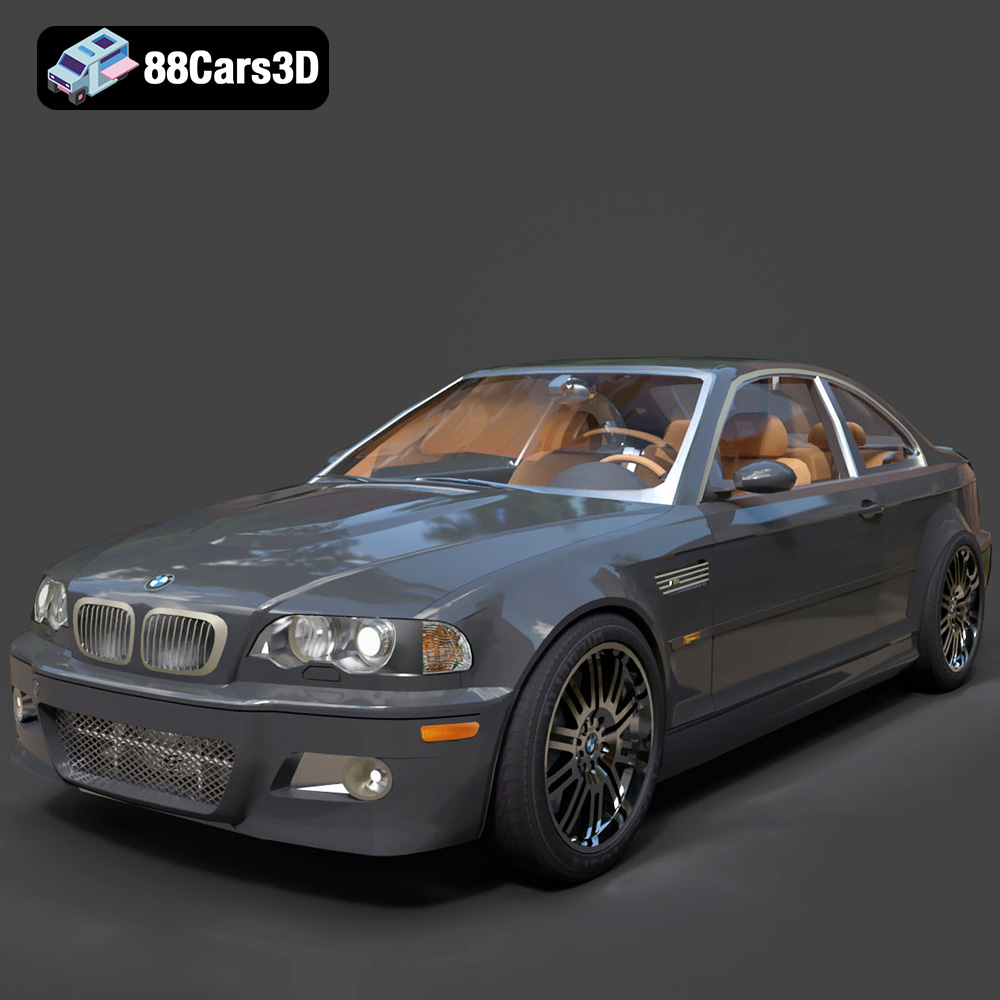
BMW M3 E46 3D Model
Texture: Yes
Material: Yes
Download the BMW M3 E46 3D Model featuring iconic sports car design and detailed interior. Includes .blend, .fbx, .obj, .glb, .stl, .ply, .unreal, and .max formats for rendering, simulation, and game development.
Price: $16.99
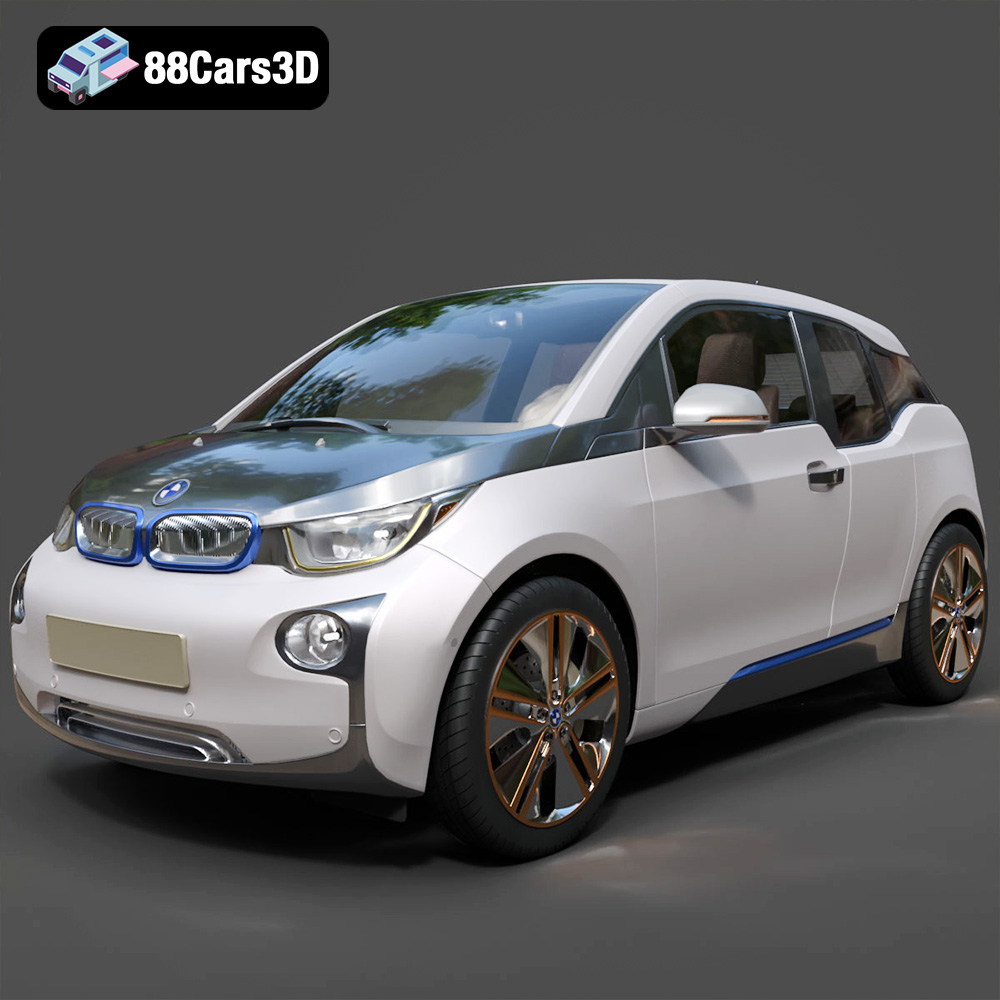
BMW i3 Coupe 3D Model
Texture: Yes
Material: Yes
Download the BMW i3 Coupe 3D Model featuring its iconic electric design and compact urban styling. Includes .blend, .fbx, .obj, .glb, .stl, .ply, .unreal, and .max formats for rendering, simulation, and game development.
Price: $17.99
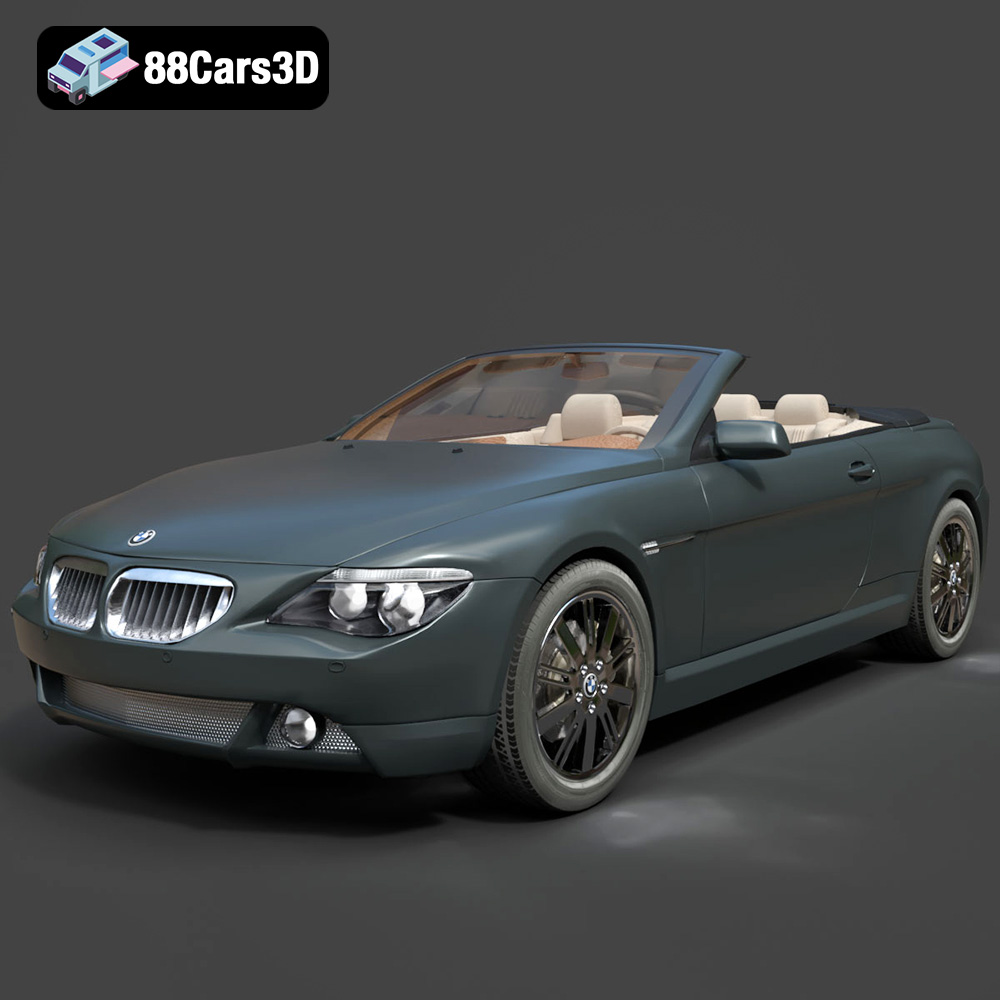
BMW 645ci 2004-2005 3D Model
Texture: Yes
Material: Yes
Download the BMW 645ci 3D Model featuring a sleek, detailed exterior and optimized interior. Includes .blend, .fbx, .obj, .glb, .stl, .ply, .unreal, and .max formats for rendering, simulation, and game development.
Price: $10.79
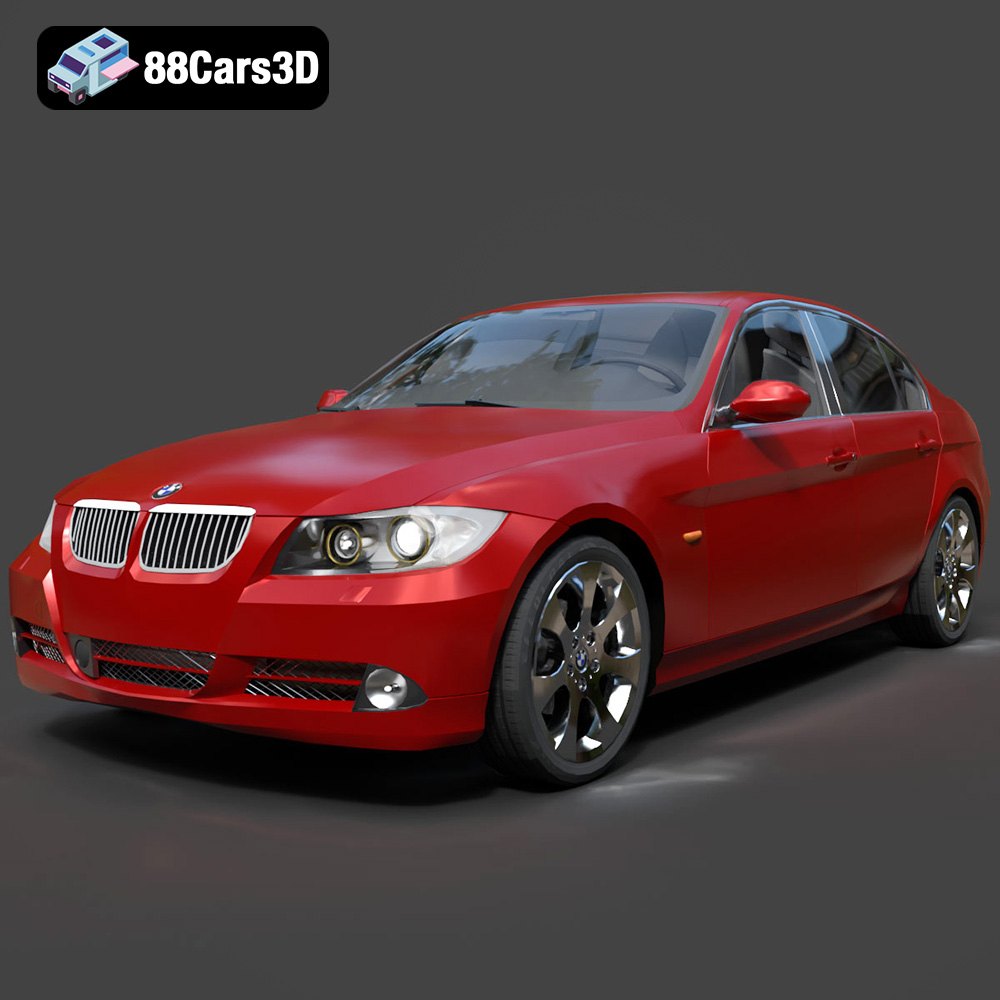
BMW 330i E90 3D Model
Texture: Yes
Material: Yes
Download the BMW 330i E90 3D Model featuring a detailed exterior, an optimized interior, and accurate mechanical components. Includes .blend, .fbx, .obj, .glb, .stl, .ply, .unreal, and .max formats for rendering, simulation, and game development.
Price: $14.79
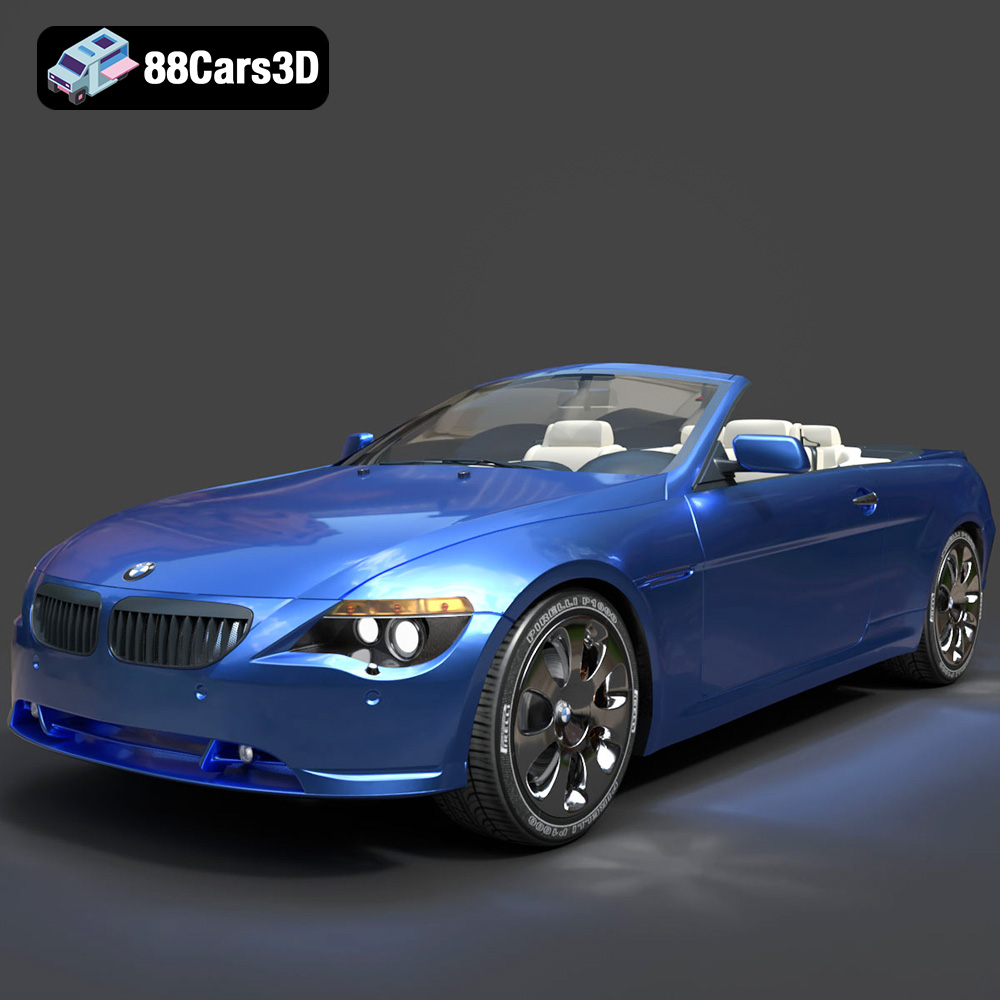
BMW 6 Series Convertible 3D Model
Texture: Yes
Material: Yes
Download the BMW 6 Series Convertible 3D Model featuring clean geometry, realistic detailing, and a fully modeled interior. Includes .blend, .fbx, .obj, .glb, .stl, .ply, .unreal, and .max formats for rendering, simulation, and game development.
Price: $14.99
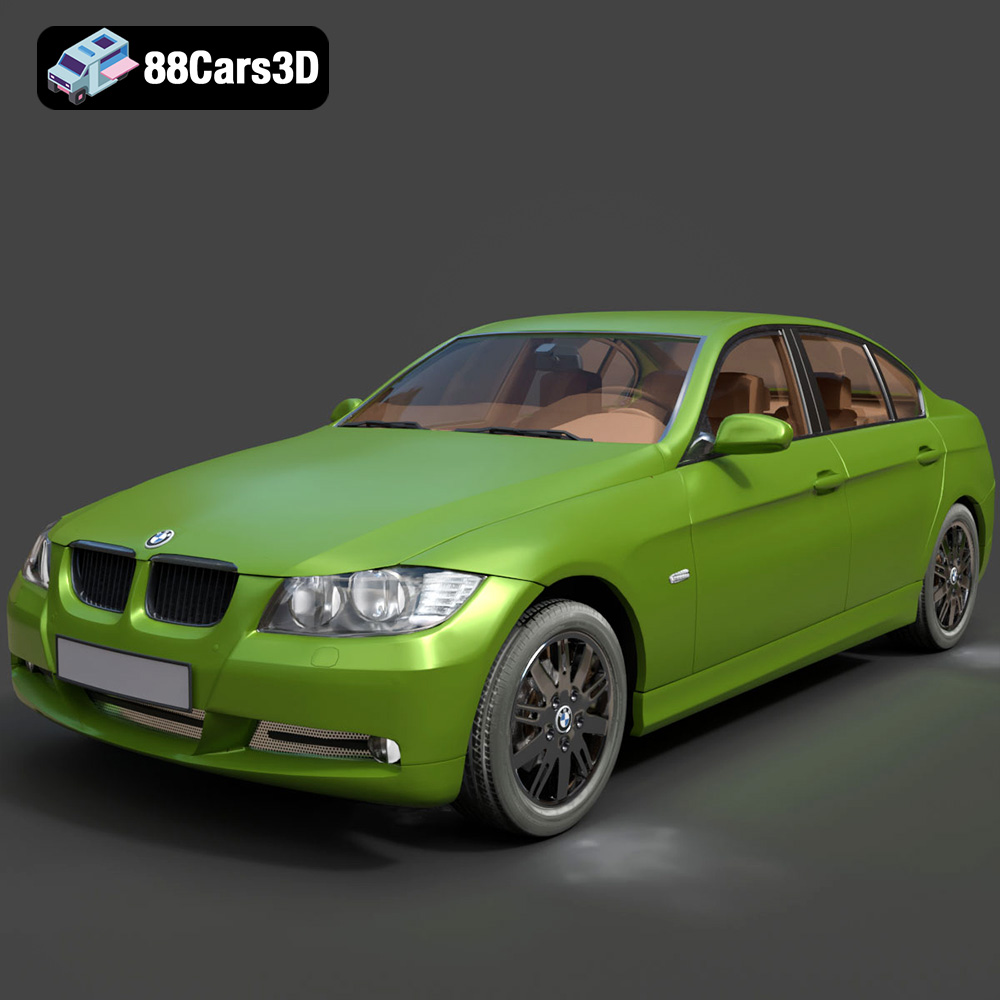
BMW 3-005 3D Model
Texture: Yes
Material: Yes
Download the BMW 3-005 3D Model featuring a sleek design, detailed exterior and interior. Includes .blend, .fbx, .obj, .glb, .stl, .ply, .unreal, and .max formats for rendering, simulation, and game development.
Price: $14.99
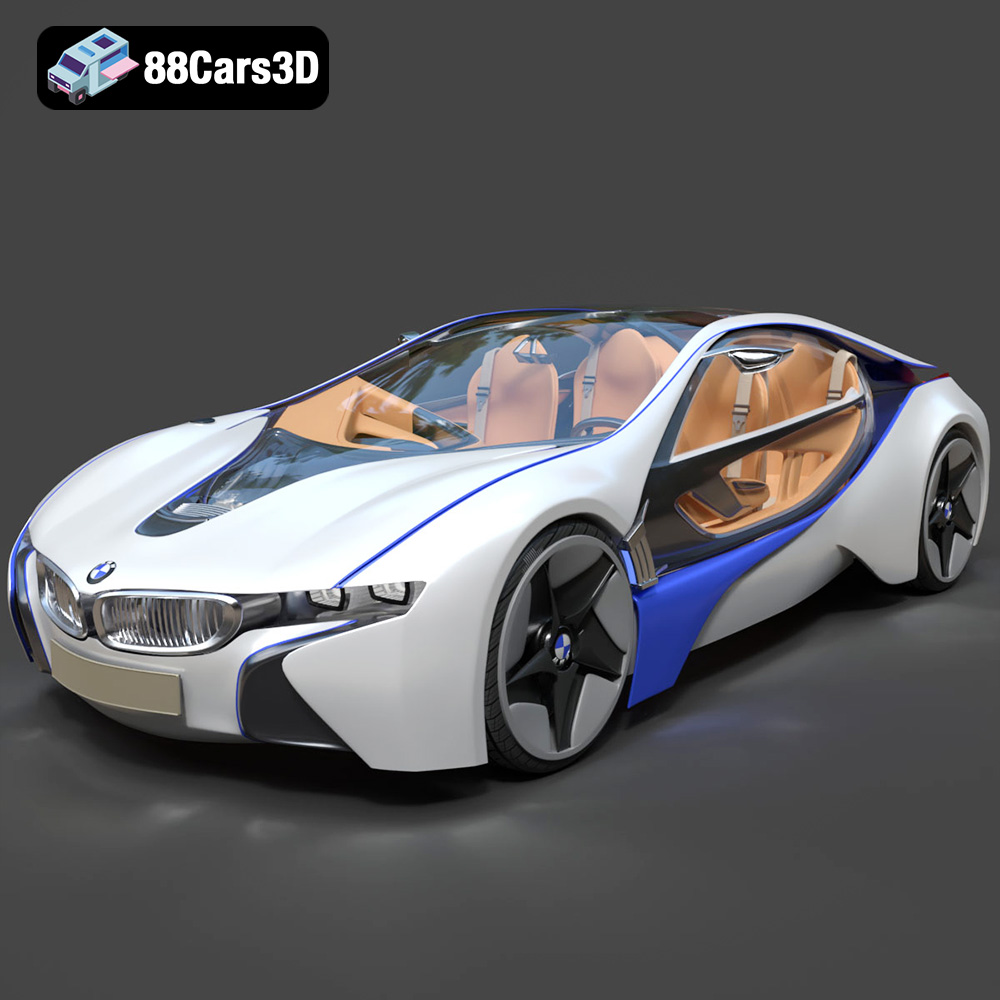
BMW Vision Effecient Dynamics-007 3D Model
Texture: Yes
Material: Yes
Download the BMW Vision Effecient Dynamics-007 3D Model featuring a sleek, futuristic design and hybrid concept aesthetics. Includes .blend, .fbx, .obj, .glb, .stl, .ply, .unreal, and .max formats for rendering, simulation, and game development.
Price: $14.99
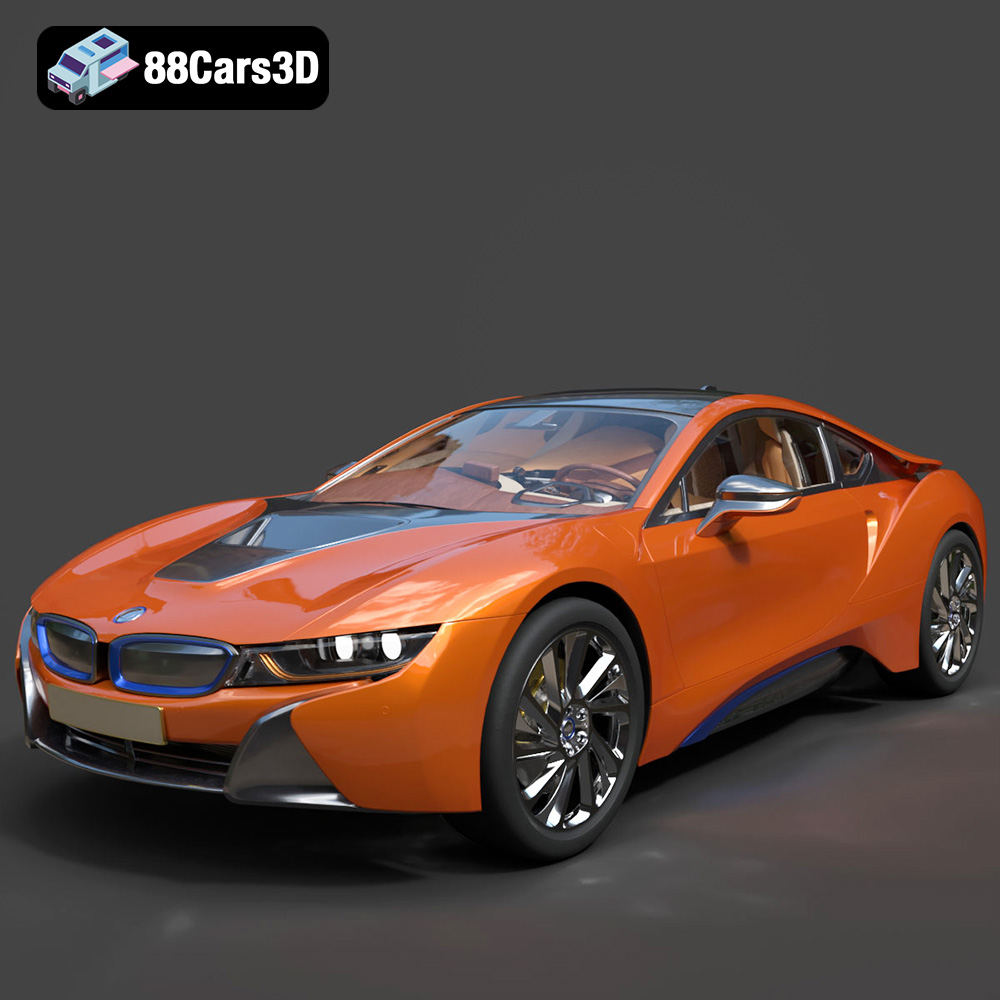
BMW i8 2015 3D Model
Texture: Yes
Material: Yes
Download the BMW i8 2015 3D Model featuring clean geometry, realistic detailing, and a fully modeled interior. Includes .blend, .fbx, .obj, .glb, .stl, .ply, .unreal, and .max formats for rendering, simulation, and game development.
Price: $12.99

BMW 4 Series F32 3D Model
Texture: Yes
Material: Yes
Download the BMW 4 Series F32 3D Model featuring clean geometry, realistic detailing, and a fully modeled interior. Includes .blend, .fbx, .obj, .glb, .stl, .ply, .unreal, and .max formats for rendering, simulation, and game development.
Price: $12.99
