

“`html
From Digital Dream to Desktop Reality: Mastering the Conversion of Vehicle Models to Printable STL Files
The allure of a meticulously crafted 3D printable car model, gracing your desk or becoming the centerpiece of a diorama, is undeniable. At 88cars3d.com, we pride ourselves on offering a curated collection of high-quality, print-ready STL files designed for enthusiasts, hobbyists, and professionals alike. But have you ever wondered about the journey a digital vehicle model takes before it’s ready to be sliced and printed? The process of converting complex 3D geometry into the universal language of 3D printing – the STL file format – is a technical dance of precision, optimization, and understanding. This guide will demystify that process, taking you from raw 3D assets to flawless prints. We’ll delve into the intricacies of mesh topology, the critical role of slicing parameters, robust support generation, and the essential file preparation steps that ensure your automotive masterpieces come to life flawlessly on your 3D printer.
Whether you’re an aspiring model designer, a seasoned maker looking to refine your workflow, or simply curious about the technical backbone of creating perfect printable car models, this comprehensive guide is for you. We’ll explore the foundational principles of the STL format, discuss the differences and considerations for both FDM and resin printing, and provide actionable insights into software workflows and troubleshooting common issues. By the end, you’ll possess a deeper understanding of what makes a 3D model truly “print-ready” and how to achieve stunning results with your own projects or by leveraging the expertly prepared files available on platforms like 88cars3d.com.
Understanding the STL File Format: The Foundation of 3D Printing
The STL (STereoLithography) file format, despite its age, remains the undisputed king of 3D printing. Its simplicity and universality have made it the de facto standard for communicating 3D printable geometry to slicer software. At its core, an STL file describes the surface geometry of a 3D object using a collection of triangular facets. Each facet is defined by three vertices (points in 3D space) and a normal vector, which indicates the outward-facing direction of the surface. This seemingly simple approach, however, carries significant implications for printability.
When preparing a digital vehicle model, the underlying mesh topology is paramount. A “clean” mesh for 3D printing means it’s manifold, watertight, and free from geometric errors. A manifold mesh is one that has a consistent “inside” and “outside,” much like a closed container. In STL, this means every edge should connect exactly two facets. Non-manifold geometry, such as holes, internal faces, or edges shared by more than two facets, can confuse slicer software, leading to printing failures, missing sections, or incorrect infill. For automotive models, which often feature complex curves and intricate details like panel gaps, grills, and aerodynamic surfaces, maintaining mesh integrity throughout the conversion process is crucial.
Mesh Topology and Watertightness: The Digital Blueprint
The process of converting a high-polygon model (often used for visual rendering) into a printable mesh involves a careful balance between detail preservation and polygon count reduction (decimation). While a highly detailed model might look spectacular on screen, an overly dense mesh can result in massive STL files that are difficult to process, increase slicing times, and can even tax the computational resources of your slicing software. Professional workflows often involve techniques to simplify the mesh while preserving essential features. This can include removing internal geometry that won’t be visible or printed (e.g., the interior volume of a solid car body), retopologizing areas with excessive polygons, and ensuring all surface elements are connected to form a single, continuous shell. For downloadable models from sources like 88cars3d.com, this optimization is already handled, providing you with files that are both detailed and efficient for printing.
Vertex Normals and Surface Orientation: Guiding the Printer
The normal vector of each triangle is critical. It dictates which side of the triangle is “outside” the model. If normals are inconsistent or flipped, the slicer might interpret internal surfaces as external, or vice versa, leading to printing errors. Tools like Meshmixer, Blender, or Autodesk Netfabb offer functionalities to inspect and correct normal orientations. For example, in Meshmixer, you can use the “Analysis” tools to highlight non-manifold edges and flipped normals, then employ the “Make Solid” or “Inspector” features to automatically repair many of these issues. Ensuring all normals point outwards is a fundamental step in creating a printable STL, particularly for the complex, multi-part surfaces of a car model.
File Resolution and Polygon Count: Finding the Sweet Spot
The resolution of an STL file is determined by the number of triangles used to represent the surface. A higher polygon count generally means a smoother, more detailed surface but also a larger file size. Conversely, a low polygon count can lead to visible faceting, especially on curved surfaces like the roof or fenders of a car. The ideal resolution depends on the intended print size and the capabilities of your printer. For small-scale models printed on a high-resolution resin printer, a denser mesh might be beneficial. For larger FDM prints, a moderately detailed mesh is usually sufficient, as the layer lines and nozzle diameter will naturally smooth out some of the finer geometric details. Striking this balance is key; a common practice is to aim for a mesh that captures the essential form and details without becoming excessively heavy, typically resulting in STL files that are manageable for slicer software.
Slicing Strategies: Translating STL to Layered Instructions
Once you have a clean, manifold STL file of your chosen vehicle model, the next crucial step is slicing. Slicer software, such as Ultimaker Cura, PrusaSlicer, or Simplify3D, acts as the interpreter, converting the 3D geometry of the STL into a series of G-code commands that your 3D printer can understand. This process involves making critical decisions about print settings that directly impact the quality, strength, and print time of your automotive models. For intricate car models, the right slicing strategy can mean the difference between a showpiece and a failed print.
The fundamental principle of slicing is dividing the 3D model into thin horizontal layers and then generating toolpaths for the printer’s nozzle (for FDM) or laser/projector (for resin) to trace each layer. The software must also determine how to bridge gaps, create overhangs, and fill the internal volume of the model. For automotive enthusiasts, this stage offers an incredible opportunity to fine-tune the appearance and structural integrity of their prints, whether they are creating a quick prototype or a detailed display piece.
Layer Height and Resolution: The Trade-Off Between Speed and Detail
Layer height is one of the most significant settings affecting print quality and time. A smaller layer height (e.g., 0.1mm or 0.08mm for resin printers, 0.12mm or 0.16mm for FDM) results in finer detail, smoother curves, and less visible layer lines, making it ideal for capturing the sleek lines of a sports car. However, this comes at the cost of significantly longer print times. Conversely, a larger layer height (e.g., 0.2mm or 0.3mm for FDM) prints much faster but produces more pronounced layer lines. For display models where aesthetics are paramount, prioritizing a lower layer height is generally recommended. For functional prototypes or less detailed models, a coarser layer height can save considerable time.
When slicing models from 88cars3d.com, consider the intended scale. A 1:18 scale model might benefit from a 0.1mm layer height on an FDM printer to capture panel details, while a 1:64 scale model might look acceptable with 0.16mm or even 0.2mm due to its smaller size.
Infill Patterns and Density: Strength vs. Material Usage
Infill determines the internal structure of the printed object. For most car models, particularly those intended for display, high infill densities are unnecessary and waste material and print time. A low infill percentage (10-20%) is often sufficient, providing enough internal support for the outer walls without significantly impacting structural integrity. Certain infill patterns can offer better support for overhangs or increase strength in specific areas. Patterns like “gyroid” or “cubic” provide good strength in multiple directions and can be beneficial for models that might require some structural resilience. For solid parts like wheels or chassis components, a slightly higher infill might be considered if durability is a concern.
Print Speed and Temperature: Optimizing for Material and Geometry
Print speed needs to be carefully calibrated based on your specific 3D printer and material. Faster speeds can reduce print time but may compromise print quality, leading to ringing artifacts, poor layer adhesion, or under-extrusion, especially on complex curves common in car models. It’s often advisable to print detailed sections or the initial layers at a slightly slower speed to ensure good bed adhesion and precision. For example, an outer wall speed of 40-50 mm/s and a travel speed of 100-150 mm/s are common starting points for PLA on many FDM printers. Similarly, nozzle and bed temperatures must be set according to the filament manufacturer’s recommendations to ensure proper material flow and adhesion. Resin printers operate on different principles, with exposure times and lift speeds being the critical parameters for quality and successful printing.
Support Structures: The Unsung Heroes of Complex Prints
Automotive models are rife with overhangs and bridges – from spoilers and side mirrors to wheel arches and undercarriage details. Without adequate support, these features will droop, warp, or fail entirely during the printing process. Generating and managing support structures is arguably one of the most critical aspects of successfully 3D printing complex objects like vehicles. The goal is to provide temporary scaffolding that supports critical areas during printing, then can be removed cleanly without damaging the model’s surface.
Most slicer programs offer sophisticated support generation tools. Understanding how to use them effectively, and when to manually intervene, is essential for achieving professional-looking results. For downloadable models from 88cars3d.com, many are designed with minimal or strategically placed supports in mind, but even then, printer-specific adjustments are often necessary.
Automatic vs. Manual Support Generation: Choosing Your Strategy
Modern slicers can automatically generate supports based on the angle of overhangs. You can typically set an “Overhang Angle” threshold (e.g., 45-60 degrees) which tells the slicer to add support only where surfaces extend beyond this angle from vertical. For highly detailed car models, relying solely on automatic supports might lead to excessive material usage or supports being placed in hard-to-reach areas. Manual support placement allows you to add support points precisely where needed, such as under a cantilevered spoiler or a delicate mirror housing. Some users prefer to generate supports in a separate program like Meshmixer or Netfabb, where they have finer control over support density, pattern, and placement before importing the supported model into their slicer.
Support Types and Settings: Bridging, Rafts, and Skirts
Different types of supports exist:
- Normal Supports: Tree-like or grid structures that grow from the build plate or the model itself to support overhangs.
- Tree Supports (Branching Supports): Often used in Cura, these resemble tree branches and can be more efficient in material usage and easier to remove, as they touch the model at fewer points.
- Rafts: A flat base printed beneath the entire model, providing excellent adhesion but using more material and potentially leaving a rougher surface on the model’s bottom. Generally not ideal for detailed car undersides.
- Brims: A single layer of extrusion around the base of the model, increasing surface area for bed adhesion without supporting the model’s geometry. Useful for preventing warping on wider models.
When printing car models, especially those with delicate wheels or thin chassis, using a brim is often recommended for improved bed adhesion. For the supports themselves, settings like Support Density (how solid the supports are), Support Interface Layers (a denser layer at the top and bottom of supports to make removal cleaner), and Support Z Distance (the gap between the support and the model) are critical. Fine-tuning these can significantly ease the post-processing effort.
Support Removal Techniques: Patience and Precision
Removing supports cleanly is an art. Start by gently wiggling the support structures to loosen them. For FDM prints, small pliers, flush cutters, or hobby knives are essential tools. Apply steady, controlled pressure. If supports are difficult to remove, consider slightly increasing the Support Z Distance in your slicer settings for the next print. For resin prints, supports are often removed before final curing. Use appropriate tools like cutters and tweezers, and be careful not to gouge the resin model. A gentle sanding or filing of any remaining support contact points will be necessary.
Print Orientation and Bed Adhesion: Setting the Stage for Success
The way you orient your vehicle model on the 3D printer‘s build plate, and how you ensure it sticks reliably, are fundamental to achieving a successful print. The chosen orientation impacts the amount of support needed, the direction of layer lines (which can affect perceived surface finish), and the overall structural integrity of the printed object. Bed adhesion, ensuring the first few layers stick firmly to the build surface, is the bedrock upon which the entire print is built.
For automotive models, balancing these factors requires careful consideration of the model’s geometry. A sports car with a low profile might need a different orientation than an SUV or a truck. The goal is to minimize overhangs, reduce the need for excessive supports, and maximize the chances of the print completing without detachment.
Strategic Orientation: Minimizing Supports and Maximizing Detail
The most common orientation for many car models is often with the wheels on the build plate, or the vehicle upright on its wheels. However, this can lead to significant support requirements for the undercarriage, wheel wells, and exhaust systems. Rotating the model can often mitigate this. For instance, printing a car body upside down, with the roof on the build plate (and using a raft or brim for adhesion), can drastically reduce the need for supports on the exterior surfaces, which are typically the most visible. The underside can then be printed with supports, which are easier to manage and hide. Similarly, printing the model in separate components (body, chassis, wheels, interior) and assembling them can allow for optimal orientation of each part individually, leading to higher quality prints for each section.
Consider the visual impact of layer lines. On a curved car body, printing with the layer lines running along the direction of the curve (e.g., vertically along the side panels when oriented upright) can be less noticeable than having them run across the curve. Experimentation is key here, and viewing the sliced model in the slicer’s preview mode can help visualize how supports and layer lines will appear.
Bed Adhesion Techniques: Sticking the Landing
Poor bed adhesion is a leading cause of print failures. For FDM printing, several techniques ensure your vehicle model stays put:
- Leveling the Bed: A consistently level bed is non-negotiable. Ensure your printer’s auto-bed leveling is calibrated, or perform manual leveling meticulously.
- Clean Build Surface: Oils from fingerprints or residual adhesive can compromise adhesion. Clean your build plate with isopropyl alcohol before every print.
- Build Surface Adhesion Aids: For challenging materials or large prints, consider using adhesion aids like glue stick (PVP-based), hairspray, or specialized build surface coatings (e.g., Magigoo).
- Rafts and Brims: As mentioned earlier, these slicer settings increase the contact area between the first layer and the build plate, providing a more secure foundation.
- First Layer Speed and Temperature: Printing the first layer significantly slower (e.g., 20 mm/s) and sometimes at a slightly higher temperature allows the filament to melt and bond effectively to the build surface.
For resin printers, ensuring the build plate is clean and properly leveled is also critical, along with correct exposure times for the initial ”
base” layers which adhere the print to the plate.
Warping and Its Prevention: Fighting Thermal Contraction
Warping occurs when the plastic cools and contracts, pulling the corners of the print upwards off the build plate. This is particularly common with materials like ABS but can affect other filaments too. Larger, flatter areas of a model are more susceptible. For car models, the chassis or a broad roof section can warp. Strategies to combat warping include:
- Using an enclosure to maintain a stable ambient temperature around the print.
- Employing rafts and brims.
- Choosing materials less prone to warping (like PLA).
- Ensuring optimal bed temperature for the material being used.
If warping is a persistent issue, consider sourcing models specifically designed to minimize flat areas or printing in smaller sections.
Post-Processing: Bringing Your Printable Car Models to Life
The moment the print finishes is just the beginning of the journey for many highly detailed printable car models. Post-processing transforms a raw print into a polished, display-worthy piece. This stage involves cleaning up the model, removing supports, refining the surface finish, and potentially assembling multiple printed components. The techniques employed can range from simple manual steps to more involved finishing processes, depending on the desired outcome and the printing method used (FDM vs. resin).
For enthusiasts looking for a seamless finish, investing time in post-processing is essential. Whether you’ve printed a classic muscle car, a futuristic concept, or a detailed replica from 88cars3d.com, the final touches are what truly elevate the model.
Support Removal and Cleanup: The Essential First Steps
As discussed, careful removal of support structures is the first post-processing task. Once supports are off, you’ll likely be left with small marks or blemishes where they connected to the model. For FDM prints, carefully use a hobby knife, small files, or sandpaper (starting with a coarse grit like 120-220 and moving to finer grits like 400-1000) to smooth these areas. For resin prints, similar sanding techniques apply, often after the final UV curing.
Sanding and Surface Smoothing: Achieving a Flawless Finish
Achieving a truly smooth surface on FDM prints often requires extensive sanding. Start with coarser grits to remove layer lines and imperfections, progressing to very fine grits (2000+) for a smooth finish. Wet sanding (using water or a lubricant with sandpaper) can help reduce dust and achieve a smoother surface. For resin prints, sanding is generally easier due to the finer detail, but care must be taken not to abrade delicate features. Filler primers or automotive putty can be used to fill any remaining imperfections or layer lines on both FDM and resin prints before painting.
Priming and Painting: Adding Realism and Detail
Painting is where your car model truly comes to life. A primer coat is essential to create a uniform surface for paint adhesion and to highlight any remaining imperfections that need further attention. Apply primer in light, even coats. Once primed, you can apply your chosen colors using spray paints, airbrushes, or even hand brushes. Automotive-themed paints, metallic finishes, and clear coats can add a professional level of realism. Decals and transfers can be used for badges, racing stripes, or license plates, adding another layer of authenticity to your printed vehicle.
Assembly and Detailing: Bringing Multi-Part Models Together
Many complex car models are designed to be printed in multiple parts (body, chassis, wheels, interior, clear canopies) for easier printing and greater detail. Super glue (cyanoacrylate)** is the go-to adhesive for most 3D printed plastics. For FDM prints, ensure the joining surfaces are clean and free of debris. For resin prints, a light sanding of the joining surfaces can improve adhesion. Careful alignment is crucial before the glue sets. Once assembled, any gaps can be filled with putty or filler, and the seams can be sanded smooth for a seamless look. Adding small details like photo-etched parts, tiny LEDs for lights, or custom-made accessories can further enhance the realism of your finished model.
Material Selection and Printer Calibration: The Prerequisite for Quality
Before even downloading an STL file or starting a print, understanding your materials and ensuring your 3D printer is properly calibrated are fundamental steps that underpin the entire process. The choice of material significantly influences the strength, durability, surface finish, and ease of post-processing of your printable car models. Likewise, a well-calibrated printer eliminates many common printing issues before they even arise, saving time, material, and frustration.
Whether you are using an FDM printer with spools of filament or a resin printer with vats of liquid photopolymer, these prerequisites are vital for success. Platforms like 88cars3d.com provide expertly designed models, but their successful translation to physical objects relies heavily on your printing setup.
FDM vs. Resin Printing: Choosing the Right Technology
FDM (Fused Deposition Modeling) printers build objects by extruding melted plastic filament layer by layer. They are generally more affordable, have larger build volumes, and use a wider variety of materials. Common FDM materials for car models include:
- PLA (Polylactic Acid): Easy to print, low warping, biodegradable. Excellent for detailed models with its fine detail capabilities, but can be brittle.
- PETG (Polyethylene Terephthalate Glycol): More durable and impact-resistant than PLA, with good layer adhesion. Offers a good balance for functional parts or models needing some resilience.
- ABS (Acrylonitrile Butadiene Styrene): Strong, temperature-resistant, and can be smoothed with acetone vapor. However, it is prone to warping and requires good ventilation and often an enclosure.
Resin (SLA/DLP/MSLA) printers use UV light to cure liquid resin layer by layer. They offer significantly higher resolution, resulting in incredibly smooth surfaces and intricate details, making them ideal for highly detailed automotive miniatures. Common resin types include standard resins, tough resins (for durability), and flexible resins. However, resin printing typically involves messier post-processing (washing and curing) and smaller build volumes.
Printer Calibration: The Foundation of Print Success
A properly calibrated printer is crucial. Key calibration steps include:
- E-step Calibration: Ensures the extruder pushes the correct amount of filament.
- PID Tuning: Stabilizes nozzle and bed temperatures, preventing fluctuations that affect print quality.
- Flow Rate/Extrusion Multiplier Calibration: Fine-tunes the amount of filament extruded to match the nozzle size and filament properties, preventing over- or under-extrusion.
- Bed Leveling: As mentioned, critical for first layer adhesion.
- Retraction Settings: Minimizes stringing and oozing between printed parts.
- Resin Printer Calibration: Includes exposure time tests (e.g., AmeraLabs Town or Cones of Calibration) to find the optimal cure time per layer for resin adhesion and detail retention.
Regular maintenance, such as cleaning the nozzle, lubricating Z-axis rods, and ensuring belts are properly tensioned, also contributes to consistent print quality.
Troubleshooting Common Print Failures for Automotive Models
Even with the best preparation, issues can arise. For car models:
- Warping: Address with better bed adhesion, enclosures, or material changes.
- Layer Shifting: Often caused by loose belts or the print head colliding with a raised section of the print; check belt tension and consider orientation or supports.
- Stringing/Oozing: Fine-tune retraction settings and temperature. Ensure filament is dry.
- Poor Detail Resolution (Resin): Adjust exposure times, ensure resin is mixed, and check FEP film tension.
- Supports Not Sticking or Breaking: Increase support density, adjust interface settings, or use manual supports. Ensure proper bed adhesion for the supports themselves.
By understanding these fundamental principles of material selection, printer calibration, and common failure modes, you can confidently tackle even the most complex printable car models, ensuring your digital creations transition seamlessly to physical reality.
Conclusion: Your Automotive 3D Printing Journey Awaits
The path from a digital vehicle model to a stunning 3D printed replica is a fascinating blend of art and science. Understanding the nuances of the STL file format, mastering the intricate settings within your slicer software, expertly generating and removing support structures, and diligently preparing your 3D printer and materials are all critical components of this process. Whether you are designing your own models or leveraging the meticulously prepared files available on marketplaces like 88cars3d.com, a solid grasp of these technical aspects will elevate your printing results from merely good to truly exceptional.
We’ve explored the foundational importance of clean, manifold geometry in STL files, the delicate balance of slicing parameters like layer height and infill for achieving optimal detail and strength, and the essential role of orientation and bed adhesion in ensuring print success. Furthermore, we’ve highlighted the often-underestimated power of post-processing techniques, from careful support removal to the final coats of paint, which transform a raw print into a showpiece. By focusing on printer calibration and informed material selection, you build a reliable foundation for consistent, high-quality prints, ready to tackle the most complex automotive designs. Your journey into creating detailed, physical automotive models is now equipped with the technical knowledge needed to navigate the challenges and celebrate the triumphs of 3D printing.
Armed with this comprehensive guide, you are well-prepared to embark on your next 3D printing project. Experiment with different settings, learn from each print, and don’t shy away from troubleshooting. The world of printable car models is vast and rewarding, offering endless possibilities for customization and creativity. So, download that perfect model, calibrate your printer, and get ready to bring your favorite vehicles to life, one layer at a time!
“`
Featured 3D Car Models

Bentley Continental Flying Spur 3D Model
Texture: Yes
Material: Yes
Download the Bentley Continental Flying Spur 3D Model featuring clean geometry, realistic detailing, and a fully modeled interior. Includes .blend, .fbx, .obj, .glb, .stl, .ply, .unreal, and .max formats for rendering, simulation, and game development.
Price: $14.99
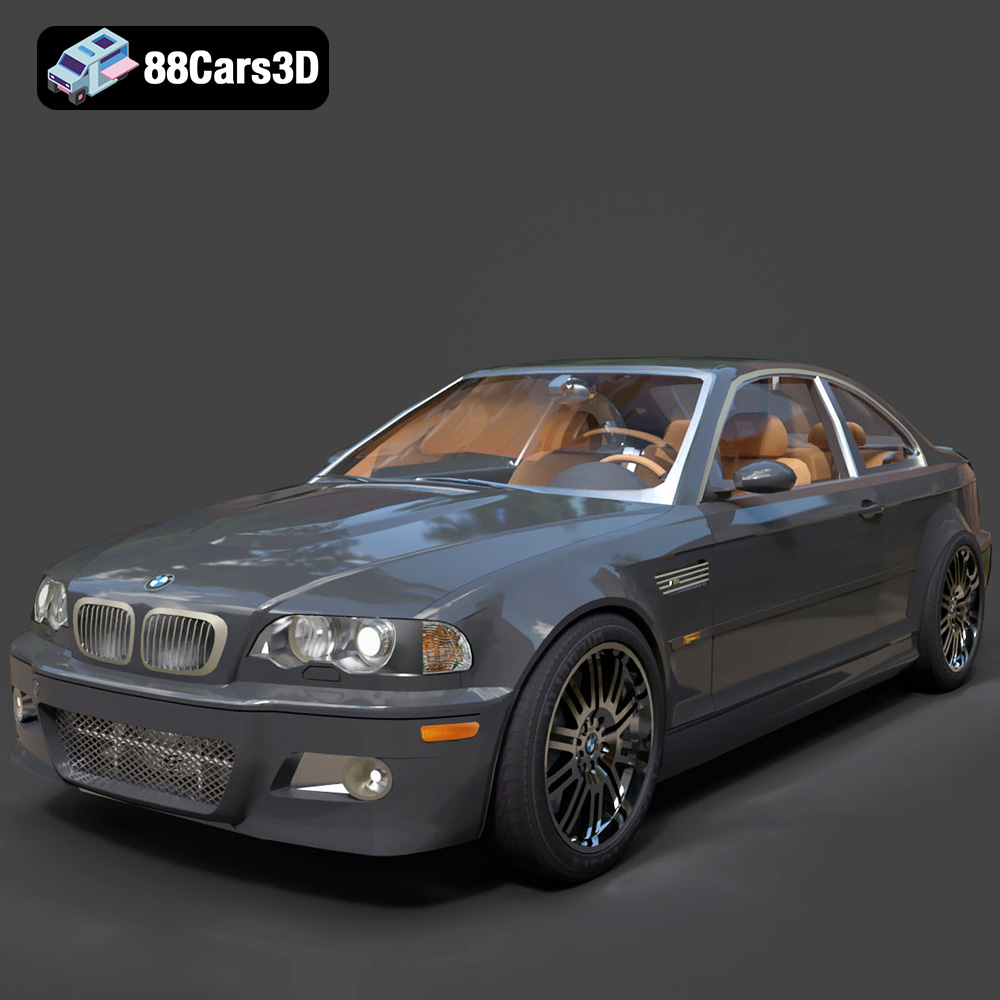
BMW M3 E46 3D Model
Texture: Yes
Material: Yes
Download the BMW M3 E46 3D Model featuring iconic sports car design and detailed interior. Includes .blend, .fbx, .obj, .glb, .stl, .ply, .unreal, and .max formats for rendering, simulation, and game development.
Price: $16.99

BMW i3 Coupe 3D Model
Texture: Yes
Material: Yes
Download the BMW i3 Coupe 3D Model featuring its iconic electric design and compact urban styling. Includes .blend, .fbx, .obj, .glb, .stl, .ply, .unreal, and .max formats for rendering, simulation, and game development.
Price: $17.99

BMW 645ci 2004-2005 3D Model
Texture: Yes
Material: Yes
Download the BMW 645ci 3D Model featuring a sleek, detailed exterior and optimized interior. Includes .blend, .fbx, .obj, .glb, .stl, .ply, .unreal, and .max formats for rendering, simulation, and game development.
Price: $10.79
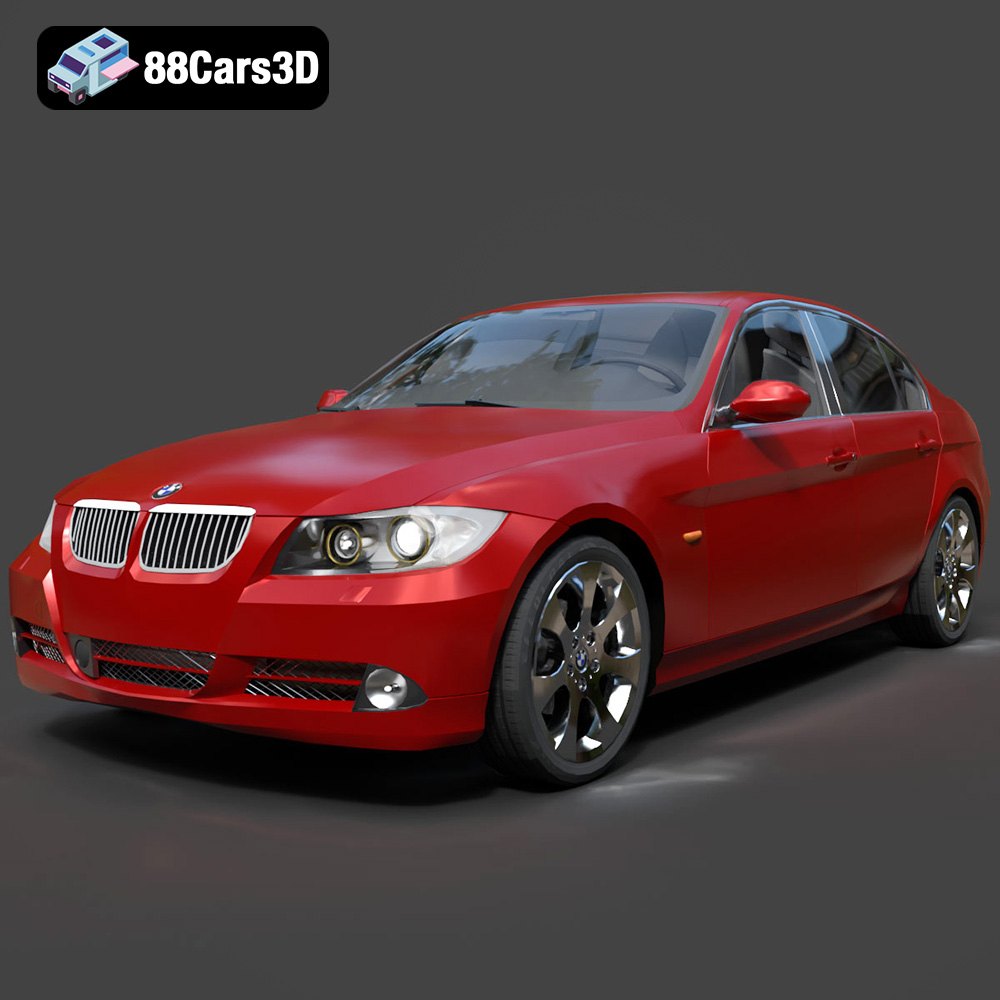
BMW 330i E90 3D Model
Texture: Yes
Material: Yes
Download the BMW 330i E90 3D Model featuring a detailed exterior, an optimized interior, and accurate mechanical components. Includes .blend, .fbx, .obj, .glb, .stl, .ply, .unreal, and .max formats for rendering, simulation, and game development.
Price: $14.79
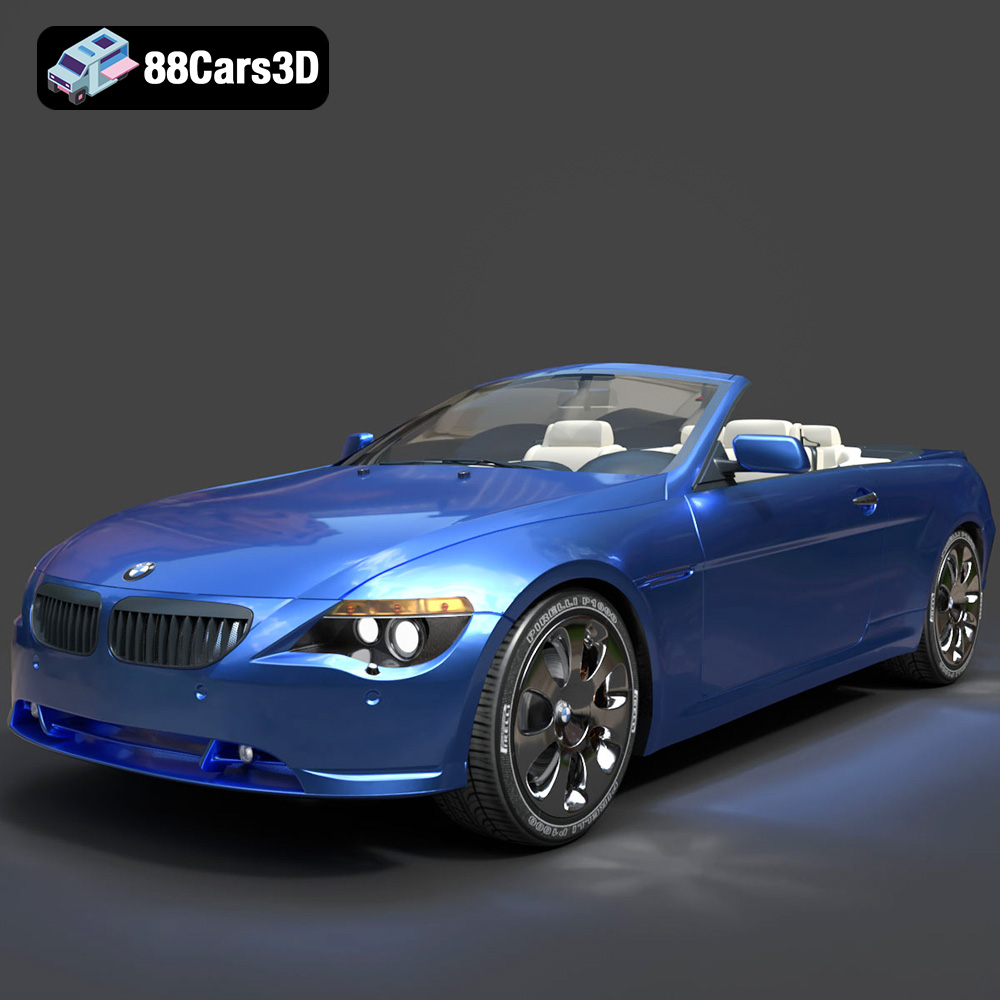
BMW 6 Series Convertible 3D Model
Texture: Yes
Material: Yes
Download the BMW 6 Series Convertible 3D Model featuring clean geometry, realistic detailing, and a fully modeled interior. Includes .blend, .fbx, .obj, .glb, .stl, .ply, .unreal, and .max formats for rendering, simulation, and game development.
Price: $14.99
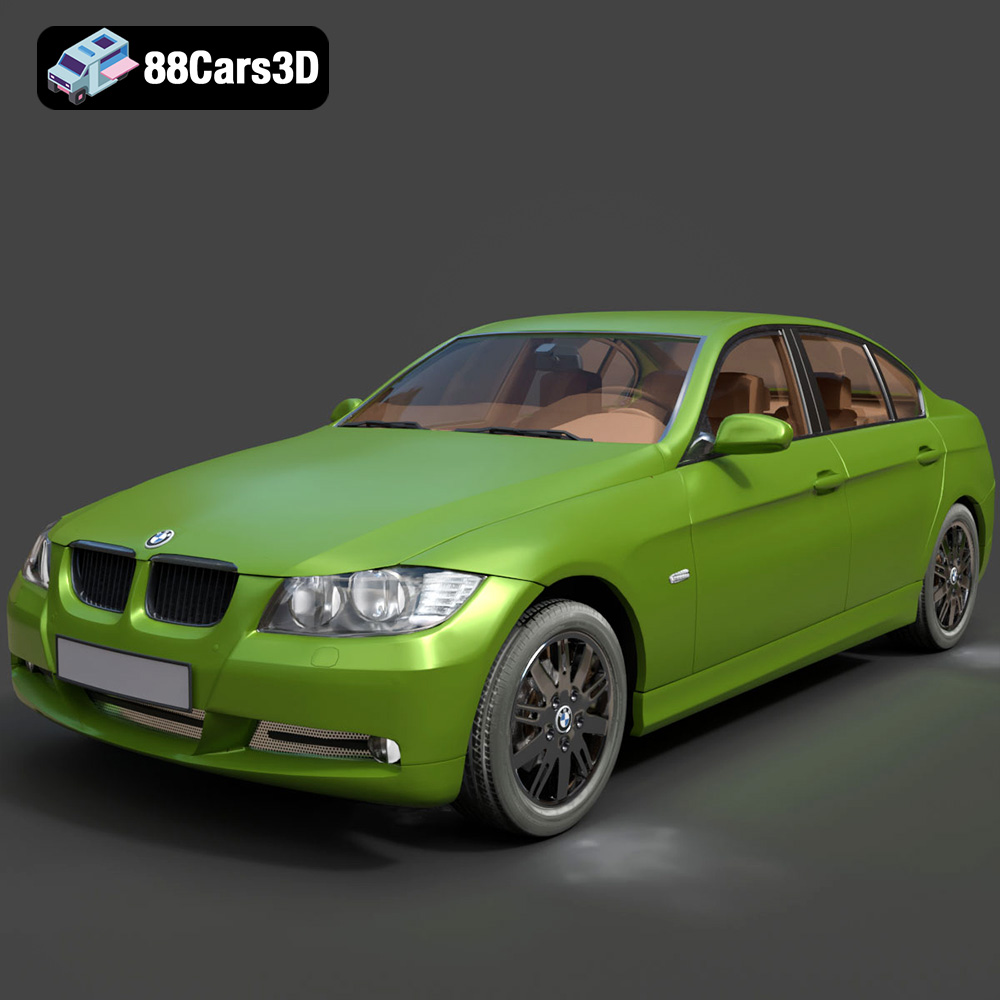
BMW 3-005 3D Model
Texture: Yes
Material: Yes
Download the BMW 3-005 3D Model featuring a sleek design, detailed exterior and interior. Includes .blend, .fbx, .obj, .glb, .stl, .ply, .unreal, and .max formats for rendering, simulation, and game development.
Price: $14.99

BMW Vision Effecient Dynamics-007 3D Model
Texture: Yes
Material: Yes
Download the BMW Vision Effecient Dynamics-007 3D Model featuring a sleek, futuristic design and hybrid concept aesthetics. Includes .blend, .fbx, .obj, .glb, .stl, .ply, .unreal, and .max formats for rendering, simulation, and game development.
Price: $14.99
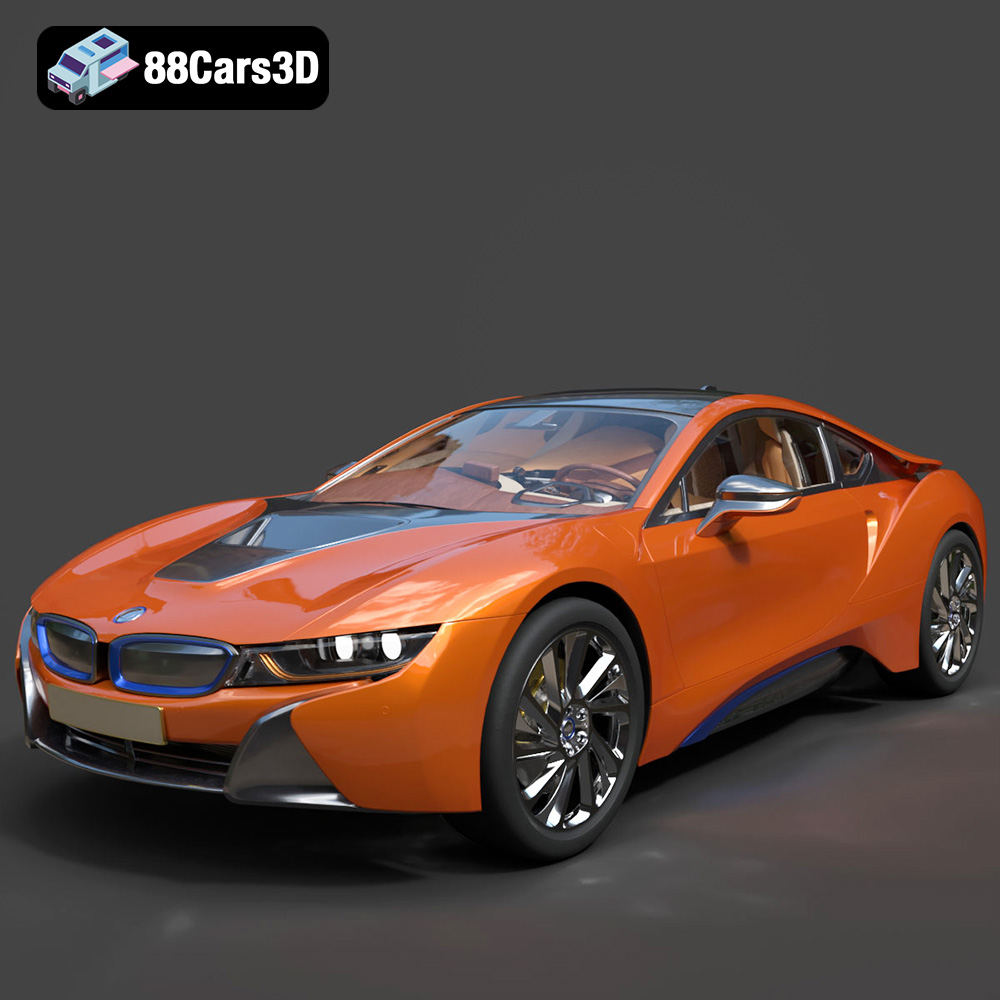
BMW i8 2015 3D Model
Texture: Yes
Material: Yes
Download the BMW i8 2015 3D Model featuring clean geometry, realistic detailing, and a fully modeled interior. Includes .blend, .fbx, .obj, .glb, .stl, .ply, .unreal, and .max formats for rendering, simulation, and game development.
Price: $12.99

BMW 4 Series F32 3D Model
Texture: Yes
Material: Yes
Download the BMW 4 Series F32 3D Model featuring clean geometry, realistic detailing, and a fully modeled interior. Includes .blend, .fbx, .obj, .glb, .stl, .ply, .unreal, and .max formats for rendering, simulation, and game development.
Price: $12.99
