

From Raw Mesh to Ready-to-Print: Mastering STL File Cleanup in Blender for 88cars3d.com
The thrill of 3D printing a meticulously detailed car model, straight from your digital library, is undeniable. Whether you’re a seasoned maker, a dedicated collector, or an automotive enthusiast looking to bring iconic vehicles to life, high-quality STL files are the cornerstone of a successful print. However, not all STL files are created equal. Often, models downloaded from various sources, or even those created from scratch, can contain errors – flipped normals, non-manifold geometry, holes, or intersecting faces – that can lead to printing failures.
This is where the crucial step of STL file cleanup comes in. While dedicated 3D repair software exists, the powerful and free 3D creation suite, Blender, offers a surprisingly robust and accessible toolkit for diagnosing and fixing these common mesh issues. In this comprehensive guide, we’ll walk you through the essential techniques for cleaning up your STL files using Blender, ensuring that your next print, especially those beautiful printable car models from marketplaces like 88cars3d.com, is a resounding success. We’ll cover everything from understanding common STL errors to leveraging Blender’s editing tools for precise mesh repair, ultimately empowering you to achieve flawless prints every time.
Understanding Common STL File Errors for 3D Printing
Before diving into Blender, it’s essential to understand the types of errors that commonly plague STL files and can prevent them from being sliced or printed correctly. These errors often stem from the way 3D models are represented digitally – as a mesh of interconnected triangles. When these triangles are not oriented correctly or connected properly, they can create a faulty representation of a solid object, confusing both slicing software and your 3D printer.
The STL file format, while ubiquitous, is relatively simple. It describes a 3D surface geometry using triangular facets. Each facet is defined by three vertices and a normal vector, which indicates the outward-pointing direction of the surface. Problems arise when this information is inconsistent or incomplete, leading to a mesh that is not “watertight” or “manifold.” For 3D printing, especially with FDM printers that build layer by layer, a watertight model is paramount. Imagine trying to pour water into a leaky bucket – the printer faces a similar challenge when trying to interpret a flawed mesh.
Common issues include:
- Non-Manifold Edges/Vertices: These occur when more than two triangles share a single edge or vertex in a way that doesn’t form a continuous surface. Think of a vertex where multiple faces meet at an odd angle, or an edge shared by three or more faces. This creates ambiguity about which side is “inside” and which is “outside.”
- Holes (Gaps): These are simply missing faces in the mesh, creating openings where there should be a solid surface. They can be small and inconspicuous or large gaping holes that render the model unprintable.
- Flipped Normals: The normal vector indicates the “outside” of a face. If normals are flipped, they point inwards, effectively inverting the surface and confusing the slicer about the model’s orientation and solidness. This can lead to internal geometry being printed as external, or vice-versa, and can cause significant slicing errors.
- Interpenetrating Faces: These are faces that occupy the same space or overlap in ways that create self-intersections within the mesh. This is like a crumpled piece of paper within your model – the printer doesn’t know how to navigate these impossible geometric configurations.
- Degenerate Faces: These are triangles with zero area, often caused by duplicate vertices or vertices lying on the same line. They don’t contribute to the model’s geometry but can still cause processing errors.
Identifying these errors is the first step. Fortunately, Blender provides tools to visualize and often automatically fix many of them.
Importing and Initial Inspection in Blender
Blender, a free and open-source 3D creation suite, is a powerhouse for 3D modeling, sculpting, animation, and more. Its robust mesh editing capabilities make it an excellent tool for preparing STL files for printing. The first step is to import your model into Blender.
Upon launching Blender, you’ll typically see a default scene with a cube, a light, and a camera. You can delete these by selecting them (right-click or left-click depending on your settings) and pressing the ‘X’ key, then confirming the deletion. Next, navigate to File > Import > STL (.stl). Locate your STL file and click “Import STL.” Your car model will now appear in the 3D viewport.
Once imported, it’s crucial to get a general overview of the model and look for obvious issues. Switch to Edit Mode by selecting your imported object in the 3D viewport and pressing the ‘Tab’ key. This mode allows you to manipulate the individual vertices, edges, and faces of the mesh.
Visualizing Mesh Problems
Blender offers several ways to visually inspect your mesh for errors:
- Face Orientation Overlay: In Edit Mode, go to the Overlays menu (top right of the 3D viewport, looks like two overlapping circles). Under “Geometry,” enable “Face Orientation.” Your mesh will turn blue for faces with correctly oriented normals (pointing outwards) and red for faces with flipped normals (pointing inwards). You’re aiming for a completely blue mesh.
- Wireframe View: Press ‘Z’ and select “Wireframe” or enable the “Invert” option in the Overlays menu under “Display As” to see the underlying geometry more clearly. This can help spot intersecting faces or complex internal structures.
- Normal Vector Display: In the “Overlays” menu, you can also enable “Normals” to visualize the direction of each face’s normal vector. This is particularly useful for understanding orientation issues.
Take your time to rotate around the model and zoom in on different areas. Pay close attention to any red faces identified by the Face Orientation overlay. These are the most immediate and critical errors to address.
Checking for Non-Manifold Geometry
Blender has a built-in tool to help identify non-manifold geometry. In Edit Mode, with the entire mesh selected (press ‘A’ if not already), go to the Select menu at the top of the viewport, then navigate to Select All by Trait > Non Manifold. This will highlight any vertices, edges, or faces that Blender considers non-manifold. These highlighted areas often correspond to holes, internal faces, or complex edge connections that need attention.
By combining these visual inspection techniques, you can gain a comprehensive understanding of your STL file’s integrity before you even start making corrections.
Manual Mesh Repair Techniques in Blender
While Blender offers some automated repair tools, many common STL errors, especially those found in complex models like printable car models, require manual intervention for precise correction. This is where Blender’s powerful Edit Mode tools shine. The goal is to ensure the mesh is “watertight” – a single, continuous, closed surface with no holes or self-intersections.
Let’s address the common issues identified previously:
Fixing Flipped Normals
As seen with the Face Orientation overlay, red faces indicate flipped normals. To correct them:
- In Edit Mode, select the red faces (you can hold ‘Shift’ to select multiple faces).
- Press ‘Shift + N’ to recalculate normals. By default, this tries to make them consistent with the surrounding geometry.
- If ‘Shift + N’ doesn’t work, or if you need to flip specific faces, select the problematic faces, press ‘Alt + N’ to bring up the “Flip” menu, and choose “Flip.”
- It’s often beneficial to select all faces (‘A’) and then press ‘Shift + N’ to recalculate normals for the entire mesh. This usually fixes most orientation issues.
Closing Holes
Holes are identified by the “Non Manifold” selection tool or by visual inspection. To close them:
- In Edit Mode, switch to Edge Select mode (press ‘2’ on the number row or click the Edge Select icon).
- Select the edges forming the boundary of the hole. You can often double-click an edge to select an entire loop. For a hole, select all edges around its perimeter.
- Press ‘F’ to create a new face (fill) connecting the selected edges. If the hole is complex, Blender might create multiple faces.
- For more complex holes or to ensure a clean fill, you might need to manually add vertices (‘Ctrl + Left Click’) and create faces by selecting three or four vertices (‘F’).
Dealing with Non-Manifold Edges and Vertices
Non-manifold geometry is trickier and often requires careful cleanup:
- Use the Select All by Trait > Non Manifold tool in Edit Mode to highlight problematic areas.
- Merging Vertices: If you find duplicate vertices (often indicated by multiple faces sharing a single point), select them and press ‘M’ (Merge). Choose “By Distance” to merge vertices that are very close to each other, or “At Center” or “Cursor” to merge them at a specific point.
- Removing Internal Faces: If the non-manifold selection highlights faces that are inside the model’s volume or intersecting, delete them (‘X’ key > Faces).
- Rebuilding Geometry: In some cases, especially with complex non-manifold issues, you might need to delete the problematic geometry and manually rebuild the correct faces using the edge and vertex selection tools described for closing holes.
When working with intricate models from sources like 88cars3d.com, these manual steps ensure that every detail is preserved and correctly represented for printing. Patience and careful selection are key.
Leveraging Blender’s Automated Tools and Modifiers
While manual editing is often necessary for the best results, Blender also provides powerful automated tools and modifiers that can significantly speed up the STL file cleanup process. These tools are particularly useful for addressing issues that affect the overall structure or shell of your model.
One of the most powerful built-in tools for mesh repair is the “3D-Print Toolbox” add-on. It’s not enabled by default but is incredibly useful for anyone preparing models for 3D printing. To enable it: Go to Edit > Preferences > Add-ons. Search for “3D-Print Toolbox” and check the box to enable it. Once enabled, you’ll find a new panel in the 3D viewport’s sidebar (press ‘N’ to open/close the sidebar) under the “3D-Print” tab.
Using the 3D-Print Toolbox
The 3D-Print Toolbox offers several one-click solutions:
- Check All: This function analyzes your mesh for various common errors, including non-manifold edges, self-intersections, holes, and more. It provides a summary of the issues found.
- Make Manifold: This button attempts to automatically fix non-manifold geometry. While not always perfect, it can resolve many common issues with a single click.
- Solidify / Check Thickness: Essential for 3D printing, this tool helps ensure your model has adequate wall thickness. It can identify areas that are too thin or even non-existent (holes) and provides options to fix them.
- Export Checks: It includes checks specifically tailored for STL export, helping you catch problems before you save the file.
When using automated tools, always inspect the results. Sometimes, an automatic fix might introduce new issues or alter details you wanted to preserve.
The Remesh Modifier for Complex Issues
For severely corrupted meshes or models with very dense, messy geometry, the Remesh Modifier can be a lifesaver. It essentially rebuilds the mesh topology based on a voxel grid or other algorithms, creating a cleaner, more uniform mesh.
- In Object Mode, select your imported STL file.
- Go to the Modifiers tab (wrench icon) in the Properties panel.
- Click “Add Modifier” and select “Remesh.”
- Choose a Remesh Mode: “Voxel” is common for cleaning up geometry.
- Adjust the “Voxel Size” or “Octree Depth” parameters. A smaller Voxel Size or higher Octree Depth leads to a more detailed but denser mesh. Start with a higher value (e.g., 0.1 or 0.05) and gradually decrease it until you achieve the desired level of detail without creating excessive polygons.
- Once you’re happy with the preview, apply the modifier (click the down arrow next to the modifier name and select “Apply”).
- After applying the Remesh modifier, it’s often necessary to switch back to Edit Mode and clean up any remaining minor issues, such as flipped normals or small holes, using the manual techniques described earlier.
The Remesh modifier is a powerful tool for tackling complex geometry, ensuring that even models with significant topological flaws can be salvaged for printing, preserving the integrity of intricate designs found on platforms like 88cars3d.com.
Exporting Clean STL Files for Slicing Software
Once you’ve meticulously cleaned your STL file in Blender, the final step is to export it in a format that your 3D printer slicing software (like Cura, PrusaSlicer, Simplify3D) can understand and process effectively. The export process itself needs to be configured correctly to ensure that the cleaned geometry is preserved and that the resulting file is free of new errors.
Blender’s STL exporter is quite capable, but there are a few key settings to be aware of. After you’ve finished all your edits in Edit Mode and are satisfied with the watertight nature of your model, switch back to Object Mode. Select the object you wish to export.
Export Settings in Blender
Navigate to File > Export > Stl (.stl). A file browser window will appear with export options, typically on the right-hand side. Here are the crucial settings to consider:
- Selection Only: If you have multiple objects in your scene but only want to export the one you’ve cleaned, ensure “Selection Only” is checked. This prevents exporting other stray objects or lights.
- Scale: By default, Blender exports in its internal units. If your model’s scale is set correctly within Blender (you can check and adjust this in the “Item” tab of the sidebar, press ‘N’), you can usually leave the Scale at 1.0. However, if your slicer interprets units differently, you might need to adjust this. For example, if your model is in millimeters within Blender and you want it in millimeters in the slicer, Scale 1.0 is correct. If your model was in meters and you need millimeters, you’d set Scale to 1000.
- Scene Unit: Ensure this is unchecked unless you specifically need to export based on scene units.
- Apply Modifiers: Make sure this checkbox is enabled if you used any modifiers (like Remesh or Mirror) that you want to be permanently applied to the exported mesh. If you want to keep modifiers unapplied in the exported file, uncheck this, but for STL, applying them is generally recommended.
- Forward/Up Axis: For STL, the default X Forward, Z Up is usually fine, but if your slicer imports models incorrectly oriented, you might experiment with these settings (e.g., Y Forward, Z Up).
Once the settings are configured, choose a filename and location, and click “Export STL.”
Verifying the Exported STL
Before you load the STL into your slicer, it’s a good practice to perform a quick verification:
- Re-import into Blender: Delete your current scene and import the STL file you just exported. Repeat the initial inspection steps (Face Orientation, Select Non Manifold). This double-checks that no new errors were introduced during export.
- Use Meshmixer or Netfabb (Optional): For an extra layer of security, you can import the exported STL into free software like Autodesk Meshmixer or use the trial version of Autodesk Netfabb. Both have excellent analysis tools that can identify potential printing issues and often provide automated repair options if minor problems still exist. These tools are specifically designed for mesh analysis and repair, offering a complementary perspective to Blender.
This diligent export and verification process ensures that the STL files you’ve worked so hard to clean are truly print-ready, minimizing surprises when you load them into your slicer for the next stage of the 3D printing workflow.
Advanced Tips and Common Pitfalls
Mastering STL file cleanup in Blender involves not just understanding the basic tools but also anticipating common challenges and employing efficient workflows. As you work with more complex models, especially detailed printable car models, you’ll encounter situations that go beyond simple holes or flipped normals.
One significant aspect is managing polygon count. While a highly detailed model might have millions of polygons, excessively high counts can slow down Blender, slicers, and even printing firmware. Conversely, too few polygons can result in a loss of detail. The Remesh modifier, as discussed earlier, is excellent for creating a more uniform and manageable mesh density. Additionally, Blender’s “Decimate” modifier can be used to reduce polygon count while trying to preserve the overall shape, though it should be used with caution as it can sometimes introduce artifacts.
Handling Thin Walls and Details
A common pitfall is models having walls or details that are too thin to be printed by your specific 3D printer and chosen material. The 3D-Print Toolbox’s “Check Thickness” feature is invaluable here. It can highlight areas below a user-defined minimum thickness.
- Manual Thickening: If the tool highlights thin areas, you might need to manually extrude faces slightly outwards in Edit Mode (select faces, press ‘E’, then move).
- Scaling Up: In some cases, if the entire model is proportionally too small and details are suffering, consider scaling up the model within Blender (Object Mode, ‘S’ key) to increase the thickness of all features before exporting. Remember to adjust your slicer settings accordingly.
- Printer Limitations: Always be aware of your printer’s capabilities. A 0.4mm nozzle has limitations on how fine a detail it can resolve. For extremely fine details, a smaller nozzle or a resin printer might be necessary.
Self-Intersections and Overlapping Geometry
These are particularly troublesome because they create impossible geometries. The 3D-Print Toolbox’s “Check All” function can often detect them.
- Manual Correction: Self-intersections often require careful manual editing. You might need to delete the intersecting faces and rebuild the geometry correctly. Sometimes, parts of the mesh might need to be separated (select faces, ‘P’ key > Selection), cleaned individually, and then reattached.
- Remesh Modifier: As mentioned, the Remesh modifier can sometimes “smooth out” or resolve minor self-intersections by rebuilding the topology.
When downloading models from marketplaces such as 88cars3d.com, vendors typically strive to provide clean files. However, occasional issues can still arise, and knowing these advanced techniques will ensure you can always achieve a perfect print. Always keep a backup of your original STL file before starting any repair process.
Conclusion: Your Path to Flawless 3D Prints
The journey from a raw STL file to a perfectly printed 3D model, especially intricate automotive designs, hinges on meticulous preparation. While the allure of instant printing is strong, understanding and mastering the art of STL file cleanup is a skill that separates hobbyists from true makers. Blender, a free, powerful, and versatile software, provides an accessible yet comprehensive suite of tools to tackle common mesh errors like flipped normals, holes, and non-manifold geometry.
We’ve explored how to import and visually inspect your models, identify critical errors using overlays and selection tools, and employ both manual editing techniques (like filling holes and flipping normals) and Blender’s automated features (such as the 3D-Print Toolbox and Remesh modifier). Furthermore, we’ve covered the crucial final steps of exporting clean files and performing verification checks, ensuring your model is ready for any slicing software. By integrating these practices into your workflow, you significantly reduce the likelihood of printing failures and enhance the quality of your final output.
Whether you’re downloading a classic car from 88cars3d.com or working on your own designs, investing time in mesh cleanup with Blender will yield dramatic improvements. Remember to practice these techniques, stay patient with complex models, and always be aware of your specific 3D printer’s capabilities. With these skills, you’re well-equipped to bring your automotive creations to life with stunning accuracy and reliability. Happy printing!
Featured 3D Car Models

Bentley Mulsanne Luxury Sedan 3D Model
Texture: Yes
Material: Yes
Download the Bentley Mulsanne Luxury Sedan 3D Model featuring clean geometry, realistic detailing, and a fully modeled interior. Includes .blend, .fbx, .obj, .glb, .stl, .ply, .unreal, and .max formats for rendering, simulation, and game development.
Price: $14.99

Bentley Continental GT 2011 3D Model
Texture: Yes
Material: Yes
Download the Bentley Continental GT 2011 3D Model featuring clean geometry, realistic detailing, and a fully modeled interior. Includes .blend, .fbx, .obj, .glb, .stl, .ply, .unreal, and .max formats for rendering, simulation, and game development.
Price: $14.99

Bentley Continental Flying Spur 3D Model
Texture: Yes
Material: Yes
Download the Bentley Continental Flying Spur 3D Model featuring clean geometry, realistic detailing, and a fully modeled interior. Includes .blend, .fbx, .obj, .glb, .stl, .ply, .unreal, and .max formats for rendering, simulation, and game development.
Price: $14.99
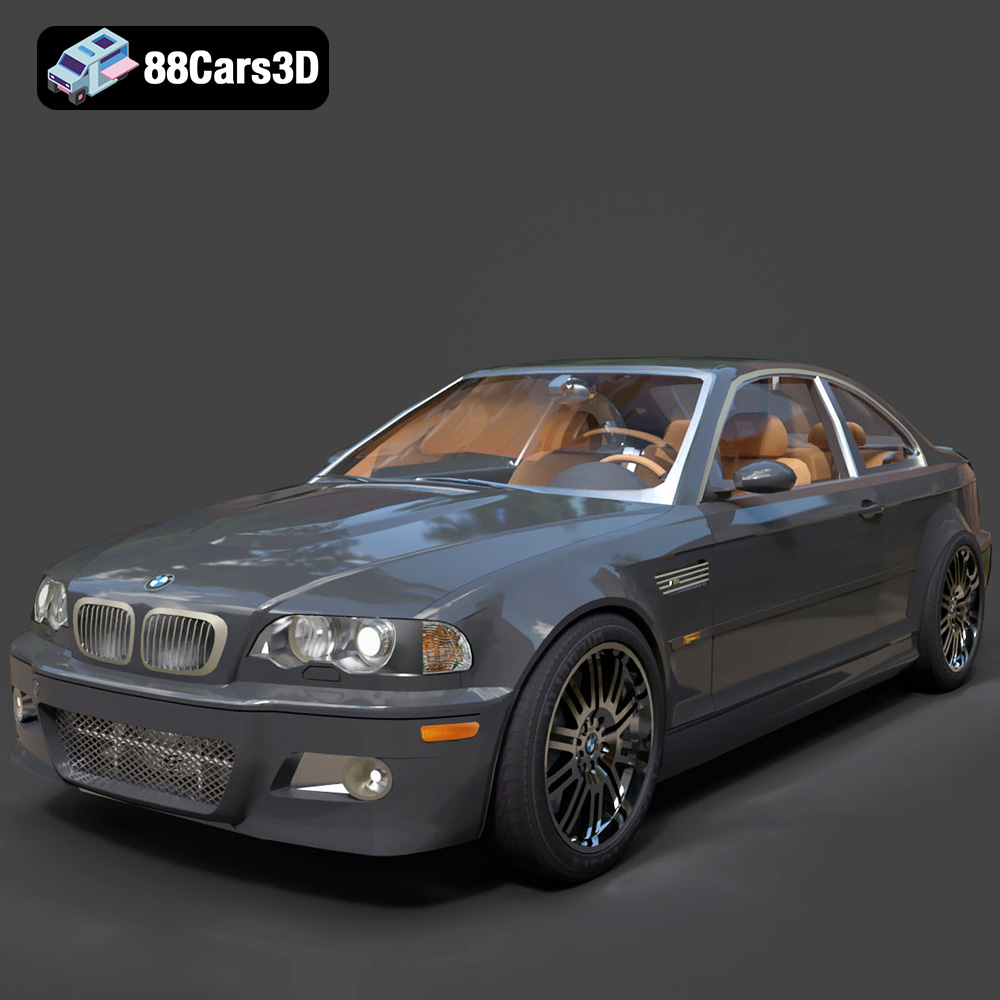
BMW M3 E46 3D Model
Texture: Yes
Material: Yes
Download the BMW M3 E46 3D Model featuring iconic sports car design and detailed interior. Includes .blend, .fbx, .obj, .glb, .stl, .ply, .unreal, and .max formats for rendering, simulation, and game development.
Price: $16.99

BMW i3 Coupe 3D Model
Texture: Yes
Material: Yes
Download the BMW i3 Coupe 3D Model featuring its iconic electric design and compact urban styling. Includes .blend, .fbx, .obj, .glb, .stl, .ply, .unreal, and .max formats for rendering, simulation, and game development.
Price: $17.99

BMW 645ci 2004-2005 3D Model
Texture: Yes
Material: Yes
Download the BMW 645ci 3D Model featuring a sleek, detailed exterior and optimized interior. Includes .blend, .fbx, .obj, .glb, .stl, .ply, .unreal, and .max formats for rendering, simulation, and game development.
Price: $10.79

BMW 330i E90 3D Model
Texture: Yes
Material: Yes
Download the BMW 330i E90 3D Model featuring a detailed exterior, an optimized interior, and accurate mechanical components. Includes .blend, .fbx, .obj, .glb, .stl, .ply, .unreal, and .max formats for rendering, simulation, and game development.
Price: $14.79

BMW 6 Series Convertible 3D Model
Texture: Yes
Material: Yes
Download the BMW 6 Series Convertible 3D Model featuring clean geometry, realistic detailing, and a fully modeled interior. Includes .blend, .fbx, .obj, .glb, .stl, .ply, .unreal, and .max formats for rendering, simulation, and game development.
Price: $14.99

BMW 3-005 3D Model
Texture: Yes
Material: Yes
Download the BMW 3-005 3D Model featuring a sleek design, detailed exterior and interior. Includes .blend, .fbx, .obj, .glb, .stl, .ply, .unreal, and .max formats for rendering, simulation, and game development.
Price: $14.99

BMW Vision Effecient Dynamics-007 3D Model
Texture: Yes
Material: Yes
Download the BMW Vision Effecient Dynamics-007 3D Model featuring a sleek, futuristic design and hybrid concept aesthetics. Includes .blend, .fbx, .obj, .glb, .stl, .ply, .unreal, and .max formats for rendering, simulation, and game development.
Price: $14.99
