

Unleashing Digital Precision: The Power of High-Fidelity 3D Car Models in Modern Workflows
In the dynamic world of digital content creation, the demand for exceptionally detailed and versatile 3D assets continues to grow. From blockbuster game titles and cinematic sequences to sophisticated architectural visualizations and immersive AR/VR experiences, the quality of a 3D model can significantly impact the final output and efficiency of a project. Automotive design, in particular, thrives on precision and realism, requiring models that capture every curve, contour, and mechanical detail with uncompromising accuracy.
This is where expertly crafted 3D car models become indispensable. They serve as the digital backbone for artists, designers, and developers looking to integrate lifelike vehicles into their projects without the prohibitive costs and time associated with creating them from scratch. Whether you’re aiming for a photorealistic render or an optimized game asset, the fundamental elements remain the same: clean topology, accurate scaling, and comprehensive material setups.
Today, we’re diving deep into the technical intricacies and expansive applications of premium 3D vehicle assets, highlighting how models like the Cadillac CTS-V Coupe 3D Model exemplify the pinnacle of digital automotive artistry. Available on platforms like 88cars3d.com, this model isn’t just a static representation; it’s a meticulously engineered digital twin designed to empower professionals across a multitude of industries. Its robust file format support and exquisite detailing make it a prime example of what a high-performance 3D car model should offer.
The Foundation of Digital Automotive Excellence: Understanding 3D Model File Formats
Choosing the right 3D model file format is crucial for workflow efficiency, compatibility, and achieving specific project goals. A truly versatile 3D car model, such as the Cadillac CTS-V Coupe 3D Model, provides a comprehensive suite of formats, each serving distinct purposes. Understanding their technical nuances ensures a seamless integration into your preferred software and pipeline.
.blend – Blender’s Native Powerhouse
The `.blend` format is Blender’s native file type, offering a complete scene package. When you download a `.blend` file, you’re not just getting the mesh; you’re receiving a fully editable Blender project. This includes the model’s geometry, materials (often set up with Cycles or Eevee render engines), textures, lighting, camera setups, and even animations if present. For artists working primarily in Blender, this format provides the highest degree of flexibility, allowing for direct modification of shaders, mesh data, and scene organization without any translation losses. It’s ideal for those who want to dive straight into rendering or animation within Blender’s powerful environment.
.fbx – The Industry’s Interoperability Standard
The `.fbx` (Filmbox) format, owned by Autodesk, has become the de facto standard for exchanging 3D data between different software applications. Its strength lies in its ability to encapsulate a wide array of 3D data, including geometry, materials, textures, animations, rigging, and even light and camera information. This makes it incredibly versatile for pipelines involving software like 3ds Max, Maya, Cinema 4D, and critically, game engines like Unreal Engine and Unity. For the Cadillac CTS-V Coupe 3D Model, the `.fbx` file ensures that the asset can be reliably imported into virtually any professional 3D suite, maintaining critical attributes like correct pivots for animation and material assignments. It’s often the preferred format for game assets due to its efficiency and comprehensive data handling.
.obj – The Universal Workhorse
The `.obj` (Wavefront Object) format is one of the oldest and most universally supported 3D file types. It primarily stores geometric data (vertices, normals, texture coordinates, and faces) and can reference an accompanying `.mtl` (Material Template Library) file for basic material properties and texture paths. While it doesn’t support advanced features like animation, rigging, or complex shader networks, its simplicity makes it incredibly robust for cross-software compatibility. Almost every 3D application can open and interpret an `.obj` file. It’s an excellent choice for straightforward mesh import when you intend to rebuild materials or integrate the model into a rendering pipeline where sophisticated material setups will be handled natively by the host software.
.glb – Streamlining AR/VR and Web Experiences
The `.glb` (GLB File Format) is the binary version of the glTF (GL Transmission Format), designed for efficient transmission and loading of 3D scenes and models by applications. It’s become the standard for AR, VR, and web-based 3D experiences due to its compact size and ability to embed all necessary assets (geometry, materials, textures, animations) into a single file. This “all-in-one” package significantly speeds up load times and simplifies deployment. For showcasing the Cadillac CTS-V Coupe in an interactive web viewer or an augmented reality application, the `.glb` format provides optimal performance and visual fidelity.
.stl – Bridging Digital to Physical
The `.stl` (Stereolithography) format is the industry standard for 3D printing. It represents a 3D model as a series of connected triangles, describing only the surface geometry of an object without color, texture, or other attributes. While it lacks visual data, its simplicity makes it ideal for additive manufacturing. When converting the Cadillac CTS-V Coupe 3D Model to `.stl`, designers can prepare it for physical replication, perhaps for creating scale models or rapid prototyping of custom parts, demonstrating the tangible applications of digital assets.
.ply – Precision for Engineering and Analysis
The `.ply` (Polygon File Format or Stanford Triangle Format) is a file format for storing 3D data from 3D scanners, CAD software, and other sources. It can store a variety of properties, including color, transparency, surface normals, and range data. `.ply` files are known for their precision and are often used in engineering, scientific visualization, and 3D scanning applications where exact geometrical representation and additional vertex/face attributes are critical. For detailed analysis or reverse engineering tasks involving the Cadillac CTS-V Coupe, the `.ply` format offers robust data integrity.
.unreal – Native Integration for Real-Time Perfection
The `.unreal` reference here typically implies an asset package or project setup specifically configured for Unreal Engine. While not a singular file format like `.fbx` or `.obj`, it signifies that the 3D car model, such as the Cadillac CTS-V Coupe, has been prepared and optimized with Unreal Engine’s specific requirements in mind. This often includes optimized meshes, PBR material setups (Physically Based Rendering), collision meshes, LODs (Levels of Detail), and potentially Blueprints for interactive elements. This “engine-ready” state drastically reduces setup time for game developers and real-time visualization artists, ensuring the model performs optimally within the demanding constraints of a real-time environment.
.max – 3ds Max: The Rendering and Animation Powerhouse
The `.max` format is Autodesk 3ds Max’s native scene file. Similar to Blender’s `.blend` format, it saves the entire 3ds Max project, encompassing geometry, modifiers, materials (V-Ray, Corona, Arnold, etc.), lighting, cameras, animation, and scene organization. For professionals heavily invested in the 3ds Max ecosystem for high-end automotive rendering and animation, the `.max` file provides complete control and direct access to every aspect of the scene. The Cadillac CTS-V Coupe 3D Model in `.max` format allows users to leverage 3ds Max’s powerful rendering capabilities to create stunning photorealistic visuals or integrate the car into complex animated sequences.
This comprehensive array of file formats for the Cadillac CTS-V Coupe 3D Model truly underscores its value as a versatile and future-proof asset, catering to virtually any professional 3D pipeline.
Crafting Realism: The Anatomy of a High-Quality 3D Car Model
The difference between a passable 3D car model and a professional-grade asset lies in the meticulous attention to detail and adherence to technical best practices. A model that truly stands out, like the Cadillac CTS-V Coupe 3D Model found on 88cars3d.com, is built from the ground up to support a wide range of applications, from static renders to interactive simulations.
Exterior Precision: From Body Lines to Brake Calipers
The exterior of a vehicle is its most defining characteristic, and capturing its essence in 3D requires exceptional skill. For the Cadillac CTS-V Coupe 3D Model, this means precise replication of the car’s distinctive body proportions, from its aggressive stance to its sleek roofline. High-quality 3D car models feature:
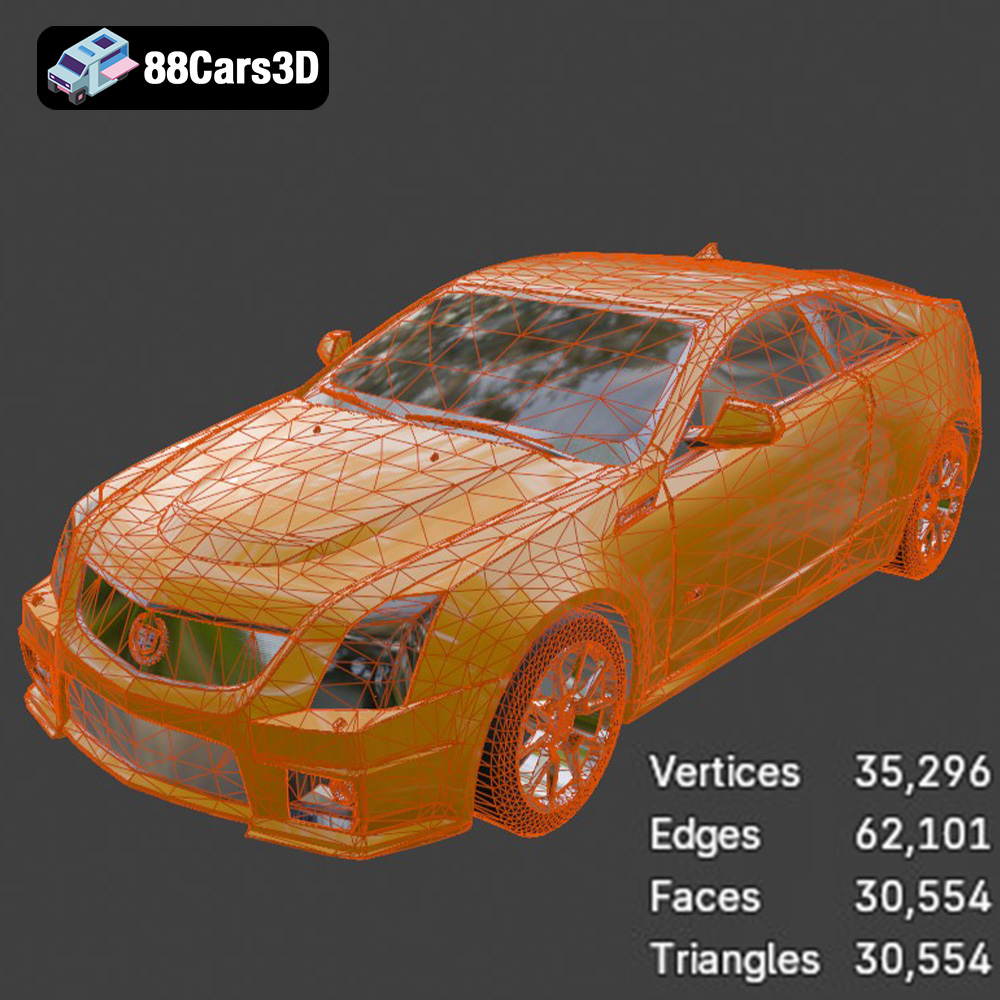
- Accurate Curvature and Surface Flow: The subtle nuances of sheet metal, the way light plays across panels, and the sharpness of design creases are critical. This demands clean, quad-dominant topology that facilitates smooth subdivision and avoids unsightly pinching or distortions.
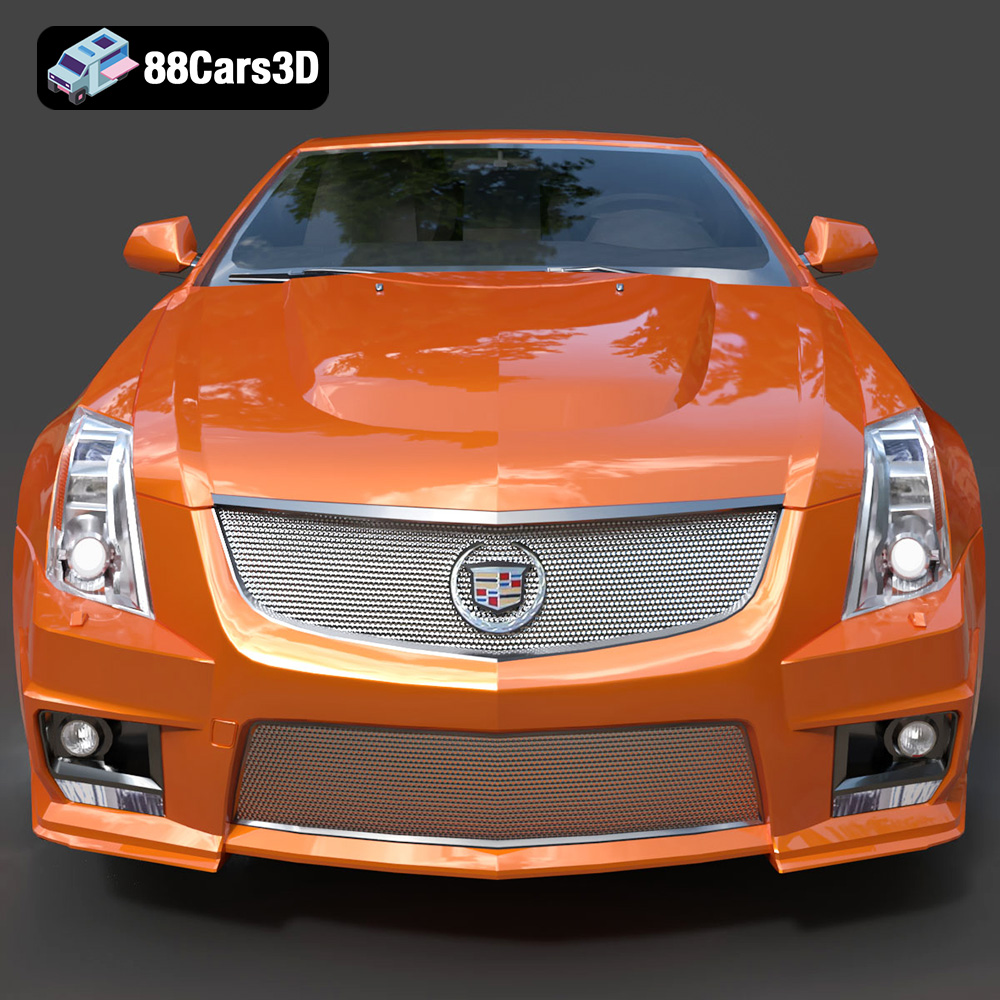
- Detailed Components: Headlights and taillights aren’t just blocks of color; they feature intricate lens patterns, reflectors, and light sources. The front grille is modeled with its unique mesh design, and air intakes are properly recessed.
- Under-the-Skin Detail: Wheels are not just flat disks; they are fully modeled with spokes, brake calipers, and disc rotors. Tires feature tread patterns, and often, even sidewall branding. Transparent glass materials for windows are properly set up to refract light realistically.
- Separated Elements for Animation: Doors, hood, trunk, and wheels are separate objects with correctly placed pivot points. This is essential for animation (opening doors, rotating wheels) and for customization workflows.
Interior Immersion: The Driver’s Perspective
While often unseen in external renders, a detailed interior significantly enhances the model’s versatility for close-up shots, virtual tours, or first-person game experiences. The Cadillac CTS-V Coupe 3D Model’s interior demonstrates this commitment to completeness:
- Modeled Cabin Elements: From the dashboard and steering wheel to the seating and center console, every major component is present. This includes instrument panels, air vents, and infotainment areas.
- Material and Texture Fidelity: High-quality interior models utilize PBR (Physically Based Rendering) materials that accurately represent different surfaces like leather, plastic, metal, and fabric, often with corresponding high-resolution textures for intricate details.
- Optimized Mesh Detailing: While detailed, interior meshes are often optimized to balance visual realism with polygon efficiency, ensuring the model remains performant in real-time engines.
Optimized Topology and Real-World Scale
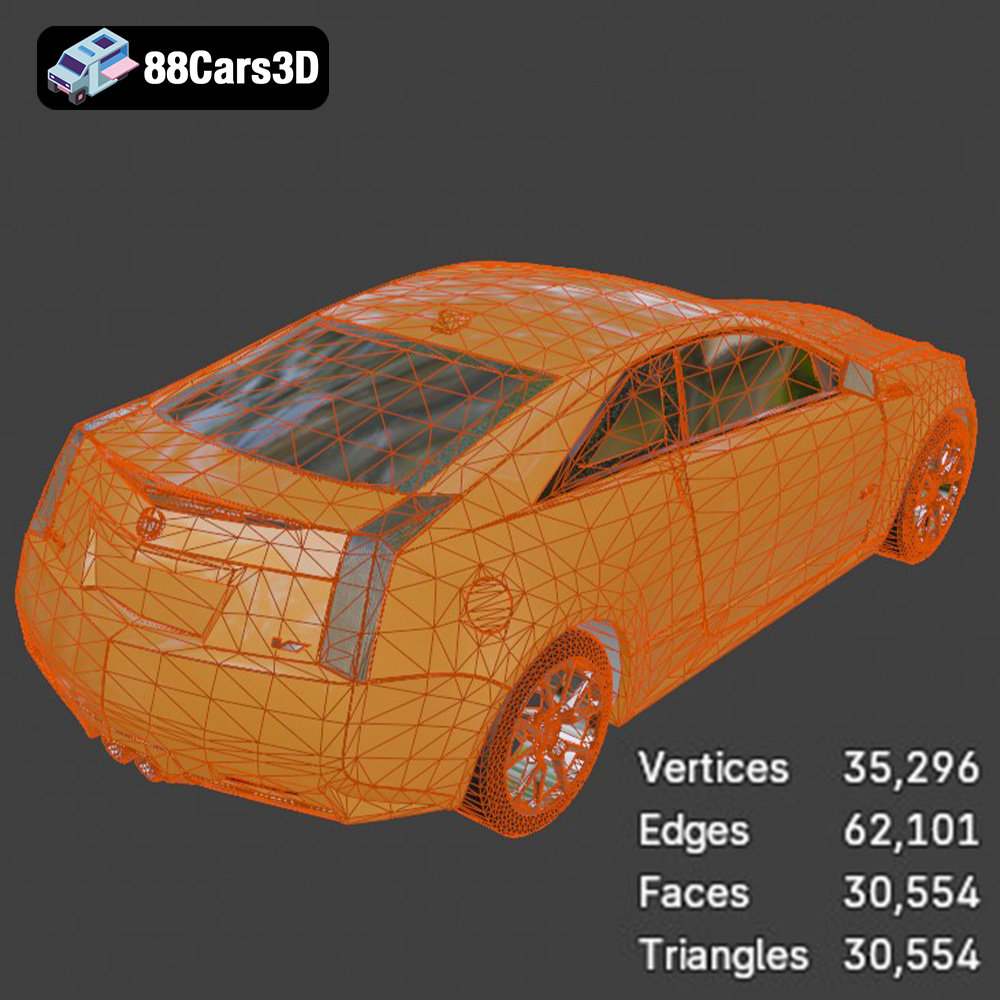
Underpinning all visual fidelity are core technical advantages. Clean quad-dominant topology ensures that the model can be easily edited, UV unwrapped, and subdivided for higher levels of detail without artifacts. This “clean mesh” is paramount for professional use. Furthermore, adherence to real-world scale is non-negotiable. The Cadillac CTS-V Coupe 3D Model, built to actual dimensions, ensures that it integrates seamlessly into existing scenes, architectural visualizations, or simulations without needing manual resizing, which can lead to rendering and physics inconsistencies. An organized hierarchy with correct pivots for all moving parts further streamlines animation and integration.
Professional Workflows: Integrating 3D Car Models into Your Pipeline
The true value of a premium 3D car model like the Cadillac CTS-V Coupe 3D Model from 88cars3d.com lies in its seamless integration into diverse professional workflows. It acts as a significant time-saver and quality enhancer for a broad spectrum of digital artists and developers.
High-Fidelity Rendering in 3ds Max and Blender
For professionals focused on creating stunning, photorealistic imagery, a high-quality 3D car model is a foundational asset.
- 3ds Max Workflow: When utilizing the `.max` file for 3ds Max, artists gain access to a pre-configured scene that often includes basic materials, proper scaling, and an organized hierarchy. Users can then apply their preferred advanced rendering solutions like V-Ray, Corona Renderer, or Arnold. This involves refining PBR materials (base color, roughness, metallic, normal maps), setting up complex studio lighting environments (HDRIs, area lights, dome lights), and orchestrating cinematic camera angles. The clean topology of the Cadillac CTS-V Coupe 3D Model allows for smooth subdivision for extreme close-ups without visual artifacts, crucial for luxury automotive marketing.
- Blender Workflow: The `.blend` file for Blender users provides an immediate starting point within their native software. Materials are typically set up for Cycles or Eevee, enabling quick renders. Artists can leverage Blender’s powerful nodes-based shader system to customize paint finishes (metallic flakes, clear coat), tire textures, and interior fabrics. Cycles, with its physically accurate rendering, can produce breathtaking photorealism, while Eevee offers real-time feedback for faster iterations, ideal for visualizing different customization options of the Cadillac CTS-V Coupe.
Game Development with Unreal Engine and Unity
In game development, the balance between visual quality and real-time performance is paramount. Assets need to be optimized, efficient, and easily integrated.
- Unreal Engine Workflow: The `.unreal` or `.fbx` formats are ideal for Unreal Engine. A well-prepared asset will already have appropriate UV layouts for lightmapping, optimized polygon counts (often with LODs – Levels of Detail for different distances), and collision meshes. Artists will import the model, apply PBR materials (setting up parameters like albedo, normal, roughness, metallic, ambient occlusion maps in Unreal’s material editor), and integrate it into the game world. The separated elements of the Cadillac CTS-V Coupe, like doors and wheels, are crucial for adding interactivity through Blueprints, enabling players to open doors, change tires, or simulate driving physics.
- Unity Workflow: Similar to Unreal, Unity developers will typically use the `.fbx` format. After import, materials are assigned and adjusted using Unity’s Standard Shader or custom PBR shaders. Collision meshes are generated, and LODs are configured to ensure smooth performance across various hardware specifications. For racing games or open-world environments, the accurately scaled and animated-ready Cadillac CTS-V Coupe 3D Model provides a high-quality vehicle that can be driven, customized, and experienced in real-time.
Architectural Visualization and Product Showcases
Beyond automotive-specific applications, high-quality 3D car models are essential for adding realism and context to broader visualization projects.
- Scene Composition: In architectural visualization, placing a luxury car like the Cadillac CTS-V Coupe in front of a modern home or within a street scene dramatically enhances realism and scale. The model serves as a “hero” asset that grounds the environment.
- Product Marketing: For companies developing automotive accessories, tire manufacturers, or even advertising agencies, these models are invaluable. They can be placed in virtual studios, animated for commercials, or used for interactive product configurators, allowing customers to visualize new features on a high-fidelity car model.
Beyond Visualization: Advanced Applications for Automotive 3D Assets
The utility of a high-quality 3D car model extends far beyond simple rendering. With the advancements in interactive technologies, assets like the Cadillac CTS-V Coupe 3D Model are becoming integral to cutting-edge applications, pushing the boundaries of immersive experiences.
Immersive AR/VR Experiences
Augmented Reality (AR) and Virtual Reality (VR) are transforming how we interact with digital content, offering unprecedented levels of immersion. 3D car models are at the forefront of this revolution, especially with formats like `.glb` optimized for these platforms.
- Virtual Showrooms: Imagine prospective buyers exploring the Cadillac CTS-V Coupe in a VR showroom, walking around it, opening doors, and even sitting virtually inside, examining every detail of the interior. High-fidelity models provide the necessary realism for such an experience, making virtual test drives or product demonstrations truly engaging.
- AR Car Configurators: Using an AR application, users could place the Cadillac CTS-V Coupe 3D Model on their driveway and change its paint color, wheel options, or interior trim in real-time, visualizing their dream car in their actual environment. This bridges the gap between digital aspiration and real-world perception, enhancing customer engagement and sales processes.
Simulation and Training Environments
Accuracy and realistic behavior are paramount in simulation and training. 3D car models are critical components in creating believable virtual scenarios.
- Driving Simulators: From professional race drivers to everyday learners, driving simulators require highly accurate vehicle models that behave realistically. The real-world scale and organized hierarchy of the Cadillac CTS-V Coupe 3D Model mean it can be integrated into physics engines to simulate realistic handling, weight distribution, and collision dynamics, providing an effective training tool.
- Emergency Response Training: Virtual environments can simulate accident scenarios, providing training for emergency services. A detailed car model allows for realistic damage deformation and interaction, improving the fidelity and effectiveness of training modules for paramedics, firefighters, and police.
3D Printing and Prototyping
Bridging the digital and physical worlds, 3D printing offers a tangible output for digital designs. The `.stl` format is the key here.
- Scale Models and Collectibles: Enthusiasts and collectors can use the `.stl` version of the Cadillac CTS-V Coupe 3D Model to 3D print physical scale models, creating bespoke collectibles or gifts. The precision of the digital model translates directly into the accuracy of the physical print.
- Design Prototyping: For automotive designers or aftermarket parts manufacturers, converting portions of the car model (or the entire vehicle) to `.stl` allows for rapid prototyping of new components or custom body kits. This enables quick iteration and physical testing of designs before committing to expensive manufacturing processes.
These advanced applications showcase the immense versatility and long-term value of investing in a high-quality 3D car model like the Cadillac CTS-V Coupe. It’s not merely an image generator but a foundational asset for innovation.
Maximizing Your Investment: Customization and Future-Proofing
A premium 3D car model isn’t just a static asset; it’s a foundation for creativity and adaptation. The thoughtful design and comprehensive file formats of models like the Cadillac CTS-V Coupe 3D Model ensure it remains valuable across current and future projects, offering unparalleled customization potential.
Tailoring Aesthetics: Colors, Decals, and Liveries
One of the most significant advantages of a well-structured 3D model is the ease with which its appearance can be modified to suit specific project needs.
- Paint Customization: Changing the paint color is fundamental. With a clean UV layout and PBR material setup, artists can easily adjust the base color, metallic properties, and clear coat effects to achieve any desired finish—from a classic factory metallic to a vibrant custom hue. The Cadillac CTS-V Coupe can be reimagined in countless color schemes.
- Decals and Branding: Whether for a racing game or a promotional render, applying custom decals, branding, or intricate liveries is straightforward. With proper UV mapping, textures can be layered onto specific areas of the body, allowing for endless personalization. This flexibility is crucial for advertising campaigns or creating unique variants for game assets.
- Performance Styling: Beyond surface treatments, designers can often adapt elements like wheel designs (by swapping out wheel models), adding aftermarket spoilers, or modifying subtle body kit elements, depending on the model’s component separation. This allows for creating “tuned” versions or demonstrating different styling options.
Animation Potential and Scene Integration
The carefully organized hierarchy and correct pivot points of the Cadillac CTS-V Coupe 3D Model unlock its full animation potential.
- Dynamic Sequences: Wheels can be rotated for driving animations, doors can be opened and closed, and the hood or trunk can be raised to reveal interior details or engine bays. This makes it perfect for cinematic cutscenes, product walkthroughs, or interactive experiences.
- Seamless Integration: With real-world scaling and clean geometry, the model integrates effortlessly into larger digital environments. Placing it into an architectural scene, a virtual city, or a custom backdrop becomes a fluid process, allowing artists to focus on lighting and composition rather than wrestling with scale or mesh issues.
The Value of a Versatile Asset like the Cadillac CTS-V Coupe
Investing in a high-quality, technically sound 3D car model provides enduring value. It reduces development time and costs, allows for creative freedom, and ensures consistency across various outputs. The Cadillac CTS-V Coupe 3D Model from 88cars3d.com, with its meticulous detailing, optimized topology, and extensive file format support, represents a smart choice for any professional seeking a reliable and adaptable automotive asset. Its versatility makes it suitable for demanding projects today and capable of evolving with future technological advancements.
Conclusion: Driving Digital Excellence with Premium 3D Car Models
The landscape of 3D content creation is constantly evolving, demanding higher levels of detail, optimization, and versatility from digital assets. High-quality 3D car models are no longer just supplementary; they are central to achieving photorealistic renders, immersive game experiences, innovative AR/VR applications, and precise simulations. The technical considerations, from topology and scale to multi-format support, are what elevate a model from good to indispensable.
The Cadillac CTS-V Coupe 3D Model stands as a testament to this commitment to excellence. Its powerful and refined representation, coupled with meticulous exterior and interior detailing, makes it an outstanding asset for a wide range of professional applications. Whether you’re a rendering artist aiming for cinematic perfection, a game developer building a realistic open world, or a designer exploring new AR/VR frontiers, this model provides a robust and flexible foundation.
By offering a comprehensive array of file formats including .blend, .fbx, .obj, .glb, .stl, .ply, .unreal, and .max, this model ensures maximum compatibility and efficiency across diverse pipelines. It empowers creators to leverage powerful software like 3ds Max, Blender, and Unreal Engine without compromising on visual fidelity or technical performance.
Ultimately, investing in premium 3D car models like the Cadillac CTS-V Coupe 3D Model from 88cars3d.com is an investment in efficiency, quality, and creative freedom. It frees artists and developers from the complexities of creating complex assets from scratch, allowing them to focus on crafting compelling narratives and breathtaking visuals that truly resonate. For your next project requiring a high-performance luxury vehicle, consider the unparalleled advantages of this meticulously engineered 3D asset.
Featured 3D Model
Cadillac CTS-V Coupe 3D Model
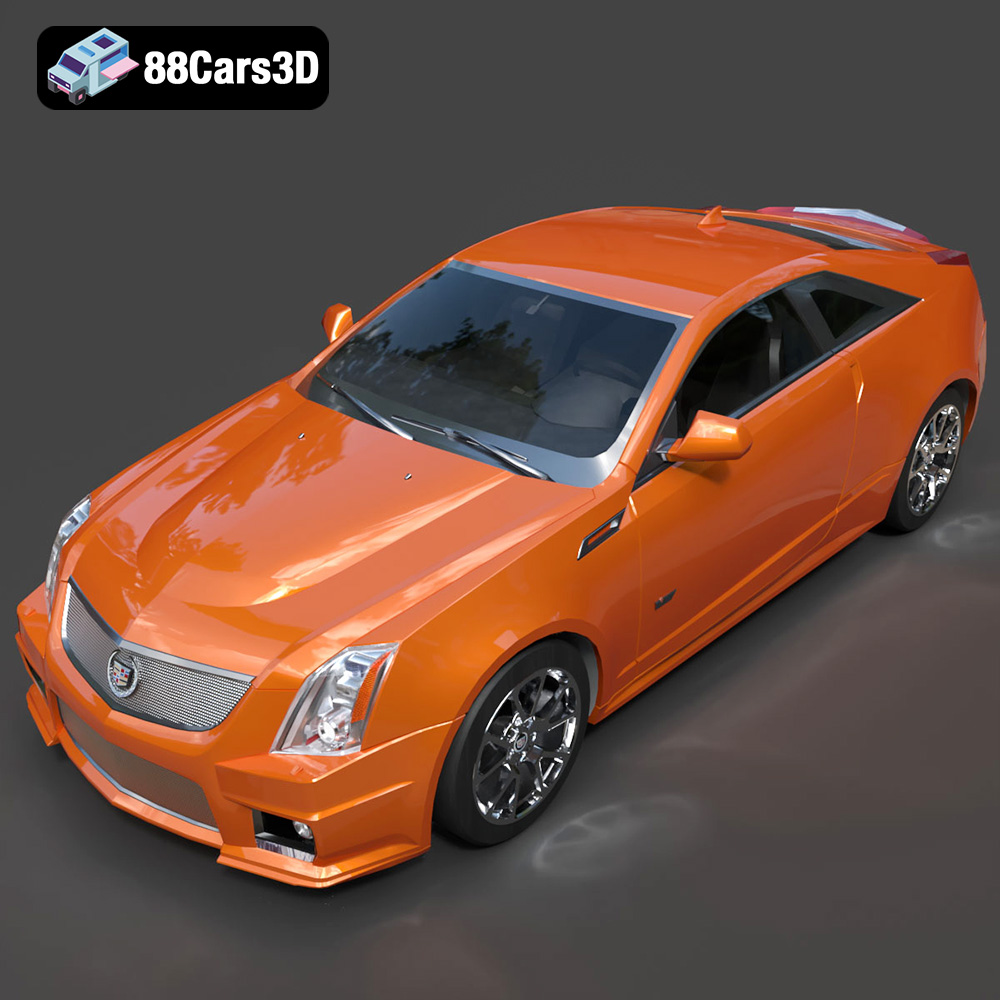
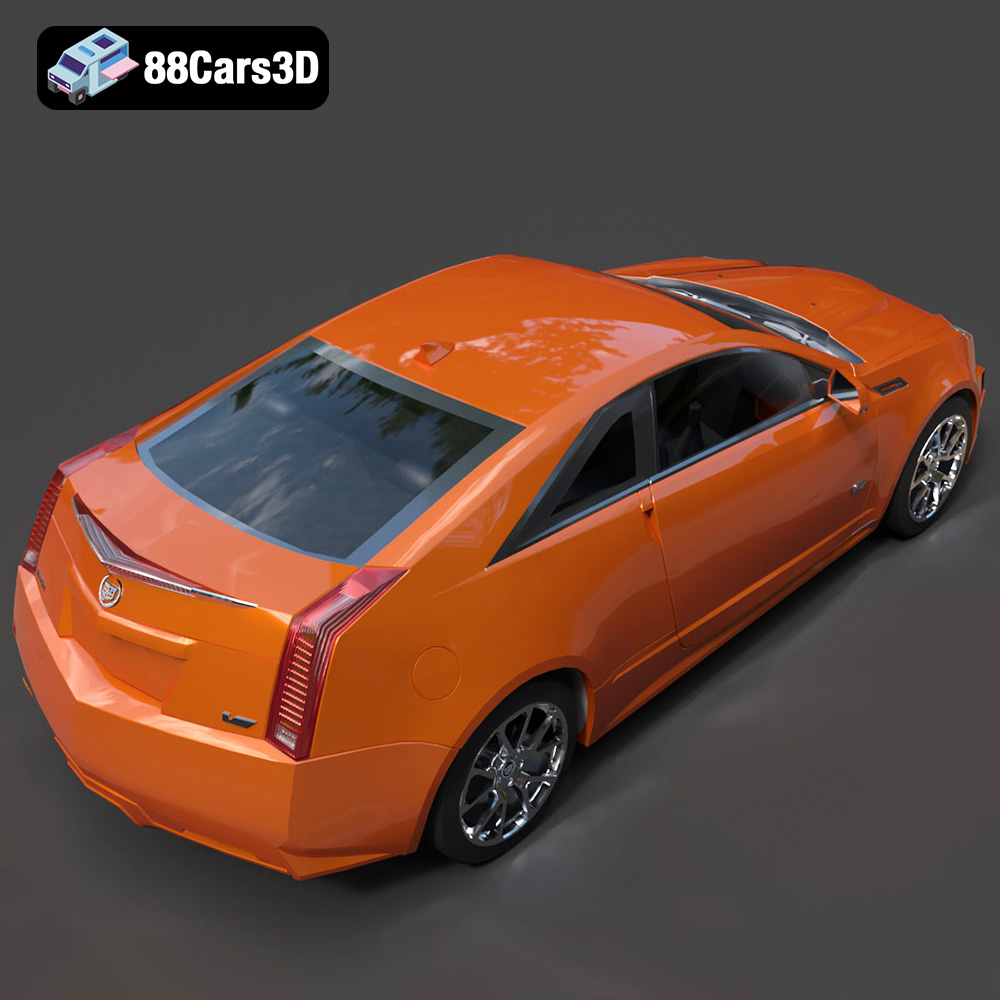
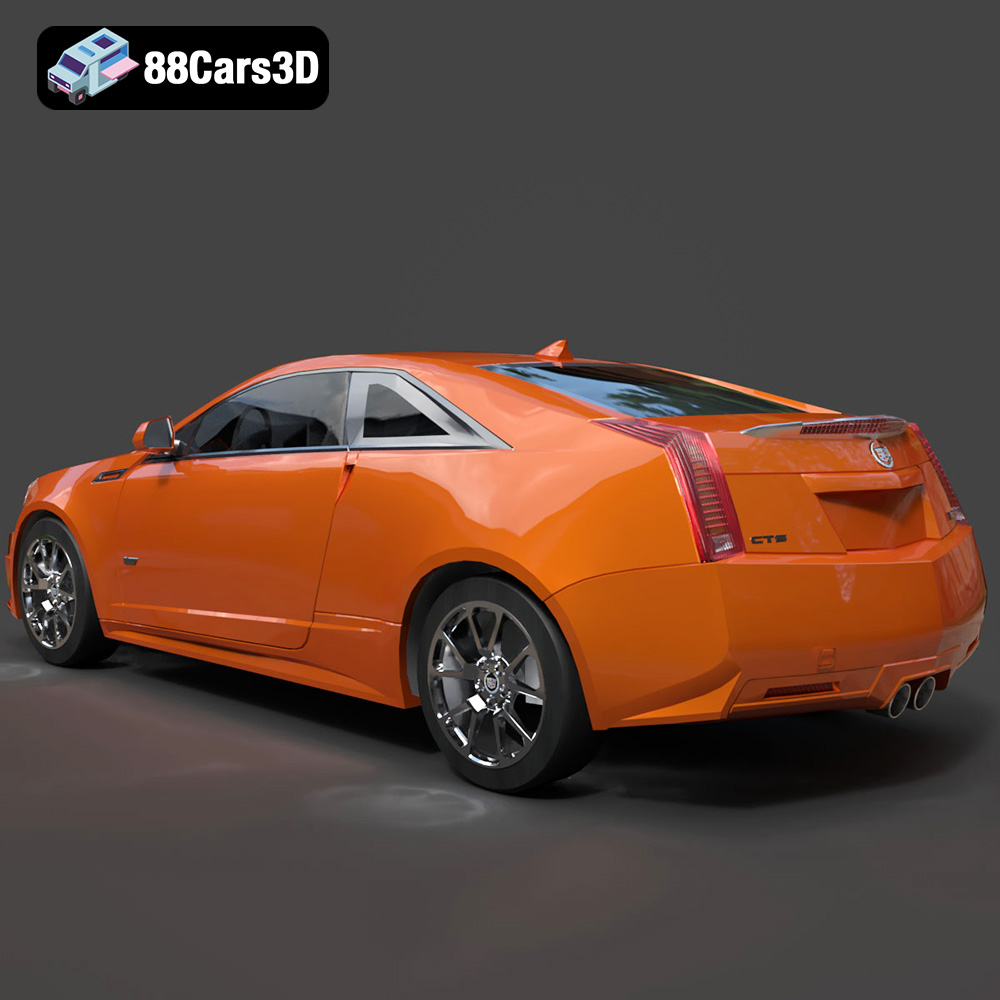
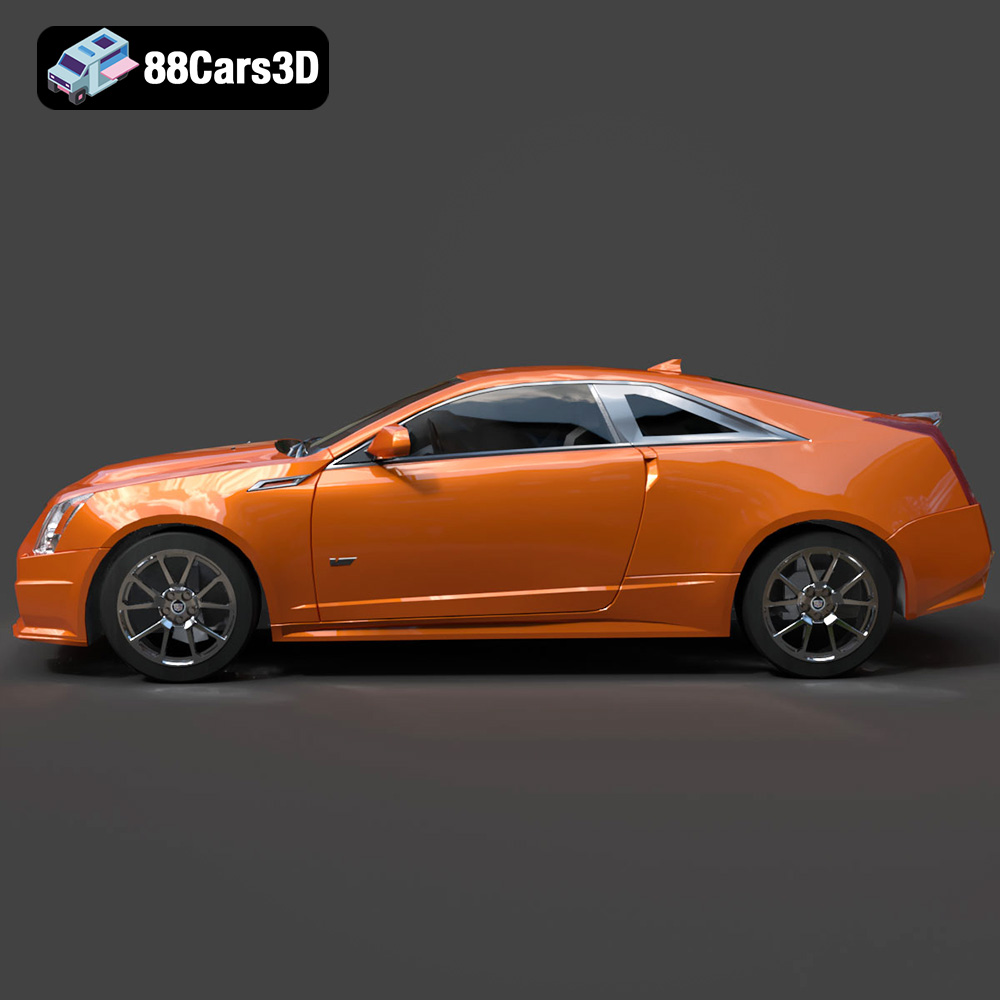
The Cadillac CTS-V Coupe 3D Model delivers a powerful and refined representation of Cadillac’s high-performance luxury coupe. Known for its bold American muscle styling, aggressive aerodynamics, and strong presence, this model accurately captures its sharp body lines, sculpted surfaces, and distinctive design. It is ideal for rendering, cinematic scenes, visualization, simulation, and game development where a premium performance car is required.
$13.9
Product Image Gallery

Related Tags
.arvr
.blend
.cadillac
.cadillacctsv
.car3dmodel
.ctsv
.fbx
.gameasset
.glb
.luxurycar
.max
.musclecar
.obj
.performancecar
.ply
.rendering
.simulation
.stl
.unreal
