

Unlocking Immersive Architectural Experiences: A Complete Guide to Unreal Engine Walkthroughs
The landscape of architectural visualization has been profoundly transformed by real-time rendering, offering an unparalleled level of immersion and interactivity. Gone are the days of static renders and pre-rendered animations being the sole medium for showcasing architectural designs. Today, thanks to powerful engines like Unreal Engine, architects, designers, and real estate professionals can transport clients directly into their envisioned spaces, allowing for dynamic exploration, instant design iterations, and a truly engaging decision-making process.
Unreal Engine stands at the forefront of this revolution, providing a robust suite of tools for creating photorealistic, interactive architectural walkthroughs that blur the line between virtual and reality. From cutting-edge global illumination systems like Lumen to virtualized geometry with Nanite, and a flexible visual scripting system in Blueprint, Unreal Engine empowers creators to build stunning, high-fidelity environments optimized for performance across various platforms. This comprehensive guide will walk you through the essential steps and advanced techniques for leveraging Unreal Engine to produce breathtaking architectural experiences, covering everything from project setup and material creation to lighting, interactivity, and optimization. Dive in to discover how to elevate your architectural presentations to an entirely new dimension.
Setting Up Your Unreal Engine Project for ArchViz Success
Embarking on an architectural visualization project in Unreal Engine requires a solid foundation. Proper project setup ensures optimal performance, efficient workflows, and the successful integration of your 3D assets. Choosing the right project template and configuring essential settings from the outset can save countless hours later in development. For detailed documentation on Unreal Engine’s project settings and configurations, always refer to the official Unreal Engine documentation at https://dev.epicgames.com/community/unreal-engine/learning.
Initial Project Configuration and Templates
When you first launch Unreal Engine and create a new project, selecting the appropriate template is crucial. For architectural visualization, the “Architecture, Engineering, and Construction” (AEC) template or the “Blank” template are excellent starting points. The AEC template comes pre-configured with certain settings and assets tailored for architectural scenes, often including basic materials and lighting setups. If you opt for the “Blank” template, you’ll need to manually enable certain plugins and adjust settings.
Key settings to consider immediately:
* **Scalability Settings:** Set these to “Cinematic” or “Epic” to ensure you are seeing the highest quality rendering settings during development, then optimize later.
* **Project Settings (Edit > Project Settings):**
* **Maps & Modes:** Define your default map for editor and game startup.
* **Rendering:**
* **Global Illumination:** Enable “Lumen Global Illumination” for dynamic, real-time lighting.
* **Reflections:** Enable “Lumen Reflections” or “Screen Space Reflections” with “Ray Tracing Reflections” if you’re using hardware ray tracing.
* **Nanite:** Ensure “Support Sky Atmosphere” and “Hardware Ray Tracing” are enabled if you plan to utilize these features.
* **Post-processing:** Configure settings like Exposure, Anti-Aliasing (TAA or TSR are common), and Motion Blur.
* **Plugins (Edit > Plugins):**
* **Datasmith CAD Importer:** Essential for importing CAD and BIM data (e.g., Revit, SketchUp, 3ds Max files) cleanly.
* **Modeling Tools Editor Mode:** Provides in-engine mesh editing capabilities.
* **Substance Plugin:** If you use Substance materials.
* **HDRI Backdrop:** For quick environment lighting.
* **Niagara:** If you plan to add particle effects (e.g., flowing water, dust motes).
* **Open XR/Steam VR:** If targeting virtual reality.
Importing Architectural Assets: Best Practices
The quality of your imported 3D models forms the backbone of your architectural visualization. Whether you’re importing from Revit, SketchUp, 3ds Max, Blender, or sourcing assets from marketplaces, meticulous preparation is key.
1. **Model Preparation in DCC Software:**
* **Clean Geometry:** Ensure your models have clean, non-overlapping geometry. Remove any unnecessary polygons, hidden faces, or reversed normals. Use quad-based topology where possible, even for static meshes, as it ensures better UV mapping and potentially better Nanite performance.
* **Units:** Standardize your units in your DCC application (e.g., meters or centimeters) to match Unreal Engine’s default (centimeters) to avoid scaling issues.
* **Pivots:** Set object pivots to a logical location (e.g., center of the base for furniture, hinge for doors) before export for easier placement and manipulation in Unreal Engine.
* **Material Slots:** Assign distinct material IDs/slots in your DCC software for different surfaces. This allows for easier material assignment and swapping in Unreal Engine.
* **UV Mapping:** Crucial for texturing and lightmapping. Ensure proper UV unwrapping (Channel 0 for textures, Channel 1 for lightmaps if not using Lumen exclusively). Avoid overlapping UVs for lightmaps.
* **Naming Conventions:** Use clear, consistent naming conventions for your meshes (e.g., `SM_Wall_LivingRoom_01`, `SM_Chair_DiningArea`).
2. **Importing with Datasmith:**
* Datasmith is the recommended workflow for importing complex architectural scenes. It preserves scene hierarchy, material assignments, and often converts CAD/BIM data more robustly than direct FBX imports.
* **Export from DCC:** Use the Datasmith exporter plugin for your DCC application (e.g., 3ds Max, Revit, SketchUp) to create a `.udatasmith` file.
* **Import into Unreal:** In Unreal Engine, click the “Datasmith” button on the toolbar, select your `.udatasmith` file, and specify your import location. Datasmith will import meshes, materials, and sometimes even basic lights or cameras, greatly accelerating your initial setup.
3. **Optimization at Import:**
* **Combine Meshes:** For static elements that don’t need individual manipulation (e.g., a complex building facade), consider combining them into fewer meshes in your DCC software or using the “Merge Actors” tool in Unreal Engine to reduce draw calls.
* **Polygon Count:** While Nanite handles incredibly high poly counts, it’s still good practice to optimize where possible. Aim for reasonable polygon density – tens of thousands for detailed furniture, millions for entire buildings.
* **Collision:** Generate simple collision meshes (e.g., “Use Complex as Simple” or custom collision shapes) for static objects to optimize physics calculations for player movement.
For environmental props, furniture, and other scene fillers, consider sourcing optimized assets from reputable marketplaces. Platforms like 88cars3d.com offer high-quality 3D models, including various vehicles, that are often pre-optimized for Unreal Engine, featuring clean topology, PBR materials, and proper UV mapping, significantly enhancing the realism of your architectural scenes without performance drawbacks.
Crafting Photorealistic Materials with PBR in Unreal Engine
Materials are the skin of your architectural models, defining how light interacts with surfaces and dictating the visual fidelity of your walkthrough. Unreal Engine’s Physically Based Rendering (PBR) system is designed to achieve photorealistic results by accurately simulating real-world material properties. Mastering the Material Editor is paramount for creating truly convincing architectural spaces.
Understanding PBR Workflows for Architectural Surfaces
PBR materials rely on a set of texture maps that describe how a surface reacts to light, rather than just its color. This approach ensures consistent and realistic lighting regardless of the scene’s light conditions.
The core PBR textures commonly used are:
* **Base Color (Albedo):** Defines the diffuse color of the surface. For non-metallic materials, this should be free of lighting information.
* **Normal Map:** Adds fine surface detail and bumps without increasing polygon count. It fakes surface imperfections and geometry.
* **Roughness Map:** Controls how rough or smooth a surface is, impacting the spread of specular reflections. A rough surface scatters light more broadly, appearing duller; a smooth surface reflects light sharply, appearing shiny.
* **Metallic Map:** Specifies whether a material is metallic (white) or non-metallic/dielectric (black). Metals reflect light differently from non-metals.
* **Ambient Occlusion (AO) Map:** Provides pre-calculated self-shadowing information for areas where light might struggle to reach, enhancing depth and realism.
* **Height/Displacement Map:** For materials with significant depth (e.g., brick, stone), this map can physically displace vertices (with tessellation or Nanite), adding true geometric detail.
**Workflow in Unreal Engine Material Editor:**
1. **Create New Material:** Right-click in the Content Browser > Material.
2. **Import Textures:** Drag your PBR texture maps (Base Color, Normal, Roughness, Metallic, AO) into the Material Editor or Content Browser.
3. **Connect Nodes:**
* Connect **Base Color** to the “Base Color” input.
* Connect **Normal Map** to the “Normal” input (ensure it’s set to `Vector` data type and `Normal map` compression).
* Connect **Roughness Map** to the “Roughness” input (ensure it’s set to `Grayscale` or `Linear Color` and `Masks (no sRGB)` compression).
* Connect **Metallic Map** to the “Metallic” input (same settings as Roughness).
* Connect **Ambient Occlusion Map** to the “Ambient Occlusion” input (same settings as Roughness).
4. **Material Instance:** After creating a master material, always create Material Instances (Right-click material > Create Material Instance). This allows you to adjust parameters (colors, texture tiling, roughness values) without recompiling the shader, leading to faster iteration and better performance.
Advanced Material Techniques: Glass, Water, and Procedural Details
Beyond basic PBR setups, certain architectural elements demand specialized material workflows to achieve photorealism.
* **Glass Materials:**
* Set the Material’s Blend Mode to `Translucent` and Shading Model to `Default Lit`.
* Connect a `Fresnel` node to the `Opacity` input to simulate realistic light absorption and reflection based on viewing angle.
* Use a `Normal Map` for subtle imperfections or dirt.
* Adjust `Refraction` using a constant or texture map, typically around 1.3-1.6 for glass.
* Use a `SceneColor` node to simulate distorted view through the glass.
* Ensure “Translucency Sort Priority” is managed for multiple layers of glass.
* For performance, consider using the `Masked` blend mode for simpler glass with alpha channels.
* **Water Materials:**
* Combine `Translucent` blend mode with a `Displacement/Panner` node for a moving normal map to simulate waves.
* Add `Refraction` and `Opacity` based on depth or distance.
* Utilize `Scene Depth` for foam or shallow water effects.
* For lakes/pools, a simple reflective material with subtle distortion can work. For realistic oceans, consider plugins or more complex setups involving custom depth, foam, and wave functions.
* **Procedural Details and Wear:**
* Use **Lerp nodes** to blend different material layers based on masks (e.g., dirt, grunge).
* Employ **vertex colors** painted in your DCC or Unreal Engine’s Mesh Paint mode to drive material blends for localized wear and tear (e.g., chipped paint on a wall corner).
* Utilize **material functions** to create reusable snippets of material logic (e.g., a universal “dirt overlay” function) to maintain consistency and efficiency across many materials.
* **Runtime Virtual Textures (RVT):** For very large terrains or walls, RVTs can blend materials dynamically and project decals, creating highly detailed and varied surfaces without excessive unique textures.
The careful application of these PBR principles and advanced techniques is what truly separates an ordinary architectural visualization from a captivating, believable experience.
Mastering Real-Time Lighting: Lumen, Baked, and Hybrid Approaches
Lighting is the soul of any architectural visualization, defining mood, emphasizing forms, and guiding the viewer’s eye. Unreal Engine offers a powerful array of lighting tools, from dynamic real-time solutions like Lumen to traditional baked lightmaps, providing flexibility to achieve stunning visuals while managing performance.
Harnessing Lumen for Dynamic Global Illumination
Lumen is Unreal Engine’s groundbreaking fully dynamic global illumination and reflections system, providing highly realistic indirect lighting and reflections in real-time without the need for lightmap baking. This is a game-changer for architectural walkthroughs, as it allows for immediate feedback on lighting changes, dynamic time-of-day simulations, and interactive light fixtures.
**Key features and workflow with Lumen:**
1. **Enable Lumen:** Go to Project Settings > Rendering and ensure “Lumen Global Illumination” and “Lumen Reflections” are enabled. Set “Default Post Process Settings” to “Lumen_Scene”.
2. **Light Types:** Lumen works seamlessly with all light types:
* **Directional Light:** Simulates sunlight. Crucial for exterior scenes.
* **Sky Light:** Captures and applies ambient light from the sky, essential for natural light. Ensure “Source Type” is “SLS Captured Scene” for Lumen.
* **Point Light, Spot Light, Rect Light:** For interior artificial lighting. Rect Lights are particularly useful for realistic window light or LED strips.
3. **Post Process Volume:** Place a Post Process Volume in your scene (set to “Infinite Extent” for scene-wide effect) and navigate to the “Global Illumination” and “Reflections” sections. Here, you can fine-tune Lumen’s quality, such as “Lumen Scene Lighting Quality” and “Lumen Scene View Distance” to balance visual fidelity and performance.
4. **Emissive Materials:** Lumen can also propagate light from emissive materials (materials that emit light, like light fixtures or screens). Ensure your emissive values are sufficiently high in the material editor.
5. **Troubleshooting Lumen:**
* **Light Leaks:** Ensure your architectural geometry is perfectly sealed, with no gaps or overlapping faces. Lumen propagates light, so any tiny hole can cause leaks.
* **Performance:** Lumen is computationally intensive. Optimize your scene’s geometry (Nanite helps), reduce the number of complex transparent materials, and adjust Lumen quality settings.
Lumen’s dynamic nature makes it ideal for interactive presentations where clients might want to change the time of day, toggle lights, or move furniture and see immediate, realistic lighting updates.
Optimizing Baked Lighting for Performance and Fidelity
While Lumen offers unparalleled dynamism, baked lighting (Lightmass) still holds immense value, especially for performance-critical applications like VR or mobile, or for achieving extremely precise, artifact-free static lighting in certain scenarios. Baked lighting pre-calculates global illumination and shadows and stores them in lightmaps on surfaces.
**Workflow with Baked Lighting (Lightmass):**
1. **Lightmap UVs:** Ensure all static meshes have a second UV channel (UV Channel 1) dedicated solely to lightmaps. This channel must have unique, non-overlapping UVs. Unreal Engine can generate these automatically on import, but custom generation in your DCC software offers more control.
2. **Lightmap Resolution:** Adjust the “Lightmap Resolution” property of each static mesh. Higher resolutions provide sharper shadows and better indirect light detail but consume more memory and increase build times. Walls, floors, and ceilings usually require higher resolutions (e.g., 128-256), while smaller props can use lower values (e.g., 32-64).
3. **Light Types:**
* **Stationary Lights:** These lights bake indirect lighting but allow for dynamic direct lighting and shadows. Best for primary lights like sunlight or large area lights.
* **Static Lights:** Both direct and indirect lighting are entirely baked. Most performant but cannot be changed at runtime. Ideal for auxiliary lights.
4. **Lightmass Settings:** In “World Settings” (Window > World Settings), navigate to the “Lightmass” section.
* **Indirect Lighting Quality:** Controls the quality of indirect bounces. Higher values mean better quality but longer bake times.
* **Indirect Lighting Smoothness:** Reduces noise in indirect lighting.
* **Num Indirect Lighting Bounces:** Determines how many times light bounces around the scene. More bounces lead to softer, more realistic indirect illumination.
5. **Build Lighting:** After configuring lights and lightmap UVs, click “Build > Build Lighting Only” from the main toolbar. This process can take significant time depending on scene complexity and quality settings.
**Hybrid Lighting Strategies:**
Often, the best approach is a hybrid model. Use Lumen for dynamic elements (e.g., player character, movable props, time-of-day) and baked lighting for static background elements (e.g., the building itself) to achieve a balance of visual quality and performance. For example, you might bake a very high-quality exterior ambient occlusion and diffuse indirect lighting, then layer Lumen on top for dynamic interior lights and reflections. This combination allows for optimized performance while retaining the flexibility for interactive elements.
Bringing Architectural Scenes to Life with Interactivity and Blueprint
Static walkthroughs are a thing of the past. Modern architectural visualizations demand interactivity, allowing clients to engage with the design, customize elements, and truly experience the space. Unreal Engine’s visual scripting system, Blueprint, empowers developers and artists alike to create complex interactive systems without writing a single line of code.
Creating Interactive Elements: Doors, Lights, and Material Swaps
Blueprint allows you to define custom behaviors for actors in your scene, making your architectural walkthrough dynamic and engaging.
**1. Interactive Doors:**
* **Blueprint Class:** Create a new Blueprint Class (Actor type) and name it `BP_Door`.
* **Static Mesh:** Add a `Static Mesh` component and assign your door model to it. Set its `Mobility` to `Movable`.
* **Collision:** Add a `Box Collision` component around the door to detect player interaction.
* **Event Graph:**
* On `Overlap` with the player’s pawn, display a prompt (e.g., “Press E to Open”).
* On `Input Key` (e.g., “E” key press), use a `Timeline` node to smoothly animate the door’s rotation.
* Define the start and end rotations in the Timeline’s curve editor.
* Connect the `Update` output of the Timeline to a `Set Relative Rotation` node for the door mesh.
* Implement logic to prevent the door from opening indefinitely or to close after a delay.
**2. Light Switches:**
* **Blueprint Class:** Create a `BP_LightSwitch`. Add a static mesh for the switch and a `Point Light` or `Spot Light` component.
* **Toggle Logic:** On `Input Key` or `Interaction`, use a `FlipFlop` node to toggle the light’s `Visibility` and `Intensity` between on and off states. You might also change the material of the switch to indicate its state.
* **Referencing Other Lights:** For lights that are separate from the switch, you can use `Get All Actors Of Class` and `For Each Loop` to find all `BP_RoomLight` actors (for example) and call a custom event on them to toggle their state.
**3. Material Swaps (Configurators):**
* **Master Material & Instances:** Ensure your materials are set up as master materials with parameters exposed (e.g., `BaseColor`, `Roughness`, texture inputs). Create multiple `Material Instances` for different variations (e.g., `MI_Wall_Paint_White`, `MI_Wall_Paint_Blue`).
* **Blueprint UI Widget:** Create a `Widget Blueprint` (User Interface > Widget Blueprint). Design buttons or dropdowns for material selection.
* **Blueprint Logic:**
* In your `Player Controller` or a dedicated `Configurator` Blueprint, create a function that takes a `Static Mesh Component` and a `Material Instance` as input.
* When a button in the UI widget is pressed, call this function, passing the target mesh (e.g., a wall) and the desired material instance.
* Use the `Set Material` node on the `Static Mesh Component` to apply the new material.
* This approach enables real-time changes to floor types, wall colors, furniture fabrics, and more, offering a powerful tool for client engagement.
Building User Interfaces for ArchViz Configurators
A well-designed User Interface (UI) is essential for intuitive interaction within your architectural walkthrough. Unreal Engine’s **UMG (Unreal Motion Graphics)** allows you to create flexible and responsive UI elements.
**Workflow for a Basic Configurator UI:**
1. **Create Widget Blueprint:** Right-click in Content Browser > User Interface > Widget Blueprint.
2. **Design Layout:** In the Designer tab, drag and drop UI elements like `Canvas Panel`, `Vertical Box`, `Horizontal Box`, `Buttons`, and `Text Blocks` to arrange your layout. Use `Anchors` for responsive scaling.
3. **Style Elements:** Customize the appearance of buttons, text, and other elements with colors, fonts, and images.
4. **Event Graph for Interaction:**
* Select a `Button` and in the Details panel, click the `+` next to `OnClicked` to create an event node in the Event Graph.
* From this event, you can cast to your `Player Controller` or `Level Blueprint` to trigger the material swap logic or other interactive functions you’ve built.
* Use `Set Visibility` nodes to show/hide different UI panels (e.g., a “Floor Options” panel when a floor button is clicked).
5. **Displaying the Widget:** In your `Level Blueprint` or `Player Controller` Blueprint, use the `Create Widget` node to instantiate your UI widget, and then the `Add to Viewport` node to display it on screen. You’ll typically want to set `Show Mouse Cursor` and `Set Input Mode Game and UI` to allow users to interact with the UI.
By combining Blueprint logic with intuitive UMG interfaces, you can build sophisticated configurators that allow users to customize their architectural environment in real-time, from changing wall colors and flooring to rearranging furniture and toggling different lighting schemes. This level of interaction transforms a passive viewing experience into an active design exploration.
Performance Optimization for Seamless Real-Time Walkthroughs
Achieving a smooth, high-fidelity real-time architectural walkthrough requires diligent optimization. Without it, even the most powerful hardware can struggle with complex scenes. Unreal Engine provides a comprehensive set of tools and features to manage performance effectively, ensuring a seamless user experience.
Leveraging Nanite and LODs for Complex Geometry
High-detail architectural models often contain millions of polygons, which traditionally cripples real-time performance. Unreal Engine’s **Nanite** virtualized geometry system is a game-changer, allowing for the rendering of cinematic-quality assets with incredibly high polygon counts (billions in a scene) without significant performance penalties.
* **Nanite Integration:**
* Enable Nanite in your Project Settings (Rendering > Nanite).
* When importing models, or for existing Static Meshes, simply enable “Enable Nanite” in the Static Mesh Editor. Unreal Engine will automatically convert the mesh.
* Nanite intelligently streams and renders only the necessary detail based on camera distance, effectively culling unseen polygons and optimizing draw calls.
* Use Nanite for all high-detail static geometry: walls, floors, detailed furniture, decorative elements, and even complex exterior building facades.
* Be aware that Nanite currently has limitations with masked materials (like fences or detailed foliage with alpha cutouts) and dynamic objects, though support is continually improving. For these, traditional LODs are still necessary.
* **Level of Detail (LODs):**
* For non-Nanite meshes (e.g., animated objects, complex foliage, translucent meshes, high-quality 3D car models from 88cars3d.com that might have dynamic components or specific shader requirements), LODs remain critical.
* LODs are simplified versions of your mesh that are swapped in at varying distances from the camera.
* **Generation:** Unreal Engine can automatically generate LODs (in the Static Mesh Editor, Mesh > LOD Settings > Number of LODs, then click “Apply Changes”). For more control, create custom LODs in your DCC application and import them alongside your base mesh.
* **Transition Distance:** Define when each LOD should transition (e.g., LOD0 for close-up, LOD1 for medium distance, LOD2 for far). Aim for smooth transitions that are imperceptible to the viewer.
* **Poly Count Reduction:** Each subsequent LOD should have a significantly reduced polygon count (e.g., 50-75% reduction per step).
Culling, Streaming, and Profiling for Smooth Performance
Beyond geometry optimization, efficient resource management and scene culling are vital for maintaining high frame rates.
1. **Culling Techniques:**
* **Frustum Culling:** Unreal Engine automatically culls (doesn’t render) objects outside the camera’s view frustum.
* **Occlusion Culling:** Objects hidden behind other objects are not rendered. Ensure your large static meshes (walls, buildings) have correct bounding boxes to facilitate effective occlusion culling.
* **Distance Culling (Cull Distance Volumes):** For non-Nanite meshes, use `Cull Distance Volumes` to manually define at what distance certain object types or groups should disappear. This is useful for small props that wouldn’t be noticeable from afar.
* **HLODs (Hierarchical Level of Detail):** For vast architectural environments, HLODs combine multiple meshes into a single, simplified mesh at extreme distances, dramatically reducing draw calls for distant cityscapes or large building complexes.
2. **Texture Streaming:**
* High-resolution textures consume a lot of GPU memory. Unreal Engine’s texture streaming system loads only the necessary mip levels (lower resolution versions) of textures based on camera distance and available memory.
* Ensure “Texture Streaming” is enabled in Project Settings > Rendering.
* Avoid using `SamplerSource: Clamp` in materials unless absolutely necessary, as it can disable streaming for those textures.
* Set appropriate “Max Texture Size” in texture properties to avoid unnecessarily large textures.
3. **Profiling for Performance Bottlenecks:**
* **Stat Commands:** Use console commands like `stat fps`, `stat unit`, `stat rhi`, `stat gpu`, `stat scenecapture` to monitor real-time performance metrics within the editor or a packaged build.
* **Unreal Insights:** A powerful standalone profiler that provides detailed performance data, allowing you to identify CPU and GPU bottlenecks, draw call issues, and memory usage. Run your packaged build with `-trace=cpu,gpu,frame,log` flags to collect data.
* **GPU Visualizer (`ProfileGPU` command):** Shows a breakdown of GPU render passes, helping pinpoint which rendering features (e.g., Lumen, reflections, post-processing) are consuming the most GPU time.
Integrating High-Quality Scene Enhancements (e.g., 3D Car Models)
A realistic architectural visualization isn’t just about the building; it’s about the context and atmosphere. Populating your scenes with high-quality props, furniture, and environmental elements greatly enhances immersion. This is where assets from specialized marketplaces become invaluable.
When sourcing automotive assets from marketplaces such as 88cars3d.com, look for models optimized for Unreal Engine. These often come with:
* **Clean Topology:** Efficient mesh structure suitable for real-time rendering.
* **PBR Materials:** Pre-configured materials that integrate seamlessly with Unreal Engine’s lighting.
* **Multiple LODs:** Ensuring performance even with highly detailed vehicles when viewed from a distance.
* **Proper UV Mapping:** Ready for texturing and potential lightmap baking.
* **Multiple File Formats:** Compatibility with Unreal Engine via FBX, USD, or Datasmith.
Integrating these assets thoughtfully:
* **Static Props:** Place cars, street furniture, and vegetation to provide scale and context.
* **Dynamic Elements:** Use Blueprint to add simple animations to vehicles (e.g., cars driving by on a loop path) or interactable elements to bring life to the scene.
* **Performance Budget:** Even with Nanite, be mindful of the number of highly detailed assets. Use LODs for distant objects and leverage instancing for repetitive elements (like trees or streetlights).
By meticulously optimizing geometry, managing assets, and profiling performance, you can ensure your architectural walkthroughs run smoothly, delivering a truly immersive and uninterrupted experience for your audience.
Advanced Applications: Cinematics, AR/VR, and Next-Gen ArchViz
Unreal Engine’s capabilities extend far beyond interactive walkthroughs, offering robust tools for creating stunning cinematic presentations and deploying experiences to cutting-edge platforms like Augmented Reality (AR) and Virtual Reality (VR). These advanced applications elevate architectural visualization to new heights, providing diverse ways to showcase designs.
Producing Cinematic Architectural Tours with Sequencer
For a polished, guided tour of an architectural project, **Sequencer** is Unreal Engine’s powerful non-linear cinematic editing tool. It allows you to choreograph camera movements, animate objects, control lighting, and sequence audio and visual effects to create broadcast-quality videos.
**Workflow for a Cinematic Tour:**
1. **Create a Level Sequence:** Right-click in the Content Browser > Animation > Level Sequence.
2. **Add Camera Tracks:** Drag and drop a `Cine Camera Actor` into your scene, then drag it into the Sequencer track list. You can add multiple Cine Cameras for different shots.
3. **Keyframe Camera Movements:**
* Select your Cine Camera track.
* Move the camera in the viewport to your desired start position and click the `+` button next to “Transform” to create a keyframe.
* Advance the timeline, move the camera to an end position, and keyframe again. Sequencer will smoothly interpolate the movement.
* Adjust focal length, aperture (for depth of field), and filmback settings within the Cine Camera Actor’s details panel to achieve cinematic looks.
4. **Animate Objects and Lights:**
* Drag any actor (e.g., a door, a light) into Sequencer.
* Keyframe their properties (e.g., `Transform` for movement, `Intensity` for lights, `Visibility` for pop-in effects).
* Use `Event Tracks` to trigger Blueprint functions at specific points in the sequence (e.g., turn on a TV, open blinds).
5. **Lighting and Post-Processing Overrides:**
* Add a `Post Process Volume` to Sequencer to animate effects like exposure, color grading, or bloom intensity over time.
* Animate directional light intensity or rotation for dynamic time-of-day changes during a sequence.
6. **Audio and Visual Effects:**
* Import audio files (e.g., background music, ambient sounds) and add them to an `Audio Track`.
* Integrate Niagara particle systems (e.g., subtle dust, water features) and control their playback within Sequencer.
7. **Render the Sequence:**
* Click the “Render Movie” button in Sequencer.
* Choose your output format (e.g., AVI, EXR, PNG Sequence), resolution, frame rate, and compression settings.
* For the highest quality, render as an image sequence (e.g., EXR) and then composite and encode in external video editing software.
Sequencer, especially combined with advanced rendering features like Lumen and Nanite, allows you to produce stunning, pre-recorded architectural showcases that convey the design’s intent with artistic precision.
Deploying Architectural Experiences to AR/VR Platforms
AR and VR offer the ultimate immersion for architectural visualization, allowing users to physically “walk through” designs at a 1:1 scale. Unreal Engine is a leading platform for developing these experiences, supporting a wide range of AR/VR hardware.
**1. Virtual Reality (VR) Deployment:**
* **Hardware Setup:** Ensure you have a compatible VR headset (e.g., Oculus Rift/Quest, HTC Vive, Valve Index) and its drivers installed.
* **Plugins:** Enable the relevant VR plugin in Unreal Engine (e.g., OpenXR, SteamVR, Oculus VR).
* **VR Template/Player Controller:** Start with a VR template or modify your `Player Controller` to handle VR locomotion (teleportation, smooth movement) and interaction (grab objects, activate UI with motion controllers).
* **Performance Optimization (Crucial for VR):**
* **Target Frame Rate:** Aim for a stable 90 FPS or higher to prevent motion sickness.
* **Reduced Quality:** Often, you’ll need to lower scalability settings (shadow quality, texture resolution, view distance) compared to desktop builds.
* **Forward Renderer:** Consider enabling the `Forward Shading` renderer (Project Settings > Rendering) as it can be more performant for VR, especially for scenes with complex transparency or many lights.
* **Stereo Instancing:** Ensure `Instanced Stereo` is enabled (Project Settings > Rendering) for significant performance gains.
* **Nanite/Lumen Considerations:** While Nanite helps with geometry, Lumen can still be demanding in VR. Use it judiciously or optimize its settings heavily. Consider hybrid lighting (baked exteriors, Lumen interiors) or even fully baked lighting for maximum performance.
* **Foveated Rendering:** Explore hardware-specific foveated rendering options for further optimization, focusing detail where the user is looking.
* **Interaction:** Design intuitive VR interactions using motion controllers for opening doors, changing materials, or navigating menus.
**2. Augmented Reality (AR) Deployment:**
* **Hardware:** Mobile devices (iOS with ARKit, Android with ARCore) are the primary platforms.
* **Plugins:** Enable ARCore/ARKit plugins.
* **AR Template:** Start with an AR template in Unreal Engine for quick setup.
* **Tracking:** Utilize the AR features to detect planes (floors, tables) and track the device’s position in the real world.
* **Model Scaling:** Allow users to place and scale architectural models within their real-world environment (e.g., a miniature building on a desk, or a full-scale room walkthrough).
* **UI:** Design AR-specific UI that feels natural within the augmented space, often floating in the world or attached to the screen.
* **Optimization:** Similar to VR, mobile AR demands significant optimization of polygon counts, texture resolutions, and material complexity to maintain a stable frame rate.
Integrating advanced capabilities like cinematic tours and AR/VR experiences empowers architects to present their designs in the most compelling and interactive ways possible, offering clients unparalleled insight and emotional connection to their future spaces.
Conclusion
Unreal Engine has firmly established itself as an indispensable tool for architectural visualization professionals. Its powerful real-time rendering capabilities, combined with cutting-edge features like Lumen and Nanite, empower artists and designers to create photorealistic, interactive walkthroughs that truly immerse clients in their future environments. From meticulous project setup and PBR material creation to dynamic lighting, intuitive Blueprint scripting for interactivity, and rigorous performance optimization, every step contributes to a flawless and engaging experience.
By embracing these workflows and leveraging the engine’s advanced features, you can move beyond traditional static renders to offer dynamic, explorable spaces, cinematic presentations, and even fully immersive AR/VR experiences. The ability to instantly iterate on designs, change materials, and simulate different lighting scenarios in real-time is not just a technological feat; it’s a revolutionary shift in how architectural projects are presented and understood.
Ready to elevate your architectural presentations? Start experimenting with Unreal Engine today. Utilize the best practices outlined in this guide, seek out high-quality assets from reputable sources – whether it’s an optimized furniture pack or stunning vehicle models from platforms like 88cars3d.com to populate your scenes – and explore the vast resources available on the official Unreal Engine documentation. The future of architectural visualization is real-time, and Unreal Engine is your gateway to shaping it.
Featured 3D Car Models
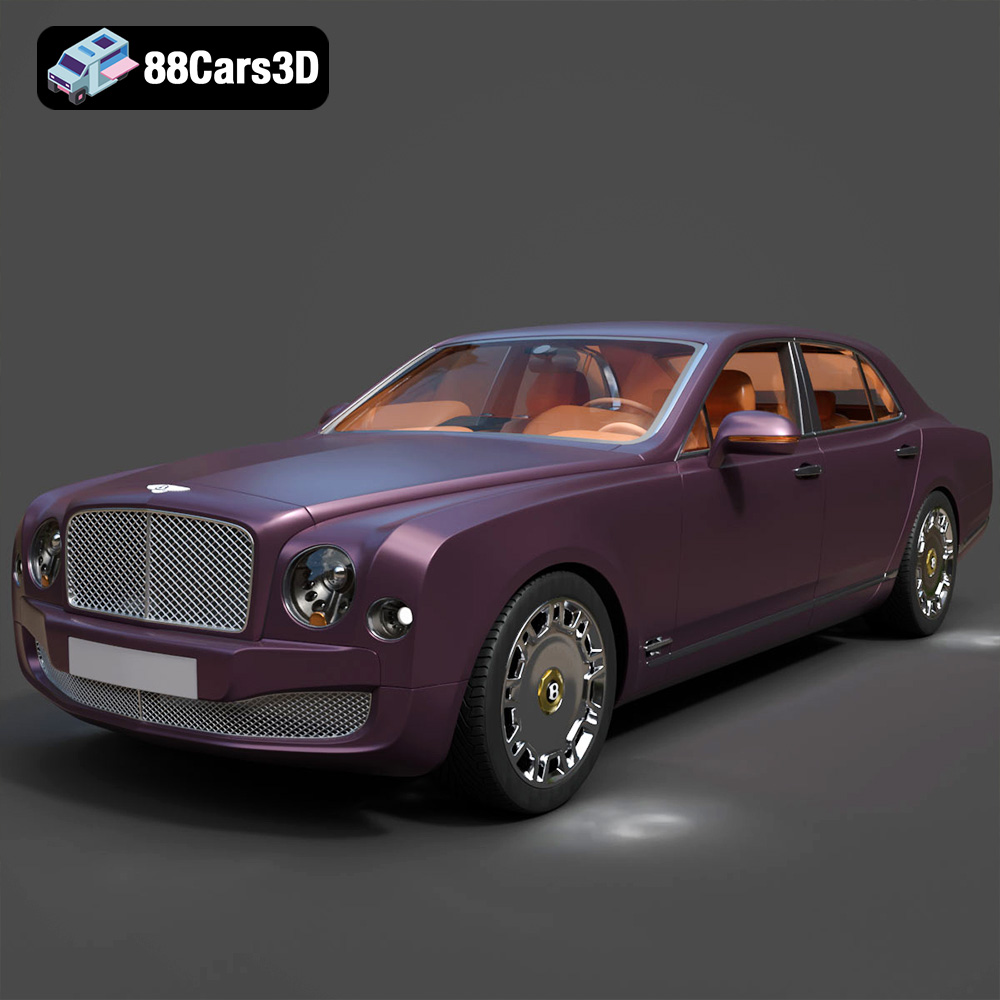
Bentley Mulsanne Luxury Sedan 3D Model
Texture: Yes
Material: Yes
Download the Bentley Mulsanne Luxury Sedan 3D Model featuring clean geometry, realistic detailing, and a fully modeled interior. Includes .blend, .fbx, .obj, .glb, .stl, .ply, .unreal, and .max formats for rendering, simulation, and game development.
Price: $14.99

Bentley Continental GT 2011 3D Model
Texture: Yes
Material: Yes
Download the Bentley Continental GT 2011 3D Model featuring clean geometry, realistic detailing, and a fully modeled interior. Includes .blend, .fbx, .obj, .glb, .stl, .ply, .unreal, and .max formats for rendering, simulation, and game development.
Price: $14.99

Bentley Continental Flying Spur 3D Model
Texture: Yes
Material: Yes
Download the Bentley Continental Flying Spur 3D Model featuring clean geometry, realistic detailing, and a fully modeled interior. Includes .blend, .fbx, .obj, .glb, .stl, .ply, .unreal, and .max formats for rendering, simulation, and game development.
Price: $14.99
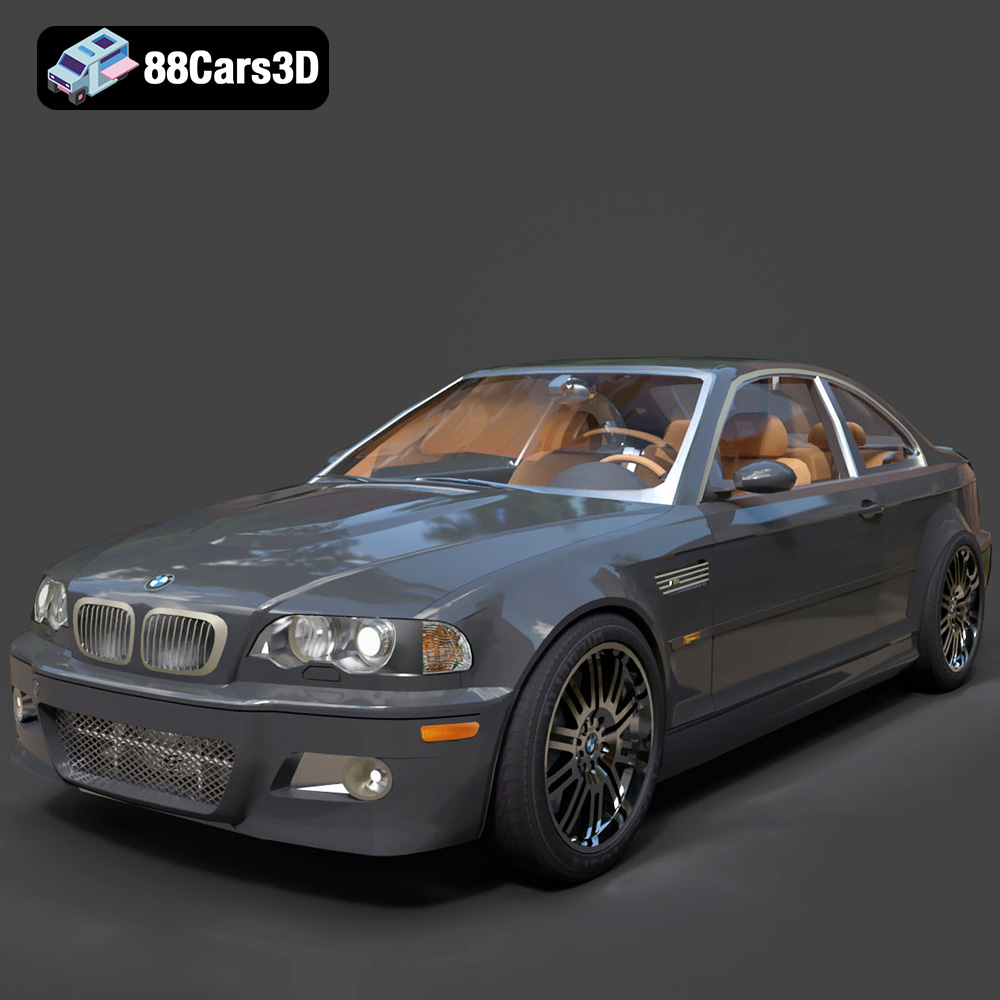
BMW M3 E46 3D Model
Texture: Yes
Material: Yes
Download the BMW M3 E46 3D Model featuring iconic sports car design and detailed interior. Includes .blend, .fbx, .obj, .glb, .stl, .ply, .unreal, and .max formats for rendering, simulation, and game development.
Price: $16.99
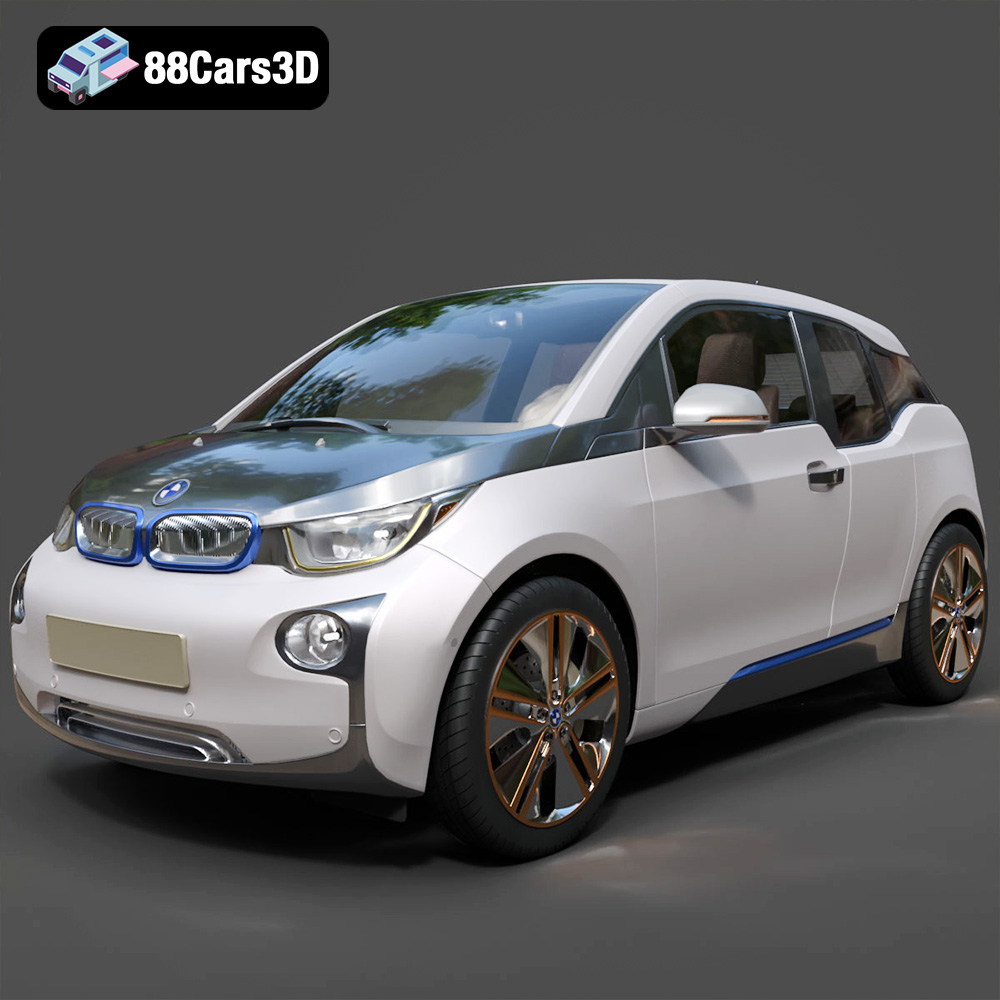
BMW i3 Coupe 3D Model
Texture: Yes
Material: Yes
Download the BMW i3 Coupe 3D Model featuring its iconic electric design and compact urban styling. Includes .blend, .fbx, .obj, .glb, .stl, .ply, .unreal, and .max formats for rendering, simulation, and game development.
Price: $17.99
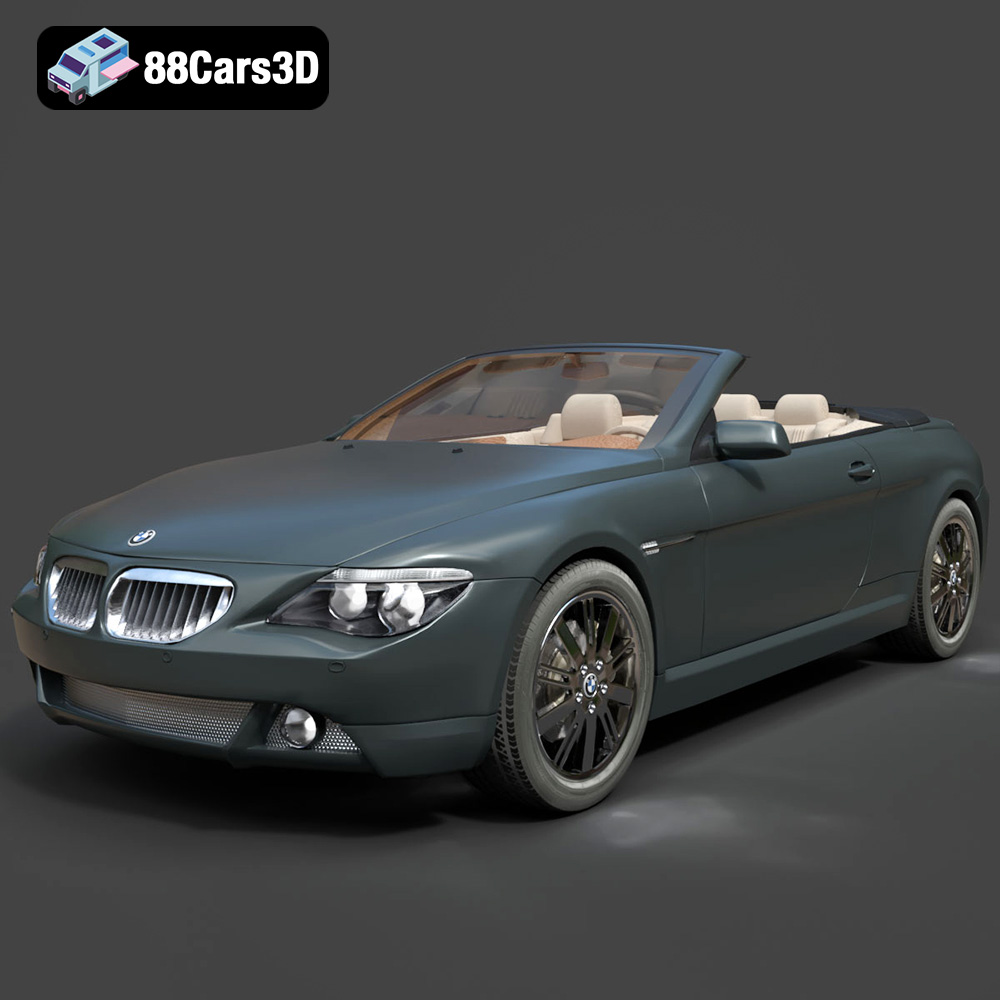
BMW 645ci 2004-2005 3D Model
Texture: Yes
Material: Yes
Download the BMW 645ci 3D Model featuring a sleek, detailed exterior and optimized interior. Includes .blend, .fbx, .obj, .glb, .stl, .ply, .unreal, and .max formats for rendering, simulation, and game development.
Price: $10.79
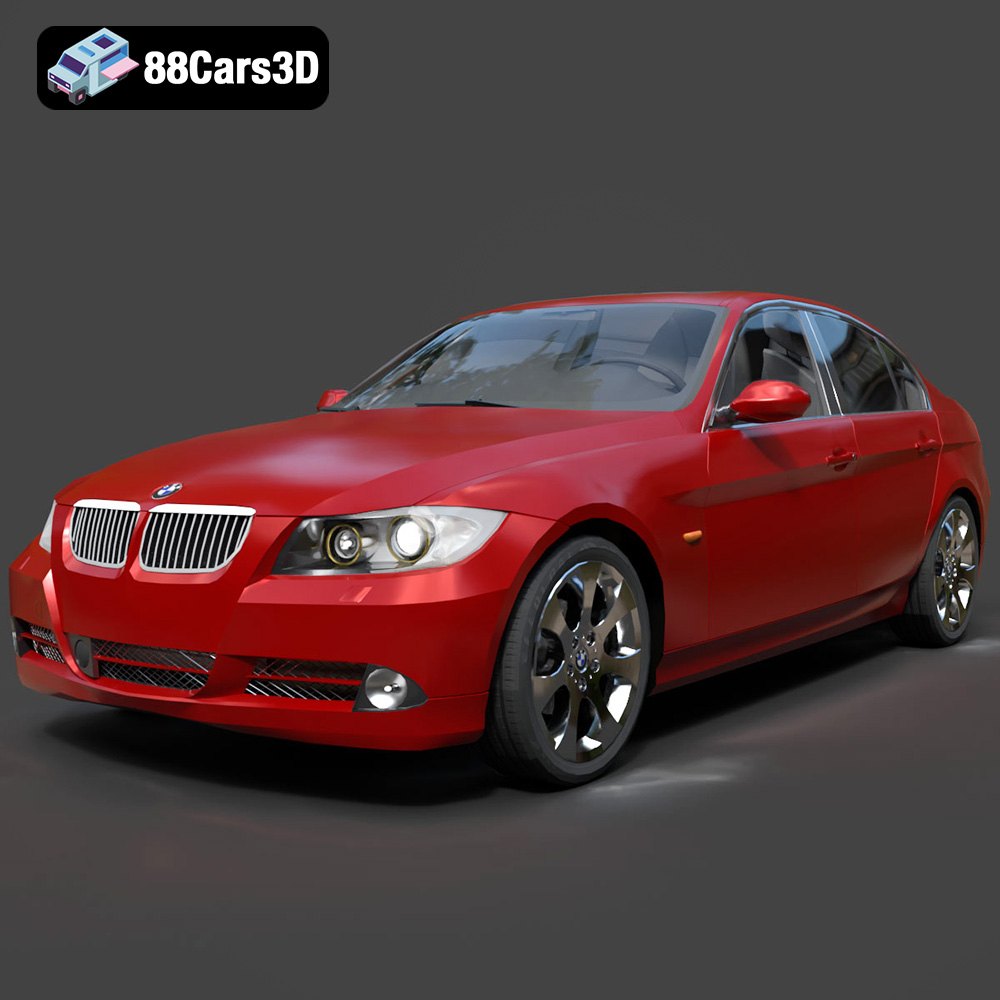
BMW 330i E90 3D Model
Texture: Yes
Material: Yes
Download the BMW 330i E90 3D Model featuring a detailed exterior, an optimized interior, and accurate mechanical components. Includes .blend, .fbx, .obj, .glb, .stl, .ply, .unreal, and .max formats for rendering, simulation, and game development.
Price: $14.79
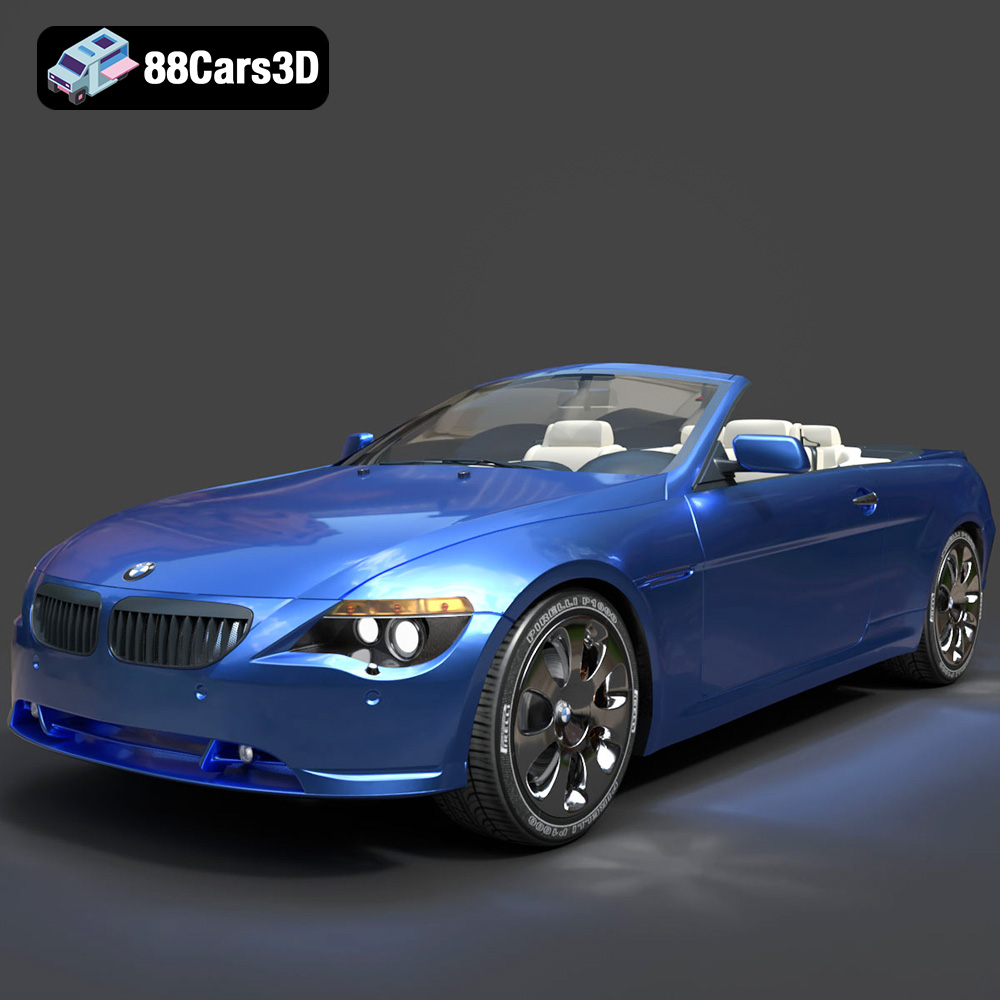
BMW 6 Series Convertible 3D Model
Texture: Yes
Material: Yes
Download the BMW 6 Series Convertible 3D Model featuring clean geometry, realistic detailing, and a fully modeled interior. Includes .blend, .fbx, .obj, .glb, .stl, .ply, .unreal, and .max formats for rendering, simulation, and game development.
Price: $14.99
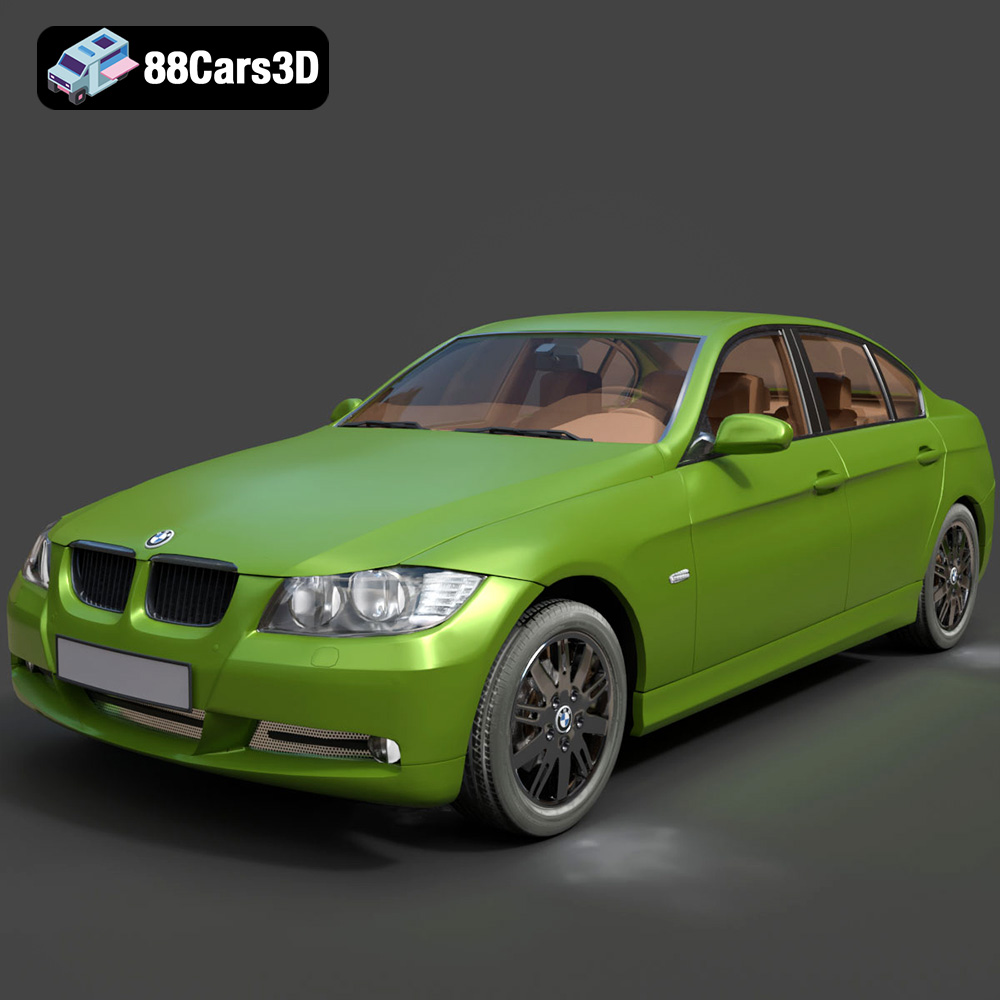
BMW 3-005 3D Model
Texture: Yes
Material: Yes
Download the BMW 3-005 3D Model featuring a sleek design, detailed exterior and interior. Includes .blend, .fbx, .obj, .glb, .stl, .ply, .unreal, and .max formats for rendering, simulation, and game development.
Price: $14.99
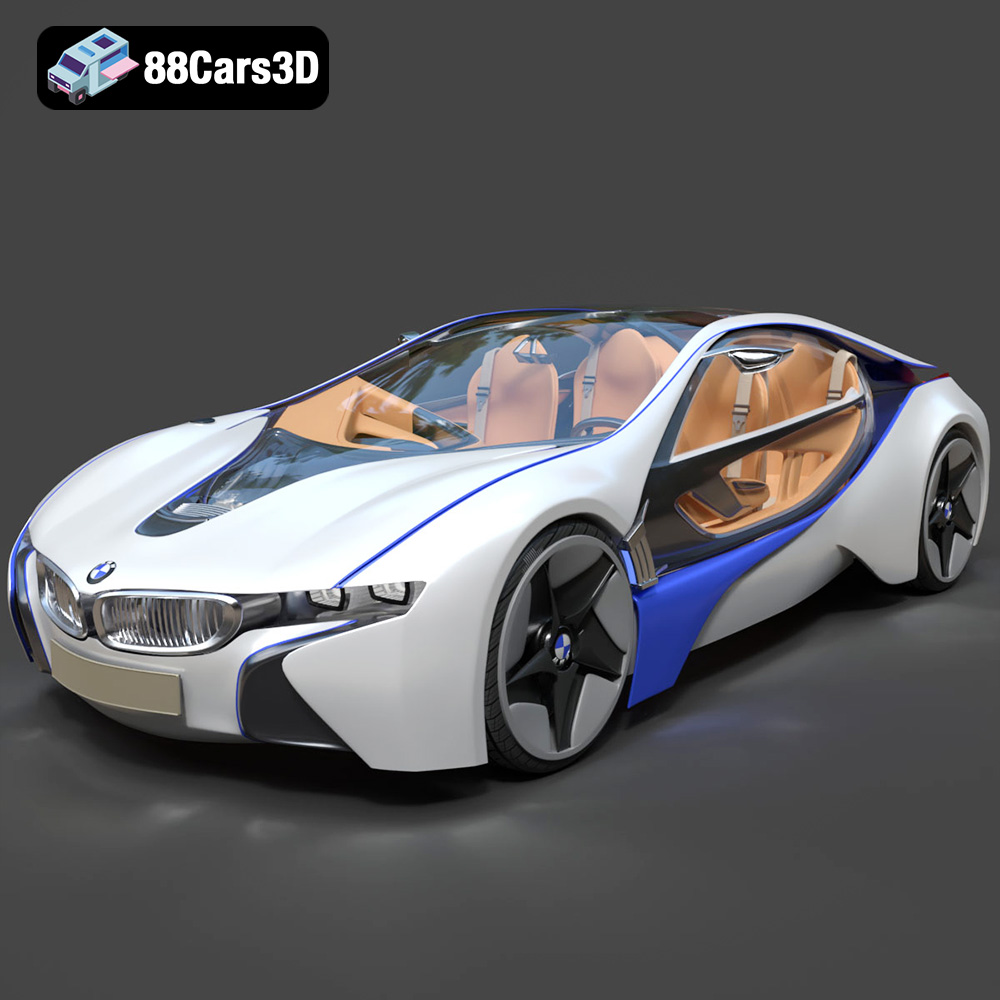
BMW Vision Effecient Dynamics-007 3D Model
Texture: Yes
Material: Yes
Download the BMW Vision Effecient Dynamics-007 3D Model featuring a sleek, futuristic design and hybrid concept aesthetics. Includes .blend, .fbx, .obj, .glb, .stl, .ply, .unreal, and .max formats for rendering, simulation, and game development.
Price: $14.99
