

Unreal Engine has revolutionized real-time rendering and interactive experiences, pushing the boundaries of what’s possible in game development, architectural visualization, and especially automotive design. For professionals working with high-quality 3D car models, like those available on 88cars3d.com, the ability to bring these static assets to life with compelling animation is crucial. While often associated with humanoid characters, Unreal Engine’s powerful Control Rig system is an absolute game-changer for animating complex machinery, making it an indispensable tool for automotive visualization.
This comprehensive guide dives deep into using Unreal Engine’s Control Rig for sophisticated automotive animation. We’ll explore how to set up robust, animatable rigs for vehicle components, allowing for unparalleled control over movement, interaction, and cinematic sequences. Forget tedious manual keyframing of individual parts; Control Rig empowers you to create intuitive, procedural, and reusable animation systems that can elevate your automotive projects from static renders to dynamic, interactive experiences. Whether you’re building a next-generation car configurator, crafting breathtaking cinematics, or integrating physics-driven elements, mastering Control Rig will unlock a new level of realism and efficiency in your Unreal Engine automotive workflows.
Understanding Control Rig: The Animator’s Blueprint for Vehicles
At its core, Control Rig in Unreal Engine is a node-based rigging system that allows artists and technical animators to create custom animation controls directly within the engine. Unlike traditional rigging software where rigs are often exported as a fixed part of the skeletal mesh, Control Rig lives entirely within Unreal Engine, offering real-time iteration, direct manipulation, and seamless integration with other engine features like Blueprints and Sequencer. For automotive applications, this translates into an incredibly flexible and powerful tool for bringing static car models to life.
Imagine needing to animate a car’s steering, suspension, and individual wheel rotations. Traditionally, this might involve complex hierarchical setups in a DCC (Digital Content Creation) tool, exporting various animations, or using purely physics-based simulations that can be hard to art-direct. Control Rig changes this paradigm entirely. It provides a visual scripting environment where you can define how controls interact with the skeletal mesh of your car model, allowing for both forward kinematics (FK) and inverse kinematics (IK) setups, constraints, and custom logic tailored specifically for vehicle dynamics. This empowers artists to build intuitive manipulation layers over complex underlying geometry, making animation faster and more precise. The system is built on a rig hierarchy that is separate from the skeletal mesh, making it non-destructive and highly adaptable.
The Benefits of Control Rig for Automotive Animation
- Direct In-Engine Iteration: No more round-tripping to external 3D software. Adjust your rig, test animations, and see results instantly within Unreal Engine. This drastically speeds up the animation pipeline.
- Procedural Animation: Create dynamic behaviors that react to input or game logic. For instance, a suspension rig that automatically compresses based on terrain, or steering that responds to player input via Blueprints.
- Reusable Rigs: Control Rig assets can be easily shared and applied to multiple skeletal meshes, provided they have similar bone hierarchies. This is invaluable for vehicle production pipelines with many car models from platforms like 88cars3d.com.
- Enhanced Art Direction: While physics simulations are great for realism, Control Rig offers the ability to art-direct movements precisely, blending procedural logic with hand-keyed animation for cinematic finesse.
- Integration with Unreal Ecosystem: Works seamlessly with Blueprints for interactivity, Sequencer for cinematics, and supports live link for virtual production workflows.
Key Components of the Control Rig Editor
Working with Control Rig involves understanding a few core elements:
- Rig Hierarchy: This is where you define your controls, bones, and their relationships. It’s distinct from the skeletal mesh’s bone hierarchy.
- Event Graph: This is the visual scripting area where you connect nodes to define the logic of your rig. Events like ‘Forward Solve’ (from controls to bones) and ‘Backward Solve’ (from bones to controls, useful for IK snapping) drive the rig’s behavior.
- Rig Controls: These are the manipulable objects in the viewport that animators interact with (e.g., a wheel control, a steering wheel control). They can be customized with various shapes and colors.
- Variables and Functions: Create custom variables to store data and functions to encapsulate reusable rigging logic, making complex rigs more organized.
Setting Up a Basic Vehicle Control Rig in Unreal Engine
Let’s walk through the foundational steps of creating a Control Rig for a simple car model, focusing on the essential components: wheels and steering. Before you begin, ensure your 3D car model, ideally sourced from 88cars3d.com for optimal quality and clean topology, is imported into Unreal Engine as a skeletal mesh. This skeletal mesh should have a basic bone hierarchy that includes bones for each wheel and the steering wheel. A typical automotive asset from 88cars3d.com comes with a well-organized skeleton, making this process much smoother.
First, right-click in your Content Browser and navigate to Animation > Control Rig > Control Rig. When prompted, select your car’s skeletal mesh. This creates a new Control Rig asset linked to your car. Double-click to open the Control Rig editor. The goal here is to establish controls that drive the bones of your car’s wheels for rotation and steering for rotation.
In the Rig Hierarchy panel, right-click on the ‘Root’ or a suitable parent bone (e.g., ‘Chassis’) and select New Control. Create controls for each of your wheels (e.g., ‘Ctrl_FL_Wheel’, ‘Ctrl_FR_Wheel’, ‘Ctrl_RL_Wheel’, ‘Ctrl_RR_Wheel’) and one for the steering wheel (e.g., ‘Ctrl_Steering’). You can customize their shape and color in the Details panel for better visibility in the viewport. Position these controls accurately to align with their respective skeletal mesh bones. For instance, place ‘Ctrl_FL_Wheel’ at the pivot point of your front-left wheel bone.
Rigging Wheel Rotation and Steering
The core logic for our basic rig will reside in the Event Graph. We primarily use the ‘Forward Solve’ event, which dictates how our controls influence the skeletal mesh bones. Drag your newly created controls from the Rig Hierarchy into the Event Graph to get getter/setter nodes. For each wheel:
- Drag the wheel control into the graph, choose ‘Get Control’.
- Drag the corresponding wheel bone from the Skeletal Mesh tab into the graph, choose ‘Set Transform’.
- Connect the ‘Execute’ pins from the ‘Forward Solve’ to the ‘Set Transform’ node for each wheel bone.
- From the ‘Get Control’ node, drag out its ‘Transform’ pin. Break this transform into ‘Translate’, ‘Rotate’, and ‘Scale’ components (e.g., using a ‘Break Transform’ node).
- Connect the ‘Rotate’ output from the ‘Break Transform’ to the ‘Rotation’ input of the ‘Set Transform’ for the bone.
- Repeat this for all four wheels.
For the steering wheel, the process is similar. Get the ‘Ctrl_Steering’ control’s rotation and apply it to the ‘SteeringWheel’ bone’s rotation. Now, when you manipulate these controls in the Control Rig viewport, your car’s wheels and steering wheel will rotate accordingly.
Refining Controls and Bone Relationships
While the above sets up direct rotation, you often want more sophisticated relationships. For example, you might want a single control to rotate both front wheels simultaneously, or a steering control to also influence the wheels’ turn angle. This is where you leverage constraints and mathematical operations within the Event Graph.
- Parenting Controls: You can parent controls in the Rig Hierarchy. For instance, parenting the wheel controls under a ‘Wheel_Group_Ctrl’ allows for global manipulation.
- Constraints: Use nodes like ‘Set Transform (Relative)’ or ‘Apply Parent Transform’ to maintain relationships. For steering, you might use a ‘Map Range Clamped’ node to convert the steering wheel’s rotation (e.g., -90 to 90 degrees) into a smaller turning angle for the front wheels (e.g., -30 to 30 degrees).
- Debugging: Use the ‘Draw Debug’ nodes (e.g., ‘Draw Debug Vector’) to visualize axes and movements in the viewport, which is incredibly helpful for complex setups.
Always remember to compile and save your Control Rig asset after making changes. Test your rig frequently in the viewport to ensure controls behave as expected. By starting with these basic principles, you build a solid foundation for more advanced automotive rigging.
Advanced Automotive Rigging with Control Rig for Realism
Once you have a basic wheel and steering rig, the true power of Control Rig for automotive visualization begins to shine when tackling more complex systems like suspension, articulated doors, and custom components. Achieving realism in these areas requires a deeper dive into Control Rig’s capabilities, utilizing advanced nodes, constraints, and custom logic to simulate real-world mechanical behaviors. High-fidelity models from 88cars3d.com, with their detailed geometry and accurate pivot points, provide an excellent foundation for these advanced rigs.
Implementing Realistic Suspension Systems
A car’s suspension system is a prime candidate for Control Rig due to its procedural nature. Instead of simply pushing a wheel up and down, we want the wheel to compress and decompress within a constrained range, ideally reacting to forces or a master suspension control. Here’s a common approach:
- Add Suspension Bones: Ensure your skeletal mesh has dedicated bones for suspension (e.g., ‘Suspension_FL’). These bones typically move along a single axis (Z-axis, up/down).
- Create Suspension Controls: Add a control for each suspension bone (e.g., ‘Ctrl_Suspension_FL’). Position it at a logical point for manipulation.
- Implement IK for Suspension: While not strictly IK in the traditional sense, you can use a target control (e.g., ‘Ctrl_Wheel_Ground_FL’) that the wheel bone tries to reach, and the suspension bone will adjust accordingly. Alternatively, use a simple ‘Set Transform’ on the suspension bone’s Z-axis.
- Constrain Movement: Use ‘Map Range Clamped’ nodes to define the minimum and maximum travel distance for your suspension. This prevents unrealistic over-extension or compression. You can feed the Z-translation of your suspension control into this node, and the output drives the bone’s Z-translation.
- Link to Wheel Rotation: Ensure your suspension movement doesn’t affect the wheel’s rotation around its axle. The wheel bone should be a child of the suspension bone, allowing it to inherit translation but maintain its own rotation.
For more advanced setups, you could introduce spring and damper simulations using custom Control Rig functions or integrate with Unreal Engine’s Chaos Physics system by driving a Control Rig parameter from physics data.
Rigging Articulated Doors, Hoods, and Trunks
Modern vehicle configurators demand interactive elements. Opening doors, hoods, and trunks are common features. Control Rig makes this straightforward:
- Dedicated Bones: Your car model should have separate bones for each door, hood, and trunk lid, with pivots accurately placed at the hinge points.
- Create Controls: Add specific controls (e.g., ‘Ctrl_Door_Driver’, ‘Ctrl_Hood’) positioned near their respective parts.
- Rotate Around Hinge: In the Event Graph, take the rotation of your control and apply it to the corresponding bone’s rotation. The key here is to rotate around a specific axis (e.g., Y-axis for a side door, X-axis for a hood). You’ll likely need to extract only one axis of rotation from your control’s transform.
- Limit Movement: Use ‘Map Range Clamped’ again to define the open and closed angles for each part. A door might rotate from 0 to -80 degrees, for example.
Custom Control Rig Nodes and Functions
For truly unique or complex automotive rigs, you might find existing nodes insufficient. Control Rig allows you to create your own custom C++ nodes or encapsulate complex logic within reusable functions directly in the Event Graph. This is powerful for:
- Procedural Gear Shifting: A function that calculates the precise rotation and translation for a gear stick based on an input gear.
- Wiper Blade Logic: A function that generates a smooth oscillating motion for windshield wipers.
- Hydraulic Systems: Custom nodes for linked hydraulic pistons, ensuring they extend and retract realistically based on a master control.
These advanced techniques, while requiring a deeper understanding of Control Rig’s node-based logic and potentially some mathematical foundations, unlock the full potential for creating highly realistic and animatable vehicle components. When combined with Unreal Engine’s rendering capabilities, the result is a level of visual fidelity and interactive realism that sets your automotive projects apart.
Integrating Control Rig with Blueprints for Interactive Automotive Experiences
While Control Rig provides the animatable structure for your car models, Unreal Engine Blueprints are the glue that connects these rigs to interactivity, game logic, and dynamic systems. This powerful visual scripting language allows you to drive Control Rig parameters based on player input, simulation data, or event triggers, transforming a beautifully rigged car into a fully interactive experience, ideal for automotive configurators, virtual showrooms, and engaging game environments.
The bridge between Control Rig and Blueprints is the ‘Set Control Rig Control Transform’ node (or ‘Set Control Rig Control Rotation/Location/Scale’ for specific components). This node allows a Blueprint to send new transform data (position, rotation, scale) to any named control within your Control Rig asset. Conversely, you can also ‘Get Control Rig Control Transform’ to read the current state of a control, which can be useful for feedback or further Blueprint logic.
Building an Interactive Car Configurator with Control Rig
One of the most compelling applications of Control Rig and Blueprints is in creating interactive car configurators. Imagine users being able to:
- Open/Close Doors: Create a ‘Toggle Door’ event in your car Blueprint. When triggered (e.g., by clicking on the door), an ‘FInterp To’ or ‘Lerp’ node can smoothly interpolate the rotation value for your ‘Ctrl_Door_Driver’ control between its closed (0 degrees) and open (-80 degrees) states over a set duration.
- Adjust Suspension: A UI slider or button could drive the Z-translation of your ‘Ctrl_Suspension_FL/FR/RL/RR’ controls. Clamp the input value to the realistic min/max range you defined in your Control Rig.
- Change Wheel Angle: For a driving simulation, player input (e.g., ‘MoveRight’ axis input) can be directly fed into the rotation of your ‘Ctrl_Steering’ control, which in turn influences the front wheel turning angle via your Control Rig logic.
- Headlight/Taillight Toggle: While not a rig control, Blueprints can control material parameters for lights (e.g., emission strength) to toggle them on/off, creating a complete interactive experience.
Dynamic Vehicle Physics Integration
While Control Rig allows for art-directed motion, sometimes you need the realism of physics. You can blend or drive Control Rig values from physics simulations:
- Hybrid Suspension: Implement a simplified physics spring-damper system in Blueprint that calculates the desired Z-offset for each wheel based on ground contact and velocity. This calculated offset can then be fed into your ‘Ctrl_Suspension’ controls, effectively driving your Control Rig from physics.
- Vehicle Spoilers/Wings: For racing cars, a Control Rig can handle the articulation of active aero elements. A Blueprint could calculate downforce or speed and then drive the rotation of a ‘Ctrl_Spoiler’ to adjust its angle accordingly.
Event-Driven Animation with Control Rig and Blueprints
Beyond direct manipulation, Blueprints can orchestrate complex animations based on game events. For example, in an autonomous driving demonstration, a sequence of Blueprint nodes could:
- Trigger the car to move forward (e.g., setting its world location).
- Simultaneously update the ‘Ctrl_Steering’ rotation to simulate a turn.
- And based on velocity, automatically calculate and apply the rotation to the individual wheel controls for rolling motion.
This symbiotic relationship between Control Rig and Blueprints creates a powerful ecosystem for crafting highly dynamic, responsive, and immersive automotive experiences. The flexibility to drive sophisticated skeletal movements with intuitive scripting means you can prototype and implement complex interactions far more efficiently than with traditional animation pipelines.
Cinematic Automotive Animation with Sequencer & Control Rig
When it comes to creating stunning automotive cinematics, trailers, or virtual production content, Unreal Engine’s Sequencer is the ultimate tool. Coupled with the precise control offered by Control Rig, you gain an unparalleled level of artistry and efficiency to orchestrate breathtaking shots of your high-fidelity car models, whether sourced from 88cars3d.com or custom-made. Sequencer allows you to choreograph every aspect of your scene, from vehicle movement and component animation to camera work, lighting, and visual effects, all within a non-linear editor timeline.
Adding Control Rig to Sequencer
Integrating your Control Rig into Sequencer is straightforward. Once you have a car skeletal mesh actor in your level that has a Control Rig applied (either directly on the Skeletal Mesh Component or via an Animation Blueprint), open Sequencer (Window > Cinematics > Sequencer). Add your car actor to the Sequencer timeline. Then, click the ‘+ Track’ button on your car actor’s track and select ‘Control Rig’. This will add a Control Rig track, allowing you to keyframe the values of all the controls you’ve defined in your Control Rig asset.
Now, you can directly manipulate the controls in the viewport (or through the Details panel in Sequencer) at different points in time to create keyframes. For example, you can keyframe the ‘Ctrl_Door_Driver’ to open over 30 frames, the ‘Ctrl_Steering’ to turn as the car enters a corner, and the ‘Ctrl_Suspension’ to compress subtly as the car brakes. The beauty here is that you’re animating directly on the high-level controls, not individual bones, making the process intuitive and artist-friendly.
Leveraging Control Rig for Complex Cinematics
- Master Controls: Use your Control Rig’s master controls to animate overall vehicle movement (e.g., a ‘Root_Mover’ control that translates the entire car). This is often combined with animating the car’s transform directly in Sequencer for global movement, while Control Rig handles the internal articulation.
- Precise Wheel Rotation: For rolling wheels, Control Rig is invaluable. You can create a system where a single variable in your Control Rig (e.g., ‘Roll_Speed’) drives all four wheel rotations proportionally to the car’s forward movement. This variable can then be keyframed in Sequencer, ensuring perfectly synchronized wheel rotation for any speed.
- Camera Rigs: While not directly car animation, Control Rig is also excellent for building custom camera rigs. You could create a ‘Follow_Car_Cam’ rig with controls for offset, damping, and look-at targets, all keyframeable in Sequencer for dynamic cinematic camera work.
- Dynamic VFX Triggers: Your Control Rig animations can also trigger visual effects. For instance, a Blueprint listening to a door’s Control Rig rotation could spawn a particle effect (Niagara) for a puff of dust as it slams shut, all synchronized via Sequencer.
Virtual Production and Real-time Iteration
In virtual production environments, Control Rig shines. By connecting your animated car rig to a live-link input (e.g., from a motion capture suit or a virtual camera system), performers can interact with the vehicle in real-time. Imagine an actor virtually opening a car door, and the Control Rig instantly responds, with the animation being captured directly into Sequencer. This workflow dramatically speeds up production and allows for on-set iteration, enhancing creative collaboration.
The ability to iterate on animations in real-time, coupled with Unreal Engine’s stunning rendering capabilities (including Lumen for dynamic global illumination and Nanite for high-fidelity geometry on complex car models), makes Control Rig and Sequencer an indispensable combination for anyone pushing the boundaries of automotive visualization and virtual production.
Performance and Optimization for Control Rig Vehicle Rigs
While Control Rig offers incredible flexibility and power, creating complex rigs for highly detailed 3D car models (especially those with demanding polygon counts often found in professional assets from 88cars3d.com) requires a keen eye on performance. Real-time rendering, interactive experiences, and virtual production demand efficient rigs that don’t bog down frame rates. Optimization is key to ensuring your automotive projects run smoothly and deliver the visual fidelity you expect.
General Control Rig Optimization Strategies
- Minimize Node Count: Every node in your Control Rig’s Event Graph adds to computation time. Look for opportunities to simplify logic, combine operations, and reuse existing calculations.
- Use Functions: Encapsulate complex or repetitive logic within functions. While not always a direct performance boost, it makes the rig cleaner, easier to debug, and encourages reusability.
- Disable Unused Controls/Bones: If certain controls or parts of the rig are not actively being animated or driven, consider disabling them or their related logic when not needed.
- Profile Your Rig: Use Unreal Engine’s built-in profilers (e.g., ‘stat unit’, ‘stat anim’) to identify performance bottlenecks within your Control Rig. This will pinpoint which parts of your rig are consuming the most CPU time.
- Avoid Complex Iterations: While Control Rig allows for loops, using them extensively on large hierarchies can be expensive. Opt for direct connections or array operations where possible.
Specific Optimization for Automotive Rigs
For vehicle-specific rigs, consider these strategies:
- LODs and Control Rigs: Ensure your car skeletal mesh has appropriate Levels of Detail (LODs). While Control Rig operates on the base skeletal mesh, the visual mesh switching reduces rendering overhead. For extremely simple LODs, you might even consider stripping unnecessary bones or simplifying the Control Rig logic if that LOD is only seen at a great distance.
- Smart Suspension/Wheel Rigging: Instead of complex IK chains for every suspension component, consider a simpler approach where a single ‘suspension height’ control drives the Z-offset of the wheel and body relative to each other. For rolling wheels, directly drive rotation based on forward velocity instead of constantly solving for complex friction models within the rig.
- Bake Animations for Static Shots: For purely cinematic sequences where interactivity isn’t needed, consider baking your Control Rig animations to traditional skeletal mesh animations. This can sometimes offer better performance as it avoids the real-time solving overhead of the Control Rig, especially for fixed camera angles.
- Blueprint Offloading: If a piece of logic is only needed occasionally (e.g., when a user interacts with a door) and isn’t performance-critical, it might be more efficient to handle it in Blueprint and only update the Control Rig when necessary, rather than having it constantly evaluate in the ‘Forward Solve’ event.
- Data-Driven Rigs: Instead of hardcoding all values, expose parameters in your Control Rig that can be driven by external data assets or Blueprints. This allows for easier adjustments without recompiling the rig, and can be optimized by loading only necessary data.
When working with assets optimized for performance from marketplaces like 88cars3d.com, you often start with a solid foundation (clean topology, optimized UVs, PBR materials). Integrating a well-optimized Control Rig ensures that this foundational quality translates into smooth real-time performance, whether for an automotive game, a detailed configurator, or a high-end virtual production.
Conclusion: Empowering Automotive Visualization with Control Rig
Unreal Engine’s Control Rig stands as a pivotal tool for anyone serious about elevating automotive visualization and interactivity. Gone are the days of rigid, static 3D car models; with Control Rig, you can imbue vehicles with lifelike motion, dynamic responses, and complex mechanical behaviors, all within the intuitive, real-time environment of Unreal Engine. From crafting an immersive car configurator where users can interactively open doors and adjust suspension, to choreographing breathtaking cinematic sequences with precise wheel and steering animations, Control Rig provides the artistic control and technical efficiency needed to push creative boundaries.
We’ve journeyed through the fundamentals of setting up a basic vehicle rig, delved into advanced techniques for realistic suspension and articulated parts, explored the crucial synergy with Blueprints for interactive experiences, and discussed how to leverage Control Rig with Sequencer for professional-grade cinematics. Crucially, we also covered essential optimization strategies to ensure your sophisticated rigs perform flawlessly in real-time, maintaining the high visual fidelity expected from assets found on platforms like 88cars3d.com.
Mastering Control Rig empowers you to unlock a new dimension of realism and engagement in your automotive projects. It transforms the way you approach animation, offering an unparalleled level of flexibility, iterative speed, and direct manipulation. Embrace this powerful system, experiment with its capabilities, and watch as your 3D car models transcend their static forms, becoming dynamic characters in their own right within the Unreal Engine universe.
Ready to start rigging your next automotive masterpiece? Explore the vast potential of Unreal Engine’s Control Rig and bring your visions to life with unparalleled precision and creativity.
Featured 3D Car Models

BMW 5 Series F10 2014 3D Model
Texture: Yes
Material: Yes
Download the BMW 5 Series F10 3D Model featuring clean geometry, realistic detailing, and a fully modeled interior. Includes .blend, .fbx, .obj, .glb, .stl, .ply, .unreal, and .max formats for rendering, simulation, and game development.
Price: $14.99
BMW 4 Series Coupe M Sport 2014 3D Model
Texture: Yes
Material: Yes
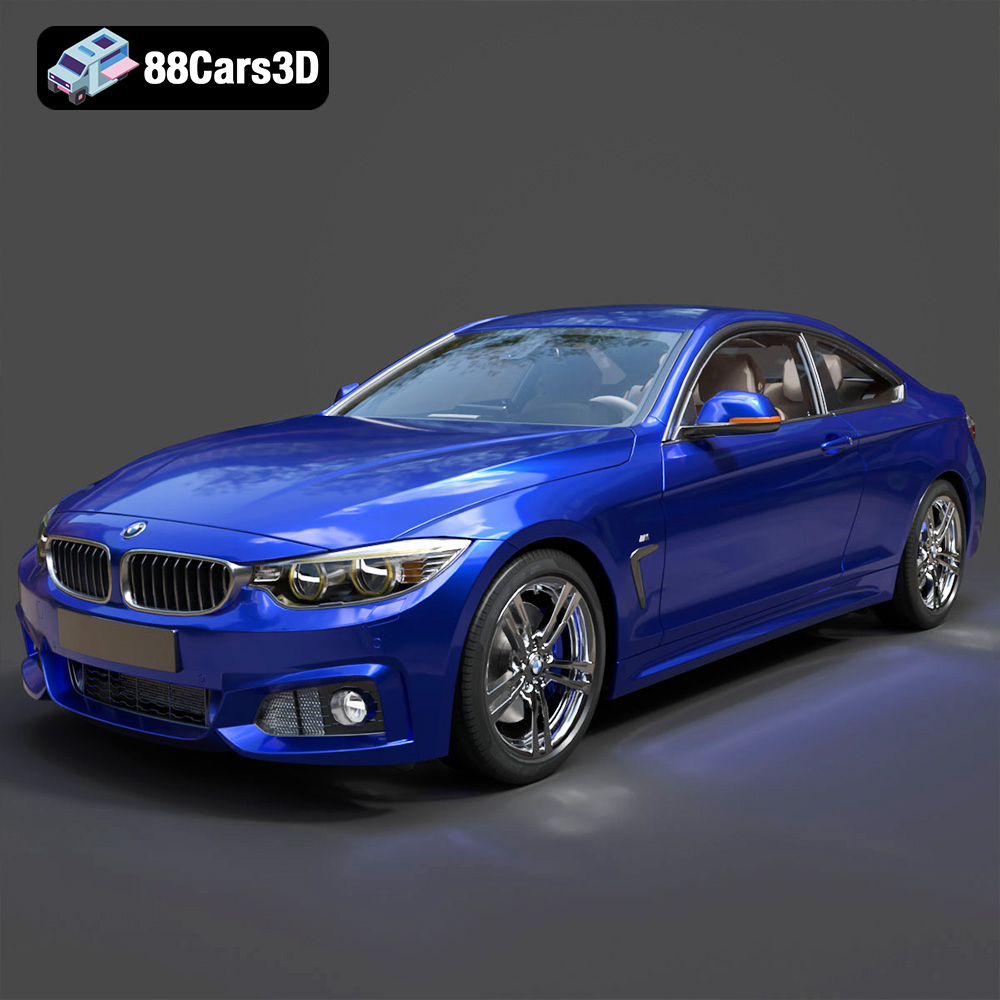
Download the BMW 4 Series Coupe M Sport 2014 3D Model featuring clean geometry, realistic detailing, and a fully modeled interior. Includes .blend, .fbx, .obj, .glb, .stl, .ply, .unreal, and .max formats for rendering, simulation, and game development.
Price: $14.99

Bentley Brooklands 2008 3D Model
Texture: Yes
Material: Yes
Download the Bentley Brooklands 2008 3D Model featuring clean geometry, realistic detailing, and a fully modeled interior. Includes .blend, .fbx, .obj, .glb, .stl, .ply, .unreal, and .max formats for rendering, simulation, and game development.
Price: $14.99
Bentley Mulsanne Luxury Sedan 3D Model
Texture: Yes
Material: Yes
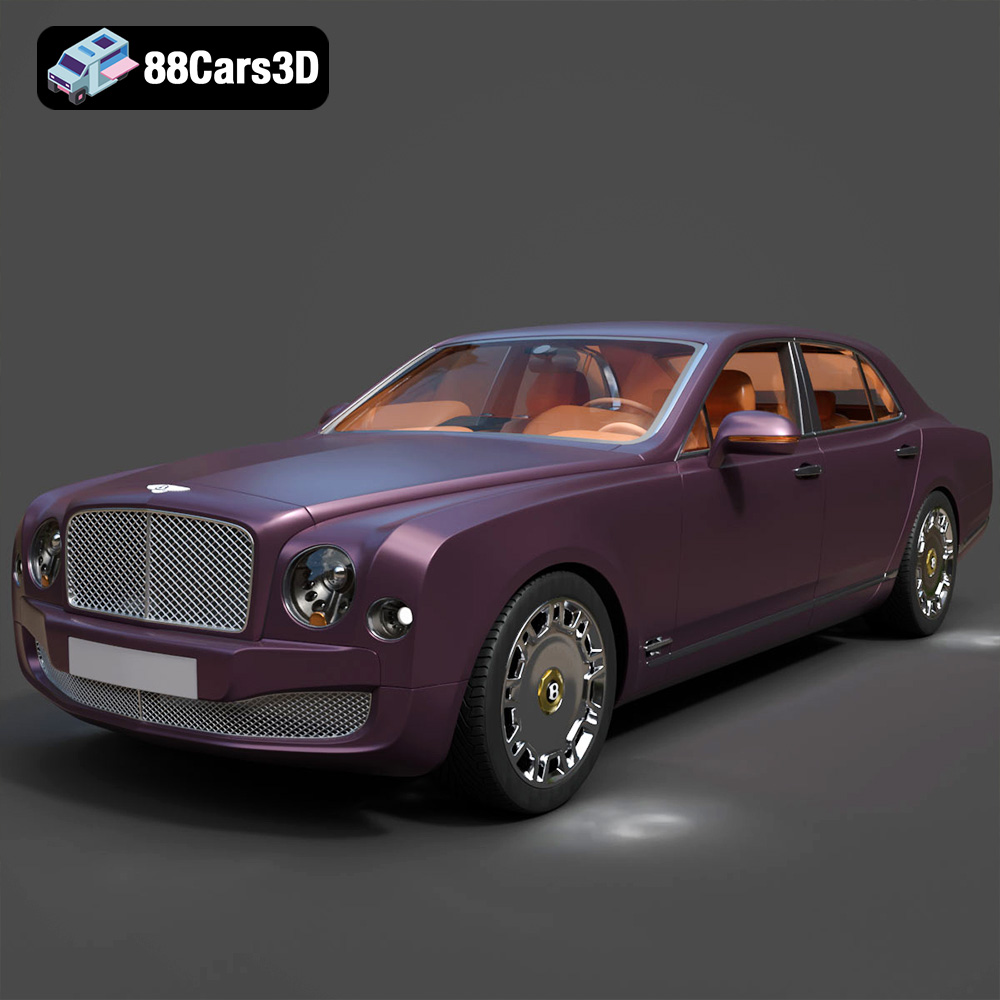
Download the Bentley Mulsanne Luxury Sedan 3D Model featuring clean geometry, realistic detailing, and a fully modeled interior. Includes .blend, .fbx, .obj, .glb, .stl, .ply, .unreal, and .max formats for rendering, simulation, and game development.
Price: $14.99

Bentley Continental GT 2011 3D Model
Texture: Yes
Material: Yes
Download the Bentley Continental GT 2011 3D Model featuring clean geometry, realistic detailing, and a fully modeled interior. Includes .blend, .fbx, .obj, .glb, .stl, .ply, .unreal, and .max formats for rendering, simulation, and game development.
Price: $14.99

Bentley Continental Flying Spur 3D Model
Texture: Yes
Material: Yes
Download the Bentley Continental Flying Spur 3D Model featuring clean geometry, realistic detailing, and a fully modeled interior. Includes .blend, .fbx, .obj, .glb, .stl, .ply, .unreal, and .max formats for rendering, simulation, and game development.
Price: $14.99
BMW M3 E46 3D Model
Texture: Yes
Material: Yes
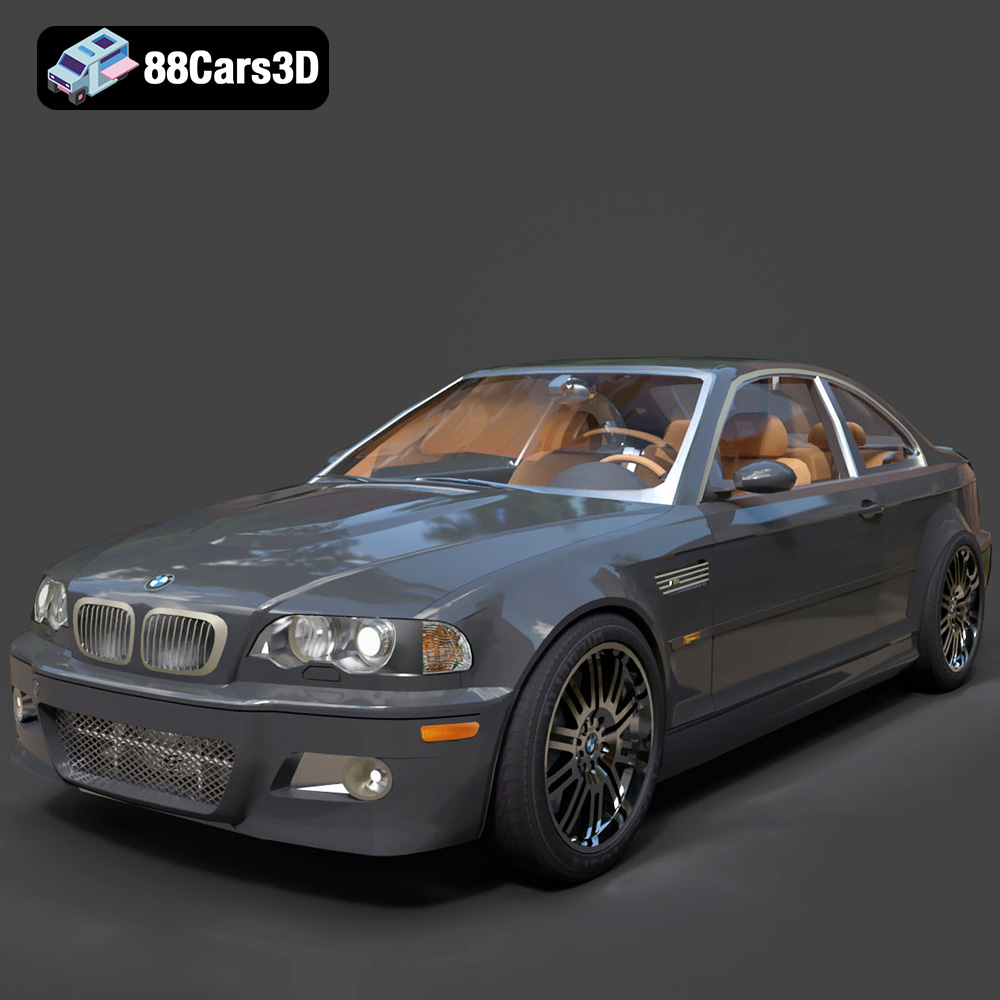
Download the BMW M3 E46 3D Model featuring iconic sports car design and detailed interior. Includes .blend, .fbx, .obj, .glb, .stl, .ply, .unreal, and .max formats for rendering, simulation, and game development.
Price: $16.99
BMW i3 Coupe 3D Model
Texture: Yes
Material: Yes
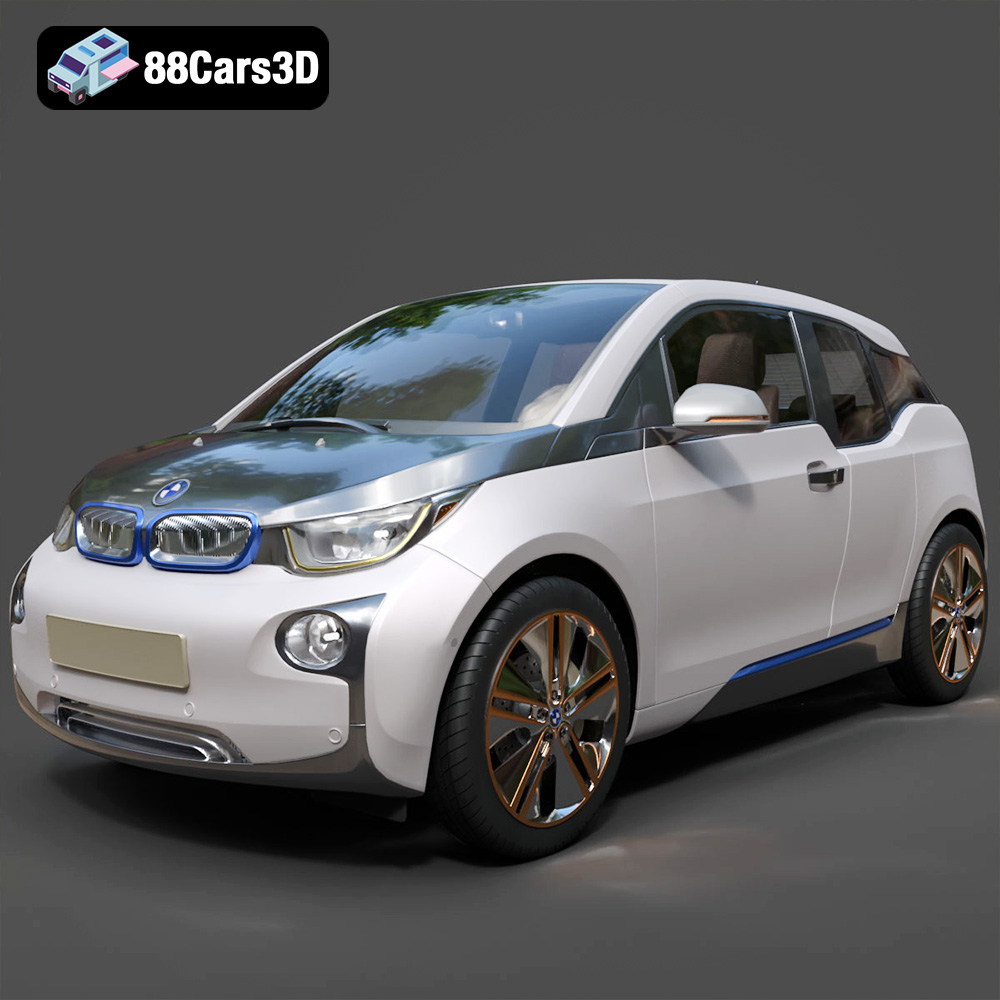
Download the BMW i3 Coupe 3D Model featuring its iconic electric design and compact urban styling. Includes .blend, .fbx, .obj, .glb, .stl, .ply, .unreal, and .max formats for rendering, simulation, and game development.
Price: $17.99
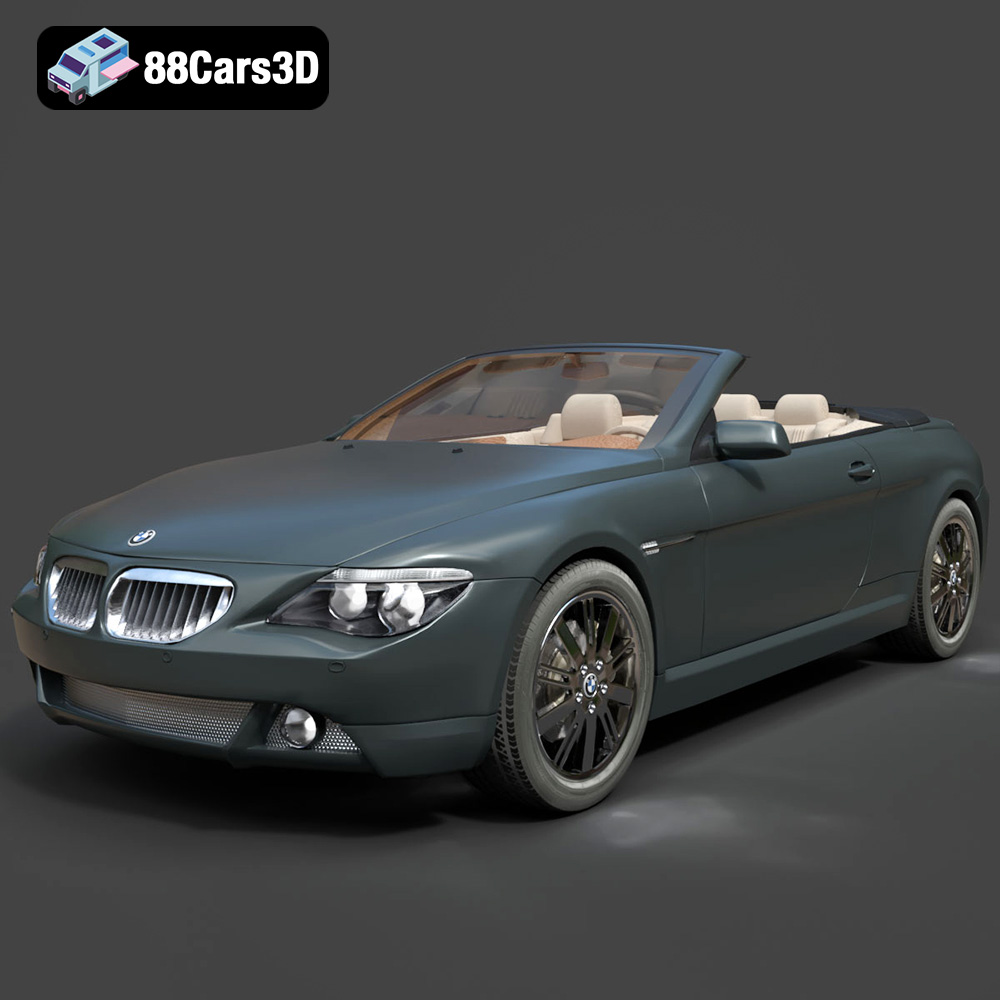
BMW 645ci 2004-2005 3D Model
Texture: Yes
Material: Yes
Download the BMW 645ci 3D Model featuring a sleek, detailed exterior and optimized interior. Includes .blend, .fbx, .obj, .glb, .stl, .ply, .unreal, and .max formats for rendering, simulation, and game development.
Price: $10.79
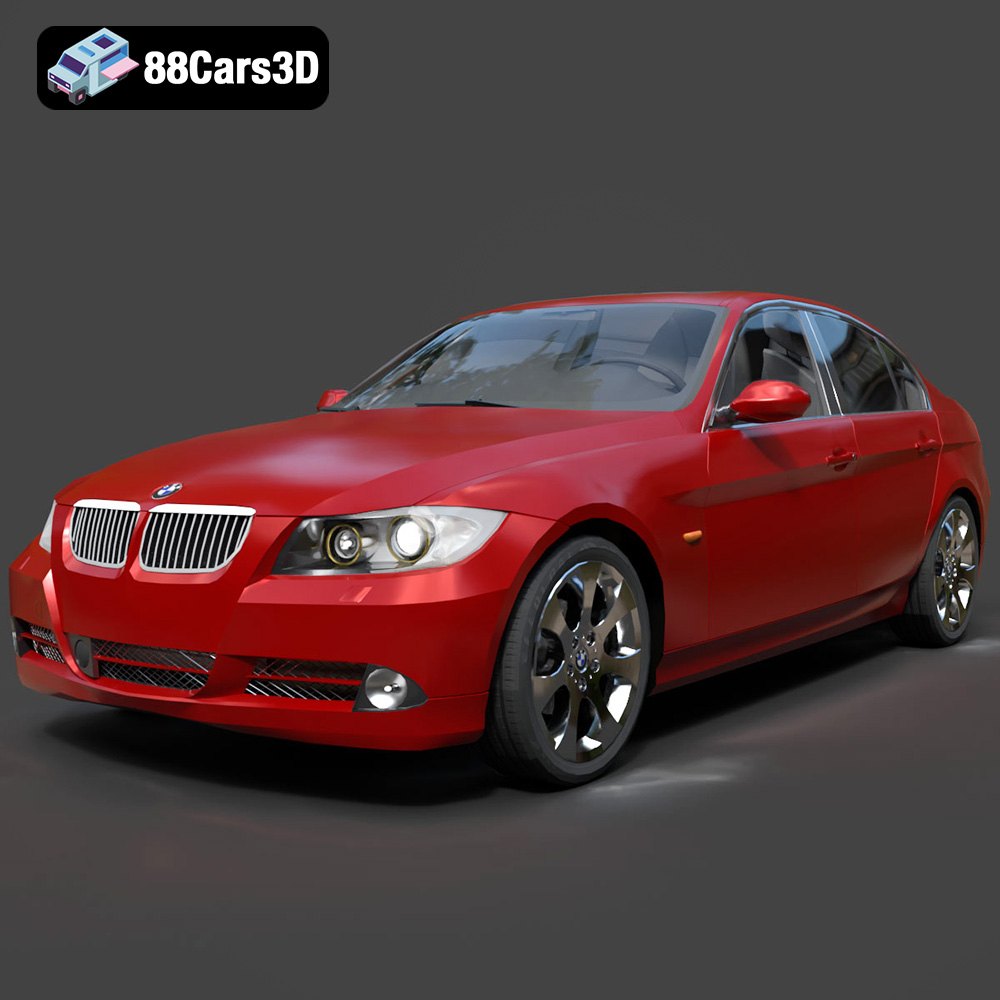
BMW 330i E90 3D Model
Texture: Yes
Material: Yes
Download the BMW 330i E90 3D Model featuring a detailed exterior, an optimized interior, and accurate mechanical components. Includes .blend, .fbx, .obj, .glb, .stl, .ply, .unreal, and .max formats for rendering, simulation, and game development.
Price: $14.79
