

In the highly competitive world of 3D car models and automotive visualization, attention to detail is paramount. While the overall silhouette and paintwork of a vehicle often grab initial attention, it’s the intricate components like headlights and taillights that truly elevate a model from good to breathtakingly realistic. These elements are not merely functional; they are complex pieces of automotive design, featuring sophisticated optics, varied materials, and distinct light signatures that contribute significantly to a vehicle’s character. For 3D artists, game developers, and visualization professionals aiming for unparalleled authenticity, mastering the creation of these luminous details is a critical skill. This comprehensive guide will delve deep into the technical workflows, best practices, and advanced techniques required to model, texture, and render stunningly realistic headlights and taillights, transforming your automotive rendering projects and ensuring your game assets shine with fidelity. Whether you’re preparing models for high-end cinematic renders, real-time game engines, or even 3D printing, understanding the nuances of these components will set your work apart.
We’ll explore everything from topological considerations for perfect light housing curves to advanced PBR materials for glass and reflectors, effective UV mapping strategies, and optimization techniques for various platforms, including AR/VR. By the end of this article, you will possess the knowledge to approach these challenging elements with confidence, enhancing the overall quality and impact of your 3D car models. Platforms like 88cars3d.com, known for offering high-quality 3D car models, exemplify the level of detail that professionals and enthusiasts expect, and achieving that standard begins with mastering the subtle intricacies.
Anatomy of Automotive Lighting & Reference Gathering for Unmatched Realism
Before any polygons are pushed, a thorough understanding of the physical components and an exhaustive collection of reference materials are indispensable. Modern vehicle lighting systems are engineering marvels, far more complex than simple bulbs behind a pane of glass. Dissecting their anatomy will inform every step of your modeling process, from the primary housing to the tiniest LED element. Ignoring this foundational step often leads to models that feel generic or lack the visual punch of their real-world counterparts. The goal is to recreate not just the shape, but the functional logic and material properties that define these essential car parts. Precision in this initial phase saves countless hours in later stages of texturing and rendering, ensuring a more convincing final product for any visualization project.
Moreover, the quality of your reference directly correlates with the quality of your final model. Generic internet searches might provide basic angles, but truly realistic results demand higher fidelity. Seek out detailed engineering diagrams, close-up photography, and even manufacturer promotional videos that highlight the specific lighting features of your chosen vehicle. This level of dedication to research is what distinguishes professional-grade 3D car models, allowing for accurate light dispersion, precise material separation, and a convincing sense of depth within the assembly.
Deconstructing Modern Headlight Assemblies: Beyond the Lens
A modern headlight or taillight assembly is a microcosm of advanced design and engineering. It’s typically composed of several key elements, each with its own unique material and optical properties. For headlights, you’ll encounter the outer transparent lens, often made of polycarbonate with intricate optical patterns for light distribution; the inner bezel or housing, usually a dark plastic or chrome element that frames the components; various reflector dishes, which might be parabolic or projector-based; light sources such as halogen bulbs, Xenon HIDs, or complex LED arrays; and increasingly, fiber optic light guides for distinctive Daytime Running Lights (DRLs). Taillights share similar complexity, often featuring multiple colored lenses (red for brake/running, amber for turn signals, clear for reverse), textured diffusers, and sequential LED patterns. Each of these components needs to be modeled individually to accurately capture light interaction, reflections, and refractions. For instance, the subtle fresnel reflections on a clear outer lens, the sharp specular highlights on a chrome reflector, or the soft glow of an internal light guide all contribute to the overall realism. Understanding the exact function and placement of these parts is crucial for a believable reconstruction.
The Importance of High-Quality Reference: Your Blueprint for Authenticity
High-quality reference material is the bedrock of creating realistic automotive lighting. Generic images simply won’t suffice. You should aim to gather as much of the following as possible:
- Manufacturer CAD Data/Blueprints: If accessible, these provide precise dimensions, curvatures, and component placement. They are the ultimate source of truth.
- High-Resolution Photography: Focus on close-up shots from various angles, capturing details of the lens textures, internal components, material finishes, and how light interacts with the assembly in different lighting conditions (e.g., headlights on/off, in direct sunlight, at night).
- Walkaround Videos: Videos can offer dynamic insights into how light catches different surfaces as the camera moves, and can reveal hidden details not visible in still photos.
- Disassembly Guides: Sometimes found in repair manuals, these can show the internal structure and component layering of the assembly, which is invaluable for accurate modeling.
Without these detailed references, you risk making assumptions that detract from the authenticity of your 3D car models. The more accurately you can reproduce the real-world complexities, the more convincing your final automotive rendering will be.
Precision Modeling for Authenticity: Crafting Every Curve and Component
Once you have a solid understanding of the anatomy and a robust collection of references, the actual modeling process begins. This stage demands a meticulous approach, particularly concerning topology and the accurate representation of intricate internal elements. The goal isn’t just to make it look right from a distance, but to ensure that up-close inspections and dynamic lighting conditions reveal impeccable craftsmanship. Poor topology can lead to pinching, artifacting, and difficulty in achieving smooth, reflective surfaces, which is particularly problematic for automotive glass and chrome. Every curve, recess, and aperture must be defined with precision to hold up under scrutiny, whether in a high-resolution render or a real-time game asset environment. This precision also ensures that subsequent stages, such as UV mapping and material application, proceed smoothly without fighting problematic geometry.
The complexity of modern headlight and taillight designs necessitates a robust understanding of advanced modeling techniques. From maintaining perfect surface continuity for the outer lens to accurately representing the tiny reflectors and light guides within, each part contributes to the overall visual integrity. Software like 3ds Max, Blender, and Maya provide powerful toolsets, but it’s the artist’s skill in applying these tools that truly makes the difference. Whether you’re building a model from scratch or refining an existing one for 88cars3d.com, paying close attention to these modeling fundamentals is non-negotiable for achieving a professional finish.
Mastering Topology for Complex Curvatures: Smoothness is Key
For automotive lighting, impeccable topology is crucial, especially for the large, often subtly curved outer lenses and inner reflector surfaces.
- Quad-Dominant Geometry: Always aim for clean, all-quad topology. Triangles and N-gons can introduce unpredictable shading, pinching, and issues with subdivision surfaces, making it difficult to achieve the smooth, reflective surfaces characteristic of car lights.
- Controlled Edge Flow: Guide your edge loops to follow the natural contours and creases of the design. This is vital for maintaining surface continuity and allowing subdivision modifiers to produce perfectly smooth results without artifacts. Edges should flow naturally around cutouts and design features.
- Supporting Edge Loops: Use strategically placed “support” or “holding” edge loops near sharp edges to control the tightness of the crease when using subdivision surface modifiers. This allows you to define sharp transitions without creating excessive geometry in flat areas.
- Polygonal Density: While aiming for low poly counts for game assets, ensure sufficient density where curvature is high or details are intricate. For high-resolution renders, you can afford more polygons, but always aim for efficiency. A common range for a detailed headlight might be 5,000-20,000 polygons, depending on the complexity and target platform.
For Blender users, tools like the Subdivision Surface Modifier are indispensable for achieving smooth forms from a base mesh with controlled topology. Utilizing the Bevel Modifier can also help create controlled chamfers and rounded edges crucial for automotive parts, especially when combined with careful edge weighting to maintain crispness.
Crafting Internal Elements: Reflectors, Light Guides, and LEDs
The magic of automotive lighting often lies within the assembly. These internal components require just as much attention as the outer shell:
- Reflectors: Model parabolic or free-form reflectors with high precision. These surfaces need to be perfectly smooth and often have a chrome finish. Ensure their internal geometry is clean to avoid shading artifacts when light interacts with them. Optical textures (often subtle patterns) can be applied via normal or displacement maps later.
- Light Guides/Fiber Optics: These intricate elements, often seen in DRLs, require careful modeling to capture their smooth, often twisted forms. They should be modeled as solid objects to properly refract and transmit light. The internal surface of these guides is key to how they glow.
- LEDs and Bulbs: Model individual LEDs as simple geometric shapes (cylinders or small cubes) with emissive materials. For realism, consider the base and any visible wiring, even if simplified. For traditional bulbs, a detailed filament and glass envelope add significant authenticity.
- Housing and Bezels: These often dark plastic or chrome parts frame the light sources. Model them with appropriate thickness and chamfered edges. They can be good candidates for baked normal maps to add fine surface details like texture or subtle screw points without excessive geometry.
The interaction between these internal components and the outer lens is what creates the characteristic light signature of a vehicle. Neglecting any of these elements will result in a less convincing model.
Advanced UV Mapping and Material Creation: Bringing Surfaces to Life
With a meticulously modeled headlight or taillight, the next critical step is preparing it for texturing and material application. This involves strategic UV mapping and the creation of physically accurate materials using PBR (Physically Based Rendering) workflows. The unique properties of automotive lighting components – from highly reflective chrome to transparent glass with intricate optical patterns and emissive elements – demand a sophisticated approach to both UV layout and shader network construction. Incorrect UVs can lead to stretched or warped textures, while poorly defined PBR materials will fail to capture the realistic interplay of light and surface, no matter how good the model looks. This stage is where the raw geometry truly gains its visual appeal and functional realism, dictating how light will be absorbed, reflected, and refracted by each part of the assembly.
Achieving photorealism in automotive rendering relies heavily on the quality and accuracy of your textures and materials. Every subtle scratch, manufacturing imperfection, or optical pattern on the lens contributes to the believability of the final image. This is where attention to detail in creating and assigning material properties truly shines, transforming a collection of polygons into a convincing replica of a real-world car component. Whether you’re preparing assets for high-fidelity cinematic shots or optimized game assets, the principles remain consistent: precise UVs and physically accurate materials are non-negotiable.
Strategic UV Layout for Lenses and Reflectors: Clarity and Precision
Effective UV mapping is paramount for headlights and taillights, particularly for the lens and reflector elements:
- Outer Lenses: These often require very clean, unwrapped UVs to avoid distortion, especially if you plan to apply optical patterns, subtle texturing (e.g., micro-scratches, manufacturing marks), or normal maps for fine details. Aim for a single, contiguous UV island if possible, or strategically cut seams in areas that will be less visible. Texel density should be consistent across the lens.
- Reflectors: Inner reflectors (chrome or metallic plastic) also need clean UVs for accurate reflection maps or anisotropic shading. For simple parabolic reflectors, planar or cylindrical mapping might suffice, followed by careful unfolding. Avoid stretching, as this will distort any applied textures or reflection information.
- Internal Bezels and Housings: These can often be packed more efficiently. Consider overlapping UVs for repetitive elements like screws or small vents if they share the same material and texture space. However, for unique details or painted surfaces, unique UV space is preferred.
- Texel Density: Maintain a consistent texel density across all visible parts of the headlight/taillight assembly. This ensures that textures appear equally sharp, regardless of the component. Use tools in your 3D software to visualize and normalize texel density.
For Blender users, the UV Editor provides powerful tools like Smart UV Project, Cube Projection, and Follow Active Quads to achieve clean unwraps. Marking UV Seams strategically is crucial for controlling how your mesh unfolds, allowing you to minimize distortion on curved surfaces.
PBR Materials for Photorealism: Glass, Chrome, and Emissives
Creating believable materials using a PBR workflow is where the assembly truly comes alive:
- Outer Lens (Glass/Polycarbonate): This material is perhaps the most critical. Use a physically accurate dielectric material with appropriate IOR (Index of Refraction) values (e.g., 1.5-1.55 for plastics/glass). Incorporate a subtle Roughness map to simulate microscopic imperfections, smudges, or the anti-scratch coating. Normal maps can be used for optical patterns or manufacturing marks. For a truly advanced setup, consider adding a slight tint to the transmission color and simulating dispersion (chromatic aberration) for high-end renders.
- Inner Reflectors (Chrome/Metallic Paint): Use a highly reflective metallic material. A perfectly smooth chrome will have a roughness value close to 0. For brushed or anisotropic finishes, apply corresponding roughness and normal maps. The metallic property should be set to 1.
- Housing/Bezels (Plastic): Utilize a dielectric material with appropriate base color, roughness, and subtle normal maps for surface texture (e.g., fine grain, matte finish). Variations in roughness can add realism, simulating wear or different plastic types.
- Emissive Elements (LEDs, Light Guides): Assign an emissive material with a realistic color and intensity. For LEDs, a simple white or yellow emissive coupled with a bloom effect in rendering is effective. For light guides, the material needs to transmit and glow, often requiring a translucent or subsurface scattering component, combined with an emissive strength. IES (Illuminating Engineering Society) profiles can be used for highly accurate light distribution patterns for the emissive sources, though this is usually applied at the rendering stage.
When sourcing models from marketplaces such as 88cars3d.com, you’ll often find that these PBR material setups are already meticulously prepared, reflecting industry best practices for achieving this level of realism across various file formats.
Rendering and Lighting for Visual Impact: Illuminating Your Creation
Having meticulously modeled and textured your headlight and taillight assembly, the final frontier for achieving photorealism lies in the rendering stage. This involves setting up effective lighting, optimizing render settings, and applying post-processing techniques to enhance the visual impact. The way light interacts with your carefully crafted materials—how it refracts through the lens, reflects off chrome surfaces, and glows from emissive elements—is what truly sells the illusion of a real car part. Without a thoughtful approach to lighting and rendering, even the most detailed 3D car models can fall flat, lacking the vibrancy and depth seen in professional automotive photography. This section will guide you through establishing powerful studio lighting environments and leveraging advanced rendering features to bring your automotive lighting to life, whether for static imagery or dynamic animations.
The choice of renderer (Corona, V-Ray, Cycles, Arnold) will influence specific settings, but the fundamental principles of lighting and material interaction remain universal. Our goal is to simulate reality as closely as possible, ensuring that every highlight, shadow, and refraction contributes to an utterly convincing final image. For artists and studios aiming to showcase their automotive rendering capabilities, mastering this stage is crucial for producing portfolio-quality work that captures attention and conveys expertise in high-fidelity visualization.
Studio Lighting Setups for Product Shots: Revealing Every Detail
For showcasing individual headlight or taillight assemblies, a controlled studio lighting environment is ideal:
- HDRI (High Dynamic Range Image): A high-quality HDRI is often the foundation, providing realistic ambient lighting and reflections. Choose an HDRI with appropriate lighting conditions (e.g., a neutral studio, an overcast sky) that complements the mood you want to convey.
- Key Light: This is your primary light source, illuminating the main features and creating dominant shadows. Position it to highlight the primary surfaces of the lens and the main contours of the assembly.
- Fill Lights: Softer and less intense than the key light, fill lights reduce harsh shadows and bring out details in darker areas. Use them strategically to prevent excessive contrast.
- Rim Lights/Accent Lights: Positioned behind or to the side of the model, rim lights create specular highlights along the edges, separating the object from the background and emphasizing its form. This is particularly effective for highlighting the curvature of lenses and bezels.
- Area Lights: Use large, soft area lights to simulate studio softboxes, providing even illumination and flattering reflections on reflective surfaces like chrome reflectors.
- Environment Setup: A simple seamless backdrop (often white or a neutral grey) helps focus attention on the model. Consider a subtle ground plane with a reflective material to catch reflections from the light sources and the model itself.
Experiment with light intensity, color temperature, and position to find the most flattering setup. For Blender’s Cycles or Eevee, utilizing the Light objects (Point, Sun, Spot, Area) and carefully adjusting their settings is key to creating a balanced and impactful lighting scheme.
Achieving Realistic Lens Flare and Refraction: The Sparkle of Life
The subtle optical phenomena are what truly make automotive lighting feel real:
- Refraction through Lenses: Ensure your glass/polycarbonate materials have accurate IOR values. For high-end renders, enabling caustics (light patterns created by refraction) can add significant realism, though it’s computationally intensive. Volumetric effects, like subtle fog or haze within the render environment, can also interact with light passing through the lens, enhancing the sense of depth.
- Lens Flare/Glow Effects: These can be simulated in the renderer or added during post-processing. Renderers like V-Ray and Corona have built-in lens effects, while compositing software allows for greater control over bloom, glare, and anamorphic flares. Ensure these effects are subtle and motivated by the light source.
- Emissive Light: For LEDs and internal light guides, ensure the emissive material is casting actual light into the scene. Use a strong enough emission value so that the lights affect surrounding surfaces and create bloom. Volumetric light effects (light rays/god rays) can dramatically enhance the visibility of emitted light, especially in a slightly hazy environment.
- Render Passes: Utilize render passes (e.g., raw lighting, diffuse, specular, reflection, refraction, emission, Z-depth) to gain granular control in post-processing. This allows you to fine-tune each element of your image, adjust color grading, and add effects without re-rendering.
The combination of accurate refraction, subtle lens effects, and effective emissive light is what transforms a static model into a dynamic, glowing component, highly desirable for showcasing 3D car models in any context.
Optimization for Game Engines and Real-Time Applications: Performance and Fidelity
While high-fidelity renders demand maximum detail, preparing headlight and taillight models for real-time environments like game engines (Unity, Unreal Engine) or AR/VR applications introduces a unique set of challenges and requirements. The goal shifts from absolute photorealism at any cost to achieving the highest possible visual quality within strict performance budgets. This means intelligently reducing polygon counts, streamlining materials, and optimizing textures without sacrificing too much visual fidelity. Headlights and taillights are often complex and contain many small parts, making them prime candidates for careful optimization. Poorly optimized models can lead to high draw calls, stuttering frame rates, and a generally poor user experience, undermining the realism you’ve worked so hard to achieve. This section will equip you with strategies to make your automotive lighting assets game-engine ready, ensuring they look great and run efficiently.
The optimization process is a delicate balance between visual quality and performance. Understanding the limitations and capabilities of target platforms is crucial. Whether you’re aiming for a mobile AR experience or a high-end PC game, applying these techniques will ensure your game assets are not only beautiful but also performant, contributing positively to the overall experience. When you find high-quality models on marketplaces like 88cars3d.com, much of this optimization work has often been done for you, providing ready-to-use assets in common file formats.
LODs and Mesh Optimization: Balancing Detail and Performance
For game engines, detailed models like headlight assemblies require careful optimization:
- Level of Detail (LODs): Implement multiple LODs for your headlight and taillight assemblies. This involves creating several versions of the model, each with a progressively lower polygon count.
- LOD0 (High Poly): Used when the car is very close to the camera. Might have 15,000-25,000 polygons for the entire assembly.
- LOD1 (Medium Poly): Used at mid-distances. Aim for a 50-70% reduction from LOD0 (e.g., 5,000-10,000 polygons).
- LOD2 (Low Poly): For distant views. A significant reduction, perhaps 1,000-3,000 polygons, where only primary shapes are retained.
- LOD3 (Billboards/Impostors): For extremely far distances, a simple flat texture or a very low-poly proxy might suffice.
Game engines will automatically switch between these versions based on the camera’s distance, saving performance.
- Decimation/Retopology: Use decimation tools (e.g., Blender’s Decimate Modifier) to reduce polygon count, but do so carefully to preserve essential shapes. Manual retopology can yield cleaner, more game-friendly meshes, especially for complex curved surfaces, ensuring good performance for game assets.
- Baking Normal Maps: Bake high-detail geometry (like subtle lens textures, screw heads, or fine bevels) from your high-poly model onto a normal map for your lower-poly LODs. This allows you to retain visual detail without the polygon overhead.
- Merging Components: Where possible and visually acceptable, merge small, non-moving internal components into a single mesh to reduce draw calls.
Texture Atlasing and Shader Efficiency: Streamlining Resources
Optimizing textures and materials is just as crucial as mesh optimization:
- Texture Atlasing: Combine multiple small textures (e.g., for different internal plastic parts, small chrome elements, or distinct lens areas) into a single, larger texture atlas. This dramatically reduces the number of draw calls, as the engine only needs to load one material/texture set per headlight/taillight instead of many.
- PBR Texture Formats: Use compressed formats like DXT1/BC1 for diffuse, DXT5/BC3 for normal maps with alpha, and BC4/BC5 for roughness/metallic maps (which often only need one or two channels). Ensure resolutions are power-of-two (e.g., 512×512, 1024×1024, 2048×2048).
- Shader Complexity: Keep your shader networks as simple as possible. Avoid overly complex material graphs in game engines. Utilize instanced materials to allow variations (e.g., different dirt levels) while using the same base shader.
- Emissive Maps: Instead of casting real-time lights from every individual LED (which is expensive), use emissive textures in your material. These glow and contribute to bloom in the post-processing pipeline, creating a convincing light effect without the performance hit. You can still use a few carefully placed actual lights for the main headlight beam.
- Transparency Optimization: Transparent materials like glass are computationally expensive. Optimize by using simplified geometry for distant LODs or using dithered transparency techniques for faster rendering where full refraction isn’t necessary. For AR/VR, this is especially critical due to the high frame rate requirements.
Specific Challenges and Advanced Techniques: Pushing the Boundaries
Even after mastering the fundamentals of modeling, texturing, and optimization, creating truly exceptional headlight and taillight models often involves tackling specific challenges and employing advanced techniques. These can range from meticulously simulating the glow and light patterns of modern LED arrays to ensuring your models are perfectly prepared for non-traditional applications like 3D printing or highly interactive AR/VR experiences. The subtleties in how light scatters, refracts, and diffuses within these components are often what distinguish a good model from an outstanding one. This section dives into some of these advanced considerations, providing insights into achieving even greater levels of realism and versatility for your 3D car models.
The continuous evolution of rendering technology and real-time platforms means that the bar for realism is constantly rising. Staying ahead requires a willingness to explore these advanced techniques, understanding how to push your tools to their limits while maintaining performance. Whether it’s crafting realistic emissive effects that mimic real-world photometry or ensuring watertight meshes for additive manufacturing, these specialized skills add significant value to any professional’s toolkit, especially when creating assets for demanding environments or platforms like 88cars3d.com, which caters to a discerning audience.
Emissive Material Setup and Glow Effects: Capturing the Light Signature
The distinctive glow of modern automotive lighting is a key visual identifier:
- IES Profiles for Accuracy: For truly accurate light distribution patterns from your emissive sources (especially headlights), utilize IES (Illuminating Engineering Society) photometric web files. These files contain real-world light measurement data and can be loaded into most advanced renderers (like V-Ray, Corona, Cycles, Arnold) to simulate how light beams from specific bulb or LED arrays. This is far more accurate than simple point or spot lights.
- Bloom and Glare: These post-processing effects are crucial for enhancing the perceived brightness and “glow” of emissive elements. Control parameters like intensity, threshold, and radius to achieve a natural look without over-blooming the image.
- Light Linking/Exclusion: In complex scenes, you might want certain lights (e.g., headlight beams) to only illuminate specific objects or exclude others. Most renderers offer light linking/exclusion features, allowing granular control over which lights affect which objects. This can prevent unwanted illumination on parts of your car model or environment.
- Volumetric Lights: For a dramatic effect, especially in scenes with atmospheric haze or fog, use volumetric light sources. These will show the light beams propagating through the air, adding depth and realism to your headlight and taillight illumination.
3D Printing and AR/VR Considerations: Beyond the Screen
Preparing automotive lighting for non-rendering applications introduces different requirements:
- 3D Printing Preparation:
- Watertight Meshes: For 3D printing, your models must be “watertight” – meaning they have no holes or non-manifold geometry. All surfaces must form a continuous, enclosed volume. Use mesh inspection tools to identify and repair issues.
- Wall Thickness: Ensure all components have sufficient wall thickness to be physically printable. Thin elements like light guides or small bezels might need to be thickened slightly.
- Scale and Units: Model in real-world units and ensure the scale is correct for the intended print size.
- Mesh Repair Tools: Software like Meshmixer or Blender’s 3D Print Toolbox addon can help in analyzing and repairing meshes for printability.
- AR/VR Optimization:
- Extreme Performance: AR/VR demands extremely high and consistent frame rates (e.g., 90 FPS per eye), making optimization even more critical than for traditional games. Aggressive LODs, texture atlasing, and minimalist shaders are essential.
- Draw Call Reduction: Minimize draw calls at all costs. Batching materials and merging meshes aggressively helps.
- Occlusion Culling: Implement occlusion culling to prevent rendering objects that are hidden behind others.
- Real-World Scale: Ensure models are built to real-world scale for convincing AR experiences.
- Eye-Level Detail: Pay extra attention to details that would be visible at eye level in VR, as users can lean in and inspect objects closely.
These specialized applications require a deep understanding of mesh integrity and performance budgeting, adding another layer of expertise to your visualization capabilities.
Conclusion
Creating realistic headlight and taillight models is a journey that encompasses meticulous research, precise 3D modeling, advanced material creation, thoughtful rendering, and strategic optimization. It’s a testament to the fact that in 3D car models, true photorealism is often found in the mastery of intricate details. From understanding the optical physics of a modern projector headlight to crafting flawless PBR materials for chrome reflectors and optimizing complex meshes for seamless real-time performance, each step plays a crucial role in bringing your automotive designs to life. The ability to produce these high-fidelity components not only enhances the visual appeal of your projects but also demonstrates a profound understanding of automotive design and 3D art pipelines.
By diligently applying the techniques outlined in this guide—from mastering topology and UV mapping to leveraging PBR materials and implementing effective LOD strategies—you can elevate your automotive rendering to professional standards. Whether your goal is cinematic excellence, high-performance game assets, or preparation for cutting-edge AR/VR experiences, the principles remain consistent: precision, accuracy, and efficiency. Remember that resources like 88cars3d.com offer exceptional pre-made 3D car models that meet these demanding standards, providing a fantastic starting point or benchmark for your own creations. Embrace the challenge, refine your skills, and let your future 3D car models shine with unparalleled realism, capturing the essence and character that only truly authentic lighting can provide.
Featured 3D Car Models

BMW 5 Series F10 2014 3D Model
Texture: Yes
Material: Yes
Download the BMW 5 Series F10 3D Model featuring clean geometry, realistic detailing, and a fully modeled interior. Includes .blend, .fbx, .obj, .glb, .stl, .ply, .unreal, and .max formats for rendering, simulation, and game development.
Price: $14.99
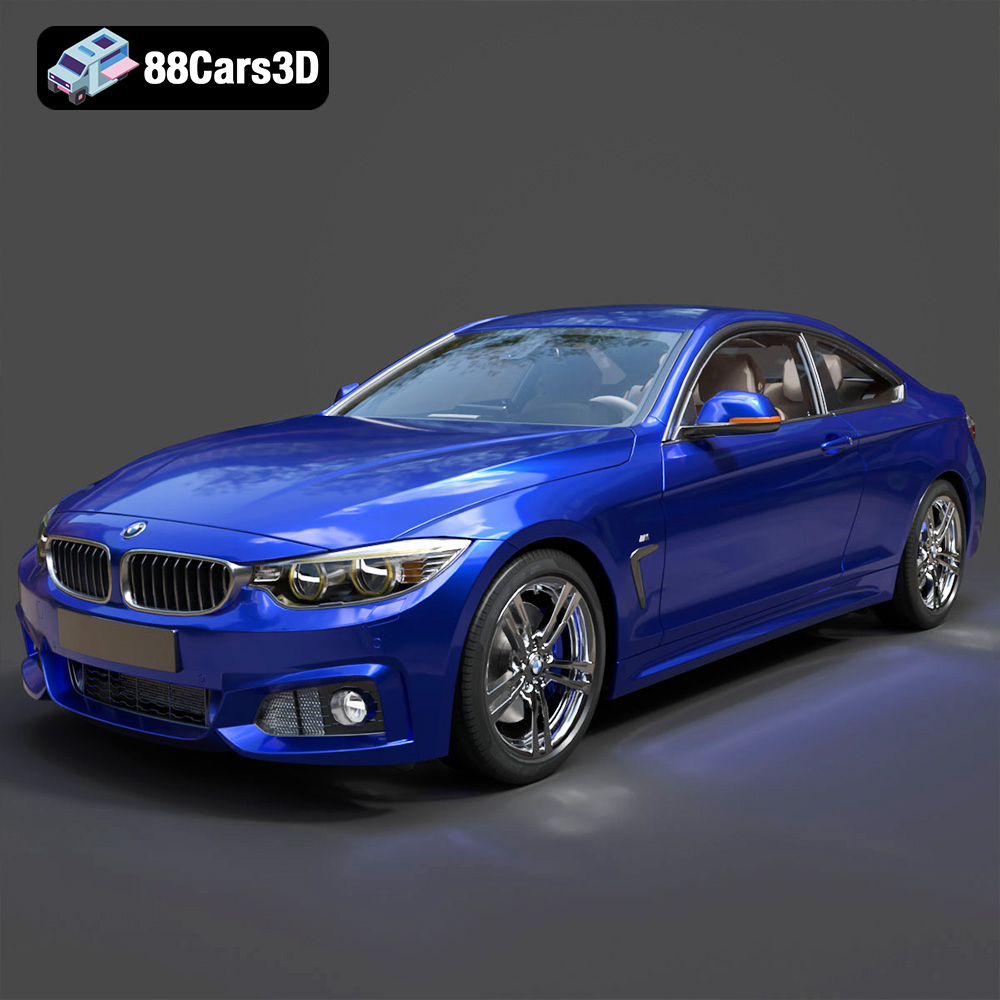
BMW 4 Series Coupe M Sport 2014 3D Model
Texture: Yes
Material: Yes
Download the BMW 4 Series Coupe M Sport 2014 3D Model featuring clean geometry, realistic detailing, and a fully modeled interior. Includes .blend, .fbx, .obj, .glb, .stl, .ply, .unreal, and .max formats for rendering, simulation, and game development.
Price: $14.99

Bentley Brooklands 2008 3D Model
Texture: Yes
Material: Yes
Download the Bentley Brooklands 2008 3D Model featuring clean geometry, realistic detailing, and a fully modeled interior. Includes .blend, .fbx, .obj, .glb, .stl, .ply, .unreal, and .max formats for rendering, simulation, and game development.
Price: $14.99
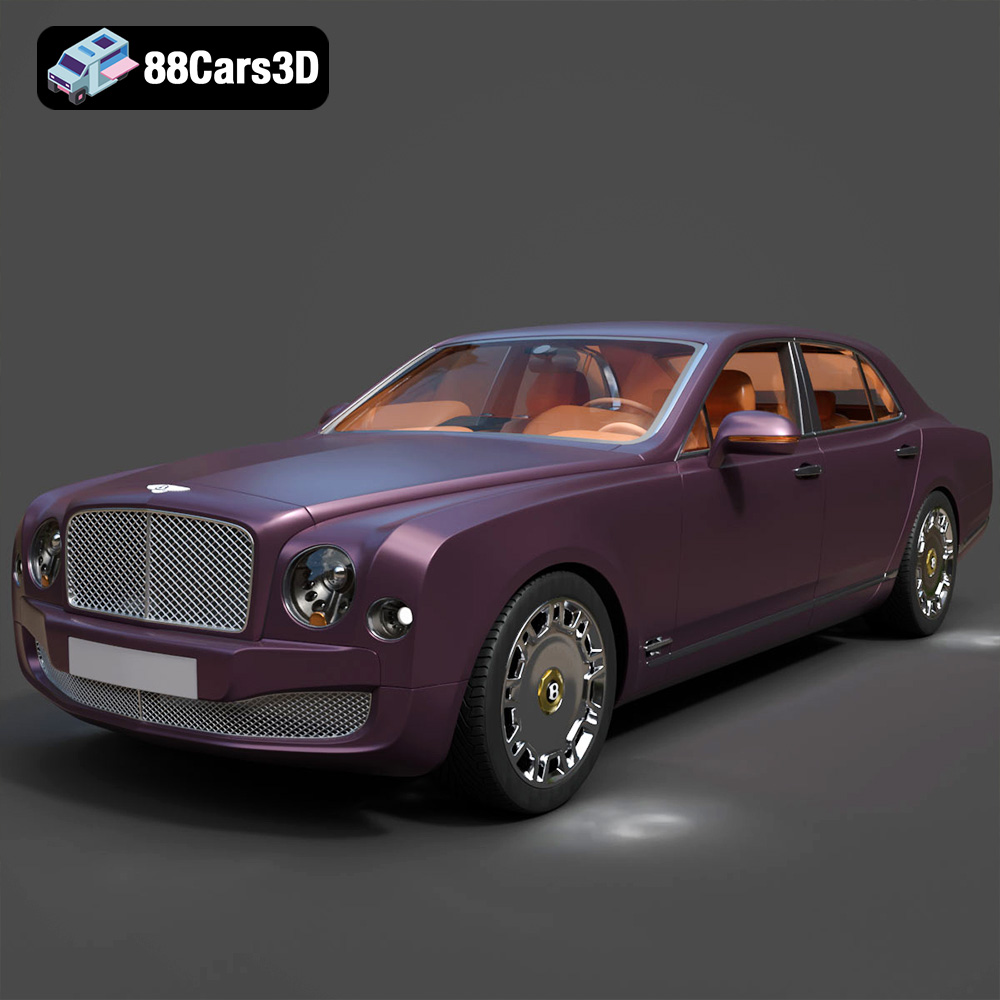
Bentley Mulsanne Luxury Sedan 3D Model
Texture: Yes
Material: Yes
Download the Bentley Mulsanne Luxury Sedan 3D Model featuring clean geometry, realistic detailing, and a fully modeled interior. Includes .blend, .fbx, .obj, .glb, .stl, .ply, .unreal, and .max formats for rendering, simulation, and game development.
Price: $14.99

Bentley Continental GT 2011 3D Model
Texture: Yes
Material: Yes
Download the Bentley Continental GT 2011 3D Model featuring clean geometry, realistic detailing, and a fully modeled interior. Includes .blend, .fbx, .obj, .glb, .stl, .ply, .unreal, and .max formats for rendering, simulation, and game development.
Price: $14.99

Bentley Continental Flying Spur 3D Model
Texture: Yes
Material: Yes
Download the Bentley Continental Flying Spur 3D Model featuring clean geometry, realistic detailing, and a fully modeled interior. Includes .blend, .fbx, .obj, .glb, .stl, .ply, .unreal, and .max formats for rendering, simulation, and game development.
Price: $14.99
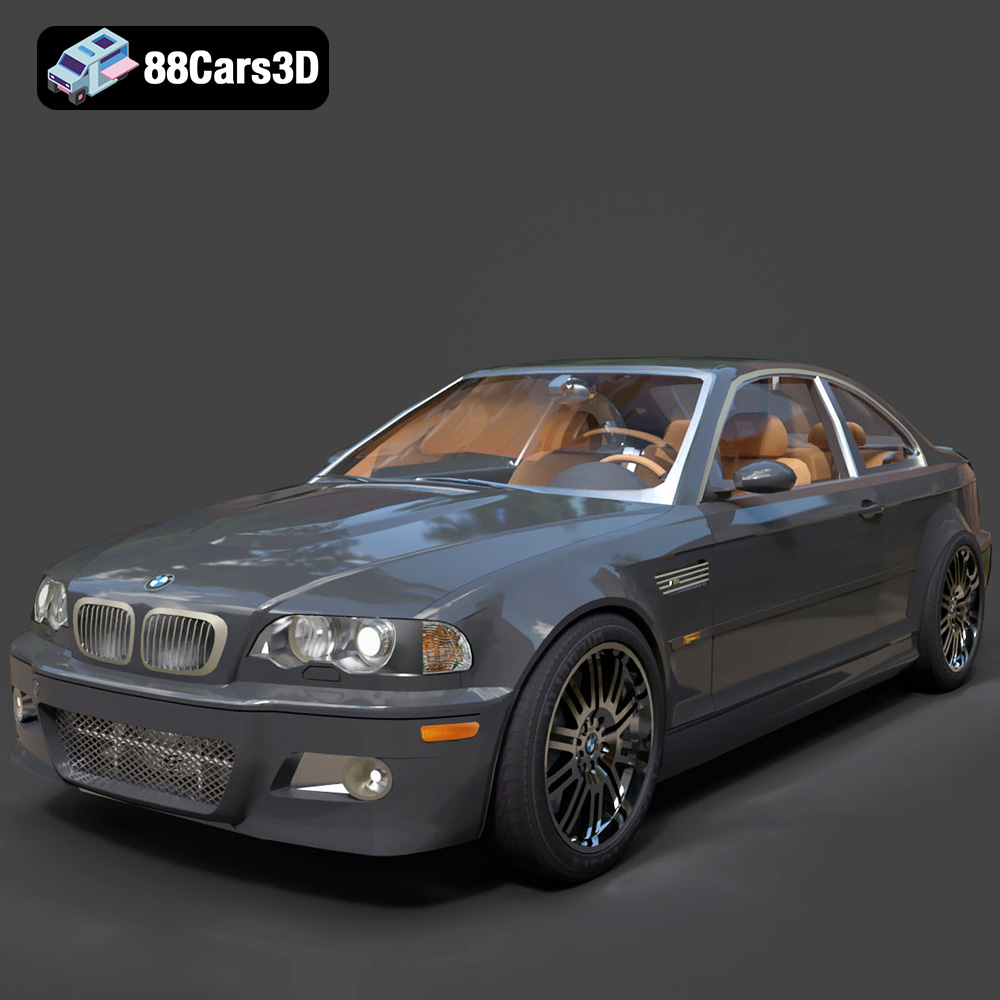
BMW M3 E46 3D Model
Texture: Yes
Material: Yes
Download the BMW M3 E46 3D Model featuring iconic sports car design and detailed interior. Includes .blend, .fbx, .obj, .glb, .stl, .ply, .unreal, and .max formats for rendering, simulation, and game development.
Price: $16.99
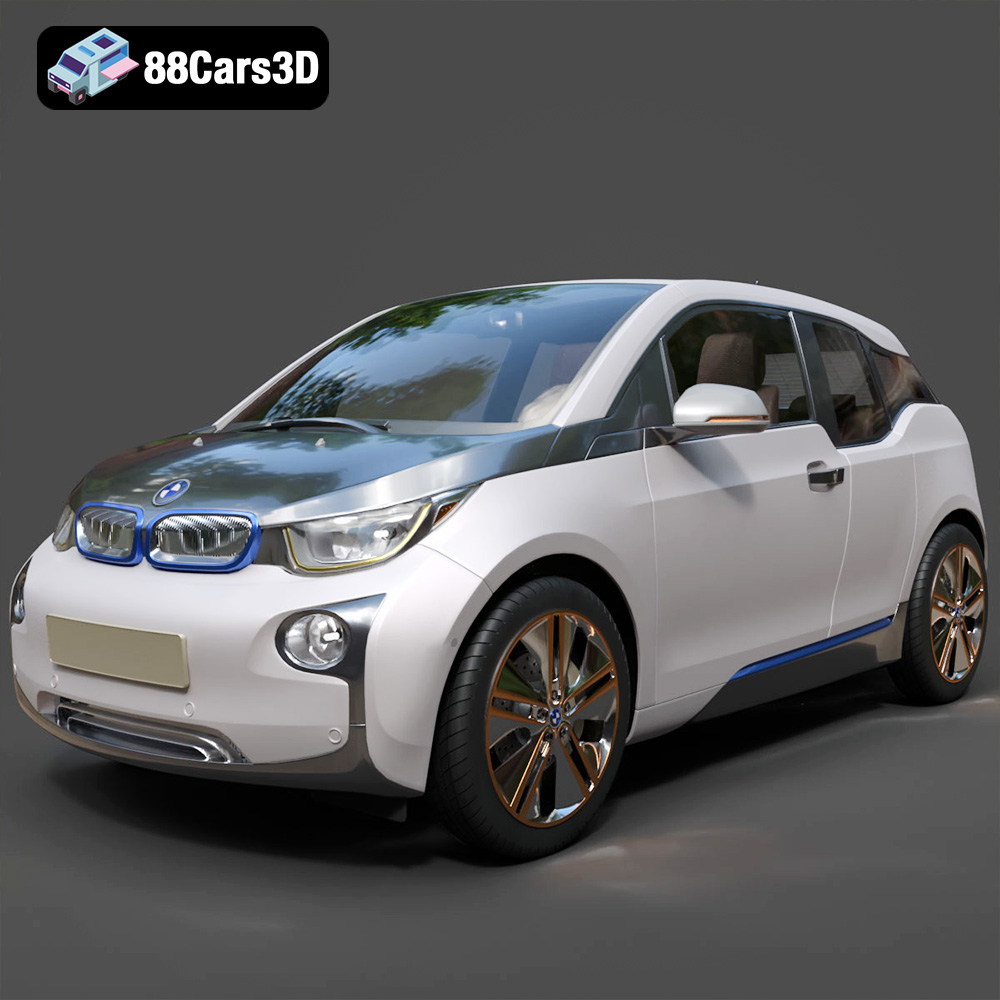
BMW i3 Coupe 3D Model
Texture: Yes
Material: Yes
Download the BMW i3 Coupe 3D Model featuring its iconic electric design and compact urban styling. Includes .blend, .fbx, .obj, .glb, .stl, .ply, .unreal, and .max formats for rendering, simulation, and game development.
Price: $17.99
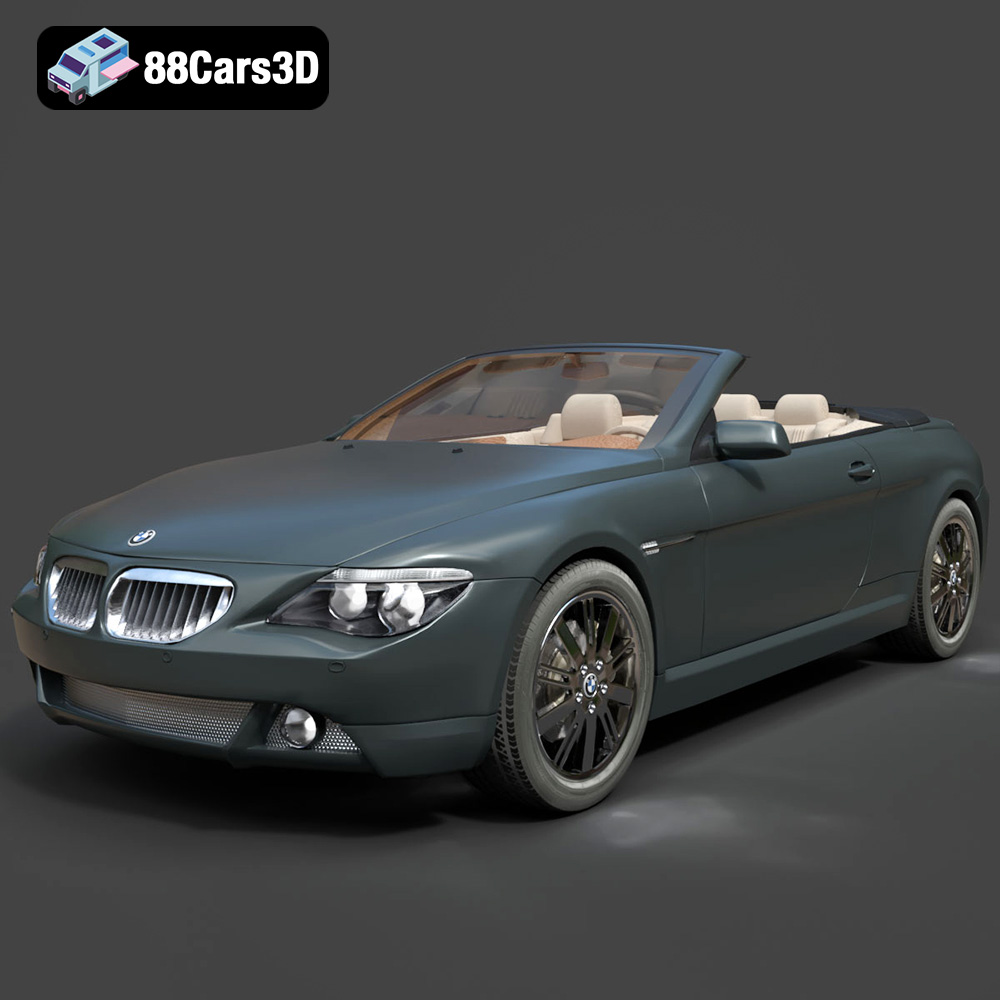
BMW 645ci 2004-2005 3D Model
Texture: Yes
Material: Yes
Download the BMW 645ci 3D Model featuring a sleek, detailed exterior and optimized interior. Includes .blend, .fbx, .obj, .glb, .stl, .ply, .unreal, and .max formats for rendering, simulation, and game development.
Price: $10.79
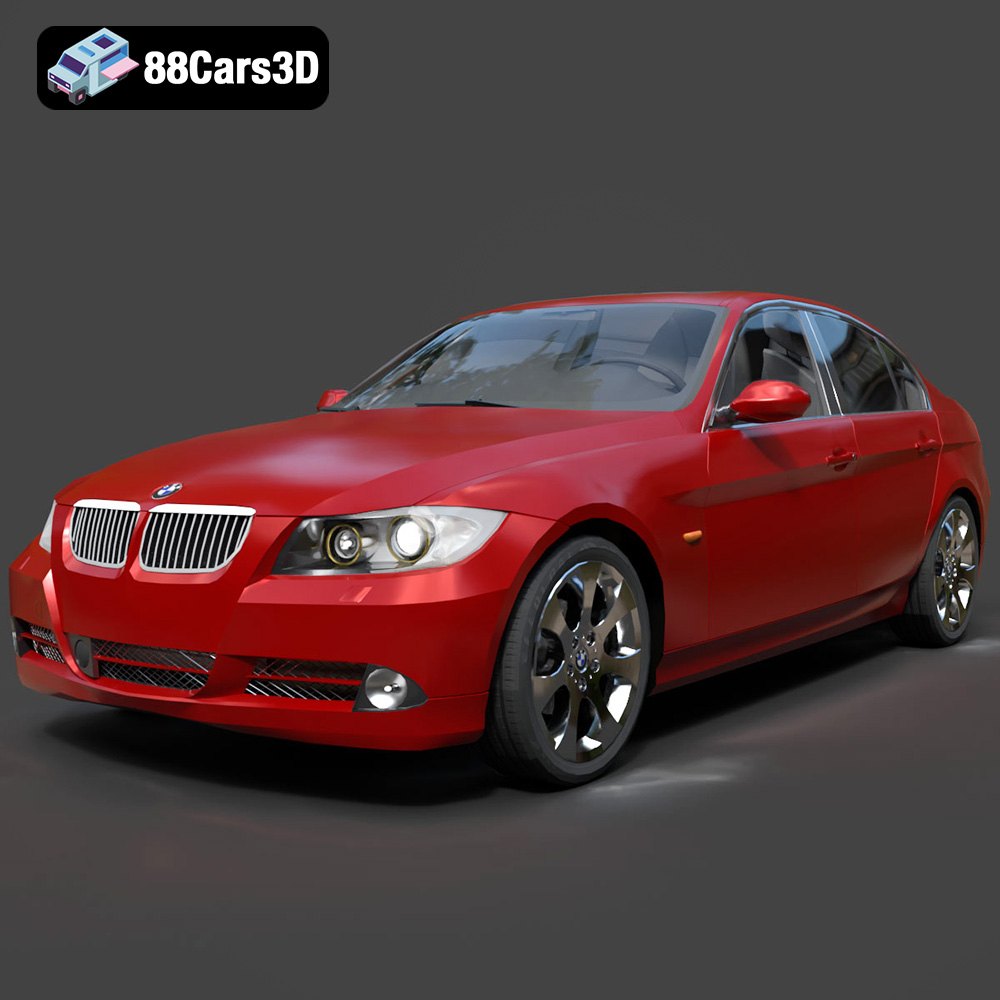
BMW 330i E90 3D Model
Texture: Yes
Material: Yes
Download the BMW 330i E90 3D Model featuring a detailed exterior, an optimized interior, and accurate mechanical components. Includes .blend, .fbx, .obj, .glb, .stl, .ply, .unreal, and .max formats for rendering, simulation, and game development.
Price: $14.79
