

Unlocking Offline Rendering Excellence: Path Tracing in Unreal Engine for Automotive Visualization
In the dynamic world of 3D visualization, where photorealism is paramount, the pursuit of image fidelity constantly pushes the boundaries of real-time and offline rendering technologies. For automotive visualization, the stakes are particularly high. Car manufacturers, designers, and marketing professionals demand nothing less than stunning, true-to-life representations of their vehicles, often indistinguishable from real-world photography. This is where Unreal Engine’s Path Tracer emerges as a game-changer, bridging the gap between blazing-fast real-time interactivity and the breathtaking quality traditionally reserved for offline renderers.
Path Tracing in Unreal Engine represents a significant leap forward, offering a physically accurate, unbiased rendering solution directly within your real-time environment. It enables artists and developers to produce renders with incredibly realistic global illumination, reflections, refractions, and complex material interactions, perfect for showcasing the intricate details of high-quality 3D car models. If you’re leveraging platforms like 88cars3d.com for your automotive assets, integrating the Path Tracer into your workflow means unlocking the full potential of those meticulously crafted models. This comprehensive guide will delve deep into the technical intricacies, setup, and optimization strategies for utilizing Unreal Engine’s Path Tracer, empowering you to create production-ready automotive visuals that captivate and impress.
Understanding Path Tracing: The Core Principles of Realistic Light Simulation
Path Tracing is an advanced rendering technique that simulates light transport in a scene with remarkable accuracy, making it an indispensable tool for achieving photorealistic results. Unlike traditional rasterization, which focuses on rendering pixels by projecting geometry onto a 2D screen, or even real-time ray tracing, which often relies on approximations and denoising for speed, Path Tracing meticulously simulates the journey of light rays. It essentially traces thousands, or even millions, of light paths from the camera into the scene, letting them bounce around, interact with surfaces (reflecting, refracting, absorbing, scattering), and eventually find a light source. This “many paths” approach allows it to naturally capture complex light phenomena that are notoriously difficult or computationally expensive to fake with other methods.
For automotive visualization, this physically accurate simulation is a revelation. It effortlessly handles the subtle nuances of metallic car paints, the complex reflections and refractions of automotive glass, the intricate interplay of ambient light on polished chrome, and the delicate caustics that might appear when light passes through a headlight lens. The result is an image free from baked lighting artifacts or approximations, where every pixel contributes to a truly coherent and immersive visual experience. While real-time ray tracing in Unreal Engine is excellent for interactive experiences and previsualization, the Path Tracer provides the gold standard for final, production-quality output, offering a level of fidelity that rivals dedicated offline renderers, all within the familiar Unreal Engine ecosystem.
The Physics of Light Simulation in Path Tracing
At its heart, Path Tracing is built upon the principles of Monte Carlo integration. Instead of analytically solving the complex light transport equation, it uses random sampling to estimate the light intensity at each pixel. When a ray leaves the camera, its path is “traced” through the scene. Each time it hits a surface, it randomly chooses a direction to bounce based on the surface’s material properties (e.g., how reflective or diffuse it is). This process continues for a set number of “bounces” or until the ray hits a light source. By averaging the results of many such random paths for each pixel, the Path Tracer converges on a statistically accurate representation of the light distribution. More samples per pixel (SPP) lead to a higher quality image with less noise, albeit at a higher computational cost. This probabilistic approach is what allows Path Tracing to naturally render phenomena like true global illumination, soft shadows, indirect lighting, color bleeding, and complex refractions without explicit algorithms for each.
Path Tracing vs. Real-Time Ray Tracing in Unreal Engine
It’s crucial to distinguish between Unreal Engine’s real-time Ray Tracing features and its dedicated Path Tracer. Real-time Ray Tracing (utilizing technologies like NVIDIA RTX or AMD RDNA 2) aims for interactive frame rates by employing various optimizations, denoisers, and simplified light path calculations. It might use hybrid rendering (combining rasterization with ray-traced effects) and often limits the number of bounces for performance. While it provides incredible improvements over traditional rasterization for real-time applications, it typically requires a robust denoising solution to clean up the inherent noise from limited samples, which can sometimes introduce artifacts. The Path Tracer, on the other hand, is an unbiased, brute-force approach. It prioritizes physically accurate light transport over real-time performance. It performs many more samples and bounces per pixel, leading to a much cleaner, more accurate image that requires less aggressive denoising, if any, for final renders. While not suitable for interactive framerates, it delivers the absolute highest visual fidelity Unreal Engine can produce, making it perfect for cinematic sequences, product configurators, and marketing assets where visual quality is paramount. You can find more details on these rendering techniques within the official Unreal Engine documentation at https://dev.epicgames.com/community/unreal-engine/learning.
Setting Up Your Unreal Engine Project for Path Tracing
Embarking on a Path Tracing journey in Unreal Engine requires specific project settings and hardware considerations to ensure both functionality and optimal performance. The foundation of any high-quality automotive render begins with a properly configured project, and this is especially true when aiming for the pristine output of the Path Tracer. Before you even think about lighting or materials, you need to lay the groundwork within Unreal Engine.
Firstly, ensure your hardware meets the minimum requirements. Path Tracing, being computationally intensive, heavily relies on modern GPUs with hardware-accelerated ray tracing capabilities. NVIDIA RTX series (20-series, 30-series, 40-series) and AMD Radeon RX 6000 series or newer are highly recommended, with more powerful cards offering significantly faster render times. Sufficient VRAM is also critical, especially for scenes with high-resolution textures and complex 3D car models. Once your hardware is ready, the next step is configuring your Unreal Engine project settings. Navigate to `Edit > Project Settings > Platforms > Windows` and ensure `Default RHI` is set to `DirectX 12`. Then, under `Engine > Rendering`, scroll down to the `Ray Tracing` section and enable `Support Hardware Ray Tracing`. Restarting the editor will apply these changes. Without these fundamental settings enabled, the Path Tracer simply won’t be available, as it leverages the same core ray tracing infrastructure as real-time ray tracing.
Project Configuration for Optimal Performance
Beyond the initial enabling of Ray Tracing, several other settings contribute to a smooth Path Tracing workflow. In the `Engine > Rendering` section of Project Settings, you might also want to review `Global Illumination` settings, though Path Tracing inherently handles global illumination. For certain scenarios, ensuring `Support Compute Skincache` is enabled can improve performance with animated characters, though less critical for static car models. Another crucial console variable to be aware of is `r.RayTracing.ForceAllRayTracingEffects 1`. While not strictly necessary for the Path Tracer itself to function, enabling this helps ensure that all scene elements fully participate in the ray-traced environment, preventing potential inconsistencies. For Path Tracing, the primary control is via the `PathTracing` panel in the `Movie Render Queue` or the `r.PathTracing.SamplesPerPixel` and `r.PathTracing.MaxBounces` console variables, which we’ll discuss later. Ensure your project is set to use a suitable post-processing volume in your scene, and that auto-exposure is managed or disabled for consistent lighting results, especially when aiming for precise color grading in your final renders.
The Role of High-Quality Assets
The quality of your final Path Traced render is intrinsically linked to the quality of your input assets. For automotive visualization, this means utilizing 3D car models that feature clean topology, accurate UV mapping, and high-resolution PBR textures. This is where marketplaces like 88cars3d.com become invaluable. When sourcing automotive assets from platforms such as 88cars3d.com, you are typically getting models specifically designed for demanding rendering environments like Unreal Engine. Their models often boast:
* **Optimized Geometry:** Clean quad-based topology that renders efficiently and deforms predictably if animated. While Nanite helps manage polygon counts in real-time, the underlying mesh quality still impacts Path Tracing accuracy.
* **Precise UV Mapping:** Essential for applying textures without stretching or distortion, and crucial for materials like car paint, which often require complex layered setups.
* **Physically Accurate PBR Textures:** Albedo, Normal, Roughness, Metallic, and Ambient Occlusion maps that adhere to PBR standards, ensuring materials react correctly to light.
* **Multiple LODs:** While Path Tracing renders the full-detail mesh, having LODs is crucial if you plan to reuse the model in real-time interactive experiences or game development.
Importing these assets into Unreal Engine is straightforward, typically using FBX or USD formats. Once imported, ensure the scale is correct, and apply any necessary transforms. Proper asset preparation is the bedrock upon which stunning Path Traced automotive renders are built.
Mastering Materials and Lighting for Path Tracing
With your Unreal Engine project configured and high-quality 3D car models imported, the next critical phase is bringing those models to life through physically accurate materials and sophisticated lighting. Path Tracing thrives on realism, meaning your materials and lights must behave as they would in the real world to achieve truly convincing results. This is where Unreal Engine’s Material Editor and robust lighting system truly shine.
For automotive visualization, specific materials demand meticulous attention. Car paint is a complex beast, often requiring clear coat layers, metallic flakes, and anisotropic reflections. In Unreal Engine, you can achieve this by leveraging the Material Editor’s comprehensive node network. A typical car paint material might involve a base layer for color and metallic properties, a clear coat layer with its own roughness and normal map, and potentially a subtle normal map for orange peel effect. Glass materials for windshields and windows require accurate transmission, refraction, and reflection, often demanding specific settings for their index of refraction (IOR) and color absorption. Chrome and other polished metals benefit from very low roughness values and high metallic values, accurately reflecting their environment. Rubber for tires, plastics for interior components – each material needs careful calibration to ensure it interacts correctly with light. Using physically based rendering (PBR) textures (Albedo, Normal, Roughness, Metallic, AO) is non-negotiable for achieving realism, and tools like Substance Painter or Quixel Mixer are excellent for generating these maps.
Lighting is equally crucial. Path Tracing intrinsically handles global illumination, meaning light bounces realistically throughout your scene, illuminating areas indirectly. However, you still need primary light sources. High Dynamic Range Image (HDRI) environments are indispensable for automotive renders, providing rich, natural ambient light and reflections. A `Sky Light` paired with an HDRI often forms the backbone of exterior car scenes. For studio setups, `Rect Lights` (area lights) are ideal for creating soft, even illumination and distinct reflections on polished surfaces. `Spot Lights` and `Point Lights` can be used for accent lighting or replicating car headlights. The key is to think like a photographer or a lighting designer, carefully placing and adjusting lights to sculpt the form of the vehicle and highlight its key features, knowing that every light source will contribute to a physically accurate light simulation within the Path Tracer.
Physically Based Materials in Detail
Achieving truly photo-real car materials within Path Tracing hinges on a deep understanding of PBR principles and Unreal Engine’s Material Editor. For car paint, consider these components:
- Base Color (Albedo): The pure color without lighting information.
- Metallic: A value of 1 for metals, 0 for dielectrics. Car paint is typically a dielectric with metallic flakes embedded, so blend carefully.
- Roughness: Controls the microscopic surface imperfections. Low roughness for gloss, high for matte. Car paint often has a clear coat with very low roughness.
- Specular: While PBR often folds this into Metallic/Roughness, some older workflows might have it. For accurate car paint, focus on the other channels.
- Clear Coat: Unreal Engine’s material system offers a dedicated Clear Coat input. This allows you to add an extra reflective layer with its own roughness and normal, perfect for simulating the protective clear coat on car paint.
- Anisotropy: Critical for brushed metals or specific car finishes (like satin or highly polished chrome). This controls the directional stretching of reflections.
- Refraction (IOR): For glass, the Index of Refraction (IOR) is vital (e.g., 1.52 for typical glass). Combine this with a plausible `Transmittance` color to simulate tinted glass and proper light bending.
Understanding these parameters and how they interact with each other in the Material Editor, often through layered materials or material functions, is key to crafting automotive materials that look stunning under Path Tracing.
Advanced Lighting Techniques for Automotive Renders
Beyond basic light placement, several advanced techniques can elevate your automotive Path Traced renders:
- IES Profiles: For realistic headlights and taillights, apply IES (Illuminating Engineering Society) profiles to your `Spot Lights`. These files describe the photometric distribution of real-world light fixtures, producing highly accurate light patterns.
- Light Functions: Use `Light Functions` in Unreal Engine to project textures onto your lights, creating patterned shadows or custom light shapes (e.g., car grilles casting specific shadows).
- Volumetric Fog: While not a direct light source, `Volumetric Fog` can interact beautifully with Path Traced lights, revealing light shafts (God rays) and adding atmospheric depth, especially for moody or dramatic renders. Ensure your volumetric fog settings are optimized for quality and not just real-time performance.
- Exposure Control: When using the `Movie Render Queue`, disable `Auto Exposure` and manually set your exposure, or use a `Camera Exposure` setting in Sequencer, to maintain consistent lighting and avoid flickering or unexpected brightness changes between frames. This ensures your Path Traced output is consistent and production-ready.
The combination of physically accurate PBR materials and thoughtful, advanced lighting creates the foundation for breathtaking automotive imagery rendered with Unreal Engine’s Path Tracer.
Optimizing Path Tracing Settings and Performance
While Path Tracing delivers unparalleled visual quality, it also comes with a significant computational cost. Optimizing your settings to achieve the best balance between render time and final image quality is a crucial skill for any professional working with Unreal Engine’s Path Tracer. Without careful management, render times can escalate dramatically, making production cycles inefficient.
The primary controls for Path Tracing quality and performance are found in the `Movie Render Queue` (MRQ) settings and specific console variables. The most impactful setting is `Samples Per Pixel (SPP)`. This determines how many light paths are traced for each pixel in your final image. Higher SPP values reduce noise but increase render time linearly. For static marketing renders, you might aim for 1024 to 4096 SPP, while for animations, slightly lower values combined with a robust denoiser might be more practical. The `Max Bounces` setting dictates how many times a light ray can reflect or refract within the scene before it’s terminated. A higher bounce count results in more accurate global illumination and reflections but also increases render time. For complex scenes with many reflective and transparent surfaces (like a car in a glass showroom), increasing `Max Bounces` beyond the default 8 or 10 can significantly improve realism.
Additionally, Unreal Engine offers built-in denoising options that can drastically cut down render times without sacrificing too much quality. The Path Tracer integrates with NVIDIA’s OptiX Denoiser or Intel’s Open Image Denoise (OIDN). Enabling and configuring these in the MRQ settings allows you to render with fewer SPP and let the denoiser clean up the remaining noise. While effective, aggressive denoising can sometimes soften fine details or introduce subtle artifacts, so finding the sweet spot is key. GPU memory (VRAM) is another critical performance factor. High-resolution textures, complex geometries (even with Nanite, the Path Tracer renders the full mesh), and numerous lights consume VRAM. If your scene exceeds your GPU’s VRAM, performance will plummet as data is swapped to system RAM. Monitoring VRAM usage is crucial, especially for large-scale automotive environments or detailed car models from 88cars3d.com.
Movie Render Queue for Production-Quality Output
For any serious Path Traced output, the `Movie Render Queue` (MRQ) is an absolute necessity. It offers advanced controls specifically designed for production-quality renders, far surpassing the basic editor viewport render. To use it, go to `Window > Cinematics > Movie Render Queue`. Add your Sequencer sequence (for animations) or a level (for static shots) to the queue.
In the MRQ settings, crucial modules for Path Tracing include:
- Output: Set resolution, frame rate, and output format (EXR is recommended for maximum color depth and post-processing flexibility).
- Anti-aliasing: This is where you configure `Samples Per Pixel` for Path Tracing. You can set the `Primary Sample Count` (for direct samples) and `Spatio-Temporal Sample Count` (for temporal anti-aliasing in animations).
- Path Tracer: This module exposes `Max Bounces`, `Filter Width`, and options for `Exposure` and `Tone Curve` handling.
- Denoise: Enable `Denoise` here and choose your preferred engine (OptiX or OIDN). You can also output denoiser debug passes for fine-tuning.
- Deferred Rendering: While not directly for Path Tracing, ensure `Anti-aliasing` method is set to `None` if you’re solely relying on Path Tracer’s sampling for anti-aliasing.
- Console Variables: Add custom console variables for fine-grained control, e.g., `r.PathTracing.SamplesPerPixel` for per-shot overrides.
The MRQ provides unparalleled control over your final render quality, crucial for maintaining consistency across multiple shots and delivering high-fidelity automotive visuals.
Balancing Quality and Render Time
Achieving optimal Path Tracing performance involves a careful balancing act. Here are some strategies:
- Iterative Sampling: Start with lower SPP (e.g., 64-128) to quickly preview lighting and materials. Incrementally increase SPP as you get closer to your final desired quality.
- Targeted Denoising: For animations, render with fewer SPP (e.g., 256-512) and rely on a high-quality denoiser in MRQ. For hero shots, aim for higher SPP (1024+) to minimize denoiser artifacts.
- Optimize Scene Complexity: Remove unnecessary geometry or textures not visible to the camera. While Path Tracing handles complex geometry, simpler scenes render faster.
- Efficient Lighting: Use only the necessary lights. Too many lights, especially small, intense ones, can increase noise and render time.
- LODs for Static Mesh: While Path Tracer renders full quality, consider having optimized LODs for background elements if you plan to switch to real-time during your workflow for faster iteration.
- Hardware Upgrade: Ultimately, a more powerful GPU (especially with more VRAM) is the most direct way to reduce Path Tracing render times.
By thoughtfully applying these optimization techniques, you can produce stunning Path Traced automotive renders within reasonable production timelines, leveraging the full power of Unreal Engine.
Real-World Applications & Workflow for Automotive Visualization
The power of Path Tracing in Unreal Engine extends far beyond mere pretty pictures; it’s a transformative tool for a multitude of real-world applications in automotive visualization. From high-end marketing campaigns to crucial design review processes, the ability to generate physically accurate, cinematic-quality renders directly from your Unreal Engine scene offers unprecedented flexibility and efficiency.
One of the most immediate applications is the creation of **stunning marketing renders and animations**. Imagine showcasing a new car model, sourced from 88cars3d.com, in a photorealistic studio environment or a breathtaking natural landscape, with every curve, reflection, and material perfectly rendered. The Path Tracer ensures that the vehicle’s design intent, the luxurious feel of its interior, and the intricate details of its exterior are conveyed with absolute fidelity. This translates to captivating advertisements, online configurator hero shots, and engaging social media content that truly stands out. Leveraging Sequencer, Unreal Engine’s powerful non-linear cinematic editor, you can choreograph elaborate camera movements, animate environmental elements, and orchestrate vehicle actions to produce cinematic trailers that rival traditional film productions.
Beyond marketing, Path Tracing plays a vital role in **product design review**. Designers and engineers can quickly iterate on material choices, paint finishes, and interior configurations, generating high-fidelity renders that accurately represent how changes will appear in the real world. This accelerates decision-making and reduces the need for expensive physical prototypes. Interactive demos and virtual photography setups also benefit immensely. While the Path Tracer isn’t for real-time interaction, you can pre-render “virtual photoshoot” stills or short video clips from various angles and lighting conditions, providing a comprehensive visual library of the vehicle. This flexibility and precision make Path Tracing an indispensable tool throughout the entire automotive product lifecycle.
Cinematic Automotive Renders with Sequencer
Sequencer is your go-to tool for crafting cinematic experiences around your Path Traced automotive models.
- Camera Animation: Create smooth, professional camera moves using keyframes and cinematic camera actors. Experiment with different focal lengths and depths of field to achieve desired photographic effects.
- Vehicle Animation: Animate car doors opening, wheels turning, or the entire car moving along a spline to create dynamic sequences. Ensure any animated elements have their motion blur properly calculated in the Movie Render Queue.
- Lighting Changes: Keyframe light intensity, color, or position over time to simulate day-to-night transitions or dynamic studio lighting changes.
- Post-Processing: Utilize post-process volumes and their settings (color grading, bloom, vignette, chromatic aberration) within Sequencer to control the final look of your cinematic. Remember to fine-tune these for Path Tracing, as it provides a much cleaner, less noisy image to work with.
- Render Passes: In the Movie Render Queue, consider outputting separate render passes (like Z-depth, World Position, Object ID, Reflection) in addition to your beauty pass. These give compositors immense control in post-production software like Nuke or After Effects for final color correction, effects, and masking.
By combining Sequencer’s robust animation capabilities with the Path Tracer’s visual quality, you can produce automotive cinematics that truly capture attention.
Integrating Path Tracing in Product Development Pipelines
The integration of Path Tracing into automotive product development streamlines workflows and enhances decision-making:
- Design Validation: Designers can quickly visualize design changes, evaluate material finishes (e.g., how a new paint color looks under different lighting conditions), and check panel gaps with unprecedented accuracy before committing to expensive tooling.
- Configurator Marketing: While real-time configurators offer interactivity, Path Tracing can be used to generate high-resolution hero images or pre-rendered video snippets for specific configurations. This provides “best-of-class” visuals for marketing materials while the user interacts with a real-time version.
- Supplier Collaboration: Share Path Traced renders with suppliers to accurately communicate material specifications and desired visual outcomes, minimizing misinterpretations.
- Virtual Showrooms: Create high-quality marketing assets for virtual showrooms, allowing potential customers to explore vehicles with photorealistic fidelity even if they can’t visit a physical dealership.
Unreal Engine’s Path Tracer transforms how automotive professionals visualize, design, and market their products, delivering a new standard of visual excellence.
Conclusion: Elevating Automotive Visualization with Path Tracing in Unreal Engine
Path Tracing in Unreal Engine stands as a testament to the engine’s versatility and its continuous evolution towards ultimate visual fidelity. For automotive visualization professionals, game developers, and 3D artists, it offers a powerful, physically accurate rendering solution capable of producing imagery virtually indistinguishable from real photography. We’ve explored its core principles, from the intricate simulation of light transport to the nuanced differences from real-time ray tracing, emphasizing its role as the pinnacle of quality for offline renders.
We’ve detailed the essential steps for setting up your Unreal Engine project, highlighting the critical hardware and software configurations necessary to unlock the Path Tracer’s full potential. The importance of high-quality assets, like the meticulously crafted 3D car models available on 88cars3d.com, cannot be overstated; they are the foundation upon which stunning renders are built. Furthermore, we delved into mastering PBR materials and advanced lighting techniques, ensuring that every metallic flake, every reflection, and every subtle shadow contributes to an immersive and convincing visual narrative. Finally, we covered crucial optimization strategies and the indispensable role of the Movie Render Queue in delivering production-ready output, along with real-world applications that showcase the Path Tracer’s impact on automotive design, marketing, and cinematic content creation.
Embracing Path Tracing in your Unreal Engine workflow is more than just adopting a new feature; it’s a commitment to uncompromising visual quality. It empowers you to elevate your automotive visualizations to new heights, creating captivating imagery that accurately reflects the beauty and engineering of your virtual vehicles. Take the leap, experiment with these techniques, and witness your automotive projects transform into truly breathtaking masterpieces. The future of photorealistic automotive rendering is here, and it’s built on the solid foundation of Path Tracing within Unreal Engine.
Featured 3D Car Models

BMW 5 Series F10 2014 3D Model
Texture: Yes
Material: Yes
Download the BMW 5 Series F10 3D Model featuring clean geometry, realistic detailing, and a fully modeled interior. Includes .blend, .fbx, .obj, .glb, .stl, .ply, .unreal, and .max formats for rendering, simulation, and game development.
Price: $14.99
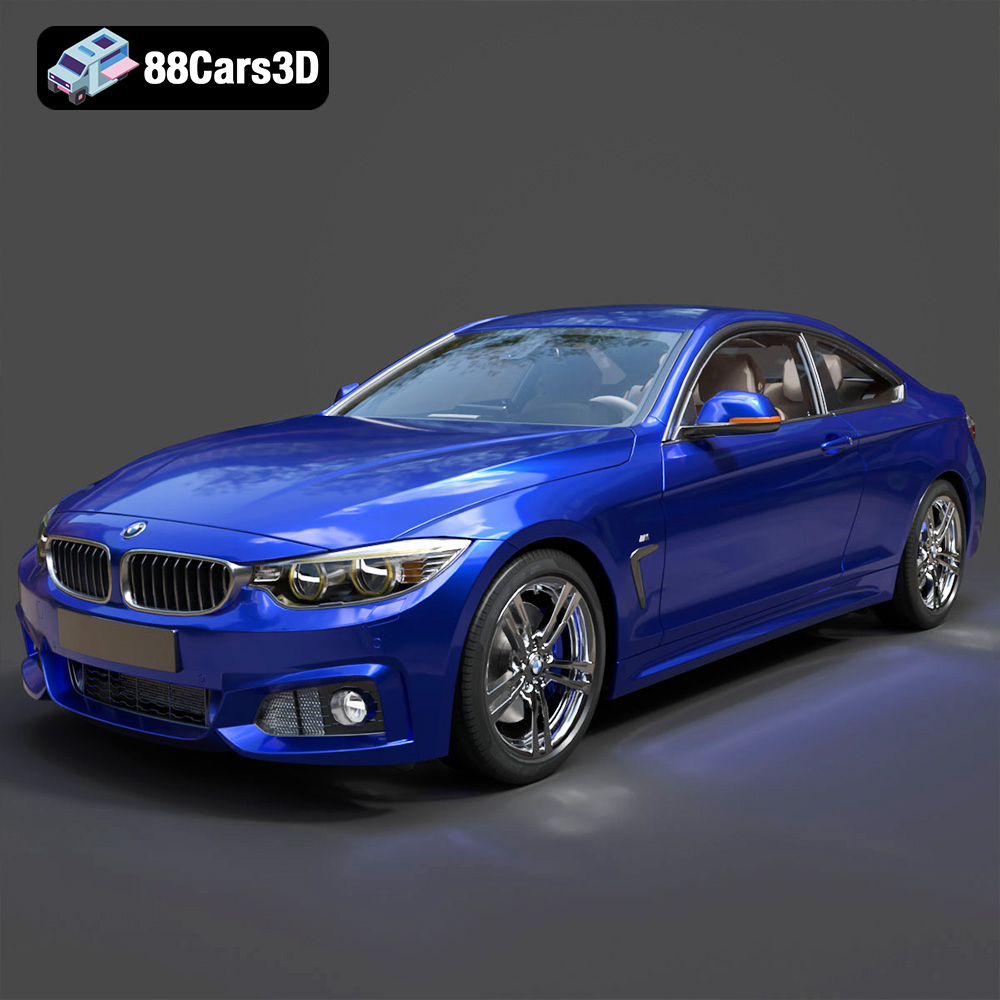
BMW 4 Series Coupe M Sport 2014 3D Model
Texture: Yes
Material: Yes
Download the BMW 4 Series Coupe M Sport 2014 3D Model featuring clean geometry, realistic detailing, and a fully modeled interior. Includes .blend, .fbx, .obj, .glb, .stl, .ply, .unreal, and .max formats for rendering, simulation, and game development.
Price: $14.99

Bentley Brooklands 2008 3D Model
Texture: Yes
Material: Yes
Download the Bentley Brooklands 2008 3D Model featuring clean geometry, realistic detailing, and a fully modeled interior. Includes .blend, .fbx, .obj, .glb, .stl, .ply, .unreal, and .max formats for rendering, simulation, and game development.
Price: $14.99
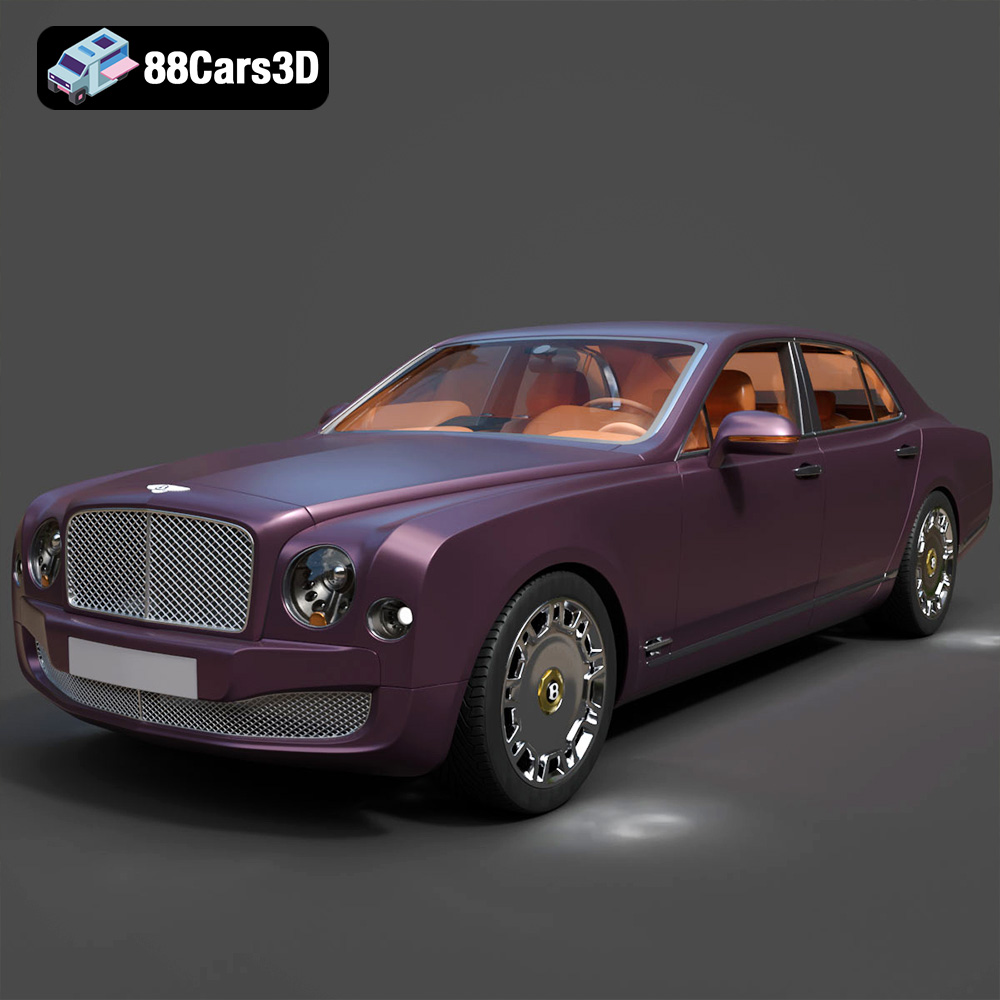
Bentley Mulsanne Luxury Sedan 3D Model
Texture: Yes
Material: Yes
Download the Bentley Mulsanne Luxury Sedan 3D Model featuring clean geometry, realistic detailing, and a fully modeled interior. Includes .blend, .fbx, .obj, .glb, .stl, .ply, .unreal, and .max formats for rendering, simulation, and game development.
Price: $14.99

Bentley Continental GT 2011 3D Model
Texture: Yes
Material: Yes
Download the Bentley Continental GT 2011 3D Model featuring clean geometry, realistic detailing, and a fully modeled interior. Includes .blend, .fbx, .obj, .glb, .stl, .ply, .unreal, and .max formats for rendering, simulation, and game development.
Price: $14.99

Bentley Continental Flying Spur 3D Model
Texture: Yes
Material: Yes
Download the Bentley Continental Flying Spur 3D Model featuring clean geometry, realistic detailing, and a fully modeled interior. Includes .blend, .fbx, .obj, .glb, .stl, .ply, .unreal, and .max formats for rendering, simulation, and game development.
Price: $14.99
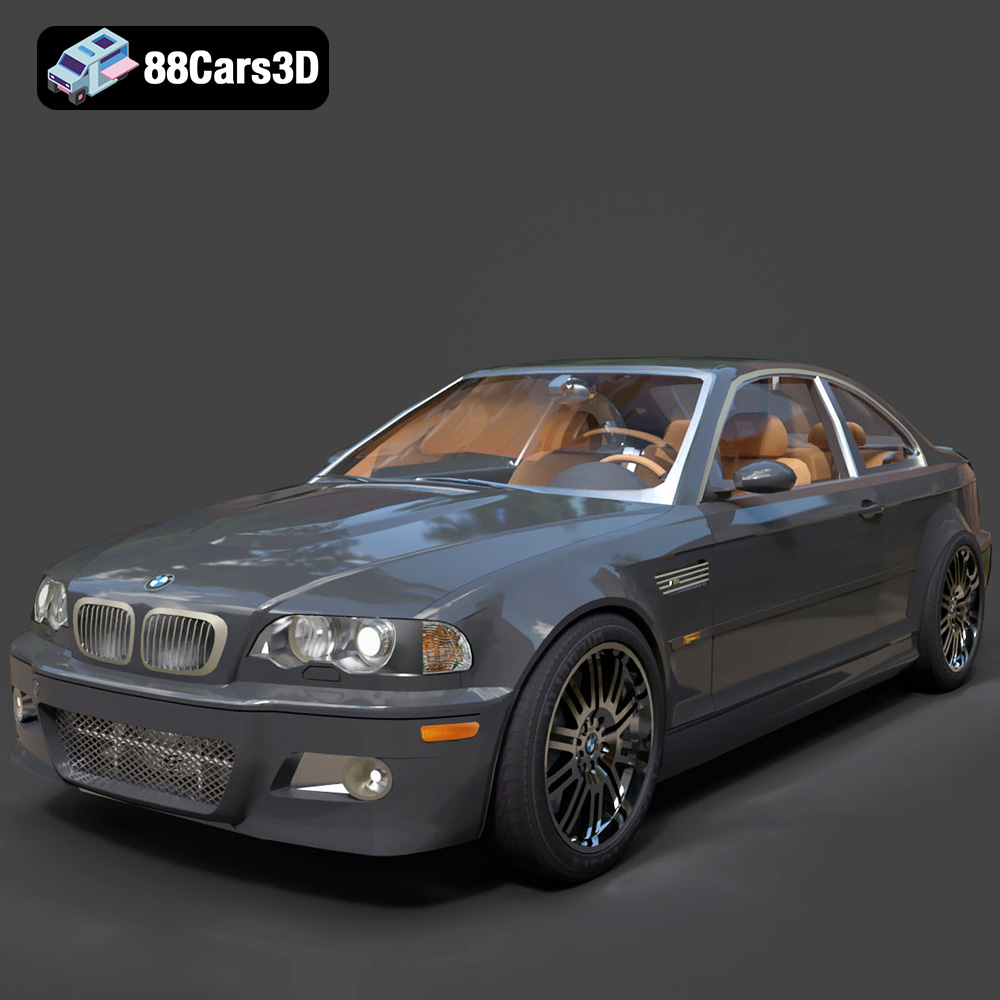
BMW M3 E46 3D Model
Texture: Yes
Material: Yes
Download the BMW M3 E46 3D Model featuring iconic sports car design and detailed interior. Includes .blend, .fbx, .obj, .glb, .stl, .ply, .unreal, and .max formats for rendering, simulation, and game development.
Price: $16.99
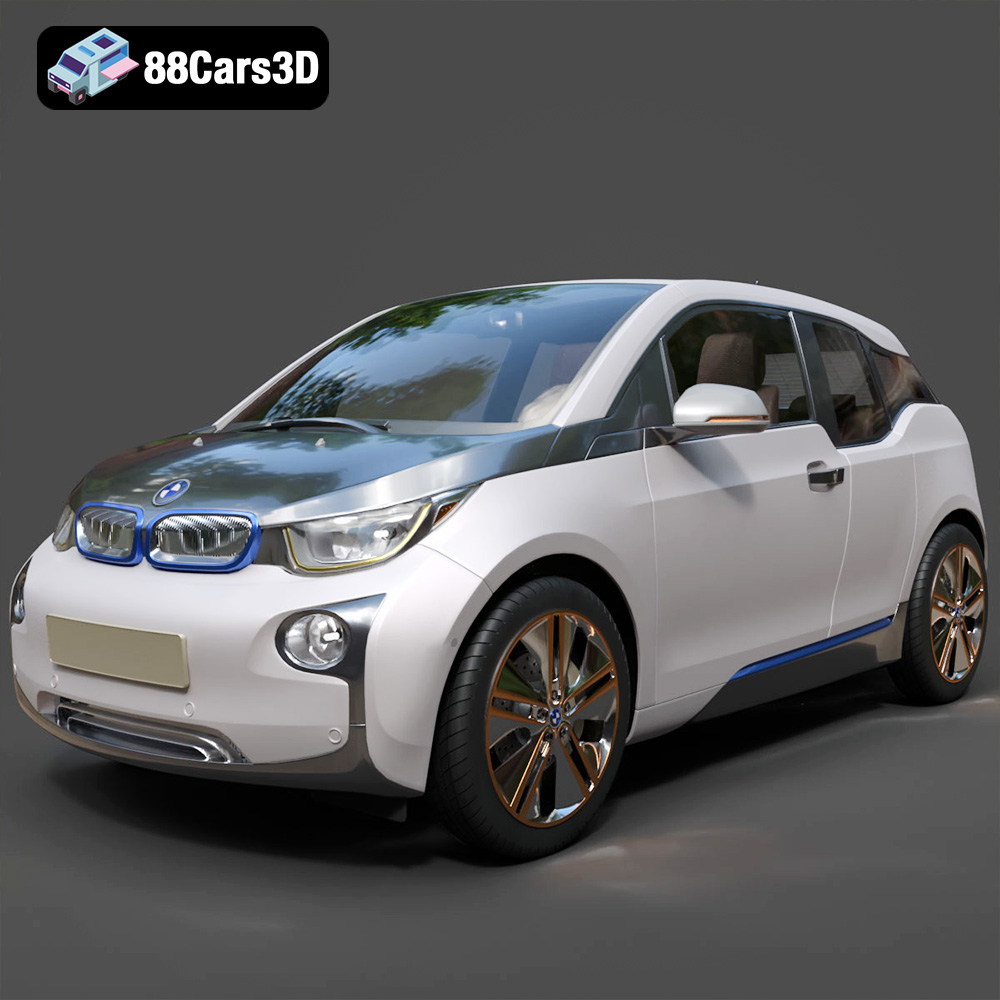
BMW i3 Coupe 3D Model
Texture: Yes
Material: Yes
Download the BMW i3 Coupe 3D Model featuring its iconic electric design and compact urban styling. Includes .blend, .fbx, .obj, .glb, .stl, .ply, .unreal, and .max formats for rendering, simulation, and game development.
Price: $17.99
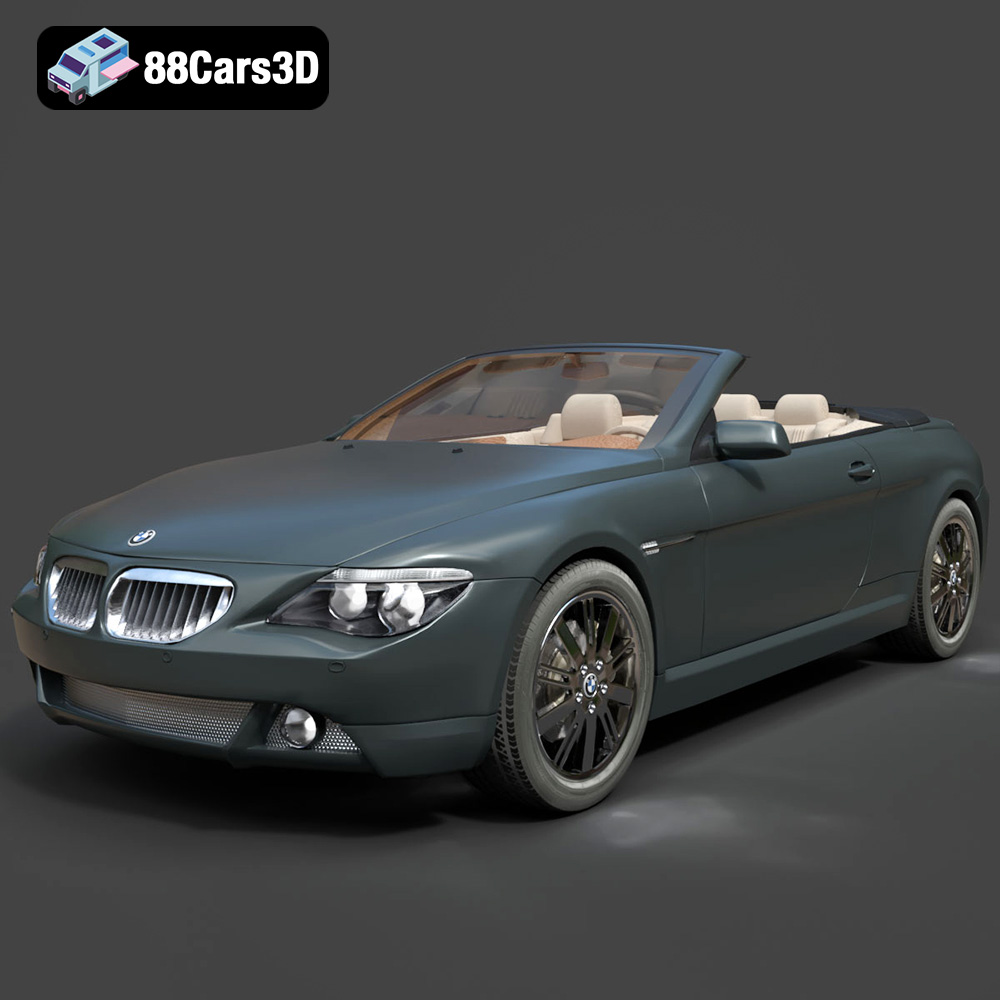
BMW 645ci 2004-2005 3D Model
Texture: Yes
Material: Yes
Download the BMW 645ci 3D Model featuring a sleek, detailed exterior and optimized interior. Includes .blend, .fbx, .obj, .glb, .stl, .ply, .unreal, and .max formats for rendering, simulation, and game development.
Price: $10.79
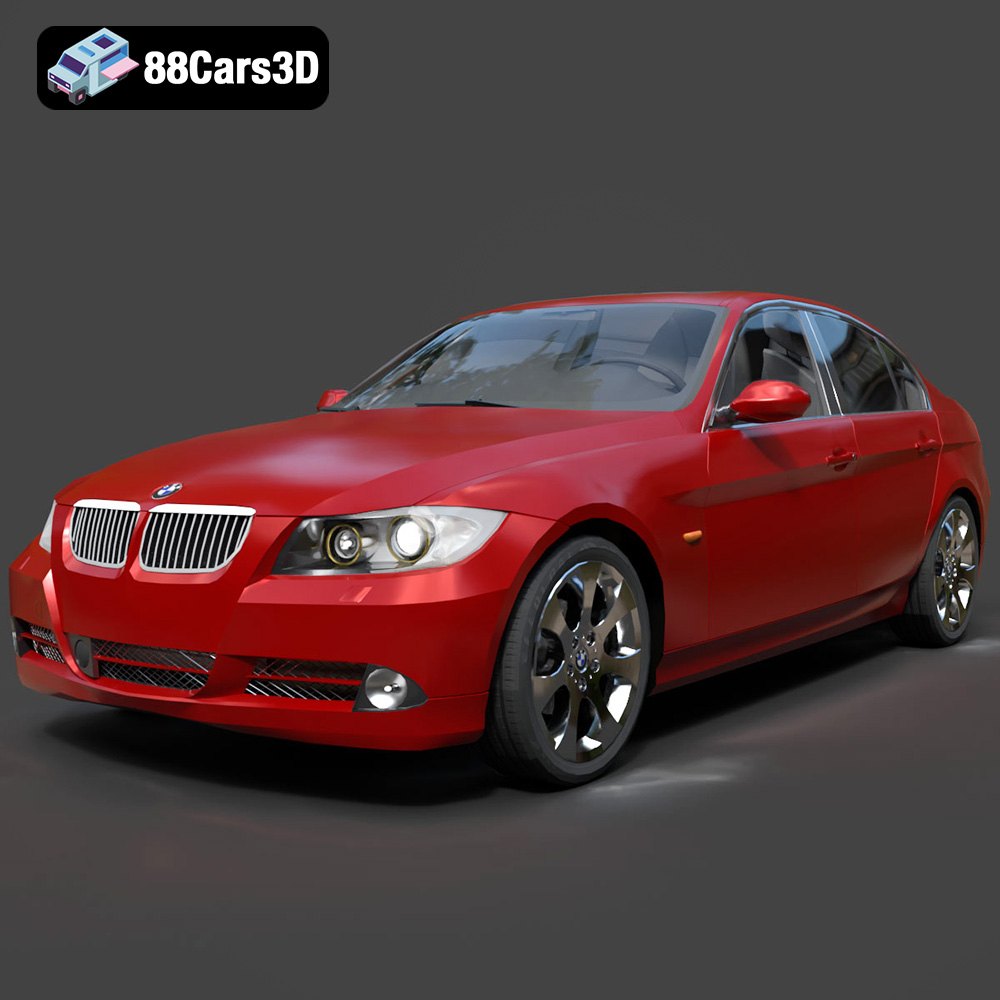
BMW 330i E90 3D Model
Texture: Yes
Material: Yes
Download the BMW 330i E90 3D Model featuring a detailed exterior, an optimized interior, and accurate mechanical components. Includes .blend, .fbx, .obj, .glb, .stl, .ply, .unreal, and .max formats for rendering, simulation, and game development.
Price: $14.79
