

The Allure of Digital Automotive Mastery: Crafting Realism with 3D Car Models
In the rapidly evolving landscape of digital content creation, the demand for high-fidelity 3D assets is paramount. From blockbuster video games to cinematic advertising, and from immersive architectural visualizations to advanced engineering simulations, precision and realism are non-negotiable. Nowhere is this more apparent than in the automotive sector, where iconic vehicles are brought to life in the digital realm with breathtaking accuracy. The art and science of creating compelling 3D car models represent a confluence of technical skill and artistic vision, capable of transporting viewers and users into hyper-realistic worlds.
The journey from concept to final render or game integration involves meticulous detailing, optimized geometry, and thoughtful material application. A truly exceptional 3D car model isn’t just a visual representation; it’s a versatile digital asset engineered for performance and adaptability across a myriad of platforms and applications. It allows designers, developers, and artists to iterate, experiment, and deploy stunning visuals without the constraints of physical production.
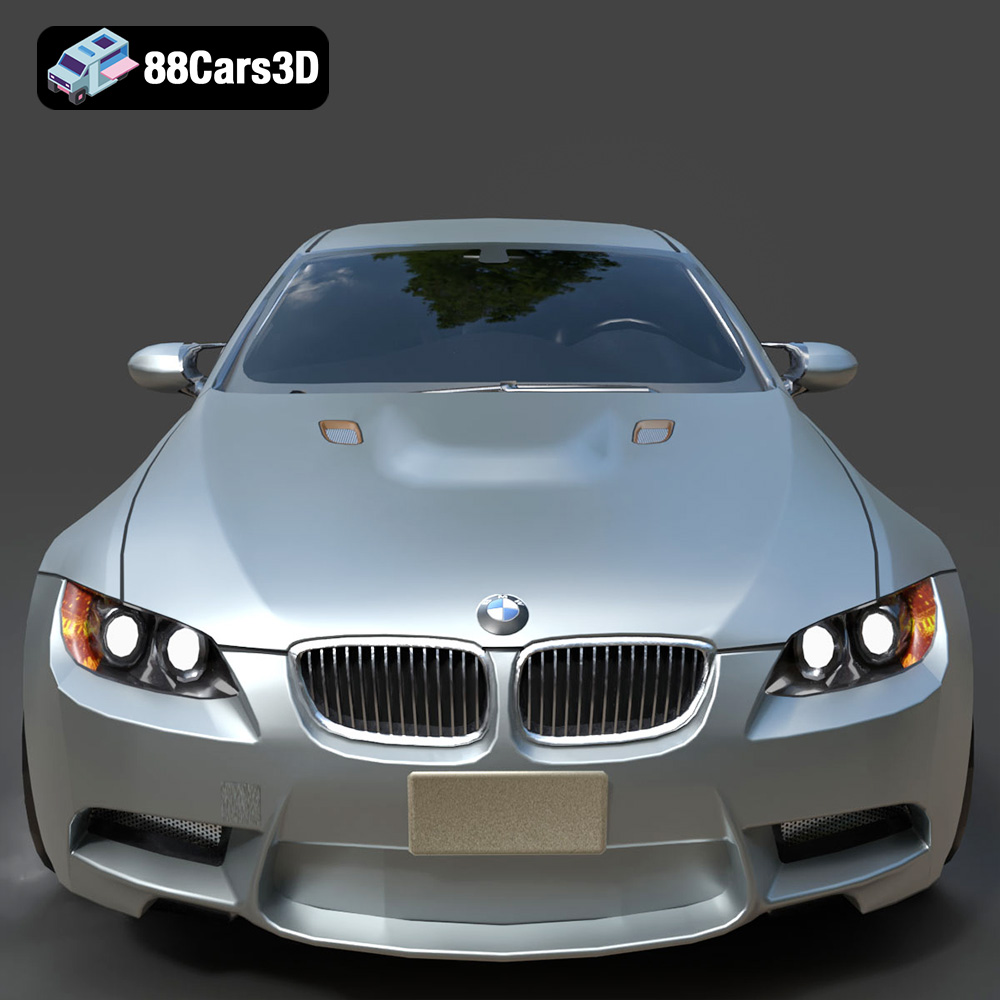
Today, we’re diving deep into what makes a premium 3D vehicle model indispensable for professionals. We’ll explore the technical nuances, workflow considerations, and diverse applications, using the exquisite BMW M3 Coupe E92-002 3D Model as our prime example. This particular model, available on 88cars3d.com, encapsulates the very essence of professional-grade automotive 3D assets, designed to elevate any project it becomes a part of.
Understanding 3D Model File Formats
The versatility of a 3D car model is significantly defined by the file formats it supports. Different formats are optimized for distinct purposes, software environments, and performance requirements. Understanding which format to use and why is crucial for efficient workflow and successful project outcomes. The BMW M3 Coupe E92-002 3D Model, for instance, comes with a comprehensive suite of formats, ensuring maximum compatibility and utility across various professional pipelines.
.blend – Fully Editable Blender Scene with Materials
The .blend file format is native to Blender, a powerful open-source 3D creation suite. When a 3D model is provided in .blend format, it means you receive the complete Blender project file, including all mesh data, materials, textures, lighting setups, cameras, and even animation rigs if present. This offers unparalleled flexibility for artists who use Blender, allowing for deep customization, modification of topology, tweaking of materials, or integration into existing Blender scenes. For the BMW M3 Coupe E92-002 3D Model, having a .blend file means users can immediately open, inspect, and modify the intricate details of the model, from its quad-dominant topology to its precisely configured shaders, within their preferred environment.
.fbx – Ideal for Unreal, Unity, and Real-time Pipelines
FBX (Filmbox) is a proprietary file format developed by Autodesk, widely recognized as the industry standard for interoperability between various 3D applications, especially in game development. It’s excellent for transferring 3D models with animation, skeletal data, textures, and material assignments. Its robust support in game engines like Unreal Engine and Unity makes it the go-to format for game assets. The .fbx version of the BMW M3 Coupe E92-002 is meticulously prepared for real-time environments, ensuring optimized mesh data, correct scaling, and efficient material references, which are critical for smooth performance in interactive experiences.
.obj – Universal Format for Cross-Software Compatibility
OBJ (or .obj) is one of the oldest and most universally supported 3D file formats. It’s a simple, text-based format that primarily stores geometry data – vertices, normals, UV coordinates, and faces. While it doesn’t typically store animation or rigging information directly, it’s invaluable for transferring static mesh data between virtually any 3D software application. If you’re working in a less common 3D package or need a clean mesh to start from, the .obj version of the BMW M3 Coupe E92-002 3D Model provides a solid foundation, ensuring compatibility across diverse software ecosystems.
.glb – Optimized for AR, VR, and Browser-based Display
GLB is the binary version of glTF (GL Transmission Format), an open standard for 3D scenes and models developed by the Khronos Group. It’s specifically designed for efficient transmission and loading of 3D models within web applications, augmented reality (AR), and virtual reality (VR) experiences. A .glb file packages geometry, materials, textures, and animation into a single, compact file, making it perfect for rapid deployment and rendering in browser-based viewers or AR/VR platforms. The .glb variant of the BMW M3 Coupe E92-002 is ready for immersive virtual showrooms or interactive web showcases.
.stl – Suitable for 3D Printing Output
STL (stereolithography) is a standard file format widely used for 3D printing and computer-aided manufacturing (CAM). It represents a 3D model as a series of connected triangles, describing only the surface geometry of the object without color or texture information. For those looking to bring the BMW M3 Coupe E92-002 3D Model into the physical world, the .stl format is essential. It enables the creation of high-quality physical prototypes or collectible models, requiring a watertight mesh suitable for additive manufacturing processes.
.ply – Precision Mesh Format for CAD or Analysis
PLY (Polygon File Format or Stanford Triangle Format) is another format primarily used for storing 3D data from 3D scanners. It can store a wider range of properties than .obj, including color, transparency, normals, texture coordinates, and scalar values. While less common for general-purpose model distribution, it’s particularly useful in scientific, CAD, or reverse engineering applications where precise mesh data for analysis or direct input into engineering software is required. The .ply version offers an additional layer of data integrity for specialized workflows.
.unreal – Engine-ready Asset for Real-time Environments
While not a universal file extension in the same vein as .fbx, the inclusion of an “.unreal” file or project setup signifies that the BMW M3 Coupe E92-002 3D Model has been specifically prepared and configured within Unreal Engine. This means materials are set up using Unreal’s physically-based rendering (PBR) system, textures are correctly applied, collision meshes might be generated, and potentially even blueprint functionality or LODs (Levels of Detail) are implemented. This ready-to-use format drastically cuts down integration time for developers working in Unreal, allowing for immediate deployment in interactive scenes, cinematics, or game levels.
.max – Editable 3ds Max Project for Animation and Rendering
The .max file format is native to Autodesk 3ds Max, one of the leading 3D modeling, animation, and rendering software packages in the industry. Similar to .blend, a .max file provides the complete 3ds Max scene, including all geometric data, materials, textures, lighting, cameras, and animation keyframes. For professionals heavily reliant on 3ds Max for architectural visualization, product design, or animation, this format offers the highest level of control and editability. The .max version of the BMW M3 Coupe E92-002 allows for intricate modifications, advanced V-Ray or Corona rendering setups, and sophisticated animation sequences, leveraging the full power of 3ds Max’s toolset.
Dissecting the BMW M3 Coupe E92-002: A Deep Dive into Model Fidelity
The mark of a truly professional 3D car model lies in its meticulous attention to detail and robust technical foundation. The BMW M3 Coupe E92-002 3D Model exemplifies these qualities, offering an authentic digital twin of an automotive icon. Its design philosophy prioritizes both visual fidelity and practical usability across diverse creative and technical endeavors.
Exterior Features: Replicating Automotive Excellence
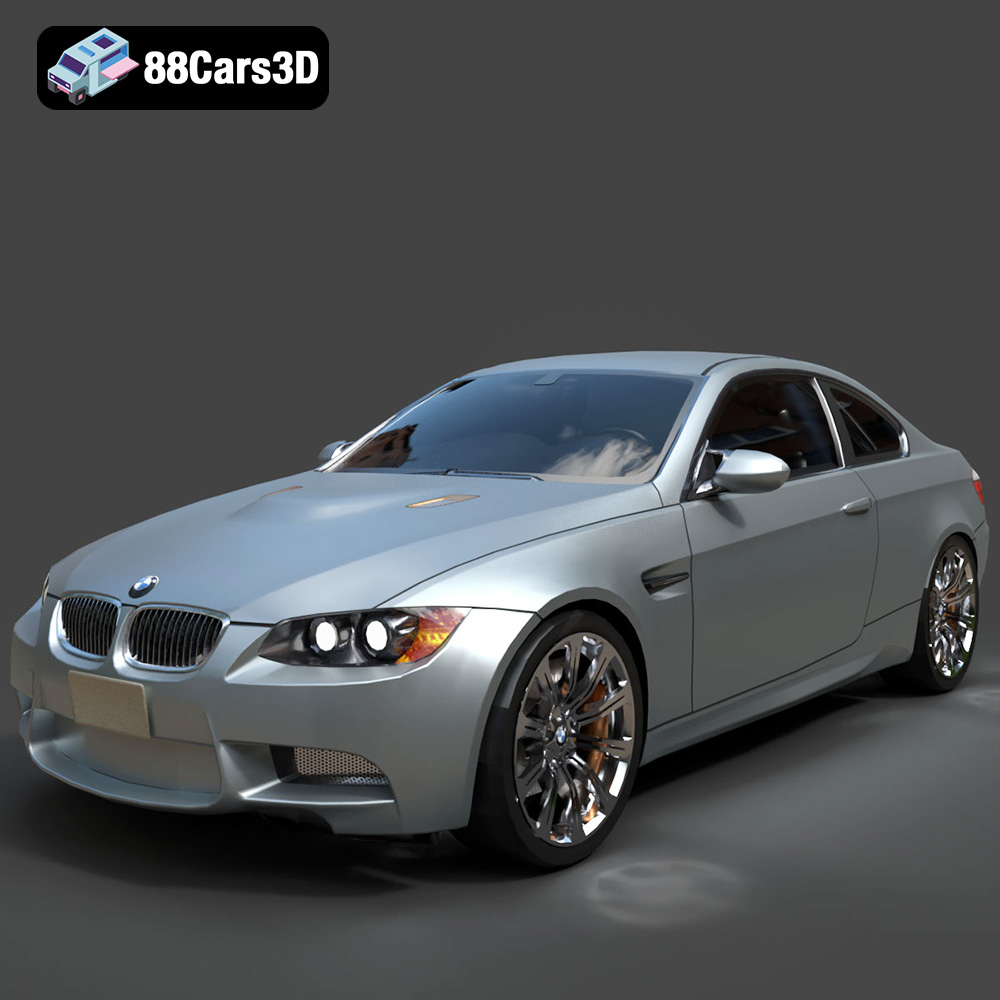
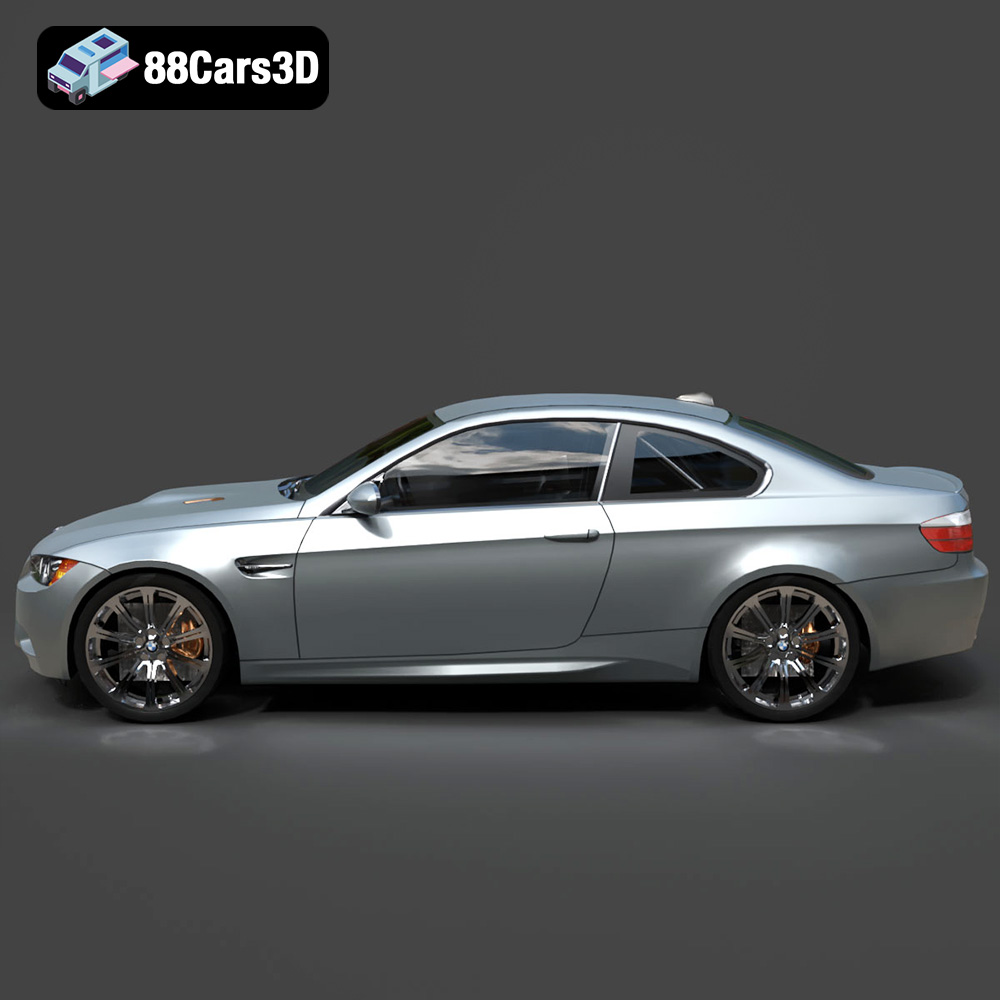
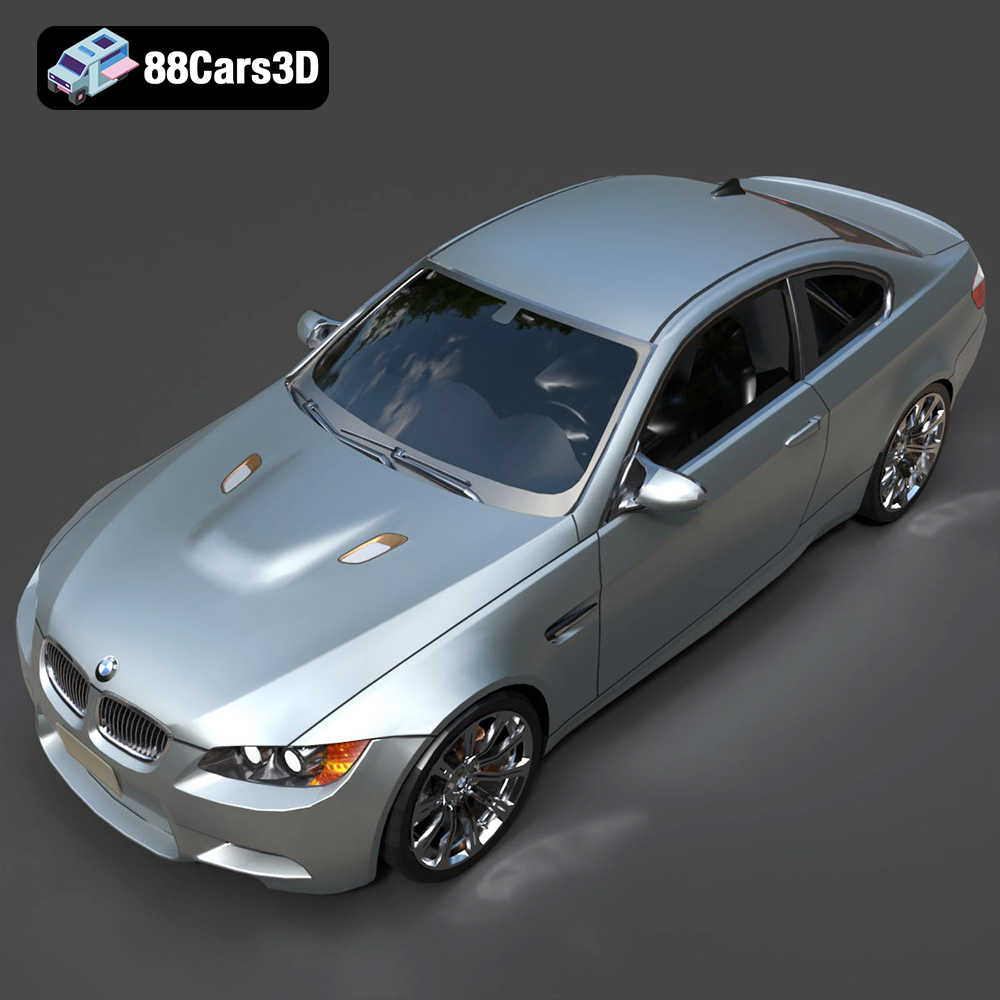
The exterior of the E92 M3 is instantly recognizable, and this 3D model captures its essence with remarkable precision. Every curve, panel gap, and aerodynamic contour is faithfully replicated. The headlights and taillights, often overlooked in lower-quality models, feature realistic material shaders, ensuring they illuminate scenes convincingly, whether for a dark street render or a bright studio setup. The wheels and tires are not just placeholders; they are intricately modeled with accurate tread patterns and detailed brake calipers, crucial for close-up shots and realistic driving simulations. Furthermore, components like doors, the hood, and the trunk are separated and pivot-ready, preparing the model for advanced animation sequences, allowing for dynamic showcases or even interactive elements like opening and closing parts in a virtual showroom.
Interior and Mechanical Details: Beyond the Surface
While the exterior often grabs the initial attention, the interior and underlying mechanical details distinguish a truly professional asset. This BMW M3 Coupe E92-002 3D Model includes a faithful interior, featuring a detailed dashboard, sport seats, steering wheel, and central console elements. This level of interior fidelity is vital for projects requiring driver-view perspectives, architectural integration, or virtual reality experiences where users might freely explore the vehicle’s cabin. Beyond the visible, the model considers underbody details and suspension elements. While not always front and center, these components are critical for enhancing realism in simulations, close-up technical visualizations, or physics-driven game environments. The optimized mesh quality ensures that this rich detailing doesn’t come at the cost of performance, maintaining visual fidelity while remaining efficient for rendering and real-time applications.
Technical Advantages: Engineered for Performance
At the core of the BMW M3 Coupe E92-002 3D Model’s excellence are its technical underpinnings. It boasts clean, quad-dominant topology, which is the gold standard for 3D modeling. This ensures smooth subdivision and deformation, making the model ideal for high-resolution renders and complex animations without unsightly distortions. The accurate real-world scale is another crucial advantage, guaranteeing seamless integration into existing scenes or environments without requiring tedious scaling adjustments. Finally, a logically organized hierarchy with properly set pivots for all animatable components simplifies rigging, animation, and scene manipulation. This attention to structural integrity drastically reduces setup time for artists and developers, allowing them to focus on creative output rather than technical corrections.
Professional Workflows: Integrating the E92 M3 into Production Pipelines
A high-quality 3D car model like the BMW M3 Coupe E92-002 isn’t just a pretty object; it’s a foundational asset designed to seamlessly integrate into professional production pipelines across various industries. Its versatility, thanks to multiple file formats and meticulous construction, makes it an invaluable tool for designers, animators, and game developers alike.
Automotive Rendering and Visualization in 3ds Max/Blender
For rendering and visualization professionals, the BMW M3 Coupe E92-002 3D Model shines. In Autodesk 3ds Max, artists can leverage the provided .max file, which often includes a well-structured scene, ready for advanced rendering engines like V-Ray or Corona Renderer. The clean quad topology ensures that subdivision modifiers can be applied smoothly for extremely high-resolution marketing materials or cinematic sequences. Lighting artists can quickly set up dramatic studio lighting or realistic outdoor environments, knowing the model’s materials will react accurately to light. Similarly, Blender users benefit from the .blend file, which provides a native, fully editable scene. This allows for deep customization, utilizing Blender’s powerful Cycles or Eevee renderers to produce stunning visuals, from photorealistic static renders to dynamic animations showcasing the vehicle’s features or even simulating driving conditions. The properly separated components (doors, hood, wheels) make animating complex sequences straightforward, allowing animators to focus on storytelling rather than model preparation.
Game Development with Unreal Engine and Unity
The demands of real-time game development are intense, requiring optimized assets that balance visual fidelity with performance. The BMW M3 Coupe E92-002 3D Model is ideally suited for this. With its .fbx and dedicated .unreal formats, integrating it into Unreal Engine or Unity is a streamlined process. Game developers can import the .fbx, which carries over mesh data, UVs, and material slots efficiently. For Unreal Engine, the pre-configured .unreal asset can save hours of setup time, providing an already optimized asset with PBR materials, collision meshes, and potentially LODs. This means the car can be dropped directly into a racing game, an open-world environment, or a virtual garage. Its optimized mesh quality, ensuring efficient rendering while maintaining visual fidelity, is crucial for maintaining high frame rates in interactive experiences, making it a prime candidate for professional game assets found on marketplaces like 88cars3d.com.
AR/VR and Interactive Experiences
Augmented Reality (AR) and Virtual Reality (VR) represent the forefront of immersive experiences, and high-quality 3D car models are central to their success. The BMW M3 Coupe E92-002 3D Model, particularly with its .glb format, is perfect for web-based AR applications or VR showrooms. Imagine a potential buyer exploring the car from every angle on their smartphone, placing it in their driveway, or even sitting inside it in a VR headset. The optimized geometry and well-structured materials ensure fast loading times and smooth interaction within these demanding environments. The model’s accurate real-world scale is essential for realistic AR overlays, ensuring the digital car appears precisely as it would in reality. Its separated components also open doors for interactive features, allowing users to open doors, inspect the engine, or change paint colors in real-time, greatly enhancing the user engagement.
Beyond Rendering: Diverse Applications and Customization Potential
The utility of a high-quality 3D car model extends far beyond static renders or basic game integration. The BMW M3 Coupe E92-002 3D Model, with its detailed construction and flexible design, offers extensive customization options and serves a multitude of specialized applications, making it a cornerstone for diverse professional projects.
Simulation, Training, and Prototyping
In industries where precision and realism are critical, such as automotive engineering, driver training, or architectural planning, 3D car models play a pivotal role. The accurate real-world scale and detailed mechanical considerations of the E92 M3 model make it an excellent asset for driving simulators, providing a realistic visual representation for trainee drivers or engineers testing vehicle dynamics. For technical training modules, the model can be dissected and animated to explain complex mechanical systems. Its suitability for conversion to .stl format means it can even be used for 3D printing, enabling the creation of physical prototypes or scaled models for wind tunnel tests or concept presentations. This multi-faceted utility showcases the model’s value as more than just a visual prop, but a functional component in serious technical applications.
Customization: Unleashing Creative Potential
One of the most significant advantages of a well-built 3D model is its inherent customizability. The BMW M3 Coupe E92-002 3D Model is designed with this in mind, offering artists and developers a canvas for their creative visions. Users can easily modify paint finishes, applying custom colors, metallic flakes, or matte effects to match specific branding requirements or artistic moods. Body graphics and decal applications can be added to create unique liveries for racing games or promotional materials. Beyond surface treatments, the material properties for elements like metal, chrome, plastic, rubber, and glass can be finely tuned to achieve desired visual effects – from highly reflective chrome accents to subtly textured dashboard plastics. Furthermore, adapting lighting setups within your chosen 3D software (be it 3ds Max, Blender, or Unreal Engine) allows for the creation of diverse moods and realistic scene environments, from a sun-drenched coastal drive to a gritty nighttime urban scene. This level of control ensures the model remains relevant and adaptable across countless projects.
Architectural Visualization and Marketing
For architectural visualization studios, integrating realistic vehicles into their renders is essential for bringing scenes to life and conveying scale and context. The BMW M3 Coupe E92-002 3D Model is perfect for populating exterior architectural renders, adding dynamism to street scenes, or enhancing the realism of a luxury garage visualization. Its high fidelity ensures it stands up to close scrutiny in high-resolution renders, blending seamlessly with photorealistic environments. In marketing and advertising, the model becomes an indispensable tool. Brands can create stunning promotional videos, interactive product configurators, or captivating images without the cost and logistical challenges of physical photoshoots. The ability to quickly iterate on different paint colors, wheel options, or environmental setups provides unparalleled flexibility in creative campaigns, allowing companies to showcase their vision with maximum impact.
The Technical Edge: Why Quality 3D Car Models Matter
In an industry that constantly pushes the boundaries of realism, the underlying technical quality of 3D car models is paramount. It dictates not only the visual output but also the efficiency of workflows, the performance in real-time applications, and the overall longevity of the asset. The BMW M3 Coupe E92-002 3D Model stands out precisely because of its commitment to these technical foundations.
Topology, UVs, and Mesh Optimization
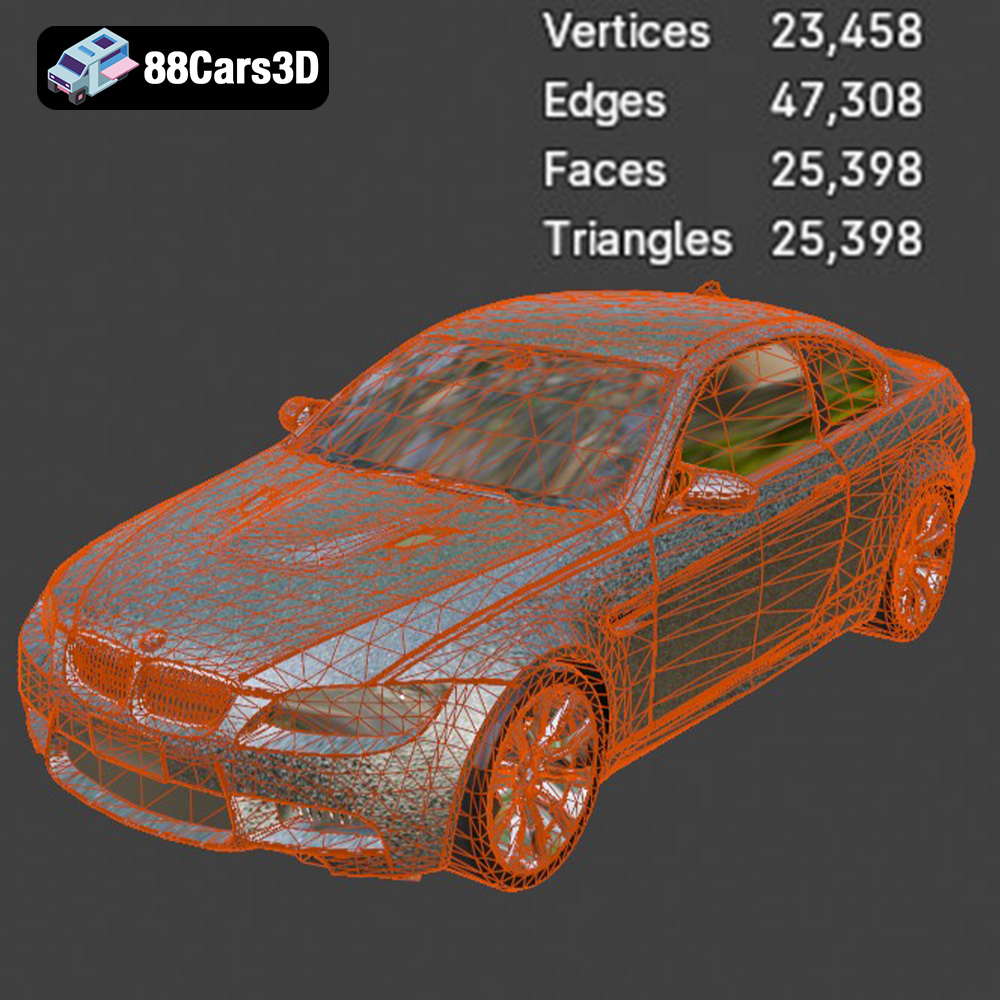
The core of any high-quality 3D model is its topology. The E92 M3 model features clean, quad-dominant topology, meaning its surfaces are primarily made up of four-sided polygons. This is critical because quads deform predictably, allowing for smooth subdivision and easier manipulation during animation or detailing. Poor topology, characterized by triangles (tris) or n-gons (polygons with more than four sides), can lead to pinching, artifacts, and undesirable shading in renders and real-time environments. Coupled with this is meticulously unwrapped UVs. UV mapping is the process of flattening the 3D surface onto a 2D plane so that textures can be applied without distortion. The optimized UVs on this model ensure that textures (like paint, carbon fiber, or tire tread) are applied cleanly and efficiently, contributing to photorealistic results without stretching or seams. Furthermore, the overall mesh optimization strikes a crucial balance: enough polygons to capture the intricate details of the BMW M3, but not so many that it bogs down performance. This optimization is essential for both high-fidelity rendering and maintaining playable frame rates in game engines, making it a truly versatile asset.
Material Setup and PBR Workflows
Modern rendering relies heavily on Physically Based Rendering (PBR) workflows, which simulate how light interacts with surfaces in the real world. A professional 3D car model, like the BMW M3 Coupe E92-002, comes with materials expertly set up for PBR. This means separate texture maps (albedo/base color, metallic, roughness, normal, ambient occlusion) are included and correctly applied. These textures accurately define the surface properties – whether it’s the sheen of the paint, the reflectivity of chrome, or the subtle texture of plastic. When imported into PBR-compliant renderers (like Cycles, V-Ray, or Unreal Engine’s native renderer), these materials respond realistically to varying lighting conditions, eliminating the need for extensive manual tweaking and ensuring consistent, photorealistic results across different scenes and engines. This level of material sophistication greatly accelerates the texturing and rendering phases of any project.
Scalability and Future-Proofing
Investing in a high-quality 3D car model is also about future-proofing your assets. The robust construction and clean geometry of the BMW M3 Coupe E92-002 ensure that it can be scaled and adapted for future technologies and platforms. Whether it’s for higher resolution screens, more advanced real-time rendering techniques, or integration into emerging AR/VR devices, the model’s fundamental integrity remains. Its modular design, with separated components and a logical hierarchy, means it can be easily updated or modified without redoing the entire asset. This inherent flexibility and scalability make it a valuable long-term investment for any professional content creator or studio, ensuring it remains relevant as technology evolves. This dedication to quality is what makes 88cars3d.com a go-to source for professional 3D car models.
Conclusion
The digital automotive realm is a space where precision meets passion, and the tools used directly impact the quality and efficiency of the final output. As we’ve explored, a truly professional 3D car model like the BMW M3 Coupe E92-002 3D Model is far more than just a collection of polygons. It’s a meticulously engineered asset, built with clean geometry, optimized for performance, and designed for seamless integration across a multitude of professional workflows.
From stunning automotive rendering in 3ds Max and Blender to dynamic game development in Unreal Engine, and from immersive AR/VR experiences to critical simulations and 3D printing, the versatility of such a model is indispensable. Its comprehensive suite of file formats, detailed exterior and interior features, and robust technical advantages ensure that artists and developers can achieve unparalleled realism and efficiency in their projects. The ability to customize paint finishes, materials, and lighting setups further solidifies its position as a flexible and powerful tool for creative expression.
In a world where visual excellence is paramount, investing in high-quality 3D car models from trusted sources like 88cars3d.com is a strategic decision that pays dividends in both production value and time saved. The BMW M3 Coupe E92-002 3D Model stands as a testament to the power of well-crafted digital assets, empowering professionals to bring their automotive visions to life with stunning fidelity and creative freedom.
Featured 3D Model
BMW M3 Coupe E92-002 3D Model
Immerse yourself in the world of high-performance automotive design with this professional 3D model of the BMW M3 Coupe E92-002. This model meticulously captures the aggressive stance and iconic styling of BMW’s renowned sports coupe, offering an authentic digital representation. Engineered with clean geometry and balanced detailing, it is optimized for a wide range of applications, including high-fidelity rendering, dynamic animation sequences, realistic simulations, and integration into modern game development pipelines.
$10.79
Product Image Gallery



Related Tags
.arvr
.blend
.bmw
.car
.coupe
.fbx
.gameasset
.glb
.m3coupee92002
.max
.obj
.ply
.rendering
.simulation
.sportsCar
.stl
.unreal
