

“`html
Mastering Your 3D Prints: A Deep Dive into STL File Cleanup with Blender
Welcome to the exciting world of 3D printable car models! At 88cars3d.com, we’re passionate about providing you with high-quality STL files ready to bring your automotive dreams to life. But even the best-designed models can sometimes benefit from a little refinement before hitting the print bed. Whether you’re a seasoned maker or just starting your 3D printing journey, understanding how to prepare your STL files is crucial for achieving flawless prints. This comprehensive guide will walk you through the essential techniques for cleaning up and optimizing STL files using the powerful, free, and open-source software, Blender. We’ll cover everything from identifying common mesh errors to implementing advanced repair strategies, ensuring your 3D printer performs at its best. Get ready to transform your digital models into tangible masterpieces!
Understanding STL Files and Common Mesh Errors
The Stereolithography (STL) file format is the de facto standard for 3D printing. It represents a 3D model’s surface geometry as a collection of triangular facets. While simple and widely supported, this tessellated format can sometimes lead to issues that hinder successful 3D printing. Understanding these common errors is the first step toward effective cleanup. These issues often arise from the original modeling process, file conversion, or simply the inherent nature of representing curved surfaces with flat triangles.
The Anatomy of an STL: Facets and Normals
An STL file describes a 3D object as a mesh of interconnected triangles. Each triangle is defined by three vertices (points in 3D space) and a normal vector. The normal vector indicates the outward-facing direction of the triangle’s surface. This information is critical for the slicer software to understand the object’s orientation and volume. Incorrectly oriented normals can lead to slicers interpreting holes in your model or printing inside-out surfaces, resulting in failed prints or hollow shells where solid parts are expected. For instance, if the normals of adjacent triangles point in opposite directions, the slicer might see a gap between them, even if the vertices are coincident. Ensuring all normals point consistently outward is a fundamental aspect of a “watertight” or manifold mesh.
Identifying Common Mesh Imperfections
Several common problems plague STL files, preventing them from being printed reliably. These include:
- Non-Manifold Geometry: This is a broad category encompassing various issues where the mesh doesn’t behave like a solid object. Examples include edges shared by more than two faces (like a cube where three faces meet at an edge), faces with zero area (degenerate triangles), and vertices where more than two faces meet in a way that creates internal voids. These break the rule that each edge should connect exactly two faces.
- Holes and Gaps: Missing triangles or inconsistencies in vertex connections can create holes in the mesh. These can range from tiny pinpricks to large openings, and slicers often struggle to bridge these gaps or might fill them incorrectly, leading to weak structures or incomplete prints.
- Intersecting Faces: Sometimes, two or more faces in the mesh might intersect each other in ways that are geometrically impossible for a solid object. This can confuse slicing software, causing it to generate incorrect toolpaths.
- Disconnected Components: While not always an error (sometimes intended for assembly), a model might consist of several separate, non-touching meshes. For a single-part print, these need to be joined or at least ensured they are positioned correctly relative to each other.
- Flipped Normals: As mentioned earlier, normals pointing inward instead of outward. This can cause entire sections of the model to be ignored or printed incorrectly.
Finding these issues manually can be tedious, but Blender offers tools to help identify and fix them.
Blender’s Toolkit for STL Cleanup
Blender is an incredibly versatile 3D creation suite, and its capabilities extend far beyond modeling and animation. It provides robust tools for mesh editing and repair, making it an excellent choice for preparing STL files for 3D printing. Its interface might seem intimidating at first, but focusing on specific editing modes and tools allows for efficient mesh manipulation. We’ll explore the core functionalities you’ll use for STL cleanup, from basic selection to specialized repair modifiers.
Entering Edit Mode and Navigating the Mesh
The first step in Blender is to import your STL file. Go to File > Import > STL (.stl) and select your file. Once imported, select the object and press the Tab key to enter Edit Mode. In Edit Mode, you can manipulate the individual components of the mesh: vertices (points), edges (lines connecting vertices), and faces (the triangles themselves). You can switch between these selection modes using the icons at the top-left of the 3D Viewport or by pressing 1 (Vertex Select), 2 (Edge Select), and 3 (Face Select) on your keyboard. Learning to navigate the mesh efficiently, using tools like ‘Proportional Editing‘ (press ‘O‘ to toggle) for smoother transformations and ‘Clipping‘ in the 3D Viewport’s N-panel (press ‘N‘) to limit what you see, will greatly speed up your workflow. Zooming and panning using the mouse wheel and middle mouse button are also essential for inspecting the model closely.
Essential Mesh Editing Tools
Blender offers a plethora of tools for editing meshes. For STL cleanup, the following are particularly useful:
- Merge Vertices (M): Found under the Mesh > Clean Up menu or by pressing ‘M‘ in Edit Mode. This is crucial for removing duplicate vertices or merging vertices that are very close together, helping to close small gaps. Options like ‘By Distance’ are particularly effective for tidying up slightly misaligned geometry.
- Recalculate Normals (Shift+N): Located under Mesh > Normals. This command attempts to orient all selected face normals consistently outwards. It’s a vital step after making mesh edits or if you suspect flipped normals. You can choose to calculate normals outside or inside based on your selection.
- Dissolve (X or Delete > Dissolve): This removes selected vertices, edges, or faces while attempting to maintain the overall shape of the mesh by merging connected geometry. It’s useful for simplifying overly dense areas or removing degenerate geometry.
- Fill (F): Select boundary edges (edges that belong to only one face) and press ‘F‘ to create a new face, effectively closing holes. For complex holes, this might need to be done iteratively or with more advanced techniques.
- Knife Tool (K): Allows you to draw new edges on the surface of the mesh, enabling precise cuts and the creation of new geometry to fix non-manifold areas or fill gaps.
Experimenting with these tools on a test model is the best way to become comfortable with their application.
Advanced Mesh Repair Techniques in Blender
While basic editing tools can fix many common issues, some STL files require more advanced strategies. Blender’s modifiers and specialized add-ons can automate or simplify complex repair tasks. These techniques are particularly helpful for files that are severely corrupted or were generated by processes that don’t guarantee mesh integrity.
Leveraging Blender’s Modifiers for Repair
Modifiers are non-destructive operations that can be applied to an object to alter its geometry. For mesh repair, several are invaluable:
- Remesh Modifier: This modifier rebuilds the mesh topology based on a voxel grid or an external mesh. The ‘Voxel’ mode is excellent for creating a clean, manifold mesh from messy or overlapping geometry. You can control the resolution (voxel size) to balance detail and file size. After applying the Remesh modifier, you often need to export as a new STL, as it fundamentally changes the mesh structure.
- Decimate Modifier: Primarily used for reducing polygon count, it can sometimes help clean up very dense or noisy meshes by simplifying geometry. Use the ‘Collapse’ or ‘Un-Subdivide’ modes carefully to avoid losing critical detail.
- Boolean Modifier: While typically used for combining or subtracting objects, it can be used for repair by ‘cutting’ a clean version of a part out of a messy original, or by using a simple shape to ‘clean up’ intersecting faces. This requires careful setup of the modifier’s ‘Operation’ (Difference, Union, Intersect) and the operand object.
Remember that modifiers are applied in a specific order. For repair, applying Remesh first and then perhaps Decimate can be a good workflow. After applying modifiers you wish to make permanent, you must Apply them in the Modifiers tab before exporting.
Using the 3D-Print Toolbox Add-on
Blender comes with a powerful, built-in add-on called the ‘3D-Print Toolbox’ that is specifically designed for preparing models for 3D printing. To enable it, go to Edit > Preferences > Add-ons, search for “3D-Print Toolbox,” and enable it. Once activated, you’ll find a new panel in the 3D Viewport (press ‘N‘ to open it if it’s not visible). This toolbox provides a streamlined workflow for checking and fixing common print issues:
- Check All: This button runs a series of checks for non-manifold geometry, intersections, holes, and other potential problems, highlighting them in the viewport.
- Make Manifold: A single-click function that attempts to automatically fix many non-manifold issues. While not always perfect, it’s a great starting point.
- Clear—–+Normals: Similar to the basic ‘Recalculate Normals’ but integrated into the toolbox for convenience.
- Zero Faces: Identifies and allows for the removal of degenerate faces with zero area.
- Intersections: Helps detect and sometimes resolve intersecting geometry.
The 3D-Print Toolbox significantly simplifies the process of identifying and rectifying errors, making it an indispensable tool for anyone preparing STL files.
Preparing Models from 88cars3d.com for Printing
At 88cars3d.com, we strive to provide models that are already optimized for 3D printing. This means they typically have clean geometry, appropriate wall thicknesses, and are manifold. However, the printing process itself introduces variables, and sometimes minor adjustments or specific preparation steps are still beneficial. Understanding how to integrate models from our collection into your printing workflow ensures the best possible results.
Scaling and Orientation for Optimal Prints
Before you even think about mesh repair, consider the scale and orientation of your model.
- Scaling: The STL file is just a set of coordinates. Its real-world size is determined by the slicer. You might want to scale a model to fit your printer’s build volume, to create a specific scale model (e.g., 1:24), or to increase detail by printing larger. In Blender, select the object, press ‘S‘ to scale, and type your desired factor. For precise scaling, use the ‘Item’ tab in the N-Panel to enter exact dimensions. When scaling significantly, especially when upsizing, it’s wise to check the mesh integrity afterward, as extreme scaling can sometimes reveal or exacerbate minor issues.
- Orientation: This is arguably the most critical factor for print success, especially for complex models like cars. In Blender’s 3D Viewport, select the object and press ‘R‘ to rotate. The goal is to orient the model on the virtual build plate (the XY plane) to minimize overhangs, reduce the need for excessive supports, maximize surface quality on visible areas, and ensure strong layer adhesion. For car models, consider printing them upright, potentially tilted slightly to manage the undercarriage or roofline. You might also consider splitting complex models (using the Bool Tool add-on or manual modeling) into parts that can be printed flat on the bed and then assembled. Always aim to place the largest flat surface against the build plate if possible, or orient it to create the most stable base.
Experimentation is key here. Sometimes, a slight rotation can drastically reduce the support material needed and improve the final look.
Exporting Your Cleaned STL File
Once you are satisfied with your mesh cleanup and orientation in Blender, it’s time to export it back into the STL format.
- Export Settings: Go to File > Export > Stl (.stl). In the export options panel (usually on the right side of the file browser), pay attention to:
- Scale: Ensure this is set to 1.0 if you’ve done your scaling within Blender.
- Apply Modifiers: If you used modifiers that you want to be part of the exported mesh (like Remesh), ensure this is checked.
- Scene Unit: Typically, leave this unchecked unless you have specific unit requirements.
- Selection Only: Check this if you only want to export the currently selected object(s), which is good practice to avoid exporting stray objects.
- Saving Conventions: It’s a good practice to save your cleaned file with a new name (e.g., `my_car_model_cleaned.stl`) to preserve the original file from 88cars3d.com. This allows you to revert if something goes wrong.
After exporting, it’s highly recommended to import the newly saved STL file back into Blender or open it in your slicer software to perform a final visual inspection. This quick check can catch any last-minute issues before committing to a print.
Slicer Settings for Maximizing Detail and Strength
Even with a perfectly cleaned STL file, the success of your 3D print hinges on your slicer settings. Slicers like Cura, PrusaSlicer, and Simplify3D translate your 3D model into layer-by-layer instructions (G-code) for your printer. Optimizing these settings is crucial for capturing the fine details present in high-quality car models and ensuring structural integrity.
Layer Height and Its Impact
Layer height is perhaps the most significant setting affecting print quality and time. It determines the vertical resolution of your print.
- Fine Details: For intricate car models with smooth curves, sharp edges, and small features (like grilles or emblems), a smaller layer height is essential. Common settings range from 0.05mm to 0.12mm for resin printers and 0.08mm to 0.15mm for FDM printers aiming for high detail. Using a smaller nozzle size (e.g., 0.2mm or 0.3mm for FDM) in conjunction with a fine layer height can further enhance detail capture.
- Print Time Tradeoff: The downside of smaller layer heights is significantly increased print time. A layer height of 0.1mm might take twice as long as 0.2mm for the same object height. For parts of the model that aren’t highly detailed or are on the underside, you might consider using adaptive layer heights (available in some slicers) to speed up the process by using larger layers in less critical areas.
- Material Considerations: Some materials print better at specific layer heights. For example, very fine layer heights might be more prone to issues with flexible filaments.
Always start with the manufacturer’s recommended settings for your filament and printer, then experiment with reducing layer height for critical car model components.
Supports: The Necessary Evil
Overhangs and bridges are areas of the model that are printed in mid-air, requiring support structures. Proper support generation and removal are critical for aesthetic and structural success.
- Support Types: Slicers offer various support types, such as ‘Normal,’ ‘Tree’ (or ‘Branching’), and custom supports. Tree supports are often preferred for complex organic shapes as they use less material and are easier to remove, minimizing surface scarring. For car models, consider where supports will be most visible – often the underside, wheel wells, spoilers, and roof edges.
- Support Settings: Key settings include:
- Overhang Angle: The angle at which supports are generated (e.g., 45-60 degrees). Adjusting this can minimize supports on less severe overhangs.
- Support Density: Controls how solid the support structure is. Lower density uses less filament and is easier to remove but can be less stable.
- Support Interface: A denser layer at the top of the support structure that touches the model. This can significantly improve the surface finish where supports are attached, making removal cleaner.
- Support Z Distance: The gap between the support and the model. A larger gap makes removal easier but can lead to poorer surface quality on the underside of the overhang.
- Support Removal: Patience and the right tools are key. Use pliers, hobby knives, or specialized tools to gently break away supports. For resin prints, supports are often removed after washing and curing. Aim to minimize damage to the model’s surface. Sometimes, scoring the support base with a hobby knife before removal can help create a cleaner break.
For models from 88cars3d.com, we often include notes on optimal orientation and support strategies, but always review and adjust based on your printer and material.
Infill Patterns and Density
Infill refers to the internal structure of the print, filling the volume not occupied by the outer walls.
- Density: For display models, a low infill density (5-15%) is often sufficient for structural integrity while saving time and material. If the model needs to withstand stress or be functional, increase the density (20-50% or more).
- Patterns: Different infill patterns offer varying strength, print speed, and material usage. Common patterns include:
- Grid: Simple, strong, prints in two directions.
- Cubic/Triangles: Good strength in multiple directions.
- Gyroid: Efficient, strong, and aesthetically pleasing, often recommended for its balance of properties.
- Lines: Fastest to print but weakest.
Choose a pattern that balances strength requirements with print time. For most car models intended for display, Gyroid or Cubic at 10-15% density provides excellent results.
Post-Processing: Bringing Your 3D Printed Car Model to Life
The printing process is only the first half of creating a stunning replica. Post-processing is where raw prints are transformed into polished works of art. This stage involves cleaning, smoothing, assembling, and painting your 3D printed car model, bringing out the incredible detail you’ve worked so hard to achieve.
Support Removal and Surface Smoothing
The initial post-processing step after removing the print from the bed is carefully removing support structures.
- Tools: A set of flush cutters, needle-nose pliers, a hobby knife (X-Acto knife), and sometimes a small file are essential. Work slowly and deliberately to avoid damaging the model.
- Sanding: Once supports are removed, sanding is crucial for achieving a smooth surface finish, especially on FDM prints where layer lines are visible. Start with a coarser grit sandpaper (e.g., 120-220 grit) to remove major imperfections and support marks, then progressively move to finer grits (400, 600, 800, 1000+). Wet sanding (using sandpaper with water) can help reduce dust and achieve a smoother finish.
- Filling: Small gaps or layer lines can be filled using modeling putty, Bondo, or specialized 3D printing fillers like XTC-3D. Apply filler, let it cure, and then sand again to a smooth finish.
- Priming: Applying a spray primer is highly recommended before painting. Primer fills in microscopic imperfections, creates a uniform surface, and provides a good base for paint adhesion.
This smoothing process is time-consuming but transformative for high-quality automotive models.
Assembly and Painting Techniques
Many complex car models might be designed as multi-part prints for easier printing or enhanced detail.
- Assembly: Use appropriate adhesives for your plastic type (e.g., super glue (cyanoacrylate) for PLA/PETG, or specific plastic cements for ABS). Ensure parts fit snugly before applying adhesive. Clamps or masking tape can help hold parts together while the glue cures. For resin prints, UV-curing adhesives or epoxy resins work well.
- Painting:
- Airbrushing: Offers the smoothest, most professional finish, ideal for car bodies. Use acrylics or lacquers specifically designed for airbrushing. Multiple thin coats are better than one thick coat.
- Brush Painting: Suitable for smaller details, interiors, or if you don’t have an airbrush. Use high-quality acrylic model paints.
- Masking: Use painter’s tape (e.g., Tamiya tape) to mask off different areas for two-tone paint jobs or to create clean lines between colors.
- Weathering: For a realistic look, consider adding weathering effects like subtle dirt, grime, or wear and tear using washes, dry brushing, or specialized weathering pigments.
- Clear Coats: Apply a clear coat (gloss, satin, or matte, depending on the desired finish) as a final step to protect the paint job and unify the sheen.
Taking the time for careful assembly and painting elevates your 3D printed car model from a mere print to a display-worthy piece of art.
By mastering STL file cleanup with tools like Blender and optimizing your slicer settings, you unlock the full potential of the incredible car models available on platforms like 88cars3d.com. Whether you’re debugging a tricky print or aiming for a show-quality finish, these techniques will equip you to overcome challenges and achieve outstanding results. Happy printing!
“`
Featured 3D Car Models

Mercedes-Benz S500 2022 3D Model
Texture: Yes
Material: Yes
Download the Mercedes-Benz S500 2022 3D Model featuring clean geometry, realistic detailing, and a fully modeled interior. Includes .blend, .fbx, .obj, .glb, .stl, .ply, .unreal, and .max formats for rendering, simulation, and game development.
Price: $19.99
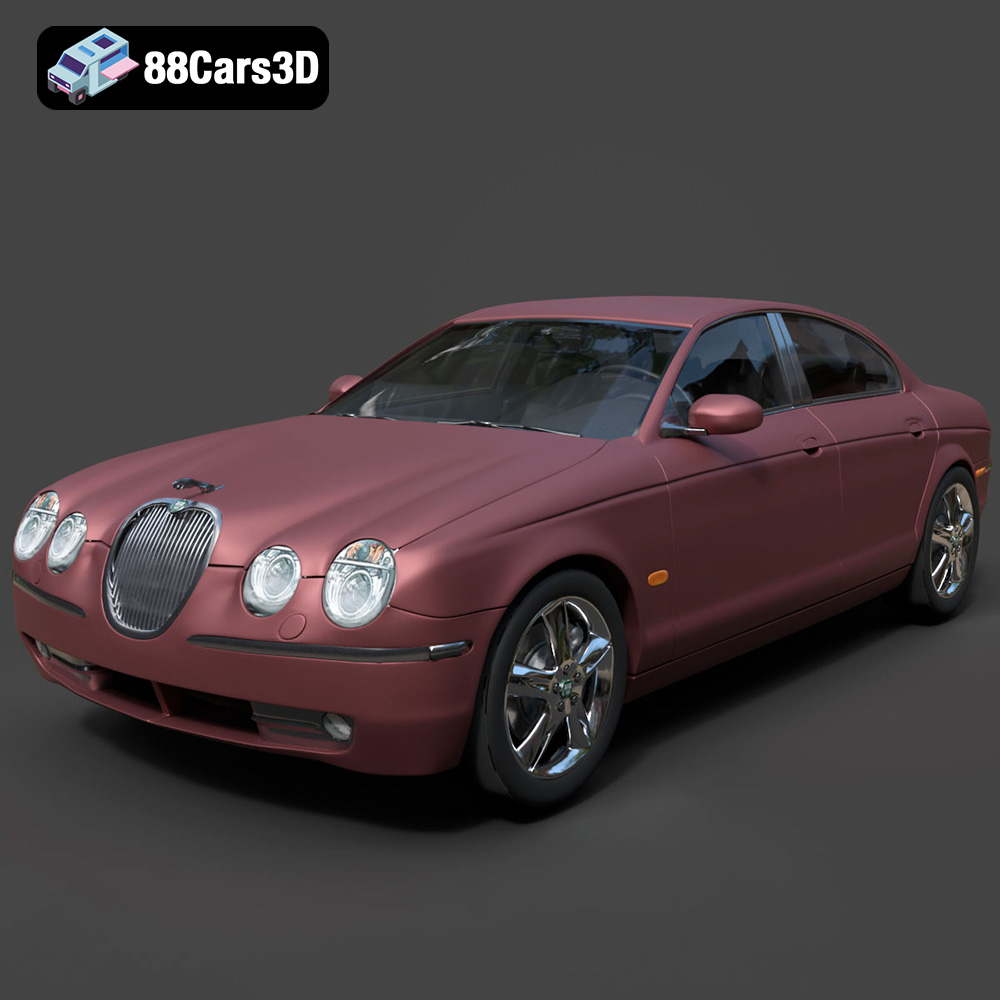
Jaguar S-Type Sedan 3D Model
Texture: Yes
Material: Yes
Download the Jaguar S-Type Sedan 3D Model featuring clean geometry, realistic detailing, and a fully modeled interior. Includes .blend, .fbx, .obj, .glb, .stl, .ply, .unreal, and .max formats for rendering, simulation, and game development.
Price: $18.99
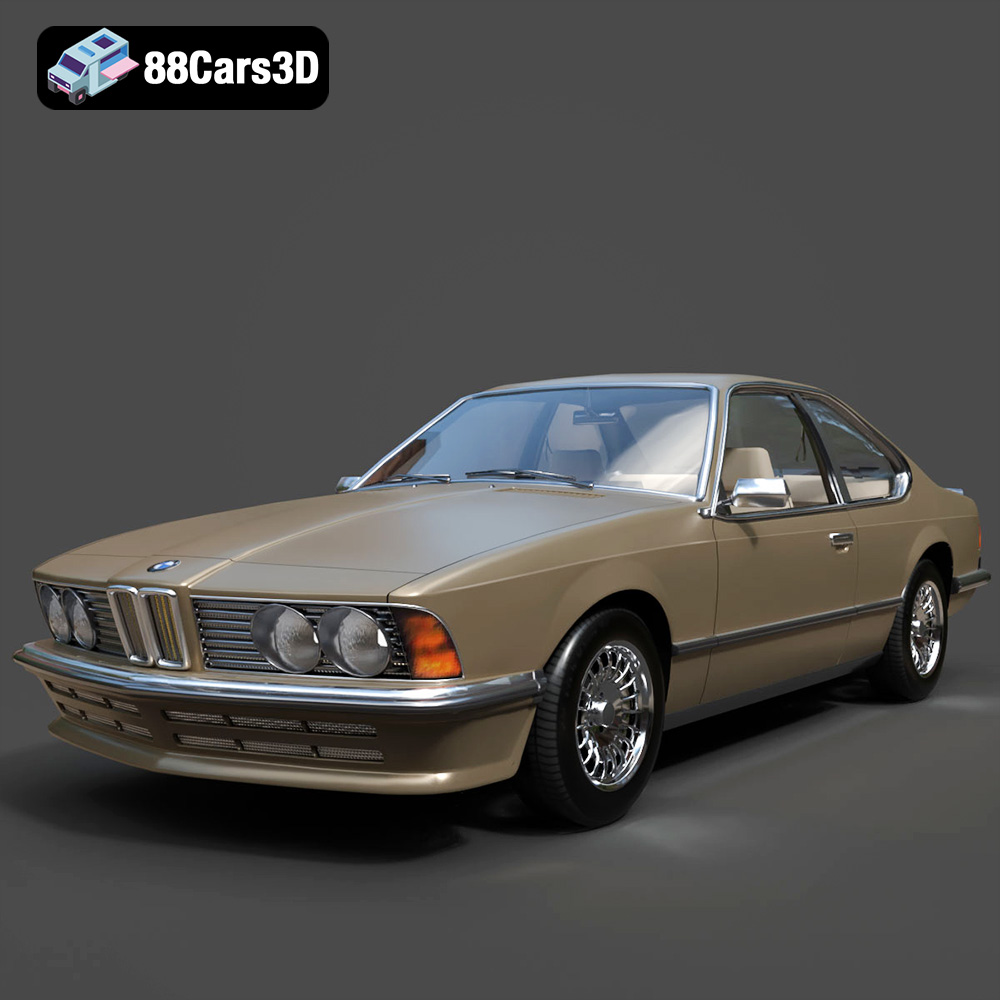
BMW 6 Series 1986 3D Model
Texture: Yes
Material: Yes
Download the BMW 6 Series 1986 3D Model featuring clean geometry, realistic detailing, and a fully modeled interior. Includes .blend, .fbx, .obj, .glb, .stl, .ply, .unreal, and .max formats for rendering, simulation, and game development.
Price: $16.99
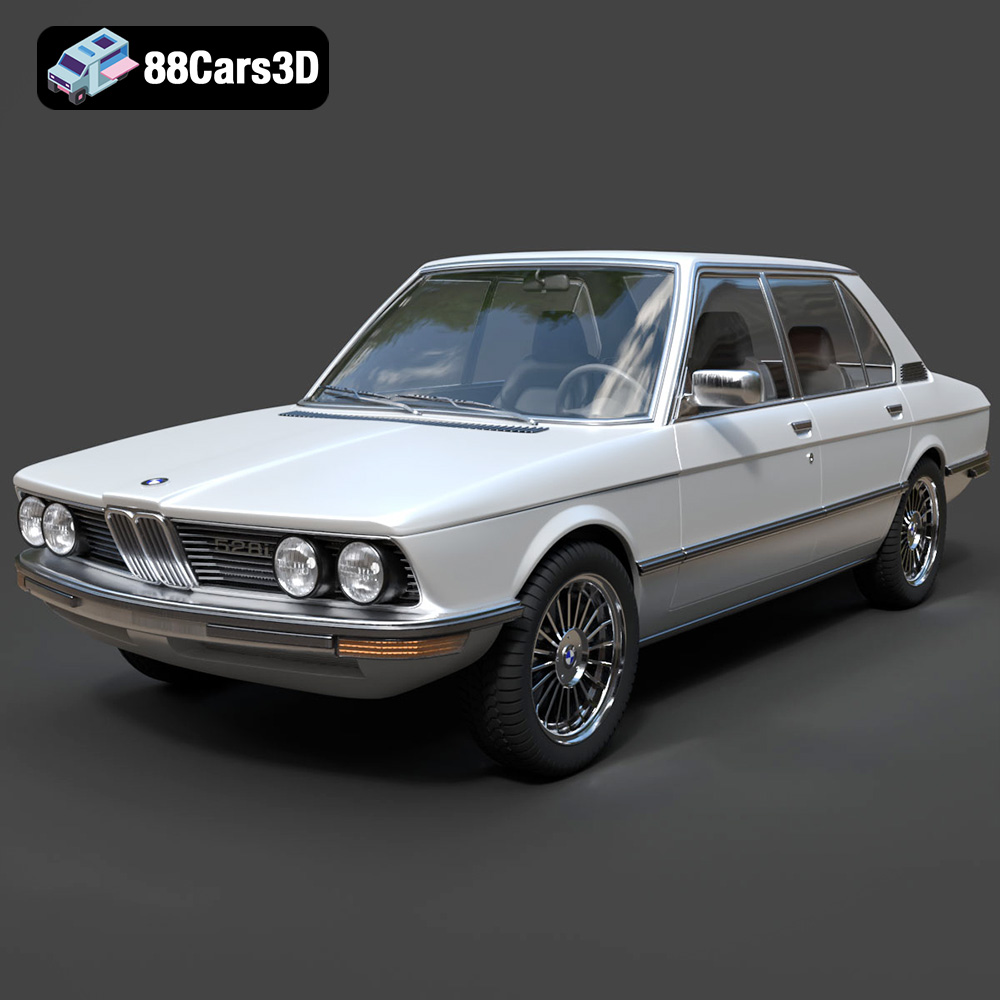
BMW 5 Series E12 528i 3D Model
Texture: Yes
Material: Yes
Download the BMW 5 Series E12 528i 3D Model featuring clean geometry, realistic detailing, and a fully modeled interior. Includes .blend, .fbx, .obj, .glb, .stl, .ply, .unreal, and .max formats for rendering, simulation, and game development.
Price: $14.99

BMW 5 Series F10 2014 3D Model
Texture: Yes
Material: Yes
Download the BMW 5 Series F10 3D Model featuring clean geometry, realistic detailing, and a fully modeled interior. Includes .blend, .fbx, .obj, .glb, .stl, .ply, .unreal, and .max formats for rendering, simulation, and game development.
Price: $14.99

BMW 4 Series Coupe M Sport 2014 3D Model
Texture: Yes
Material: Yes
Download the BMW 4 Series Coupe M Sport 2014 3D Model featuring clean geometry, realistic detailing, and a fully modeled interior. Includes .blend, .fbx, .obj, .glb, .stl, .ply, .unreal, and .max formats for rendering, simulation, and game development.
Price: $14.99

Bentley Brooklands 2008 3D Model
Texture: Yes
Material: Yes
Download the Bentley Brooklands 2008 3D Model featuring clean geometry, realistic detailing, and a fully modeled interior. Includes .blend, .fbx, .obj, .glb, .stl, .ply, .unreal, and .max formats for rendering, simulation, and game development.
Price: $14.99
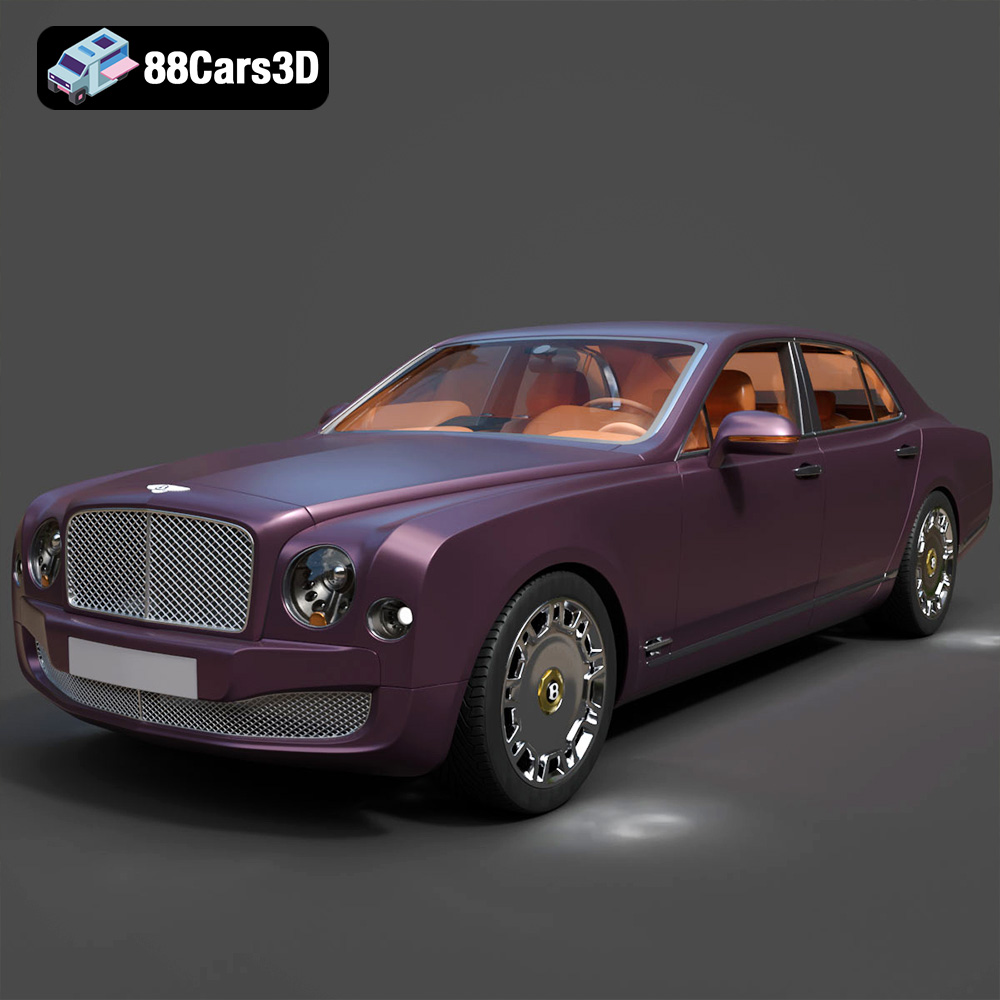
Bentley Mulsanne Luxury Sedan 3D Model
Texture: Yes
Material: Yes
Download the Bentley Mulsanne Luxury Sedan 3D Model featuring clean geometry, realistic detailing, and a fully modeled interior. Includes .blend, .fbx, .obj, .glb, .stl, .ply, .unreal, and .max formats for rendering, simulation, and game development.
Price: $14.99

Bentley Continental GT 2011 3D Model
Texture: Yes
Material: Yes
Download the Bentley Continental GT 2011 3D Model featuring clean geometry, realistic detailing, and a fully modeled interior. Includes .blend, .fbx, .obj, .glb, .stl, .ply, .unreal, and .max formats for rendering, simulation, and game development.
Price: $14.99

Bentley Continental Flying Spur 3D Model
Texture: Yes
Material: Yes
Download the Bentley Continental Flying Spur 3D Model featuring clean geometry, realistic detailing, and a fully modeled interior. Includes .blend, .fbx, .obj, .glb, .stl, .ply, .unreal, and .max formats for rendering, simulation, and game development.
Price: $14.99
