

The automotive industry is in constant motion, driven by innovation, design, and an insatiable desire to push boundaries. As vehicles become more advanced, so too does the way we visualize, interact with, and even sell them. Enter Augmented Reality (AR) – a technology that’s no longer confined to sci-fi but is rapidly transforming how we experience digital content within our physical world. When combined with the unparalleled real-time rendering capabilities of Unreal Engine, AR offers an incredibly powerful platform for automotive visualization, design review, interactive configurators, and immersive marketing experiences.
For professionals in game development, automotive design, and real-time rendering, building AR applications with Unreal Engine opens up a new realm of possibilities. Imagine placing a photorealistic 3D car model directly in your driveway, walking around it, inspecting its intricate details, or even customizing its paint and rims – all through your smartphone or tablet. This comprehensive guide will walk you through the technical intricacies of leveraging Unreal Engine to create stunning automotive AR applications, from project setup and model optimization to advanced interactivity and deployment. We’ll explore essential tools, best practices, and performance strategies to help you deliver truly captivating experiences.
Unreal Engine and AR: The Power Partnership for Automotive Visualization
Unreal Engine has long been synonymous with cutting-edge graphics and real-time rendering, powering everything from AAA games to blockbuster films and architectural visualizations. Its adoption as a leading tool for automotive visualization is a testament to its photorealism, robust feature set, and extensive ecosystem. When it comes to Augmented Reality, Unreal Engine extends its prowess, offering a comprehensive framework for creating immersive AR experiences that bridge the gap between digital content and the real world. This synergy is particularly impactful in the automotive sector, where visual fidelity and interactive engagement are paramount.
Why Unreal Engine for AR?
Unreal Engine stands out as the premier choice for AR development due to several key advantages. Firstly, its real-time rendering pipeline ensures photorealistic quality, allowing 3D car models to appear incredibly lifelike when placed in a real-world environment. The engine’s physically based rendering (PBR) system means that materials react accurately to light, producing authentic reflections, refractions, and surface details crucial for convincing automotive visualization. Secondly, Unreal Engine boasts robust native support for major AR frameworks like Apple’s ARKit and Google’s ARCore, as well as the OpenXR standard, enabling developers to target a wide range of mobile and standalone AR devices with a single codebase. This cross-platform compatibility is invaluable for reaching a broad audience. Furthermore, Unreal Engine’s visual scripting language, Blueprint, empowers artists and designers to create complex interactive AR experiences without writing a single line of C++ code, significantly accelerating development workflows. Its comprehensive toolset, including the Material Editor, Sequencer for cinematics, and Niagara for particle effects, allows for an unparalleled level of detail and artistic control, pushing the boundaries of what’s possible in real-time AR.
AR’s Transformative Impact on the Automotive Industry
The applications of AR in the automotive industry are vast and revolutionary. For marketing and sales, AR empowers customers to visualize vehicles in their own environment, explore configurations, and even “test drive” virtually before visiting a dealership. Imagine an interactive automotive configurator that allows users to change car colors, swap rim designs, or view interior options in real-time, right on their driveway. Beyond sales, AR is invaluable for design review, enabling engineers and designers to overlay digital prototypes onto physical models or collaborate remotely on design iterations. Training and maintenance also benefit immensely, with AR overlays providing technicians with step-by-step instructions and real-time diagnostics on complex vehicle systems. This enhanced engagement and practical utility translate into improved decision-making, reduced costs, and a more compelling overall user experience. The demand for high-quality, optimized 3D car models is exploding, making platforms like 88cars3d.com an indispensable resource for obtaining production-ready assets perfectly suited for these demanding AR applications.
Laying the Foundation: Setting Up Your AR Project in Unreal Engine
Before you can bring a sleek 3D car model into an AR experience, you need to properly configure your Unreal Engine project. A solid foundation is crucial for performance, stability, and a smooth development workflow. This setup involves enabling the correct plugins, configuring project settings for mobile devices, and understanding the fundamental concepts of AR session management within Unreal Engine.
Essential Project Configuration for Mobile AR
To begin, open Unreal Engine and create a new project. While a Blank project template provides maximum flexibility, the AR Template can give you a head start with some basic AR functionality pre-configured. Regardless of your choice, the next critical step is to enable the necessary AR plugins. Navigate to Edit > Plugins. For iOS development, enable ARKit. For Android, enable ARCore. If you plan to target various AR devices or use more generic AR functionality, consider enabling OpenXR and the OpenXR AR Extension. Additionally, if you’re importing CAD data or complex scenes, the Datasmith plugin can streamline the import process. Remember to restart the engine after enabling plugins.
Project settings are equally vital for mobile AR. Go to Edit > Project Settings. Under the Platforms section (Android and iOS), ensure you have the necessary SDKs configured. For Android, verify your SDK, NDK, and Java paths are correct. Under Android > Build, select ETC2 as the texture compression format for broader device compatibility. For iOS, set your Bundle Identifier and Signing Certificate. In the Engine > Rendering section, set your Mobile MSAA to 2x or 4x for smoother edges, but be mindful of the performance impact. Consider enabling Mobile HDR if your project demands higher fidelity lighting, but disable it if targeting older or lower-end devices to save performance. For more detailed guidance on mobile project setup, the official Unreal Engine documentation at https://dev.epicgames.com/community/unreal-engine/learning is an invaluable resource.
Understanding the AR Session Lifecycle
At the core of any AR application in Unreal Engine is the concept of an AR Session. This session manages the connection to the device’s AR capabilities, handling tasks like camera feed acquisition, motion tracking, and environmental understanding (e.g., plane detection). You typically control the AR session using Blueprint nodes. The primary nodes you’ll interact with are Start AR Session and Pause AR Session/Stop AR Session.
To configure your AR session, you’ll use an AR Session Config asset. This asset allows you to specify crucial parameters such as:
- Tracking Options: Define what kind of tracking your AR experience needs (e.g., World Tracking for general environment understanding, or Image Tracking if you want to detect specific images).
- Plane Detection Mode: Determine if you want to detect horizontal planes (for placing objects on floors/tables), vertical planes (for walls), or both. For automotive visualization, horizontal plane detection is often key for grounding your virtual car.
- Light Estimation Mode: Enable this to allow the AR framework to estimate the real-world lighting conditions, which can then be used to light your virtual objects more realistically.
- Session Type: Specify whether it’s an AR World Tracking or AR Face Tracking session.
A common workflow involves creating a GameMode or an Actor Blueprint that, upon being spawned or on BeginPlay, executes the Start AR Session node, passing in your configured AR Session Config asset. This initiates the camera feed and begins world tracking, allowing the application to understand the surrounding environment and eventually place your 3D car model accurately within it. Proper management of the AR session ensures efficient use of device resources and a stable AR experience.
Seamless Integration: Importing and Optimizing 3D Car Models from 88cars3d.com
The visual quality of your AR application hinges on the quality and optimization of your 3D assets. For automotive visualization, this means sourcing highly detailed, yet performant, 3D car models. Platforms like 88cars3d.com specialize in providing such assets, making the integration process much smoother for Unreal Engine developers. However, even with pre-optimized models, understanding the nuances of import and further optimization for mobile AR is critical.
Sourcing and Importing High-Quality Assets
When developing an automotive AR application, the fidelity of your 3D car models is paramount. Low-quality or poorly optimized models can break immersion and severely impact performance. This is where marketplaces like 88cars3d.com prove invaluable, offering a curated selection of high-quality, production-ready 3D car models designed with game development and real-time rendering in mind. These models often come with clean topology, proper UV mapping, and PBR-ready materials, significantly reducing post-import cleanup.
Common file formats for importing 3D models into Unreal Engine include FBX, USD (Universal Scene Description), and potentially USDZ for direct AR deployment in some ecosystems. FBX is a widely supported format that can encapsulate geometry, materials, animations, and skeletal data. For architectural and product visualization workflows, Datasmith can be used to import complex CAD models or entire scenes from software like 3ds Max, Maya, or CAD packages. When importing an FBX file, simply drag and drop it into your Content Browser or use the Add/Import button. In the FBX Import Options dialog, pay close attention to:
- Mesh: Ensure “Skeletal Mesh” is unchecked unless your car has complex animated components. Set “Combine Meshes” if the car is composed of many separate parts that can be merged for efficiency.
- Materials: Unreal Engine can attempt to import materials, but often you’ll want to recreate PBR materials in the Material Editor for optimal control and realism.
- Transform: Verify that “Import Uniform Scale” is set correctly to ensure the model’s scale matches your Unreal Engine scene (1 unit = 1cm by default). Check “Convert Scene Unit” and “Convert Scene Y-Up to Z-Up” if your source software uses a different coordinate system.
- Normals and Tangents: Ensure these are imported or generated correctly to avoid lighting artifacts.
After importing, always perform initial checks. Verify the model’s scale by placing it next to a known reference object (e.g., a default Unreal Engine cube). Check its pivot point and orientation, as these will affect how the car rotates and is placed in AR. Adjusting these in the modeling software before export is ideal, but they can also be modified in Unreal Engine by using a dummy actor or re-importing with adjusted settings.
Optimization for Mobile AR Performance
Even with high-quality assets, rigorous optimization is non-negotiable for mobile AR, where performance is severely constrained. Every frame must render quickly to maintain a smooth user experience and prevent motion sickness. Here are key optimization strategies:
- Polygon Count Management and LODs: While modern GPUs can handle millions of polygons, mobile devices are far more limited. An entire car model, including interior, wheels, and chassis, should ideally target a polygon count between 50,000 to 300,000 triangles for a comfortable mobile AR experience, depending on the target device’s capabilities and the scene complexity. For models sourced from 88cars3d.com, you might receive multiple LODs (Level of Detail) already. If not, Unreal Engine’s built-in LOD Generation tools can automatically create lower-polygon versions. This is crucial: as the virtual car moves further from the camera, lower-detail versions are swapped in, saving significant rendering overhead. Manually fine-tuning LODs for specific components (e.g., wheels, interior) often yields better results than automatic generation alone.
- Texture Optimization: Textures are a significant performance factor. Ensure all textures are powers of two (e.g., 512×512, 1024×1024, 2048×2048) and use appropriate compression settings. For mobile, ETC2 (Android) and ASTC (iOS) are highly efficient formats. Use texture atlasing where possible to combine multiple smaller textures into a single, larger one, which reduces draw calls. Avoid excessively high-resolution textures (e.g., 8K) unless absolutely necessary for close-up details, opting for 2K or 4K for most car components.
- Draw Call Reduction: Each unique material and mesh rendered contributes to a “draw call,” which can quickly become a bottleneck on mobile. Reduce draw calls by using material instancing (creating multiple instances from a single master material, allowing parameter changes without new draw calls). Combine meshes where logical (e.g., merging minor interior components into a single mesh) to reduce the number of objects the engine needs to process.
- Static Mesh vs. Skeletal Mesh: For car bodies, use Static Meshes unless specific deformation or animation is required. Skeletal Meshes have a higher rendering cost.
By diligently applying these optimization techniques, you ensure that your high-quality 3D car models from marketplaces like 88cars3d.com perform smoothly and efficiently in your mobile AR applications, providing a truly immersive experience without performance hiccups.
Bringing Cars to Life: Realistic Materials and Dynamic Lighting in AR
Once your 3D car models are imported and optimized, the next crucial step is to give them life through realistic materials and convincing lighting. In AR, this is doubly challenging because your virtual objects must seamlessly integrate with the real world, reacting to its light and shadows. Unreal Engine’s PBR Material Editor and versatile lighting systems provide the tools to achieve this authenticity, even within the constraints of mobile AR.
PBR Material Creation and Application
Physically Based Rendering (PBR) is the cornerstone of realism in modern real-time graphics, and it’s essential for making your virtual car feel tangible in an AR scene. PBR materials simulate how light interacts with surfaces in the real world, ensuring consistent and believable results under various lighting conditions. In Unreal Engine, you’ll primarily work with the Material Editor to create these PBR materials.
A standard PBR workflow involves several key texture maps:
- Base Color (Albedo): Defines the diffuse color of the surface without any lighting information. For a car, this would be the base paint color.
- Metallic: A grayscale map indicating how “metallic” a surface is (0 for dielectric, 1 for metal). Car paint typically has a metallic sheen.
- Roughness: A grayscale map defining the microscopic surface irregularities, impacting how blurry or sharp reflections appear (0 for perfectly smooth/glossy, 1 for completely rough/matte). Car paint usually has very low roughness, while tires would have high roughness.
- Normal Map: Provides fine surface details (like bumps, scratches, or subtle textures) without adding actual geometry, faking detail through lighting calculations. Essential for realistic car paint flakes or tire treads.
- Ambient Occlusion (AO): A grayscale map that fakes soft shadows in crevices and corners, adding depth and realism to areas where light would struggle to reach.
Creating car paint materials in Unreal Engine requires special attention. Beyond the standard PBR maps, you might use additional techniques for advanced effects:
- Clear Coat: Car paint often has a clear coat layer. Unreal Engine’s Material Editor supports a dedicated “Clear Coat” input, allowing you to define a separate normal map and roughness for this reflective top layer, distinct from the base paint. This is crucial for achieving that characteristic automotive gloss.
- Flake Normals: For metallic paints, a small, tiled normal map representing metallic flakes can be blended into the clear coat normal, creating subtle sparkle and depth.
- Subsurface Scattering: For materials like headlights or taillights, subsurface scattering can simulate light diffusing through the material, giving them a softer, more translucent look.
Once you’ve crafted a robust master material, create Material Instances from it. This allows you to quickly create variations (e.g., different car colors, varying roughness for different wheel finishes) by adjusting parameters without recompiling the entire material, which is great for performance and iteration speed.
Lighting for Authenticity in AR
Lighting is arguably the most challenging aspect of AR, as the virtual objects need to appear grounded and correctly lit by the real environment. Unlike traditional game development where you control all light sources, AR requires reacting to the real world.
- Environment Lighting with HDRI: For cinematic or non-AR contexts, High Dynamic Range Images (HDRIs) are often used to provide realistic environment lighting and reflections. While full HDRI rendering can be expensive for mobile AR, using a low-resolution cubemap derived from an HDRI for reflections is a good compromise. More importantly, Unreal Engine’s AR frameworks can provide real-world lighting estimates.
- Mobile AR Lighting: ARKit and ARCore provide
ARLightEstimatedata, which Unreal Engine can use to adjust the lighting of your virtual objects. This typically includes ambient intensity, color temperature, and sometimes even a spherical harmonics lighting probe. You can integrate this data into your master material to ensure your car models are illuminated by the estimated real-world light, making them feel more cohesive with the environment. - Shadows for Grounding: Without proper shadows, your virtual car will look like it’s floating. For mobile AR, dynamic shadows from real-time light sources can be prohibitively expensive. A common and effective technique is to use a Planar Shadow material. This involves projecting a simple, soft shadow texture onto the detected AR plane beneath the car. This fake shadow is much cheaper to render than full dynamic shadows but dramatically improves the perceived grounding of the object. You can achieve this with a dedicated material that samples a light vector and outputs a dark, translucent color based on the car’s geometry.
- Contrast with Lumen: It’s important to note that cutting-edge features like Lumen (Unreal Engine’s global illumination and reflections system) are designed for high-end desktop and console experiences. While Lumen provides incredible realism for traditional rendering, it is not suitable for mobile AR due to its high performance cost. For AR, you must rely on more optimized techniques, combining real-world light estimation with carefully crafted fake shadows and efficient PBR materials to achieve convincing results.
By meticulously crafting your PBR materials and leveraging the AR framework’s light estimation alongside optimized shadow techniques, you can achieve a remarkable level of realism, making your virtual automotive assets truly shine in any real-world setting.
Interactive AR Experiences: Unleashing Potential with Blueprints
A static 3D car model, however beautiful, only tells half the story. The true power of AR lies in interaction – allowing users to manipulate, customize, and explore virtual objects in a dynamic way. Unreal Engine’s Blueprint visual scripting system is the ideal tool for implementing these interactive AR experiences without diving into complex C++ code, making advanced interactivity accessible to a broader range of artists and designers.
Basic AR Interaction Setup
The first step in any interactive AR application is enabling the user to place and manipulate objects in the real world. This involves two core AR concepts: hit testing and object placement.
- Hit Testing: This is the process of determining where a user’s screen touch corresponds to a detected surface in the real world. Unreal Engine provides the
Line Trace for Objects(orLine Trace by Channel) node, but for AR, you’ll specifically use theDeproject Screen Position to Worldnode combined with AR-specific hit test nodes (e.g.,ARLineTrace from ScreenPoint). This node allows you to perform a raycast from the touch location on the screen into the AR world, returning information about any detected AR planes (horizontal, vertical, or feature points) it intersects. - Spawning Car Models onto Detected Planes: Once a horizontal plane is detected (e.g., a floor or a table), you can use the hit test result to get the world transform (location and rotation) of that point. On a user’s tap, you would then use the
Spawn Actor from ClassBlueprint node to instantiate your 3D car model Blueprint (or a container Actor holding the car) at the precise hit location and rotation. It’s often beneficial to have a visual indicator (like a simple translucent circle) to show the user where the car will be placed before they tap. - Basic Manipulation: After placement, users expect to move, rotate, and scale the car. This is typically handled via multi-touch gestures:
- Translation (Move): Dragging one finger across the screen can translate the car along the detected AR plane. This involves continually hit-testing the new touch location and updating the car’s position.
- Rotation: Using a two-finger rotation gesture (pinching and rotating fingers) can rotate the car around its Z-axis (up axis). You’ll track the angle between the two fingers and apply that rotation to the car.
- Scaling: A two-finger pinch gesture (spreading or bringing fingers together) can scale the car uniformly. You’ll track the distance between the two fingers and apply a proportional scale factor.
These interactions are built by capturing touch events (
Input > Touch Input > On Input Touch Begin/End/Moved) and using Blueprint nodes to calculate the appropriate transformations based on touch deltas.
Building an Automotive Configurator with Blueprints
One of the most powerful applications of AR in automotive is the interactive configurator. Users can customize a vehicle in real-time, visualizing changes directly in their environment. Blueprints make this incredibly manageable.
- Component Swapping and Material Instancing: To change car colors, rim designs, or interior trims, you’ll leverage Material Instances and mesh swapping.
- For color changes, expose a “Base Color” parameter (or similar) in your master car paint material. Then, create multiple Material Instances for different colors. In Blueprint, when a user selects a new color (e.g., via a UI button), use the
Set Scalar Parameter Value on MaterialsorSet Vector Parameter Value on Materialsnode (for color) to update the material instance applied to the car body. - For changing rims, you’d have different static mesh assets for each rim design. In Blueprint, simply use the
Set Static Meshnode on the car’s wheel components to swap out the current rim mesh with the newly selected one. This same principle applies to changing interior elements or other modular components.
- For color changes, expose a “Base Color” parameter (or similar) in your master car paint material. Then, create multiple Material Instances for different colors. In Blueprint, when a user selects a new color (e.g., via a UI button), use the
- UI Integration with UMG: User Interface (UI) is crucial for a configurator. Unreal Engine’s Universal Motion Graphics (UMG) system allows you to create elegant UI widgets (buttons, sliders, dropdowns). You’ll design your configurator menu as a Widget Blueprint. When a user clicks a button (e.g., “Red Paint”), that button’s
On Clickedevent would trigger a custom event in your car Blueprint, which then applies the corresponding material change. - Event Handling and State Management: Use Blueprint Custom Events and Event Dispatchers to communicate between your UI widgets and your car Actor. For example, a “Change Color” button in your UMG widget might call an event in your car Actor named “ApplyNewColor,” passing the desired color as a parameter. It’s also good practice to manage the car’s current state (e.g., current color, current rim) using Blueprint variables, ensuring consistency.
- Creating Different “Variants”: For highly complex configurations, consider using Unreal Engine’s Variant Manager or simply creating distinct Blueprint child actors for different pre-set car models (e.g., “Car_Blueprint_Sports,” “Car_Blueprint_Luxury”) that can be swapped out entirely for major model changes, offering a more streamlined approach for diverse product lines.
Through the intuitive power of Blueprints, you can transform a static 3D car model into a fully interactive AR experience, allowing users to customize and explore vehicles with unprecedented freedom and immersion.
Mastering Performance: Optimization and Deployment for Mobile AR
Achieving a smooth, high-fidelity AR experience on mobile devices is a delicate balance of visual quality and raw performance. Even with careful asset optimization, continuous profiling and strategic rendering adjustments are essential. Furthermore, successfully deploying your AR application to various mobile platforms requires understanding their specific build processes and testing considerations.
Advanced Optimization Techniques
While basic asset optimization covers polygons and textures, pushing the boundaries of mobile AR requires more granular control over rendering processes. Identifying performance bottlenecks is the first step, and Unreal Engine provides powerful profiling tools:
- Profiling with Unreal Insights and Stat Commands: Unreal Insights is a comprehensive profiling tool that provides detailed data on CPU, GPU, memory, and rendering performance. Use it to pinpoint exactly where your application is spending its time. For quicker in-editor checks, use console commands like
Stat GPU(shows GPU timings for various passes),Stat rhi(Render Hardware Interface stats), andStat Engine(general engine performance). These stats help identify if you’re CPU-bound (too many draw calls, complex Blueprints) or GPU-bound (too many pixels, complex shaders). - Occlusion Culling and Frustum Culling: Unreal Engine automatically performs frustum culling (not rendering objects outside the camera’s view). However, for mobile AR, ensuring efficient occlusion culling is also important. Occlusion culling prevents objects hidden behind other objects from being rendered. While not always perfectly reliable for dynamic AR scenes, understanding its principles and ensuring your scene setup allows for efficient culling helps.
- Render Features and Post-Processing: Mobile AR typically cannot afford many expensive post-processing effects. Critically evaluate and disable unnecessary post-processing volumes (e.g., Bloom, Vignette, Chromatic Aberration) or reduce their intensity. Limit the number of transparent materials, as they are generally more expensive to render due to overdraw. Consider reducing shadow map resolution or using simpler shadow techniques, as discussed previously (planar shadows).
- Nanite Considerations for AR: Nanite, Unreal Engine’s virtualized geometry system, is a game-changer for high-fidelity assets on high-end platforms, allowing for incredibly dense polygon counts with minimal performance impact. However, it’s crucial to understand its current limitations for mobile AR. As of current Unreal Engine versions, Nanite is primarily supported on high-end desktop GPUs and consoles (DX12, Vulkan). It is generally NOT supported or optimized for mobile AR platforms (ARKit, ARCore) due to architectural differences and hardware limitations. For mobile AR, traditional LODs and manual mesh optimization remain the most effective strategies for managing polygon counts. While future Unreal Engine versions may expand Nanite’s reach, for immediate mobile AR deployment, focus on established mobile rendering best practices.
- Material Complexity: Keep your materials as simple as possible. Avoid complex shader graphs with many instructions. Leverage material instancing to reduce shader permutations.
- Particle Systems (Niagara): If using effects like exhaust fumes or dust (though less common for static car configurators), ensure Niagara particle systems are optimized with low particle counts, simple materials, and efficient bounds.
Packaging and Deployment
Once your AR application is optimized, the final hurdle is packaging and deploying it to target devices.
- Android Specifics:
- Ensure you have the correct Android SDK, NDK, and Java (JDK) installed and configured in your Project Settings.
- In Project Settings > Platforms > Android, set your minimum and target SDK versions. Enable “Package game data inside .apk?” for a single APK, or disable it for an OBB (larger games).
- Set your “Support ARCore” to true if using ARCore.
- Use the “Project Launcher” (under Tools) for more granular control over packaging, allowing you to select specific cook profiles, target platforms, and build configurations (Development, Shipping).
- Test on a variety of Android devices, as device fragmentation means performance and AR capabilities can vary significantly.
- iOS Specifics:
- You’ll need a Mac with Xcode installed and an Apple Developer account.
- In Project Settings > Platforms > iOS, set your Bundle Identifier, enable “Support ARKit” to true, and configure your iOS Team ID and signing certificate.
- Unreal Engine will build an .IPA file. You can then use Xcode or Apple Configurator to install it on your iOS device or upload it to TestFlight for broader beta testing.
- Ensure your iPhone/iPad supports ARKit (iPhone 6S or newer, iPad Pro, etc.) and is running a compatible iOS version.
- User Experience during Installation: Provide clear instructions to users if the app requires specific permissions (camera access) or needs to download additional data. Ensure a splash screen is in place for a professional look during initial loading.
Thorough testing on actual target devices is non-negotiable. What performs well in the editor or on a high-end development device might struggle on an older or less powerful phone. Monitor frame rates, AR tracking stability, and user interaction across your target hardware spectrum.
Pushing Boundaries: Advanced AR Features and Future Trends
As AR technology continues to evolve, Unreal Engine is at the forefront, integrating new features that enable increasingly sophisticated and immersive experiences. For automotive visualization, these advanced capabilities promise even richer interactions and more practical applications.
Persistent AR and Multi-User Experiences
Imagine configuring a car in AR, leaving it in your driveway, and returning to it later with all your customizations intact. This is the promise of Persistent AR. AR frameworks like ARKit and ARCore allow you to save and load “AR worlds” or “anchors,” which are essentially spatial maps of a real-world environment. In Unreal Engine, you can leverage these capabilities by saving and loading AR session data. This allows digital content (like your customized car) to remain anchored to its real-world position even after the application is closed or the device moves away and returns. This is invaluable for design reviews, training, or even showing off a configuration to multiple people over time.
Taking this a step further, Multi-User AR experiences allow multiple users to see and interact with the same virtual content in a shared real-world space. For automotive, this means design teams can collaboratively review a car prototype, or sales associates can guide multiple customers through a virtual showroom, all seeing the same vehicle and its changes in real-time. Implementing multi-user AR typically involves network synchronization of AR anchors and object transforms, often using Unreal Engine’s built-in networking capabilities combined with cloud-based anchor sharing services (e.g., ARCore Cloud Anchors, ARKit Multipeer Connectivity). This enables truly collaborative and engaging automotive experiences.
LiDAR and Spatial Anchors
Newer mobile devices, particularly high-end iPhones and iPads, are integrating LiDAR (Light Detection and Ranging) scanners. LiDAR provides highly accurate depth maps of the environment, offering several significant advantages for AR:
- Enhanced Environmental Understanding: LiDAR significantly improves plane detection speed and accuracy. It can detect intricate surface geometries and even identify vertical surfaces more reliably.
- Precise Occlusion: With accurate depth data, virtual objects can correctly be occluded by real-world objects. For instance, if you place a car model behind a real-world bush, the bush will accurately hide parts of the car, enhancing realism. This is a game-changer compared to traditional AR, where occlusion often requires manual plane reconstruction or green screen techniques.
- Robust Interaction: LiDAR’s depth information allows for more sophisticated interactions, such as placing objects on uneven surfaces or having virtual objects realistically collide with real-world geometry.
Unreal Engine’s AR frameworks are continually updated to leverage these advanced sensor capabilities. Developers can access LiDAR data to create more immersive and believable automotive AR scenarios, from placing a car accurately on a sloped driveway to having virtual reflections from the car interact with real-world objects.
Looking ahead, the convergence of AR with other real-time technologies promises even more exciting applications. We’re already seeing the rise of virtual production techniques, where LED walls display Unreal Engine environments to create seamless backgrounds for physical sets. While not strictly AR, the underlying principles of real-time rendering, scene composition, and high-fidelity assets are shared. We could see AR playing a role in pre-visualization for such setups or even in location-based AR experiences that merge physical props with dynamic digital automotive content. The future of automotive visualization with Unreal Engine and AR is bright, offering unprecedented levels of immersion, customization, and interactivity.
Conclusion
The journey of building high-fidelity AR applications for automotive visualization with Unreal Engine is a rewarding one, unlocking unprecedented possibilities for engagement and realism. We’ve explored the essential steps, from configuring your Unreal Engine project for mobile AR and meticulously optimizing your 3D car models, to crafting photorealistic PBR materials and implementing dynamic interactive experiences using Blueprints. Mastering performance for mobile devices, understanding the nuances of lighting in AR, and leveraging advanced features like persistent AR and LiDAR are crucial for creating truly compelling and immersive applications.
The power of Unreal Engine, combined with access to expertly crafted 3D car models from marketplaces like 88cars3d.com, empowers developers and artists to push the boundaries of automotive visualization. Whether you’re creating an interactive configurator for a new vehicle launch, a design review tool for engineers, or an innovative sales experience, the technical insights and best practices outlined in this guide provide a robust foundation. The future of automotive interaction is undoubtedly intertwined with AR, and with Unreal Engine as your platform, you’re equipped to be at the forefront of this exciting revolution.
Begin your AR development journey today. Experiment with Unreal Engine’s powerful tools, explore the diverse range of high-quality 3D car models available on 88cars3d.com, and start building the next generation of immersive automotive experiences. The road ahead is open, and it’s full of incredible AR possibilities.
Featured 3D Car Models
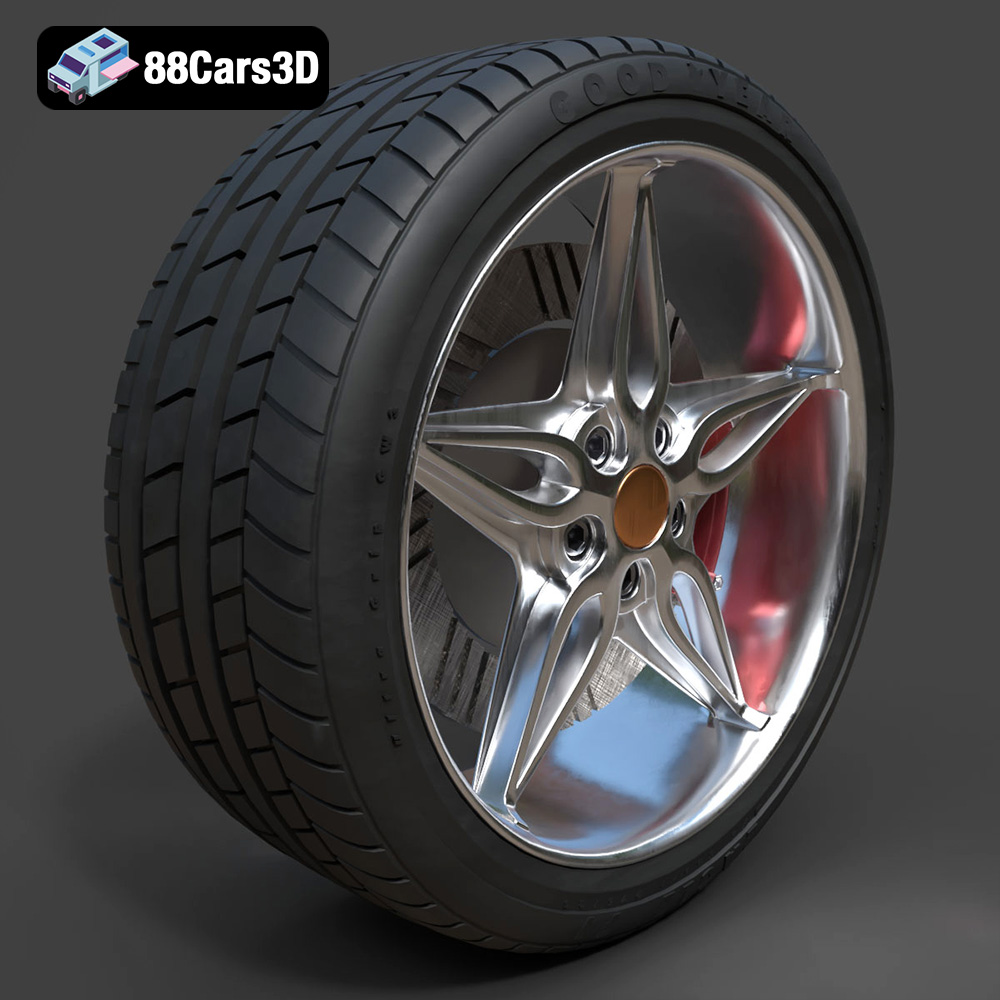
Wheel-001 Component 3D Model
Texture: Yes
Material: Yes
Download the Wheel-001 Component 3D Model featuring clean geometry, realistic detailing, and a fully modeled interior. Includes .blend, .fbx, .obj, .glb, .stl, .ply, .unreal, and .max formats for rendering, simulation, and game development.
Price: $10.99
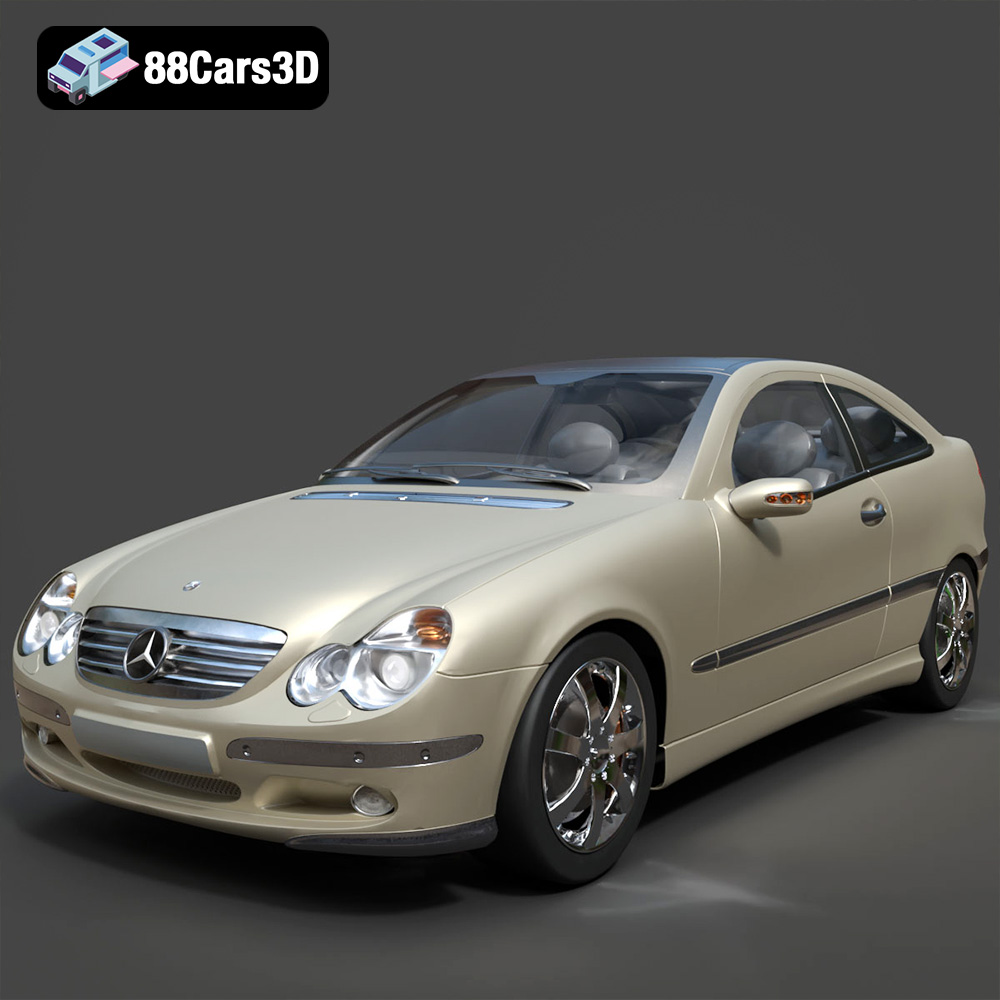
Mercedes Benz C230 3D Model
Texture: Yes
Material: Yes
Download the Mercedes Benz C230 3D Model featuring clean geometry, realistic detailing, and a fully modeled interior. Includes .blend, .fbx, .obj, .glb, .stl, .ply, .unreal, and .max formats for rendering, simulation, and game development.
Price: $14.99
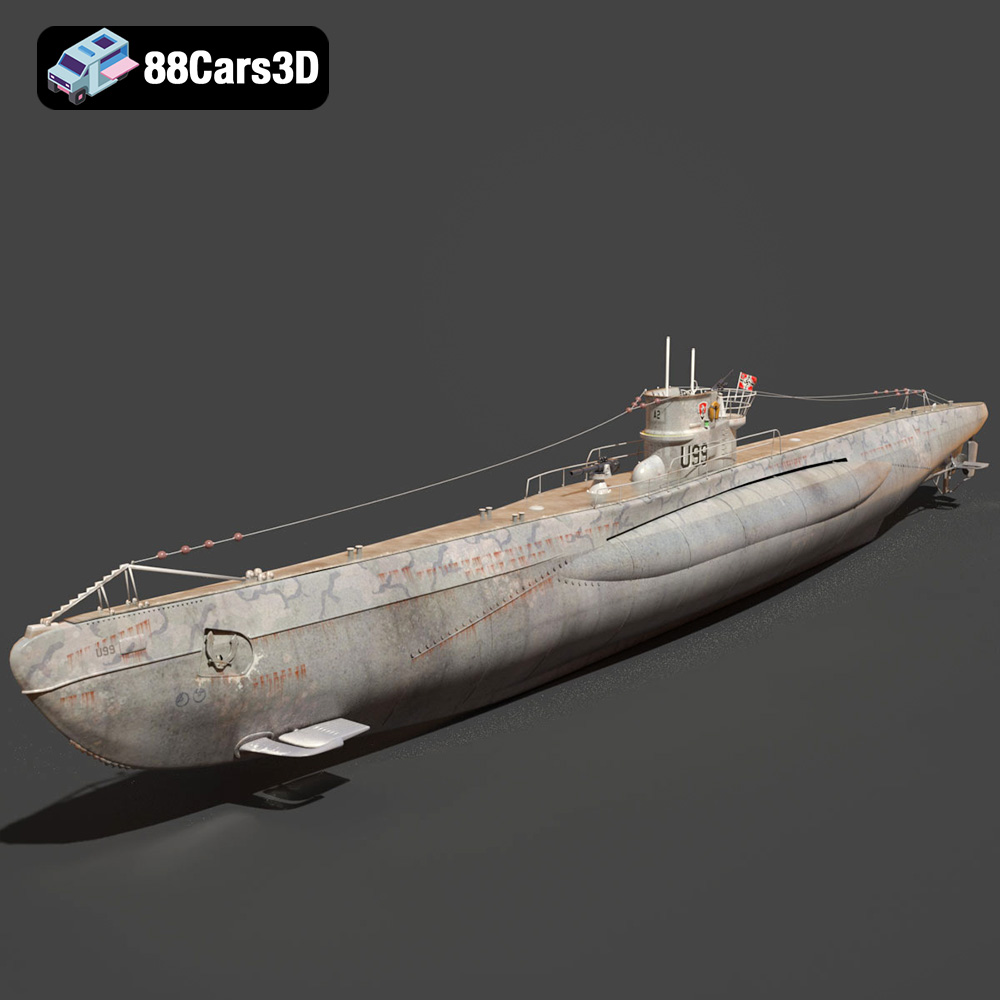
German U-Boat U-99 Submarine 1940 3D Model
Texture: Yes
Material: Yes
Download the German U-Boat U-99 Submarine 3D Model featuring clean geometry, realistic detailing, and a fully modeled interior. Includes .blend, .fbx, .obj, .glb, .stl, .ply, .unreal, and .max formats for rendering, simulation, and game development.
Price: $10
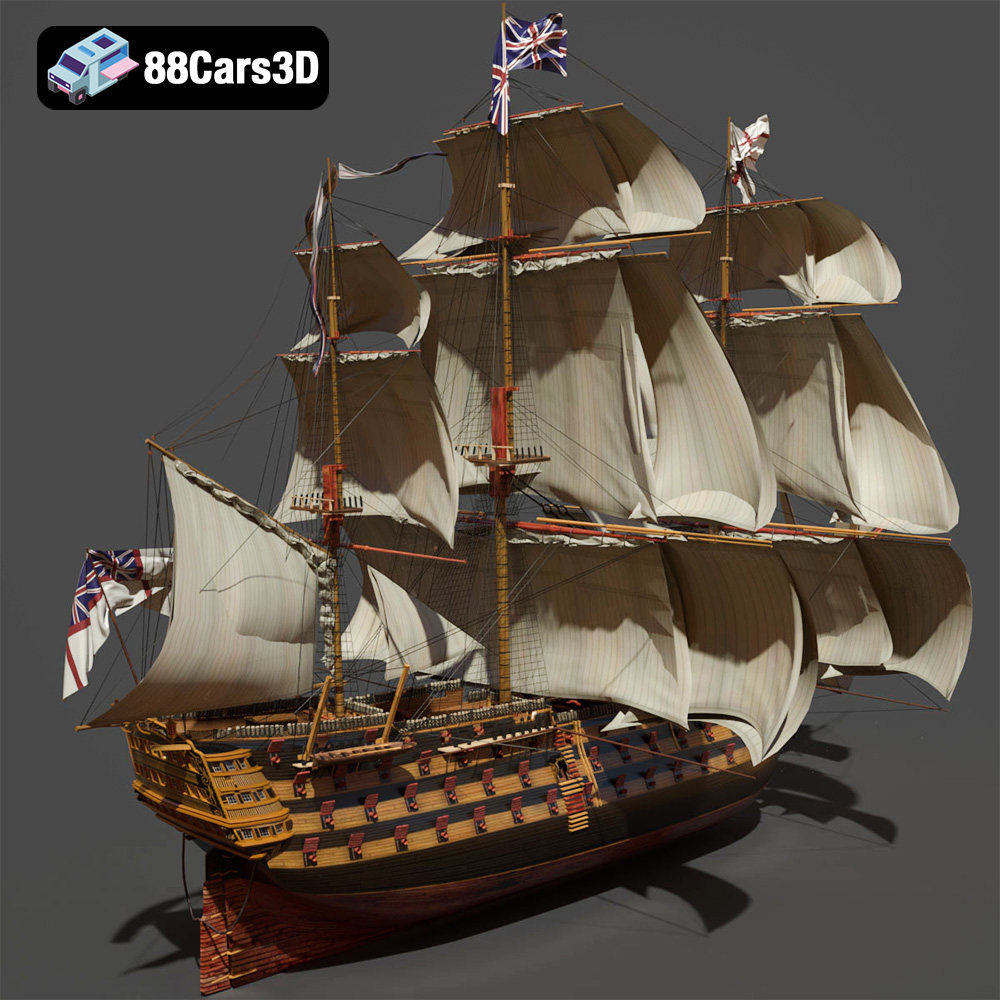
KEMA ELKANLI-001 3D Model
Texture: Yes
Material: Yes
Download the KEMA ELKANLI-001 3D Model featuring clean geometry, realistic detailing, and a fully modeled interior. Includes .blend, .fbx, .obj, .glb, .stl, .ply, .unreal, and .max formats for rendering, simulation, and game development.
Price: $9.99
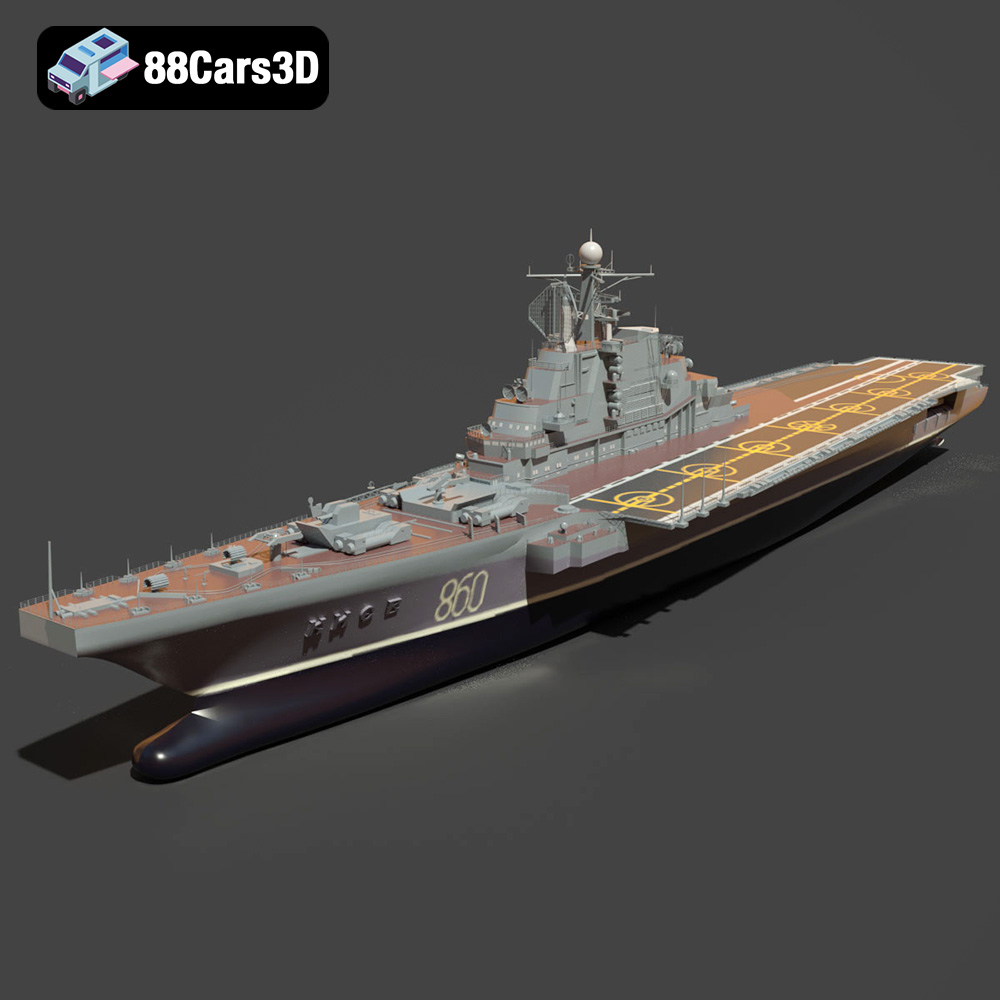
Soviet aircraft carrier Kiev 3D Model
Texture: Yes
Material: Yes
Download the Carrier 006 3D Model featuring a robust design and detailed components. Includes .blend, .fbx, .obj, .glb, .stl, .ply, .unreal, and .max formats for rendering, simulation, and game development.
Price: $10.79
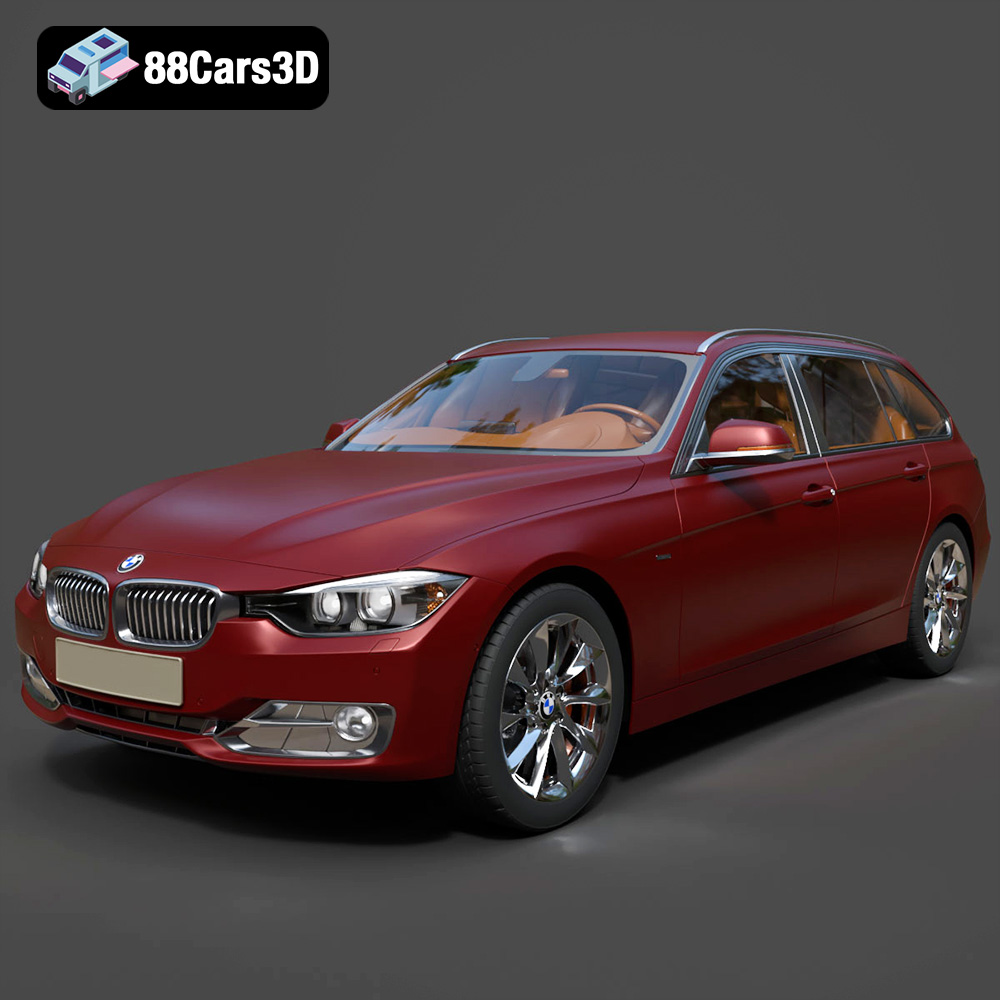
BMW 3 series Touring 335i (F31) 2013 3D Model
Texture: Yes
Material: Yes
Download the BMW 3 series Touring 335i (F31) 2013 3D Model featuring a highly detailed exterior, realistic interior, and modular design. Includes .blend, .fbx, .obj, .glb, .stl, .ply, .unreal, and .max formats for rendering, simulation, and game development.
Price: $30.79
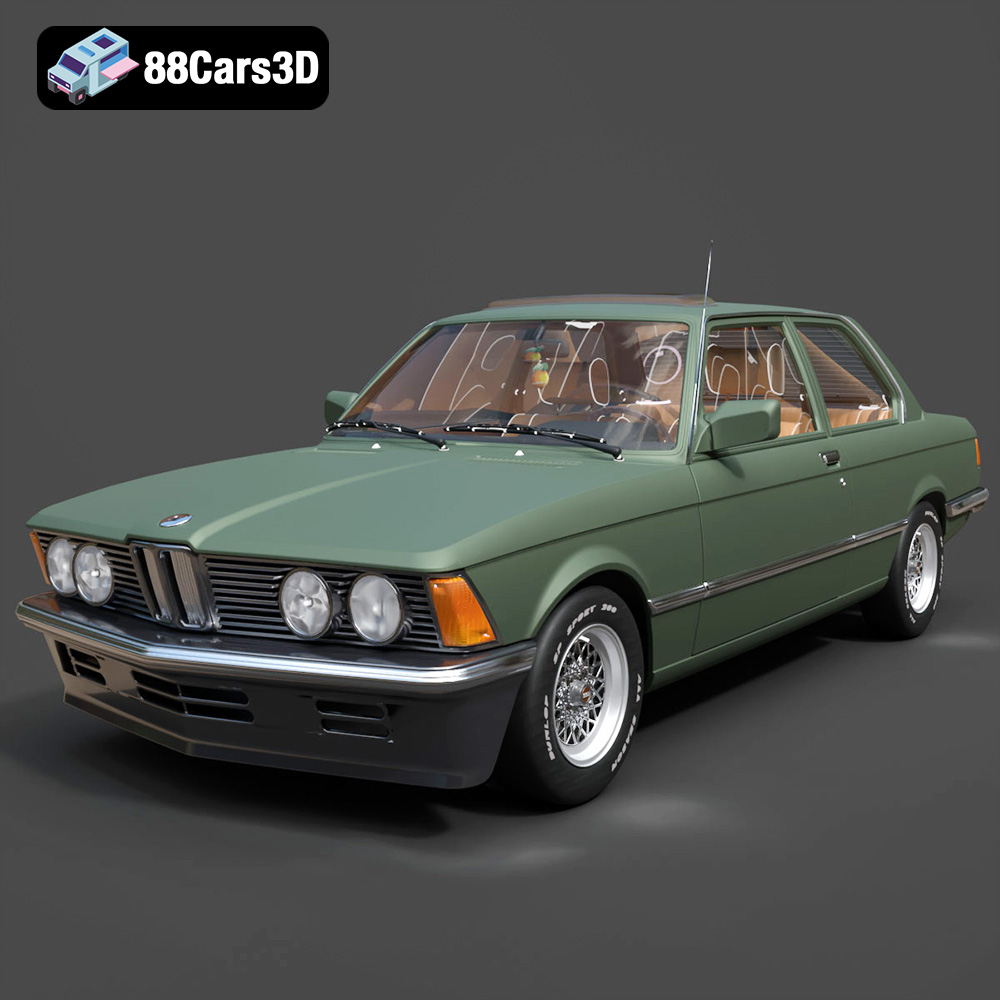
BMW 3 Series E21 3D Model
Texture: Yes
Material: Yes
Download the BMW 3 Series E21 3D Model featuring authentic exterior design, detailed interior, and accurate proportions. Includes .blend, .fbx, .obj, .glb, .stl, .ply, .unreal, and .max formats for rendering, simulation, and game development.
Price: $20.79
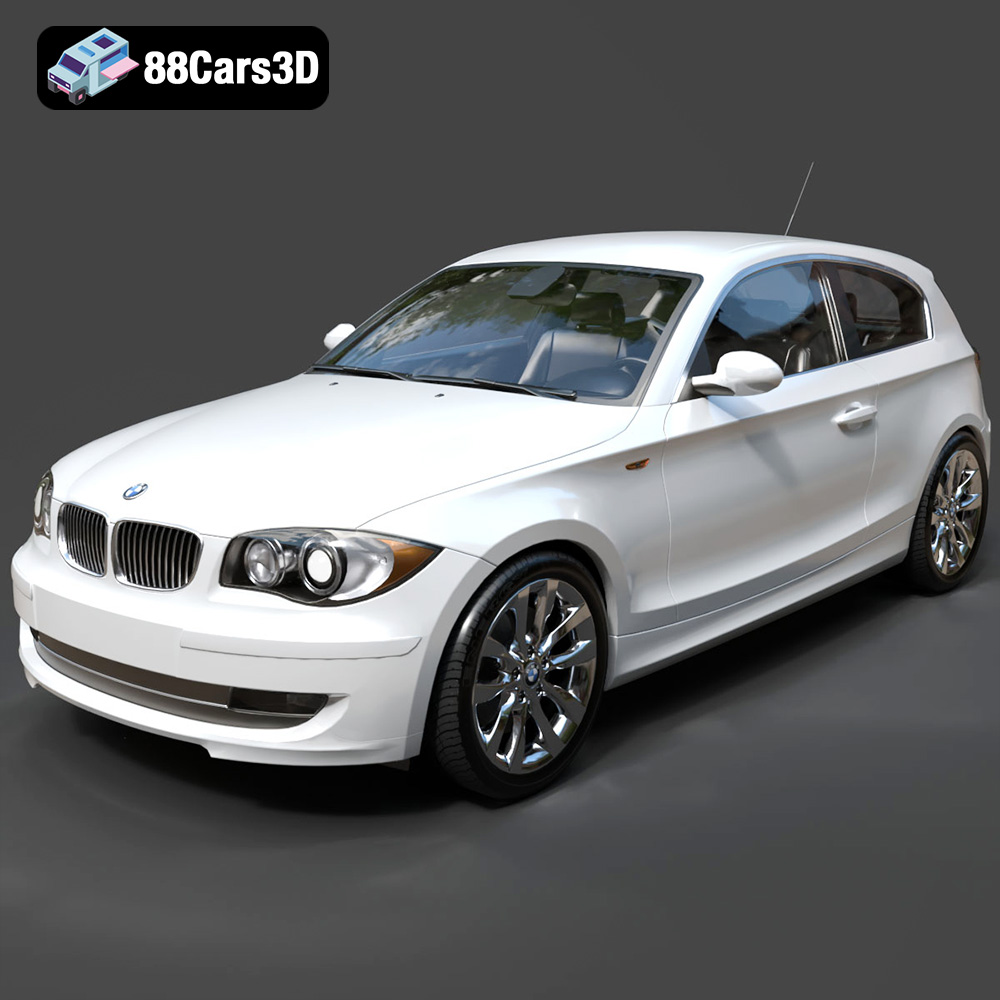
BMW 1 Series 3-Door E81 3D Model
Texture: Yes
Material: Yes
Download the BMW 1 Series 3-Door E81 3D Model featuring a detailed exterior, functional interior elements, and clean geometry. Includes .blend, .fbx, .obj, .glb, .stl, .ply, .unreal, and .max formats for rendering, simulation, and game development.
Price: $14.79
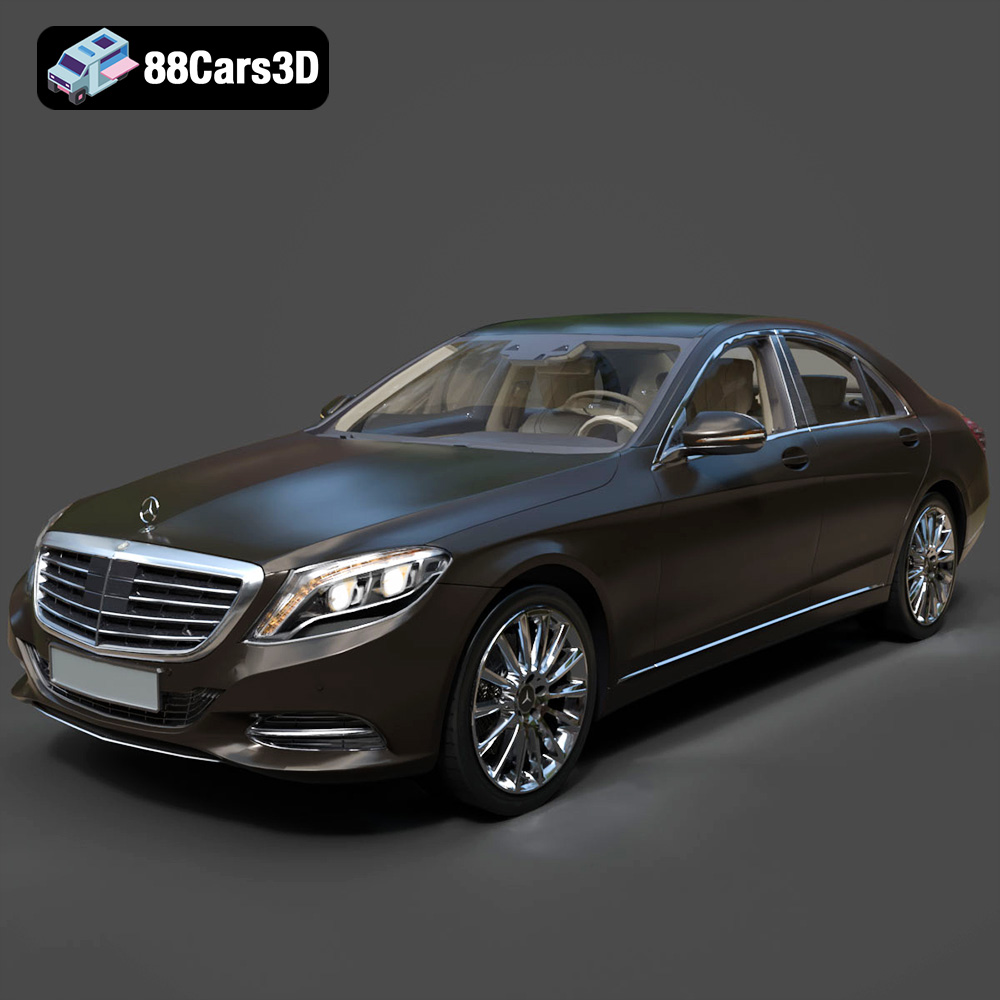
Mercedes-Benz S500 2022 3D Model
Texture: Yes
Material: Yes
Download the Mercedes-Benz S500 2022 3D Model featuring clean geometry, realistic detailing, and a fully modeled interior. Includes .blend, .fbx, .obj, .glb, .stl, .ply, .unreal, and .max formats for rendering, simulation, and game development.
Price: $19.99
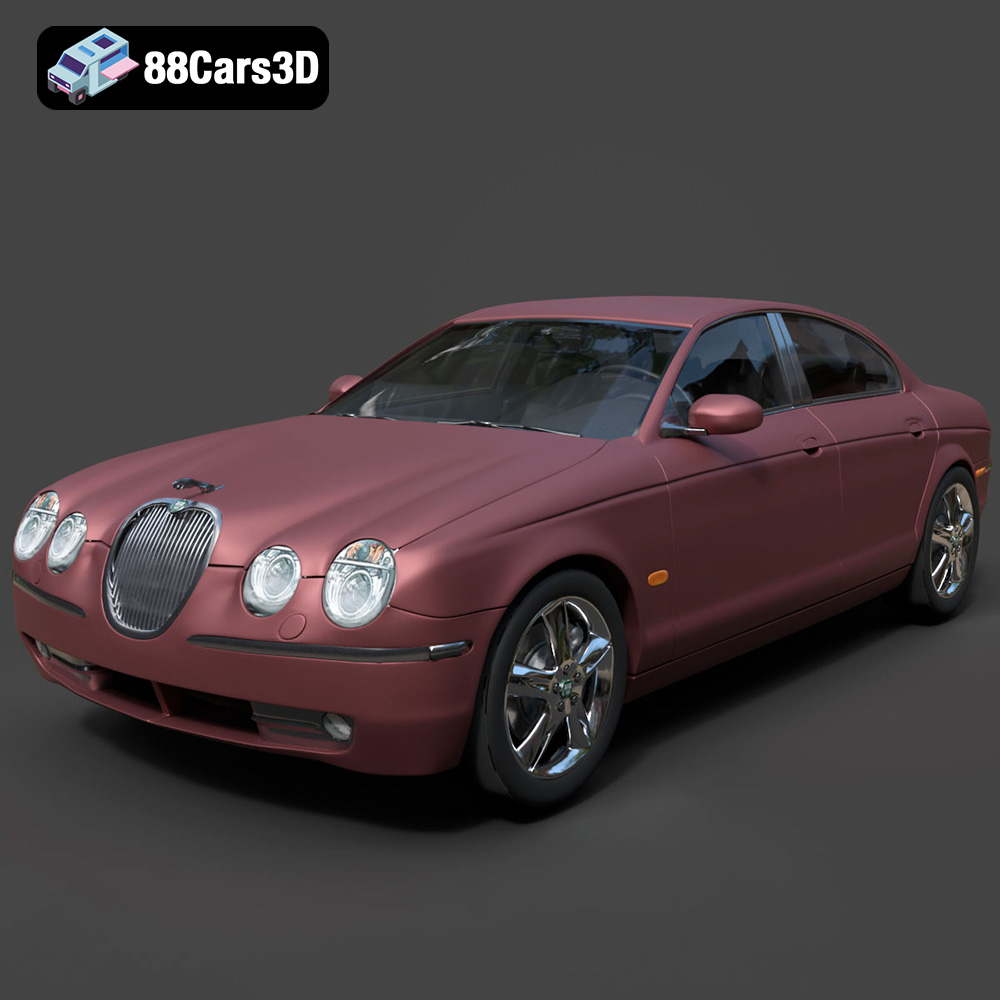
Jaguar S-Type Sedan 3D Model
Texture: Yes
Material: Yes
Download the Jaguar S-Type Sedan 3D Model featuring clean geometry, realistic detailing, and a fully modeled interior. Includes .blend, .fbx, .obj, .glb, .stl, .ply, .unreal, and .max formats for rendering, simulation, and game development.
Price: $18.99
