Unlocking the Power of 3D Car Models: A Deep Dive for Automotive Professionals and Game Developers
In the fast-evolving landscape of digital design and interactive entertainment, high-fidelity 3D car models have become indispensable assets. From crafting breathtaking automotive visualizations for marketing campaigns to populating expansive virtual worlds in AAA games, the demand for meticulously detailed and technically sound vehicle assets is at an all-time high. A well-constructed 3D car model is more than just a visual representation; it’s a foundation for innovation, a canvas for creativity, and a critical component for delivering immersive experiences. This comprehensive guide will explore the intricate world of 3D car models, delving into their creation, application in automotive rendering and game development, and the technical considerations that define their quality and versatility. Whether you’re a seasoned professional seeking to refine your workflow or an aspiring artist looking to understand the fundamentals, mastering the nuances of 3D car assets is key to driving success in today’s digital automotive realm.
Understanding 3D Model File Formats
The world of 3D modeling relies heavily on a diverse ecosystem of file formats, each tailored for specific workflows, software, and end-use applications. Choosing the correct format is paramount for ensuring compatibility, preserving data integrity, and optimizing performance. When sourcing high-quality 3D car models, such as those available on 88cars3d.com, understanding these formats is crucial for a seamless integration into your project pipeline.
.blend – Fully Editable Blender Scene with Materials
The native file format for Blender, **.blend** files encapsulate an entire Blender project. This includes not only the 3D car model’s geometry but also its materials, textures, lighting setups, cameras, animations, rigging, and even scene settings. For users deeply integrated into the Blender ecosystem, a .blend file offers maximum flexibility and editability. It’s ideal for artists who wish to dissect the model, understand its construction, modify materials, or adapt it for specific rendering pipelines within Blender’s powerful Cycles or Eevee renderers. The primary advantage is complete creative control; the main “technical detail” to note is that it requires Blender to open and fully utilize.
.fbx – Ideal for Unreal, Unity, and Real-Time Pipelines
Autodesk’s Filmbox format, **.fbx**, has become the de facto industry standard for exchanging 3D data between various software applications, especially in game development and animation. An .fbx file can store geometry (meshes, polygons), materials (with texture references), animations, rigging, cameras, and lights. Its robust support for animation and skeletal data makes it perfect for importing complex animated 3D car models into game engines like Unreal Engine and Unity. When exporting from a DCC (Digital Content Creation) tool, .fbx often consolidates various scene elements into a single, highly compatible package, making it efficient for real-time environments where performance and data consistency are critical.
.obj – Universal Format for Cross-Software Compatibility
The Wavefront **.obj** format is one of the oldest and most universally supported 3D file formats. It primarily stores geometric data – vertices, normals, UV coordinates, and faces – making it excellent for transferring static mesh data between almost any 3D software. Materials are typically defined in a separate **.mtl** (Material Template Library) file, which references textures. While .obj does not support animation or rigging, its widespread compatibility ensures that a 3D car model can be opened and worked on in virtually any 3D application, from Maya and 3ds Max to ZBrush and Substance Painter. It’s a reliable choice when broad interoperability is the priority, though it requires separate handling for materials and does not carry advanced scene data.
.glb – Optimized for AR, VR, and Browser-Based Display
**GLB** (GL Transmission Format Binary) is a relatively newer format designed for the efficient transmission and loading of 3D scenes and models in web and AR/VR applications. It’s the binary version of glTF and bundles all necessary assets – geometry, materials, textures, animations – into a single file, making it incredibly streamlined for web browsers and real-time interactive experiences. The compact size and optimized structure of .glb files make them ideal for displaying interactive 3D car models directly on websites, in augmented reality apps, or within virtual reality environments where quick loading times and minimal resource consumption are crucial.
.stl – Suitable for 3D Printing Output
The **.stl** (STereoLithography) format is almost exclusively used for 3D printing and CAD (Computer-Aided Design) software. It describes only the surface geometry of a 3D object using a tessellated mesh of triangles. Unlike other formats, .stl files do not store color, texture, or material information. They define the raw shape, making them perfect for sending a 3D car model to a 3D printer for physical fabrication. For designers aiming to produce physical prototypes or scale models of their digital car designs, an .stl file is the go-to format for ensuring a watertight, manifold mesh that can be reliably printed.
.ply – Precision Mesh Format for CAD or Analysis
The **.ply** (Polygon File Format, or Stanford Triangle Format) is primarily used for storing 3D data from 3D scanners, CAD applications, and scientific visualization. Similar to .obj, it defines geometry, but it can also store a wider range of properties, including color, transparency, surface normals, texture coordinates, and confidence values per vertex or face. While not as universally common for general asset exchange as .fbx or .obj, .ply is excellent for preserving detailed mesh data with precise attributes, often found in engineering, architectural, or advanced scanning workflows where accurate data analysis of a 3D car model is critical.
.unreal – Engine-Ready Asset for Real-Time Environments
While not a standalone 3D model format in the traditional sense, a “package” containing **.unreal** assets refers to content specifically formatted and optimized for Unreal Engine. This often means .fbx files that have been imported, configured, and saved within an Unreal Engine project, complete with validated materials, collision meshes, LODs, and physics assets. Such assets are immediately usable within the engine, bypassing the need for manual import settings or material creation. Sourcing .unreal-ready 3D car models significantly accelerates development for projects specifically targeting Unreal Engine, providing a plug-and-play solution for game developers and real-time visualization artists.
.max – Editable 3ds Max Project for Animation and Rendering
The native file format for Autodesk 3ds Max, **.max** files, much like .blend files for Blender, contain the complete scene data from a 3ds Max project. This includes not only the 3D car model’s geometry but also complex modifiers, materials (with support for advanced renderers like V-Ray or Corona), lighting setups, cameras, animation timelines, and rigging data. For professionals working primarily with 3ds Max, a .max file offers the highest level of editability and allows for full manipulation of every aspect of the model and its scene. It’s the ultimate format for artists who require deep modification capabilities, complex animations, or high-end rendering within the 3ds Max ecosystem.
The Art and Science of High-Quality 3D Car Model Creation
Crafting a high-quality 3D car model is a delicate balance of artistic vision and technical precision. It’s a process that demands an understanding of automotive design, topology, material science, and optimization techniques. The goal is always to create a model that not only looks stunning but is also technically robust and suitable for its intended application, whether it’s a photorealistic render or a performance-optimized game asset.
From CAD to Polygonal Mesh: Precision Modeling
The journey of a high-fidelity 3D car model often begins with CAD (Computer-Aided Design) data. Automotive manufacturers utilize CAD for precise engineering and design, resulting in incredibly accurate, NURBS-based (Non-Uniform Rational B-Spline) surface models. For rendering or game development, these NURBS models typically need to be converted into polygonal meshes. This conversion requires careful triangulation and optimization to ensure accurate representation of the original curves and surfaces without generating excessively dense or messy geometry.
Alternatively, some models are built from scratch using polygonal modeling techniques in software like 3ds Max or Blender, referencing blueprints and photographic references. This process involves meticulous box modeling, edge modeling, or spline-based techniques, paying close attention to clean topology – quad-based meshes are preferred for their deformability and predictable subdivision behavior. The precision lies in capturing every curve, panel gap, and intricate detail of the vehicle, often requiring hundreds of hours for a single high-end model.
Mastering Texturing, Shading, and UV Unwrapping
Once the geometry is perfected, the next critical step is bringing the 3D car model to life with realistic textures and shaders. This begins with **UV unwrapping**, the process of flattening the 3D mesh into a 2D space so that 2D textures can be applied without distortion. For a high-quality car model, UVs must be meticulously laid out, often using multiple UV sets: one for general body panels, another for interior details, and perhaps separate sets for wheels, tires, and lights. Overlapping UVs are common for generic parts like bolts to save texture space, while unique UVs are crucial for distinct elements like logos or specific paint imperfections.
**PBR (Physically Based Rendering)** workflows are standard, involving textures like Albedo (base color), Roughness, Metallic, Normal (for fine surface details), and Ambient Occlusion. Creating these textures requires a keen eye for material properties: the subtle metallic flake in car paint, the anisotropic reflections of brushed metal, the soft diffuse of leather, or the intricate treads of a tire. Each material is crafted using dedicated tools like Substance Painter or directly within the renderer’s shader editor, ensuring that light interacts with the surfaces in a physically accurate manner.
Optimizing for Performance: Poly Count and LODs
A highly detailed 3D car model can easily contain millions of polygons, which is perfectly acceptable for offline rendering but impractical for real-time applications like games or AR/VR. Optimization is key.
**Poly count** management involves balancing visual fidelity with performance constraints. For a cinematic render, a model might have 3-5 million polygons, capturing every subtle curve and bolt. For a cutting-edge game, a hero vehicle might target 80,000-150,000 polygons, while background vehicles might be 10,000-30,000. This reduction is achieved through careful retopology, decimation, and baking high-poly detail onto normal maps for the lower-poly mesh.
**LODs (Levels of Detail)** are crucial for game development. This involves creating multiple versions of the same 3D car model, each with progressively fewer polygons. When the car is close to the camera, the highest LOD is used; as it moves further away, the engine automatically switches to lower LODs, significantly reducing rendering overhead without a noticeable drop in visual quality. Proper LOD setup is a cornerstone of efficient real-time game assets.
Automotive Rendering: Crafting Photorealistic Visuals
Automotive rendering is an art form focused on creating stunningly lifelike images and animations of vehicles. It goes beyond mere depiction; it’s about evoking emotion, highlighting design intricacies, and showcasing a vehicle’s character. Achieving photorealism requires a deep understanding of lighting, material science, and camera optics, leveraging advanced rendering technologies to blur the line between digital and reality.
Lighting Techniques for Dramatic Impact
Lighting is arguably the most critical element in automotive rendering. It defines mood, reveals form, and creates dramatic visual interest. A common technique involves **HDRI (High Dynamic Range Image) lighting**, which uses 360-degree panoramic images of real-world environments to accurately illuminate the scene, providing realistic reflections and ambient light. This can be combined with **physical lights** (area lights, spot lights) strategically placed to highlight specific curves, panel gaps, or design features, mimicking studio setups.
The choice of environment – whether an urban backdrop, a serene landscape, or a minimalist studio – profoundly impacts the final render. Global Illumination (GI) algorithms like path tracing or photon mapping calculate how light bounces off surfaces, contributing to soft shadows, color bleeding, and overall environmental realism. Mastering these techniques transforms a static 3D car model into a vibrant, living object, inviting viewers to experience its presence.
Advanced Materials and Shaders: Realism in Every Reflection
Modern renderers boast sophisticated material systems capable of replicating virtually any real-world surface. For 3D car models, this means meticulously crafting shaders for a multitude of components:
- Car Paint: Complex multi-layered shaders simulate metallic flakes, clear coat reflections, and underlying base color, often with slight fresnel effects.
- Glass: Accurate refraction, reflection, and absorption properties are essential for windshields and windows, often including subtle dirt or water droplet effects.
- Chrome and Polished Metals: Highly reflective, specular materials with anisotropic controls to simulate brushed or machined surfaces.
- Rubber: Diffuse yet slightly reflective shaders for tires, capturing their texture and slight sheen.
- Leather and Fabrics: Detailed normal maps, micro-surface imperfections, and subsurface scattering (for lighter materials) add tactility to interior elements.
These materials interact with light dynamically, producing accurate reflections, refractions, and specular highlights that are fundamental to achieving photographic authenticity. Tools like V-Ray, Corona Renderer, Arnold, and Cycles offer extensive parameters to fine-tune these properties, allowing artists to replicate the exact look and feel of a production vehicle.
Post-Production Magic: Elevating the Render
The rendering process is often just the beginning. **Post-production** in software like Adobe Photoshop or DaVinci Resolve is where the final touches are applied, elevating a good render to an exceptional one. This involves color grading to set the mood, adjusting contrast and exposure, adding subtle depth of field to draw attention to the car, and enhancing effects like motion blur or lens flares for dynamic shots. Render passes (separate layers of information like diffuse, specular, reflections, Z-depth) are crucial here, allowing artists granular control over each element of the image. Vignetting, chromatic aberration, and grain can also be added subtly to mimic real-world camera artifacts, lending an additional layer of realism and artistry to the final automotive rendering.
Integrating 3D Car Models into Game Development
The journey of a 3D car model from a DCC application to a fully interactive asset within a game engine is a specialized workflow. Game development imposes unique technical constraints that prioritize performance, responsiveness, and consistent visual quality across diverse hardware. Integrating a 3D car model successfully requires careful preparation, optimization, and engine-specific configuration.
Asset Pipeline for Real-Time Engines (Unreal Engine Focus)
The asset pipeline for game engines like Unreal Engine and Unity is highly structured. After the 3D car model is finalized in a tool like 3ds Max or Blender (with clean topology, optimized poly count, and proper UVs), it’s exported, typically as an .fbx file.
In Unreal Engine, this .fbx is imported, and specific settings are applied:
- Mesh Import Options: Ensuring correct scale, orientation, and handling of normals and tangents.
- Material Setup: Recreating the PBR materials using Unreal’s robust material editor, linking the Albedo, Normal, Roughness, Metallic, and Ambient Occlusion textures. This often involves creating custom material instances for variations.
- Texture Optimization: Ensuring textures are power-of-two dimensions (e.g., 2048×2048, 4096×4096) and compressed appropriately for efficient memory usage.
- Collision Meshes: Crucial for physical interaction within the game world.
- LOD Generation: Setting up multiple Levels of Detail, either automatically generated by the engine or pre-made by the artist, to optimize rendering performance based on distance.
This meticulous process ensures that the 3D car model not only looks great but also performs flawlessly within the real-time environment, adhering to strict frame rate targets.
Collision Models and Physics Setup
For a 3D car model to interact realistically with the game environment and other objects, it needs a **collision mesh**. Unlike the highly detailed visual mesh, a collision mesh is a simplified, often convex, representation of the car’s shape. Complex meshes are computationally expensive for physics calculations, so artists create low-polygon proxies that accurately approximate the car’s physical boundaries.
In Unreal Engine, these collision meshes can be created directly from the visual mesh with simplified geometry or as separate primitive shapes (boxes, capsules, spheres) grouped together. Additionally, a **Physics Asset** is set up, defining the car’s center of mass, inertia, and how its various components (chassis, wheels) interact. This allows for realistic suspension, tire friction, and damage models, ensuring that the 3D car model behaves believably under various forces and impacts within the game world.
Level of Detail (LOD) Implementation for Performance
As mentioned earlier, LODs are vital for maintaining high frame rates in game development. For each 3D car model, several LOD levels are created, ranging from the full-detail mesh (LOD0) to highly simplified versions (LOD1, LOD2, LOD3, etc.).
The engine dynamically swaps these models based on the camera’s distance to the object. For instance, a vehicle that is very far away might render with only a few thousand polygons, while the same vehicle up close displays hundreds of thousands. Proper LOD implementation requires careful planning to ensure smooth transitions between levels without noticeable popping or visual discontinuities. Tools within game engines often automate parts of this process, but manual optimization and artistic tweaking are often necessary to achieve optimal results, especially for hero vehicles, ensuring that the visual integrity of the 3D car models is preserved across all viewing distances.
Beyond Rendering and Games: Diverse Applications of 3D Car Models
While automotive rendering and game development are prominent uses, high-quality 3D car models extend their utility across a much broader spectrum of industries and applications. Their versatility makes them invaluable tools for innovation, visualization, and interaction in various digital and physical contexts.
AR/VR Experiences and Interactive Showcases
Augmented Reality (AR) and Virtual Reality (VR) platforms are transforming how we interact with digital content, and 3D car models are at the forefront of this revolution. Manufacturers use AR to allow potential customers to “place” a virtual car in their driveway, explore different colors and trims, or even virtually sit inside the vehicle before it’s physically built. VR provides fully immersive experiences, enabling virtual test drives, interactive car configurators, or detailed explorations of a vehicle’s interior and exterior in a completely virtual environment.
Optimized 3D car models, often leveraging formats like .glb, are crucial for these applications, as they require models that are both visually appealing and performant on mobile devices or VR headsets. These interactive showcases offer unparalleled engagement, moving beyond static images or videos to provide a truly experiential understanding of a car’s design and features.
Product Visualization and Marketing
For automotive brands, high-quality 3D car models are fundamental to their product visualization and marketing strategies. Before a physical prototype even exists, 3D models allow designers to visualize concepts, test aesthetics, and present ideas to stakeholders. Once a design is finalized, these models are used to generate stunning marketing materials:
- Website Configurators: Interactive tools allowing customers to customize a car with different paint colors, wheels, and interior options, rendered in real-time.
- Advertising Campaigns: High-resolution renders and animated sequences for TV commercials, online ads, and print media, often indistinguishable from real photography.
- Brochures and Catalogs: Detailed cutaway views or exploded diagrams illustrating complex engineering or interior layouts.
The consistency and flexibility of 3D car models mean that marketing assets can be created and updated quickly, significantly reducing the cost and time associated with traditional photography and physical prototyping.
3D Printing and Rapid Prototyping
Beyond the digital realm, 3D car models serve a critical function in the physical world through 3D printing and rapid prototyping. Engineers and designers use .stl or .ply formatted models to fabricate scaled-down prototypes of vehicle components or entire car bodies. This allows for physical review of design iterations, aerodynamic testing in wind tunnels, or the creation of functional parts for early-stage development.
The ability to quickly print a tangible representation of a digital design accelerates the design cycle, enabling faster validation and iteration before committing to expensive tooling and production. From concept cars to individual intricate parts, 3D printing from a detailed 3D car model bridges the gap between digital design and physical manufacturing, proving invaluable in the automotive engineering process.
Choosing the Right 3D Car Model for Your Project
Selecting the appropriate 3D car model is a pivotal decision that directly impacts the quality, performance, and success of your project. With a vast array of options available, understanding your specific needs and the technical specifications of the models is crucial. A trusted source like 88cars3d.com can provide a curated selection, but the ultimate choice rests on informed decision-making.
Assessing Model Fidelity and Technical Specifications
When evaluating 3D car models, look beyond the visual appeal to the underlying technical specifications.
- Polygon Count: Is it suitable for your target application? High-poly for offline rendering, optimized poly count (with LODs) for games or real-time.
- Topology: Is the mesh clean, quad-based, and optimized for subdivision or deformation? Poor topology can lead to rendering artifacts or issues with animation.
- UV Unwrapping: Are the UVs cleanly laid out, with minimal stretching, and appropriate for texturing?
- Texture Resolution: Are the textures of sufficient resolution (e.g., 4K, 8K) for close-up renders, and are they in a PBR-friendly format?
- Material Setup: Are the materials accurately set up for common renderers (V-Ray, Corona, Cycles) or game engines (Unreal, Unity), or will significant rework be needed?
- Included Assets: Does the package include all necessary components like interior, engine, wheels, and additional texture maps (normal, roughness, metallic, etc.)?
- Scalability: Can the model be easily scaled, modified, or retextured for different variations?
For complex projects, detailed specifications provided by reputable marketplaces like 88cars3d.com are essential for making an informed purchase, ensuring the model meets your technical requirements out of the box.
Licensing and Usage Rights Considerations
Before integrating any 3D car model into your commercial or personal project, carefully review its licensing agreement and usage rights. Licenses vary widely and dictate how you can use the model:
- Royalty-Free: Allows broad usage without recurring fees, but may have limitations on redistribution.
- Editorial Use Only: Restricted to news, commentary, or educational purposes, not for commercial advertising or product promotion.
- Commercial License: Explicitly grants rights for commercial projects, but specific terms can vary (e.g., number of seats, project scope).
Understanding these terms is vital to avoid potential legal issues, especially for client projects or products intended for public distribution. Always ensure that the license permits your intended use case, whether it’s for game development, broadcast advertising, or 3D printing.
Why 88cars3d.com Stands Out for Quality and Variety
When the demands for quality, variety, and technical accuracy are paramount, specialized marketplaces become invaluable. 88cars3d.com distinguishes itself by offering a meticulously curated selection of high-quality 3D car models, designed to meet the rigorous standards of automotive professionals, rendering artists, and game developers. The platform focuses on providing models that are not only visually stunning but also technically optimized, featuring clean topology, robust UVs, and PBR-ready materials across various industry-standard formats.
The commitment to detail ensures that whether you need a hyper-realistic vehicle for a cinematic visualization, an optimized asset for an interactive AR experience, or a production-ready model for a next-gen game, you can find assets that integrate seamlessly into your pipeline. With clear technical specifications and diverse format options, 88cars3d.com empowers creators to focus on their vision, confident that their foundational assets are of the highest caliber.
Conclusion
The world of 3D car models is a vibrant intersection of art, engineering, and technology, continually pushing the boundaries of visual fidelity and interactive experience. From the initial precise modeling to the intricate dance of lighting and materials in automotive rendering, and the meticulous optimization required for game assets, each step demands expertise and attention to detail. Understanding the nuances of file formats, the importance of clean topology, and the strategic implementation of LODs are not merely technicalities; they are foundational pillars for creating compelling digital automotive content. As industries continue to embrace real-time visualization, AR/VR, and advanced digital marketing, the demand for exceptionally crafted 3D car models will only intensify. By choosing high-quality assets and understanding the technical workflows involved, creators can unlock unprecedented levels of realism and immersion. Whether you’re a seasoned professional or just beginning your journey, investing in superior 3D car models from trusted sources empowers you to deliver outstanding results, propelling your projects forward in the dynamic world of digital automotive design.
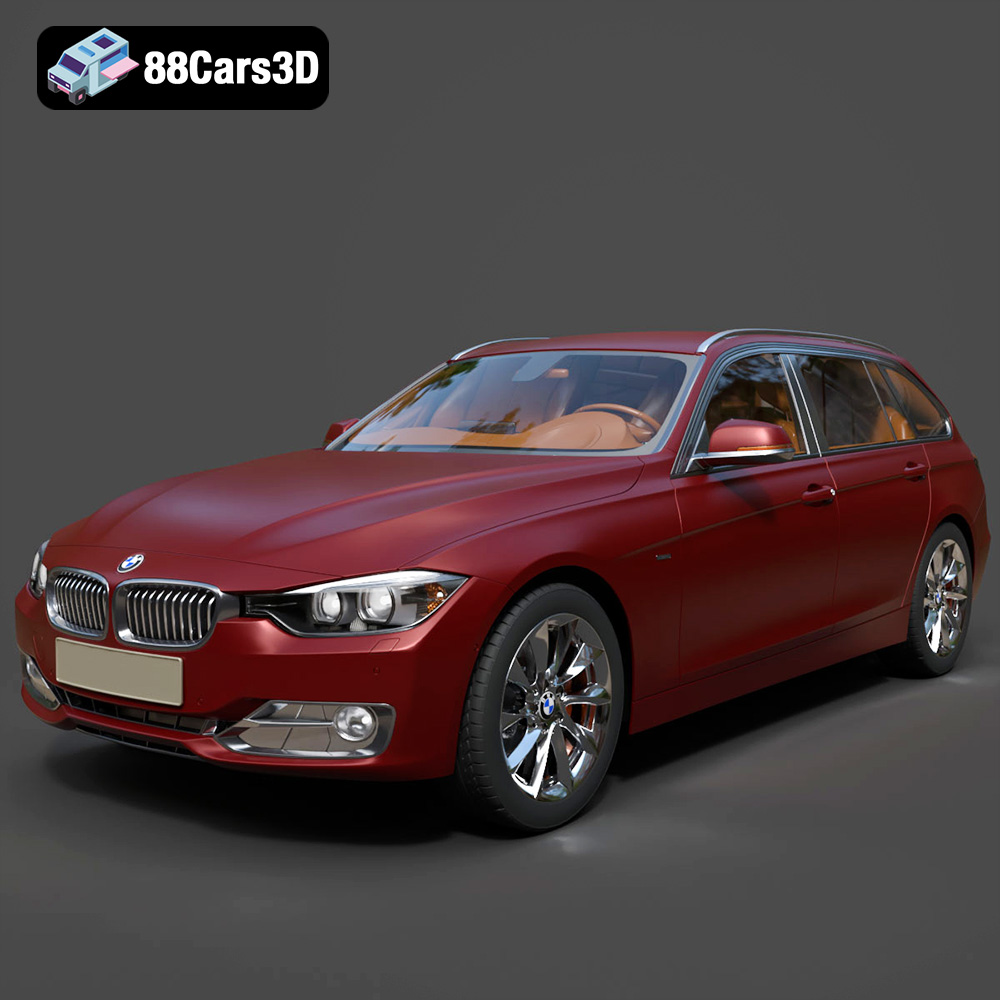
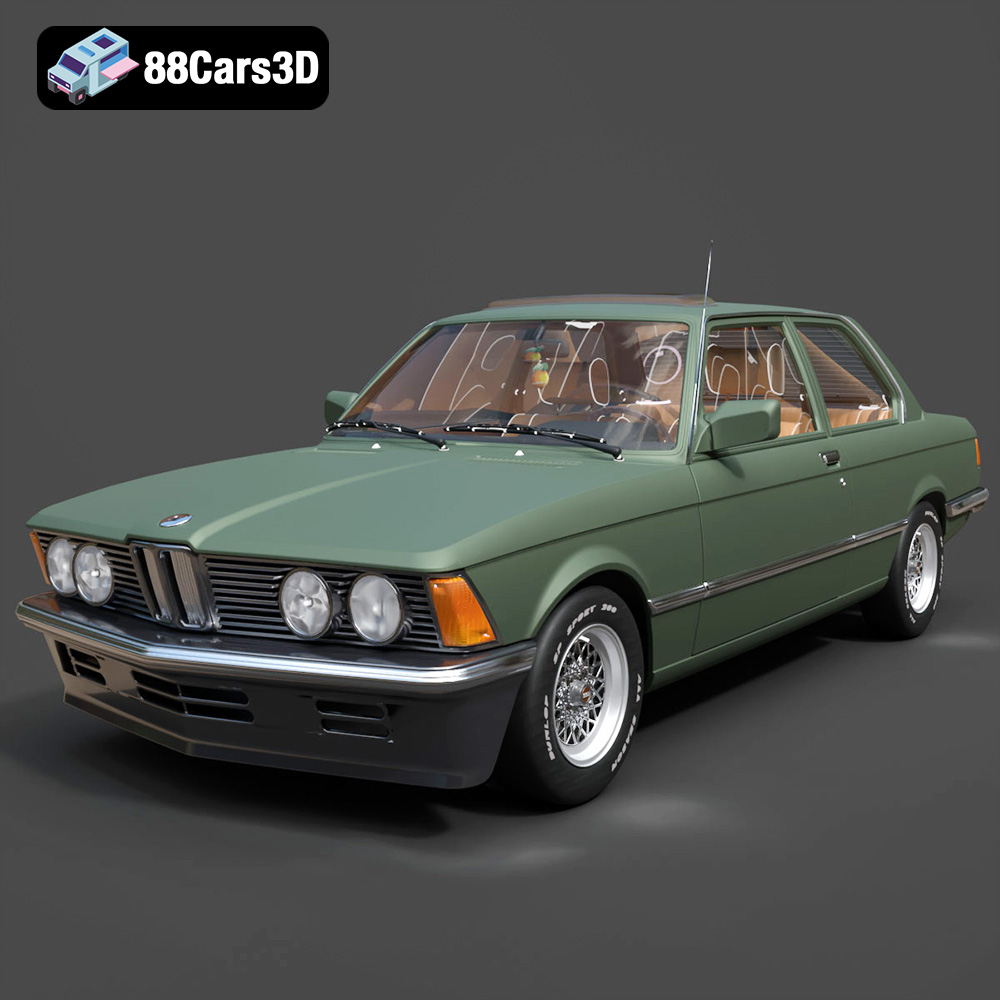
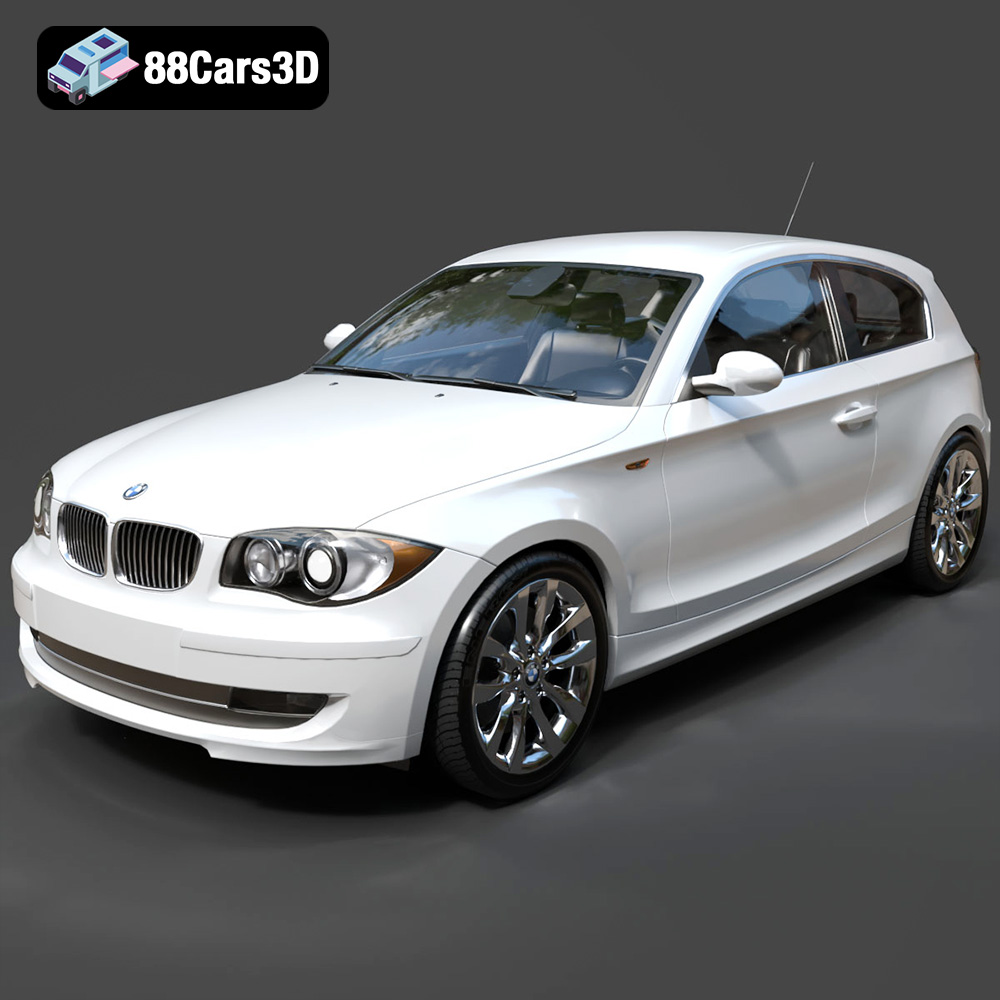
Featured 3D Car Models