

In the rapidly evolving world of real-time rendering, achieving photorealistic visuals is no longer a luxury but an expectation, especially in the demanding field of automotive visualization. Unreal Engine stands at the forefront of this revolution, offering unparalleled power and flexibility for creating stunning 3D experiences. At the heart of this realism lies the art and science of Physically Based Rendering (PBR) materials. For 3D artists, game developers, and automotive designers leveraging high-quality 3D car models, mastering Unreal Engine’s Material Editor is paramount.
This comprehensive guide delves deep into advanced PBR workflows within Unreal Engine, specifically tailored for automotive assets. Whether you’re aiming for a hyper-realistic car configurator, a cinematic automotive sequence, or an immersive AR/VR experience, the fidelity of your materials will define the perceived quality of your project. We’ll explore everything from the foundational principles of PBR to sophisticated techniques like clear-coat layering, dynamic material instances, and optimization strategies that ensure your vehicles not only look incredible but also perform flawlessly in real-time. Prepare to unlock the full potential of your automotive assets and elevate your Unreal Engine projects to new heights of visual realism.
The Foundation of Realism: Understanding PBR for Automotive
Physically Based Rendering (PBR) is a methodology that aims to render graphics in a way that more accurately simulates how light behaves in the real world. Unlike older, more artistic rendering techniques, PBR relies on physically plausible parameters, making materials respond predictably to lighting conditions, regardless of the scene’s specific setup. For automotive visualization, this consistency is crucial, as car surfaces often feature complex interactions with light, from the multi-layered reflections of car paint to the subtle sheen of tires and upholstery. Embracing PBR ensures that your 3D car models will look correct under diverse lighting scenarios, from bright studio setups to dynamic outdoor environments.
The core concept of PBR revolves around energy conservation: a surface cannot reflect more light than it receives. This principle, combined with accurate material properties, is what gives PBR materials their characteristic realism. Understanding these underlying physical properties is the first step towards creating truly convincing automotive assets in Unreal Engine. For deeper insights into Unreal Engine’s PBR implementation, consult the official documentation at dev.epicgames.com/community/unreal-engine/learning.
Core Principles of PBR and Energy Conservation
At its heart, PBR defines materials using a set of parameters that correspond to real-world physical properties. The most common PBR workflow in Unreal Engine is the Metallic/Roughness model. In this model, every pixel on a surface has defined properties for its base color (albedo), metallicness, and roughness. The ‘metallic’ property determines how much the surface behaves like a metal (reflecting light as a mirror, with colored reflections based on the albedo) versus a dielectric (reflecting white light, with diffuse color based on albedo). The ‘roughness’ property dictates how spread out the reflections are, simulating microscopic surface imperfections. A roughness value of 0 means a perfectly smooth, mirror-like surface, while a value of 1 means a completely rough, diffuse surface. For a car’s metallic paint, understanding the delicate balance between metallic and roughness maps is key to achieving that distinctive luster and accurate reflections. Energy conservation means that if a surface is highly reflective (low roughness, high metallic), it will scatter less light diffusely, and vice-versa.
Metallic/Roughness vs. Specular/Glossiness Workflows
While Unreal Engine primarily uses the Metallic/Roughness workflow, it’s beneficial to understand the alternative, Specular/Glossiness, especially when working with legacy assets or external PBR pipelines. The Metallic/Roughness workflow uses three main texture maps: Base Color (Albedo), Metallic, and Roughness. The Specular/Glossiness workflow, on the other hand, uses Diffuse (Albedo), Specular Color, and Glossiness. Glossiness is essentially the inverse of roughness. While both achieve physically plausible results, Metallic/Roughness is generally preferred for its intuitive separation of metallic and dielectric properties and is the native workflow for most modern engines, including Unreal Engine. When sourcing 3D car models from marketplaces like 88cars3d.com, they will almost always provide textures optimized for the Metallic/Roughness pipeline, ensuring seamless integration into your Unreal projects.
Essential PBR Texture Maps and Their Purpose
Beyond Base Color, Metallic, and Roughness, several other PBR texture maps play vital roles in defining an automotive material’s appearance:
- Normal Map: Adds surface detail without increasing polygon count, simulating bumps, scratches, and intricate patterns. Crucial for tire treads, intricate dashboard textures, or subtle imperfections on body panels.
- Ambient Occlusion (AO) Map: Simulates soft shadows where objects are occluded, enhancing depth and realism in crevices and tight spaces, such as between body panels or around emblems.
- Height Map (Parallax Occlusion Mapping): Used for more advanced surface relief, creating the illusion of depth without additional geometry, often seen in car grilles or textured interior surfaces.
- Emissive Map: Defines areas that emit light, essential for headlights, taillights, dashboard displays, and interior ambient lighting.
- Opacity Map: Controls transparency, critical for glass, headlights, and specific parts of the interior where light needs to pass through.
Properly creating and utilizing these maps ensures that your Unreal Engine automotive assets possess a nuanced and realistic visual depth.
Importing and Preparing Automotive Assets for PBR in Unreal Engine
Bringing high-quality 3D car models into Unreal Engine is more than just dragging and dropping an FBX file. Proper preparation and import settings are crucial for ensuring that your assets are optimized for real-time rendering and that their PBR materials behave as intended. This process involves careful consideration of mesh resolution, UV layout, and texture organization, laying the groundwork for visually stunning and performant automotive visualizations.
A well-prepared asset pipeline streamlines development, minimizes troubleshooting, and ultimately results in a more polished final product. Whether your models come from internal production or marketplaces such as 88cars3d.com, adhering to best practices during import will save significant time and effort in the long run, allowing you to focus on the creative aspects of material authoring and scene design.
Asset Acquisition and Initial Import Considerations (FBX/USD)
When acquiring 3D car models, formats like FBX and USD (Universal Scene Description) are standard. FBX is widely supported, offering robust import of meshes, skeletal animations, and basic material assignments. USD, Epic Games’ preferred format, is rapidly gaining traction due to its ability to handle complex scene hierarchies, layering, and non-destructive workflows, making it ideal for collaborative projects and large-scale automotive scenes. When importing into Unreal Engine:
- Units: Ensure your 3D application’s unit scale matches Unreal Engine’s (centimeters by default) to avoid scaling issues.
- Origin and Orientation: Verify the model’s pivot point and orientation are correct (e.g., Z-up, forward-facing X-axis) to simplify placement and Blueprint interactions.
- LODs (Levels of Detail): If your model comes with pre-made LODs, ensure they are imported correctly. Unreal Engine can generate LODs, but pre-authored ones are often more optimized.
- Collision Meshes: Import custom collision meshes if provided, especially for detailed vehicle physics.
- Nanite: For extremely high-polygon models (millions of triangles), enable Nanite during import. This virtualized geometry system allows for massive detail without traditional performance penalties, making it perfect for detailed car bodies.
In the Unreal Engine Import Options dialog, pay close attention to settings for Normal Import Method (e.g., "Import Normals and Tangents"), Compute Weighted Normals (often beneficial for hard-surface models), and Material Import Method (usually "Do Not Create Materials" if you’re building them from scratch or "Create New Materials" to bring in placeholders). For assets from reliable sources like 88cars3d.com, these initial import steps are often straightforward due to their clean model topology and standardized export.
UV Mapping Essentials for Pristine Materials
Proper UV mapping is non-negotiable for high-quality PBR materials. UVs dictate how textures are projected onto your 3D mesh. Poor UVs lead to stretched, distorted, or blurry textures. For automotive models, you typically need at least two UV channels:
- UV Channel 0 (Diffuse/PBR Textures): Used for your primary PBR maps (Base Color, Metallic, Roughness, Normal, etc.). This channel should be optimized for texture density, minimizing seams where possible and avoiding overlapping UV islands that would cause texture bleeding.
- UV Channel 1 (Lightmaps): Used exclusively by Unreal Engine’s static lighting system (Lightmass) to bake static lighting and shadows. It must have no overlapping UV islands and sufficient padding between islands to prevent lightmap bleeding. While Lumen reduces the reliance on static lightmaps, they are still important for specific scenarios or hybrid lighting setups.
Ensure your UVs are laid out cleanly, with uniform texel density across the model for consistent texture resolution. For complex car models, multiple material IDs and corresponding UV sets might be necessary for different components (e.g., body, interior, tires, glass).
Texture Packing for Performance and Efficiency
Texture packing is a crucial optimization technique for real-time rendering. Instead of using separate 8-bit grayscale textures for Roughness, Metallic, and Ambient Occlusion, you can pack them into the R, G, and B channels of a single RGB texture. This reduces texture memory usage and draw calls, significantly improving performance. A common packing scheme is:
- R Channel: Roughness
- G Channel: Metallic
- B Channel: Ambient Occlusion
When importing this packed texture into Unreal Engine, remember to set its compression to "Masks (no sRGB)" to ensure accurate color values, as these are data maps, not color information. In the Material Editor, you would then sample the respective channel (e.g., the R channel for Roughness) to feed into the PBR inputs. This technique is especially important for game assets where memory and performance are critical, and it’s a best practice for high-fidelity automotive models regardless of the application.
Crafting Realistic Automotive Materials in the Unreal Engine Material Editor
The Unreal Engine Material Editor is a node-based interface where you define the visual properties of your 3D objects. For automotive visualization, this is where the true artistry and technical skill come together. From the iconic multi-layered look of car paint to the subtle details of tire rubber and interior fabrics, each material requires a precise approach to achieve realism. Understanding how to leverage various nodes, blending modes, and texture inputs is essential for creating compelling automotive experiences.
This section will guide you through building complex PBR materials, focusing on specific challenges and solutions unique to vehicles. We’ll explore techniques for achieving multi-layered car paint, realistic glass and rubber, and how to create flexible material systems using instances and parameter collections. Mastery of these techniques will set your 3D car models apart, bringing them to life with unparalleled visual fidelity within Unreal Engine.
Building a Base Car Paint Material: Clear Coat Layers and Flakes
Automotive paint is notoriously complex, consisting of multiple layers: a primer, a base coat (color), a metallic flake layer (optional), and a clear coat for gloss and protection. Replicating this in Unreal Engine requires a sophisticated material setup.
- Base Color & Metallic: Start with your primary paint color (Base Color) and a Metallic value (usually 1 for metallic paint, 0 for solid).
- Roughness: A low Roughness value (e.g., 0.1-0.2) gives the base paint a subtle sheen before the clear coat.
- Clear Coat: Unreal Engine’s standard PBR material model includes a dedicated "Clear Coat" input. Connect a constant value of 1 (fully opaque) to Clear Coat and a very low constant value (e.g., 0.05-0.1) to "Clear Coat Roughness." This simulates the glossy protective layer on top.
- Normal Maps: Apply normal maps for subtle imperfections or panel details. For clear coat, you can optionally blend a second, very fine noise normal map to the "Clear Coat Normal" input to simulate microscopic scratches or orange peel effect.
- Metallic Flakes: To add metallic flakes, you’ll need a custom function or a more complex setup. One common approach involves a "Fresnel" node combined with a "Noise" or "Voronoi" texture, multiplied by a slight color tint and connected to the Emissive channel. This simulates tiny reflective particles visible at grazing angles. You can also use a custom material function to blend a subtle flake normal map with your primary normal map based on viewing angle, making the flakes appear to glint.
Example node connections:
Base Color -> Base Color
MetallicMap (R channel) -> Metallic
RoughnessMap (G channel) -> Roughness
Constant (1) -> Clear Coat
Constant (0.05) -> Clear Coat Roughness
NormalMap -> Normal
For flake effects, you might introduce a custom node or function that calculates a world-space tri-planar noise, adjusts its intensity based on a Fresnel term, and subtly blends it into the Base Color or Emissive channel, ensuring it’s only visible at certain angles and distances. Remember to keep your node graph organized using comments and reroute nodes.
Advanced Materials: Glass, Tires, and Interior Fabrics
Beyond car paint, other automotive materials present their own challenges:
- Glass: Requires specific settings for transparency, refraction, and reflectivity.
- Set Material Domain to "Surface" and Blend Mode to "Translucent."
- Connect a low constant (e.g., 0.1-0.2) to Roughness.
- For Base Color, use a dark grey.
- Connect a constant (e.g., 0.8-0.9) to Opacity.
- Crucially, connect a "Refraction" node (with an Index of Refraction (IOR) value like 1.5 for glass) to the Refraction input.
- Consider using "Thin Translucency" if available for performance and accuracy.
- Tires: Typically dark, matte, and slightly rough rubber.
- Base Color: Dark grey/black.
- Metallic: 0 (dielectric).
- Roughness: Mid-range (0.6-0.8) for a matte rubber look.
- Normal Map: Essential for realistic tire tread details and sidewall text.
- Ambient Occlusion: Helps ground the tire and add depth.
- Interior Fabrics (Leather, Cloth): Focus on intricate normal maps, subtle roughness variations, and appropriate albedo colors.
- Base Color: Based on fabric color.
- Metallic: 0.
- Roughness: Varies greatly (0.5-0.9) depending on fabric type (e.g., glossy leather vs. matte cloth).
- Normal Map: High-frequency details of weaves or leather grain are crucial.
- Subsurface Scattering: For very soft fabrics like velour, consider enabling Subsurface Scattering in the material to simulate light penetrating and scattering within the material, giving it a softer, more realistic look.
Leveraging Material Instances and Parameter Collections
Directly modifying a base material for every variation (e.g., different car paint colors) is inefficient. Unreal Engine’s Material Instances are your solution. A Material Instance allows you to create variations of a parent material by exposing parameters (like color, roughness, texture toggles) without recompiling the shader, saving significant performance and iteration time. This is invaluable for automotive configurators.
To create a Material Instance:
- In your base material, right-click on nodes you want to modify (e.g., a "Vector3" node for Base Color, a "Scalar" node for Roughness).
- Select "Convert to Parameter." Give it a descriptive name (e.g., "PaintColor," "PaintRoughness").
- Save the base material.
- Right-click the base material in the Content Browser and select "Create Material Instance."
- Double-click the instance; you’ll see all your exposed parameters, ready for adjustment.
For project-wide changes or shared parameters across multiple materials, use Material Parameter Collections. These assets store a list of scalar and vector parameters that can be referenced by any material. This is perfect for scenarios like changing global weather effects or controlling car wash effects across multiple vehicles from a single point of control, significantly enhancing workflow efficiency for real-time rendering projects.
Enhancing Material Fidelity with Advanced Engine Features
Unreal Engine is constantly pushing the boundaries of real-time graphics, and its advanced features like Lumen, Nanite, and Blueprint scripting integrate seamlessly with your PBR materials to achieve breathtaking levels of realism and interactivity. Understanding how to leverage these technologies in conjunction with your material workflows is crucial for staying at the forefront of automotive visualization and interactive experiences. These features empower artists to create environments and assets that were previously only possible with offline renderers, bringing cinematic quality into real-time applications.
From dynamic global illumination to virtualized geometry, Unreal Engine provides tools that elevate material appearance far beyond static textures. This section explores how to best integrate your carefully crafted PBR materials with these powerful engine capabilities, unlocking new possibilities for visual quality, performance, and interactive design in your Unreal Engine projects, especially with high-quality 3D car models.
PBR Materials and Real-time Global Illumination with Lumen
Lumen is Unreal Engine 5’s fully dynamic global illumination and reflections system, providing an unprecedented level of realism for lighting. Your PBR materials are central to how Lumen calculates light bounces and reflections. For Lumen to work effectively:
- Accurate Albedo: Ensure your Base Color (Albedo) textures have physically accurate color values. Too bright or too dark albedo can throw off Lumen’s energy conservation calculations, leading to unrealistic lighting.
- Roughness and Metallic Precision: Lumen heavily relies on Roughness and Metallic values to determine how light interacts with surfaces. Highly reflective metallic surfaces will correctly reflect their environment, while rougher surfaces will scatter light more diffusely, creating softer global illumination.
- Emissive Materials: Materials with emissive properties (e.g., headlights, taillights, dashboard lights) can contribute to Lumen’s global illumination, acting as indirect light sources within the scene. Ensure your Emissive textures have realistic intensity values.
With Lumen, the light bouncing off your car’s paint, reflecting on its chrome trim, and subtly illuminating the interior becomes a dynamic, real-time calculation, enhancing immersion. This is especially impactful for automotive visualization, where vehicles are often showcased in varying lighting conditions.
Nanite and High-Fidelity Materials for Automotive Surfaces
Nanite is Unreal Engine 5’s virtualized geometry system, allowing for the import and rendering of film-quality assets with billions of polygons, all in real-time. For high-detail 3D car models, Nanite revolutionizes the workflow by virtually eliminating polygon budget concerns. Your existing PBR materials seamlessly integrate with Nanite meshes, but there are nuances:
- Material Complexity: While Nanite handles geometric complexity, material complexity still impacts performance. Optimize your PBR materials by using Material Instances, texture packing, and avoiding overly complex shader graphs.
- No Vertex Interpolation: Nanite geometry is streamed and rendered on a per-pixel basis, which means traditional vertex interpolation of attributes (like vertex colors for wear and tear) isn’t directly supported in the same way. Material-driven techniques (e.g., using world-space coordinates, distance fields, or custom data baked into UVs) become more important for detail masks.
- Adaptive Tesselation: Nanite doesn’t directly support traditional dynamic tessellation on a per-frame basis, as its geometry is already highly detailed. However, you can achieve similar effects by preparing your source models with extremely high polygon counts or utilizing displacement maps that are pre-baked onto the mesh during the import stage, which Nanite will then render efficiently.
For highly detailed parts of a car, such as intricate grilles, emblems, or interior components, Nanite allows you to retain maximum geometric fidelity, letting your PBR materials truly shine without the need for aggressive LOD optimization on the mesh itself.
Dynamic Materials with Blueprint and Material Functions
Blueprint visual scripting allows you to create interactive experiences, and this extends to dynamically modifying PBR materials at runtime. This is incredibly powerful for automotive configurators, allowing users to change paint colors, wheel finishes, or interior trims instantly.
- Dynamic Material Instances (DMIs): In Blueprint, you can create a Dynamic Material Instance from a Static Mesh Component’s material. Once you have a DMI, you can use nodes like "Set Scalar Parameter Value" or "Set Vector Parameter Value" to change the exposed parameters of your material instance in real-time. This is how you’d change the car paint color, adjust roughness, or switch tire types dynamically.
- Material Functions: For reusable logic within your materials, create Material Functions. These are encapsulated graphs of material nodes that can be instanced and used across multiple materials. For example, a "CarPaintFlake" function or a "TireWear" function can be created once and then reused, promoting consistency and reducing shader complexity.
Using Blueprint to drive material changes opens up a world of interactivity, from changing vehicle colors based on user input to simulating dirt accumulation or damage over time, making your Unreal Engine automotive projects more engaging and versatile. For instance, an interactive button could call a Blueprint event that targets a specific material instance and changes its "PaintColor" vector parameter to a new value.
Optimization and Performance for Real-Time Automotive Visualization
Achieving stunning visual fidelity with advanced PBR materials in Unreal Engine must always be balanced with performance, especially for real-time applications like games, interactive configurators, or AR/VR experiences. Even with powerful features like Nanite and Lumen, inefficient materials can quickly degrade frame rates and user experience. Optimizing your PBR materials is a critical skill for any developer working with high-quality 3D car models.
This section focuses on strategies to make your automotive materials both beautiful and performant. We’ll cover techniques to reduce shader complexity, manage texture resources effectively, and adapt your materials for specific performance-critical platforms like AR/VR. Implementing these best practices will ensure your real-time rendering projects run smoothly, delivering a seamless and immersive experience for your audience.
Shader Complexity and Material Instruction Count Management
Every node and calculation in your material graph contributes to the "instruction count" – the number of operations the GPU needs to perform per pixel. High instruction counts lead to higher shader complexity and reduced performance. Unreal Engine’s "Shader Complexity" view mode (Alt+8) in the viewport is an invaluable tool for identifying expensive materials (red and white indicate high complexity).
- Material Instances: As discussed, Material Instances are crucial for performance. They compile once and allow dynamic changes without recompilation, significantly reducing shader overhead.
- Material Functions: While Material Functions organize your graph, be mindful that they still add to the instruction count. Optimize functions for efficiency.
- Texture Samplers: Each unique texture sampler adds to instructions. Use texture packing (e.g., RGB for Roughness, Metallic, AO) to combine maps and reduce sampler count.
- Conditional Logic (Static Switches): Use "Static Switch Parameter" nodes in your master materials to compile out entire branches of the shader code based on a boolean parameter in material instances. For example, toggle a flake layer on/off, or switch between simple and complex glass. This allows a single master material to serve multiple purposes with optimal performance for each instance.
- Avoid Complex Math: Simplify complex mathematical operations where possible. For example, rather than using complex procedural noise for subtle variations, consider baking it into a texture.
Aim for green/light blue in the Shader Complexity view mode for the majority of your car’s surfaces. While car paint might be slightly higher, excessive red areas indicate potential bottlenecks.
Texture Resolution, Streaming, and LOD-Aware Materials
Textures are often the largest memory footprint in a project. Managing their resolution and ensuring efficient streaming is vital.
- Resolution Strategy: Use appropriate texture resolutions. While 4K or 8K textures might look great up close, they might be overkill for surfaces rarely seen in detail. Often, 2K or even 1K textures are sufficient for many parts of a car model, especially for interior components or undersides. Ensure your textures from 88cars3d.com are well-optimized for various uses.
- Texture Streaming: Unreal Engine’s texture streaming system loads textures based on camera distance and available memory. To make this efficient, ensure your textures have proper mipmaps generated (default for most imports). Adjust "Mip Gen Settings" in the texture editor if needed. For critical textures that must always be high-res (e.g., a car logo), set "Never Stream" as a last resort, but use it sparingly.
- LOD-Aware Materials: For models with multiple Levels of Detail (LODs), consider creating simplified material instances or even separate, simpler materials for lower LODs. For example, a complex clear-coat flake material might be too expensive for a car viewed far away. At lower LODs, you can switch to a simpler car paint material without flakes, saving significant shader instruction count while the visual difference is unnoticeable. This can be achieved using the "Per-Instance Custom Data" node in the material editor to drive logic based on the current LOD index or distance.
Proper management of texture assets and LODs ensures your game assets remain performant across varying distances and hardware specifications, crucial for large-scale scenes or interactive experiences.
Materials for AR/VR: Balancing Fidelity and Performance
AR/VR applications demand extremely high frame rates (e.g., 90 FPS or higher) to prevent motion sickness, making material optimization even more critical. Every millisecond counts.
- Reduced Complexity: Aggressively simplify materials. Avoid complex shader features like excessive clear coat layers, advanced displacement, or overly expensive custom functions. Consider disabling features that are imperceptible in VR, like subtle subsurface scattering on dashboard materials.
- Opaque is King: Minimize transparent materials. Translucency is very expensive in VR due to overdraw (multiple transparent layers drawing over each other). Try to make glass opaque with a strong normal map if possible, or use masked materials instead of translucent ones.
- Baked Lighting: While Lumen is powerful, for highly optimized AR/VR, consider using baked static lighting (Lightmass) where possible to offload real-time lighting calculations, or pre-computed lighting approaches.
- Texture Atlases: Combine smaller, related textures into a single texture atlas to reduce draw calls.
- Mobile Renderers: If targeting mobile AR/VR (e.g., Meta Quest), be aware of the limitations of mobile rendering features. Mobile-optimized PBR materials will require further simplification.
When developing for AR/VR, prioritize frame rate above all else. Start with simpler materials and progressively add complexity only if performance budgets allow. This disciplined approach is essential for delivering smooth and comfortable immersive automotive experiences.
Advanced Applications: Configurator Materials and Virtual Production
The power of PBR materials in Unreal Engine extends far beyond simply rendering beautiful cars. They are the backbone of dynamic, interactive applications and cutting-edge production workflows. From highly personalized automotive configurators that allow customers to visualize their dream car to virtual production sets where real-time vehicles interact with physical environments, advanced material techniques are key to these transformative applications.
This section explores how PBR materials facilitate these sophisticated use cases, emphasizing interactivity, cinematic quality, and seamless integration with real-world production pipelines. Mastering these advanced applications ensures that your 3D car models are not just visually appealing but also functional and adaptable to the most demanding industry requirements in automotive visualization and beyond.
Designing Materials for Interactive Automotive Configurators
Interactive automotive configurators are a prime application for Unreal Engine, allowing users to customize vehicles in real-time. PBR materials are fundamental to this experience, providing the visual fidelity needed for convincing customization options.
- Master Material & Material Instances: As previously discussed, a robust master material with numerous exposed parameters is essential. This single master material can drive hundreds of instances for different paint colors, wheel finishes, interior trims, and material effects.
- Material Parameter Collections (MPCs): Use MPCs for global parameters that might affect multiple materials, such as a "dirt accumulation" intensity or a "wear and tear" factor that applies across various parts of the car. MPCs can also be used for global color palettes or environmental effects.
- Blueprint Integration: Connect your UI (e.g., buttons, sliders) to Blueprint logic that manipulates the exposed parameters of your material instances or MPCs. For example, a "Paint Color" button would trigger a Blueprint event to set the "PaintColor" vector parameter on the car body’s material instance.
- Texture Switching: For options like different wheel types or interior fabric patterns, you might expose texture parameters in your master material, allowing Blueprint to swap out entire texture maps (e.g., normal map, base color) for different design choices.
- Dynamic Decals: For custom liveries or temporary stickers, dynamic decals using masked materials can be projected onto the car body, allowing for real-time application and removal of graphics.
A well-structured material system makes configurator development efficient and ensures a smooth, responsive user experience. Platforms like 88cars3d.com often provide models with clean material ID setups, making them ideal starting points for such configurators.
Cinematic Material Animation with Sequencer
Unreal Engine’s Sequencer is a powerful non-linear editor for creating cinematic sequences. PBR materials can be animated over time within Sequencer to create dynamic visual effects, adding another layer of polish to your automotive films.
- Material Parameter Tracks: Any exposed material parameter (scalar or vector) in a Material Instance can be added as a track in Sequencer. You can keyframe changes to these parameters over time.
- Paint Color Swaps: Animate a smooth transition between two paint colors.
- Roughness Transitions: Simulate a surface becoming wet or dusty by animating the roughness parameter.
- Emissive Fades: Animate headlights or dashboard lights turning on or off with smooth fades.
- Wear & Tear: Animate a parameter that controls the visibility of a wear mask, revealing scratches or dirt as the car "ages."
- Animated Textures: While more advanced, you can use flipbook textures or blend between texture sets over time within the material itself, and then animate a scalar parameter to control the blend factor or frame index. This can create effects like scrolling displays or dynamic patterns.
- Post-Process Materials: Beyond individual object materials, Sequencer can also animate parameters of Post-Process Materials applied to the camera, enabling global visual effects like color grading changes, lens flares, or stylistic filters that react to your car’s PBR appearance.
Sequencer integration allows for precise control over the visual narrative, ensuring your Unreal Engine automotive cinematics are both impactful and visually consistent.
PBR Materials in Virtual Production and LED Walls
Virtual Production, especially with LED walls, is transforming filmmaking by allowing real-time environments to be displayed on physical sets. PBR materials are absolutely critical here because the virtual environment projected onto the LED wall needs to seamlessly match the lighting and reflections of the physical foreground elements and props, including real cars or physical car parts.
- Color Accuracy: Materials need to be calibrated for accurate color representation on the LED wall, accounting for color space differences and display characteristics.
- Accurate Reflections: The PBR materials of your virtual background assets (e.g., roads, buildings, sky) must accurately reflect on the physical car or car parts in the foreground. Lumen’s real-time reflections are invaluable here, ensuring consistency between real and virtual elements.
- Lighting Interaction: The lighting generated by the LED wall (which is driven by your Unreal Engine scene) interacts with the physical car. Thus, the PBR values of your virtual environment materials directly influence the lighting on the real car, creating natural bounces and reflections that blend the real and virtual worlds.
- Pixel Density and Resolution: Ensure that textures used for virtual production environments have sufficient resolution to look sharp on the LED wall, even for very large displays.
The fidelity of your PBR materials in the virtual environment is paramount to achieving believable composites in virtual production. High-quality 3D car models with well-defined PBR properties enable seamless integration into these advanced workflows, bridging the gap between digital and physical realities.
Conclusion
Mastering advanced PBR workflows in Unreal Engine is an indispensable skill for anyone serious about high-quality automotive visualization and real-time rendering. From understanding the core principles of physically based materials to crafting intricate multi-layered car paints and leveraging powerful engine features like Lumen and Nanite, every step contributes to bringing your 3D car models to life with unparalleled realism.
We’ve explored how to effectively import and prepare assets, build complex materials in the Material Editor, and optimize them for performance across various platforms. Furthermore, we’ve seen how PBR materials are the cornerstone of dynamic applications like automotive configurators, cinematic sequences in Sequencer, and the cutting-edge realm of virtual production. The integration of Blueprint for interactivity and robust optimization strategies ensures that your projects are not just visually stunning but also performant and adaptable.
The journey to photorealism is continuous, but with the techniques and insights shared in this guide, you are well-equipped to push the boundaries of what’s possible in Unreal Engine. Remember to continuously experiment, iterate, and refer to official Unreal Engine documentation for the latest features and best practices. As you source high-quality 3D car models from platforms like 88cars3d.com, apply these advanced PBR techniques to transform them into breathtaking, interactive experiences that captivate your audience and redefine automotive realism.
Featured 3D Car Models
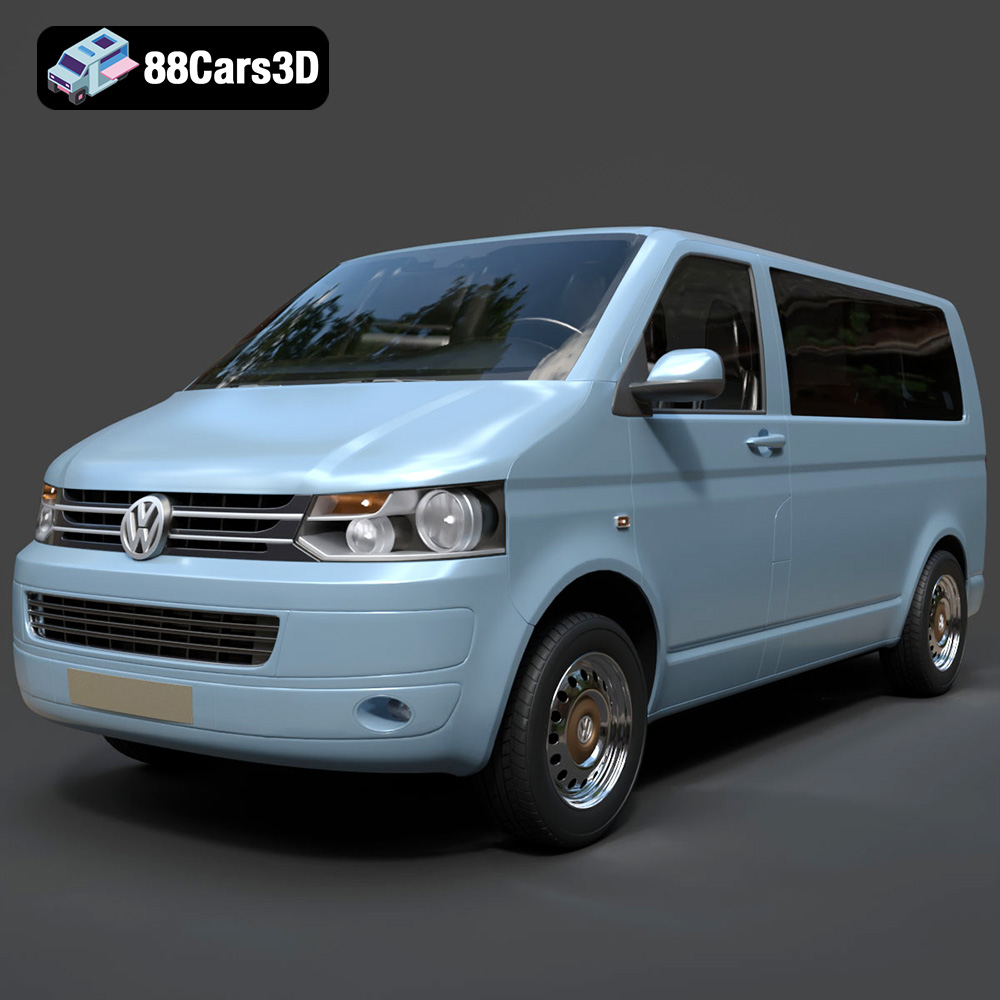
Volkswagen Transporter T5 FL 2010 3D Model
Texture: Yes
Material: Yes
Download the Volkswagen Transporter T5 FL 2010 3D Model featuring clean geometry, realistic detailing, and a fully modeled interior. Includes .blend, .fbx, .obj, .glb, .stl, .ply, .unreal, and .max formats for rendering, simulation, and game development.
Price: $22.99
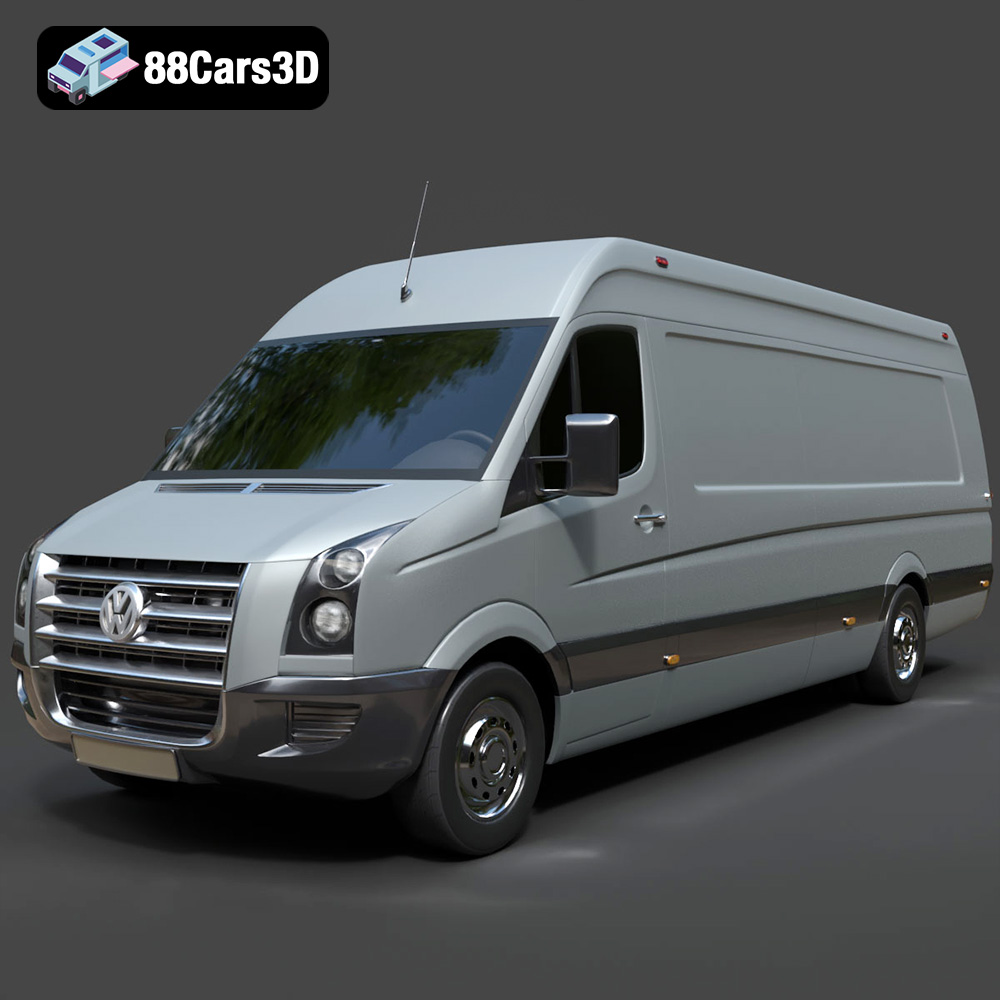
Volkswagen Crafter 2020 3D Model
Texture: Yes
Material: Yes
Download the Volkswagen Crafter 2020 3D Model featuring clean geometry, realistic detailing, and a fully modeled interior. Includes .blend, .fbx, .obj, .glb, .stl, .ply, .unreal, and .max formats for rendering, simulation, and game development.
Price: $22.99
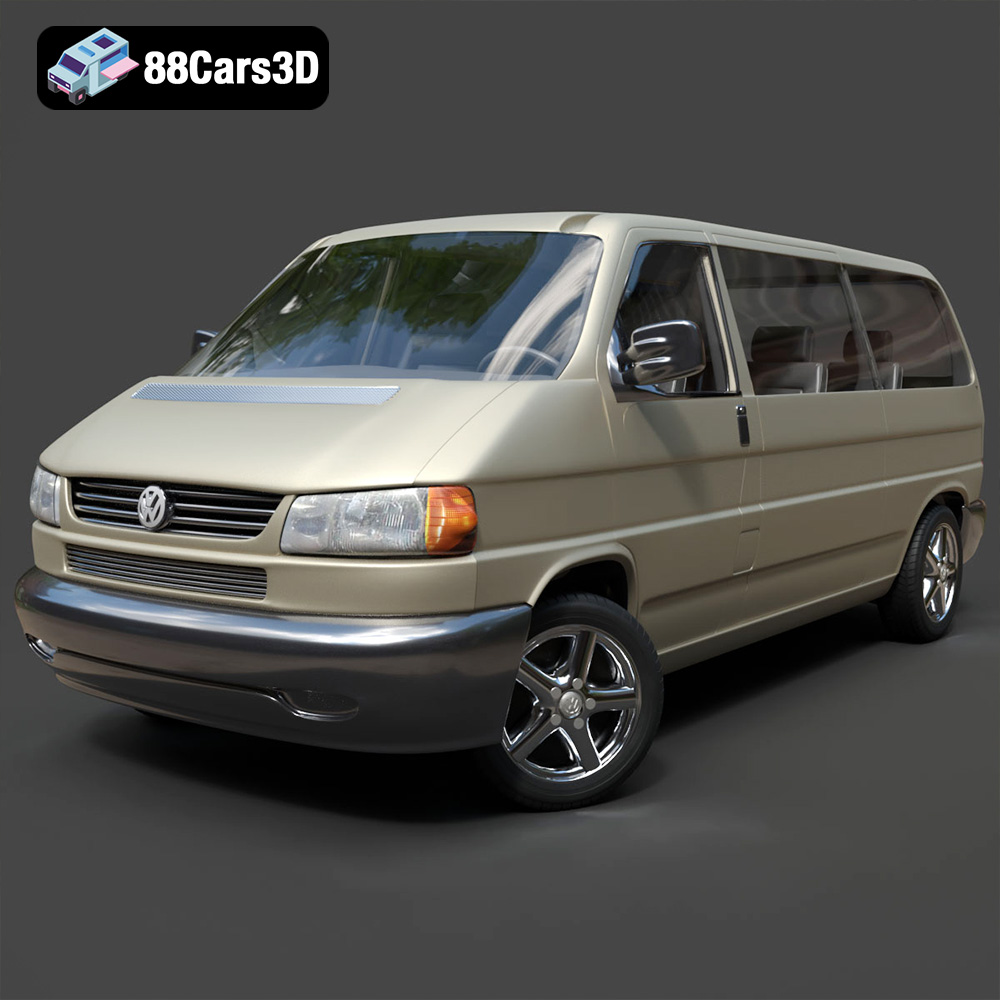
Volkswagen Caravelle 2020 3D Model
Texture: Yes
Material: Yes
Download the Volkswagen Caravelle 3D Model featuring a detailed exterior, functional interior, and optimized topology. Includes .blend, .fbx, .obj, .glb, .stl, .ply, .unreal, and .max formats for rendering, simulation, and game development.
Price: $23.99
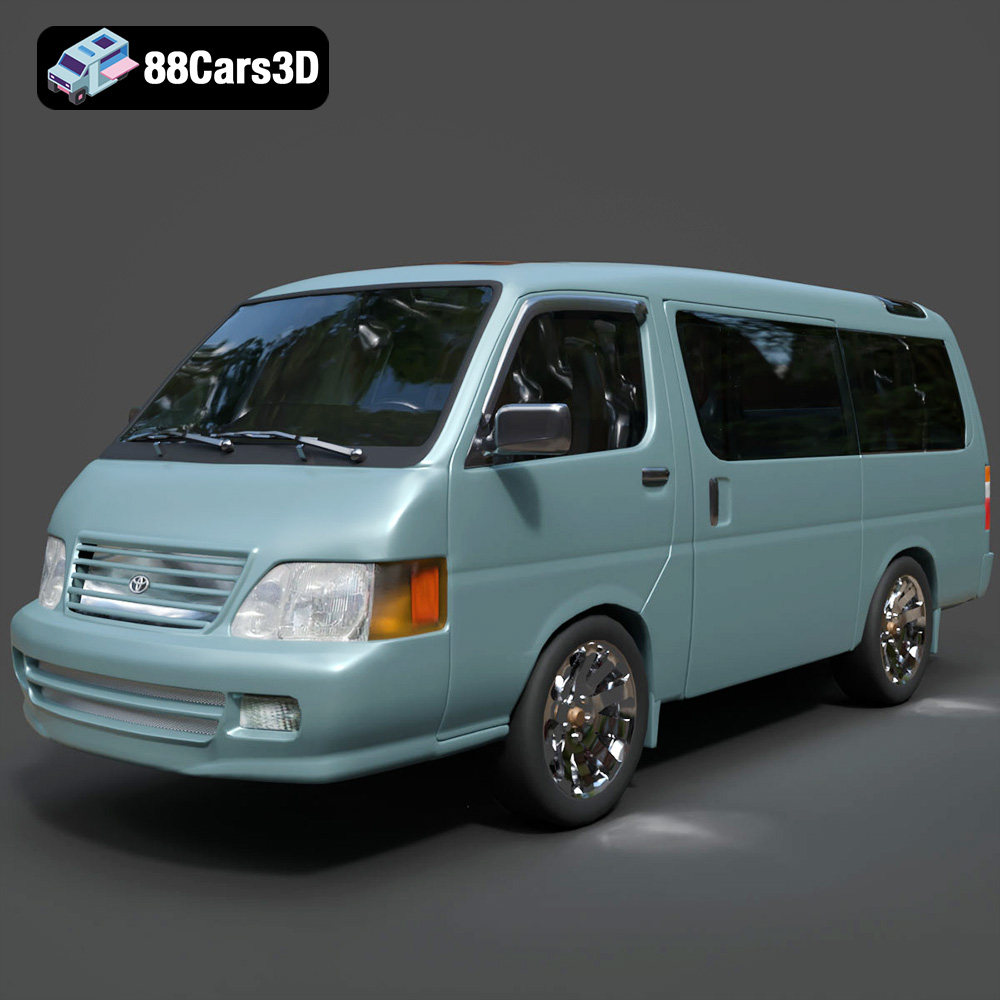
Toyota Hiace 3D Model
Texture: Yes
Material: Yes
Download the Toyota Hiace 3D Model featuring versatile design and detailed exterior. Includes .blend, .fbx, .obj, .glb, .stl, .ply, .unreal, and .max formats for rendering, simulation, and game development.
Price: $21.99
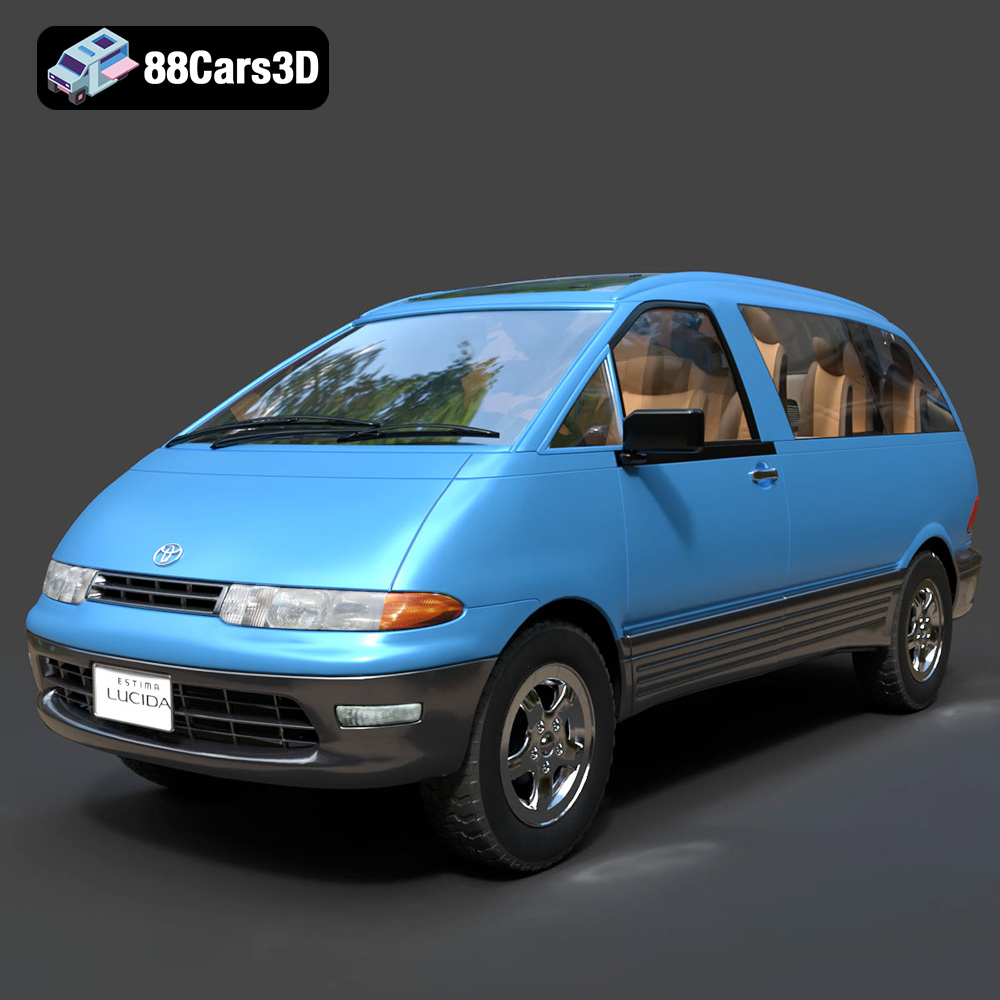
Toyota Estima Lucida 3D Model
Texture: Yes
Material: Yes
Download the Toyota Estima Lucida 3D Model featuring its iconic compact MPV design, versatile interior, and accurate exterior details. Includes .blend, .fbx, .obj, .glb, .stl, .ply, .unreal, and .max formats for rendering, simulation, and game development.
Price: $24.99

Toyota Alphard 3D Model
Texture: Yes
Material: Yes
Download the Toyota Alphard 3D Model featuring a detailed luxury minivan design with an accurate exterior and interior. Includes .blend, .fbx, .obj, .glb, .stl, .ply, .unreal, and .max formats for rendering, simulation, and game development.
Price: $21.99
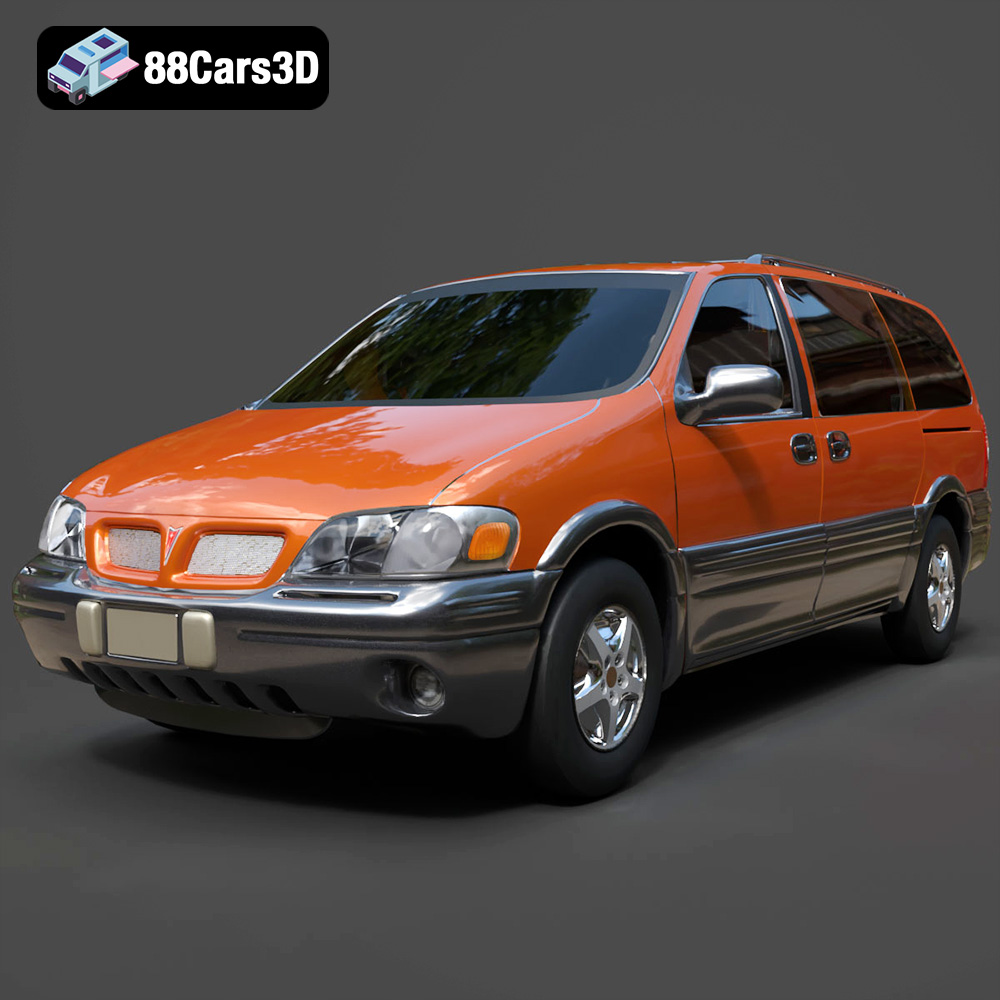
Pontiac Montana 1998 3D Model
Texture: Yes
Material: Yes
Download the Pontiac Montana 1998 3D Model featuring a detailed exterior, functional interior, and optimized mesh. Includes .blend, .fbx, .obj, .glb, .stl, .ply, .unreal, and .max formats for rendering, simulation, and game development.
Price: $21.99
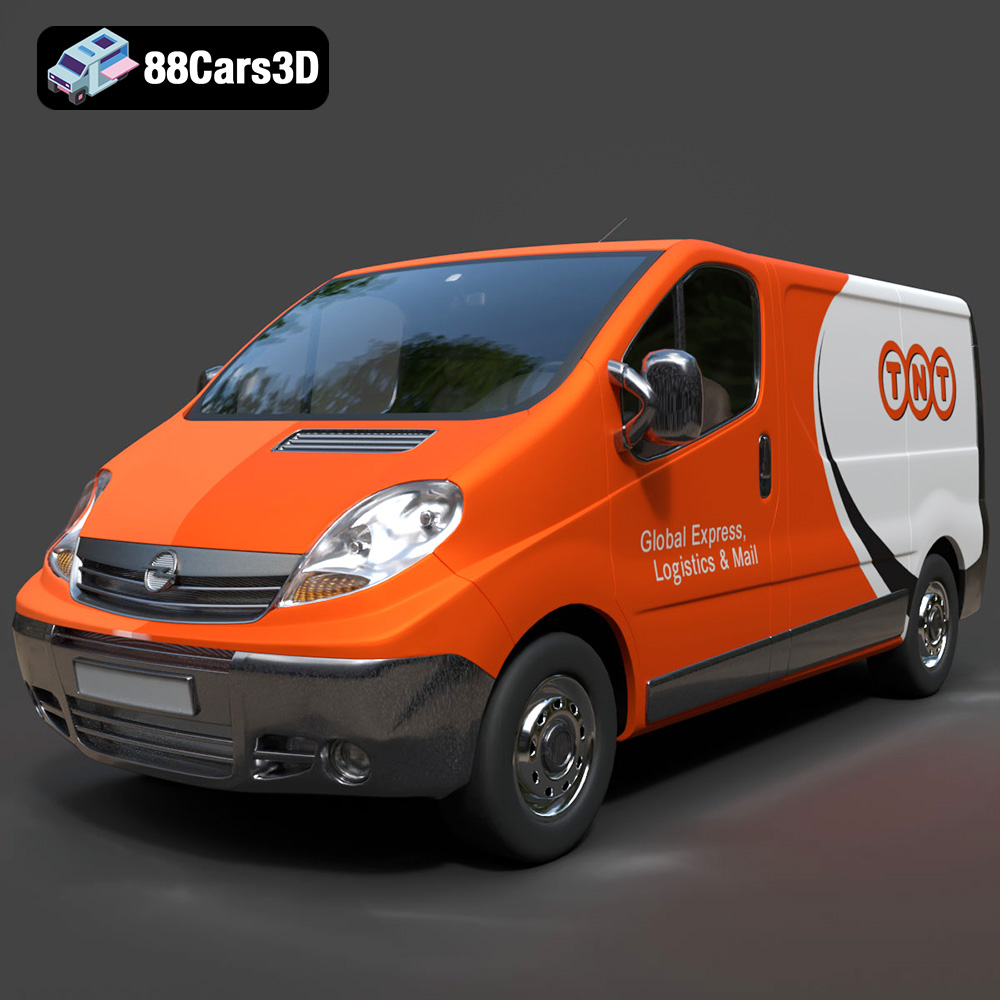
Opel Vivaro 3D Model
Texture: Yes
Material: Yes
Download the Opel Vivaro 3D Model featuring a versatile commercial van design with balanced detailing. Includes .blend, .fbx, .obj, .glb, .stl, .ply, .unreal, and .max formats for rendering, simulation, and game development.
Price: $21.99
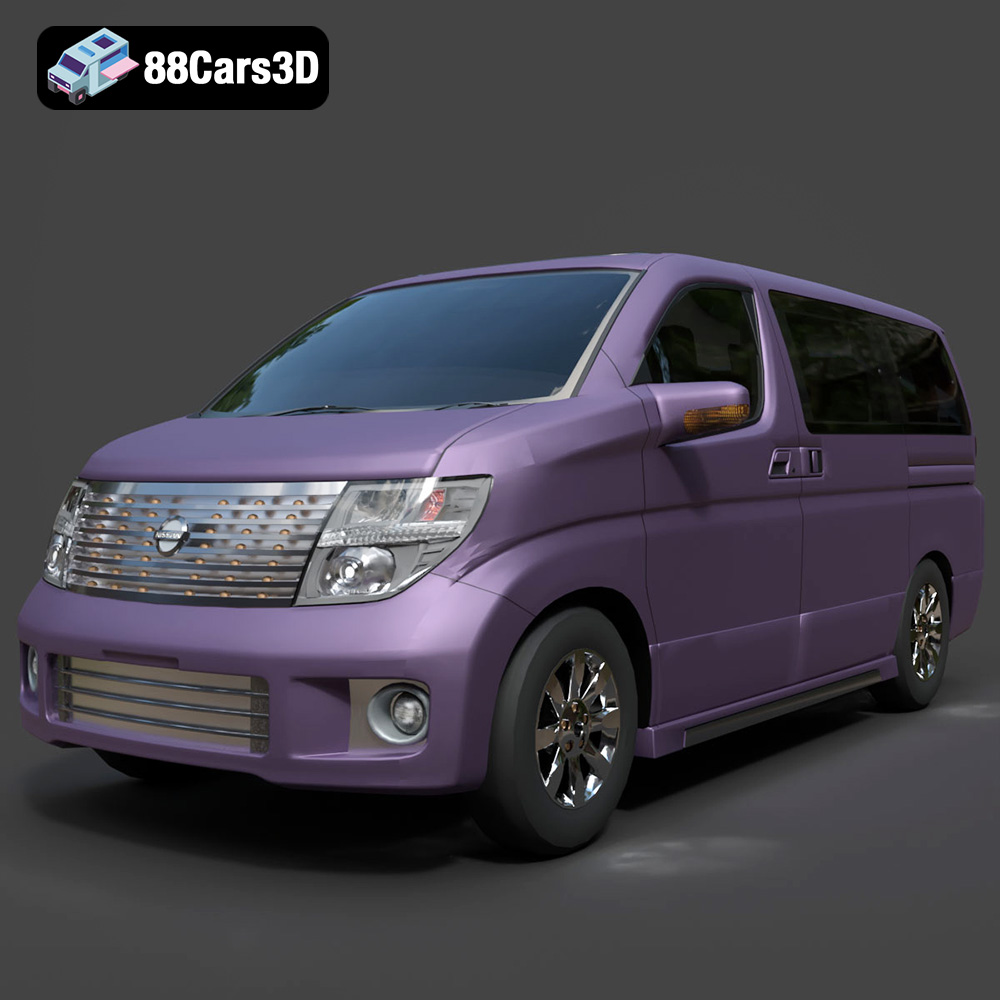
Nissan Elgrand 3D Model
Texture: Yes
Material: Yes
Download the Nissan Elgrand 3D Model featuring a versatile minivan design. Includes .blend, .fbx, .obj, .glb, .stl, .ply, .unreal, and .max formats for rendering, simulation, and game development.
Price: $21.99
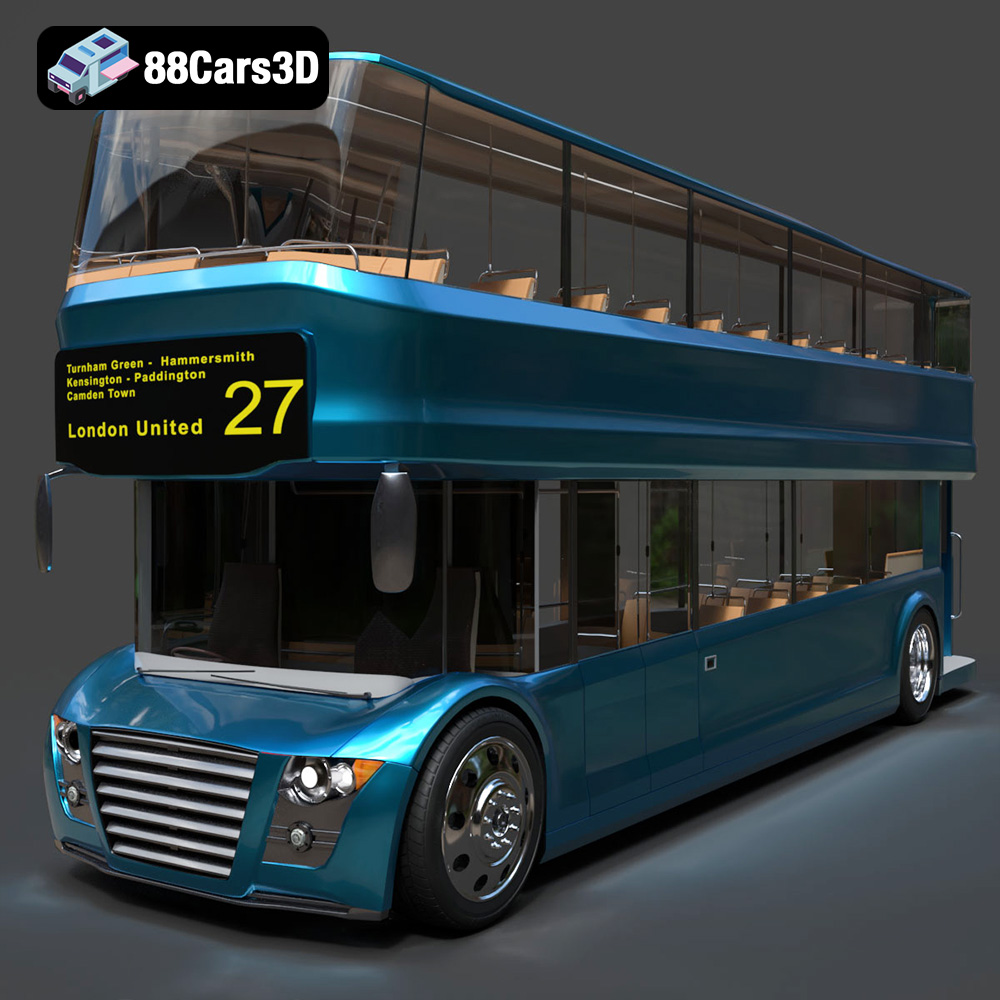
New Bus For London 3D Model
Texture: Yes
Material: Yes
Download the New Bus For London 3D Model featuring a detailed exterior and interior, optimized for rendering and animation. Includes .blend, .fbx, .obj, .glb, .stl, .ply, .unreal, and .max formats for rendering, simulation, and game development.
Price: $21.99
