

In the relentless pursuit of realism and efficiency within virtual worlds, developers and artists continually seek innovative solutions. For those immersed in Unreal Engine, particularly in fields like automotive visualization, game development, and high-fidelity rendering, the creation of vast, detailed, and dynamic environments has long presented a significant challenge. Manual placement of every tree, rock, or urban prop is not only time-consuming but also stifles iteration and adaptability. This is where Unreal Engine’s Procedural Content Generation (PCG) framework emerges as a game-changer.
PCG offers a powerful, non-destructive methodology to build expansive and intricate worlds with unparalleled speed and artistic control. Imagine generating an entire forest, a sprawling cityscape, or a complex road network with just a few clicks, all while maintaining precise control over density, variation, and interaction. For professionals showcasing high-fidelity assets, such as the meticulously crafted 3D car models available on platforms like 88cars3d.com, PCG provides the perfect stage – allowing them to rapidly prototype and iterate on diverse backdrops without compromising on visual quality or performance.
This comprehensive guide will delve deep into the world of PCG in Unreal Engine. We’ll explore its core concepts, walk through practical workflows for building dynamic environments, uncover optimization strategies, and demonstrate its profound impact on automotive visualization and virtual production. By the end, you’ll be equipped with the knowledge to leverage PCG to create breathtaking, performance-optimized worlds for your next Unreal Engine project.
The Power of PCG: A Paradigm Shift in World Building
Procedural Content Generation (PCG) represents a fundamental shift in how we approach environment design in Unreal Engine. At its heart, PCG is about defining rules and parameters that automate the placement, scaling, rotation, and even modification of assets within your virtual world. Instead of manually dragging and dropping individual elements like trees, rocks, buildings, or streetlights, you design a “graph” of operations that procedurally generate these elements based on input data, such as a landscape, volumes, or splines.
This methodology is essential for modern game development and visualization due to its unmatched efficiency and iteration speed. Think about creating an open-world game or a vast automotive testing ground. Manually populating such environments would take months, if not years, and any design change would necessitate a massive re-work. PCG, however, allows for non-destructive workflows. You can tweak a parameter in your graph – perhaps increasing tree density or adjusting the distribution of streetlamps – and the entire environment updates automatically. This empowers artists and designers to experiment freely, iterate rapidly, and achieve complex, organic results that would be impractical with traditional methods. For showcasing high-quality assets from marketplaces such as 88cars3d.com, PCG provides an unparalleled ability to rapidly prototype diverse backdrops, from urban landscapes to natural wildernesses or futuristic test tracks.
Core Concepts of PCG Graphs
A PCG Graph is a network of interconnected nodes, akin to Unreal’s Material Editor or Niagara systems. It takes various forms of input, processes them through a series of operations, and outputs spawned actors or modifies existing geometry. Key components include:
- Inputs: These define the source data for your graph. Common inputs include the landscape, volumes (to define areas of effect), splines (for paths or linear features), or even existing Static Meshes.
- Nodes: The building blocks of your graph. Nodes perform specific operations like sampling points, filtering them, transforming their attributes, or spawning assets. Examples include ‘Surface Sampler’ (to generate points on a landscape), ‘Transform Points’ (to modify scale, rotation), ‘Filter by Density’ (to control sparsity), and ‘Spawn Static Mesh’ (to place your actual assets).
- Outputs: The final result of your graph, typically in the form of spawned Static Mesh Actors, Foliage Instances, or even Landscape Layer modifications.
Setting Up Your First PCG Graph
To begin your PCG journey, you’ll first create a PCG Graph asset (right-click in Content Browser > > PCG > PCG Graph). Once created, you can drag this asset directly into your level, where it will appear as a PCG Volume. Alternatively, you can embed a PCG Graph within a Blueprint for more dynamic control.
A basic workflow often starts with acquiring surface data:
- Get Landscape Data: Use a ‘Get Landscape Data’ node to retrieve information about your terrain.
- Surface Sampler: Connect this to a ‘Surface Sampler’ node. This node generates a grid of points across the landscape within the PCG Volume’s bounds, ready for further processing. You can control the density of these points.
- Spawn Static Mesh: Finally, connect the sampled points to a ‘Spawn Static Mesh’ node. Here, you define the Static Mesh assets you want to spawn (e.g., a rock, a tree, or a streetlamp).
Executing this simple graph will instantly populate your landscape with the specified meshes. From this foundation, you can introduce more nodes to refine distribution, add variation, and apply complex rules.
Building Dynamic Environments with PCG Nodes and Attributes
The true power of PCG lies in its extensive library of nodes and the ability to manipulate “attributes” – data points associated with each generated element. Attributes allow you to create environments that are not only procedurally generated but also dynamic and context-aware. You can, for instance, make trees spawn taller on hilltops, or rocks appear denser near water bodies, all driven by the landscape’s properties.
Understanding and combining various PCG nodes is key to unlocking complex environmental designs. The iterative nature of PCG means you’ll spend a lot of time adjusting node parameters, previewing the results in real-time, and refining your graph. This immediate feedback loop is invaluable for artistic expression, allowing for rapid experimentation to achieve the desired look and feel for your automotive visualization or game world.
Key PCG Nodes for Environmental Detail
Beyond the basic sampler and spawner, several node types are crucial for adding environmental richness:
- Sampler Nodes: These are your data acquisition tools.
- Surface Sampler: Generates points on the surface of a mesh or landscape, often driven by density parameters.
- Bounding Box Sampler: Creates points within a given volume’s bounding box.
- Spline Sampler: Generates points along a spline, perfect for creating roads, fences, or linear distributions.
- Filter Nodes: Used to refine your point distribution.
- Filter by Density: Randomly prunes points based on a density value, allowing for organic sparse-to-dense transitions.
- Filter by Attribute: Filters points based on specific attribute values, such as ‘height’ or ‘slope’, enabling context-sensitive placement.
- Self-Pruning: Removes points that are too close to each other, preventing mesh overlap and ensuring better spacing.
- Transform Nodes: Essential for adding variation to your spawned assets.
- Transform Points: Modifies the location, rotation, and scale of points. You can apply random ranges or drive these transformations using attributes.
- Projection: Projects points onto a surface (e.g., ensuring meshes generated in a volume sit perfectly on the landscape).
- Density Function: A powerful node for creating custom distribution patterns. It allows you to use noise textures, falloff curves, or even mathematical expressions to define where points should be denser or sparser, providing fine-grained control over organic scattering.
Leveraging Attributes for Artistic Control
Attributes are dynamic properties attached to each generated point within your PCG graph. Every point generated by a ‘Surface Sampler’ might have attributes for its position (X, Y, Z), its normal vector, and its landscape material layer weight. You can then use these attributes to drive downstream operations:
- Density: The ‘Density’ attribute is fundamental. Nodes like ‘Filter by Density’ or ‘Spawn Static Mesh’ often use it to determine the probability of an item spawning. You can set the density based on landscape slope, height, or even a noise texture applied through a ‘Get Texture Data’ node.
- Rotation: The ‘Transform Points’ node can modify the ‘Rotation’ attribute. You can align meshes with the landscape normal (e.g., trees standing upright on a sloped hill) or introduce random yaw rotation for natural variation.
- Scale: Similarly, the ‘Scale’ attribute can be varied. You might scale down smaller bushes and scale up larger trees based on their density or a random seed.
By reading landscape data (such as slope, height, and material layer weights) as attributes and then manipulating them with nodes like ‘Attribute Remap’ or ‘Math Op’, you can craft highly sophisticated and realistic environments. For example, you could spawn specific rock meshes only on steep slopes with a ‘Rock’ material layer, while grass spawns only on flatter areas with a ‘Grass’ layer, all within a single, elegant PCG graph.
Optimizing PCG-Generated Worlds for Real-Time Performance
Creating vast, procedurally generated worlds comes with the inherent challenge of maintaining optimal real-time performance. A densely packed environment, while visually stunning, can quickly bring even high-end hardware to its knees if not properly optimized. Fortunately, Unreal Engine provides a robust suite of tools that integrate seamlessly with PCG to ensure your expansive worlds remain smooth and interactive. Achieving excellent performance is crucial for any application, from immersive games to high-fidelity automotive visualization experiences.
The key to efficient PCG content lies in intelligent asset management and leveraging Unreal Engine’s cutting-edge rendering features. Understanding how PCG interacts with these systems is paramount to delivering visually rich environments without sacrificing frame rate. For further detailed documentation on specific PCG nodes or advanced graph setups, developers can always refer to the official Unreal Engine documentation at dev.epicgames.com/community/unreal-engine/learning.
Nanite and Lumen Integration
- Nanite: Virtualized Geometry for High-Poly PCG Assets: Nanite is a revolutionary virtualized geometry system that allows Unreal Engine to render cinematic-quality assets with billions of polygons in real-time without traditional LODs (Levels of Detail). For PCG, this is incredibly powerful. You can feed high-fidelity scanned assets or detailed models directly into your PCG graph, enable Nanite on them, and Unreal Engine will intelligently stream and render only the necessary detail. This means you no longer need to worry about manually optimizing polygon counts for individual PCG-spawned meshes; Nanite handles it. This dramatically simplifies the workflow for artists and ensures that even the most complex procedural environments look stunning up close without a performance hit. When spawning meshes via PCG, simply ensure the source Static Mesh asset has Nanite enabled in its details panel.
- Lumen: Real-time Global Illumination for Dynamic PCG Environments: Lumen is Unreal Engine’s fully dynamic global illumination and reflections system. As PCG generates geometry in real-time, Lumen immediately calculates and updates the indirect lighting and reflections, creating incredibly realistic and immersive scenes. This is particularly beneficial for environments with dense foliage or complex architectural elements generated by PCG, where light bounces significantly influence the overall mood and realism. Lumen ensures that light interacts naturally with all your procedurally generated elements, from the deepest shadows under a forest canopy to the subtle bounces off a city street. While Lumen is powerful, ensure your lighting complexity (number of dynamic light sources) is managed, especially in dense PCG environments, to maintain performance.
LODs, Culling, and Level Streaming
- LODs for Non-Nanite Meshes: While Nanite handles geometric complexity for compatible meshes, many assets, especially foliage or smaller props, might still benefit from traditional LODs or simply not be Nanite-enabled. For these, ensure your source Static Meshes have appropriate LODs configured. PCG’s ‘Spawn Static Mesh’ node will automatically respect these LODs.
- Culling:
- Distance Culling within PCG Graphs: PCG graphs themselves can implement distance-based culling logic. For example, using a ‘Filter by Density’ node or modifying the ‘Density’ attribute based on distance from the player camera can prevent spawning objects beyond a certain range.
- Hardware Occlusion Culling: Unreal Engine’s built-in occlusion culling system automatically prevents objects that are hidden behind others from being rendered, saving significant GPU resources. Dense PCG forests or buildings benefit immensely from this.
- Level Streaming: For truly massive PCG worlds, Level Streaming is indispensable. This technique allows you to divide your vast environment into smaller, manageable “sub-levels” that can be loaded and unloaded dynamically based on player proximity. You can set up your PCG graphs to generate content within specific streamed levels, ensuring that only the relevant parts of your procedurally generated world are active in memory and being rendered at any given time. This is critical for open-world games and large-scale visualization projects to maintain a consistent performance budget.
- Performance Budgets: Always keep a performance budget in mind. Understand your target platform (PC, VR, console, mobile) and its limitations regarding polygon counts, draw calls, and texture memory. Monitor your scene using Unreal Engine’s profiling tools (Stat FPS, Stat GPU, Profiler) to identify bottlenecks and fine-tune your PCG graphs and asset choices accordingly. For example, extensive use of translucent materials on dense foliage can be very expensive, and careful material optimization is crucial.
Advanced PCG Workflows and Blueprint Integration
While PCG excels at generating static environmental elements, its true potential is unlocked when integrated with Unreal Engine’s Blueprint visual scripting system. This synergy allows for dynamic, interactive, and data-driven procedural content, moving beyond mere decoration to create truly reactive and intelligent worlds. Integrating PCG with Blueprints opens doors for experiences ranging from interactive automotive configurators to adaptive game environments.
The ability to expose PCG graph parameters to Blueprints, or even to drive PCG graphs with Blueprint-generated data, transforms the framework into a powerful tool for dynamic world-building. This allows designers to not only create complex worlds but also to interact with and modify them in real-time, greatly expanding the scope of what’s possible with procedural generation.
Blueprint Control for Dynamic Environments
Blueprints can act as powerful controllers for your PCG graphs, enabling real-time adjustments and interactivity:
- Spawning and Managing PCG Graphs via Blueprint: You can create a Blueprint Actor that contains a PCG Volume or even dynamically spawns PCG Graphs at runtime. This allows for conditional generation – for example, only spawning a specific type of forest when a certain game event occurs, or when the player enters a particular zone.
- Exposing PCG Parameters for Interactive Configurators: One of the most impactful applications for automotive visualization is creating interactive configurators. Imagine showcasing a high-fidelity car model from 88cars3d.com, and allowing the user to dynamically change its surrounding environment. You can expose variables from your PCG graph (e.g., forest density, road complexity, building height, or time of day) as Blueprint variables. A UI widget can then adjust these Blueprint variables, which in turn update the PCG graph, changing the environment in real-time. This provides an incredibly engaging and dynamic experience for potential buyers or clients.
- Triggering PCG Updates Based on Interaction or Game State: Beyond UI, Blueprints can trigger PCG updates based on player input, proximity, or game logic. A player driving into a desolate area might trigger a PCG graph to spawn wreckage and dust clouds, while entering a city district could spawn specific urban props and traffic elements. This allows for responsive and evolving environments without the need for pre-baked level variations.
- Utilizing PCG to Place Interactive Props: PCG isn’t just for background elements. You can use it to procedurally place interactive game objects, collectibles, or even quest givers. By outputting specific “Actor” types instead of just Static Meshes, you can populate your world with functional entities, reducing manual placement and ensuring unique play-throughs or demonstration scenarios.
Integrating Custom Logic and Data Sources
For truly bespoke procedural systems, PCG can be extended with custom logic and external data:
- Blueprints as Custom Point/Input Providers: Instead of relying solely on ‘Get Landscape Data’ or ‘Spline Sampler’ nodes, you can author a Blueprint that generates its own set of points with custom attributes. For instance, a Blueprint could calculate points based on complex mathematical functions or ray traces, then feed these points into a PCG graph for further processing and spawning. This allows for highly specialized and unique distribution patterns.
- Reading External Data to Drive PCG Graphs: PCG graphs can be made data-driven. Imagine importing a CSV file containing coordinates for streetlights, billboard locations, or specific vegetation types. A Blueprint could parse this external data and use it to feed precise point data into your PCG graph, ensuring accurate placement according to real-world or design specifications. This is particularly useful for digital twin applications or replicating real-world geographical data in Unreal Engine.
- Creating Custom PCG Nodes (C++): For developers with C++ expertise, the PCG framework is extensible. You can write custom C++ PCG nodes to implement highly specific algorithms or integrate with proprietary data sources that are not natively supported by the existing node library. This provides ultimate flexibility and allows for tailored procedural solutions to unique project challenges. While advanced, it demonstrates the depth of the PCG system’s capabilities for truly complex procedural generation tasks.
PCG in Automotive Visualization and Virtual Production
For sectors like automotive visualization and virtual production, PCG offers revolutionary benefits. The ability to rapidly generate diverse, high-fidelity environments is critical for showcasing cutting-edge vehicle designs, creating immersive driving experiences, and facilitating dynamic virtual sets. With high-quality 3D car models from marketplaces such as 88cars3d.com, artists can leverage PCG to focus on crafting stunning backdrops, knowing their hero assets are top-notch and ready for prime time.
PCG elevates automotive visualization beyond static renders, enabling interactive experiences and rapid iteration that were once unimaginable. It allows designers to test vehicle aesthetics in a multitude of contexts, from urban streetscapes to rugged off-road terrains, all generated on the fly.
Creating Diverse Automotive Scenes
- Showroom Environments: PCG can be utilized to rapidly design variations of abstract or stylized showrooms. Instead of building multiple distinct showroom levels, a single PCG graph can generate different wall patterns, floor textures, lighting fixtures, or even movable platforms around a car model. This allows for quick A/B testing of presentation styles or providing clients with multiple options from a single project file.
- Open World Driving Scenarios: For realistic driving simulators or interactive vehicle demos, PCG is indispensable. It can procedurally generate intricate road networks (using splines as input), dense foliage along highways, varied urban elements (buildings, traffic lights, street furniture), and even dynamic weather effects to create expansive and believable driving environments. This enables robust testing of vehicle dynamics and showcases a car’s performance in diverse, realistic settings.
- Virtual Photo Shoots: Imagine a virtual studio where you can instantly change the backdrop for a car. PCG allows artists to quickly set up multiple backdrops – from a sunset desert to a rainy city street – and fine-tune environmental lighting conditions for cinematic renders of vehicles. This dramatically speeds up the process of creating promotional materials, allowing for a broader range of visual content without extensive manual labor. A high-quality model from 88cars3d.com dropped into a PCG-generated scene can go from a desert dune setting to a sleek urban environment in minutes, perfect for marketing campaigns.
- Digital Twins: For applications involving digital twins of urban areas or testing grounds, PCG can reconstruct realistic terrain, place infrastructure (buildings, roads, utility poles) based on real-world GIS data, and populate these environments with accurate detail. This creates highly precise and functional virtual replicas for simulations, planning, or autonomous vehicle training.
PCG for Virtual Production and LED Walls
Virtual Production (VP), particularly with LED volume stages, is rapidly transforming filmmaking and commercial production. PCG plays a crucial role in this evolution:
- Dynamically Generating Large-Scale Background Environments: LED walls require incredibly detailed and expansive virtual backgrounds that seamlessly blend with foreground physical sets. PCG can dynamically generate these large-scale environments, ensuring consistent detail across vast virtual landscapes. This is critical for maintaining visual continuity when the camera moves or the virtual set needs to be modified on the fly.
- Rapid Iteration of Virtual Sets: During pre-production or even live on set, directors and cinematographers often need to make quick adjustments to the virtual background. With PCG, changing the time of day, adding or removing specific environmental elements, or altering terrain features can be done in real-time. This allows for immense creative flexibility and significantly reduces the time and cost associated with traditional set design and modification for automotive commercials or film sequences.
- Maintaining Consistent Detail Across Vast Virtual Landscapes: Whether for a sprawling natural landscape or a futuristic city, PCG ensures that the detail density and artistic style remain consistent across the entire virtual world, regardless of how large it becomes. This is vital for the immersive experience in virtual production, where any inconsistency can break the illusion for both actors on set and the final audience. The seamless nature of PCG-generated worlds makes them ideal for the high demands of LED wall workflows.
Conclusion
Unreal Engine’s Procedural Content Generation (PCG) framework stands as a testament to the continuous innovation driving real-time content creation. We’ve explored how PCG fundamentally transforms world-building, offering an unparalleled blend of efficiency, artistic freedom, and scalability that traditional manual methods simply cannot match. From understanding its core graph concepts and essential nodes to leveraging attributes for intricate environmental detail, PCG empowers developers and artists to craft dynamic, living worlds with remarkable speed and precision.
The integration of PCG with Unreal Engine’s advanced rendering features like Nanite and Lumen further solidifies its position as a powerhouse tool, enabling the creation of visually stunning, high-performance environments without compromise. Its synergy with Blueprint scripting unlocks advanced interactivity, allowing for dynamic, data-driven worlds that respond to user input and game logic. For industries like automotive visualization and virtual production, PCG is nothing short of revolutionary, facilitating the rapid development of diverse scenes for showcasing vehicle designs, creating immersive driving experiences, and powering cutting-edge LED wall sets.
The journey into PCG is one of continuous discovery and creative empowerment. We encourage you to start experimenting with PCG in your own Unreal Engine projects. Begin with simple graphs, gradually introducing more complex nodes and attributes. Combine it with high-quality assets – such as the meticulously crafted 3D car models available on platforms like 88cars3d.com – and watch your visions come to life. The future of world-building is procedural, and with Unreal Engine’s PCG, you have the tools to shape it.
Featured 3D Car Models

Ford Ambulance AmServ LTD Dusan-002 3D Model
Texture: Yes
Material: Yes
Download the Ford Ambulance AmServ LTD Dusan-002 3D Model featuring a high-detail exterior and interior, realistic textures, and emergency lighting. Includes .blend, .fbx, .obj, .glb, .stl, .ply, .unreal, and .max formats for rendering, simulation, and game development.
Price: $19.99
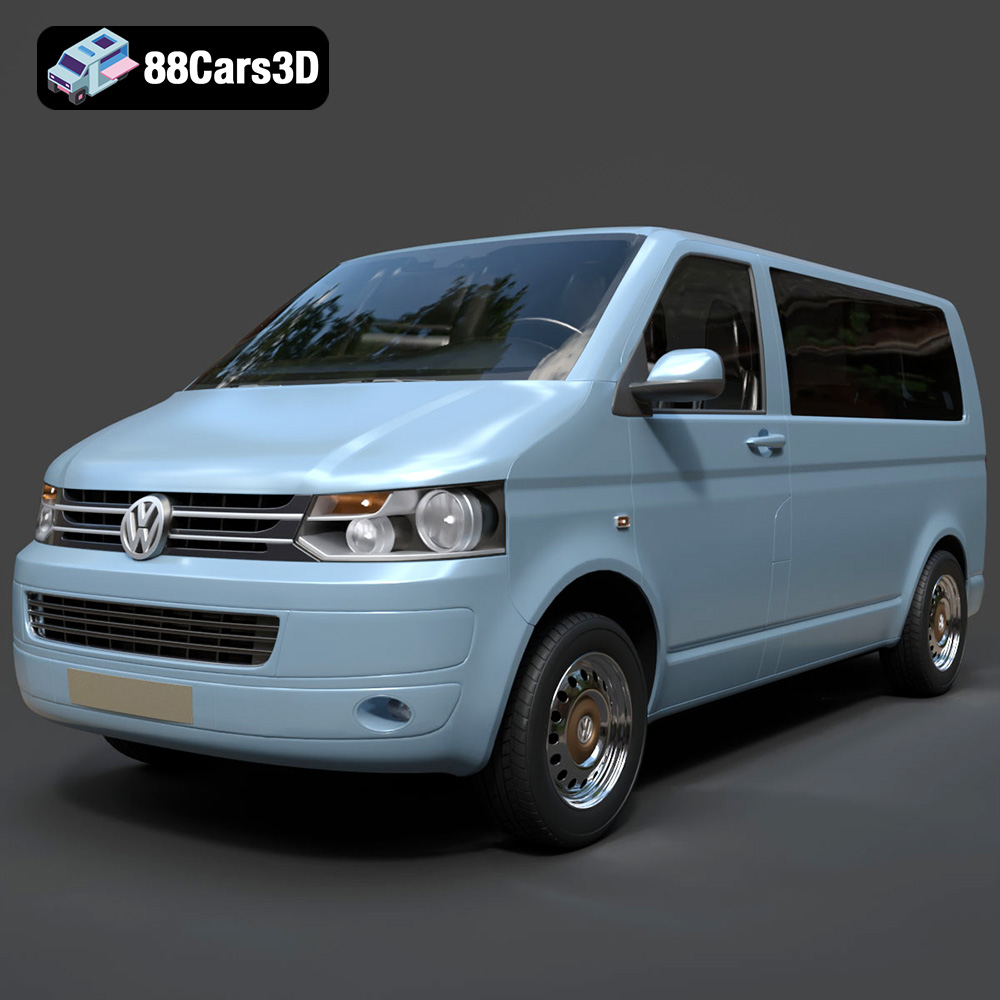
Volkswagen Transporter T5 FL 2010 3D Model
Texture: Yes
Material: Yes
Download the Volkswagen Transporter T5 FL 2010 3D Model featuring clean geometry, realistic detailing, and a fully modeled interior. Includes .blend, .fbx, .obj, .glb, .stl, .ply, .unreal, and .max formats for rendering, simulation, and game development.
Price: $22.99
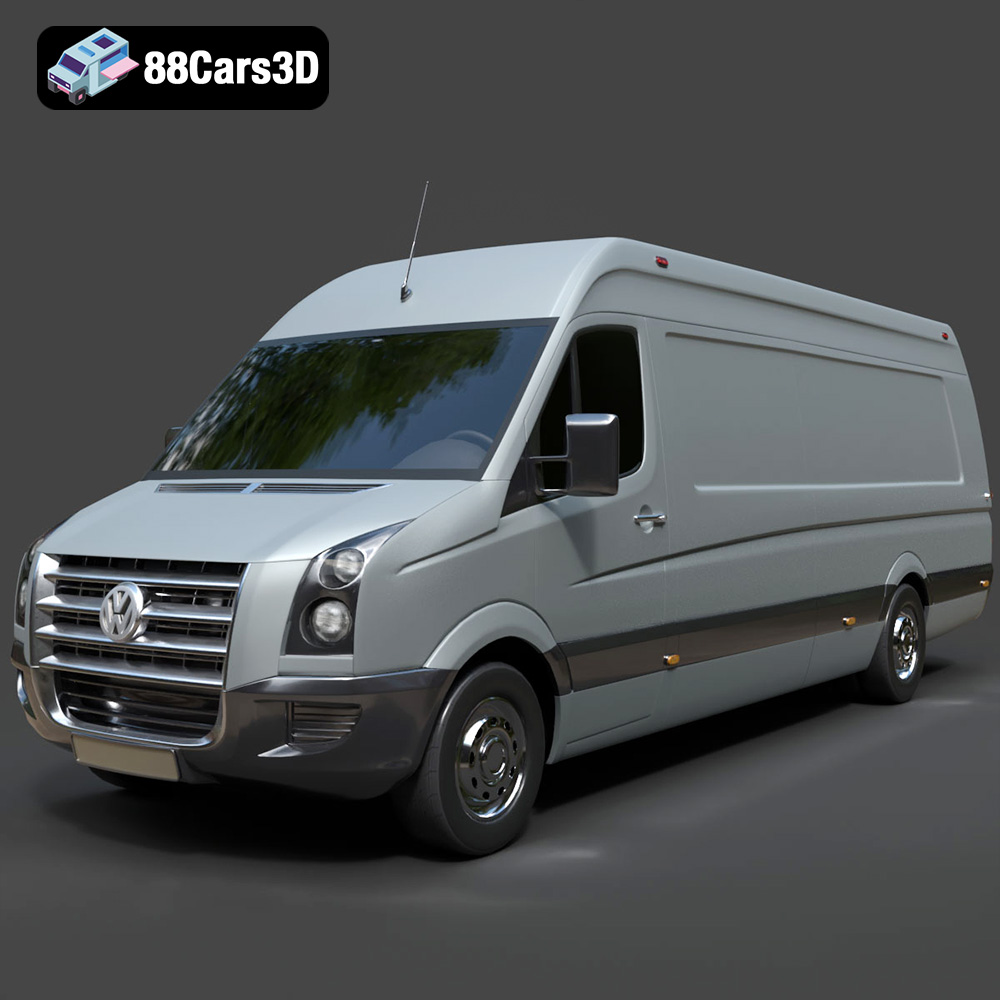
Volkswagen Crafter 2020 3D Model
Texture: Yes
Material: Yes
Download the Volkswagen Crafter 2020 3D Model featuring clean geometry, realistic detailing, and a fully modeled interior. Includes .blend, .fbx, .obj, .glb, .stl, .ply, .unreal, and .max formats for rendering, simulation, and game development.
Price: $22.99
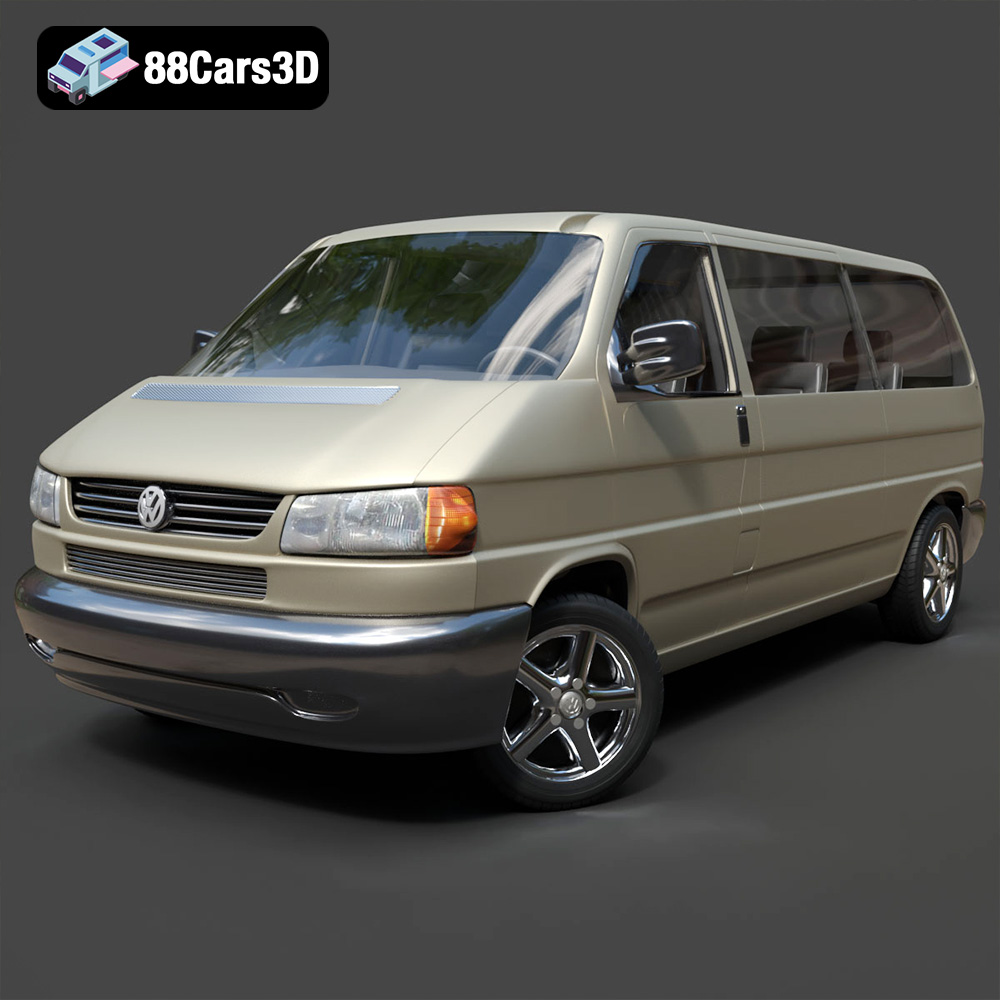
Volkswagen Caravelle 2020 3D Model
Texture: Yes
Material: Yes
Download the Volkswagen Caravelle 3D Model featuring a detailed exterior, functional interior, and optimized topology. Includes .blend, .fbx, .obj, .glb, .stl, .ply, .unreal, and .max formats for rendering, simulation, and game development.
Price: $23.99
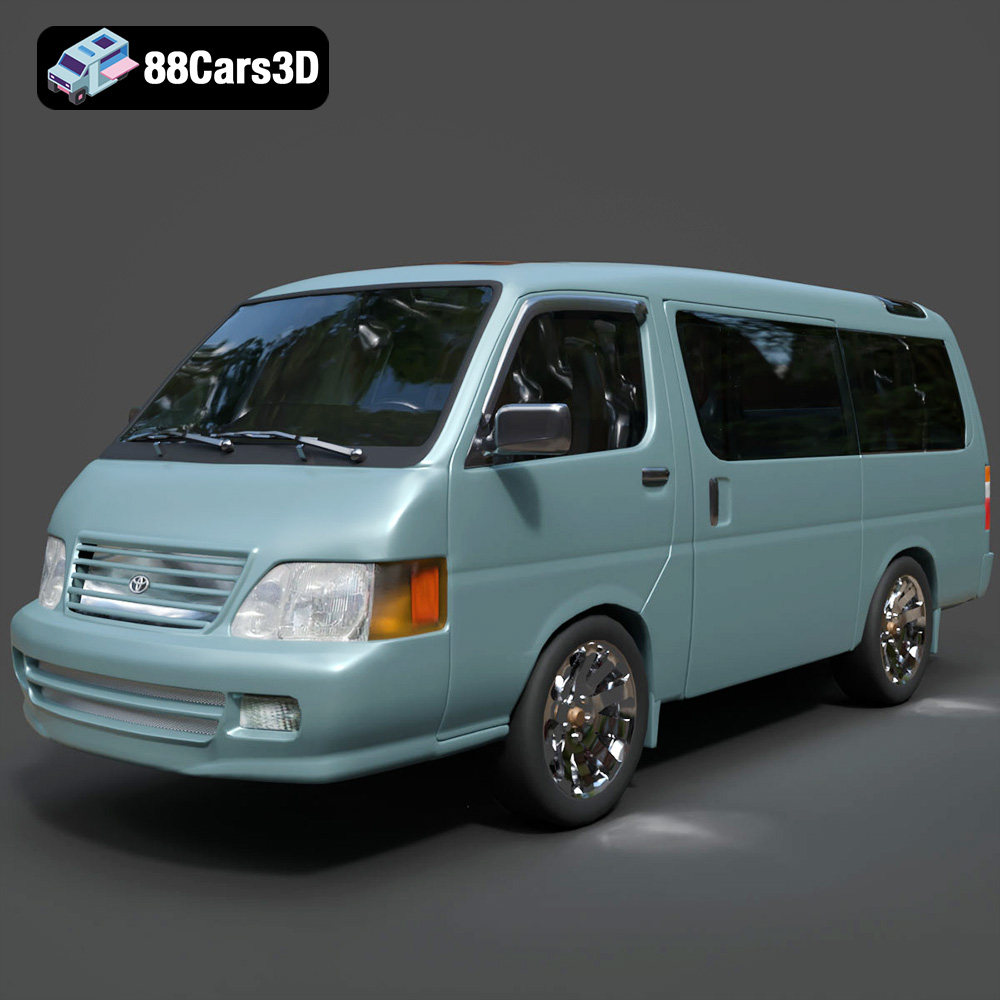
Toyota Hiace 3D Model
Texture: Yes
Material: Yes
Download the Toyota Hiace 3D Model featuring versatile design and detailed exterior. Includes .blend, .fbx, .obj, .glb, .stl, .ply, .unreal, and .max formats for rendering, simulation, and game development.
Price: $21.99
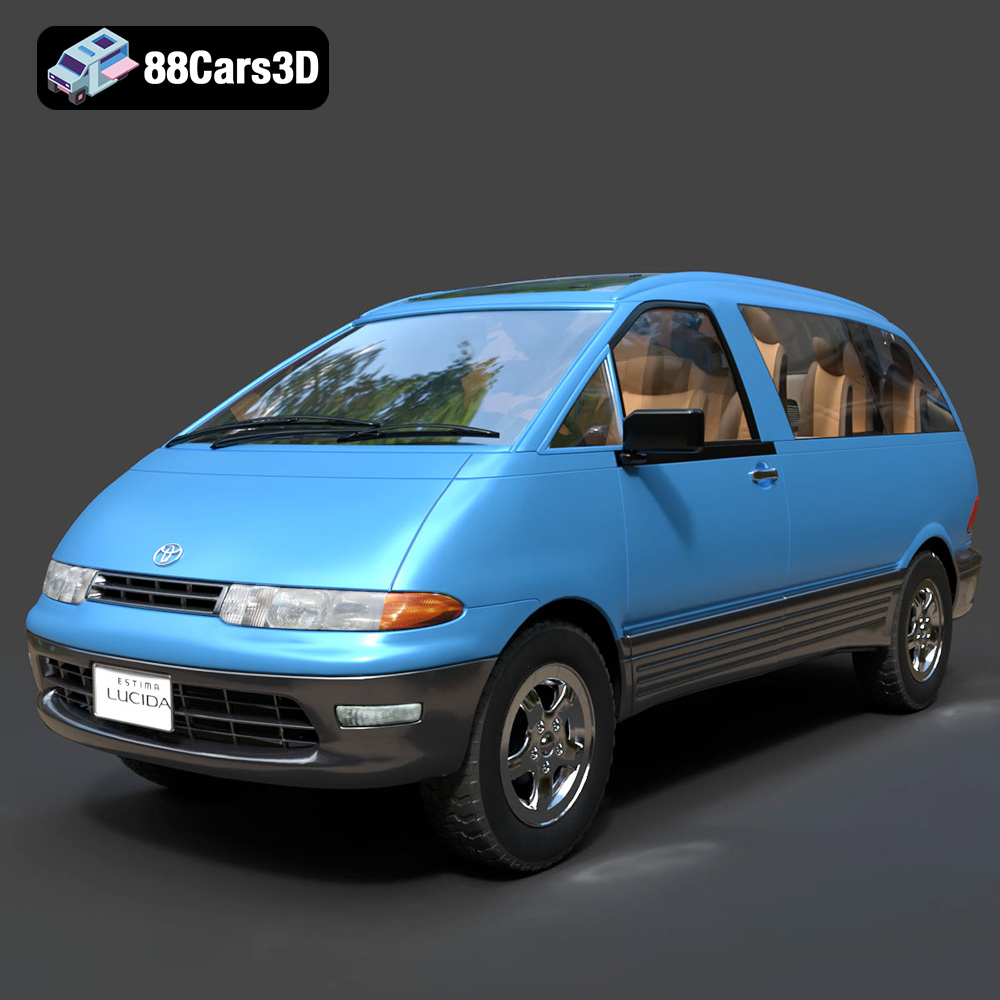
Toyota Estima Lucida 3D Model
Texture: Yes
Material: Yes
Download the Toyota Estima Lucida 3D Model featuring its iconic compact MPV design, versatile interior, and accurate exterior details. Includes .blend, .fbx, .obj, .glb, .stl, .ply, .unreal, and .max formats for rendering, simulation, and game development.
Price: $24.99

Toyota Alphard 3D Model
Texture: Yes
Material: Yes
Download the Toyota Alphard 3D Model featuring a detailed luxury minivan design with an accurate exterior and interior. Includes .blend, .fbx, .obj, .glb, .stl, .ply, .unreal, and .max formats for rendering, simulation, and game development.
Price: $21.99
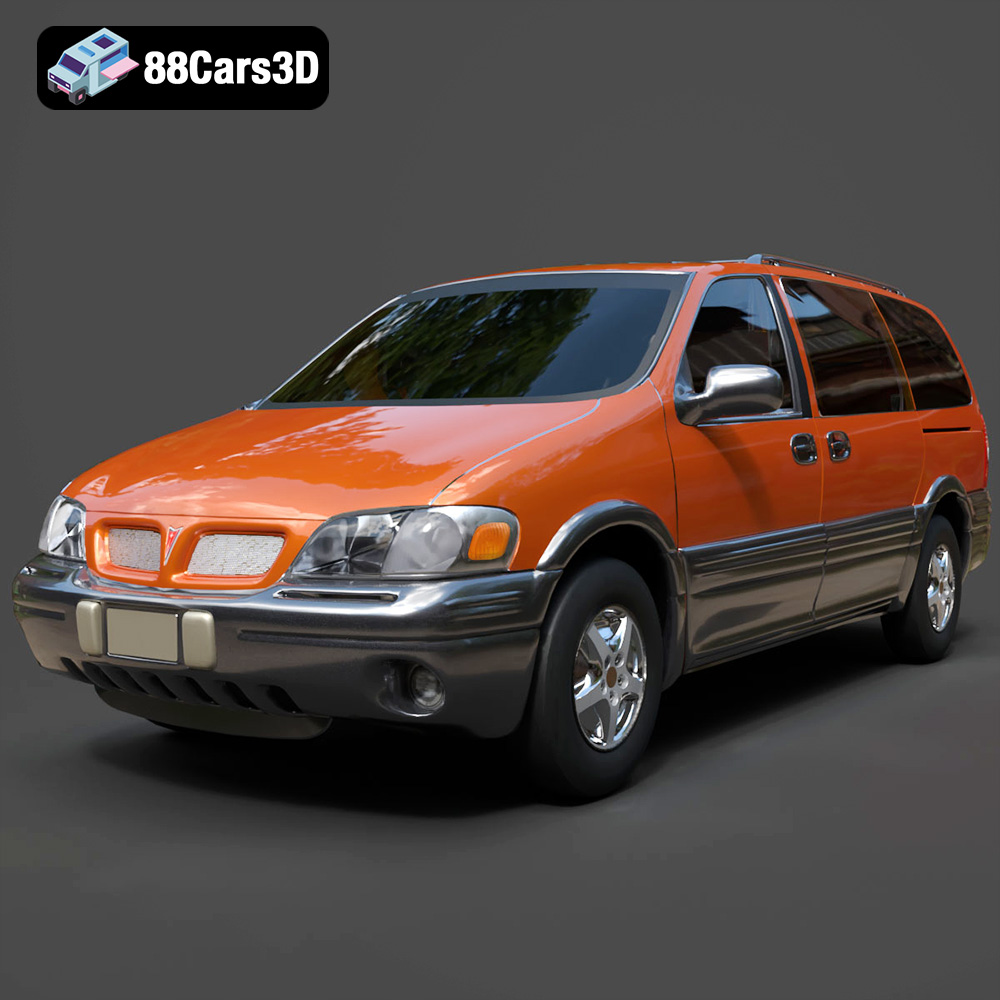
Pontiac Montana 1998 3D Model
Texture: Yes
Material: Yes
Download the Pontiac Montana 1998 3D Model featuring a detailed exterior, functional interior, and optimized mesh. Includes .blend, .fbx, .obj, .glb, .stl, .ply, .unreal, and .max formats for rendering, simulation, and game development.
Price: $21.99
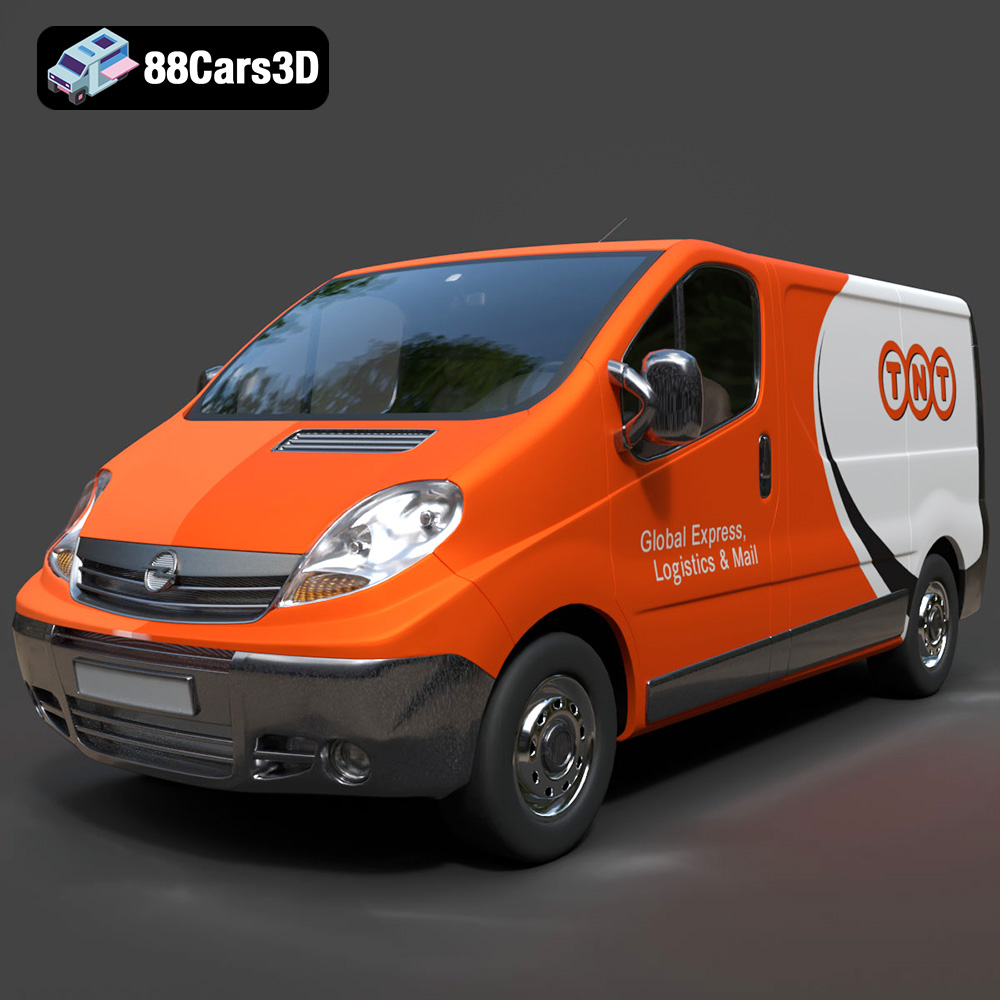
Opel Vivaro 3D Model
Texture: Yes
Material: Yes
Download the Opel Vivaro 3D Model featuring a versatile commercial van design with balanced detailing. Includes .blend, .fbx, .obj, .glb, .stl, .ply, .unreal, and .max formats for rendering, simulation, and game development.
Price: $21.99
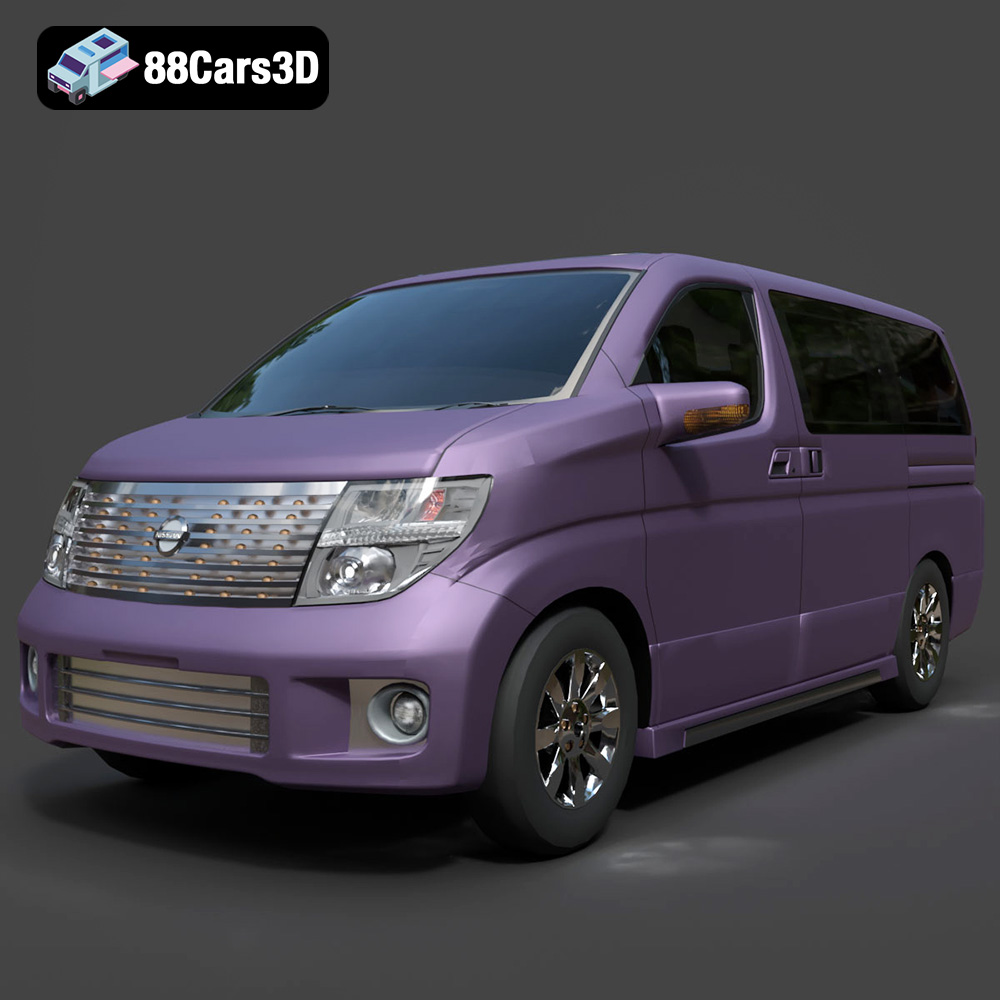
Nissan Elgrand 3D Model
Texture: Yes
Material: Yes
Download the Nissan Elgrand 3D Model featuring a versatile minivan design. Includes .blend, .fbx, .obj, .glb, .stl, .ply, .unreal, and .max formats for rendering, simulation, and game development.
Price: $21.99
