

The roar of a meticulously crafted engine, the gleam of polished chrome under dynamic light, the sleek lines of a supercar gliding through an urban landscape – cinematic automotive content captivates and inspires. For decades, achieving this level of visual fidelity for promotional videos, game cutscenes, or interactive experiences demanded lengthy, expensive offline rendering processes. Today, Unreal Engine, particularly with its powerful Sequencer tool, has revolutionized this landscape, bringing unparalleled real-time cinematic capabilities to the fingertips of artists and developers.
Unreal Engine’s ability to deliver photorealistic graphics in real-time has made it the undisputed champion for automotive visualization and interactive media. Whether you’re an automotive designer showcasing a new concept, a game developer crafting immersive cutscenes, or a marketing professional creating a compelling product launch, Sequencer provides the definitive toolkit. This comprehensive guide will delve deep into leveraging Unreal Engine Sequencer, alongside its suite of advanced features, to create breathtaking cinematic content, from initial project setup to final render. We’ll explore how to bring high-quality 3D car models, like those available on 88cars3d.com, to life with dynamic lighting, interactive elements, and professional-grade rendering techniques, empowering you to tell compelling stories with unparalleled visual impact and efficiency.
The Foundation: Setting Up Your Automotive Cinematic Project in Unreal Engine
Embarking on a cinematic journey in Unreal Engine begins with meticulous project setup. A well-configured project provides the stable foundation necessary to harness the engine’s full potential for automotive visualization. This initial phase involves selecting the right project template, enabling crucial plugins, and importing your hero assets, ensuring everything is primed for high-quality real-time rendering.
Project Template & Initial Settings for High-Fidelity Content
When creating a new project, consider starting with the “Blank” template for maximum control, or the “Film, Television, and Live Events” template, which pre-enables several useful plugins for cinematic workflows. Crucially, navigate to Edit > Plugins and ensure essential plugins are active. For cutting-edge visual quality, verify that the following are enabled:
- Virtual Production Utilities: Provides tools for managing virtual production workflows, including nDisplay and remote control.
- Movie Render Queue: The gold standard for high-quality offline rendering of sequences (more on this later).
- Chaos Physics: For realistic vehicle dynamics and interactions.
- Alembic Groom: If you plan on adding realistic hair or fur to characters or advanced environmental elements.
Next, configure your project settings for optimal cinematic output by going to Edit > Project Settings. Under the Engine > Rendering section, prioritize:
- Global Illumination & Reflections: Enable Lumen Global Illumination and Lumen Reflections for dynamic, realistic indirect lighting and reflections.
- Virtual Shadow Maps (VSM): For incredibly detailed and performant soft shadows.
- Nanite: Ensure “Support Nanite for all Static Meshes” is enabled. This will be critical for handling the high-polygon count of detailed 3D car models without performance penalties.
- Post Processing: Set your anti-aliasing method to “Temporal Super-Resolution (TSR)” or “None” if using Movie Render Queue’s advanced anti-aliasing.
Finally, it’s time to import your high-quality 3D car models. When sourcing automotive assets from marketplaces such as 88cars3d.com, you’ll typically receive models in formats like FBX or USD. Drag and drop these files directly into your Content Browser. During import, ensure you enable “Combine Meshes” if the car is comprised of multiple parts that should move together, and critically, “Import Materials” and “Import Textures.” Pay close attention to scale; Unreal Engine uses centimeters as its default unit. Ensure your imported models are at the correct real-world scale (e.g., a car should be approximately 450-500cm long).
World Building & Environment Setup
A stunning car deserves an equally stunning environment. After importing your vehicle, the next step is to create a compelling world around it. This could be a minimalist studio setup, a bustling city street, or a serene natural landscape. Utilize the Modes Panel (Shift+1) to drag and drop basic geometric shapes or environmental assets into your scene. For photorealistic environments, integrating assets from Quixel Megascans is an excellent strategy. Bridge, Quixel’s asset manager, allows seamless export of ultra-high-quality assets directly into your Unreal Engine project.
To establish foundational lighting, add a Directional Light (representing the sun), a Sky Light (capturing ambient light from the sky), and an Exponential Height Fog actor. The Sky Light, especially when paired with an HDRI (High Dynamic Range Image) texture applied to its Source Cubemap, will provide rich, realistic global illumination. You can create a new Sky Atmosphere actor and optionally a Volumetric Cloud actor for dynamic skies and atmospheric effects. Always verify that your lighting and environmental assets are scaled appropriately within the scene to maintain realism. Proper environmental setup is crucial, as it dictates how light interacts with your vehicle, ultimately defining the mood and visual fidelity of your cinematic. For more detailed information on Unreal Engine’s environmental tools, consult the official documentation at dev.epicgames.com/community/unreal-engine/learning.
Mastering Sequencer: Your Timeline for Automotive Stories
Unreal Engine’s Sequencer is the heart of real-time cinematic creation. It’s a powerful, non-linear editor that allows you to orchestrate every aspect of your scene over time, from animating objects and cameras to triggering events and controlling visual effects. For automotive cinematics, Sequencer transforms your static 3D car models into dynamic, storytelling elements.
Sequencer Interface and Key Concepts
To open Sequencer, go to Cinematics > Add Level Sequence. This creates a new Level Sequence asset in your Content Browser and opens the Sequencer editor. The interface is intuitive, resembling professional video editing software. At its core, Sequencer operates on Tracks, which represent animatable properties of actors in your scene. Key tracks you’ll work with include:
- Actor Tracks: Add any actor from your scene (e.g., your car, lights, cameras) to Sequencer to begin animating its properties.
- Transform Track: Found under an Actor Track, this allows you to keyframe the actor’s position, rotation, and scale.
- Material Track: Modify material parameters over time, such as changing car paint color, adjusting metallic flakes, or animating decal opacity.
- Event Track: Trigger custom Blueprint events at specific points in your timeline, offering immense flexibility for interactivity.
- Audio Track: Add sound effects, music, or voiceovers to accompany your visuals.
- Camera Cut Track: Essential for switching between multiple camera angles in your sequence, mimicking traditional film editing.
Keyframing is the process of setting specific values for an animatable property at a particular point in time. Sequencer interpolates between these keyframes, creating smooth animation. You can enable “Auto Key” for automatic keyframe creation or manually add keyframes. Animation curves, accessible by clicking the curve icon next to a property, allow you to fine-tune the timing and easing of your animations for more natural and dramatic movements. Sections represent continuous blocks of animation or events on a track. You can trim, move, loop, and blend sections, providing granular control over your cinematic flow. For example, a car model sourced from 88cars3d.com might come with pre-rigged doors; you can add the car to Sequencer, then navigate to its skeletal mesh components, and keyframe the skeletal controls for opening and closing doors, integrating these animations seamlessly into your cinematic narrative.
Animating Vehicles and Cameras for Impact
Bringing your vehicle to life in Sequencer involves more than just static beauty shots. Dynamic camera work and realistic car movement are paramount. To animate your car, drag its actor from the Outliner into the Sequencer timeline. Under the car’s track, add a Transform Track. Keyframe its position and rotation to define its path. For complex movements, you can use splines: right-click on the transform track, go to Bake Outliner to Control Rig (if you want advanced rigging) or simply keyframe along a defined path. Consider using the Path Track if you have a pre-existing spline or want a simpler way to define the car’s trajectory.
Equally important is the camera work. Create a Cine Camera Actor (Cinematics > Cine Camera Actor) and add it to Sequencer. This specialized camera offers film-like properties such as focal length, aperture (f-stop), and focus distance, allowing you to achieve cinematic depth of field. Animate the camera’s transform to move it through the scene. For tracking a moving car, add the car actor as a target to the camera’s Look At track, ensuring the camera always stays focused on your subject. Experiment with different camera movements:
- Dolly Shots: Moving the camera parallel to the subject.
- Tracking Shots: Following the subject from behind, front, or side.
- Crane Shots: Moving the camera up or down.
- Orbit Shots: Circling the vehicle for a dynamic showcase.
Utilize camera rigs, such as the Crane Rig or Rail Rig actors, for professional and smooth camera movements. You can also leverage virtual camera tools (e.g., using an iPad with Live Link VCam) to record camera movements in real-time, bringing a human touch to your cinematics. Blending multiple camera cuts with the Camera Cut Track allows you to rapidly switch between perspectives, creating a dynamic and engaging visual rhythm for your automotive story. For a deeper dive into Unreal Engine’s camera systems and Sequencer features, the official documentation at dev.epicgames.com/community/unreal-engine/learning is an invaluable resource.
Illuminating the Scene: Advanced Lighting for Cinematic Impact
Lighting is the sculptor of visuals, defining mood, revealing form, and enhancing realism. In Unreal Engine, advanced lighting systems, particularly Lumen and hardware ray tracing, are transformative for automotive cinematics, allowing for photorealistic global illumination and reflections that bring 3D car models to life with unparalleled fidelity.
Lumen, Ray Tracing, and Global Illumination
For cinematic-quality automotive visualization, Lumen Global Illumination and Lumen Reflections are indispensable. Lumen is Unreal Engine’s default global illumination and reflections system, providing dynamic, real-time indirect lighting and complex reflections that react instantly to changes in light or geometry. To enable Lumen, navigate to Edit > Project Settings > Engine > Rendering and set both “Global Illumination” and “Reflections” to Lumen.
For even greater fidelity, especially for polished surfaces like car paint and chrome, enable Hardware Ray Tracing. While Lumen provides excellent software ray tracing, hardware ray tracing (available on compatible GPUs) offers pristine reflections, refractions, and shadows. Activate it in Project Settings > Engine > Rendering > Ray Tracing. When Lumen and Hardware Ray Tracing are combined, the results are simply stunning: light bounces realistically around the scene, illuminating shadowed areas with subtle color bounces, and reflections on the car’s surface accurately mirror its environment.
A common technique for environmental lighting is using a high-resolution HDRI (High Dynamic Range Image). Import an HDRI texture (e.g., 4K or 8K resolution) into Unreal Engine. Create a Sky Light actor and set its “Source Type” to “Specified Cubemap,” then assign your HDRI texture to the “Source Cubemap” slot. This will bathe your scene in realistic ambient light and reflections derived directly from the HDRI, mimicking real-world lighting scenarios. Further enhance this with a Sky Atmosphere actor to simulate a planetary atmosphere, providing dynamic sky color, volumetric fog, and physically accurate sun and sky illumination that reacts to your Directional Light’s position.
Direct Lighting & Post-Processing Volume for Controlled Aesthetics
While global illumination provides the overall ambiance, direct lighting sculpts the car’s form and creates dramatic highlights. Strategically place Directional Lights (for sunlight), Spot Lights, and Rect Lights to emphasize specific features of your vehicle. For example, a rectangular light positioned above the car can simulate a studio softbox, creating elegant reflections on the hood. Use multiple spot lights or rect lights to pick out body lines, chrome accents, or interior details. Adjust their intensity, color temperature (e.g., 5500K for daylight, 3200K for warm indoor light), and falloff to achieve your desired effect. Always consider the three-point lighting setup (key, fill, back light) as a foundation for effective direct illumination.
The Post-Process Volume is your final frontier for cinematic control, allowing you to fine-tune the visual output of your scene like a professional colorist. Drag a Post-Process Volume into your level, ensure its “Unbound” property is checked for global effect, and explore its vast array of settings:
- Exposure: Control the overall brightness.
- Bloom: Simulate the photographic effect of light spilling from bright areas.
- Lens Flares: Add cinematic lens artifacts.
- Color Grading: Adjust hue, saturation, contrast, and gain to establish a specific mood or brand identity. Apply LUTs (Look-Up Tables) for instant cinematic looks.
- Vignette: Darken the edges of the frame to draw attention to the center.
- Depth of Field (DOF): Crucial for cinematic focus, blurring foreground and background elements to isolate your subject. Keyframe the “Focus Distance” and “Focal Length” in Sequencer for dynamic DOF effects.
- Screen Space Global Illumination (SSGI): An alternative or complement to Lumen for subtle ambient occlusion effects.
By meticulously balancing direct lighting with Lumen’s global illumination and fine-tuning with the Post-Process Volume, you can achieve photographic realism and create visually striking automotive cinematics that resonate with your audience. Remember to periodically bake your lighting if using static lights to optimize performance, though for fully dynamic Lumen setups, this step is less critical. For comprehensive details on Unreal Engine’s lighting systems, refer to the official documentation on dev.epicgames.com/community/unreal-engine/learning.
Bringing Cars to Life: Materials, Dynamics, and Visual Effects
A stunning 3D car model is only as good as its materials and the effects that breathe life into its interactions. Unreal Engine’s advanced material editor, physics engine, and Niagara VFX system offer the tools to elevate your automotive cinematics from static renders to dynamic, believable spectacles.
PBR Materials and Decal Systems for Authenticity
The foundation of realistic visual fidelity for any 3D car model, especially high-quality assets from platforms like 88cars3d.com, lies in Physically Based Rendering (PBR) materials. PBR ensures that materials react to light in a physically accurate manner, resulting in consistent and believable appearances under various lighting conditions. When importing your car model, ensure its materials are correctly set up with the essential PBR texture maps:
- Base Color (Albedo): The primary color of the surface, typically without lighting information.
- Normal Map: Adds fine surface detail and bumps without increasing polygon count.
- Metallic Map: Defines which parts of the surface are metallic (1) and which are dielectric (0).
- Roughness Map: Controls the microscopic surface irregularities, determining how rough or smooth a surface appears and thus how light scatters (0 for perfectly smooth/glossy, 1 for perfectly rough/matte).
- Ambient Occlusion (AO) Map: Simulates soft, diffuse shadows in crevices and corners, enhancing depth.
For advanced car paint, you’ll often need custom material setups within Unreal Engine’s Material Editor. This typically involves layered materials: a base coat (color, metallic, roughness), a clear coat (adding reflections and shine), and optionally flake layers for metallic paint effects. You can achieve iridescent paint by manipulating the ‘Clear Coat Roughness’ and ‘Clear Coat Normal’ or by using custom shaders that blend colors based on view angle. Ensure texture resolutions are appropriate for your target output – 4K or even 8K textures are common for hero assets in cinematic productions to maintain crisp detail. Utilize Decal Actors to add subtle details like dirt, grime, water droplets, or custom racing stripes and branding directly onto the car’s surface. These can be projected onto the mesh and blend seamlessly, providing an extra layer of realism and customization.
Physics Simulations and Niagara Effects for Dynamic Realism
To infuse dynamic realism into your automotive cinematics, consider incorporating Unreal Engine’s physics simulations and Niagara particle effects. The Chaos Physics Engine (enabled via plugins) provides a robust framework for vehicle dynamics. While implementing a full driveable car physics system can be complex, you can leverage Chaos for more subtle, cinematic effects:
- Suspension Articulation: Simulate the car’s suspension compressing and expanding over bumps or during turns, adding weight and believability to its movement.
- Object Interaction: If your cinematic involves collisions or objects falling onto the car, Chaos can handle these interactions realistically.
- Destruction: For more dramatic sequences, Chaos can be used for procedural destruction of car parts or environmental elements.
For breathtaking visual effects, Niagara is Unreal Engine’s next-generation particle system. Niagara allows you to create highly complex and performant effects, which are indispensable for automotive cinematics. Imagine:
- Tire Smoke: As the car performs a burnout or drifts, realistic smoke billowing from the tires.
- Dust Trails: Kick up dust as the car speeds across a dirt track.
- Rain & Water Splashes: Add atmospheric rain effects and realistic water splashes from puddles.
- Engine Heat Haze: Subtle distortion effects around the exhaust or engine bay.
- Sparks & Debris: For action sequences involving scrapes or collisions.
You can create and customize these effects in the Niagara editor and then drag the Niagara System actor into your level. Within Sequencer, you can add a Niagara Component Track to precisely control the activation, duration, and parameters of your particle effects, timing them perfectly with your car’s actions. This integration allows for precise orchestration, ensuring that every visual detail contributes to the overall cinematic impact. For comprehensive guides on creating materials and using Niagara, Epic Games’ official learning portal (dev.epicgames.com/community/unreal-engine/learning) offers extensive resources.
Interactive Elements and Advanced Workflows
While linear cinematics are powerful, Unreal Engine’s true strength lies in its ability to create interactive experiences. Integrating Sequencer with Blueprint visual scripting opens up a world of dynamic possibilities for automotive configurators, interactive demos, and even virtual production workflows.
Blueprint for Interactivity and Configurators
Blueprint Visual Scripting is Unreal Engine’s powerful node-based scripting system, enabling artists and designers to create complex gameplay and interactive logic without writing a single line of code. When combined with Sequencer, Blueprint can transform your automotive cinematic into an interactive showcase. Here’s how:
- Driving Sequencer Playback: Use Blueprint to control Sequencer’s timeline. For instance, clicking a button in a UI widget could trigger a specific section of your sequence (e.g., a “door open” animation) or jump to a predefined camera angle.
- Interactive Car Configurator: Create a UI (User Interface) using UMG (Unreal Motion Graphics). Blueprint can then link UI buttons to events that change the car’s material (e.g., paint color), swap out wheel meshes, or toggle interior features. When sourcing vehicle models from marketplaces like 88cars3d.com, ensure they provide separate material IDs or mesh groups for different components (body, wheels, interior) to facilitate easy customization via Blueprint.
- Dynamic Environmental Changes: Blueprint can alter lighting conditions (e.g., switching from day to night), toggle environmental props, or activate Niagara effects based on user input, creating a truly responsive presentation.
- Sequencer Event Tracks: Within Sequencer, you can add an Event Track. At specific points on the timeline, you can keyframe “Trigger Events” which then call custom Blueprint functions. This allows for precise timing of complex interactivity – for example, as the car pulls up, an Event Track might trigger a Blueprint to open the garage door.
The synergy between Blueprint and Sequencer allows you to build sophisticated, interactive automotive experiences that go far beyond passive viewing, offering clients or customers an engaging way to explore vehicle features and customizations in real-time.
Virtual Production & Performance Considerations
The power of Unreal Engine and Sequencer extends into the realm of Virtual Production (VP), where real-time rendering is used on set to blend physical and digital elements seamlessly. For automotive applications, this often involves:
- LED Walls: Displaying high-resolution virtual environments (driven by Unreal Engine) on large LED screens behind a physical car. Sequencer can control the car’s motion and camera movement in the virtual scene, creating convincing in-camera VFX that are indistinguishable from real-world footage.
- Live Compositing: Using nDisplay to synchronize multiple Unreal Engine instances across LED panels and green screens, allowing for real-time keying and compositing of digital cars onto live-action plates.
However, achieving this level of real-time performance, especially for high-fidelity automotive assets, demands rigorous optimization:
- Nanite Virtualized Geometry: Leverage Nanite for complex, high-polygon car models. Nanite intelligently streams and renders only the necessary detail, allowing millions of polygons without significant performance drop, making hero cars incredibly detailed yet performant.
- LODs (Levels of Detail): For less critical or distant objects, ensure proper LODs are generated. Unreal Engine can automatically generate LODs, simplifying meshes as they move further from the camera, reducing draw calls and vertex counts.
- Texture Optimization: Use appropriate texture resolutions. While hero cars may benefit from 8K textures, environmental assets can often use 2K or 4K. Employ texture compression where possible.
- Material Complexity: While sophisticated car paint materials are crucial, avoid overly complex material graphs with excessive instructions, as these can impact GPU performance.
- Draw Call Reduction: Merge static meshes where appropriate to reduce the number of draw calls, which can be a significant bottleneck.
- Profiling Tools: Utilize Unreal Engine’s built-in profiling tools (e.g., `stat fps`, `stat unit`, `stat gpu`, `profilegpu`) to identify performance bottlenecks in your scene.
When considering AR/VR optimization for automotive applications (e.g., a car showroom in VR), frame rate is king. Aim for a consistent 90 FPS or higher to prevent motion sickness. This often means aggressive LODs, simpler materials, lower texture resolutions, and careful management of dynamic lights and shadows. Baking static lighting (if applicable) can also significantly improve performance for static environments in AR/VR. For more details on performance optimization and virtual production, consult Epic’s official Unreal Engine documentation at dev.epicgames.com/community/unreal-engine/learning.
Rendering and Exporting Your Cinematic Masterpiece
The culmination of your hard work in Sequencer is the final render. While traditional game development often relies on in-engine screenshots or simple video captures, creating professional-grade automotive cinematics demands high-quality, configurable output. Unreal Engine’s Movie Render Queue is the definitive tool for this, offering broadcast-quality renders with advanced features.
Movie Render Queue: The Professional’s Choice for High-Quality Output
The Movie Render Queue (MRQ), a plugin that should be enabled in your project settings, is the successor to the legacy Matinee and Sequencer export options. MRQ provides an unparalleled level of control and quality for rendering sequences, making it the industry standard for film, television, and high-end visualization. To open MRQ, go to Window > Cinematics > Movie Render Queue. Add your Level Sequence to the queue.
The real power of MRQ lies in its extensive configuration options:
- Output Formats: Render to high-fidelity image sequences (EXR, PNG, JPG) for professional compositing workflows, or directly to video formats (H.264, Apple ProRes if enabled via plugins). EXR is highly recommended for its 16-bit or 32-bit color depth and support for multiple render passes.
- Resolution: Render at resolutions far exceeding your screen, up to 8K and beyond, ensuring crisp visuals for large displays or future-proofing.
- Anti-Aliasing: MRQ offers superior anti-aliasing options compared to real-time viewport anti-aliasing. Configure “Anti-Aliasing” settings, including “Spatial Sample Count” (render multiple sub-pixel samples per frame) and “Temporal Sample Count” (render multiple sub-frames over time). High sample counts dramatically reduce aliasing artifacts and produce incredibly smooth motion.
- Motion Blur: Configure precise motion blur with control over shutter speed and samples, adding a realistic sense of speed to your moving vehicles.
- Warm Up Frames: Essential for scenes with complex simulations (Niagara, Chaos) or dynamic lighting (Lumen). Warm-up frames allow these systems to stabilize before the actual render begins, preventing artifacts at the start of your sequence.
- Render Passes: This is a critical feature for professional post-production. MRQ allows you to output separate render passes such as:
- Beauty: The final rendered image.
- Ambient Occlusion (AO): For adding subtle contact shadows in compositing.
- Depth: For advanced depth of field or fog effects in post.
- World Normal / World Position: Useful for re-lighting or adding effects in compositing.
- Custom Stencils: Output masks for specific objects (e.g., the car body, wheels) for targeted adjustments in compositing.
- Console Variables: Advanced users can inject custom console commands and variables to fine-tune render quality or specific engine features for the duration of the render.
By leveraging these settings, you ensure your cinematic output meets broadcast and professional visualization standards, ready for the most discerning eyes.
Post-Production Integration & Final Touches
Once your cinematic is rendered from Movie Render Queue, the next phase is post-production. If you rendered to EXR image sequences and separate passes, you’ll import these into a compositing software like Adobe After Effects, Foundry Nuke, or DaVinci Resolve Fusion. This allows you to:
- Composite Passes: Combine your beauty pass with AO, Z-depth, or custom stencil passes to enhance depth, atmosphere, or make targeted color corrections without re-rendering the entire sequence from Unreal Engine.
- Color Grading: Perform final, artistic color grading to achieve your desired look and feel, ensuring consistency across all shots.
- Visual Effects Enhancements: Add 2D motion graphics, lens flares, or other visual effects that might be more efficiently done in post-production.
For simpler workflows or if you rendered directly to a video file, import your footage into a video editing suite like DaVinci Resolve, Adobe Premiere Pro, or Final Cut Pro. Here you can:
- Edit and Assemble: Cut, trim, and arrange your shots.
- Sound Design: Add professional sound effects (engine sounds, tire squeals, ambient noise), music, and voiceovers. Unreal Engine’s Sequencer does have audio tracks for basic sound synchronization, but final mixing and mastering are typically done in dedicated audio software or your video editor.
- Final Output: Render your complete video in the desired delivery format and resolution for web, broadcast, or presentation.
Always review your final render for any artifacts, flickering, or dropped frames. With the detailed control offered by Movie Render Queue, you have the power to troubleshoot and refine your output to perfection, delivering a polished, high-fidelity cinematic that truly showcases the beauty and power of your 3D car models.
Conclusion: Driving the Future of Automotive Storytelling with Unreal Engine
From the initial spark of an idea to the meticulously crafted final render, Unreal Engine Sequencer provides an unparalleled platform for creating cinematic automotive content. We’ve journeyed through the intricate process of setting up your project, mastering the nuances of Sequencer for dynamic car and camera animation, and harnessing the cutting-edge power of Lumen and hardware ray tracing for breathtaking lighting. We’ve explored how advanced PBR materials, physics simulations, and Niagara visual effects bring every detail of your vehicle to life, transforming static models into vibrant, believable experiences.
Furthermore, the integration of Blueprint visual scripting unlocks a world of interactive possibilities, enabling the creation of dynamic configurators and engaging demos that redefine how we showcase automotive designs. By understanding and applying the principles of virtual production and robust optimization strategies, you can push the boundaries of real-time performance, even with high-fidelity 3D car models. Finally, the Movie Render Queue stands as your gateway to broadcast-quality output, ensuring your cinematic masterpiece is delivered with the highest fidelity for any professional application.
The tools and techniques outlined in this guide empower you to tell compelling automotive stories with unprecedented speed, flexibility, and visual quality. Whether for game development, design visualization, marketing, or virtual production, Unreal Engine is continually evolving, pushing the boundaries of what’s possible in real-time. To kickstart your next automotive project with assets built for these demanding workflows, explore the vast collection of high-quality, Unreal Engine-ready 3D car models available on 88cars3d.com. The future of automotive storytelling is real-time, interactive, and within your grasp.
Featured 3D Car Models
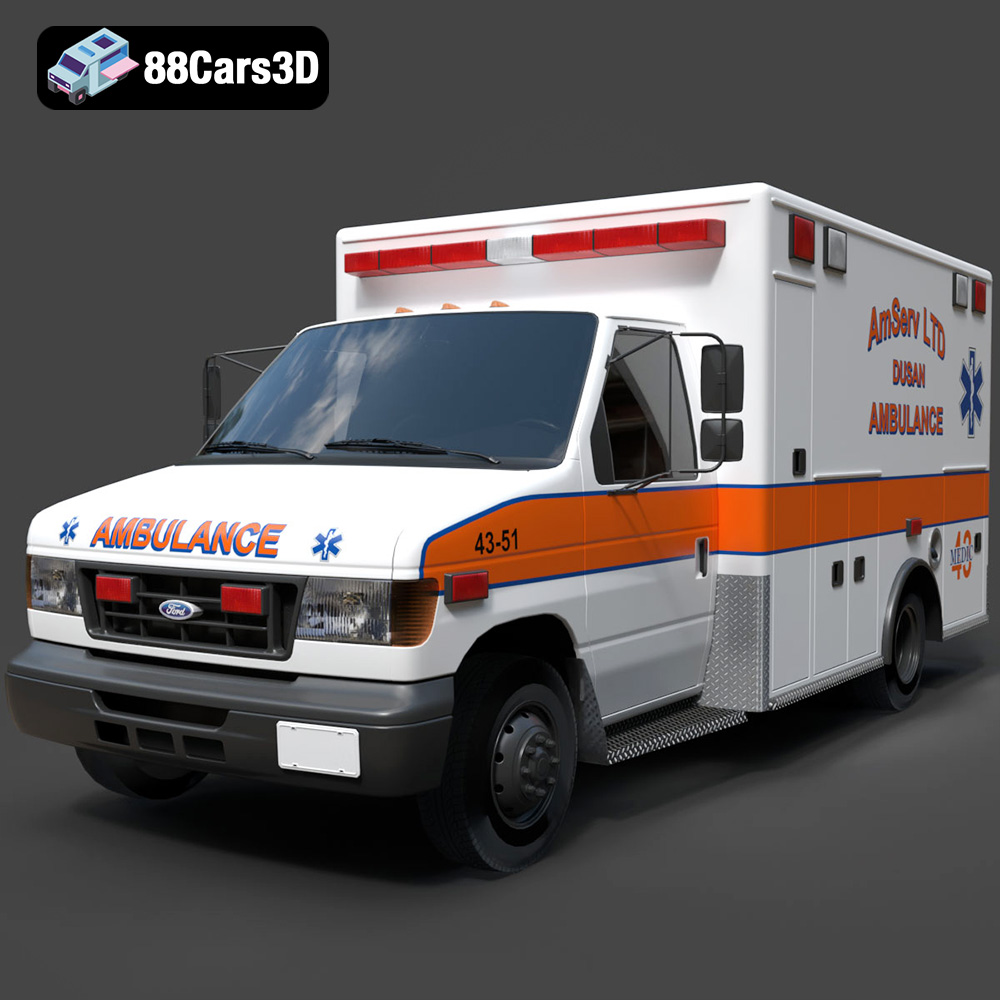
Ford Ambulance AmServ LTD Dusan-002 3D Model
Texture: Yes
Material: Yes
Download the Ford Ambulance AmServ LTD Dusan-002 3D Model featuring a high-detail exterior and interior, realistic textures, and emergency lighting. Includes .blend, .fbx, .obj, .glb, .stl, .ply, .unreal, and .max formats for rendering, simulation, and game development.
Price: $19.99
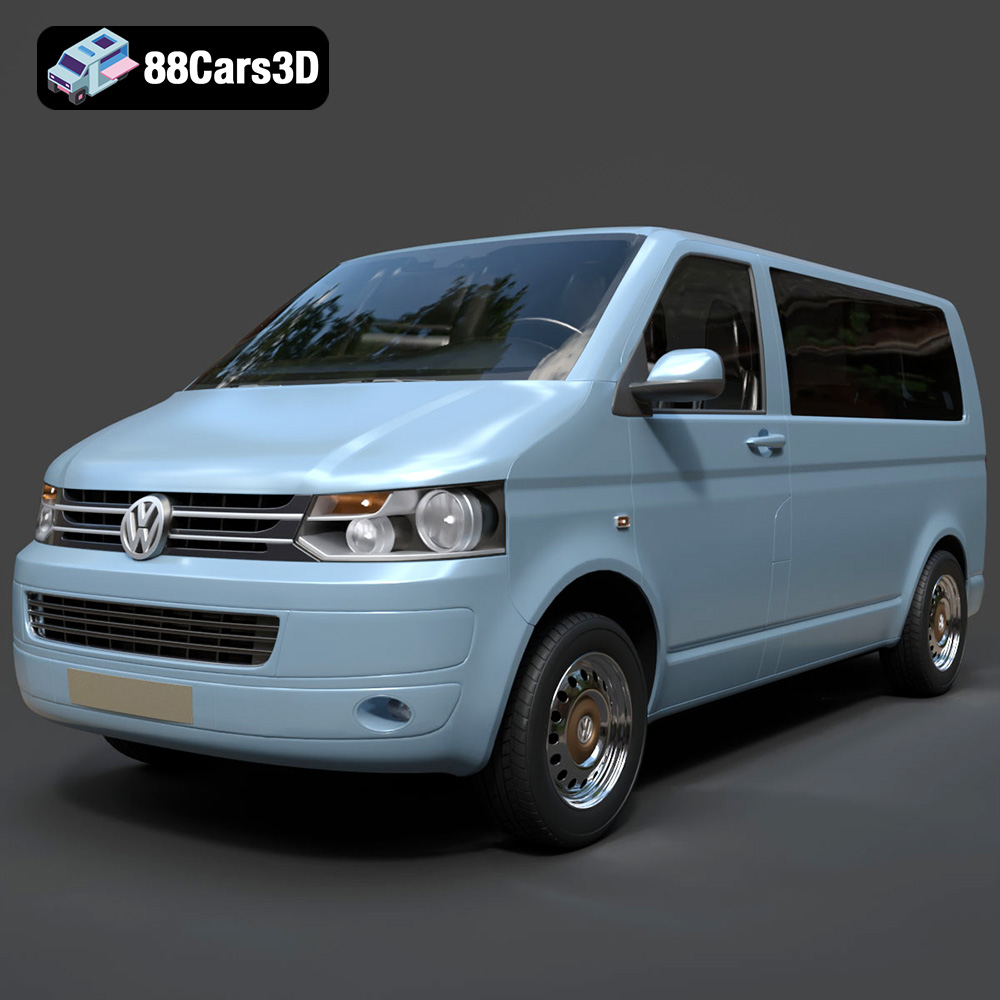
Volkswagen Transporter T5 FL 2010 3D Model
Texture: Yes
Material: Yes
Download the Volkswagen Transporter T5 FL 2010 3D Model featuring clean geometry, realistic detailing, and a fully modeled interior. Includes .blend, .fbx, .obj, .glb, .stl, .ply, .unreal, and .max formats for rendering, simulation, and game development.
Price: $22.99
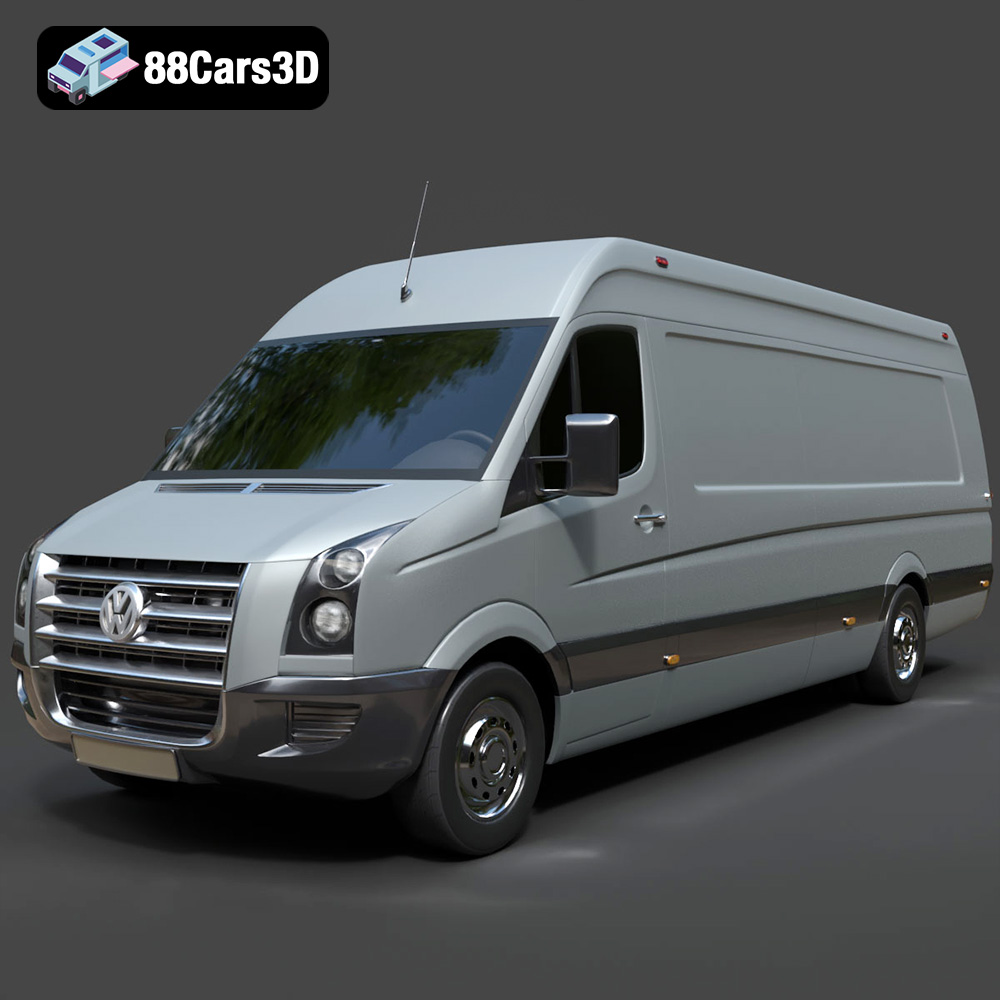
Volkswagen Crafter 2020 3D Model
Texture: Yes
Material: Yes
Download the Volkswagen Crafter 2020 3D Model featuring clean geometry, realistic detailing, and a fully modeled interior. Includes .blend, .fbx, .obj, .glb, .stl, .ply, .unreal, and .max formats for rendering, simulation, and game development.
Price: $22.99
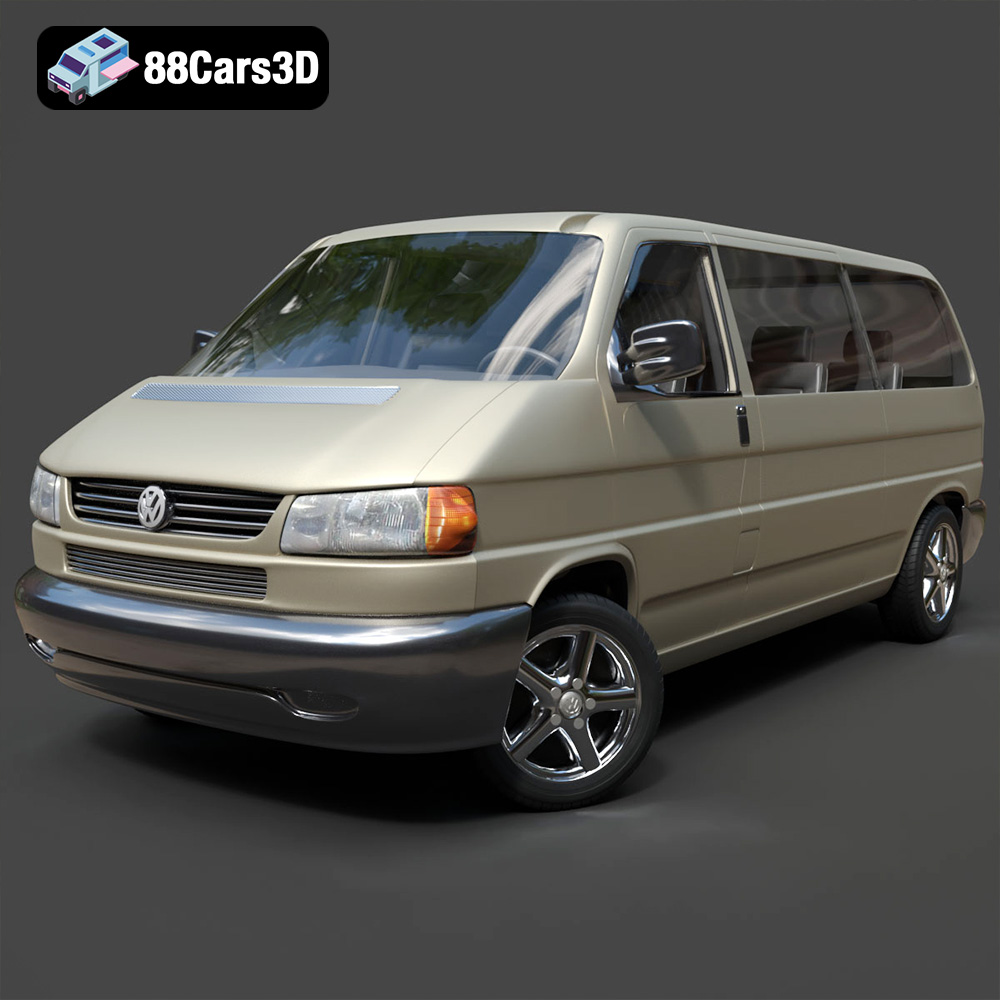
Volkswagen Caravelle 2020 3D Model
Texture: Yes
Material: Yes
Download the Volkswagen Caravelle 3D Model featuring a detailed exterior, functional interior, and optimized topology. Includes .blend, .fbx, .obj, .glb, .stl, .ply, .unreal, and .max formats for rendering, simulation, and game development.
Price: $23.99
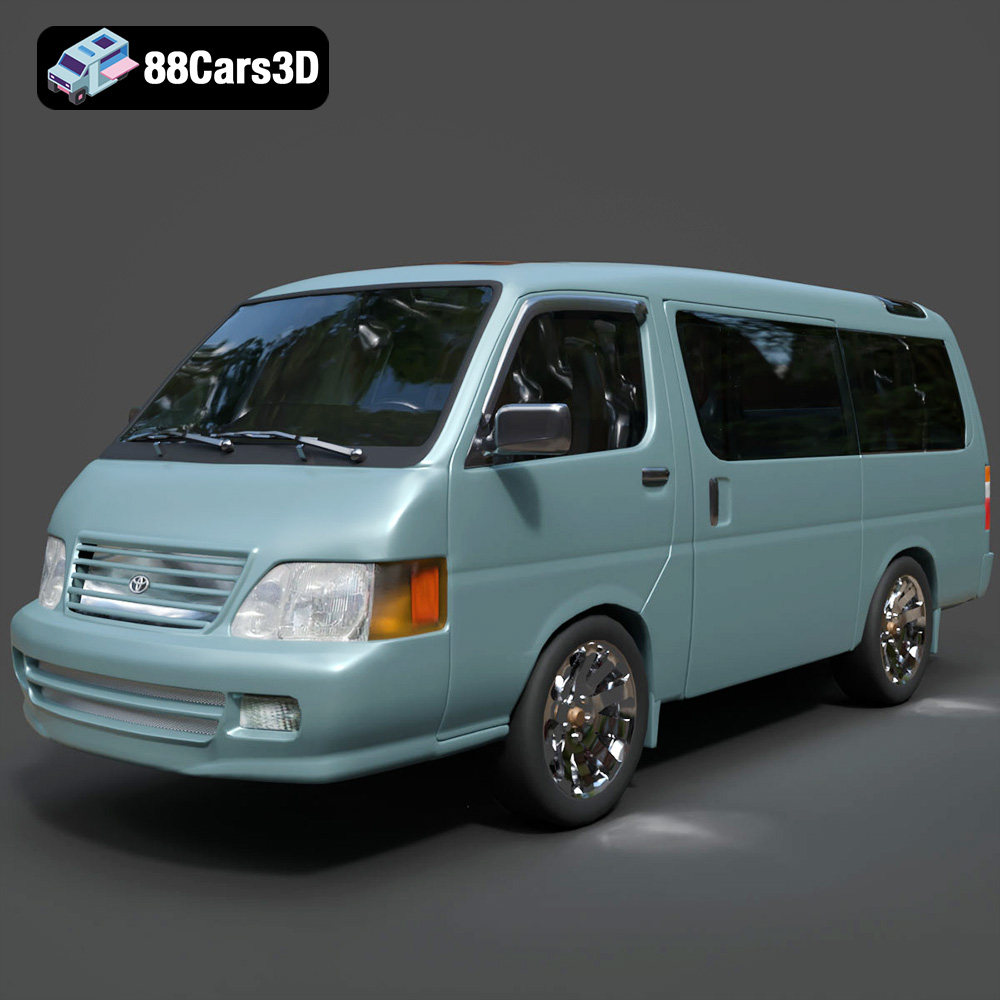
Toyota Hiace 3D Model
Texture: Yes
Material: Yes
Download the Toyota Hiace 3D Model featuring versatile design and detailed exterior. Includes .blend, .fbx, .obj, .glb, .stl, .ply, .unreal, and .max formats for rendering, simulation, and game development.
Price: $21.99
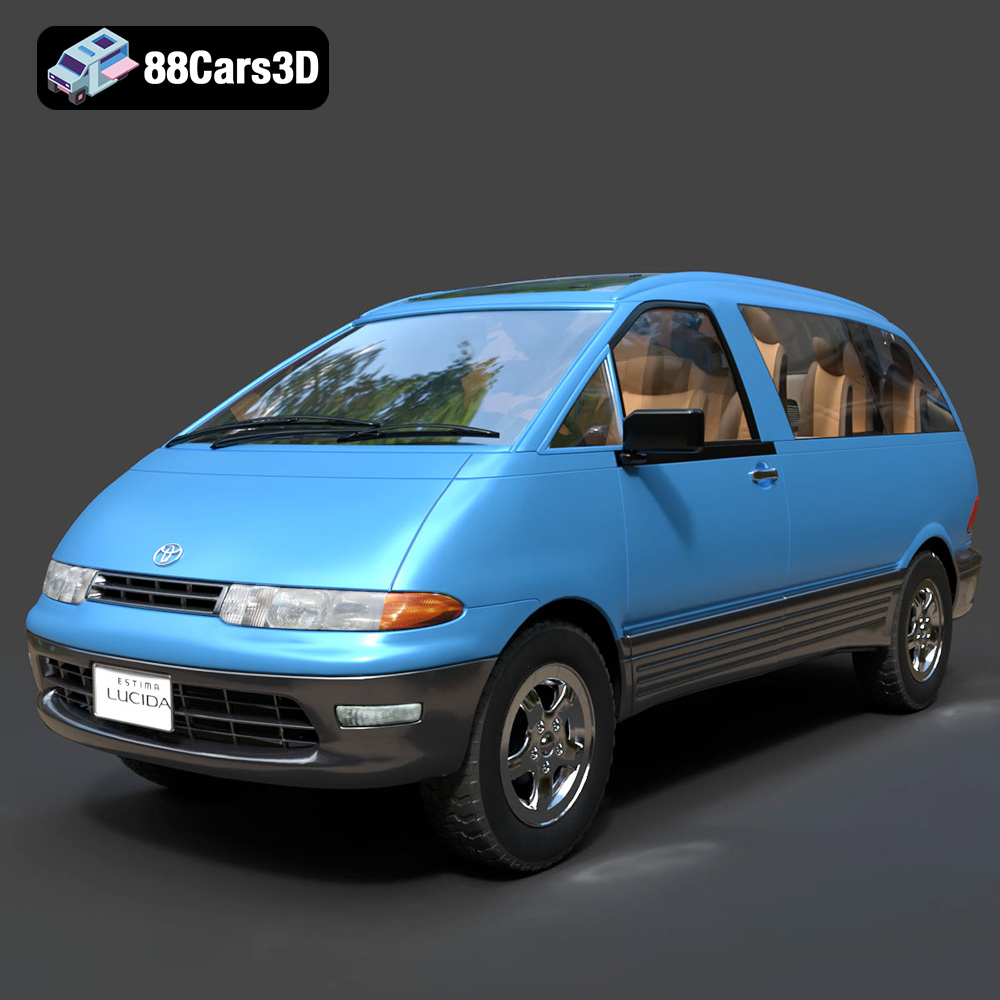
Toyota Estima Lucida 3D Model
Texture: Yes
Material: Yes
Download the Toyota Estima Lucida 3D Model featuring its iconic compact MPV design, versatile interior, and accurate exterior details. Includes .blend, .fbx, .obj, .glb, .stl, .ply, .unreal, and .max formats for rendering, simulation, and game development.
Price: $24.99

Toyota Alphard 3D Model
Texture: Yes
Material: Yes
Download the Toyota Alphard 3D Model featuring a detailed luxury minivan design with an accurate exterior and interior. Includes .blend, .fbx, .obj, .glb, .stl, .ply, .unreal, and .max formats for rendering, simulation, and game development.
Price: $21.99
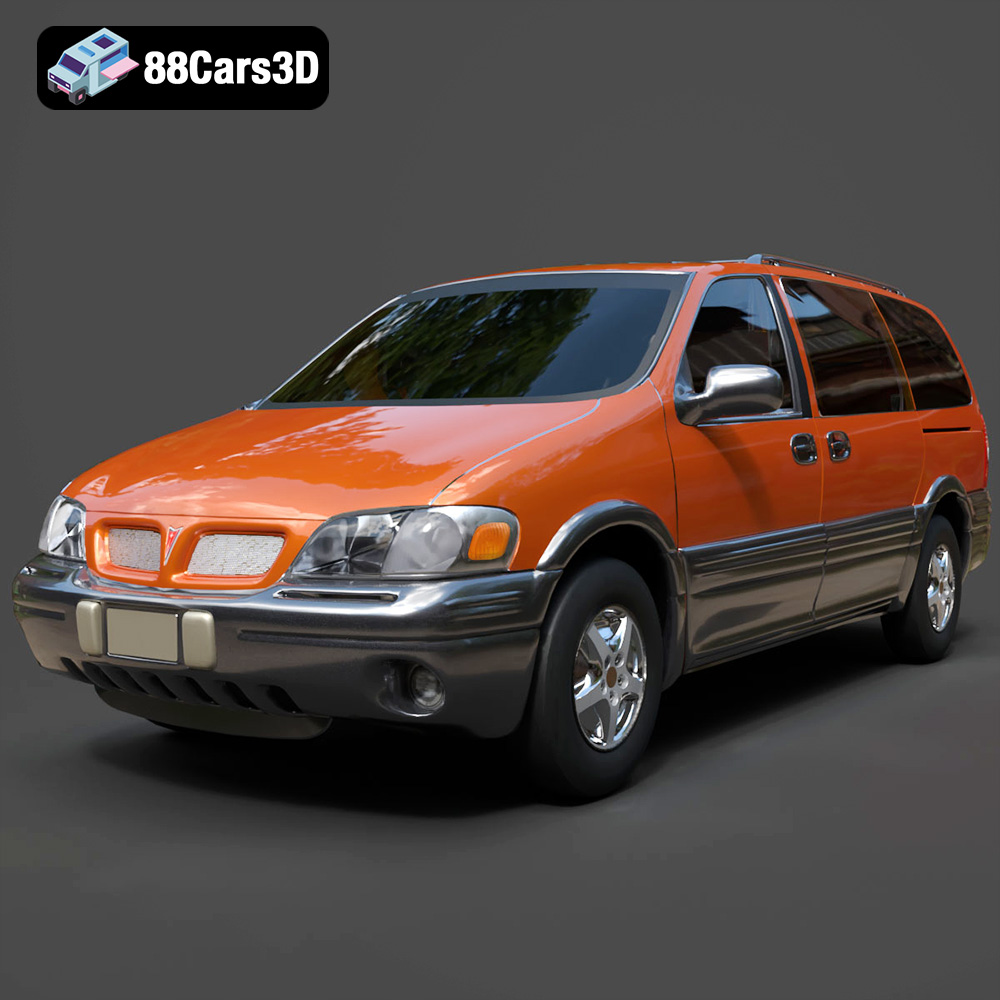
Pontiac Montana 1998 3D Model
Texture: Yes
Material: Yes
Download the Pontiac Montana 1998 3D Model featuring a detailed exterior, functional interior, and optimized mesh. Includes .blend, .fbx, .obj, .glb, .stl, .ply, .unreal, and .max formats for rendering, simulation, and game development.
Price: $21.99
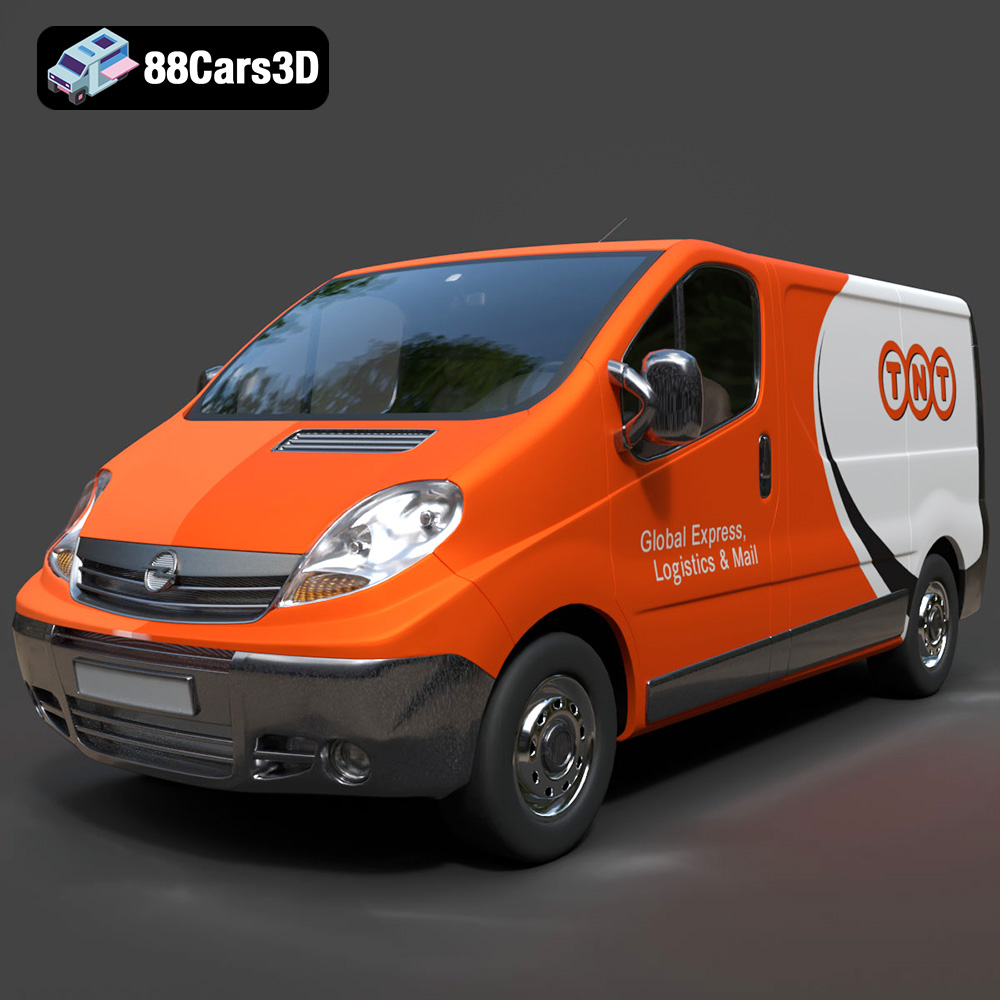
Opel Vivaro 3D Model
Texture: Yes
Material: Yes
Download the Opel Vivaro 3D Model featuring a versatile commercial van design with balanced detailing. Includes .blend, .fbx, .obj, .glb, .stl, .ply, .unreal, and .max formats for rendering, simulation, and game development.
Price: $21.99
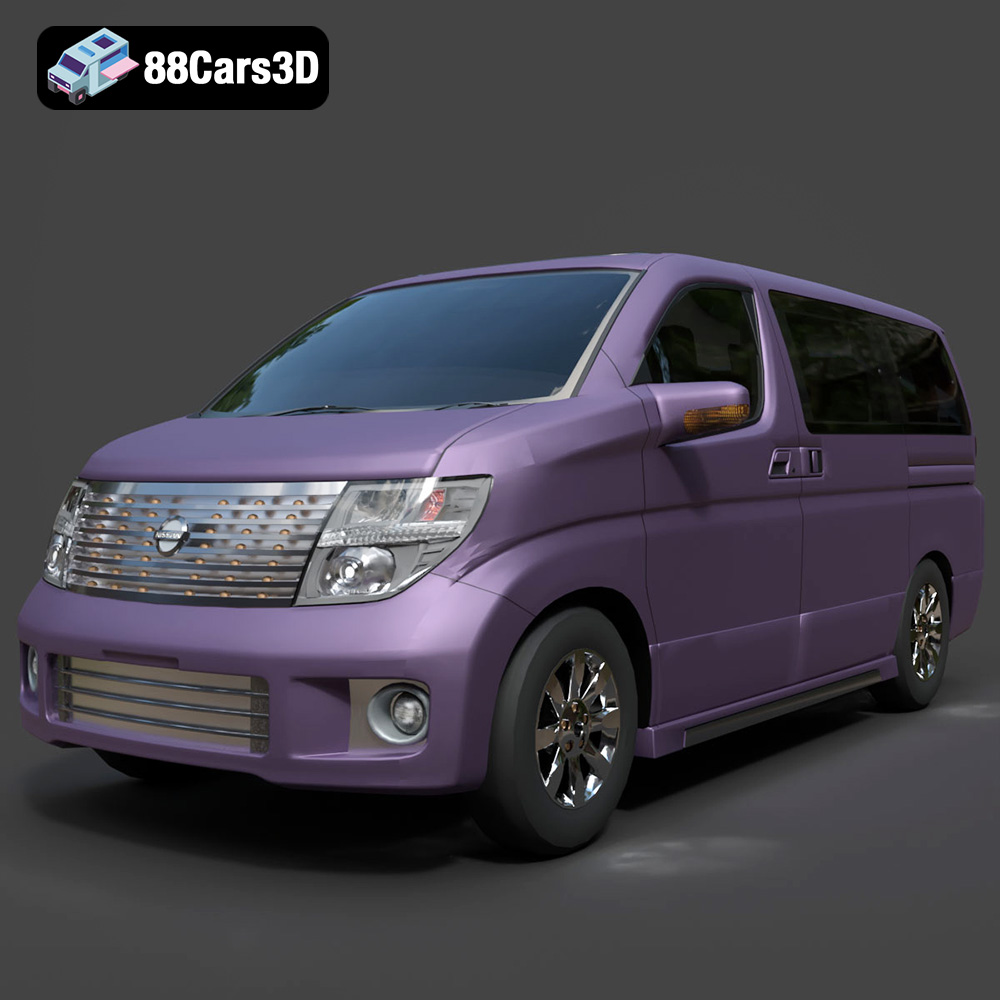
Nissan Elgrand 3D Model
Texture: Yes
Material: Yes
Download the Nissan Elgrand 3D Model featuring a versatile minivan design. Includes .blend, .fbx, .obj, .glb, .stl, .ply, .unreal, and .max formats for rendering, simulation, and game development.
Price: $21.99
