

In today’s competitive landscape, showcasing products effectively is paramount. For the automotive industry, where design, engineering, and aesthetics converge, traditional static images or pre-rendered videos often fall short of capturing the full essence of a vehicle. This is where Unreal Engine steps in, transforming the way we present 3D car models. With its unparalleled real-time rendering capabilities, Unreal Engine empowers artists and developers to create breathtakingly interactive product demonstrations, allowing customers to explore, customize, and truly connect with a vehicle before it even leaves the assembly line.
Imagine a potential buyer not just seeing a car, but virtually stepping inside it, changing its paint color with a click, opening doors, or even experiencing its driving dynamics in a simulated environment. This level of immersion and interactivity is no longer a futuristic dream; it’s a present-day reality achievable with Unreal Engine. From automotive visualization to real-time rendering for configurators and marketing campaigns, the engine offers a robust toolkit for creators. This comprehensive guide will walk you through the essential steps and advanced techniques for building compelling interactive product demos, leveraging high-quality assets – such as those found on platforms like 88cars3d.com – and harnessing Unreal Engine’s powerful features to captivate your audience.
Laying the Foundation: Project Setup and Asset Management
The journey to a stunning interactive demo begins with a solid foundation: proper Unreal Engine project setup and meticulous asset management. Neglecting these early steps can lead to performance bottlenecks, organizational nightmares, and ultimately, a less polished final product. Understanding how to configure your project for real-time rendering and how to efficiently integrate high-quality 3D car models is critical for success.
Initial Unreal Engine Project Configuration
When starting a new project in Unreal Engine, selecting the right template and settings is crucial. For automotive visualization, consider beginning with the “Games” > “Blank” template or the “Film, Television, and Live Events” > “Blank” template, as these offer minimal starter content and a clean slate, allowing you to build your specific environment. Alternatively, the “Archviz” template can provide useful initial lighting setups. Ensure your project is configured for “Desktop/Console” quality and set the target render device to “Maximum Quality.” Critically, enable key plugins such as “Datasmith Importer” for CAD data (if applicable), “Chaos Physics” for realistic vehicle dynamics, and “Virtual Camera” if you plan on virtual production workflows. For optimal visual fidelity, consider enabling “Lumen Global Illumination” and “Nanite Virtualized Geometry” from the outset under Project Settings > Rendering, as these features will define the visual quality of your automotive visualization. Always use a consistent project directory structure to keep your assets organized from day one.
Sourcing and Integrating High-Quality 3D Car Models
The visual quality of your interactive demo heavily relies on the source 3D models. High-quality 3D car models are characterized by clean topology, accurate dimensions, proper UV mapping, and realistic material separation. Marketplaces like 88cars3d.com specialize in providing production-ready automotive assets specifically optimized for Unreal Engine, featuring clean mesh data and prepared material IDs. When importing, FBX is a widely supported format. Use the Datasmith importer for CAD data or complex assemblies, as it intelligently converts CAD scenes into Unreal Engine assets while preserving hierarchy and metadata. During import, ensure settings like “Combine Meshes” are carefully considered; for configurators, it’s often better to import components (body, wheels, interior parts) as separate meshes to allow for individual material changes and interactions. Always inspect the imported mesh for correct scaling (Unreal Engine uses centimeters), proper normals, and non-overlapping UVs crucial for realistic PBR materials.
Maintaining Asset Organization and Naming Conventions
A well-organized Content Browser is the backbone of any large Unreal Engine project, especially when dealing with numerous game assets for different car models and environments. Establish clear folder structures from the start: e.g., `Content/Cars/Brand/Model/Meshes`, `Content/Cars/Brand/Model/Materials`, `Content/Environments/Assets`, `Content/Blueprints`, `Content/Maps`. Implement a consistent naming convention for all assets (e.g., `SM_Car_Body`, `M_Car_Paint`, `T_Car_Albedo`, `BP_CarConfigurator`). This makes assets easy to find, reference, and manage, particularly when collaborating with a team or returning to a project after some time. Use asset redirects to clean up deleted assets and ensure references remain valid. Regular content audits and cleanup using the “Fix Up Redirectors in Folder” option are good practices to maintain a lean and efficient project.
Mastering Visual Fidelity: Materials, Lighting, and Rendering
Once your project is set up and models are imported, the next critical phase involves bringing them to life with stunning visual fidelity. This is where Unreal Engine truly shines, offering an array of tools for creating incredibly realistic PBR materials, dynamic lighting, and advanced rendering techniques that elevate your automotive visualization to cinematic levels.
Crafting Realistic PBR Materials in Unreal Engine
The foundation of realistic rendering lies in Physically Based Rendering (PBR) materials. In Unreal Engine’s Material Editor, you’ll work with parameters like Base Color (Albedo), Metallic, Specular, Roughness, Normal, and Emissive. For car paint, understanding the nuances of these parameters is key. A metallic paint, for instance, requires a high Metallic value (0.9-1.0) and varying Roughness for clear coat reflections, often layered with a clear coat shader. Fabric interiors will have low Metallic values and higher Roughness. Leather benefits from detailed normal maps and subtle variations in its Roughness map. Always use correctly calibrated texture maps, preferably at resolutions like 2048×2048 or 4096×4096, which are essential for close-up details. Utilize material functions for common patterns and layers, creating reusable components like carbon fiber or brushed metal. Experiment with the “Clear Coat” shading model for realistic car paints, which provides an additional layer of specular reflection over the base material, accurately simulating lacquer. This level of detail in material creation is what transforms a simple 3D model into a truly believable game asset.
Real-Time Global Illumination with Lumen
Lumen is Unreal Engine’s groundbreaking real-time global illumination and reflections system, revolutionizing real-time rendering. It enables dynamic indirect lighting and reflections that react immediately to changes in direct lighting or geometry, eliminating the need for pre-baked lightmaps. For automotive demos, Lumen means your car will realistically interact with its environment: changing paint colors will affect the color of bounced light, and opening a car door will dynamically update the interior illumination. To enable Lumen, navigate to Project Settings > Rendering and ensure “Lumen Global Illumination” and “Lumen Reflections” are turned on. Experiment with the Lumen settings, such as “Final Gather Quality” and “Scene Lighting Quality,” to balance visual fidelity and performance. Complement Lumen with Screen Space Global Illumination (SSGI) as a fallback for distant objects or situations where Lumen might struggle. Leveraging Lumen allows you to create incredibly dynamic and immersive scenes without the lengthy bake times associated with traditional lighting solutions.
Leveraging High-Fidelity Rendering Features (Nanite, Virtual Textures)
Unreal Engine 5 introduces transformative features like Nanite and Virtual Textures, designed to handle immense detail without crippling performance. Nanite virtualized geometry allows you to import film-quality 3D car models with millions of polygons directly into Unreal Engine, automatically handling LODs and streaming. This means you no longer need to manually optimize polygon counts for your hero assets, letting artists focus on detail rather than technical constraints. Simply enable Nanite on your static meshes in the Static Mesh Editor. For complex surfaces or large terrains, Virtual Textures (VT) allow for massive texture resolutions (e.g., 8192×8192 or higher) by streaming only the visible parts, reducing VRAM usage and improving performance. This is particularly useful for detailed floor textures or custom decals. To enable VT, go to Project Settings > Rendering > Virtual Textures and check “Enable Virtual Texture Support.” These features collectively empower artists to push the boundaries of visual fidelity, making every detail on your automotive visualization shine.
Bringing it to Life: Interaction and Blueprint Scripting
A static visual, no matter how stunning, lacks the engagement of an interactive experience. This section delves into the exciting realm of bringing your 3D car models to life through user interaction, powered primarily by Unreal Engine’s intuitive Blueprint visual scripting system. From basic material swaps to dynamic vehicle physics, interactivity is key to a compelling product demo.
Designing Interactive Elements with Blueprint
Blueprint visual scripting is Unreal Engine’s powerful node-based system that allows you to create complex gameplay and interactive logic without writing a single line of code. For an interactive automotive demo, you can use Blueprint to implement actions such as changing paint colors, opening doors, turning on headlights, or even switching camera views. Start by creating a Blueprint Actor for your car. Inside, you can define custom events and variables. For example, to change paint color: create an array of material instances for different colors, and on a user input event (e.g., a UI button click), use a “Set Material” node to swap the car body’s material. For opening a door, you might use a “Timeline” node to animate the door’s rotation over a set duration. Inputs can be configured through the Project Settings > Input section, linking keyboard keys or mouse clicks to specific events within your Blueprint. Remember to keep your Blueprint logic modular and well-commented for easier debugging and future expansion.
Building a Basic Automotive Configurator
An automotive configurator is perhaps the most common and impactful interactive demo. Using Blueprint, you can empower users to customize various aspects of the car. The core concept involves exposing changeable parameters (paint color, wheel style, interior trim, accessories) and linking them to UI widgets. Create a UI Widget Blueprint (UMG) with buttons or dropdowns for each customizable option. When a button is clicked, it can call a function in your Car Blueprint to update the corresponding mesh or material. For example, selecting “Red Paint” would call a function that sets the car’s paint material to `M_Car_Paint_Red`. For wheel swaps, you would use a “Set Static Mesh” node to replace the current wheel mesh with a different one. Consider using data tables or data assets to store customization options, making it easy to add new colors, rims, or interior options without modifying Blueprint logic directly. This modular approach is essential for scalable and maintainable real-time rendering applications.
Implementing Vehicle Physics and Movement
For a truly immersive experience, especially in simulations or virtual test drives, integrating realistic vehicle physics is paramount. Unreal Engine’s Chaos Vehicles plugin (or the legacy PhysX Vehicle system) provides robust tools for this. Start by setting up a Vehicle Blueprint using the “Vehicle Advanced” template. You’ll define parameters like engine torque curve, gear ratios, suspension settings, and wheel friction. The complexity can range from simple arcade-style controls to highly accurate simulations. Use input axis mappings (throttle, brake, steer) to control the vehicle. For a basic demonstration, you might allow users to drive the car around a small, contained environment, showcasing its turning radius or acceleration. Even without full drivability, subtle physics interactions, like a slight suspension compress when opening a door, can add a layer of realism. Optimize physics settings for performance, especially when targeting AR/VR optimization, as complex simulations can be CPU-intensive. Refer to Unreal Engine’s official documentation on Chaos Vehicles for in-depth setup guides and parameter tuning.
Cinematic Storytelling and Virtual Production
Interactive demos aren’t just about static configurators; they can also weave compelling narratives. Unreal Engine’s capabilities extend to virtual production and cinematic sequencing, allowing you to craft high-quality promotional videos, dynamic showcases, and even integrate your 3D car models into live broadcast environments.
Crafting Dynamic Cinematics with Sequencer
Sequencer is Unreal Engine’s non-linear cinematic editor, allowing you to create stunning, polished cinematics directly within the engine. This is invaluable for producing high-quality promotional videos or dynamic introductory sequences for your interactive demo. With Sequencer, you can animate camera movements, character actions, environmental changes, and even material properties over time. For an automotive cinematic, you might keyframe a camera sweeping around the car, showcasing its design details, then transition to a close-up of the interior, animating the dashboard lights or a steering wheel turn. Utilize Sequencer’s robust track system for actors, skeletal meshes, audio, and events. Integrate level sequences into your Blueprint logic to trigger cinematic moments based on user interaction or game events. Leveraging post-processing volumes within your sequence (e.g., depth of field, motion blur, color grading) can further enhance the cinematic quality, creating a truly professional automotive visualization that competes with pre-rendered animations.
Integrating with Virtual Production Workflows (LED Walls)
Unreal Engine has become the cornerstone of virtual production, particularly for LED wall stages. This revolutionary workflow allows filmmakers to shoot live actors in front of real-time rendered environments, eliminating greenscreens and post-production keying. For automotive applications, this means you can place an actual car on an LED stage and have it appear to be driving through any virtual environment rendered by Unreal Engine. This technique is perfect for high-end commercials or product launches, offering unprecedented flexibility and realism. The workflow typically involves syncing the LED wall’s render to a camera’s frustum, using nDisplay for multi-display setups, and ensuring perfect camera tracking. Your 3D car models and environment assets must be highly optimized and visually consistent for this demanding real-time rendering environment. Careful calibration of color and lighting between the physical and virtual worlds is essential to achieve seamless integration. This innovative approach blurs the lines between reality and digital, creating captivating visual experiences.
Animating Details with Niagara Particle Systems
While Sequencer handles broad animations, Niagara is Unreal Engine’s powerful next-generation particle system, perfect for adding subtle, realistic details to your automotive demo. Think beyond explosions and smoke; Niagara can simulate dust kicked up by wheels, subtle exhaust fumes, or even realistic rain effects on the car body. For car engines, you could create a small, localized heat haze effect emanating from vents, or for an electric car, a subtle energy glow. The modular nature of Niagara allows for incredibly complex and performant effects. You can use GPU particles for high counts, leverage sprite or mesh renderers, and even use Niagara to simulate material-based effects by directly manipulating parameters. When creating visual effects for 3D car models, consider the scale and performance impact. Simple, subtle effects often contribute more to realism than overly complex ones, especially for real-time rendering where frame rate is paramount.
Performance Optimization for Broad Reach
Creating a visually stunning interactive demo is only half the battle; ensuring it runs smoothly across a range of hardware is equally important. Performance optimization is a continuous process, especially when targeting diverse platforms like desktop, AR/VR optimization, or web browsers. Without it, even the most beautiful automotive visualization can become an unusable slideshow.
Strategic LODs and HLODs for Scalability
Level of Detail (LODs) is a fundamental optimization technique where simpler versions of a mesh are used when an object is further away from the camera. While Nanite largely automates this for static meshes, for non-Nanite meshes (like skeletal meshes or older assets) and for non-Nanite-supported platforms, manual LODs are crucial. Generate LODs within the Static Mesh Editor, aiming for a significant poly count reduction (e.g., LOD1: 50%, LOD2: 25%, LOD3: 10% of base mesh) at appropriate screen sizes. Hierarchical LODs (HLODs) take this a step further by combining multiple small static meshes into a single, simpler mesh for very distant objects, significantly reducing draw calls. This is particularly effective for complex environments surrounding your main 3D car models. Carefully set up HLOD clusters and build them using the World Partition window or HLOD Outliner. Proper LOD and HLOD implementation can drastically improve CPU performance by reducing the number of triangles and draw calls rendered in the scene, maintaining a smooth frame rate for your real-time rendering.
Optimizing Textures and Material Complexity
Textures and materials are often significant contributors to performance overhead, especially VRAM usage. Use appropriate texture resolutions; a 4K texture on an object rarely seen up close is wasteful. Leverage texture streaming (which is enabled by default in Unreal Engine) and consider using texture atlases where multiple small textures are combined into one larger texture to reduce draw calls. Compress textures using optimal compression settings for their type (e.g., DXT1/BC1 for opaque, DXT5/BC3 for transparent with alpha). In the Material Editor, aim for efficient material graphs. Avoid overly complex shader instructions; use static switches for conditional logic instead of branching code that computes both paths. Utilize material instances to change parameters without recompiling shaders, making customization faster and more efficient. Combining meshes that share the same material using the “Merge Actors” tool can also reduce draw calls. Always profile your GPU usage using tools like the “Stat GPU” command or Unreal Engine’s built-in GPU Visualizer to identify bottlenecks related to texture sampling and shader complexity.
Target-Specific Optimizations: AR/VR and Mobile
Developing for AR/VR optimization and mobile platforms introduces unique constraints that demand specialized optimization strategies. For VR, maintaining a consistent high frame rate (e.g., 90 FPS) is critical to prevent motion sickness. This often means reducing graphical fidelity significantly: fewer dynamic lights, simpler materials, lower texture resolutions, and aggressive LODs. Forward rendering is often preferred over deferred rendering for VR due to better MSAA support and less overhead. For mobile, asset budgets are even tighter. Use mobile-specific rendering paths, static lighting where possible, and highly optimized meshes (e.g., under 100k triangles for the main car body). Package size is also a concern for mobile; remove unused assets and compress build data. For AR applications, consider the computational demands of tracking and rendering simultaneously. Utilize Unreal Engine’s scalable rendering settings to create different quality profiles for various target devices. Rigorous testing on target hardware is indispensable to ensure a smooth and responsive user experience across all intended platforms for your game assets.
Conclusion
The ability to create captivating, interactive product demos in Unreal Engine has become an indispensable tool for the automotive industry and beyond. From the initial meticulous setup of your project and the integration of high-quality 3D car models sourced from platforms like 88cars3d.com, to mastering the nuances of PBR materials and dynamic Lumen lighting, every step contributes to an unparalleled visual experience. Blueprint scripting empowers you to breathe life into your models, enabling intricate configurators and immersive interactions, while Sequencer and Niagara elevate your presentation to cinematic heights.
As we’ve explored, cutting-edge features like Nanite revolutionize the handling of high-fidelity geometry, allowing artists to focus on detail without significant optimization headaches. However, the journey isn’t complete without a strong focus on optimization. Strategic LODs, efficient texture management, and target-specific adjustments for AR/VR optimization are crucial for delivering a smooth, high-performance experience across diverse hardware. By embracing these workflows and continuously refining your approach, you can create automotive visualization experiences that not only showcase products but truly engage and inspire. The future of product demonstration is interactive, real-time, and built with the power of Unreal Engine.
Featured 3D Car Models

Ford Ambulance AmServ LTD Dusan-002 3D Model
Texture: Yes
Material: Yes
Download the Ford Ambulance AmServ LTD Dusan-002 3D Model featuring a high-detail exterior and interior, realistic textures, and emergency lighting. Includes .blend, .fbx, .obj, .glb, .stl, .ply, .unreal, and .max formats for rendering, simulation, and game development.
Price: $19.99
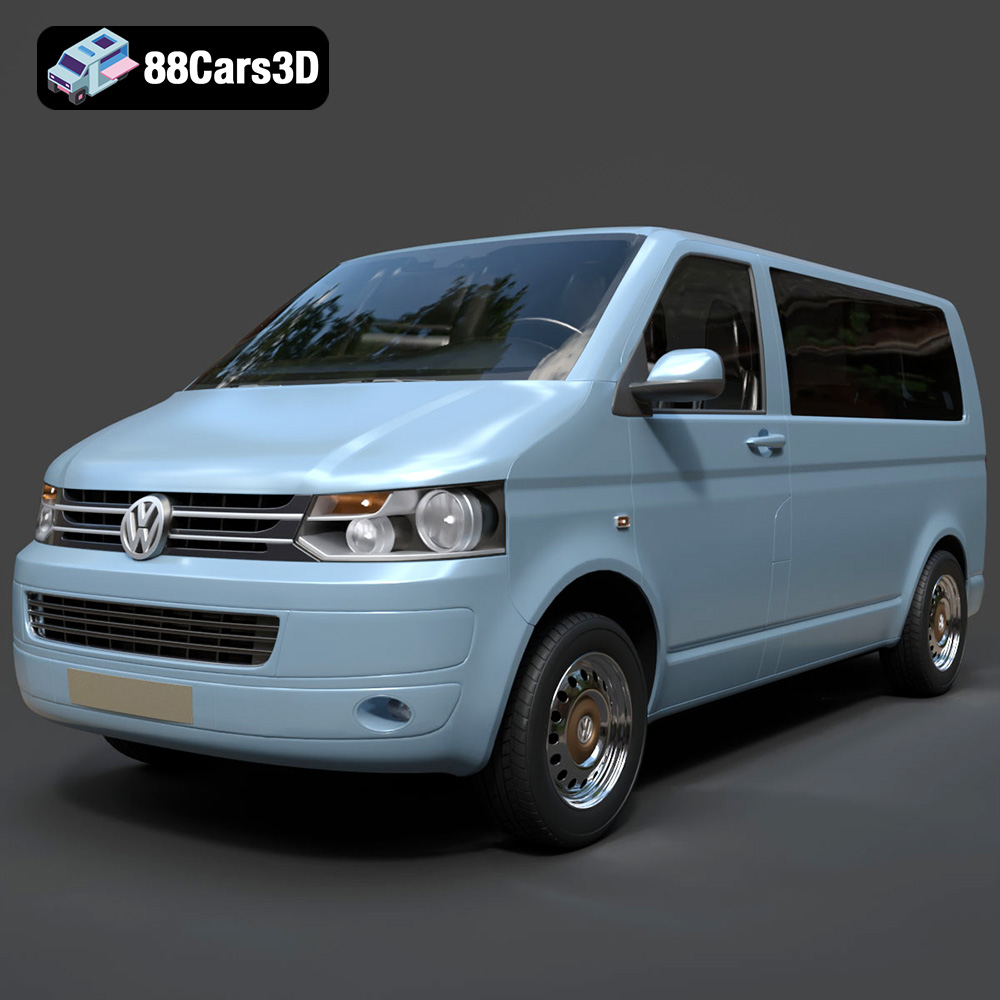
Volkswagen Transporter T5 FL 2010 3D Model
Texture: Yes
Material: Yes
Download the Volkswagen Transporter T5 FL 2010 3D Model featuring clean geometry, realistic detailing, and a fully modeled interior. Includes .blend, .fbx, .obj, .glb, .stl, .ply, .unreal, and .max formats for rendering, simulation, and game development.
Price: $22.99
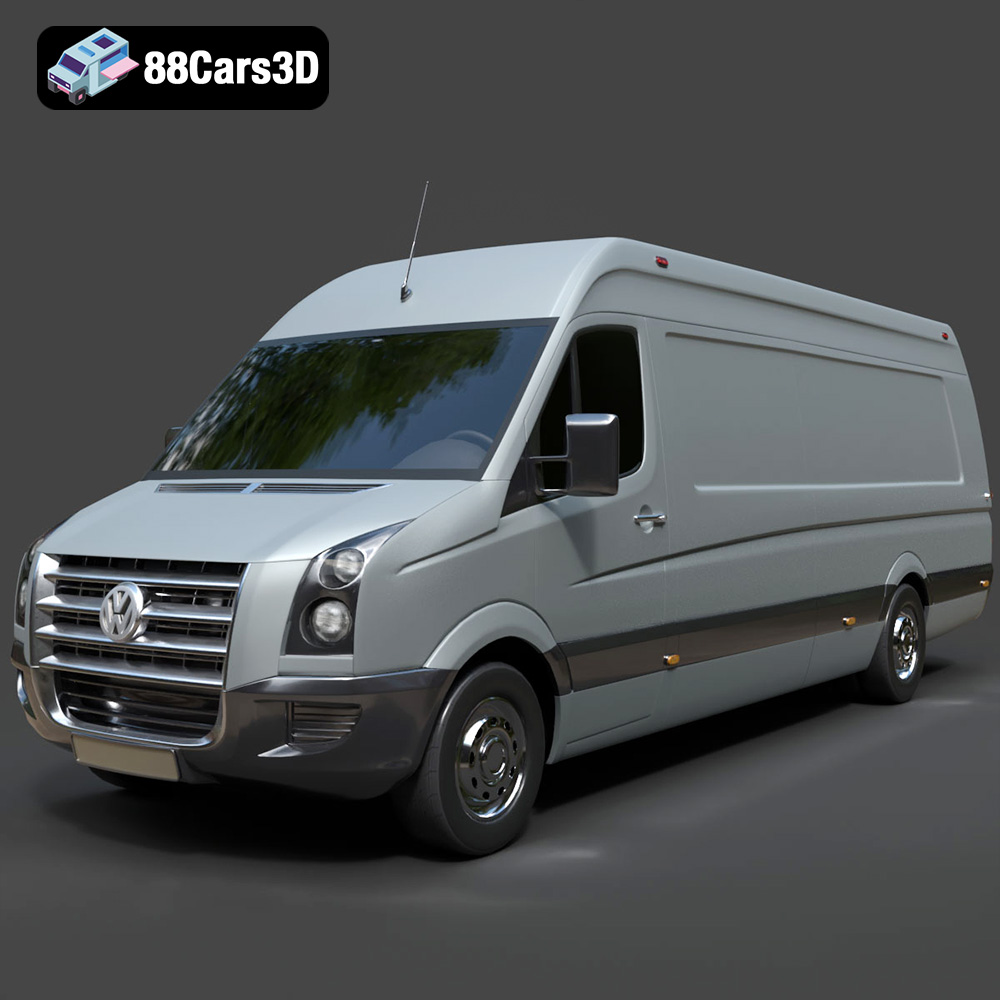
Volkswagen Crafter 2020 3D Model
Texture: Yes
Material: Yes
Download the Volkswagen Crafter 2020 3D Model featuring clean geometry, realistic detailing, and a fully modeled interior. Includes .blend, .fbx, .obj, .glb, .stl, .ply, .unreal, and .max formats for rendering, simulation, and game development.
Price: $22.99
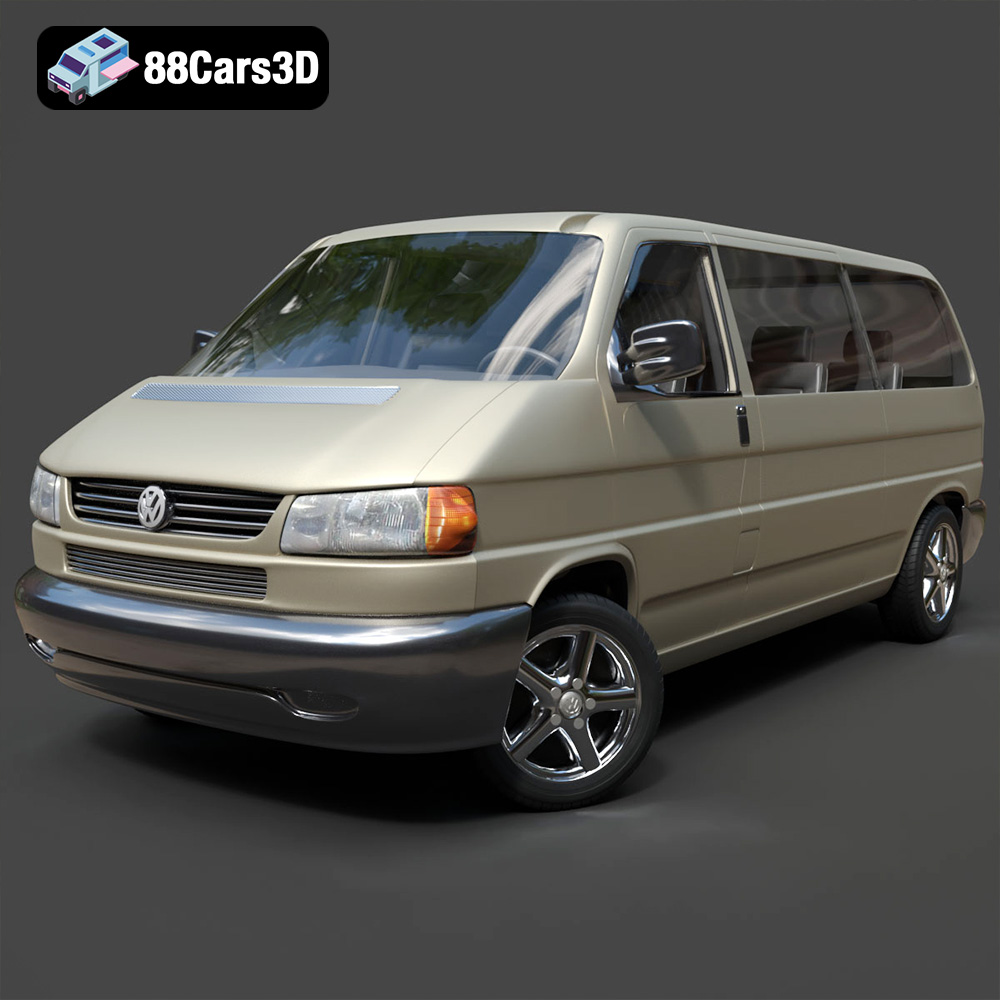
Volkswagen Caravelle 2020 3D Model
Texture: Yes
Material: Yes
Download the Volkswagen Caravelle 3D Model featuring a detailed exterior, functional interior, and optimized topology. Includes .blend, .fbx, .obj, .glb, .stl, .ply, .unreal, and .max formats for rendering, simulation, and game development.
Price: $23.99
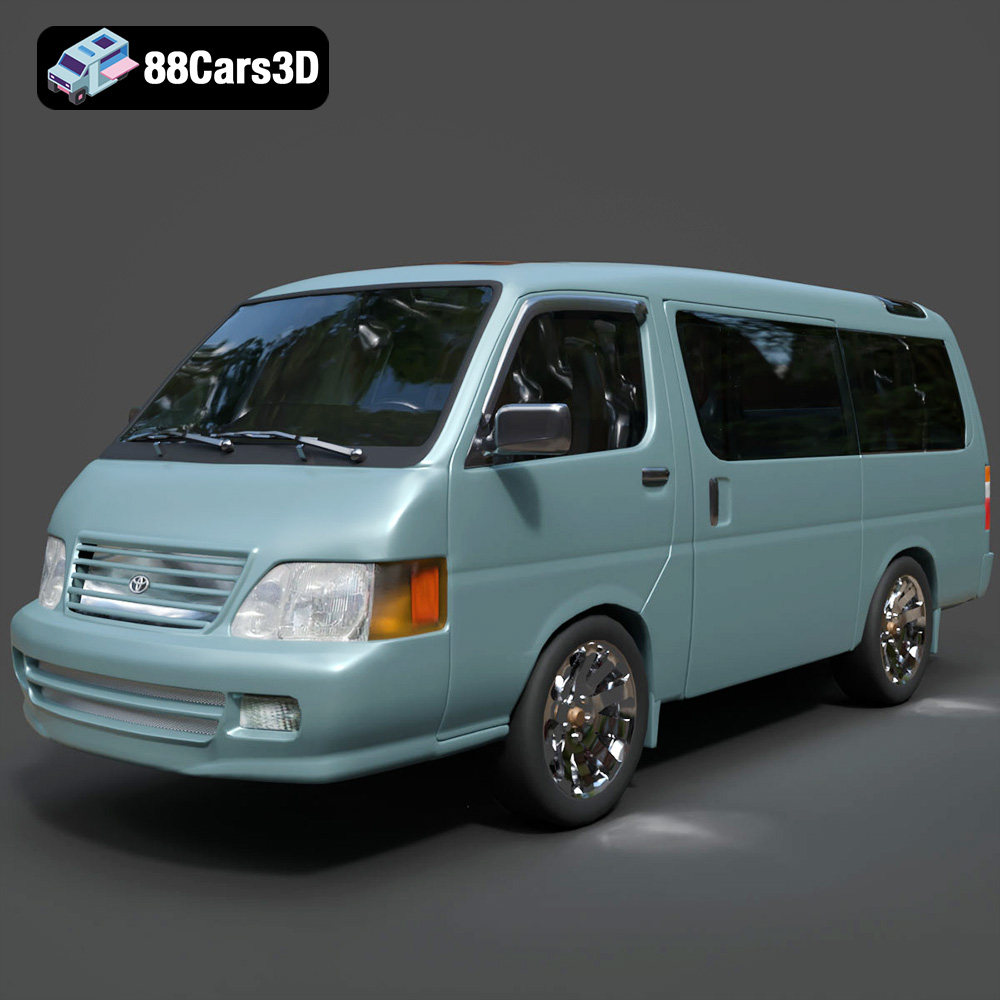
Toyota Hiace 3D Model
Texture: Yes
Material: Yes
Download the Toyota Hiace 3D Model featuring versatile design and detailed exterior. Includes .blend, .fbx, .obj, .glb, .stl, .ply, .unreal, and .max formats for rendering, simulation, and game development.
Price: $21.99
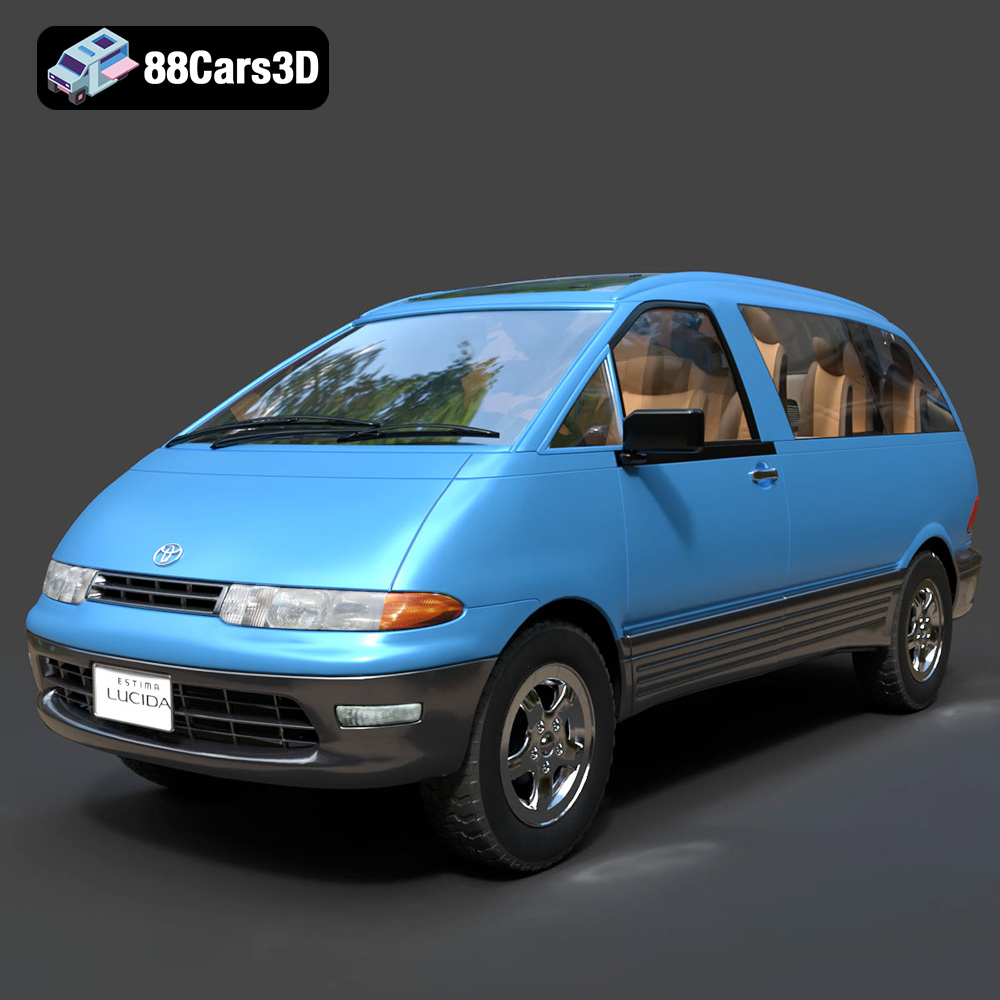
Toyota Estima Lucida 3D Model
Texture: Yes
Material: Yes
Download the Toyota Estima Lucida 3D Model featuring its iconic compact MPV design, versatile interior, and accurate exterior details. Includes .blend, .fbx, .obj, .glb, .stl, .ply, .unreal, and .max formats for rendering, simulation, and game development.
Price: $24.99

Toyota Alphard 3D Model
Texture: Yes
Material: Yes
Download the Toyota Alphard 3D Model featuring a detailed luxury minivan design with an accurate exterior and interior. Includes .blend, .fbx, .obj, .glb, .stl, .ply, .unreal, and .max formats for rendering, simulation, and game development.
Price: $21.99
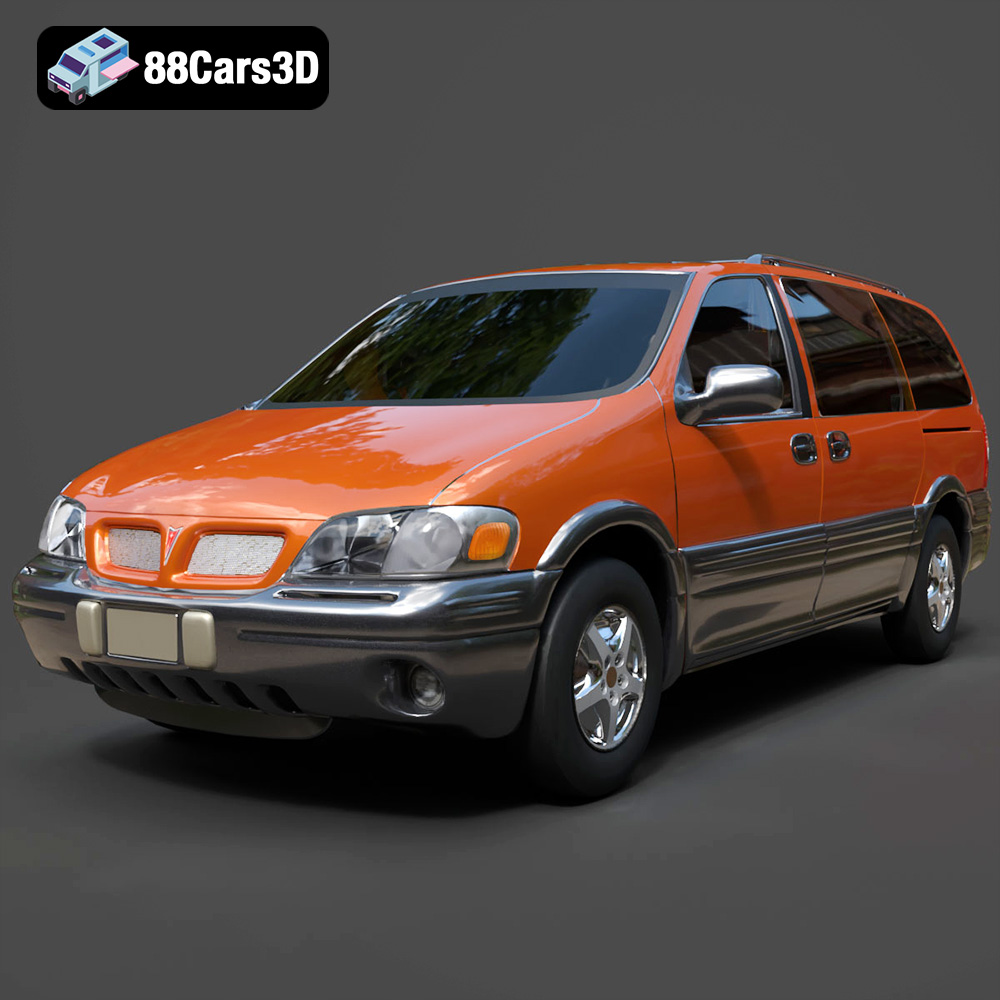
Pontiac Montana 1998 3D Model
Texture: Yes
Material: Yes
Download the Pontiac Montana 1998 3D Model featuring a detailed exterior, functional interior, and optimized mesh. Includes .blend, .fbx, .obj, .glb, .stl, .ply, .unreal, and .max formats for rendering, simulation, and game development.
Price: $21.99
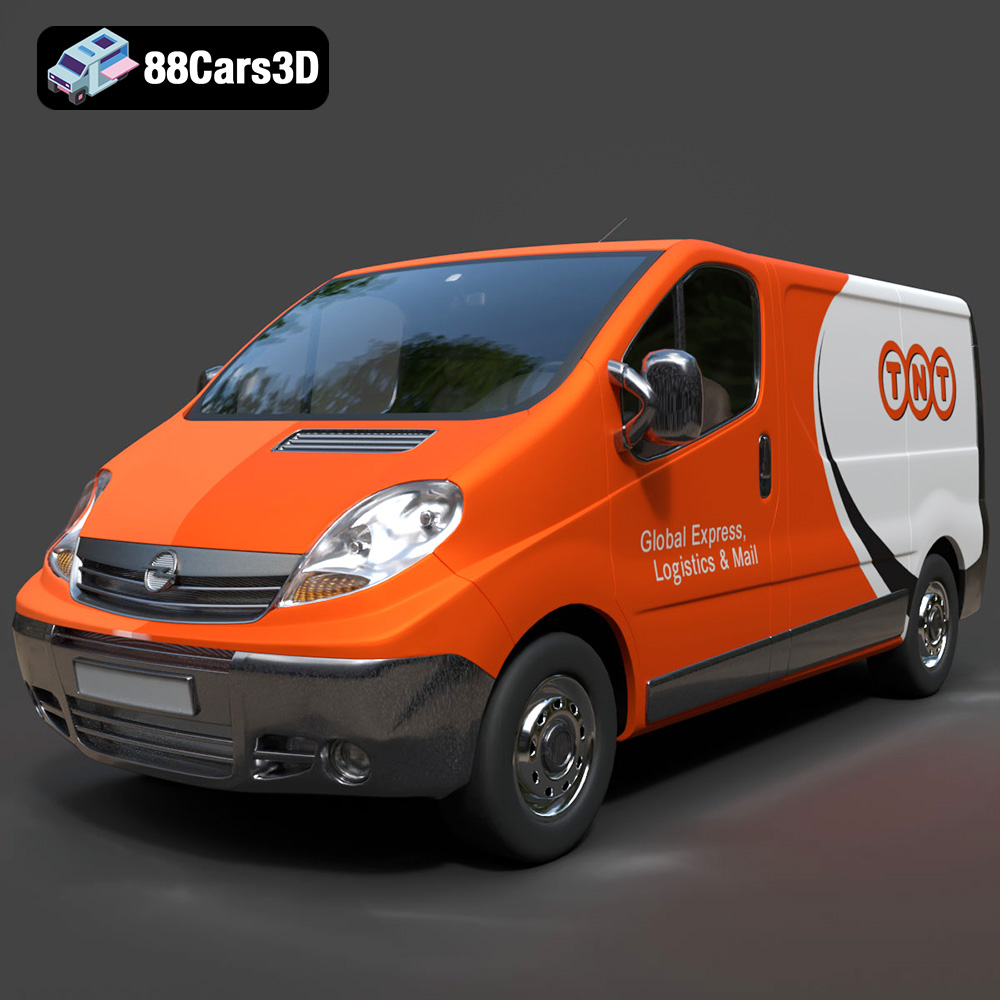
Opel Vivaro 3D Model
Texture: Yes
Material: Yes
Download the Opel Vivaro 3D Model featuring a versatile commercial van design with balanced detailing. Includes .blend, .fbx, .obj, .glb, .stl, .ply, .unreal, and .max formats for rendering, simulation, and game development.
Price: $21.99
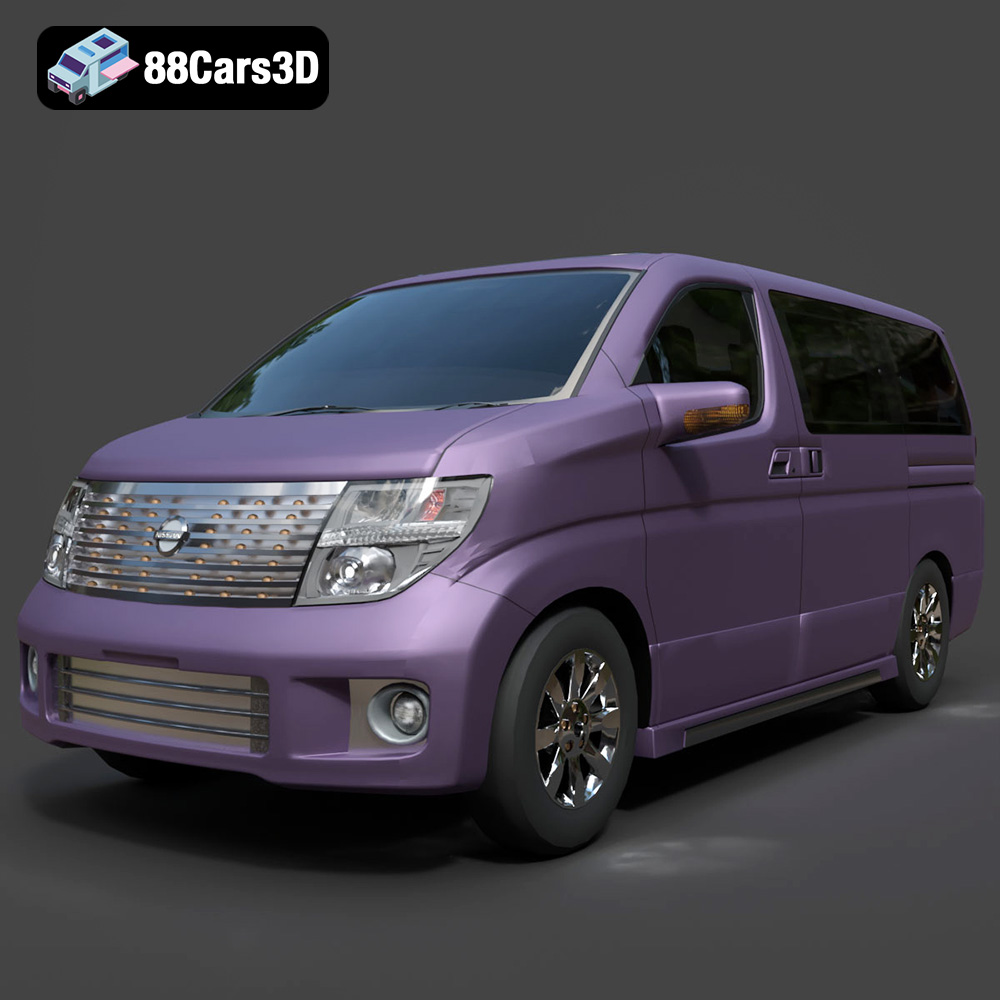
Nissan Elgrand 3D Model
Texture: Yes
Material: Yes
Download the Nissan Elgrand 3D Model featuring a versatile minivan design. Includes .blend, .fbx, .obj, .glb, .stl, .ply, .unreal, and .max formats for rendering, simulation, and game development.
Price: $21.99
