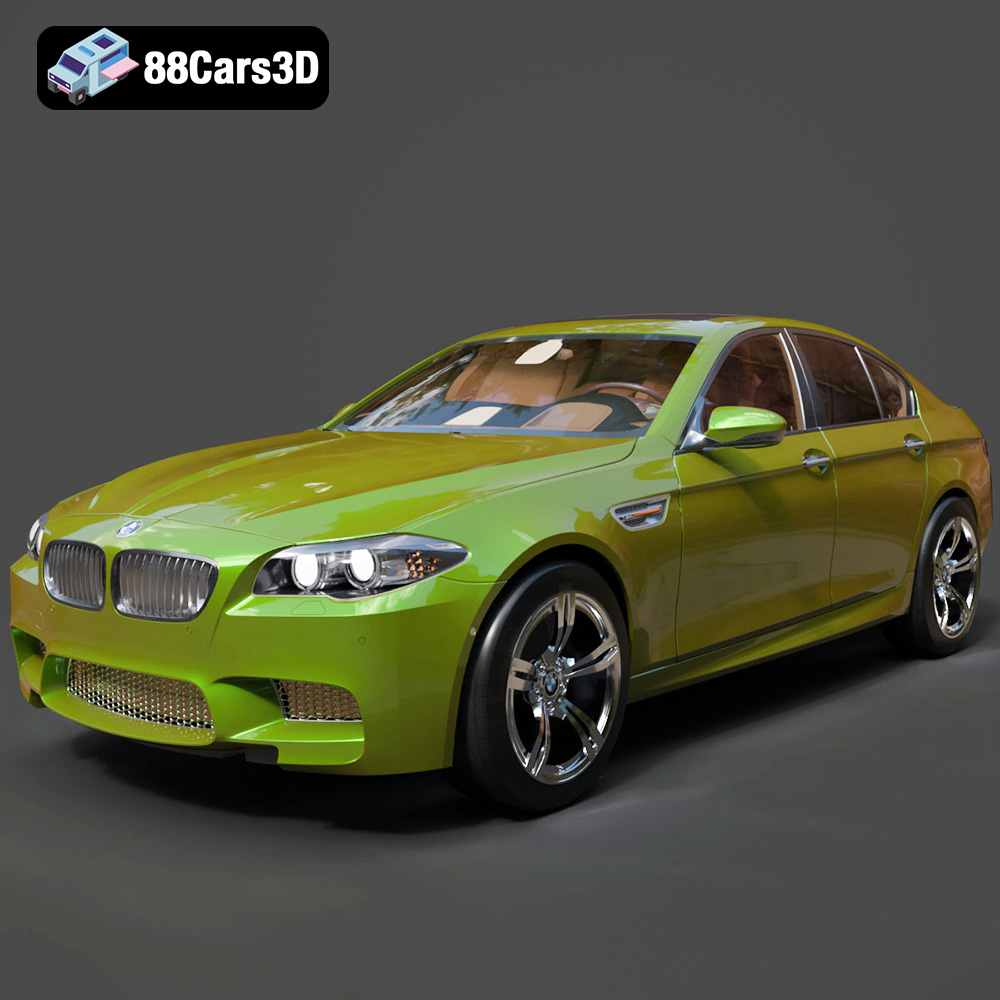
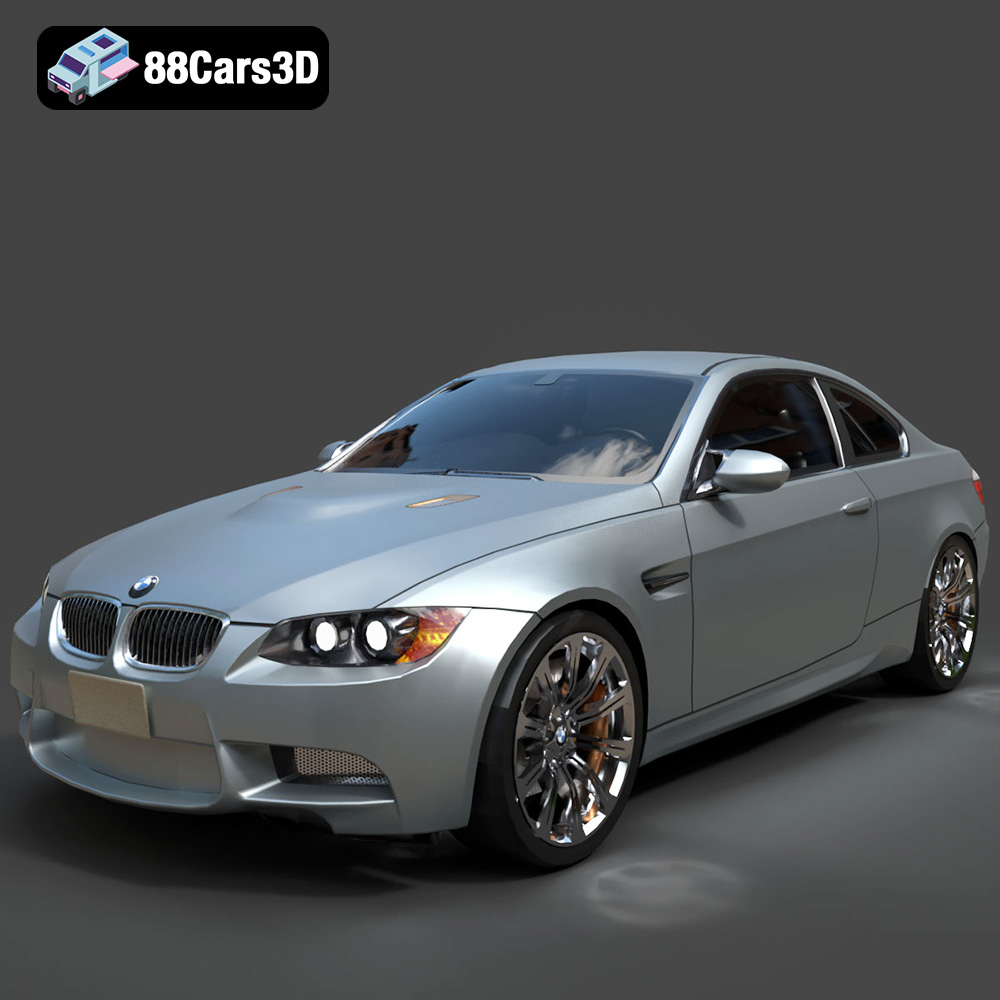
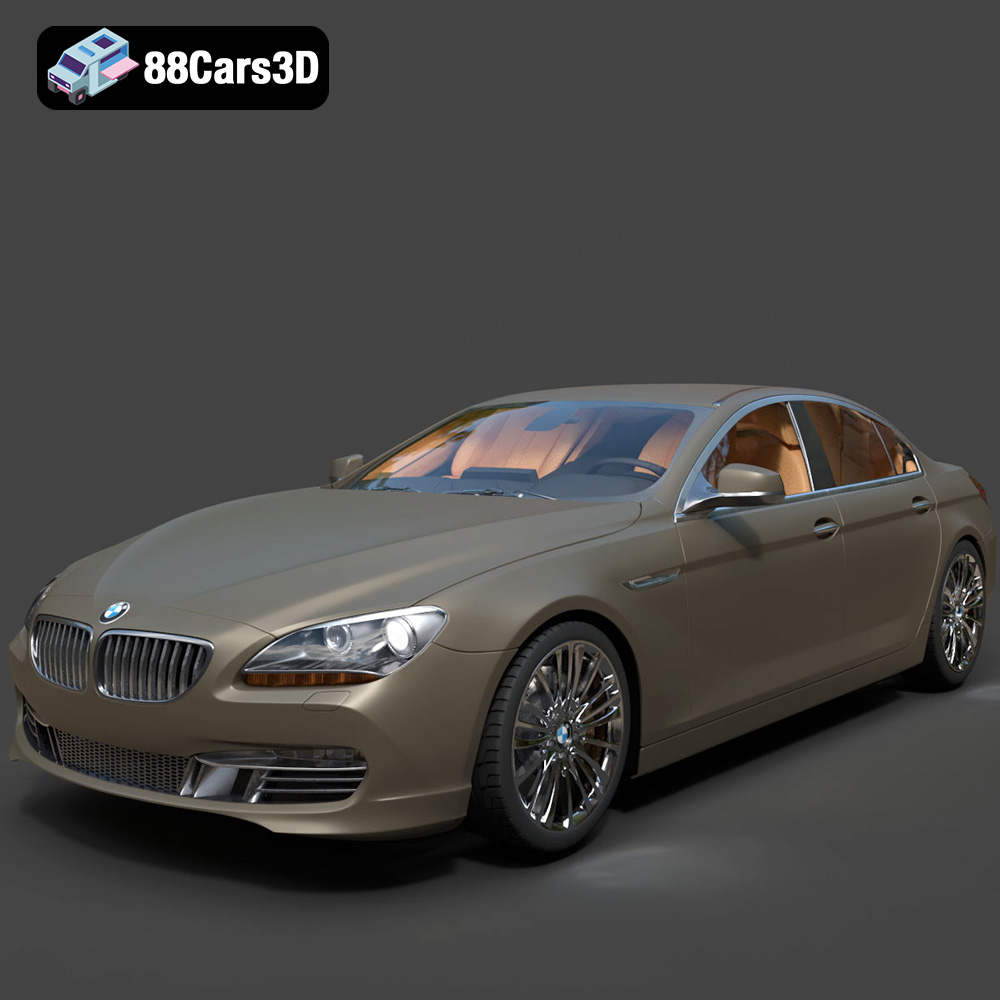
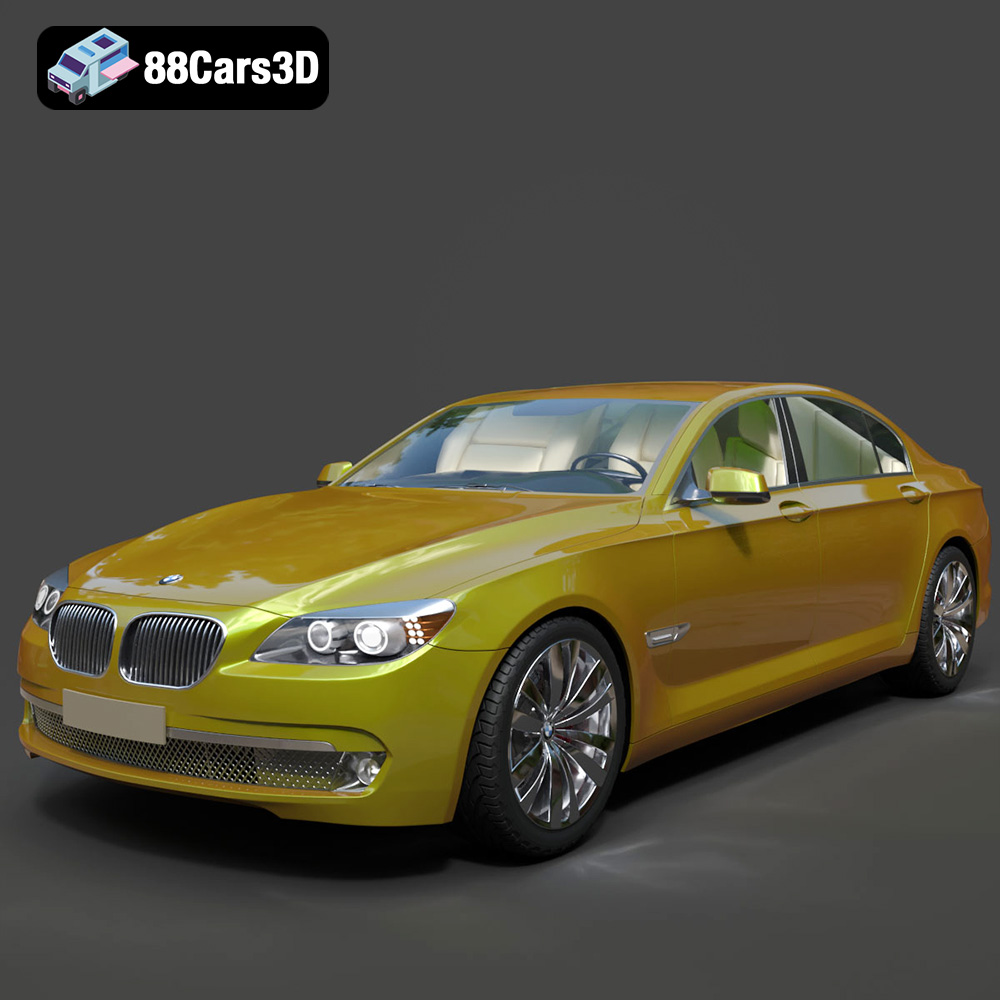
The Evolution of Automotive 3D Modeling: From Low Poly to Ultra-Realistic Assets
Automotive design has captivated humanity for over a century, embodying a blend of engineering prowess and artistic expression. In the digital realm, capturing this essence has been a relentless pursuit, driving the incredible evolution of automotive 3D modeling. From the blocky, pixelated vehicles of early video games to the breathtakingly photorealistic renders seen in today’s films and virtual showrooms, the journey of 3D car assets is a testament to exponential technological advancement and artistic innovation.
This comprehensive guide delves into the fascinating history of 3D vehicle assets, exploring the techniques, software, and hardware advancements that have propelled us from simple geometric representations to hyper-detailed ultra-realistic car models. Whether you’re a budding 3D artist, a game developer, an automotive designer, or simply an enthusiast, understanding this evolution offers invaluable insight into the power and potential of digital creation.
The Dawn of Digital Wheels: Early Low-Poly Automotive Models (1980s-1990s)
The genesis of automotive 3D modeling was marked by severe technical limitations. The computational power available in the 1980s and early 1990s was a fraction of what even a modern smartphone possesses, forcing artists and programmers to be incredibly resourceful.
The Constraints of Early Hardware
Early 3D graphics were bottlenecked by limited CPU processing power, minuscule RAM capacities, and rudimentary graphics accelerators. This meant that the number of polygons (triangles or quads) used to represent any object, especially a complex one like a car, had to be kept exceedingly low. A typical car in this era might consist of merely hundreds, or even dozens, of polygons.
Pixelated Pioneers: Early Gaming and Visualization
The gaming industry was the primary driver for early low-poly car models. Titles like Sega’s *Virtua Racing* (1992) revolutionized arcade graphics with its then-groundbreaking polygonal vehicles, albeit with very angular, abstract forms. Later, console games such as the early *Need for Speed* (1994) series on the 3DO and PlayStation pushed boundaries, offering recognizable, albeit still blocky, vehicles. These games relied heavily on player imagination to fill in the missing details.
Techniques and Tools for Low-Poly Modeling
- Basic Polygonal Modeling: Artists directly manipulated vertices, edges, and faces to sculpt forms. Software like AutoCAD (primarily for CAD, but adapted for basic 3D) or early versions of 3ds Max (then 3D Studio DOS) were used.
- Simple UV Mapping: Textures were often low-resolution (e.g., 64×64 or 128×128 pixels) and painted directly onto flattened UV layouts. Color gradients and simple patterns simulated details like headlights or grilles.
- Vertex Colors: Sometimes, colors were assigned directly to vertices, creating smooth, shaded transitions without needing complex texture maps.
- Limited Shading: Flat shading or Gouraud shading was common, providing a basic sense of depth without calculating complex light interactions.
The Rise of Mid-Poly: Adding Detail and Realism (Late 1990s-Early 2000s)
The turn of the millennium brought significant leaps in hardware and software, paving the way for mid-poly car models that began to resemble their real-world counterparts more closely.
Hardware Advancements and DirectX/OpenGL
Dedicated graphics cards (GPUs) became standard, equipped with hardware transform and lighting (T&L) capabilities. APIs like DirectX and OpenGL matured, allowing developers to harness this power for richer visuals. Polygon budgets increased dramatically, moving from hundreds to thousands, or even tens of thousands, of polygons per vehicle.
Bridging the Gap: Game Engines and Offline Rendering
Games like *Gran Turismo 3* (2001) and the early *Forza Motorsport* (2005) showcased vehicles with smoother curves, more intricate details, and improved lighting. Offline rendering, used for pre-rendered cinematics and early animation, also saw a boost, allowing for more complex scenes and higher-quality textures than real-time engines could manage.
Refined Modeling & Texturing Techniques
- Subdivision Surfaces (Basic): While not universally real-time, artists started using subdivision surface modeling (e.g., Catmull-Clark) to create smooth, curved surfaces more efficiently, then baking these details onto lower-poly game meshes.
- Normal Mapping (Early Adoption): This technique became a game-changer. It allowed artists to simulate high-frequency surface detail (like bolts, panel lines, or subtle dents) using a texture map, making a relatively mid-poly car model appear much more detailed than its polygon count suggested.
- Specular Maps: Separate textures controlled how shiny or reflective a surface appeared, adding a crucial layer of realism to metallic or painted areas.
- Higher-Resolution Textures: Texture maps commonly scaled up to 512×512 or 1024×1024 pixels, allowing for more intricate decals, grilles, and interior details.
To better illustrate the transition, let’s compare the characteristics of low-poly and mid-poly modeling:
| Feature | Low-Poly (1980s-1990s) | Mid-Poly (Late 1990s-Early 2000s) |
|---|---|---|
| Polygon Count (per vehicle) | Dozens to a few hundred (e.g., 50-500) | Thousands to tens of thousands (e.g., 5,000-50,000) |
| Geometric Detail | Very angular, abstract shapes, simple silhouettes. | Smoother curves, more recognizable features, some recessed areas. |
| Texture Resolution | Very low (e.g., 64×64, 128×128 pixels) | Medium (e.g., 512×512, 1024×1024 pixels) |
| Key Textures Used | Diffuse (color), Vertex Colors | Diffuse, Specular, Normal Maps |
| Typical Use Cases | Early arcade/console games, simple visualizations. | Console/PC games (PS2/Xbox era), pre-rendered cinematics. |
The Era of High-Poly: Towards Photorealism (Mid-2000s-Early 2010s)
As hardware continued its relentless march forward, high-poly car models became not just achievable but expected, particularly in high-end applications.
GPU Power and Shader Technology
The introduction of programmable shaders (pixel and vertex shaders) transformed how light interacted with surfaces. Artists could now define complex material properties, leading to more nuanced reflections, refractions, and surface appearances. GPUs became massively parallel processors, capable of rendering millions of polygons in real-time.
Beyond Gaming: Film, Advertising, and Automotive Design
While games continued to push visual boundaries (*Grand Theft Auto V*, *Forza Horizon*), the demands for extreme realism grew in other sectors. CGI automotive commercials began to rely heavily on photorealistic car models, often indistinguishable from real vehicles. Pixar’s *Cars* series (2006 onwards) exemplified the artistic potential of detailed 3D vehicle assets, even if stylized. Automotive design studios increasingly integrated high-fidelity 3D car visualization into their concept development and marketing.
Advanced Modeling & Texturing Workflows
- Advanced Subdivision Modeling: High-poly car modeling became synonymous with clean, quad-based subdivision surfaces, allowing for incredibly smooth and precise curves with a high level of control.
- Sculpting Details: Software like ZBrush or Mudbox was used to add intricate surface imperfections, panel gaps, and even tire tread details, which were then often baked down to normal maps for game engines.
- Detailed Normal/Displacement Mapping: Normal maps became higher resolution and more intricate, combined with displacement maps for actual geometric deformation, adding tactile realism to surfaces.
- Ambient Occlusion (AO): This technique simulated soft shadows where surfaces meet, dramatically improving perceived depth and realism.
- Complex Material Setups: Shaders became highly layered, incorporating multiple texture maps for color, gloss, reflectivity, and more, moving towards a physically plausible approach.
The Ultra-Realistic Frontier: Ray Tracing, PBR, and Digital Twins (2010s-Present)
The last decade has seen an explosion of techniques that push automotive 3D modeling into the realm of absolute photorealistic car rendering, blurring the lines between digital and reality.
Physically Based Rendering (PBR) and Real-Time Ray Tracing
Physically Based Rendering (PBR) became the industry standard. PBR materials accurately simulate how light interacts with real-world surfaces, using parameters like Albedo (base color), Roughness, Metallic, Normal, and Ambient Occlusion. This ensures consistent and realistic lighting across various environments.
Real-time Ray Tracing, enabled by powerful modern GPUs (like NVIDIA’s RTX series and AMD’s RX series), represents the pinnacle of realism. Instead of approximations, ray tracing accurately simulates the path of light, leading to:
- Global Illumination: Realistic indirect lighting and color bounce.
- Reflections: Perfect, environment-aware reflections on polished car surfaces.
- Refractions: Accurate light bending through glass and transparent materials.
- Shadows: Pixel-perfect, soft, and realistic shadows.
These technologies are critical for ultra-realistic automotive visualization in real-time environments like car configurators 3D and VR experiences.
Data-Driven Accuracy: CAD to 3D Workflow
Precision is paramount in automotive design 3D. The modern workflow often starts with engineering data from Computer-Aided Design (CAD) software (e.g., CATIA, SolidWorks). This highly accurate geometric data (often NURBS-based) is then converted or tessellated into polygonal meshes for rendering, ensuring the 3D car models are dimensionally perfect. Laser scanning and photogrammetry are also used to capture existing vehicles with unparalleled accuracy, creating highly detailed base meshes or textures.
The Metaverse and Digital Twins
The concept of digital twins automotive is gaining traction. These are highly accurate virtual replicas of physical cars, used for simulation, testing, virtual prototyping, and even predictive maintenance. This feeds into the burgeoning “metaverse,” where ultra-realistic 3D car assets are essential for virtual showrooms, immersive configurators, autonomous driving simulation, and realistic experiences in virtual reality (VR) and augmented reality (AR) applications.
Cutting-Edge Techniques & Software
- NURBS Modeling: For perfect, mathematically precise curves, especially in professional automotive design 3D. Rhino and Alias are key tools.
- Advanced Sculpting & Procedural Generation: ZBrush for organic details, Substance Designer for creating complex, tileable, and procedural textures.
- PBR Texturing Tools: Substance Painter for hand-painting and procedural texturing with PBR materials. Mari for extreme resolution texture painting.
- Real-time Rendering Engines: Unreal Engine and Unity are at the forefront, offering powerful real-time rendering, ray tracing, and cinematic tools, ideal for game development 3D cars, configurators, and architectural visualization.
- Offline Rendering Engines: V-Ray, Corona Renderer, Octane Render, Redshift, and Arnold provide unparalleled quality for pre-rendered cinematic CGI car renders and high-resolution marketing imagery.
The Toolkit of Today’s Automotive 3D Artist: Software and Hardware
Creating photorealistic car models demands a robust set of tools and powerful computing resources.
Modeling Software
- Autodesk Maya/3ds Max: Industry standards for polygonal and subdivision surface modeling, animation, and rendering.
- Blender: A powerful open-source alternative offering comprehensive modeling, sculpting, animation, and rendering capabilities (with Cycles).
- ZBrush/Modo: Excellent for sculpting intricate details and organic forms.
- Rhino/Alias: Specialized in NURBS modeling, crucial for precise, mathematically perfect surfaces often used in industrial and automotive design 3D.
Texturing & Shading
- Substance Painter: The go-to tool for PBR texture painting, weathering, and smart materials.
- Substance Designer: For procedural texture generation, creating endlessly repeatable and customizable materials.
- Mari: For ultra-high-resolution texture painting, often used in film VFX.
- Adobe Photoshop: Essential for all 2D texture editing, decal creation, and post-processing.
Rendering Engines
- V-Ray/Corona/Octane/Redshift/Arnold: Leading offline renderers for cinematic quality vehicle rendering.
- Unreal Engine/Unity: Dominant real-time engines for interactive experiences, games, virtual production, and automotive visualization. Blender’s Cycles is also a strong integrated option.
Hardware Considerations
- GPUs (Graphics Processing Units): Crucial for real-time performance, rendering, and ray tracing. High-end NVIDIA RTX or AMD RX GPUs are essential.
- CPUs (Central Processing Units): Important for complex simulations, scene setup, and some rendering tasks. Multi-core CPUs (e.g., Intel Core i7/i9, AMD Ryzen 7/9, Threadripper) are preferred.
- RAM (Random Access Memory): 32GB is a common baseline, with 64GB or more recommended for extremely detailed scenes and large texture sets.
- Fast Storage (SSDs/NVMe): Speeds up loading times for large models and textures.
Decision Framework: Choosing the Right Level of Realism for Your Project
Not every project requires ultra-realistic 3D car assets. Selecting the appropriate level of detail is a critical decision that impacts performance, budget, and project timeline.
Factors to Consider
- Target Platform:
- Mobile Games/AR Experiences: Often require highly optimized low-poly car models with baked textures for smooth performance.
- Console/PC Games: Demand a balance of detail and performance, typically mid-to-high poly models with PBR textures.
- VR Experiences: Extremely sensitive to frame rate, requiring careful optimization even for high-fidelity models.
- Film/Advertising/Arch-Viz: Prioritize visual fidelity above all else, often utilizing extreme high-poly car models and offline rendering.
- Budget and Timeline: Creating photorealistic 3D car models is significantly more time-consuming and thus more expensive than producing stylized or low-poly versions.
- Intended Use:
- Game Development: Focus on optimized meshes, LODs (Levels of Detail), and efficient PBR materials.
- Marketing/CGI Commercials: Emphasize visual perfection, realistic lighting, and complex material properties.
- Automotive Configurators/Virtual Showrooms: Need real-time realism with interactive elements, often leveraging ray tracing.
- Engineering/Simulation: Prioritize geometric accuracy (often from CAD data) over visual ‘artistry,’ though realistic rendering is often a byproduct.
- Performance Requirements: High polygon counts and complex shaders can bring even powerful systems to their knees. Balancing visual quality with smooth interactivity is key.
Practical Examples
- Mobile Racing Game (e.g., Asphalt 9): Optimized low-poly car models (5,000-20,000 polygons) with baked normal maps and efficient PBR textures (1K-2K resolution). Aggressive LODs for distant vehicles.
- AAA Console/PC Game (e.g., Forza Motorsport/Horizon): High-poly car models (100,000-500,000+ polygons) meticulously detailed, with intricate PBR texture sets (2K-4K resolution) and multiple LODs. Real-time lighting with advanced reflections.
- Interactive Automotive Configurator (e.g., Porsche Car Configurator): Ultra-realistic high-poly models (millions of polygons for close-ups), real-time ray tracing for perfect reflections and global illumination, highly customizable PBR materials, and often CAD-derived accuracy.
- CGI Commercial or Film VFX: Extreme high-poly car models (millions of polygons for primary mesh, plus additional for tessellation/displacement) with hyper-detailed PBR shaders, complex lighting setups, and rendered offline using physically accurate renderers. Every screw and seam is modeled or displaced.
Conclusion
The journey of automotive 3D modeling is a captivating saga of technological progress and creative ambition. From the humble polygons of early gaming to the mind-boggling detail of ultra-realistic vehicle rendering, each era has built upon the last, pushing the boundaries of what’s digitally possible. Today, artists and designers wield an unprecedented array of tools and techniques to bring vehicles to life with astonishing fidelity, serving diverse industries from entertainment to engineering.
Understanding this evolution empowers you to make informed decisions for your projects, balancing the pursuit of realism with practical considerations like performance and budget. The future promises even more immersive experiences, driven by advancements in real-time ray tracing, AI-driven asset generation, and the expanding metaverse, ensuring that the digital automobile will continue to accelerate into new frontiers.
Ready to Drive Your Digital Vision Forward?
Whether you’re looking to create an optimized low-poly car model for a mobile game, design a breathtaking photorealistic car rendering for a marketing campaign, or develop ultra-realistic 3D car assets for a next-gen simulator, the possibilities are endless. Explore the various 3D modeling software options, dive into PBR texturing, and experiment with real-time ray tracing to elevate your automotive visualizations.
Need expert assistance in bringing your 3D vehicle assets to life? Our team specializes in high-quality automotive 3D modeling for game development, film, and interactive experiences. Contact us today to discuss your project and discover how we can help you achieve unparalleled digital realism!
Recommended undefined Models