Mastering the Digital Road: A Deep Dive into High-Quality 3D Car Models for Rendering and Gaming
In the dynamic world of digital visualization, the demand for realistic and technically precise 3D car models has never been higher. From breathtaking cinematic sequences and compelling advertising campaigns to immersive video games and cutting-edge AR/VR experiences, a meticulously crafted vehicle asset forms the bedrock of visual excellence. The intricacies involved in creating, optimizing, and deploying these complex models require a deep understanding of 3D software, rendering pipelines, and real-time engine specifications. This comprehensive guide will navigate the critical aspects of working with high-quality 3D car models, exploring their applications in automotive rendering and their vital role as game assets, ensuring your projects achieve unparalleled fidelity and performance.
Whether you’re an architect visualizing a new urban landscape, a game developer crafting the next open-world racer, or an automotive designer showcasing a future concept, the quality of your 3D car models dictates the perceived realism and overall impact of your work. The journey from a conceptual sketch to a fully realized, interactive digital vehicle is paved with technical considerations, artistic decisions, and a keen eye for detail. Let’s delve into the core principles that elevate a mere mesh into a truly exceptional digital automobile.
The Foundation of Digital Automotive Excellence: Why Quality Matters
At the heart of any compelling digital visualization lies the quality of its core assets. For 3D car models, this means an unwavering commitment to accuracy, detail, and optimization from the very first polygon. A low-quality model, riddled with errors or lacking detail, can undermine even the most sophisticated rendering or game engine, resulting in an unconvincing final product. Conversely, a high-quality model provides a robust foundation, capable of standing up to close-up renders, dynamic lighting, and complex material interactions.
Precision Modeling and Topology
High-quality 3D car models begin with precision modeling. This involves meticulous attention to the vehicle’s real-world dimensions, curves, and unique design language. Artists meticulously sculpt the exterior and interior, ensuring that panel gaps, headlight housing, wheel wells, and other intricate details are accurately represented. Beyond aesthetics, the underlying topology – the arrangement of vertices, edges, and faces – is paramount. Clean quad-based topology is preferred as it allows for smooth subdivision, easier UV mapping, and predictable deformation during animation. Poor topology can lead to pinching, artifacts, and difficulties in applying textures or modifications. A well-constructed mesh not only looks good but also behaves predictably within any 3D environment.
Texturing, Shading, and Realism
Once the geometric form is perfected, texturing and shading breathe life into the 3D car model. This involves creating intricate material definitions that mimic real-world surfaces – from the reflective gleam of car paint and the transparency of glass to the subtle imperfections of rubber tires and the intricate stitching of leather interiors. Physically Based Rendering (PBR) workflows are standard practice, utilizing maps like Albedo (color), Normal (surface detail), Roughness (micro-surface variations), Metallic (metalness), and Ambient Occlusion (contact shadows). These maps dictate how light interacts with the surface, resulting in incredibly convincing visual fidelity. High-resolution textures, often 4K or 8K, ensure that even extreme close-ups reveal crisp detail without pixelation, which is crucial for achieving photorealism in automotive rendering.
Understanding 3D Model File Formats
Navigating the diverse landscape of 3D software and applications requires a solid grasp of various file formats. Each format serves a specific purpose, offering unique advantages in terms of compatibility, feature retention, and optimization for particular workflows. Choosing the correct format is a critical technical decision that can significantly impact project efficiency and the final output’s quality. When acquiring 3D car models from marketplaces like 88cars3d.com, understanding these formats ensures you select the perfect asset for your specific needs.
- .blend – Fully Editable Blender Scene with Materials: This native Blender file format retains all aspects of a Blender project, including meshes, materials, textures, lighting, cameras, animations, and modifiers. It’s ideal for Blender users who need full editability and want to leverage Blender’s powerful toolset. If you plan to extensively modify, animate, or render a model within Blender, a .blend file offers the most flexibility. However, it requires Blender to open and is not universally compatible with other software without export.
- .fbx – Ideal for Unreal, Unity, and Real-time Pipelines: Developed by Autodesk, FBX is arguably the most widely adopted interchange format in the 3D industry, especially for game development and animation. It’s excellent at preserving geometry, materials, textures, animations, and even rigging information across different 3D applications like Maya, 3ds Max, Blender, and primarily game engines such as Unreal Engine and Unity. Its robust support for scene data makes it the go-to choice for creating high-performance game assets. However, material translation can sometimes be imperfect between different software packages.
- .obj – Universal Format for Cross-Software Compatibility: The OBJ format (Wavefront OBJ) is a universal standard renowned for its simplicity and wide compatibility. It stores geometry (vertices, normals, texture coordinates, faces) and references external MTL (material) files for basic material properties. While it doesn’t support animation or rigging, its widespread support across virtually all 3D software makes it an excellent choice for static mesh interchange. It’s a reliable fallback when other formats fail or when you only need the raw mesh data, but you’ll likely need to rebuild materials.
- .glb – Optimized for AR, VR, and Browser-based Display: GLB (GL Transmission Format Binary) is the binary version of glTF, designed for efficient transmission and loading of 3D scenes and models in web and real-time applications. It packages all model data – geometry, materials, textures, animations, and skinning – into a single, self-contained file. GLB is rapidly becoming the standard for augmented reality (AR), virtual reality (VR), and interactive web experiences due to its compact size and optimization for rapid rendering. It’s perfect for showcasing 3D car models directly in a web browser or mobile AR app.
- .stl – Suitable for 3D Printing Output: STL (Stereolithography) is a standard file format predominantly used for 3D printing and rapid prototyping. It describes only the surface geometry of a 3D object using a mesh of triangular facets, without color, texture, or other CAD attributes. While simple and widely supported by 3D printers, it’s not suitable for rendering or animation workflows that require complex materials or smooth surfaces, as it lacks proper topology for subdivision. For a physical replica of a 3D car model, STL is your go-to.
- .ply – Precision Mesh Format for CAD or Analysis: PLY (Polygon File Format) is often used for storing 3D data from 3D scanners, CAD systems, and point cloud data. It can store not only geometry but also color, transparency, normals, texture coordinates, and other data for each vertex or face. It offers more flexibility than OBJ in terms of data storage but is less universally supported for animation and rendering in typical 3D software compared to FBX or OBJ. It’s particularly useful for technical analysis or reverse engineering tasks.
- .unreal – Engine-ready Asset for Real-time Environments: While not a direct export format from DCC tools, a ‘.unreal’ asset refers to a 3D car model that has been fully integrated, optimized, and set up within Unreal Engine. This means it includes all necessary materials, textures, LODs (Levels of Detail), collision meshes, and potentially blueprints or skeletal meshes, ready for immediate use in an Unreal project. Acquiring an Unreal-ready asset saves significant time and effort in the import and setup process, making it ideal for game developers targeting this powerful engine.
- .max – Editable 3ds Max Project for Animation and Rendering: The native file format for Autodesk 3ds Max, .max files retain all scene information, including geometry, materials, textures, lighting, cameras, animations, and plugins specific to 3ds Max. Like .blend, it offers complete editability within its native application. It’s excellent for users who work extensively within 3ds Max for high-end automotive rendering, architectural visualization, or detailed animation sequences. Compatibility outside of 3ds Max requires export to an interchange format like FBX or OBJ.
Understanding these formats empowers you to make informed decisions, ensuring seamless integration of your chosen 3D car models into your specific creative pipeline.
Automotive Rendering: Crafting Photorealism from Pixels
Automotive rendering is an art form that blends technical mastery with aesthetic vision, aiming to produce images so realistic they are indistinguishable from photographs. This process transcends simple material application, involving complex lighting setups, environmental simulations, and meticulous post-production to achieve that coveted photorealistic gleam.
Lighting and Environment Setup
The foundation of a convincing render lies in its lighting. For vehicles, this often involves High Dynamic Range Image (HDRI) environments that accurately replicate real-world lighting conditions – from a sunny afternoon to an overcast sky or a vibrant city night. These HDRIs not only provide realistic illumination but also generate subtle reflections on the car’s surfaces, anchoring it within the scene. Supplementary lights (area lights, spot lights) are often used to highlight specific design elements, accentuate curves, or add rim lighting for dramatic effect. The interplay of light and shadow defines the form and texture of the vehicle, making careful placement and intensity crucial.
Advanced Material Creation (Car Paint, Glass, Chrome)
The magic of photorealistic automotive rendering often comes down to the materials. Car paint, in particular, is a complex shader requiring multiple layers: a base diffuse color, a metallic flake layer, clear coat reflections, and sometimes pearlescent effects. Achieving a realistic clear coat involves precise control over fresnel reflections, roughness, and anisotropy. Glass materials demand accurate refraction, absorption, and subtle reflections to convey depth and transparency. Chrome and other metallic surfaces rely on high reflectivity and accurate IOR (Index of Refraction) values, often paired with anisotropic reflections to capture the brushed or polished look. Software like V-Ray, Corona Renderer, Arnold, and Redshift offer sophisticated material systems capable of handling these intricacies, enabling artists to recreate virtually any real-world finish.
Post-Production Techniques for Stunning Visuals
Even the most exquisite raw render can be enhanced through post-production. Using tools like Adobe Photoshop or Affinity Photo, artists can fine-tune colors, contrast, and exposure. Techniques such as adding subtle lens flares, depth of field effects, chromatic aberration, or even compositing the car into a real photographic backplate further blur the line between CG and reality. Atmospheric effects like fog or haze can add mood, while bloom and glare enhance the visual impact of lights. These subtle but impactful adjustments elevate a good render to an exceptional one, providing the final polish that professional automotive rendering demands.
3D Car Models in Game Development: Performance Meets Fidelity
In game development, 3D car models serve a dual purpose: they must be visually impressive to captivate players, yet meticulously optimized to ensure smooth real-time performance. Balancing these often-conflicting requirements is a constant challenge, requiring a strategic approach to asset creation and integration.
Optimization for Real-time Engines (Poly Count, LODs, PBR Workflows)
Unlike offline rendering where polygon counts can be in the tens of millions, game assets must adhere to strict performance budgets. This means careful poly-count management, often targeting between 50,000 and 200,000 triangles for a hero vehicle, depending on the game genre and platform. Levels of Detail (LODs) are crucial: multiple versions of the car model are created, each with progressively lower polygon counts. The engine dynamically swaps these models based on the camera’s distance, ensuring high detail up close and efficient rendering from afar. PBR workflows are standard for game assets, as they provide consistent and predictable lighting across various lighting conditions, making the vehicles look great in any in-game environment.
Integration into Game Engines (Unreal Engine, Unity)
Integrating 3D car models into game engines like Unreal Engine or Unity involves more than just importing an FBX file. It requires setting up materials with appropriate PBR textures, configuring collision meshes (simplified geometries used for physics interactions), and sometimes creating skeletal meshes for advanced damage systems or character attachment points. Unreal Engine, for example, offers robust vehicle physics systems (Chaos Vehicles) that can be configured to mimic real-world car dynamics. Unity also provides various physics components and asset store solutions for vehicle control. Proper setup ensures the vehicle behaves realistically, responds to player input, and interacts convincingly with the game world.
Collision Detection and Physics Simulation
For any interactive vehicle, accurate collision detection and physics simulation are paramount. Collision meshes, which are simplified, invisible versions of the car’s geometry, are used by the physics engine to detect impacts with other objects or the environment. These are much lower poly than the render mesh to reduce computational overhead. Vehicle physics systems simulate everything from engine power and torque to tire friction, suspension, and aerodynamic drag. Achieving a satisfying driving experience requires careful tuning of these parameters, often based on real-world vehicle data, to ensure the 3D car models feel responsive and believable to the player.
Beyond Traditional Rendering: AR/VR and Interactive Experiences
The utility of high-quality 3D car models extends far beyond static renders and conventional games. Emerging technologies like Augmented Reality (AR) and Virtual Reality (VR) are creating new paradigms for interacting with digital vehicles, opening doors for innovative applications across industries.
Real-time Visualization for Product Design
In the automotive industry, AR and VR are revolutionizing product design and review processes. Designers can walk around and interact with a full-scale digital prototype of a new car model in VR, examining every detail as if it were physically present. AR allows prospective buyers to visualize a car in their driveway, customize colors, and even “look inside” before it’s ever built. This real-time, interactive visualization accelerates design iterations, reduces the need for expensive physical prototypes, and provides unprecedented levels of engagement for customers. The precise 3D car models are crucial for these applications, as any inaccuracies would break the illusion of reality.
Training and Simulation Applications
3D car models are also central to advanced training and simulation environments. From driver training simulators that replicate complex road conditions and emergency scenarios to maintenance training for mechanics using AR overlays, these applications leverage high-fidelity vehicle assets to create immersive and effective learning experiences. For instance, a mechanic could use AR glasses to overlay a digital exploded view of an engine onto a real car, guiding them through disassembly and reassembly procedures. The accuracy of the 3D model ensures that the virtual information perfectly aligns with the physical object, making the training intuitive and practical.
Building Your Asset Library: The 88cars3d.com Advantage
The journey to creating stunning automotive rendering and immersive gaming experiences often begins with sourcing high-quality base assets. For professionals and enthusiasts alike, building a reliable library of meticulously crafted 3D car models is a significant advantage. This is where specialized marketplaces excel, providing a curated selection of pre-made models that save countless hours of modeling work.
Ensuring Technical Accuracy and Detail
Purchasing models from a reputable source like 88cars3d.com ensures that you acquire assets built to professional standards. This means not only visually appealing models but also those with clean topology, proper UV mapping, and correctly set up materials. Such attention to technical detail minimizes the need for extensive cleanup or rework, allowing artists to focus on integration and creative direction. The availability of models in various optimized formats, as discussed earlier, means they are ready for diverse pipelines, whether it’s a high-resolution render in 3ds Max or a real-time asset for Unreal Engine.
Diverse Selection for Every Project
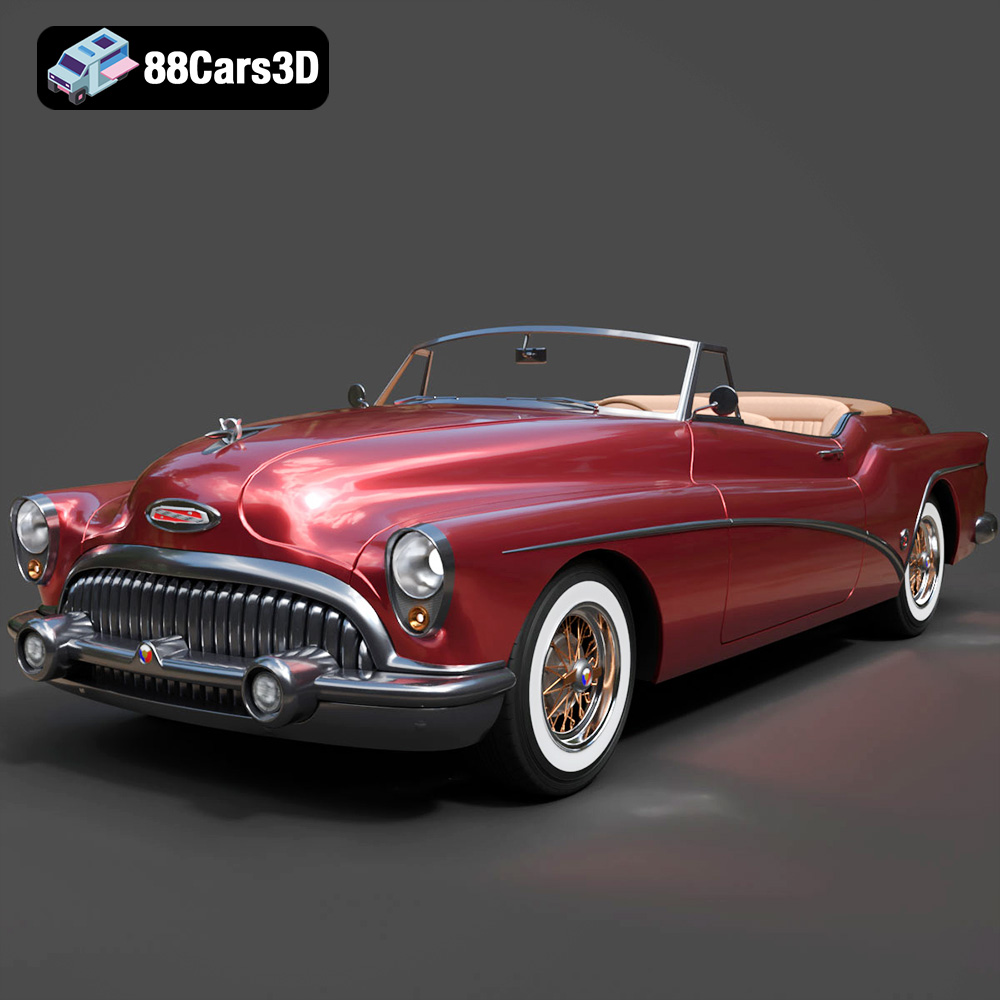
A comprehensive asset library needs variety. Whether you need classic vintage cars for a period piece, modern sports cars for an action game, or utilitarian vehicles for an architectural visualization, a good marketplace offers a broad spectrum. 88cars3d.com, for example, provides a wide array of vehicles, ensuring that designers and developers can find the perfect model to match their specific project requirements. This diversity, combined with consistent quality, empowers creators to bring any vision to life with confidence and efficiency.
Conclusion
The world of 3D car models is a intricate blend of technical precision and artistic expression. From the initial polygonal structure to the final pixel on a screen, every detail contributes to the overall impact, whether it’s a photorealistic automotive rendering or a high-performance game asset. Understanding the nuances of modeling, texturing, optimization, and file formats is crucial for anyone looking to excel in this field.
As industries continue to embrace real-time visualization, AR/VR, and advanced simulations, the demand for truly exceptional 3D vehicle assets will only grow. By prioritizing quality, leveraging robust workflows, and choosing reliable resources like 88cars3d.com for your asset needs, you can ensure your digital creations not only meet but exceed expectations, driving innovation and immersion forward.
Featured 3D Car Models