The Enduring Appeal of Automotive Design in 3D: A Deep Dive with the BMW 645ci
In the dynamic world of 3D modeling, the allure of automotive design remains a constant. From blockbuster films and cutting-edge game titles to intricate architectural visualizations and immersive AR/VR experiences, high-fidelity 3D car models are indispensable. They don’t just fill a scene; they inject realism, character, and a sense of precision that elevates any project. For professionals seeking an asset that combines intricate detail with robust technical specifications, the choice of model is paramount.
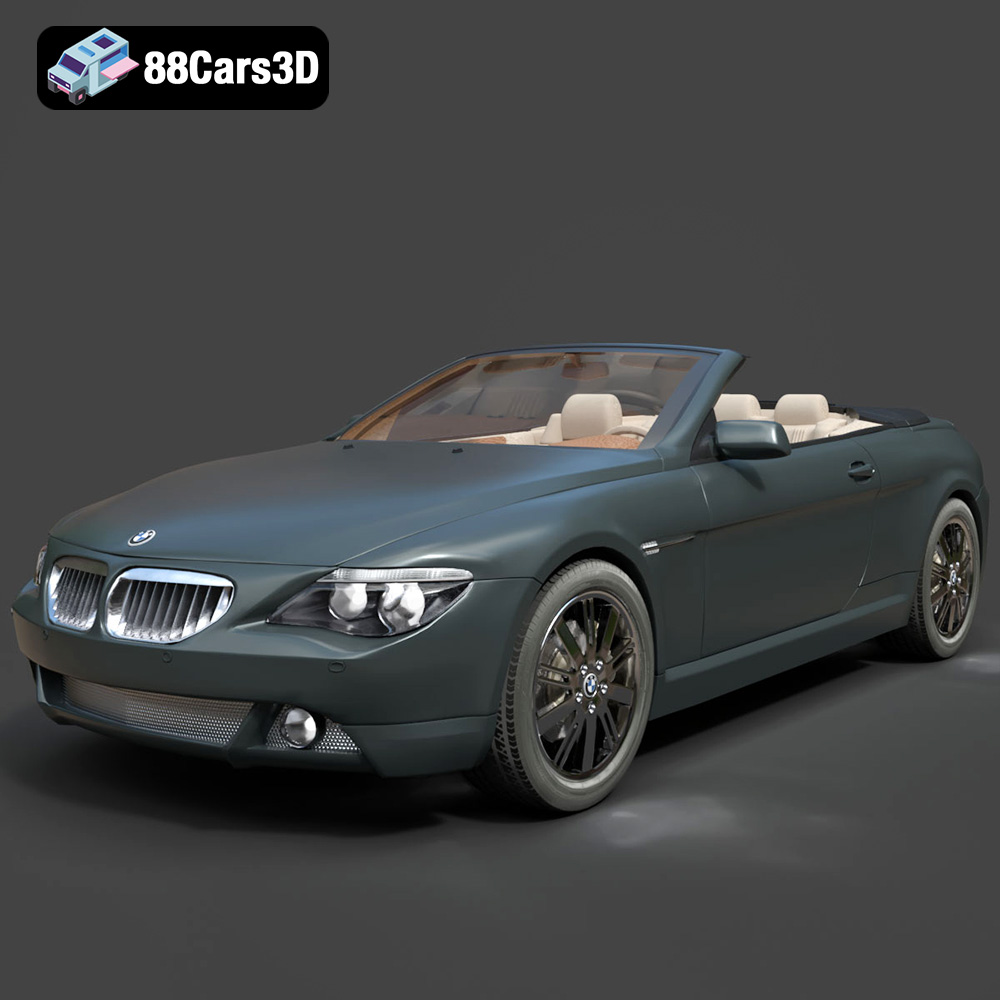
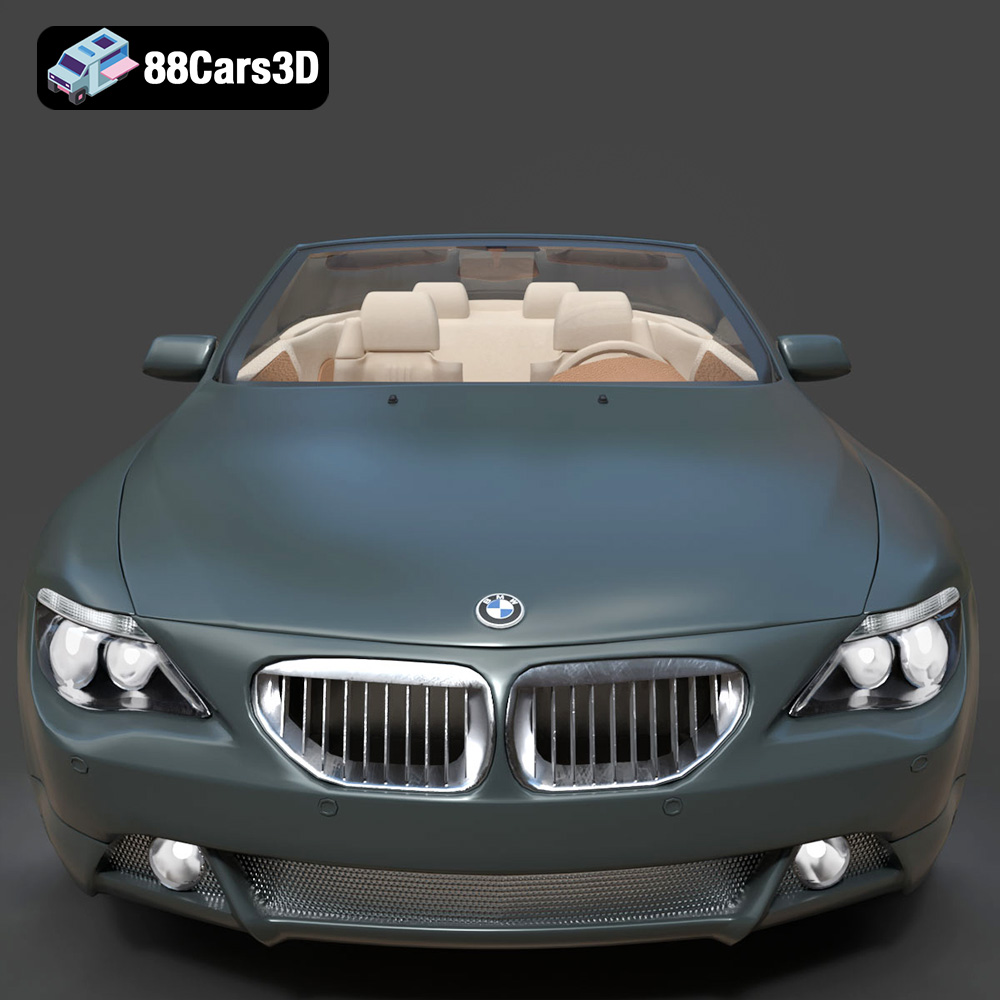
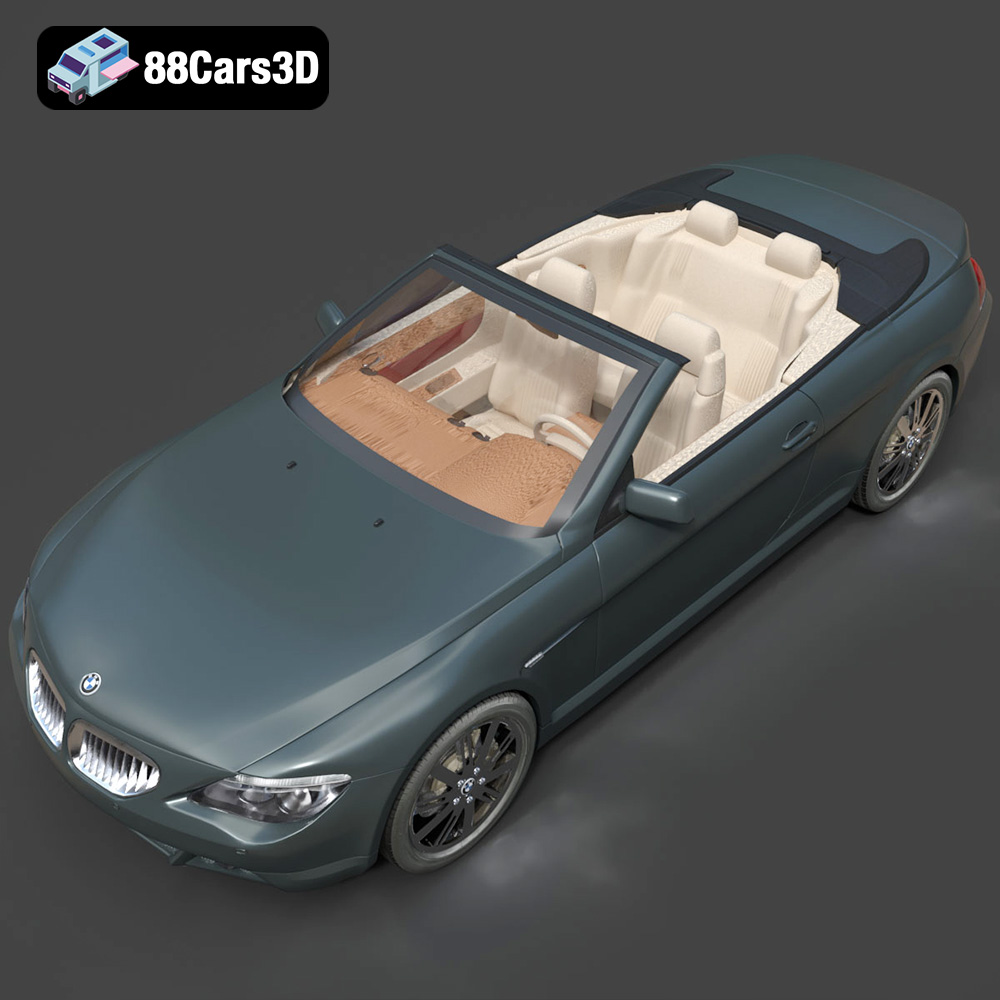
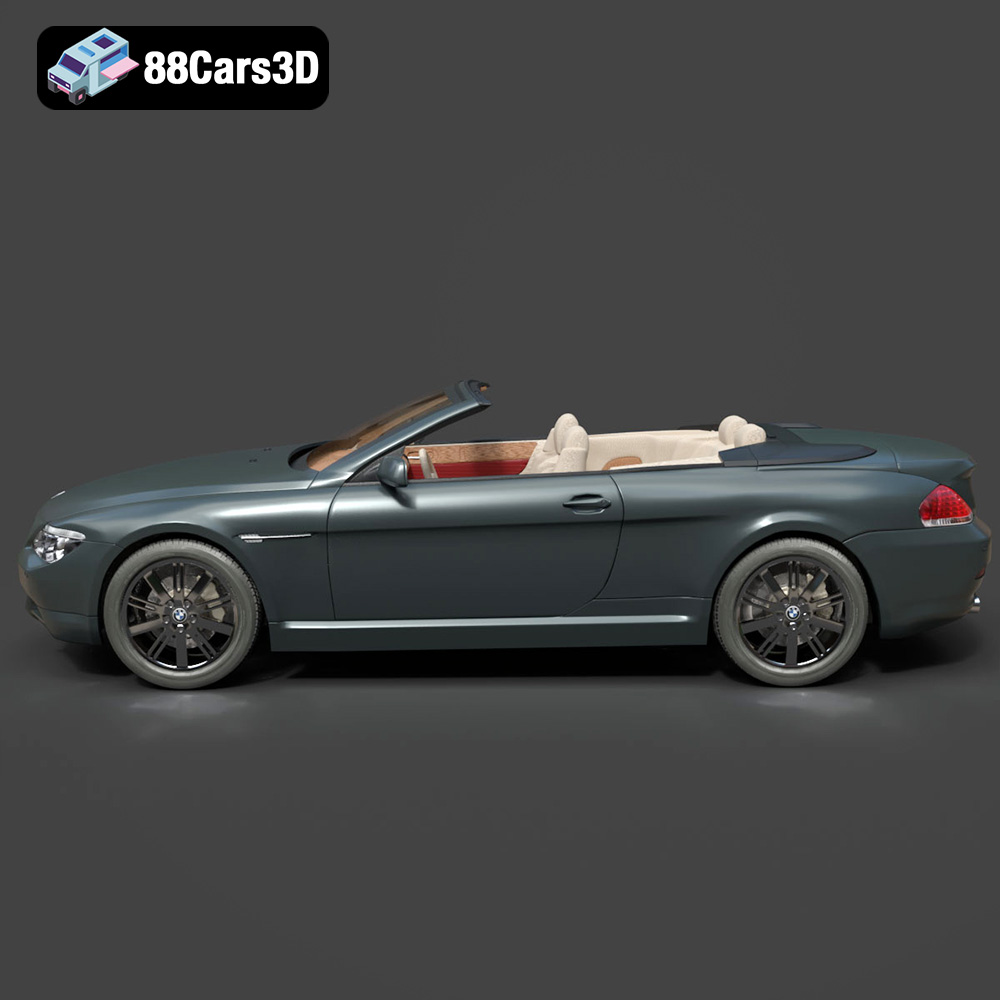
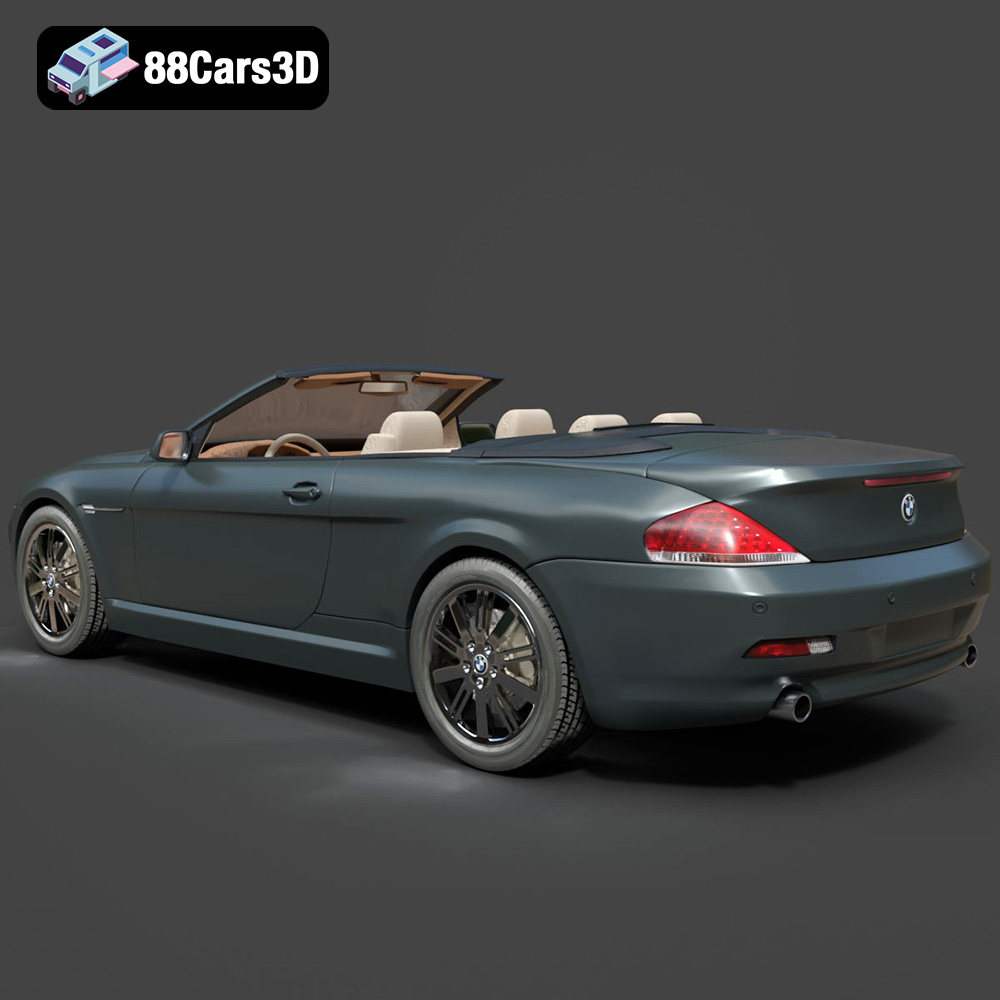
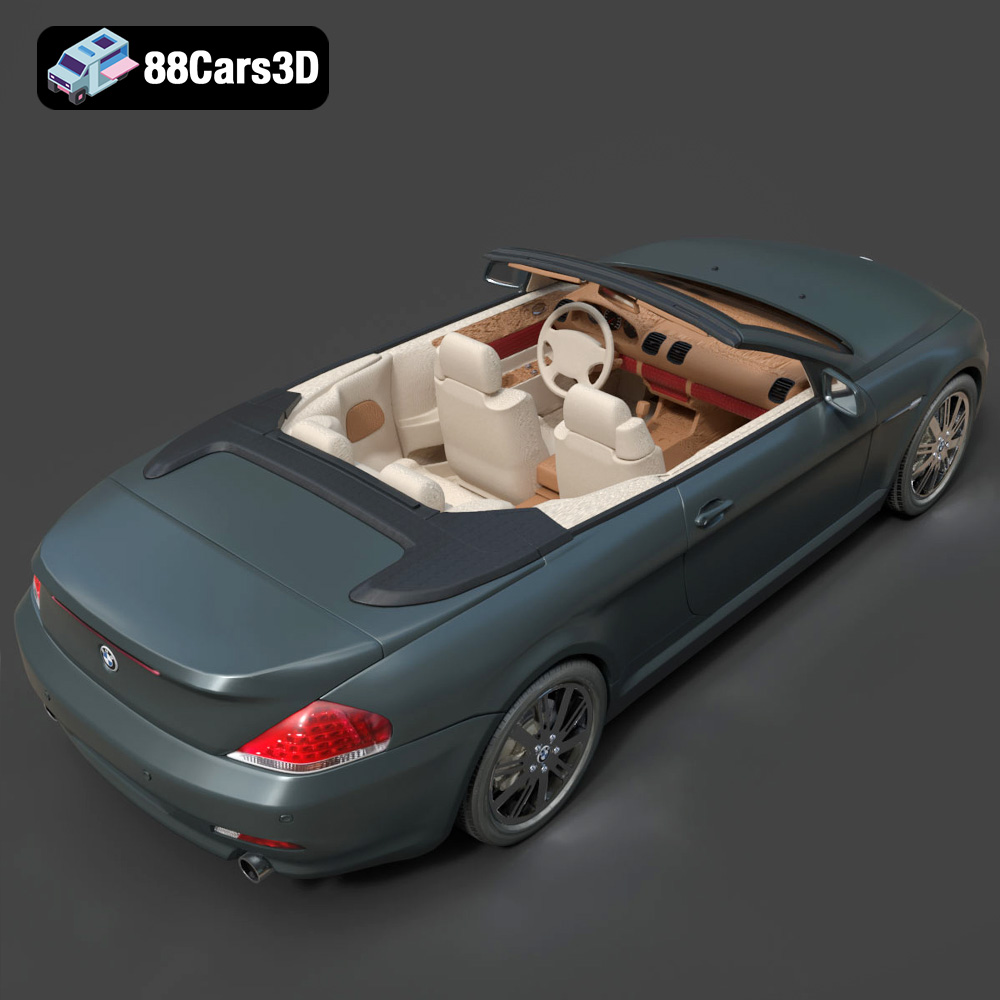
Today, we’re taking a closer look at a particularly elegant example that exemplifies these qualities: the BMW 645ci 2004-2005 3D Model. This meticulously crafted asset from 88cars3d.com represents the iconic luxury grand tourer, capturing its sophisticated design and powerful presence. Built with clean geometry and balanced detailing, it is optimized for high-quality rendering, realistic animation, detailed simulation, and seamless integration into various development pipelines. Whether you’re an automotive designer, a game developer, or a visualization artist, understanding the technical underpinnings and diverse applications of such a model is crucial for maximizing its potential in your professional workflow.
Understanding 3D Model File Formats: Choosing the Right Tool for the Job
The versatility of a 3D car model often hinges on its availability in a range of file formats, each tailored for specific software, engines, or end-use applications. The BMW 645ci 2004-2005 3D Model, for instance, offers a comprehensive suite of formats, ensuring broad compatibility and utility across diverse professional pipelines. Understanding these formats is key to streamlining your workflow and achieving optimal results.
- .blend (Blender Project with Materials): This native Blender file offers a fully editable scene, complete with materials, textures, and potentially lighting setups. For Blender users, this is the most flexible format, allowing for direct manipulation of the mesh, rigging, animation, and fine-tuning of PBR (Physically Based Rendering) materials. It’s ideal for artists who want to delve deep into the model’s structure, customize it extensively, or use Blender as their primary rendering and animation package.
- .fbx (Autodesk Filmbox): Often considered the industry standard for interoperability, .fbx is ideal for transferring 3D data between various applications, particularly for real-time engines like Unreal Engine and Unity. It supports geometry, materials, animations, and cameras, making it a robust choice for game development and cinematics. Its hierarchical structure ensures that components like doors, wheels, and the hood of the BMW 645ci maintain their proper relationships for animation.
- .obj (Wavefront OBJ): A universal format renowned for its simplicity and wide compatibility. The .obj format primarily stores geometry (vertices, normals, UVs) and refers to external .mtl (material) files for basic material properties. While it doesn’t support animation or complex material setups directly, its ubiquitous nature makes it excellent for cross-software compatibility, ensuring that almost any 3D application can open and interpret the model’s core mesh data. It’s a reliable fallback for transferring models between disparate software ecosystems.
- .glb (GL Transmission Format Binary): Optimized for modern 3D experiences, .glb is a compact, single-file format that includes geometry, materials, textures, and animation data. It’s particularly well-suited for AR (Augmented Reality), VR (Virtual Reality), and browser-based 3D display due to its efficiency and ease of embedding. For interactive web experiences or mobile AR applications featuring the BMW 645ci, .glb offers an unparalleled combination of visual quality and performance.
- .stl (Stereolithography): This format is the de facto standard for 3D printing. It represents a 3D model as a series of connected triangles, describing only the surface geometry without color or texture information. When converting a detailed 3D car model like the BMW 645ci to .stl, ensuring a watertight mesh and appropriate polygon density is critical for a successful physical print. It’s perfect for creating physical scale models for prototyping or display.
- .ply (Polygon File Format): A flexible format capable of storing a wide range of properties, including color, transparency, and even scan data, in addition to geometry. While less common for general asset exchange than .fbx or .obj, .ply is frequently used in scientific applications, CAD, and for representing data from 3D scanners. Its precision makes it valuable for detailed analysis or when integrating models into engineering workflows where exact surface data is paramount.
- .unreal (Unreal Engine Project Setup): This signifies a package specifically prepared for Unreal Engine, often including pre-configured materials, LODs (Levels of Detail), and collision meshes. For game developers working with Unreal, this format saves significant setup time, allowing for immediate integration and optimization within the engine’s real-time environment. It ensures the BMW 645ci 3D Model is game-ready from the start.
- .max (3ds Max Scene): The native file format for Autodesk 3ds Max, providing a fully editable project scene. Like .blend, this format allows 3ds Max users to access all aspects of the model, including modifiers, lighting, animation data, and proprietary materials (e.g., V-Ray, Corona). It’s the go-to for artists who use 3ds Max for high-end rendering, complex animation, or architectural visualization, offering maximum flexibility for customization and refinement.
The availability of such a diverse array of formats for the BMW 645ci 2004-2005 3D Model from 88cars3d.com underscores its value as a versatile and professional-grade asset, adaptable to virtually any project requirement.
The Art and Science of Automotive Rendering for Photorealism
Achieving photorealistic automotive rendering is a nuanced discipline, combining artistic vision with a deep understanding of physics and software. A high-quality 3D car model like the BMW 645ci is the cornerstone, but its true potential is unlocked through meticulous rendering techniques. Professionals in advertising, film, and architectural visualization rely on these methods to create stunning, believable imagery that blurs the line between real and digital.
Achieving Photorealism with Advanced Materials and Shaders
The realistic appearance of any 3D model, especially a luxury vehicle, hinges on its material definitions. The BMW 645ci 3D Model comes with a foundation of optimized mesh quality and clean topology, which is essential for smooth subdivision and deformation. This allows artists to apply advanced PBR shaders that accurately simulate how light interacts with various surfaces. For car paint, this means layering base color, metallic flakes, clear coat reflections, and subtle imperfections. Glass elements require precise transmission, refraction, and reflection values to mimic real automotive glass, while chrome and metal trims demand highly reflective, anisotropic shaders. The ability to easily adjust paint finishes, apply custom graphics, and modify material properties for metals, chrome, rubber, glass, and plastics is a significant advantage. This flexibility allows artists to tailor the model to specific lighting conditions, brand identities, or even simulate wear and tear for dynamic scenes.
Optimizing Lighting for Studio and Environmental Scenes
Lighting is arguably the most critical element in photorealistic rendering. For studio renders of the BMW 645ci, techniques often involve HDRI (High Dynamic Range Imaging) dome lights for ambient illumination, combined with several key, fill, and rim lights to highlight the vehicle’s curves and form. Area lights are frequently used to simulate softbox lighting, creating elegant reflections on the car’s bodywork. In environmental scenes, the interaction of the vehicle with natural light sources – sun, sky, and indirect bounces from surrounding objects – becomes paramount. Global Illumination (GI) algorithms are employed to accurately simulate how light reflects and refracts throughout the scene. Proper light placement, intensity, color temperature, and shadow quality are essential to integrate the 3D car model seamlessly into its environment, making it appear grounded and part of the real world. The organized hierarchy with proper pivot points for animation-ready components also aids in setting up complex lighting scenarios involving moving vehicles.
Integrating 3D Car Models into Game Development
Game development presents a unique set of challenges and requirements for 3D car models. While visual fidelity is always a goal, real-time performance is paramount. A model like the BMW 645ci 2004-2005 3D Model, optimized for game development, provides developers with a strong starting point for creating immersive racing games, open-world environments, or interactive experiences.
Unreal Engine and Unity Workflows for High-Performance Assets
Both Unreal Engine and Unity are industry-leading platforms for game development, and the integration of a 3D car model like the BMW 645ci often begins with importing an .fbx file. For Unreal Engine users, the included .unreal project setup provides an immediate advantage, offering pre-configured materials, textures, and potentially even blueprint setups. In both engines, PBR material workflows are standard, requiring base color, normal, metallic, roughness, and ambient occlusion maps. Developers will often create multiple LODs (Levels of Detail) to manage performance – lower poly versions of the car that swap in when the vehicle is further from the camera. Collision meshes are also critical, defining the physical boundaries of the car for accurate physics simulations and interactions within the game world. The clean quad-dominant topology of the BMW 645ci ensures smooth deformation, which is vital for realistic suspension, damage models, or character interactions.
Balancing Detail and Performance: The LOD Strategy
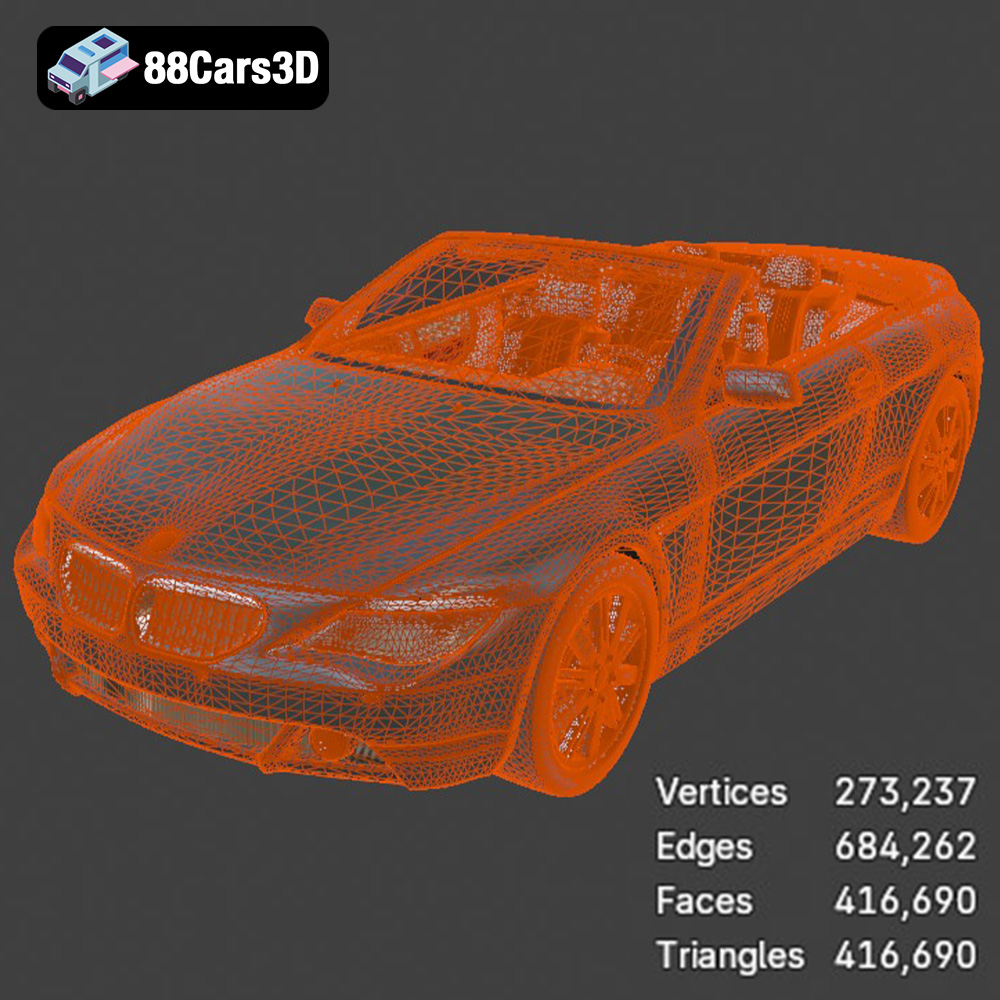
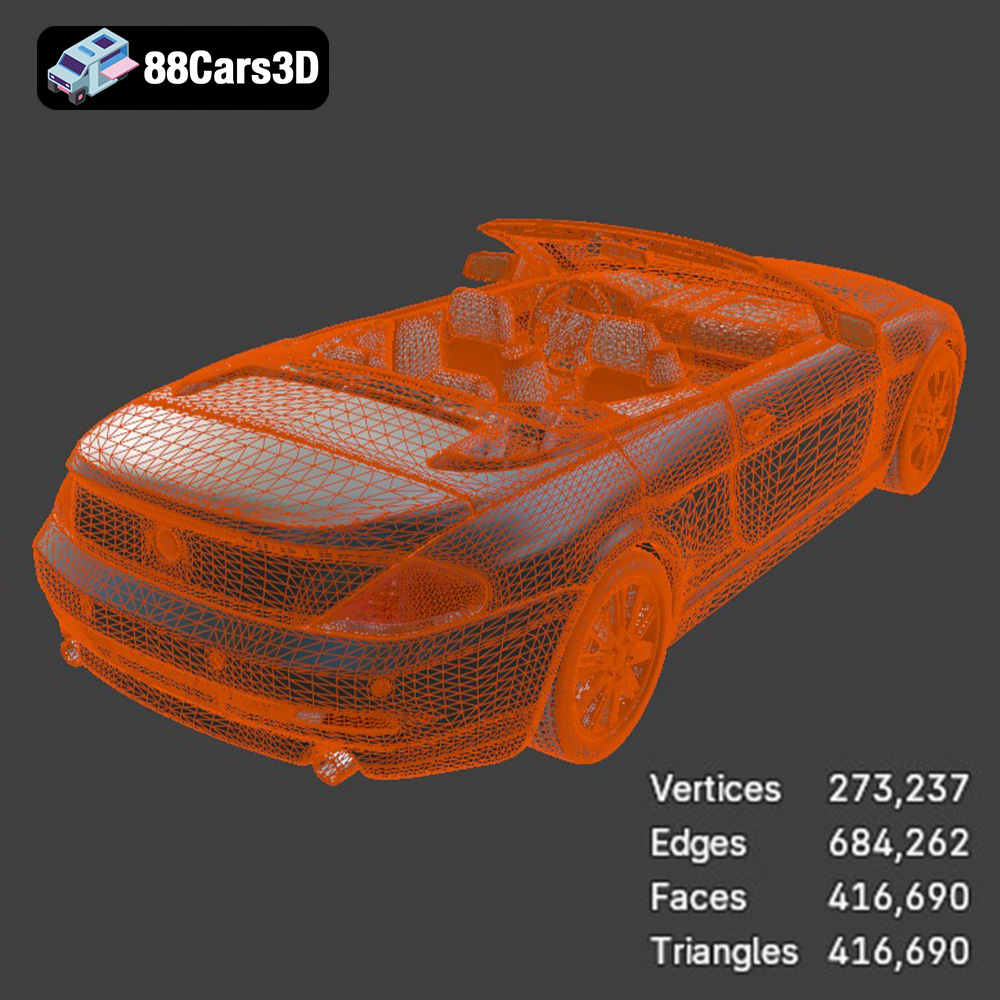
The pursuit of visual realism in games must always be balanced against the constraints of real-time performance. This is where the LOD (Levels of Detail) strategy becomes indispensable. A highly detailed 3D car model, such as the BMW 645ci 2004-2005 3D Model, might have hundreds of thousands of polygons for close-up shots or cinematic sequences. However, running dozens of such models simultaneously in a vast open-world game would cripple frame rates. The solution involves creating several progressively simpler versions of the model, each with fewer polygons and less complex materials. As the player’s camera moves away from the car, the game engine automatically switches to a lower LOD, reducing rendering overhead without a perceptible loss of detail to the player. The optimized mesh quality of this BMW 3D model ensures that even at higher detail levels, the poly count is managed efficiently, making it easier to generate effective LODs while maintaining visual integrity.
Beyond Visualization: Simulation, AR/VR, and 3D Printing
While stunning renders and engaging game assets are common applications, the utility of a versatile 3D car model extends far beyond these traditional uses. The BMW 645ci 2004-2005 3D Model is designed to meet the rigorous demands of simulation, augmented reality (AR), virtual reality (VR), and even physical 3D printing, showcasing its true professional-grade adaptability.
Enhancing Immersive Experiences with AR/VR Ready Assets
Augmented Reality (AR) and Virtual Reality (VR) represent the next frontier in interactive experiences, offering unparalleled immersion. For these platforms, 3D assets must be highly optimized for real-time performance while maintaining visual fidelity. The BMW 645ci 3D Model, with its clean geometry and balanced detailing, is perfectly suited for AR/VR applications. The included .glb format is specifically optimized for these environments and web-based visualization, allowing for seamless integration into mobile AR apps, VR training simulations, or interactive product showcases. Imagine using an AR application to place the virtual BMW 645ci in your driveway, examining its elegant lines from every angle, or experiencing it in a high-fidelity VR driving simulator. The model’s accurate real-world scale ensures proper integration, making these immersive experiences truly believable.
Precision for Prototyping and Analysis: 3D Printing and CAD
The value of a highly accurate 3D car model isn’t limited to digital screens. For automotive designers, engineers, and hobbyists, the ability to translate a digital model into a physical object is invaluable. The BMW 645ci 3D Model can be converted to an .stl file, making it ready for 3D printing. This allows for the creation of physical scale models, prototypes for design review, or even collectibles. For 3D printing, ensuring a “watertight” mesh (a mesh without holes or non-manifold geometry) is critical, a characteristic that benefits from the clean quad-dominant topology of this model. Furthermore, the inclusion of the .ply format makes the model suitable for more advanced analysis and CAD (Computer-Aided Design) workflows. Engineers might use it for aerodynamic simulations, structural analysis, or to integrate it into larger assembly designs, leveraging its precision mesh data for detailed examination.
Mastering Professional Workflows with the BMW 645ci 3D Model
A truly professional 3D car model doesn’t just look good; it empowers artists and developers to achieve their creative and technical goals efficiently. The BMW 645ci 2004-2005 3D Model from 88cars3d.com is engineered with features that directly translate into smoother, more effective professional workflows, whether you’re working on a high-end visualization or a performance-critical game.
Harnessing 3ds Max and Blender for Animation and Customization
For artists deeply embedded in 3ds Max or Blender ecosystems, the provision of native .max and .blend files is a significant advantage. These formats offer direct access to the model’s full scene data, including hierarchy, materials, and potentially even pre-configured rigs or lighting. The BMW 645ci model’s separate components for doors, hood, and trunk, combined with an organized hierarchy and proper pivot points, make it inherently animation-ready. In 3ds Max, this allows animators to quickly set up keyframe animations for opening doors or raising the hood, crucial for interactive presentations or cinematic sequences. Similarly, Blender users can leverage its powerful animation tools to create complex vehicle dynamics. Furthermore, the clean quad-dominant topology facilitates easy subdivision, allowing for incredibly smooth surfaces when rendered at close range, a critical feature for high-resolution output. This level of detail and organization significantly reduces setup time, letting artists focus on creativity rather than remedial preparation.
Case Study: Architectural Visualization with Automotive Assets
Consider an architectural visualization studio tasked with rendering a luxurious modern villa. The empty driveway lacks life. By integrating the BMW 645ci 3D Model, the scene instantly gains scale, context, and a touch of sophistication. The studio can import the .max or .blend file, quickly adjust the car’s paint finish to match the client’s preferred aesthetic, and then position it perfectly in the scene. Because the model has an accurate real-world scale, it integrates seamlessly without needing resizing. The realistic headlights and taillights with transparent materials can be illuminated to simulate nighttime scenarios, adding dramatic flair. The detailed interior, even if only partially visible through tinted windows, contributes to the overall realism. This particular 3D car model becomes not just an accent, but a vital component in telling the story of an aspirational lifestyle, directly enhancing the architectural design presentation. The ease of material modification allows the studio to match the vehicle’s appearance to various lighting setups, from bright midday sun to a moody dusk environment, ensuring consistent visual quality across all client deliverables.
Conclusion: The Unrivaled Value of a Premium 3D Car Model
The journey through the technical intricacies and diverse applications of a high-quality 3D car model, exemplified by the BMW 645ci 2004-2005 3D Model, underscores its immense value in today’s professional creative landscape. From the critical importance of understanding various file formats for seamless integration across software and engines, to the artistry of achieving photorealistic renders, and the technical demands of real-time game development or immersive AR/VR experiences, a well-crafted asset is truly indispensable.
This particular BMW 645ci 3D Model stands out for its meticulous attention to detail, clean quad-dominant topology, accurate real-world scale, and animation-ready components. Its versatility, supported by a comprehensive suite of file formats including .blend, .fbx, .obj, .glb, .stl, .ply, .unreal, and .max, ensures that it can serve a multitude of purposes – from generating breathtaking automotive rendering in 3ds Max to being a high-performance game asset in Unreal Engine, or even a tangible physical model via 3D printing.
For any professional seeking to elevate their projects with premium 3D car models, investing in assets like the BMW 645ci 2004-2005 3D Model from 88cars3d.com is a decision that pays dividends in quality, efficiency, and creative freedom. It’s more than just a model; it’s a foundation for innovation across various digital and physical realms.
Featured 3D Model
BMW 645ci 2004-2005 3D Model
Presenting the highly detailed BMW 645ci 2004-2005 3D Model, a meticulously crafted representation of the iconic luxury grand tourer. This model captures the sophisticated design and powerful presence of the E63 generation, known for its elegant lines and assertive stance. Built with clean geometry and balanced detailing, it is optimized for high-quality rendering, realistic animation, detailed simulation, and seamless integration into game development projects.
$10.79
Product Image Gallery