

In the dynamic world of game development and real-time visualization, managing vast amounts of content and ensuring a flexible, iterative workflow is paramount. Hard-coding values directly into Blueprint graphs or C++ classes quickly leads to unwieldy projects, slowed iteration times, and a nightmare for designers and content creators. Imagine trying to balance the performance stats of dozens of unique car models, adjust their handling characteristics, or define various upgrade paths when every value is embedded deep within code or disconnected Blueprint nodes. This is where the power of data-driven gameplay with Unreal Engine’s Data Assets truly shines.
For developers working with intricate systems, such as automotive configurators, racing games, or detailed architectural visualizations, a data-driven approach is not just a best practice—it’s a necessity. It liberates your logic from your content, allowing designers to tweak, balance, and iterate on gameplay mechanics without requiring programmer intervention or risky code changes. This paradigm shift accelerates development, improves collaboration, and results in more robust, scalable, and adaptable projects. In this comprehensive guide, we’ll dive deep into Unreal Engine Data Assets, exploring how they empower data-driven design, streamline your workflow, and help you build sophisticated systems for your next project, especially when integrating high-quality 3D car models like those found on 88cars3d.com.
Understanding Data-Driven Design and Its Benefits
At its core, data-driven design is a software architectural pattern that separates logic from data. Instead of embedding specific values (like a car’s top speed, engine power, or material properties) directly into the code or Blueprints that use them, these values are stored externally in dedicated data structures. The game’s logic then queries and utilizes this external data to drive its behavior. This principle is fundamental to creating maintainable and scalable systems, particularly in complex projects with extensive content.
Consider a racing game featuring numerous vehicles, each with distinct attributes: acceleration, top speed, braking, handling, and unique visual components. Without a data-driven approach, every time you want to adjust the top speed of a specific car, you might have to open its Blueprint, locate the relevant variable, change the value, compile, and then test. Multiply this by dozens of cars and hundreds of attributes, and you quickly realize the inefficiency. A data-driven approach centralizes this information, making it accessible and modifiable by designers, level artists, and QA testers without ever touching complex code or visual scripting logic.
The Core Principles of Data-Driven Development
Data-driven development rests on several key principles:
- Abstraction: Game logic operates on abstract data structures, not specific values. For example, a “CarController” Blueprint knows it needs a “TopSpeed” value, but it doesn’t care what that value actually is until runtime.
- Iteration: Content can be modified rapidly and independently of code. Designers can experiment with different car stats, weapon damages, or character abilities and see immediate results, drastically speeding up the balancing process.
- Scalability: Adding new content (like a new car model or a new upgrade) often means simply creating a new data entry, not modifying existing code paths. This allows projects to grow gracefully without exponential increases in complexity.
- Reduced Coupling: The strong separation between logic and data minimizes dependencies. Changes to data are less likely to break game logic, and vice-versa, leading to fewer bugs and a more stable development environment.
Advantages in Modern Game Development
The benefits of adopting a data-driven strategy are profound:
- Faster Iteration for Designers: Content creators can directly manipulate parameters in Data Assets or Data Tables, allowing them to balance gameplay and tune experiences much more quickly without programmer intervention. This is particularly valuable for complex systems like car physics or upgrade trees.
- Easier Balancing and Tuning: Centralized data makes it simpler to compare and adjust attributes across multiple entities. For instance, comparing the acceleration curves of all your sports cars becomes a breeze when all that data resides in easily viewable Data Assets.
- Improved Collaboration: Programmers can focus on building robust systems, while designers can populate and refine content. This clear division of labor fosters better teamwork and prevents bottlenecks.
- Reduced Risk of Bugs: Separating content from code reduces the chances of accidentally introducing logical errors when making content changes. It also makes debugging easier as data issues can be isolated from code issues.
- Content Modularity and Reusability: Data Assets encourage the creation of modular content. You can define a single car chassis Data Asset, and then create multiple variants simply by associating different engine Data Assets, tire Data Assets, and cosmetic Data Assets. This reusability saves significant development time.
Introducing Unreal Engine Data Assets
Unreal Engine provides powerful tools to implement data-driven design, with Data Assets being a cornerstone. A Data Asset is essentially a UObject-derived asset that exists purely to hold data. Unlike traditional Blueprints, Data Assets don’t have visual components, event graphs, or tick functions; their sole purpose is to store variables and potentially references to other assets. This makes them incredibly lightweight and efficient for data storage.
While Data Assets are excellent for unique, complex data structures, it’s important to understand their relationship with Data Tables. Data Tables, based on FDataTableRowHandle, are ideal for storing tabular data where many entries share the exact same structure, much like a spreadsheet. Think of them for storing level configuration, localized text, or item definitions where each item has the same set of properties. Data Assets, on the other hand, shine when you need to define unique instances of data that might reference other complex assets, or when the data structure itself is hierarchical or less rigidly tabular. For example, a ‘CarConfigDataAsset’ might store a specific car’s unique stats, its specific mesh (from 88cars3d.com), its material overrides, and even references to specific engine sound cues. Data Assets are essentially a single row of a highly complex table, or a unique object with specialized data fields.
Creating Your First Data Asset in C++
To create a robust and scalable data-driven system, defining your Data Asset types in C++ is often the preferred method. This allows for strong typing, better performance, and seamless integration with existing C++ systems. Here’s a simple example for a car configuration:
// MyCarConfigDataAsset.h
#pragma once

#include "CoreMinimal.h"
#include "Engine/DataAsset.h" // Or UPrimaryDataAsset for AssetManager integration
#include "MyCarConfigDataAsset.generated.h"

UCLASS(BlueprintType) // Makes it visible in Blueprint and allows creating child Blueprint Data Assets
class MYGAME_API UMyCarConfigDataAsset : public UDataAsset
{
    GENERATED_BODY()

public:
    UPROPERTY(EditAnywhere, BlueprintReadOnly, Category = "Car Properties")
    FString CarDisplayName;

    UPROPERTY(EditAnywhere, BlueprintReadOnly, Category = "Car Properties")
    float TopSpeed;

    UPROPERTY(EditAnywhere, BlueprintReadOnly, Category = "Car Properties")
    float Acceleration0To100; // In seconds

    UPROPERTY(EditAnywhere, BlueprintReadOnly, Category = "Car Properties")
    float HandlingRating; // 0.0 - 1.0

    UPROPERTY(EditAnywhere, BlueprintReadOnly, Category = "Car Properties")
    UStaticMesh* CarMesh; // Reference to a static mesh asset

    UPROPERTY(EditAnywhere, BlueprintReadOnly, Category = "Car Properties")
    TArray<UMaterialInterface*> CarMaterials; // Array of materials for the car
};
After defining this C++ class, compile your module. In the Unreal Editor, you can then right-click in the Content Browser, go to “Miscellaneous,” and select “Data Asset.” When prompted, choose `UMyCarConfigDataAsset` as the base class. You can then create instances of this Data Asset, fill in the values for `CarDisplayName`, `TopSpeed`, etc., and assign actual `UStaticMesh` and `UMaterialInterface` assets that you might have sourced from platforms like 88cars3d.com.
Blueprint Data Assets: Rapid Prototyping and Content Creation
While C++ provides a robust foundation, Blueprint Data Assets offer incredible flexibility for rapid prototyping and content creation, especially for designers. Once you have a C++ base class like `UMyCarConfigDataAsset`, you can right-click on it in the Content Browser and select “Create Blueprint Class based on MyCarConfigDataAsset.” This creates a child Blueprint Data Asset that inherits all the properties defined in C++.
Designers can then open this Blueprint Data Asset, directly populate its fields with specific values, and assign references to other assets (like the high-quality 3D car models and associated textures from 88cars3d.com). For example, you could create “DA_SportsCar_GT,” “DA_Sedan_Executive,” and “DA_Truck_Utility” instances, each with their unique statistical values, mesh references, and material assignments. This workflow is incredibly powerful because it empowers content creators to define unique entities directly within the editor without needing any programming knowledge.
Implementing Data-Driven Gameplay Logic with Data Assets
Once you’ve defined and populated your Data Assets, the next crucial step is to integrate them into your gameplay logic. This typically involves Blueprints or C++ code reading values from a Data Asset to configure an actor or drive a specific behavior. This approach ensures that your game logic remains generic and reusable, as it operates on the abstract concept of “car data” rather than hardcoded values for a specific car.
Consider a simple scenario: spawning a car in a level. Instead of having a “SpawnSportsCar” Blueprint that hardcodes the sports car’s mesh, speed, and materials, you can have a generic “SpawnCar” Blueprint that takes a `UMyCarConfigDataAsset` as an input. When you call this Blueprint, it reads the `CarMesh`, `TopSpeed`, and `CarMaterials` from the provided Data Asset and applies them to the newly spawned vehicle actor. This makes your spawning system infinitely more flexible; to spawn a different car, you simply provide a different Data Asset.
// Example Blueprint Pseudo-code for a Car Spawner:

// Event: Spawn Car
// Input: CarConfigData (UMyCarConfigDataAsset object reference)

// 1. Spawn Actor from Class (e.g., ABaseVehicle_BP)
// 2. Set Static Mesh of the spawned actor to CarConfigData->CarMesh
// 3. Set Materials of the spawned actor to CarConfigData->CarMaterials
// 4. Get VehicleMovementComponent from spawned actor
// 5. Set MaxSpeed property on VehicleMovementComponent to CarConfigData->TopSpeed
// 6. Set EnginePower property on VehicleMovementComponent based on CarConfigData->Acceleration0To100
Dynamic Asset Loading and Management
For games with a large number of unique assets, such as many different car models, dynamically loading these assets is crucial for performance and memory management. Loading every car mesh and texture into memory at game start is often impractical. Unreal Engine’s AssetManager system, in conjunction with Primary Data Assets, provides a robust solution. `UPrimaryDataAsset` is a special type of `UDataAsset` that can be registered with the AssetManager to define specific categories of primary assets, which can then be discovered and loaded asynchronously.
By making your `UMyCarConfigDataAsset` inherit from `UPrimaryDataAsset` instead of `UDataAsset`, you can assign it a unique Primary Asset ID. The AssetManager can then scan your project, discover all instances of `UMyCarConfigDataAsset`, and manage their loading and unloading. When your `UMyCarConfigDataAsset` references a `UStaticMesh` or `UMaterialInterface` (e.g., a specific car model from 88cars3d.com), the AssetManager can ensure these referenced assets are also loaded when needed, and unloaded when no longer in use. This prevents long loading times and keeps memory footprint optimized. For detailed information on `AssetManager`, refer to the official Unreal Engine documentation at https://dev.epicgames.com/community/unreal-engine/learning.
Building Interactive Gameplay with Data Assets
The true power of Data Assets comes to life when building interactive systems. Imagine an in-game garage where players can browse different vehicles and customize them. A Data Asset can define not just the base statistics of a car, but also list available paint colors, rim options, and performance upgrades. Each of these options could be another Data Asset or a simple struct within the main car’s Data Asset. When a player selects a new rim, the UI can read the referenced static mesh from the chosen rim’s Data Asset and update the car’s visual representation dynamically.
Similarly, for game logic, a player’s inventory system could store references to “ItemDataAssets” instead of just strings or IDs. When an item is used, the game logic reads its effect, duration, or target from the Data Asset, applying appropriate changes to the player character or the environment. This makes adding new items, weapons, or abilities as simple as creating a new Data Asset and populating its fields, completely decoupling the content from the game’s core mechanics.
Advanced Data-Driven Techniques and Optimization
Pushing Data Assets further allows for highly sophisticated and optimized systems. Their lightweight nature and ability to reference other assets make them ideal for creating complex hierarchies and managing vast content libraries efficiently.
Leveraging Data Assets for Automotive Configurators
Automotive configurators are prime examples of data-driven design in action. When building a real-time car configurator in Unreal Engine, Data Assets become your content backbone. Each car model can have a primary `UCarBaseDataAsset` that defines its make, model, and base performance characteristics. Nested or referenced within this, you can have:
- Paint Color Data Assets: Each defines a specific PBR material instance or a Material Parameter Collection value for a paint job.
- Rim Data Assets: Each references a specific `UStaticMesh` for the rims (optimized, clean topology models are crucial here, like those from 88cars3d.com) and potentially unique materials.
- Interior Trim Data Assets: References to mesh components and materials for various interior options.
- Upgrade Data Assets: Defines specific performance boosts (e.g., engine upgrades increase top speed, turbo kits add acceleration), potentially modifying existing numerical values or swapping out physics configurations.
The Blueprint logic for the configurator becomes remarkably simple: it identifies available options by iterating through arrays of these Data Assets. When a user makes a selection, the Blueprint retrieves the necessary mesh or material reference from the chosen Data Asset and applies it to the corresponding component of the displayed car. This modular approach means adding a new paint color or a new rim design is as easy as creating a new Data Asset instance.
Performance Considerations and Best Practices
While Data Assets are lightweight, their efficient use in large projects requires adherence to best practices:
- Use
UPrimaryDataAssetfor Large Libraries: As mentioned, for extensive content libraries (e.g., hundreds of car models, thousands of upgrade parts), inherit your base Data Asset classes from `UPrimaryDataAsset`. This allows the `AssetManager` to discover, manage, and asynchronously load/unload these assets, significantly improving startup times and reducing memory footprint. - Minimize Direct References: If a Data Asset references another asset (like a `UStaticMesh`), understand that loading the Data Asset will also try to load its direct references. For assets that aren’t immediately needed, consider using Soft Object Pointers (`TSoftObjectPtr
`) or FPrimaryAssetId to defer loading until actually required, especially within Primary Data Assets that will be managed by `AssetManager`. - Data Validation: Implement editor-time data validation for your Data Assets. This can be done in C++ by overriding `PostLoad()` or `PreSave()` methods, or by adding Blueprint implementable events. This helps catch missing references or invalid values early in development.
- Categorization: Organize your Data Assets in the Content Browser into logical folders. This improves discoverability and maintainability. Use clear naming conventions (e.g., `DA_Car_Ferrari_F40`, `DA_Paint_RedMetallic`).
- Source Control: Since Data Assets are content files, they integrate seamlessly with source control systems like Git or Perforce. This allows for safe collaboration and versioning of your data.
- Avoid Over-Engineering: For very simple, static values that will never change (e.g., a universal gravity constant), hard-coding might still be acceptable. The overhead of a Data Asset might not always be justified for every single piece of data. However, for anything that could potentially change, be tweaked, or scale, a Data Asset is usually the superior choice.
Refer to the Unreal Engine documentation on Asset Management and Primary Assets for in-depth optimization strategies and proper integration with your project’s content pipeline.
Case Study: Data-Driven Car Customization System
Let’s walk through a conceptual case study to solidify the understanding of Data Assets in an automotive context. Imagine building a complex racing game where players can customize and upgrade their vehicles. A fully data-driven approach dramatically simplifies this system.
Defining Car Variants and Upgrades
We would start by defining several C++ Data Asset classes:
UCarBaseDataAsset: Derived fromUPrimaryDataAsset. This would define the core identity and characteristics of a car model:FString ManufacturerName;FString ModelName;TSoftObjectPtr<UStaticMesh> BodyMesh;(The main car body from 88cars3d.com)TArray<TSoftObjectPtr<UMaterialInterface>> DefaultMaterials;float BaseTopSpeed;float BaseAcceleration;float BaseHandling;FPrimaryAssetId EnginePreset;(Reference to aUEngineDataAsset)FPrimaryAssetId ChassisPreset;(Reference to aUChassisDataAsset)
UEngineDataAsset: Defines engine-specific properties:float Horsepower;float Torque;TSoftObjectPtr<USoundCue> EngineSound;TSoftObjectPtr<UParticleSystem> ExhaustEffect;
UChassisDataAsset: Defines chassis and suspension properties:float Weight;float GripFactor;float SuspensionStiffness;
UUpgradeDataAsset: An abstract base class for all upgrades. Child classes would then specify types:UPerformanceUpgradeDataAsset(e.g., “Turbocharger Upgrade”): Modifies `Horsepower`, `Torque`, adds weight.UVisualUpgradeDataAsset(e.g., “Spoiler Kit”): References a new `UStaticMesh` component for the spoiler, potentially new materials.URimUpgradeDataAsset: References `UStaticMesh` for rims and possibly texture overrides.
With these structures, a designer can create “DA_Ferrari_F40” as a `UCarBaseDataAsset`, assign its `BodyMesh` (a high-poly model with clean topology from 88cars3d.com), its base stats, and link to “DA_Engine_V8Turbo” and “DA_Chassis_Sport.” Then, “DA_Upgrade_TurboKit_Stage1” (`UPerformanceUpgradeDataAsset`) could specify a +50 HP boost and a +10kg weight penalty.
Blueprint Integration for Dynamic Customization
The core gameplay Blueprint for the player’s car (`BP_PlayerCar`) would hold references to the currently equipped `UCarBaseDataAsset`, `UEngineDataAsset`, `UChassisDataAsset`, and an array of applied `UUpgradeDataAsset`s. When the player initializes the car or applies an upgrade:
- The `BP_PlayerCar` would load the referenced `BodyMesh` from the `UCarBaseDataAsset` and set it on its `StaticMeshComponent`.
- It would then calculate final performance stats (top speed, acceleration, handling) by combining the base values from `UCarBaseDataAsset` with modifications from all applied `UUpgradeDataAsset`s. These calculated stats would be fed into the `VehicleMovementComponent` (or a custom physics system).
- For visual upgrades, the `BP_PlayerCar` would dynamically spawn or attach new mesh components (e.g., a spoiler mesh from `UVisualUpgradeDataAsset`) and apply materials.
- A UI Blueprint would read all available `UUpgradeDataAsset`s for the current car and display them to the player, along with their effects (e.g., “+50 HP”). When an upgrade is selected, the `UUpgradeDataAsset` is added to the player car’s equipped upgrades array, and the car’s stats and visuals are recalculated.
This system makes adding new cars, engines, chassis types, or upgrades incredibly flexible. Designers can endlessly iterate on new content by simply creating new Data Assets and linking them, without ever having to touch or modify the core game logic in Blueprints or C++.
Conclusion
Embracing data-driven gameplay with Unreal Engine’s Data Assets is a transformative step for any developer aiming to build scalable, maintainable, and highly iterative projects. By clearly separating your game logic from your game content, you empower designers, accelerate iteration cycles, and foster a more collaborative development environment. This approach is particularly potent for complex domains like automotive visualization, racing games, or elaborate configurators, where managing a multitude of unique assets and their properties can quickly become overwhelming.
We’ve explored how to define custom Data Asset types in C++, leverage Blueprint Data Assets for rapid content creation, and integrate them into your gameplay logic for dynamic and interactive experiences. We also delved into advanced techniques like using `UPrimaryDataAsset` with `AssetManager` for optimized content loading and discussed best practices for building robust data-driven systems. Whether you’re configuring a player’s car, defining upgrade paths, or managing complex game entities, Data Assets offer the flexibility and power needed to build the next generation of interactive experiences.
Start integrating Data Assets into your Unreal Engine projects today. Experiment with different data structures, leverage the `AssetManager` for efficient content streaming, and witness how much more adaptable and efficient your development workflow becomes. And when sourcing high-quality 3D car models with clean topology, realistic PBR materials, and optimized UV mapping for your data-driven automotive projects, remember that platforms like 88cars3d.com offer the premium assets you need to populate your dynamic systems with stunning visual fidelity.
Featured 3D Car Models

Porsche Cayenne 3D Model
Meta Description:
Texture: Yes
Material: Yes
Download the Porsche Cayenne 3D Model featuring realistic exterior styling and detailed interior design. Includes .blend, .fbx, .obj, .glb, .stl, .ply, .unreal, and .max formats for rendering, simulation, AR VR, and game development.
Price: $19.9

Yamaha FZ8 2011 3D Model
Texture: Yes
Material: Yes
Download the Yamaha FZ8 2011 3D Model featuring clean geometry, realistic detailing, and a fully modeled interior. Includes .blend, .fbx, .obj, .glb, .stl, .ply, .unreal, and .max formats for rendering, simulation, and game development.
Price: $19.99

Yamaha Stryker 2012 3D Model
Texture: Yes
Material: Yes
Download the Yamaha Stryker 2012 3D Model featuring clean geometry, realistic detailing, and a fully modeled interior. Includes .blend, .fbx, .obj, .glb, .stl, .ply, .unreal, and .max formats for rendering, simulation, and game development.
Price: $19.99

Yamaha Aerox R-002 2024 3D Model
Texture: Yes
Material: Yes
Download the Yamaha Aerox R-002 2024 3D Model featuring clean geometry, realistic detailing, and a fully modeled interior. Includes .blend, .fbx, .obj, .glb, .stl, .ply, .unreal, and .max formats for rendering, simulation, and game development.
Price: $19.99
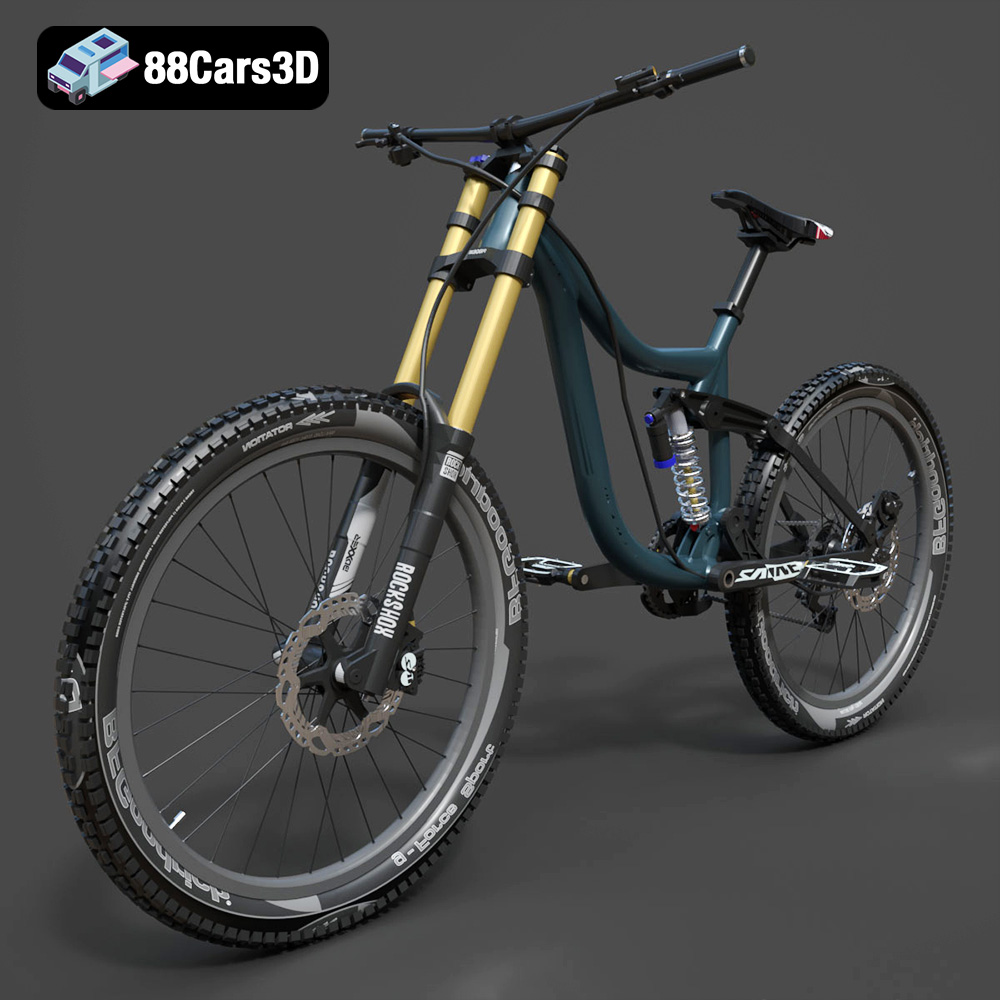
Mototsikly Downhill Bike-002 3D Model
Texture: Yes
Material: Yes
Download the Mototsikly Downhill Bike-002 3D Model featuring clean geometry, realistic detailing, and precise mechanical components. Includes .blend, .fbx, .obj, .glb, .stl, .ply, .unreal, and .max formats for rendering, simulation, and game development.
Price: $19.99

Mercedes-Benz Vito Passenger Van 3D Model
Texture: Yes
Material: Yes
Download the Mercedes-Benz Vito Passenger Van 3D Model featuring clean geometry, realistic detailing, and a fully modeled interior. Includes .blend, .fbx, .obj, .glb, .stl, .ply, .unreal, and .max formats for rendering, simulation, and game development.
Price: $19.99

Mercedes-Benz Viano 2010 3D Model
Texture: Yes
Material: Yes
Download the Mercedes-Benz Viano 2010 3D Model featuring clean geometry, realistic detailing, and a fully modeled interior. Includes .blend, .fbx, .obj, .glb, .stl, .ply, .unreal, and .max formats for rendering, simulation, and game development.
Price: $19.99

Emt Avtobus 007 3D Model
Texture: Yes
Material: Yes
Download the Emt Avtobus 007 3D Model featuring clean geometry, realistic detailing, and a fully modeled interior. Includes .blend, .fbx, .obj, .glb, .stl, .ply, .unreal, and .max formats for rendering, simulation, and game development.
Price: $19.99
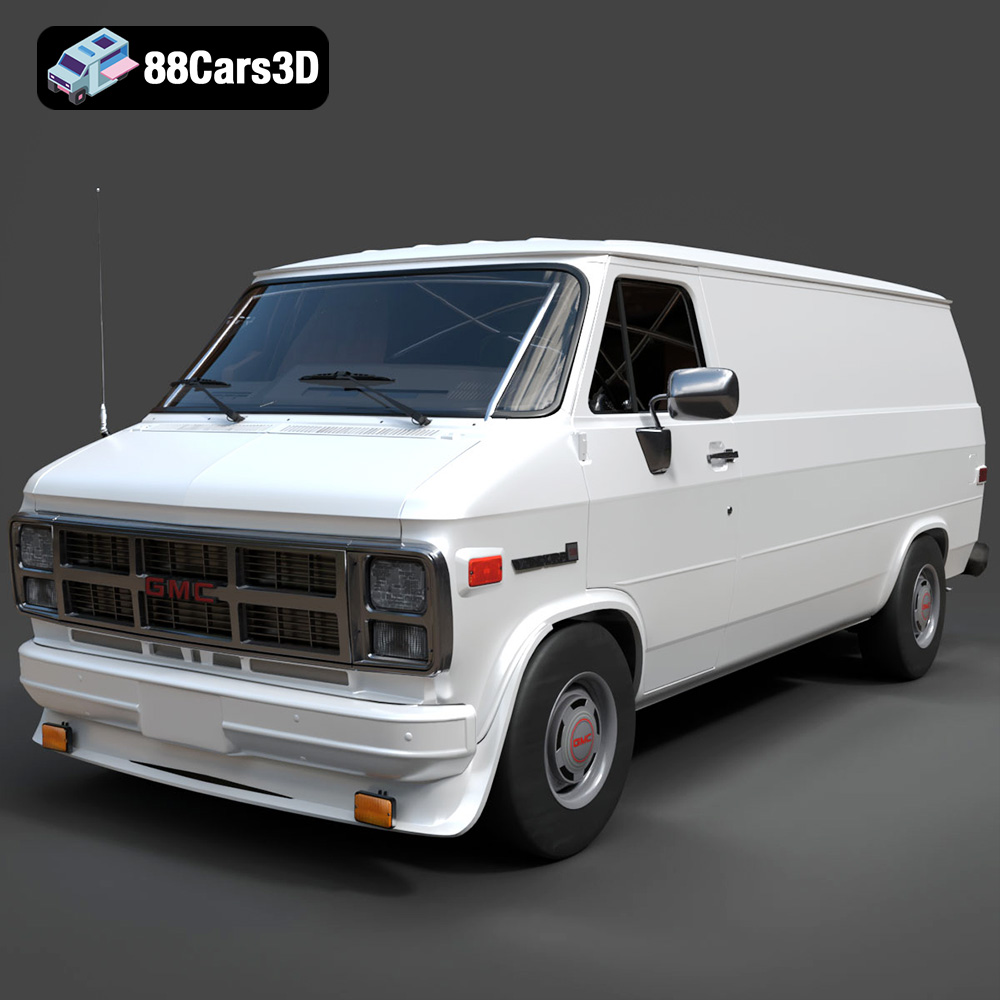
GMC Vandura G-1500 1983 3D Model
Texture: Yes
Material: Yes
Download the GMC Vandura G-1500 1983 3D Model featuring clean geometry, realistic detailing, and a fully modeled interior. Includes .blend, .fbx, .obj, .glb, .stl, .ply, .unreal, and .max formats for rendering, simulation, and game development.
Price: $19.99

Ford E-450 Ambulance 3D Model
Texture: Yes
Material: Yes
Download the Ford E-450 Ambulance 3D Model featuring clean geometry, realistic detailing, and a fully modeled interior. Includes .blend, .fbx, .obj, .glb, .stl, .ply, .unreal, and .max formats for rendering, simulation, and game development.
Price: $19.99
