

In the dynamic world of game development and real-time visualization, managing complex data efficiently is paramount. From the intricate specifications of a high-performance sports car to the vast inventory of customizable options in an automotive configurator, the sheer volume of information can quickly become overwhelming. Hardcoding values directly into Blueprints or C++ inevitably leads to brittle, hard-to-maintain systems that resist change and stifle creativity. This is where the power of data-driven design in Unreal Engine truly shines, offering a robust solution through its versatile Data Asset and Data Table systems.
For developers working with intricate 3D car models—whether for a racing game, a photorealistic architectural visualization, or an interactive AR/VR experience—the ability to easily modify vehicle stats, material properties, or behavioral parameters without recompiling code is a game-changer. This comprehensive guide will delve deep into Unreal Engine’s Data Asset system, providing you with the knowledge to structure your game data effectively, enhance workflow flexibility, and drastically accelerate your iteration cycles. We’ll explore everything from defining custom data structures to integrating them into your Blueprints and C++ projects, ensuring your automotive creations are as dynamic and adaptable as they are visually stunning. Get ready to transform your Unreal Engine projects into highly modular, scalable, and designer-friendly masterpieces.
The Power of Data-Driven Design: Why Externalize Your Game Logic?
At the heart of scalable and maintainable game development lies the principle of data-driven design. This paradigm advocates for decoupling game logic and behavior from its underlying data, allowing designers, artists, and even non-technical stakeholders to modify gameplay parameters without direct code intervention. Imagine a scenario where every car in your racing game has its top speed, acceleration, and handling values hardcoded within its Blueprint. If a game designer decides to rebalance the entire fleet, a programmer would have to open each Blueprint, manually adjust the values, and then recompile and retest. This process is不仅 time-consuming but also highly susceptible to errors. Furthermore, such an approach makes it difficult to add new car models or variations quickly, hindering the agility crucial for rapid prototyping and live operations.
Externalizing data means moving these configurable values into dedicated data containers that can be easily edited, version-controlled, and even loaded dynamically at runtime. This separation of concerns fosters a more collaborative environment, empowering designers to iterate on gameplay mechanics directly, while programmers can focus on building robust systems. It dramatically reduces the risk of accidental code breakage during data changes and streamlines the entire development pipeline. For projects involving extensive content like high-quality 3D car models from marketplaces such as 88cars3d.com, embracing data-driven design is not just a best practice—it’s a necessity for managing complexity and unlocking true creative potential.
Bridging the Gap: Decoupling Data from Code
The traditional approach of embedding data directly into code or Blueprints creates a tight coupling that makes changes cumbersome. For instance, if you have a `VehicleBlueprint` that directly sets its `MaxSpeed` variable to `200.0f` and its `EngineSoundFX` to a specific asset, any modification to these values requires opening and modifying that particular Blueprint. In a large project with dozens or hundreds of vehicles, this quickly becomes unmanageable. Decoupling data means these values are stored independently, often in a structured format, and then referenced by the Blueprints or C++ code. The code simply knows *how* to use the data, but not *what* the data specifically is. This allows for immense flexibility, as you can swap out entire datasets without touching any underlying logic.
Consider a car configurator where a user can select different engine types or tire upgrades. Instead of having separate Blueprints for each engine variant, a single car Blueprint can dynamically load the relevant engine data (horsepower, torque curve, weight impact) from an external source. This makes adding new upgrade options trivial—simply create a new data entry—rather than duplicating and modifying existing Blueprints. This level of abstraction and flexibility is invaluable for complex automotive visualization and game development, enabling faster iteration and reducing development overhead.
Introducing Unreal Engine’s Data Asset System
Unreal Engine provides powerful tools to implement data-driven design effectively: Data Assets (UDataAsset) and Data Tables (UDataTable). A UDataAsset is a lightweight UObject that serves as a container for arbitrary data. You define a custom C++ class inheriting from UDataAsset (or a Blueprint-implementable version), add properties to it (e.g., `MaxSpeed`, `MeshAssetRef`, `MaterialOverrides`), and then create instances of this Data Asset in the Content Browser. Each instance then holds a specific set of data. For example, you could have a `SportsCarDataAsset` instance defining all parameters for a specific sports car model, and a `TruckDataAsset` for a different vehicle type.
UDataTable, on the other hand, is designed for holding collections of structured data, typically imported from CSV or JSON files. It uses a custom C++ USTRUCT as its row structure, where each row in the table corresponds to an instance of that struct. Data Tables are ideal for managing large lists of items like car variants, part specifications, or upgrade options, where each row represents a unique entry. For instance, you could have a Data Table where each row defines a specific car model, including a unique ID, its display name, and perhaps even a reference to a dedicated UDataAsset that holds its complex performance characteristics. Both Data Assets and Data Tables are powerful tools that complement each other, offering centralized, organized storage for configuration and gameplay data, which is paramount for modularity and scalability in automotive simulators and games.
Structuring Your Game Data: From C++ Definitions to Blueprint Instances
The first step in leveraging Unreal Engine’s data-driven capabilities is to define how your data will be structured. This involves creating custom C++ classes or Blueprint structures that outline the properties you need to store. The choice between C++ and Blueprint often depends on the complexity of your data and whether you need to expose custom logic or simply define a schema. For automotive projects, your data structures might include parameters like engine power curves, gear ratios, suspension settings, tire grip values, material presets, or even references to specific mesh assets for different car parts. Proper structuring from the outset is key to building a robust and maintainable data system that can support a diverse range of vehicle types and configurations, especially when importing optimized 3D car models.
Once your data structures are defined, you’ll create instances of these Data Assets or populate Data Tables with your specific values. This process moves the granular details of your game content out of your Blueprints and C++ code and into readily editable assets within the Content Browser. This clear separation not only simplifies development but also empowers artists and designers to populate and tweak data without requiring a programmer’s assistance. It’s about creating a single source of truth for your game’s configurable values, ensuring consistency and dramatically speeding up content creation and iteration cycles, a critical advantage for projects with high asset counts.
Defining Your Base Data Asset Class (C++ or Blueprint)
To create a custom Data Asset, you’ll typically start with a C++ class that inherits from UDataAsset. This provides a flexible container for any data you wish to store. Here’s a basic example for car specifications:
// CarSpecsDataAsset.h
#pragma once

#include "CoreMinimal.h"
#include "Engine/DataAsset.h"
#include "CarSpecsDataAsset.generated.h"

USTRUCT(BlueprintType)
struct FVehicleStats
{
    GENERATED_BODY()

    UPROPERTY(EditAnywhere, BlueprintReadWrite, Category="Vehicle Stats")
    float MaxSpeed = 200.0f;

    UPROPERTY(EditAnywhere, BlueprintReadWrite, Category="Vehicle Stats")
    float Acceleration = 10.0f;

    UPROPERTY(EditAnywhere, BlueprintReadWrite, Category="Vehicle Stats")
    float Handling = 0.8f;

    UPROPERTY(EditAnywhere, BlueprintReadWrite, Category="Vehicle Stats")
    float BrakingForce = 1500.0f;

    UPROPERTY(EditAnywhere, BlueprintReadWrite, Category="Vehicle Stats")
    TSoftObjectPtr<class UStaticMesh> CarMesh; // Soft reference to the car's mesh

    UPROPERTY(EditAnywhere, BlueprintReadWrite, Category="Vehicle Stats")
    TArray<TSoftObjectPtr<class UMaterialInterface>> MaterialOverrides; // Material variations
};

UCLASS(BlueprintType, Blueprintable)
class YOURGAME_API UCarSpecsDataAsset : public UDataAsset
{
    GENERATED_BODY()

public:
    UPROPERTY(EditAnywhere, BlueprintReadWrite, Category="Car Data")
    FText CarDisplayName;

    UPROPERTY(EditAnywhere, BlueprintReadWrite, Category="Car Data")
    FVehicleStats BaseStats;

    // You could also have arrays of upgrade data assets here, etc.
};
Once compiled, you can right-click in the Content Browser, go to Miscellaneous > Data Asset, and select your `UCarSpecsDataAsset` class. This creates an instance where you can directly input values for `CarDisplayName`, `MaxSpeed`, `Acceleration`, and assign static meshes or material overrides. The use of `TSoftObjectPtr` for `CarMesh` and `MaterialOverrides` is crucial for performance. It avoids hard references, meaning the assets are only loaded into memory when explicitly requested, preventing unnecessary memory usage, especially when dealing with many vehicle variations or complex material setups.
Creating Data Tables for Collections of Data
For managing collections of data, such as a list of all available car models or all possible paint colors, UDataTable is the preferred choice. Data Tables are built upon a custom C++ `USTRUCT`, which defines the schema for each row. Let’s create a struct for car variant data:
// CarVariantData.h
#pragma once

#include "CoreMinimal.h"
#include "Engine/DataTable.h" // Required for FTableRowBase
#include "CarVariantData.generated.h"

USTRUCT(BlueprintType)
struct FCarVariantData : public FTableRowBase
{
    GENERATED_BODY()

    UPROPERTY(EditAnywhere, BlueprintReadWrite, Category="Car Variant")
    FName CarID; // Unique identifier for this car variant

    UPROPERTY(EditAnywhere, BlueprintReadWrite, Category="Car Variant")
    FText DisplayName;

    UPROPERTY(EditAnywhere, BlueprintReadWrite, Category="Car Variant")
    TSoftObjectPtr<class UCarSpecsDataAsset> CarSpecs; // Reference to our CarSpecsDataAsset

    UPROPERTY(EditAnywhere, BlueprintReadWrite, Category="Car Variant")
    TSoftObjectPtr<class UTexture2D> ThumbnailImage;

    UPROPERTY(EditAnywhere, BlueprintReadWrite, Category="Car Variant")
    int32 Price;
};
After compiling, you can create a Data Table in the Content Browser by right-clicking, selecting Miscellaneous > Data Table, and choosing `FCarVariantData` as the Row Structure. You can then populate this table manually in the editor, or, more commonly, import a CSV or JSON file. This allows designers to manage vast amounts of data in external spreadsheet software, which can then be easily imported and updated in Unreal Engine. For instance, a CSV file for `CarVariantDataTable` might look like this:
CarID,DisplayName,CarSpecs,ThumbnailImage,Price
SPORT001,Apex GT,/Game/DataAssets/DA_ApexGT_Specs.DA_ApexGT_Specs,/Game/Textures/T_ApexGT_Thumb.T_ApexGT_Thumb,50000
MUSCLE001,V8 Fury,/Game/DataAssets/DA_V8Fury_Specs.DA_V8Fury_Specs,/Game/Textures/T_V8Fury_Thumb.T_V8Fury_Thumb,45000
LUXURY001,Executive Pro,/Game/DataAssets/DA_ExecutivePro_Specs.DA_ExecutivePro_Specs,/Game/Textures/T_ExecutivePro_Thumb.T_ExecutivePro_Thumb,75000
Each row defines a specific car variant, referencing its dedicated `UCarSpecsDataAsset` for detailed performance characteristics. This approach ensures that your game’s data is centrally managed, easy to update, and independent of specific Blueprint implementations. For more detailed information on creating and using Data Assets and Data Tables, refer to the official Unreal Engine documentation at https://dev.epicgames.com/community/unreal-engine/learning.
Bringing Your Data to Life: Accessing and Applying Data in Blueprints and C++
Once your game data is meticulously structured and stored within Data Assets and Data Tables, the next crucial step is to access and apply this information within your gameplay logic. This is where the true power of data-driven design becomes evident, as your Blueprints and C++ classes no longer dictate specific values but rather query and react to external data. This dynamic approach allows for incredibly flexible systems, enabling you to instantiate different car models, configure their properties, or modify their behavior simply by referencing a different Data Asset or a row in a Data Table. The process involves retrieving the desired data and then using it to configure mesh components, apply materials, adjust physics parameters, or drive UI elements.
This dynamic data application is particularly impactful in automotive projects. Imagine a vehicle spawner that can generate any car from your inventory, each with its unique performance profile and visual customizations, without requiring a separate Blueprint for every single variant. This level of versatility ensures that your game logic remains lean and adaptable, while the content itself (the data) can be expanded and iterated upon with minimal development overhead. It allows artists and designers to populate the world with rich content, leveraging high-quality 3D car models, knowing that their underlying properties can be easily managed and tweaked by game designers through these data systems.
Retrieving Data from Data Assets and Data Tables
Accessing data from Data Assets and Data Tables is straightforward in both Blueprints and C++.
Blueprint Workflow:
For Data Assets, you can simply create a variable of your `UCarSpecsDataAsset` type (e.g., `CarSpecsRef`) in a Blueprint, set it in the editor, and then drag off the variable to access its properties. For instance, in your `VehiclePawn` Blueprint’s `BeginPlay` event, you might retrieve the `MaxSpeed` from its assigned `CarSpecsRef` and use it to configure a `Chaos Vehicle Movement Component`.
For Data Tables, you’ll use the GetDataTableRow (RowHandle) or GetDataTableRow (by Name) nodes. You provide the Data Table asset and either a `FDataTableRowHandle` variable (which you can expose for designers to pick a row) or a specific `FName` for the row ID. The node returns a struct (after a necessary cast) containing all the data for that row. For example:
- Get your `CarVariantDataTable` asset.
- Use `GetDataTableRow` with a `FDataTableRowHandle` (perhaps passed from a UI selection).
- Break the output `FCarVariantData` struct to access `DisplayName`, `CarSpecs`, `ThumbnailImage`, etc.
- If `CarSpecs` is a `TSoftObjectPtr`, you’ll need to use the
Load Asset Asyncnode to load the actual `UCarSpecsDataAsset` and then cast it to access its `BaseStats`.
C++ Workflow:
In C++, you would typically declare a `UPROPERTY` of type `UCarSpecsDataAsset*` or `UDataTable*` in your class, assign it in the editor, and then access its members. For soft references, you’d load them asynchronously.
// In your AMyVehiclePawn class
UPROPERTY(EditAnywhere, Category="Vehicle Data")
UCarSpecsDataAsset* CarDataAsset; // Assign this in the editor for each vehicle instance

void AMyVehiclePawn::BeginPlay()
{
    Super::BeginPlay();

    if (CarDataAsset)
    {
        // Access stats directly
        float CurrentMaxSpeed = CarDataAsset->BaseStats.MaxSpeed;
        UE_LOG(LogTemp, Warning, TEXT("Vehicle Max Speed: %f"), CurrentMaxSpeed);

        // Load mesh asynchronously
        if (CarDataAsset->BaseStats.CarMesh.IsValid())
        {
            CarDataAsset->BaseStats.CarMesh.LoadSynchronous(); // For simplicity, consider async in real game
            UStaticMesh* Mesh = CarDataAsset->BaseStats.CarMesh.Get();
            if (Mesh)
            {
                // Assign mesh to a StaticMeshComponent
                if (VehicleMeshComponent)
                {
                    VehicleMeshComponent->SetStaticMesh(Mesh);
                }
            }
        }
    }

    // Example with Data Table (assuming a reference to UDataTable* MyCarVariantsTable)
    // FName TargetRowID = TEXT("SPORT001");
    // FCarVariantData* CarVariantRow = MyCarVariantsTable->FindRow(TargetRowID, TEXT("Looking for Car Variant"));
    // if (CarVariantRow)
    // {
    //     UE_LOG(LogTemp, Warning, TEXT("Found Car: %s"), *CarVariantRow->DisplayName.ToString());
    //     // Load CarVariantRow->CarSpecs->BaseStats
    // }
}
The choice of when to load assets (synchronously on `BeginPlay` for critical assets, or asynchronously for optional content) depends on your project’s performance requirements. For detailed game assets from 88cars3d.com, asynchronous loading is often preferred to maintain smooth framerates.
Dynamic Data Application and Interaction
The real magic happens when you apply this retrieved data dynamically. Consider an automotive configurator: When a user selects a new paint color, the UI triggers an event that looks up a `UPaintMaterialDataAsset` by ID. This Data Asset might contain a reference to a specific PBR material instance and a corresponding hex color value. The Blueprint then retrieves this material and applies it to the car’s paint mesh component, updating the vehicle’s appearance in real-time. Similarly, selecting a “Performance Engine Upgrade” might load a `UEngineUpgradeDataAsset` which contains values to modify the `MaxSpeed` and `Acceleration` variables on the car’s physics component. This dynamic system, driven by easily editable data, allows artists to create stunning visualizations and game developers to implement complex interactive experiences without deep code changes.
This approach isn’t limited to visual changes or performance stats. Data Assets can reference anything: Niagara particle systems for exhaust effects, audio cues for engine sounds, even Blueprint classes for specific component behaviors. This makes them incredibly powerful for creating modular and extensible systems. For example, a `UCarDamageDataAsset` could define different levels of visual damage meshes, performance penalties, and sound effects based on impact severity, allowing for a highly realistic and dynamically responsive damage system integrated with your 3D car models.
Elevating Automotive Simulations: Advanced Data Asset Strategies
For automotive visualization and game development, the flexibility offered by Unreal Engine’s Data Assets moves beyond simple static values. These systems can form the backbone of highly sophisticated features, from intricate car configurators to dynamic vehicle upgrade systems. Leveraging Data Assets at an advanced level allows developers to simulate complex real-world scenarios, offering users unparalleled control and customization. Instead of creating bespoke logic for every combination of features, Data Assets enable a modular approach where each component or modification is defined by its own data, which can then be dynamically applied to a base vehicle. This ensures scalability, reduces maintenance overhead, and significantly speeds up the creation of diverse and detailed vehicle experiences.
The integration of high-fidelity 3D car models becomes seamless within such a data-driven framework. A single base model, perhaps sourced from 88cars3d.com, can be transformed into countless variants—each with distinct visual features, performance characteristics, and interactive elements—all controlled by easily editable Data Assets. This empowers both designers and artists to focus on content creation and refinement, knowing that the underlying system can handle the combinatorial complexity of modern automotive simulations.
Building Robust Automotive Configurators
Automotive configurators are a prime example of where Data Assets truly shine. Imagine a system where users can customize every aspect of a car: paint color, wheel type, interior trim, engine variant, and optional packages. Each of these options can be represented by a specific Data Asset:
UPaintMaterialDataAsset: Contains a reference to a PBR Material Instance (e.g., specific paint shader), and perhaps properties like metallic-ness or roughness values.UWheelSetDataAsset: References multiple Static Meshes (for each wheel and tire), specific wheel materials, and perhaps even slight modifications to the vehicle’s handling statistics.UEngineUpgradeDataAsset: Holds values for horsepower, torque, weight changes, and perhaps a reference to a unique engine sound cue.
The configurator UI would then query a master Data Table (e.g., `CarOptionsDataTable`) that lists all available options. When a user selects an option, the UI retrieves the corresponding Data Asset and applies its properties to the vehicle in real-time. For instance, selecting a new wheel set would load the `UWheelSetDataAsset`, then update the car’s wheel meshes and apply the specified materials. This keeps the core car Blueprint clean, as it only needs to know *how* to apply an option, not *what* each option specifically is. This modularity allows for endless customization possibilities without a spiraling increase in Blueprint complexity or asset duplication.
Managing Vehicle Variations and Upgrades
Beyond simple configurators, Data Assets are excellent for managing complex hierarchies of vehicle variations and upgrades. Consider a base car model with different trim levels (e.g., “Standard,” “Sport,” “Luxury”), each with its own set of default features. Then, on top of these, you might have individual upgrades (turbocharger, performance brakes, premium audio).
This can be structured using nested Data Assets or by referencing multiple Data Assets from a single source. For example:
- A `UBaseCarModelDataAsset` defines the core vehicle (e.g., references to the base chassis mesh, default materials, initial physics setup).
- A `UCarTrimLevelDataAsset` could reference a `UBaseCarModelDataAsset` and then specify overrides or additions: different interior meshes, default paint options, or a `UCarSpecsDataAsset` that inherits from and modifies the base specs.
- Individual `UUpgradeDataAsset` instances could then define specific modifications (e.g., a “Turbo Upgrade” Data Asset might have a `+50HP` stat modifier, a `+5KG` weight modifier, and a reference to a unique mesh attachment).
When a car is instantiated, the system can load the base model, then apply the chosen trim level, and finally iterate through any selected upgrades, applying their modifiers in sequence. This powerful layering allows designers to define complex upgrade paths and variations without ever touching a single line of code or blueprint logic. It ensures that expanding your content with new car models or upgrade kits is a matter of creating new Data Asset instances rather than modifying core game systems, making it incredibly efficient for projects that demand frequent content updates or extensive customization options.
Performance, Maintainability, and Future-Proofing with Data Assets
While the flexibility and designer-friendliness of Data Assets are undeniable, their strategic implementation also brings significant benefits in terms of performance, maintainability, and future-proofing your Unreal Engine projects. For complex games and high-fidelity automotive visualizations, managing asset loading, memory footprint, and data integrity efficiently is just as critical as the initial data structuring. Data Assets, when used correctly, can streamline these aspects, ensuring your application runs smoothly while remaining adaptable to future changes and expansions. Understanding how to optimize their use and integrate them into your development pipeline is key to leveraging their full potential.
The ability to iterate quickly and collaborate effectively are hallmarks of successful modern game development. Data Assets facilitate both by providing a clear separation of roles: programmers define the data structures, and designers populate and tweak the data. This division of labor minimizes bottlenecks and fosters parallel development, ultimately leading to faster development cycles and a higher quality end product. For projects utilizing meticulously crafted 3D car models, such as those available on 88cars3d.com, an optimized data-driven pipeline ensures that these high-quality assets are integrated and managed with maximum efficiency, delivering stunning visuals without compromising performance or project agility.
Optimization Considerations for Large Datasets
When working with a large number of Data Assets or extensive Data Tables, careful consideration of loading strategies and memory management is essential. Each `UDataAsset` is an individual UObject, meaning it occupies memory once loaded. If you have hundreds or thousands of Data Assets and hard-reference them all, your game’s initial load time and memory footprint can become excessive.
- Soft References (
TSoftObjectPtr): This is the most crucial optimization for Data Assets referencing other assets (meshes, materials, textures, other Data Assets). A soft reference (e.g.,TSoftObjectPtr<UStaticMesh>) does not load the referenced asset into memory until explicitly requested (viaLoadSynchronousorLoadAssetAsync). This allows you to list many assets in a Data Asset without loading them all at once, only loading what’s needed, when it’s needed. This is perfect for car configurators where only the currently selected parts and materials need to be loaded. - On-Demand vs. Pre-Loading: For core game data that is always needed (e.g., global game settings), pre-loading Data Assets during game startup might be acceptable. However, for optional content (e.g., a specific car variant chosen in a menu), on-demand loading with soft references is far more efficient.
- Data Table Memory: Data Tables are generally memory-efficient because they store data in a contiguous block. However, ensure your row structs are lean and don’t contain unnecessary heavy UObject references if not using soft pointers.
- Data Validation: Preventing errors is a key optimization. Implement editor utility widgets or C++ validation functions (e.g., overriding `PostLoad()` or `PostEditChangeProperty()`) within your Data Asset classes to check for null references, out-of-range values, or other inconsistencies. This catches issues early, saving valuable debugging time later.
Enhancing Workflow and Collaboration
One of the most significant, yet often overlooked, benefits of data-driven design is its positive impact on team workflow and collaboration. By centralizing data in easily editable Data Assets and Data Tables, you establish a clear division of labor:
- Programmers: Focus on defining robust, generic systems and the underlying data structures (the C++ `UDataAsset` and `USTRUCT` definitions). Their code becomes more modular and less susceptible to frequent changes.
- Designers: Are empowered to populate and iterate on gameplay parameters directly within the Unreal Editor or external spreadsheet software. They can balance vehicle stats, adjust material properties, or add new customization options without needing programming intervention.
- Artists: Can provide references to their high-quality 3D car models, textures, and materials, which are then integrated into the data-driven system by designers, without needing to touch Blueprints.
This parallel development significantly speeds up iteration cycles. A designer can tweak car handling values, test them, and commit the changes, while a programmer continues developing core game features. Furthermore, since Data Assets and Data Tables are standard Unreal Engine assets (`.uasset` files) or simple text files (`.csv`, `.json`), they integrate seamlessly with source control systems like Perforce or Git. This ensures changes are tracked, merged, and reverted easily, reducing conflicts and maintaining project integrity. The ability to manage and update high-quality game assets from platforms like 88cars3d.com through such a modular system makes the entire development process incredibly efficient and robust, allowing teams to focus on delivering outstanding interactive experiences and stunning automotive visualizations.
Adopting Data Assets and Data Tables is a strategic investment that pays dividends throughout the entire project lifecycle, leading to more maintainable code, faster content iteration, and a more collaborative and efficient development team.
Conclusion
In the evolving landscape of real-time rendering and interactive experiences, mastering efficient data management is no longer optional—it’s foundational. Unreal Engine’s Data Asset and Data Table systems provide an incredibly powerful and flexible framework for implementing data-driven design, transforming complex, hardcoded logic into modular, easily configurable data. By decoupling your gameplay parameters from your Blueprints and C++ code, you unlock a realm of benefits: accelerated iteration, enhanced collaboration across disciplines, superior maintainability, and future-proofed projects that can scale with ease.
For anyone working with the intricate world of 3D car models, automotive visualization, or developing immersive racing games, the adoption of Data Assets is a game-changer. It empowers designers to fine-tune vehicle performance, customize appearances, and manage vast inventories of parts and upgrades without ever touching a line of code. This allows artists to focus on creating breathtaking visuals with high-fidelity assets, while programmers can concentrate on building robust, generic systems. Whether you’re configuring a multi-million-dollar supercar in a virtual showroom or balancing the entire roster of a competitive racing title, Data Assets provide the backbone for dynamic, responsive, and engaging user experiences.
We’ve explored the core philosophy of data-driven design, walked through the practical steps of defining and implementing Data Assets and Data Tables, and delved into advanced strategies for creating sophisticated configurators and upgrade systems. We’ve also highlighted crucial optimization techniques and workflow enhancements that ensure your projects remain performant and collaborative. By integrating assets from platforms like 88cars3d.com into such a data-driven pipeline, you can achieve unparalleled levels of detail and interactivity with maximum efficiency.
As you embark on your next Unreal Engine endeavor, embrace the power of Data Assets. Start by clearly defining your data structures, use soft references for optimal performance, and empower your team to collaborate effectively. The journey towards truly modular and scalable game development begins here, with data as your guiding force.
Featured 3D Car Models

Porsche Cayenne 3D Model
Meta Description:
Texture: Yes
Material: Yes
Download the Porsche Cayenne 3D Model featuring realistic exterior styling and detailed interior design. Includes .blend, .fbx, .obj, .glb, .stl, .ply, .unreal, and .max formats for rendering, simulation, AR VR, and game development.
Price: $19.9

Yamaha FZ8 2011 3D Model
Texture: Yes
Material: Yes
Download the Yamaha FZ8 2011 3D Model featuring clean geometry, realistic detailing, and a fully modeled interior. Includes .blend, .fbx, .obj, .glb, .stl, .ply, .unreal, and .max formats for rendering, simulation, and game development.
Price: $19.99

Yamaha Stryker 2012 3D Model
Texture: Yes
Material: Yes
Download the Yamaha Stryker 2012 3D Model featuring clean geometry, realistic detailing, and a fully modeled interior. Includes .blend, .fbx, .obj, .glb, .stl, .ply, .unreal, and .max formats for rendering, simulation, and game development.
Price: $19.99

Yamaha Aerox R-002 2024 3D Model
Texture: Yes
Material: Yes
Download the Yamaha Aerox R-002 2024 3D Model featuring clean geometry, realistic detailing, and a fully modeled interior. Includes .blend, .fbx, .obj, .glb, .stl, .ply, .unreal, and .max formats for rendering, simulation, and game development.
Price: $19.99

Mototsikly Downhill Bike-002 3D Model
Texture: Yes
Material: Yes
Download the Mototsikly Downhill Bike-002 3D Model featuring clean geometry, realistic detailing, and precise mechanical components. Includes .blend, .fbx, .obj, .glb, .stl, .ply, .unreal, and .max formats for rendering, simulation, and game development.
Price: $19.99

Mercedes-Benz Vito Passenger Van 3D Model
Texture: Yes
Material: Yes
Download the Mercedes-Benz Vito Passenger Van 3D Model featuring clean geometry, realistic detailing, and a fully modeled interior. Includes .blend, .fbx, .obj, .glb, .stl, .ply, .unreal, and .max formats for rendering, simulation, and game development.
Price: $19.99

Mercedes-Benz Viano 2010 3D Model
Texture: Yes
Material: Yes
Download the Mercedes-Benz Viano 2010 3D Model featuring clean geometry, realistic detailing, and a fully modeled interior. Includes .blend, .fbx, .obj, .glb, .stl, .ply, .unreal, and .max formats for rendering, simulation, and game development.
Price: $19.99

Emt Avtobus 007 3D Model
Texture: Yes
Material: Yes
Download the Emt Avtobus 007 3D Model featuring clean geometry, realistic detailing, and a fully modeled interior. Includes .blend, .fbx, .obj, .glb, .stl, .ply, .unreal, and .max formats for rendering, simulation, and game development.
Price: $19.99
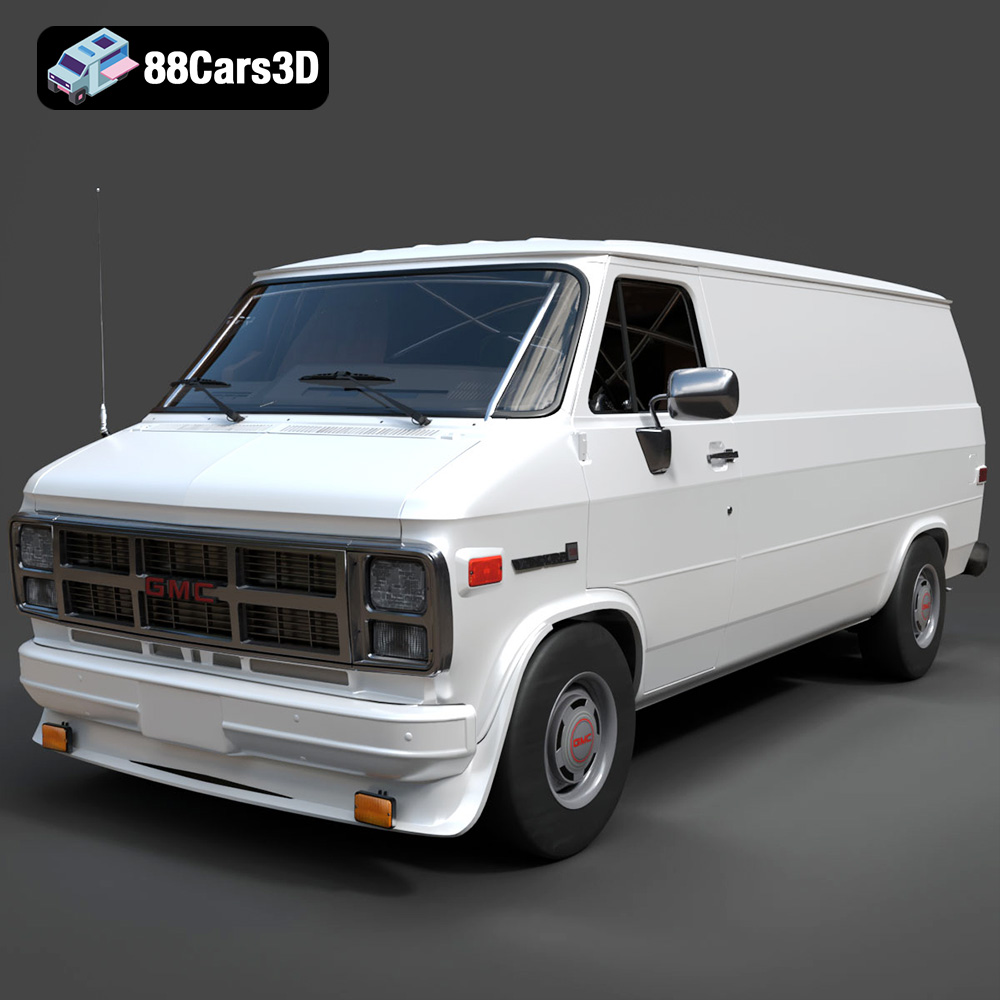
GMC Vandura G-1500 1983 3D Model
Texture: Yes
Material: Yes
Download the GMC Vandura G-1500 1983 3D Model featuring clean geometry, realistic detailing, and a fully modeled interior. Includes .blend, .fbx, .obj, .glb, .stl, .ply, .unreal, and .max formats for rendering, simulation, and game development.
Price: $19.99

Ford E-450 Ambulance 3D Model
Texture: Yes
Material: Yes
Download the Ford E-450 Ambulance 3D Model featuring clean geometry, realistic detailing, and a fully modeled interior. Includes .blend, .fbx, .obj, .glb, .stl, .ply, .unreal, and .max formats for rendering, simulation, and game development.
Price: $19.99
